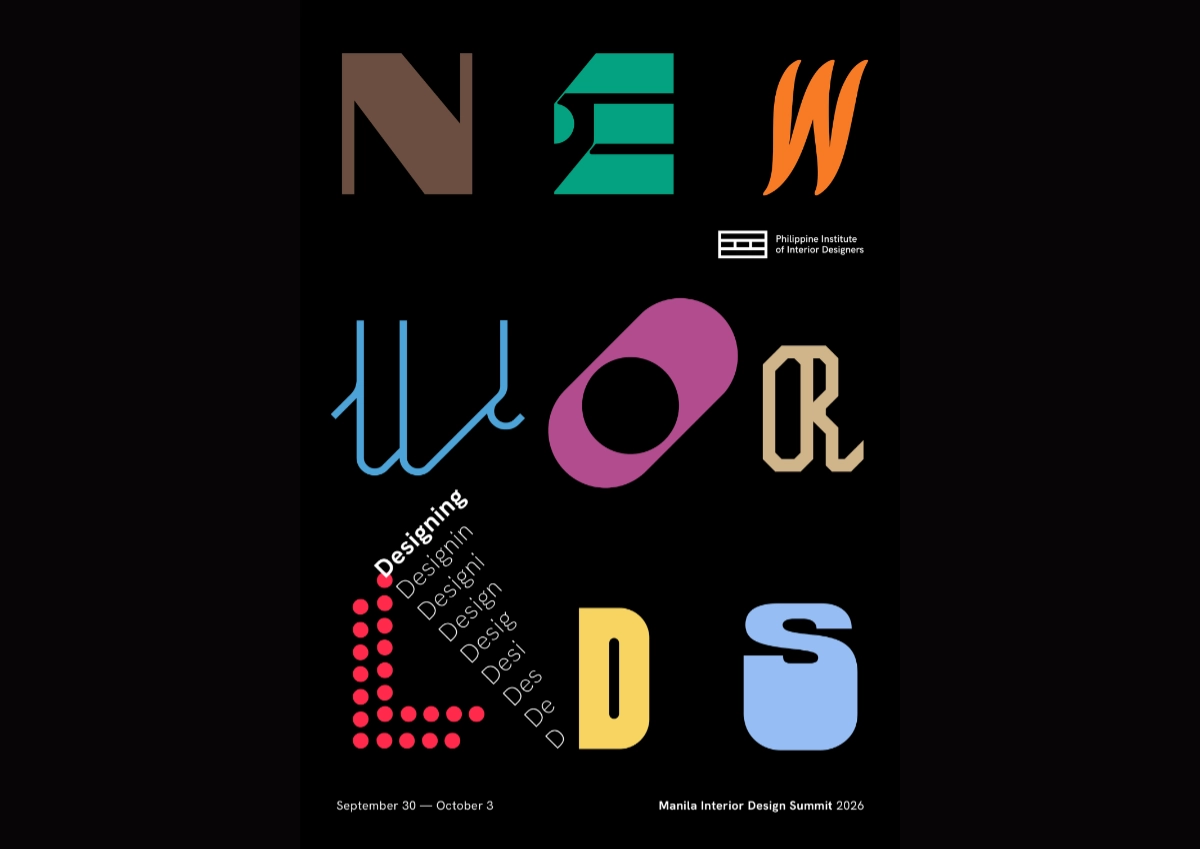
“Thailand has claimed urban creativity and livability. Singapore has institutional design leadership. Indonesia is emerging as a design hub. Vietnam is moving into design innovation. And the Philippines? Its position is not weak. It is simply unclaimed.” For IDr. Cecil Ravelas, National President of the Philippine Institute of Interior Designers (PIID), the challenge is not […]
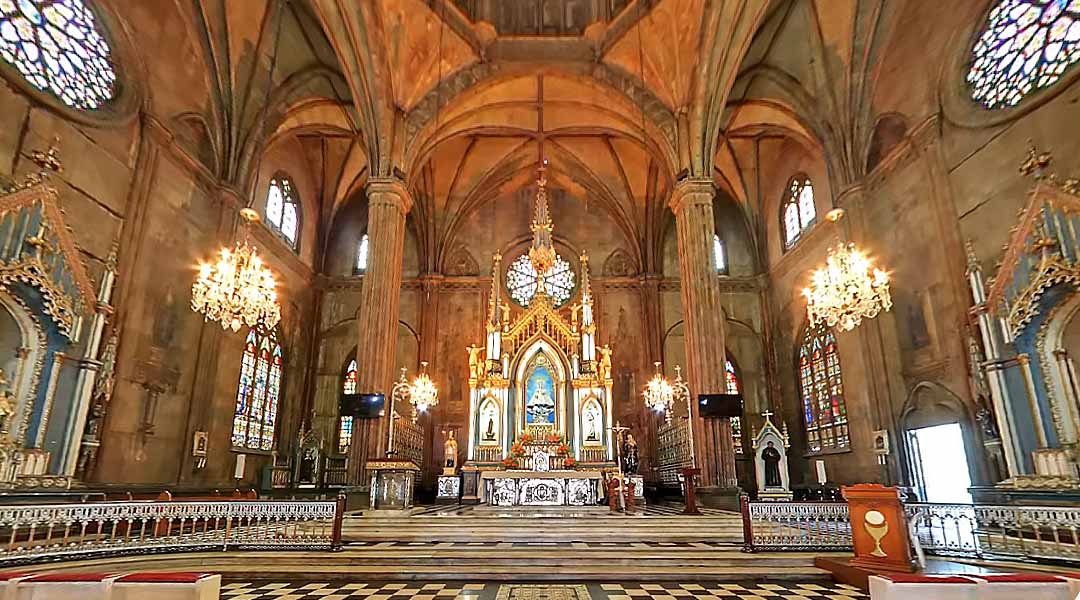
Virtual Visita Iglesia: You Can Now Tour Churches and Stations of the Cross From Home



Television has broadcast regular masses for many years. Yet, in the Philippines, the only predominantly Catholic country in Asia, most devotees still opt to attend mass in person at churches and chapels. Services are often crowded and involve significant human contact. They share the Holy Water, take Holy Communion, and recite or sing the Lord’s Prayer. Devotees would even go on a pilgrimage, or Visita Iglesia (visiting seven or fourteen churches to say prayers at each for a special intention) during the Holy Week.
However, with the onslaught of COVID-19, the observance of religious traditions and activities in the Philippines has gone digital. Churches conduct masses via live-streaming on TV and social media platforms like Facebook and YouTube. Virtual reality offers a convenient alternative for the Visita Iglesia tradition. Manila-based 360 panoramic photographer and freelance journalist Fung Yu‘s Virtual Visita Iglesia is one way to keep the faith.
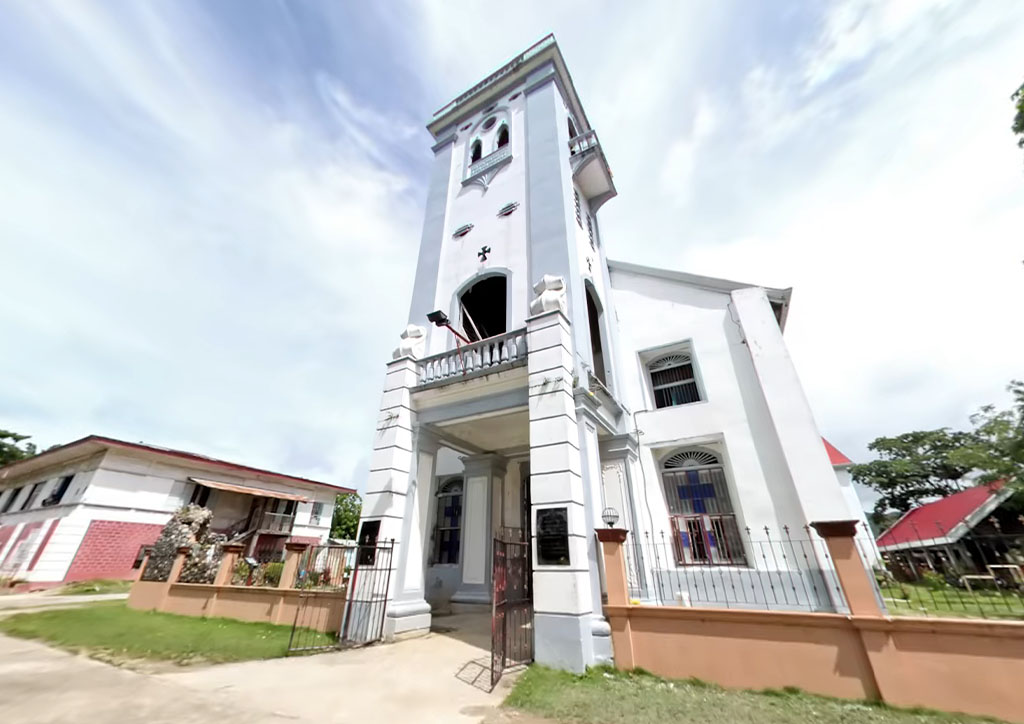
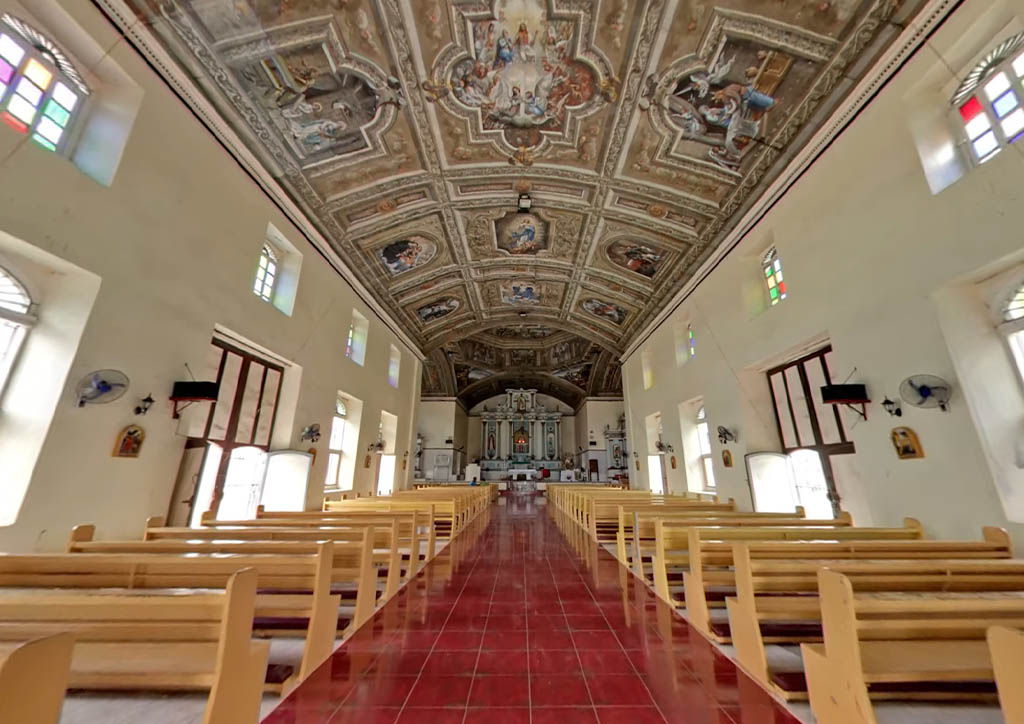
The Genesis of the Virtual Visita Iglesia
Yu told BluPrint in an email interview that the Virtual Visita Iglesia was an offshoot of his personal advocacy, the PAMANA.ph project. This aims to document in 360-degree immersive imaging all historical and heritage sites (i.e., churches, forts, ancestral homes) in the Philippines as declared by the UNESCO World Heritage, the National Museum of the Philippines, and the National Historical Commission of the Philippines.
Yu has been creating 360-degree high-resolution spherical panoramas in the Philippines and capturing immersive imaging for nearly 16 years. He is a member of the Voyage of the Balangay project that sailed around the Philippines and Southeast Asia using replicas of the balangay boats, a member of ICOMOS Philippines and Heritage Conservation Society (HCS), a former director of the US-based International Virtual Reality Photography Association (IVRPA).
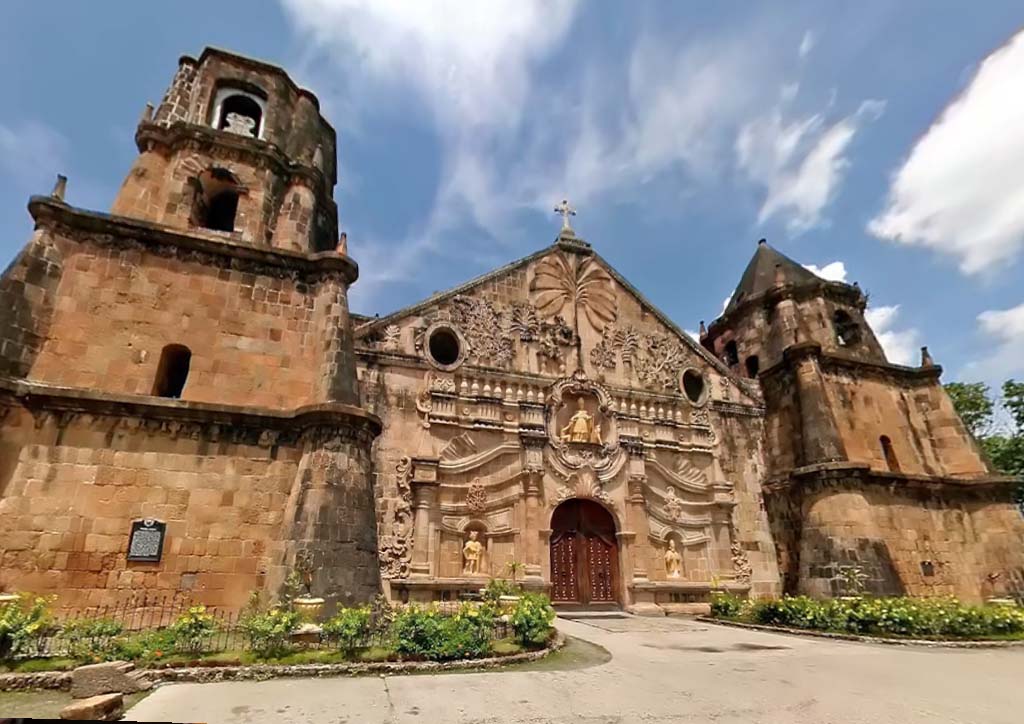
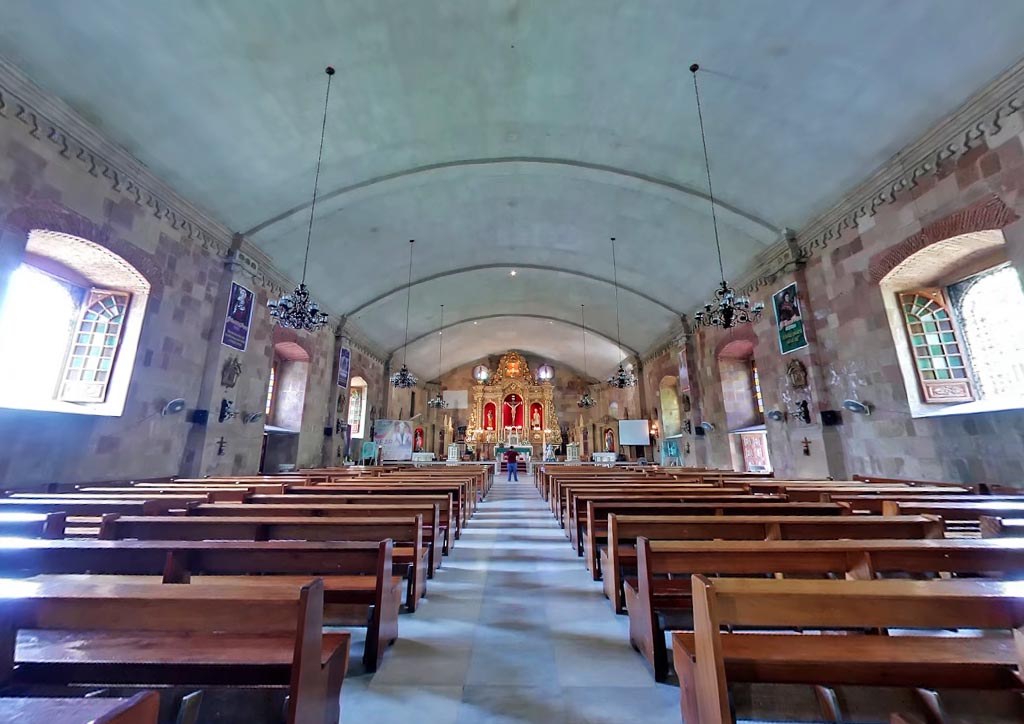
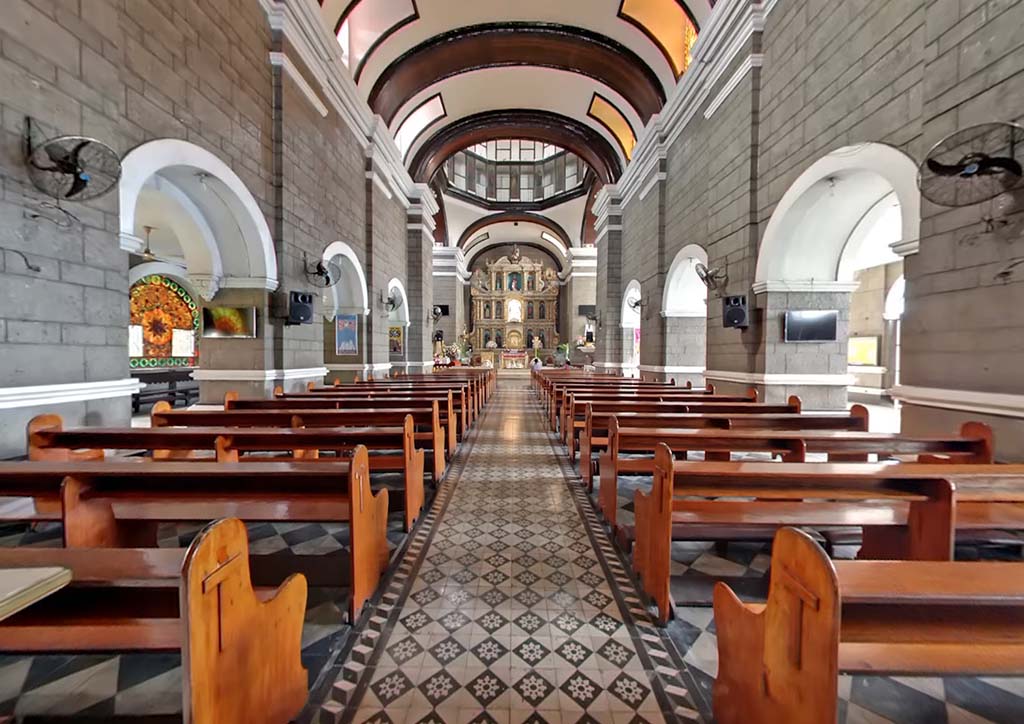
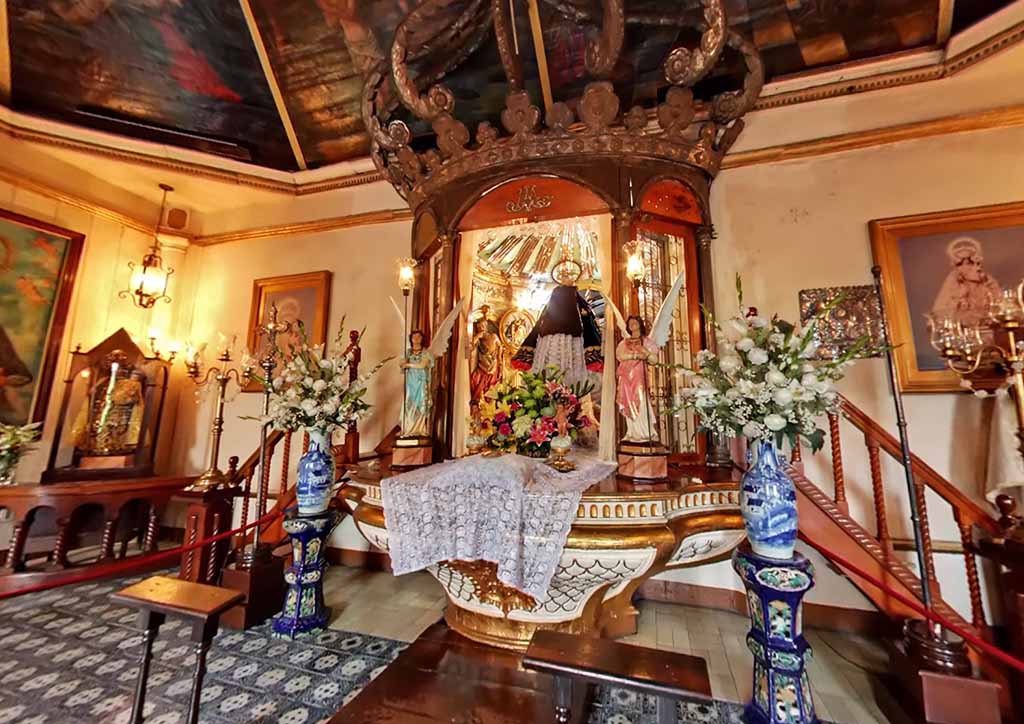
“Rappler and I initiated the “Virtual Visita Iglesia” in 2013,” Yu shares the beginning of the Virtual Visita Iglesia initiative. He says his initial goal is to shoot and preserve heritage structures in digital format for posterity, to allow the viewers to “experience a place as if they were there.” Yu furthers, “Nothing is lost in translation, in my opinion. We simply “digitized,” in this case, the physical churches, add the compelling biblical readings and the accompanying background music(s) to make something experiential that people anywhere in the world who has an internet access can have this devotional. It just so happened like in our present pandemic crisis, where access to our places of worship is limited that make initiatives like this so much more compelling.”
Digitizing a Thousand-Year Tradition
Creating an entire 360-degree imagery is not as easy as “let there be light.” Yu explains that he had to capture the entire scene in static images. Then he “stitched” them into a single “equirectangular projection,” similar to a flat world map. After completing the projection, he post-processes the image to enhance it. Yu says this takes up about 75% of the total time it takes to create a 360-degree immersive image. Afterward, he codes, programs, and renders the content into a virtual image. Then he uploads the final result to the web.
“360 immersive imaging allows the viewer to experience a place as if they were there. The technology has a myriad of uses: from education, navigation (Google Streetview), heritage conservation, training, among others. Although travel is readily more accessible, there are still sectors like people with disability, students in far-flung provinces that can readily benefit from this tech. We now have virtual reality (VR makes extensive use of immersive imaging in a generated environment) such as Google cardboard, Oculus Rift, and many similar devices that can virtually transport a viewer onto a new experience,” says when asked about how he makes the virtual experience as compelling as the real thing.
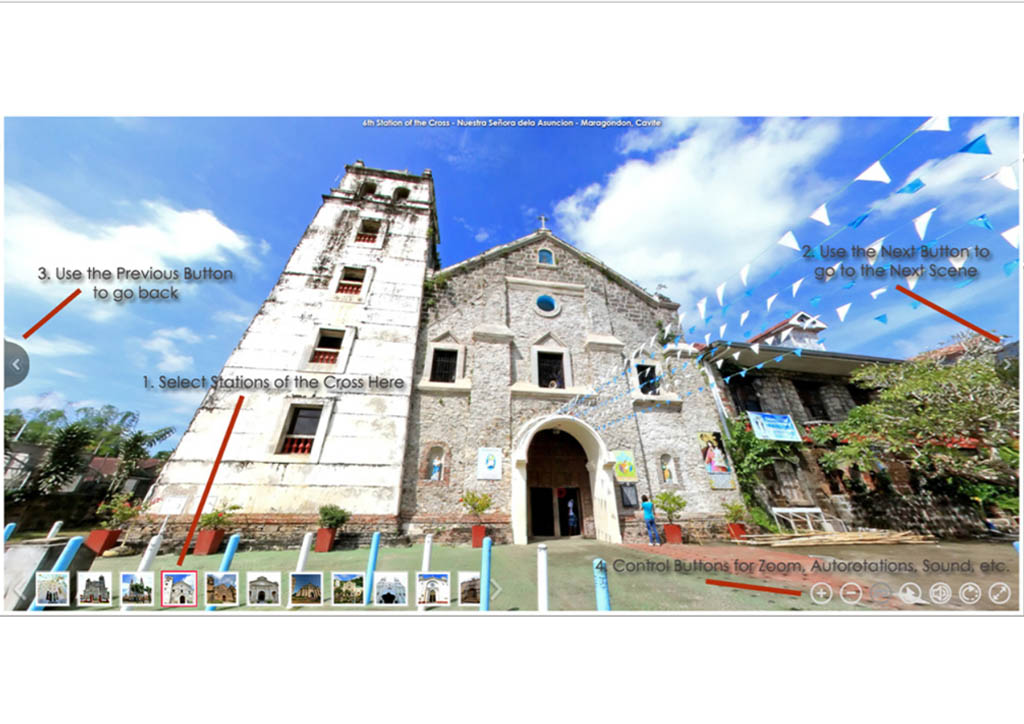
Since 2013, Yu created two versions of the Virtual Visita Iglesia. He has one with 14 churches, another with 20 churches and chapels. “Virtual Visita Iglesia was built in HTML5 and is compatible with desktop computers as well as all mobile and tablets running either Android or iOS,” says Yu.
Presently, the pamana.ph website and the CBCP Media are hosting both versions of the Virtual Visita Iglesia. Version 1.0 is also accessible on YouTube as a 360 video:
Behind the Scenes of the Virtual Visita Iglesia: Collaborations and Cultural Heritage
According to Yu, the CBCP Media office provided the access to photograph the various churches under its auspices. Rappler provided the audio readings, voiced by Paterno Esmaquel II, for the Stations of the Cross. The background music for each church are from the album “Vespers,” courtesy of Jesuit Communications.
“Most of the featured churches are either Spanish colonial churches, declared as NCT (National Cultural Treasures) or just happened to be geographic in location (westernmost, northernmost, etc.), or just of curious happenstance (chapel on top of a fort, chapel made of cartwheels, etc.),” adds Yu.
When asked about whether future versions of the Virtual Visita Iglesia will have Filipino narrations and subtitles for people with hearing impairment, Yu answers, “We can certainly consider these. Tagalog (or other vernaculars) can easily be implemented, we just need someone to voice and record them. As for subtitles, I may need to do some research on its implementations.”
Read more: Revisit the Stories Behind 7 Heritage Batangas Churches this Holy Week
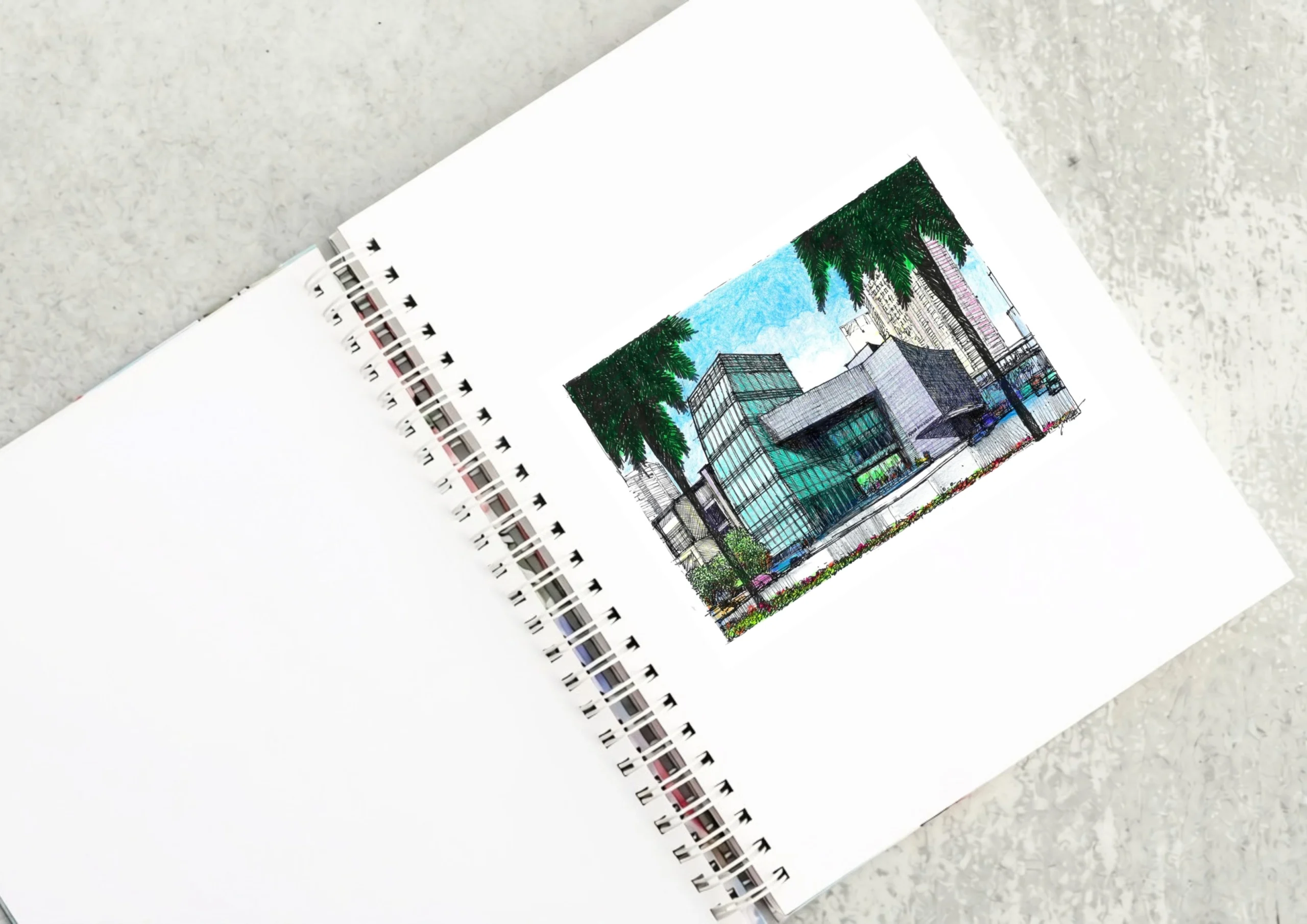
From Brutalism to Contemporary Modernism The Ayala Museum designed by the firm of Leandro V. Locsin Partners (LVLP) sits at the corner of Makati Avenue and Dela Rosa Street in Legaspi Village, Makati. This is actually the second museum of the same name in the area. The original, which was designed by National artist for […]
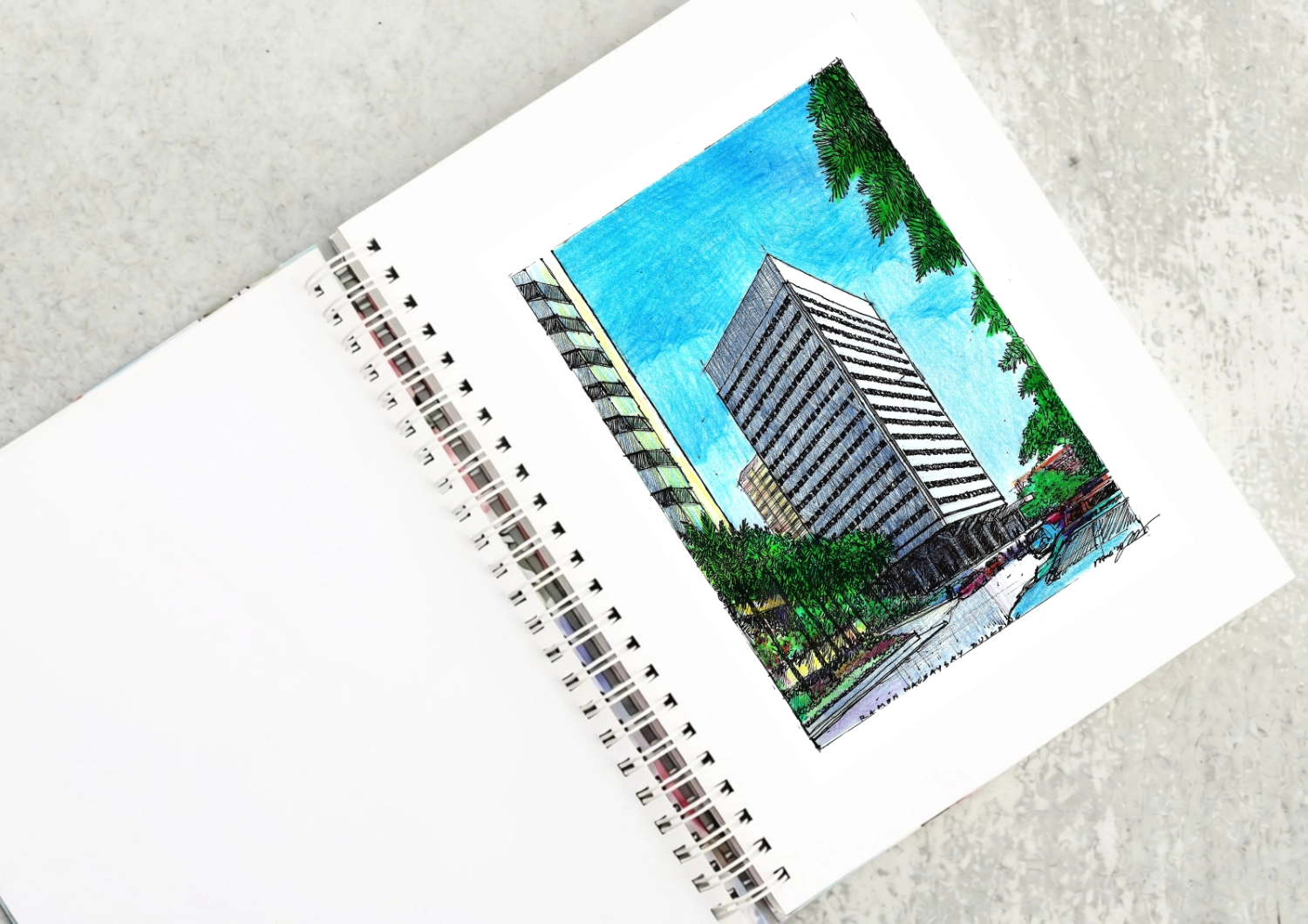
The Ramon Magsaysay Center as a Modernist Landmark Driving down Roxas boulevard from Rizal Park, what will catch your eye is the most elegant modernist structure in the country, the Ramon Magsaysay Center. Most established Filipino architects put it in their top ten lists of favorite buildings. It was designed by Alfredo J. Luz, who […]
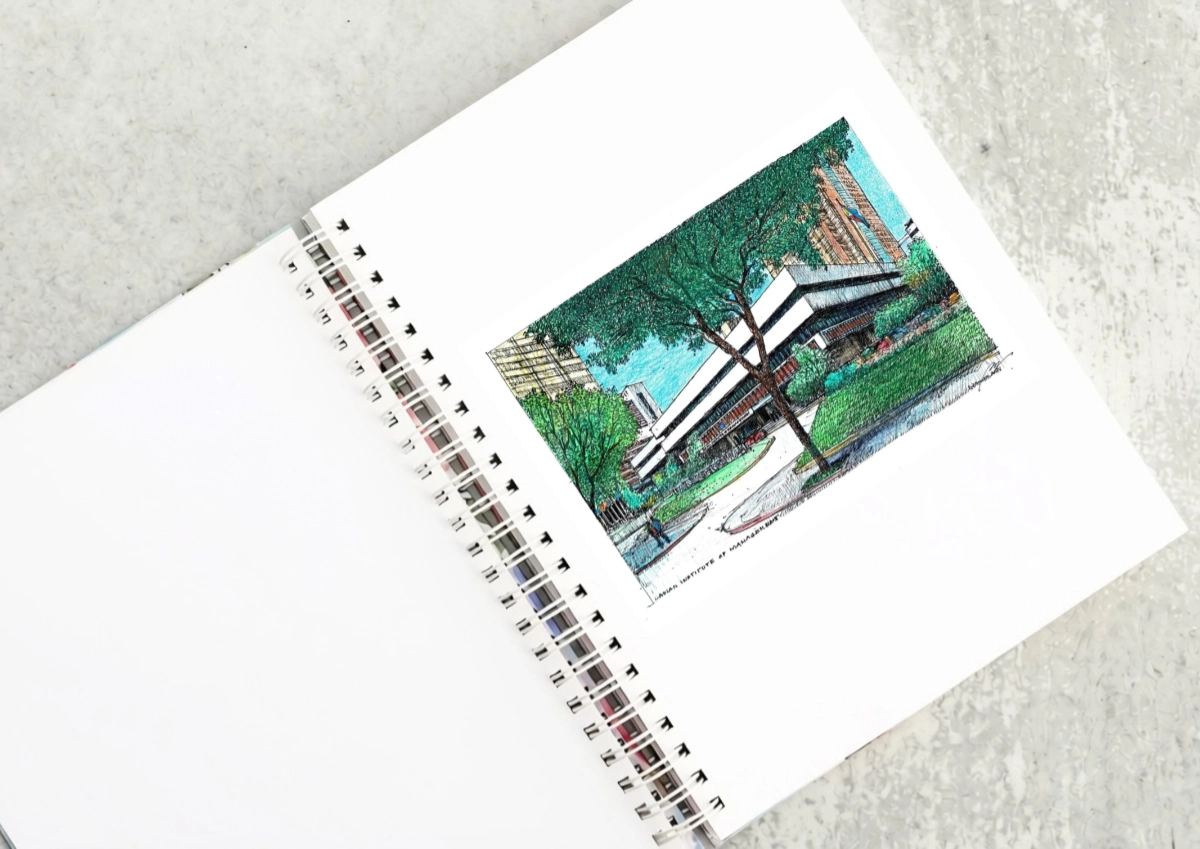
A Filipino Interpretation of Modernist Architecture Unlike the rest of Makati today, the northern end of Paseo de Roxas in Makati is anchored by a low complex rather than a tall skyscraper. This is the elegant Asian Institute of Management, designed by architect Gabriel Formoso and completed in 1971. In my opinion, the building is […]

Large-format porcelain is no longer limited to conventional floor and wall applications. Advances in scale, finish, and fabrication have expanded its role across architectureArchitectureThe art and science of designing and constructing buildings, structures, and spaces that are functional, safe, and aesthetically pleasing. It encompasses the planning, design, materials, and techniques used to createGo to Architecture […]
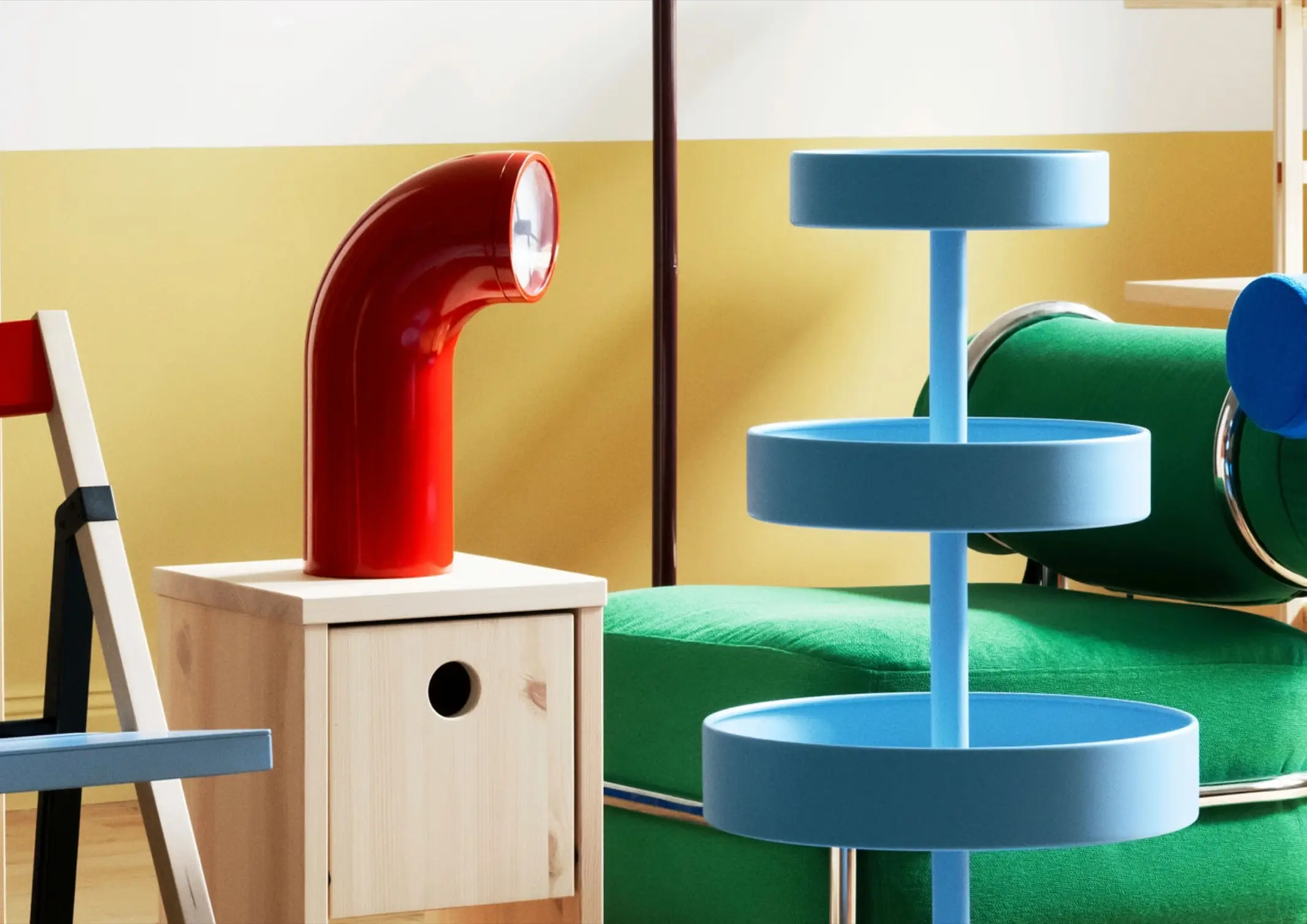
A chair does not always prescribe how to sit in it. A lamp can be more than a source of light. A clock can be more than a way to tell the time.These small departures from convention are at the center of IKEA PS 2026. The latest iteration of IKEA’s experimental PS series comprises more […]
Read the issues.

Collect the volumes.

Recommended Video
Tap to Unmute
Unmute
0:00
0:00