“Buildings only become architectureArchitectureThe art and science of designing and constructing buildings, structures, and spaces that are functional, safe, and aesthetically pleasing. It encompasses the planning, design, materials, and techniques used to createGo to Architecture Glossary when they are shared,” said William Ti Jr., founder of the Anthology Festival and WTA Architecture and Design Studio, […]
Four Historic Churches You Can Visit for Holy Week



As Holy Week approaches, many people will travel across the country to enjoy the long weekend. And just as many people will likely utilize the time as a way of rekindling their spirituality, visiting churches, participating in religious traditions, or simply using the time for personal reflection.
The Philippines has the unique distinction of being the only predominantly Christian country in Asia, with a long history that dates back to the Spanish colonial period. And as Catholicism became the dominant religion, leading to the construction of many grand churches throughout the archipelago. These served as center religious centers and as focal points for communities, acting as social and cultural hubs for the towns they were built in.
With that in mind, you can visit great historic churches in the country during Holy Week. To better reconnect with our collective past, here are four churches with strong historical significance that you can go to during your vacation.
San Agustin Church
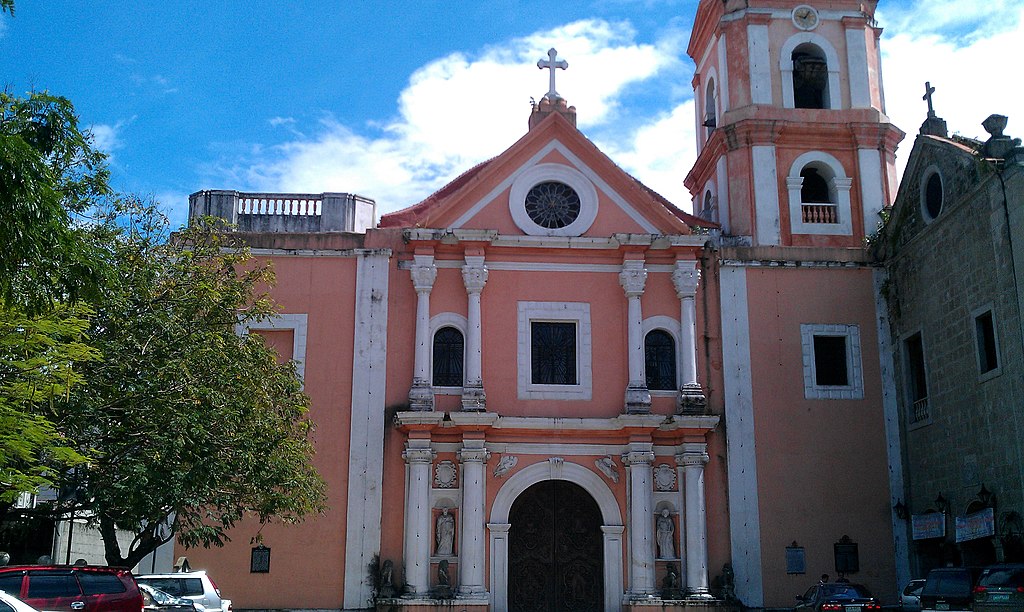
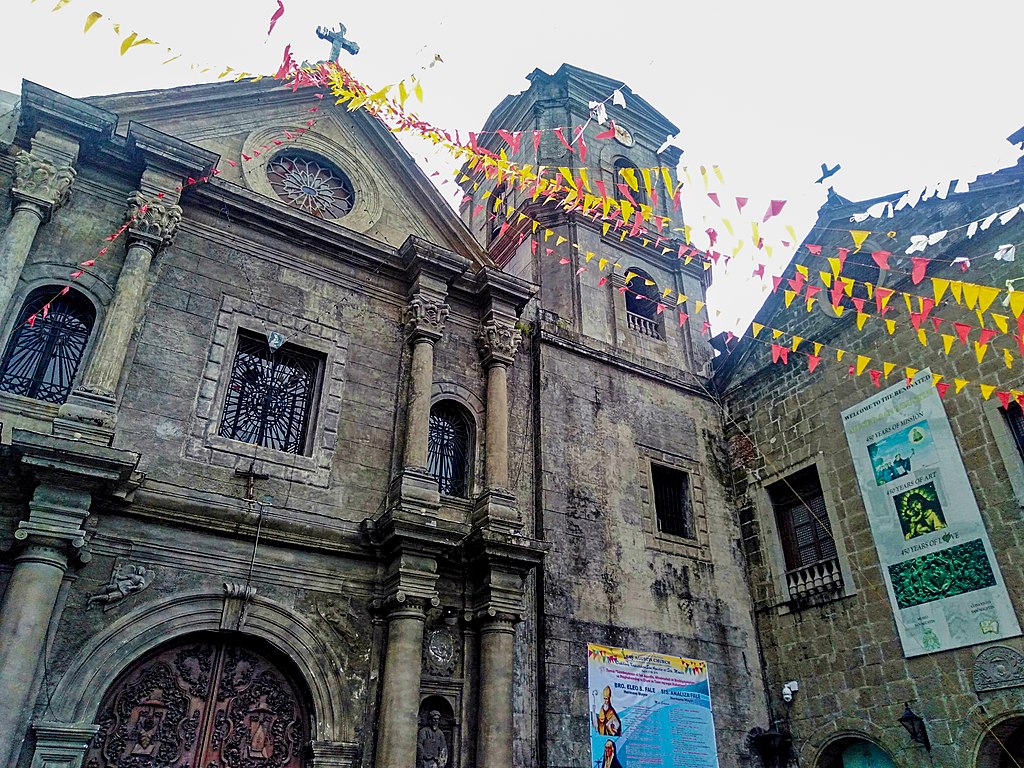
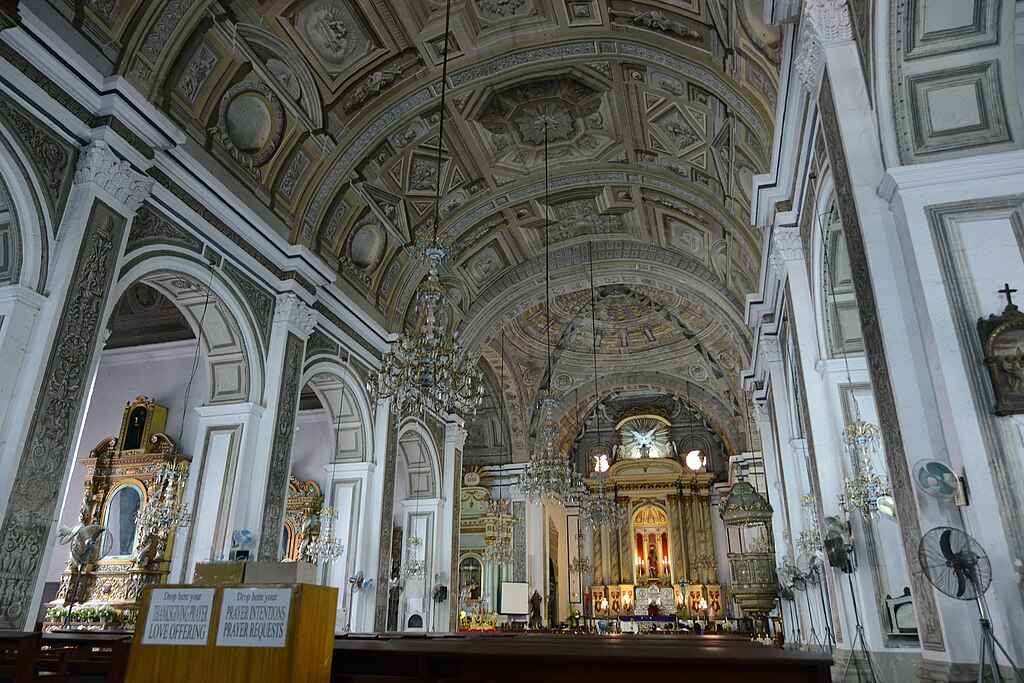
The walled city of Intramuros is home to the oldest stone church in the country, which was completed in 1607. For context, San Agustin is older than the first recorded permanent English settlement in North America. The church was commissioned under the Order of Saint Augustine and designed by architect Juan Macías. The building and its accompanying monastery utilized stone bought in the nearby province of Rizal.
Its storied past includes being used by the Japanese as a concentration camp during World War II. The church itself emerged from the Battle of Manila largely unscathed. However, the adjacent monastery was not as lucky, suffering complete destruction from the bombing. The Philippine government designated it a National Historical Landmark in 1976.
Santa Maria Church
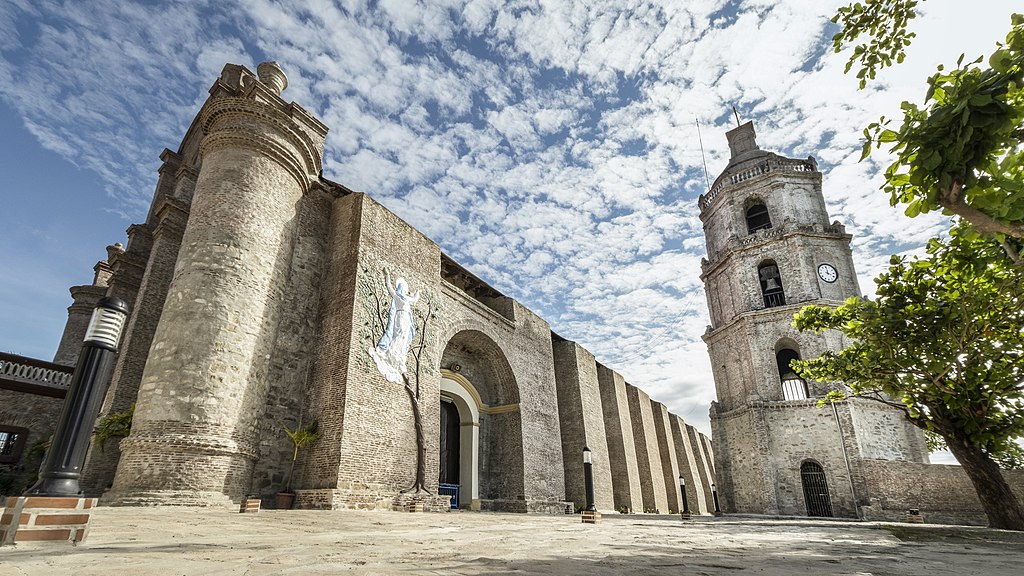
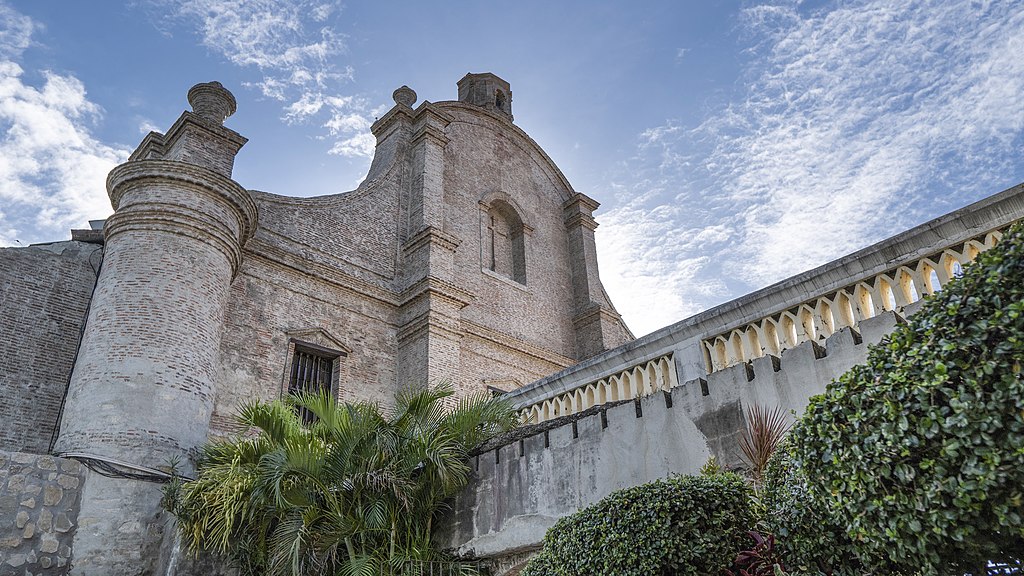

Speaking of churches and fortresses, this church in Ilocos Sur was built with the dual purpose of being a religious institution as well as a military one. It is fortified with defensive walls surrounding the structure.
It functioned this way due to its construction on a hill, which gave it a defensive edge against attackers and allowed it to be used as a citadel and a church. Because of its location, visitors need to climb the 85-step stone stairway to be able to get to it.
It has a brick facade and an arched entrance flanked by rectangular pillars on both sides. A bell tower stands separately at its right side, with each floor becoming smaller and tighter than the one below it. This is due to the influence of Southeast Asian pagodas in its construction. It has six bells in the tower, including one big bell at the top. The Philippine government declared a National Historical Landmark in 1978.
Tumauini Church
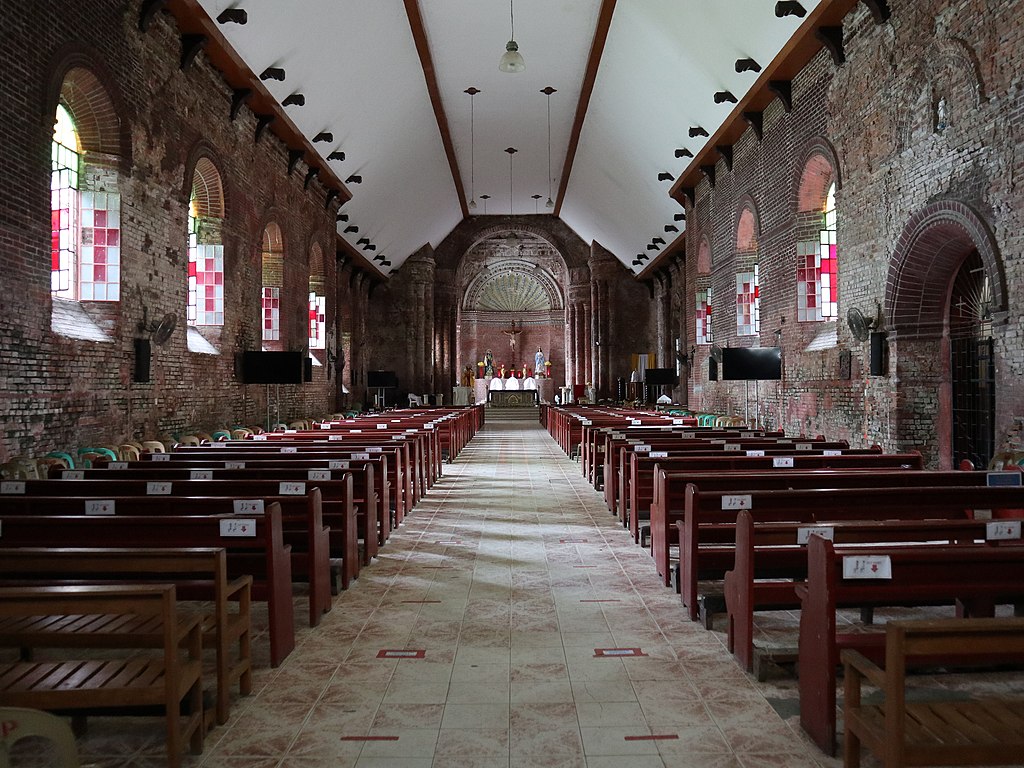
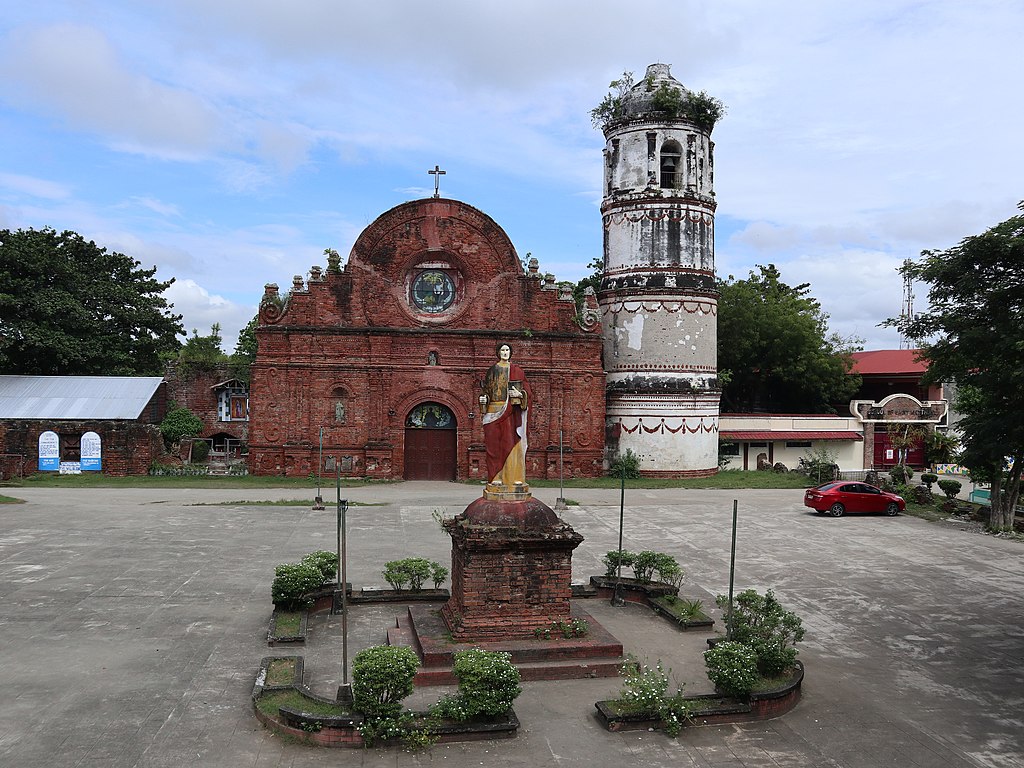
Located in Isabela and completed in 1809, Tumauini church is famous for its unique Baroque design.
The most striking feature is its use of red brick, which sets it apart from other churches in the Philippines. The church also boasts a one-of-a-kind bell tower. This cylindrical structure is the only one of its kind remaining from the Spanish colonial period.
After it was damaged during the World War II bombings, the restoration efforts attempted to rebuild the church as close as possible to the original, including integrating the undamaged parts of the building.
Its unique appearance is such that the Philippine government declared a National Historic Landmark in 1989.
Calasiao Church
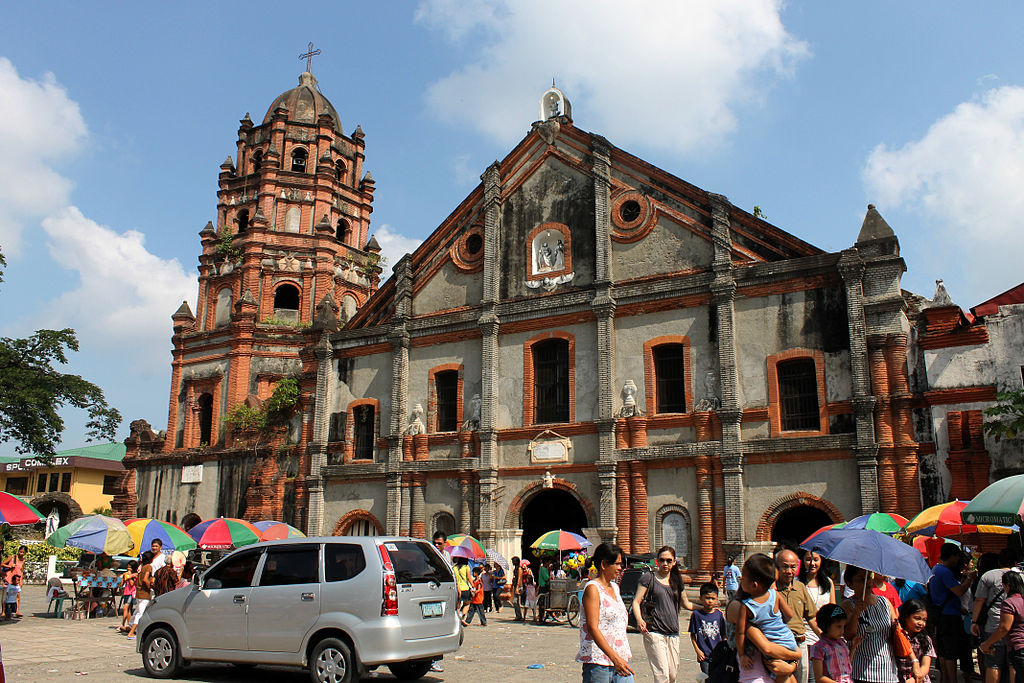
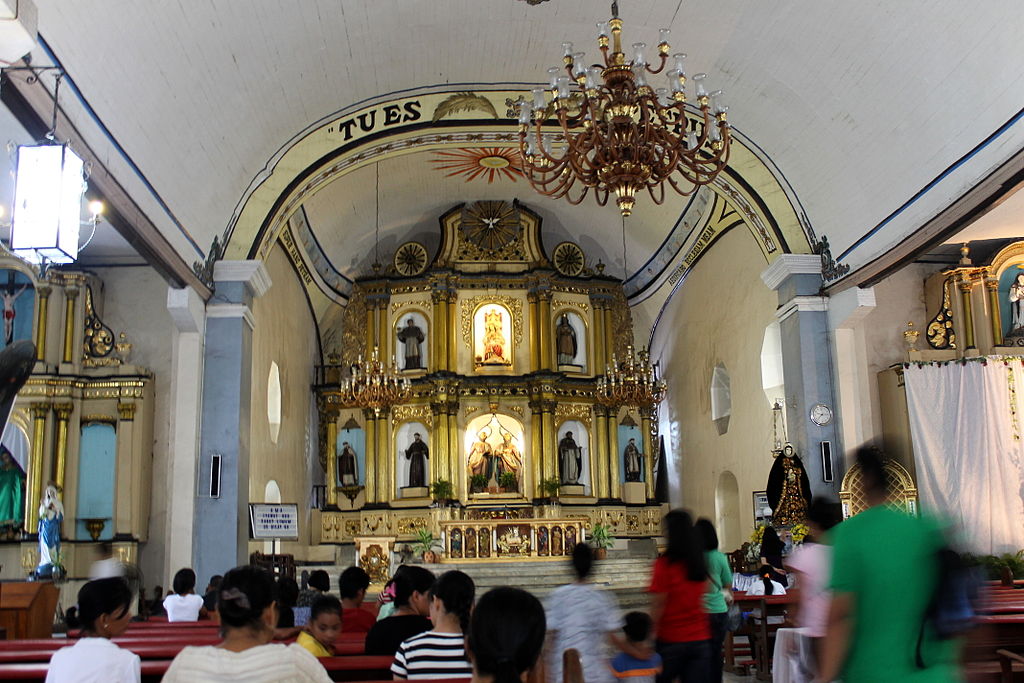
Built in Pangasinan in 1588, the Calasiao church’s facade combines influences from Latin American churches and Southeast Asian Buddhist temples. The bell tower also resembles a pagoda with its tiers and octagonal shape.
Rebels and freedom fighters attacked the building throughout its history. Because of this, authorities fortified the building each time they rebuilt it. Its last restoration effort was by Msgr. Luis B. Ungson after the bell tower was destroyed during an earthquake in 1990. The Philippine government declared it a National Cultural Treasure in 2001.
History and Its Victors
The churches of the Philippines stand as a history lesson for all those who enter. These buildings function as a physical reminder of the Spaniards’ power in the Philippines during its occupation. Moreover, they served as beacons of hope during our colonial past, whether that’s deserved or not.
Regardless of one’s personal beliefs, these churches remain important cultural and historical structures that contribute to understanding the evolution of the Philippines.
Read more: San Agustin Museum: A Legacy of Love in Art and Architecture


“Thailand has claimed urban creativity and livability. Singapore has institutional design leadership. Indonesia is emerging as a design hub. Vietnam is moving into design innovation. And the Philippines? Its position is not weak. It is simply unclaimed.” For IDr. Cecil Ravelas, National President of the Philippine Institute of Interior Designers (PIID), the challenge is not […]
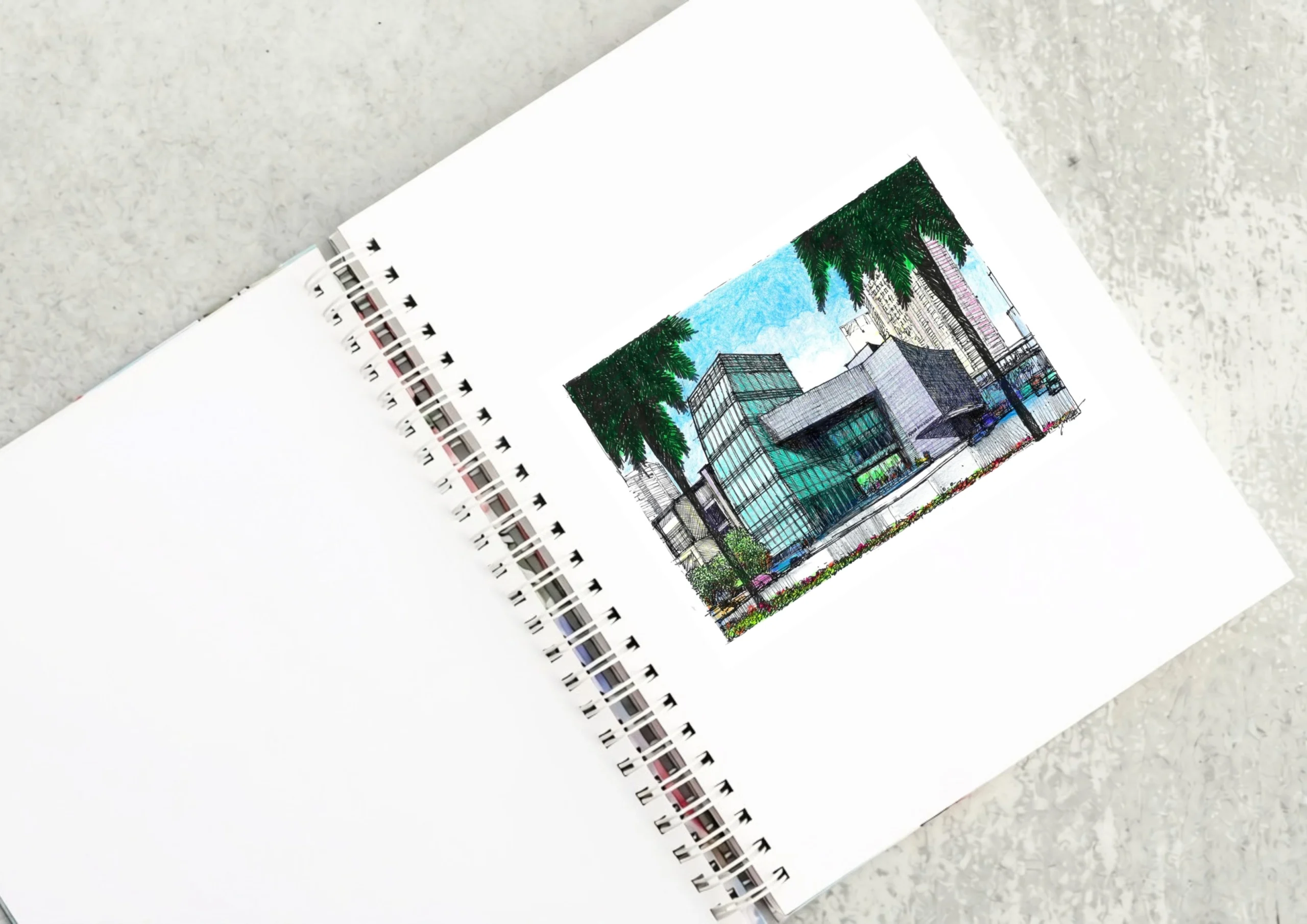
From Brutalism to Contemporary Modernism The Ayala Museum designed by the firm of Leandro V. Locsin Partners (LVLP) sits at the corner of Makati Avenue and Dela Rosa Street in Legaspi Village, Makati. This is actually the second museum of the same name in the area. The original, which was designed by National artist for […]
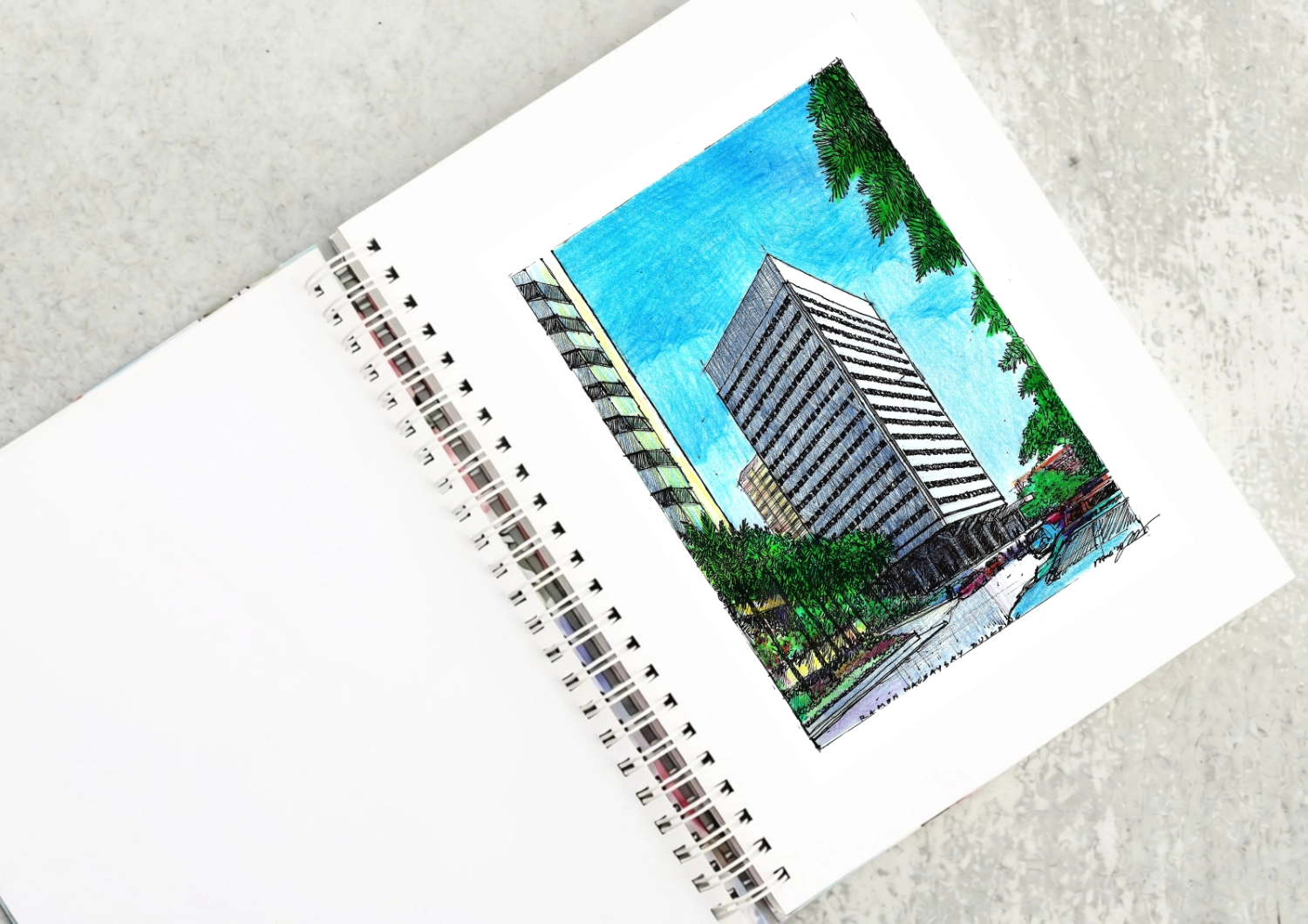
The Ramon Magsaysay Center as a Modernist Landmark Driving down Roxas boulevard from Rizal Park, what will catch your eye is the most elegant modernist structure in the country, the Ramon Magsaysay Center. Most established Filipino architects put it in their top ten lists of favorite buildings. It was designed by Alfredo J. Luz, who […]
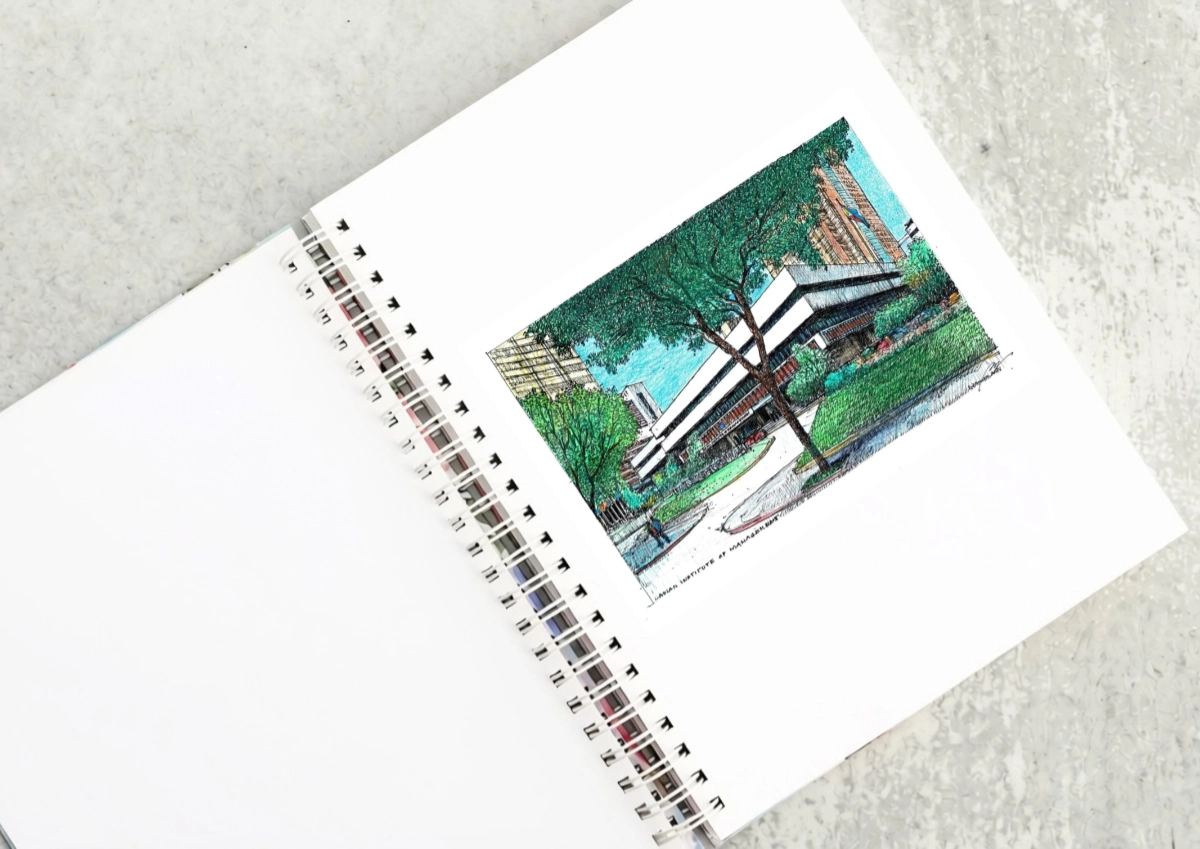
A Filipino Interpretation of Modernist Architecture Unlike the rest of Makati today, the northern end of Paseo de Roxas in Makati is anchored by a low complex rather than a tall skyscraper. This is the elegant Asian Institute of Management, designed by architect Gabriel Formoso and completed in 1971. In my opinion, the building is […]

Large-format porcelain is no longer limited to conventional floor and wall applications. Advances in scale, finish, and fabrication have expanded its role across architectureArchitectureThe art and science of designing and constructing buildings, structures, and spaces that are functional, safe, and aesthetically pleasing. It encompasses the planning, design, materials, and techniques used to createGo to Architecture […]
Read the issues.

Collect the volumes.

Recommended Video
Tap to Unmute
Unmute
0:00
0:00