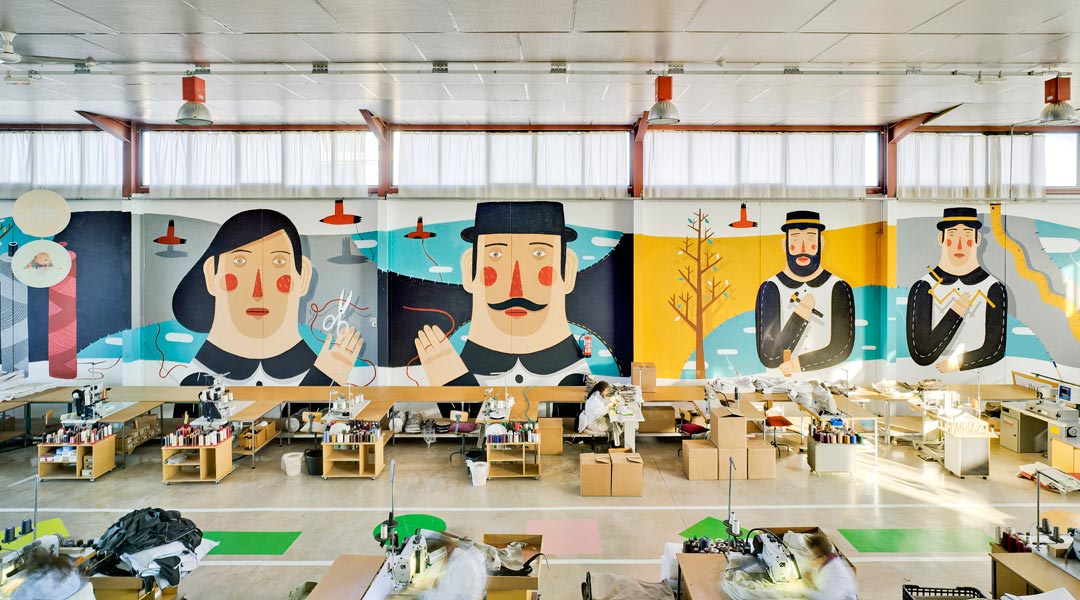
Take a look at the Sancal factory’s storybook-like murals



Google “Yecla” and “wine” appears on top of the search list. The small municipality north of Murcia, Spain, was officially declared a Denominación de Origen (wine region) in 1975, same year the Franco dictatorship ended and a cultural stirring began. Alongside generations of vintners with bloodlines stretching back to ancient Rome, woodworkers dug their roots down in the tiny town. This is the backdrop of family-run furniture company Sancal, the newest addition to Mos Design’s showroom on High Street in Bonifacio Global City.
In 1973, twenty-year old Santiago Castaño Carpena left his job to start a workshop, gilding and tufting chairs (think Marie Antoinette) in an old garage. Business picked up and he enlisted the help of family. Spain’s transition to an era of openness and trips to Milan fueled his nonconformist views, halted the baroque furniture, and sparked a new design ethos—passionate, authentic, creative. Today, we see Sancal in some of the world’s most innovative offices like Google, Facebook, and Visa.
Sancal collections are colorful, and not just in one sense of the word. “We do receive a lot of influence from abroad because Sancal is very eclectic in terms of style and humor. But we are also very inspired by the Yecla environment and Spanish culture,” says brand manager Guillermo Marqueño. “We love to play with Spanish clichés like the toros, the paella, the things people know, but we like to transform them to something new!”
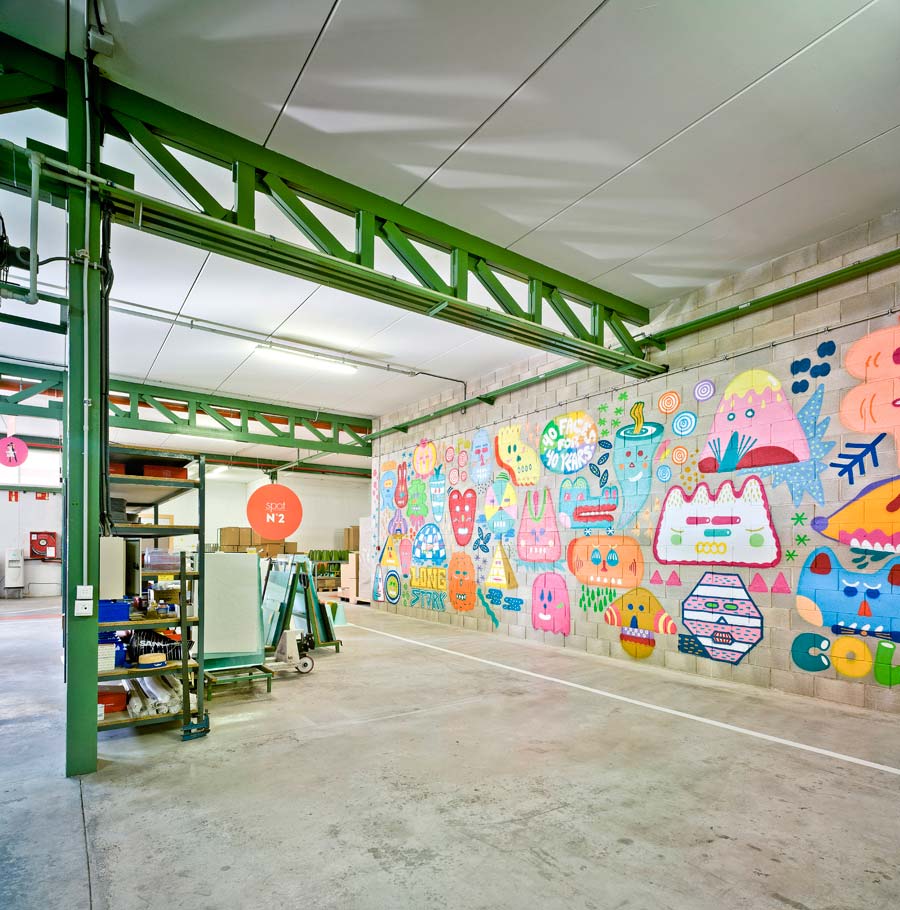
The same joie de vivre can be felt inside their 15,000 square-meter manufacturing space. Large murals, commissioned to celebrate the 40th anniversary of the company, brighten up different parts of the factory. “We have to go back to prehistoric times to understand the magical meaning behind cave paintings. However, in the 21st century, we like to think that those involved in the manufacturing process will be just as inspired by the creativity of these murals, as if we had cast an ancient spell,” says Santiago’s daughter Esther Castaño-Lopez, who now runs the company with sister Elena.
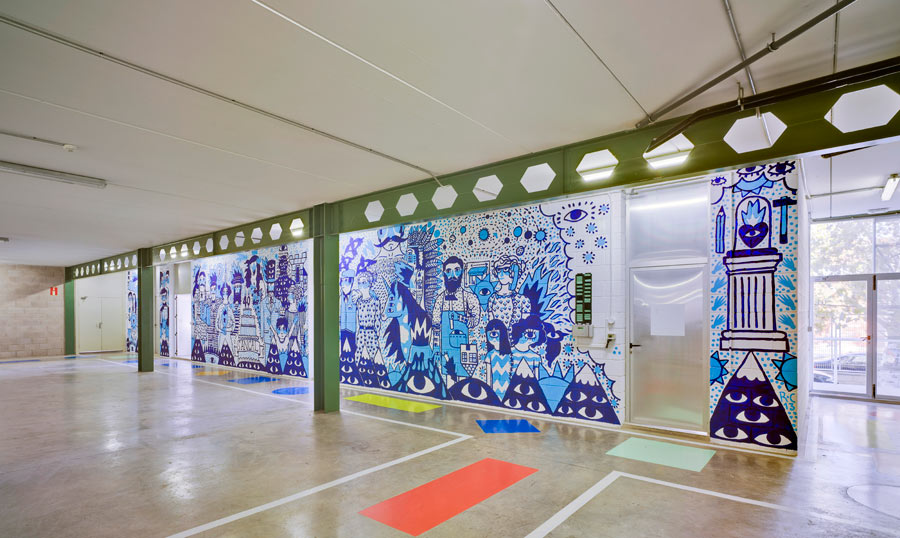
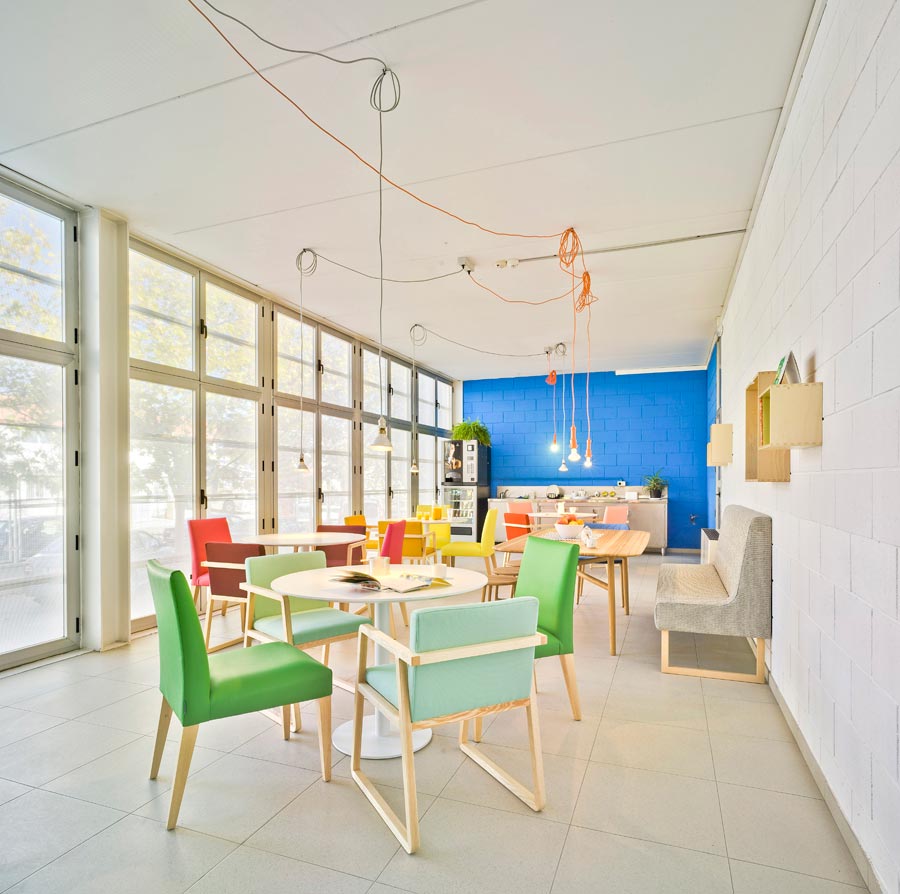
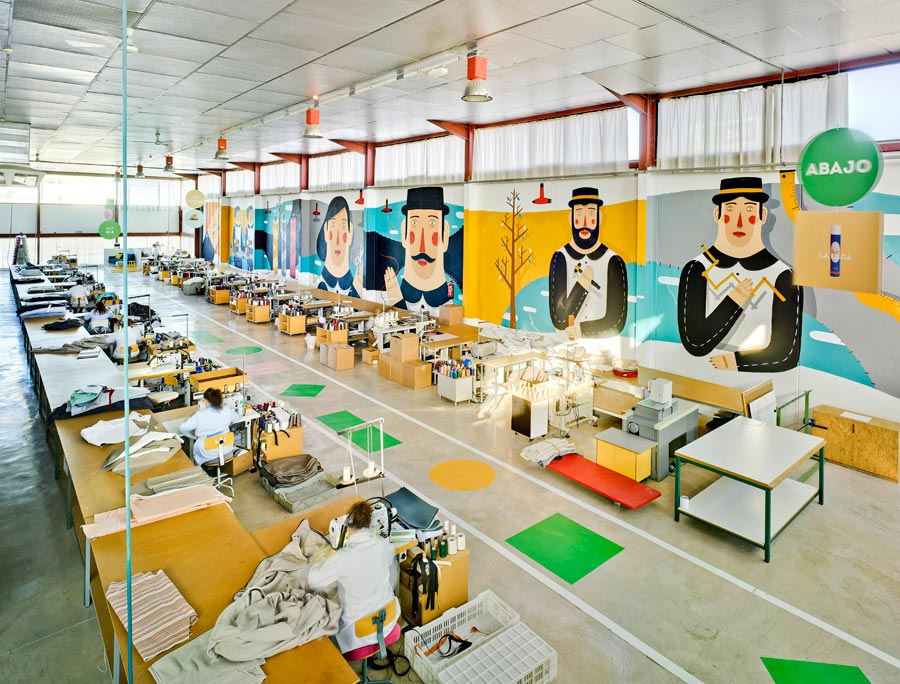
Three artists called the factory home for a few days in 2013. Zosen painted forty masks, faces of failure and success, representing the passage of time on the walls of Sancal’s webbing and lacquering workshop. Right outside the employees’ canteen fronting the upholstery area is Ricardo Cavolo’s strange blue circus, symbolic of Sancal as a family of individuals who possess unique quirks and characters. In the large sewing area, the dignity and know-how of the artisan were blown up into a 10 by 40 meters long mural by Agostino Iacurci. The piece called Ode to Craftsmanship posits the conservation of traditional European industries.
While many manufacturing and agricultural towns have difficulty keeping the workforce from flocking to the cities, Yecla rarely experiences that struggle. “People are well-connected here—to each other, to the place,” explains Marqueño. “For example, some of our upholsterers have been with us 30 years, almost reaching retirement.” Sancal, by fusing artisan heritage with a culture of creativity and appreciation, has drawn talent to the countryside and called people home. This was the story of founder Santiago. His daughters now follow suit, adding their own expertise and colors to the celebration. 
This article first appeared in BluPrint Vol 2 2017. Edits were made for Bluprint.ph.
Frequently Asked Questions
Sancal is situated in Yecla, a municipality within the Murcia region of Spain. This location is unique because while the area is internationally recognized as a prestigious wine region, it has simultaneously evolved into a specialized hub for high-end furniture manufacturing. This allows the brand to blend traditional European woodworking techniques with a modern, design-forward approach.
The murals act as a visual storybook that celebrates Sancal’s history and creative ethos. Commissioned for the company’s 40th anniversary, these artworks are intended to cast a “creative spell” over the production floor to inspire both artisans and visitors. By opting for bold colors and imaginative characters instead of standard signage, the walls reflect the brand’s signature humor and nonconformist perspective.
The 15,000-square-meter space was transformed by three distinct artists. Agostino Iacurci contributed “Ode to Craftsmanship” in the sewing area to honor industrial heritage. Ricardo Cavolo painted a “blue circus” mural in the canteen to symbolize the unique personalities of the Sancal family. Lastly, Zosen decorated the workshop with forty masks, each representing a different emotion or stage in the brand’s evolution.
Sancal frequently draws inspiration from Spanish clichés, reimagining them through a contemporary lens. By taking traditional motifs like paella or regional textures and translating them into modern furniture, the company maintains its artisan heritage while staying playful. This distinct aesthetic has earned them a place in the offices of global giants like Google and Facebook.
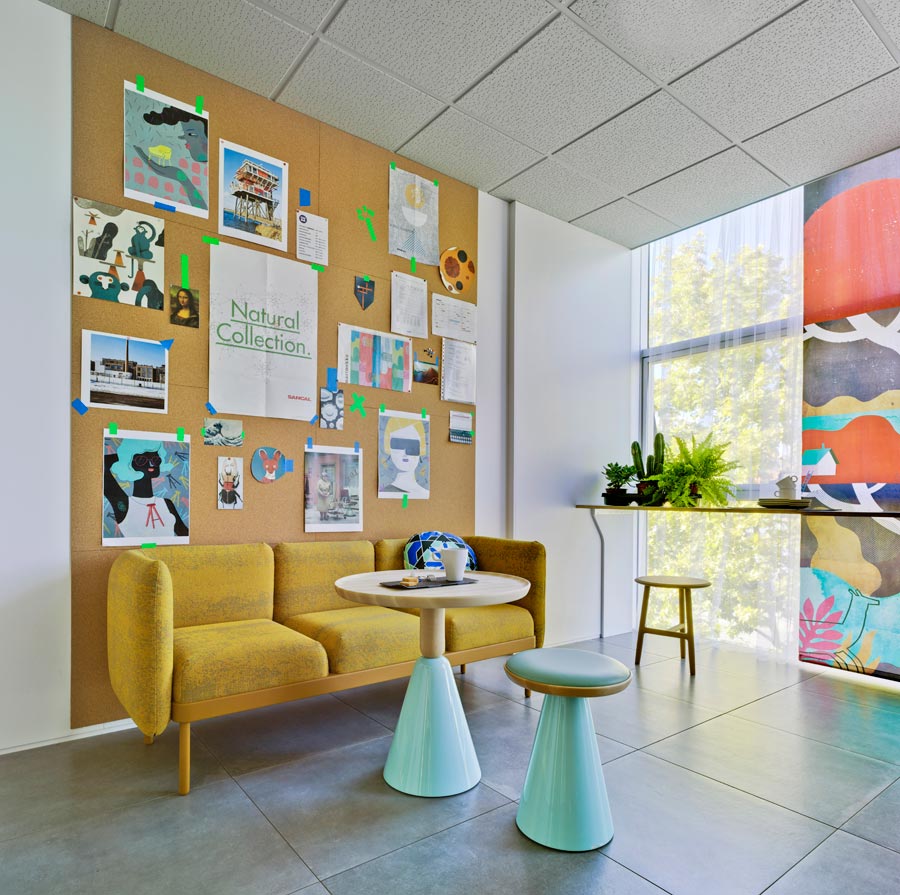
Sancal treats its staff as part of a creative community by filling the workplace with the brand’s own premium products. Employees use the furniture they build during their daily breaks and office tasks. This immersive environment, combined with the deep roots of the Yecla region, has fostered incredible loyalty, with many artisans remaining on the team for more than 30 years.