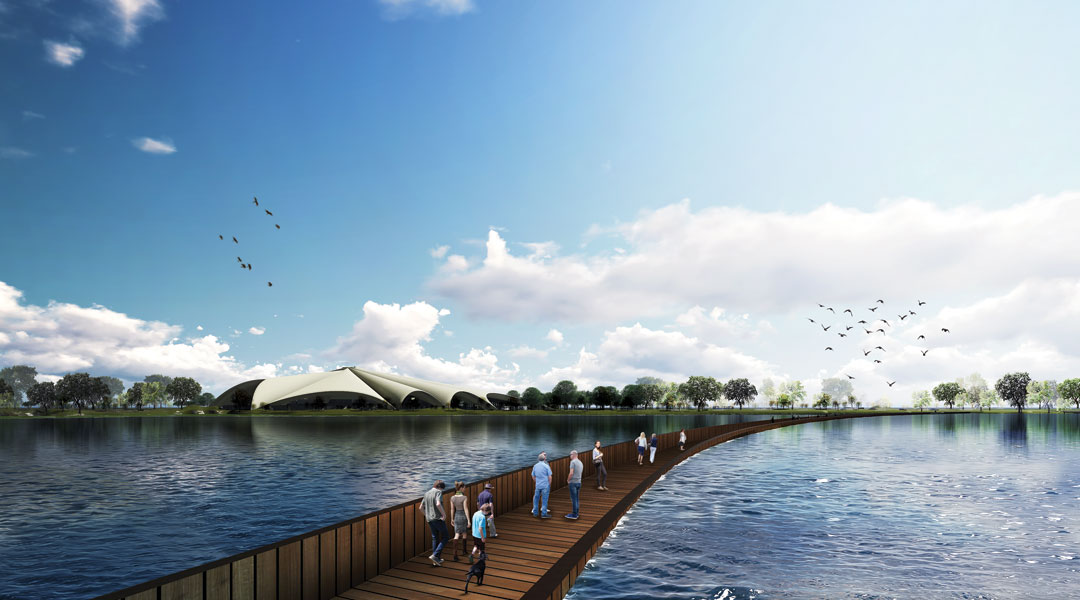
Manila Zoo, Pasig River, and 23 more PH places re-envisioned



Blueprints for 2050 showcased architects’ and designers’ visions of the Philippines three decades from the present. Tomorrow, we are launching yet another visioning book: Design Better. In this second installment, we challenged 150 architects, designers, and their apprentices to solve problems, and improve lives and existing urban conditions.
The Design Better book exhibits 25 design concepts representing the visions of the architects, designers, and their teams. These proposals for parks, housing, religious edifices, public markets, and other structures present a meticulous understanding of our people and places in service of more innovative, contextualized, and inclusive designs.
Here’s a preview of BluPrint’s latest book.
Birdland
Las Piñas-Parañaque Critical Habitat and Ecotourism Area (LPPCHEA) reimagined
With the continuous developments within the Entertainment City, problems concerning the Las Piñas-Parañaque Critical Habitat and Ecotourism Area (LPPCHEA) arise. Garbage deposition, pollution, climate change, and very little sustainability, culture, and ecotourism threaten the maximization of the land area and the potentials of the area—not to mention the ecosystem.
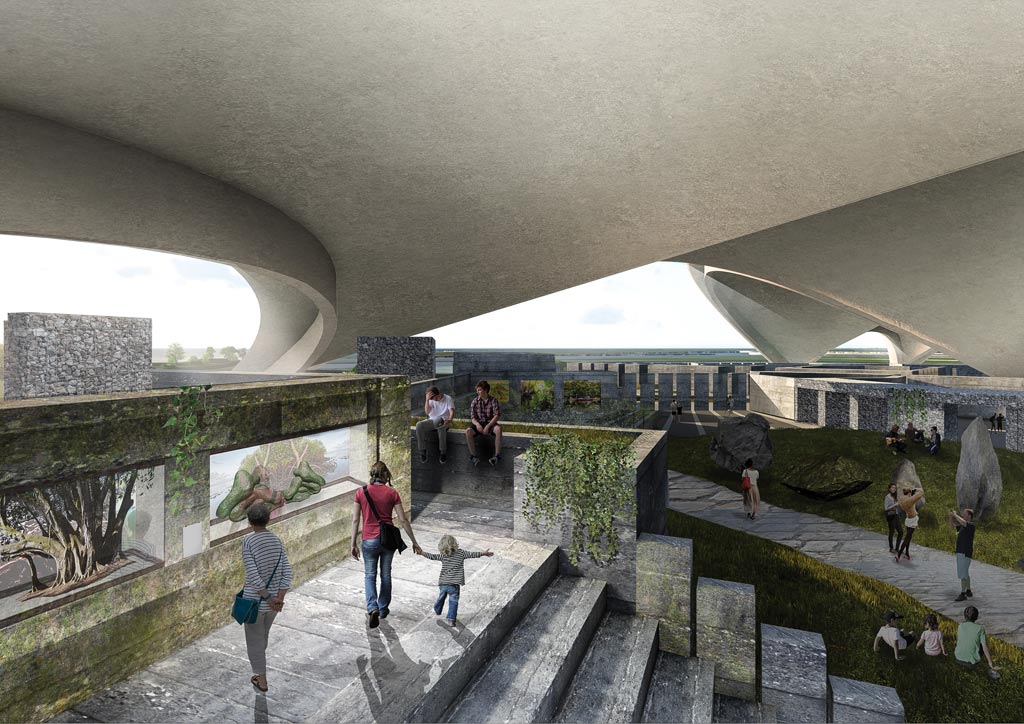
In Design Better, Leandro V. Locsin Partners, TwoEco, Inc., and Ramboll Studio Dreiseitl collaborated to design “Birdland,” a world-class ecotourism destination to draw nature into Entertainment City. Their design aims to be a catalyst for stewardship of our coasts and urban waterways, and creates an architectural experience that inspires reflection about our natural and built environments, and man’s impact on both.
“Birdland” encourages ecotourism that is inclusive and all-encompassing; one that turns a deteriorating ecosystem into an asset to the people, businesses, and the planet.
Pasiglahin
Pasig River’s network of parks
In spite of several attempts to restoring the infamous Pasig River, there still exists an appalling level of pollution in and along this biologically dead river: its waters murky and putrid, and its embankments underutilized and illegally occupied. While waterways, like Pasig River, in cities overseas are usually tourist spots and Instagram-worthy, ours is considered the “unsightly side of the city.”
Verlie Clemente, Abigail Clemente, and Jeffrey Caladiao teamed up to explore another opportunity to redevelop the river and promote the use of Pasig River’s embankments as a “Green Corridor” through their PASIGlahin masterplan.
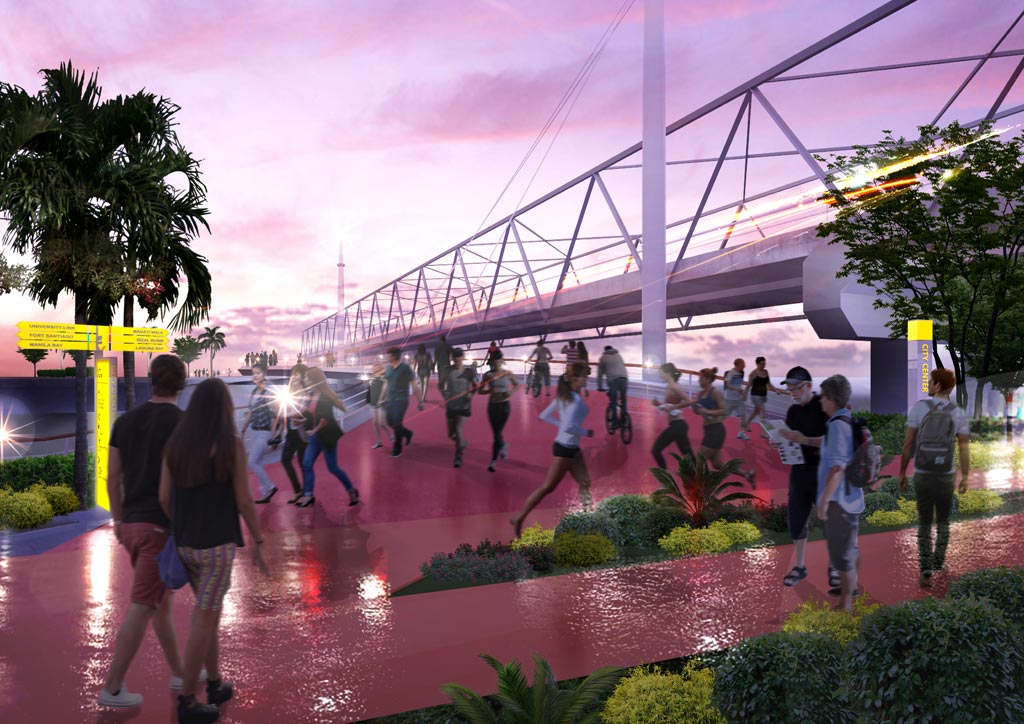
The Filipino word “pasiglahin” means to invigorate, enliven, revitalize, and vivify. Building on the existing Pasig River Rehabilitation Program (PRRP), PASIGlahin’s design breathes life back to the major waterway again by creating walkable and livable communities with jogging and cycling tracks, playgrounds, seating areas, shelter pavilions, and more.
The Freed Park
Manila Zoo virtual experience
The old Manila Zoo from the ’50s to early ’90s that many Filipinos have known was the prime tour destination for education and recreation, featuring the rich flora and fauna of the country. However, that was long ago. Today’s Manila Zoo is the consequence of poor maintenance. Besides the lack of maintenance, there have also been an ongoing debate on and an increasing concern for animal welfare.
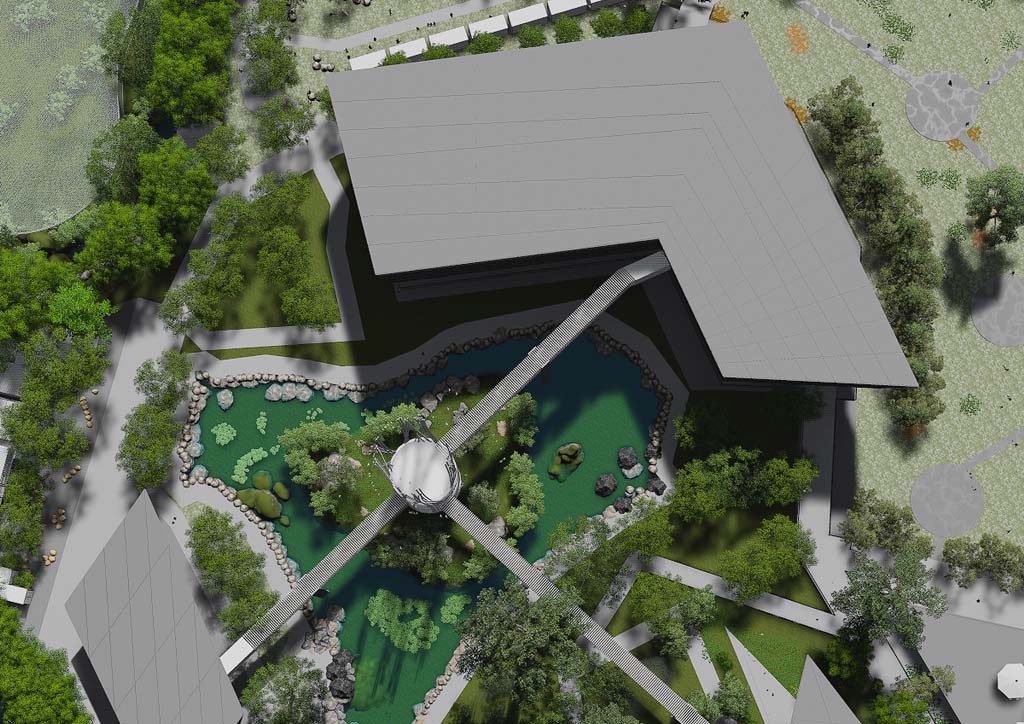
Thus, “The Freed Park,” was conceived by ONG&ONG. Their design concept will be utilizing the potential of the existing botanical garden of the Manila Zoo, and incorporating more green spaces and relevant structures that would replace the traditional zoo set up. The zoo will also take a huge technological leap through Virtual Reality (VR) and Augmented Reality (AR), aimed to transition the zoo operations into the virtual platform. The park will also feature a central viewing tower, and a local market which will be called the Freed Market.
This progressive solution to both the lack of maintenance of the current Manila Zoo and the welfare of animals in captivity, reinforces the idea of harmonious living among humans, plants, and animals.
Design Better, Educate Better
De La Salle College of St. Benilde main campus redesigned
The dilemma with De La Salle College of St. Benilde (CSB) main campus is its distribution among a cluster of adjacencies, and its being nestled in a residential neighborhood. These conditions challenge the school’s ever-growing needs and intent in serving both its student community and the neighborhood that surrounds it.
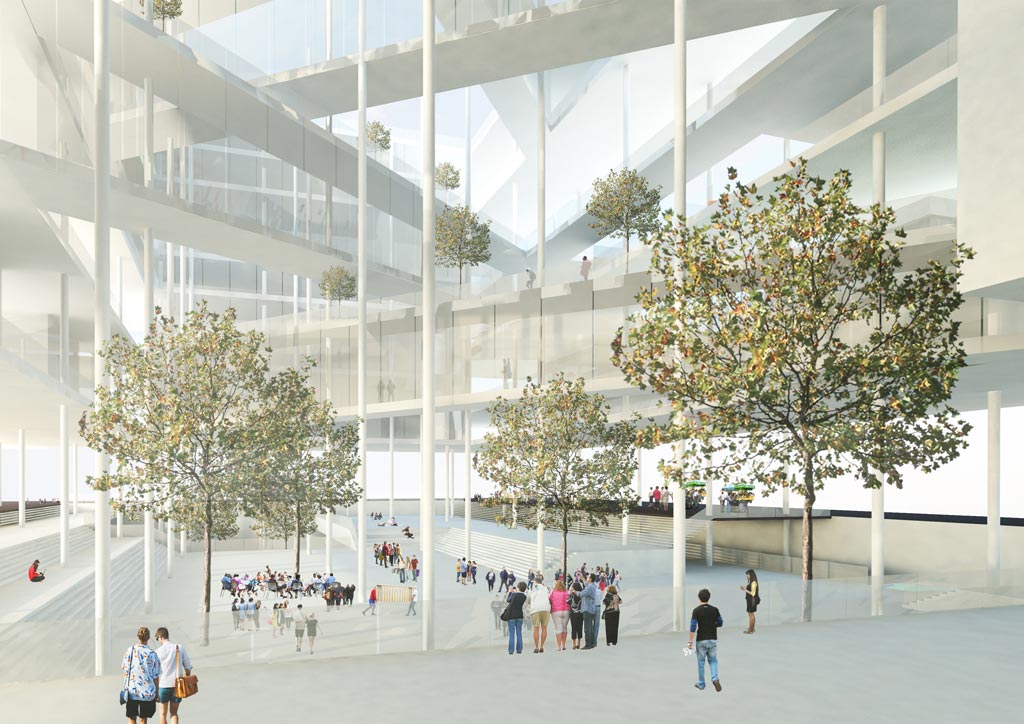
Designing with a conscience, Jose Maria U. Yupangco, Gabriel Luis Jesus N. Brioso, Mariah Camille M. Concepcion, and Angelo Ezekiel P. Nuestro came together as a design and planning group to develop a human-centered and community-driven design for the campus. Guided by the vision of “innovation and inclusion,” the team agreed on a future school typology, reconfigured with lightness, hollowing out huge voids from its mass, and incorporating crossover pathways to connect each area. The team plans to make the building feel like an open field that would offer multiple uses for the users, but still secure and connected through the slightlines.
In their “Design Better, Educate Better” master plan, they envision the campus to grow organically within its structures, driven by what they call the “interiorization” program, and transform CSB into a more progressive venue for education that is beneficial to its neighbors, and a catalyst to conversation within the larger community.
Sunken but Unsinkable
The Sunken Shrine of Our Lady of Lourdes of Cabetican
If you have been to, or at least seen in photographs of the Sunken Shrine of Our Lady of Lourdes of Cabetican in Bacolor, Pampanga, restoration would be the first idea to come up. The then-seven-storey all-concrete shrine was buried by ash from the eruption of Mt. Pinatubo, so devotees need to shuffle through the meter-high openings by crouching or crawling. Besides this, the shrine often floods during the rainy season—making it the breeding ground for mosquitoes, and unsafe for the children.
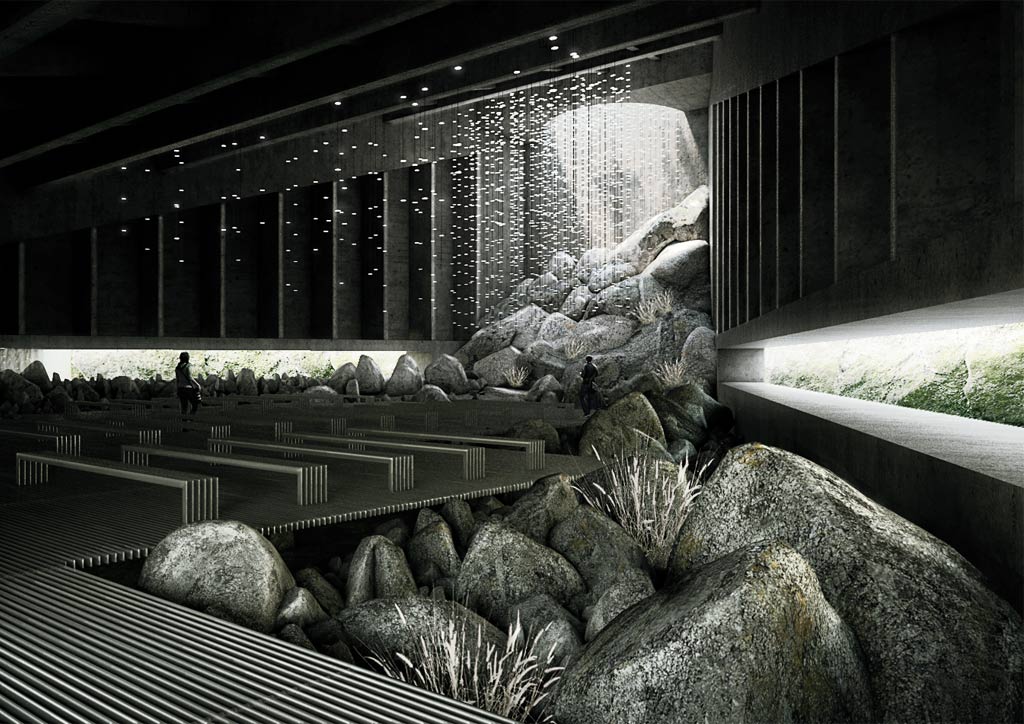
Despite the many inconveniences, BAAD Studio intend to conserve, instead of restore, the existing natural qualities of the ruin, the site, and its history. The parishioners seem to like the idea as well. “Sunken but Unsinkable,” BAAD Studio‘s redevelopment plan for the Cabetican shrine retains the church’s raw and unpretentious architecture, and its demands of all who enter the fabric. Their design keeps the interior as simple as possible, incorporates a proper drainage system, creates a discreet opening near the highest part of the ceiling for passive cooling, and uses raw materials that evoke the beauty of the province.
The team believes that preserving the shrine as a ruin symbolizes the duality of life and strength of faith, hope, and love—and of good architecture.
See the Philippines with fresh eyes in the Design Better book, set to be launched on 9th February at Baluartillo de San Francisco Javier, Fort Santiago, Intramuros, Manila. You can purchase your copies at the Bluprint booth during the Anthology Festival 2018. 
Frequently Asked Questions
To transform a site like the LPPCHEA into a world-class ecotourism asset, substitute industrial development with a “Birdland” concept. This recipe draws nature into the city by creating an architectural experience that inspires reflection and coastline stewardship. By prioritizing sustainability over commercial expansion, you turn a high-pollution area into a catalyst for ecological health and inclusive tourism.
The secret to invigorating the Pasig River is the “PASIGlahin” masterplan—a process of creating a walkable, livable network of green spaces. By adding “ingredients” like jogging tracks, cycling paths, and shelter pavilions along the embankments, you transition the river from an “unsightly side of the city” into a vibrant community asset. This masterplan breathes life back into the water by prioritizing human activity and environmental restoration.
A frequent mistake is attempting a full restoration that erases the site’s history. Instead, follow the “Sunken but Unsinkable” philosophy: conserve rather than restore. Maintain the raw, unpretentious concrete architecture and the unique “crawling” experience. To fix common pain points like flooding, integrate a proper drainage system and discreet ceiling openings for passive cooling, preserving the ruins as a symbol of local resilience.
Substitute the traditional physical zoo setup with a “Freed Park” model that utilizes Virtual Reality (VR) and Augmented Reality (AR). By transitioning animal displays to a virtual platform, you solve the lack of maintenance and ethical concerns of captivity. This technological leap, paired with hollowing out green spaces and viewing towers, creates a harmonious environment where education thrives through immersive digital experience rather than cages.
The core ingredients are innovation and inclusion through a “hollowing out” technique. To prevent the school from feeling like an isolated block, remove mass from the structure to create huge voids and crossover pathways. This creates an “open field” feeling that serves both students and neighbors, turning the campus into a community-driven venue for conversation and organic growth.

