Rinna Soriano’s favorite part of her work is sanding. At her workbench, she stays focused, following the grain, adjusting to changes in its direction. Narra, she has learned, can have interlocking grain. A piece of mango once proved particularly difficult until a worker explained that she had reached the point where a branch once grew […]
‘Travel Light’: Pete Jimenez Finds Life in Construction Detritus



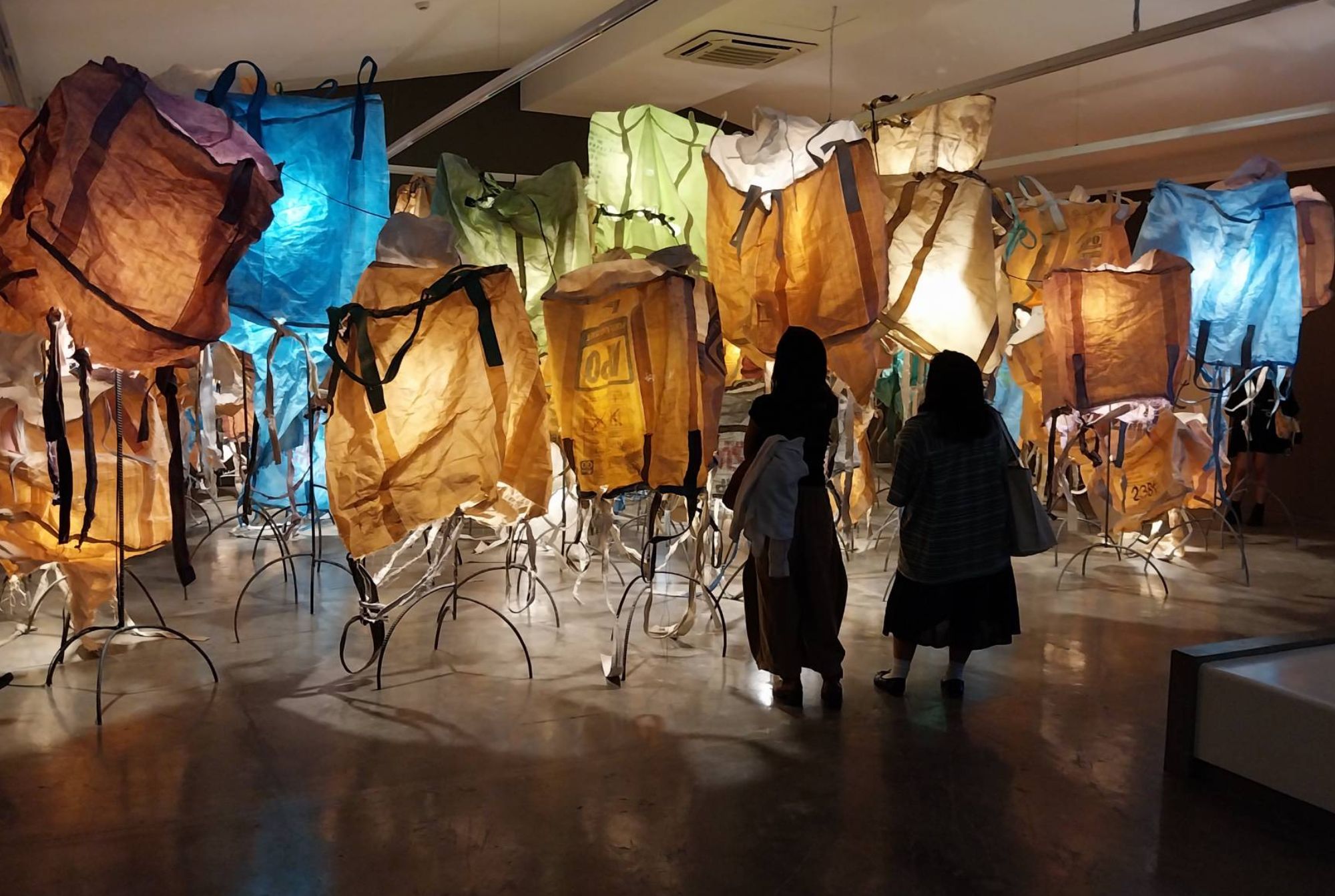
Travel Light, Pete Jimenez’s newest exhibit at Artinformal Gallery in Makati, supplies its central thesis within the subtitle. “Take nothing for the journey – keep it simple; no bag, no bread, no money.” It references a verse in the Bible, but within this context, it exemplifies a non-consumerist take on our existence. Shift with the tides of the world; be adaptable.
The waste created by our society is reaching unsustainable levels thanks to consumerist trends, fast fashion, and landfills filled with unused objects. Jimenez’s works in this exhibit points at this waste and asks why it cannot have a second life beyond its initial use.
“For the artist, as evidenced by this work as well as his practice, there is dignity in objects that remains and persists despite the countless recycles. Hence, one only needs a capacious imagination to breathe life into things, without destroying their materiality,” Carlomar Arcangel Daoana said in their write-up.
Forests of Rebars and Bags
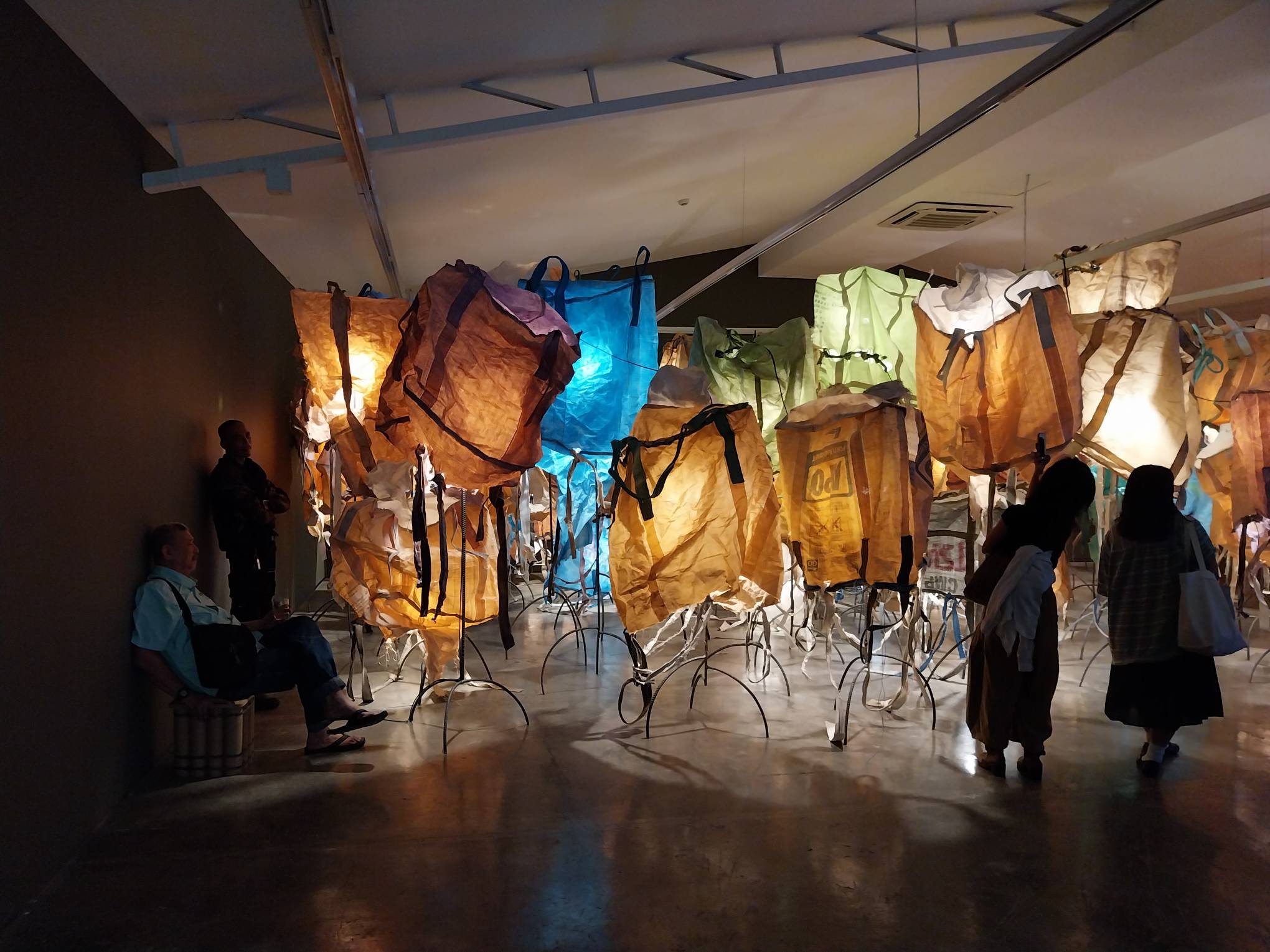
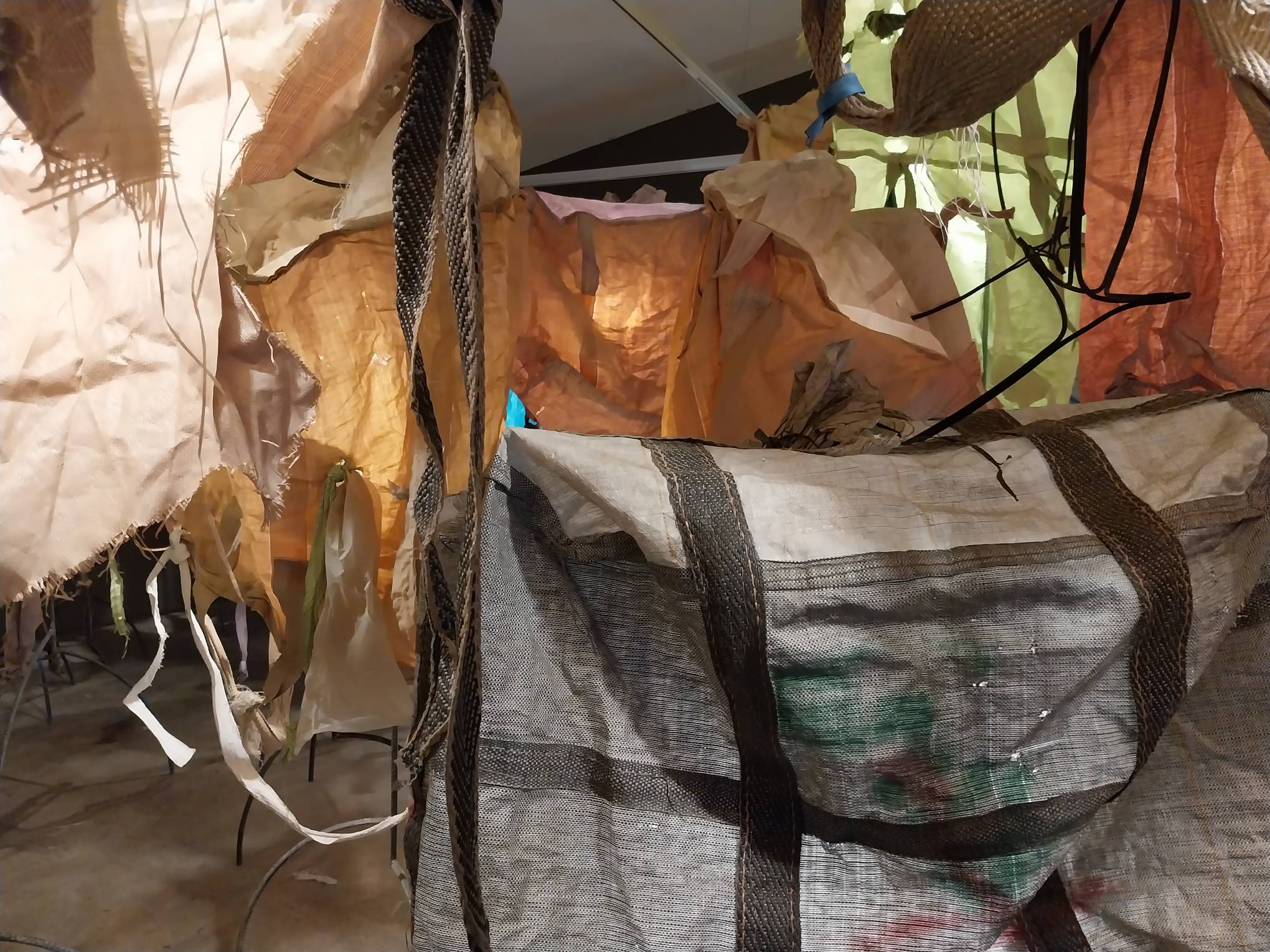
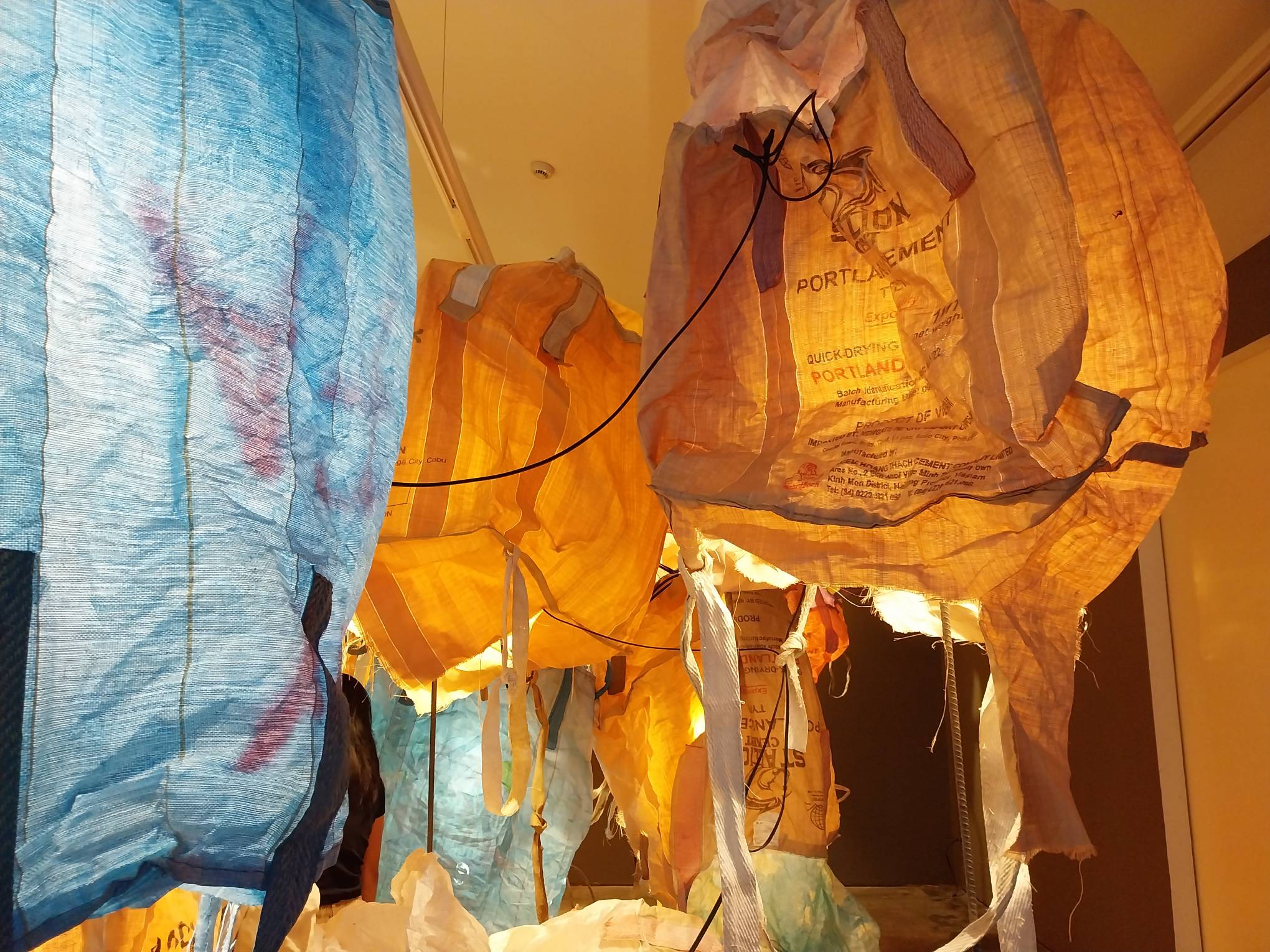
As artworks, Travel Light gives audiences a strong anti-consumerist message rooted in ideas of care and renewal. Pete Jimenez uses over 40 giant cement bags to create a forest of light in the exhibit space. Beyond the cement bags, he also uses other construction materials, like rebar remodeled to hang the bags on.
With differing heights and even different colors and textures between the bags, they do look like trees in a forest. The scale of the project feels dizzying at times—it’s hard to even photograph the whole exhibit at once. One can even walk through and around them, if one can fit well enough between the spaces.
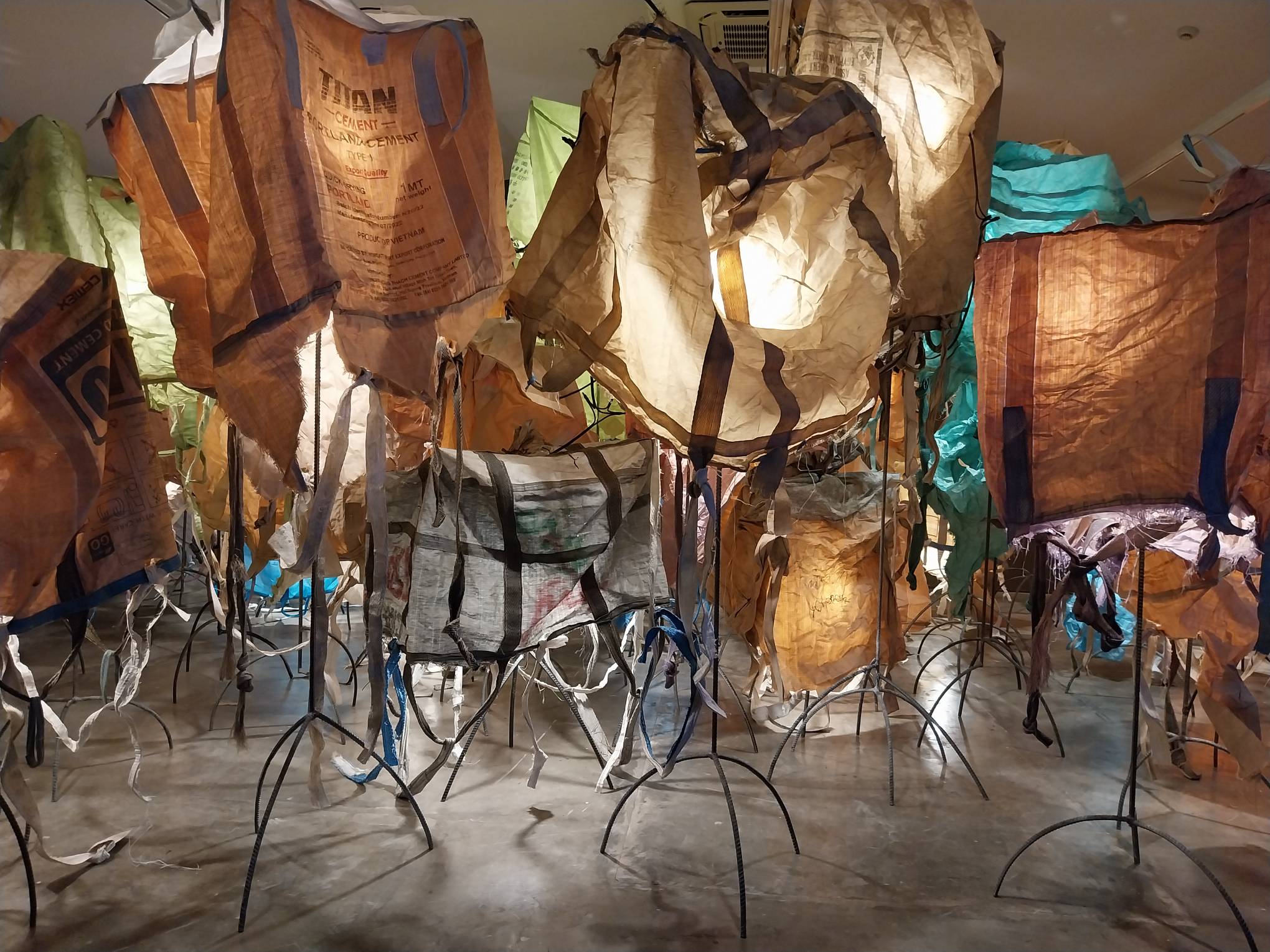
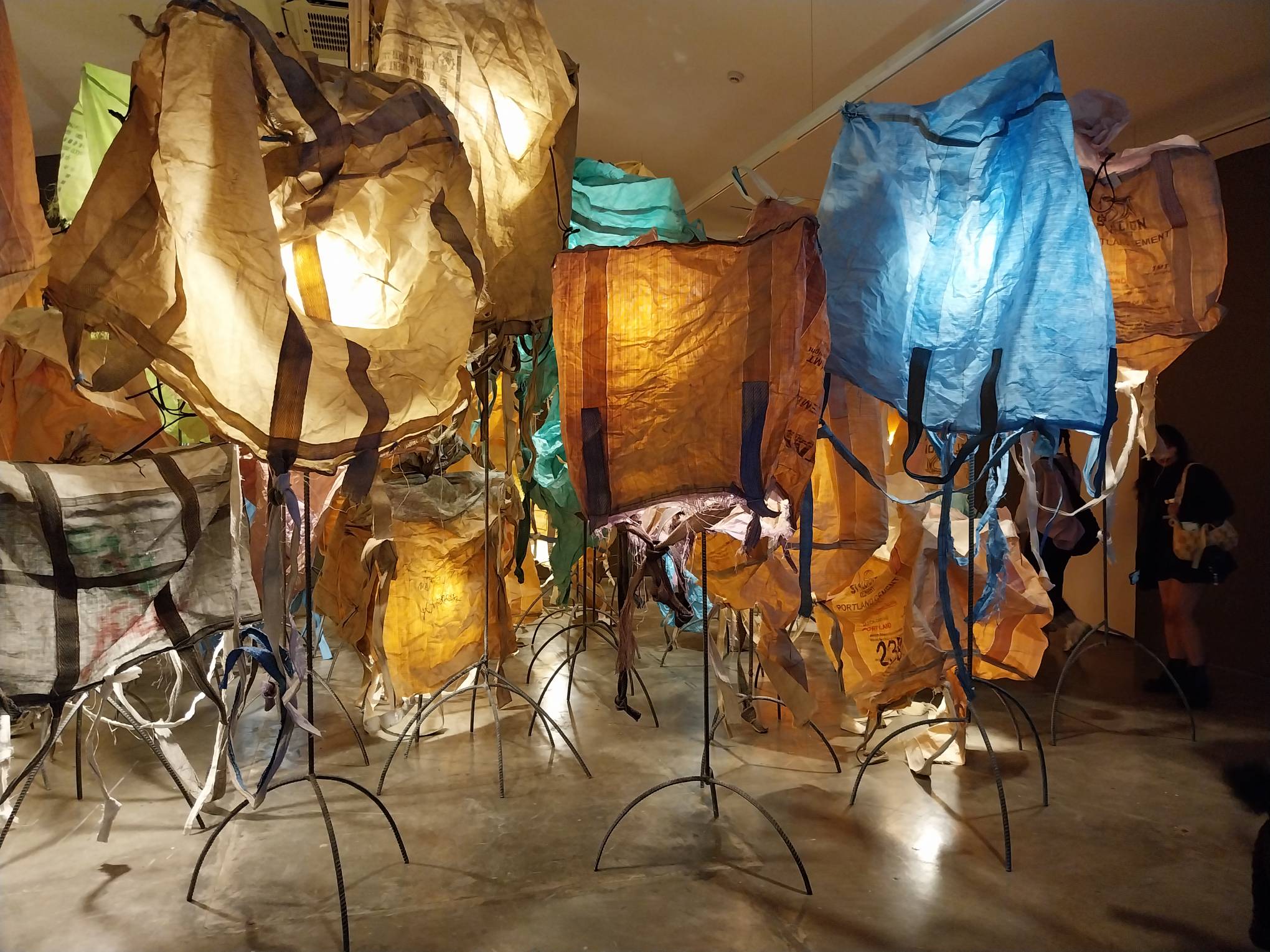
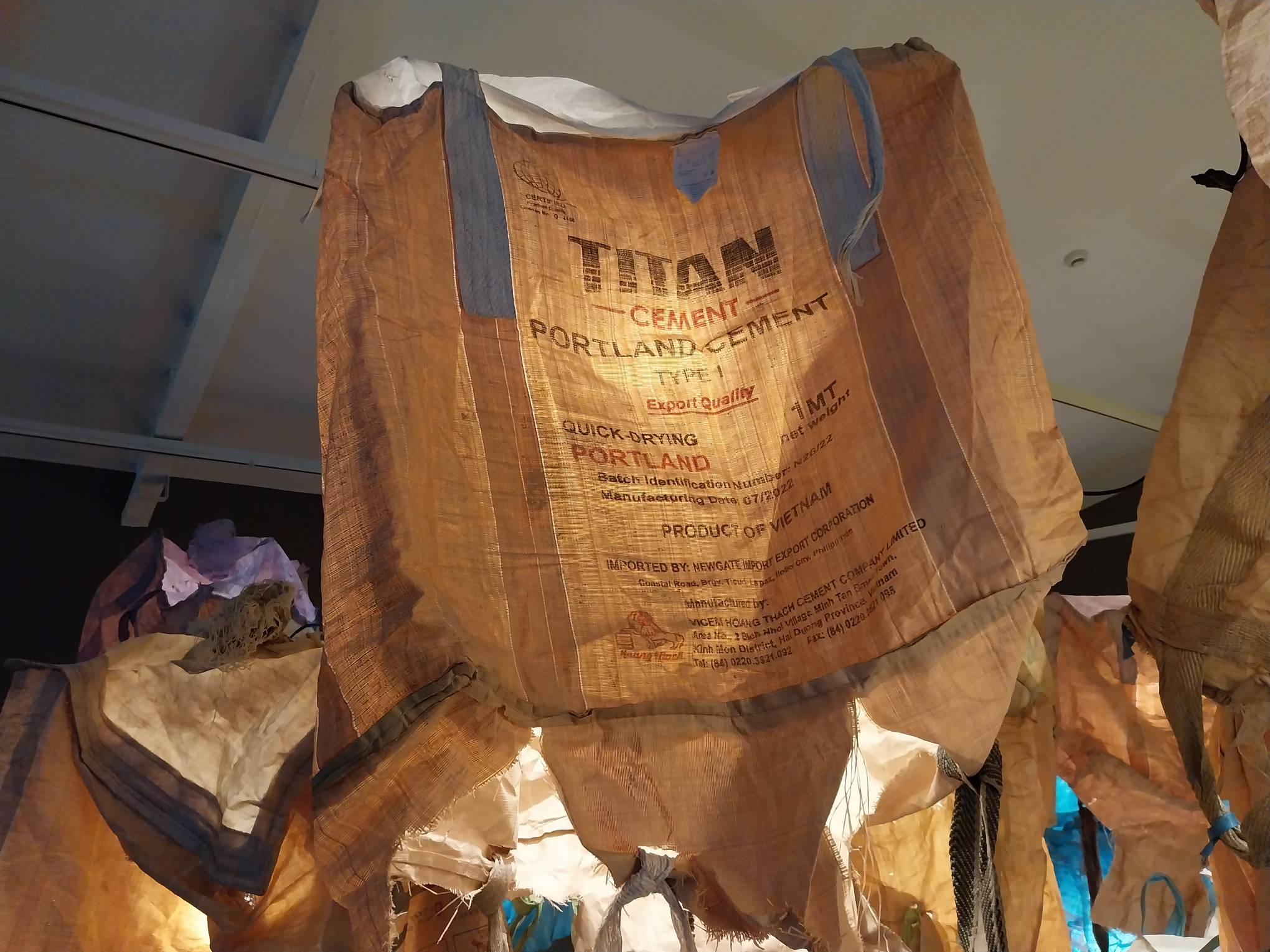
Pete Jimenez repurposed the cement bags in ways that adhered closer to the message they desired to send. Cement bags are basic woven sacks that workers have to carry on their backs from the center to ensure balance.
The artist adds bag handles to many of them, signifying an upgrade, so to speak, in function. It’s worth pointing out because that change in design gives it a new life beyond storing bags of cement together. It now can store other items, with easier ways of carrying the objects.
Dignity in Less
The exhibit recycles these bags to find them a new purpose, to show that no one is tied to their past. And then the artist subverts the idea of the bag in the first place within the text of the works. Presenting them as empty and suspended in rebar shows the lightness of life in a whole new angle.
In certain angles the rebar fades under the shadows of the light. This creates the illusion of these cement bags floating away, a literal application of “travel light.” It seems intentional on the artist’s part, as they seem to show us what a world without burdens could look like.
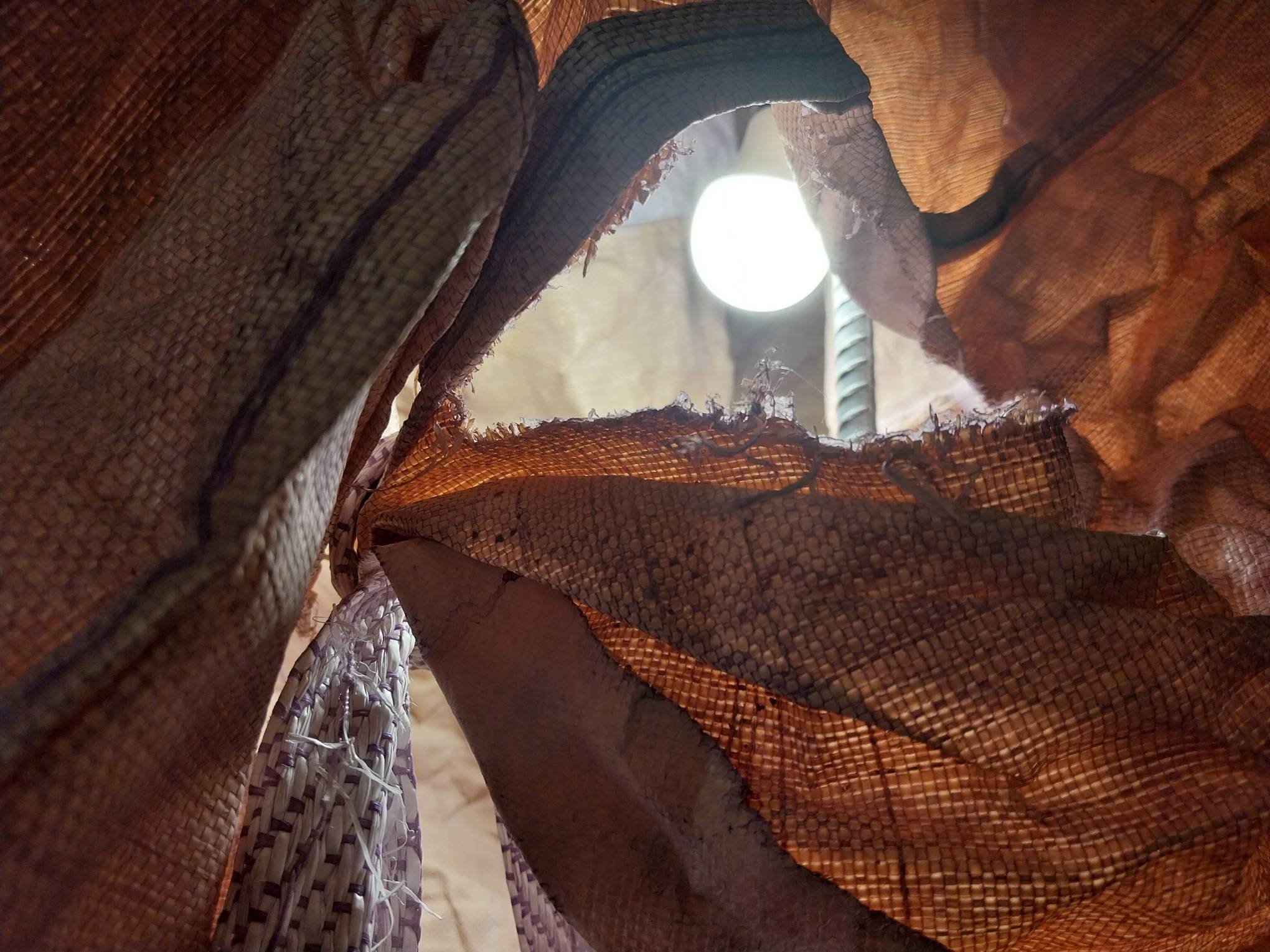
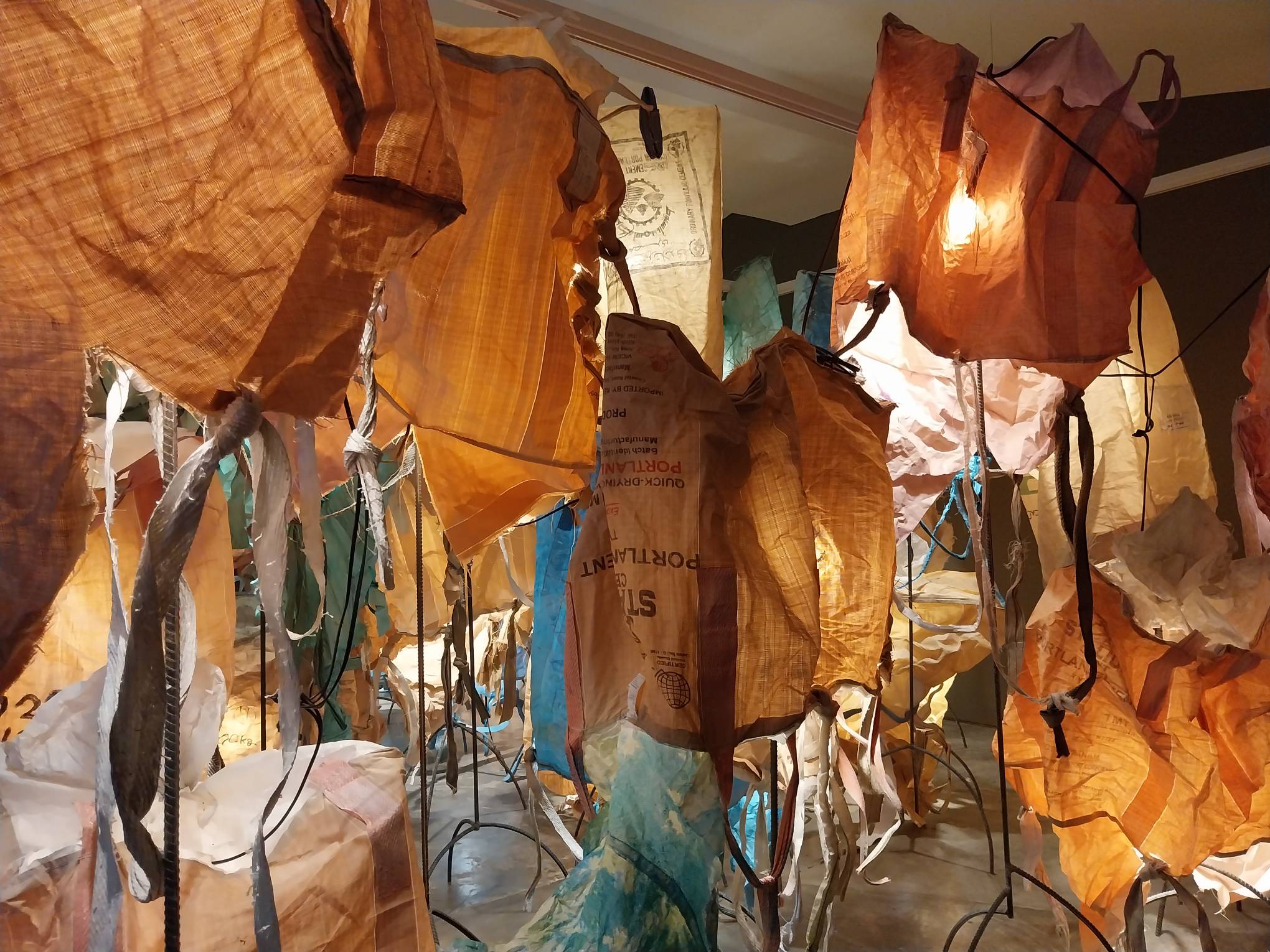
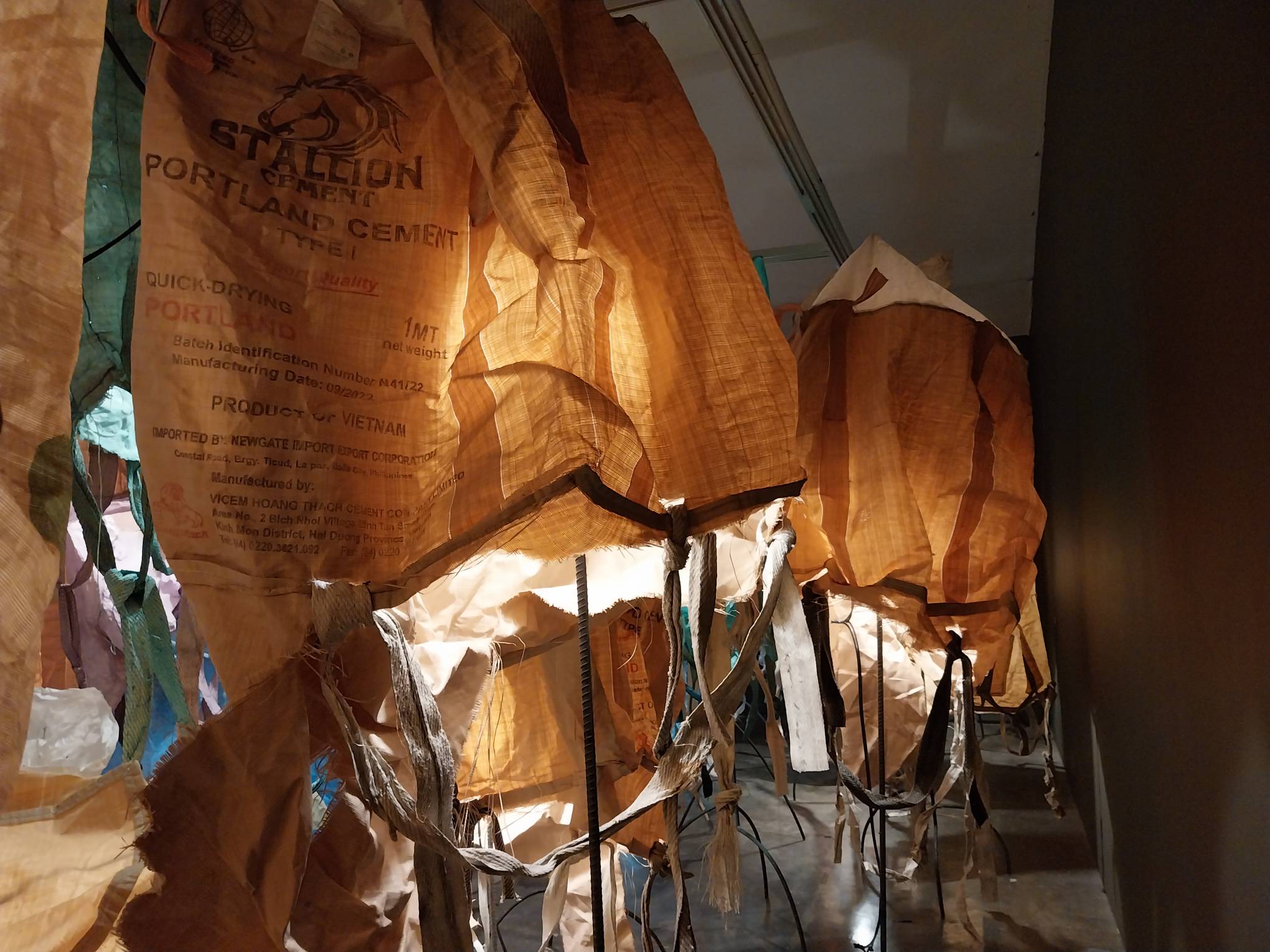
“The lack, if it’s not perverse such as in poverty, can be uplifting, as one no longer needs to struggle with the burden of possessions,” Daoana said in their write-up.
Travel Light challenges us with the idea of a world where instead of pursuing excess, we instead pursue enough. That we find satisfaction in less and work towards those ideas in the future. In a world of excessive waste and the desire for higher, for more, it’s an interesting lesson to impart through art.
Related reading: The Barn: An Idyllic Home Made of Ethically Sourced and Reclaimed Timber


Large-format porcelain is no longer limited to conventional floor and wall applications. Advances in scale, finish, and fabrication have expanded its role across architectureArchitectureThe art and science of designing and constructing buildings, structures, and spaces that are functional, safe, and aesthetically pleasing. It encompasses the planning, design, materials, and techniques used to createGo to Architecture […]
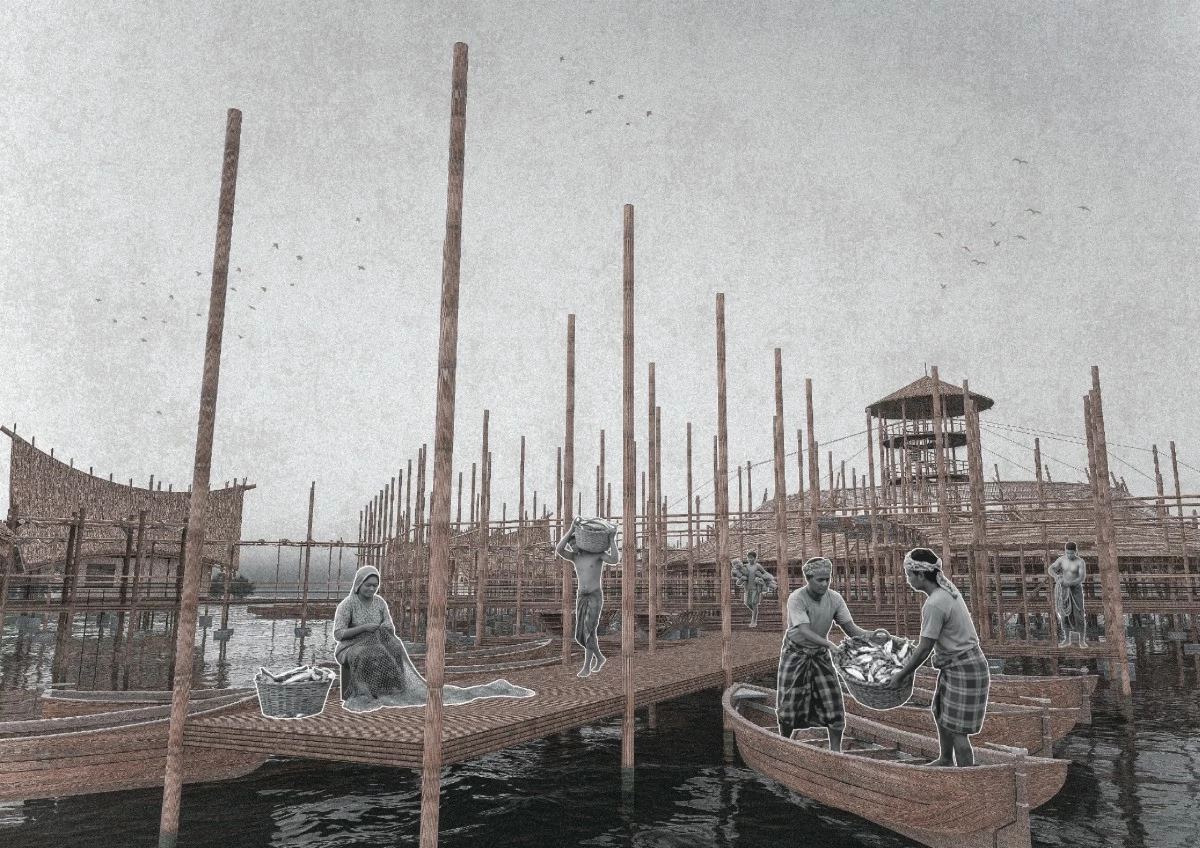
Mindanaoan architectureArchitectureThe art and science of designing and constructing buildings, structures, and spaces that are functional, safe, and aesthetically pleasing. It encompasses the planning, design, materials, and techniques used to createGo to Architecture Glossary student Ejhay L. Durias of the University of Mindanao made history after becoming the first Filipino to receive the AYDA International […]
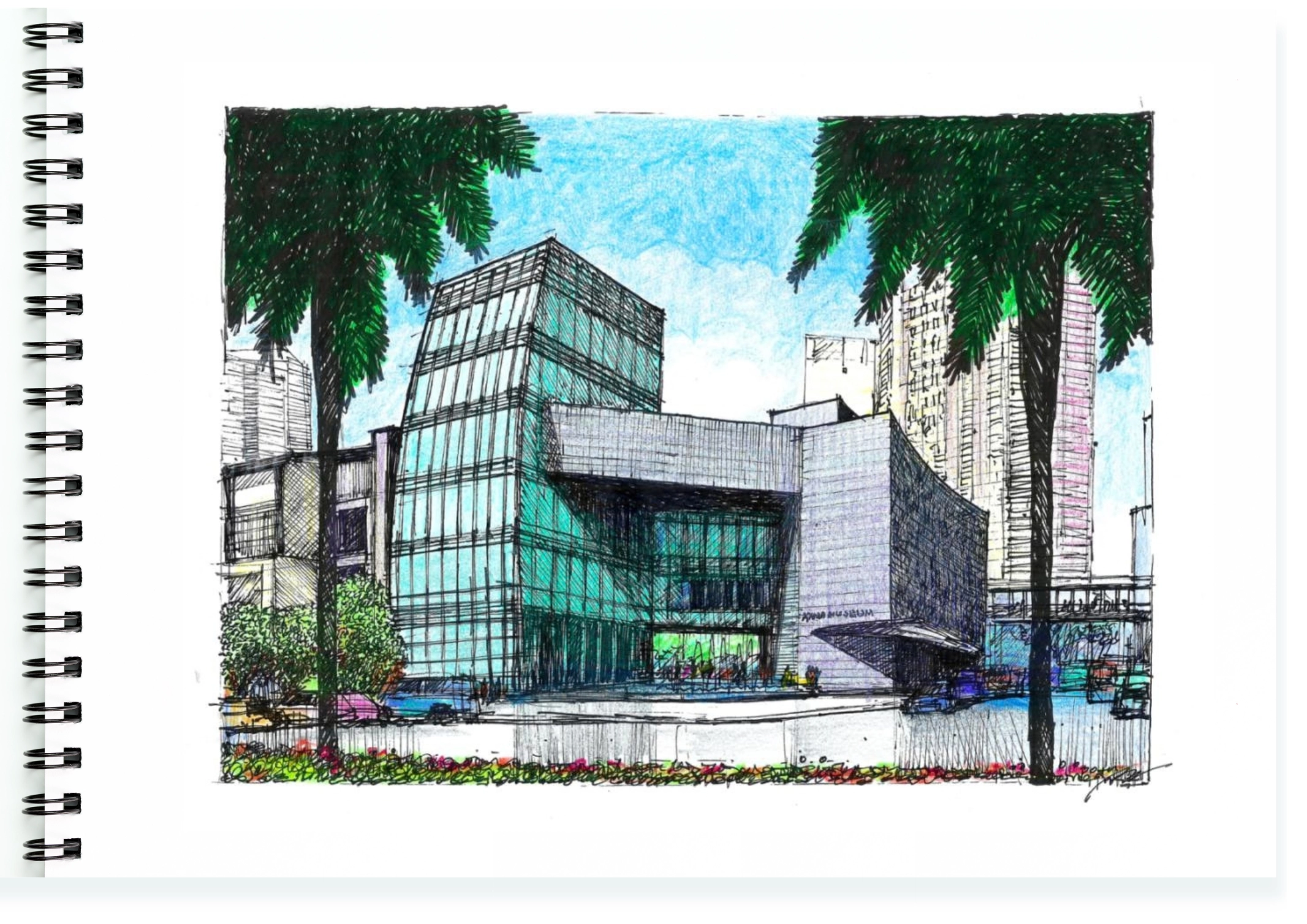
From Brutalism to Contemporary Modernism The Ayala Museum designed by the firm of Leandro V. Locsin Partners (LVLP) sits at the corner of Makati Avenue and Dela Rosa Street in Legaspi Village, Makati. This is actually the second museum of the same name in the area. The original, which was designed by National artist for […]
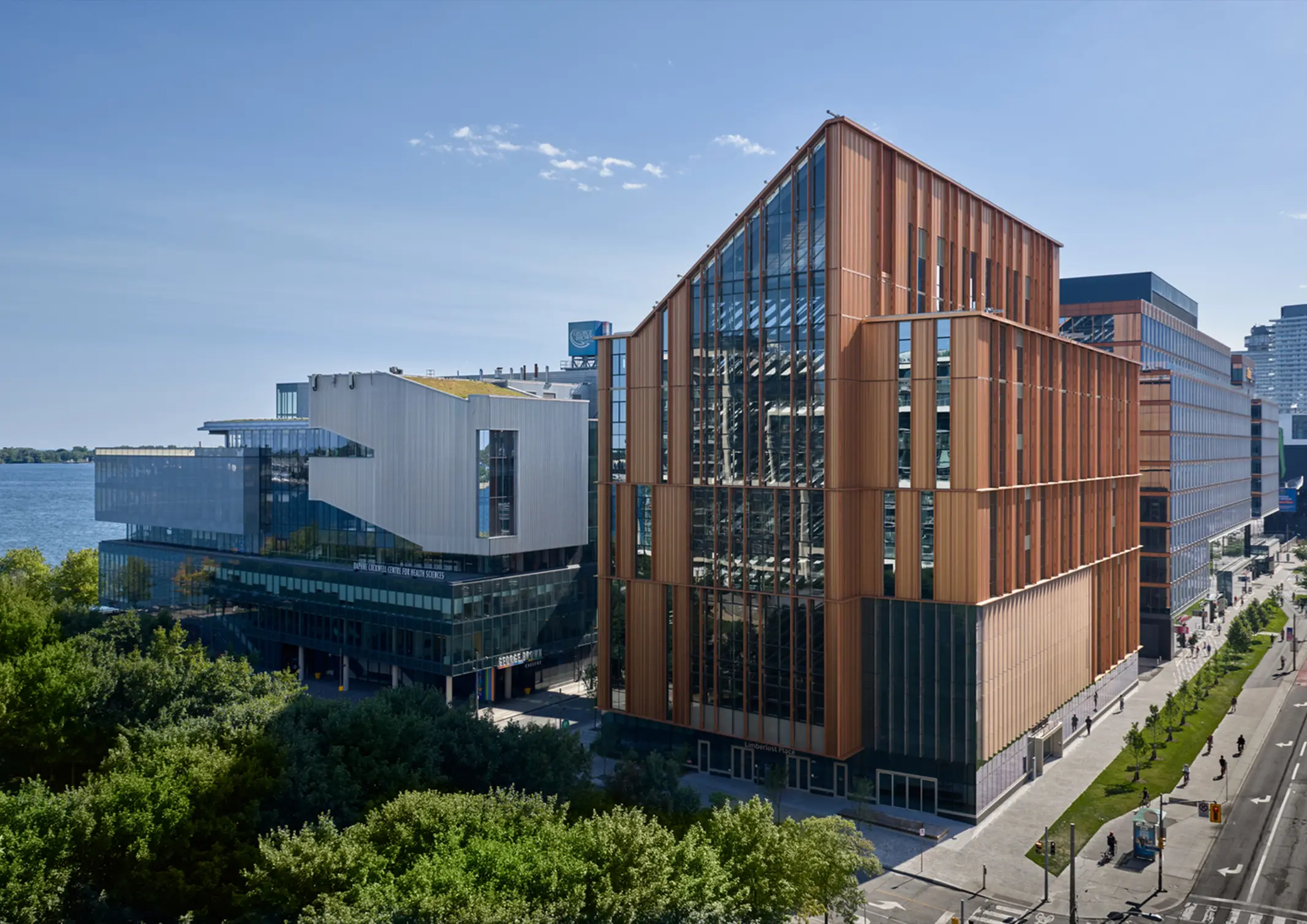
The projects recognized by Architizer’s 14th Annual A+Awards span architectureArchitectureThe art and science of designing and constructing buildings, structures, and spaces that are functional, safe, and aesthetically pleasing. It encompasses the planning, design, materials, and techniques used to createGo to Architecture Glossary, interiors, landscape, urban design, and sustainability. Organized by Architizer, one of the world’s […]
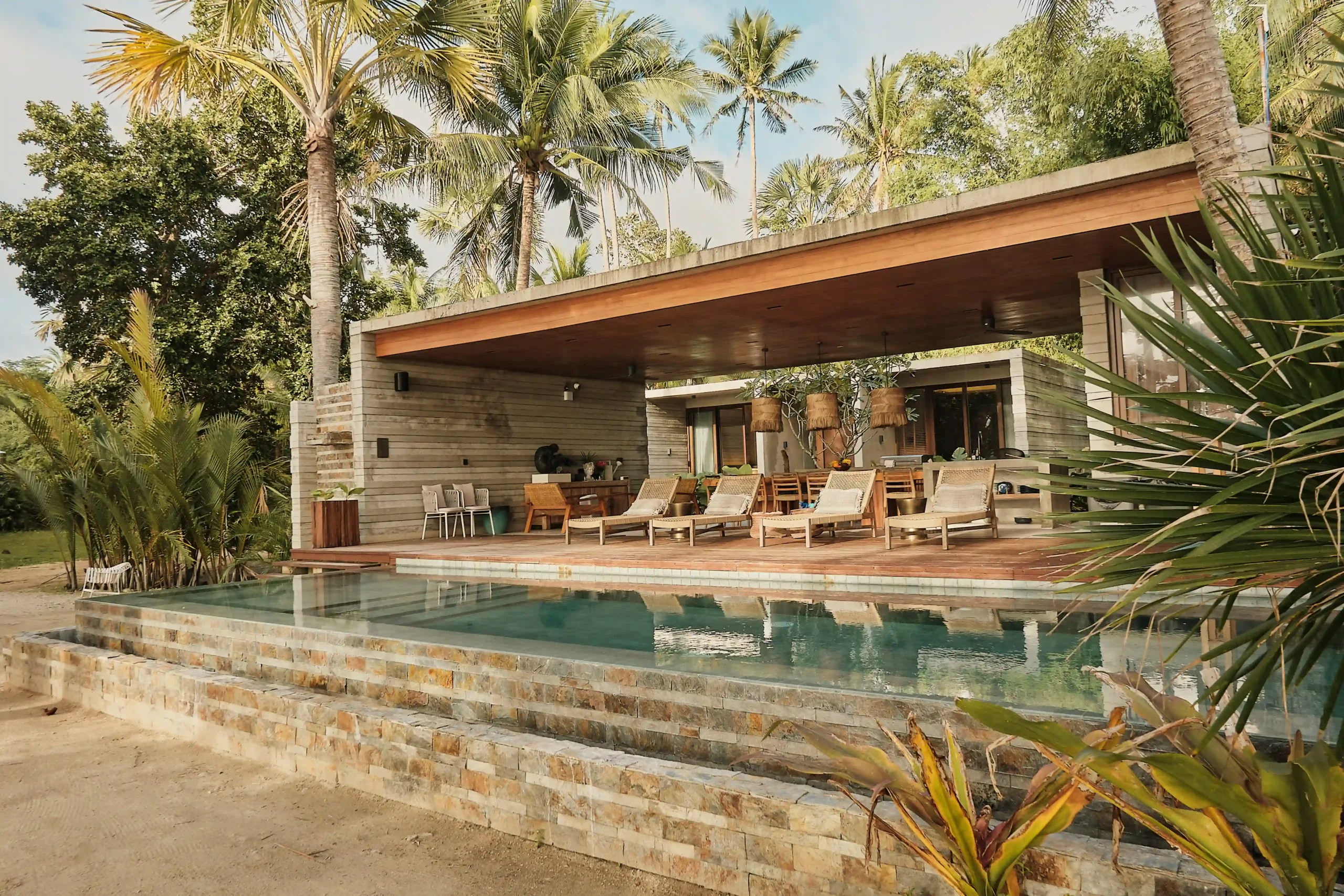
Overlooking Tayabas Bay, Agda Beach Villas occupies a one-hectare hilly property where the terrain descends toward the coast. Designed by VBo Architects + Engineers, the tropical retreat responds to the sloping terrain through villas and shared spaces oriented toward the surrounding landscape. Before construction began, Bocalid was drawn to the property’s steep terrain and secluded […]
Read the issues.

Collect the volumes.

Recommended Video
Tap to Unmute
Unmute
0:00
0:00