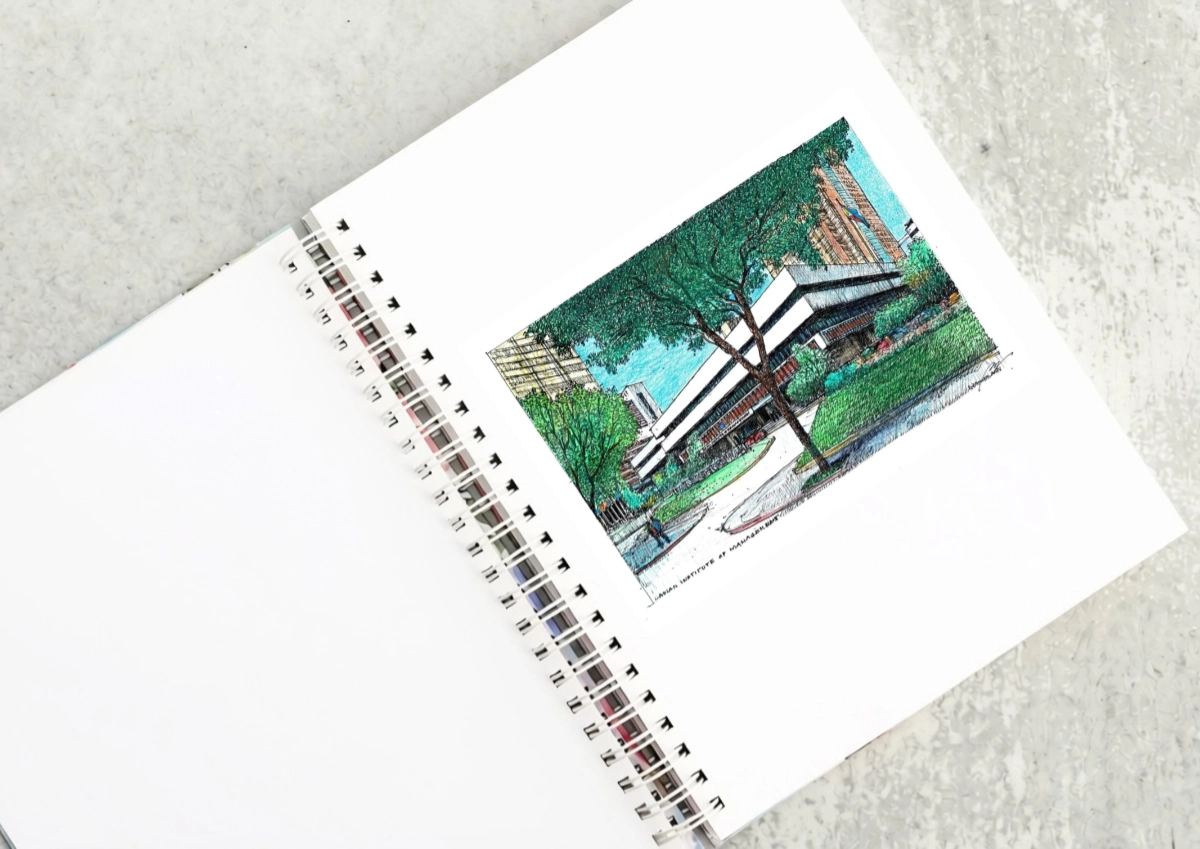
A Filipino Interpretation of Modernist Architecture Unlike the rest of Makati today, the northern end of Paseo de Roxas in Makati is anchored by a low complex rather than a tall skyscraper. This is the elegant Asian Institute of Management, designed by architect Gabriel Formoso and completed in 1971. In my opinion, the building is […]
‘Gloss with a Purpose’ and Exploring Truths in Performing Queerness



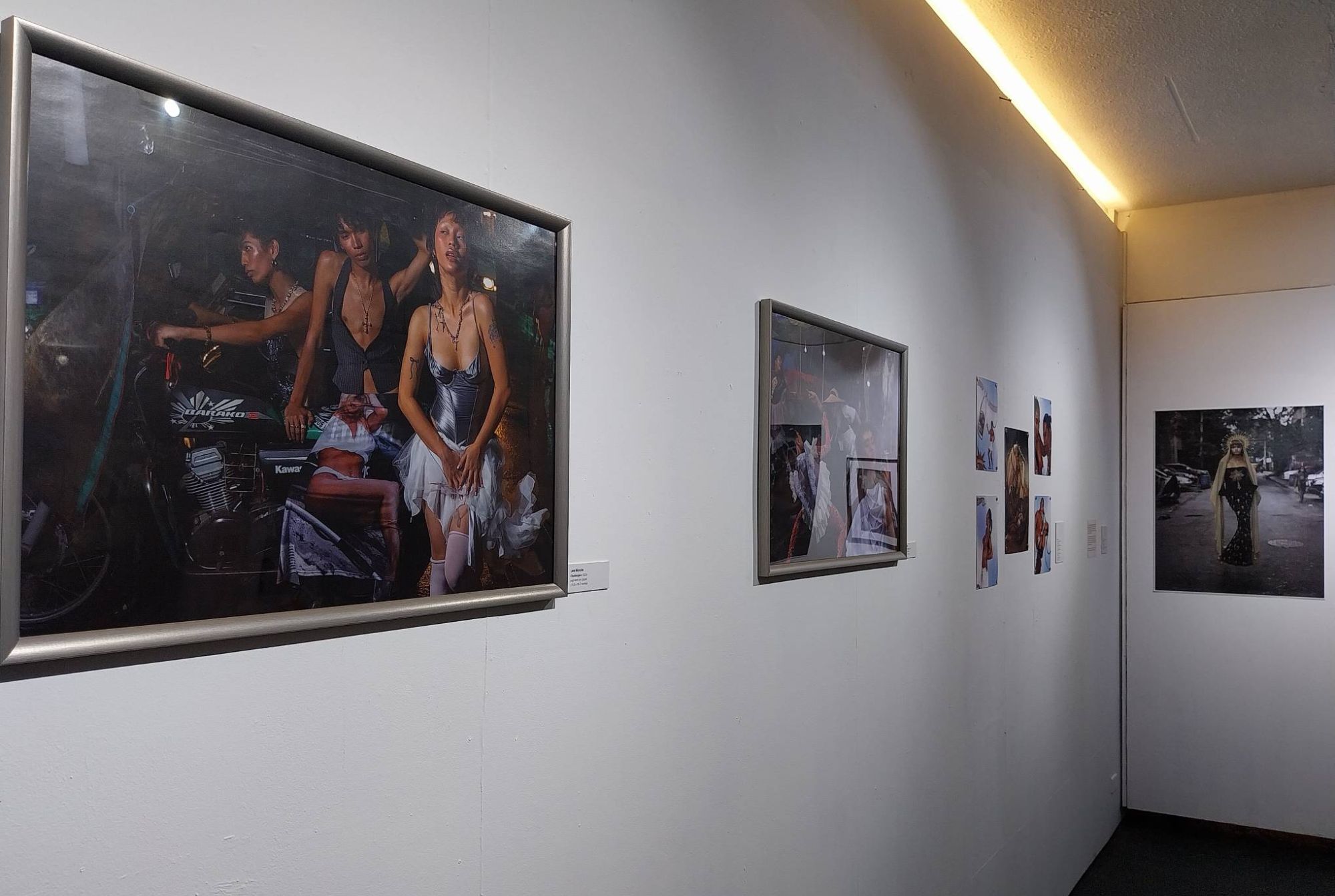
Gloss with a Purpose combines the artworks of Filipino photographer Lee Morale and American artist Kia LaBeija. The exhibit highlights the artifice and performance that exists in queer communities—and its importance in the way we define our own identities as a whole.
Hannah Jaugan curated Gloss with a Purpose as her senior thesis for AB Art Management at Ateneo. The exhibit ran at Kalawakan Spacetime, Quezon City, from March 7 to 9.
The Artists in Question
Lee Morale is a transgender photographer from Mindanao who now works in Manila, escaping a conservative environment to practice her art. Kia LaBeija, meanwhile, is an Afro-Filipino queer cis woman from Hell’s Kitchen in New York. Born with HIV, she uses art to advocate for AIDS awareness nationwide. Both artists experienced marginalization throughout their lives, which inform the works displayed.
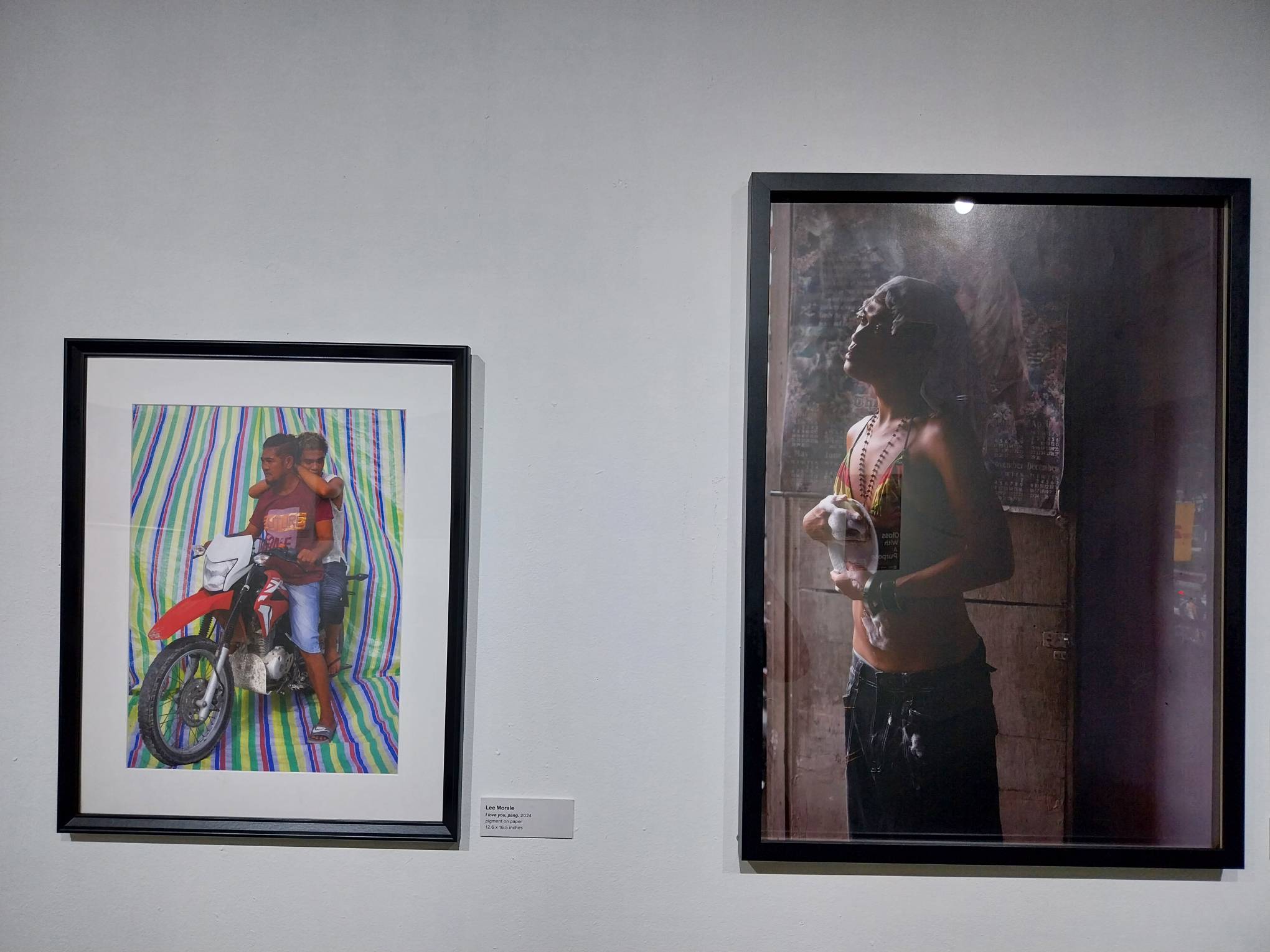
Morale’s photographs highlight specific “alternative narratives” representing queer and Filipino culture. Their professional photography work have been shown in different mediums like ABS-CBN and Preview. Beyond that, they’ve also exhibited their works in galleries, most notable in last year’s queer group exhibit God Save The Queers, Bless the Badings at Gravity Art Space. The work presented there were a commentary of queerness in urban spaces, juxtaposing the glamor of queerness of fashion with the griminess of our reality.
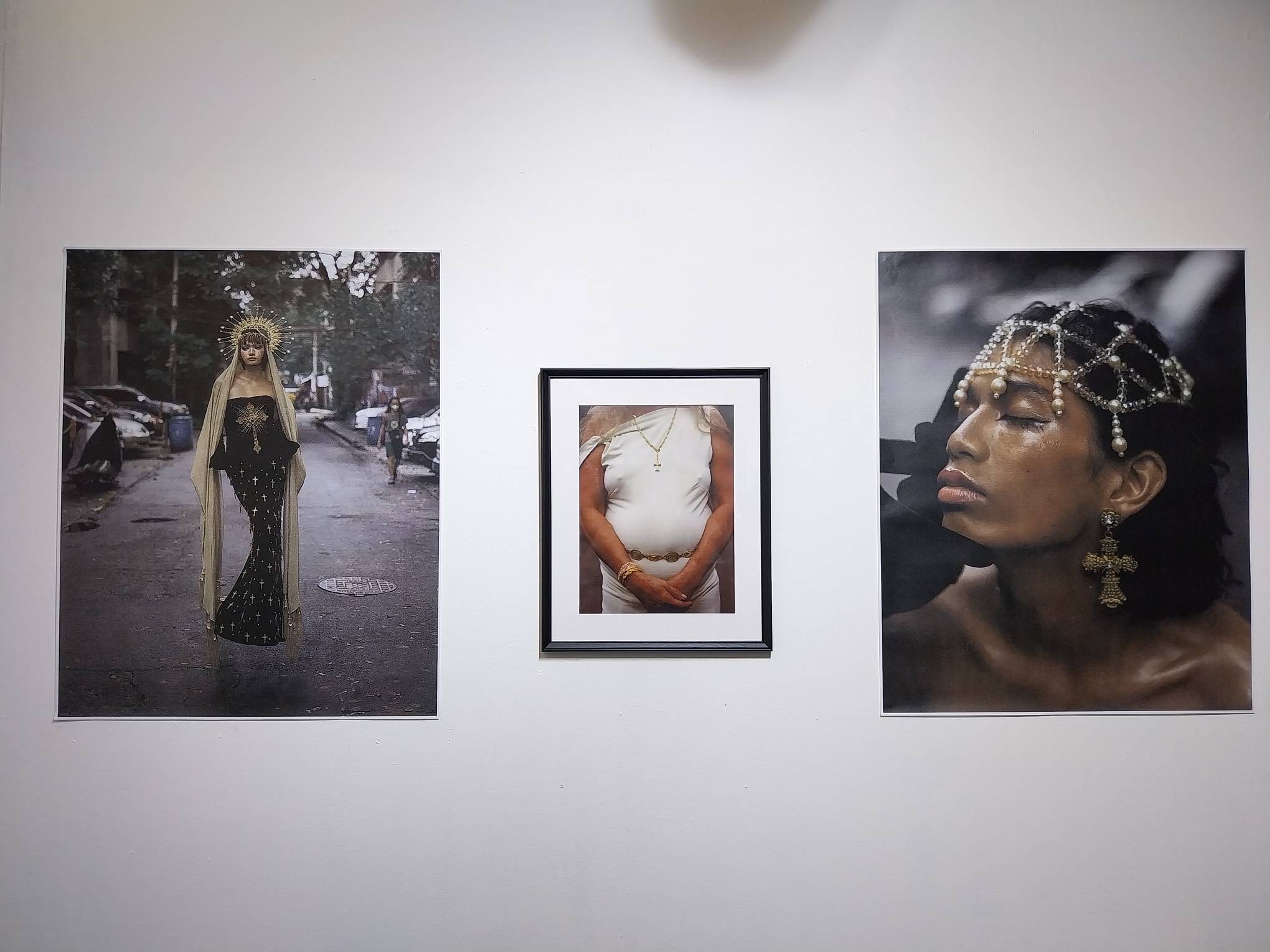
LaBeija, meanwhile, is an important figure in the New York ballroom scene. She started in 2009 and eventually became the Overall Mother for the influential House of LaBeija from 2017 to 2019. She also appears as a dancer in Ryan Murphy’s pilot episode of POSE, a TV series which centers around the New York ballroom culture in the late-80s and early-90s.
Defining Queer Performance
The idea of “queer performativity” comes from Judith Butler’s seminal 1990 text Gender Trouble. The author argued that gender is performative; a culturally constructed category that depends more on societal norms rather than anything inherent in our biology. It builds on ideas by Simone de Beauvoir and Luce Irigaray, expanding on the idea of “manhood” and “womanhood” as an identity dependent not just on the assigned sex at birth but also on cultural notions of race, class, and sexuality.
Their theory goes even further than most because Butler pushes forward the notion that both sex and gender are performative and assigned by a patriarchal society. The rigidity of roles and what’s allowed depends more on the society the individual lives in. Butler’s theory accounts for why, as an example, black women tend to be accused of being men by white patriarchal institutions. Or how many different societies across the world tend to have their own subcultures of third gender that exist separate from the idea of “transgender.”
This theory is utilized a lot in third-wave feminism and in queer theory, where many others have expounded on the idea that the body tends to be separate from the roles we have to play within society. Queer theory, especially, has highlighted the marginalizing ability of society to force a cisgender, heterosexual standard for everyone. It rejects the idea of a gender binary to account more for a fluidity of presentation for queer individuals.
In that regard, “performative queerness” is one that reclaims the body from patriarchal standards. It redefines how our bodies function outside of whiteness, of wealth, of gender and sexuality roles dictated by society. To “perform” queerness is to exemplify the parts of our identities that don’t fit in as an act of rebellion.
Artifice as Reality
Gloss with a Purpose showcases the inherent importance of camp and performative artifice in depicting the struggles of LGBTQ+ individuals and communities across the world.
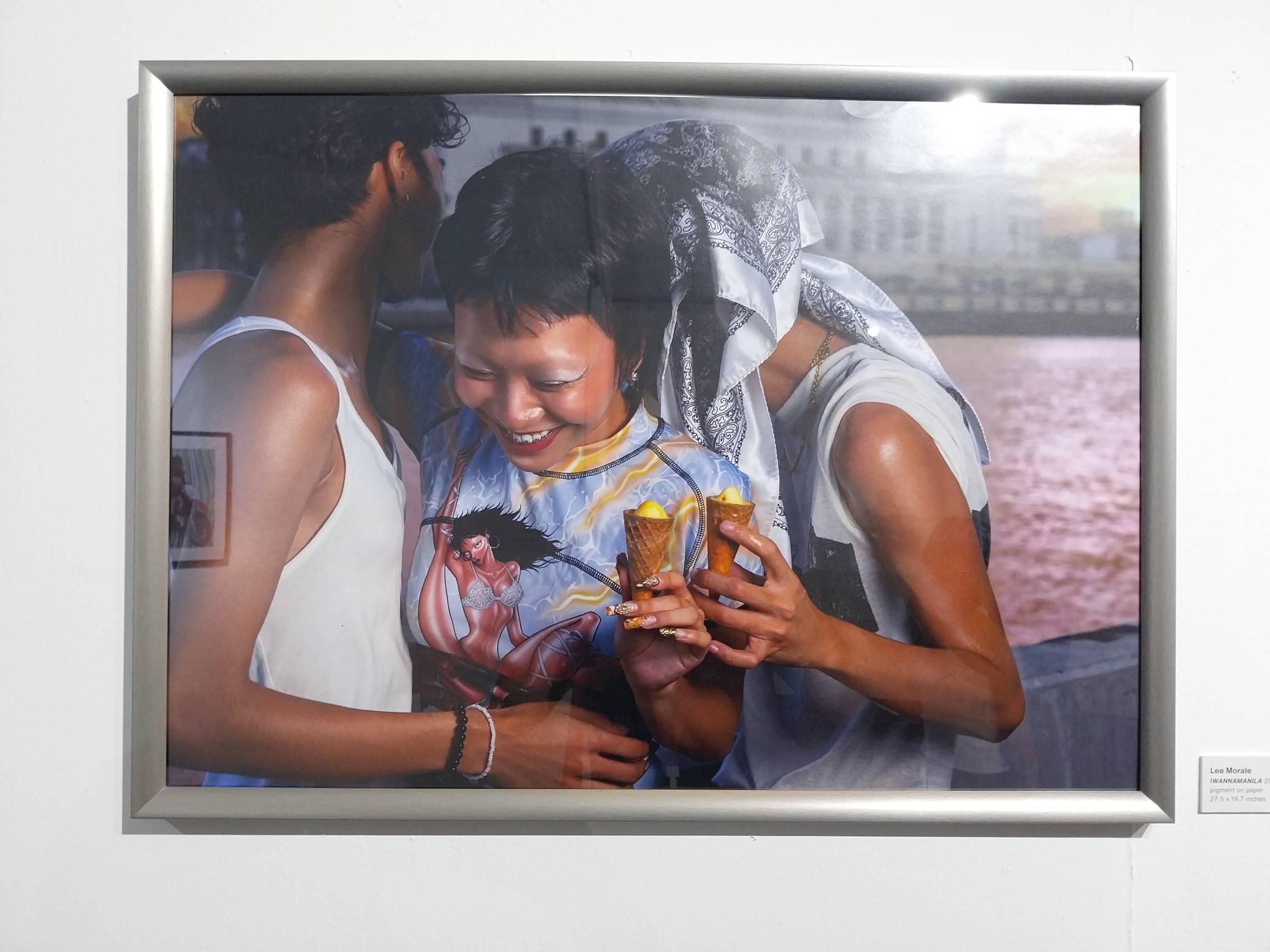
Most queer people are pushed to the sidelines with little access to the wealth and prestige that we see in magazines and newspapers. Thus, the culture around queerness looks upon ideas of camp performance as an extension of reality. These works repurposed their everyday lives with the aesthetic hallmarks of fashion, creating spectacle in that unique depiction of beauty that elevates the world around them.
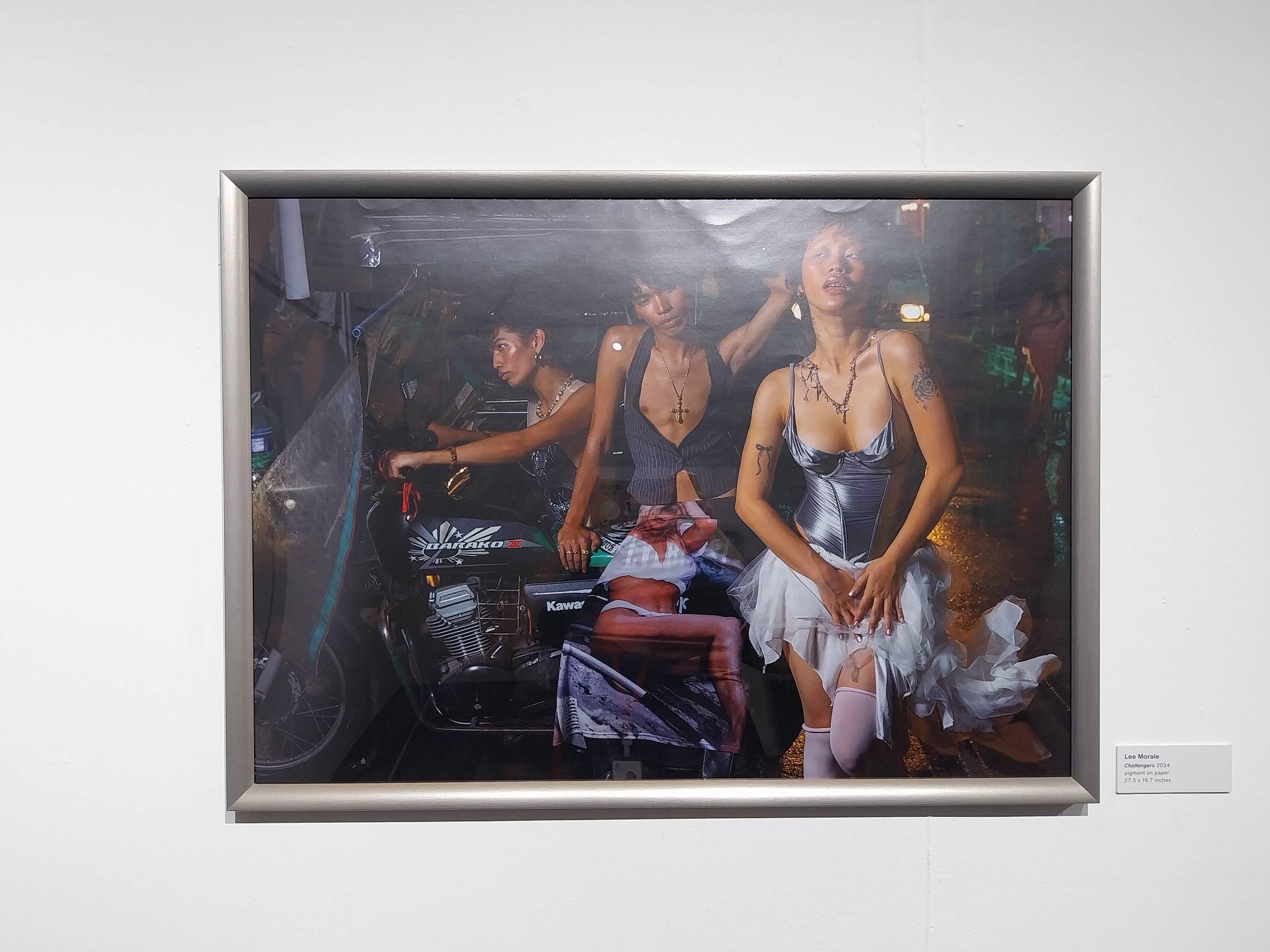
The exhibit juxtaposes the two artists’s attempts at elevating their own narrative of queerness—and how heightening the reality around them allows for new stories to be told that can’t coexist in a more realistic setting.
Lee Morale’s Portraits of Daily Life
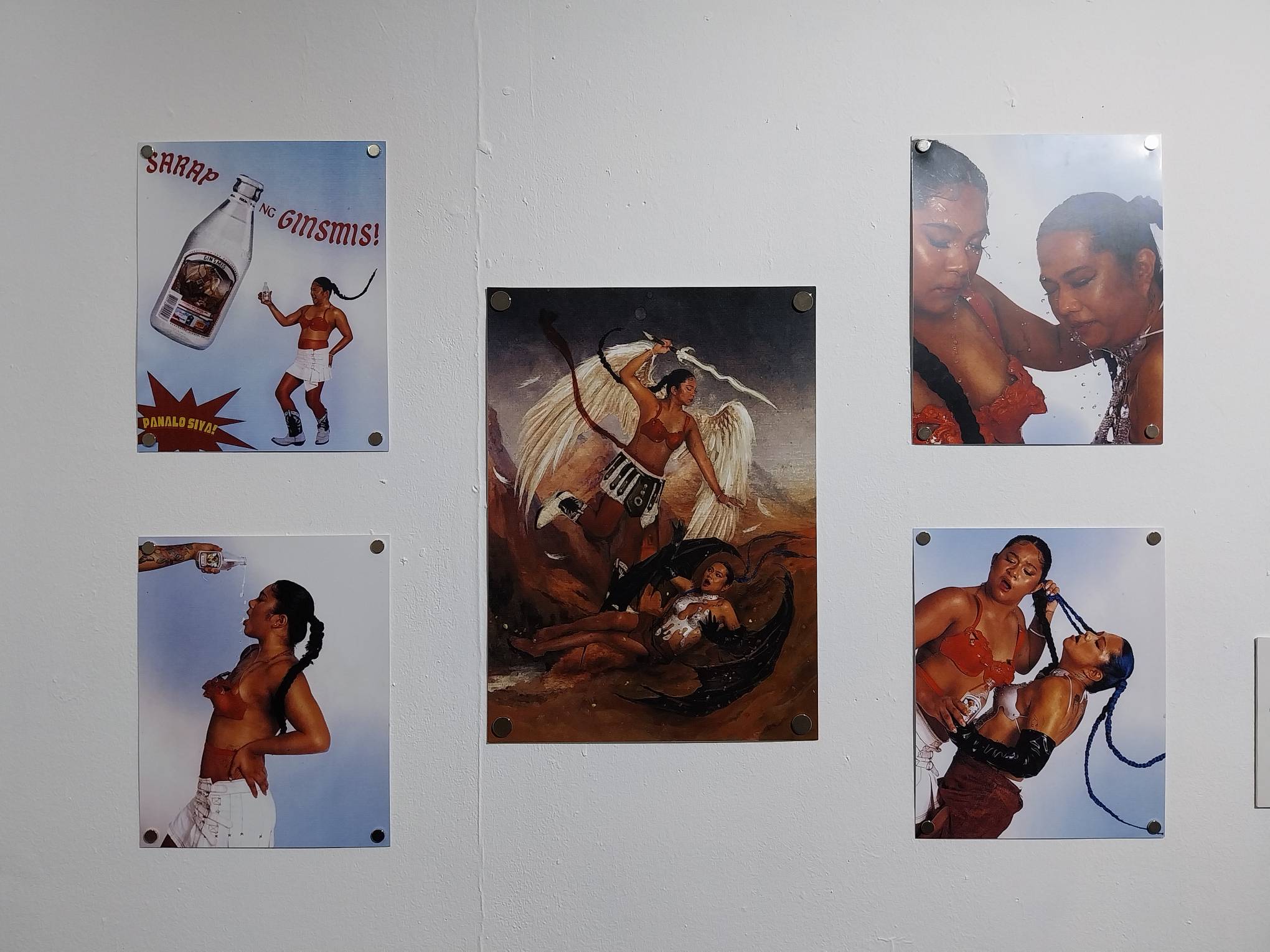
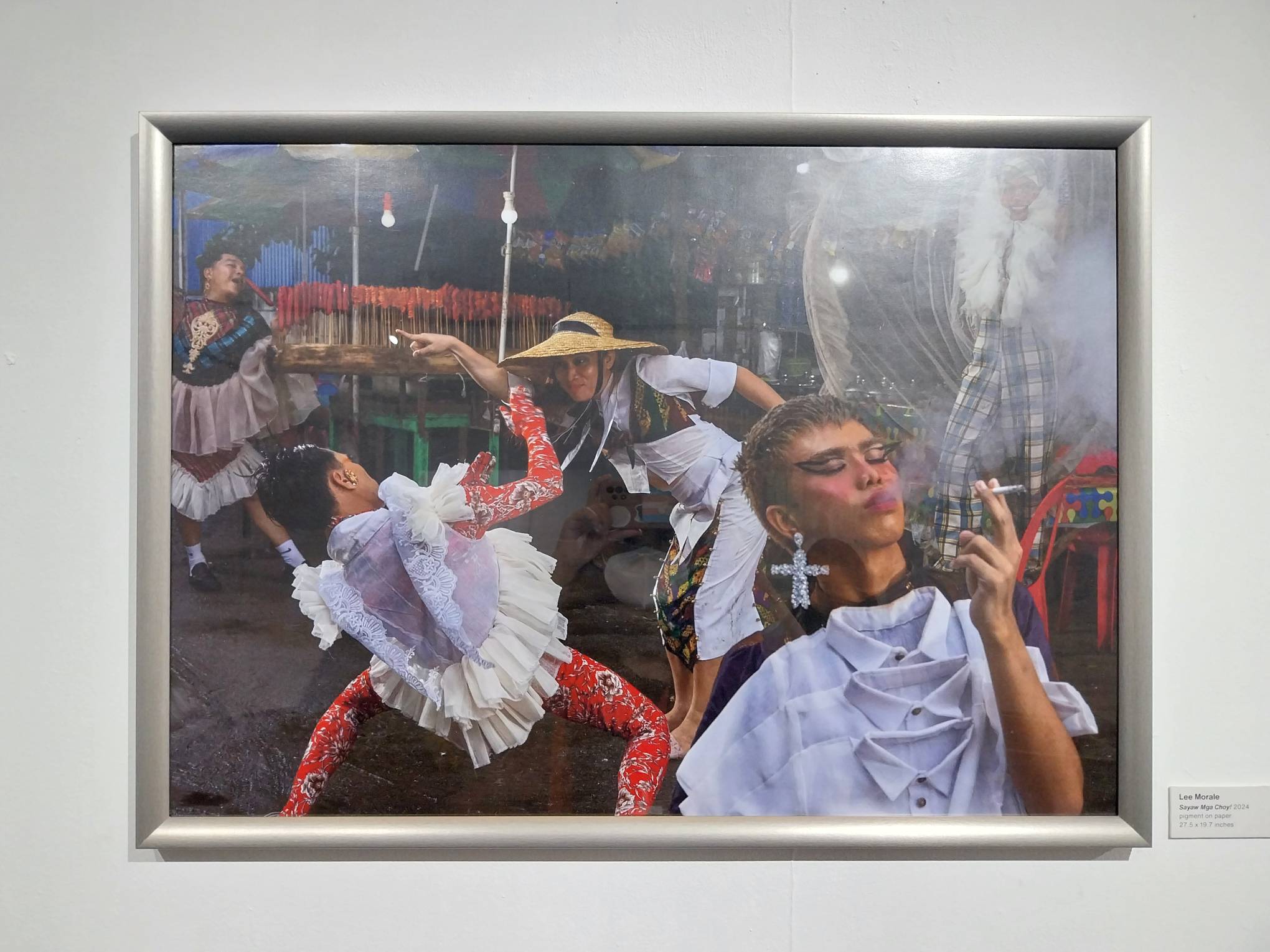
The work of Lee Morale does not shy away from camp and artifice. The “Mmh… Sarap ng Ginsmis” series of pictures appear to mimic and mock the hypersexualization of bodies in advertisements with a parody ad campaign for a gin brand.
Other photographs include “I love you, pang” and “Liwanag sa mga Kuko ng Maynila,” both of which find an exaggerated religious framing to everyday activities like bathing and riding a motorcycle. Even in these everyday situations, there is a quiet beauty in heightening the environment around them, a celebration of these people’s ability to keep living.
“Grounded in the personal, glamor serves as a manifestation of one’s inner fantasy, a means of celebration as well as a platform to elevate oneself,” the exhibit write-up said. “Her perception of glamor is one that is not restricted by class or status, but rather an equalizer- a tool for reinvention and transformation.”
‘24’ and Finding Life in Existence
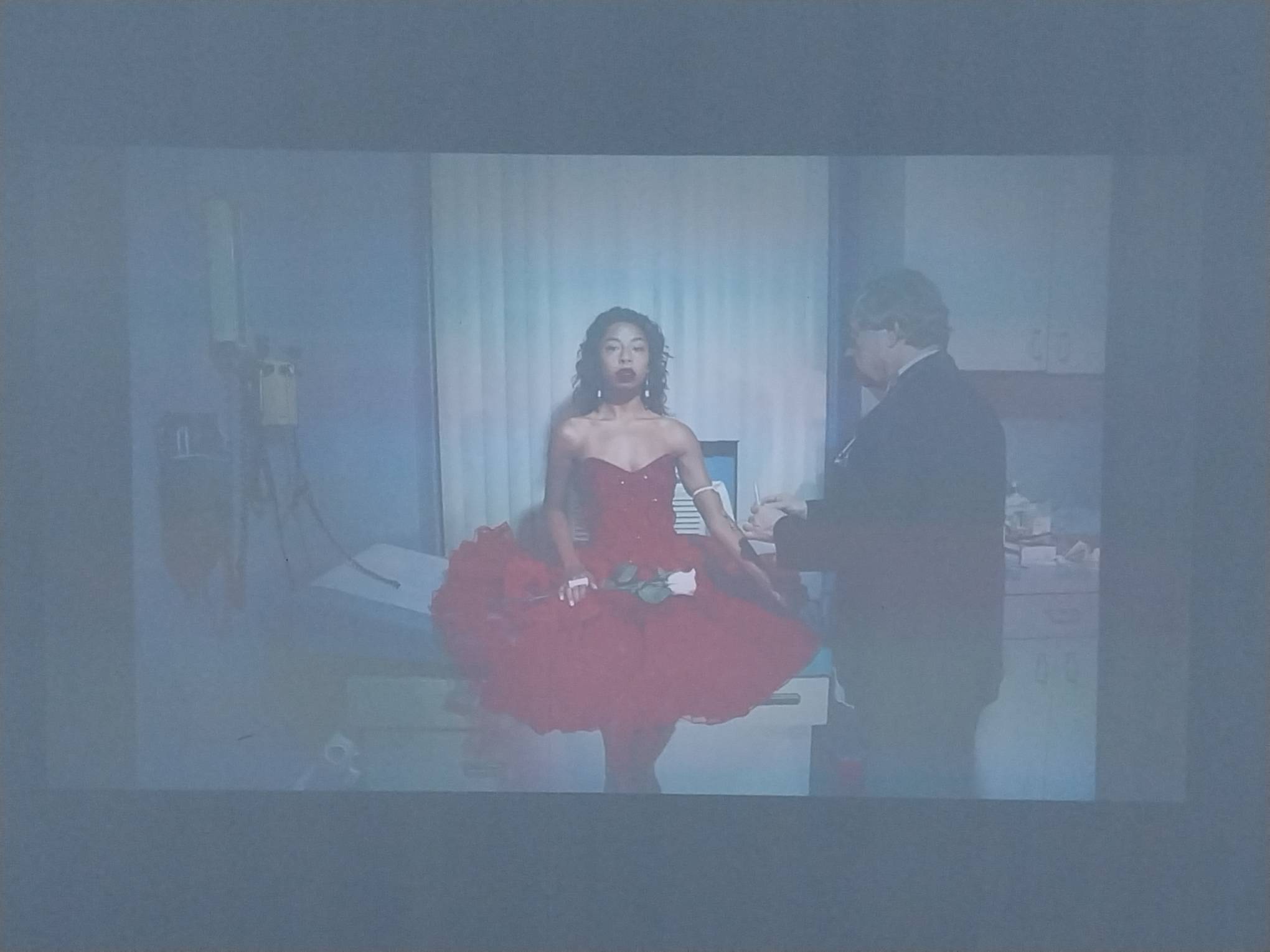
Kia LaBeija’s work features excerpts from her influential photography series 24. These depict her in various poses and situations as she reckons with being a woman of color born HIV-positive. In here, she poses and vogues in hospital rooms, bathrooms, and bedrooms, injecting glamor and humanity to the mundanity of the troubles of her life.
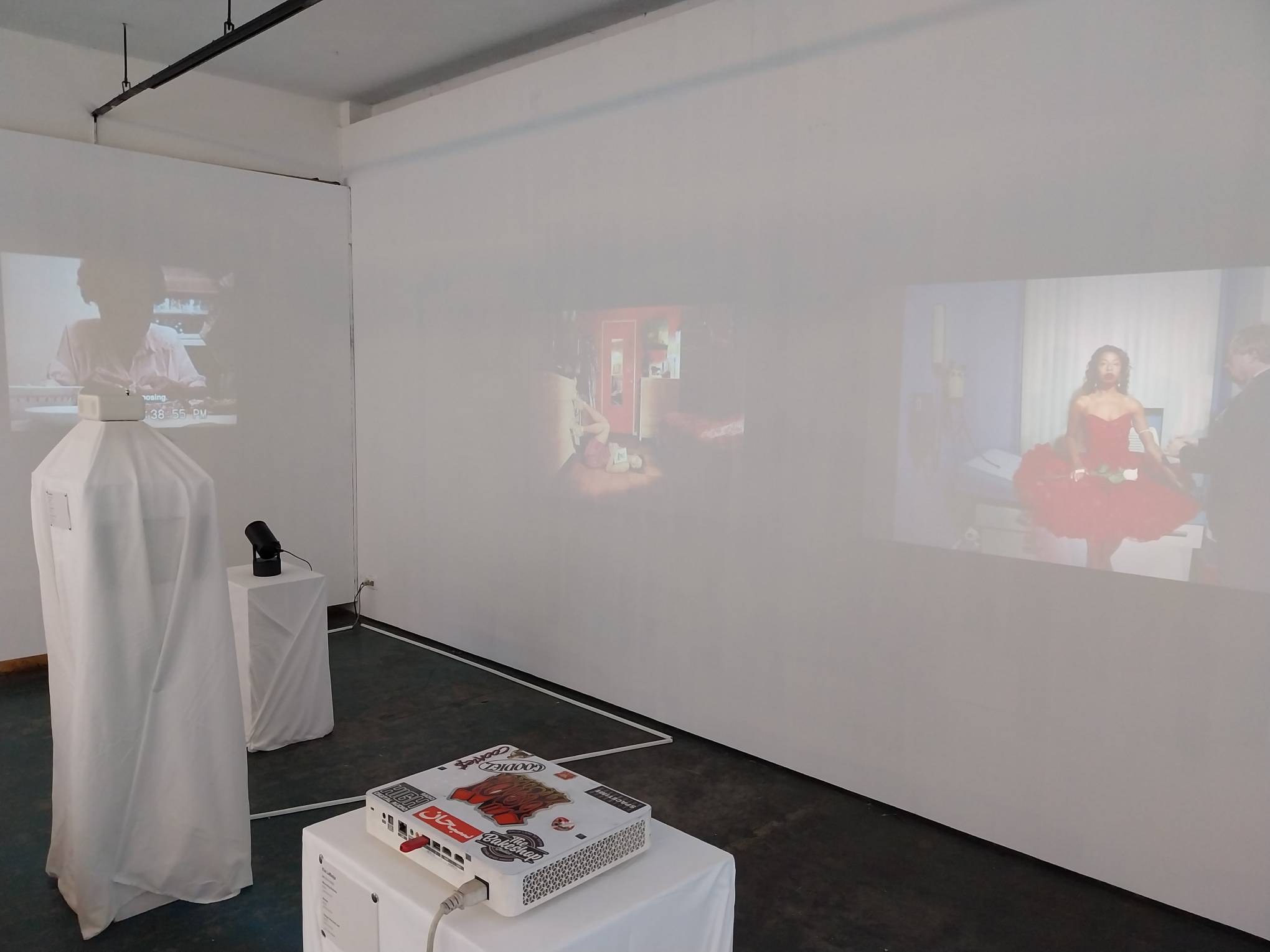
Projected onto three different screens, the haziness of the images adds a dimension of commentary on how we see glamor and performance. It adds zest and humanity to events that tend to be as dull as they are dehumanizing.
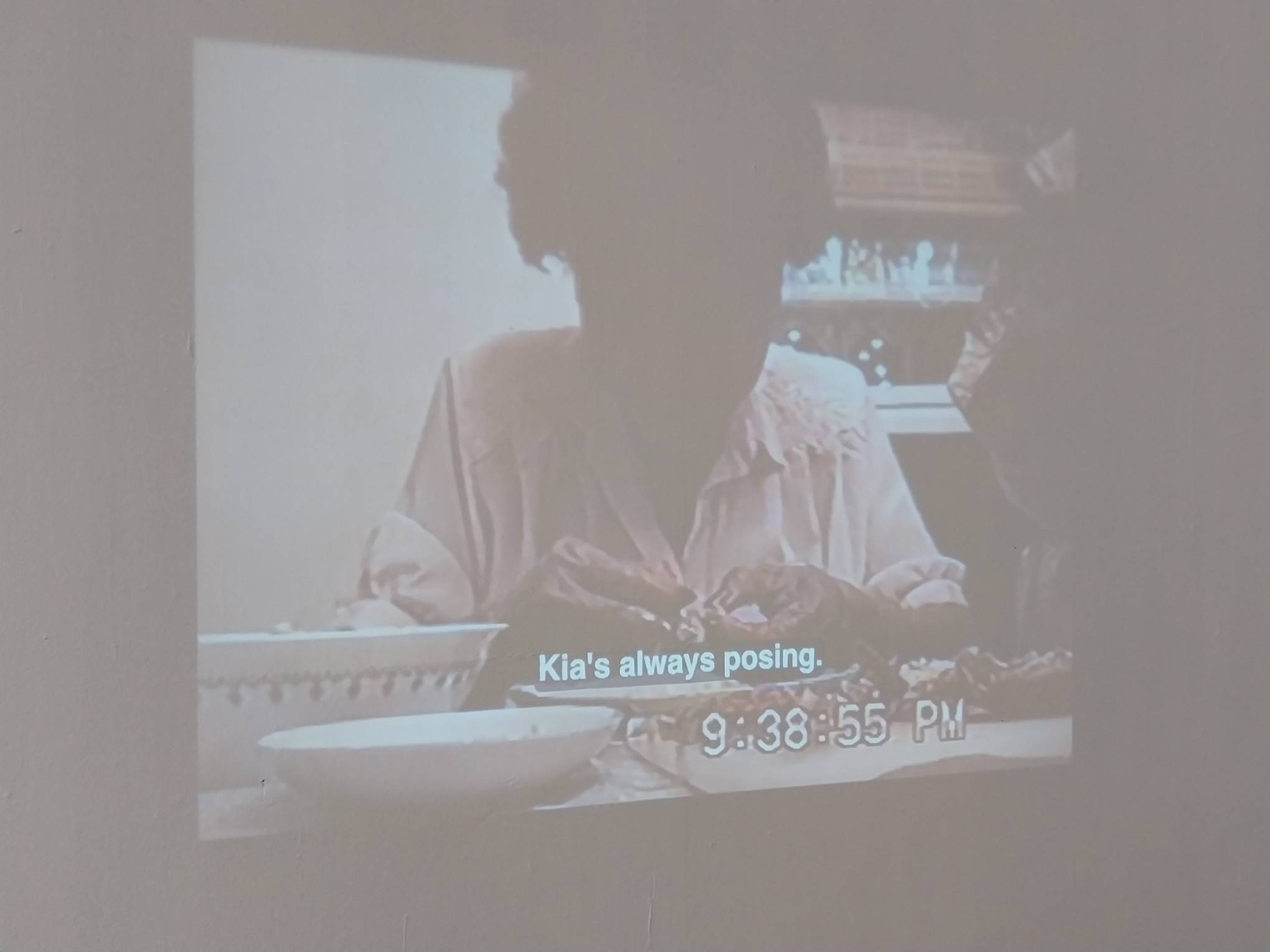
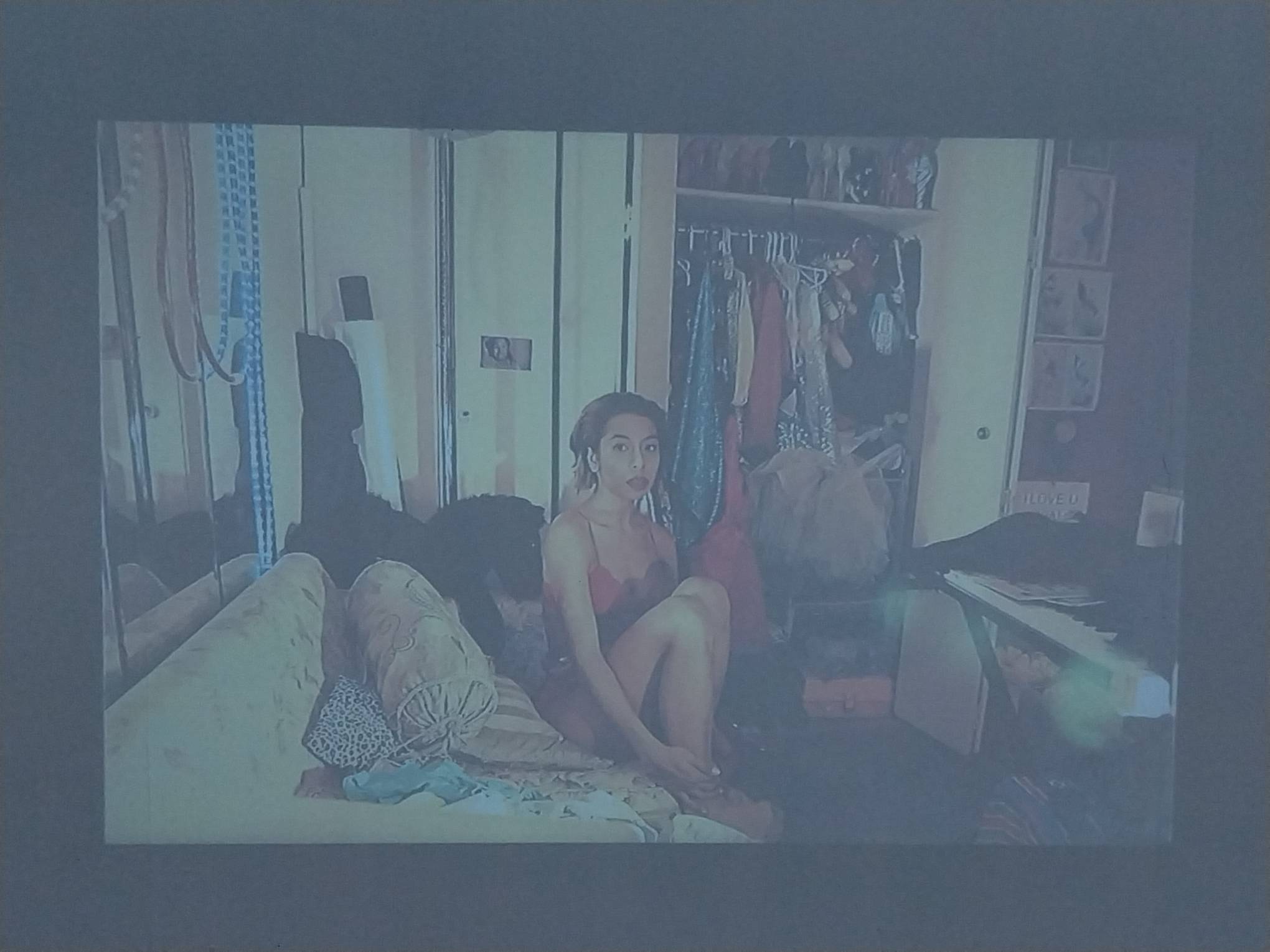
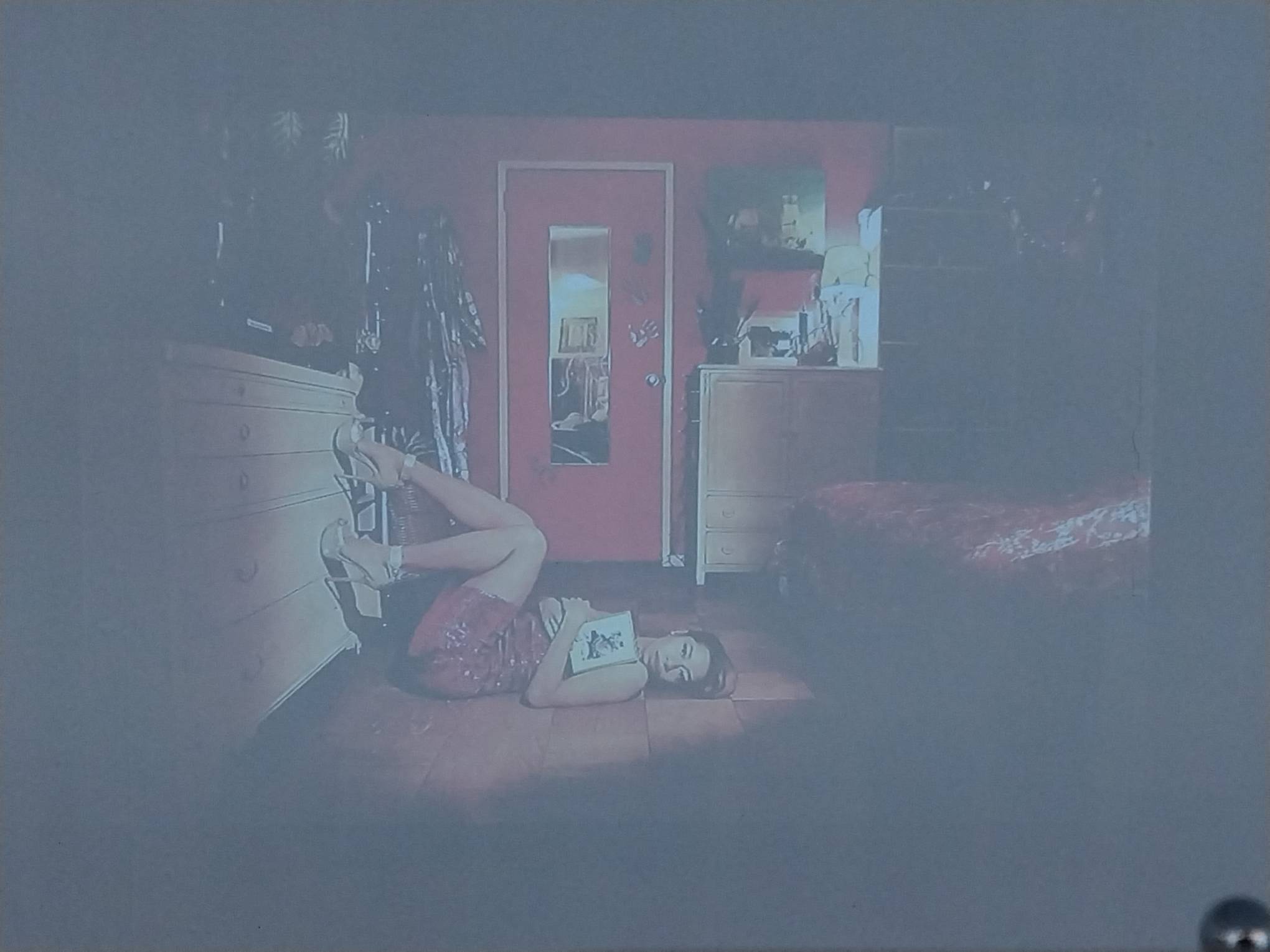
“Utilizing elements of fantasy and glamor, the artist ruptures the canon of fear-based AIDS art and radicalizes it by presenting the epidemic through the lens of a woman of color born HIV positive,” the exhibit write-up said. “The glossy aesthetic, choreographed poses, and saturated colors are acts of defiance and markers of visibility that push for a more contemporary narrative.”
Performance of the Private Self
In these worlds, the point isn’t the beauty but the artifice behind it. Everyone has their own fantasies of how they see themselves; the difference between queer communities and mainstream ones is that queerness exists as an explicit critique of the standards that we have. It demonstrates fresher, freer directions that are more inclusive and open to new ideas versus the more rigid standards that society insists upon.
Overall, Gloss with a Purpose highlights the precarity of life of a queer person marginalized from society. But more than that, it shows that even in such situations, queer people can find a sense of joy and resistance through acting out these fantasies of beauty as they want it to exist in their daily lives.
Photos by Elle Yap.
Related reading: ‘Extasis Forever’: Representing Mirrors to the Queer Experience
Frequently Asked Questions
The exhibition explores the concept of “queer performativity” and how artifice, camp, and glamour serve as tools for identity-building and survival. By showcasing the works of Lee Morale and Kia LaBeija, the exhibit demonstrates how queer individuals reclaim their bodies from societal standards through performance. These artistic “performances” act as a form of rebellion and an “equalizer,” allowing marginalized individuals to transform their daily realities into elevated narratives of beauty and resistance.
Lee Morale is a transgender photographer who moved from a conservative environment in Mindanao to Manila to practice her art, focusing on the juxtaposition of urban “grime” with high-fashion glamour. Kia LaBeija is an Afro-Filipino queer woman from New York who was born HIV-positive and uses her position in the legendary House of LaBeija to advocate for AIDS awareness. Their shared history of marginalization drives them to use “fantasy” as a way to inject humanity and visibility into experiences that are often dehumanized by society.
Based on the theories of Judith Butler, the exhibit suggests that gender and queerness are culturally constructed roles rather than biological imperatives. “Performative queerness” is the act of deliberately “acting out” or heightening parts of one’s identity that do not fit into patriarchal, heterosexual, or cisgender norms. In the exhibit, this is seen through choreographed poses and “camp” aesthetics that critique rigid societal standards and celebrate a more fluid, inclusive way of being.
Morale’s series, such as “Mmh… Sarap ng Ginsmis,” parodies the hypersexualization of bodies in commercial advertisements, specifically mocking traditional gin campaigns. Other works like “Liwanag sa mga Kuko ng Maynila” use exaggerated religious framing to find a “quiet beauty” in mundane urban activities like riding a motorcycle or bathing. This technique heightens the environment of her subjects, celebrating their existence and reinvention regardless of their social class or status.
LaBeija’s series 24 radicalizes traditional AIDS-related art by replacing “fear-based” imagery with glossy aesthetics, saturated colors, and voguing poses within hospital and domestic settings. By projecting these images of herself as a woman of color born HIV-positive, she “ruptures the canon” of how the epidemic is usually portrayed. Her work serves as a marker of visibility and defiance, pushing for a contemporary narrative that centers on the life, glamour, and agency of those living with the virus.
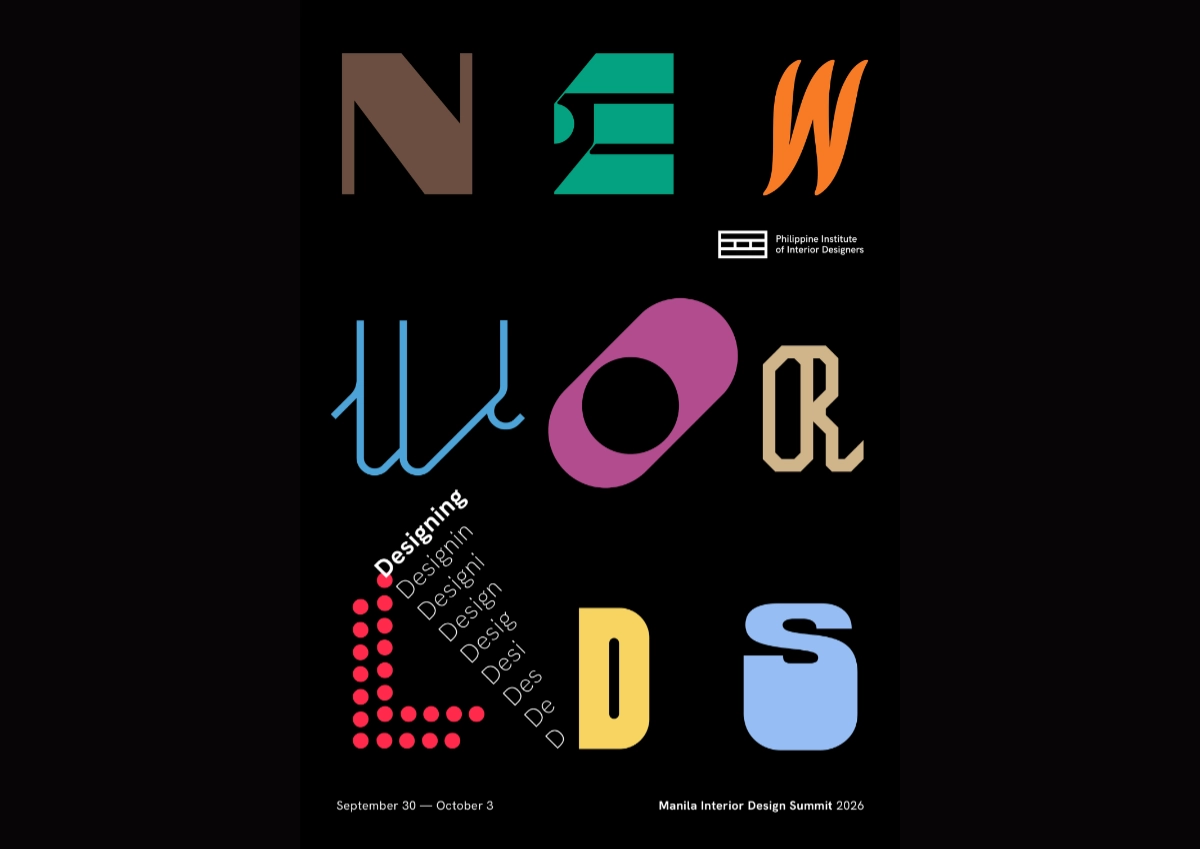
“Thailand has claimed urban creativity and livability. Singapore has institutional design leadership. Indonesia is emerging as a design hub. Vietnam is moving into design innovation. And the Philippines? Its position is not weak. It is simply unclaimed.” For IDr. Cecil Ravelas, National President of the Philippine Institute of Interior Designers (PIID), the challenge is not […]
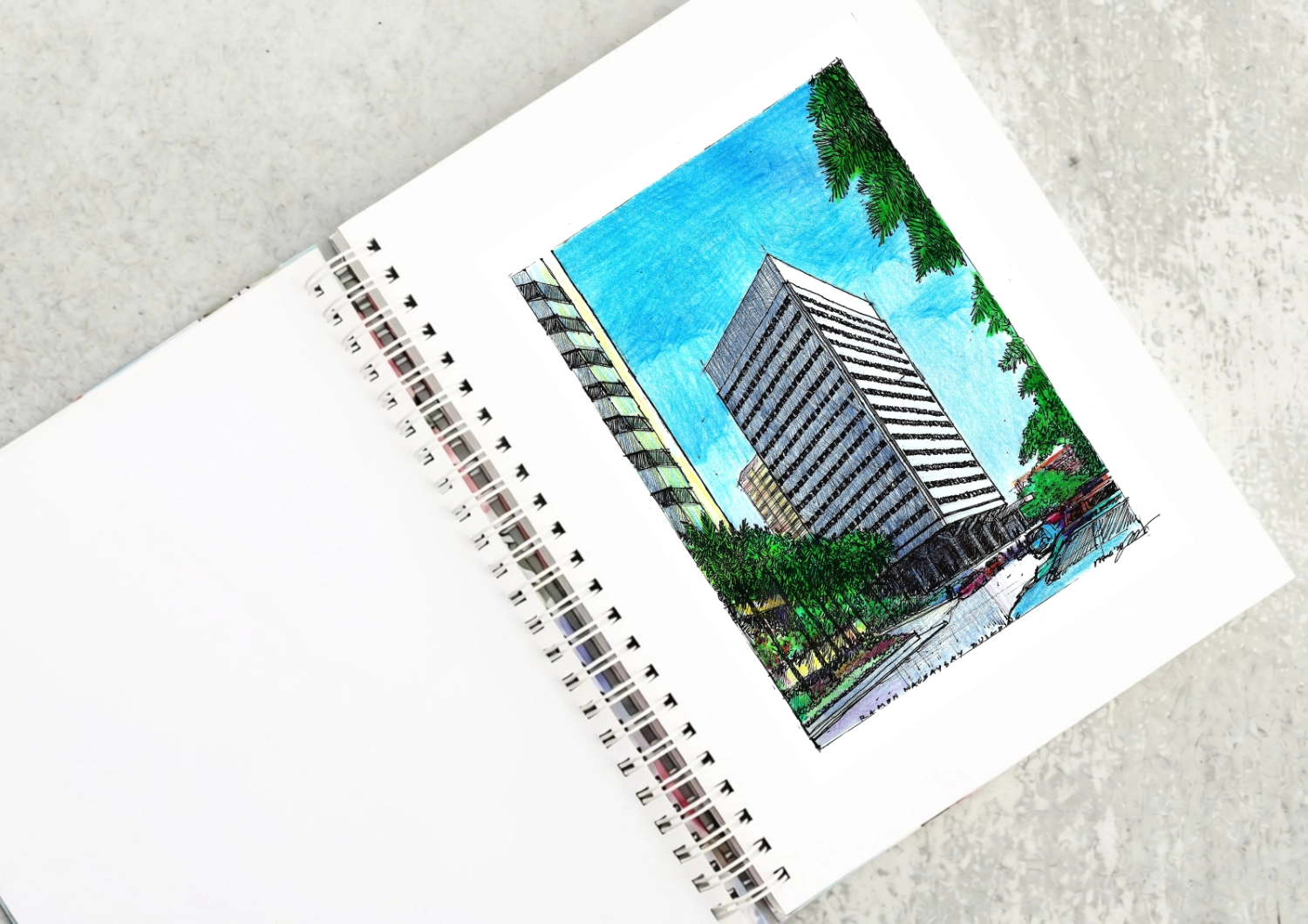
The Ramon Magsaysay Center as a Modernist Landmark Driving down Roxas boulevard from Rizal Park, what will catch your eye is the most elegant modernist structure in the country, the Ramon Magsaysay Center. Most established Filipino architects put it in their top ten lists of favorite buildings. It was designed by Alfredo J. Luz, who […]

Rinna Soriano’s favorite part of her work is sanding. At her workbench, she stays focused, following the grain, adjusting to changes in its direction. Narra, she has learned, can have interlocking grain. A piece of mango once proved particularly difficult until a worker explained that she had reached the point where a branch once grew […]
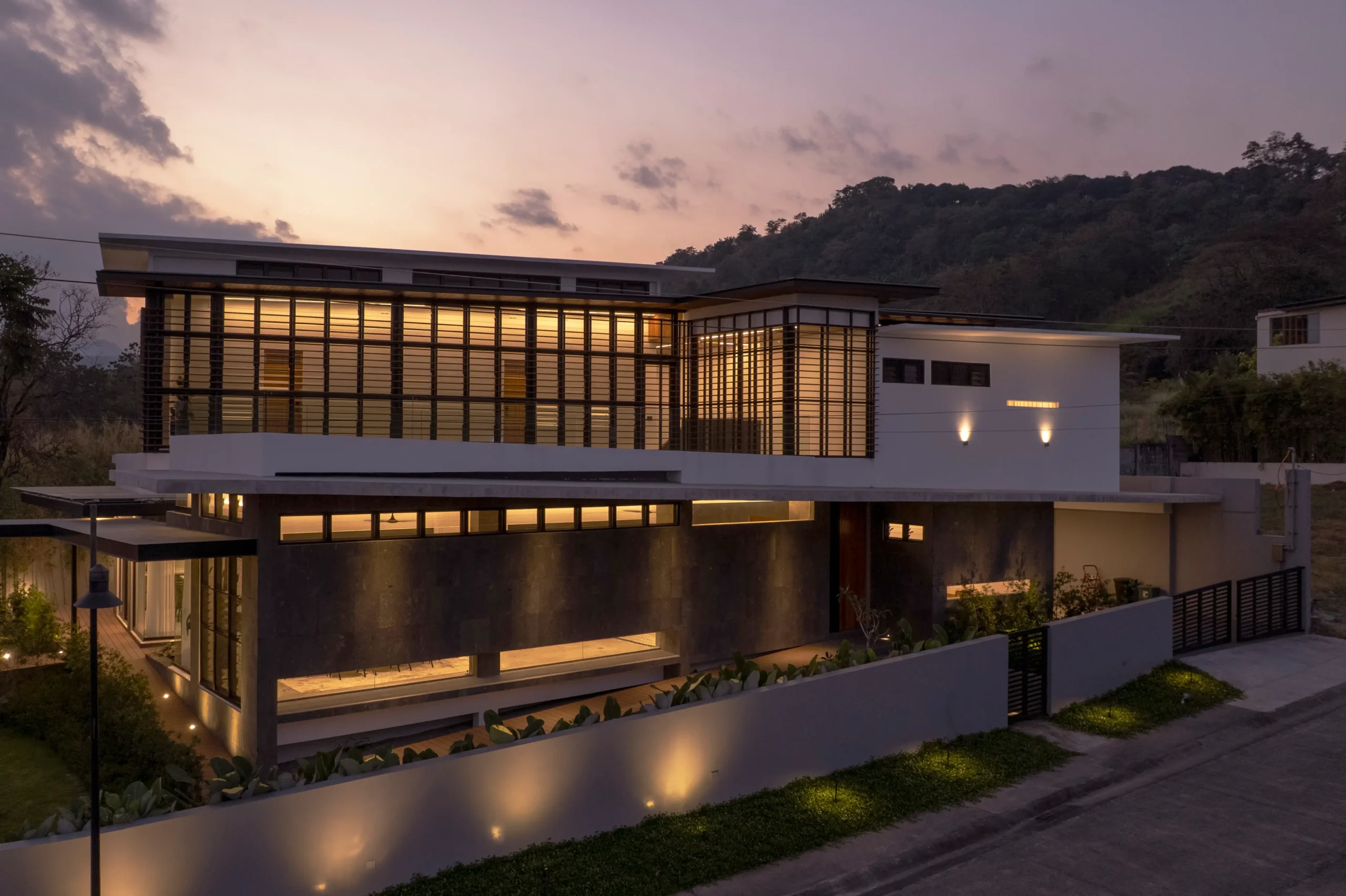
Filipino architectureArchitectureThe art and science of designing and constructing buildings, structures, and spaces that are functional, safe, and aesthetically pleasing. It encompasses the planning, design, materials, and techniques used to createGo to Architecture Glossary has long been associated with indigenous materials and vernacular design strategies, from bamboo and timber construction to jalousie windows, generous spaces, […]
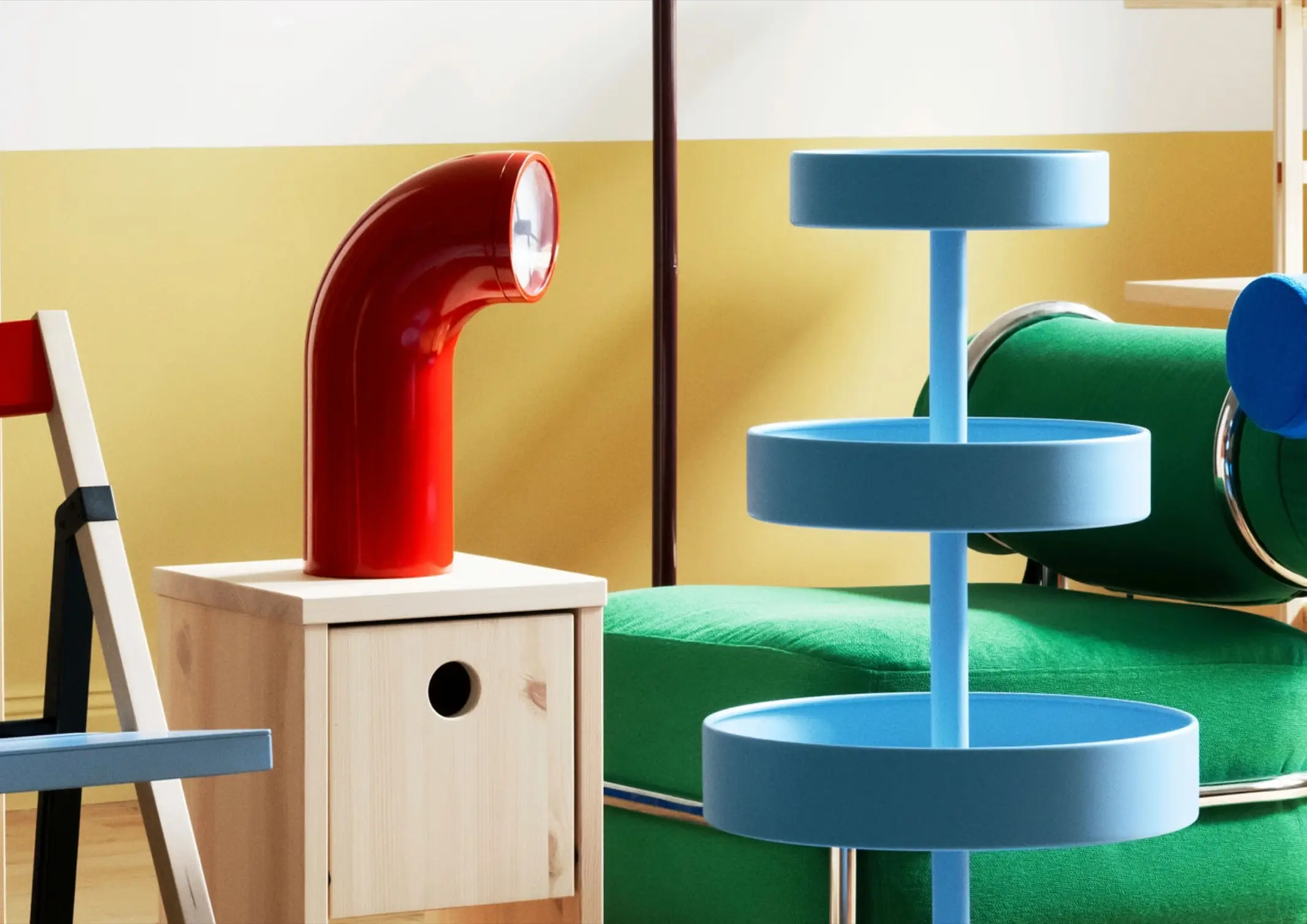
A chair does not always prescribe how to sit in it. A lamp can be more than a source of light. A clock can be more than a way to tell the time.These small departures from convention are at the center of IKEA PS 2026. The latest iteration of IKEA’s experimental PS series comprises more […]
Read the issues.

Collect the volumes.

Recommended Video
Tap to Unmute
Unmute
0:00
0:00