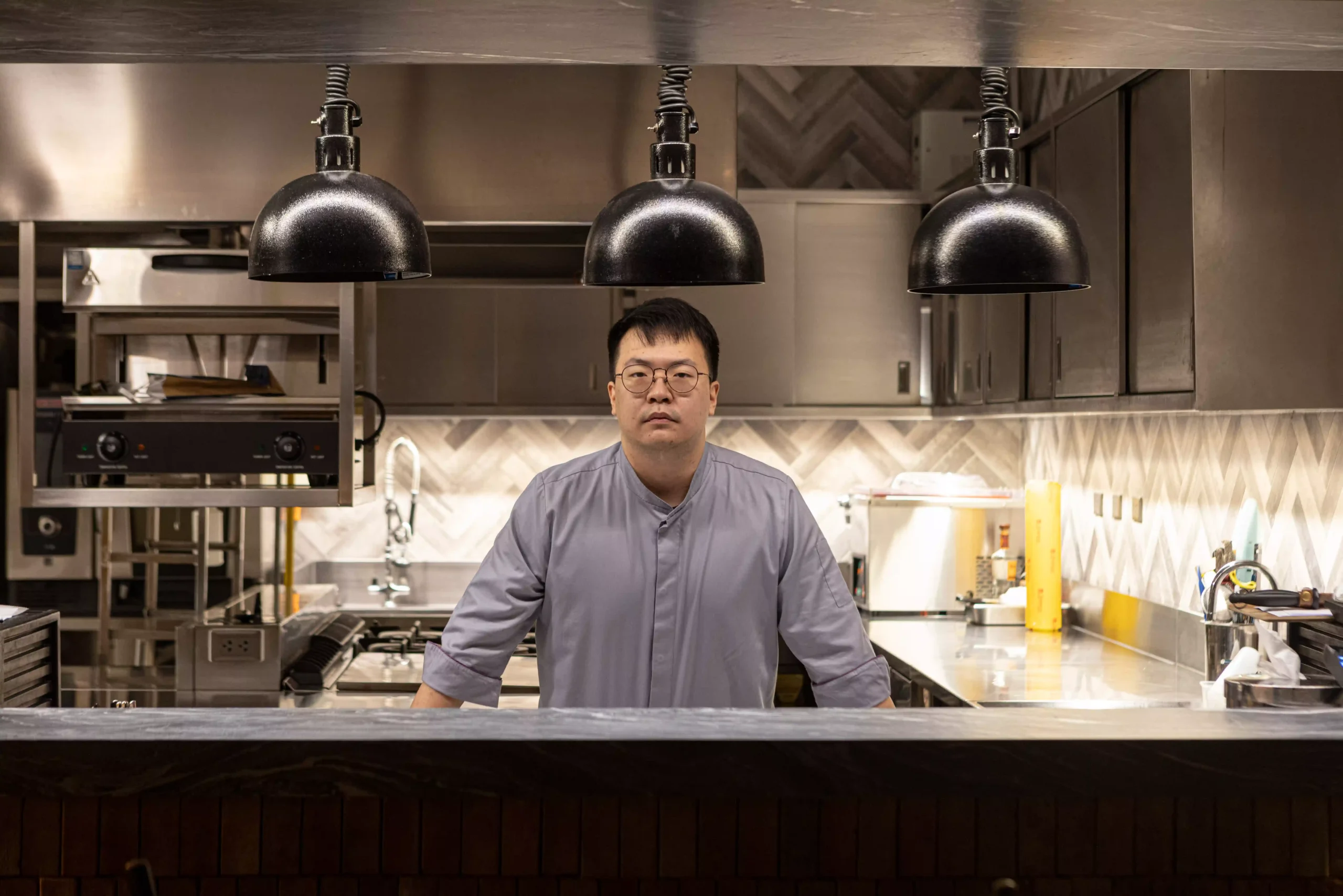
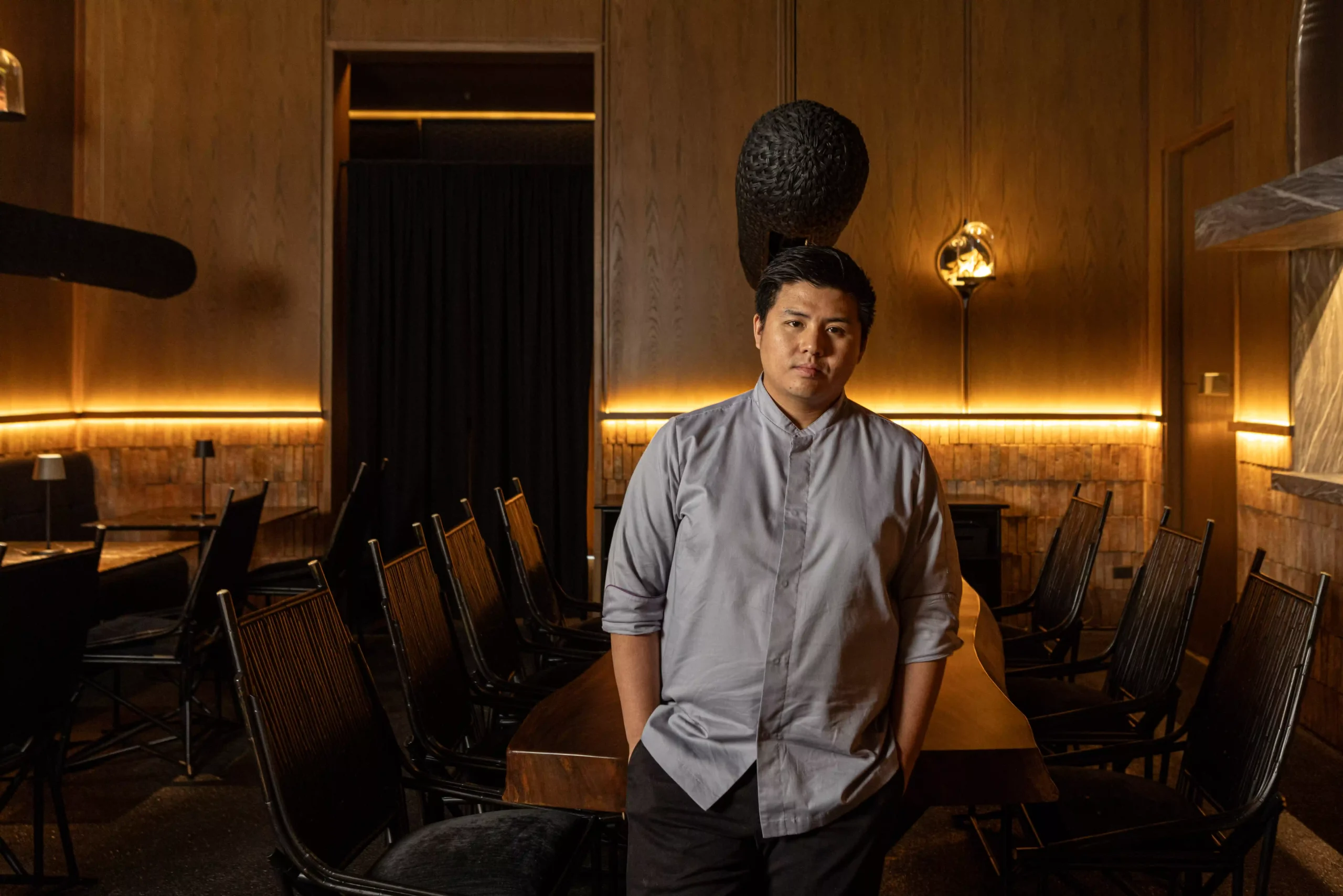
“I would like Flow to hopefully turn into a place where artists can come together, collaborate and create an overall experience,” says chef Kevin Uy.
This desire of his is manifested in different ways throughout FLOW— a sleek, new restaurant he opened with his childhood friend, chef Gabriel Ong. Uy is full of ideas, fairly fresh off his five-year stint at chef Virgilio Martinez’s Central Restaurante in Lima, Peru. Central clinched the title of #1 restaurant in the world back in 2023 by The World’s Best Restaurants list. “At Central, I learned that everything is connected. The interdisciplinary nature of Central is what attracted me to them in the first place. The way they connect not only with the earth but also with the culture really stood out to me as someone that can really tell stories in the restaurant,” Kevin adds.
He and Gabriel add plenty of space for local ingredients to shine— such as tinigib, an heirloom variety of white corn from the Visayas, or the bounty of fish responsibly sourced by Twinkle Floro from our Mindanaoan shores— but they also wanted the interiors to speak volumes about what they represent. Kevin commissioned architect Anthony Nazareno with a straightforward brief.
Advertisement
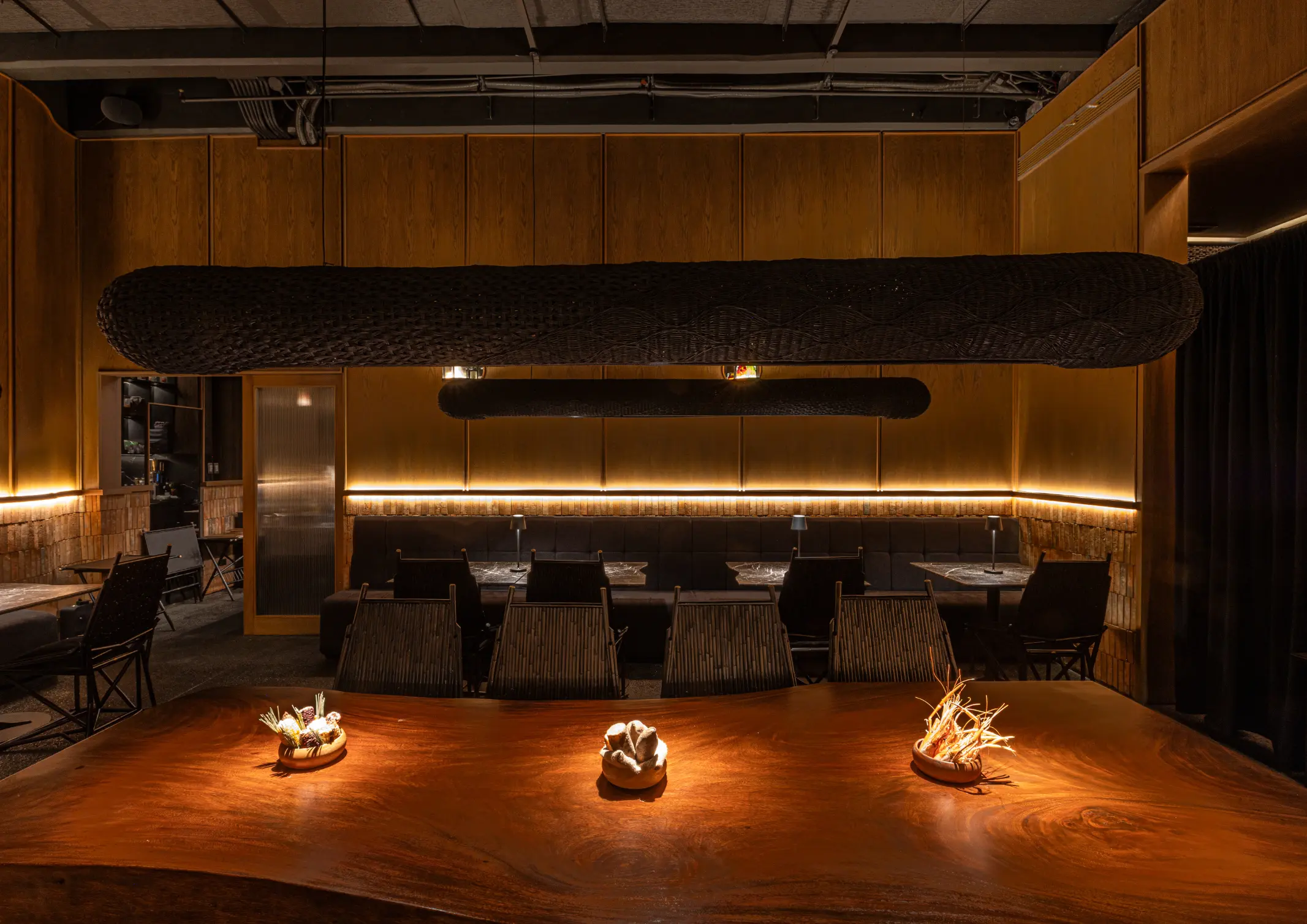
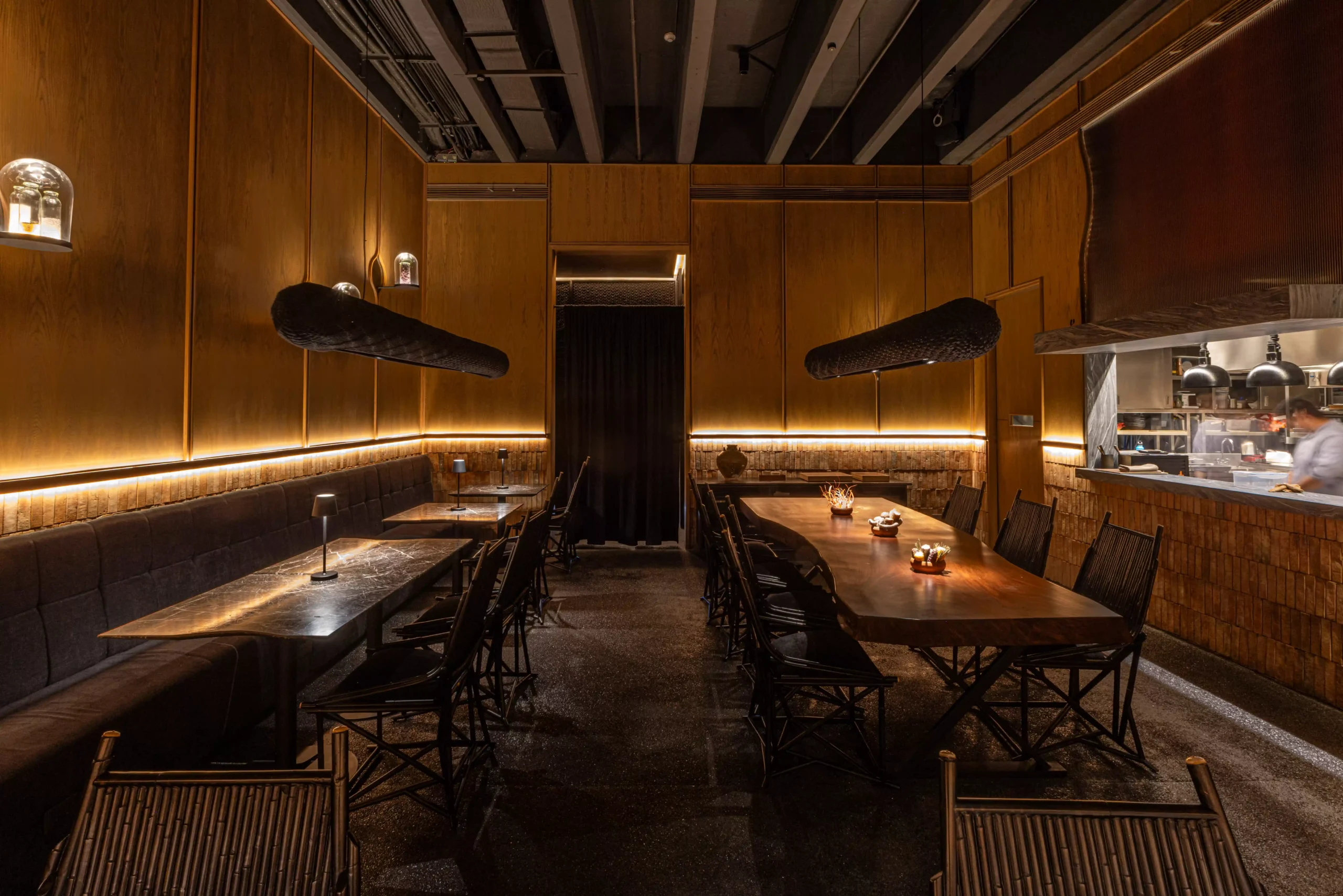
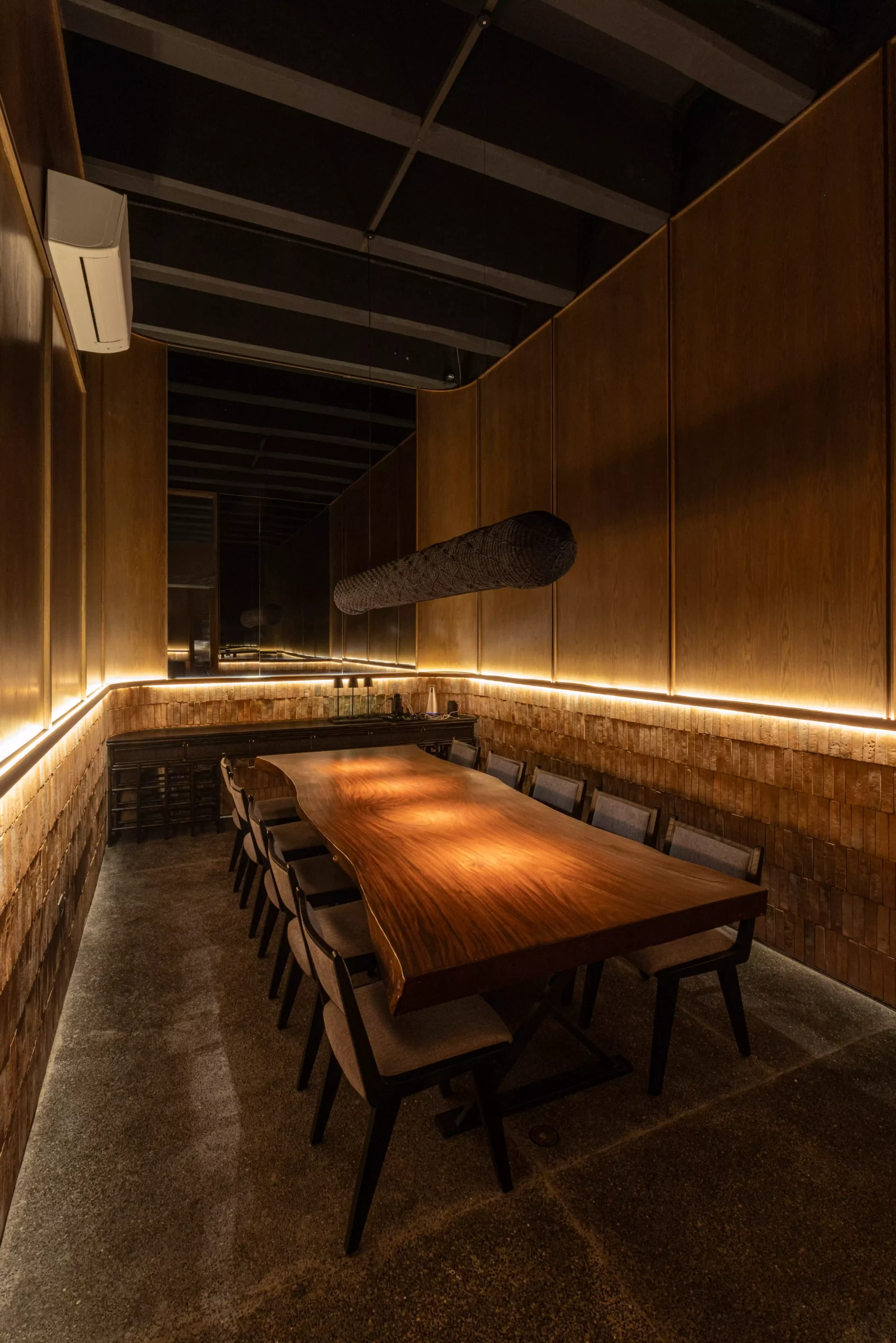
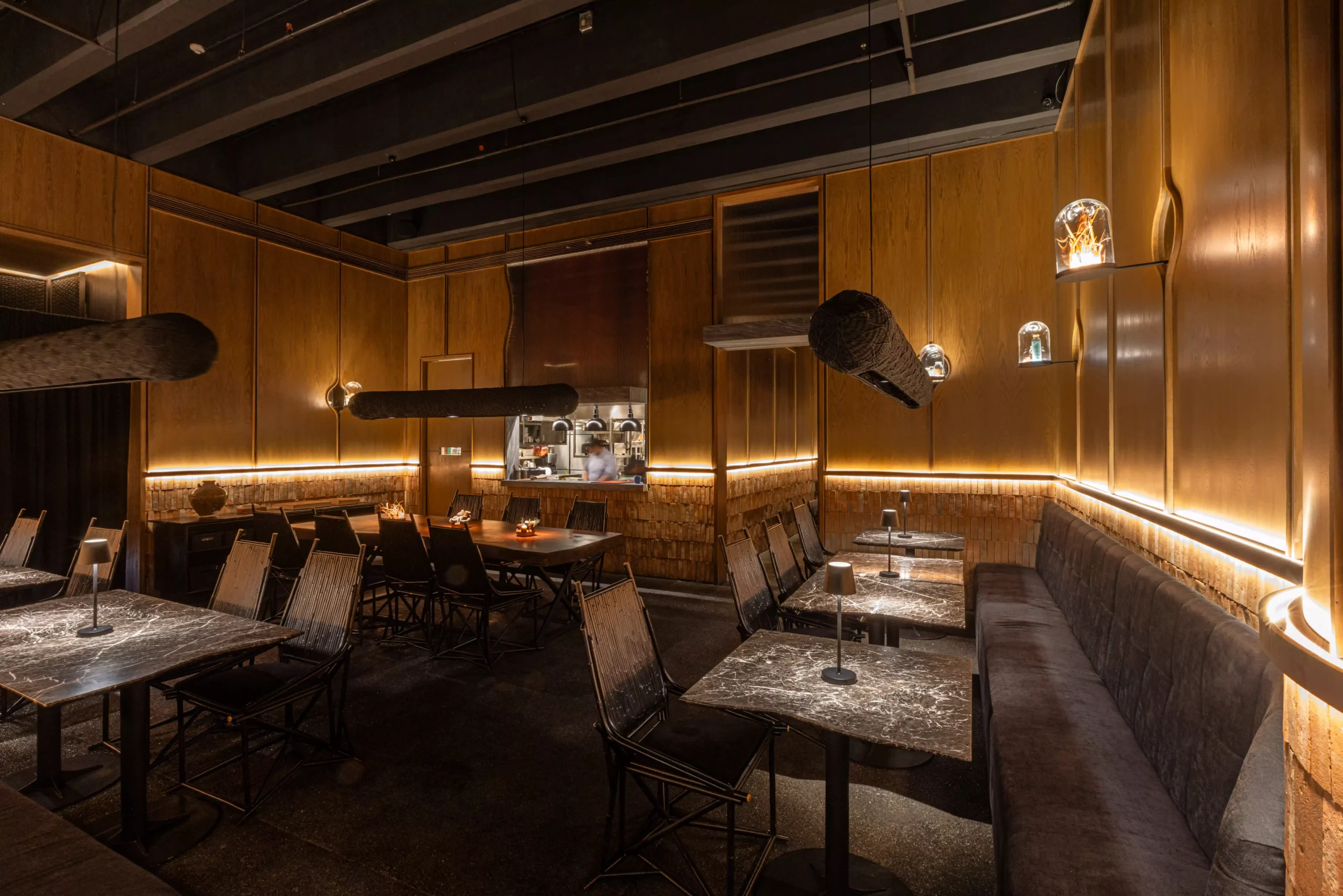
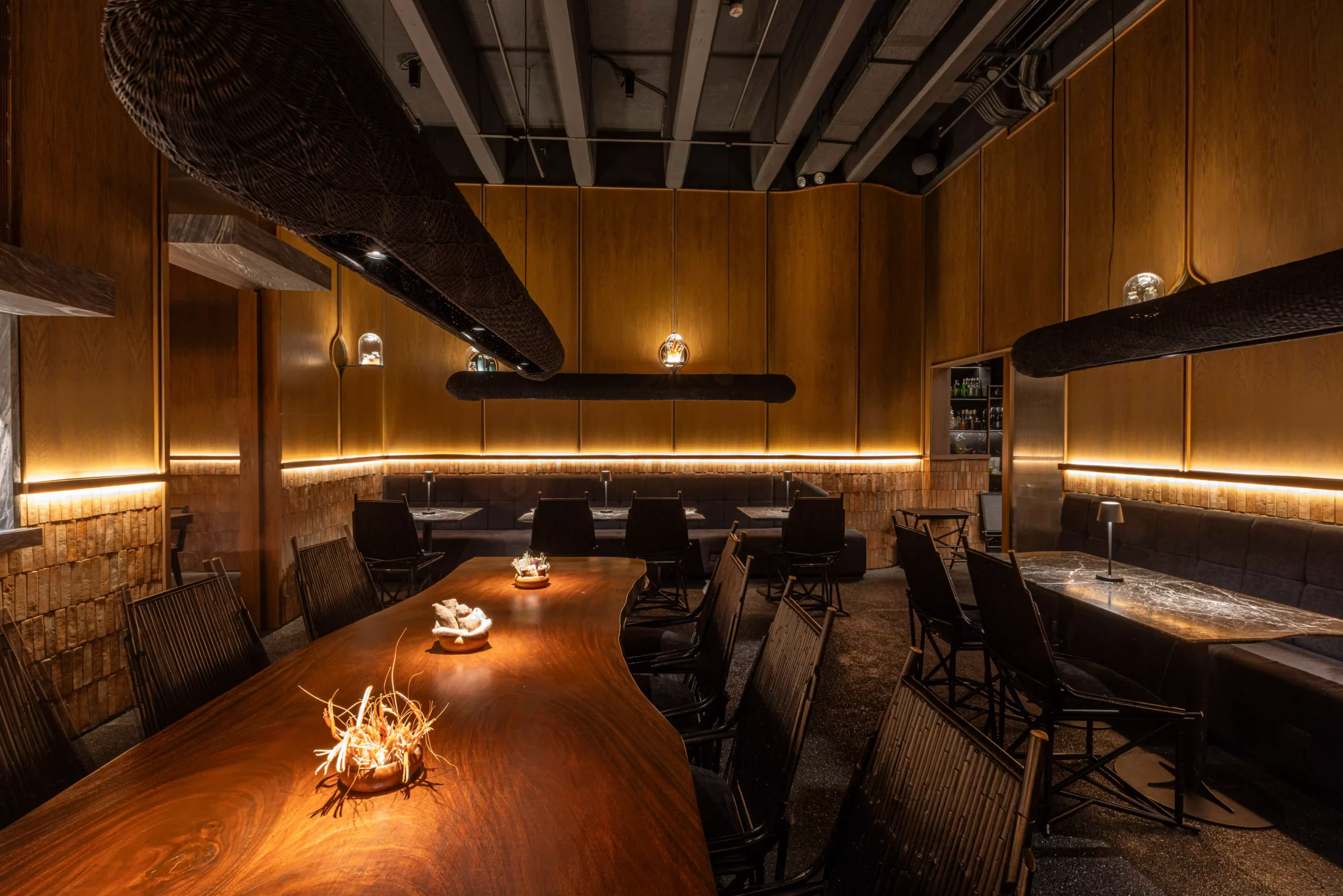
“I wanted a lot of natural elements. I wanted the restaurant to be really tied down into earthy, natural elements. So that’s what you see,” Kevin recounts. “You’ll see the pebble wash floors. You’ll see the clay bricks and the wood veneers. You’ll see the metal string, the glass virinas and the wooden tables. Everything is earthbound here in the restaurant.”
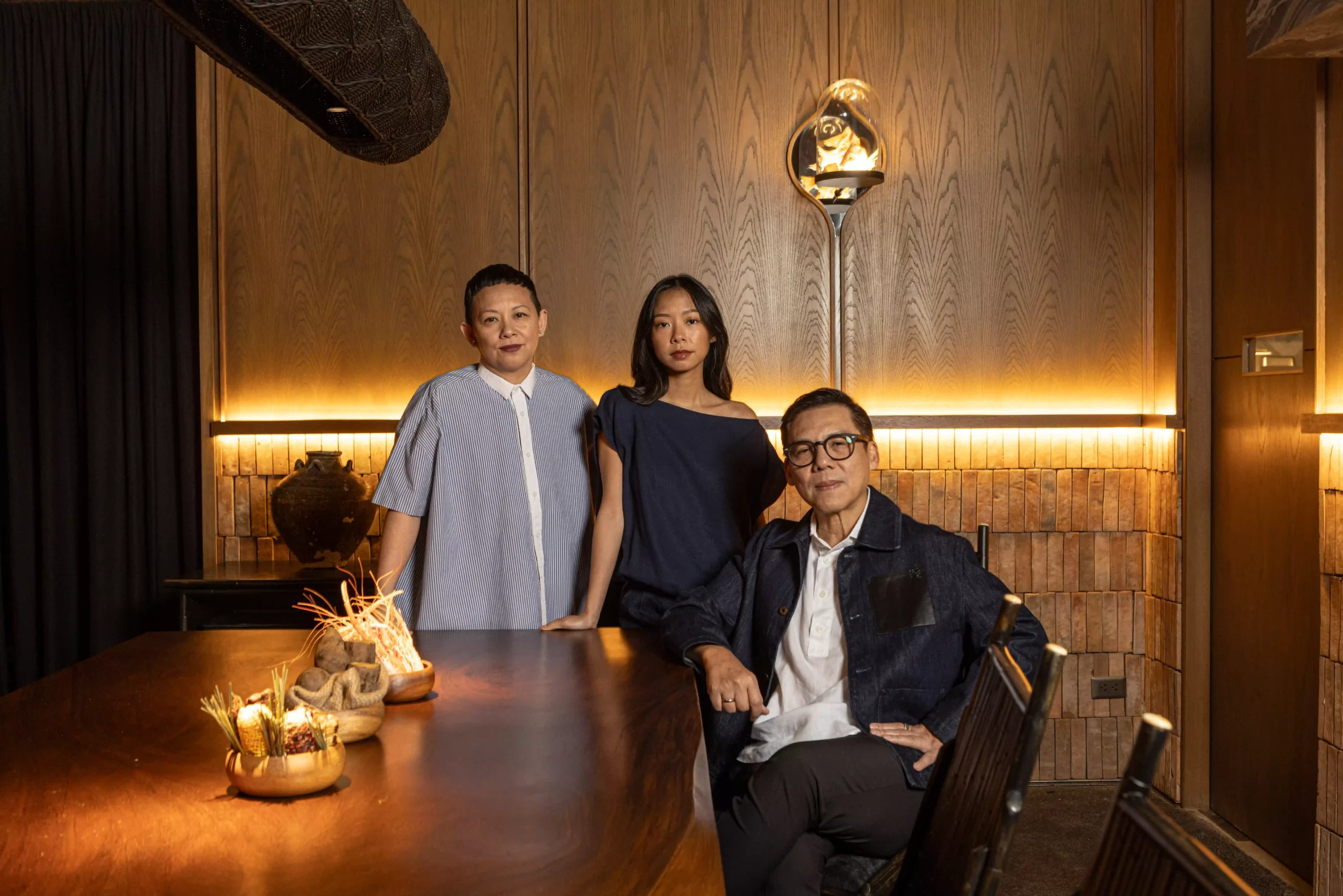
Anthony Nazareno decided to take this project out of his usual architectural outfit, Nazareno Architecture & Design, and involve his designer sister Rita Nazareno and daughter Bea Nazareno. The Nazarenos are collectively known as Chisel— an homage to their grandfather, Zacarias, who was a sculptor. Bea is currently a designer at Nazareno Architecture & Design, and focuses on ID work while covering graphic design and social media for the firm.
From Left to Right: Rita Nazareno, Bea Nazareno, and Anthony Nazareno
For FLOW, Bea helped in styling the restaurant and worked with Kevin’s team to ensure the interiors worked well with their branding. When asked about what it was like to work with her father and aunt, Bea shares, “I’ve always loved spending time with my dad and Tita Rita. When I was studying graphic design in San Francisco and later interior design in London, they visited often and almost every conversation somehow found its way back to design. It was a shared language we spoke effortlessly. So when the opportunity to work together presented itself, the transition felt completely natural. Working alongside them for FLOW has been incredibly fulfilling!”
Advertisement
“When I found out what Kevin wanted FLOW to be, I instantly thought of collaborating with Rita because we understood that Filipino craftsmanship needed to be involved in designing FLOW,” Anthony says.
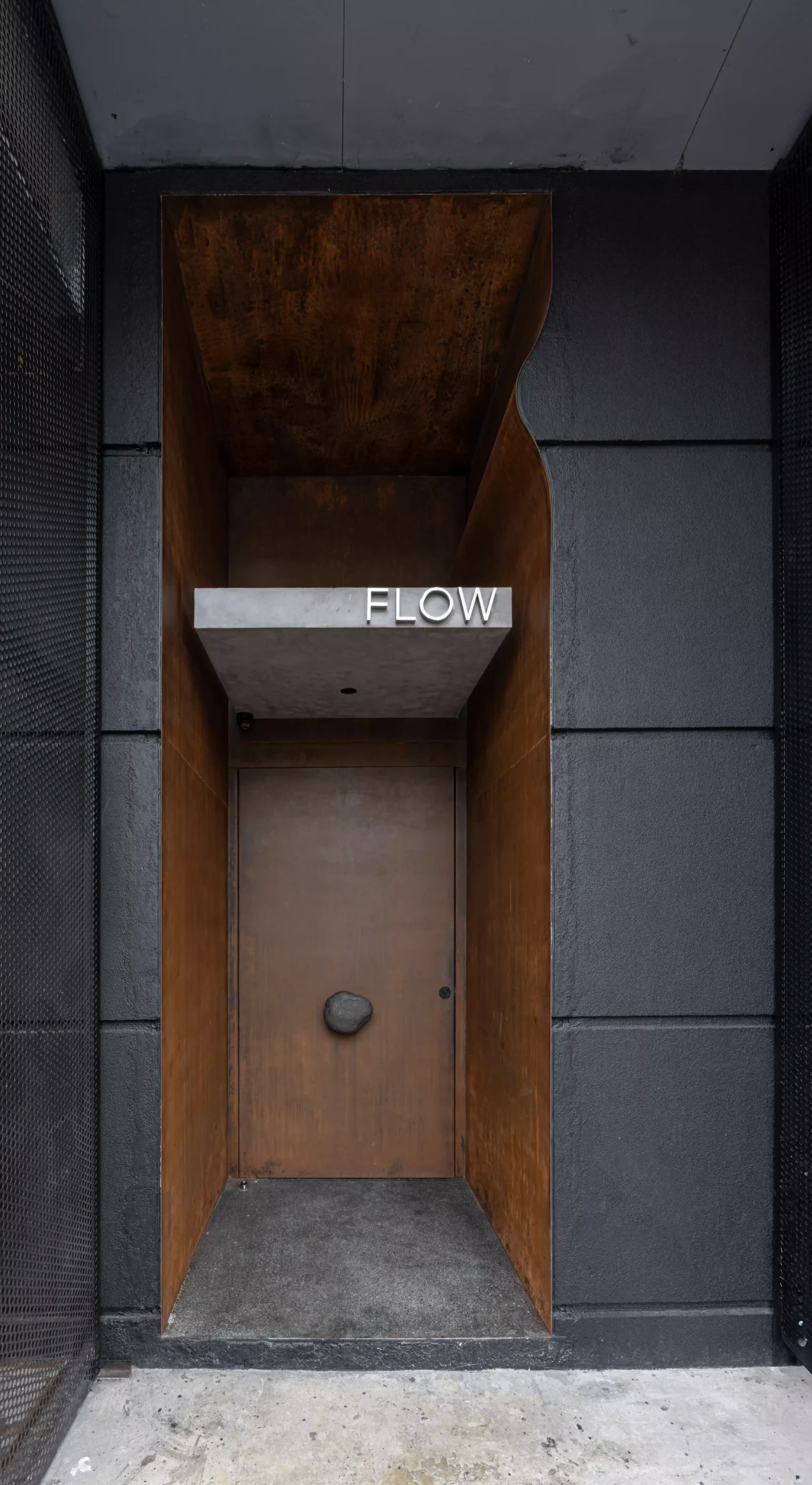
The restaurant is located at the Green Sun Hotel with a street-side entrance off Chino Roces Extension. Originally, the hotel was offering them an entrance that required a long walk through the hotel’s lobby and through a corridor, which they rejected. “I learned from my brother that the approach is very important. It’s key to the experience because it starts it off. Whether you’re coming from the Dasma gate or the industrial aspect of Lumbang street, you’ll see the corten steel entryway,” Rita shares.
This side of the street contained the building’s unsightly utilities: breakers, air conditioning compressors, and gas tanks. “I actually like that,” Anthony adds. “It feels very New York and it provided the edge that I think we needed. We just hid these behind a black fence and Rita and I agreed that we were just going to do a portal entrance.”
The rectangular portal by artist Reg Yuson is clad in weathered steel with a soft ripple on the upper right side, hinting at flowing water. A large, smooth rock floats in the middle of the corten steel door and serves as its handle. Inside, the receiving area is embraced in walls clad in handwoven rattan in three different weaves “flowing” into each other, similar to when you see waves of water meeting.
Advertisement
Walking into the main dining area, more curves are seen in unexpected places— the edges of the tables, a whole wall curves out, and fluted doors. These curves and ripples evoke how water in a river always finds a way around pebbles and stones. “We did not want to express the name in a very literal sense,” Anthony says.
“Subtlety was key,” Rita chimes in.
“Restraint was really key,” Anthony reiterates.
The powder room was given major importance, and this is evident by sheer size and the materiality used. Luxurious verde alpi marble walls in leather finish call to mind Mies van der Rohe’s Barcelona Pavilion. A soft light panel is placed behind a round mirror, a strategy many employ to look flattering.
Advertisement
Black woven lamps by Zacarias 1925 x NazarenoLichauco hover above the tables. A great complement to these are the E.Murio’s black Apparatus Chairs, specially customized in full bamboo for the restaurant. “The craftsmanship and contemporary design of the chair is just so beautiful to me. The bamboo chairs and wicker lamps are quintessential Filipino but infused with contemporary design,” Rita elaborates.
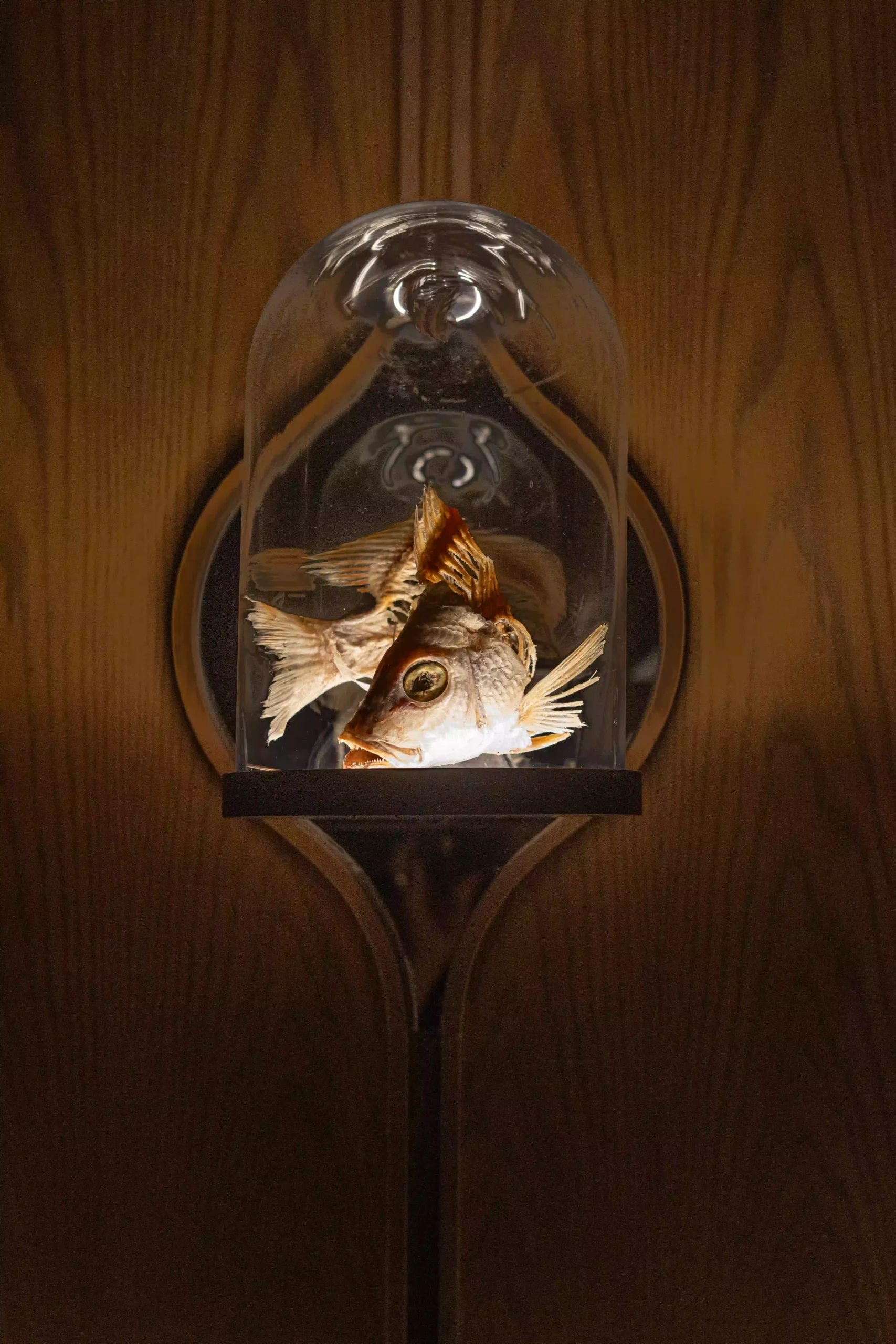
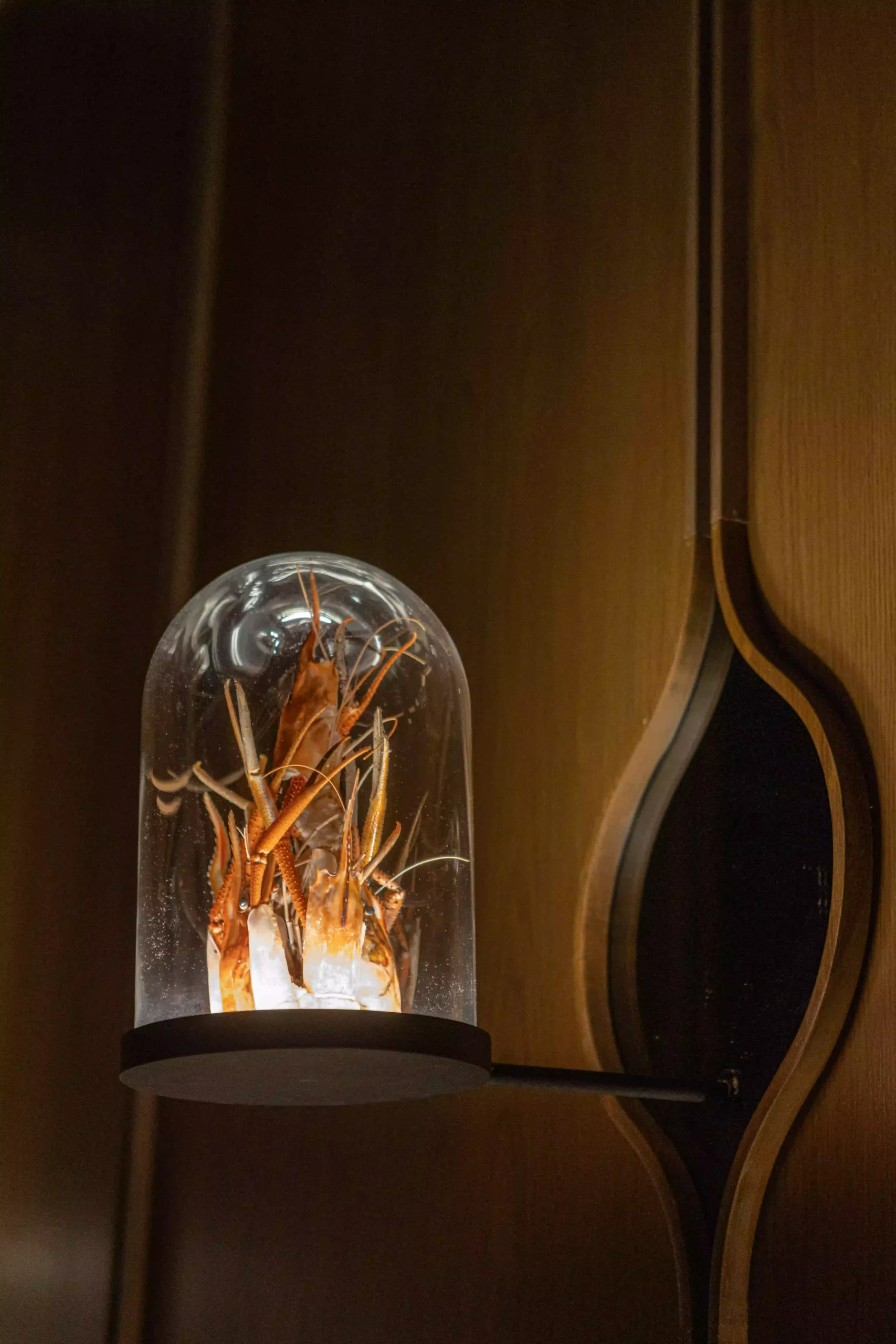
Wooden veneer walls and bricks oriented vertically offer warmth, while glass virinas pique the interest of diners. Inside each one is a different ingredient the restaurant’s current menu uses. “Our parents were antique collectors,” starts Rita. “And in the 70s I remembered religious statues were displayed in them because they were sacred. They needed to be protected. So because the ingredients are such a huge part of FLOW, we decided to put them in these virinas.”
“That was fun to do because from our end it wasn’t just putting objects together. It was really showcasing different ingredients and how best to do that,” adds Bea. “We learned from Kevin and his team about the process for each ingredient and how important they all are.”
Advertisement
In one of the virinas, there are fish bones attached to its head. “Fish is very central to what we do,” Gabriel states. “Not because we’re a Peruvian heavy restaurant, but I think in general. We have over seven thousand islands in this archipelago— we have to have fish on the menu.”
The menu takes you on a journey with every course, each a different terrain and ingredients that weave a story. One of the most highly praised dishes is the River dish made with ulang, or river prawns. Inside the ceramic cup designed by artist Solon Perfecto is a play on a traditional Peruvian dish called Chupe de Camaron. Succulent morsels of ulang cooked with a tangy tamarillo glaze and fermented chili honey are topped with a foam version of the chupe or stew.
Each course collaborates with a different ceramicist or artist— their names are credited on cards that explain the dish. Vea Vasayllaje of Studio Matisse creates a vibrant plate in the shape of a banana heart. EJ Espiritu’s plate almost looks like barnacles with soft indentations on the side and a deep blue glaze in the center. “That’s something I’m truly, truly proud of. We worked with around 12 or 13 ceramic artists,” Kevin beams. “I would like to see this turn into a place where artists and free spirits can come and just express themselves. A big selling point for our concept is the fact that we work with so many different artists.”
Advertisement
Just as water is never really still, FLOW touches everything it passes. “Like the current of the river, we’re always moving forward and we’re always curious,” Kevin concludes.
Located near the equator, factors such as heat and humidity are the norm in the Philippines. This tropical climate has shaped the development of architecture in the country. As Leandro V. Locsin stated: “The first consideration of the Filipino builder and certainly the most evident in his architecture, which is after all an outgrowth of […]
Art in the Park returned this year to Jaime Velasquez Park in Salcedo Village, Makati City, to celebrate its 20th anniversary. This year’s edition featured a curated selection of works from 55 exhibitors representing galleries, art collectives, independent art spaces, and student groups. With all artworks capped at Php 70,000, the fair continued its mission […]
Denise de Castro, Principal Architect of DEQA Design Collaborative, believes that designing with equity in mind means starting at the workplace. Values and practices that your studio or office espouse inevitably filter down to the work that you do. Equitable design ensures that people with different needs and different backgrounds are supported through fair access, […]
Across Metro Manila, residential developments are increasingly designed around proximity. As cities grow denser and mobility becomes more complex, new housing is often positioned near transport nodes, commercial districts, and educational institutions. This approach reflects a broader shift in urban planning. Mixed-use environments allow residents to live closer to daily necessities—reducing commute times while supporting […]
Luxury in design is undergoing a quiet shift. Where once luxury was measured primarily through visual opulence, today it is increasingly defined by responsibility—through the way spaces are built, the materials selected, and the impact those decisions leave behind. At the Philippine World Building and Construction Expo (WORLDBEX) 2026, this evolving definition of luxury takes […]