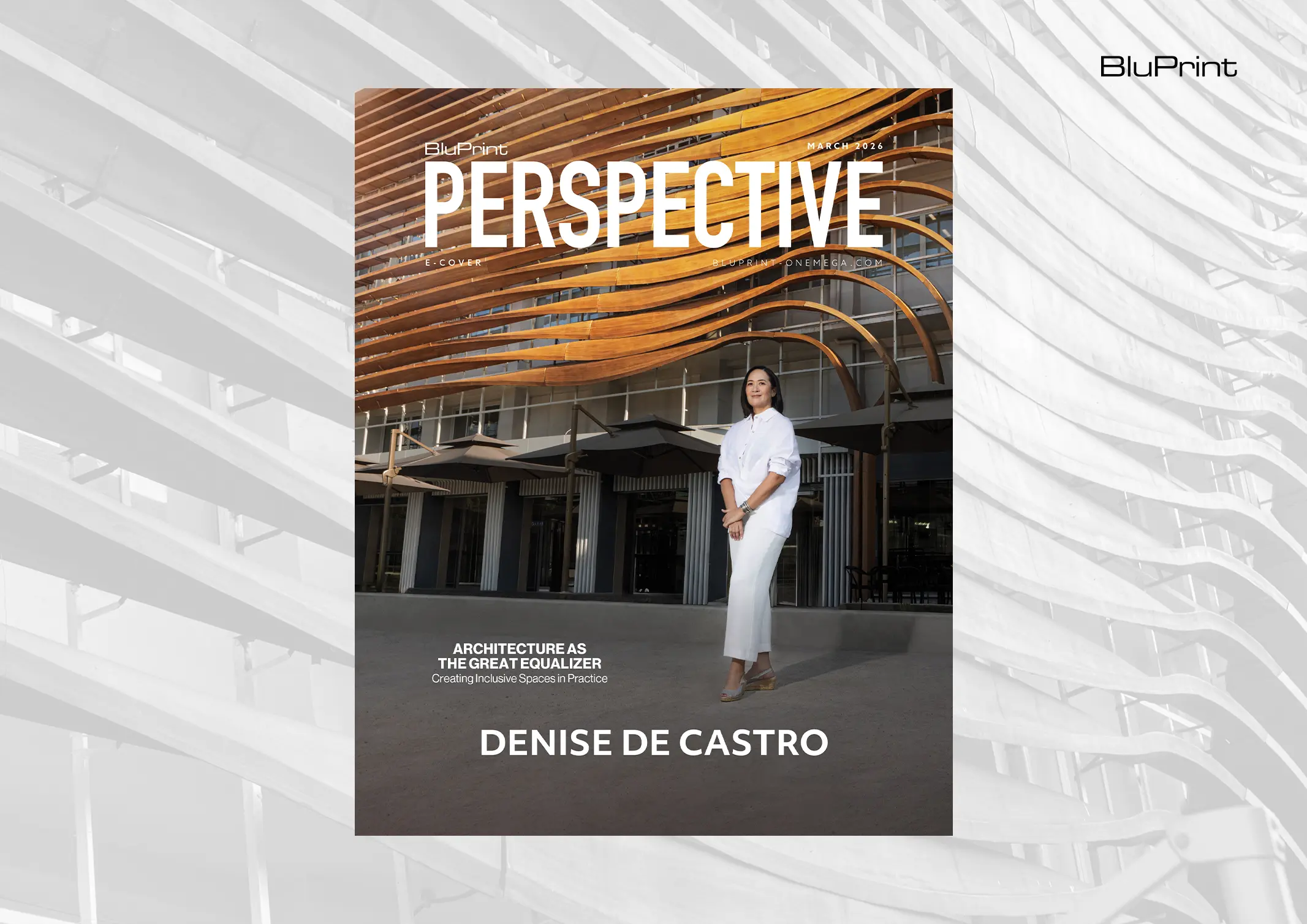
Denise de Castro, Principal Architect of DEQA Design Collaborative, believes that designing with equity in mind means starting at the workplace. Values and practices that your studio or office espouse inevitably filter down to the work that you do. Equitable design ensures that people with different needs and different backgrounds are supported through fair access, thoughtful planning, and inclusive conditions.
Equity Begins in the Workplace
“As a woman-led firm, we try to support other women and let them excel – even though it’s not intentional. I’m so supportive of the LGBTQ, also not by intention but just by openness and giving everyone an equal opportunity,” de Castro states.
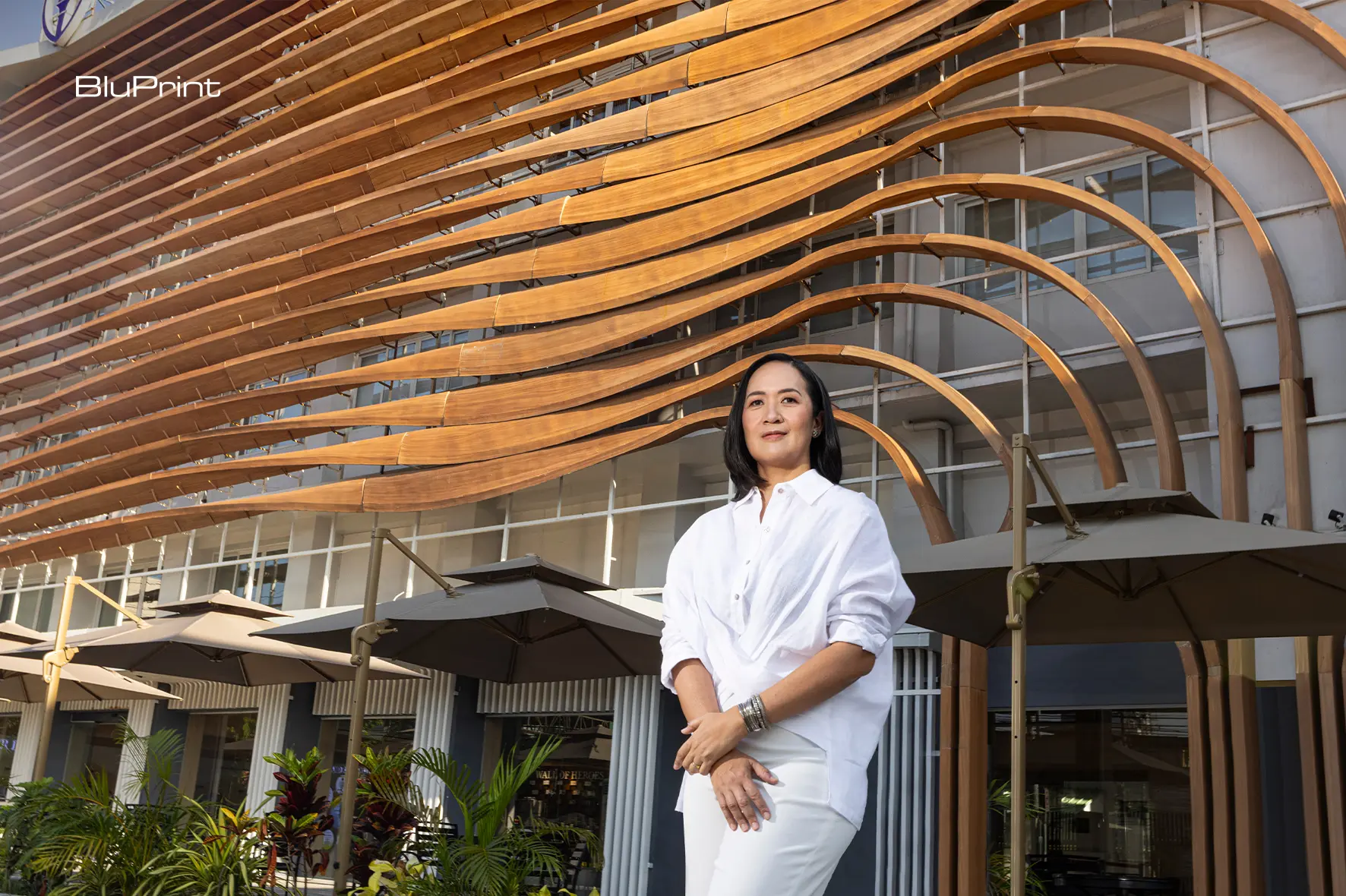
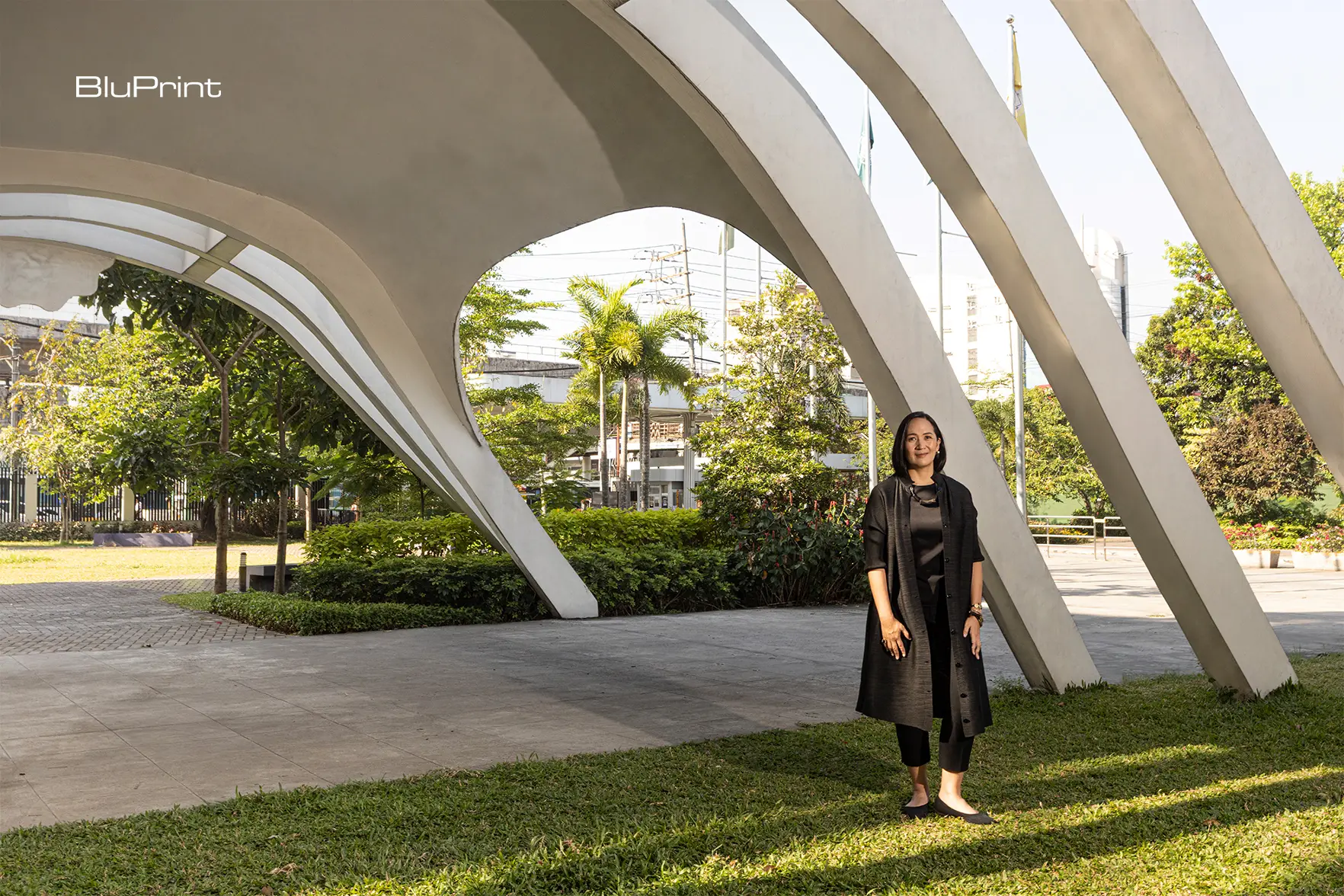
Architect Denise de Castro of DEQA Design Collaborative
De Castro earned her Master in Architecture in Harvard University’s Graduate School of Design so she is quite free from the bias and preferences of local universities. “I’m quite agnostic to UP, UST or if you studied in St. Louis in Baguio, or if you’re from Davao or from Samar. I think that has really been part of the ethos. It’s really about having the values and having the talent and the skill. So I think equity there is expansive – at least in the workplace,” she continues. “It’s great to see all these people from different backgrounds, different parts of the country and they’re not only getting to experience work here in Manila, but they’re also getting exposed to our clients and multinational consultants.”
Advertisement
Reimagining Manila Central University
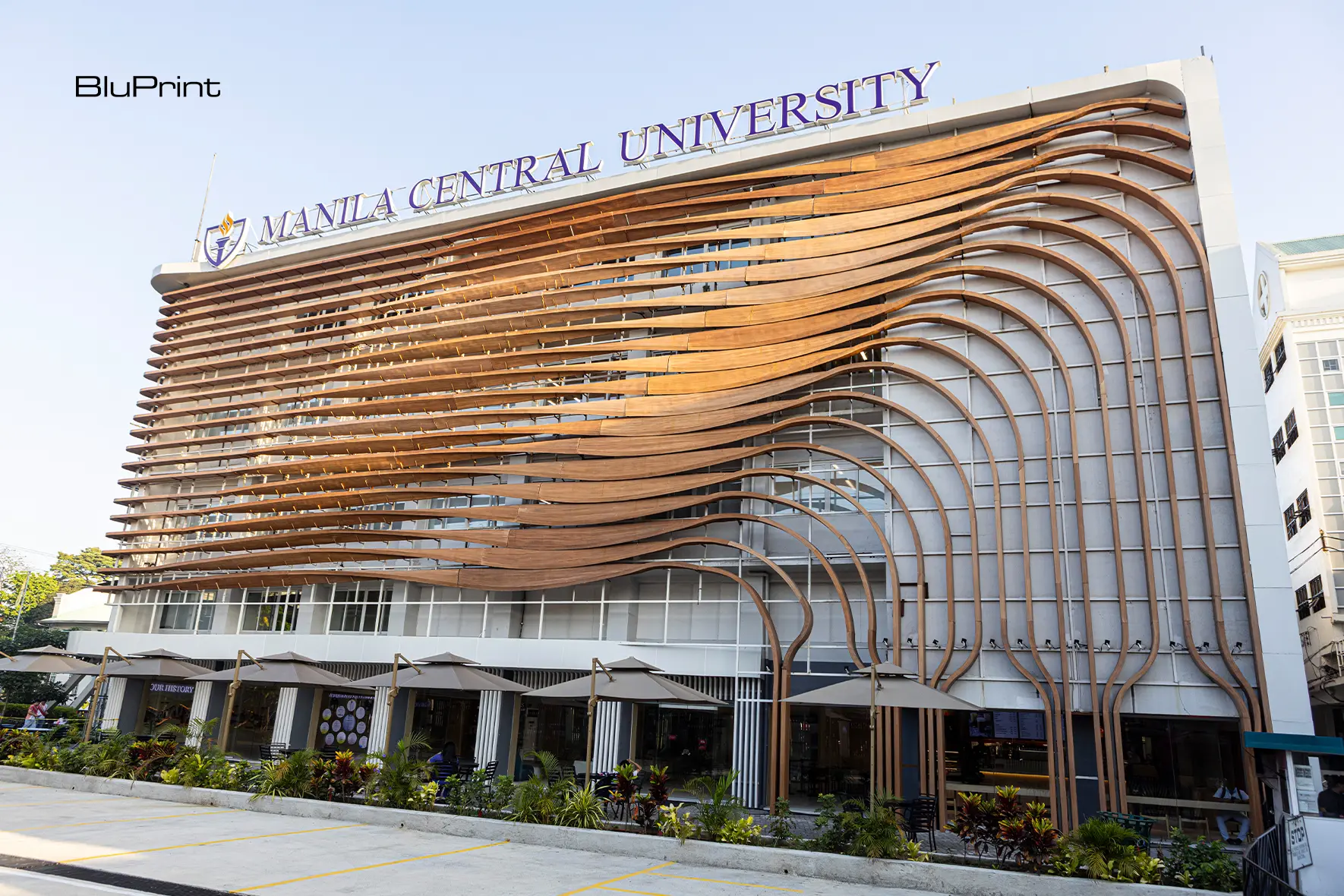
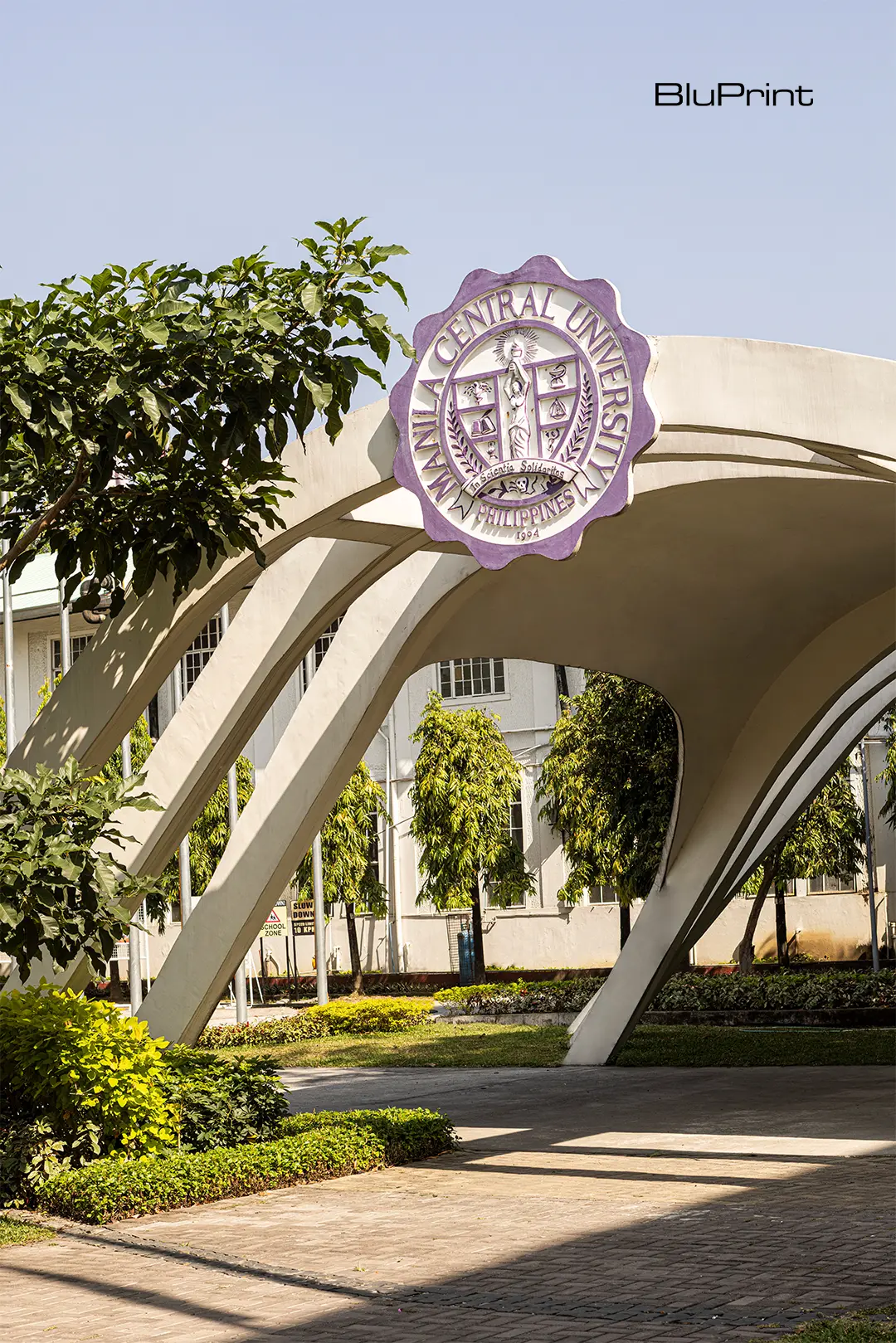
One of her studio’s latest projects is the Manila Central University’s revamp – a striking facade, and a masterplan with open, green spaces. The facade’s undulating fins are made of aluminum in wood finish adding a dynamism to the original structure that faces EDSA. At night, lights by Light Plan Inc. illuminate the fins evoking the torch of the university’s logo.
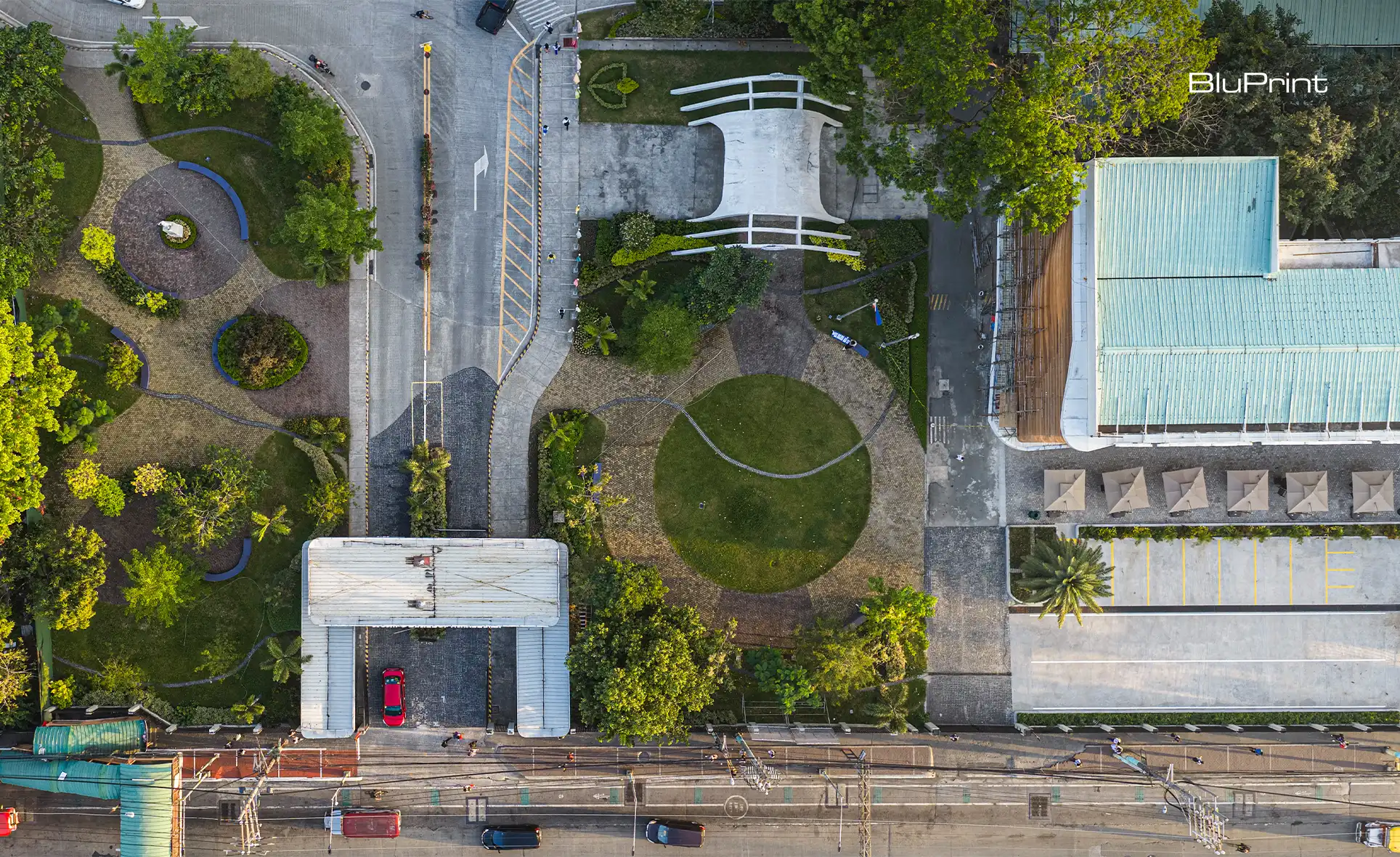
Bird’s-eye view of Manila Central University
“We want the students here to be proud of where they go to school. I think all of the school projects we’re working on now, especially in that bracket of institutions that are not top tier – but not public school – they really want to give equity to these students that are trying to give a better future to their families. Students are able to access affordable education that will push their and their families’ lives forward,” de Castro explains. “Pride of place carries over into the students’ and faculty’s identity and well-being.”
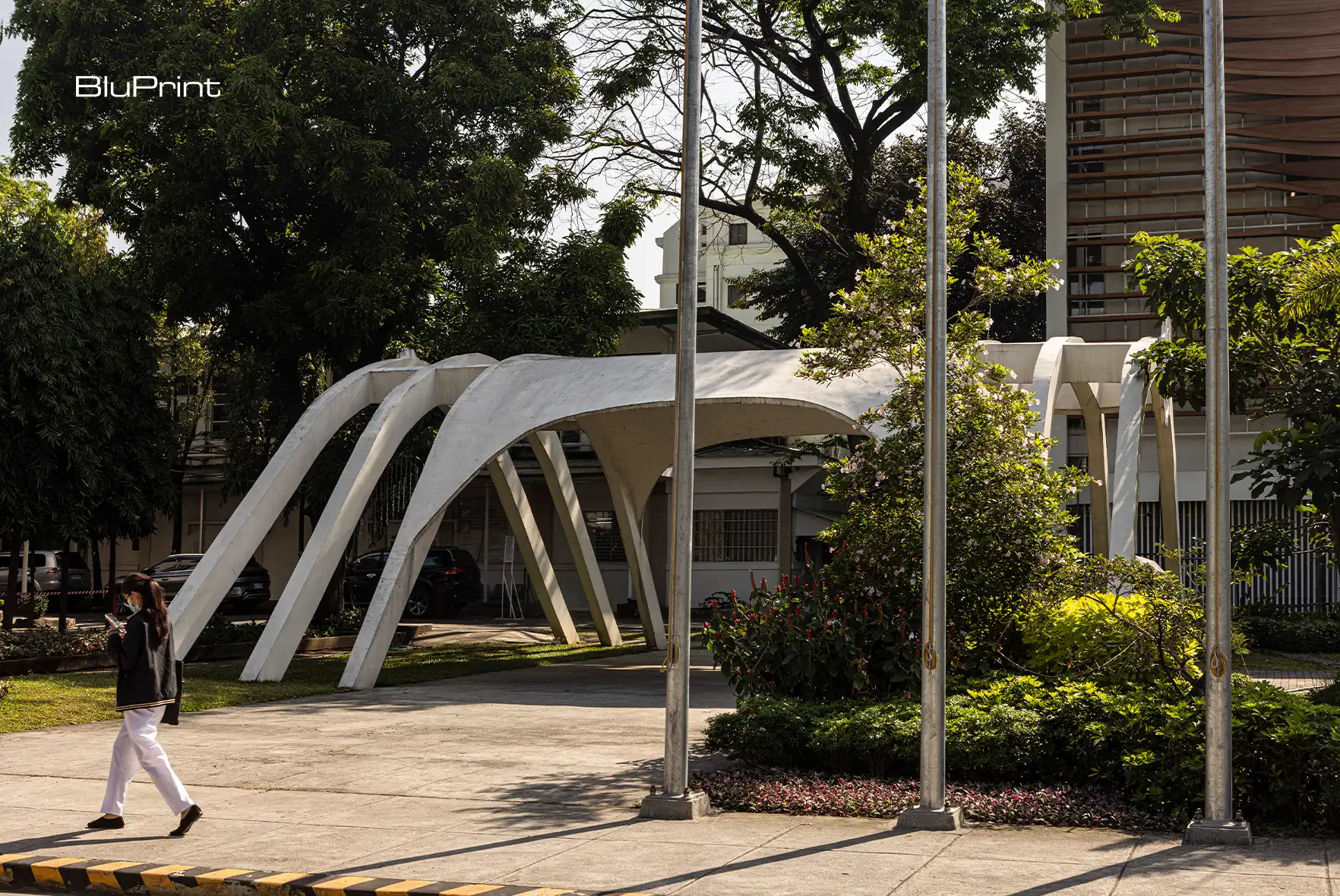
The building was abandoned for years and was suggested to be demolished at first until de Castro saw that it should be saved through adaptive reuse. “It actually had good bones. It had a sort of a modern Bauhaus aesthetic outside and we thought we could use that as a foundation for the renovation of this building,” she recalls. “But they really wanted a look that was more contemporary that would appeal to a younger generation – something that was about nature.”
Manila Central University’s façade
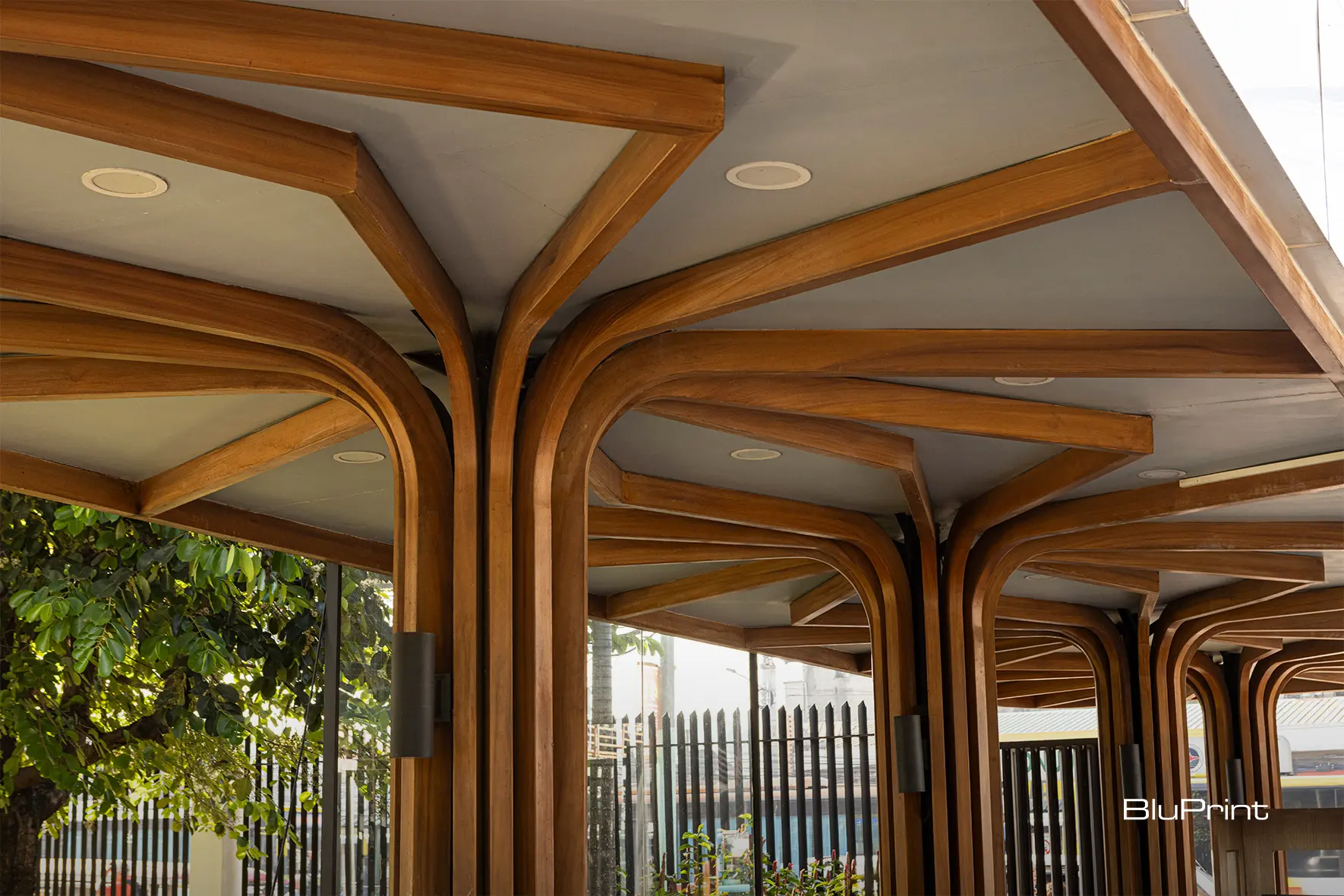
The MCU campus, although by the busy throughway of EDSA, goes deep past the frontage with many mature trees. DEQA Design Collaborative wanted to incorporate this not only into the architecture—seen in the fins as growing, winding branches or the trees as columns supporting the canopies in the portal entry—but by placing importance on green spaces.
Canopies located at the university’s portal entry.
De Castro was inspired by what she saw on the property. “The previous entrance on the side street was very wooded. There were a lot of trees and a courtyard. When we saw that, it was what we wanted to bring to this side. We wanted to bring the history and heritage, but modernize it and make it more contemporary.”
Advertisement
Landscaping Campus Life
Students are given access to outdoor spaces.
One of the first phases of this project was the landscaping. Two adjacent green spaces flank the main road into the university. De Castro worked with landscape architect Joaquin Rodriguez of LanArch Studio. “MCU is a school that has a very strong curriculum in nursing and the health services. So I think the landscape was really important here for them because it’s about health, wellness and well-being. The landscape plays a big part in the redevelopment of the school. Hopefully now, because they have these outdoor spaces in the landscape, students will be more social and form more bonds with each other,” she points out.
Events and gatherings can be held at the larger, circular green space which is outlined by benches. The smaller park which features the statue of Minerva—godess of wisdom and the patron of the university—has curvilinear benches and taller plants for more privacy.
Designing for Access
Another phase of this project included the entry portal fronting EDSA. “We wanted to give the same importance to pedestrian entry because a lot of the students are commuters. We didn’t want to just prioritize the gates where the guards would be for vehicles only. We felt that it was important to also give the students that privilege of a decent arrival,” she mentions.
Safer walkways are given to students, ensuring accessibility within the campus.
The fence in the front is also now lit up at night providing a safer walkway when students leave the school. “Before it was totally dark. I think that’s also part of the equity factor,” she says.
Advertisement
DEQA’s Well-Living Design Framework
DEQA Design Collaborative abides by four key values when designing, making up their Well-Living Design framework: 1) Design with purpose 2) Empathetic accountability 3) Quest for innovation and 4) Align with design. “It came out of this desire to design spaces for people that will improve their wellness and well-being. What does that mean? It’s really giving everyone access to better light, air, healthy materials, giving them spaces to be social with others or their family. It’s about giving them access to nature and landscape. It’s also about giving access to buildings and spaces for people that are handicapped or have disabilities. That has filtered down into our values,” she cites concrete examples. “In all the homes we’re doing now, all of them are multi-generational in mind. It’s not only about the client’s children but also the client’s parents living with them. So we consider PWD bathrooms now in the homes we’re doing and elevators if there is space. It’s thinking about access and designing for everyone in the home, in the building or in the community.”
To help fulfill this human-centered design philosophy, de Castro implements in-depth reports and reviews of their projects. “We want to make sure we can walk the talk. We want to make sure that what we’re trying to implement in design is actually really happening in behavior. After we turn over, we do post-occupancy reports, reviews, and check-in with the clients. We’re also in the process of creating a checklist of things that can be measured, such as air quality. Those are metrics that you can physically measure.”
Architect Denise de Castro of DEQA Design Collaborative
She also seeks out qualitative aspects. In a home, are clients observing more social interaction with a certain layout? In a school, how are students receiving the space? Do they feel proud coming to school? Who’s using the space, and what activities are they doing? All of this data informs DEQA’s design approach.
Advertisement
When it comes to designing from an open perspective with inclusivity and equity, there can be something to learn from de Castro’s thoughtfulness. Being sensitive to the different needs of people can level the playing field and ensure people have the same opportunities to succeed.
As the built environment evolves, the role of the architect demands reconsideration. For Jose Siao Ling, Co-Founder and Principal Architect of Jose Siao Ling & Associates (JSLA Architects), the role extends far beyond being a licensed professional who designs and oversees construction. By championing ethical practice, ISO-certified systems, and mentorship-driven leadership, he built a firm […]
Architecture extends beyond mere structures. It has the power to hold stories that reflect our current social milieu, while also presenting itself as a solution to societal challenges. As time progresses, Barchan + Architecture continues to evolve along with the changing landscape. Standing at the forefront of progressive architecture are the firm’s Principal Architect, Jason […]
The genius of a well-designed space is often invisible, yet its presence is deeply felt. It’s there in the warmth of light that encourages you to linger, the balance of texture and materials, and in the intuitive layout that guides you effortlessly through the room. This translation of an idea into a tangible, atmospheric reality […]
At its core, architecture has always been about the human experience. While this fundamental purpose can sometimes be overlooked amid the complexities of modern life, a renewed focus on human-first principles is taking hold. This deliberate approach is articulated in the philosophy of Life-Centric Architecture, a mandate championed and put into practice by Terence Yu […]
Dominic Galicia operates on a different timeline. For him, the distinction between a structure built today and one erected centuries ago dissolves if it possesses a “special quality of moving the spirit.” This core belief is the foundation of a career that elegantly sidesteps the false dichotomy of heritage versus modernity. Instead, Galicia, the principal […]
What is the soul of a building? For many, the answer lies in history, aesthetics, or some intangible poetry of space. For architect Don Lino, the answer is far more concrete: the soul is found in the solution. This is the guiding principle of his firm, LINO Architecture, a practice built on the conviction that […]