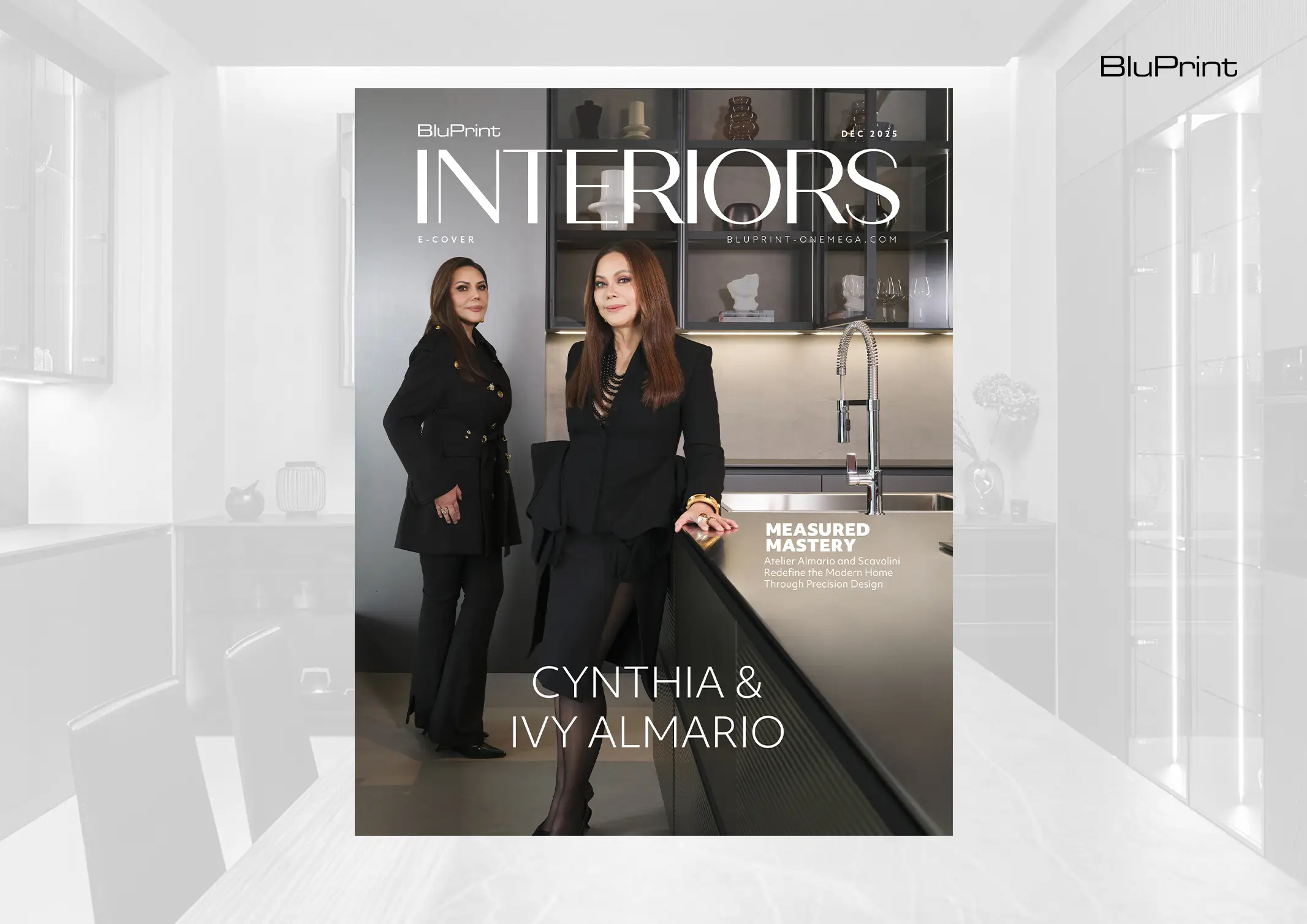
Atelier Almario, led by powerhouse siblings Ivy and Cynthia Almario, have the vision of fully realizing the design of your dream home. Their dedication and expertise are seen with every decision they make, from the basic measurements that allow a space to be harnessed efficiently, to their use of trusted companies like the Italian design […]
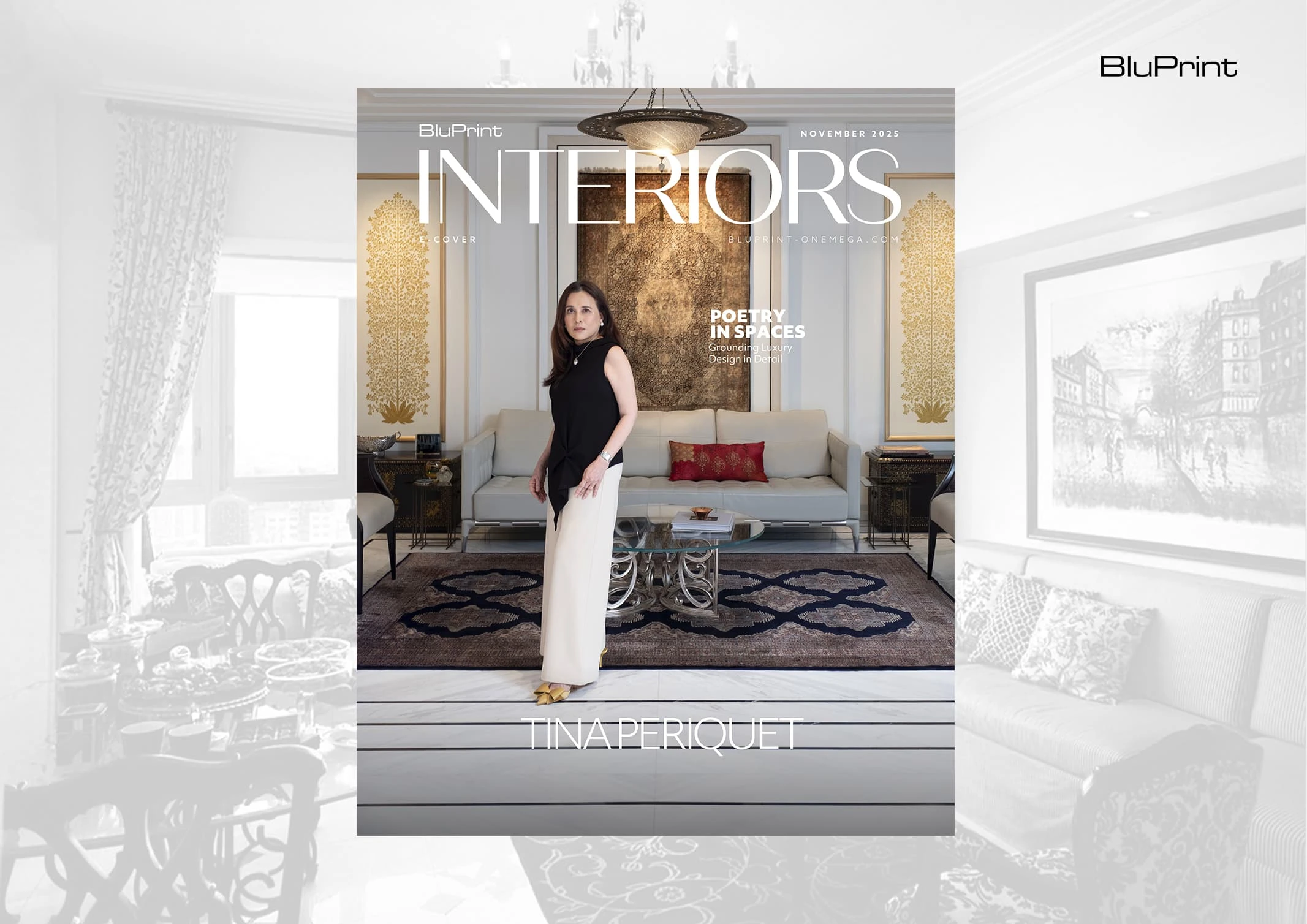
Poetry in Spaces: Tina Periquet Grounds Luxury Design in Detail



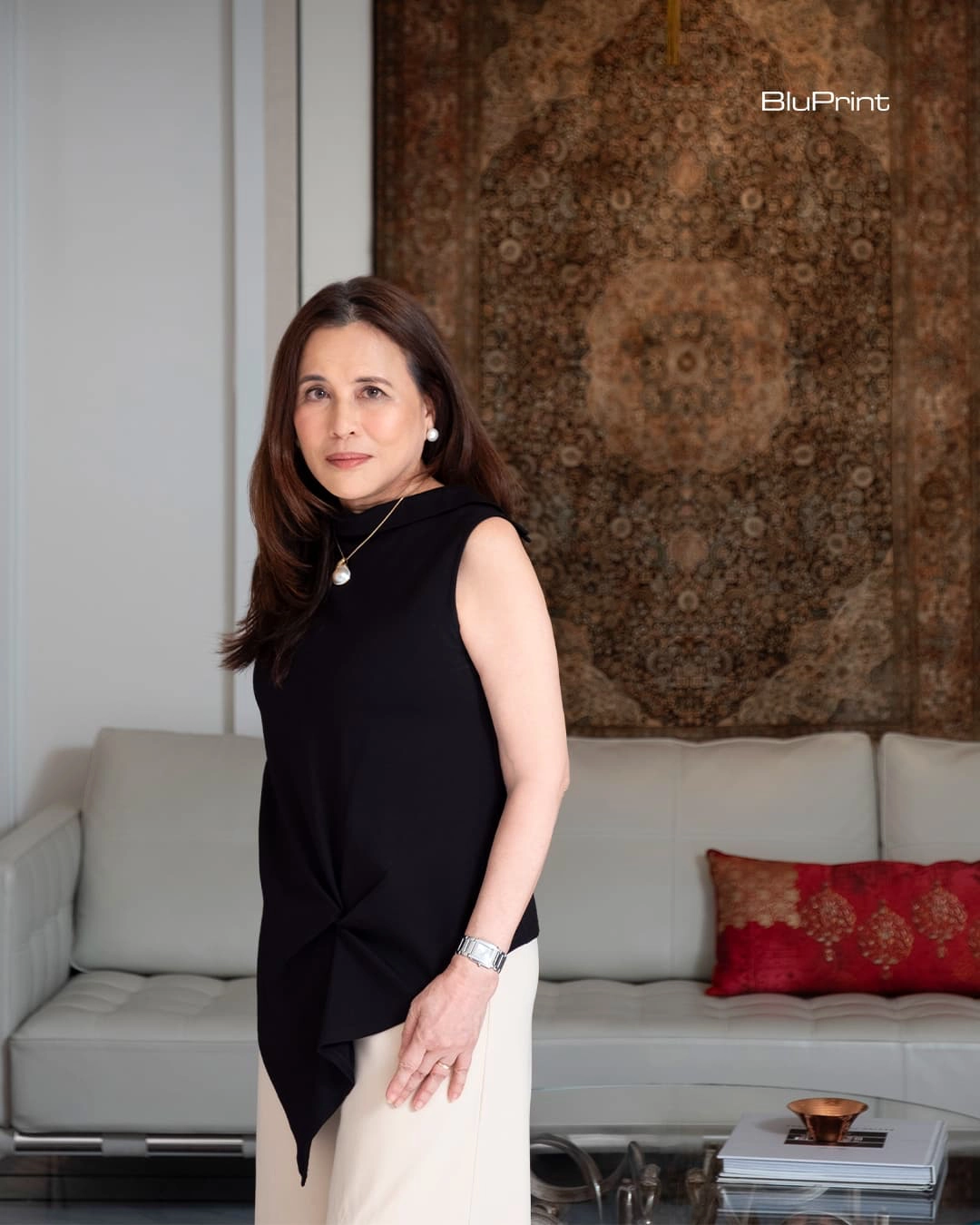
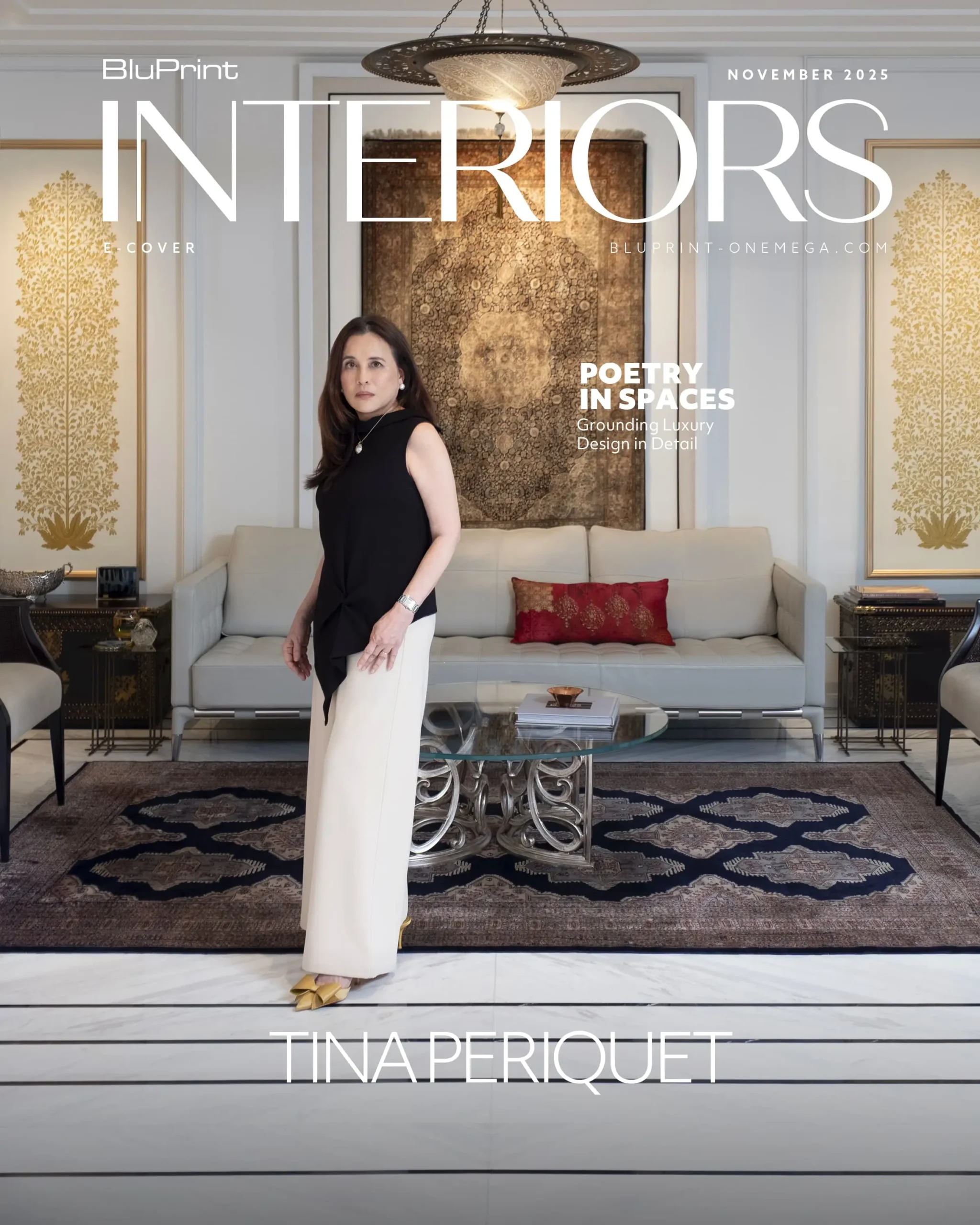
At her core, Tina Periquet is a storyteller. Hers is a unique methodology that makes her stand out from the world of designers, both here and abroad. She posses a keen understanding of the intricate grammar of design; how the details of a space flow together to create a habitat for her clients that tells their unique perspective .
Even before founding Periquet Galicia, the designer cultivated a unique foundation at Assumption College, earning degrees in both Interior Design and English Literature. She went on to earn an MS in Interior Design at Pratt Institute, and studied fine arts at the Art Students League in New York. Her extensive education helped root her design philosophy in the strategic power of creating expansive, meaningful spatial narratives achieved through economic and disciplined means.
“Designing a space can be like composing a poem or crafting a story,” she said. “You note the context, the particulars, the opportunities and constraints. Then you let it all percolate while staring at the plan. Soon, pathways and patterns start to form, until you have the makings of a general concept or theme.”
Advertisement
Her facility with both the architectural blueprint and the literary canvas allows her to reconcile disparate elements—whether they are site constraints or complex client needs—into a single, coherent vision. This cross-disciplinary fluency, she argues, reveals the underlying language that dictates the success of any composition, whether spatial or textual.
“My mind naturally pivots from design to poetry and prose because they all hinge on the same type of structural foundation: a unified composition of elements, each supporting the whole,” she explained. “Shifting from metaphor to the literal meaning of words is like fleshing out a design concept on an actual site.
“Active verbs are like dynamic intersections between forms. Adjectives are ornamental flourishes, to be used with care lest the work become too florid, too ornate. In both cases, I seek clarity and legibility, and a certain lyrical quality, so that both the mind and the senses are engaged.”
Advertisement
A Renewed Sense of Meaning
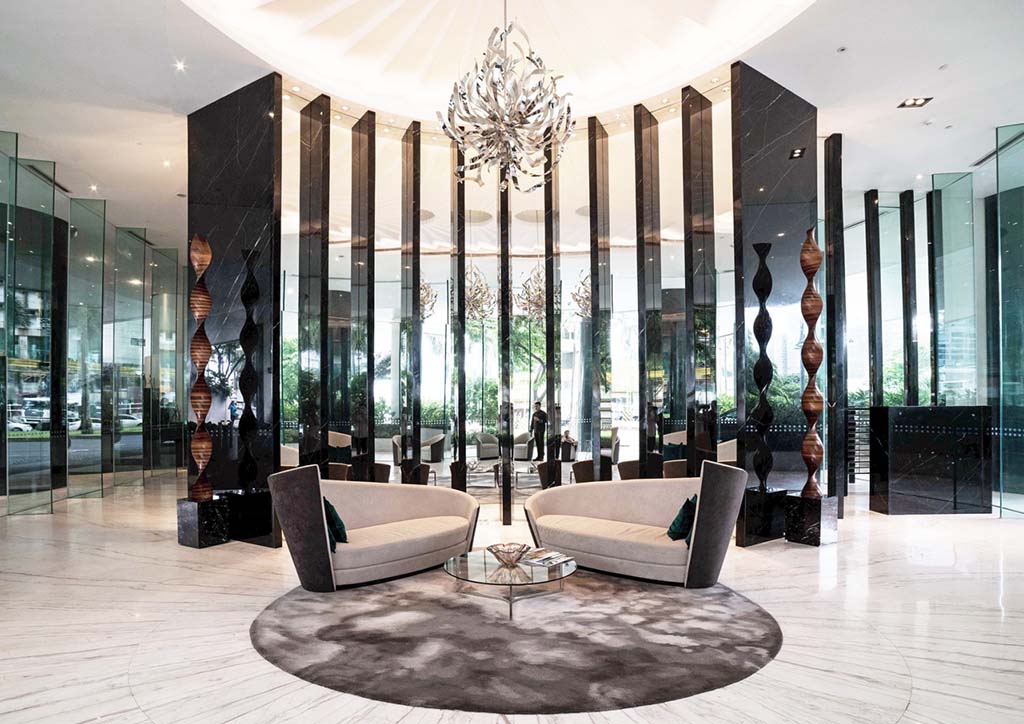
Early in her career, Tina Periquet became one of the most acclaimed interior designers in the business. Recognized internationally for her contributions art and design, she has helmed a portfolio of high-profile residential and commercial projects that bear her distinct, recognizable signature, earning instant acknowledgment from industry peers.
The way she sees it, this reputation among designers and clients alike is not because she has a specific style that she follows. Rather, she believes that it’s her own focus on the intricacies in every project that makes her stand out from the crowd.
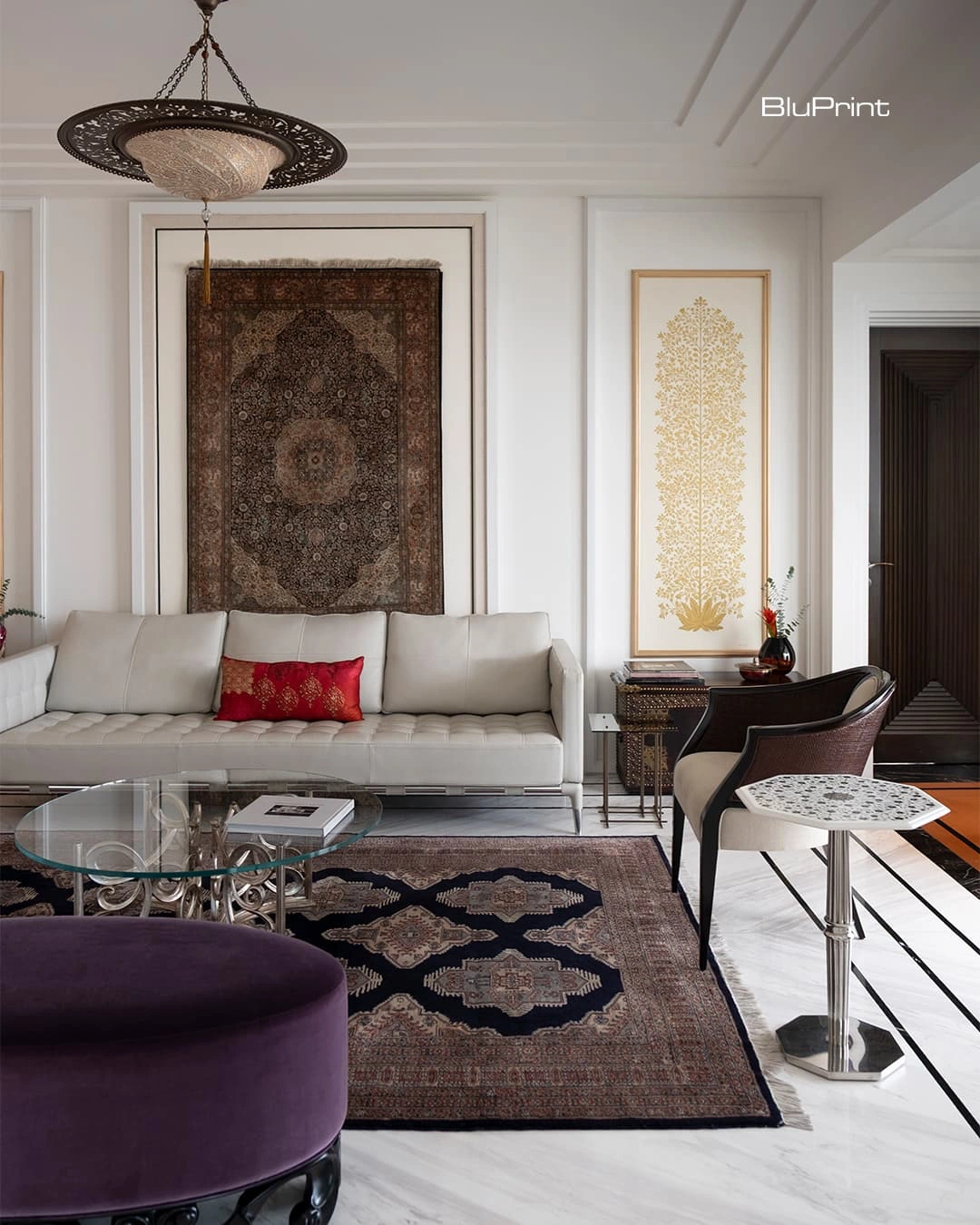
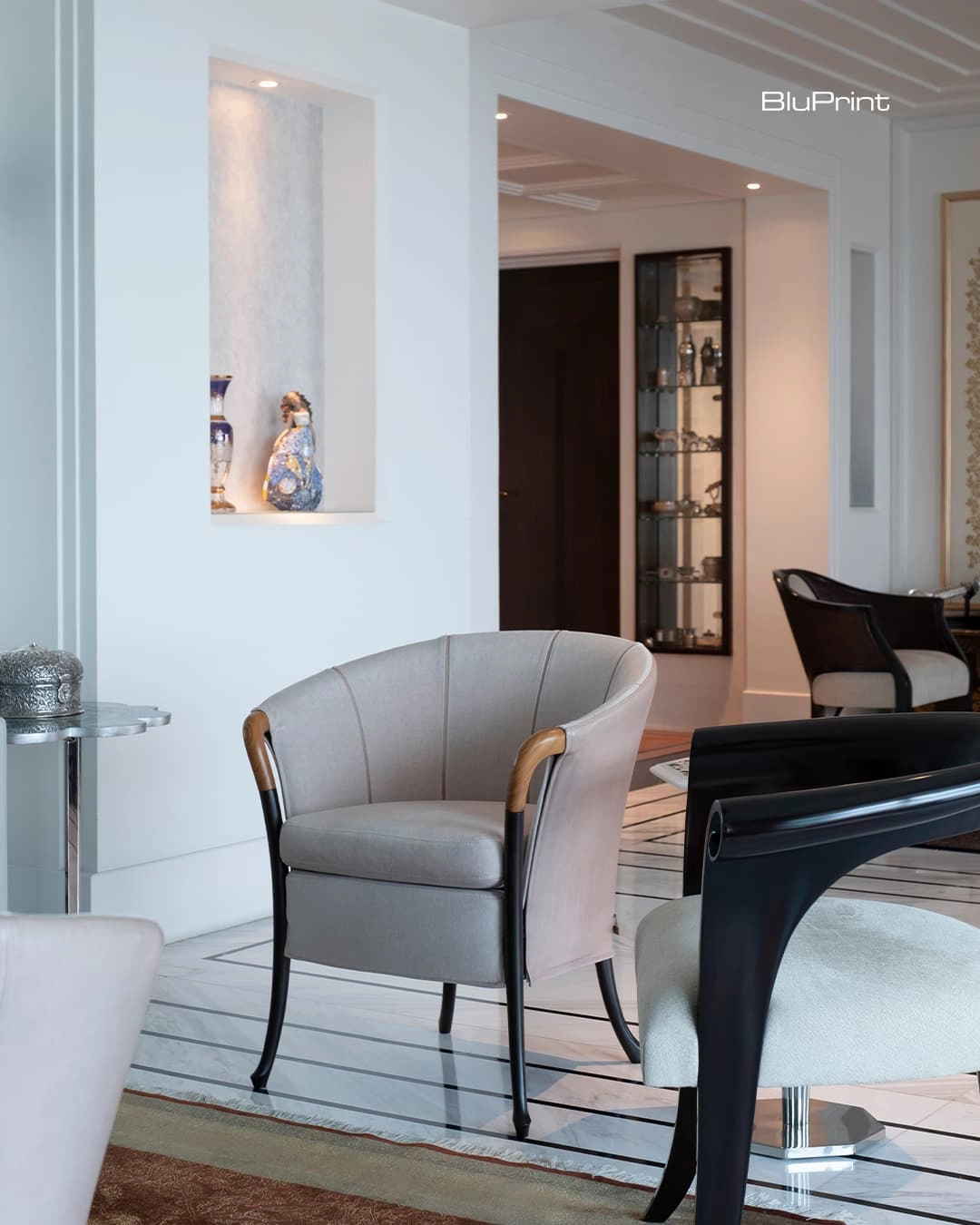
“What most don’t seem to recognize is the importance of detail, particularly in a modern design, which tends to be bare of ornament,” she explained. “The way things meet, the interaction between elements, the joint or termination—those are the key plot points of a design narrative.”
Advertisement
The details are the point: the big picture experience of how a home or a space feels comfortable rests on the small ideas that make up the whole. It creates context to build satisfying and restful surroundings for her clients, accentuating their needs and desires.
“As a novel brings a whole world to life in a book, a space is a realm with its own set of implicit laws, cultural norms, characters and events,” she described. “Everything must hang together, every detail must support the concept, to induce that ‘willing suspension of disbelief’ that allows us to relax and immerse, unquestioningly, in a curated experience.”
Grounding the Big Picture
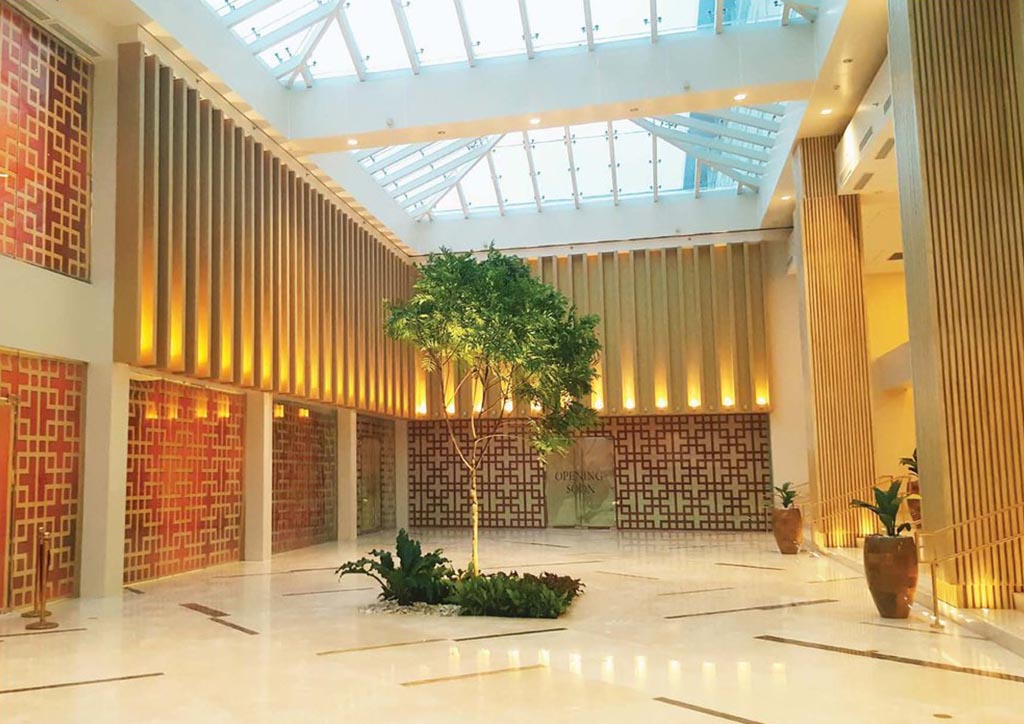
One can compare the way Tina Periquet approaches design to how someone like Herman Melville approaches his work: many small details within a story adding towards this grander narrative which tells us so much about the human experience.
Advertisement
“My default perspective is panoramic and holistic—contextual, big-picture—and I am an idealist,” she said. “I start with broad strokes and ambitious standards and a high sense of purpose. Then I zoom in to ‘ground’ my vision through meticulous attention to details that support the big picture.”
Melville’s Moby Dick, for example, depicts different scenes about the daily lives of whalers that, at first glance, seems separate to the narrative of hunting down the titular white whale. But as these experiences accumulate within the story, there is this thematic connection with the hunt for Moby Dick that reveals the character of the protagonists which speak to a grander human experience.
In a sense, Tina Periquet sees the grand narrative of her clients’ experiences: their heritage, their profession, their principles. Understanding those core themes, she translates the client’s essence into execution, distilling it through the selective use of material palette, ornamentation, and curated art. The culmination is a bespoke environment that fully embodies the individual’s spatial narrative.
Advertisement
“You need to listen to the space,” she said. “Young designers often jump right in and start moving things around. Start by attuning yourself to its innate geometry; open your eyes and mind to its particular character, its unique opportunities and potentials.
“Space and form need to be seen more as things that can be sculpted, molded, carved and contoured. You can’t do that if you’re seeing it in two dimensions.”
Lights and Shadow to Emphasize Spaces
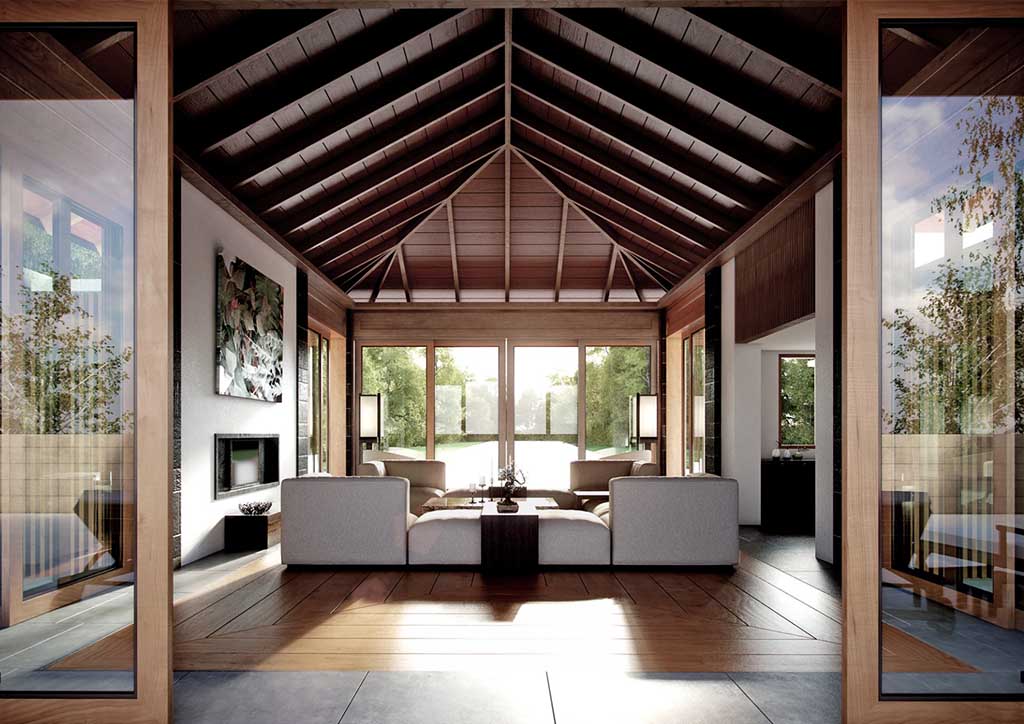
Periquet’s design approach synthesizes expansive spatial concepts even within challenging constraints. She harnesses her full design repertoire to cultivate environments defined by both perceived spaciousness and grounded comfort for her clients. That doesn’t just mean the objects, furniture, or color, even if they’re important. Those can differ from client to client, depending on their preferences.
Advertisement
But what is always there are light and shadow. She asserts that these are some of the most important components of her work, functioning as a sort of “yin and yang” to her design ideas. They provide a contrast to how the room is presented, providing a stellar perspective on how things look to the client.
“I am actually a painter, aside from being an interior designer, and so I tend to see a space before I start working on it as a blank canvas, and my primary tools are form, space, light, and shadow,” she said. “Color is an add-on. You don’t need it if you have those tools well matched.
“But you have to make sure that you make room for the voids, the space. And once you have what you feel is a good balance of elements, then you begin deciding which areas, which elements to highlight and which to leave and shadow. The balance of the two is very important, and it’s something that most people don’t get right because they’re focusing on the things that need to be emphasized.”
Advertisement
An Emphasis on Harmony
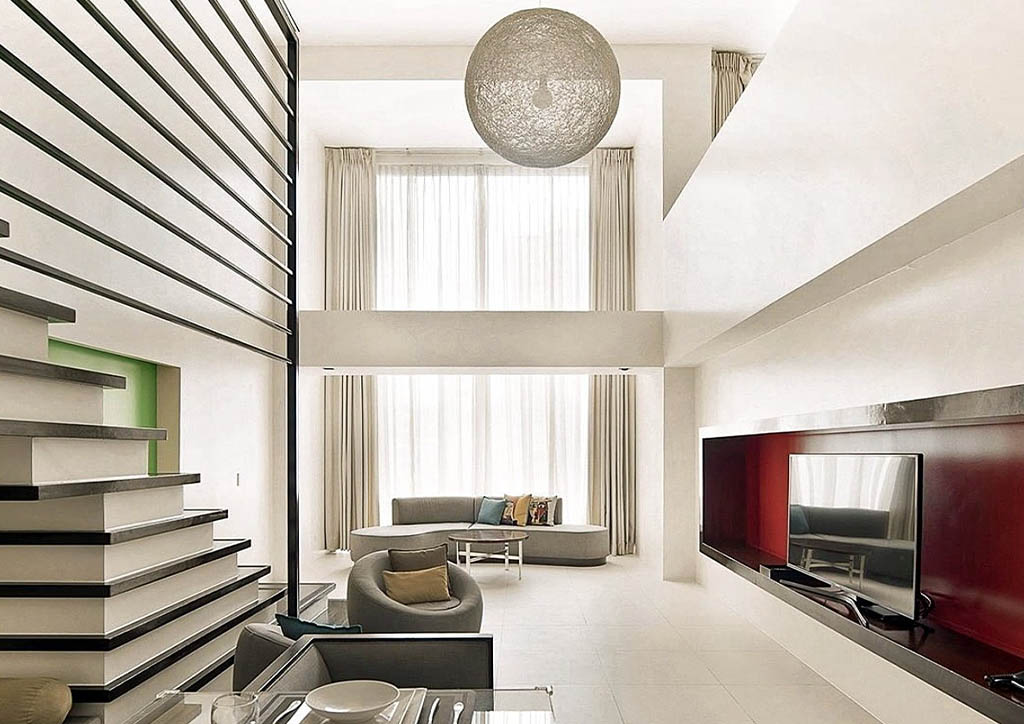
So whatever a client wants in a room, she makes sure to use a balance of light and shadow to really portray them in the best possible way. Any painter, any photographer, any cinematographer knows that finding the harmony and tension in each image is what makes it compelling. So, too, in design: that harmony and tension provides the focus for our eyes, and thus provides what we see and remember in a place.
“When you’re emphasizing everything, it’s like shouting,” she said. “ And people end up not knowing what to hear, what is the actual message. In order to create the proper sort of emphasis, you need to subdue everything else. That’s why shadow is 50% of [the] scheme of lighting. In composing, there is the focus and there is the background, the field. You need to make sure that you are pushing one forward while pulling something else back, not pushing everything forward.
“If you let the space work for you, if you are attuned to balance the whole time, then what happens is eventually it’ll reach a point at which the space starts speaking for itself.”
Advertisement
Knowing the Client, Knowing the Narrative
One of the best ways that Tina Periquet achieves that “willing suspension of disbelief” is by ensuring she really understands what actually makes something relaxing and luxurious. Like an author knowing how to cater to their audience, so must she also dig into her clients’ psychologies to see what they respond to the best.
Challenging conventional wisdom, Periquet asserts that genuine luxury is not derived from a brand name or a price point, but from the quality and experience of the space itself. People tend to associate “luxury” with “excess,” with being able to wastefully use resources without an end goal in mind.
She also makes a clear distinction between “luxury” and “extravagance.” Like a great storyteller, she grounds herself in the economical use of materials: as one looks for the least words to make the most impact, so she creates the most comfortable spaces with the least amount of resources necessary.
Advertisement
“ Part of the job of a consultant is to guide the client, to tell the client, ‘no, you don’t need that.’ One client, for instance, asked me ‘can I have one of those built-in [espresso machines] that you get at Focus Global?’ You push the buttons and you get all these options and it’s great: you get a cappuccino, you get a latte, et cetera, whenever you want.
“The problem is, I asked him, ‘Who is going to be using the kitchen? Will you be doing that yourself? Will you train someone to do it?’ And if you feel that it’s not going to happen, then you should tell the client, you know, ‘maybe we want something simpler.’”
Finding What Matters The Most
It’s why she always works with a budget with even the wealthiest of clients. A budget provides limitations and gives her a good idea of what the client actually believes is important to the space he will live in. She wants to provide something honest to what her clients want to experience, to really furnish the place in a way that they can live in it day in and day out. In the long run, the utility of a product is more important than the glamor that specific objects can bring.
“If what he really wants is a good cup of coffee made properly every day, then he might be best off with something simpler, something he will be able to enjoy using,” she said. “And in the end, I consider that good service. It’s really being in touch with the client’s needs and giving him exactly what he needs; not what he thinks he needs, but what you, the designer, feel [is] appropriate for him. That’s where trust comes in, that’s where a good relationship comes from.”
Advertisement
The Story Never Ends
Of course, for every author, their story is taken over by the audience eventually. Every interior designer works to make a space not just stylish and luxurious, but livably so. Tina Periquet sees the story of each client, and builds them the framework and details for a relaxing and comfortable existence.
In the end, the stories she creates in every space she designs continues onward without her through the way her clients live in those spaces for years to come.
Read more: Building the National Museum of Natural History’s Tree of Life
Images courtesy of Periquet Galicia
Portrait Photographer: Ed Simon
Hair and Make Up: Cats del Rosario
Sittings Editor: Geewel Fuster
Managing Editor: Chad Rialp
Associate Producer: Mae Talaid
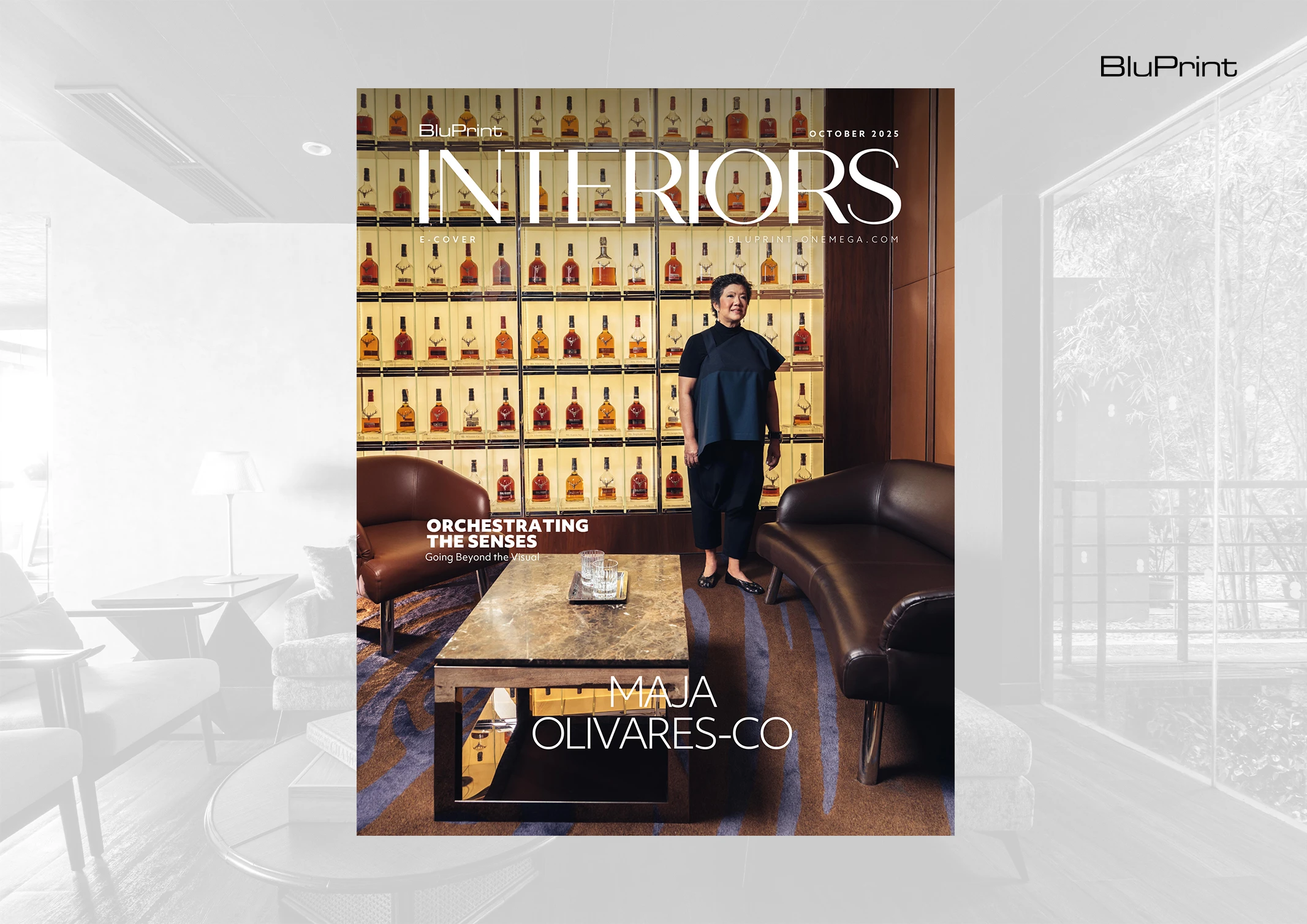
Few figures navigate the space between legacy and innovation with the same fluidity as Maja Olivares-Co. Her career holds seeming contradictions in perfect balance: historical reverence and modern invention, commercial success and profound social conscience. As the Creative Director and Principal Designer of the pioneering firm Sonia Santiago Olivares and Associates (SSOa), she has evolved […]
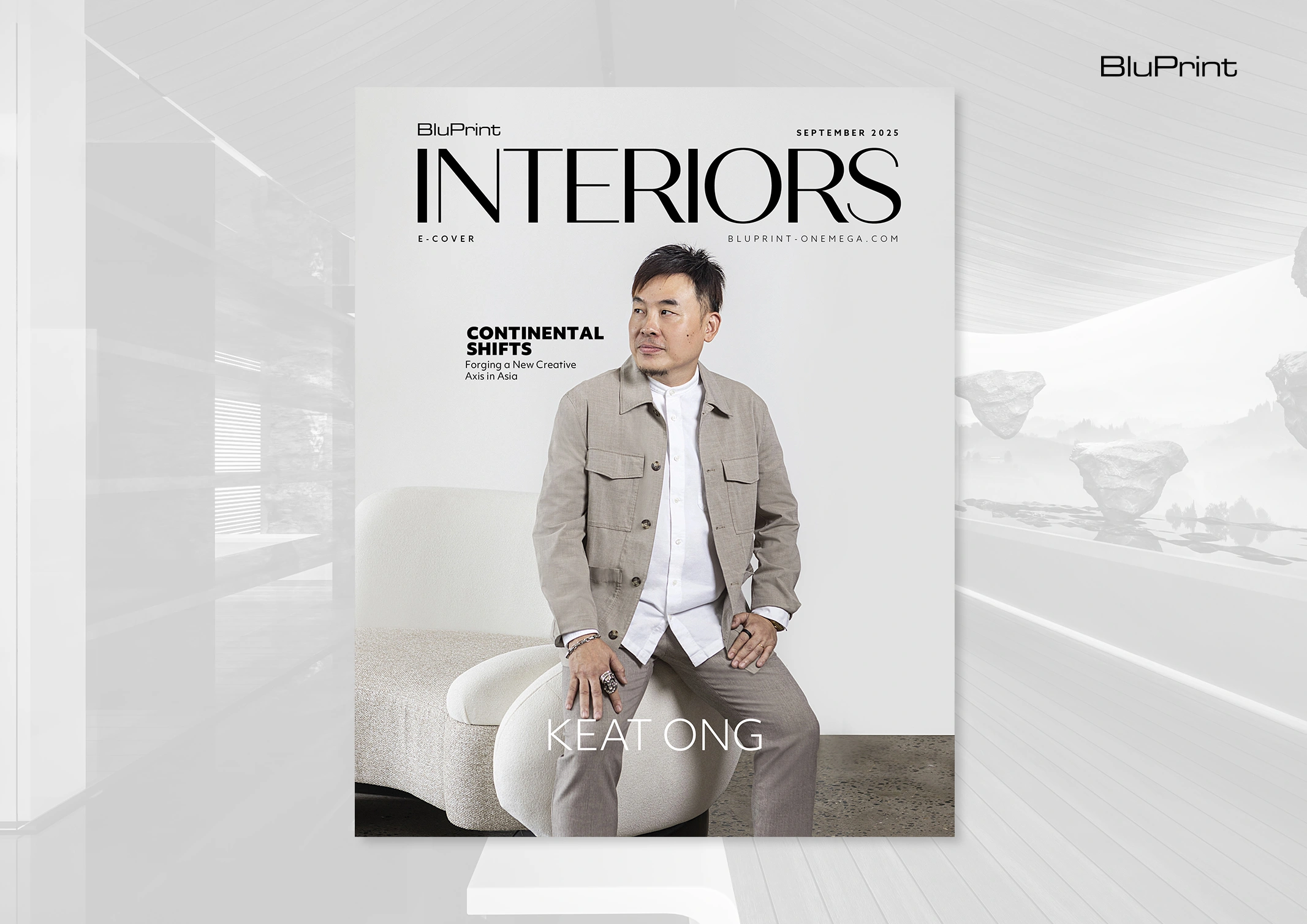
In the discourse of design, few figures manage to master both the creative and commercial realms with equal authority. For over a quarter-century, Professor Keat Ong has not just built a portfolio of award-winning projects; he has architected the very profession itself. As a creative director, a tireless advocate, and an educator, Ong has become […]
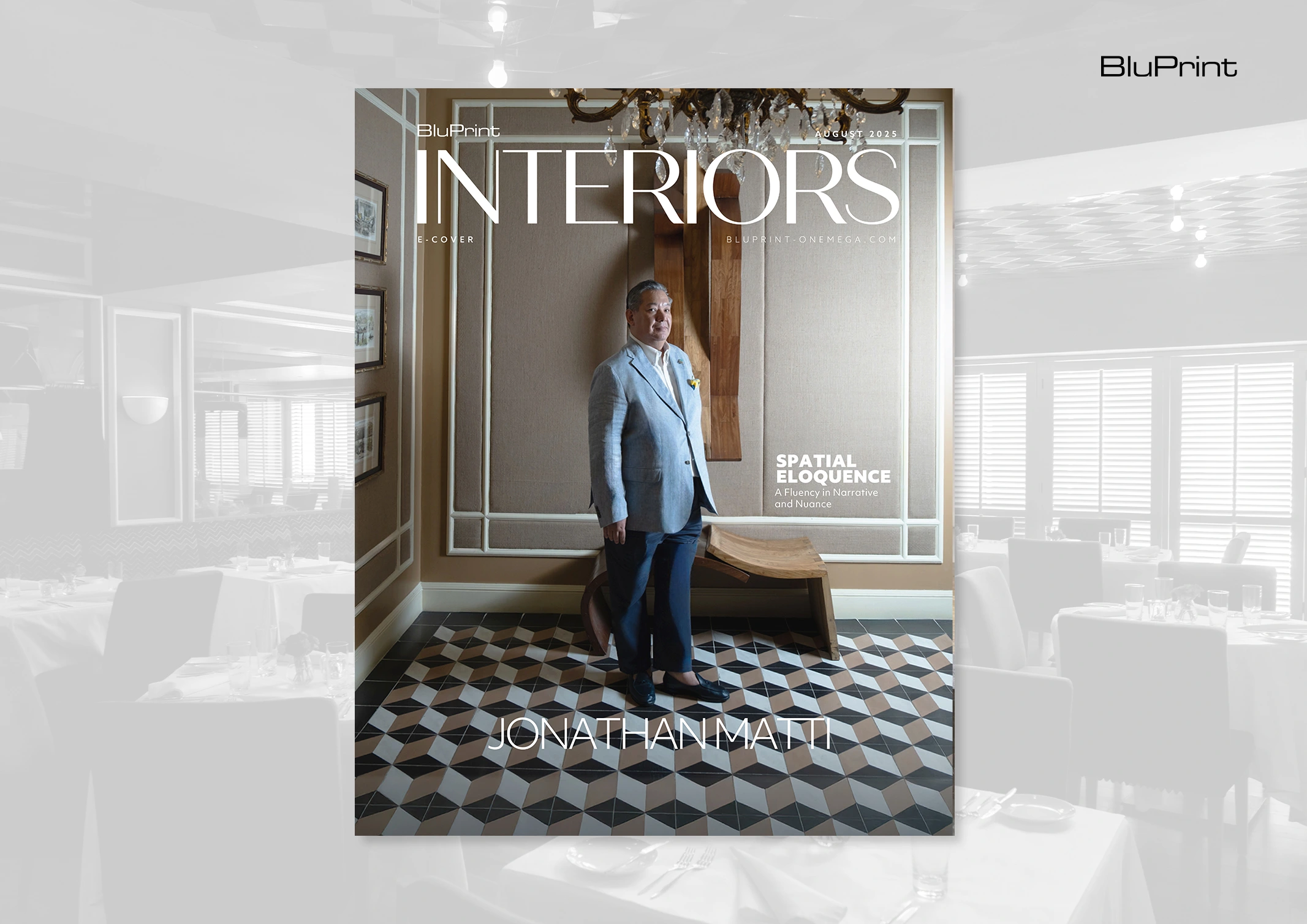
Within the inner circles of Philippine design, one name is spoken with a particular reverence. His is a world of quiet elegance, of interiors that whisper stories of a rich heritage, and of a luxury that is felt rather than flaunted. An architect by training, Jonathan Matti has carved a singular niche for himself as […]
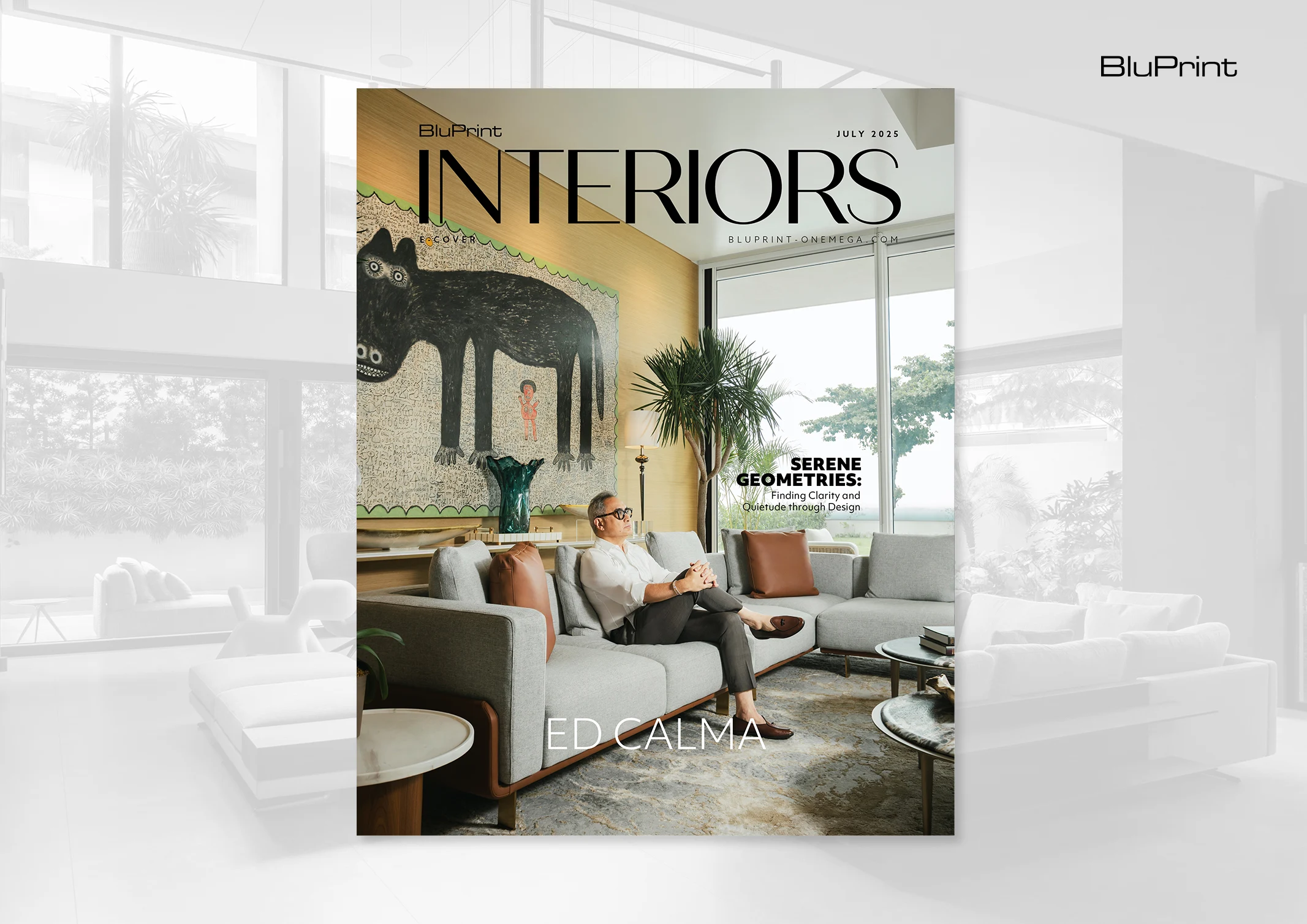
“I always consider a house as having two lives,” Ed Calma states. “One is the architect’s vision for the house, and the other is how the clients live in it.” The first is the one imagined by its creator—a vision of light, form, and intention. The second, more complex life begins the moment someone walks […]
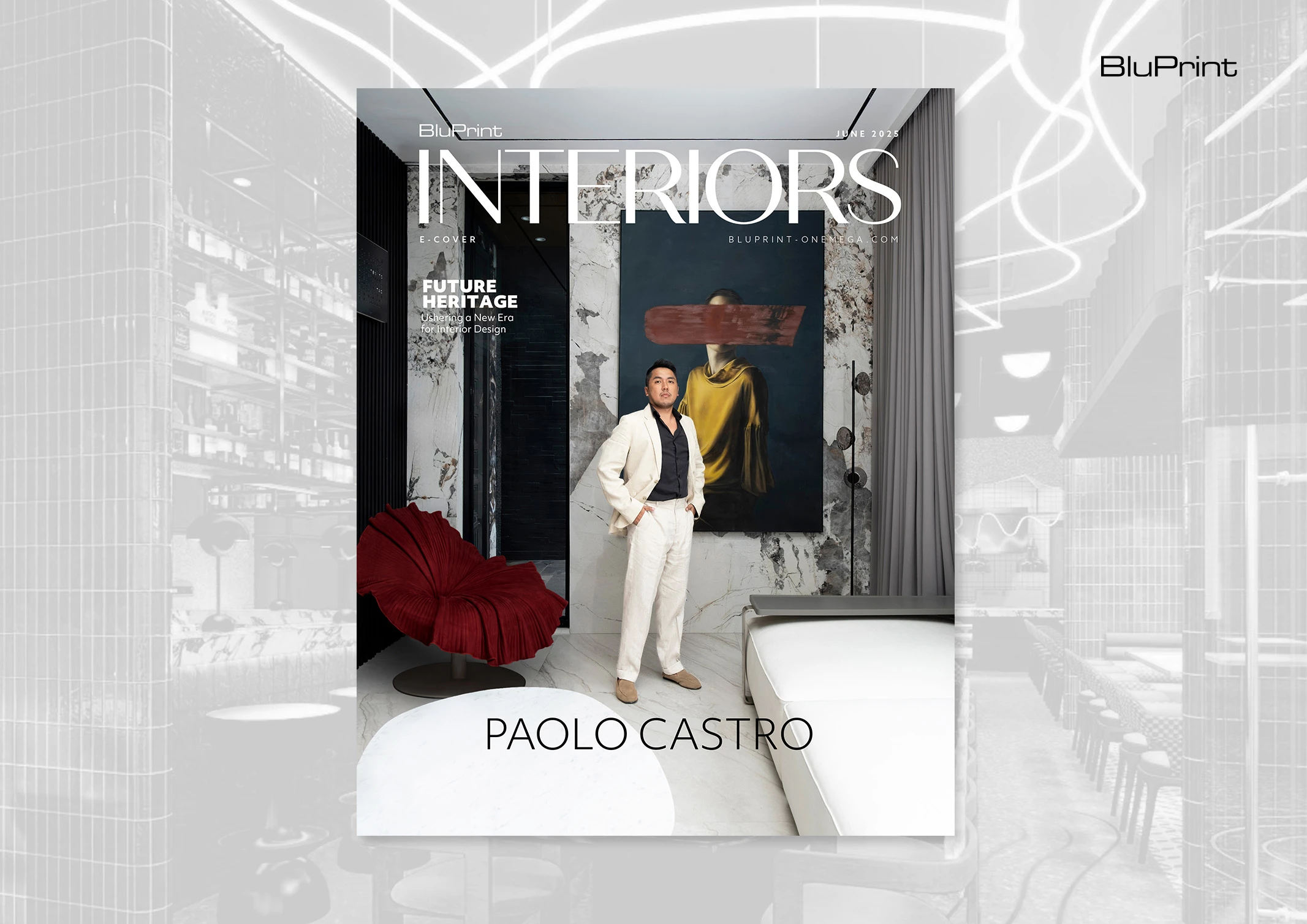
Interior Designer Paolo Castro embodies a dual mission. He crafts immersive environments through his private practice while championing the legitimacy and advancement of his profession on a global stage. His approach departs from the conventional. Where some see walls and furniture, Castro envisions a stage for human experience. Where others follow the transient dictates of […]

Download this month's BLUPRINT magazine digital copy from:



Subscribe via [email protected]