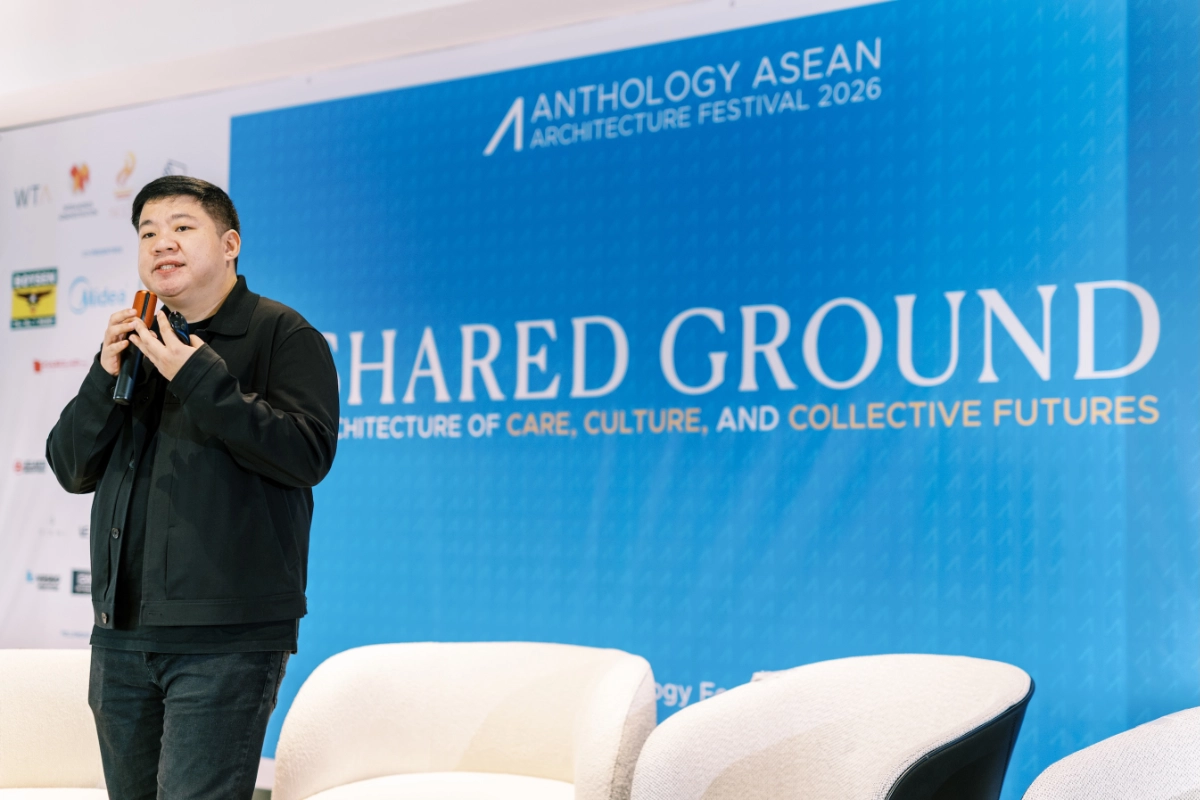
“Buildings only become architectureArchitectureThe art and science of designing and constructing buildings, structures, and spaces that are functional, safe, and aesthetically pleasing. It encompasses the planning, design, materials, and techniques used to createGo to Architecture Glossary when they are shared,” said William Ti Jr., founder of the Anthology Festival and WTA Architecture and Design Studio, […]
‘More|Less’: Portraying the Hecticness of the Information Age

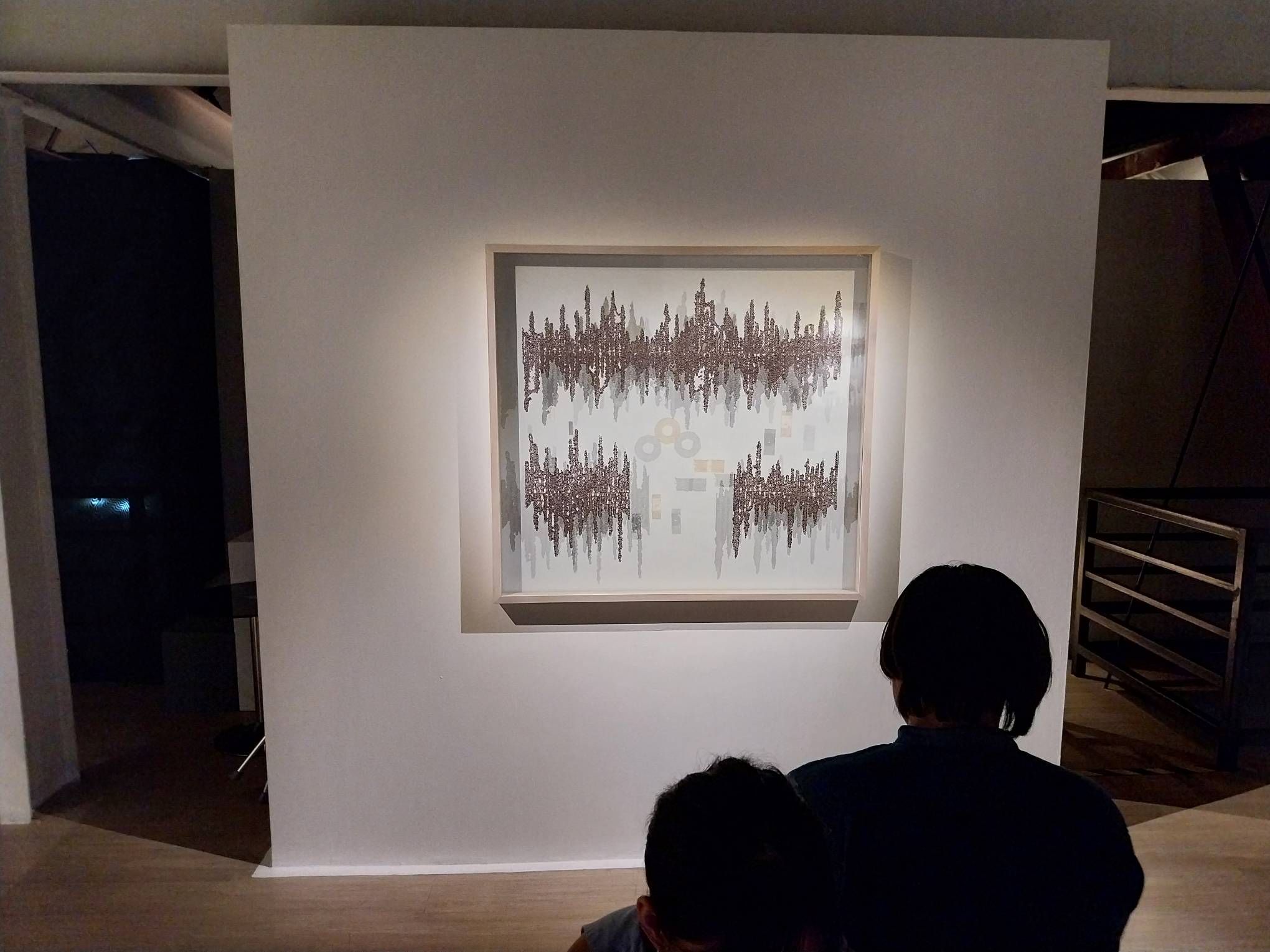
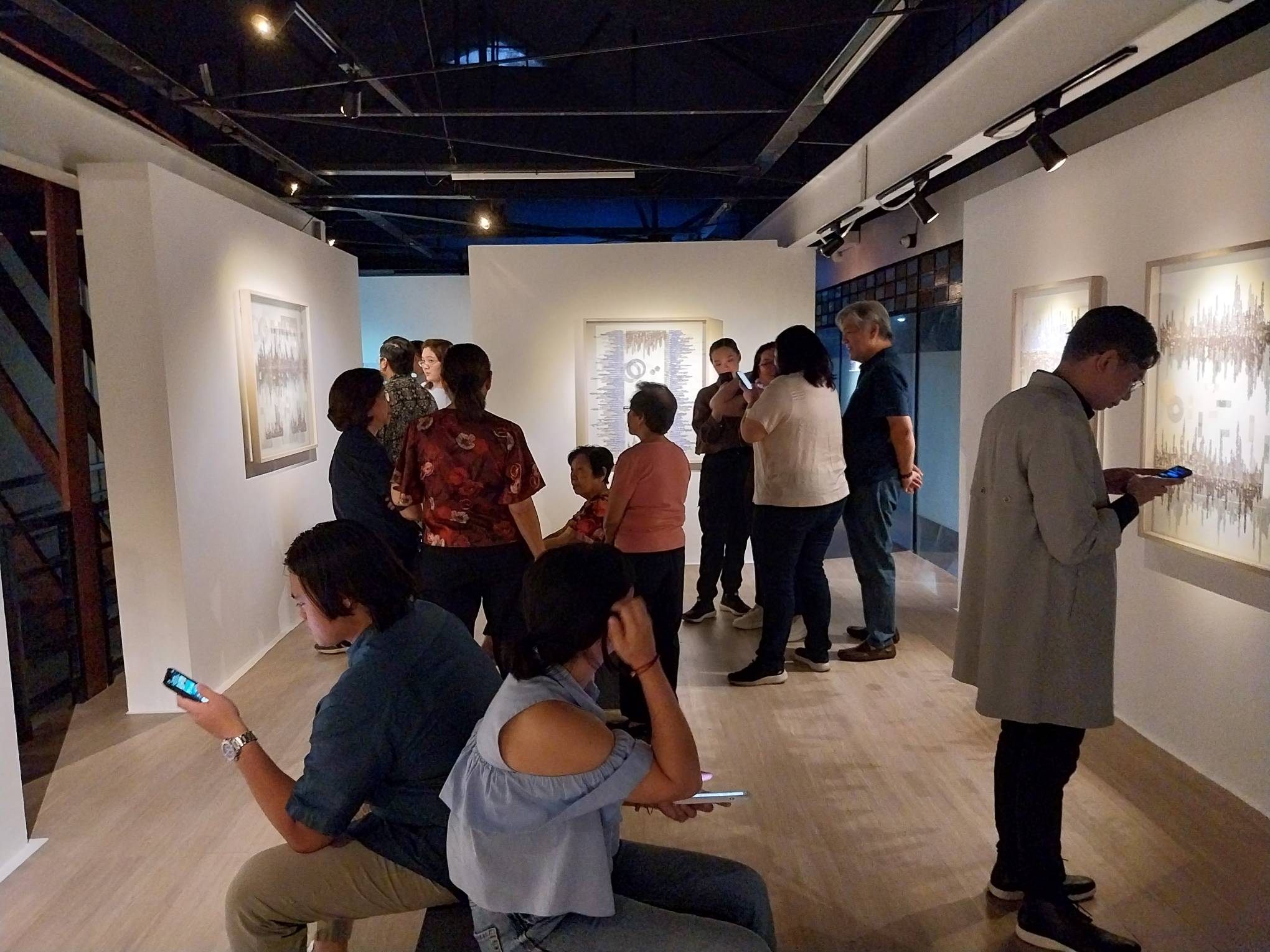
More|Less is artist Juileanne Ng’s new exhibit, which will be shown at Gravity Art Space till April 27. It’s her commentary on the information age, in a world where one can get facts and fiction in a snap.
Speed defines this current Information Age: not only can we transmit data almost instantaneously, but the advent of large language models like ChatGPT where one can create data almost instantaneously.
But as we wrestle with our new reality, we must also deal with its downsides. Large language models are known to give false or inaccurate information. False news now spreads faster than ever, as many people abandon the need to fact-check in favor of clicks and impressions. The hecticness has increased the inaccuracy of the information, not lessened it. It’s also given us more stress, not less, as worries about layoffs and joblessness abound in its discussion.
As society progresses forward to transferring data and news instantaneously, are we taking the time to contemplate the meaning of these advances? How are we as a society handling the way information travels in this world?
Fax Paper and Incense
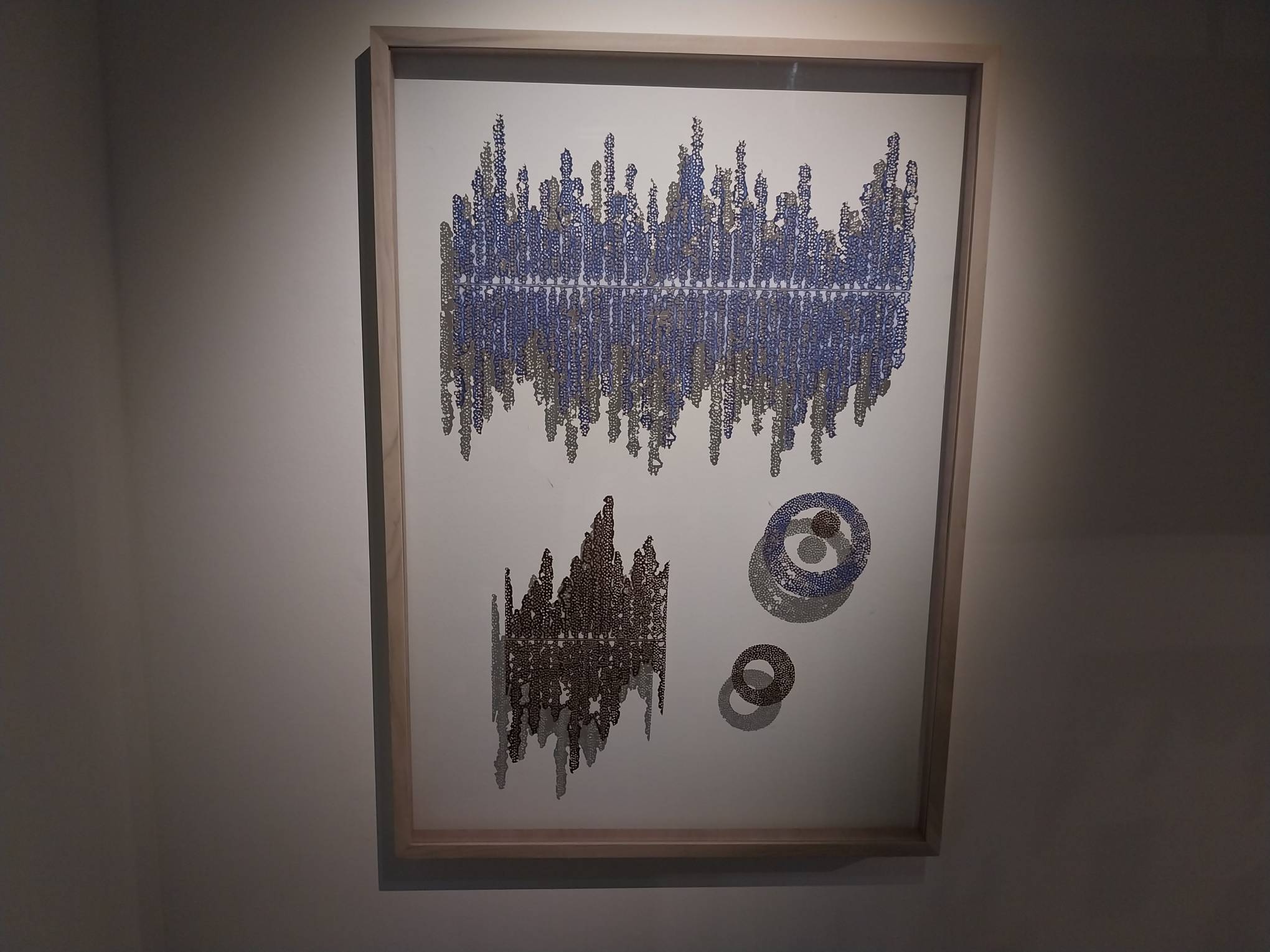
Julieanne Ng’s work features fax paper burnt with incense sticks and stuck on glass displays. She utilizes the incense sticks to create circular patterns on the paper that look like to frequency waves. The fax paper burns in a variety of ways: some create blue circles around the burnt areas, others brownish or yellowish in color.
She combines bundles of burnt fax paper in different shapes and looks to create both waves and circles on the glass. The waves do evoke frequency waves from hospitals, radios, and such; but the circles in the work harkens back to the actual insides of hard disks and recorded material. It looks like coils of information, akin to the magnetic tapes in floppy disks and VHS cassettes.
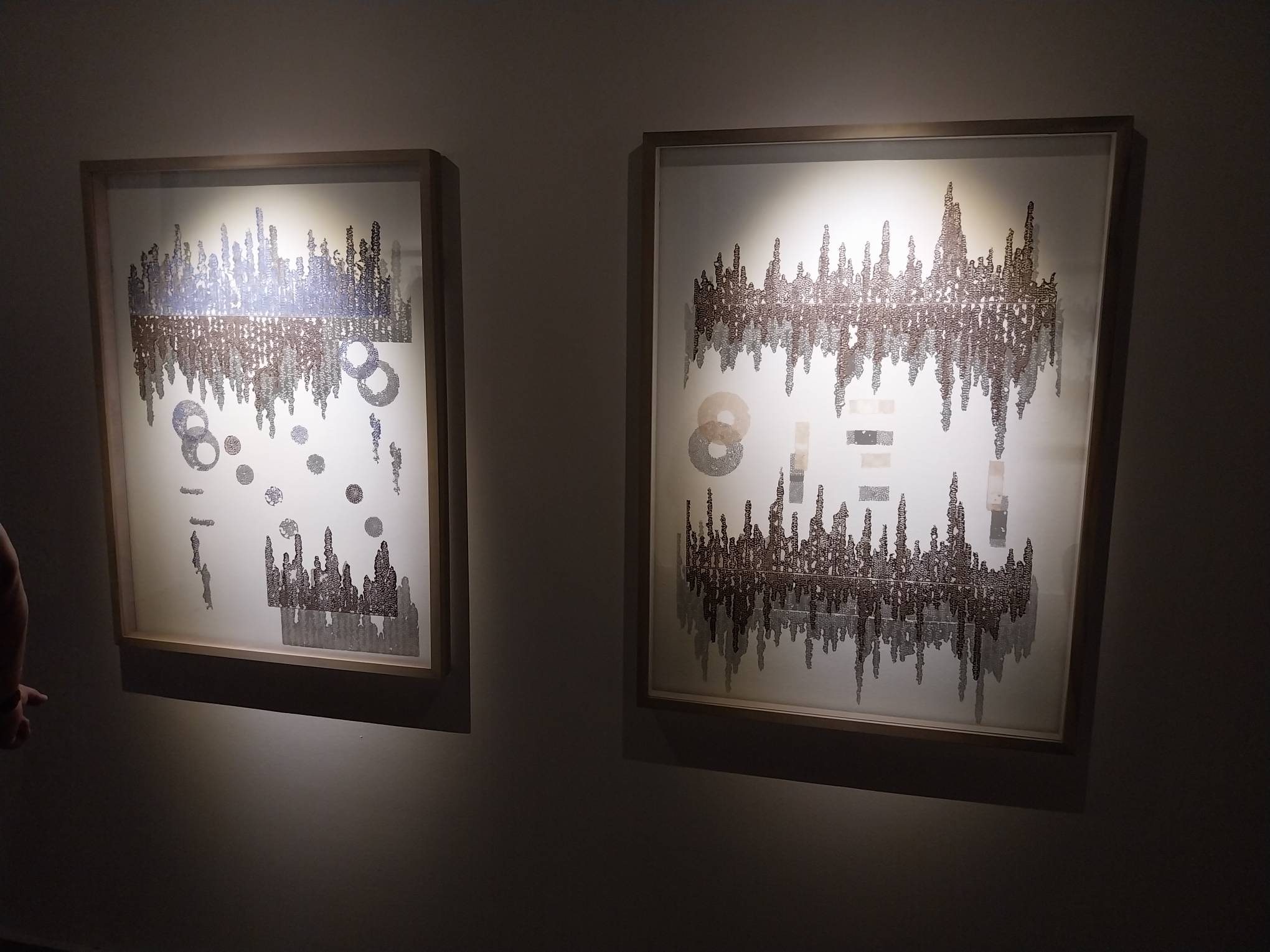
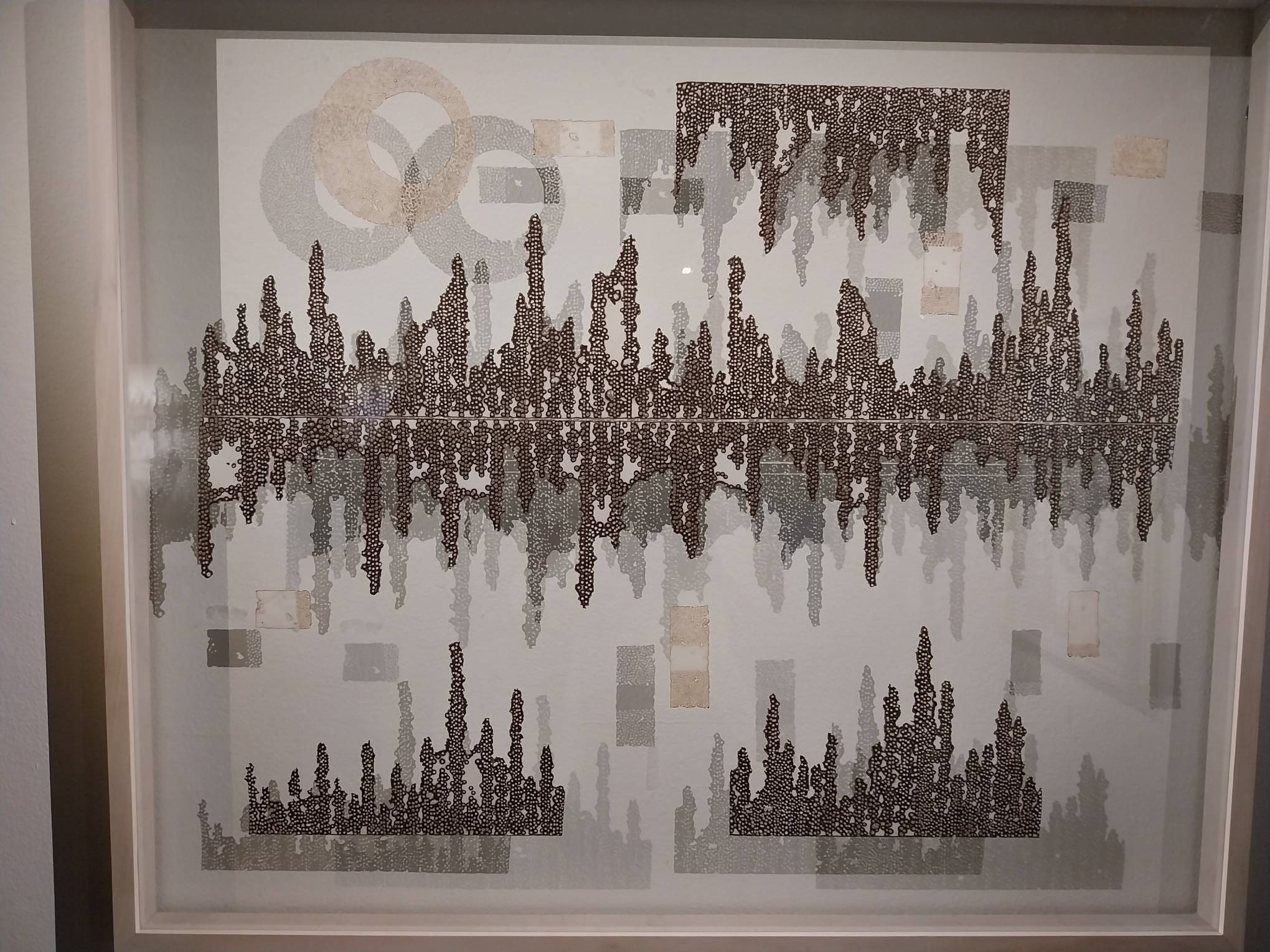
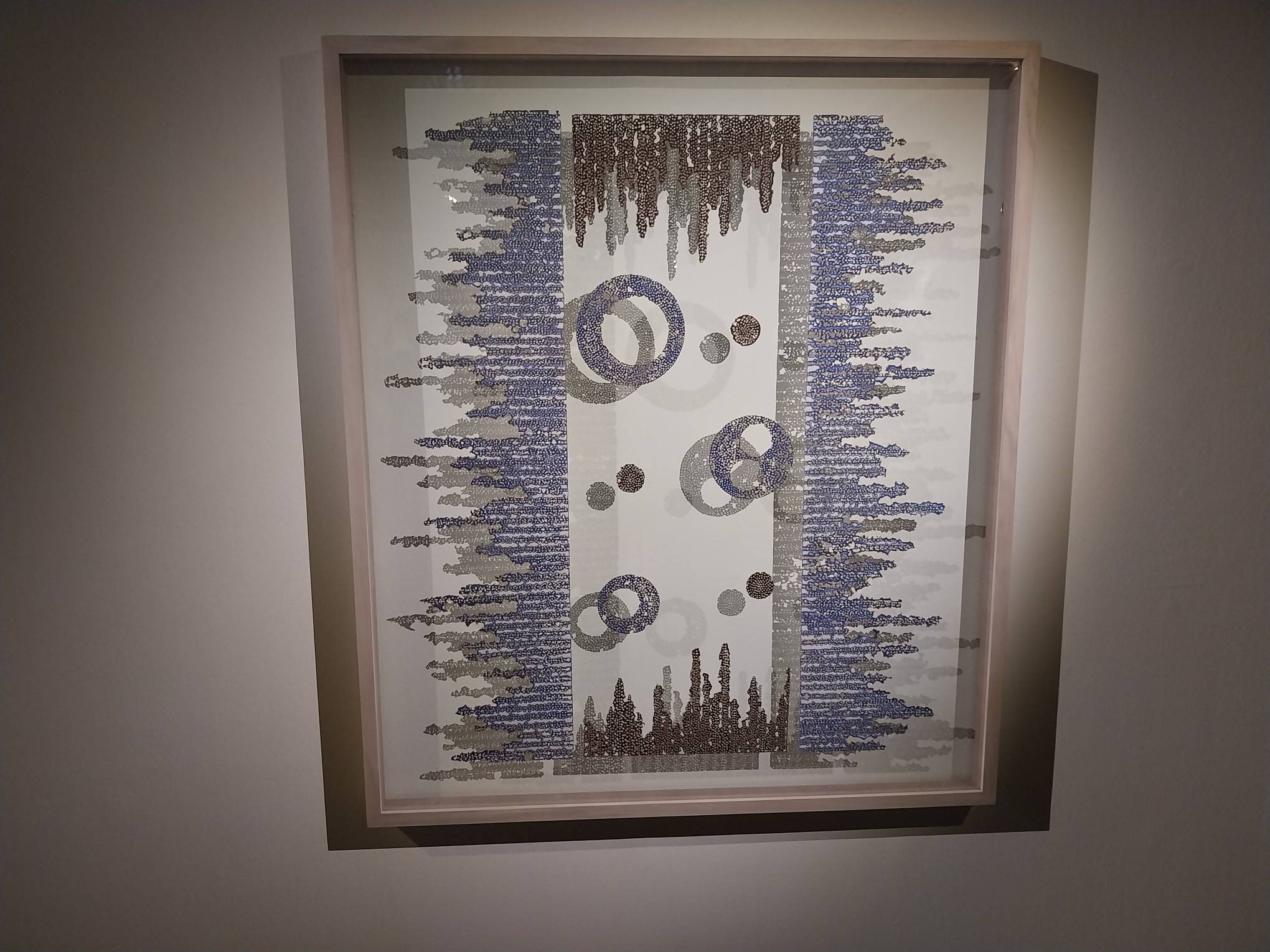
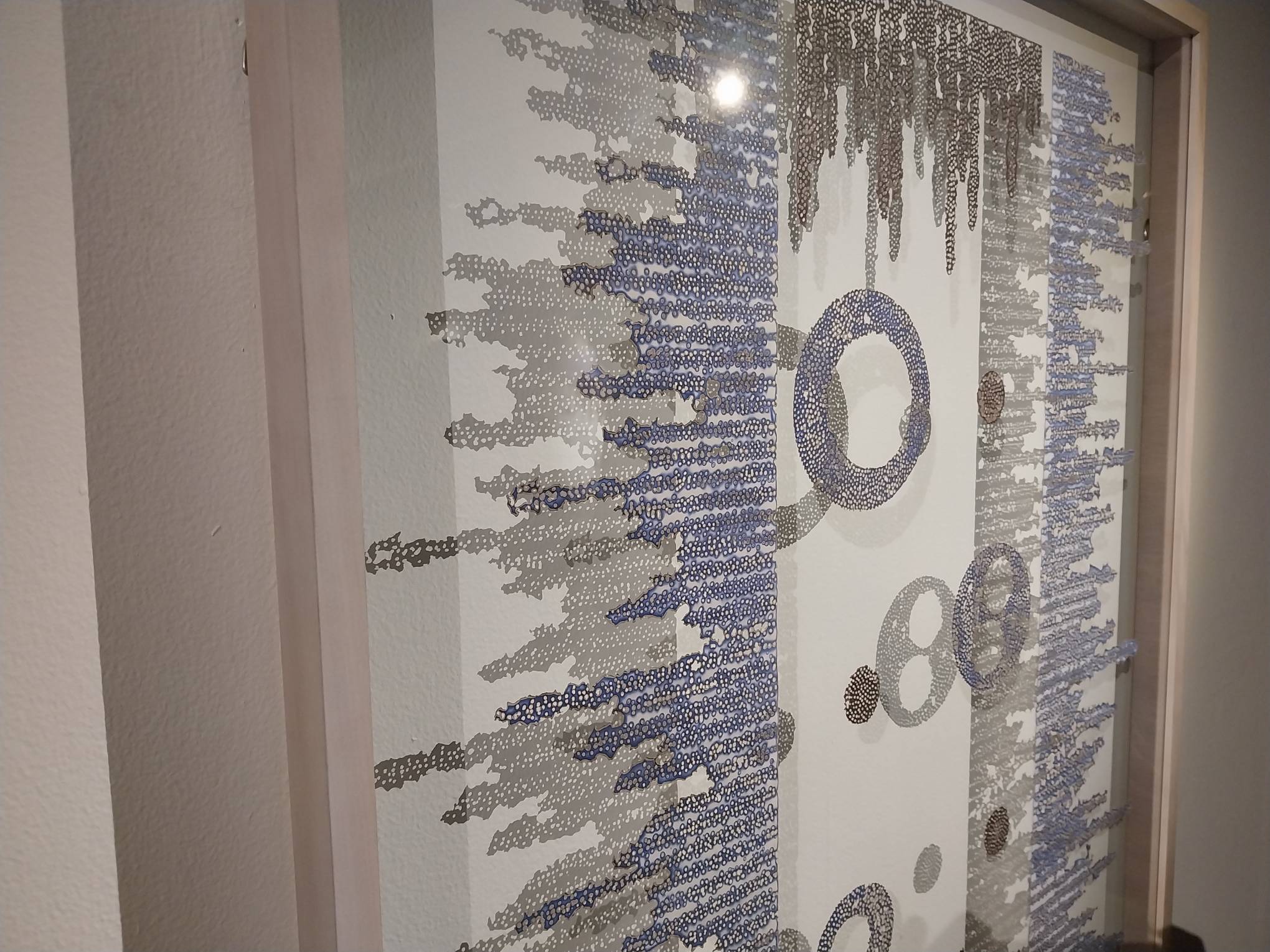
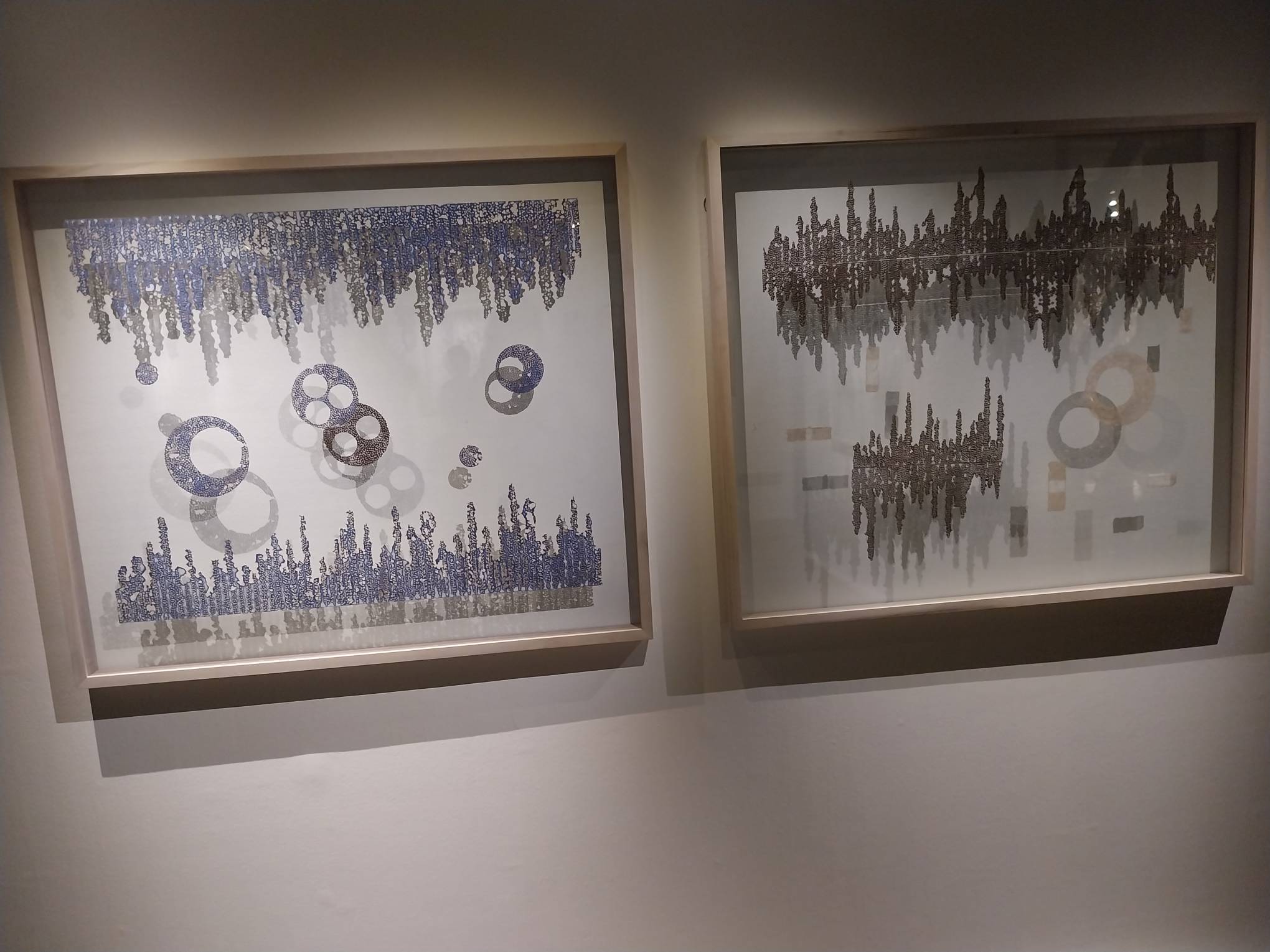
An intentional byproduct of utilizing incense sticks for the look is that when hit by light, the burnt paper casts multiple shadows around itself, creating what looks like echoes of the waves of information that the paper represents.
“Burning evidently subtracts miniscule blotches from the fax sheet,” J. Jose said about her work. “In this interaction, shadows form on the wall, echoing the metaphysical. Burnt nodes shift to dazzling speckles. Their way of existing is changed simultaneously.”
Pushing Against the Immediacy
The use of incense sticks in the work was intentional for Ng. She wanted to juxtapose the “immediacy of infocracy” with the necessity of slowing down and meditating on one’s works. With the rush of content and discussion on everything happening all at once, she intends her work here to push towards the quiet.
“Today, rest is almost a subversive act to the digital chaos and society built around it,” J. Jose wrote. “And so, contemplation, pauses, and lulls preserve and nurture the nature of our being akin to the stars and heavenly bodies, reflected by mountains and whispered by rivers.”
The references of analog technology invites us to wonder about our digital realms. Like the frequency waves being only a representation of the technology itself, what does it mean to constantly be tied to a screen, seeking validation from people and things that are only a representation of the real? Are we understanding the reality of our lives through the technology we have created, instead of letting us dictate the technology we create?
More|Less arouses in us the need to step back and wonder about the technology we have today. Julieanne Ng’s work in this exhibit pushes against the rush and immediacy of our world, and invites the viewer to assess what we intend to do for it in the future.
Related reading: 4 Easy Ways To Get Rid of Paper Clutter
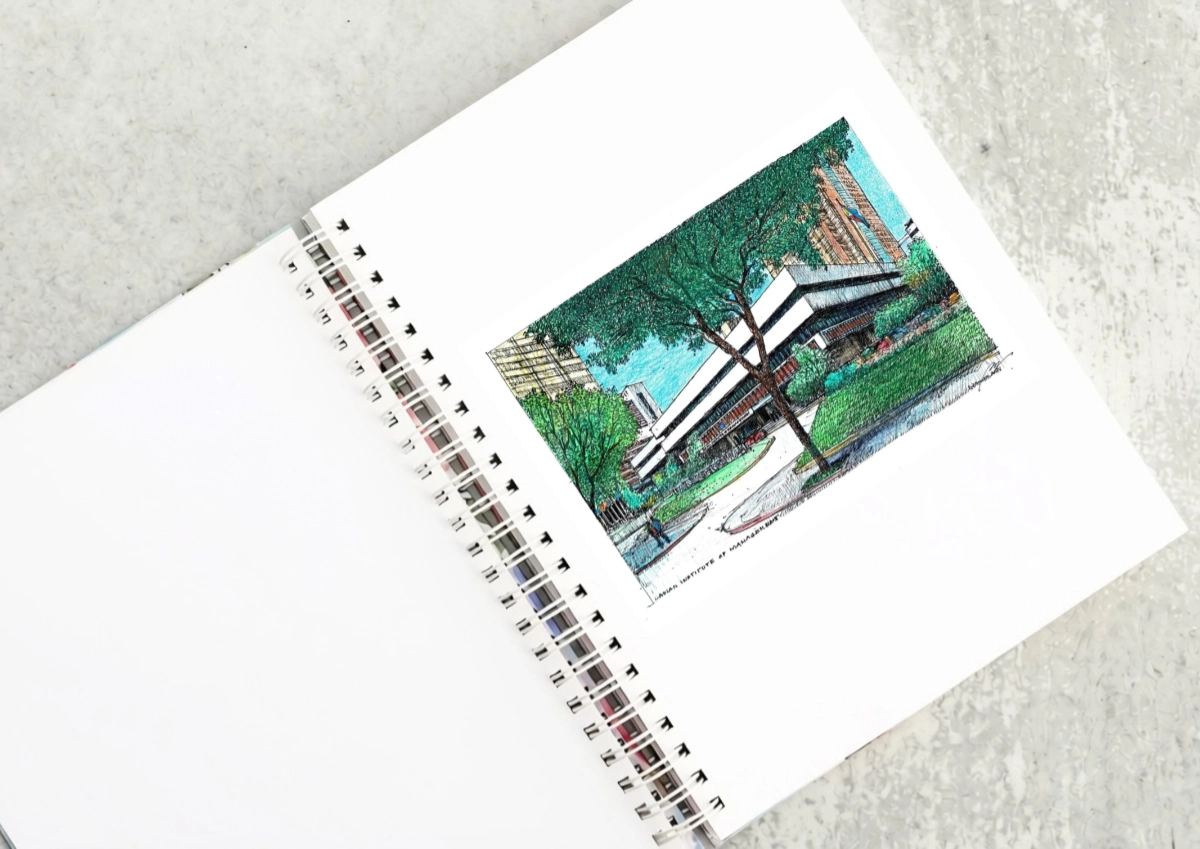
A Filipino Interpretation of Modernist Architecture Unlike the rest of Makati today, the northern end of Paseo de Roxas in Makati is anchored by a low complex rather than a tall skyscraper. This is the elegant Asian Institute of Management, designed by architect Gabriel Formoso and completed in 1971. In my opinion, the building is […]
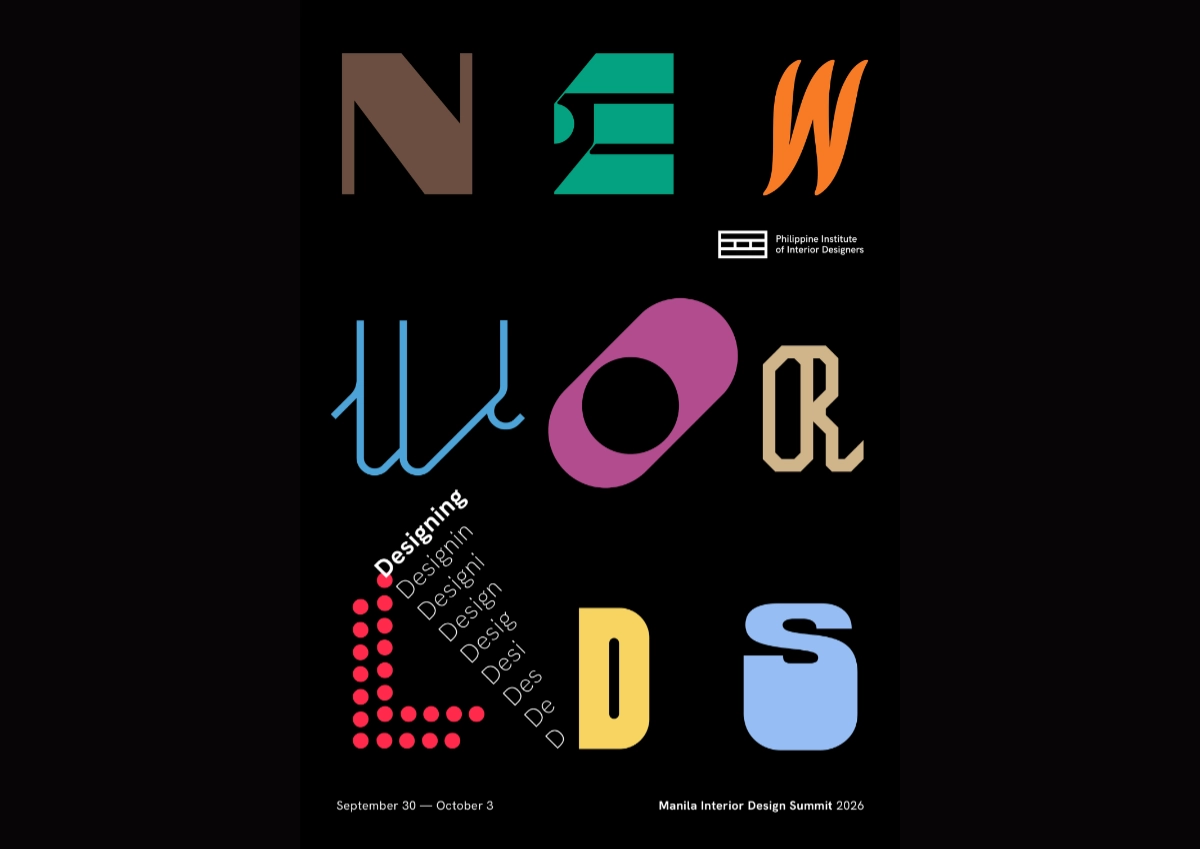
“Thailand has claimed urban creativity and livability. Singapore has institutional design leadership. Indonesia is emerging as a design hub. Vietnam is moving into design innovation. And the Philippines? Its position is not weak. It is simply unclaimed.” For IDr. Cecil Ravelas, National President of the Philippine Institute of Interior Designers (PIID), the challenge is not […]
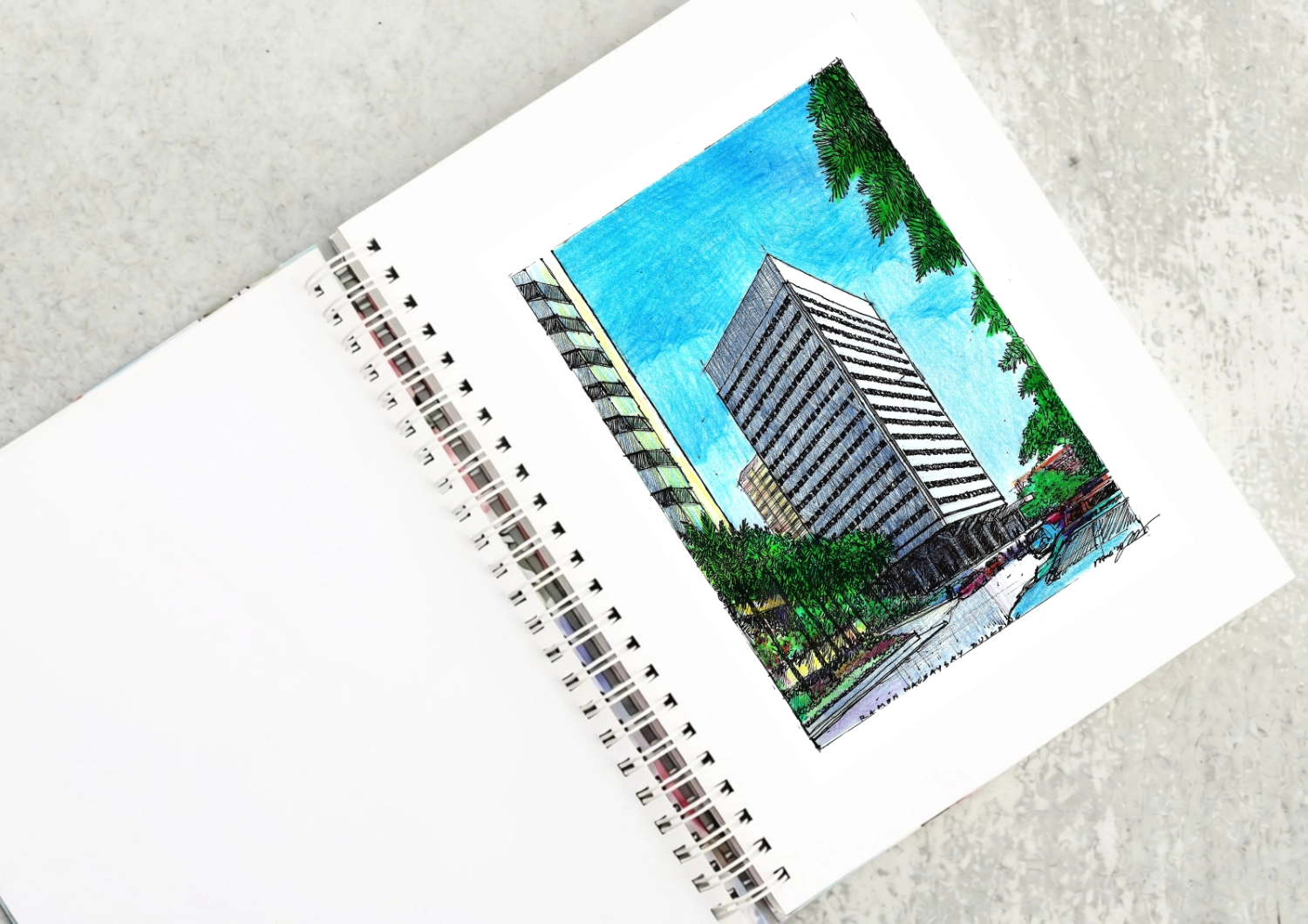
The Ramon Magsaysay Center as a Modernist Landmark Driving down Roxas boulevard from Rizal Park, what will catch your eye is the most elegant modernist structure in the country, the Ramon Magsaysay Center. Most established Filipino architects put it in their top ten lists of favorite buildings. It was designed by Alfredo J. Luz, who […]

Rinna Soriano’s favorite part of her work is sanding. At her workbench, she stays focused, following the grain, adjusting to changes in its direction. Narra, she has learned, can have interlocking grain. A piece of mango once proved particularly difficult until a worker explained that she had reached the point where a branch once grew […]
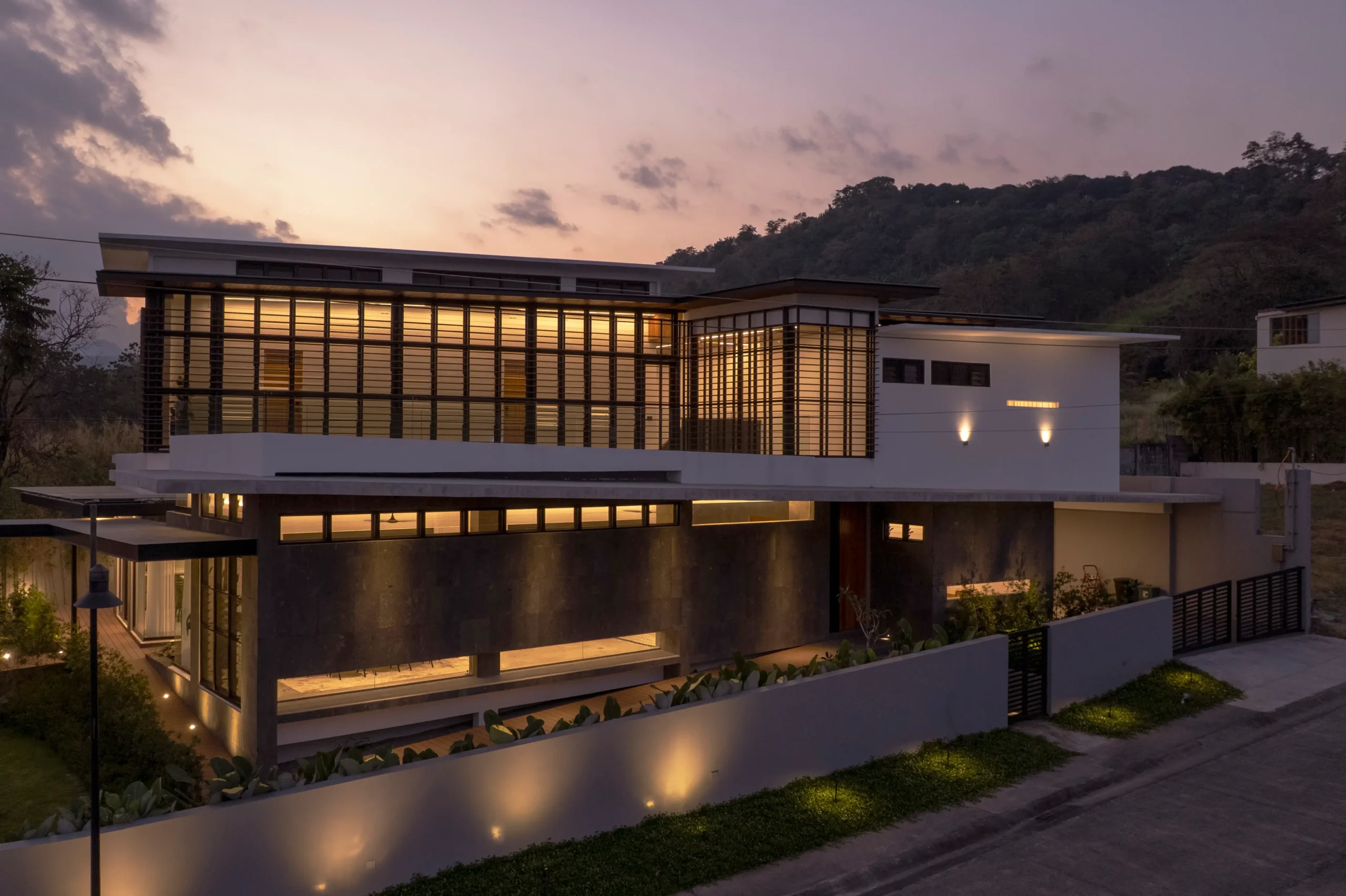
Filipino architectureArchitectureThe art and science of designing and constructing buildings, structures, and spaces that are functional, safe, and aesthetically pleasing. It encompasses the planning, design, materials, and techniques used to createGo to Architecture Glossary has long been associated with indigenous materials and vernacular design strategies, from bamboo and timber construction to jalousie windows, generous spaces, […]
Read the issues.

Collect the volumes.

Recommended Video
Tap to Unmute
Unmute
0:00
0:00