A Filipino Interpretation of Modernist Architecture Unlike the rest of Makati today, the northern end of Paseo de Roxas in Makati is anchored by a low complex rather than a tall skyscraper. This is the elegant Asian Institute of Management, designed by architect Gabriel Formoso and completed in 1971. In my opinion, the building is […]
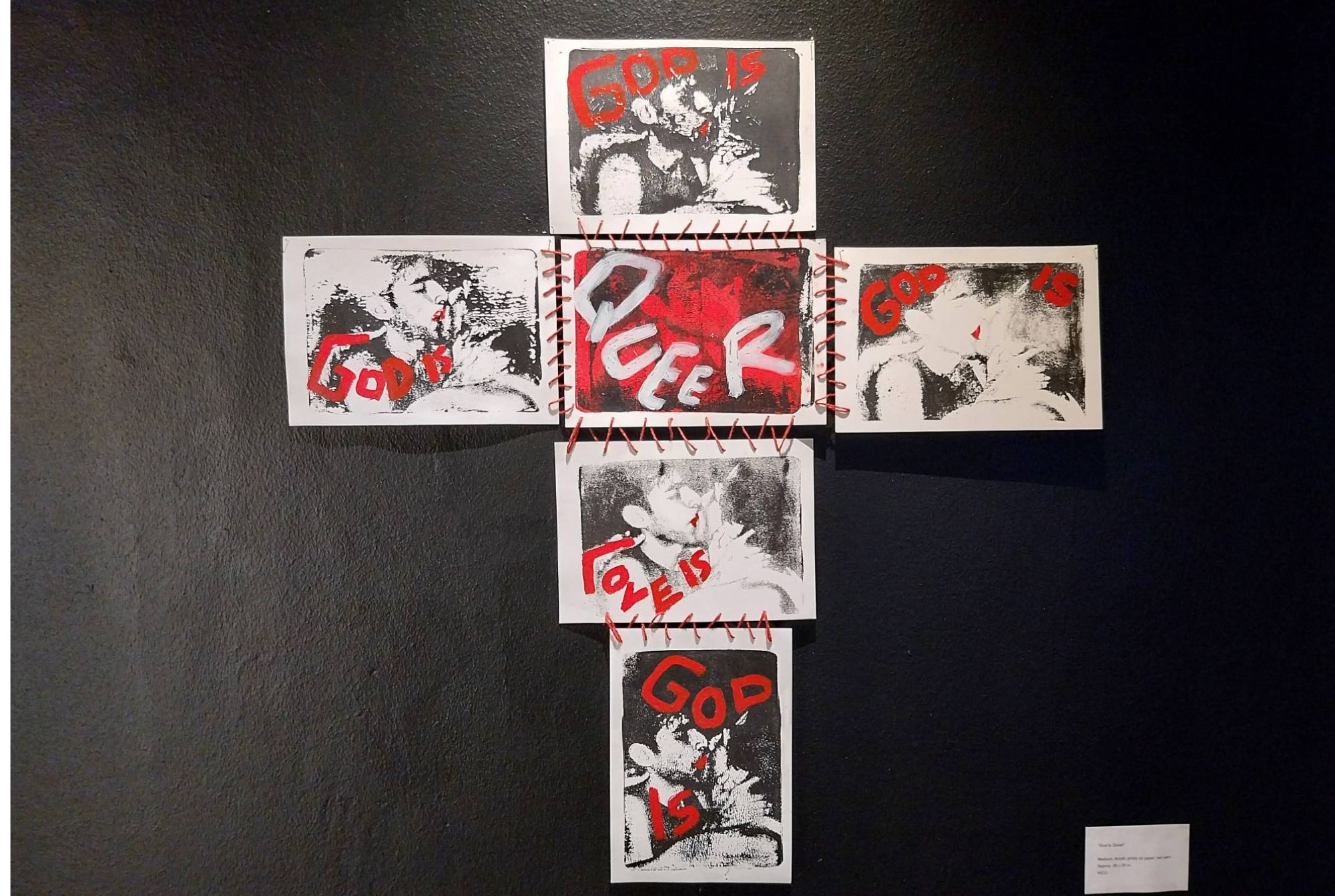
Gravity Art Space’s New Exhibit Examines Ideas of Queerness
A collaborative work between Elephant and Inferno London riffs on religious imagery and spirituality



God Save The Queers, Bless The Badings comes from a collaborative effort between LGBTQ+ events organization Elephant and nightclub Inferno London. Showing at Gravity Art Space until July 6, the exhibit pushes forward the idea of “queer faith,” showcasing the ways queerness and spirituality intersect over the years.
Faith and spirituality as an idea has always been in the social construct of most societies, often used to divide as much as unite. Even in a polytheistic society like ours, many people remain within one faith for the rest of their lives, creating in-groups and out-groups between people.
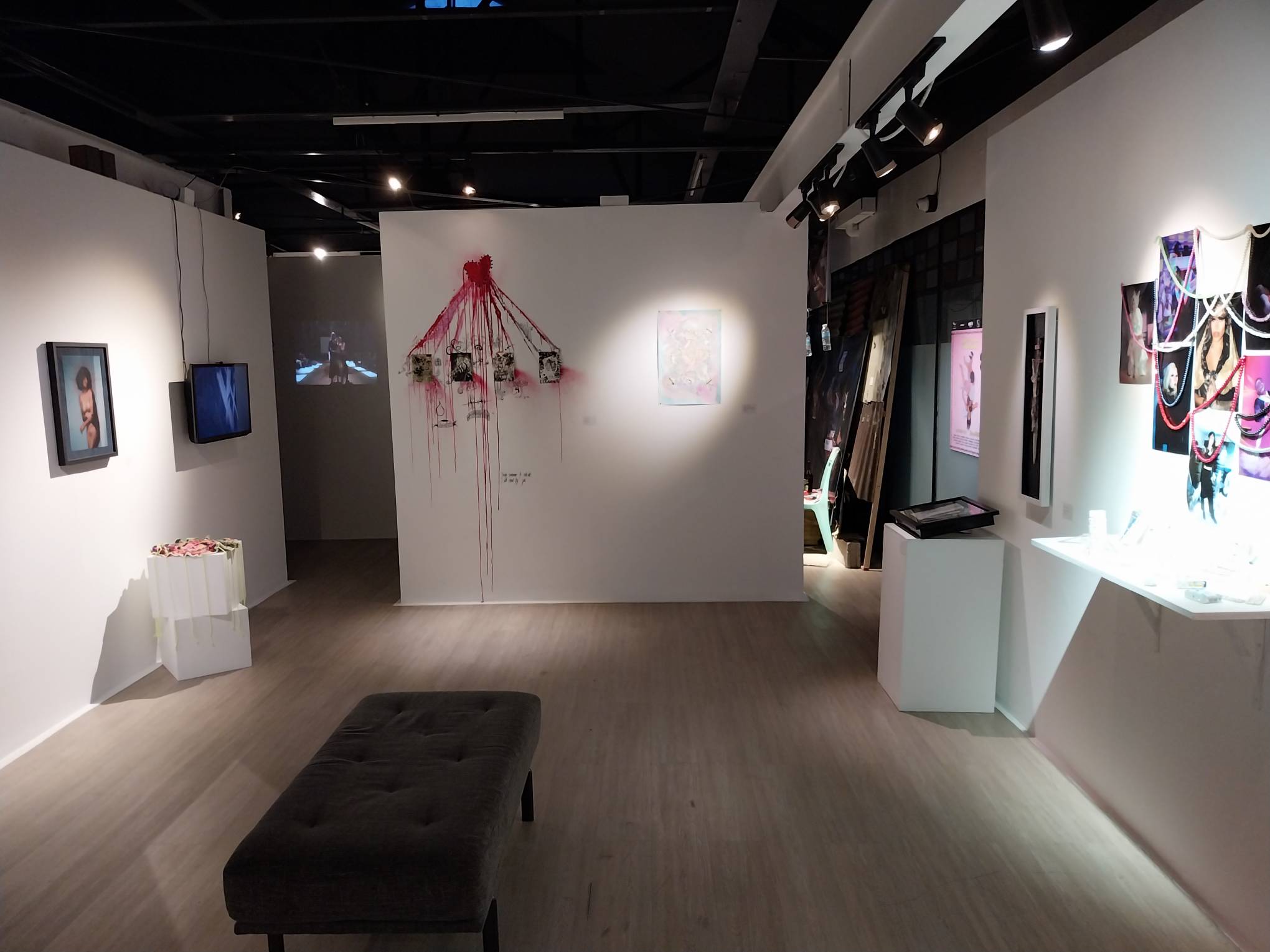
And so it goes with faith and queerness. The recent Pura Luka Vega controversy shows the divisive power of religion to shun people for their open and defiant show of queerness. The basic idea becomes a sort of gatekeeping of spirituality: “if you don’t conform to our standards, then you don’t belong with the faith.”
The exhibit is a repudiation of a singular definition of faith. It shuns the dogmatic need of conformity to defining spirituality within a religion, and offers an alternative: queerness as self-expression of the spiritual. It finds the divine in the exploration of the self, and showcases queer joy as a valid avenue of faith like church rituals are.
Finding New Foundations for Queer Lives
The signature piece of the exhibit, the one that greets you as you enter it, is “O Come to the Altar.” Made by 1haida, it is a collection of pictures of different queer individuals posted on the wall surrounded by prayer beads. Some of them pose in humble prayer positions, and others appear mid-performance in cool poses.
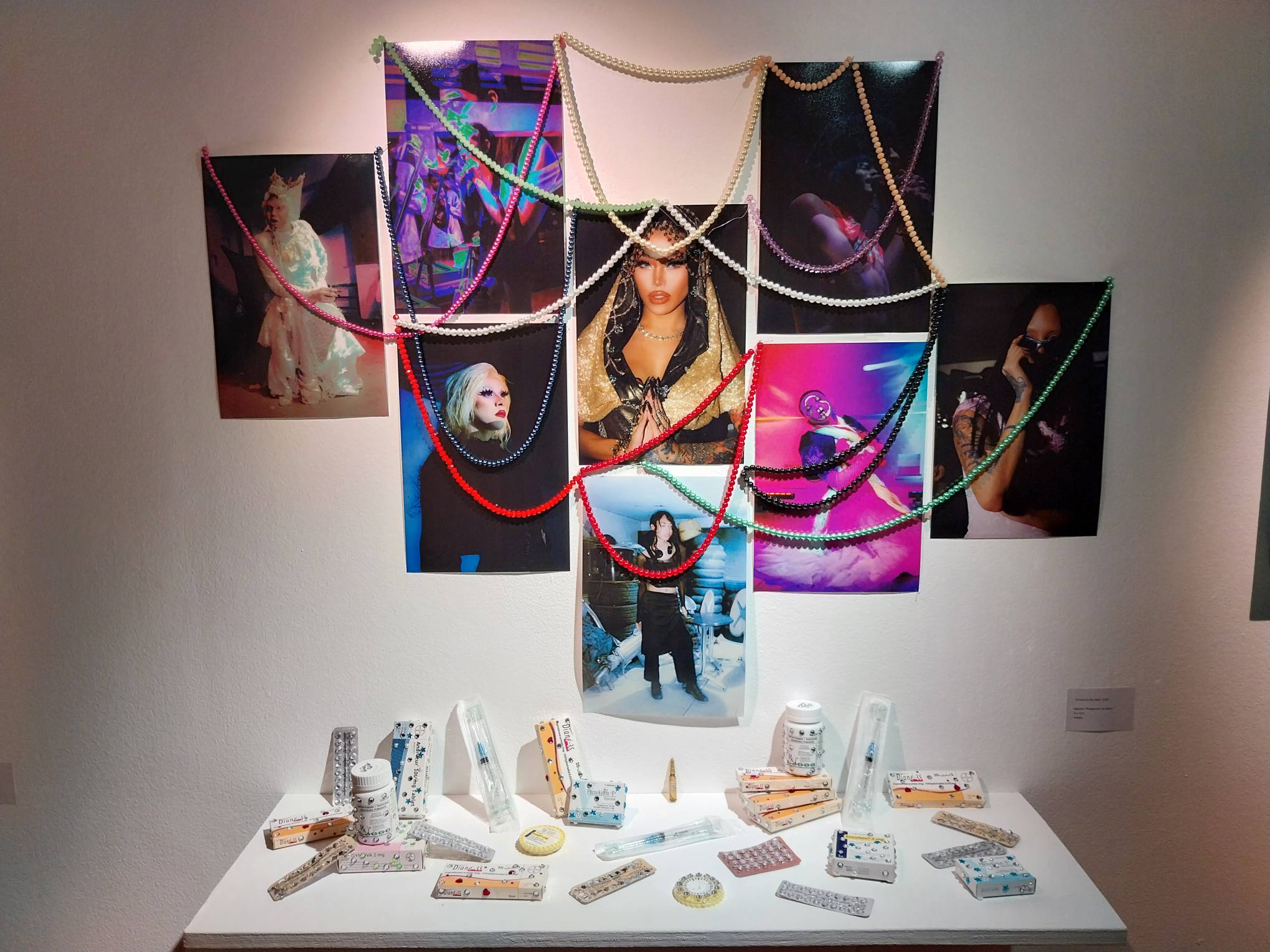
Underneath the pictures, different bedazzled medicines proliferate a table; from PReP, which is used to decrease exposure to HIV, to gender-affirming medicine. It’s an interesting introduction of what “queer faith” means, which expresses the desire to take control of one’s life and mold it to something that satisfies them. Going beyond the idea of worship of the self, it finds freedom in being yourself, enjoying the free will to find self-fulfillment and joy.
If the body is a temple, then these queer individuals are the architects of their beliefs.
Queer Faith and Religious Imagery
The exhibit riffs on Christian imagery to get its point of “queer faith” across. But more than that, it’s a commentary on the hypocrisy of churches in general.
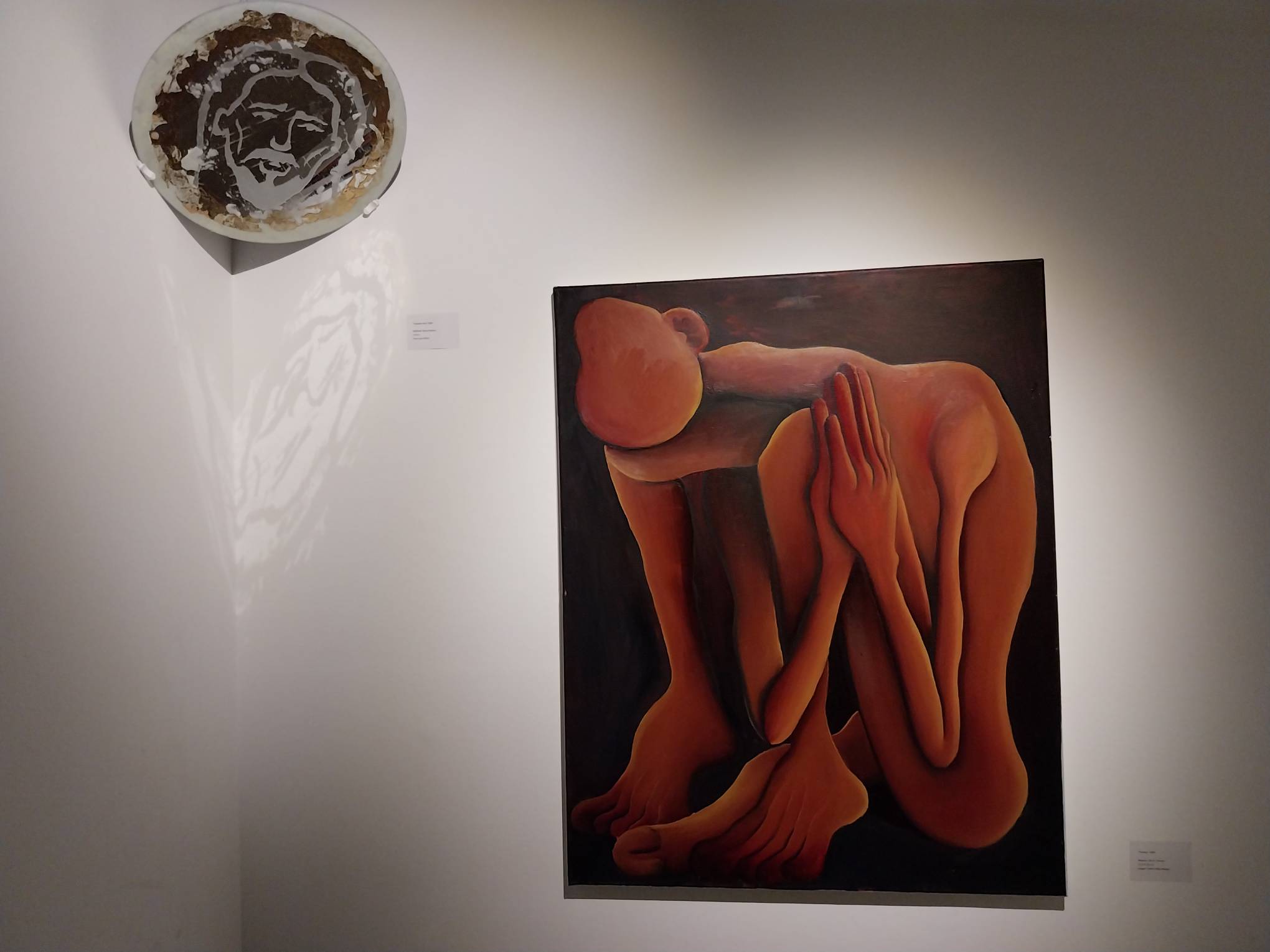
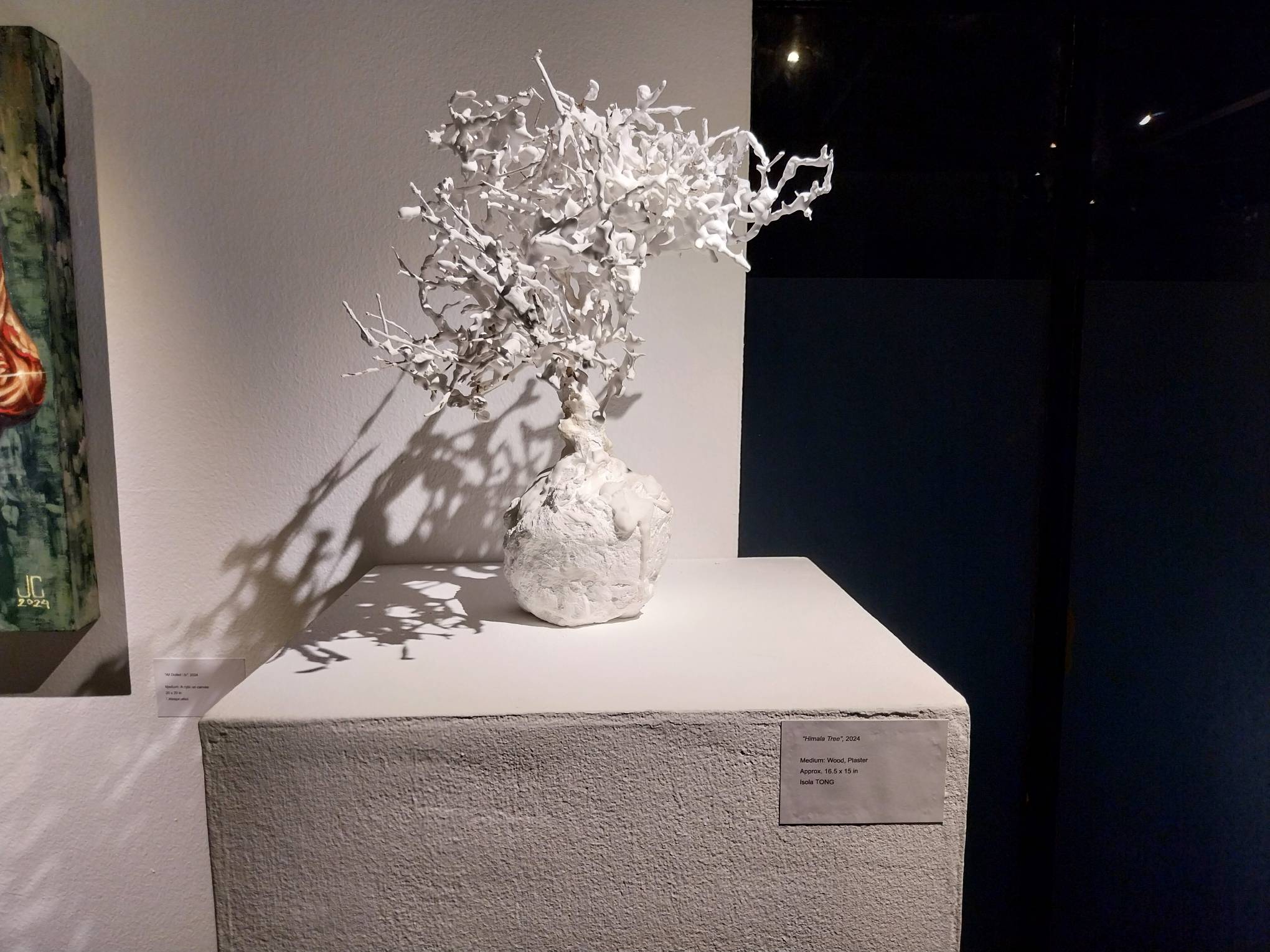
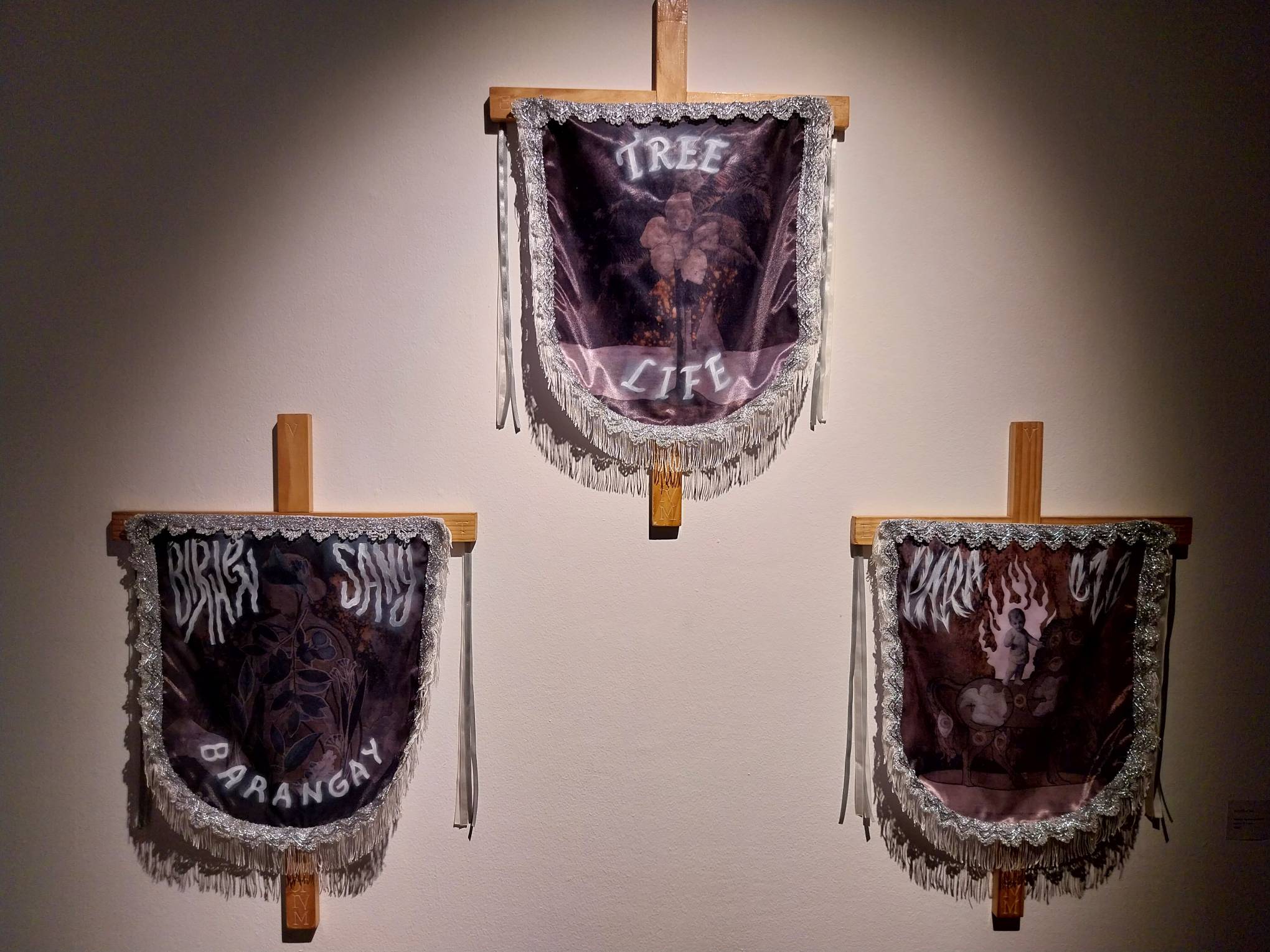
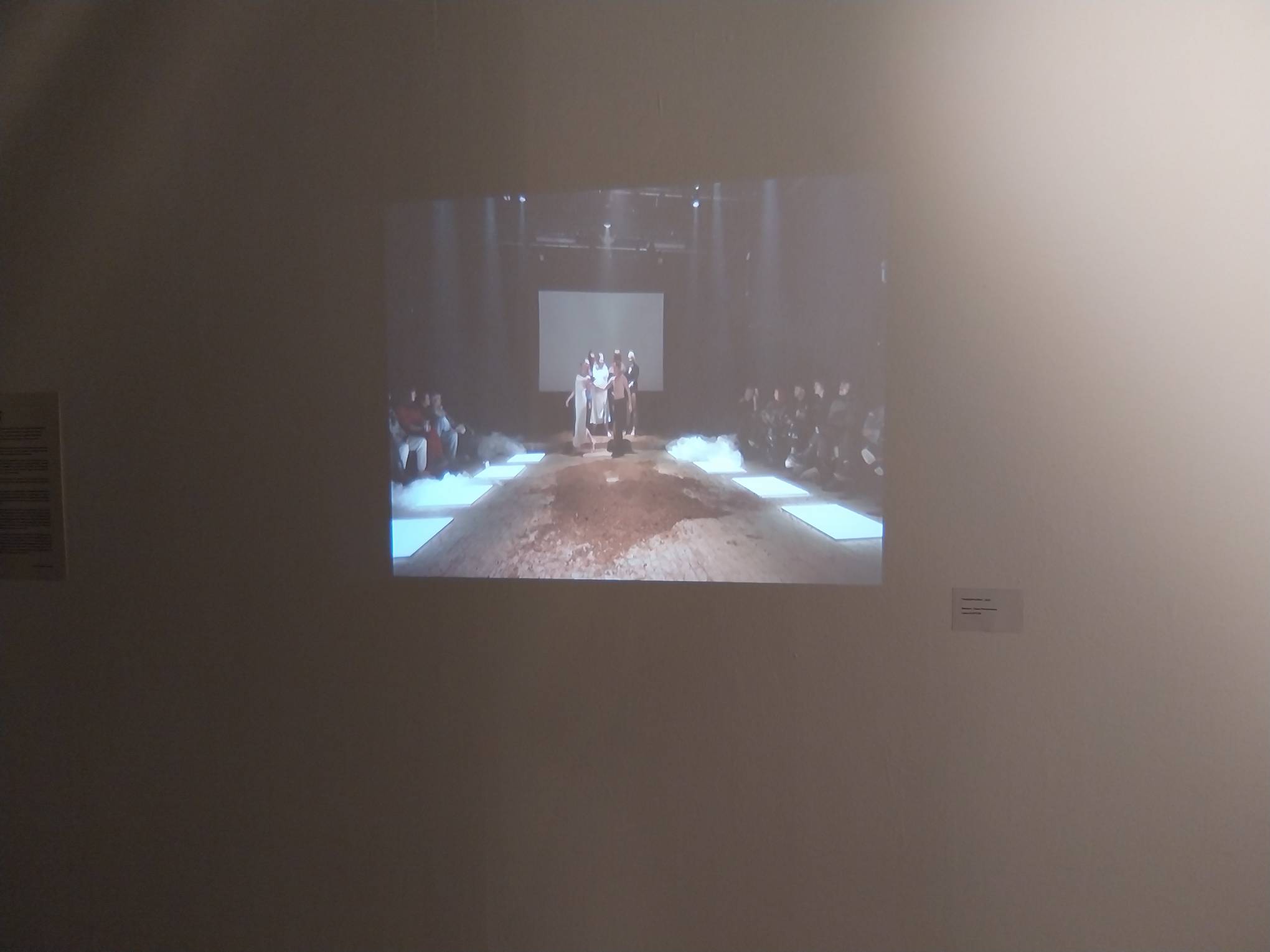
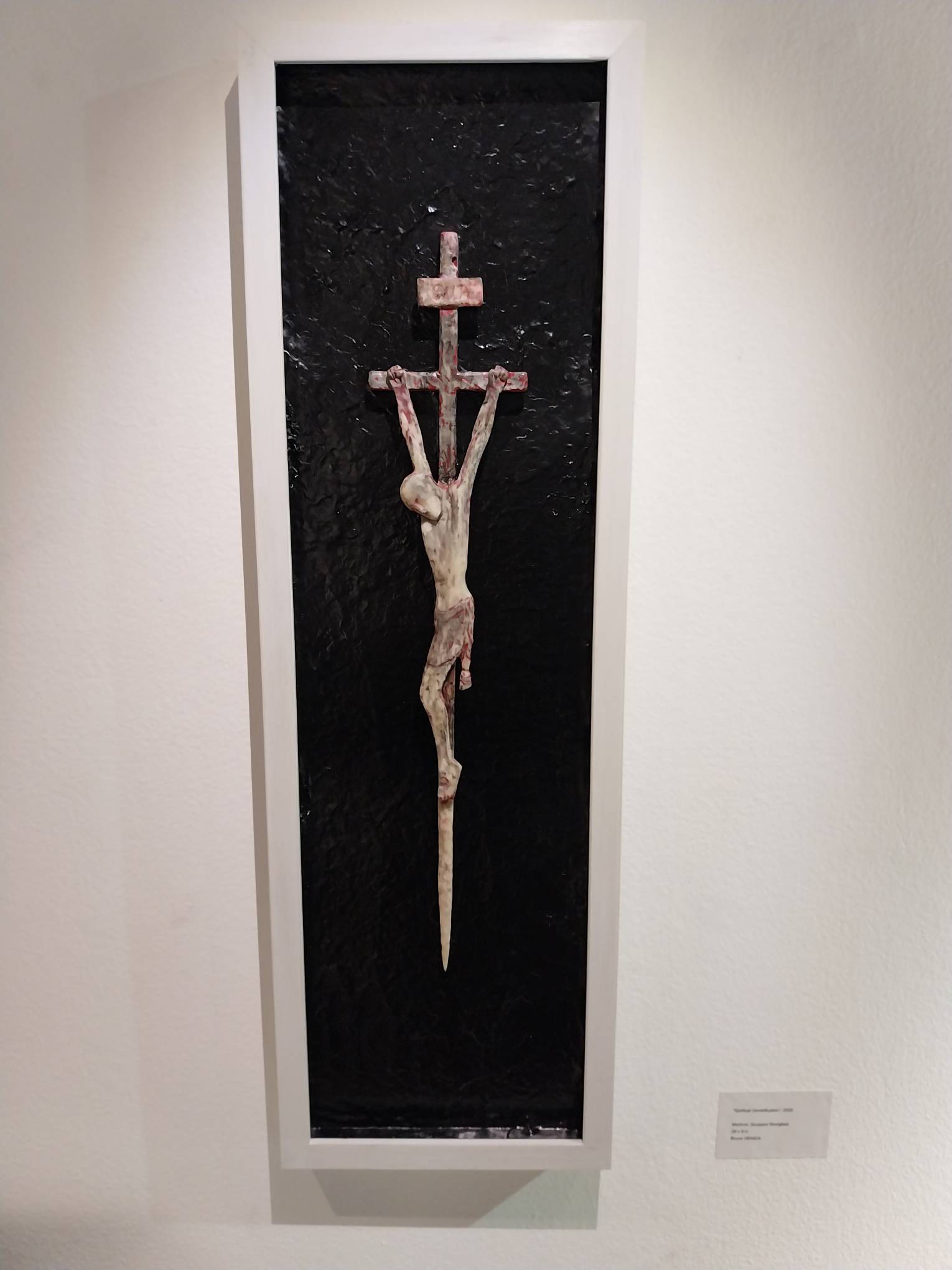
In this tone, Pura Luka Vega’s “Complex God” reflects the suffering of Christ within the mirror. It stands next to Jospeh Icaro’s “Praying” and a video of a catwalk, presumably from one of Elephant’s past parties. Bruce Venida’s “Spiritual Gentrification” portrays the crucifix as a rotting corpse surrounded by darkness. “Himala Tree” by Isola Tong, meanwhile, is a white sculpture of a tree in what appears to be a commentary on maintaining Christian ideals of purity in an impure humanity: a monument of death.
It characterizes, at least, the complexity of queerness and faith for people. Many LGBTQ+ individuals are still Christians, and some have even opened churches that are inclusive of the community. Still, many churches are deeply intolerant of anything outside the cis-hetero norms of society.
The artworks show the pain of rejection from a community one values, and the need to reconcile the lessons of unconditional love from the church with the very conditional love and rejection received because of their differences. It’s not unconditional love if it demands the removal of pivotal parts of the self to conform to standards.
Mourning and Joy
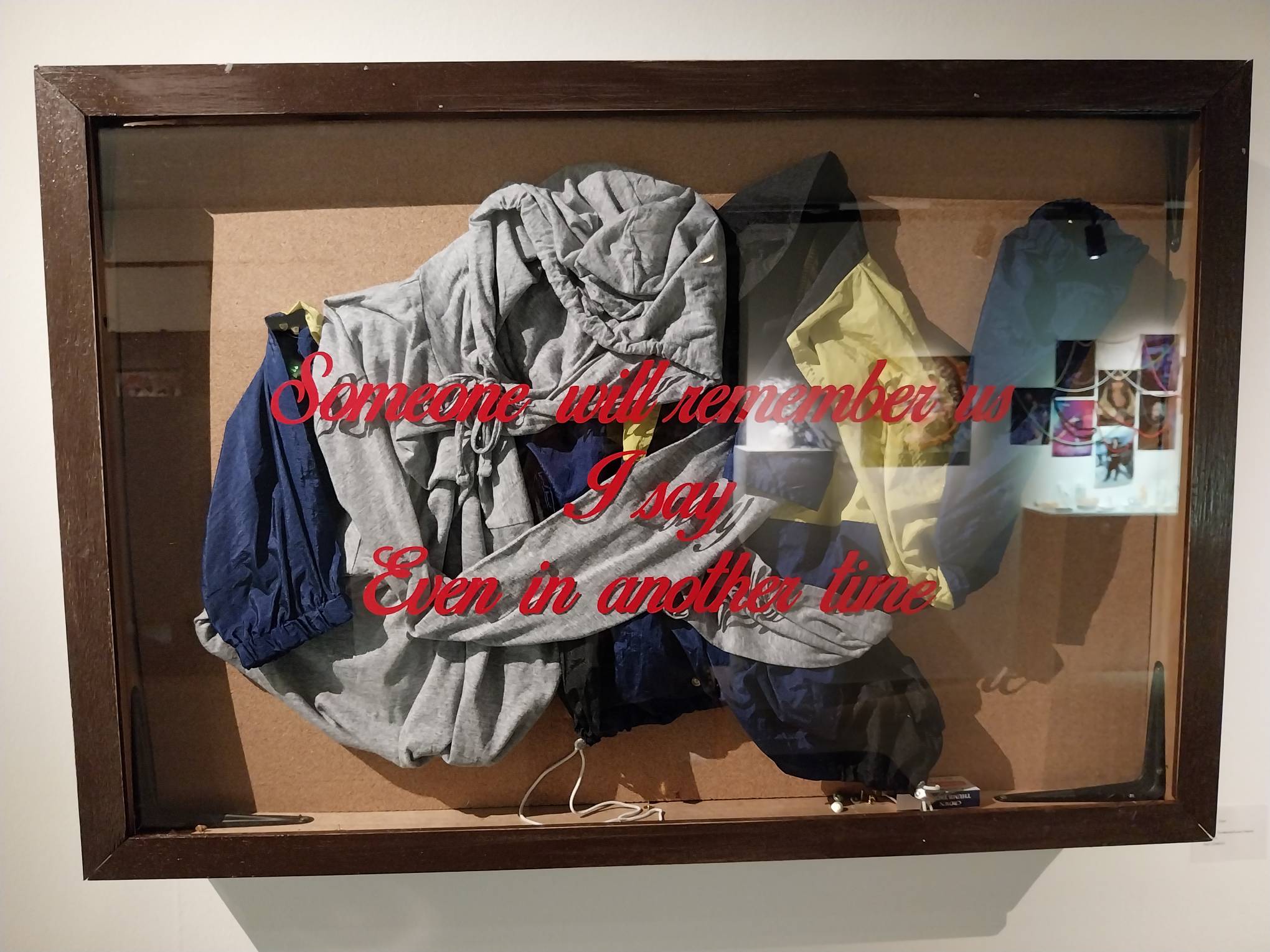
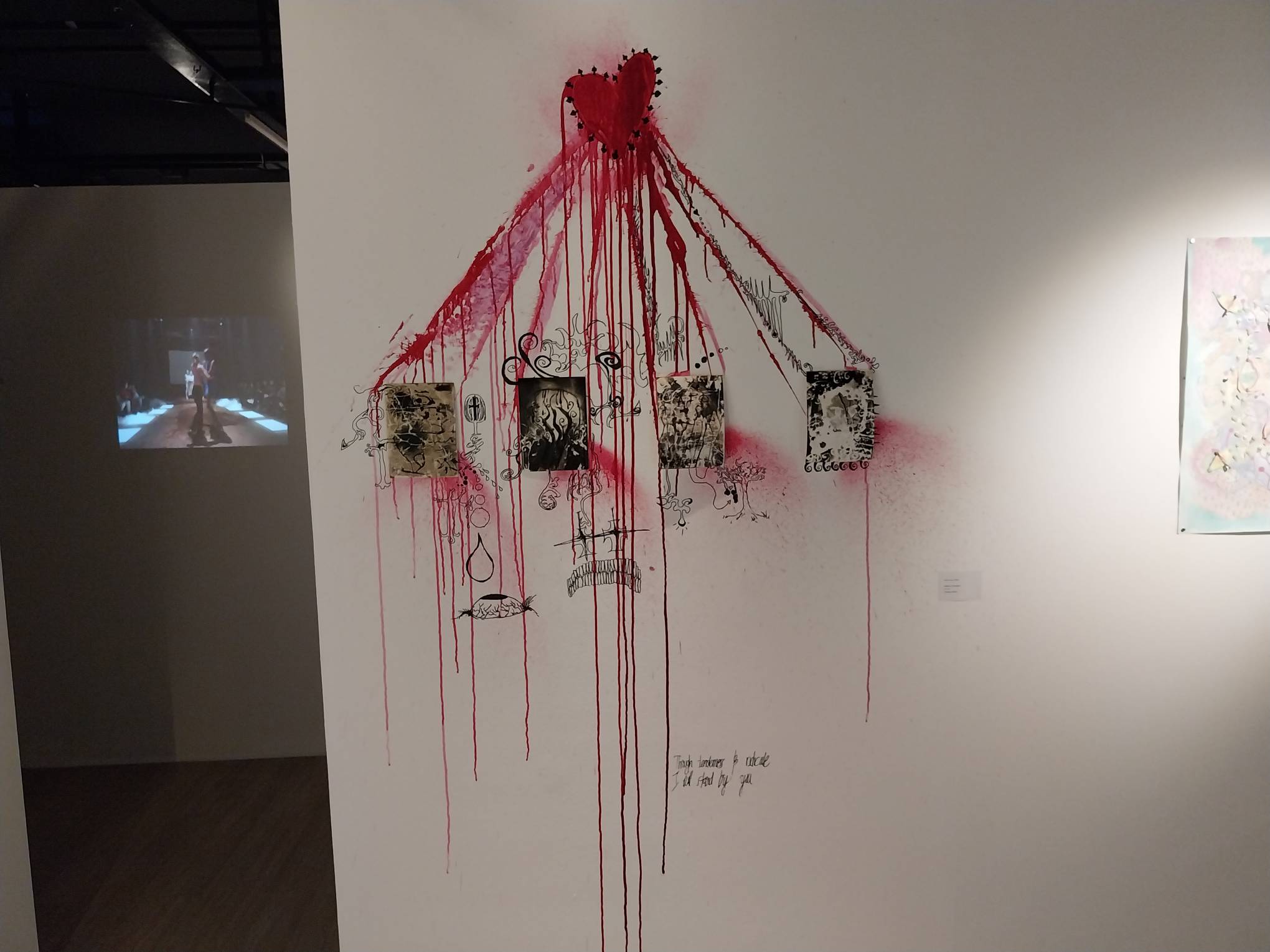
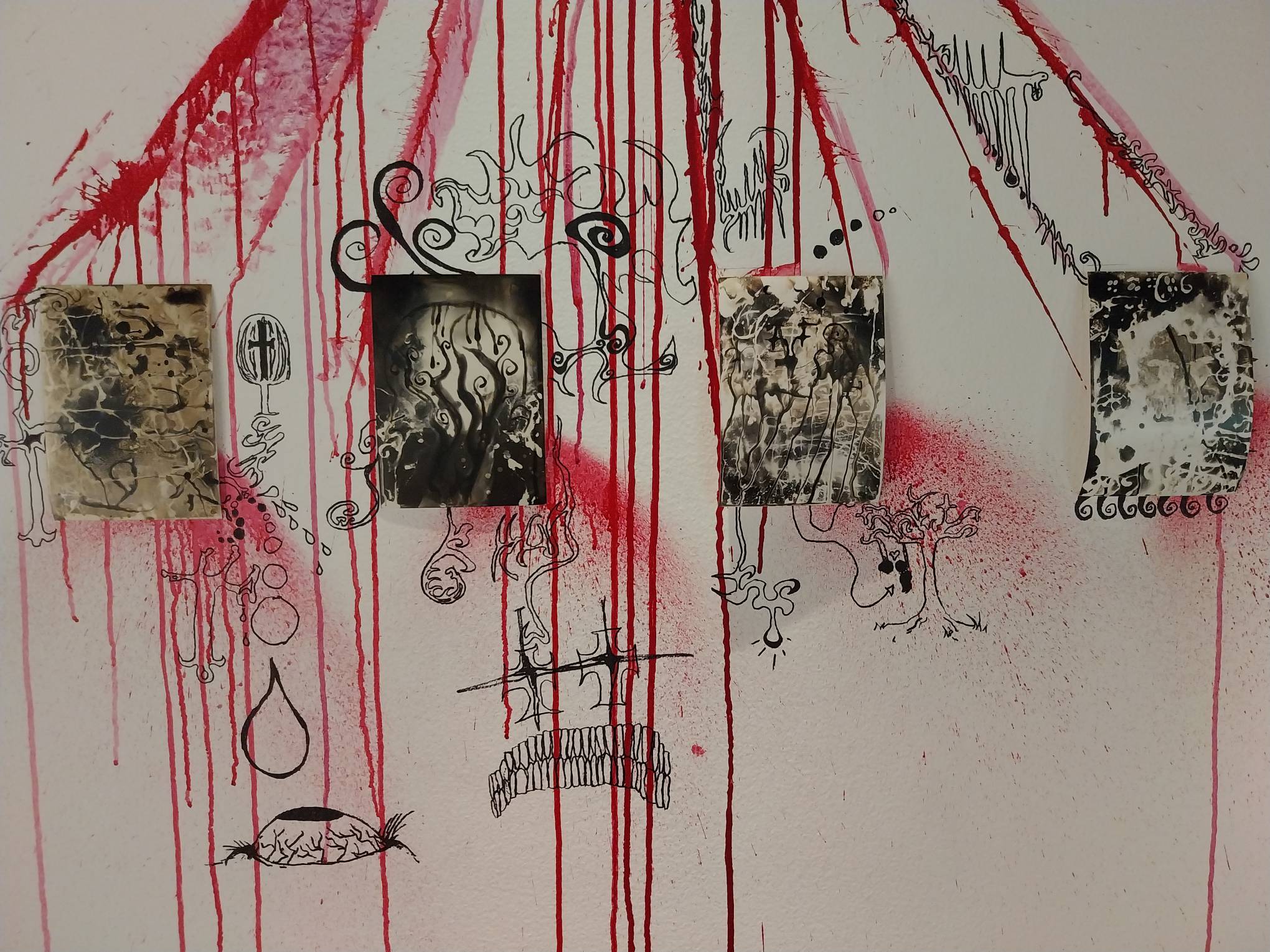
God Save The Queers, Bless The Badings highlights the history of persecution of the LGBTQ+ community. There’s Andi Osmeña’s “Jackets,” which reassures queer individuals that they will be remembered in another time. Christal Chung’s “trial and error” uses chemicals on light-sensitive paper to depict an inner darkness swirling in a smokey background.
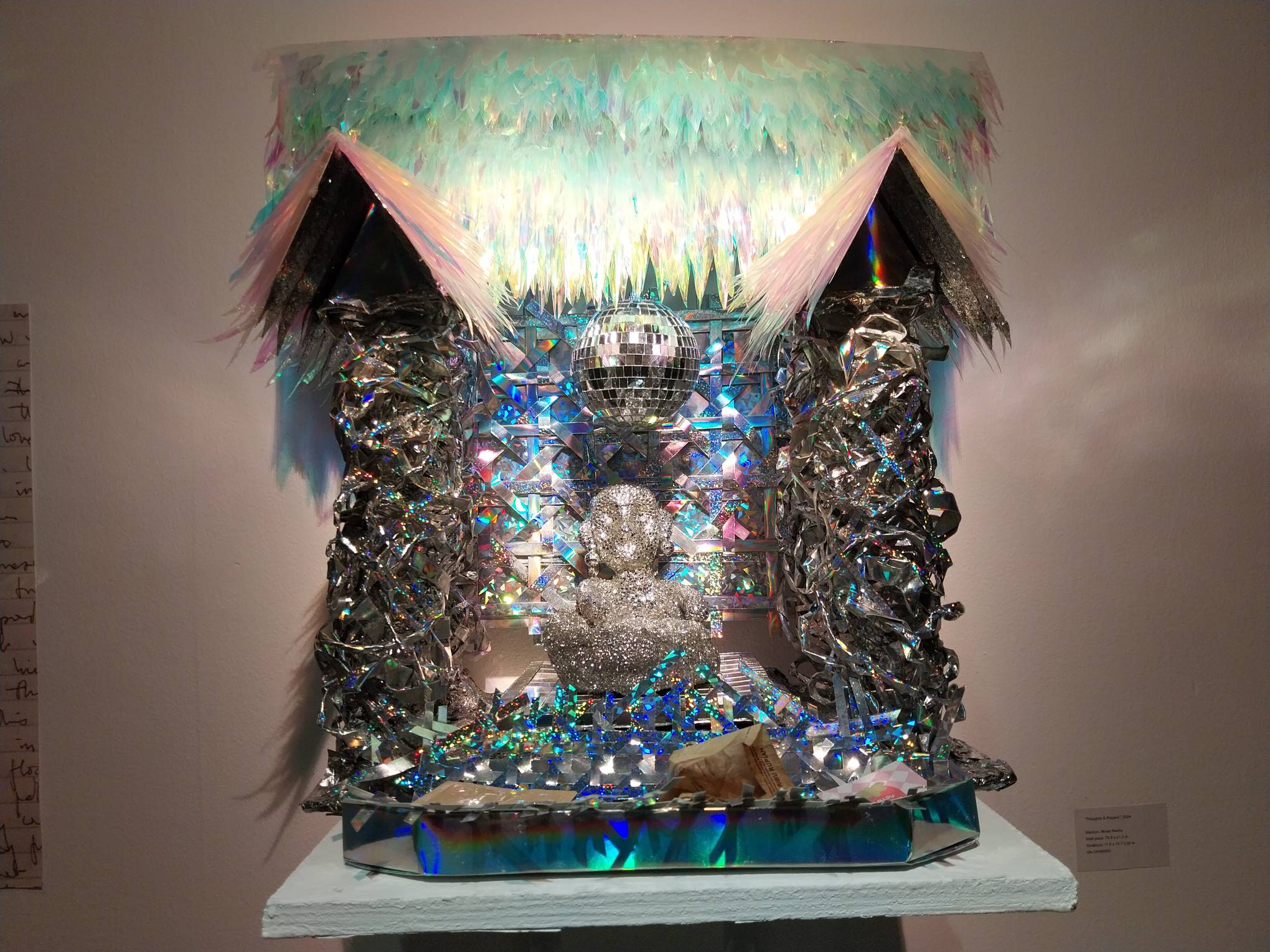
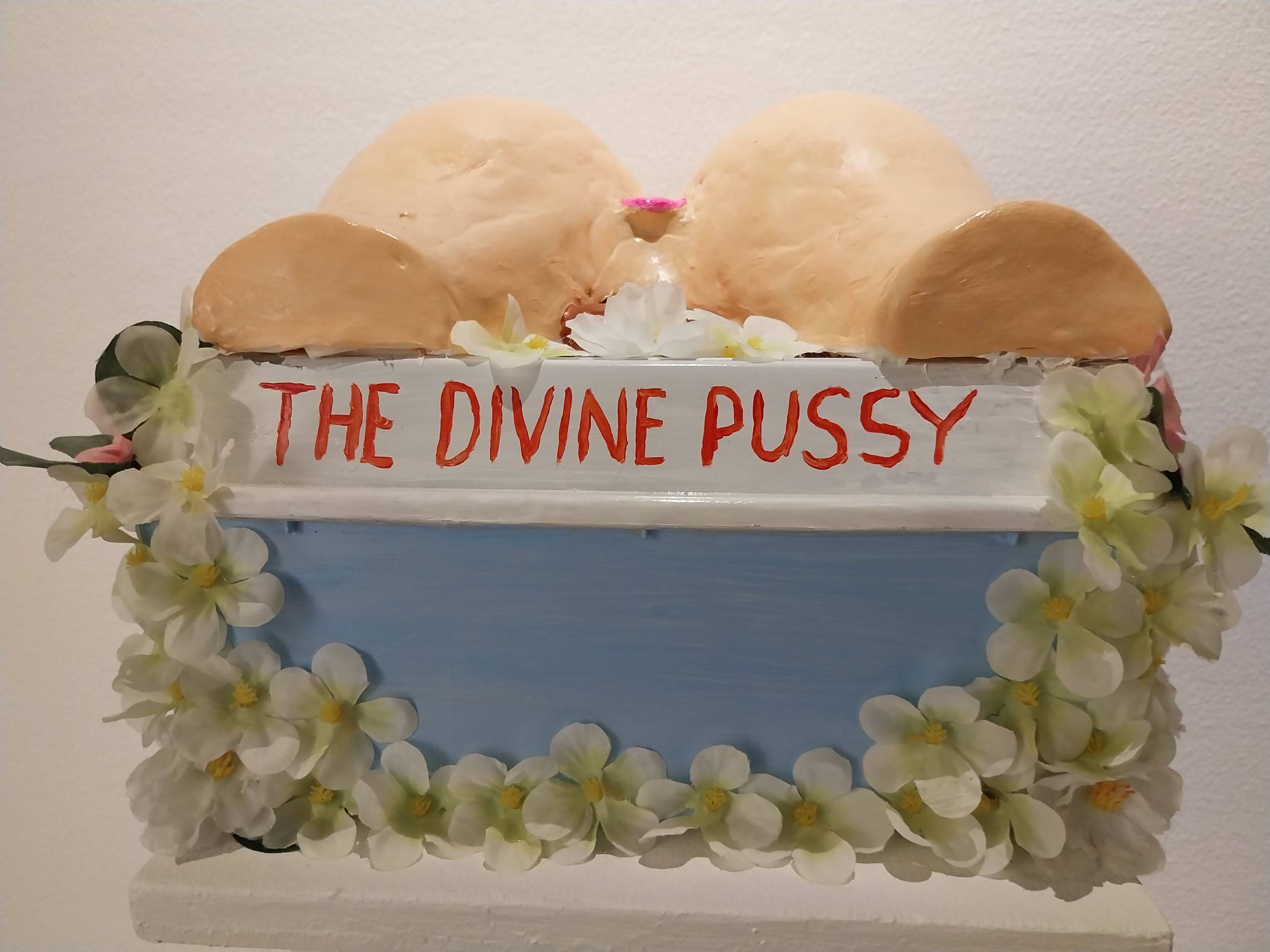
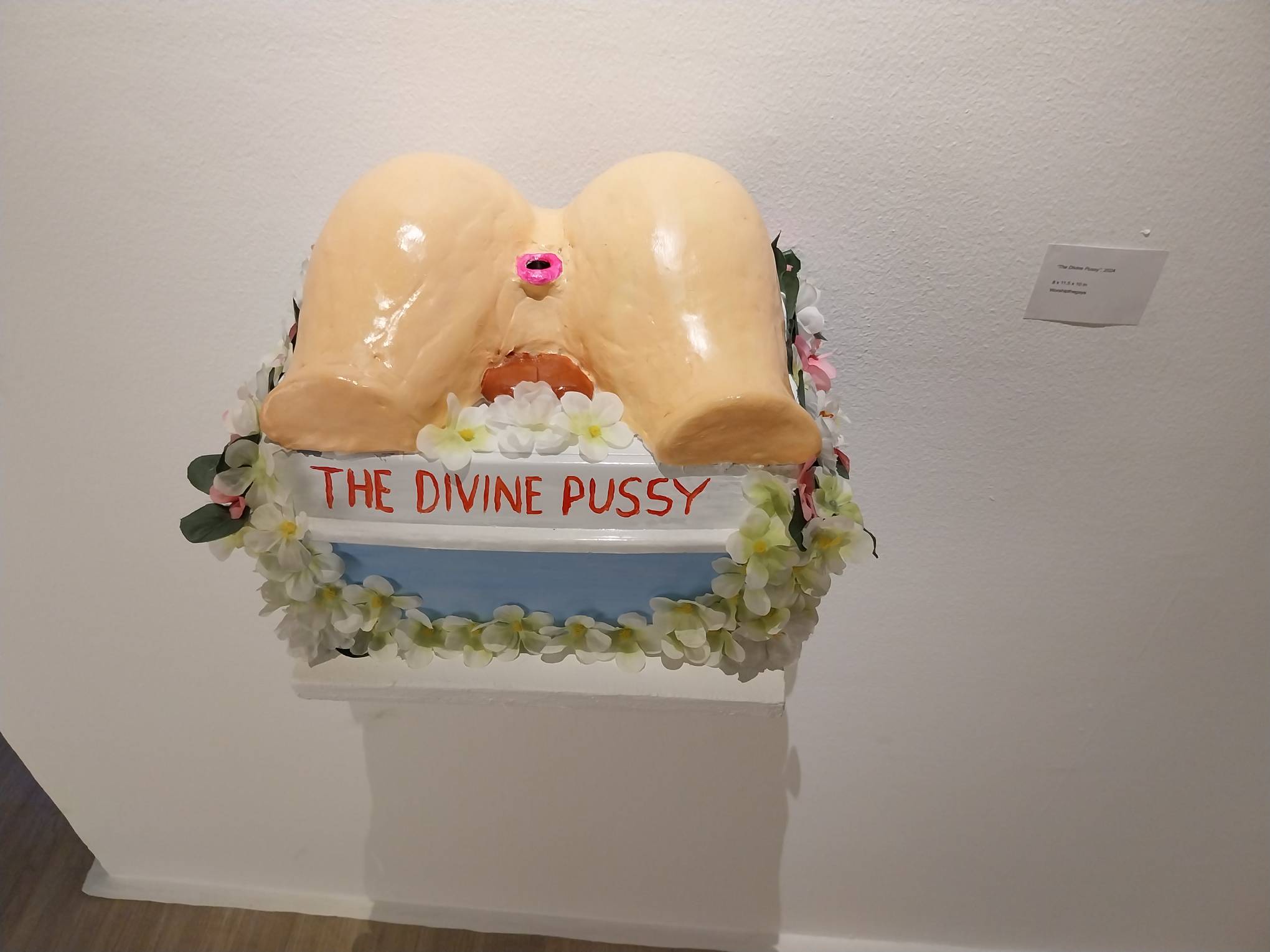
The exhibit also builds on a vision of joy. There’s two works by Gio Dionisio, collectively entitled “Thoughts and Prayers,” where it’s a smiling Buddha-like figure inside of a raging discotheque. There’s also Worshipthegays’ “The Divine Pussy,” a literally-cheeky sculpture of an ass and vagina made to look like a birthday cake.
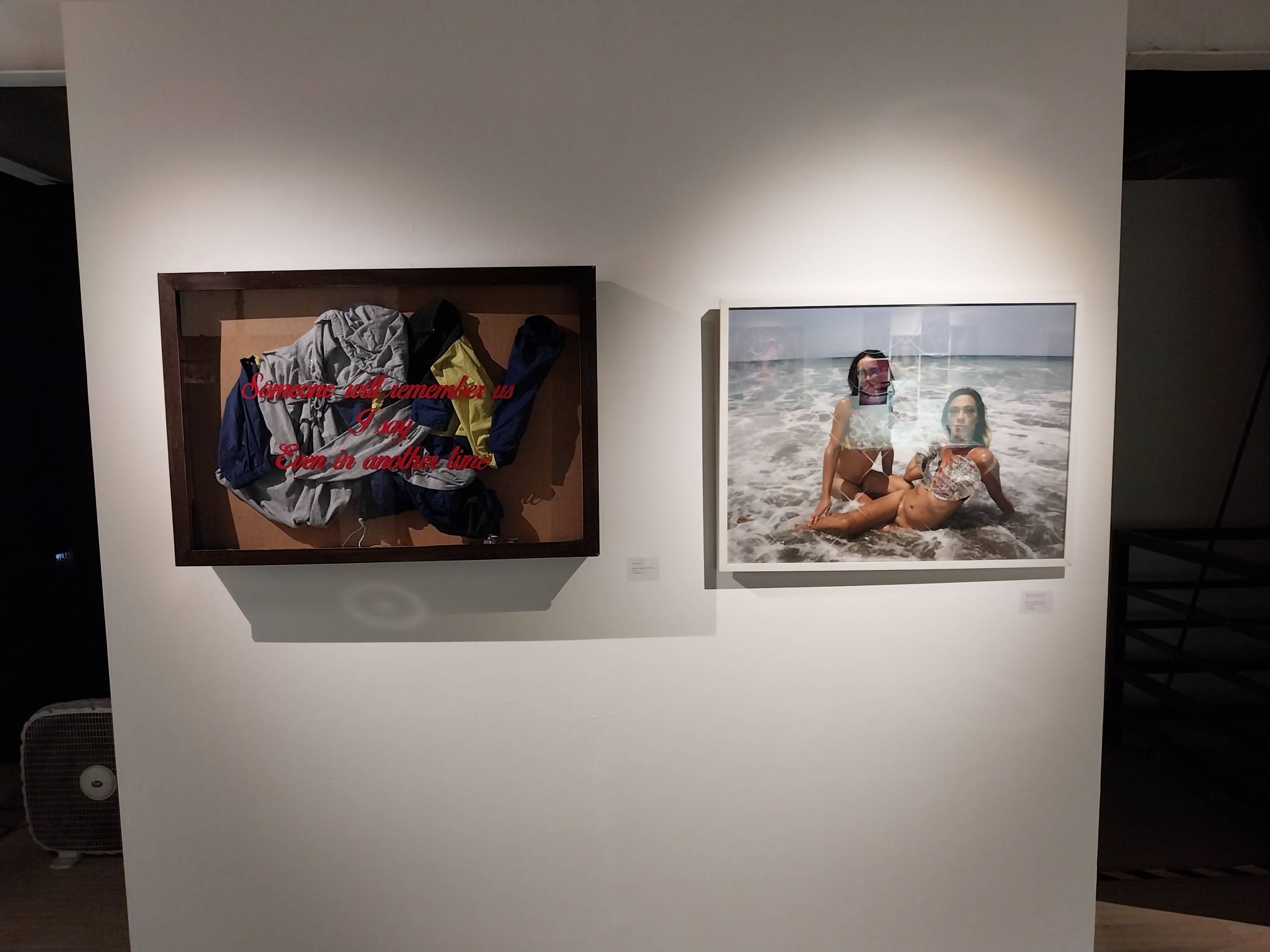
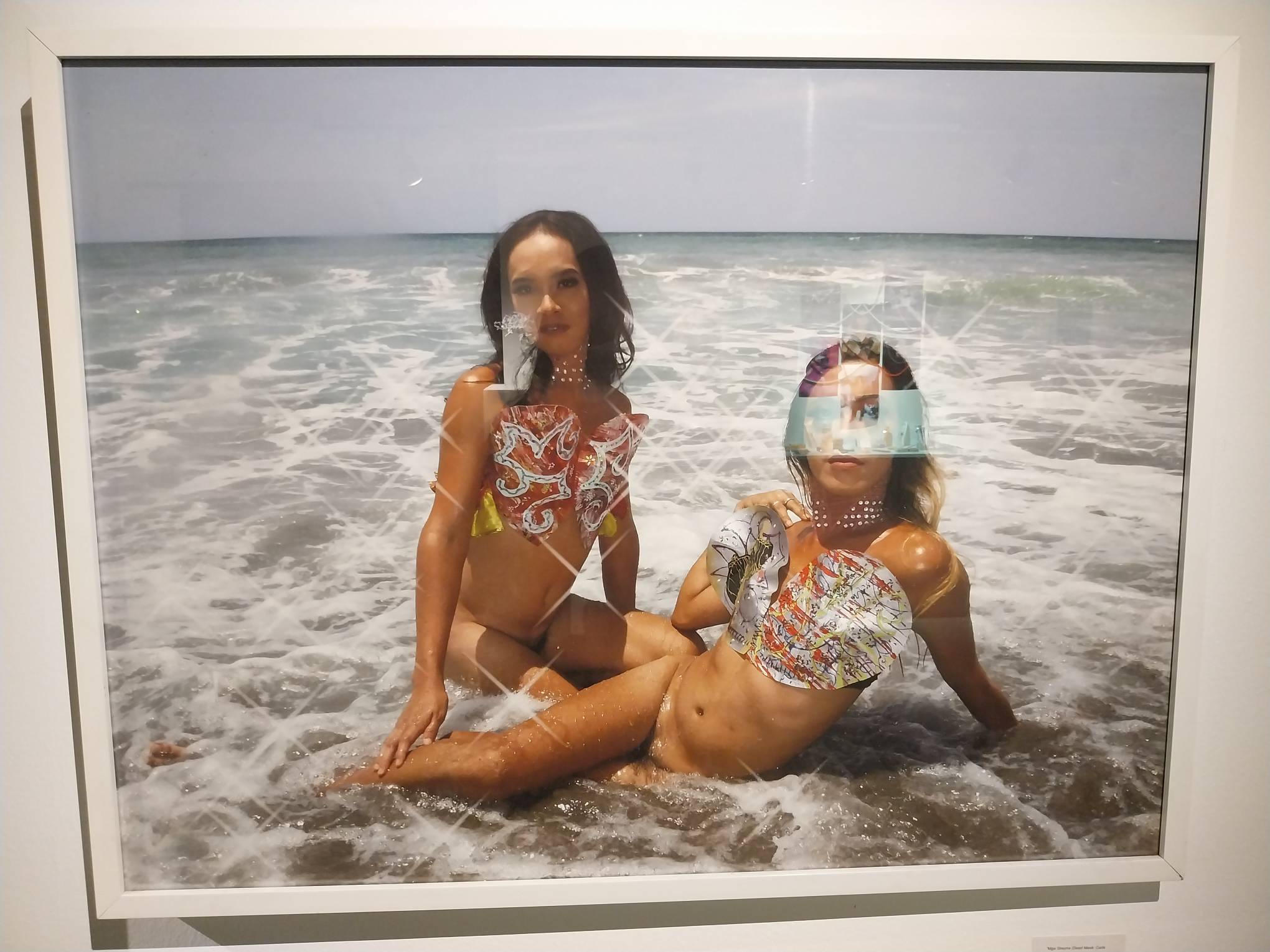
Another eye-popping work is Zeus Bascon’s “Mga Sirena.” It shows two people lying on the beach like supermodels, giving the impression that beyond the suffering of queer individuals is the joy of being one’s authentic self.
Redefining Divinity
A noteworthy installation within God Save The Queers, Bless The Badings is Lee Morale’s “Pakisabi na lang sa bitch na ‘yan, ako ang God.” It depicts a person posing as if they’ve been nailed to a post on a Manila street.
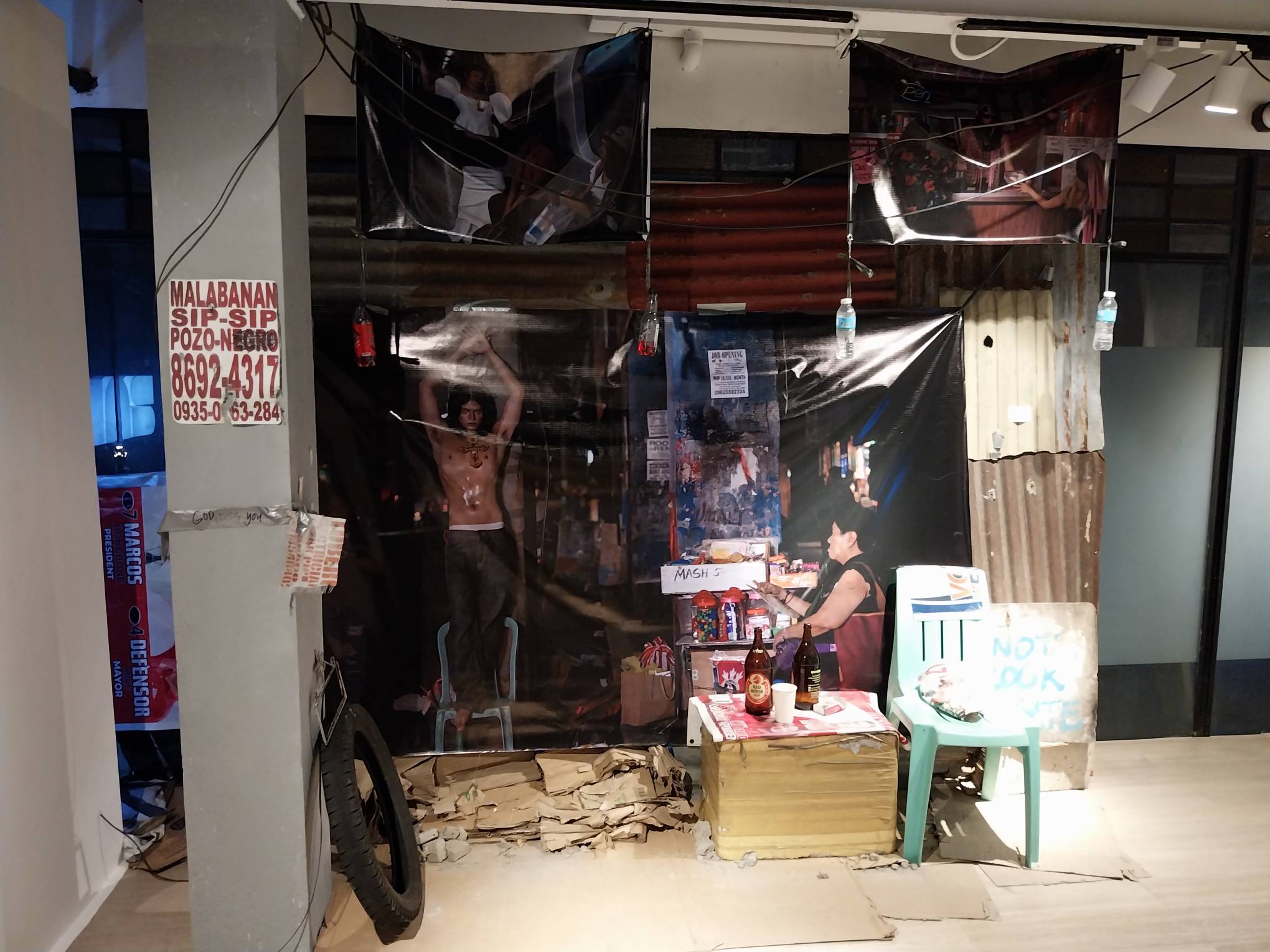
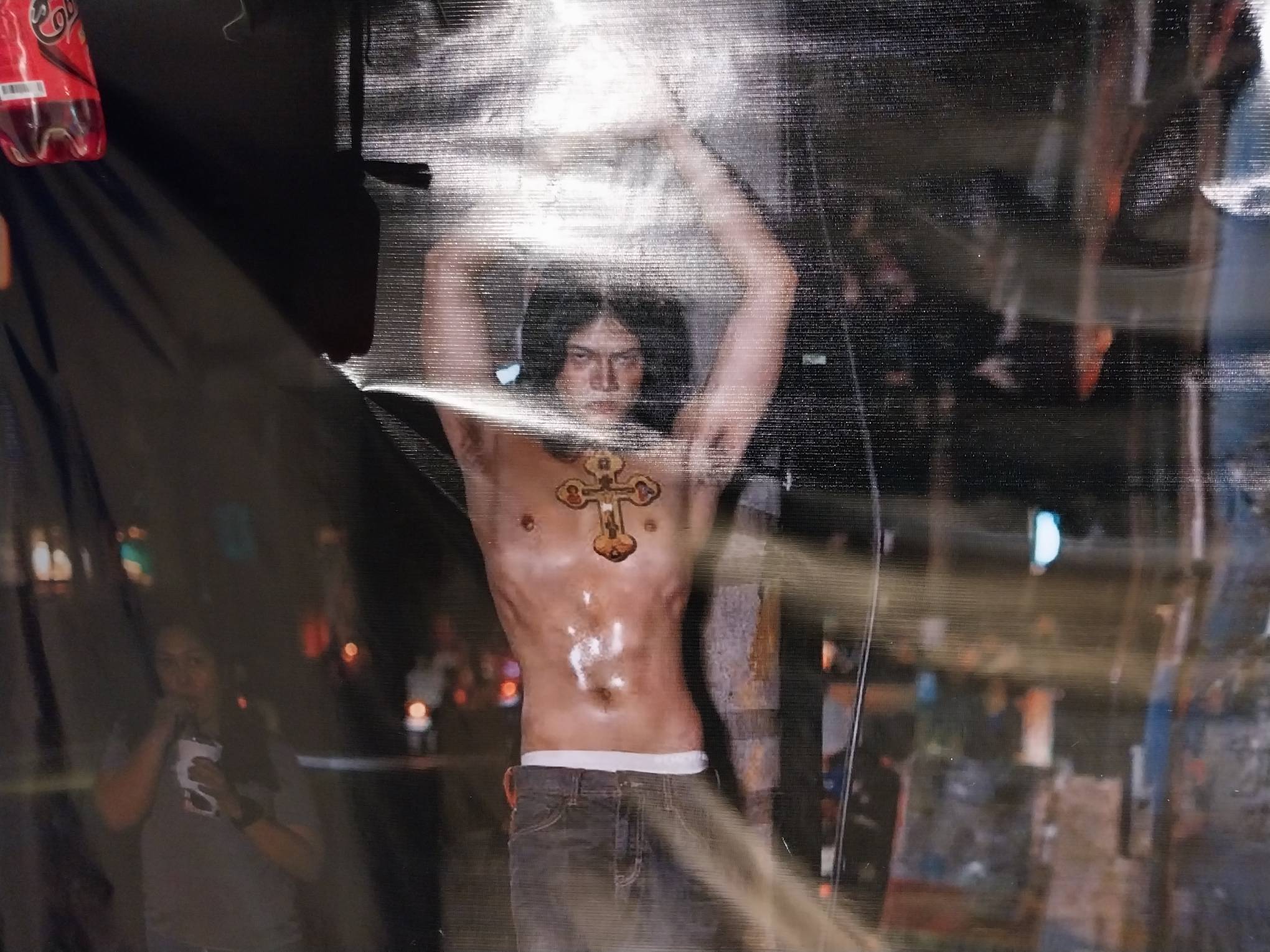
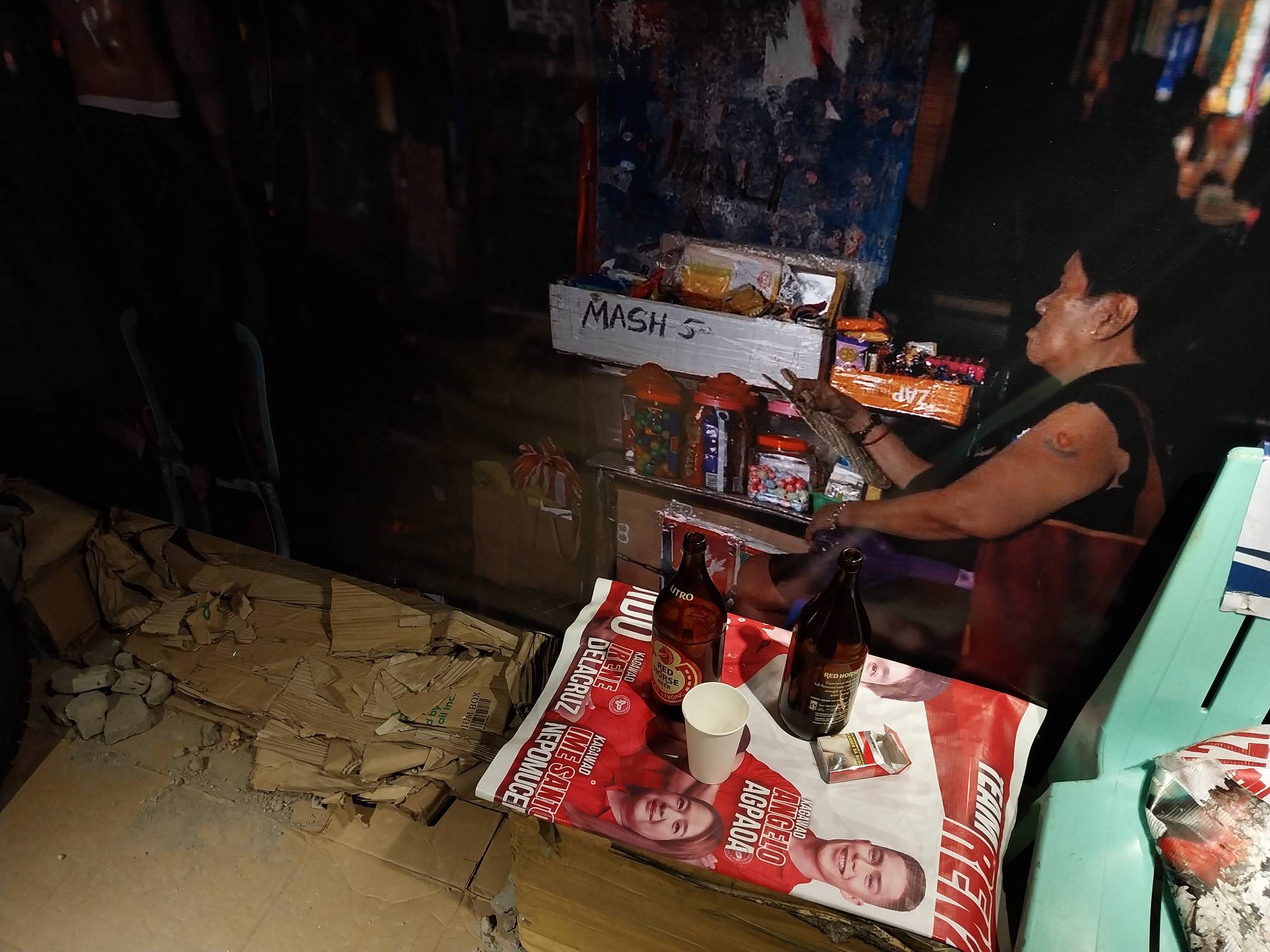
Its set design further augments the pictures. There’s corrugated iron behind the tarpaulin, poso-negro advertisements in a column, and even a table with beer and cups. It illustrates, more than anything, how normal queerness is. A queer individual can exist anywhere, as a street vendor or a celebrity, as a poor person or a rich man. They exist, and they exist no matter how much we desire to stamp them out.
God Save The Queers, Bless The Badings assembles a thorough portrait of queer faith and joy. In a country where queerness is often relegated to entertainment, where a SOGIE equality bill keeps being routed by religious leaders in government, where gay individuals can’t even get legally married, exhibits like this give hope for a more enlightened future for all.
Related reading: Queer Spaces and the Possibilities of Place
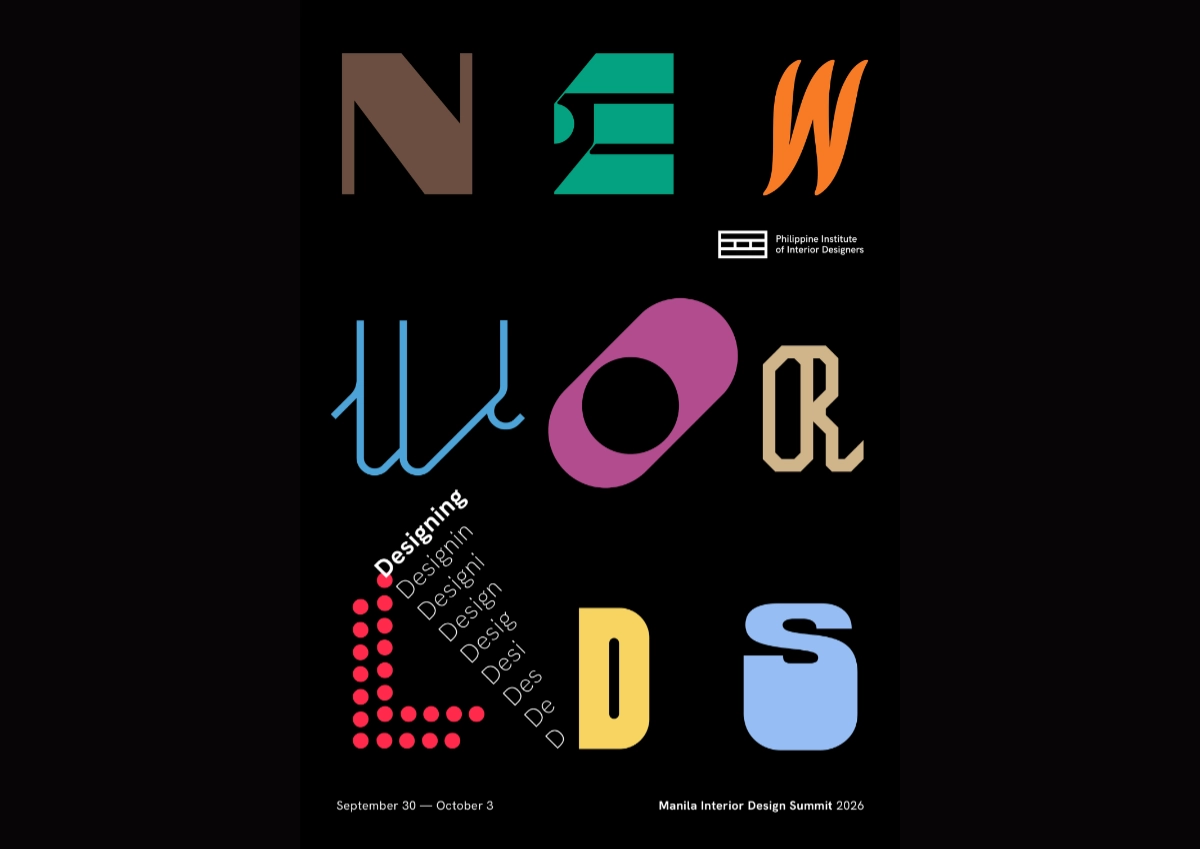
“Thailand has claimed urban creativity and livability. Singapore has institutional design leadership. Indonesia is emerging as a design hub. Vietnam is moving into design innovation. And the Philippines? Its position is not weak. It is simply unclaimed.” For IDr. Cecil Ravelas, National President of the Philippine Institute of Interior Designers (PIID), the challenge is not […]
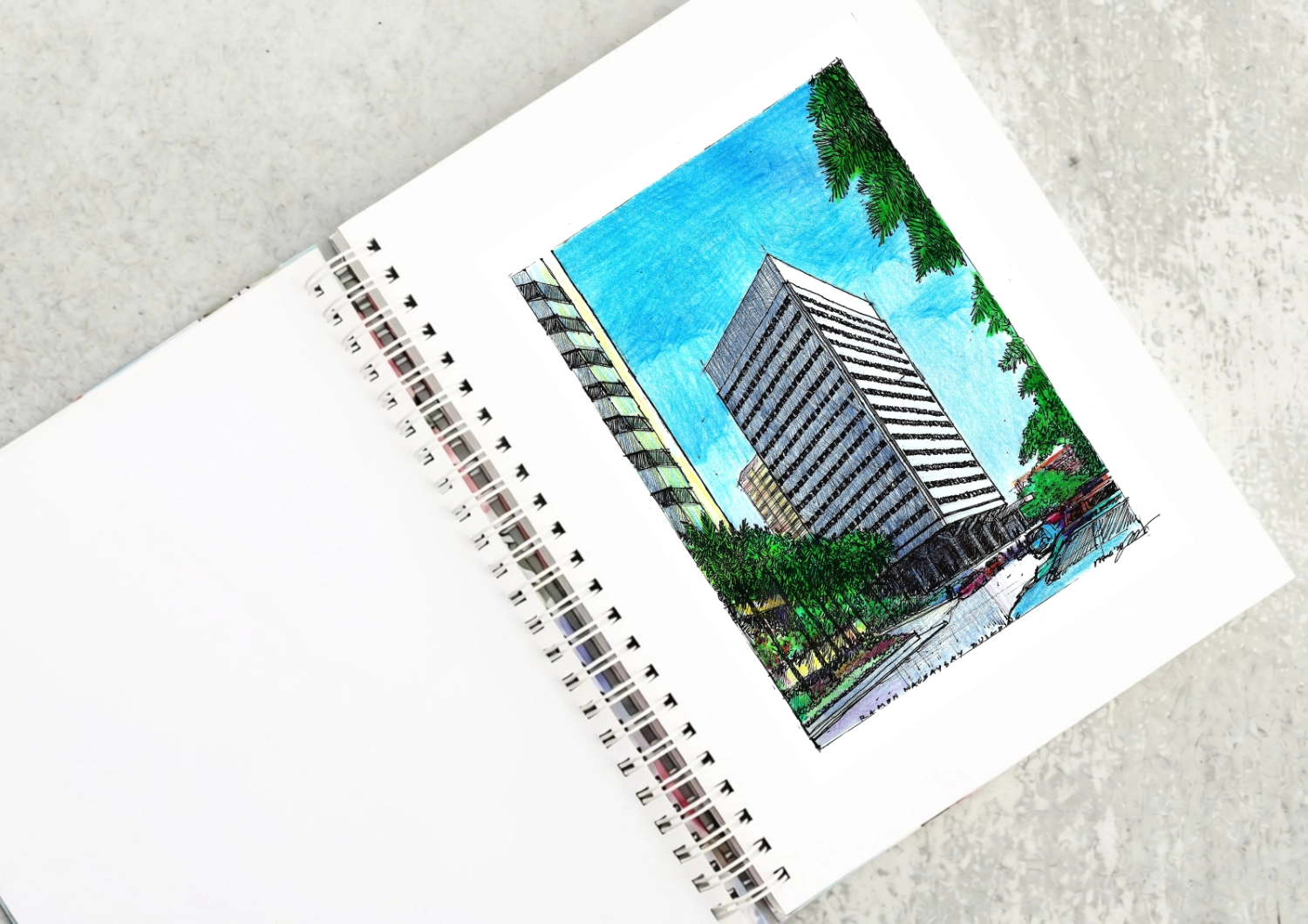
The Ramon Magsaysay Center as a Modernist Landmark Driving down Roxas boulevard from Rizal Park, what will catch your eye is the most elegant modernist structure in the country, the Ramon Magsaysay Center. Most established Filipino architects put it in their top ten lists of favorite buildings. It was designed by Alfredo J. Luz, who […]

Rinna Soriano’s favorite part of her work is sanding. At her workbench, she stays focused, following the grain, adjusting to changes in its direction. Narra, she has learned, can have interlocking grain. A piece of mango once proved particularly difficult until a worker explained that she had reached the point where a branch once grew […]
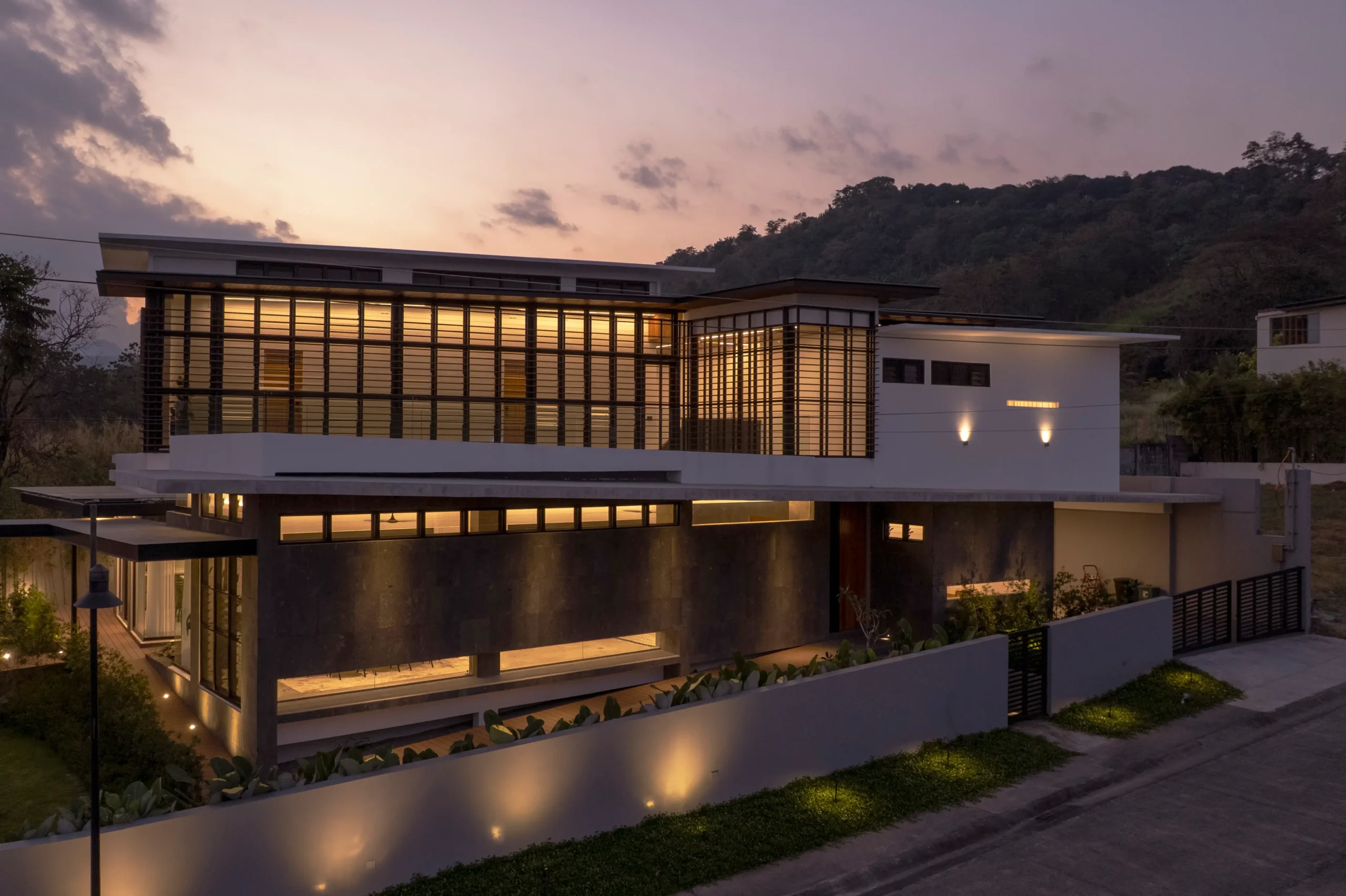
Filipino architectureArchitectureThe art and science of designing and constructing buildings, structures, and spaces that are functional, safe, and aesthetically pleasing. It encompasses the planning, design, materials, and techniques used to createGo to Architecture Glossary has long been associated with indigenous materials and vernacular design strategies, from bamboo and timber construction to jalousie windows, generous spaces, […]
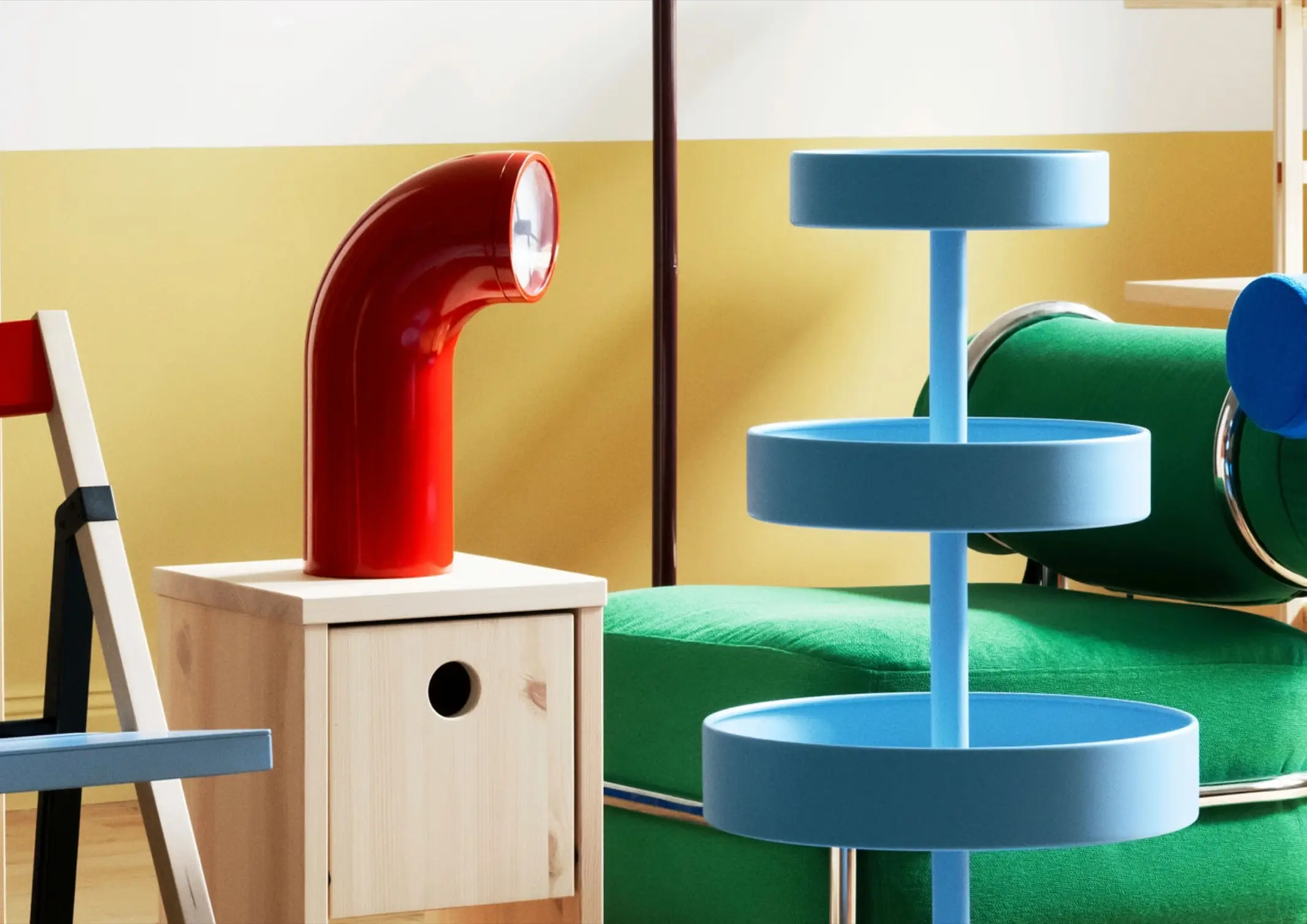
A chair does not always prescribe how to sit in it. A lamp can be more than a source of light. A clock can be more than a way to tell the time.These small departures from convention are at the center of IKEA PS 2026. The latest iteration of IKEA’s experimental PS series comprises more […]
Read the issues.

Collect the volumes.

Recommended Video
Tap to Unmute
Unmute
0:00
0:00