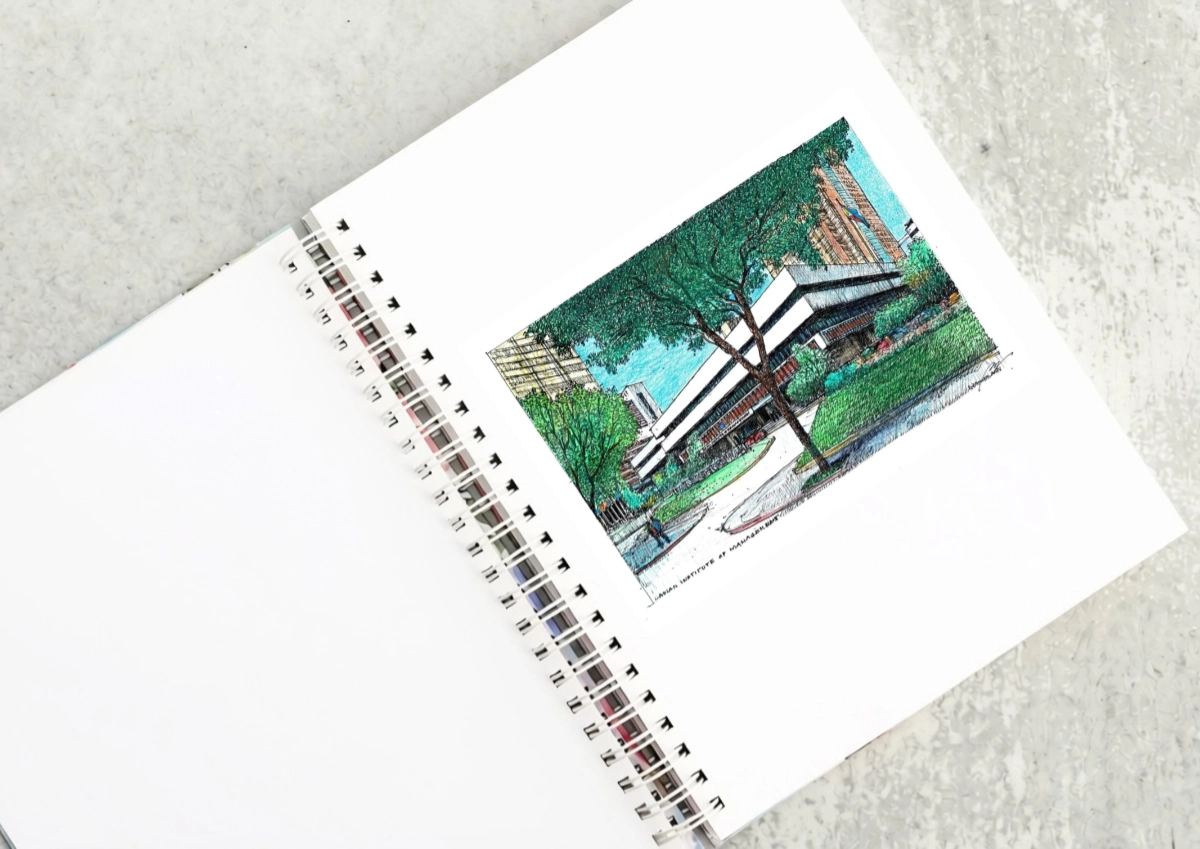
A Filipino Interpretation of Modernist Architecture Unlike the rest of Makati today, the northern end of Paseo de Roxas in Makati is anchored by a low complex rather than a tall skyscraper. This is the elegant Asian Institute of Management, designed by architect Gabriel Formoso and completed in 1971. In my opinion, the building is […]
Winna Go Explores Asian Diaspora and Migration in New Exhibit



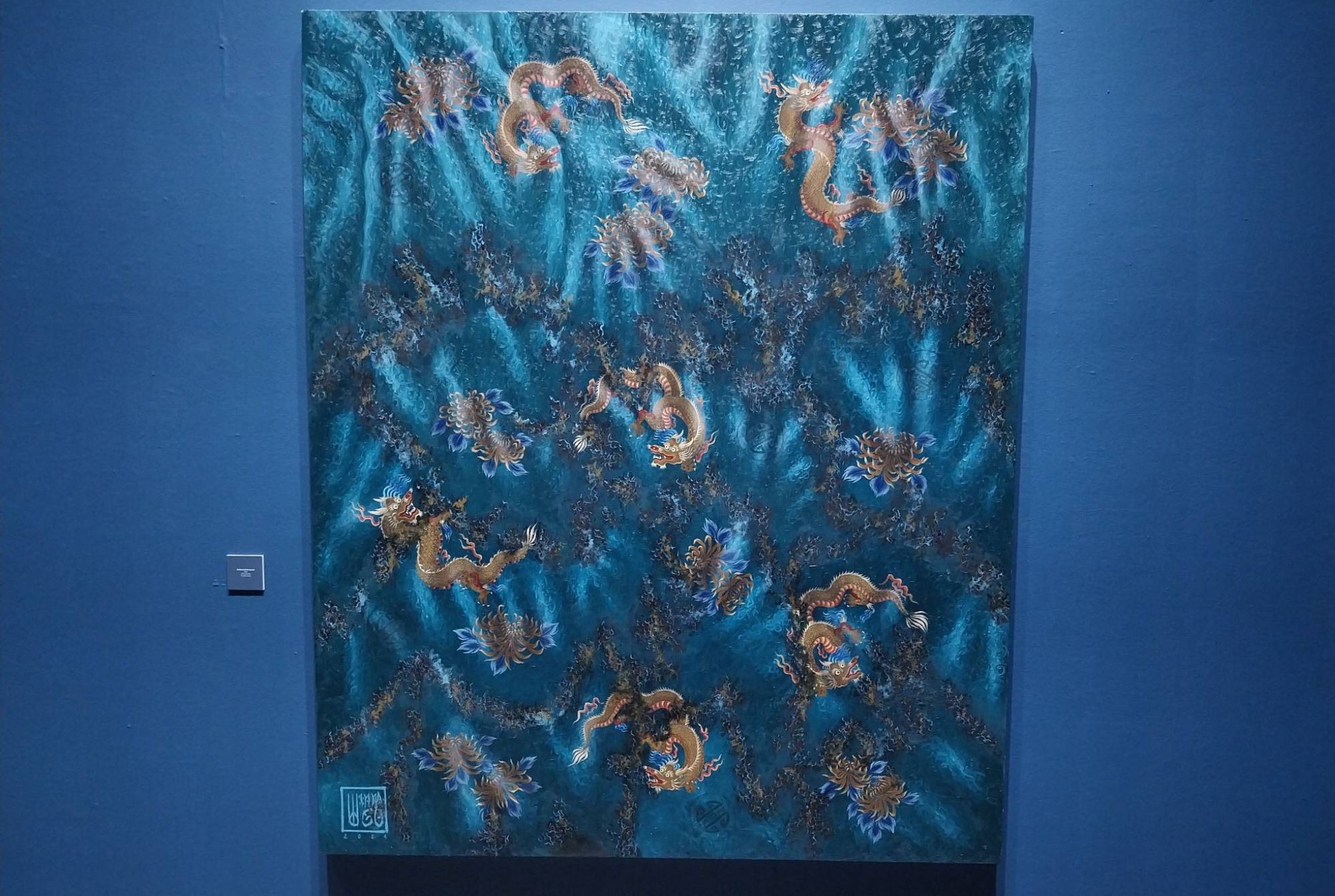
On the Roots and Routes of Diaspora seeks to represent the Chinese diaspora by re-imagining cultural symbols. Artist Winna Go captures the migrant struggle of balancing cultural assimilation and preservation through her paintings of silk robes.
Showing at Finale Art File until August 26, the artist focuses on the diaspora in the 1900s during the fall of the imperial court, which led to decades of strife in the country. Go links that struggle with the current one experienced by the Philippines.

“The diasporic impulse—both an established historical fact and still an ongoing reality for many—inflects almost all cultures, from the refugees finding solace away from their native land to the countless OFWs (overseas Filipino workers) who provide much needed manpower in the different parts of the world,” the exhibit write-up said.
Unraveling of History
Winna Go works with precision as she uses oil paint to accurately depict the sheen and texture of silk clothing. Her pieces realistically capture the fabric’s creases and folds. The artist’s interplay of light creates delicate shadows, while the colors emit a subtle reflective shimmer, shifting in response to the painting’s light source.
Go’s craft powerfully illustrates the loss of culture and identity that often accompanies migration. The use of Chinese symbols—dragons, swans, chuáns (Chinese sailing boats), and fish forming the yin-yang—evoke a deep sense of heritage. The silk robes themselves are traditionally something that’s passed down to future generations.
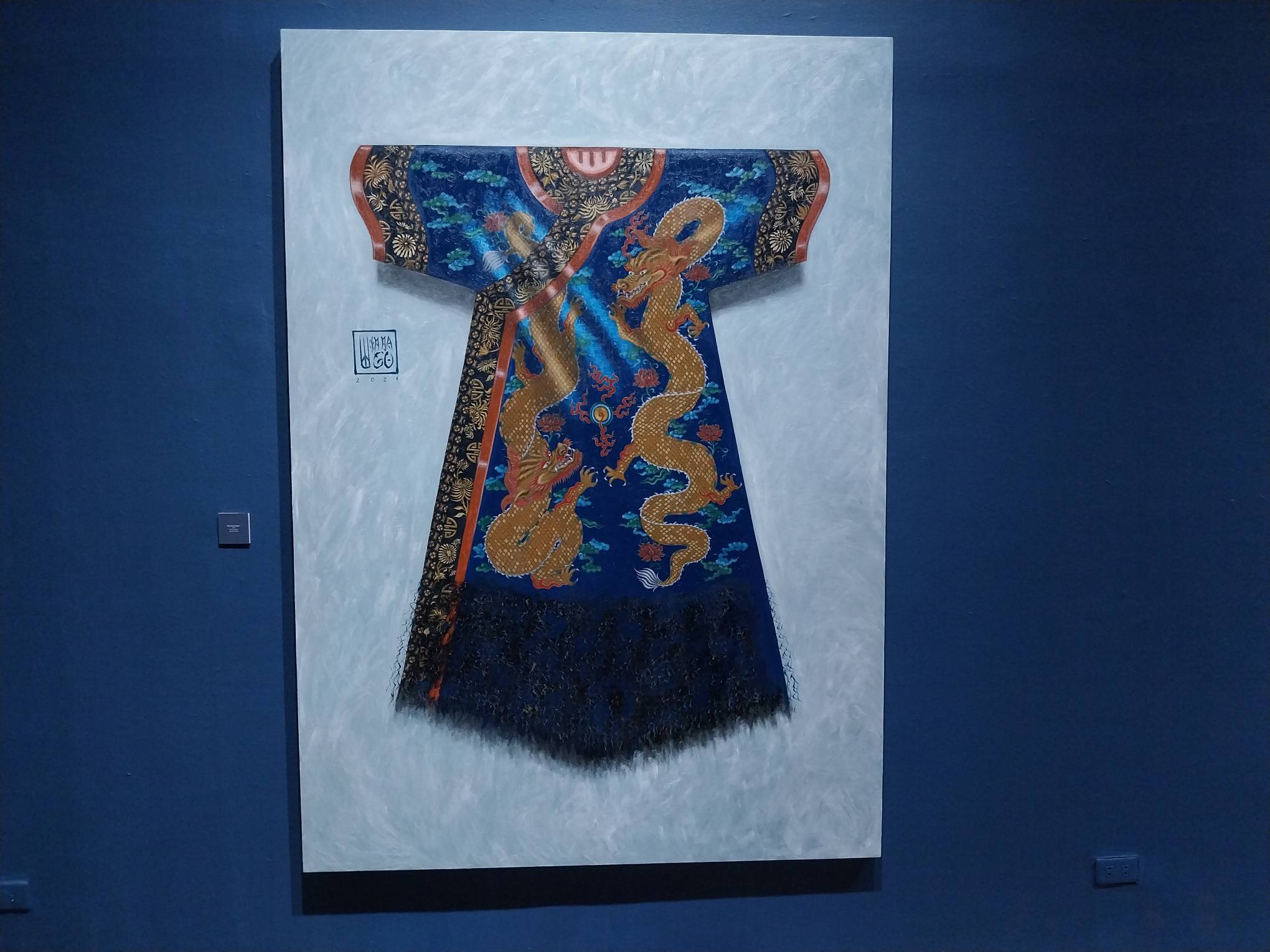
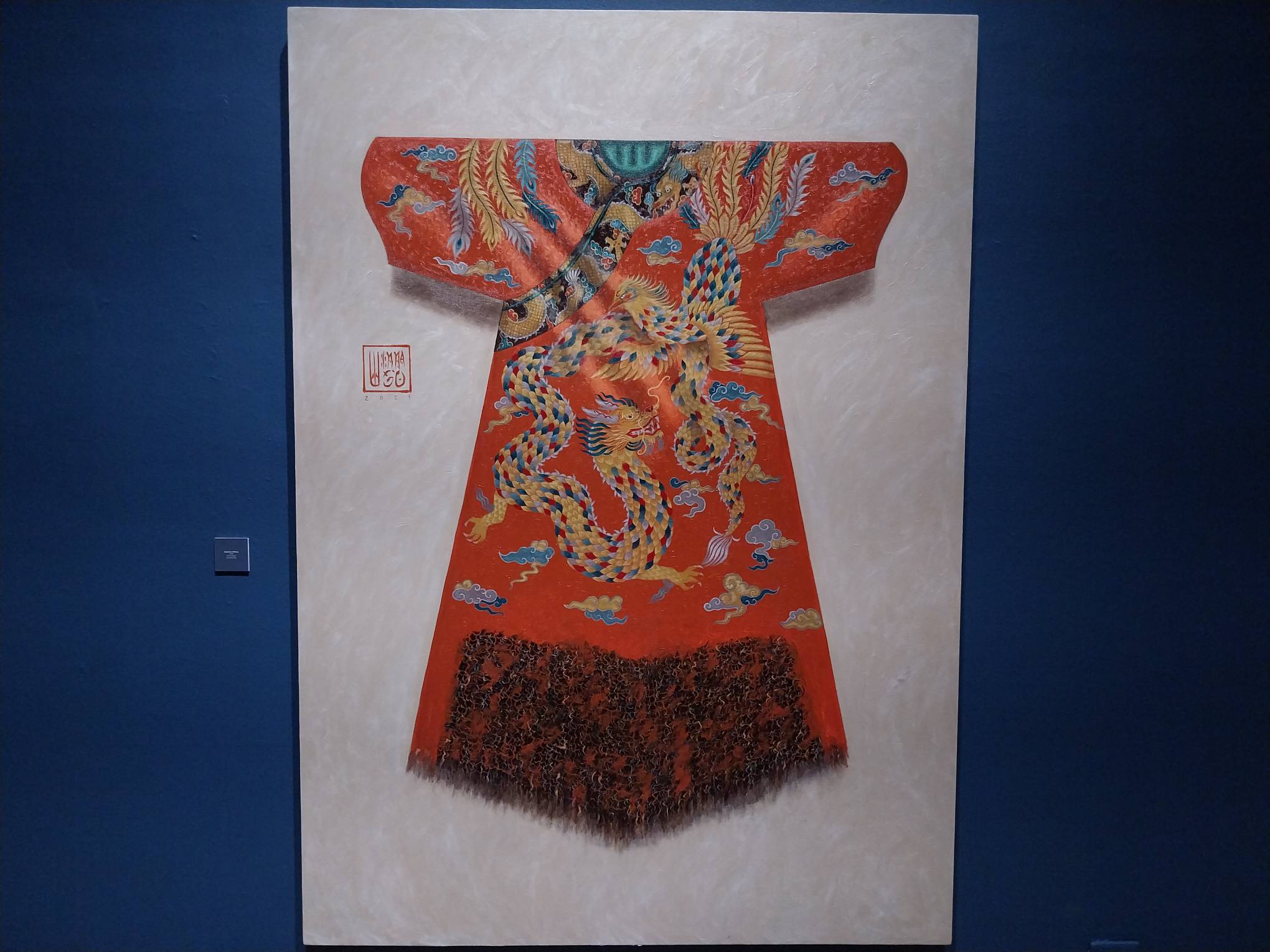
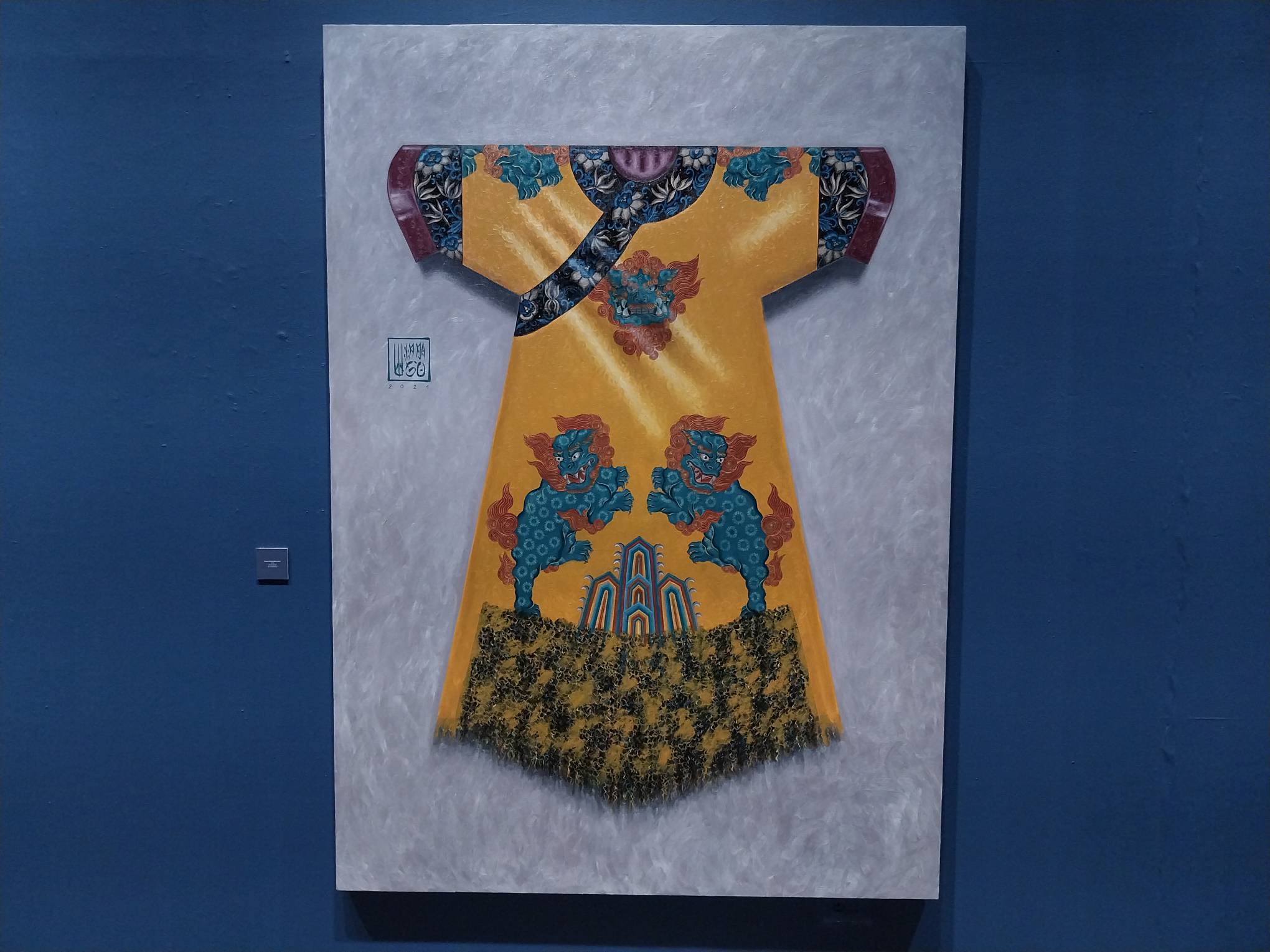
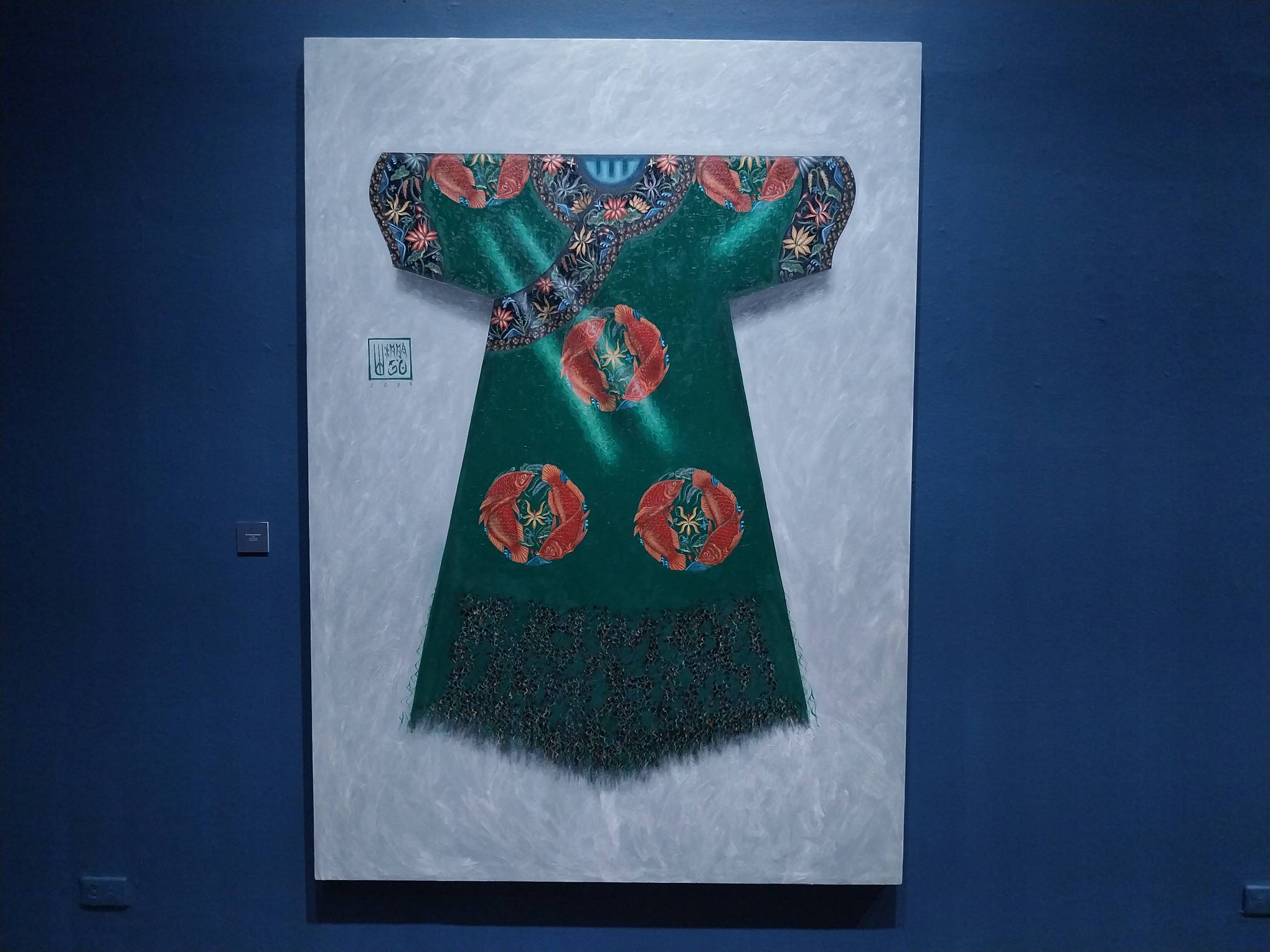
However, the robes’ fraying edges suggest a gradual unraveling, symbolizing how our connection to our culture deteriorates over time. The exquisite artistry is slowly overtaken by a creeping darkness, perhaps representing the fading ties to our ancestral roots.
And yet the fraying edges still look gorgeous in its contrast to the rich colors of the silk. One interesting interpretation a viewer could intuit from it is that it looks like vines or branches. Because of that, it works as a part of the tapestry of symbols as a whole, adding world-weary character to the opulence of the objects.
Preservation of Culture
A central theme is the notion of cultural heritage as our inheritance, akin to well-preserved silk clothing. It guides much of our selfhood as we grow older. These symbols are as significant as any physical or monetary inheritance, serving as the connective tissue migrants maintain to the culture they’ve left behind.
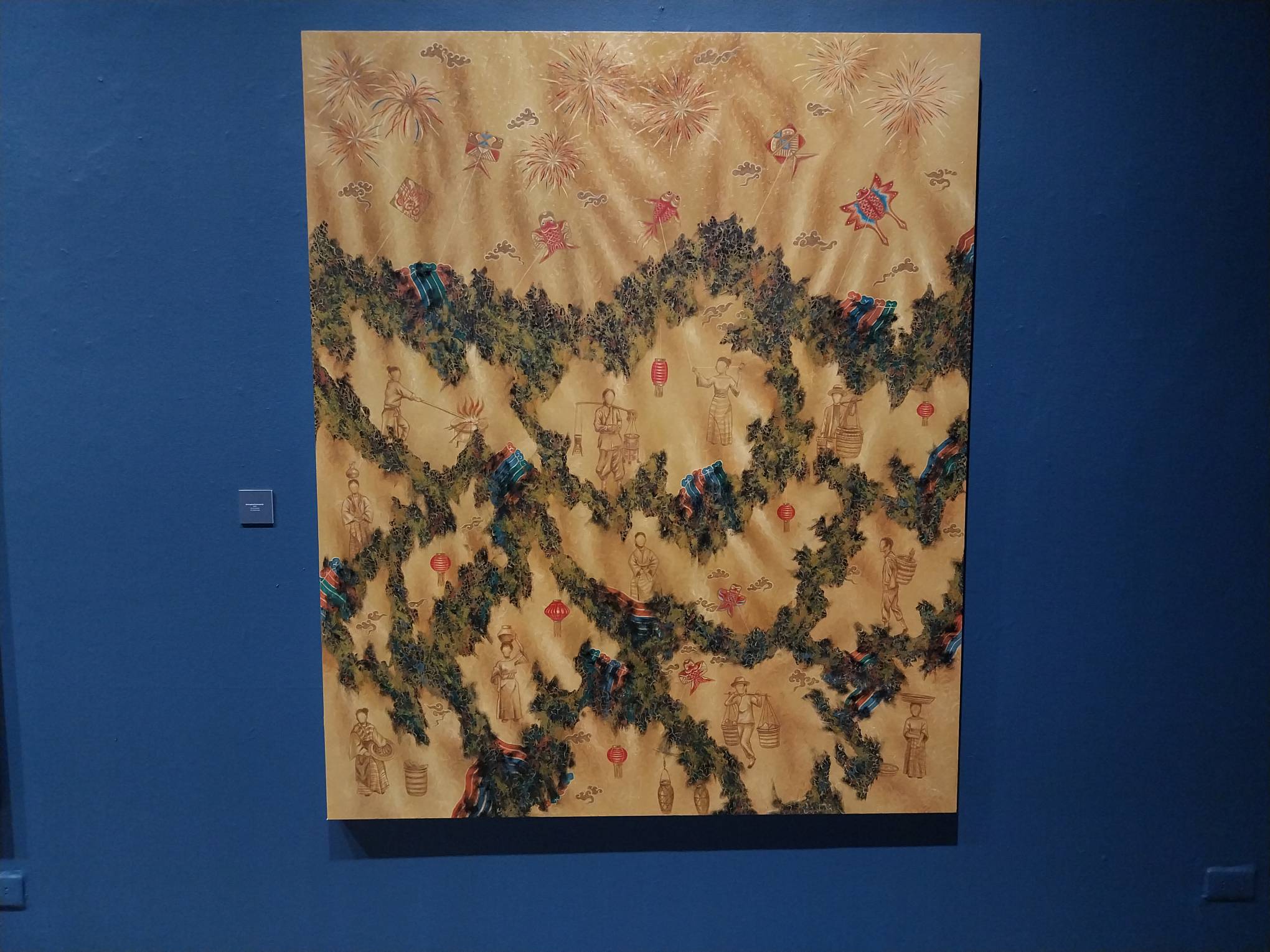
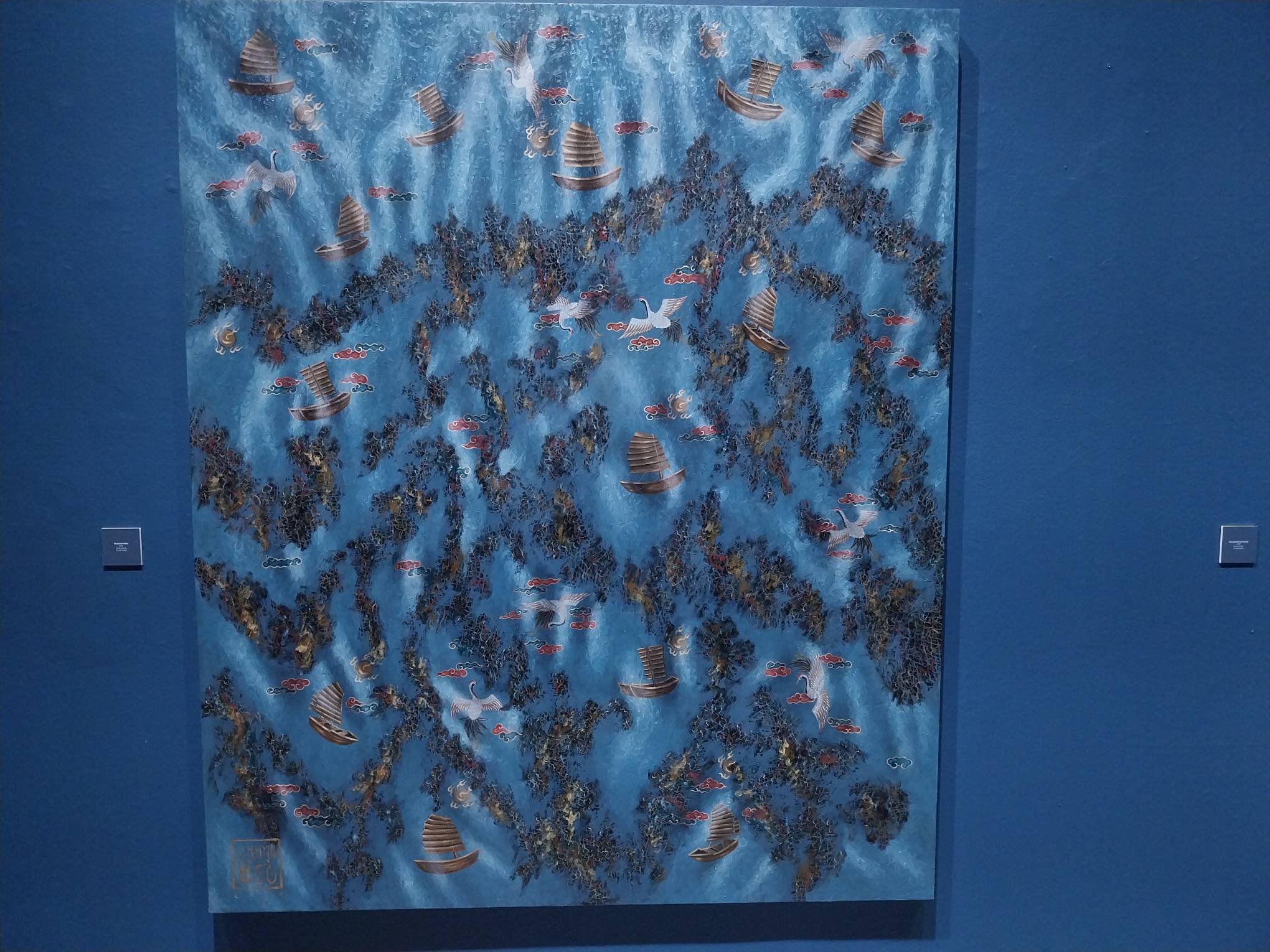
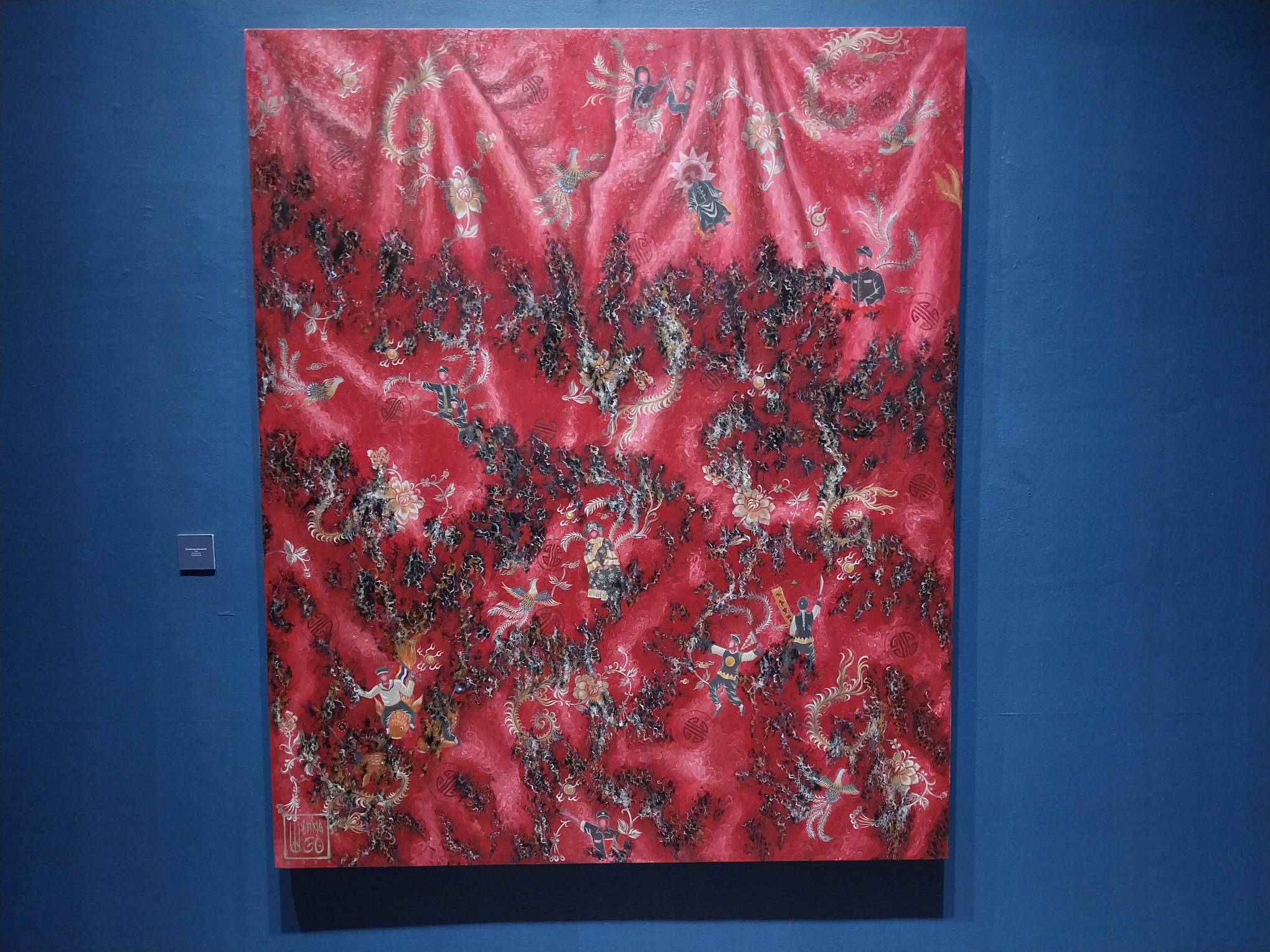
Winna Go’s depiction of unraveling silk robes remind us that, without careful nurturing, the connection to our ancestral culture weakens over time. While the children of migrants may assimilate more easily into new cultures when exposed at a young age, it might also end up being the only one they know.
The artist’s work delves into this complex idea. She examines the responsibilities of those in the diaspora to preserve and pass down their cultural heritage to future generations.
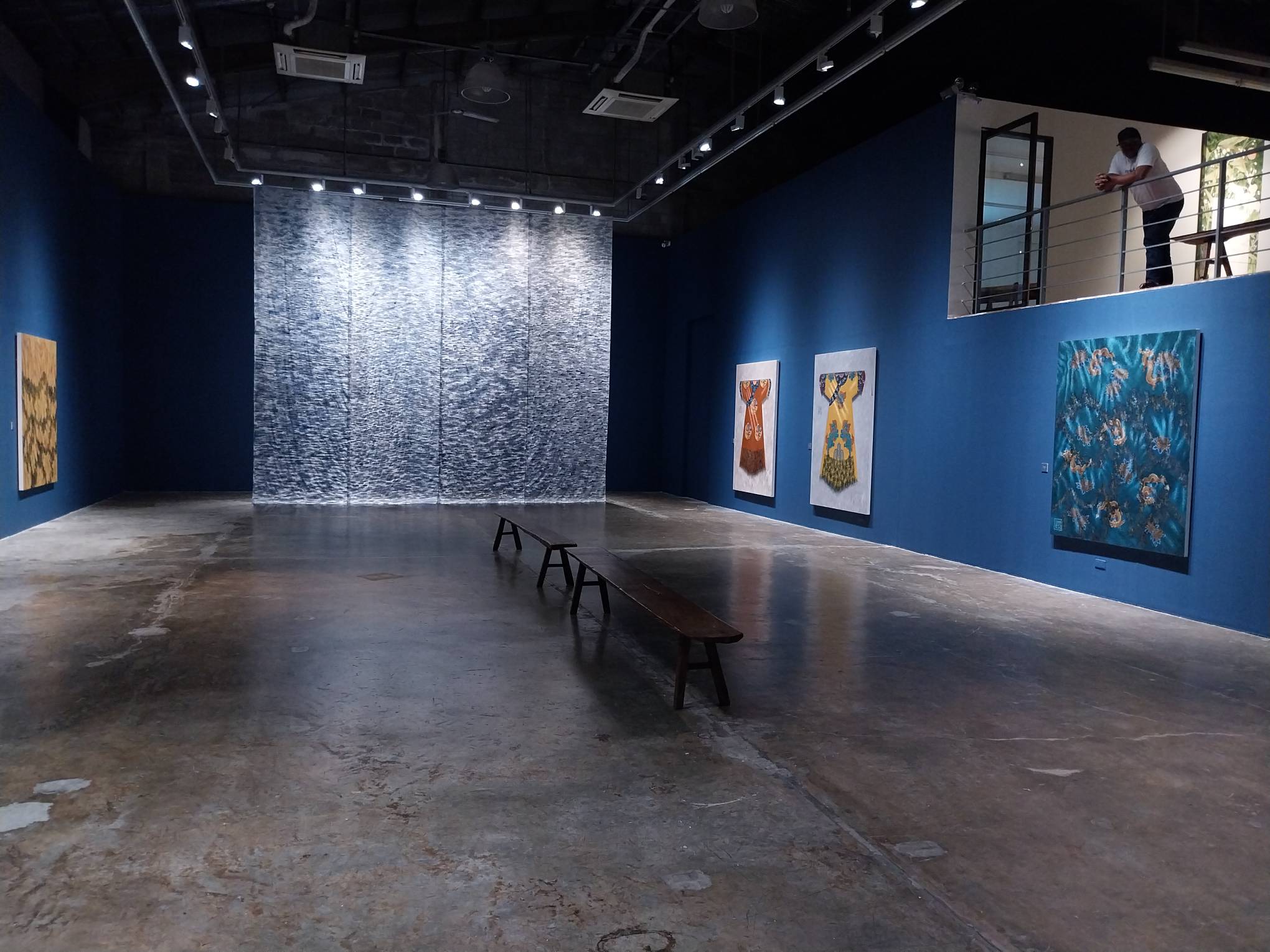
“The shattered silk may point at destruction, yes,” Carlomar Arcangel Daoana wrote about the exhibit. “But it could also convey the re-imagination of the possible, the openness of the cloth to be restitched, and therefore be redefined.”
On the Roots and Routes of Diaspora illustrates the exciting and expressive craft of Winna Go as she effectively recreates silk clothing on the canvas. But beyond that, it uses art as a way of discussing the complicated topics of cultural assimilation and migration in the community.
Related reading: ‘Running Backwards Into the Future’: Documenting Divergences in Philippine Art
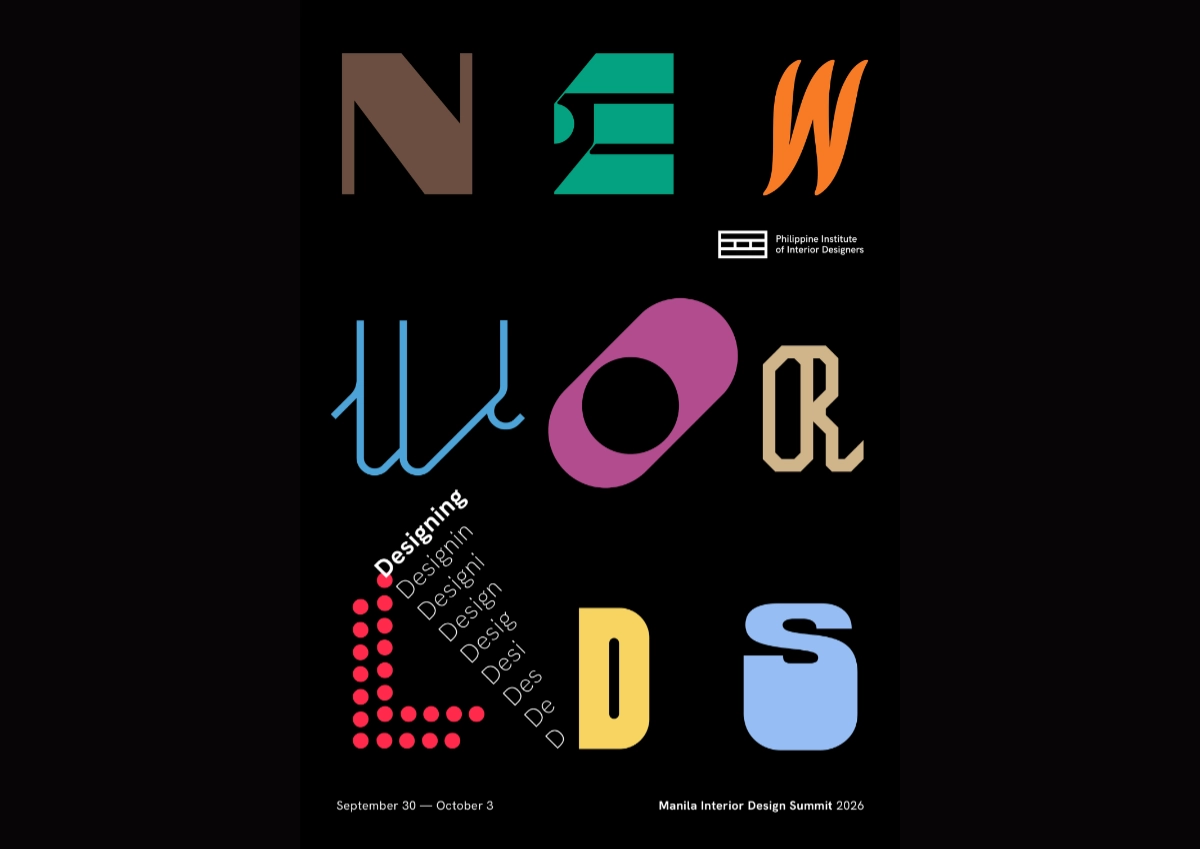
“Thailand has claimed urban creativity and livability. Singapore has institutional design leadership. Indonesia is emerging as a design hub. Vietnam is moving into design innovation. And the Philippines? Its position is not weak. It is simply unclaimed.” For IDr. Cecil Ravelas, National President of the Philippine Institute of Interior Designers (PIID), the challenge is not […]
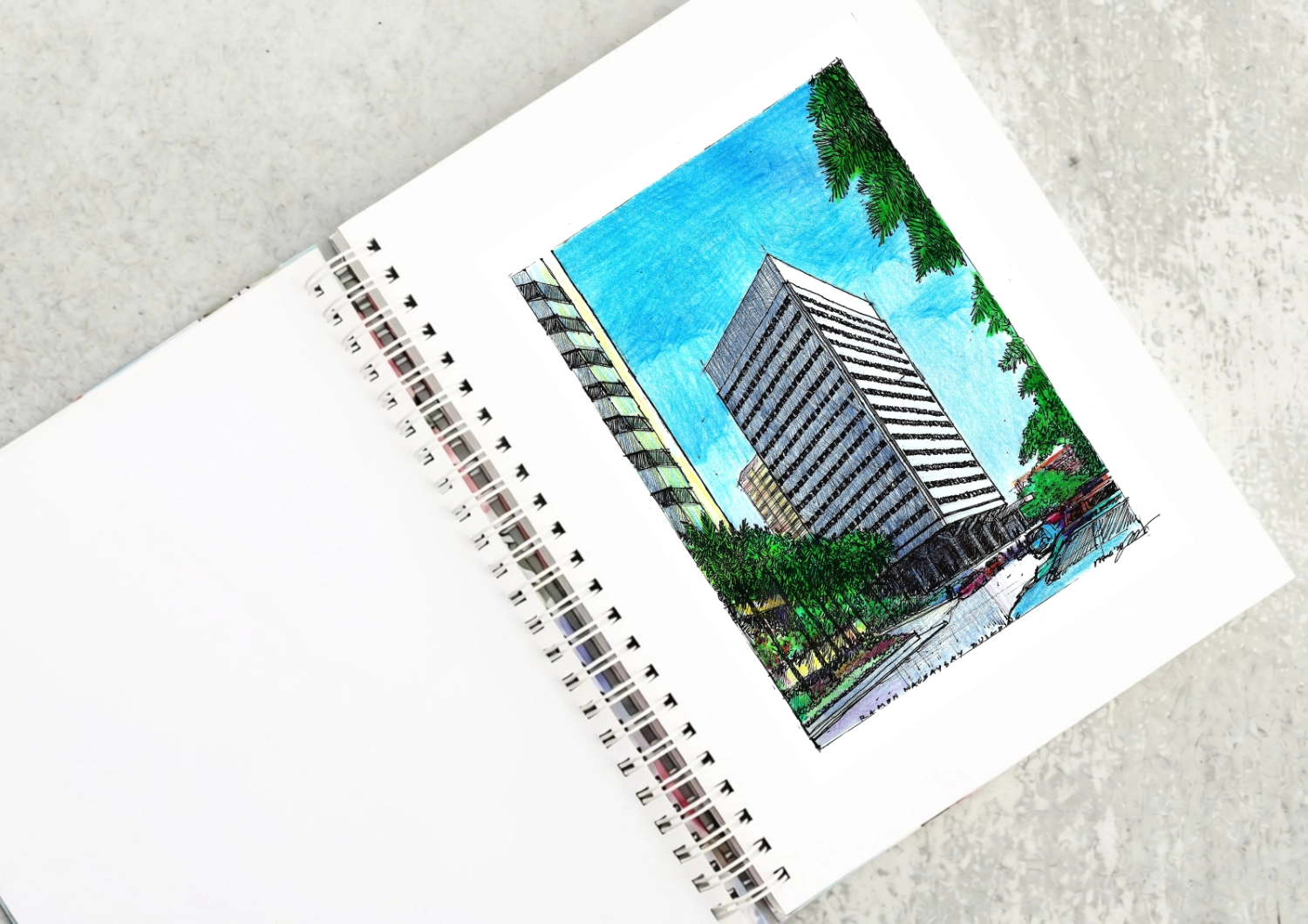
The Ramon Magsaysay Center as a Modernist Landmark Driving down Roxas boulevard from Rizal Park, what will catch your eye is the most elegant modernist structure in the country, the Ramon Magsaysay Center. Most established Filipino architects put it in their top ten lists of favorite buildings. It was designed by Alfredo J. Luz, who […]

Rinna Soriano’s favorite part of her work is sanding. At her workbench, she stays focused, following the grain, adjusting to changes in its direction. Narra, she has learned, can have interlocking grain. A piece of mango once proved particularly difficult until a worker explained that she had reached the point where a branch once grew […]
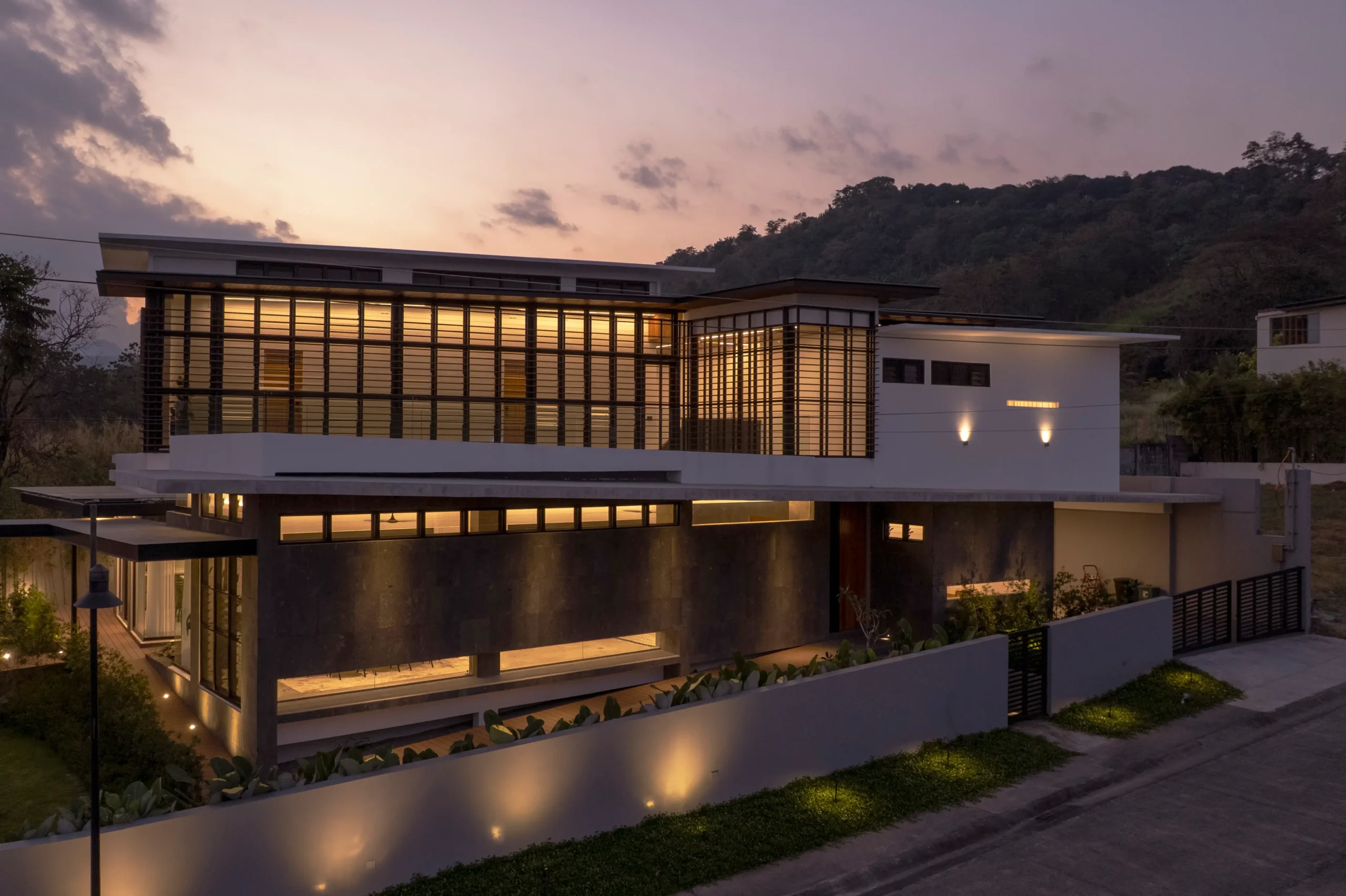
Filipino architectureArchitectureThe art and science of designing and constructing buildings, structures, and spaces that are functional, safe, and aesthetically pleasing. It encompasses the planning, design, materials, and techniques used to createGo to Architecture Glossary has long been associated with indigenous materials and vernacular design strategies, from bamboo and timber construction to jalousie windows, generous spaces, […]

A chair does not always prescribe how to sit in it. A lamp can be more than a source of light. A clock can be more than a way to tell the time.These small departures from convention are at the center of IKEA PS 2026. The latest iteration of IKEA’s experimental PS series comprises more […]
Read the issues.

Collect the volumes.

Recommended Video
Tap to Unmute
Unmute
0:00
0:00