A Filipino Interpretation of Modernist Architecture Unlike the rest of Makati today, the northern end of Paseo de Roxas in Makati is anchored by a low complex rather than a tall skyscraper. This is the elegant Asian Institute of Management, designed by architect Gabriel Formoso and completed in 1971. In my opinion, the building is […]
‘Terror Incognita’ Shows How Generative AI Works Against Culture Creation



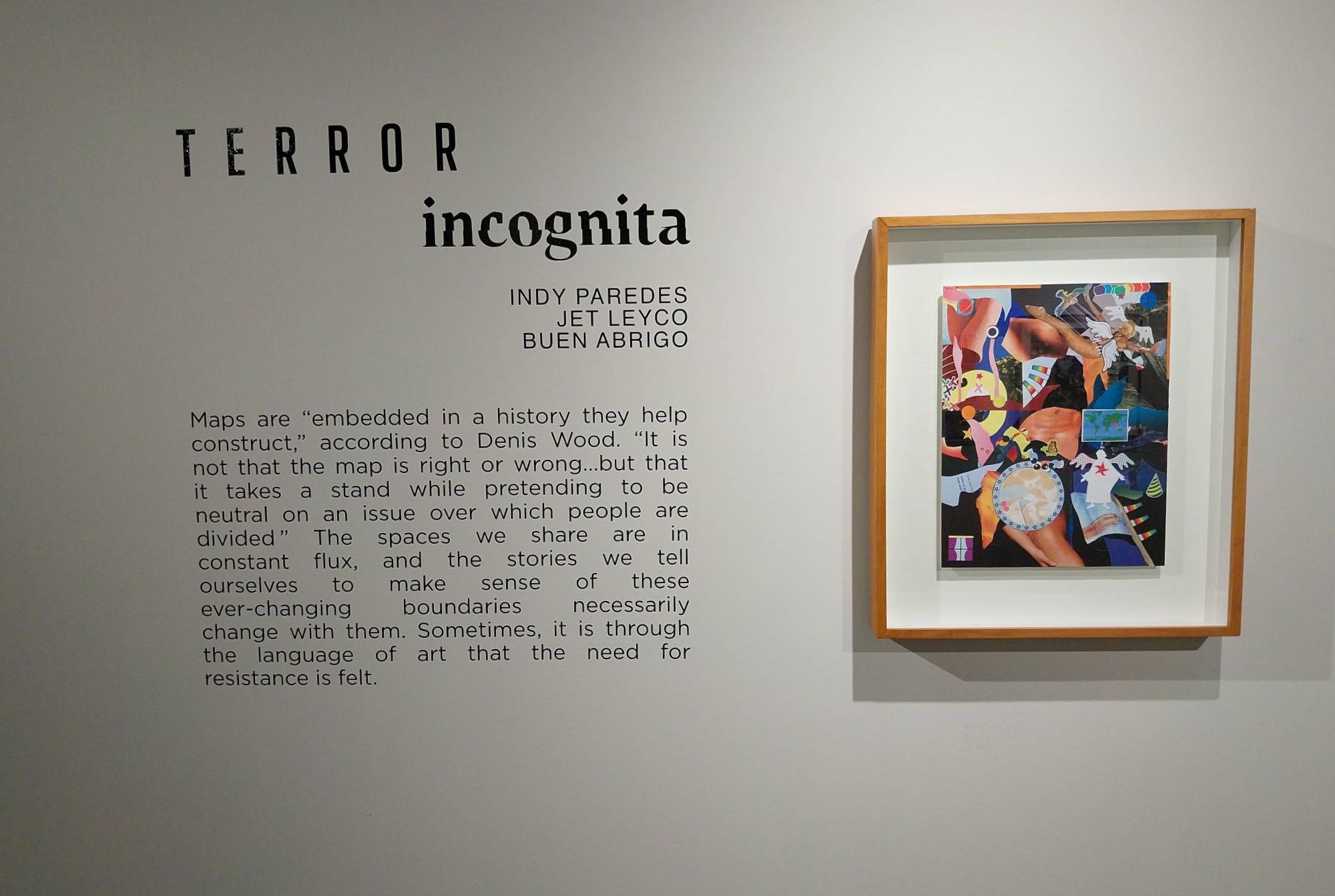
Terror Incognita is the collaborative exhibit of artists Indy Paredes, Jet Leyco, and Buen Abrigo. Shown at Cartellino Art in Shangri-La Plaza, the exhibit commentates on the current crop of generative AI art tools and shows the limits inherent with the technology.
Generative AI as an art tool has received criticism for its derivativeness and accusations of plagiarism for stealing artists’ works. This reached such a boiling point that some creators founded a social media site founded on anti-AI principles.
For this exhibit, the three artists focus on the technology’s lack of originality, comparing their output to maps in what it tells and what it excludes. Their idea is that what’s charted and uncharted tells a lot about the society, and that AI’s biases keep the uncharted from being found.
“The spaces we share are in constant flux, and the stories we tell ourselves to make sense of these ever-changing boundaries necessarily change with them. Sometimes, it is through the language of art that the need for resistance is felt,” Ian Carlo Jaucian said in the exhibit write-up.
Distortion and Abstraction in Generative AI
Two of the three artists, Abrigo and Leyco, use artificial intelligence to make statements about the machine’s ability to create meaning from their ideas. Both of them generated works through AI and modified the works to focus on what they wanted to say.
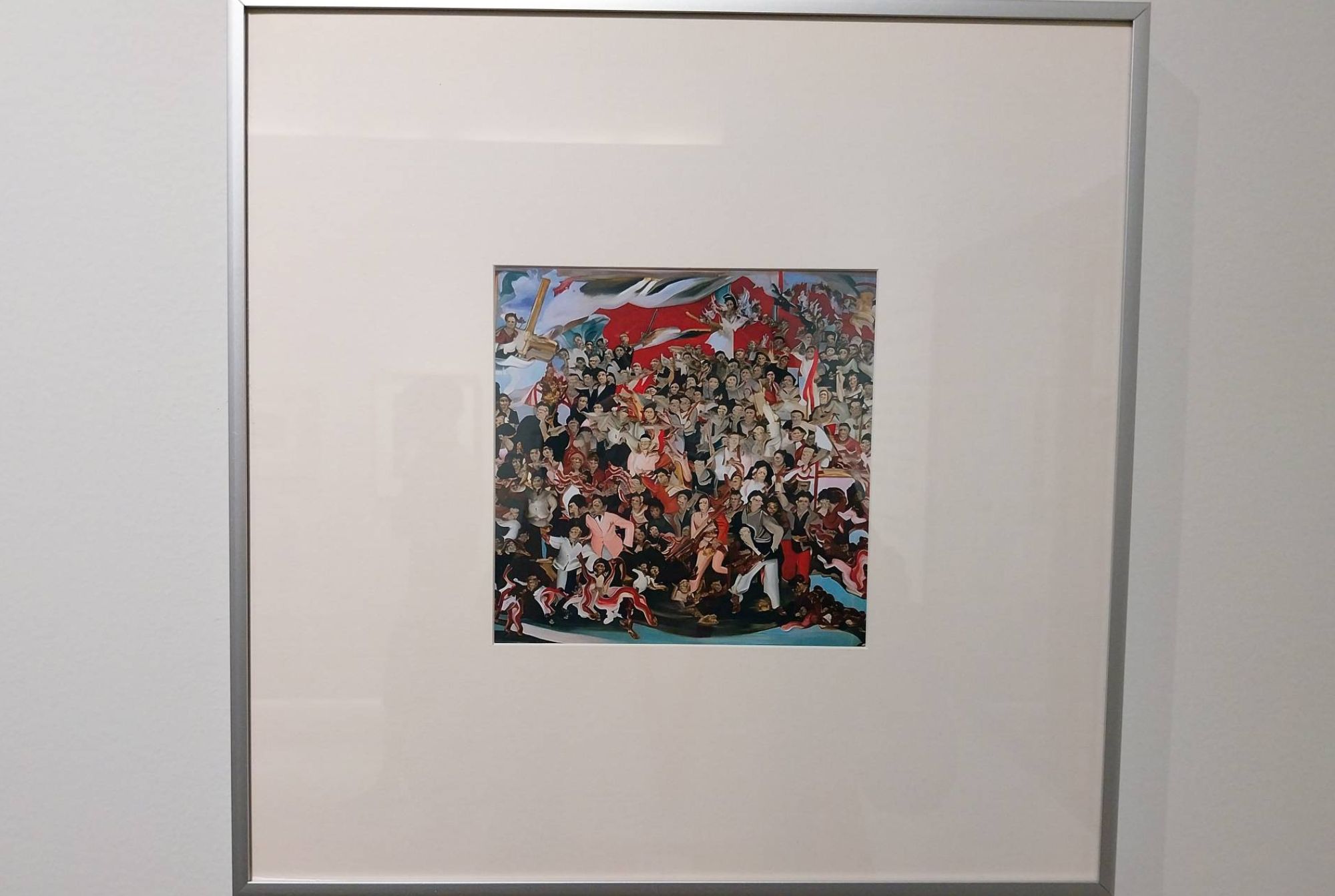
Abrigo’s works for Terror Incognita center on the devolution of information. He provides the hypothesis that since AI contains troves of information from multiple sources, this gives it the ability to find a “universal zeitgeist” that averages out the human experience. But his output—and generative AI’s as a whole—does not reflect that.
Can AI Art Dream of Electric Intentionality?
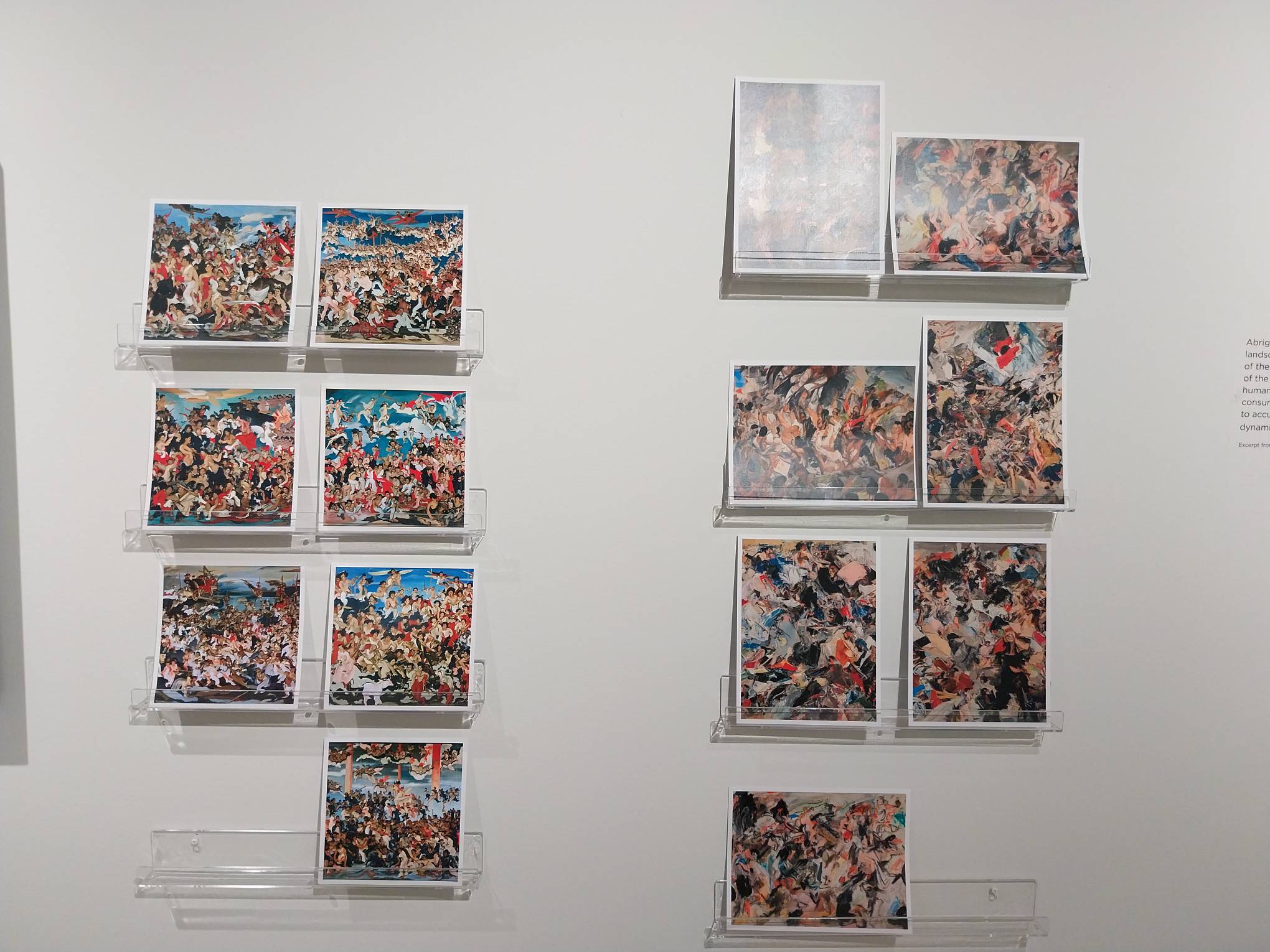
Printed on paper boards, his work really indicates the lack of meaning that AI brings to the table. Works like “Oligarchs Colonizing the Heavens” or “Fantom Whimsical Realism” scan generally towards a point or an idea—a Renaissance-style church painting or people in revolution—but the images never coalesce to a whole.
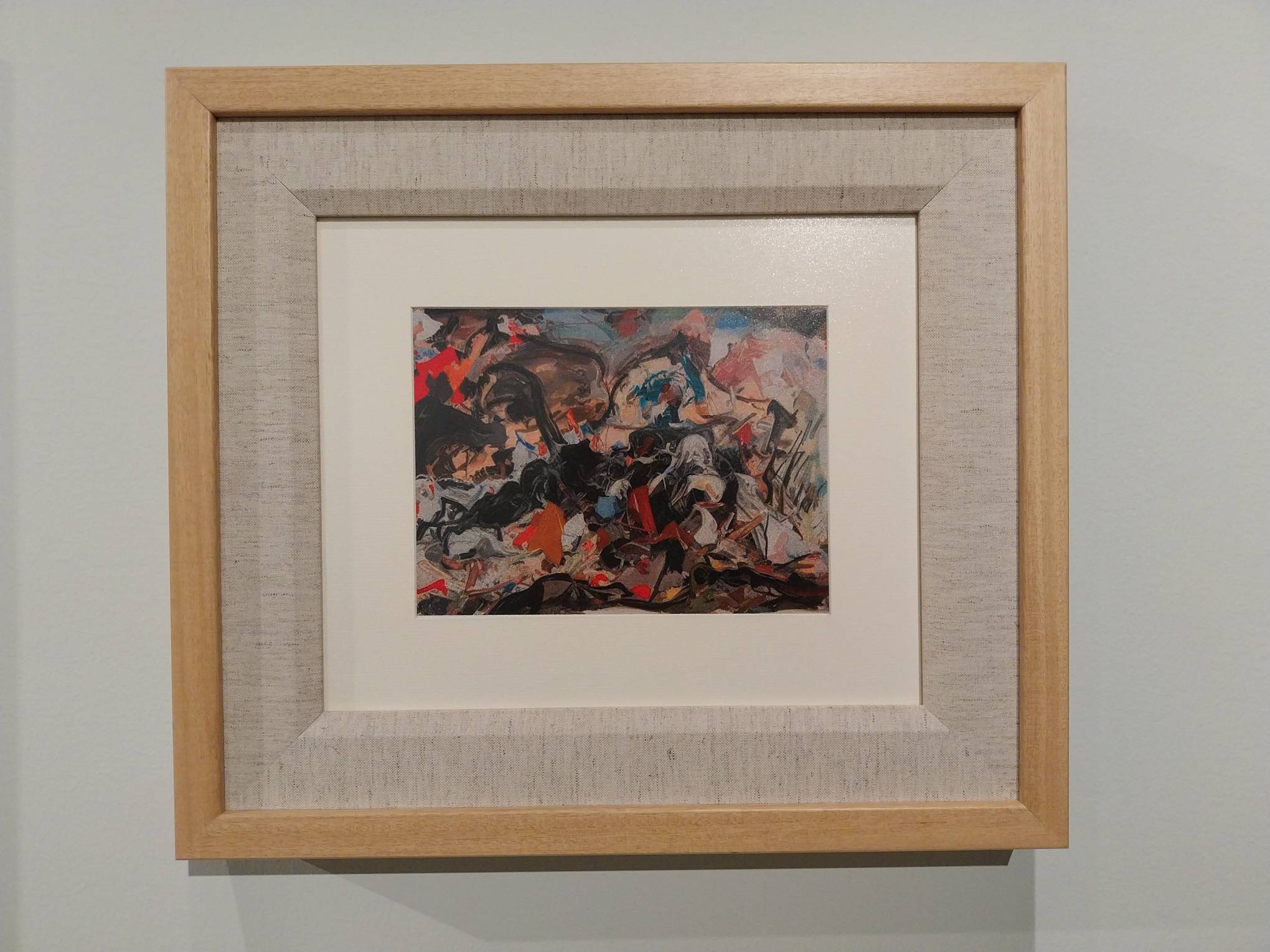
More than that, the pictures are distorted, and the people depicted look very far from human. It’s interesting to see Abrigo attempt to work with that distortion in “Virtual Visual Catharsis I and II.” They lean towards the abstraction of shapes and ideas, and it works with the distortion rather than against it.
Altogether, Abrigo sees that lack of intent and meaning generated from the machines as a failure of generative AI.
“Buen Abrigo’s use of AI-generated images cut deepest along these lines, for as alluring as the resulting images are, they are not just amalgamations of human instructions. They are abstractions of the landscape of representation itself, a self-reflection of the virtual space we co-inhabit,” the exhibit write-up said.
Subjectivity as Style
Leyco’s contribution traverses the same ideas as Abrigo’s. However, he finds itself intuiting a different conclusion entirely than AI’s lack of intentionality. His collages force viewers to create their own meanings out of the subjective images.
The artist contributes two kinds of artworks for Terror Incognita: video and static collages. Leyco creates an overflow of color and character in both types, inviting viewers to find coherence in the chaos.
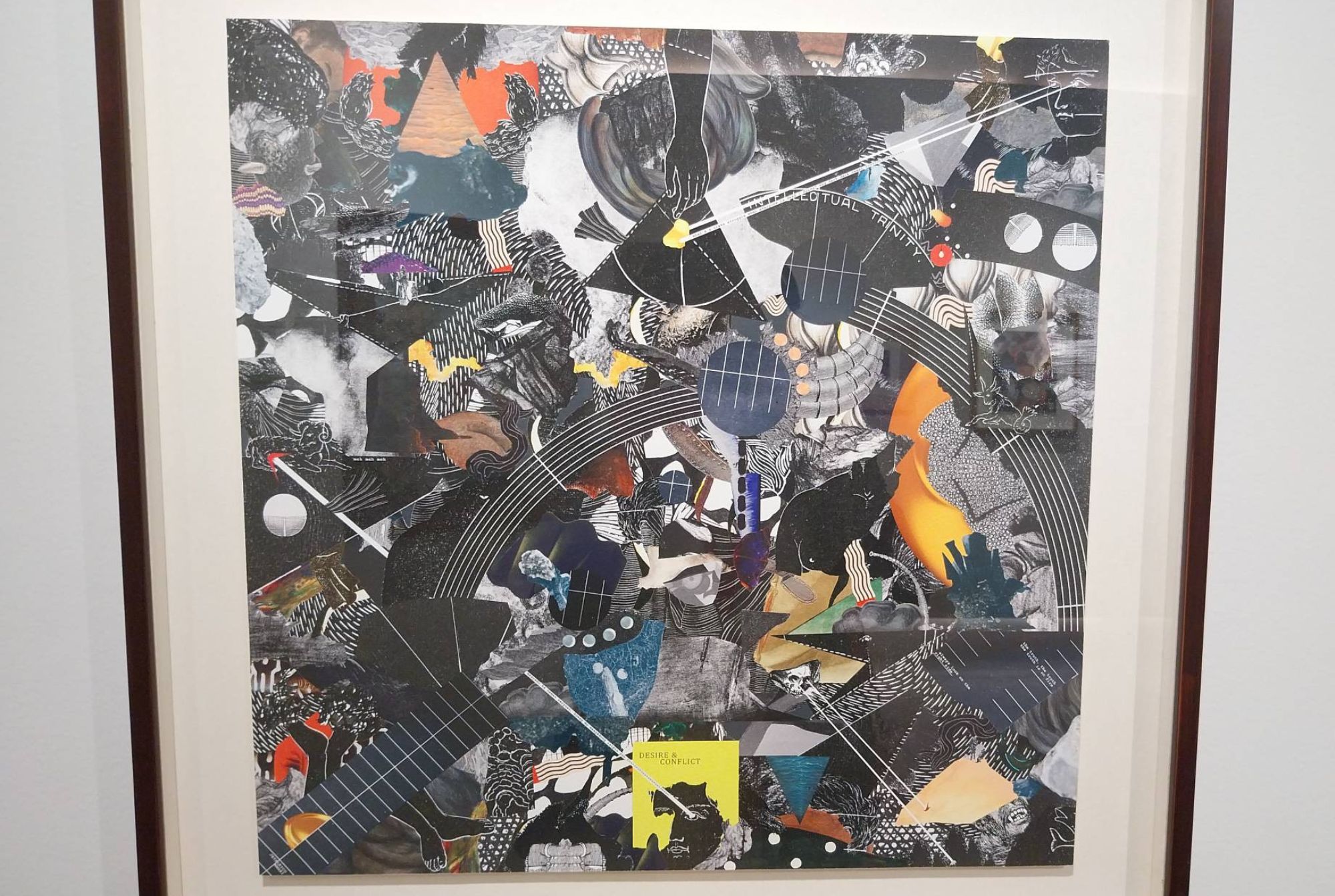
“Mutual Assured Deconstruction” and “Drop Desire, Pursuit Divinity,” for example, pushes together a seemingly-random tangle of images together: body parts, chrome wheel spokes, an eagle, and so on. It also uses a color scheme and background reminiscent of old virtual reality movies like The Lawnmower Man. It harkens back to how we previously viewed artificial intelligence before generative AI and large-language models dominated the conversation.
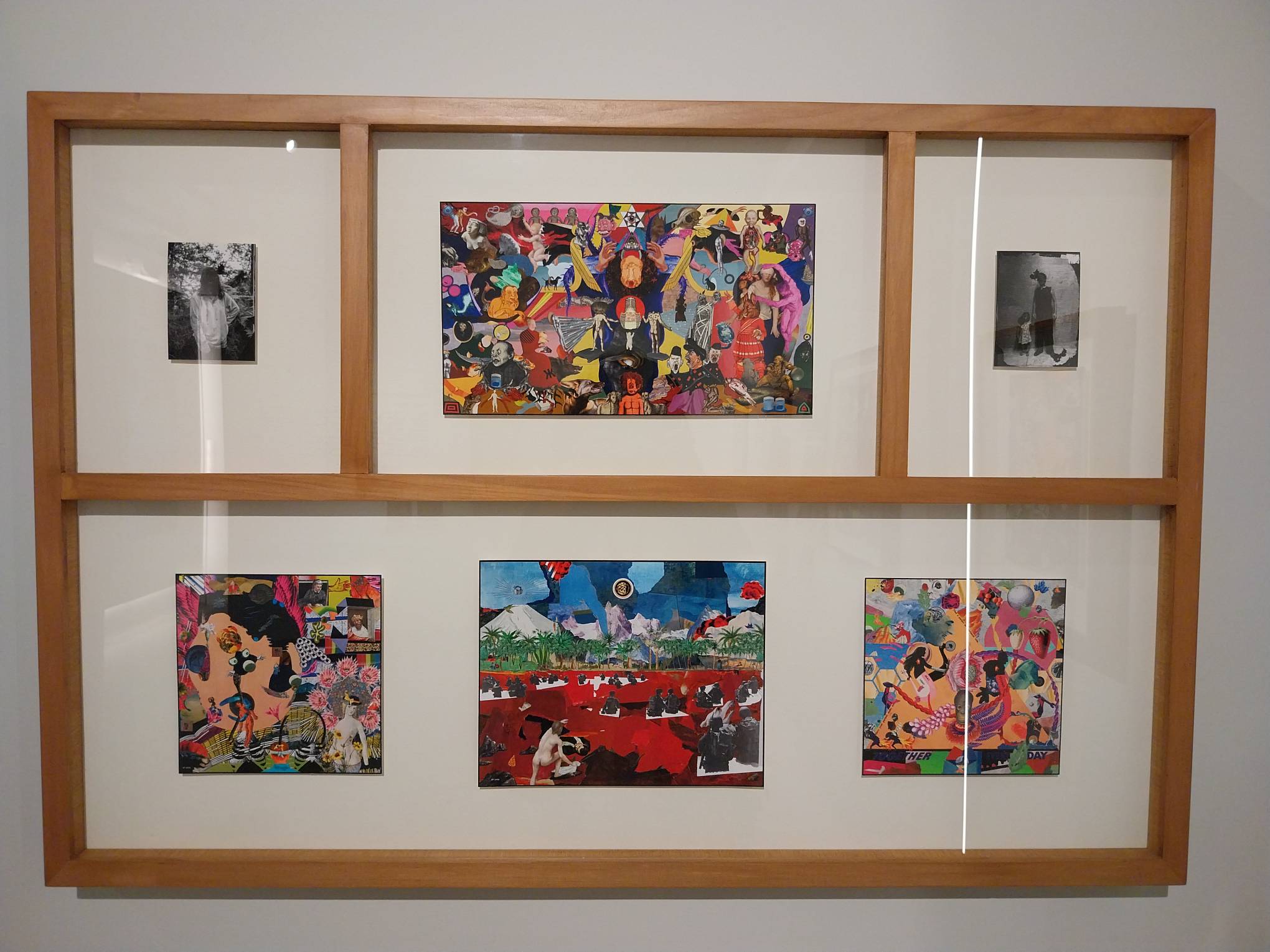
What does it mean when you put these images together? The artist wants you to interpret your own feelings. It pushes discomfort for the viewers as the works refuse easy meaning, forcing viewers to dig further to find profundity in it.
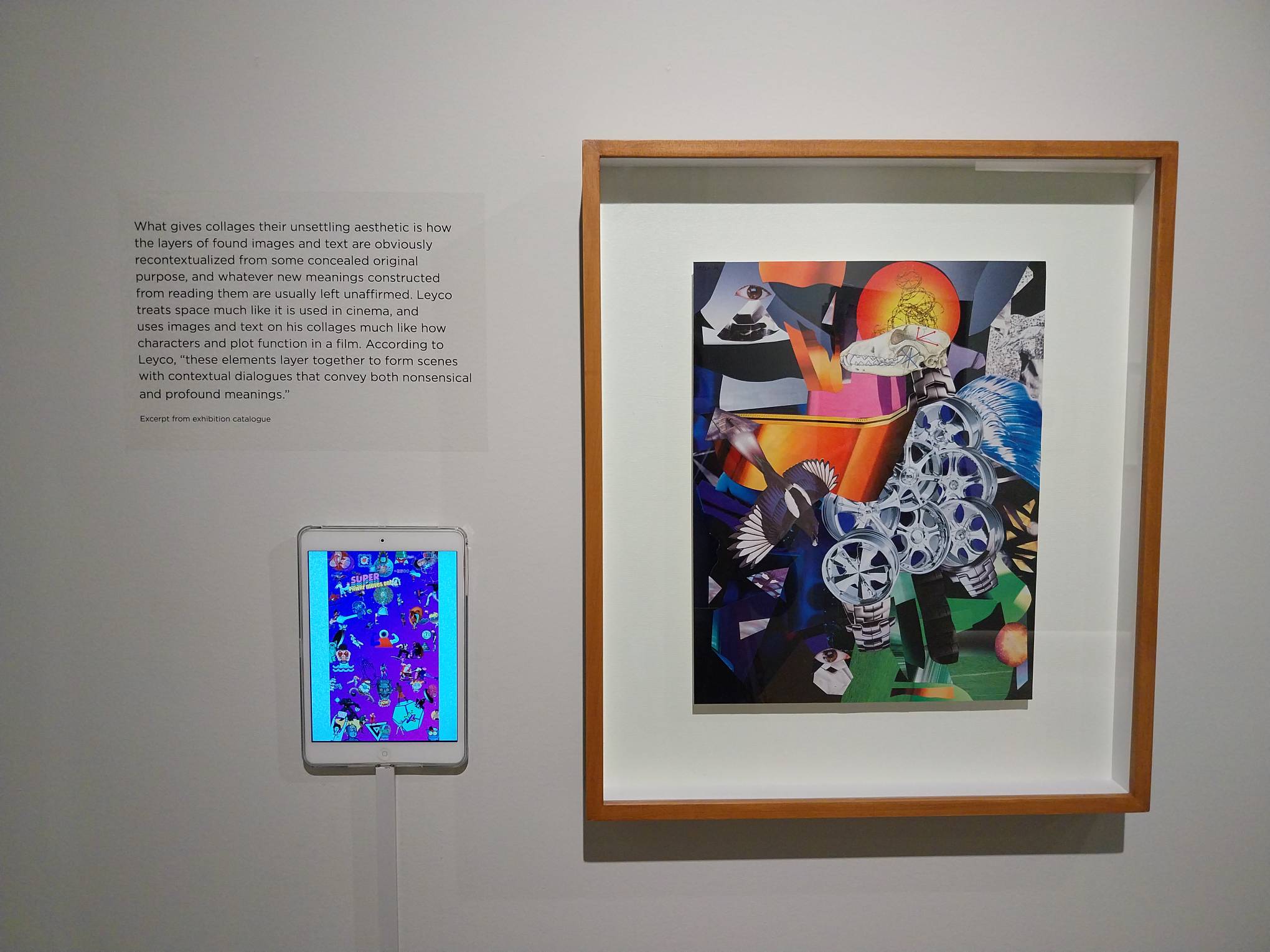
“Leyco’s static and moving collages tend to force the viewer to assign very personal constructed meanings in an effort to understand what may be conveyed,” the exhibit write-up said.
“What gives collages their unsettling aesthetic is how the layers of found images and text are obviously recontextualized from some concealed original purpose, and whatever new meanings constructed from reading them are usually left unaffirmed.”
Importance of Constructing Our Own Visions of Spaces
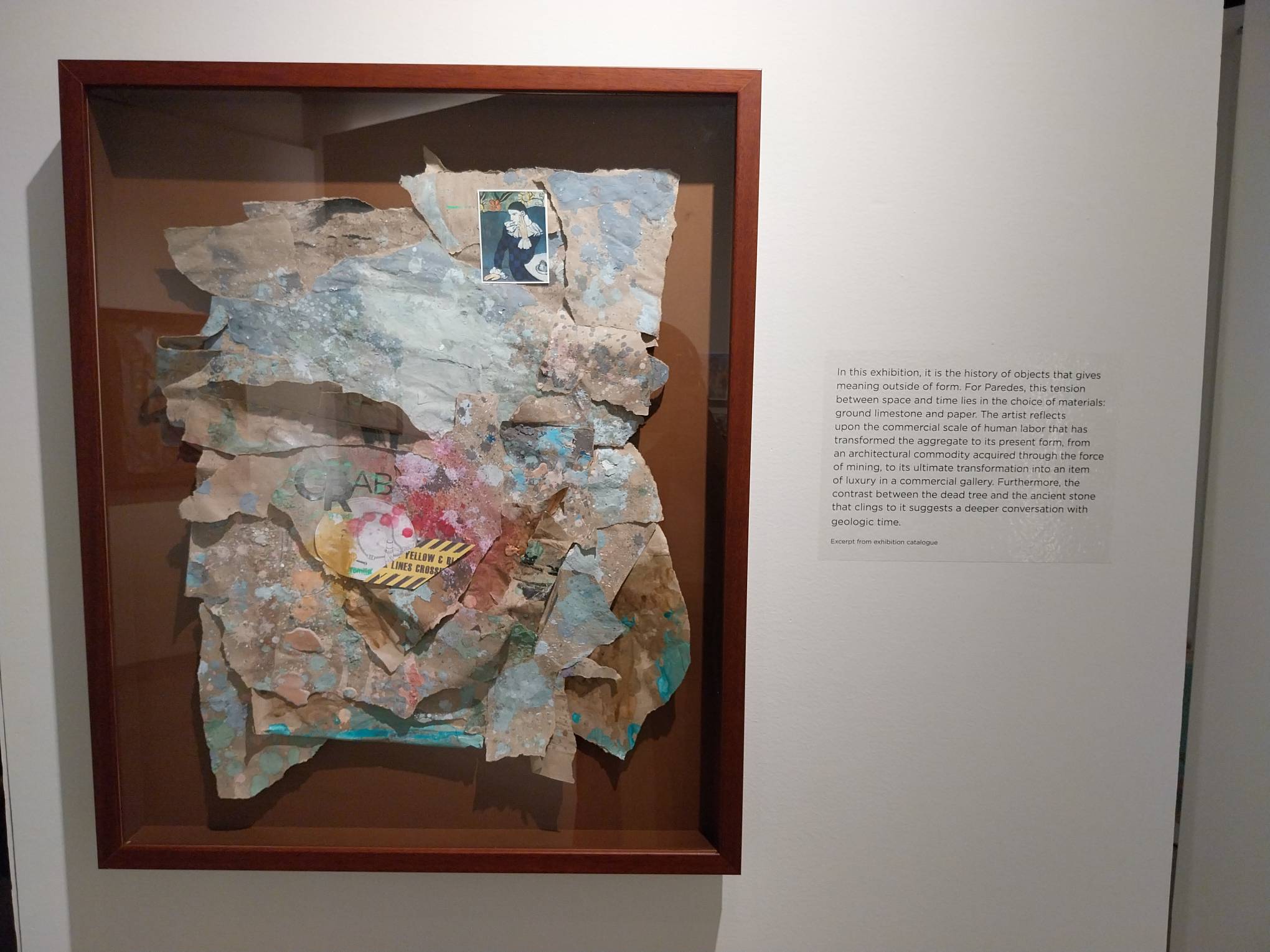
Of the three, Parades’ contribution appears to be the only one that doesn’t use generative AI. He creates a collage of images through ground limestone and paper. It commentates on the need of human labor in creation.
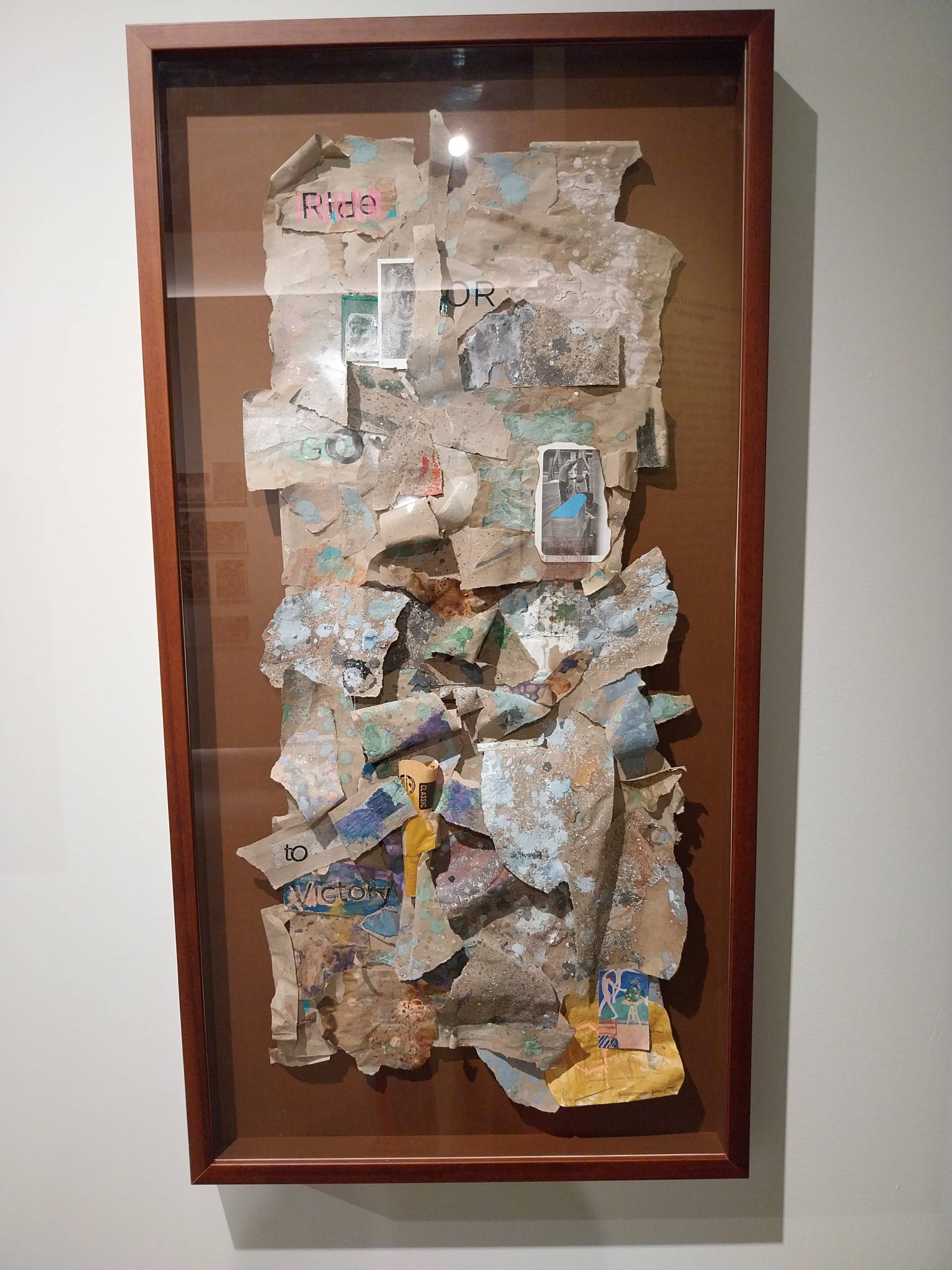
The use of limestone appears to point towards a resource that necessitates both time and human exertion to acquire. He combines it with printed works of other artists to signify art as both an endeavor of personal effort and one that washes away in the dredges of time.
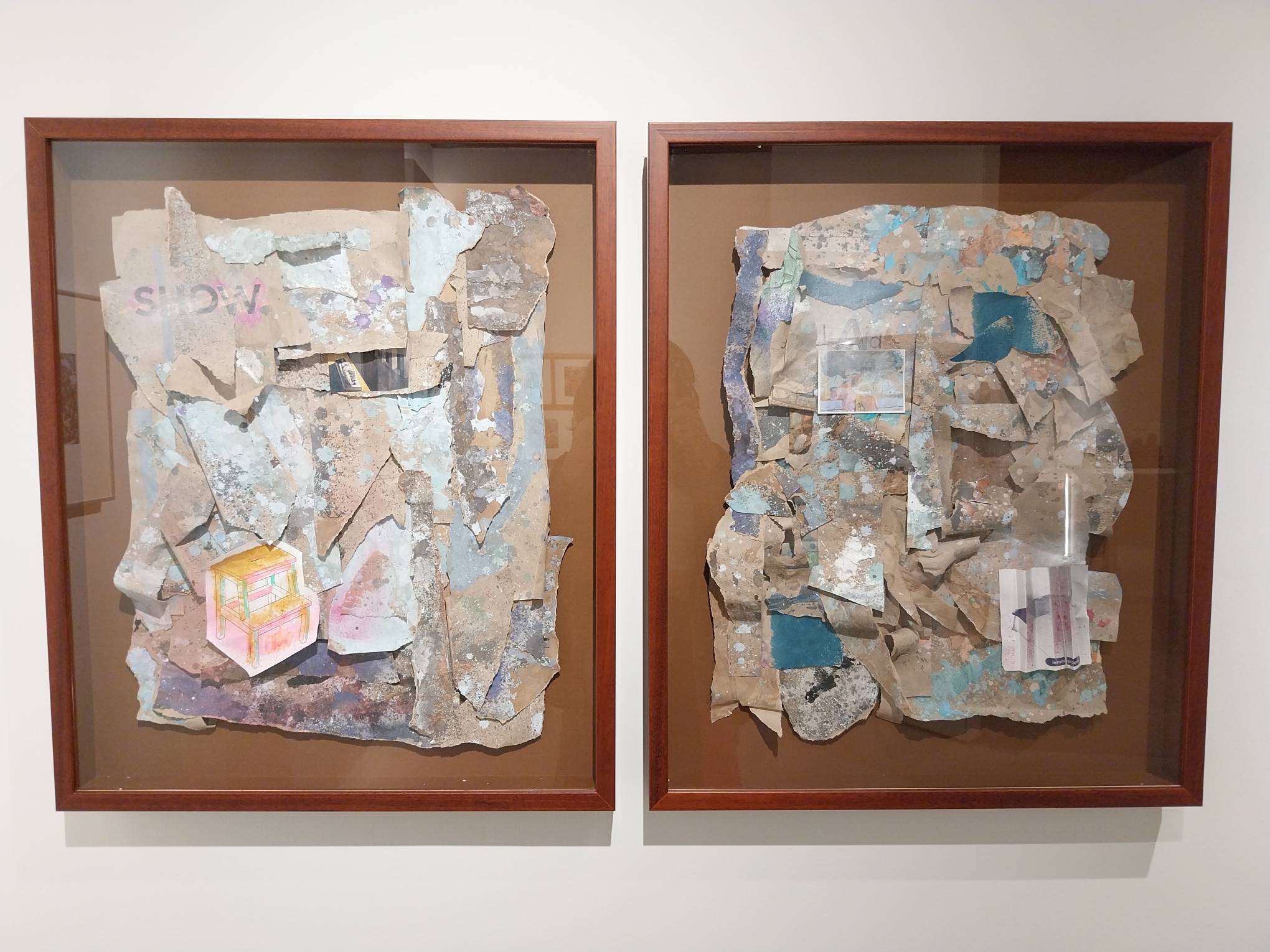
Paredes seems to fight against the idea of commercialization of art in this exhibit. It aims toward the way art transforms physical objects—commodities—into meaningful images. That tension of effort and transformation contrasts with generative AI, which appears to only regurgitate works, not create any new ones.
Terror Incognita, as a whole, makes a case of generative AI as artistic stagnation. With none of its own original ideas and its inability to create with intent, all people are left with are incoherent works where we have to find our own meaning in these abstract works. The artists stake their claim: AI does not move culture forward, and AI can’t tell meaningful stories with their images.
Related reading: New Goldman Sachs Report Question Profitability of Generative AI
“Thailand has claimed urban creativity and livability. Singapore has institutional design leadership. Indonesia is emerging as a design hub. Vietnam is moving into design innovation. And the Philippines? Its position is not weak. It is simply unclaimed.” For IDr. Cecil Ravelas, National President of the Philippine Institute of Interior Designers (PIID), the challenge is not […]
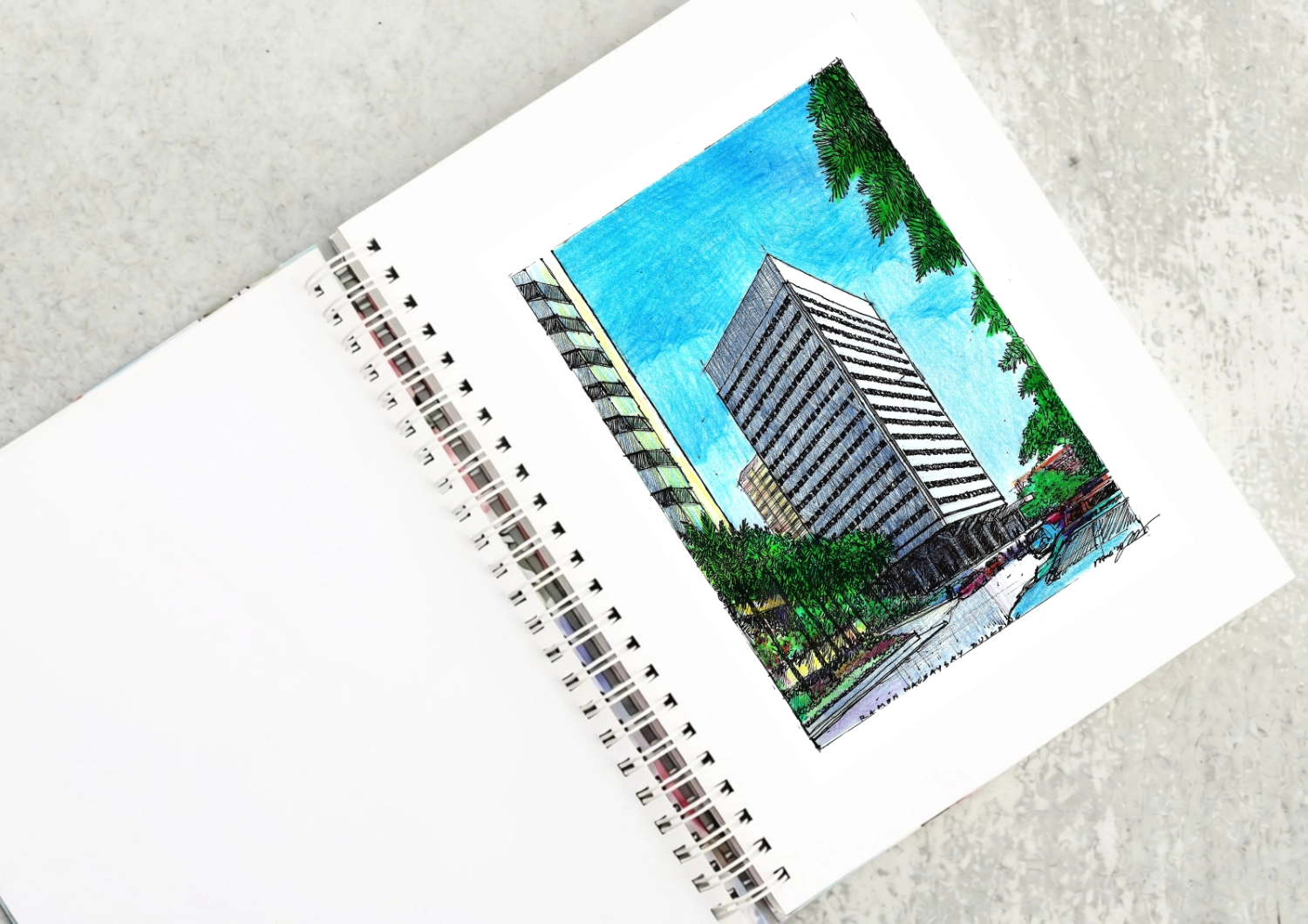
The Ramon Magsaysay Center as a Modernist Landmark Driving down Roxas boulevard from Rizal Park, what will catch your eye is the most elegant modernist structure in the country, the Ramon Magsaysay Center. Most established Filipino architects put it in their top ten lists of favorite buildings. It was designed by Alfredo J. Luz, who […]

Rinna Soriano’s favorite part of her work is sanding. At her workbench, she stays focused, following the grain, adjusting to changes in its direction. Narra, she has learned, can have interlocking grain. A piece of mango once proved particularly difficult until a worker explained that she had reached the point where a branch once grew […]

Filipino architectureArchitectureThe art and science of designing and constructing buildings, structures, and spaces that are functional, safe, and aesthetically pleasing. It encompasses the planning, design, materials, and techniques used to createGo to Architecture Glossary has long been associated with indigenous materials and vernacular design strategies, from bamboo and timber construction to jalousie windows, generous spaces, […]

A chair does not always prescribe how to sit in it. A lamp can be more than a source of light. A clock can be more than a way to tell the time.These small departures from convention are at the center of IKEA PS 2026. The latest iteration of IKEA’s experimental PS series comprises more […]
Read the issues.

Collect the volumes.

Recommended Video
Tap to Unmute
Unmute
0:00
0:00