Bigkis is the act of binding. In Tagalog, the word can refer to something used to bind or encircle, as well as a bundle formed by tying several separate elements together. Figuratively, it can also mean a bond, union, or unity. The meanings move from the physical act of joining things together to the connection […]
‘Points and Endings’: Keka Enriquez Paints Domesticity to Vivid Life



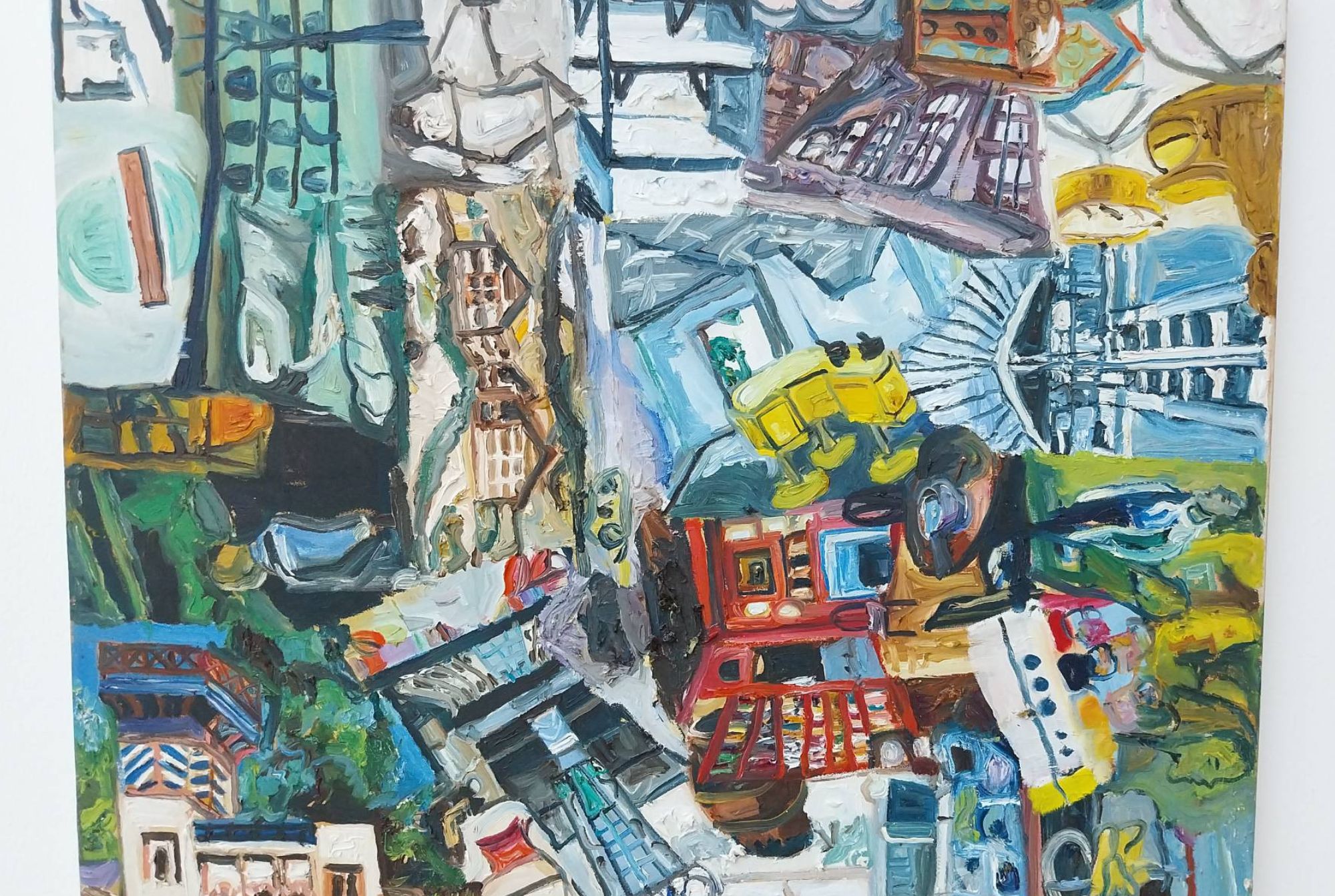
Points and Endings, shown at Silverlens Manila, portrays the hecticness of the household of Keka Enriquez. She finds a way to represent the lived-in energy of the house, contrasting against more polished portrayals of one’s home as seen in the media. It’s unruly and active and alive, finding a rhythm that suggests comfort in one’s surroundings.
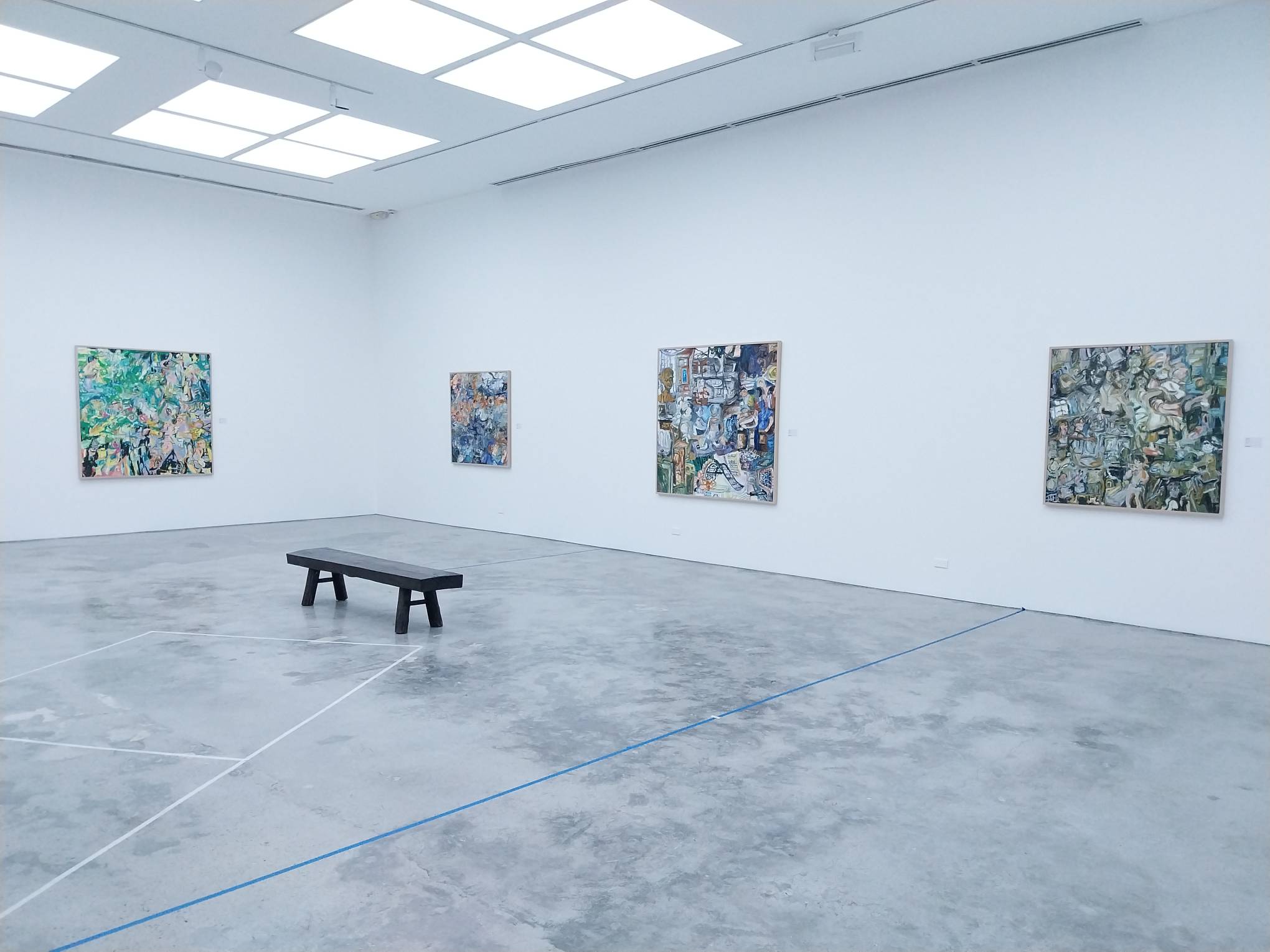
This is Enriquez’s first exhibit in the Philippines since 2008, and it shows paintings from different eras of her life from the 1980s in Manila to the present day in her residence in San Francisco. In all of them, her expressionistic style prevails as she explores the depiction of the household in the most interesting and abstract ways.
“Domestic interiors rendered in dynamic brushwork, bold colors, and innovative form wherein she explores the house as both a familiar place and an aspirational ideal will be exhibited alongside newly-made works of dense abstract scenes that, upon closer inspection, reveal figurative silhouettes–a man’s face, a child, a dog–among interiors and exteriors alike,” the exhibit write-up said.
Distorting Our Perceived Environment
The most interesting thing, for anyone seeing some of these works by Keka Enriquez for the first time, is how inscrutable she depicts her surroundings. If one were just skimming through her work, it would scan as a splatter-heavy work akin to Jackson Pollock.
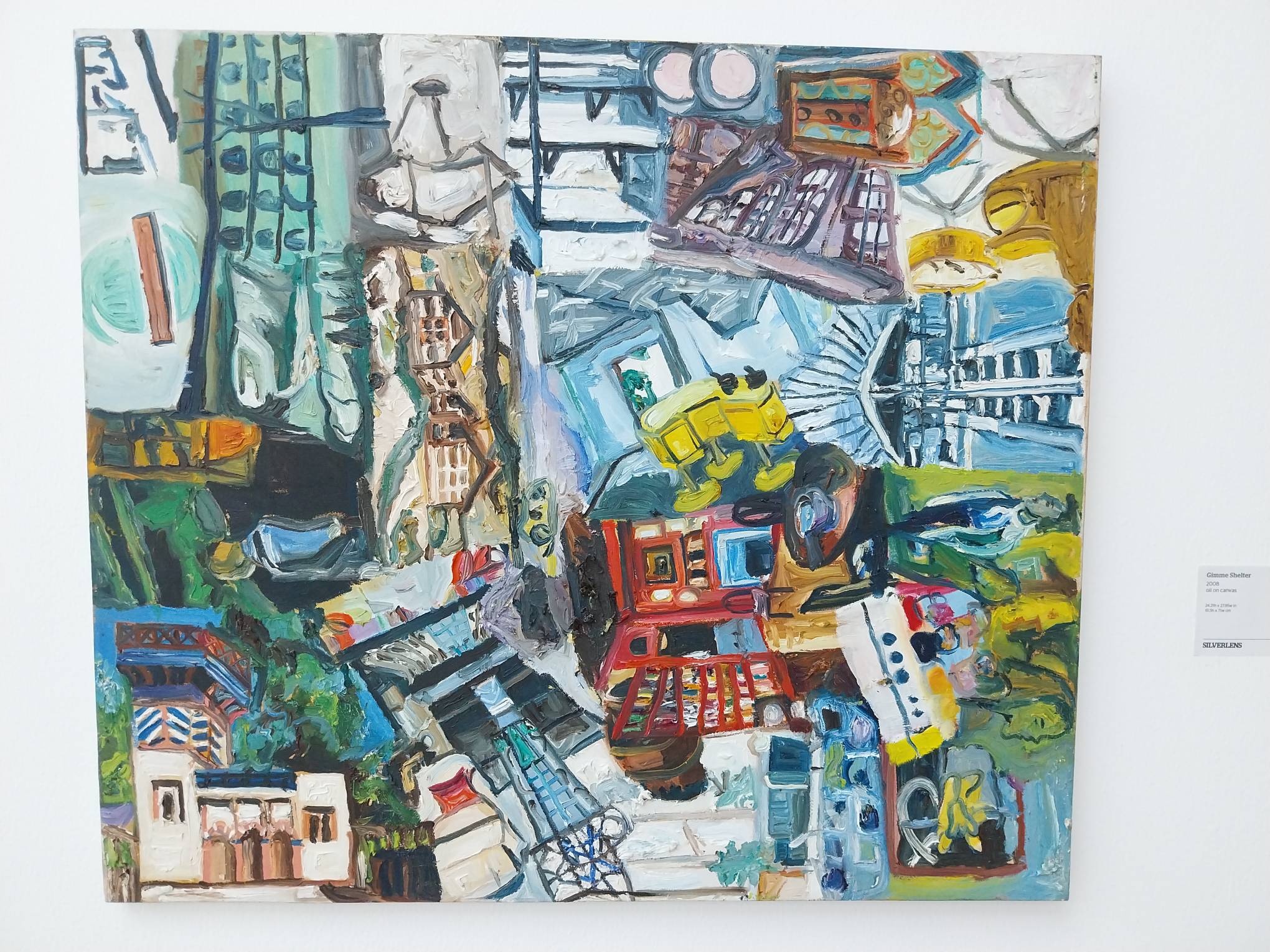
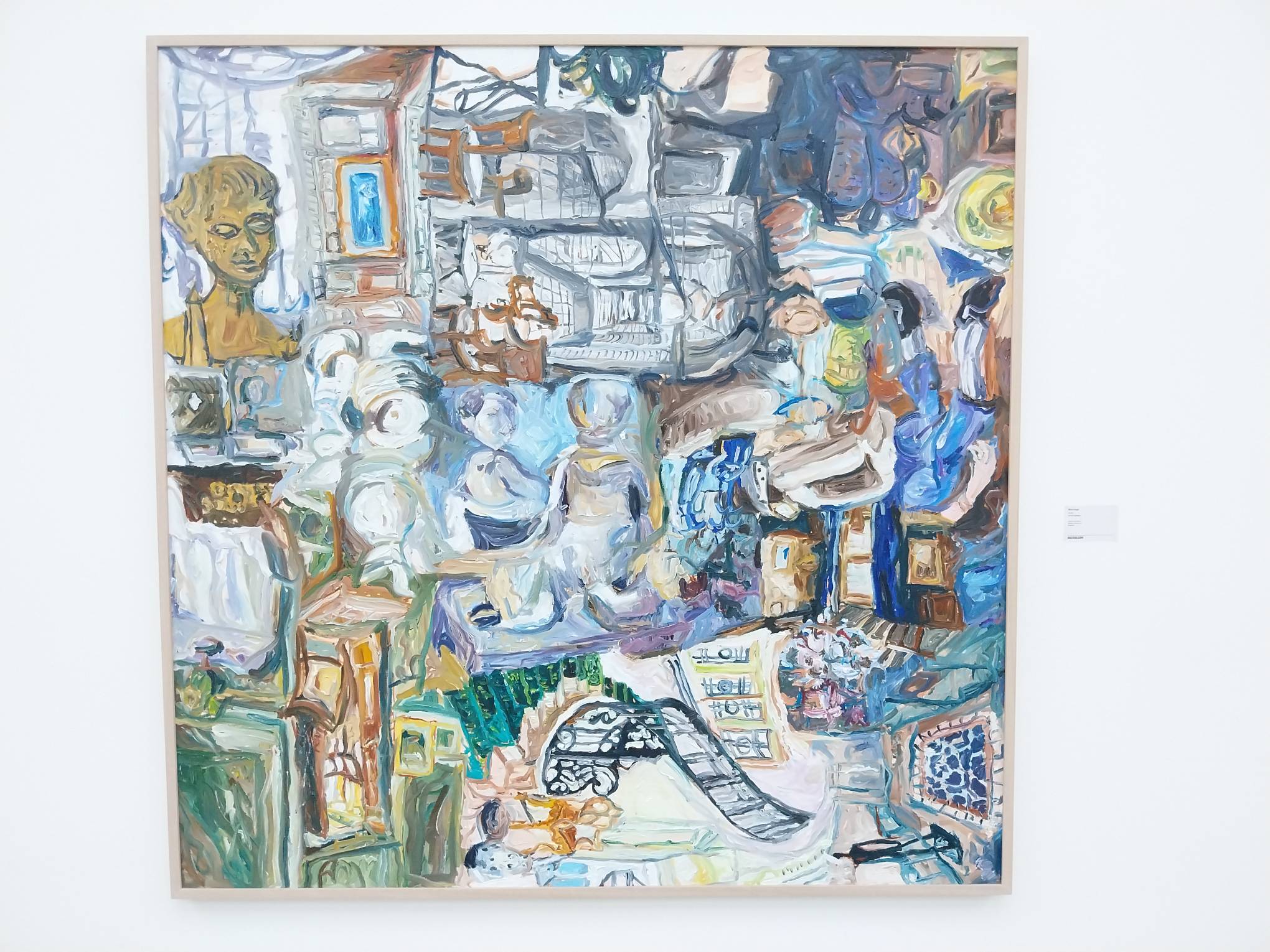
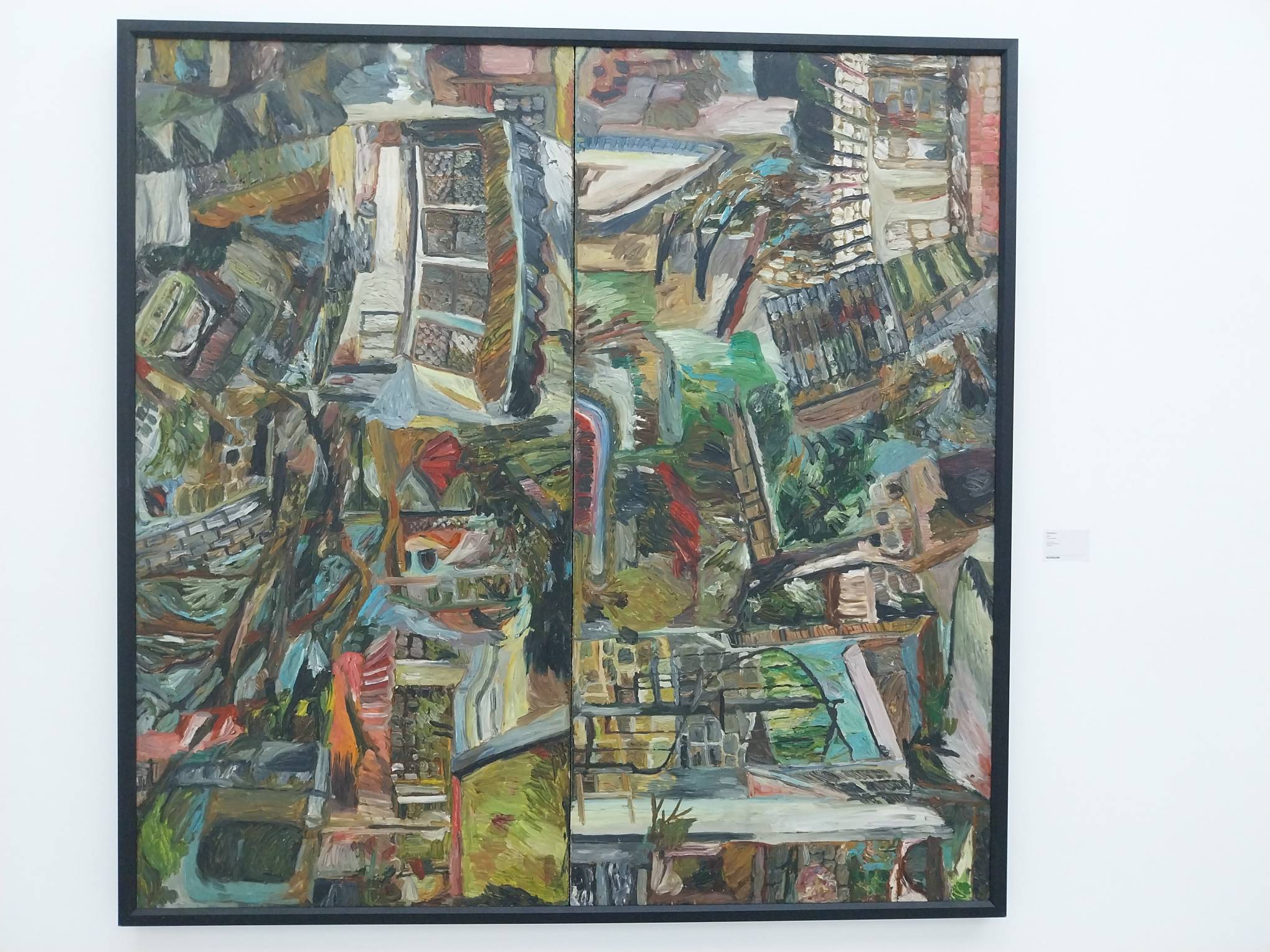
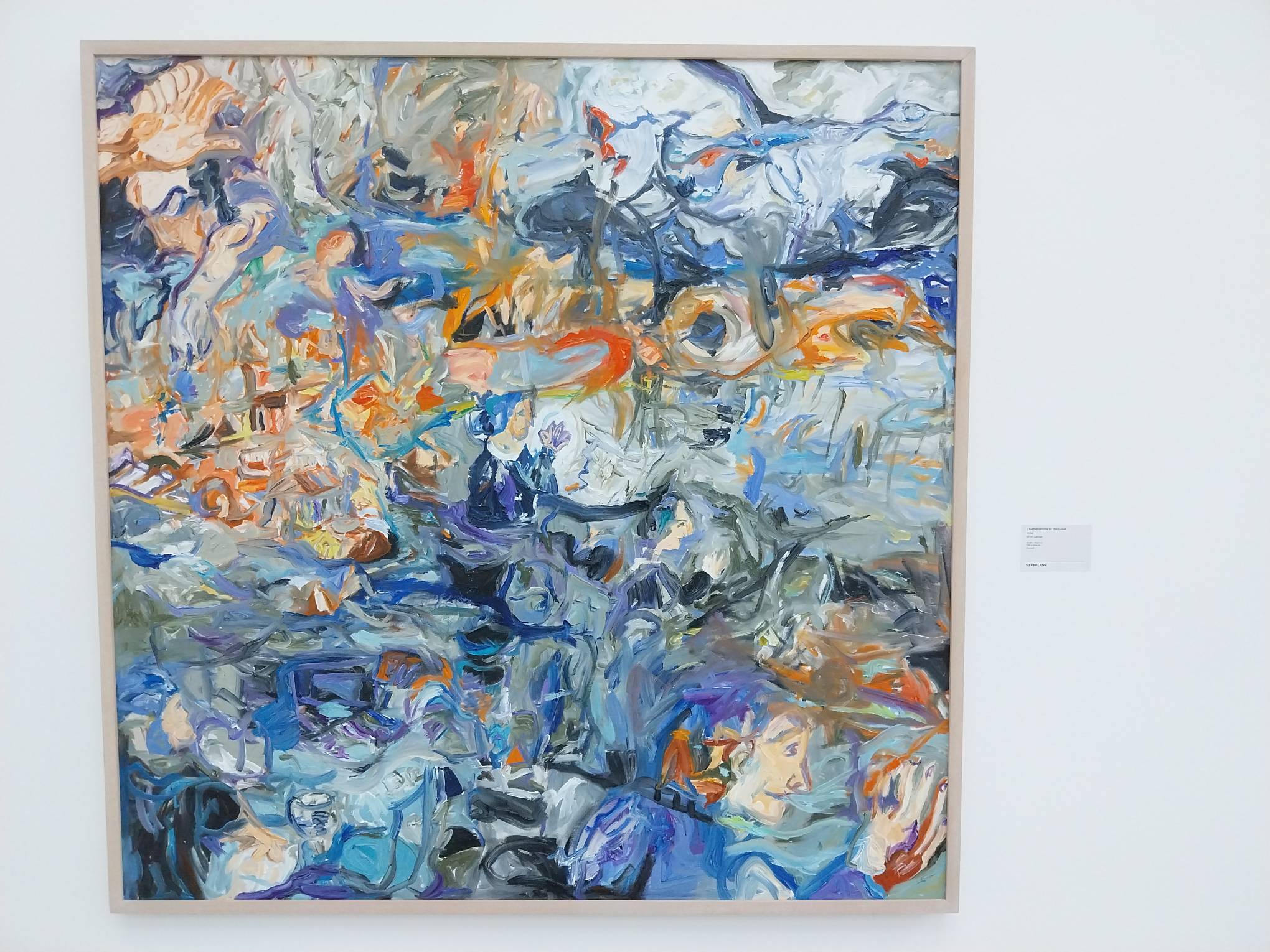
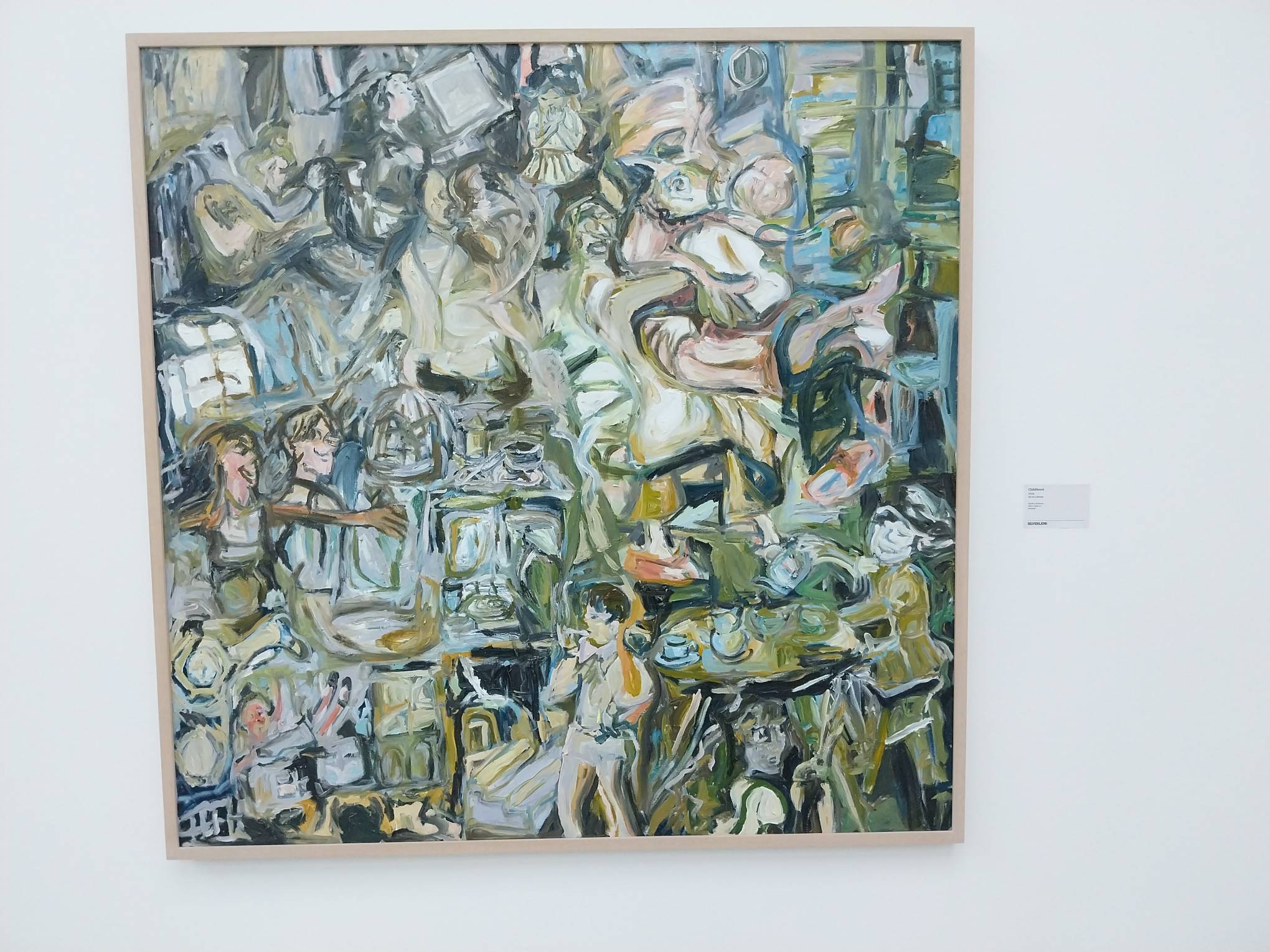
But the abrasive brushstrokes, the dense layering of different colors, and the wild, intersecting shapes function really well as a depiction of a cluttered, active household. The figures and objects fit together like puzzle pieces, hidden in plain sight as they are buried by the jungles of lines and bright colors in the exhibit.
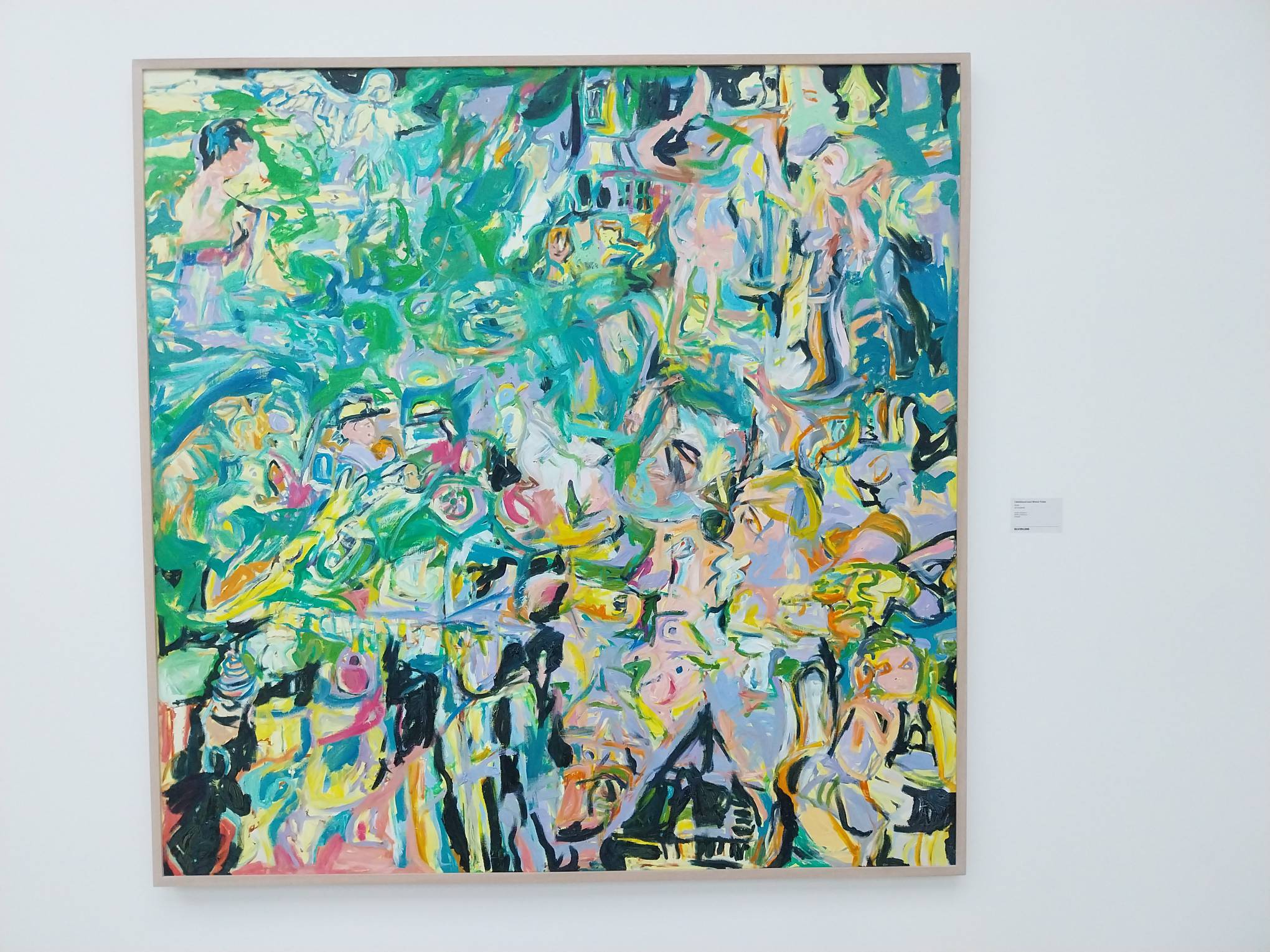
“Childhood and Weird Tales,” for example, feels like a mural-like depiction of various events happening all at once. “Gimme Shelter,” meanwhile, appears to contort buildings and trees together like a kaleidoscope. One can appreciate “Woman With Four Heads” as a strange combination of movie poster chic and neo-expressionist street art.
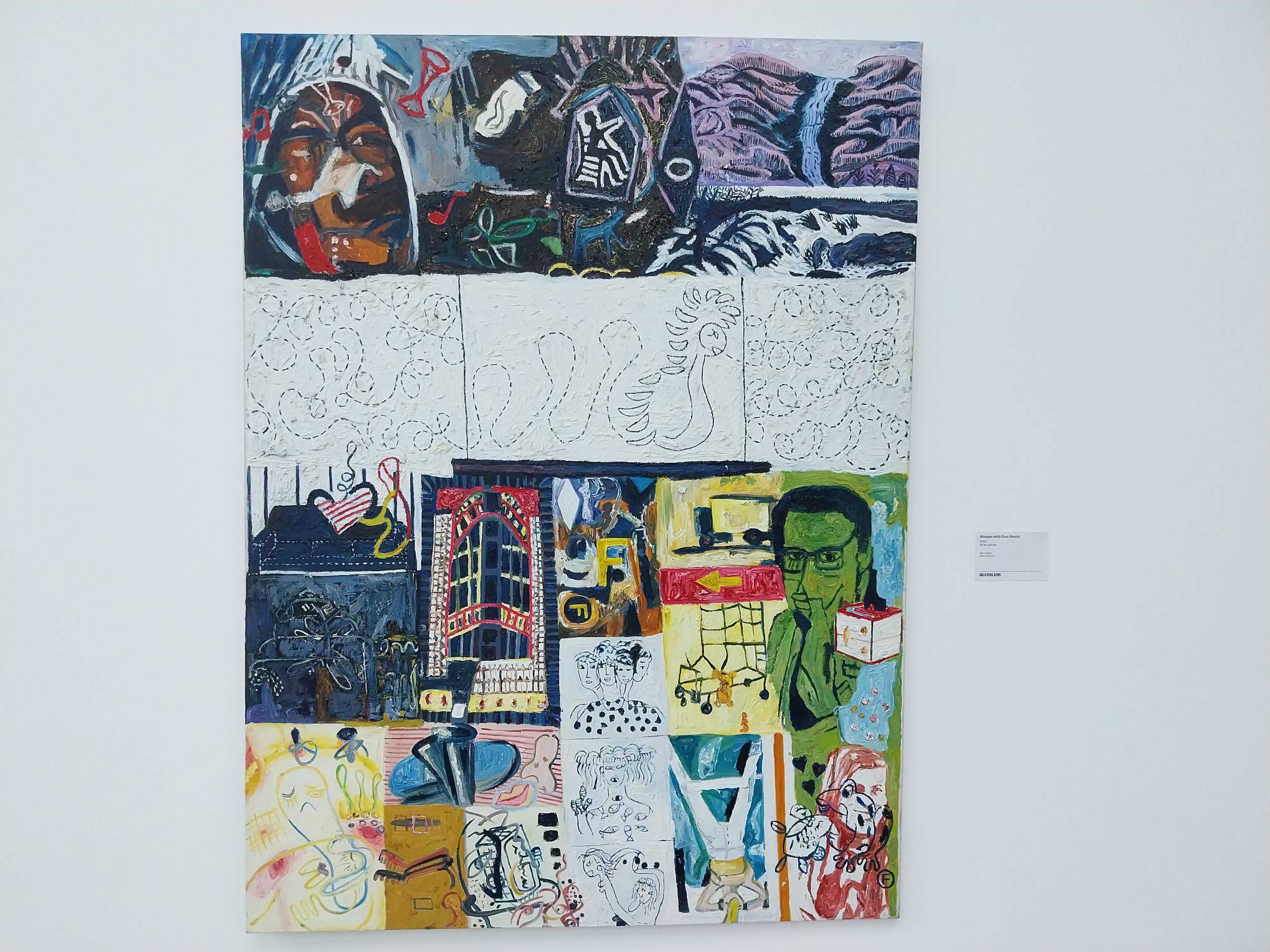
Many of these works were created as recently as 2024. As such, they feel fresh and varied, an explosion of life as time and space bend around the objects and the viewers. It renews our perspective of our environment and the way chaos can function as a balm of the familiar.
Calm Interiors, Layered Domesticity
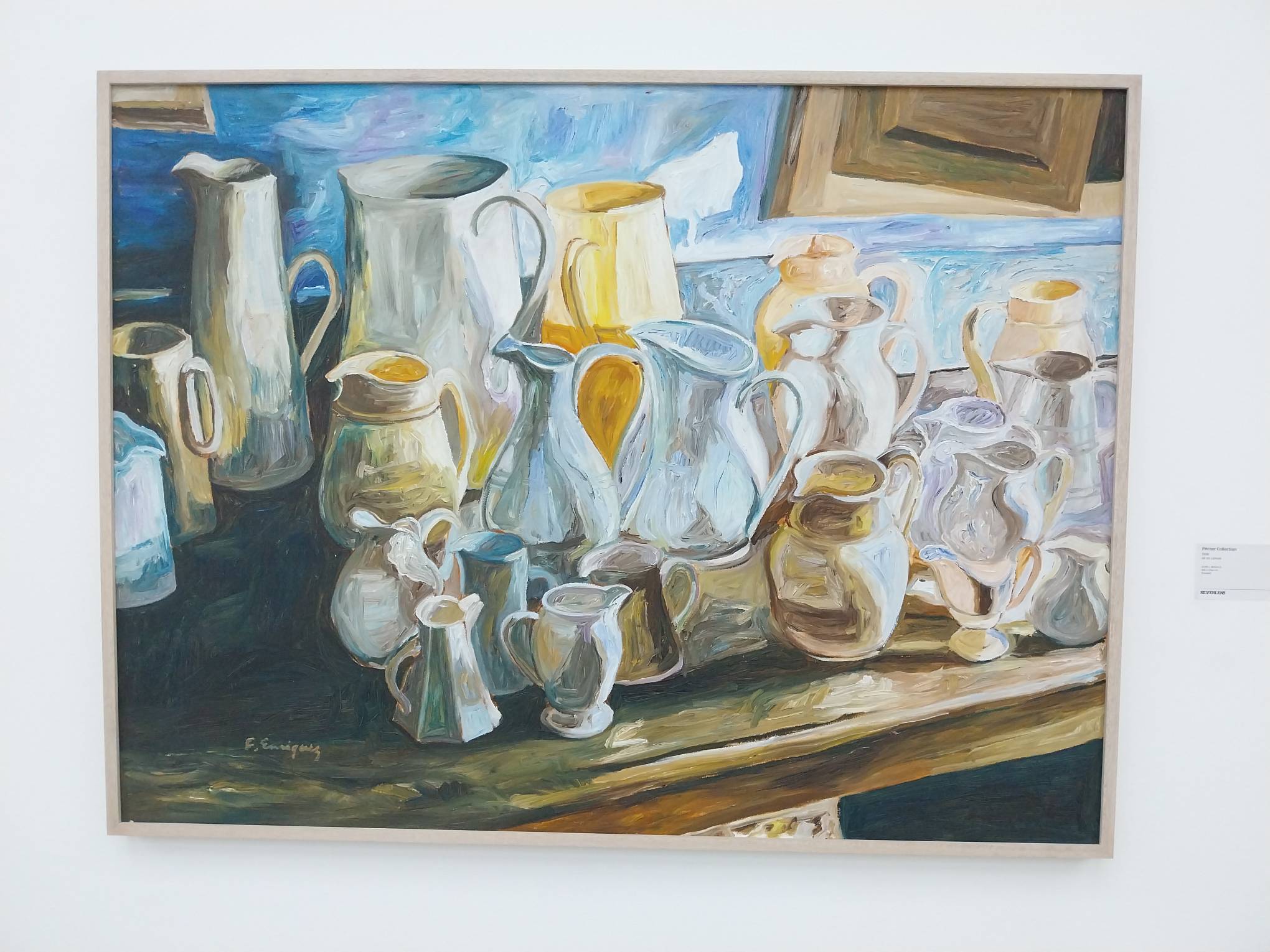
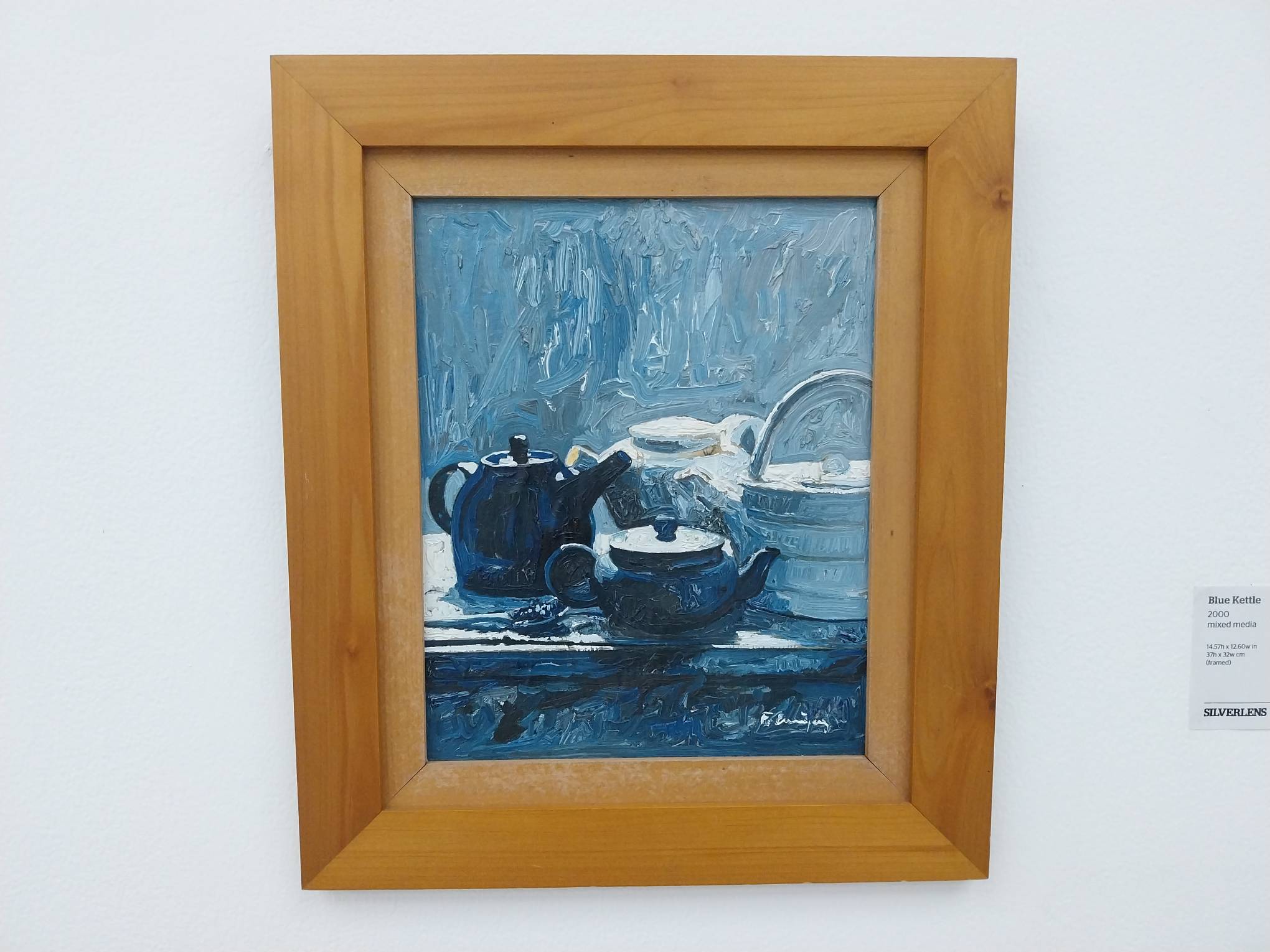
Of course, the other paintings by Keka Enriquez acquire a calmer, less spirited depiction of the clutter of domesticity than the other works. “Pitcher Collection” and “Blue Kettle,” for example, shows its household objects with clarity, well-lit and positioned to allow us to take in all of the details of the work.
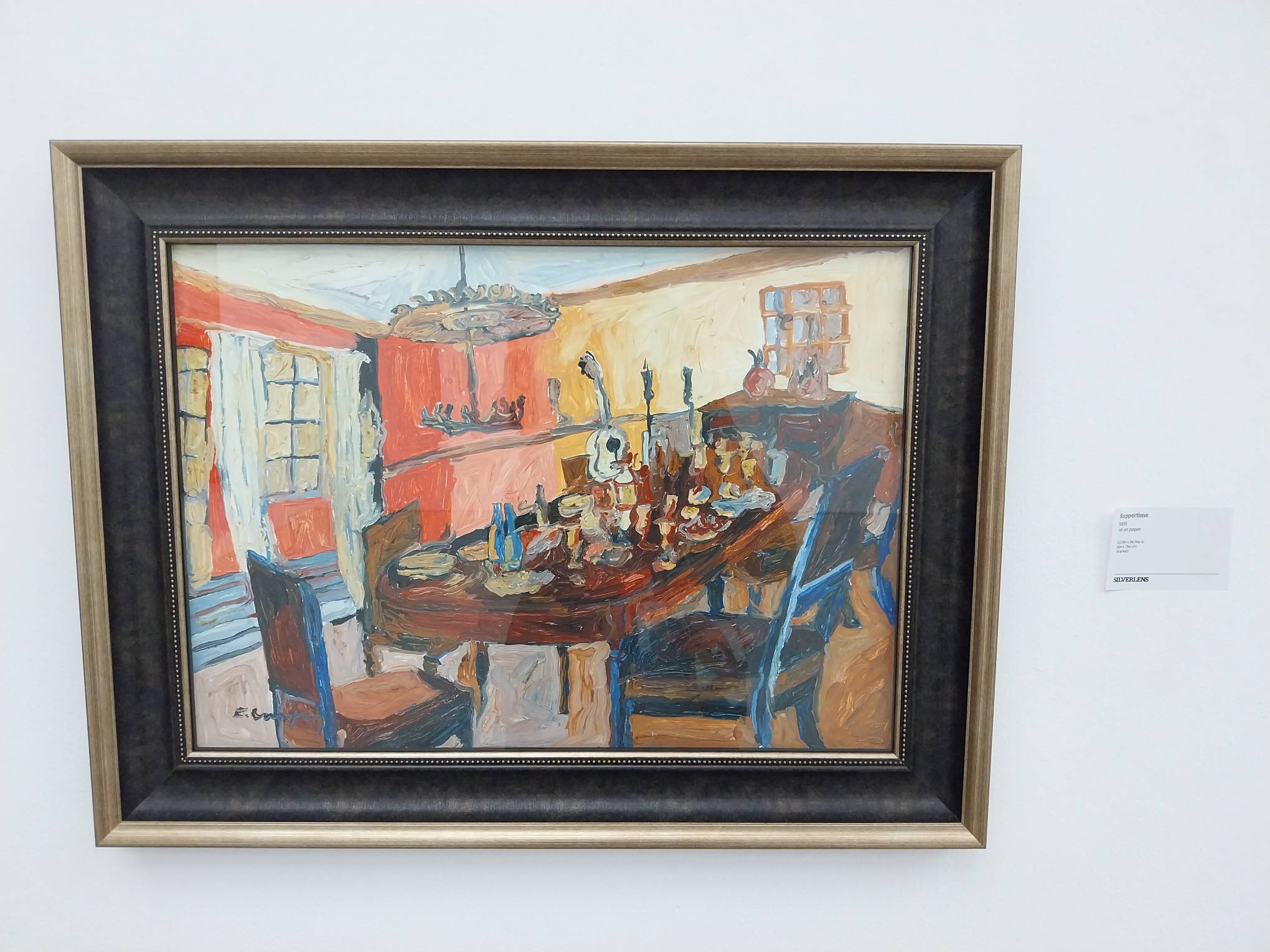
Others, like “Suppertime” or “Birdcage in a Chair,” bring in the distortion found in the other paintings, whilst maintaining the legibility of the objects and the room being shown. These are scenes of domesticity as seen from a funhouse mirror.
“However way it is grasped and rendered, the subject comes out vividly inhabited, even if it is sometimes styled to appear in a certain way, mediated as a commodity or an aspiration from a magazine, surely meant to entice,” the exhibit write-up said.
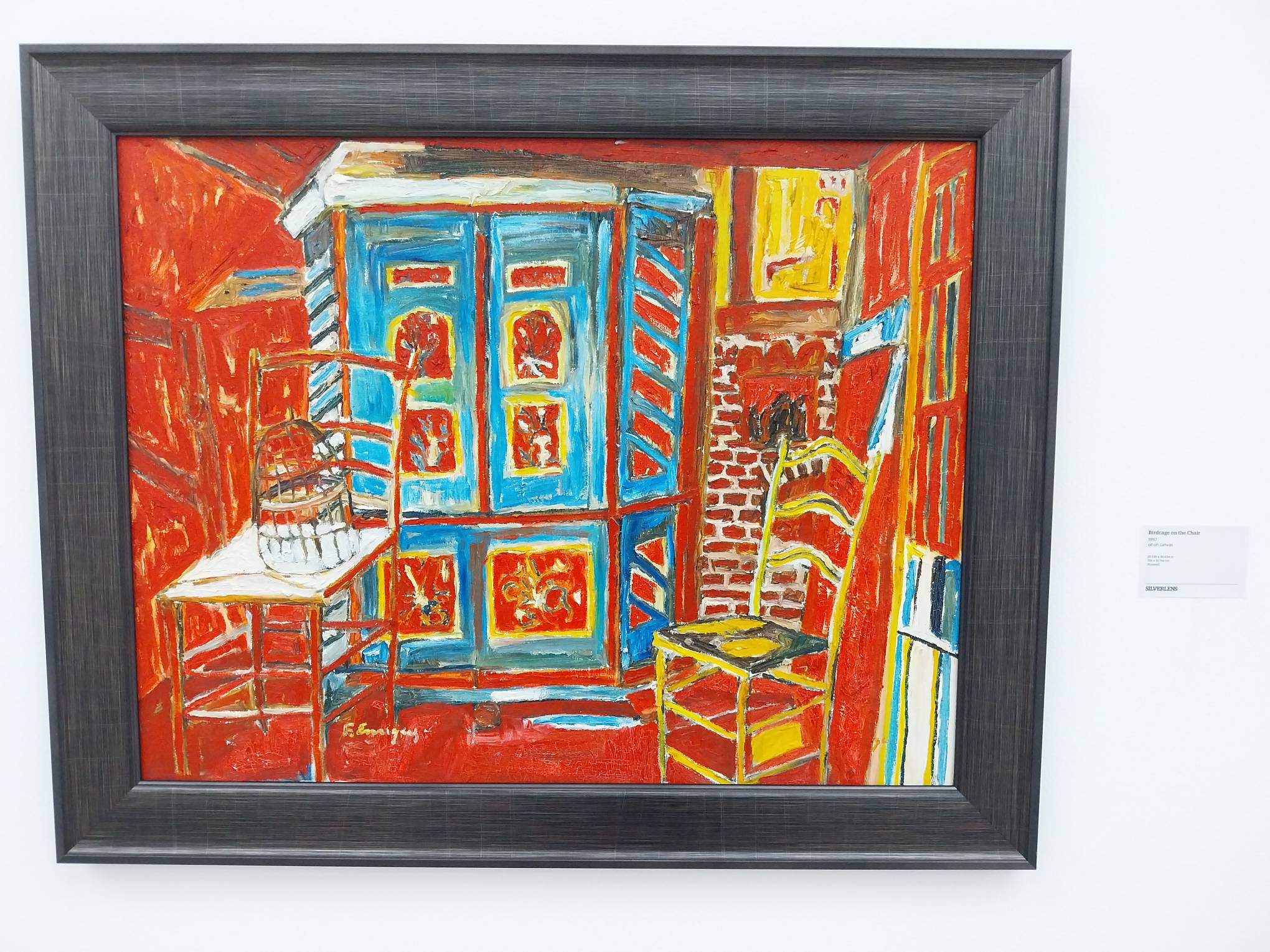
Keka Enriquez tends to set her work in the domestic sphere, a way for her to bring a level of social complexity to a sphere of influence not typically taken seriously by other artists. And with Points and Endings, there’s certainly some ideas at work here that collide our ideal views of the household with what’s real and familiar with our everyday lives.
“Here, paint no longer alludes to the object or objectifies the subject,” the write-up said. “It confuses the eye that expects a reconciled home and is finally led to the telling remains of an always eventful day, which may well speak of history, repressed or becoming.”
Photos by Elle Yap.
Related reading: Santos Family Debuts New Collaborative Exhibit at Silverlens Manila
Frequently Asked Questions
The exhibit explores the “lived-in energy” of the household, contrasting the messy, active reality of a home against the polished, aspirational portrayals often seen in media. Spanning works from the 1980s in Manila to present-day San Francisco, Enriquez uses domestic interiors as a canvas to discuss social complexity. Her paintings find a rhythmic comfort in chaos, suggesting that a home’s true history is found in the “telling remains” of an eventful day.
Enriquez utilizes dense layering, bold colors, and abrasive brushwork that initially scan as pure abstraction. However, upon closer inspection, these wild intersecting shapes reveal figurative silhouettes—such as a child, a dog, or a kitchen kettle—hidden within the “jungle of lines.” This kaleidoscope-like distortion renews the viewer’s perspective of their environment, turning a cluttered household into a vivid, mural-like explosion of life where time and space appear to bend.
While many works in the exhibit are high-energy and near-abstract, pieces like Pitcher Collection and Blue Kettle offer a more legible, well-lit depiction of household objects. Other works, such as Suppertime, strike a middle ground by maintaining the legibility of the room while applying a “funhouse mirror” distortion. This variety shows the artist’s range in navigating the domestic sphere, shifting between frantic expressionism and quiet, detailed observation of the objects that occupy our lives.
Keka Enriquez focuses on the domestic sphere to bring a level of social and artistic complexity to a space that is often not taken seriously by the traditional art world. By treating the home as a site of history and repression, she elevates daily chores and household clutter into “points and endings” of human experience. Her work suggests that the domestic environment is a powerful influence on our identity, acting as both a familiar sanctuary and a site of constant evolution.
The exhibit “blurs the lines of reality” by occupying a space between abstraction and figuration. While her dynamic brushwork alludes to abstract expressionism, the “telling remains” of faces and furniture ensure the work remains grounded in the physical world. As the exhibit write-up notes, the paint no longer merely objectifies the subject; instead, it “confuses the eye,” leading the viewer to find hidden meanings and personal histories within the colorful layers.
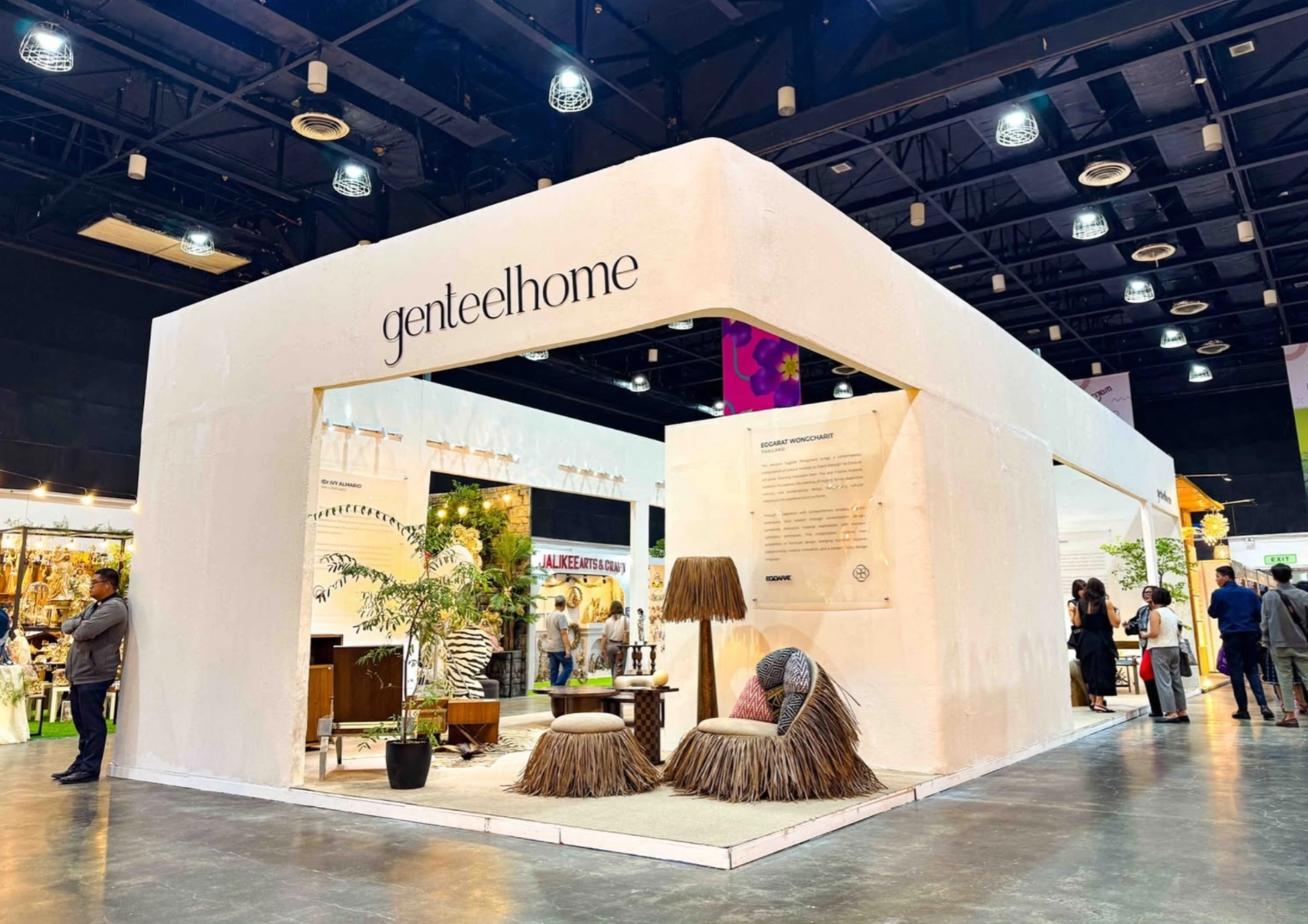
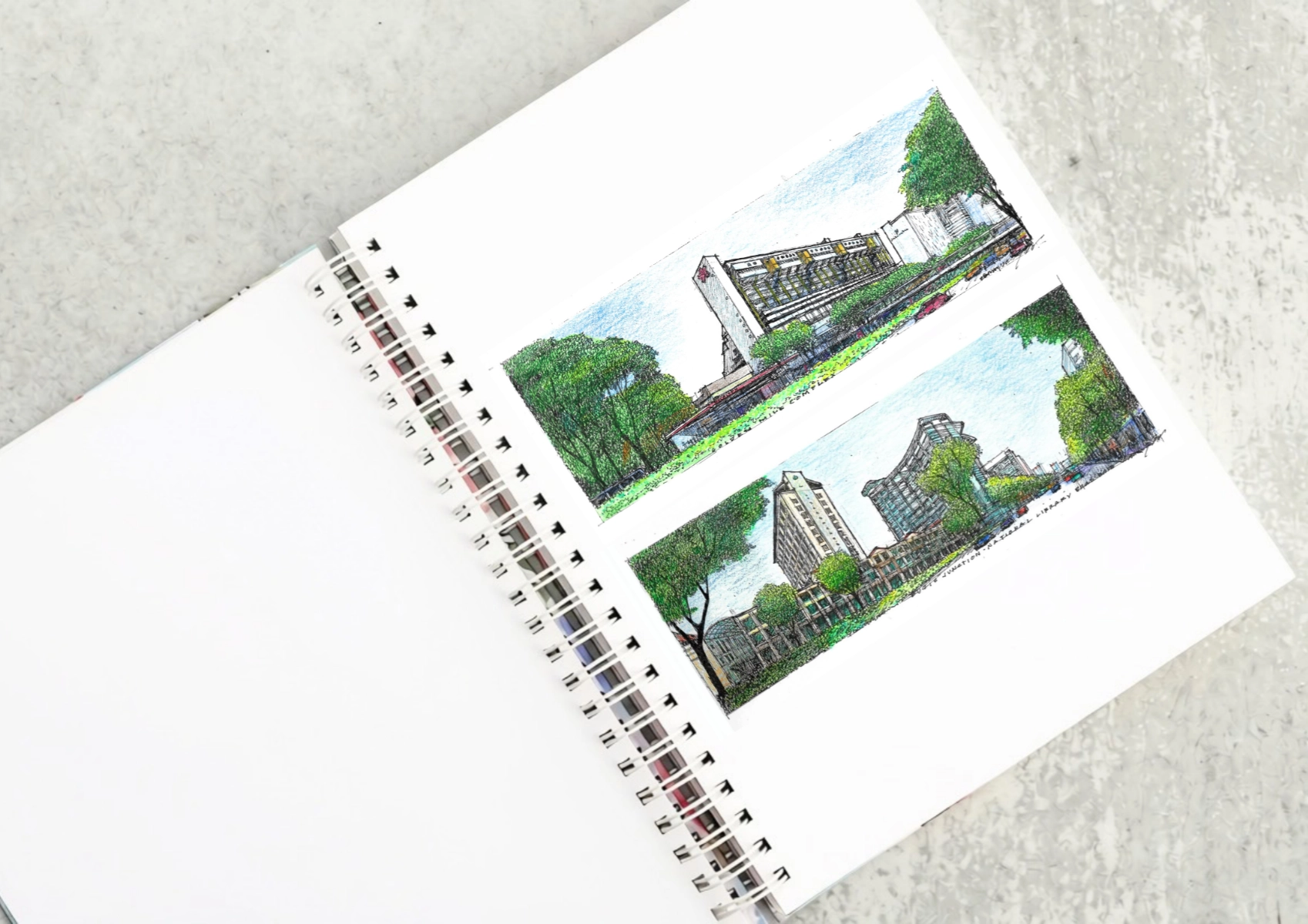
Two sketches of Singapore connect BluPrint Editor in Chief Paulo G. Alcazaren’s personal and professional history with Shared Ground: ArchitectureArchitectureThe art and science of designing and constructing buildings, structures, and spaces that are functional, safe, and aesthetically pleasing. It encompasses the planning, design, materials, and techniques used to createGo to Architecture Glossary of Care, Culture, […]
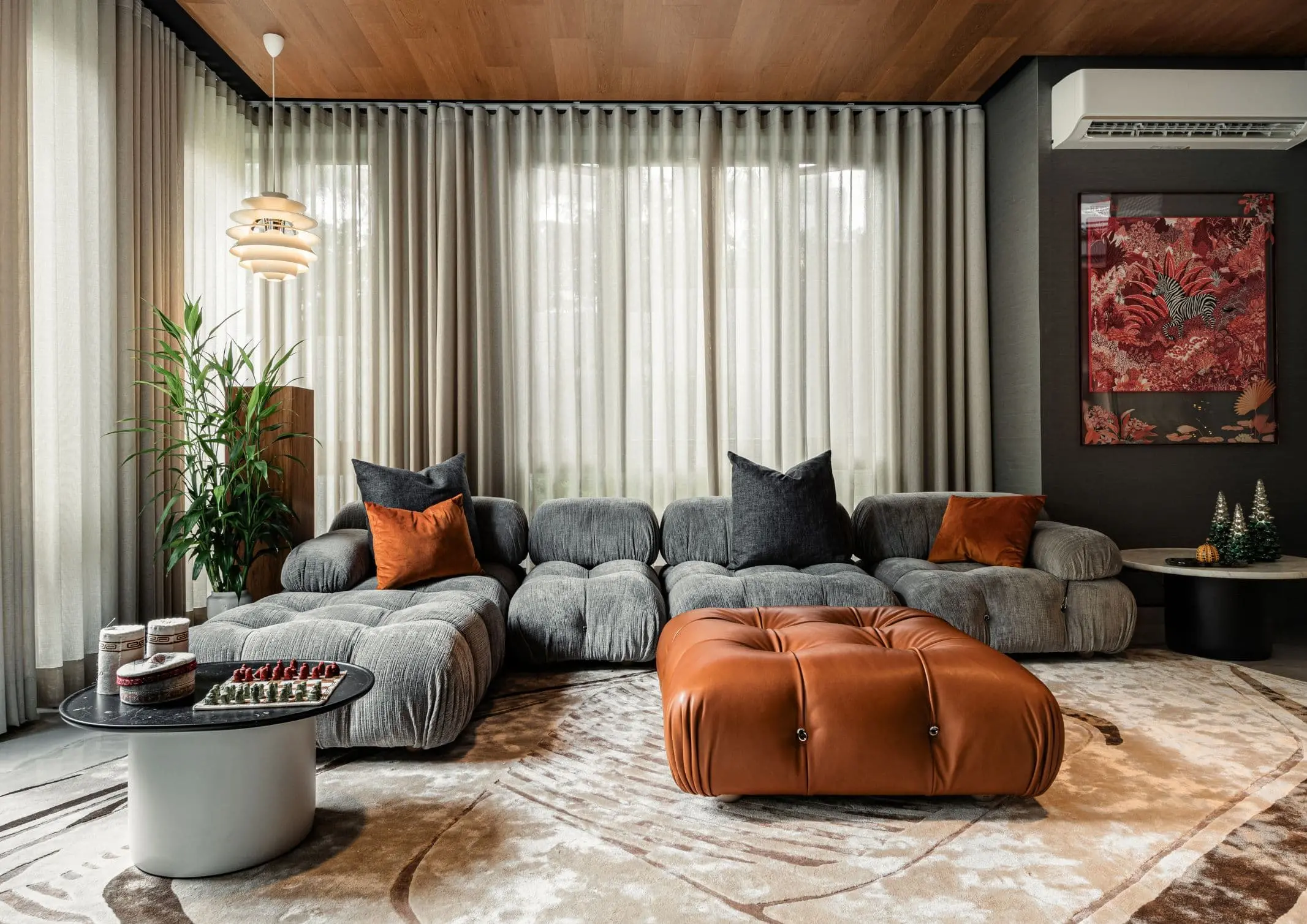
Some have become household names – Coleman, Oster, and KitchenAid – products that have found their way into Filipino kitchens, homes and family routines. In home furnishings, brands such as B&B Italia, Ethan Allen, Sub-Zero, Miele, SieMatic, Louis Poulsen, Hunter Douglas, Tempur, and Technogym, have helped shape the way Filipinos live. From everyday essentials to […]
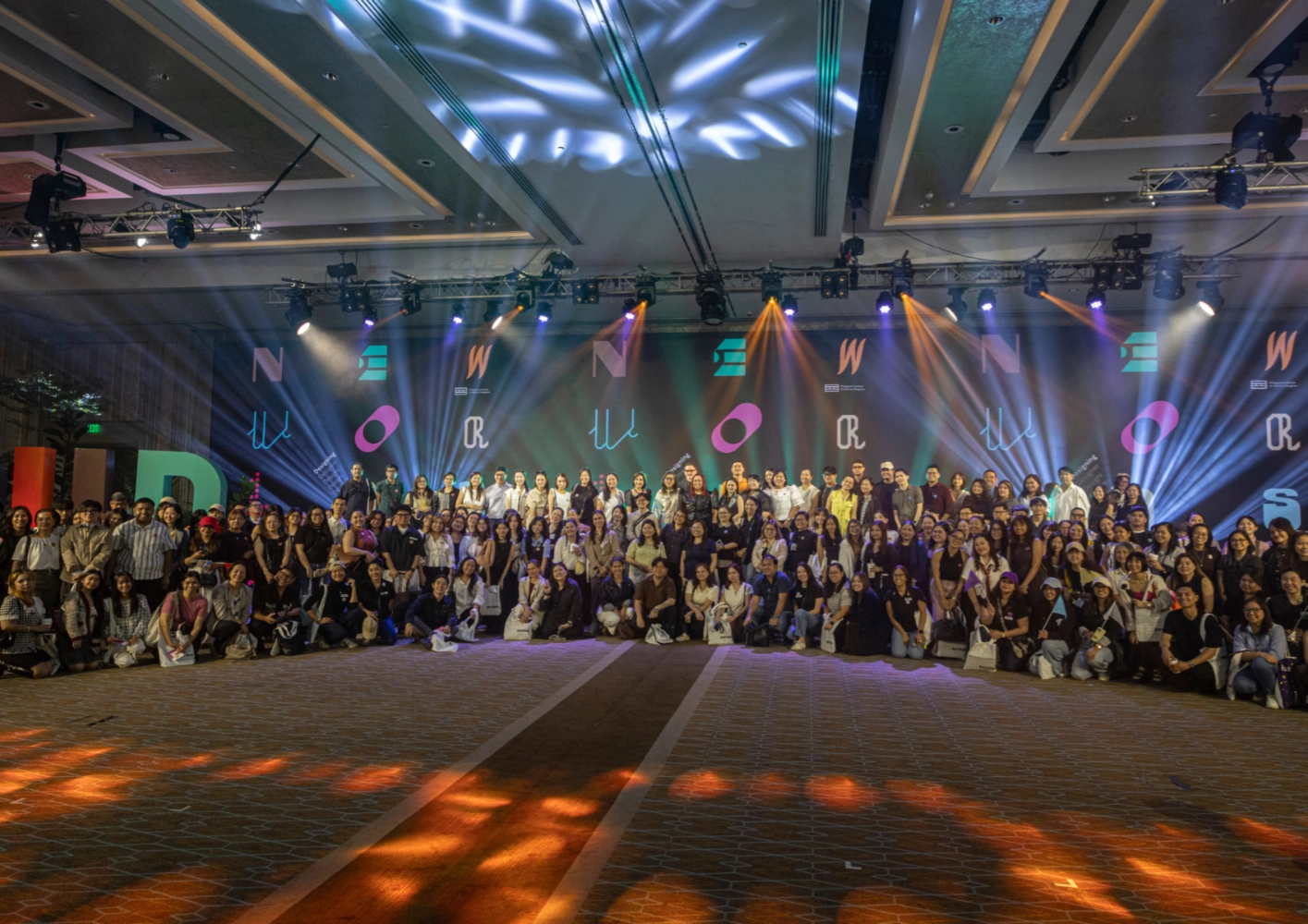
In a way, designers are the modern-day soothsayers and prophets. They design for the future, predicting how a room, a house, a building or a whole city will be used by people. They foresee how users will interact with a space, conjure exact shades of colors to elicit specific behavior and arrange furniture to build […]
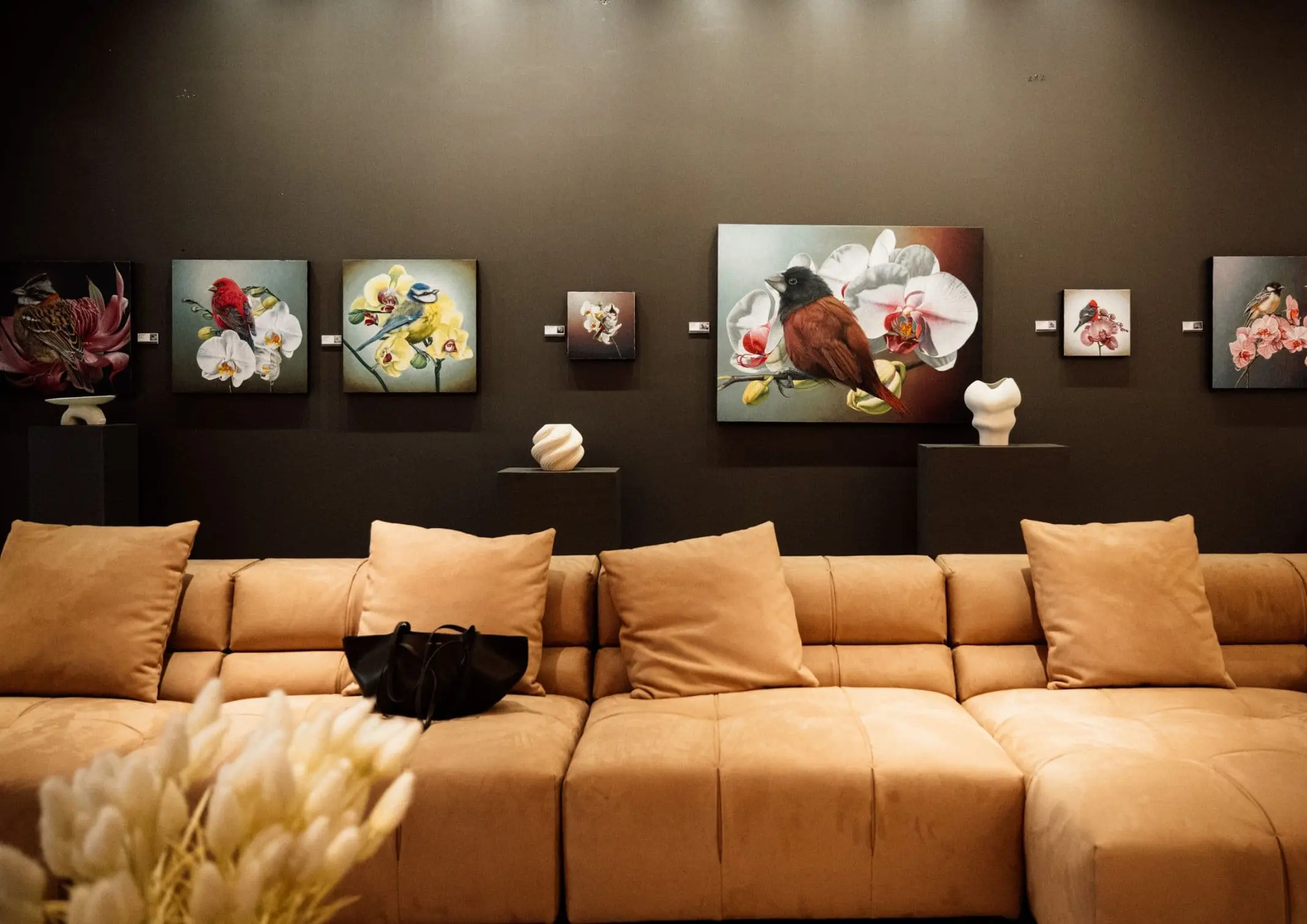
Art and furniture are often selected separately, yet their relationship can shape how a room looks and feels. The collaboration between Hooga and Galerie Joaquin explores how these elements can work together, bringing contemporary artworks into furnished residential settings at Hooga’s showroom in Uptown Mall, Bonifacio Global City. For Hooga, which curates furniture, lighting, and […]
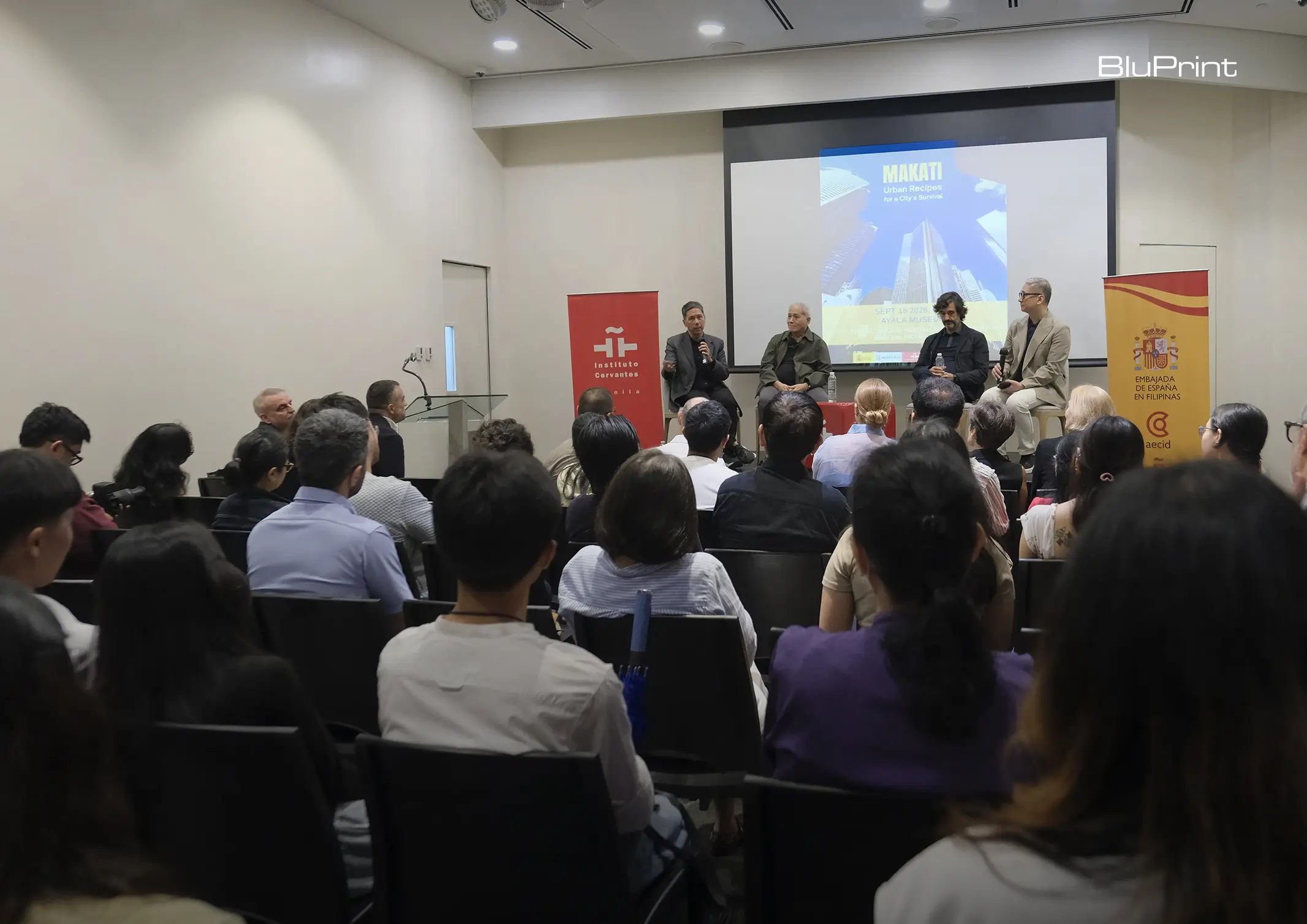
How can better-planned cities create the conditions for more creative, livable, and resilient urban environments? “Makati Urban Recipes for a City’s Survival,” a colloquium held at the Ayala Museum on September 15, brought together architects and practitioners from the fields of urbanism and the creative economy to discuss how design, planning, and collaboration can address […]
Read the issues.

Collect the volumes.

Recommended Video
Tap to Unmute
Unmute
0:00
0:00