Rinna Soriano’s favorite part of her work is sanding. At her workbench, she stays focused, following the grain, adjusting to changes in its direction. Narra, she has learned, can have interlocking grain. A piece of mango once proved particularly difficult until a worker explained that she had reached the point where a branch once grew […]
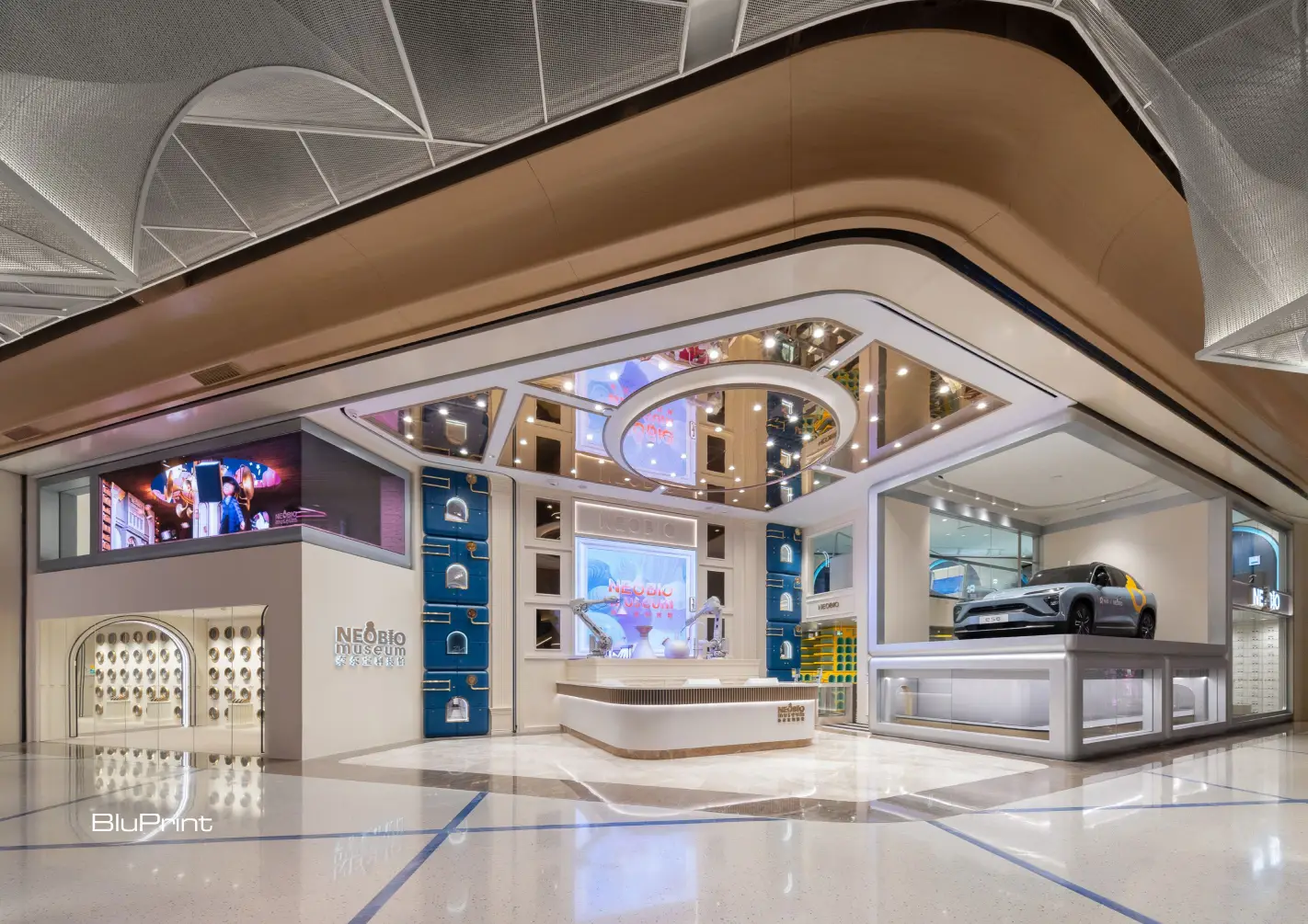
Neobio Museum Gives Visitors with Renewed Awe for Science



For the Neobio Museum in Singapore, designer Yoon Sung of KR+D crafted a multi-sensory exhibition that gives visitors a fuller sense of where science and nature merge. The museum pulses with life as architectureArchitectureThe art and science of designing and constructing buildings, structures, and spaces that are functional, safe, and aesthetically pleasing. It encompasses the planning, design, materials, and techniques used to createGo to Architecture Glossary and technology work together to create something captivating that will be etched in the memories of families forever.
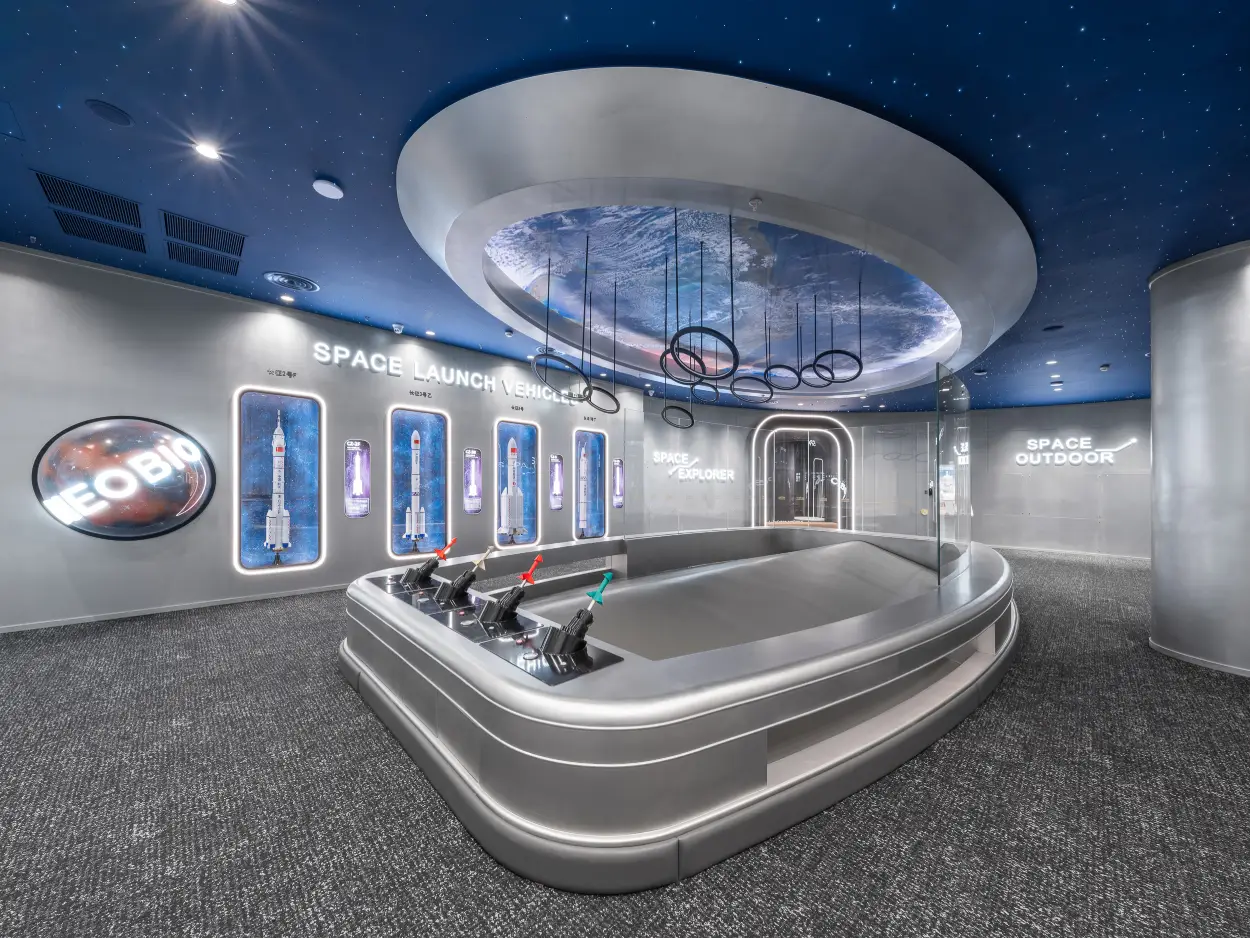
The vision behind it is the creative utilization of state-of-the-art technology. Innovative design ideas that highlight the various exhibits, allowing a more intuitive experience. All of these elements come together for a unique scientific engagement that tantalizes as much as it illuminates.
“More than just a museum, the Neobio Museum is an awe-inspiring journey that transports visitors into the heart of the natural world,” the architects state. Through its visionary approach, the museum has achieved a seamless fusion of art, science, and technology, revolutionizing the way we perceive and engage with natural history.”
Engaging with Natural History
Multiple aspects of natural history converge within the Neobio Museum. It covers our Earth’s evolution into what it is today and the different eras of human civilization that followed. The natural history sections feature interactive areas where visitors can explore everyday phenomena such as wind power, plant life cycles, elemental interactions, and astronomy.
And for human history, we see the way we harnessed the science of these naturally-occurring phenomena towards something new. Entire sections are dedicated to space travel and engineering, music and sound, as well as automotive history and mechanics.
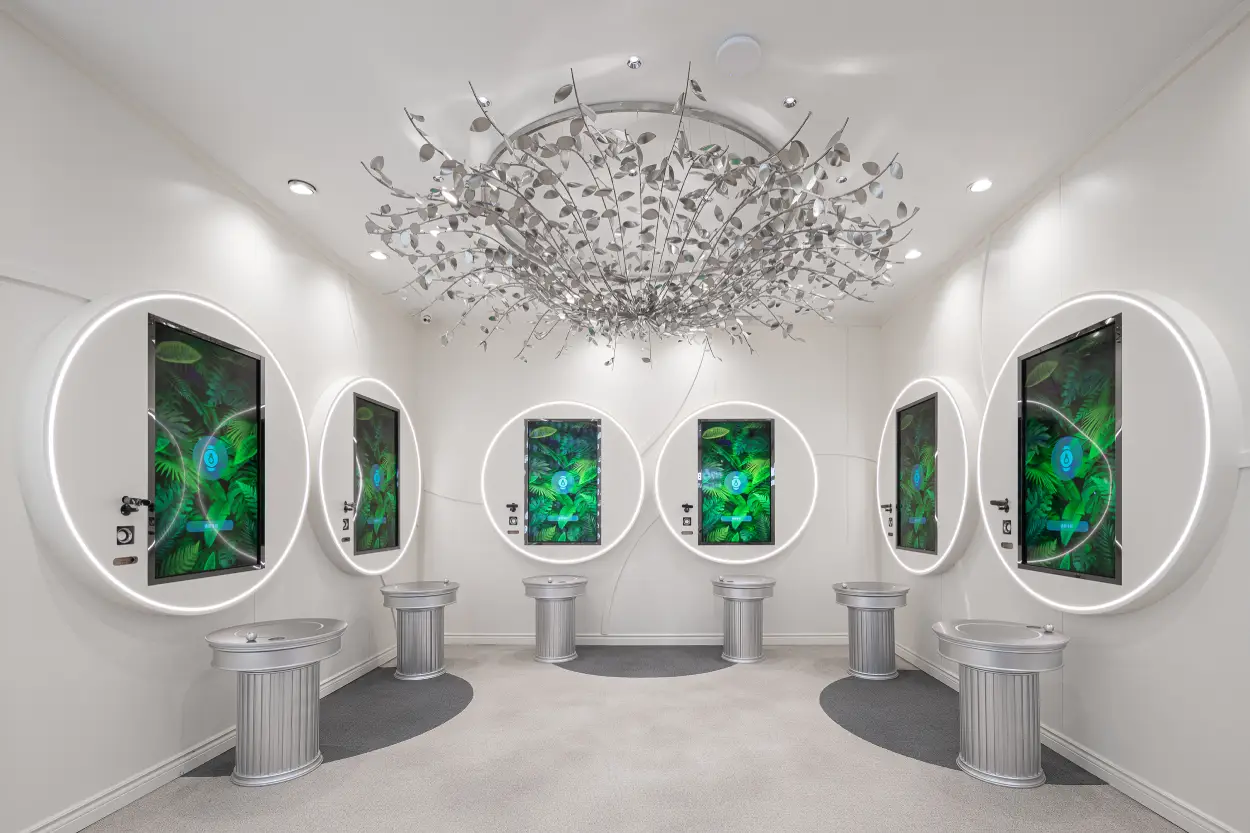
The museum gives visitors a way to see how we leverage knowledge to our advantage, creating a more livable world for ourselves in the process. The Neobio isn’t just about how cool nature or technology is, but how they are essentially feeding the other information to create the modern society we see today. It crafts a linked, integrative narrative.
“Spanning diverse fields such as natural science, avant-garde technology, and aerospace exploration, the museum provides full sensory and interactive experiences,” the architects said. “Each exhibit engages visitors on multiple levels, enabling them to understand the intricate relationships between.”
Using Design to Augment Exhibits
KR+D designed the Neobio Museum to be interactive to involve visitors in as much of the experience as possible. It goes further the typical museum experience, engaging them with as close to first-hand experience on the subject matter as possible.
The overall design is sleek and curved, mixing metallic structures and mirrored surfaces with bright lights and signages. This feels intuitive in how it leads visitors from one section to another as if they were moving through the chapters in a vast story.
Different technologies are used to add a sense of interactive futurism evoked by the design. Two robotic arms greet visitors at the reception area, for example, to showcase “the convergence of human and artificial intelligence.”
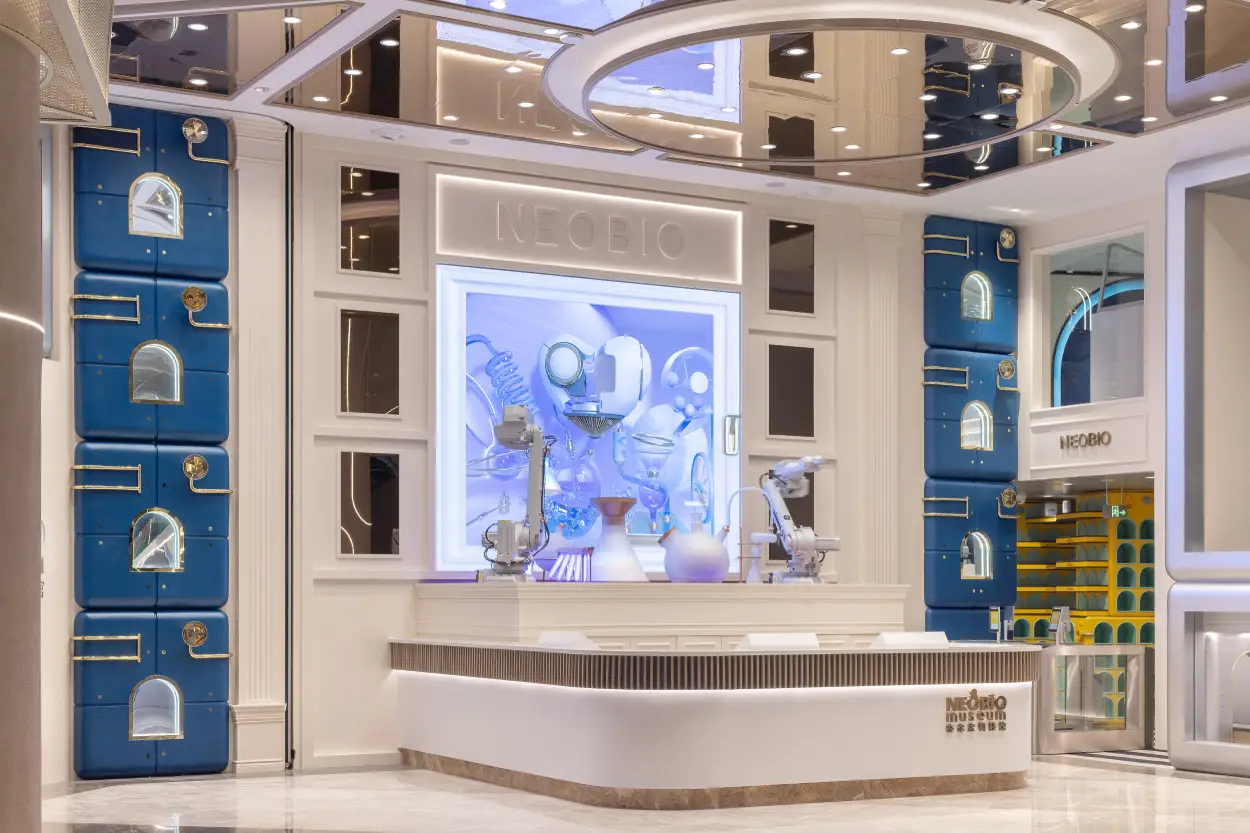
Beyond that, the Neobio Museum focuses on a reactive environment in the technology it uses. These systems are made to be immersive, bridging the gap between the confines of the museum and the needs of learning. There’s virtual or augmented reality, touchable screens, and different models and machines that provide tactile experiences on the topics being discussed.
It converges together in a museum that isn’t just something you look at, but you experience yourself.
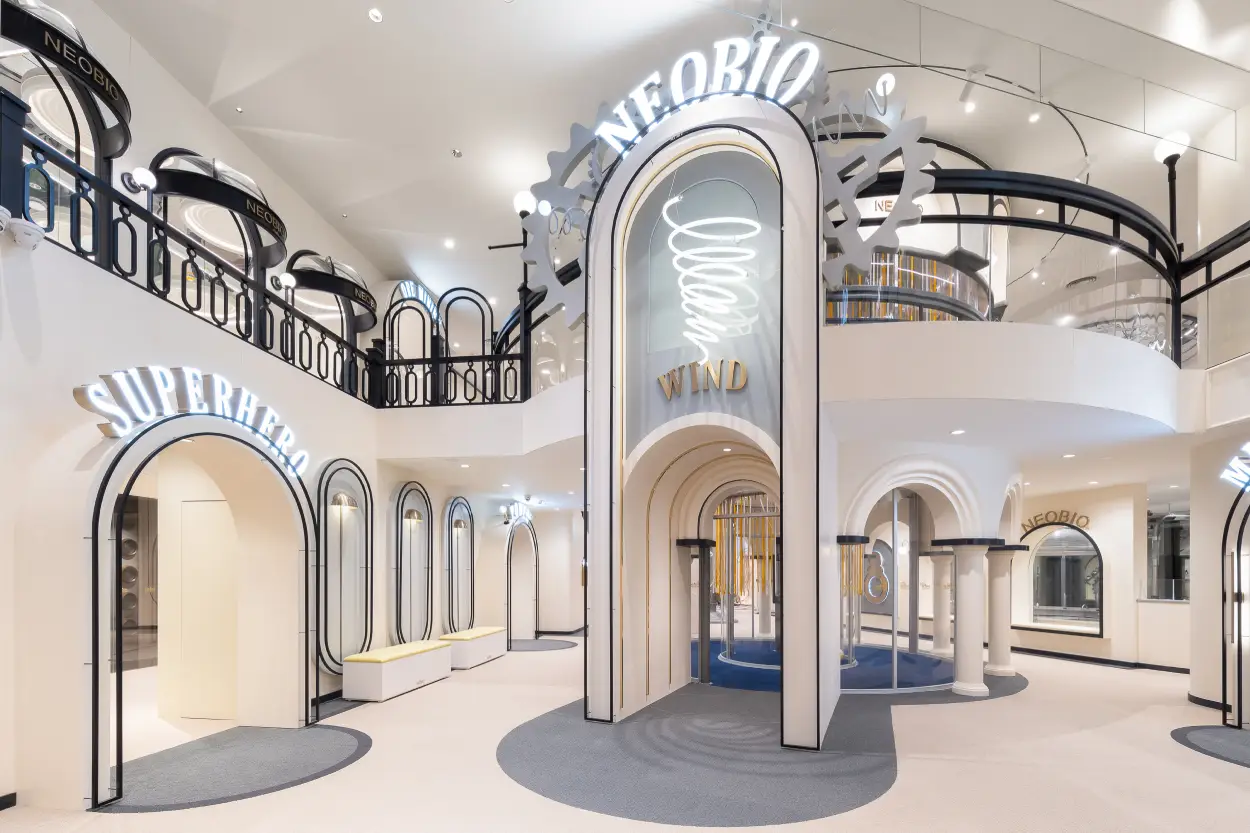
“Each exhibit is thoughtfully designed to guide visitors on a captivating journey, unveiling the interconnectedness of the natural world,” the architects said. “The seamless transitions between exhibits and the strategic placement of artifacts and artworks create a cohesive and engaging narrative flow. The spatial design itself becomes an integral part of the storytelling, subtly guiding visitors through a series of thought-provoking and emotionally resonant experiences.”
A Heartland for Developing Critical Thinking
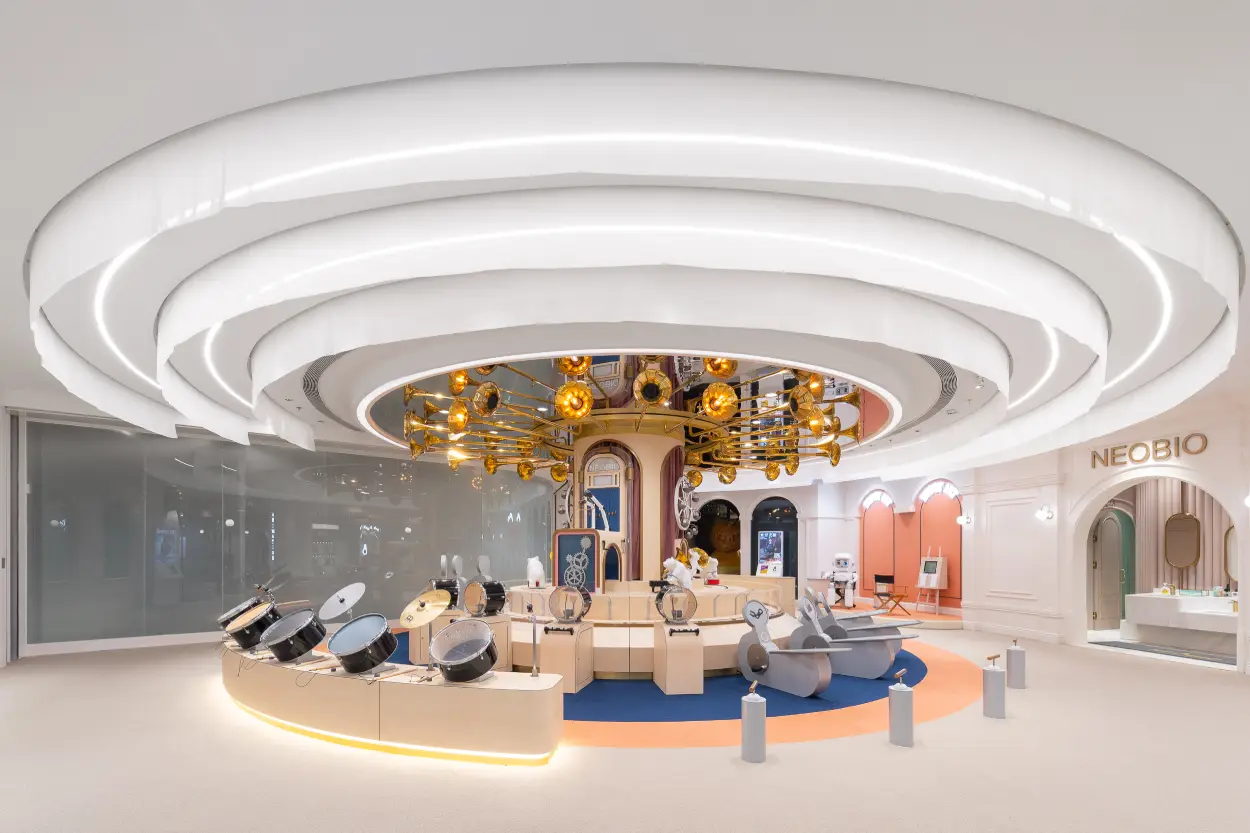
At its core, the Neobio Museum provides fun activities that function in giving children an avenue to develop their critical thinking skills. Half the battle of learning is actually getting to do things yourself, to allow kids to make connections that will help them build further in the future.
The interactive, experiential design of the Neobio Museum allows that to happen. It treats learning as an adventure, positioning knowledge- and skill-building as enjoyable undertakings. Everything is designed around the subject matter and how to best educate children through experience; from the architecture to the choice of technology.
“Through its design innovation, immersive exhibitions, interactive education, and commitment to cultivating scientific literacy, the museum has redefined the museum experience, and plays a vital role in fostering a new generation of scientifically literate citizens,” the project write-up said.
Photos provided by the architects.
Related reading: UP Manila Museum of a History of Ideas houses the intangible
Frequently Asked Questions
The museum’s architecture, designed by Yoon Sung of KR+D, utilizes a sleek and curved aesthetic featuring metallic structures and mirrored surfaces to create a narrative flow. This design leads visitors intuitively from one section to another as if they are moving through chapters of a book, ensuring a seamless transition between natural history and modern technology. The spatial arrangement is intentionally crafted to reveal the interconnectedness of the world, making the environment itself an integral part of the educational experience.
Neobio Museum leverages state-of-the-art technology to transform passive observation into active engagement through virtual and augmented reality, touch-sensitive screens, and tactile machines. At the reception, two robotic arms greet guests to symbolize the convergence of human and artificial intelligence, setting a futuristic tone. These reactive systems are designed to be immersive, providing first-hand experiences with phenomena like wind power, plant life cycles, and aerospace mechanics.
The museum crafts an integrative narrative by showing how human civilization leverages natural phenomena to create modern society. While natural history sections explore Earth’s evolution and elemental interactions, the engineering sections demonstrate how humans have harnessed these forces for space travel, music, and automotive mechanics. This linkage helps visitors understand that nature and technology are not separate entities but instead feed into one another to build the modern world.
The museum serves as a heartland for developing critical thinking skills by treating learning as an adventure rather than a chore. By providing a “full sensory” and experiential environment, it allows children to make their own connections and build knowledge through direct interaction with the exhibits. This approach is designed to foster a new generation of scientifically literate citizens who view skill-building and discovery as enjoyable, life-long undertakings.
Unlike traditional museums that focus primarily on looking at artifacts, the Neobio Museum prioritizes a “tactile experience” where the spatial design, innovative technology, and subject matter work in unison. It revolutionizes how visitors perceive natural history by using avant-garde design to bridge the gap between abstract scientific concepts and the physical world. This fusion of art and science creates an emotionally resonant journey that is intended to be etched into the memories of families long after their visit.


Large-format porcelain is no longer limited to conventional floor and wall applications. Advances in scale, finish, and fabrication have expanded its role across architectureArchitectureThe art and science of designing and constructing buildings, structures, and spaces that are functional, safe, and aesthetically pleasing. It encompasses the planning, design, materials, and techniques used to createGo to Architecture […]
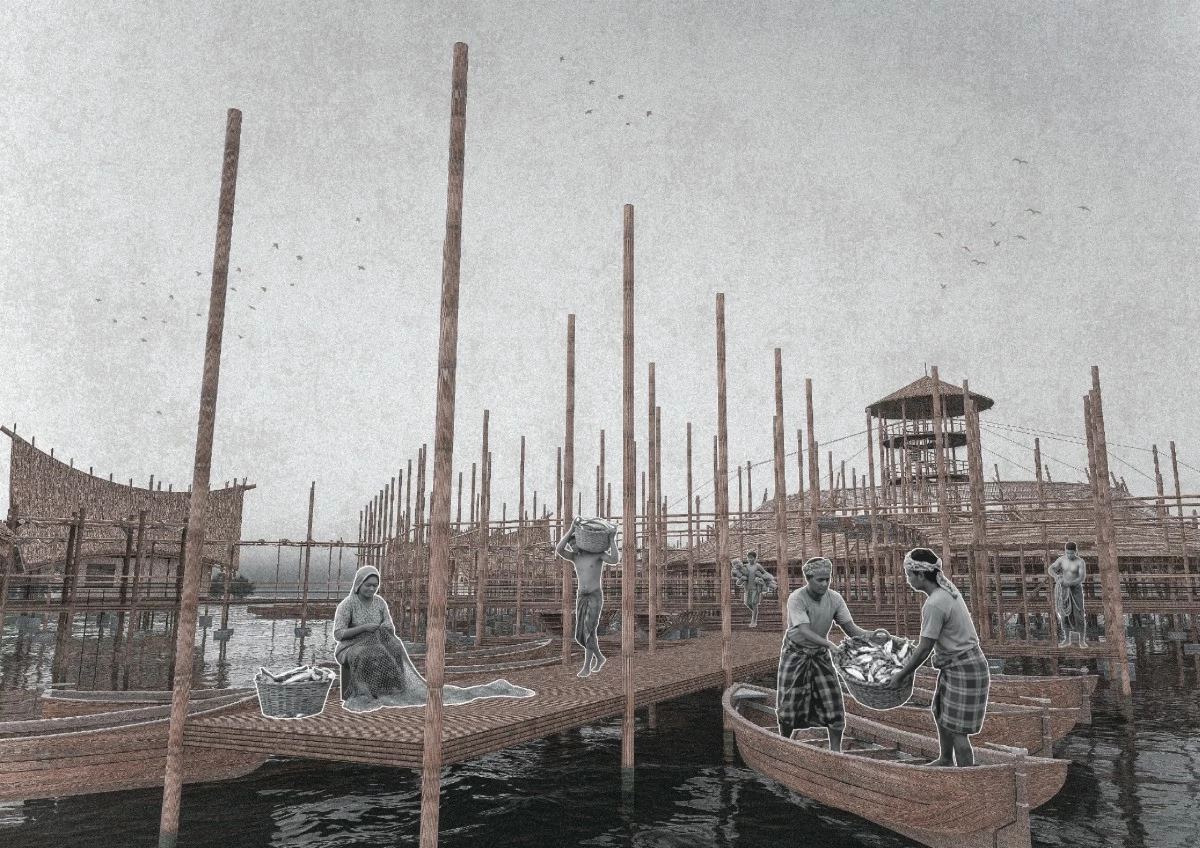
Mindanaoan architectureArchitectureThe art and science of designing and constructing buildings, structures, and spaces that are functional, safe, and aesthetically pleasing. It encompasses the planning, design, materials, and techniques used to createGo to Architecture Glossary student Ejhay L. Durias of the University of Mindanao made history after becoming the first Filipino to receive the AYDA International […]
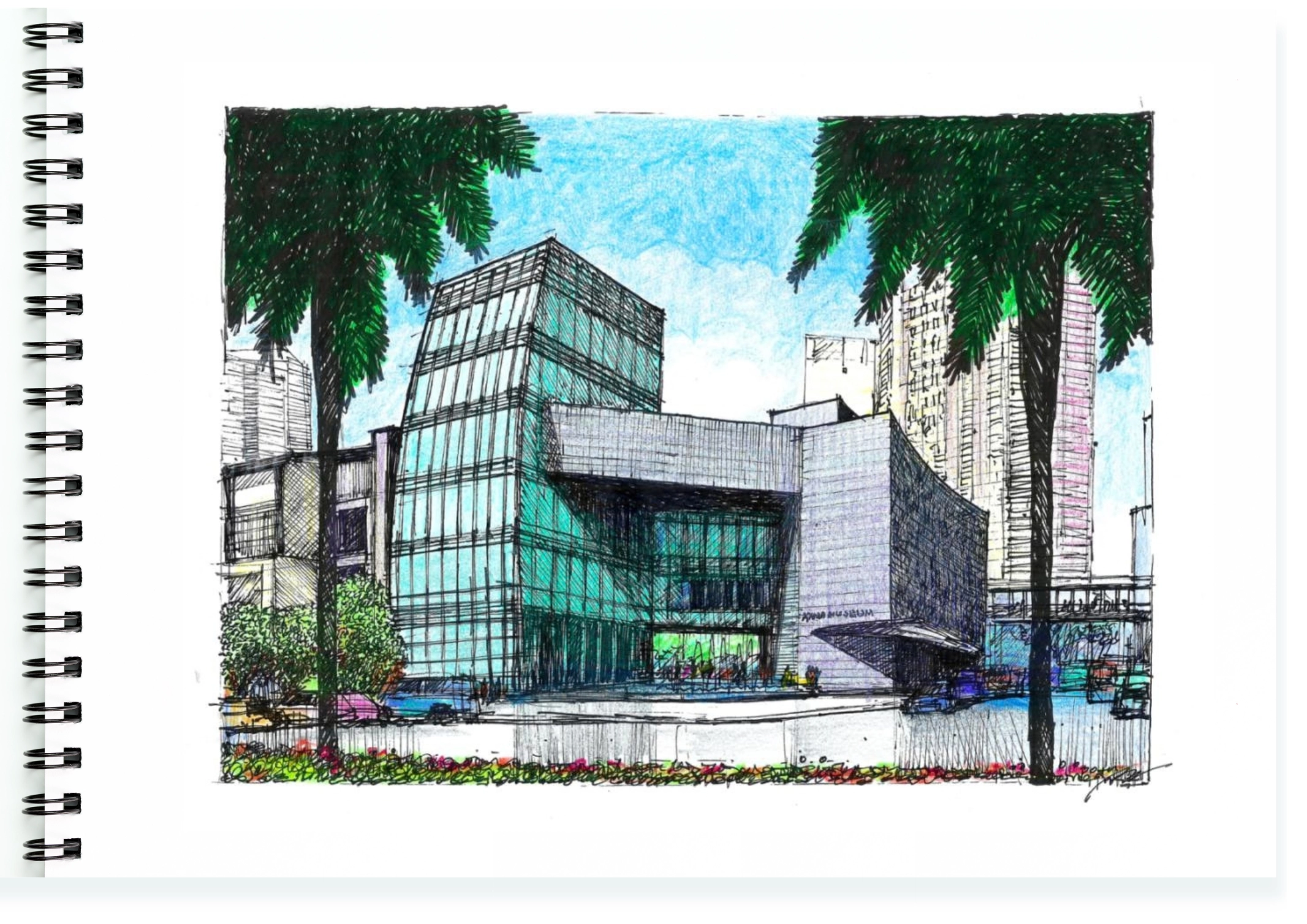
From Brutalism to Contemporary Modernism The Ayala Museum designed by the firm of Leandro V. Locsin Partners (LVLP) sits at the corner of Makati Avenue and Dela Rosa Street in Legaspi Village, Makati. This is actually the second museum of the same name in the area. The original, which was designed by National artist for […]
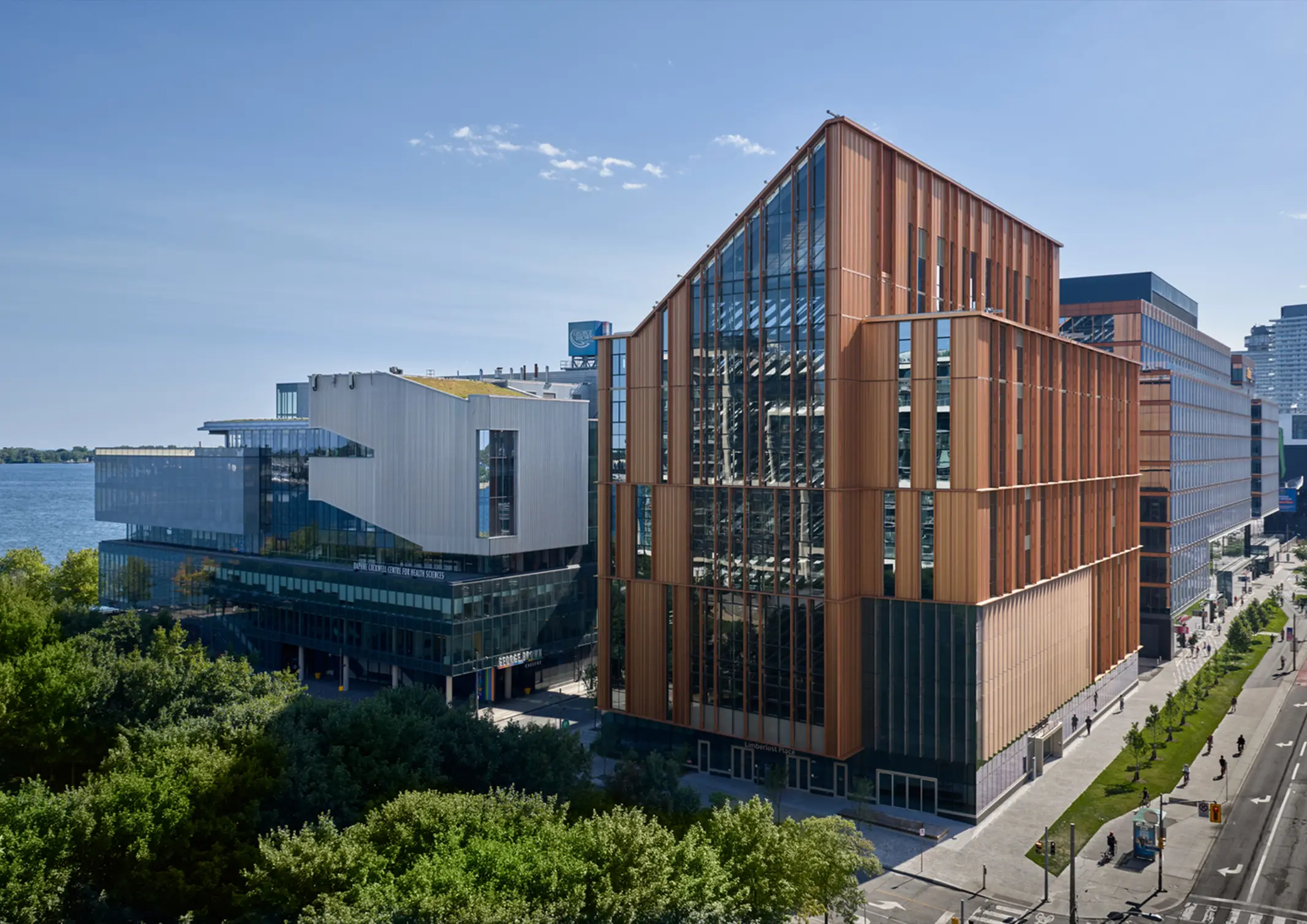
The projects recognized by Architizer’s 14th Annual A+Awards span architectureArchitectureThe art and science of designing and constructing buildings, structures, and spaces that are functional, safe, and aesthetically pleasing. It encompasses the planning, design, materials, and techniques used to createGo to Architecture Glossary, interiors, landscape, urban design, and sustainability. Organized by Architizer, one of the world’s […]
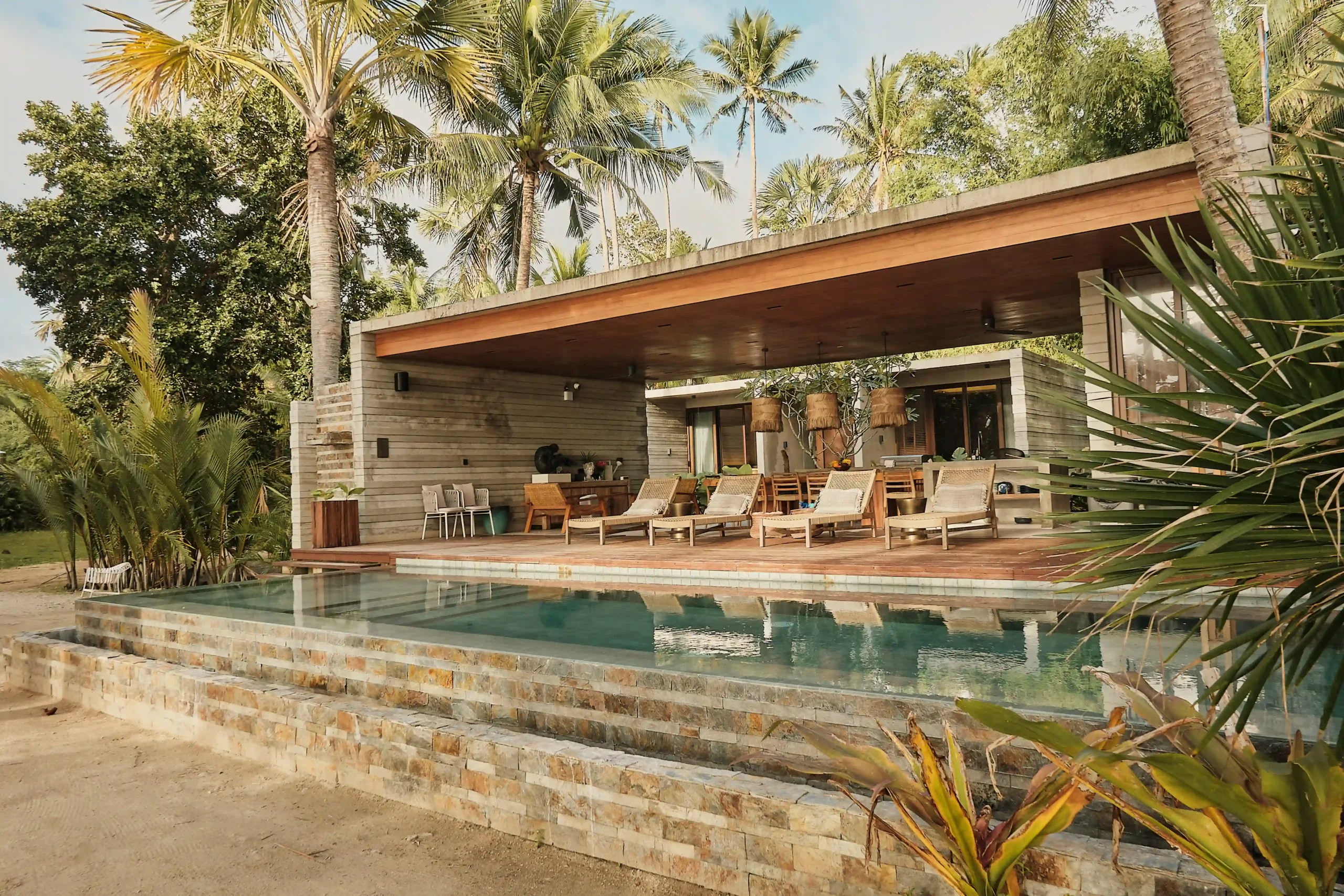
Overlooking Tayabas Bay, Agda Beach Villas occupies a one-hectare hilly property where the terrain descends toward the coast. Designed by VBo Architects + Engineers, the tropical retreat responds to the sloping terrain through villas and shared spaces oriented toward the surrounding landscape. Before construction began, Bocalid was drawn to the property’s steep terrain and secluded […]
Read the issues.

Collect the volumes.

Recommended Video
Tap to Unmute
Unmute
0:00
0:00