Just moments away from the bustling area of Bonifacio Global City is 171, a multi-level villa set on a 302-square-meter lot. M.CAL Architecture Design Studio, headed by Ar. Monique C. Albert-Lopez, built the residence as a minimalist modern sanctuary surrounded by landscaped gardens. This creative direction was drawn from the homeowners’ brief to create a […]
Suburban Serenity: The Filmmaker’s House



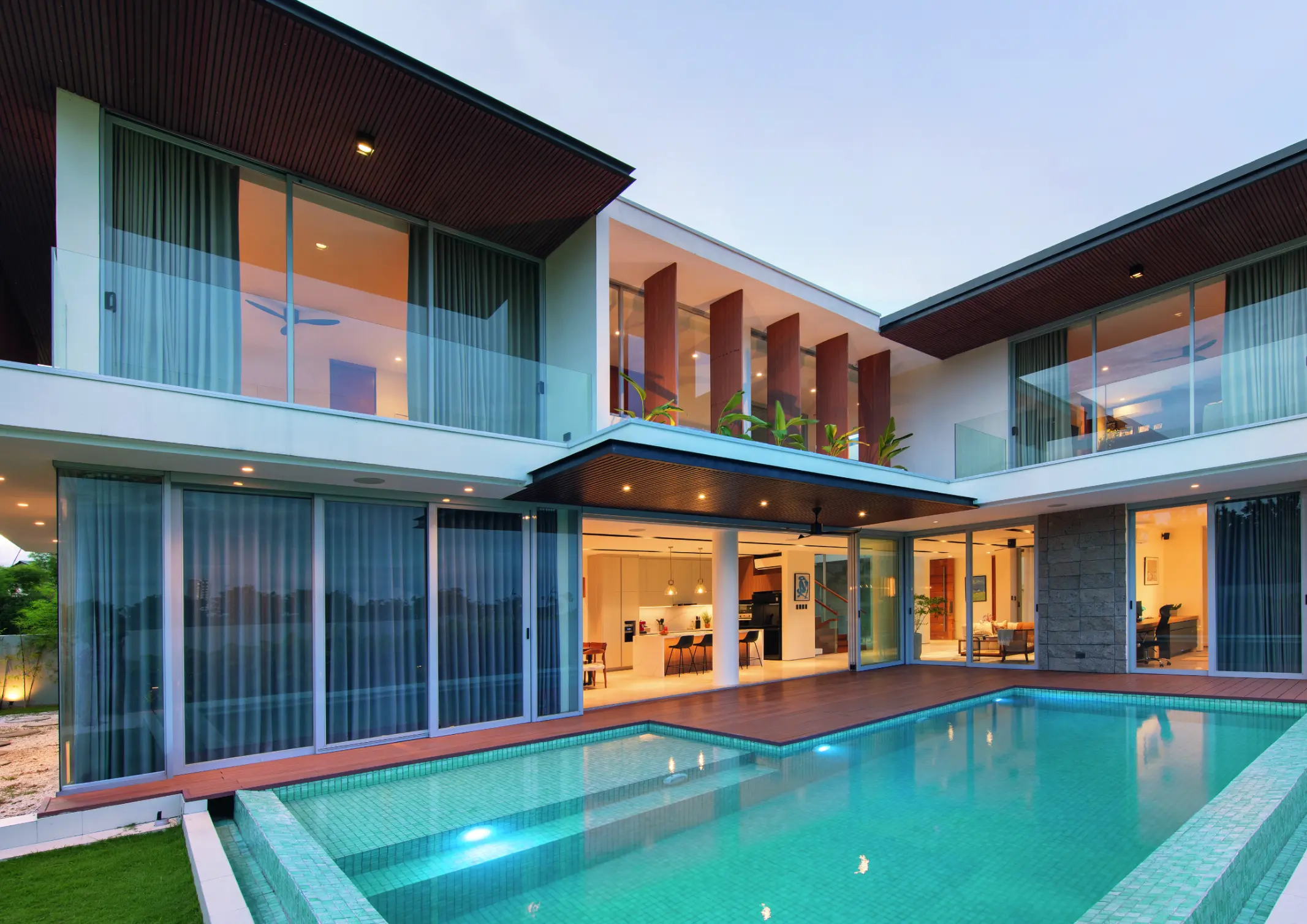
The Filmmaker’s House is situated in a quiet, suburban neighborhood in Cavite. It stands on a 622-square-meter lot and is one of the first structures to be built in this low-density environment. This house was designed by BRIOARC Design Studio for a family in the real estate and filmmaking industries.
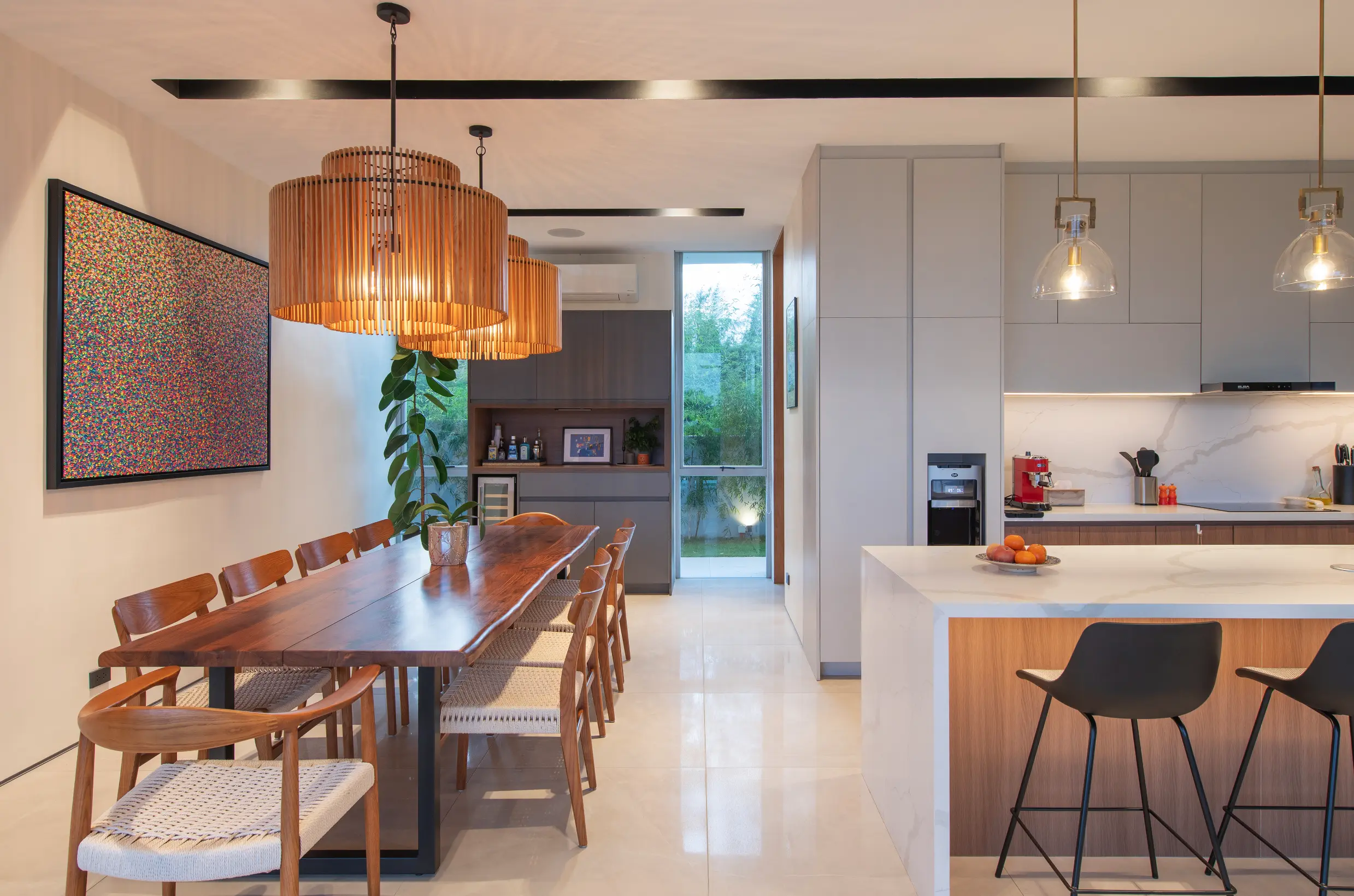
Ensuring the spaces reflect the clients’ personalities was a top priority in the design process. A lot of conversations between the homeowners and the design team also centered on the family’s lifestyle. “The clients asked us to design their new home—a comfortable, functional residence with plenty of space for entertaining, both indoors and outdoors, and large enough to accommodate their growing family. They envisioned a house that would create a relaxed, resort-like atmosphere,” shares Pierre Briones, BRIOARC Design Studio’s Principal Architect.
Tranquil Retreat
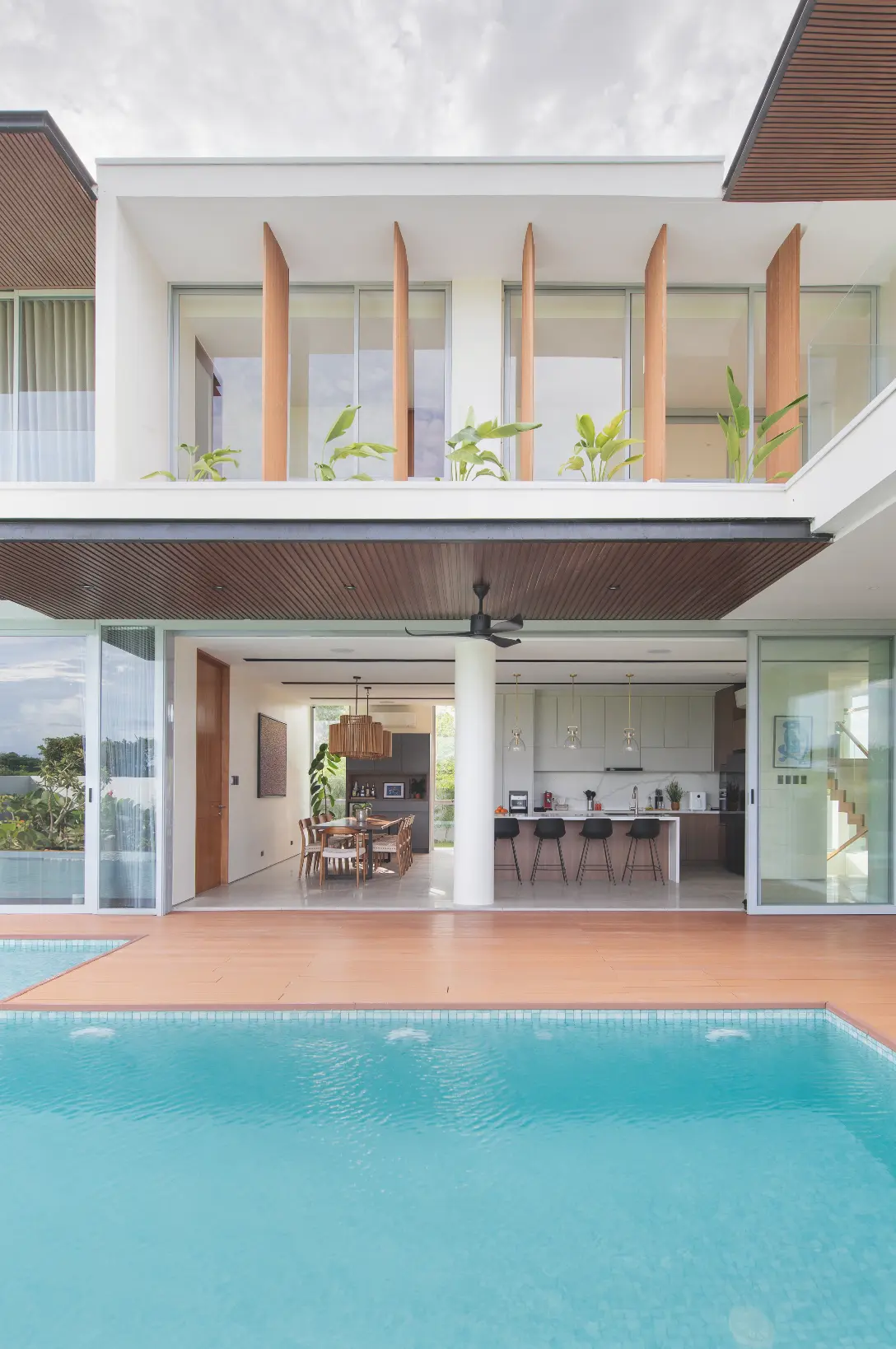
Drawing inspiration from nature, the design team dressed the residence in neutral and earthy tones. White dominates the interiors, while wood and various textures of adobe gray stones dot the facade. “Rugged adobe, stone, wood, steel, and concrete bind the project together, creating interesting plays of shadows that add depth to the minimalist exterior,” the architect explains.
To keep the living spaces comfortable, the design team installed brise soleils on the western side of the house to diffuse the harsh afternoon sun while filtering and softening the daylight that comes in. This strategic placement also enhances privacy and security. Meanwhile, the well-planned locations of windows help enhance passive coolingPassive CoolingStrategies that lower indoor temperatures without mechanical air-conditioning, relying on building design instead. Techniques include cross-ventilation, stack effect, deep eaves, shading devices, thermal mass, courtyards, and vegetation. Essential in theGo to Passive Cooling Glossary, keeping the interiors bright and airy.
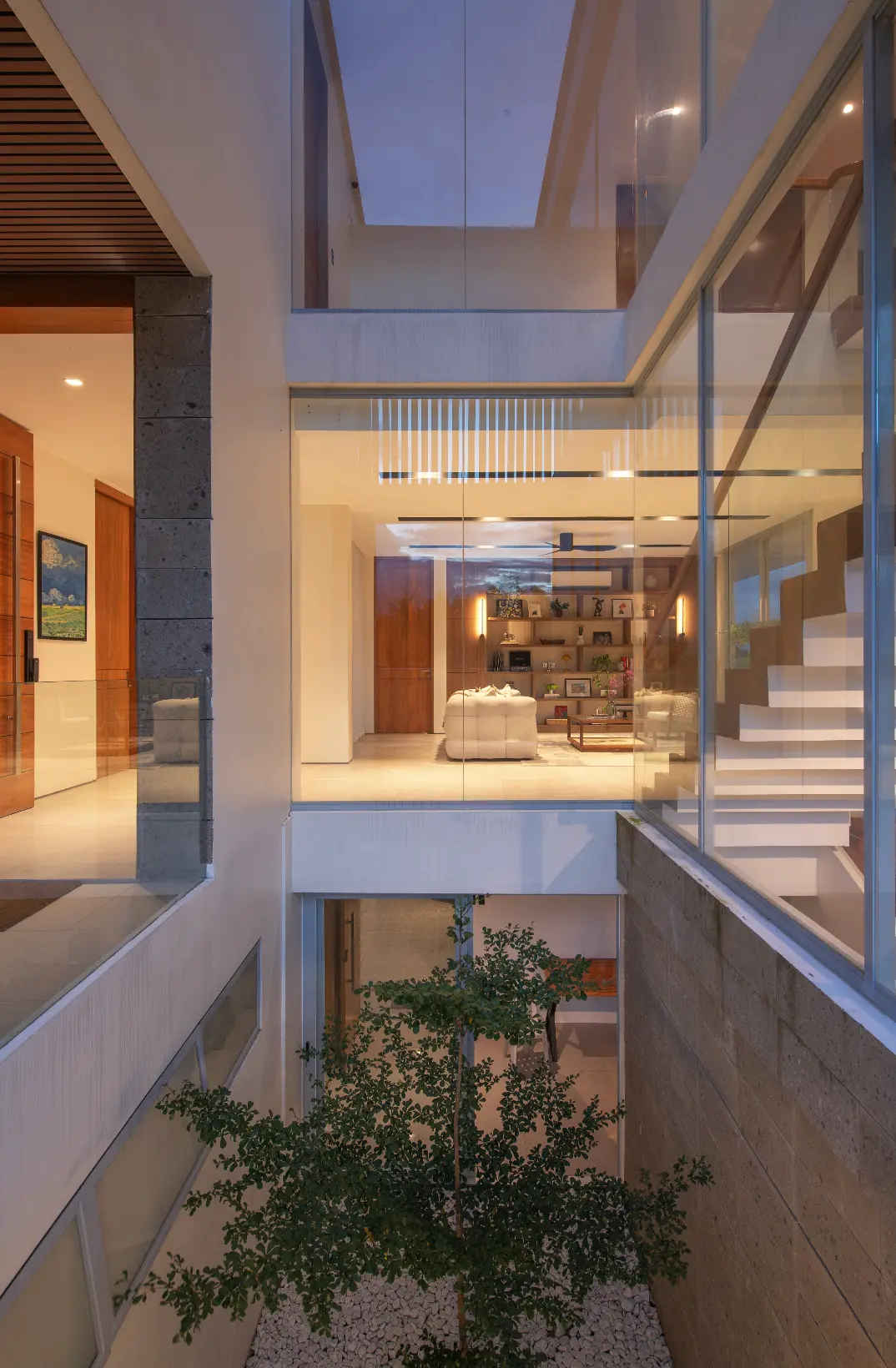
Accessibility was also a crucial factor in the design. “The rooms on the upper ground floor can easily be converted into a bedroom for seniors. We opted for ramp access instead of a home lift to future-proof the house while reducing maintenance costs,” Briones explains, adding that the sunken garden can be converted into an elevator if the homeowners wish.
The minimalistic design of this house gives the homeowners plenty of opportunities for personalization. “Over time, it will develop an attractive patina that reflects the evolving relationship between the home and nature,” the architect says.
This article has been abridged for digital publication. Read the full story behind the Filmmaker’s House by ordering your copy of BluPrint’s “Design Conversations” at Sari Sari Shopping, Shopee, and Lazada. E-magazines are also available for download here or through Readly, Press Reader, and Magzter.
Dive into the captivating world of architecture, interiors, and arts & culture by getting exclusive digital access to BluPrint’s past and upcoming issues. Click here to find out more.
Photographed by Greg Mayo.
Frequently Asked Questions
Designed for a family in the real estate and filmmaking industries, the house functions as a “relaxed, resort-like” sanctuary that prioritizes visual storytelling through its architecture. The design focuses on framing outdoor views via floor-to-ceiling windows and creating expansive indoor-outdoor entertaining spaces, reflecting the clients’ need for a residence that is both highly functional and aesthetically inspiring.
To maintain a comfortable interior, BRIOARC Design Studio installed brise soleils on the western side of the house to diffuse harsh afternoon sunlight and soften the glare. These architectural fins are paired with strategically located windows that facilitate passive cooling and natural cross-ventilation, ensuring the house remains bright and airy without excessive reliance on mechanical cooling.
The facade is a blend of rugged adobe gray stone, wood, steel, and concrete, while the interiors are dominated by white and earthy tones. This combination creates an “interesting play of shadows” that adds depth to the minimalist exterior, allowing the house to harmonize with its natural surroundings and develop an attractive patina as it ages.
Principal Architect Pierre Briones integrated accessibility into the layout by using ramp access instead of a home lift to reduce maintenance costs while ensuring senior-friendly mobility. Additionally, the rooms on the upper ground floor are designed to be easily converted into bedrooms for the elderly, and a sunken garden was strategically placed to serve as a future elevator shaft if needed.
The residence utilizes large sliding doors and floor-to-ceiling glazing to dissolve the boundaries between the interior living spaces and the surrounding landscape. This seamless transition is central to the home’s resort-like atmosphere, allowing the neutral-toned interiors to feel expansive and constantly connected to the tranquility of the suburban environment.
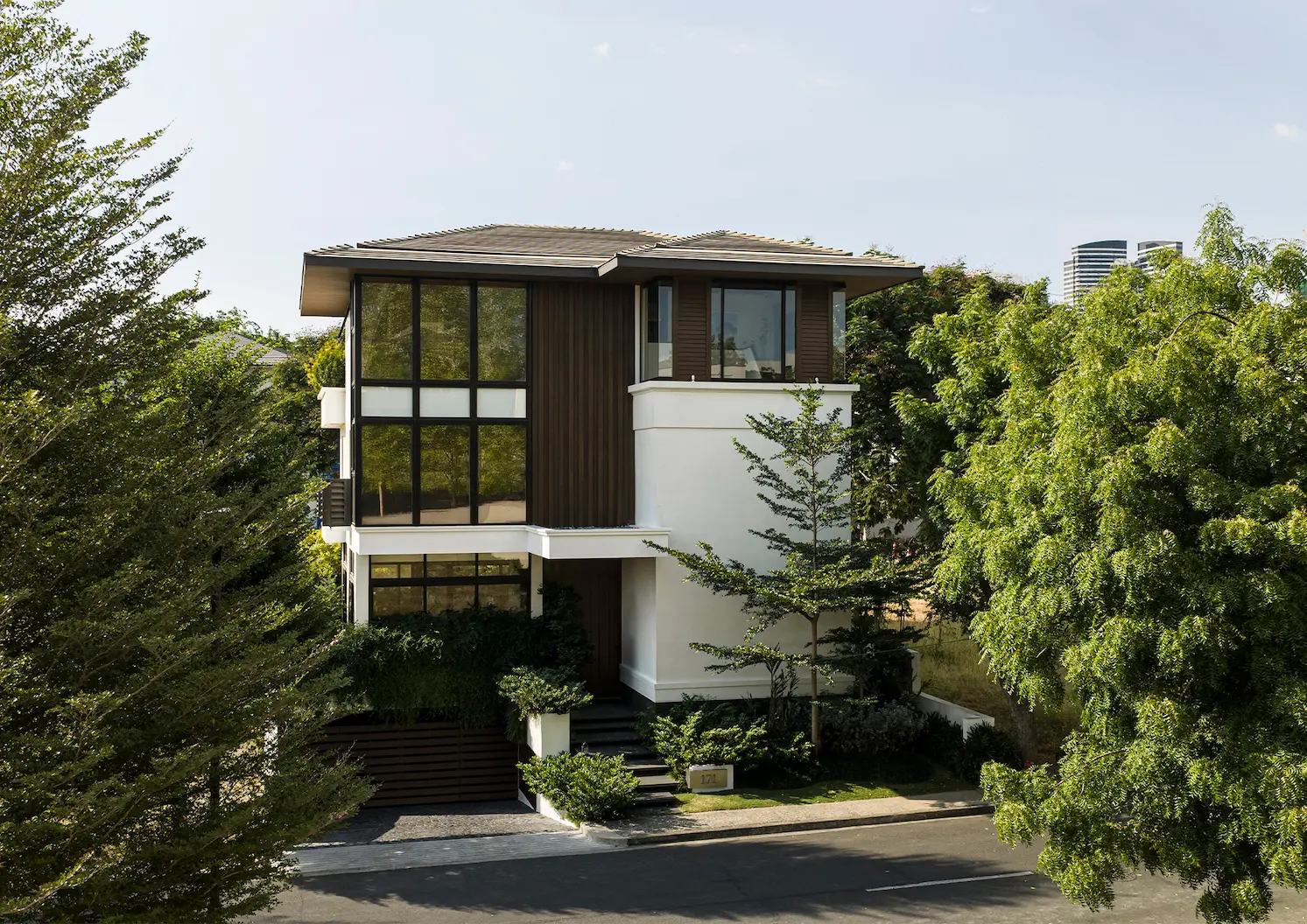
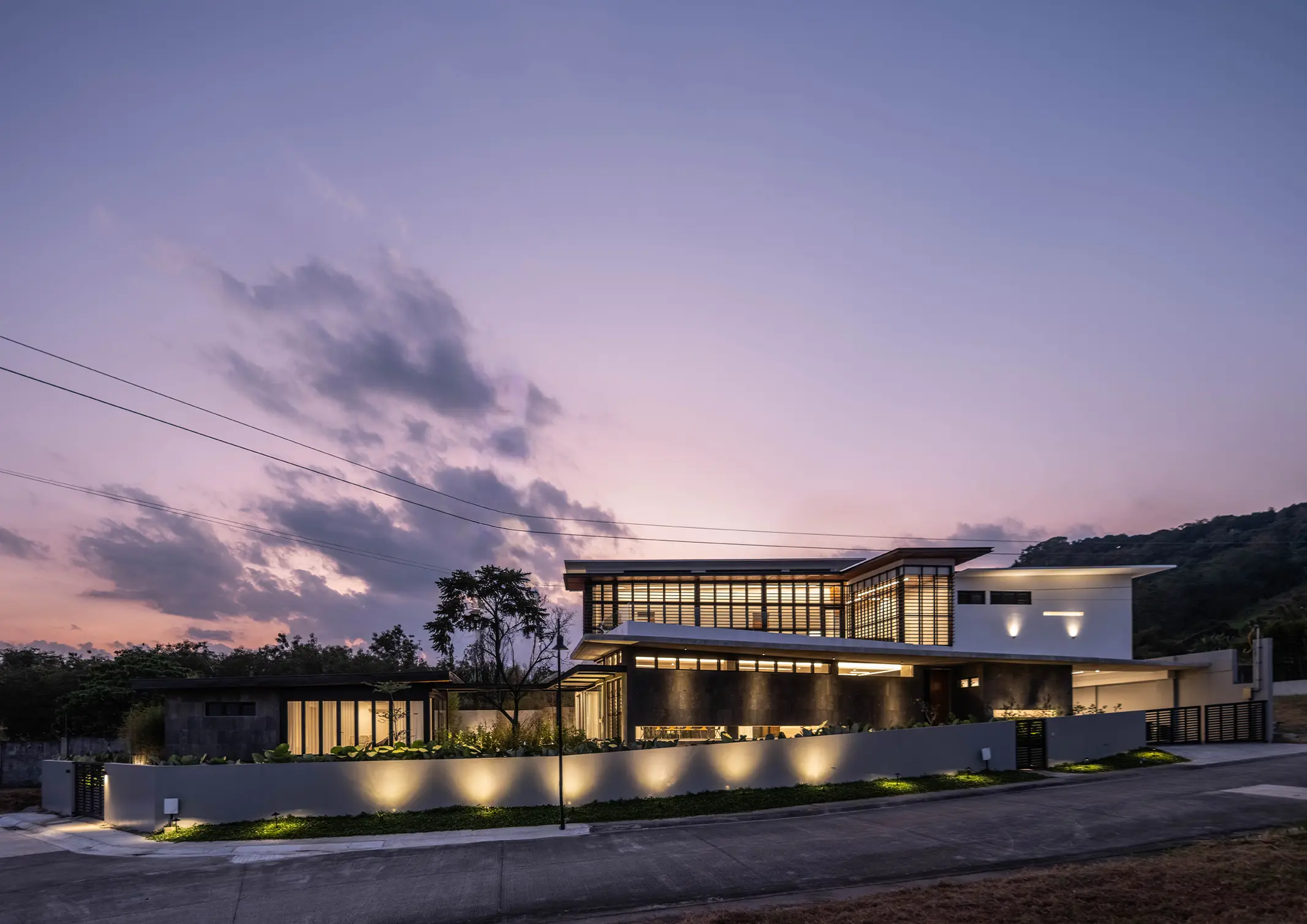
Located in Paroc, Pampanga is MQ Residence—a tropical-modern private residential home designed by Marikina-based architectureArchitectureThe art and science of designing and constructing buildings, structures, and spaces that are functional, safe, and aesthetically pleasing. It encompasses the planning, design, materials, and techniques used to createGo to Architecture Glossary firm Arkisens, spearheaded by principal architect and co-founder […]
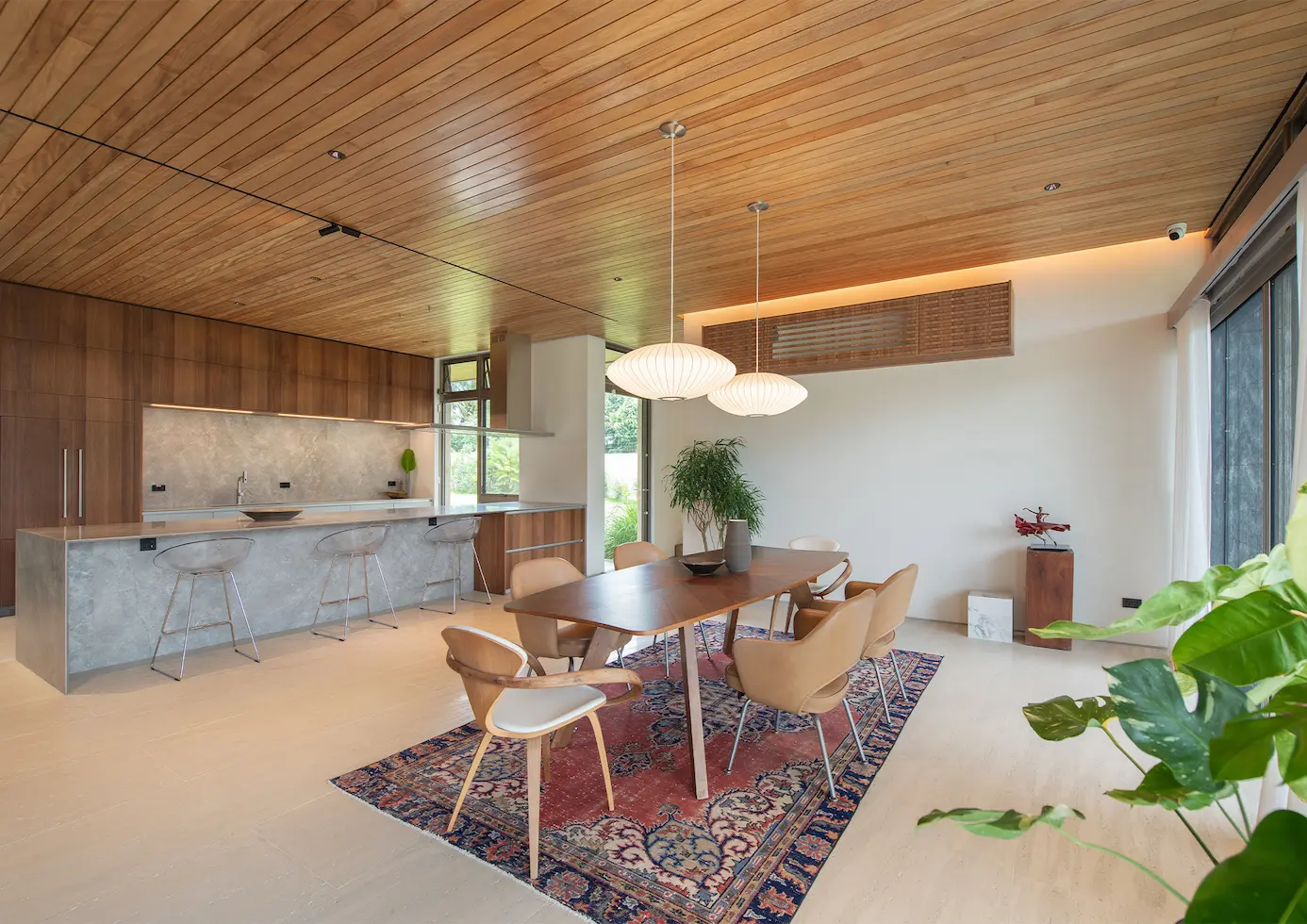
Standing on a former 1,200-square-meter pineapple plantation is CAW House, a Mid-Century ModernMid-Century ModernA design movement from roughly the 1940s to the 1960s, known for clean lines, organic curves, open plans, and a close relationship between indoors and outdoors. Filipino architects such asGo to Mid-Century Modern Glossary-inspired loft located just on the border of Silang […]
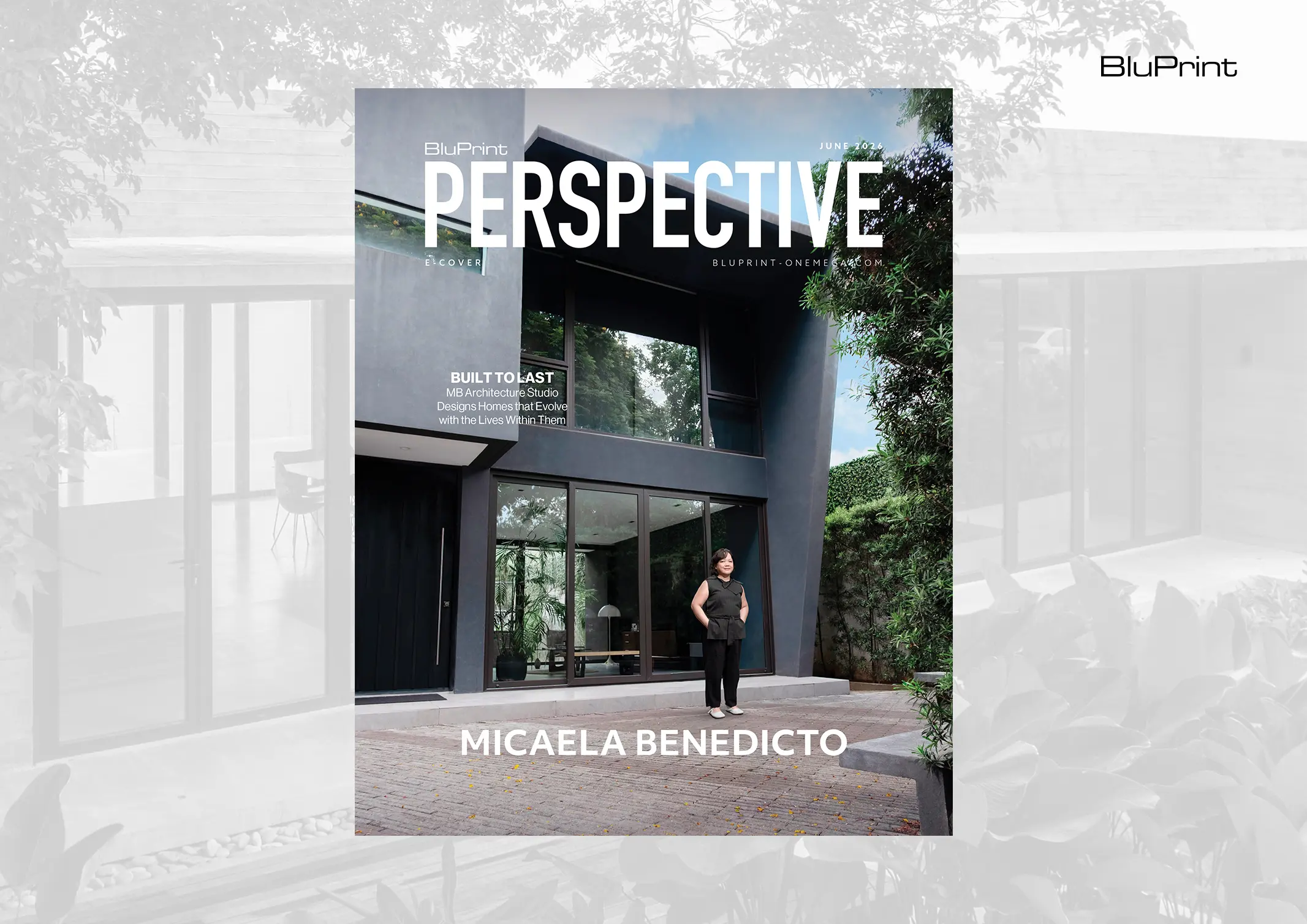
Since setting up her design firm, MB Architecture Studio, in 2007, Ar. Micaela Benedicto has built a diverse portfolio of architectural projects. Her works, whether residential or commercial, showcase a distinct spatial quality, “I like to create things that can go from something static to something that is alive and reactive,” Benedicto states. “In creating […]
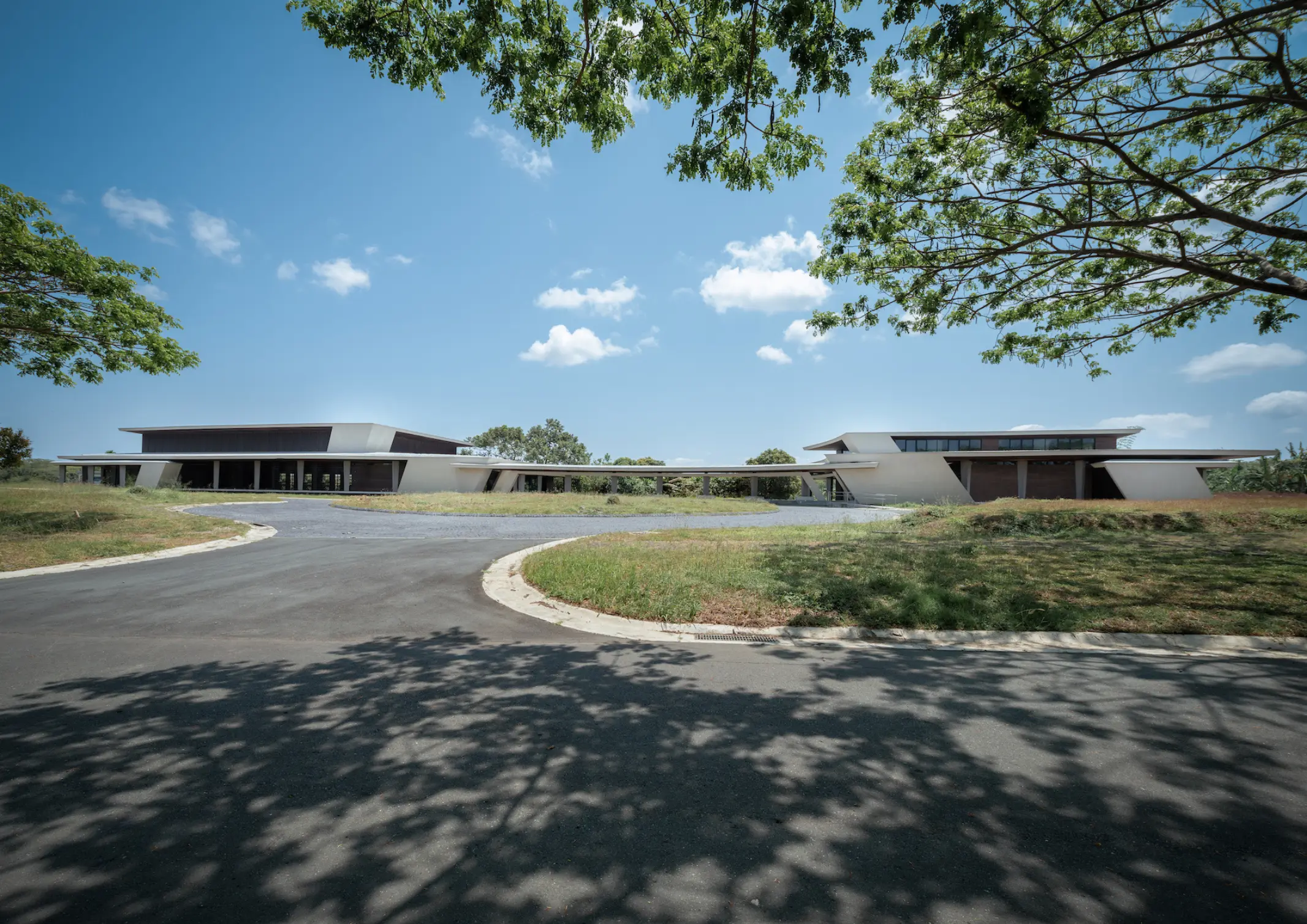
Luscara and Soliento: Barchan + Architecture on Designing a Clubhouse that Responds to its Landscape
Situated in Laguna, south of Metro Manila, is a multi-thousand-hectare development created by Ayala Land Premier within the growth corridor of the CALABARZON Region. Barchan + Architecture was tasked with crafting a clubhouse for the subdivisions of Luscara and Soliento. Principal Architect of Barchan + ArchitectureArchitectureThe art and science of designing and constructing buildings, structures, […]
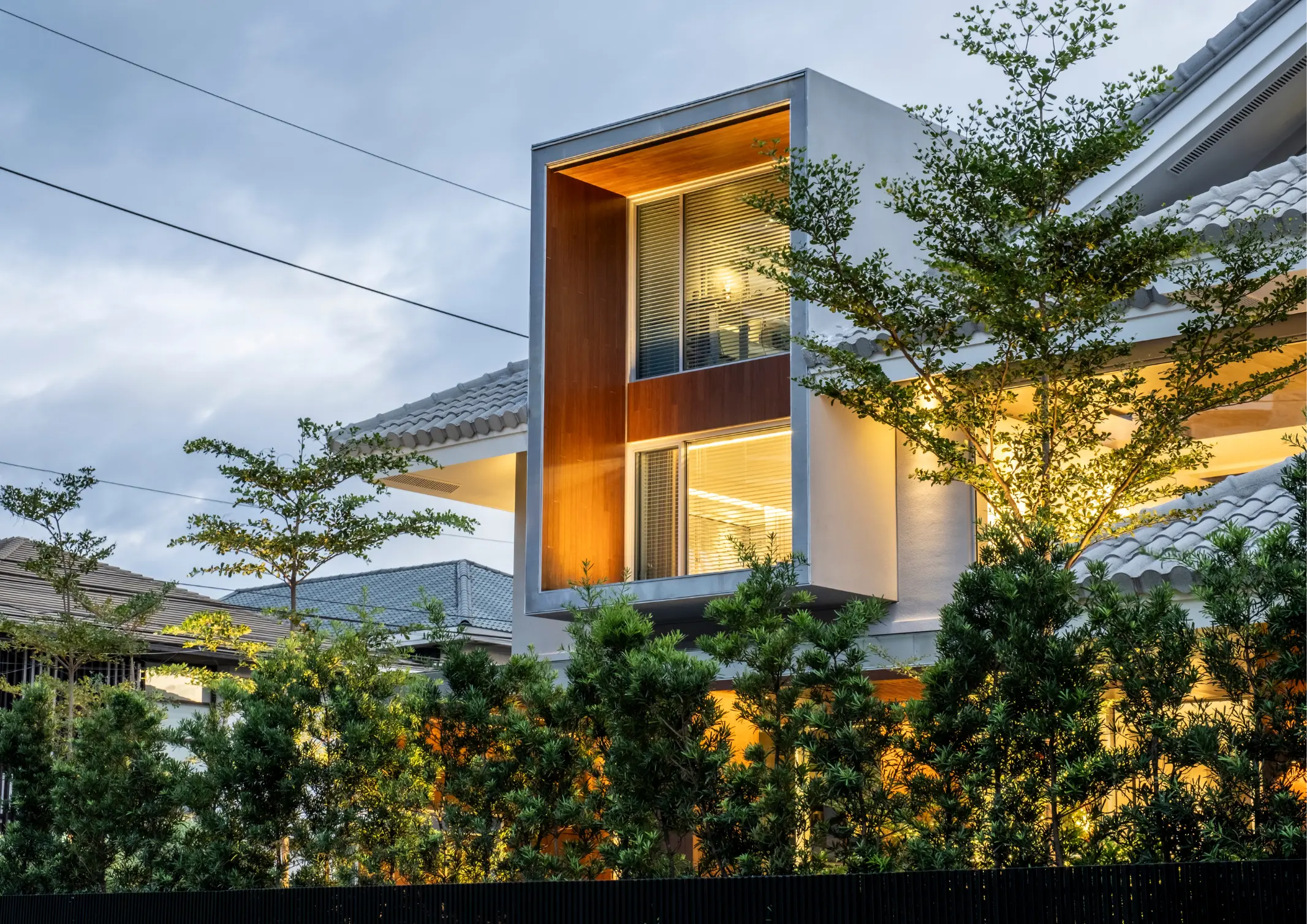
Over the past decades, adaptive reuseAdaptive ReuseThe practice of converting an old or disused building for a new purpose while keeping its structure and character. In the Philippines, it has turned heritage houses, warehouses, and factoriesGo to Adaptive Reuse Glossary has been utilized as a sustainable alternative for the built environment. It involves repurposing existing […]
Read the issues.

Collect the volumes.

Recommended Video
Tap to Unmute
Unmute
0:00
0:00