Bigkis is the act of binding. In Tagalog, the word can refer to something used to bind or encircle, as well as a bundle formed by tying several separate elements together. Figuratively, it can also mean a bond, union, or unity. The meanings move from the physical act of joining things together to the connection […]
Judy Freya Sibayan Archive Explores Early Contemporary Filipino Art



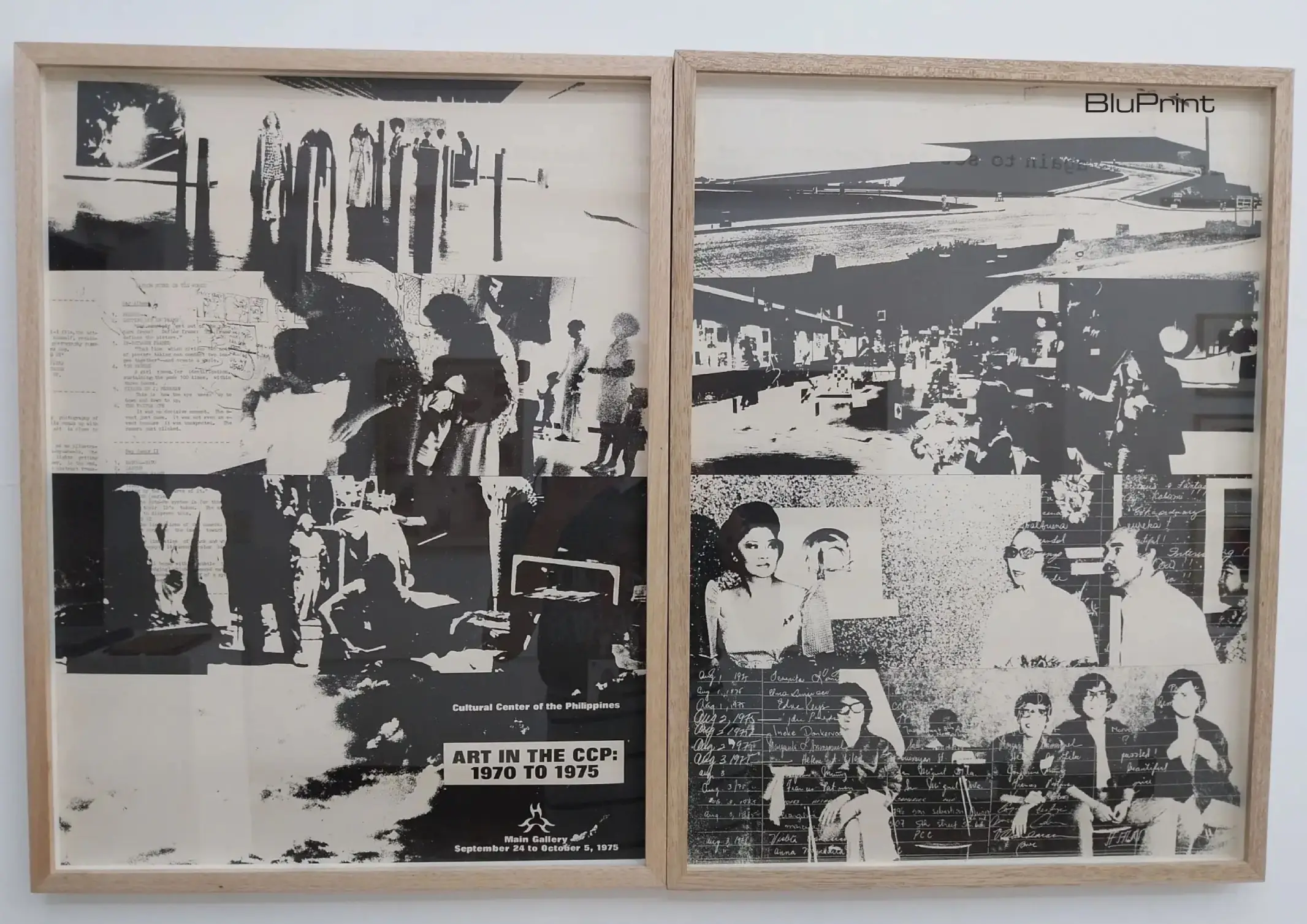
Early Philippine Contemporary Art (1969-1985) is an exhibition at Calle Wright curated by Judy Freya Sibayan, a pioneer of Philippine conceptual art. A “self-archive” from Sibayan, the exhibition features photographs, write-ups, and advertisements.
The exhibit showcases Sibayan’s own works alongside those of Huge Bartolome, Roberto Chabet, Ray Albano, and Johnny Manahan. Also represented are Nap Jamir II, Fernando Modesto, Bencab, Marciano Galang, Ben Maramag, Pandy Aviado, and Joe Bautista.
Sibayan has been cataloguing and exhibiting her personal collection of the Philippine art scene for quite some time now. In fact, even during the 1970s, she had started writing about art in different publications like Marks and Philippine Art Supplement. The impulse to do so came from the desire to document the progress of the local scene. She quoted Albano as saying: “Ours is a simple case of existence: write about art so art exists even after all events have transpired.”
Judy Freya Sibayan and Institutional Critique
Judy Freya Sibayan is described as a practitioner of Institutional Critique, or the analysis and critical inquiry of art institutions through art. Her works analyze the practice and social form and methodology of galleries, museums, and the art world in general.
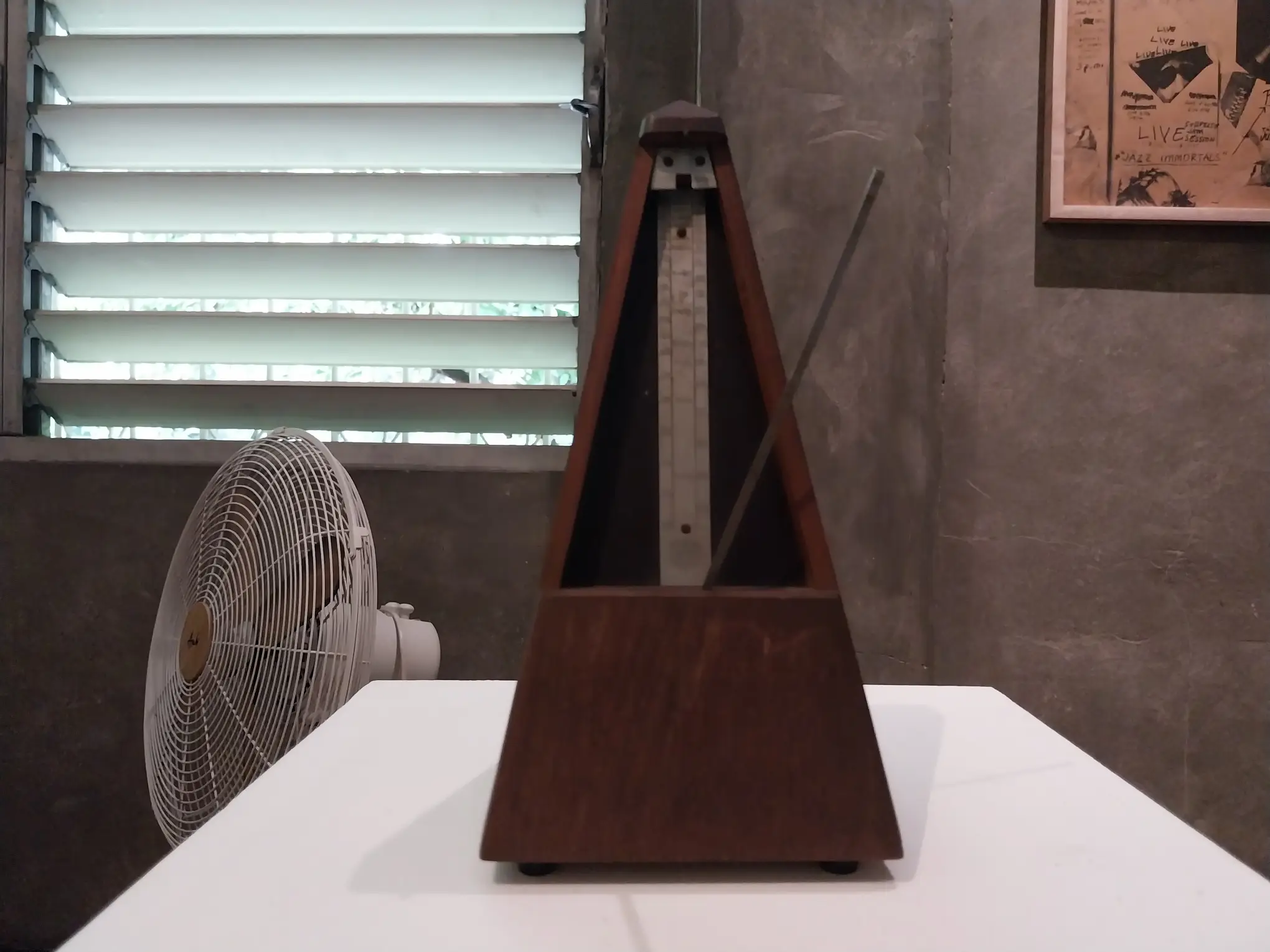
Works from Sibayan, like “Untitled (Lemon Cake)” from 1974 where she crashed an exhibition with lemon cake, milk, and a metronome shown on the hood of a car before serving the lemon cake to guests, showcase the rigidity of institutions compared to the boundless and uncategorizable nature of art in general. Art is bigger than galleries and museums, she seemed to say, and exists even without their support.
Thus, Early Philippine Contemporary Art (1969-1985) provides us with a perspective of the time period through collected artifacts and artworks during a budding and explosive time in Philippine history. Sibayan and her peers’ work during the Marcos era was in conversation with not just the local politics at the time, but the innovations of the art world at large.
Memorializing the Concepts
The exhibits memorialized here are conceptual art, performance art and site-specific art, many of which aren’t as easily preserved as paintings or sculptures. These works echoed the performance art that was happening in Europe and the United States, where artists like Marina Abramović or Carolee Schneemann were breaking taboos and barriers with their artworks.
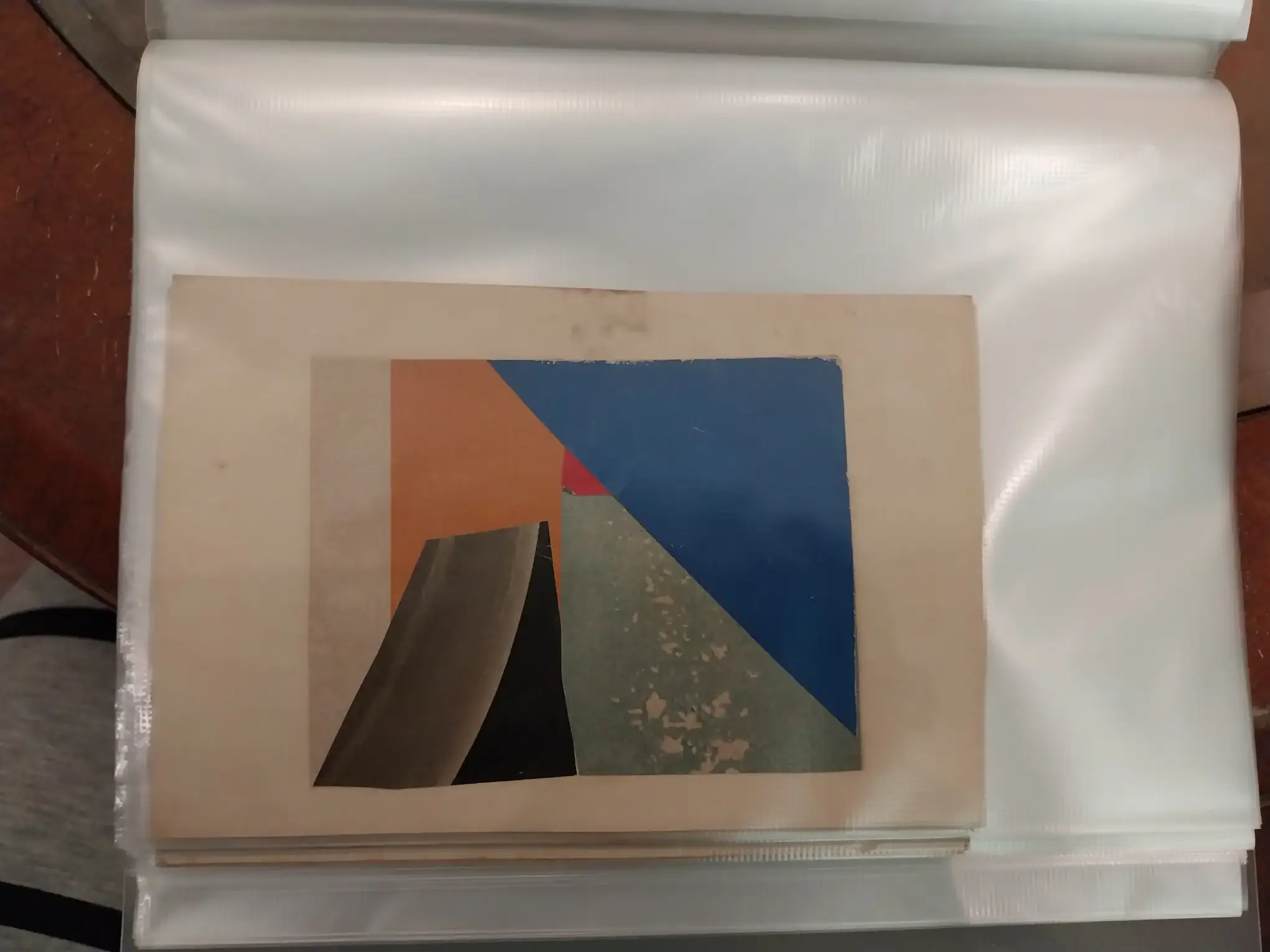
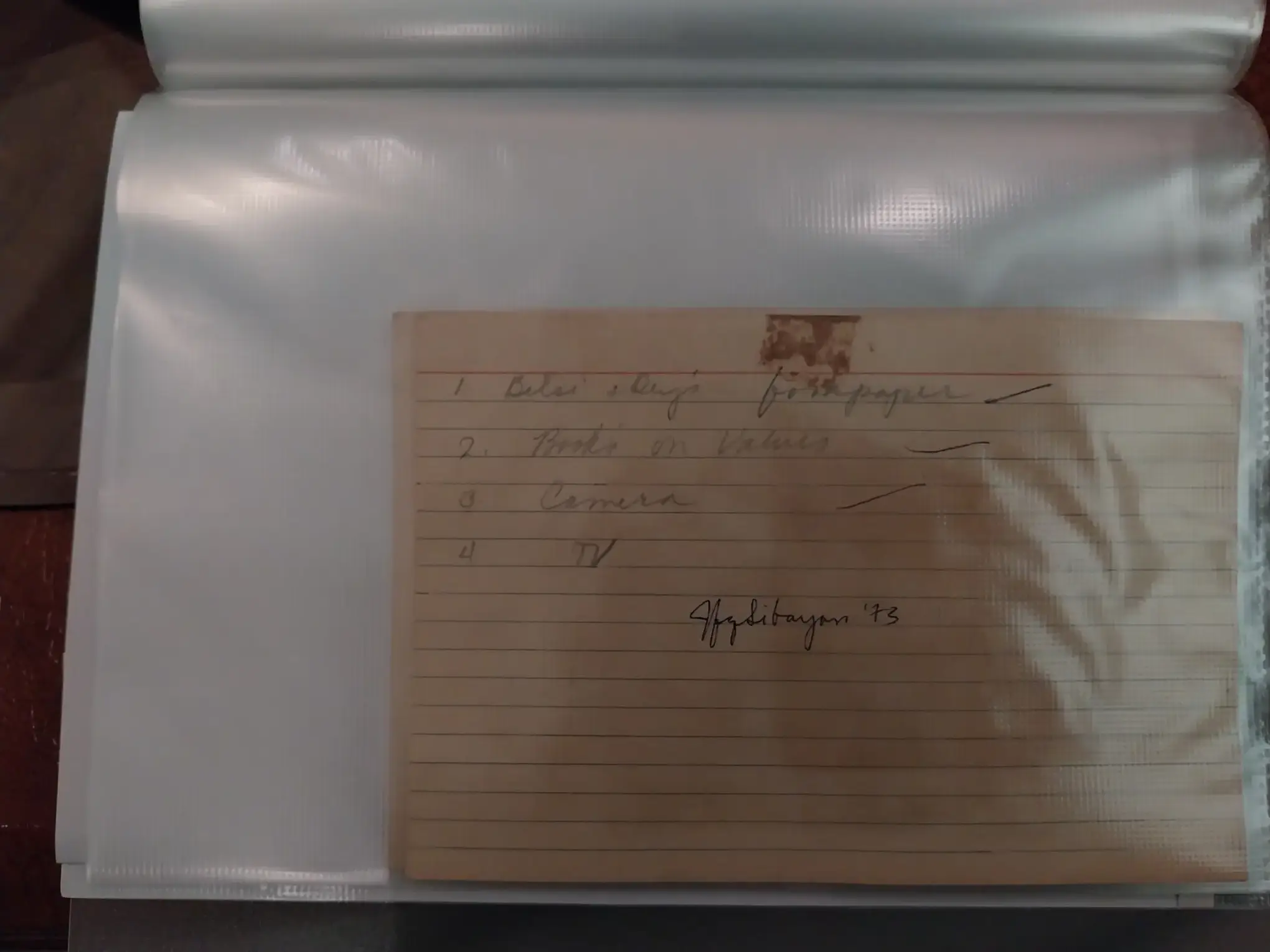
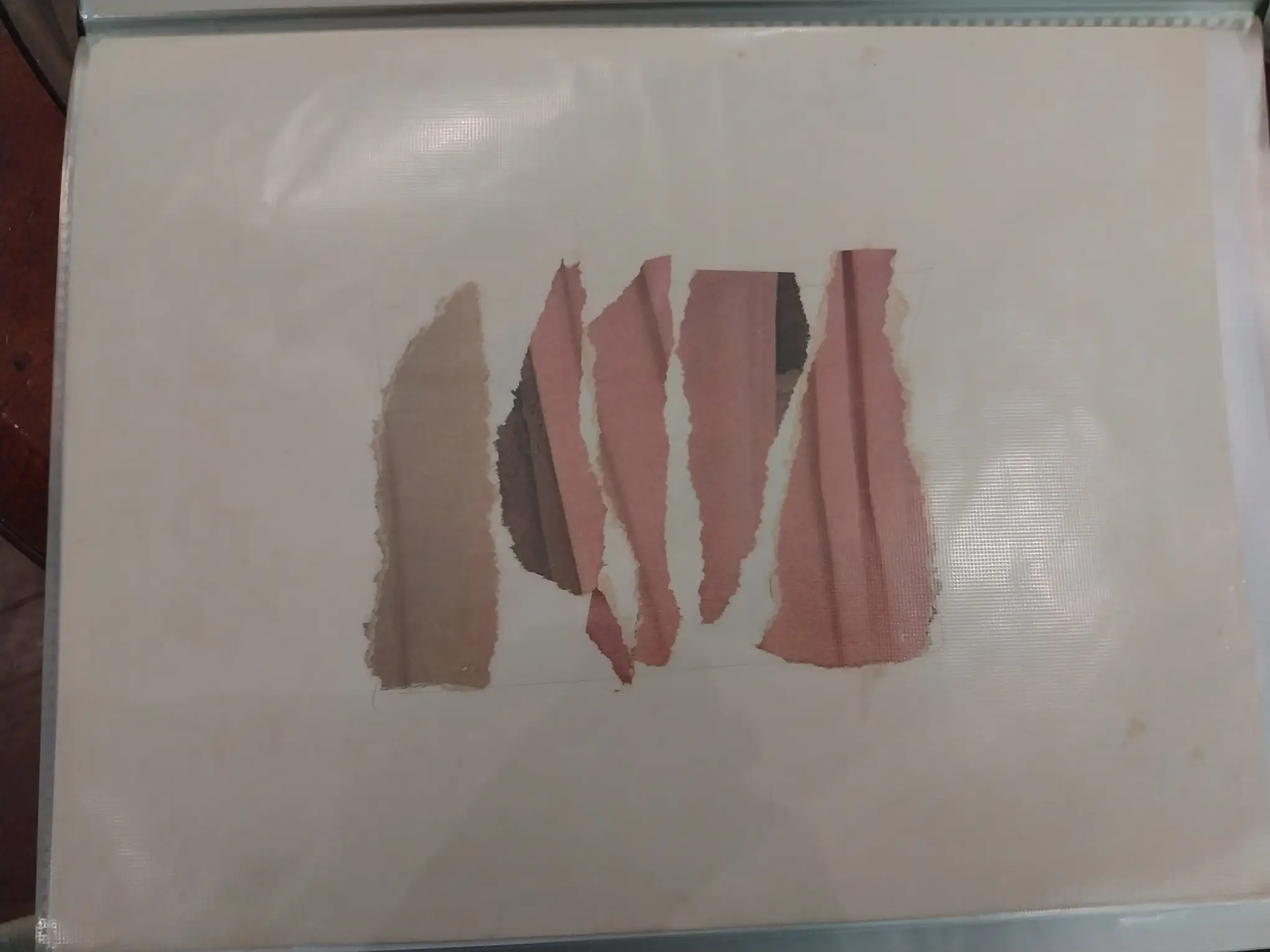
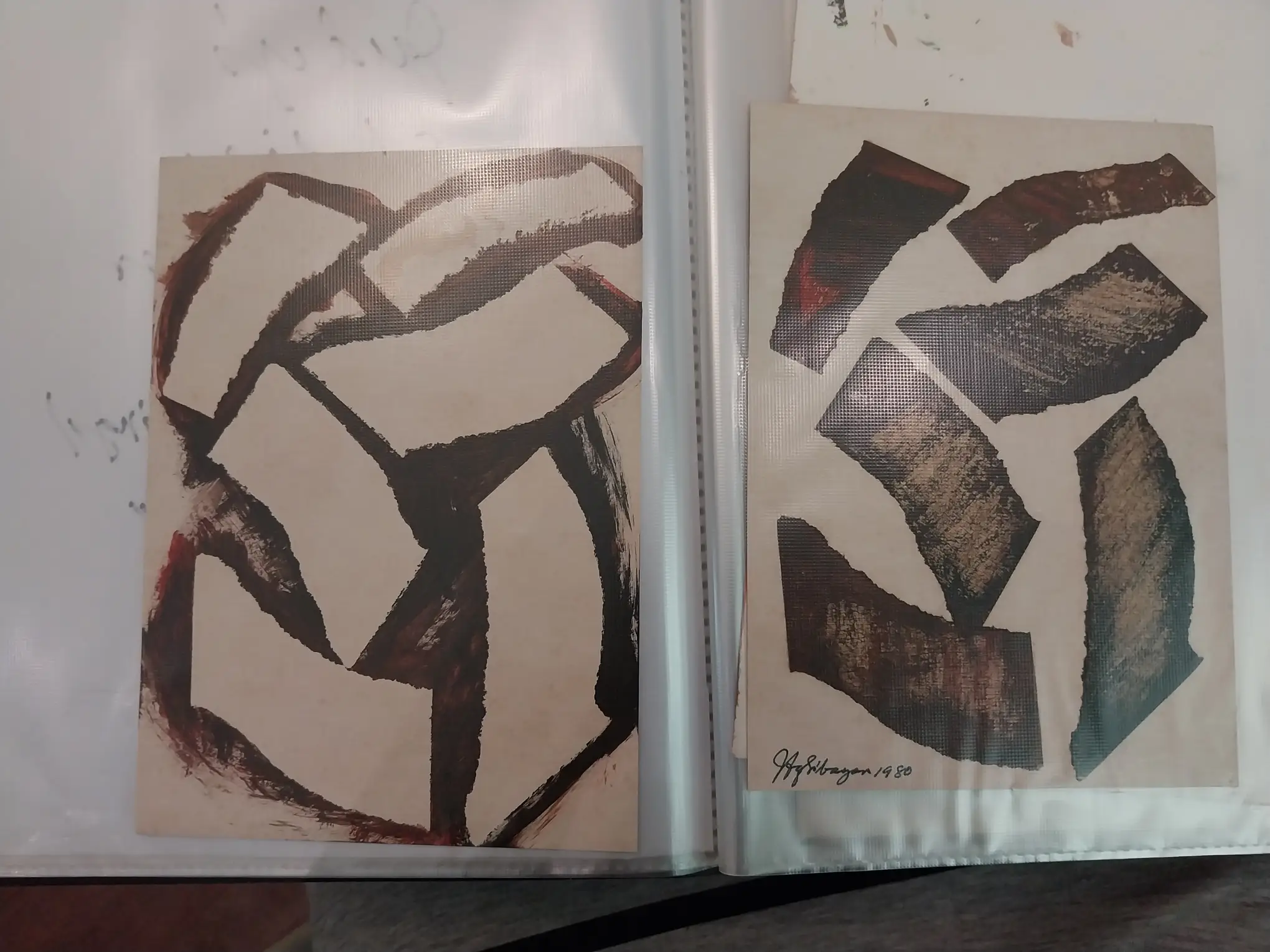
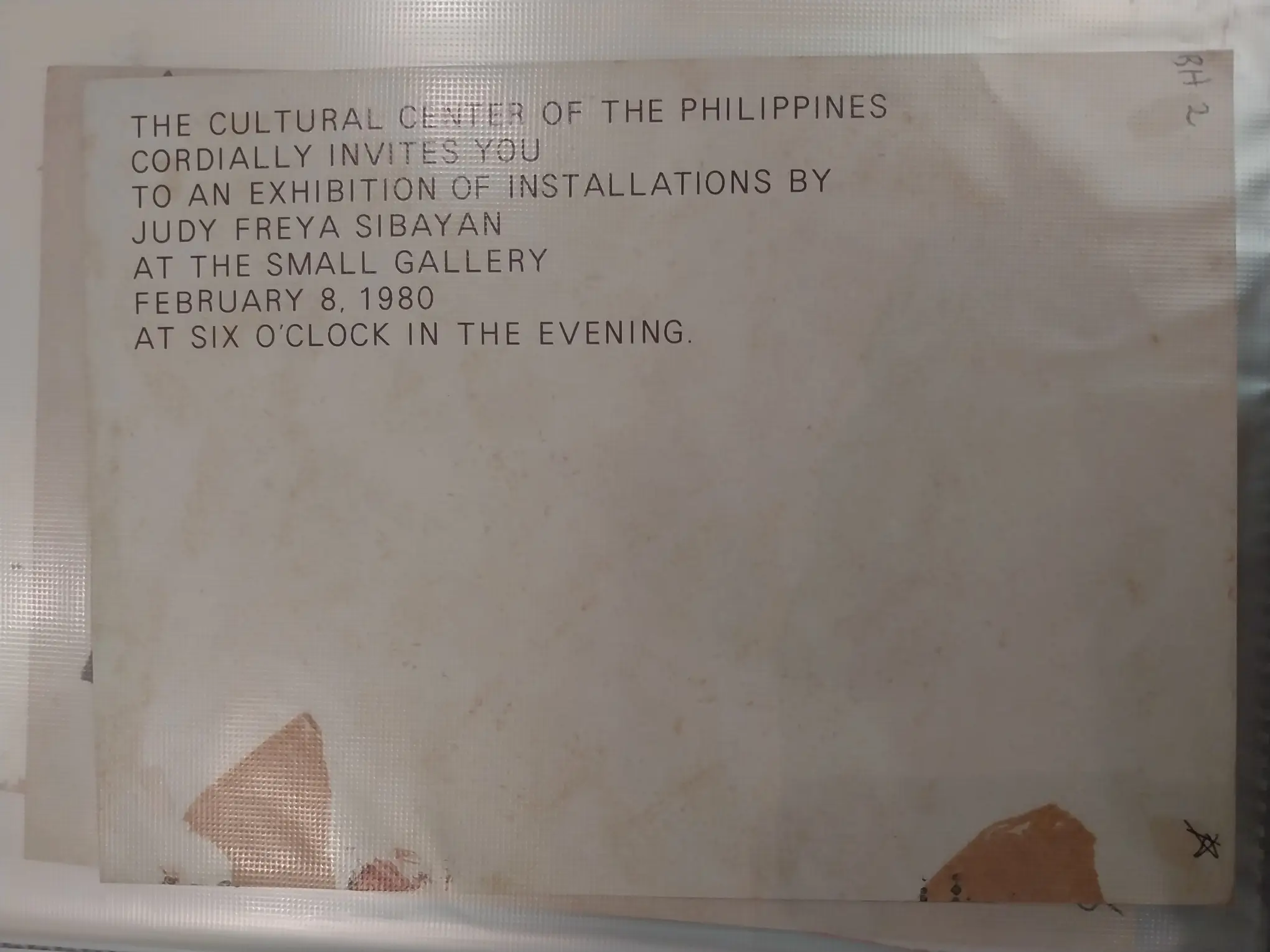
At the time, Sibayan and company focused on interactivity with the audience, peering into the transitive and ephemeral experience that art can have—how it changes based on the way audiences respond to it, how it molds itself around the societal constructs and expectations we have, then breaks it thoroughly.
Here, one really gets a fuller picture of the boundary-breaking nature of the works, finding a way to fully appreciate what they were doing at the time. It showed a section of Philippine art that’s in league with conceptual and performance art happening internationally during the same period.
Preserving the Past
Calle Wright’s approach to showcasing Early Philippine Contemporary Art (1969-1985) found creative ways of discussing and showing the works in special ways, putting it in context of the time period while still adapting it to our modern day.
The space at Calle Wright has a homey and familiar construction to it that provides a relaxed atmosphere to visitors of the exhibit. The architectureArchitectureThe art and science of designing and constructing buildings, structures, and spaces that are functional, safe, and aesthetically pleasing. It encompasses the planning, design, materials, and techniques used to createGo to Architecture Glossary, with its mix of neoclassical and Spanish design, has a home-like vibe that gives audiences a casual, easy way to absorb these recreations.
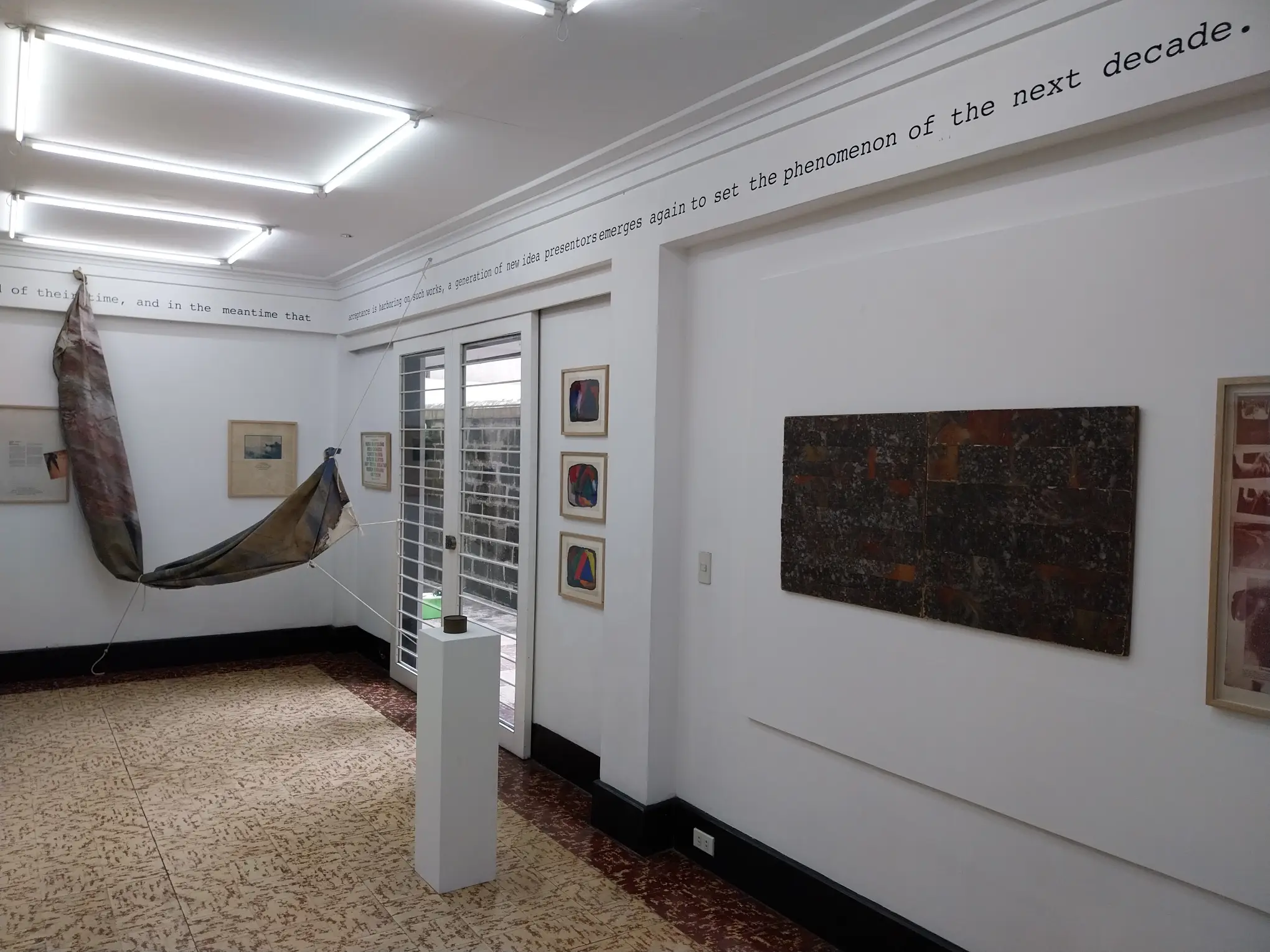
One work of Sibayan that was recreated, for example, is this giant, tied black-and-red painting that partially spans part of the ground floor of the gallery. Two ends are tied to the ceiling, while one end hangs low in the floor, creating an arc that hints on the abstract landscapes in the original painting.
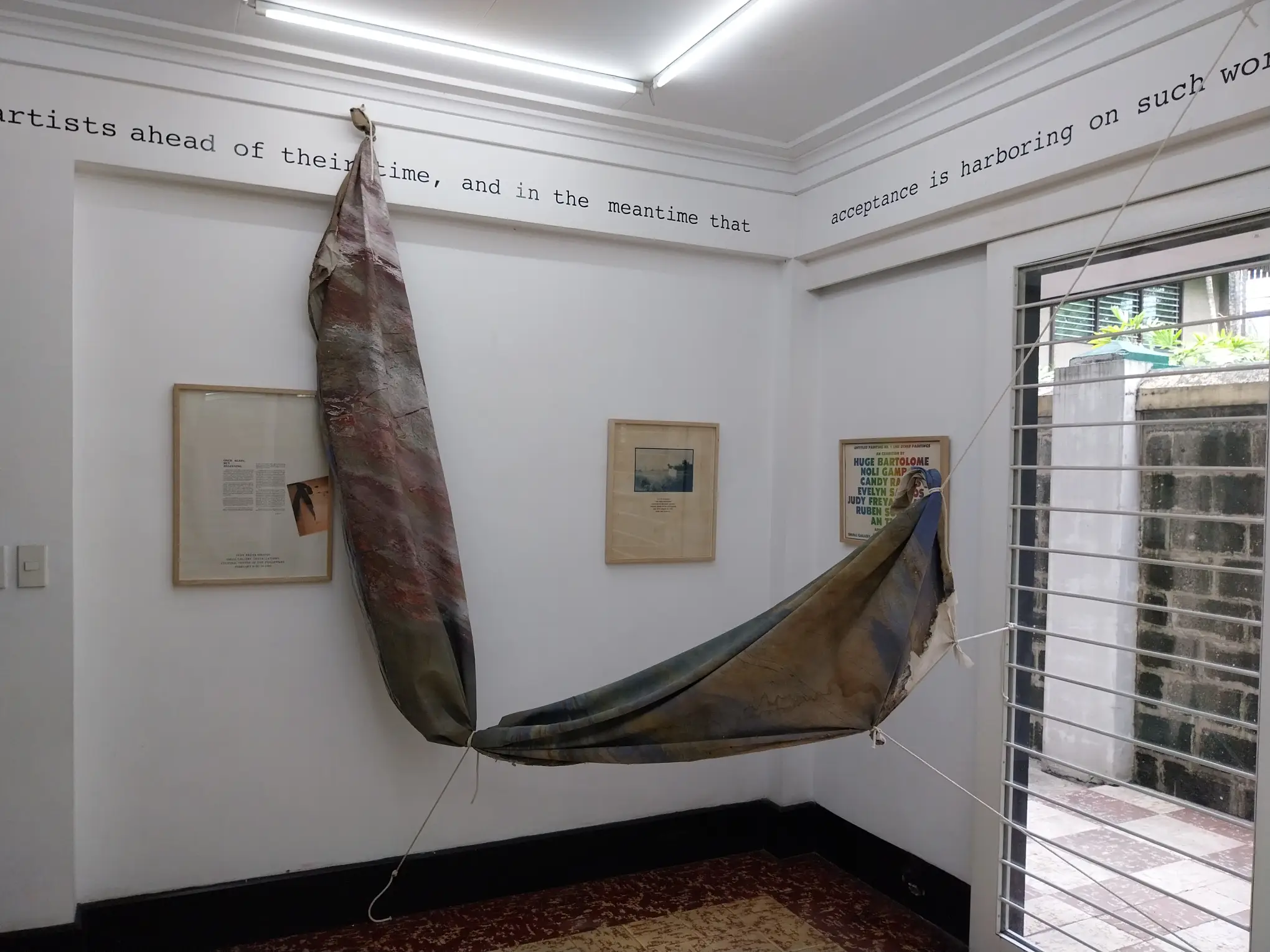
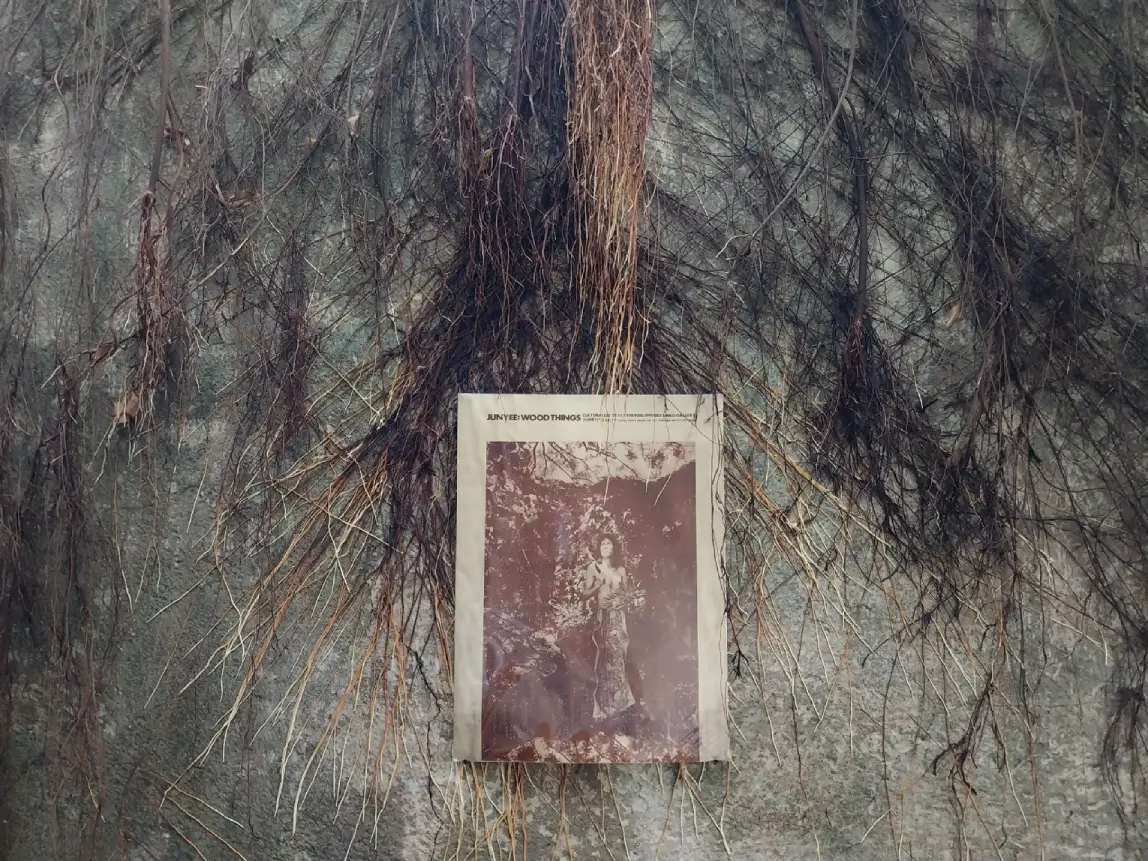
Next to it is a framed poster that advertised an exhibition of Sibayan in 1980, complete with a write-up by Ray Albano. In her notes, she said that the concept was first done in 1980 in the CCP Small Gallery, itself a reference to Johnny Manahan’s “large scale shaped canvases” that showed in the same gallery in 1975.
One of the gallery employees in Calle Wright even said that the canvas was by Manahan, acquired by Sibayan as a way of recontextualizing the art within the space. During the opening, beyond recreating “Lemon Cake,” she also performed this recontextualization by unrolling Manahan’s work and then retying it to the form seen during the exhibition.
New Contexts for Old Ideas
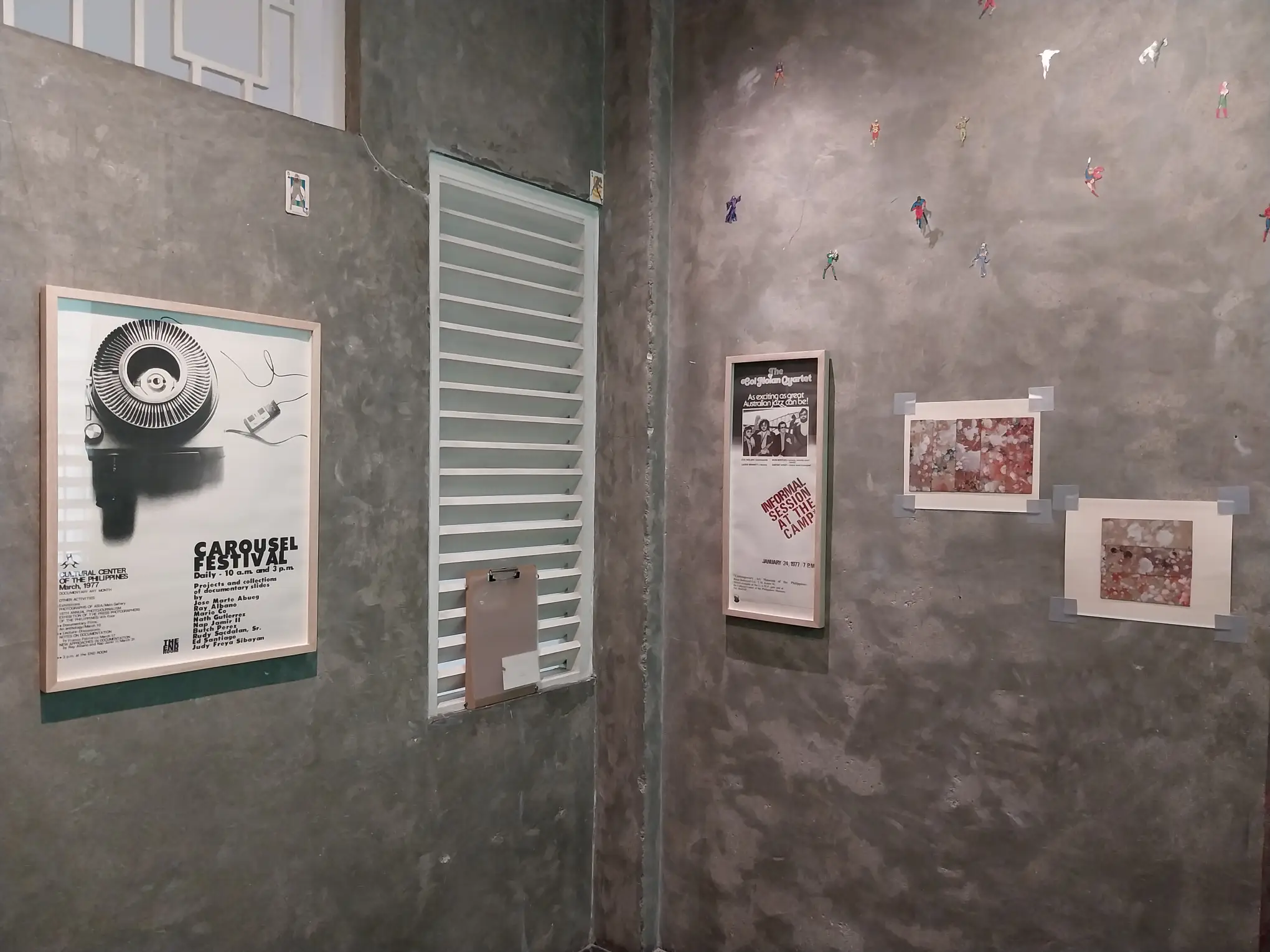
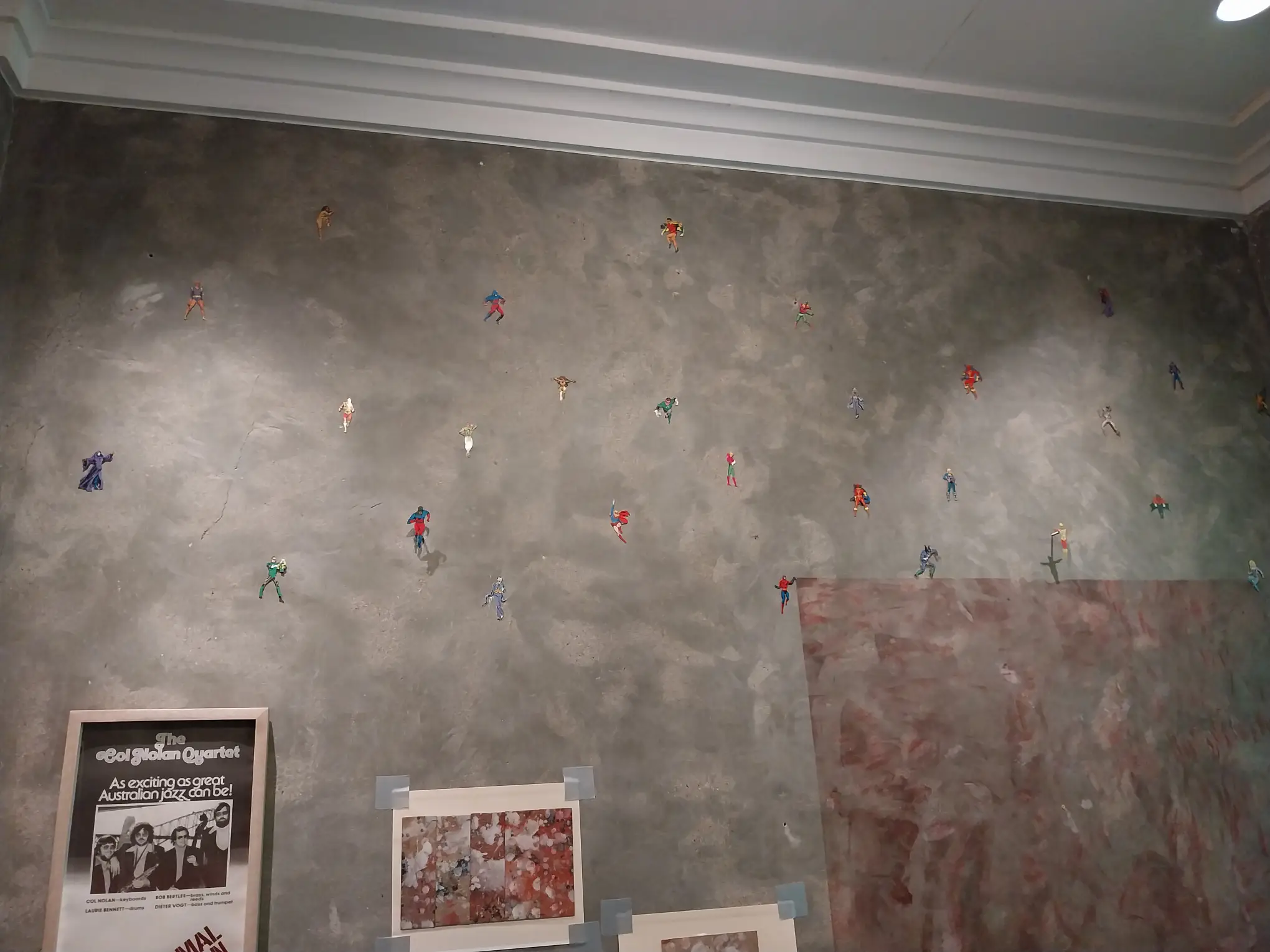
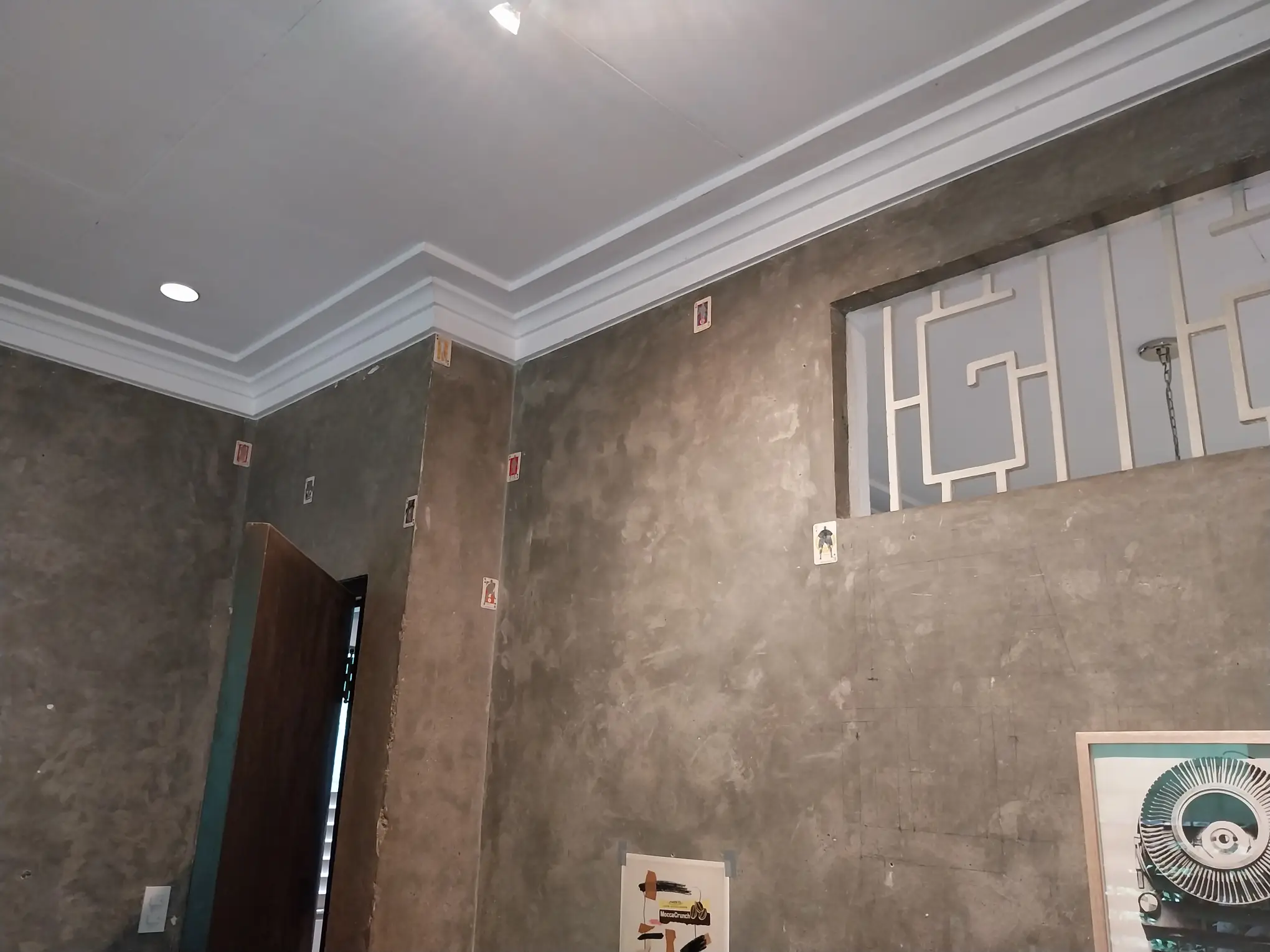
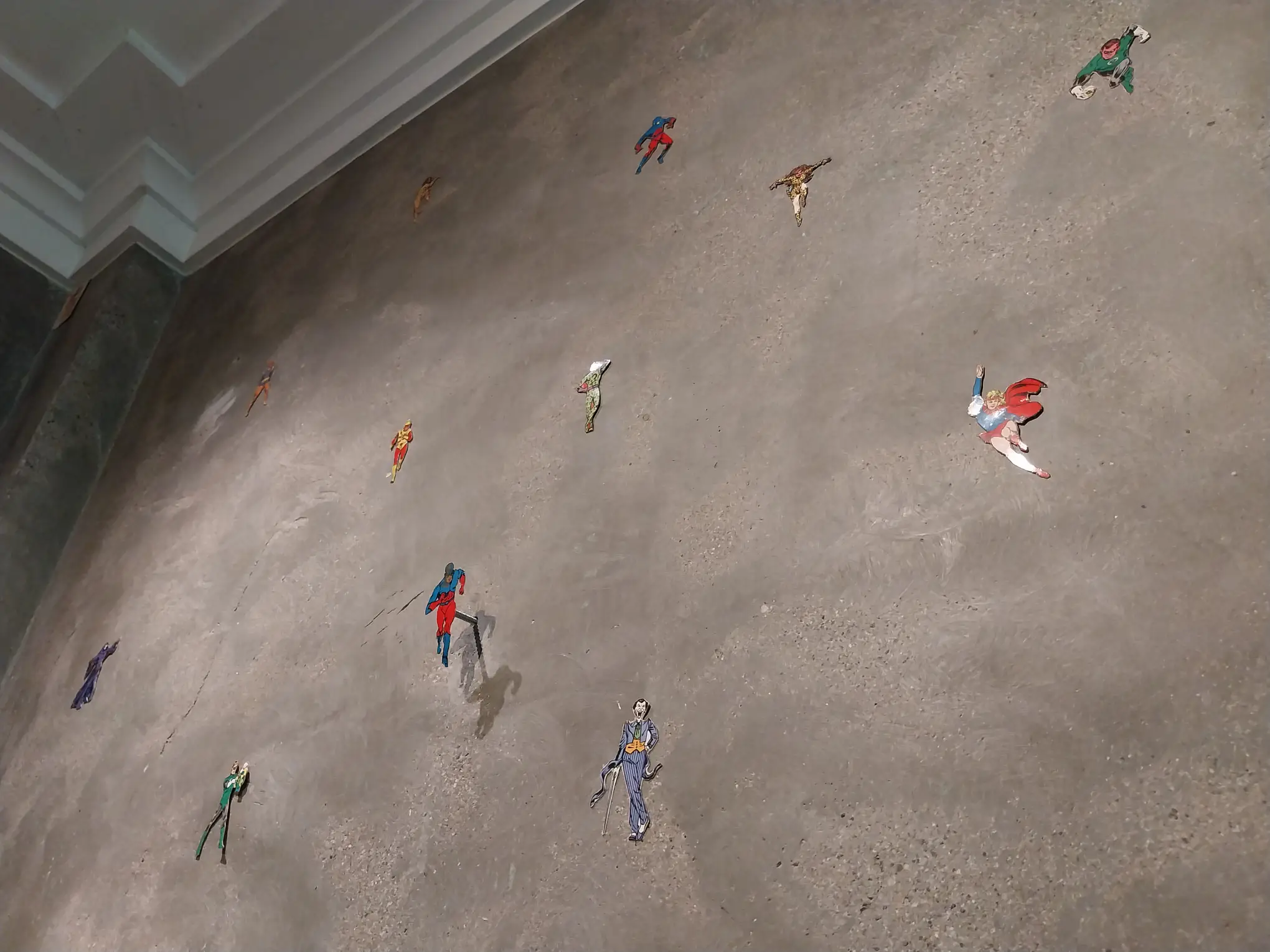
Another room has stickers of superheroes and playing cards strewn across the walls. It calls back to one of the artists shown in the exhibit and their own propensity to do such things in the exhibit. Such a collection is also paired with the posters and samples of artworks from the artists.
Overall, within the context of the exhibition, it allows you to peer into a summary of the uniqueness of each of the artists featured in the exhibit. Not just their artworks, but the quirks in how they set up their exhibitions and performances. It lets the audience experience the way these artists approached art from a relaxed, renewed context.
In Conversation with Philippine Art Today
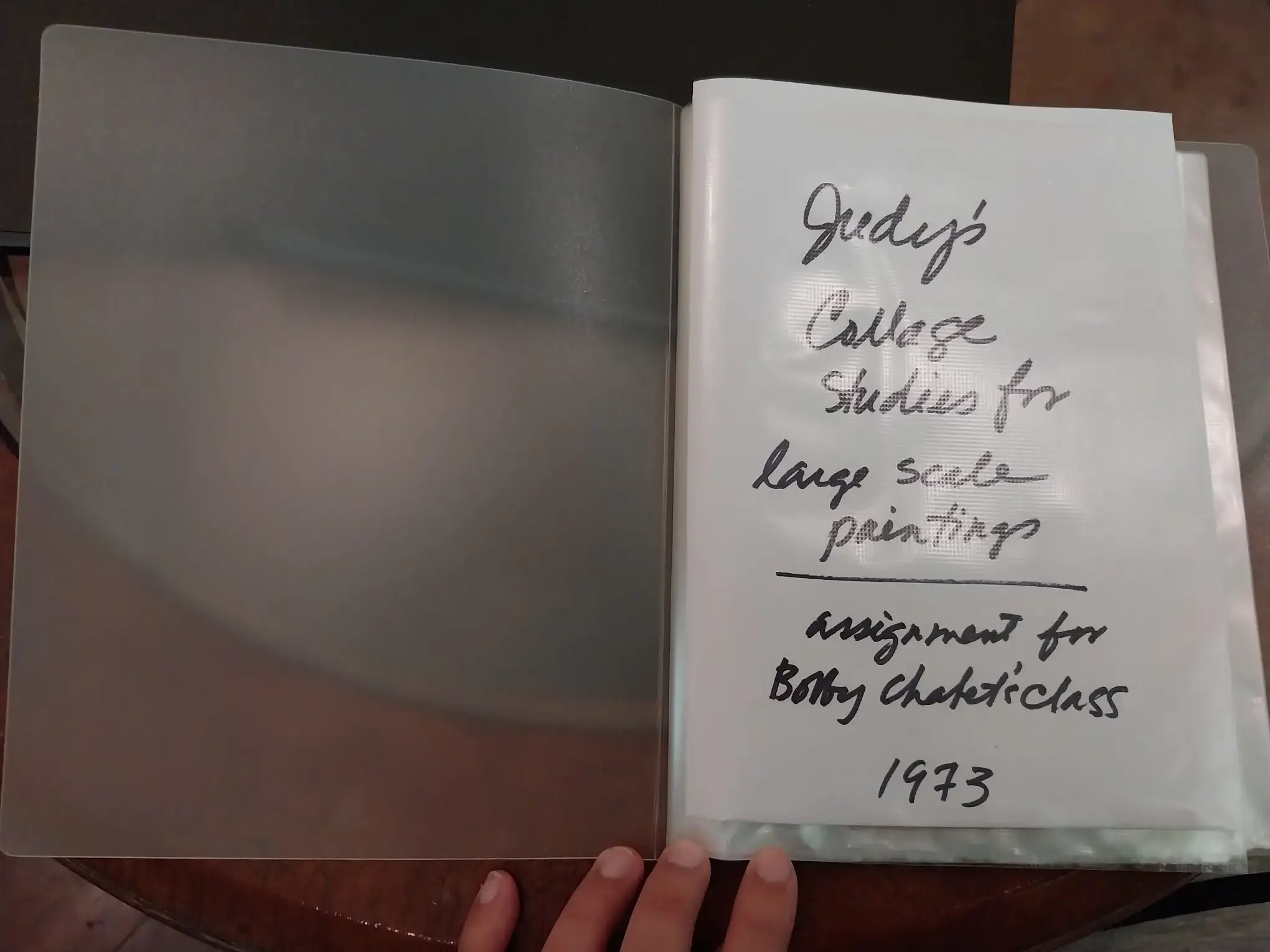
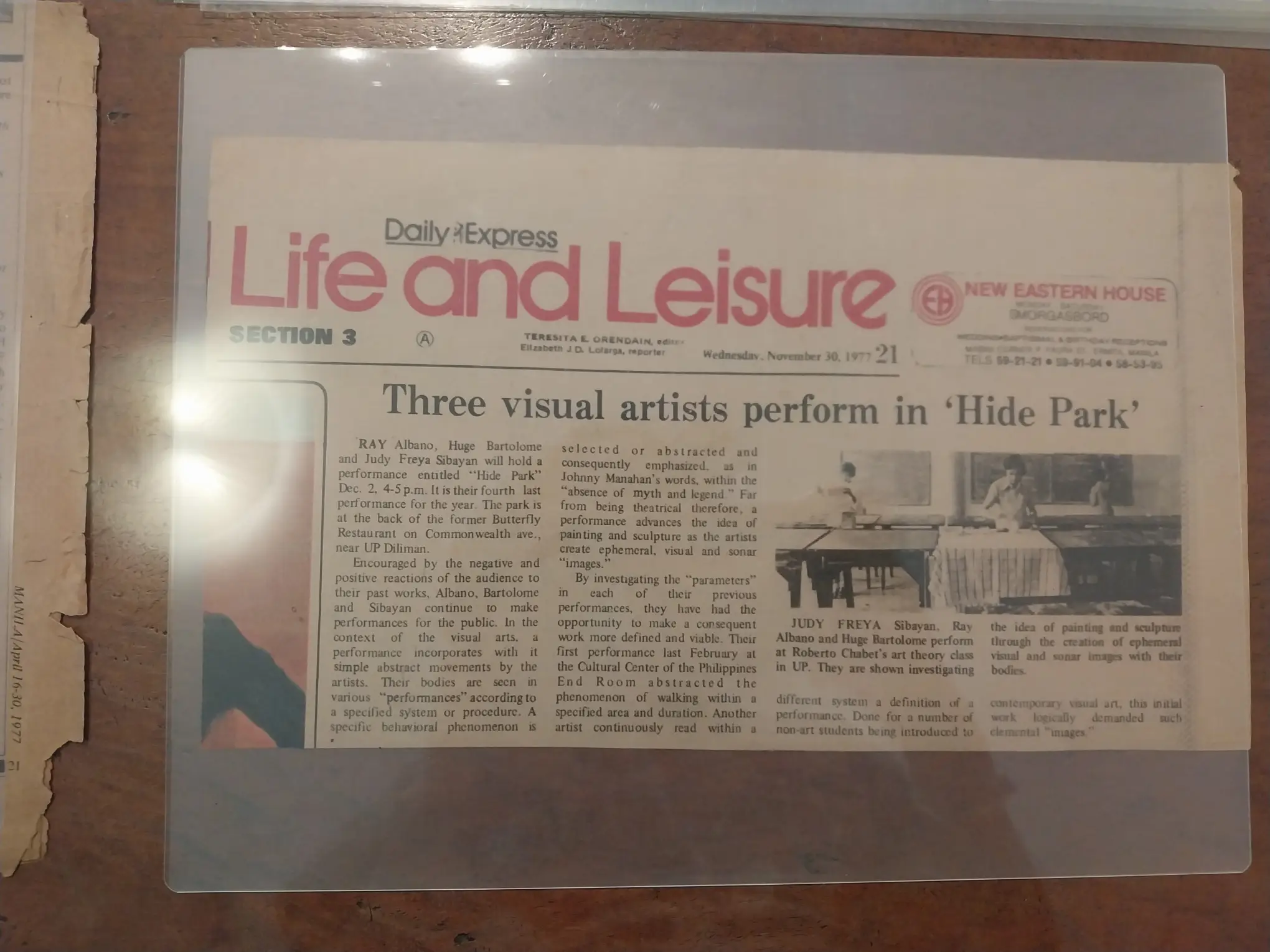
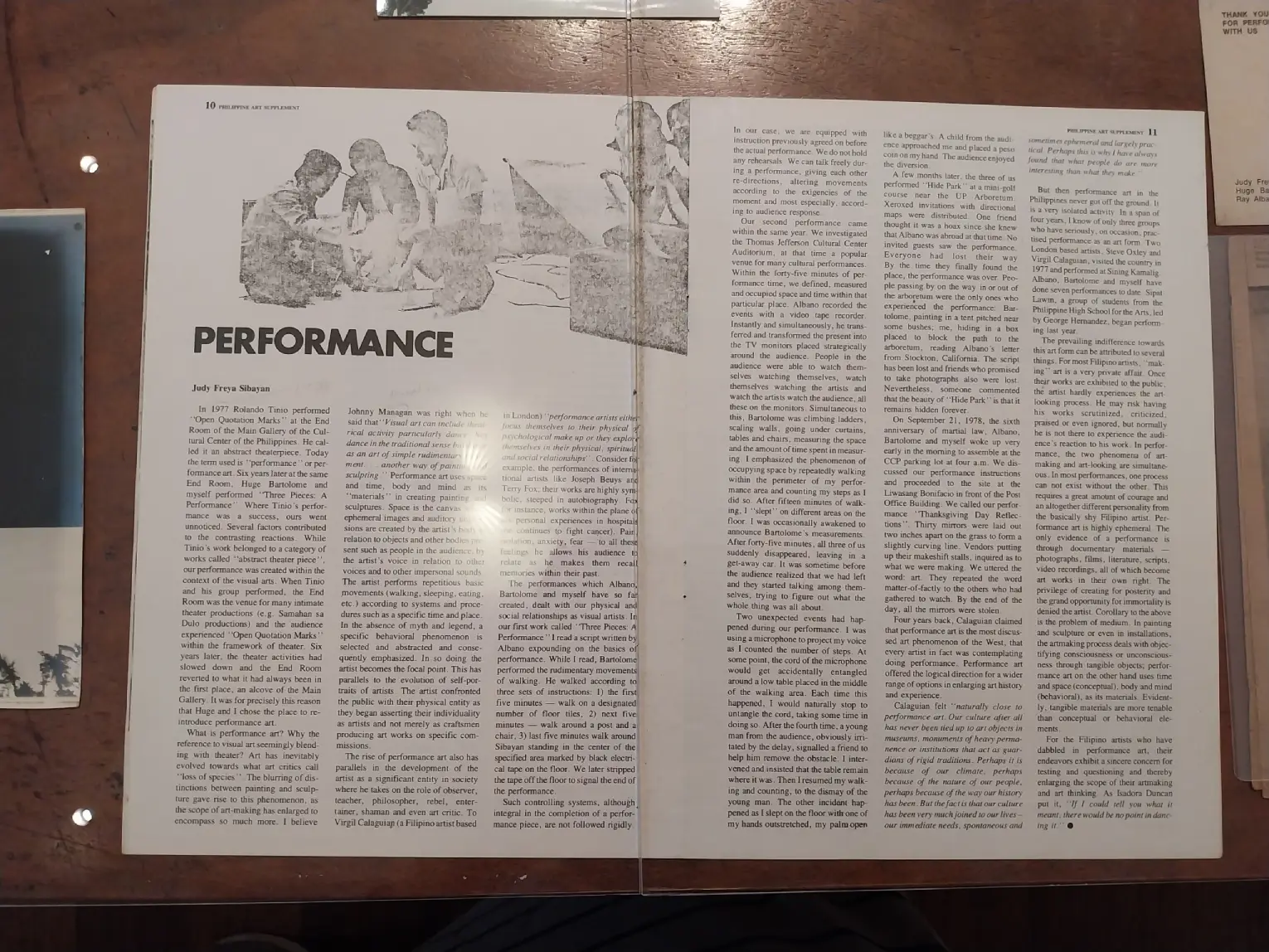
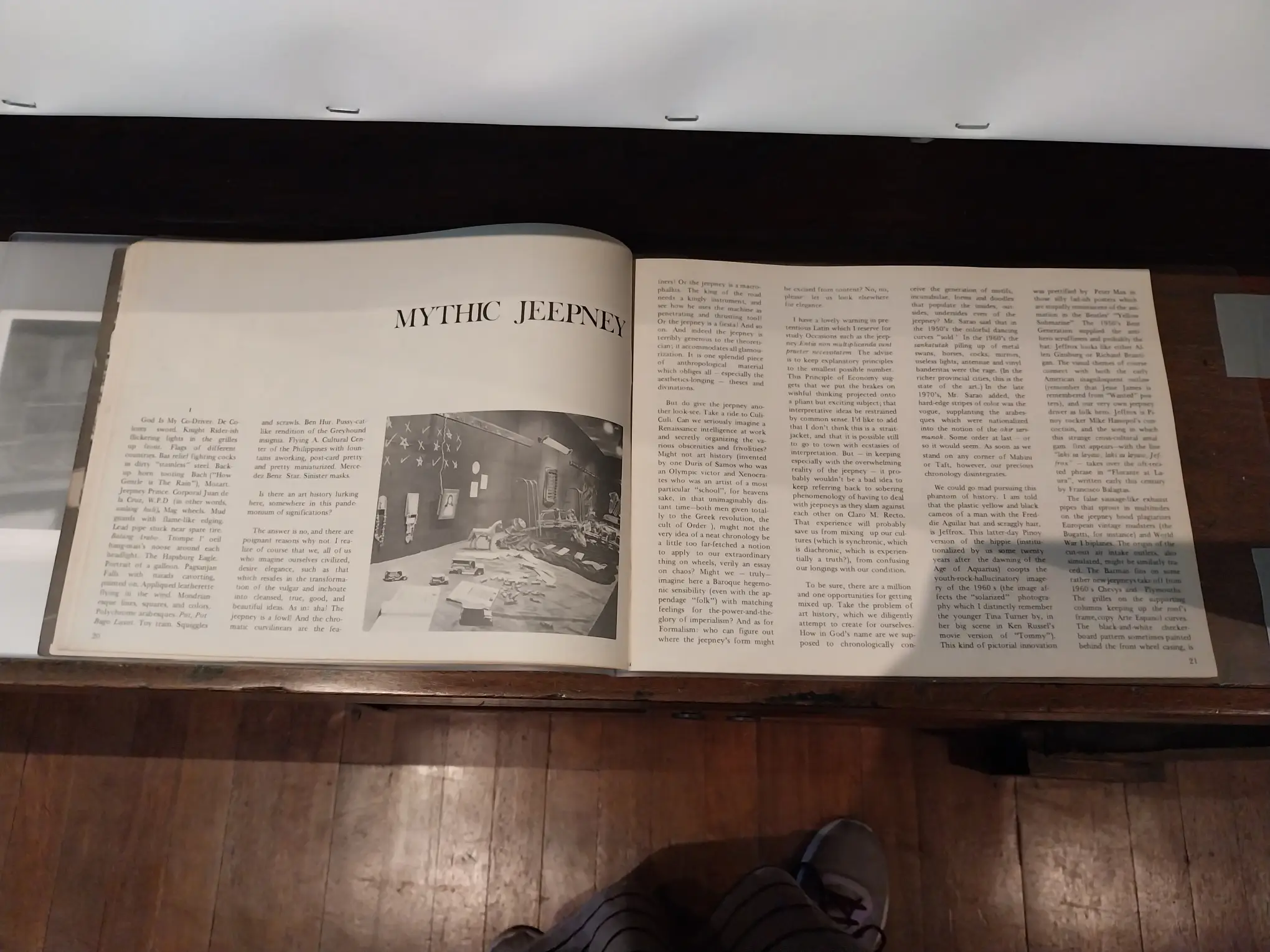
Any art history enthusiast would have found a lot to enjoy here. Framed posters advertising some of the exhibits are scattered across the exhibit. Meanwhile, newspaper articles showcasing the reactions of the time are shown, and visitors can get an idea of the artistic ambitions of the time with the artists’ working sketches of works and whole books discussing their methodology.
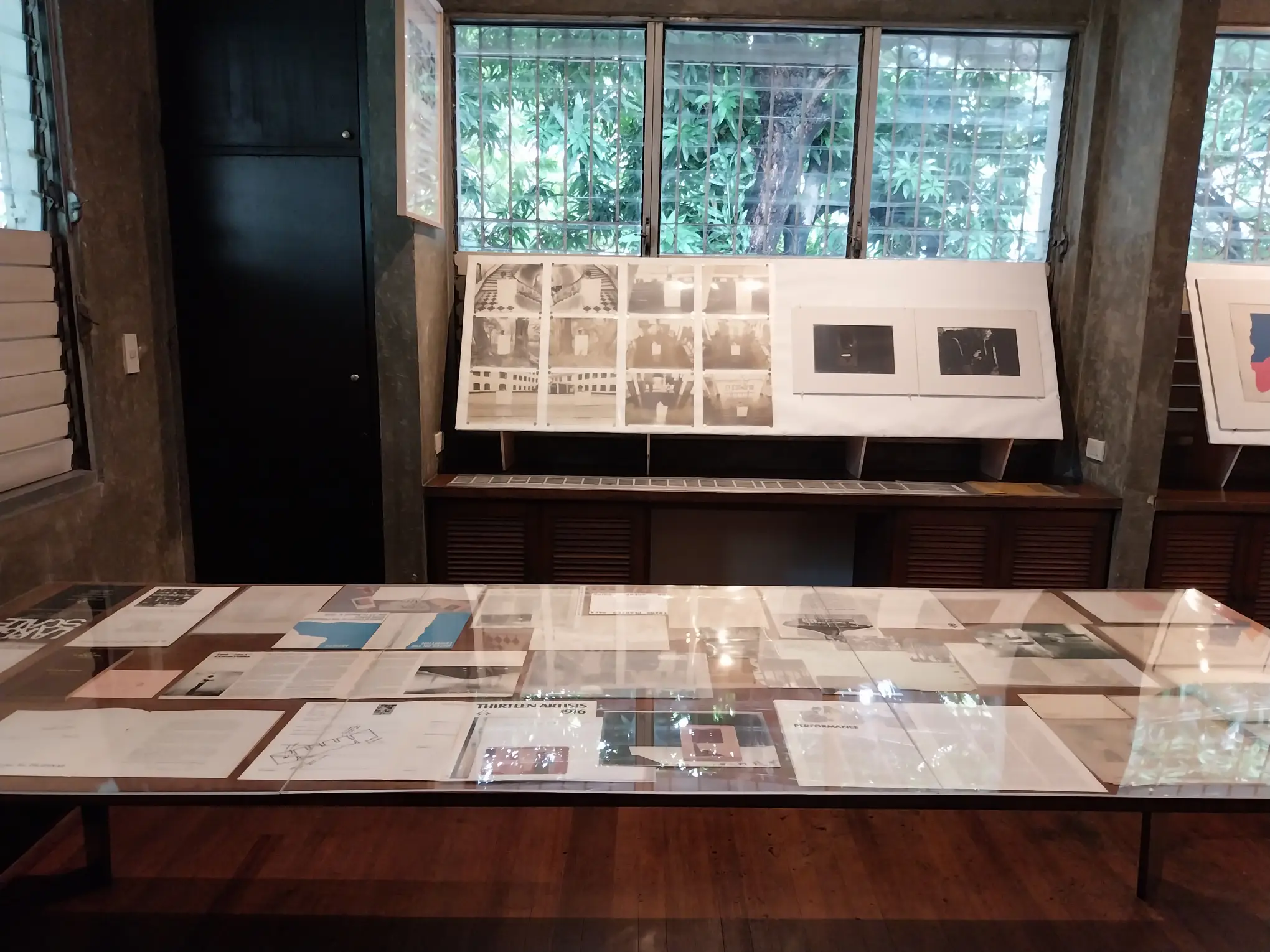
An entire room is dedicated to the write-ups and newspaper articles of different exhibitions done by Sibayan and company during the time period, from living theater-styled performances to large themed exhibitions in the CCP. The documentation laid out on the project is truly informative and overwhelming. It’s easy to lose track of time as one pores through Sibayan’s archive.
Boundary-Pushing Work?
These archival information are interesting because they are very much boundary-pushing work. A lot of it is performance art that prioritizes abstraction in the actions of the human body. It has a theater-like quality in it, but like what’s happening in the West, it was focused on shocking institutions, poking fun at the standards of the time while looking towards a new future.
But they’re also boundary-pushing work that still co-existed within the institutions of the time. Reading about these works and seeing some of them within the exhibit, they do appear to critique the weight we put on tradition, but it also feels like it pulls some of its punches to still appeal to the haute bourgeoisie of the time.
It focuses more on questioning our artistic traditions and institutions, without really taking the step to include it to the broader narrative of our society. Even as it worked as a sort of answer to the counter-culture movements in other countries, analytical of our art practices, many of these were also still funded and shown by the state.
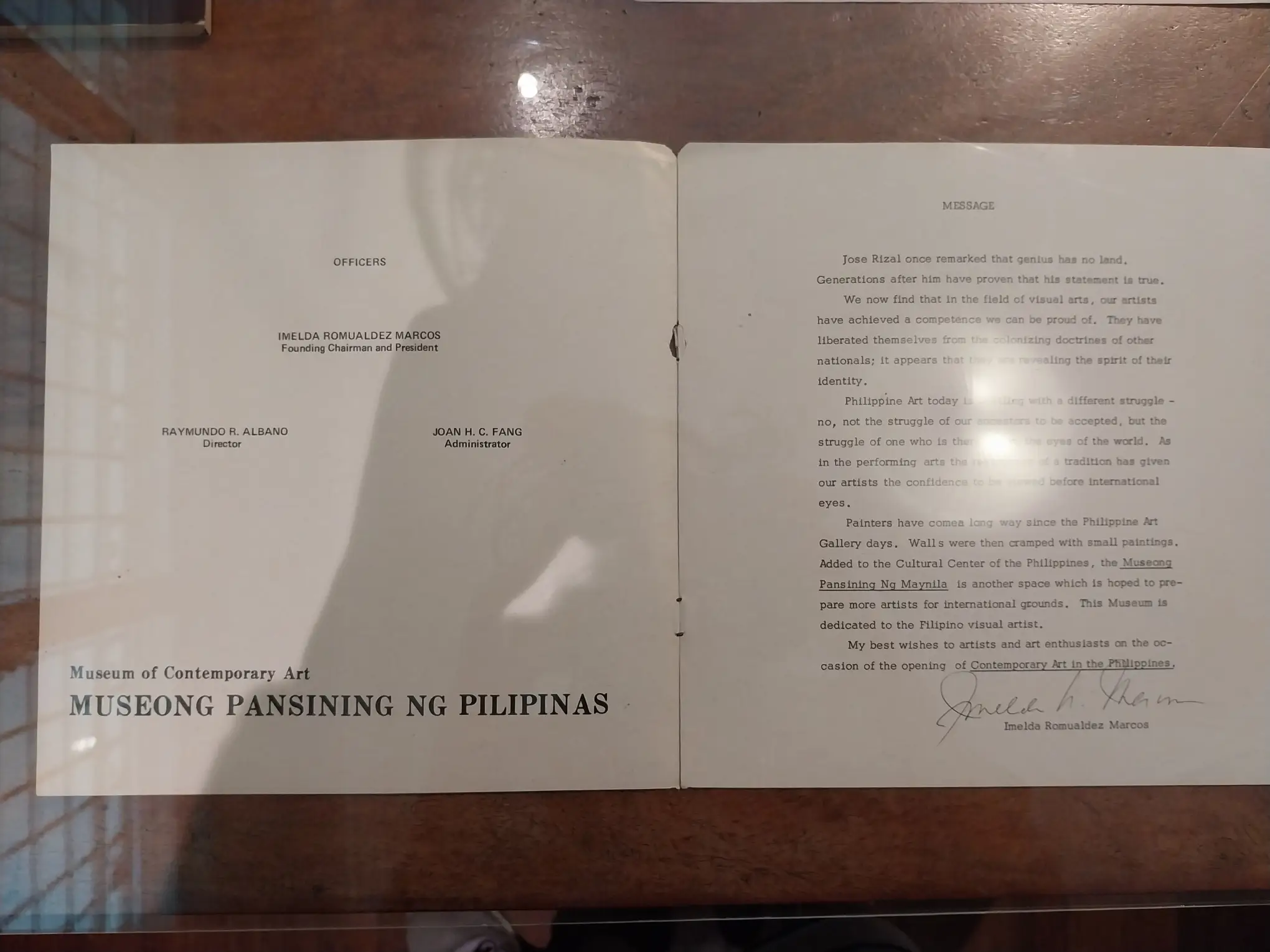
At times, there’s a lingering question here of how potent the critiques of these movements really are, especially with their indebtedness to the Marcos dictatorship of the time. These are artists and artworks that, at the time, found themselves a home in institutions like the CCP. Art may be bigger than galleries and museums, but would they even be remembered and immortalized without them?
The Lingering Questions in Philippine Contemporary Art
These questions linger throughout the exhibit, seemingly by design. Sibayan, in her notes about the exhibit, wrote of her peers and how they wanted their writing and artworks to question everything about the way we define creative practices in general.
She quoted Chabet, saying that their archiving of this material comes as an impulse of questioning the familiar modes of art creation. “…a movement towards possibilities and discoveries[, it] is a recentness that is made credible by a keen awareness of artistic problems, an articulate command of means to pursue innovative solutions, and a confident commitment to ideas.”
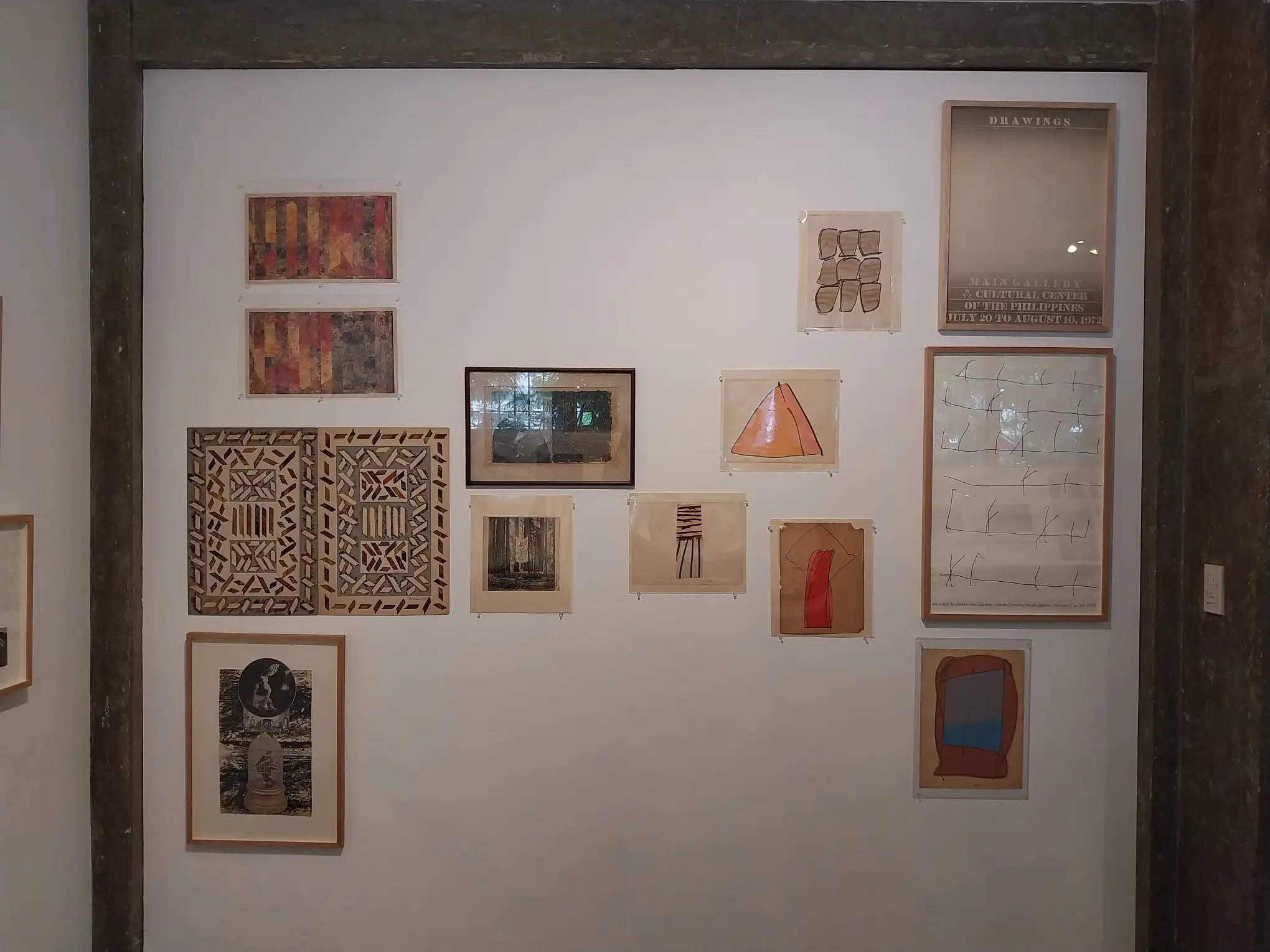
Questions like that keep the conversation going, especially as institutions become more embroiled in state artwashing, government censorship, and corporate-run money, and more artist-run spaces are created to ensure independence. Art cannot be separated from the political climate it was created in, and its continued discussion allows for the creation of ideas and solutions that really go beyond the rigidity of our world today.
Early Philippine Contemporary Art (1969-1985) puts any artist and art lover into an ever-continuing conversation about the state of Philippine art. However much we have evolved from the past, this self-archive from Judy Freya Sibayan shows that the perspective of the anxieties of Filipino artists at the time and today are still the same: defining who the Filipino is, and balancing that identity with the need to keep up with what was happening internationally.
Photos by Elle Yap.
Related reading: ‘Running Backwards Into the Future’: Documenting Divergences in Philippine Art
Frequently Asked Questions
Curated by conceptual art pioneer Judy Freya Sibayan, this exhibition at Calle Wright serves as a “self-archive” documenting the evolution of the local art scene during the first Marcos era. It features a collection of photographs, write-ups, advertisements, and artifacts that memorialize ephemeral works—such as conceptual, performance, and site-specific art—which are often difficult to preserve compared to traditional paintings or sculptures. The exhibit showcases Sibayan’s work alongside influential peers like Roberto Chabet, Ray Albano, and Johnny Manahan, capturing a period of explosive artistic innovation in the Philippines.
Institutional Critique is a practice that uses art to analyze and question the methodology and social form of art institutions like galleries and museums. A primary example featured in the exhibit is Sibayan’s 1974 work, Untitled (Lemon Cake), where she “crashed” an exhibition by serving lemon cake and milk from the hood of a car accompanied by a metronome. This performance highlighted the rigidity of formal institutions compared to the boundless nature of art, suggesting that art exists independently of institutional support or categorization.
The architecture of Calle Wright, which features a blend of Neoclassical and Spanish design, provides a “homey and familiar” atmosphere that contrasts with the often clinical feel of modern galleries. This domestic setting allows visitors to absorb radical, boundary-breaking recreations—such as a giant tied canvas spanning the ground floor—in a relaxed, casual context. This “home-like vibe” makes the archival documents and unconventional installations more accessible and encourages a more personal connection with the history of the movement.
During the 1970s and 80s, Filipino conceptual and performance artists were in direct conversation with international movements happening in Europe and the United States. While artists like Marina Abramović were breaking taboos abroad, Sibayan and her peers were exploring the “transitive and ephemeral” experience of art in the Philippines. Their work focused on how art changes based on audience response and how it molds itself around—and subsequently breaks—societal constructs and expectations.
By poring through Sibayan’s extensive collection of sketches, newspaper articles, and working books, visitors see that the core anxieties of Filipino artists have remained remarkably consistent over the decades. The archive highlights the ongoing struggle to define a “Filipino identity” while simultaneously trying to keep pace with international artistic trends. This continued dialogue helps modern artists and enthusiasts understand that current challenges regarding censorship and corporate influence are part of a long-standing historical conversation.
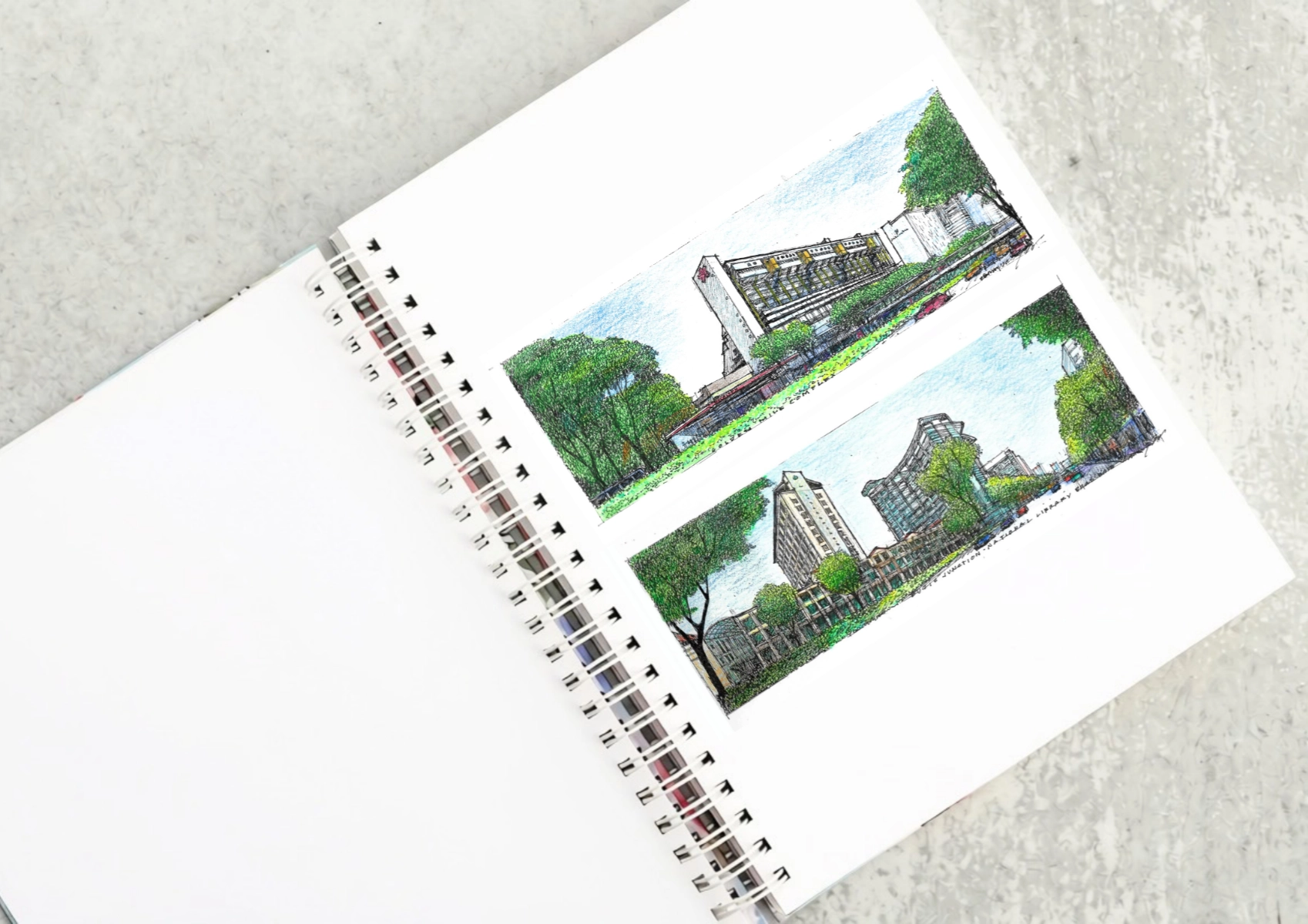
Two sketches of Singapore connect BluPrint Editor in Chief Paulo G. Alcazaren’s personal and professional history with Shared Ground: ArchitectureArchitectureThe art and science of designing and constructing buildings, structures, and spaces that are functional, safe, and aesthetically pleasing. It encompasses the planning, design, materials, and techniques used to createGo to Architecture Glossary of Care, Culture, […]
In a way, designers are the modern-day soothsayers and prophets. They design for the future, predicting how a room, a house, a building or a whole city will be used by people. They foresee how users will interact with a space, conjure exact shades of colors to elicit specific behavior and arrange furniture to build […]
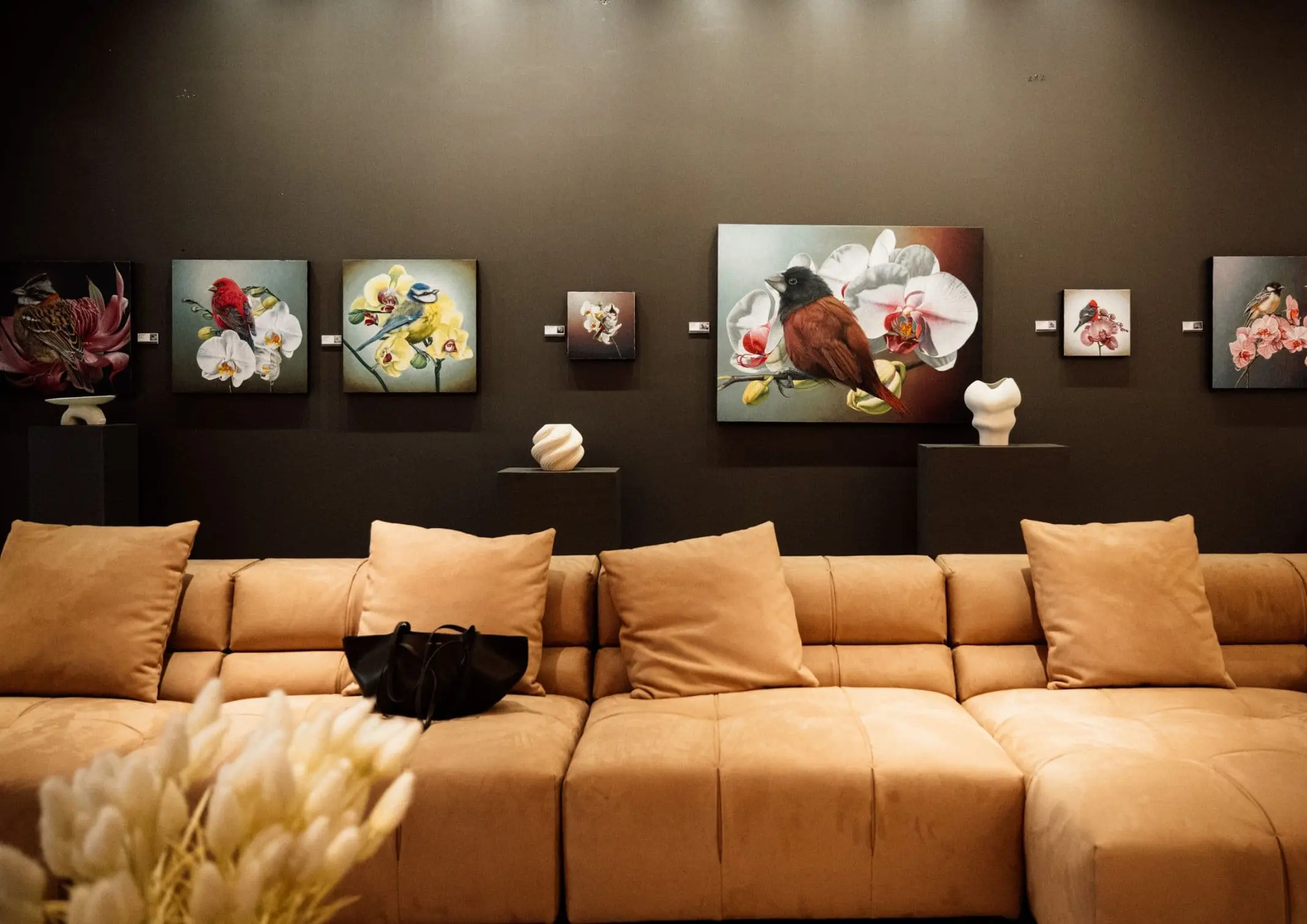
Art and furniture are often selected separately, yet their relationship can shape how a room looks and feels. The collaboration between Hooga and Galerie Joaquin explores how these elements can work together, bringing contemporary artworks into furnished residential settings at Hooga’s showroom in Uptown Mall, Bonifacio Global City. For Hooga, which curates furniture, lighting, and […]
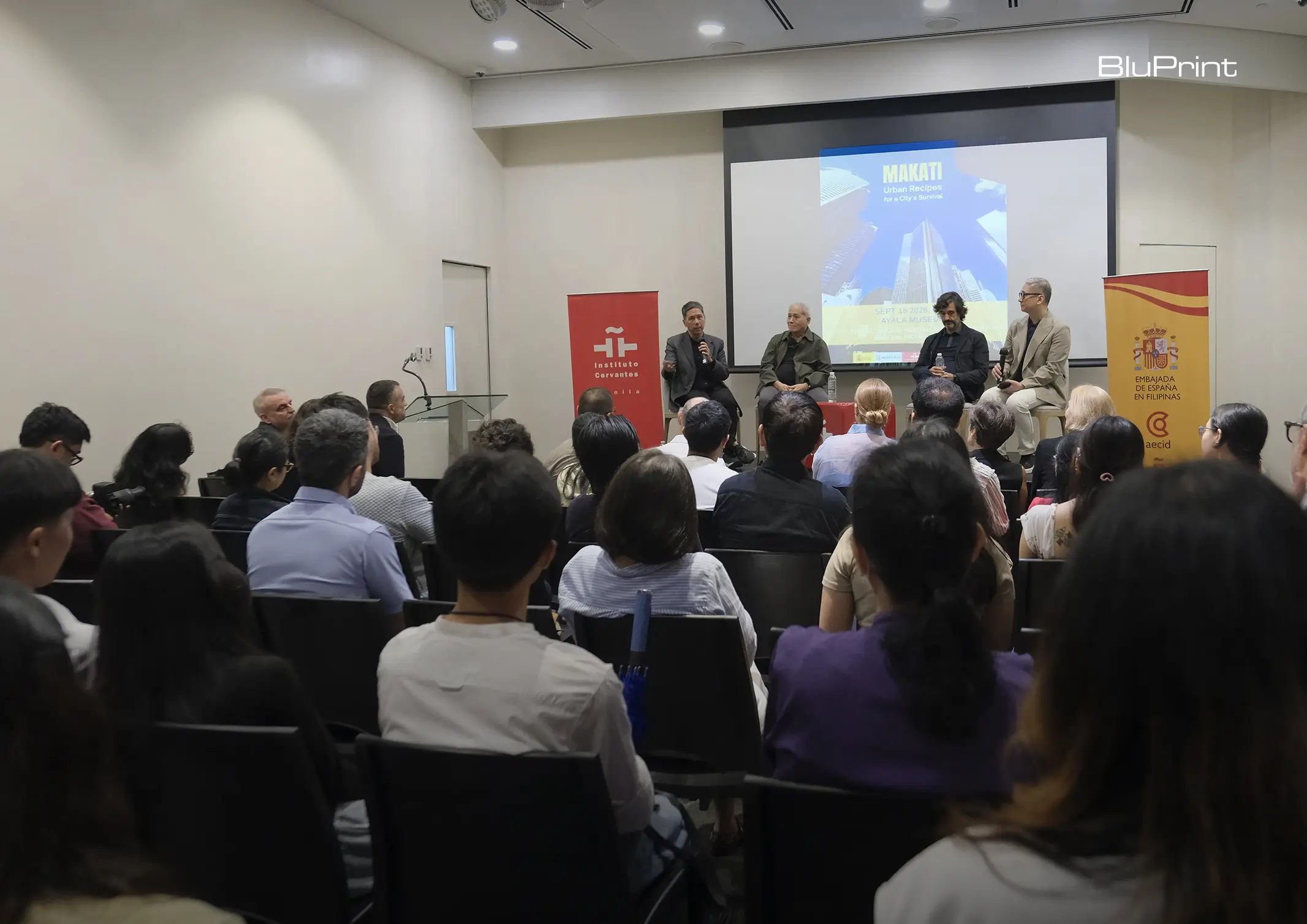
How can better-planned cities create the conditions for more creative, livable, and resilient urban environments? “Makati Urban Recipes for a City’s Survival,” a colloquium held at the Ayala Museum on September 15, brought together architects and practitioners from the fields of urbanism and the creative economy to discuss how design, planning, and collaboration can address […]
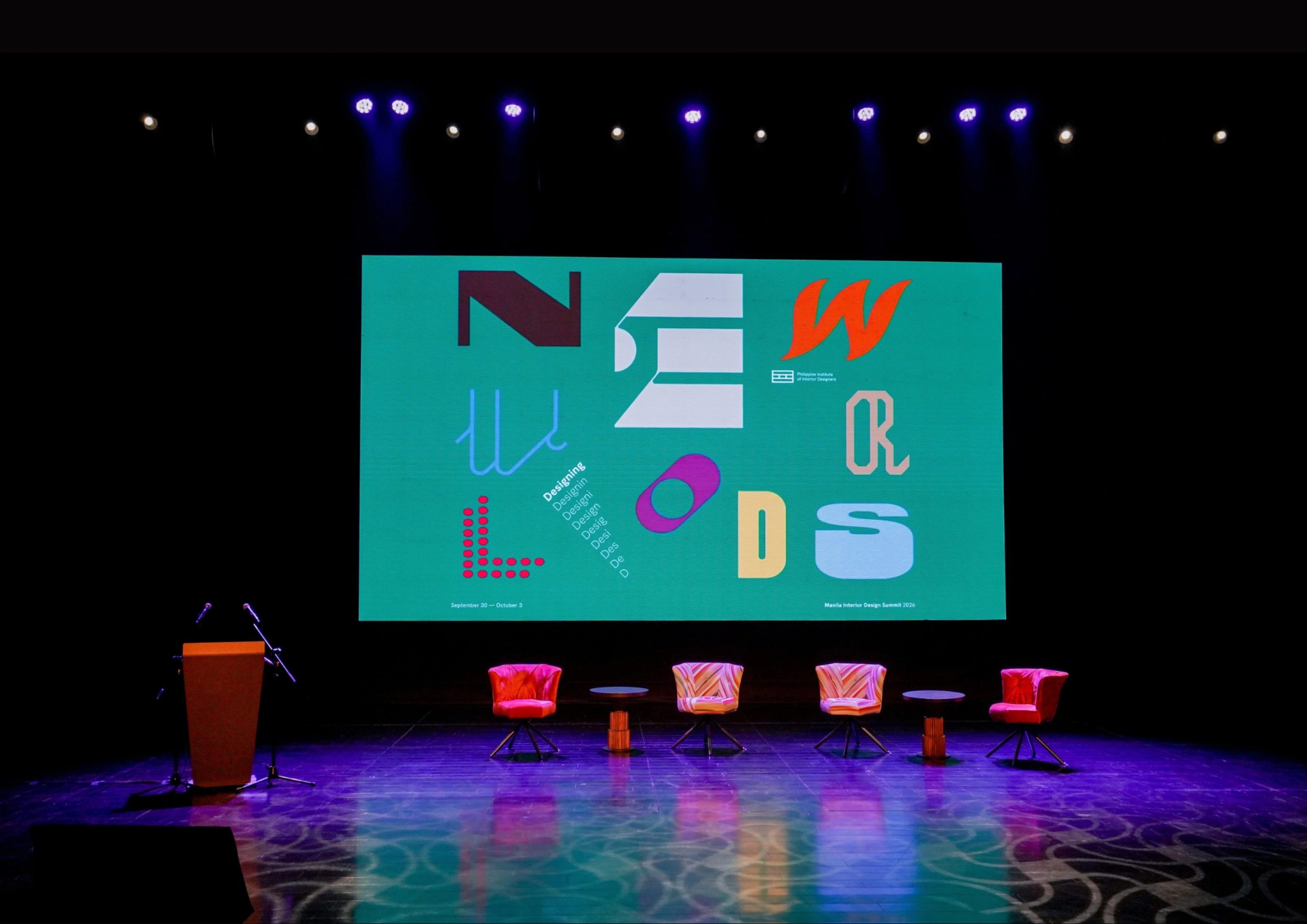
The fourth Manila Interior DesignInterior DesignThe discipline of planning and shaping interior spaces for function, comfort, safety, and beauty. It covers layout, lighting, materials, finishes, furniture, and color, and in the Philippines is a licensedGo to Interior Design Glossary Summit (MIDS) brought together more than 300 delegates for four days of conversations, exhibitions, and design […]
Read the issues.

Collect the volumes.

Recommended Video
Tap to Unmute
Unmute
0:00
0:00