Bigkis is the act of binding. In Tagalog, the word can refer to something used to bind or encircle, as well as a bundle formed by tying several separate elements together. Figuratively, it can also mean a bond, union, or unity. The meanings move from the physical act of joining things together to the connection […]
‘Through’: Celine Lee Weaves A Question of Reality in Artistry



Through, the exhibit by Celine Lee for MO_Space, continued her elaborate ruminations on art and materiality. It asked the audience to wonder about the artifice of art, measure in asking if the way we represent the world around us in our art is truly as accurate as we deem it to be—or if our ever-evolving perspectives make such an attempt intolerable.
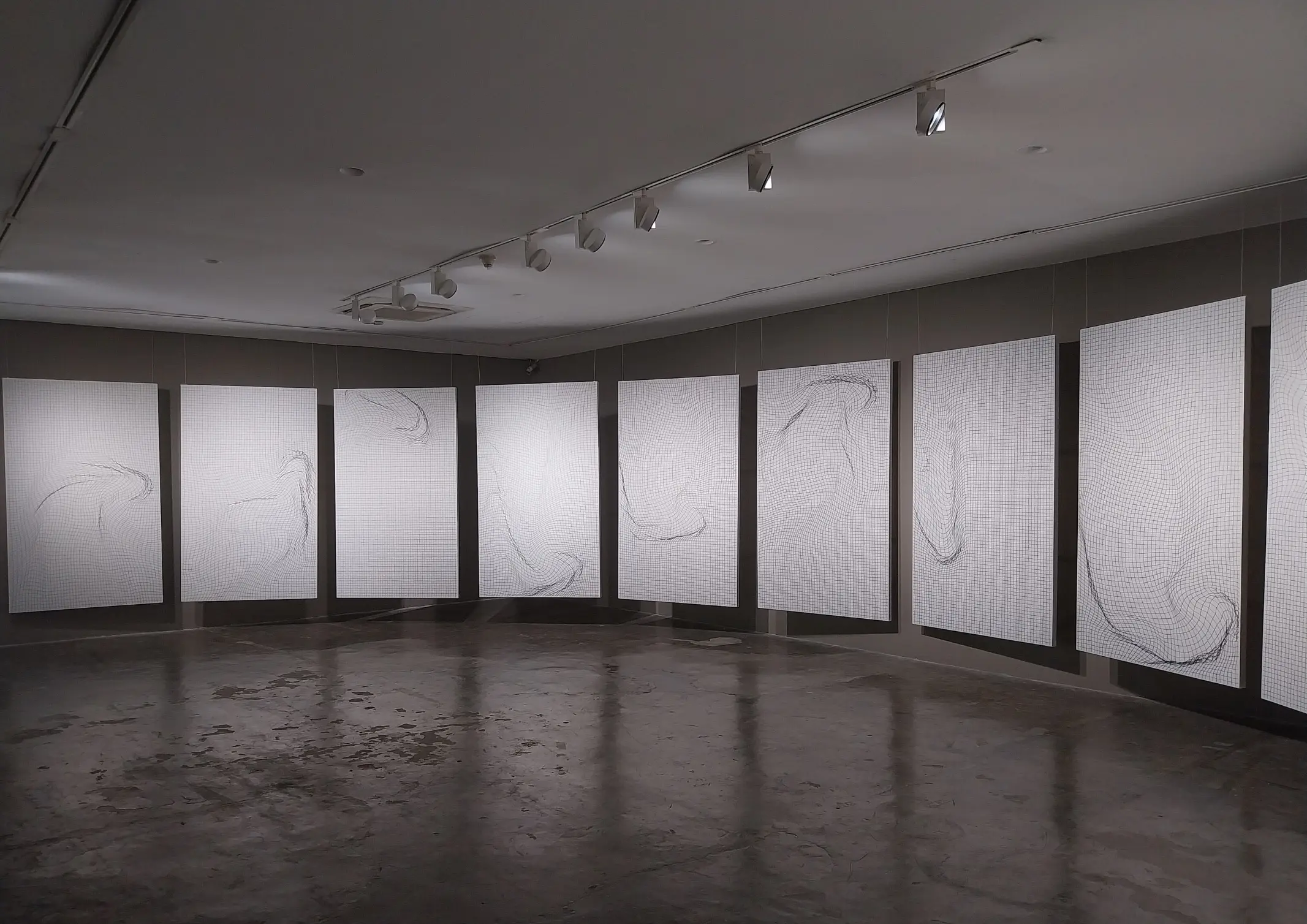
A series of twelve massive panels of needlework done on white Aida cloth, Celine Lee utilizes the space of the gallery to create a giant wave-like pattern, seemingly crashing up and down as it sought to portray the different physics dynamics of space and time.
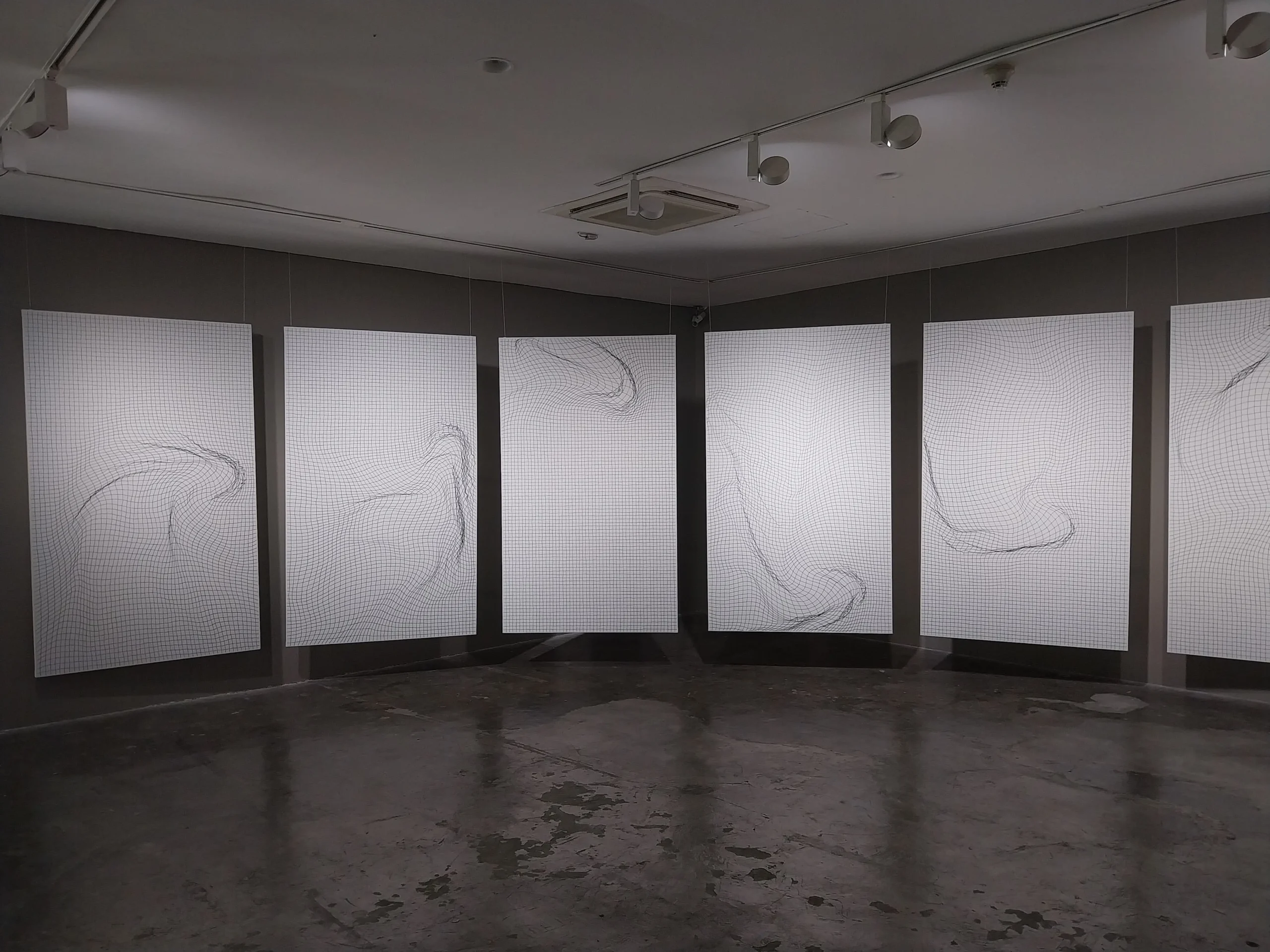
It’s also arranged in such a way that it looks like a giant film strip; one can imagine these running through quickly and creating a moving visual. In the exhibit write-up, Jed Gregorio described it as a “curved panorama,” mimicking different frames of motion across the strip.
“Does the foundation itself quiver?” they wrote. “Is it a conscious body that sinks and squirms? From pain? If so, what is the affliction of reality? Why is it sick? […] Or is it, itself, incapable of moving, and is moved by something other?”
The Craft of Making Art
In the write-up of Through, Gregorio compared the work of Celine Lee to the anxieties of the philosopher Plato in thinking up the Allegory of the Cave. But Lee’s preoccupation is not being imprisoned in a world of shadows; rather she seemed to wonder just how far one can probe reality in such a limited environment.
“Plato had less of a soft spot for the cave dwellers,” Gregorio wrote. “He predicted that the unshackled’s return to the cave will not result in an enlightenment epidemic, but a rejection of truth.”
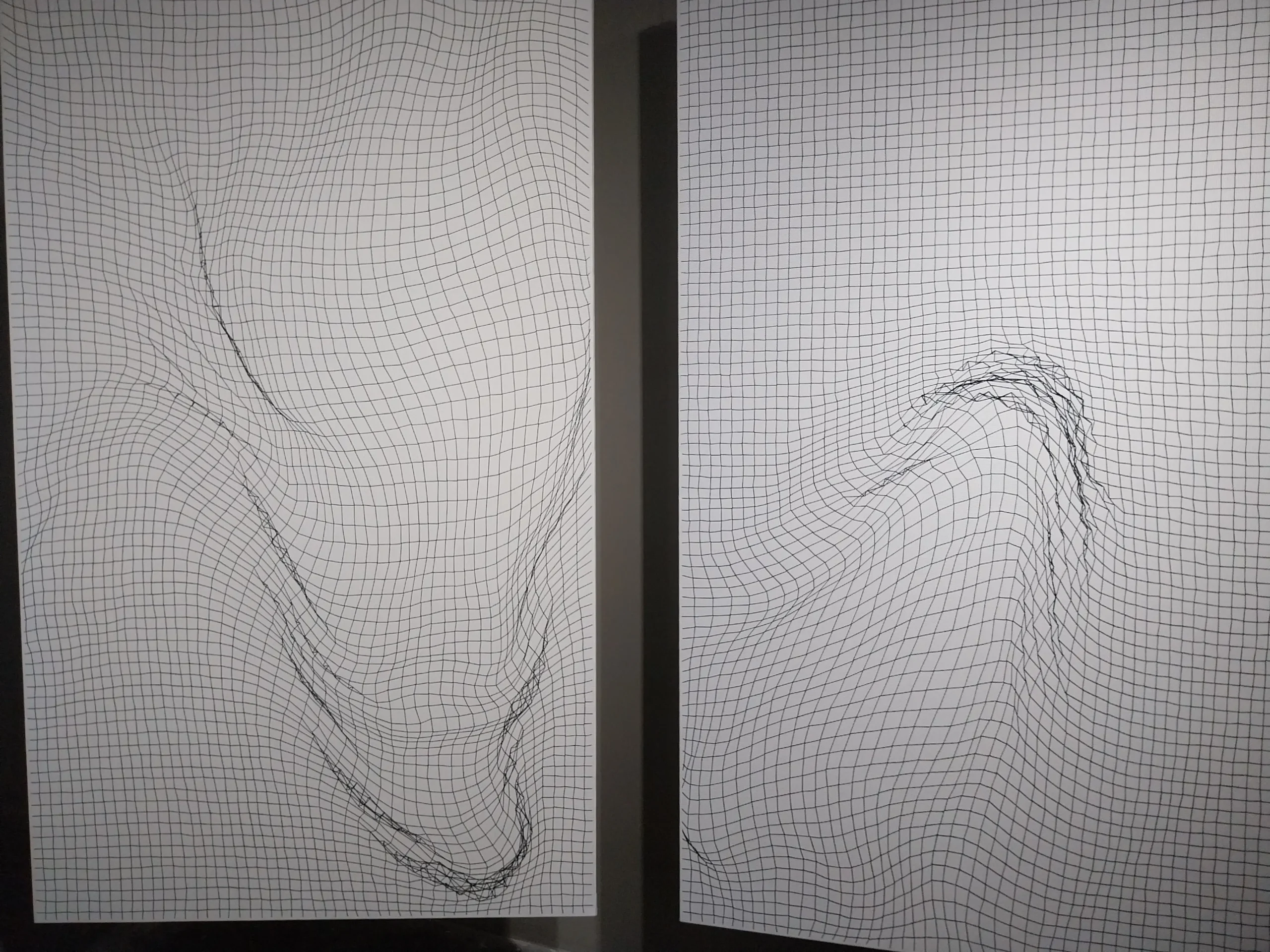
The exhibit, then, is Lee’s attempt of simulating the unsimulatable. The designs of the waves come from attempts to depict theories of undulating spacetime, for example. They look like waves in theory, but those come as representations of how that motion actually happens in the dimensional space they reside in.
So, Lee here is doing a representation of a simulation—creating layered questions of what’s actually real and what’s not.
Beyond the Shadows
Meanwhile, the use of needlework is deliberate as a way of adding another layer of simulation to the project. Waves that were rendered in a digital 3D software are now crafted through deliberate, physical means, becoming a new representation on a different sphere of ideas.
Needlework is different from theories and online simulation: it requires the precision and planning of physical work, adjusting to elements of our world like lighting, material density, physical limitations of the form, and possibly human error.
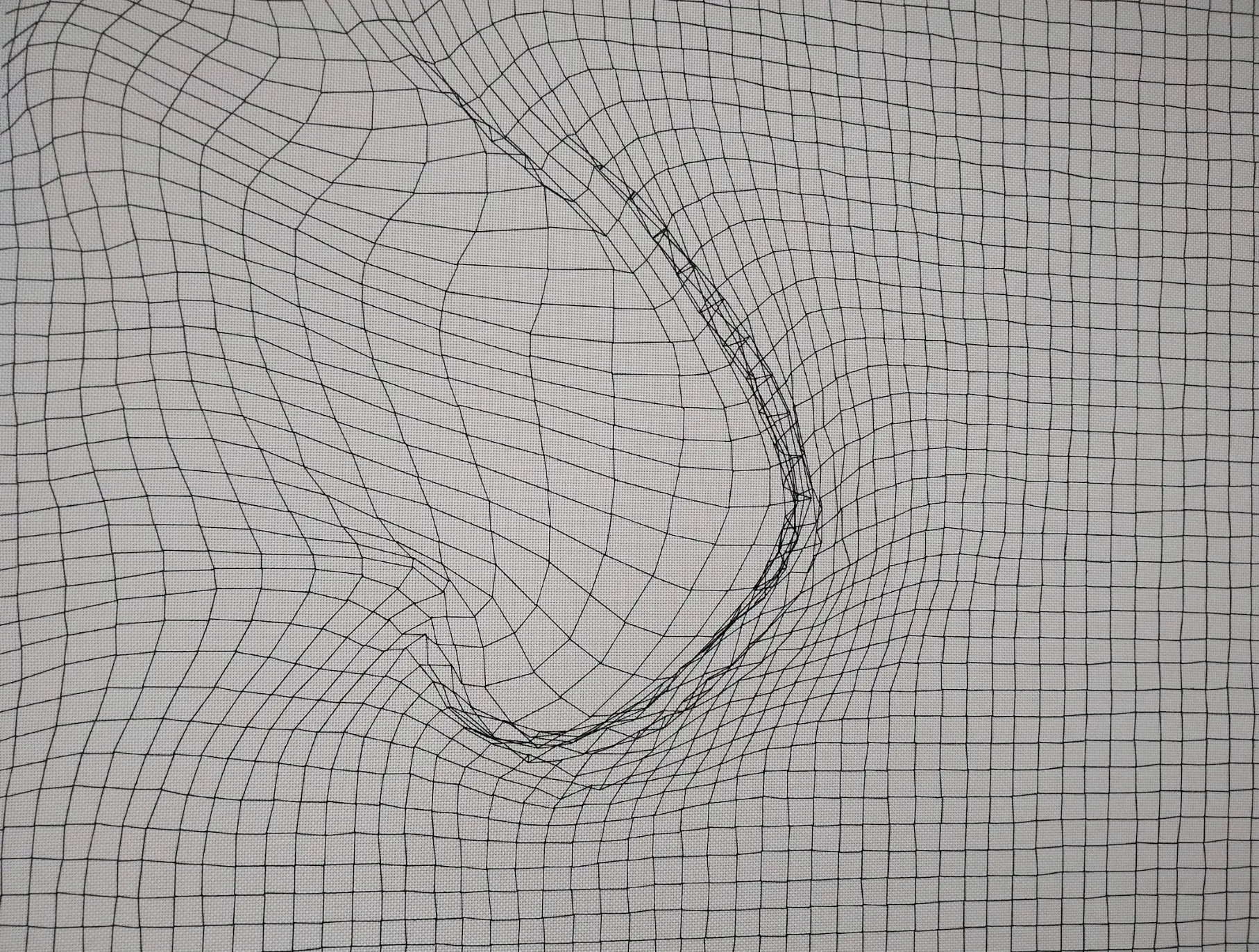
What did that add to the project as a whole? A knowledge of artistic interpretation; that even with supposedly perfect simulations of how our world works, translating that in a physical, artistic medium means that the personal interpretations of the artist came into play to the work.
In Gregorio’s write-up, he explained that the way Lee crafted the dynamic, multi-pronged approach of the artwork was like seeing the way a painter’s sketches and studies differed from the final product: how the small details are translated in the medium itself, in a way that people will understand the emotional resonance being telegraphed by the artist.
The work of Celine Lee here showcases that process at work: translating mathematics in a modeled simulation, and then into a physical, realized needlework interpreted by the artist. Through forced people looking at the artwork to realize just how much of our perspective of the world is based on interpretation, and finding out what that means for us as people in general.
Read More: Philippine Artists We Got To Know This Year: BluPrint Year-End 2025
Frequently Asked Questions
The exhibit consists of twelve massive panels of needlework on white Aida cloth. These panels are arranged in a wave-like pattern that mimics a giant film strip. Technically, this “curved panorama” captures frames of motion, representing the undulation of spacetime. The arrangement suggests a sequence of movement, forcing the viewer to perceive a physical medium as a dynamic, moving visual.
Lee’s work is a multi-layered representation of reality. She begins with mathematical theories of spacetime, which are then modeled in digital 3D software (the first simulation). She then translates these digital renders into physical needlework (the second simulation). By doing this, she questions whether our art is an accurate portrayal of the world or merely a simulation of a theory, echoing Plato’s concerns about the “shadows” of the real world.
The choice of needlework is a deliberate move from the virtual to the tangible. Unlike digital simulations, which are “perfect” and frictionless, needlework is bound by physical limitations: material density, lighting, and the potential for human error. This transition highlights the “artifice of art,” proving that translating data into a physical medium requires a specific type of labor that digital software cannot replicate.
In the exhibit write-up, Jed Gregorio links Lee’s work to Plato’s anxiety about the “rejection of truth.” However, while Plato focused on the prisoners’ ignorance, Lee focuses on the effort of the dwellers to probe reality within their limited environment. The work suggests that even if we are in a “cave” of simulations, the act of interpreting those simulations through art is a valid way of seeking meaning.
The exhibition illustrates the gap between a “perfect” digital model and a finished artistic product. Lee demonstrates that when mathematics and 3D models are filtered through an artist’s hands, personal interpretation and emotional resonance are added. This process forces the audience to realize that our entire perspective of the world is not based on literal facts, but on a series of interpretations—mathematical, digital, and finally, human.
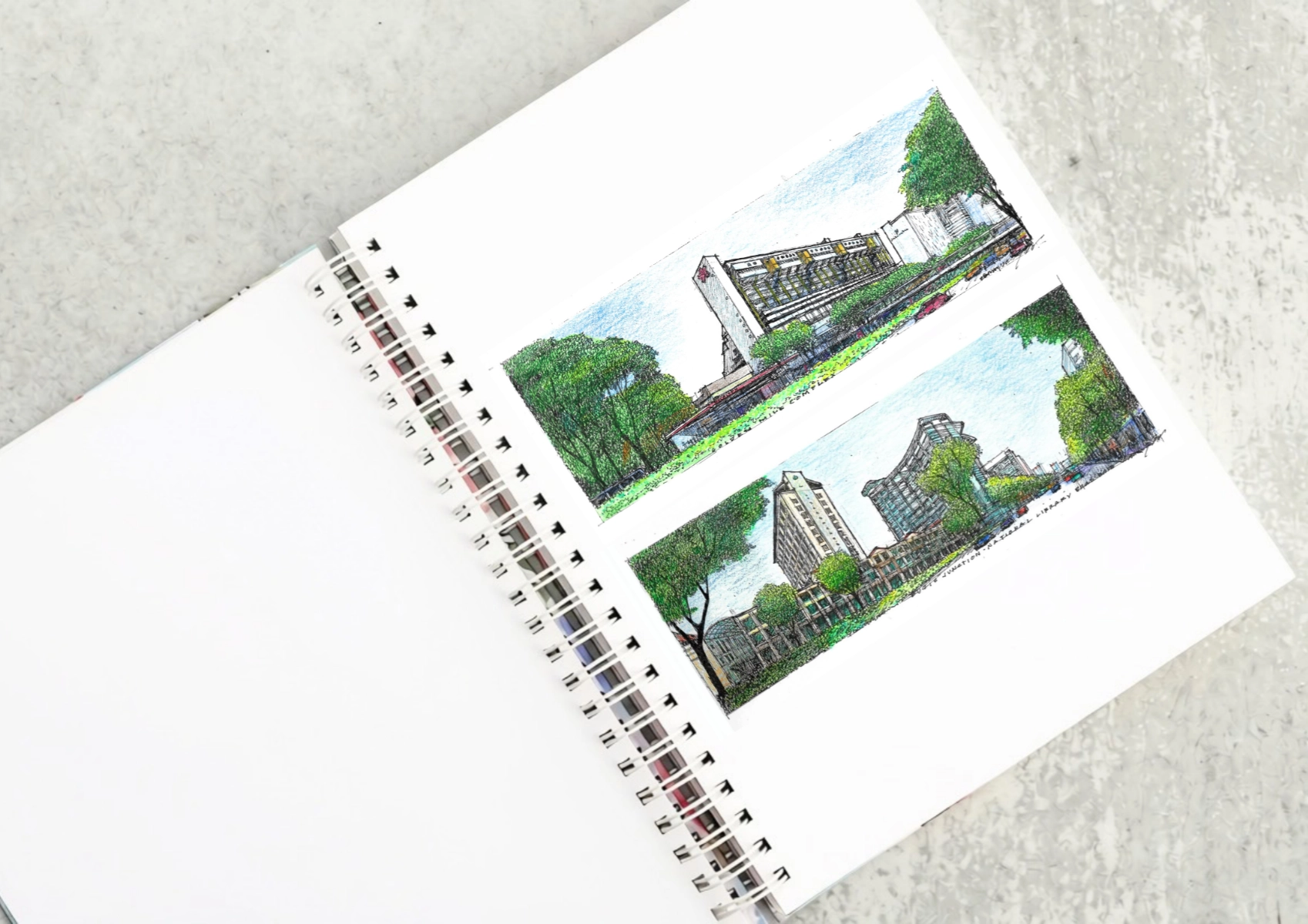
Two sketches of Singapore connect BluPrint Editor in Chief Paulo G. Alcazaren’s personal and professional history with Shared Ground: ArchitectureArchitectureThe art and science of designing and constructing buildings, structures, and spaces that are functional, safe, and aesthetically pleasing. It encompasses the planning, design, materials, and techniques used to createGo to Architecture Glossary of Care, Culture, […]
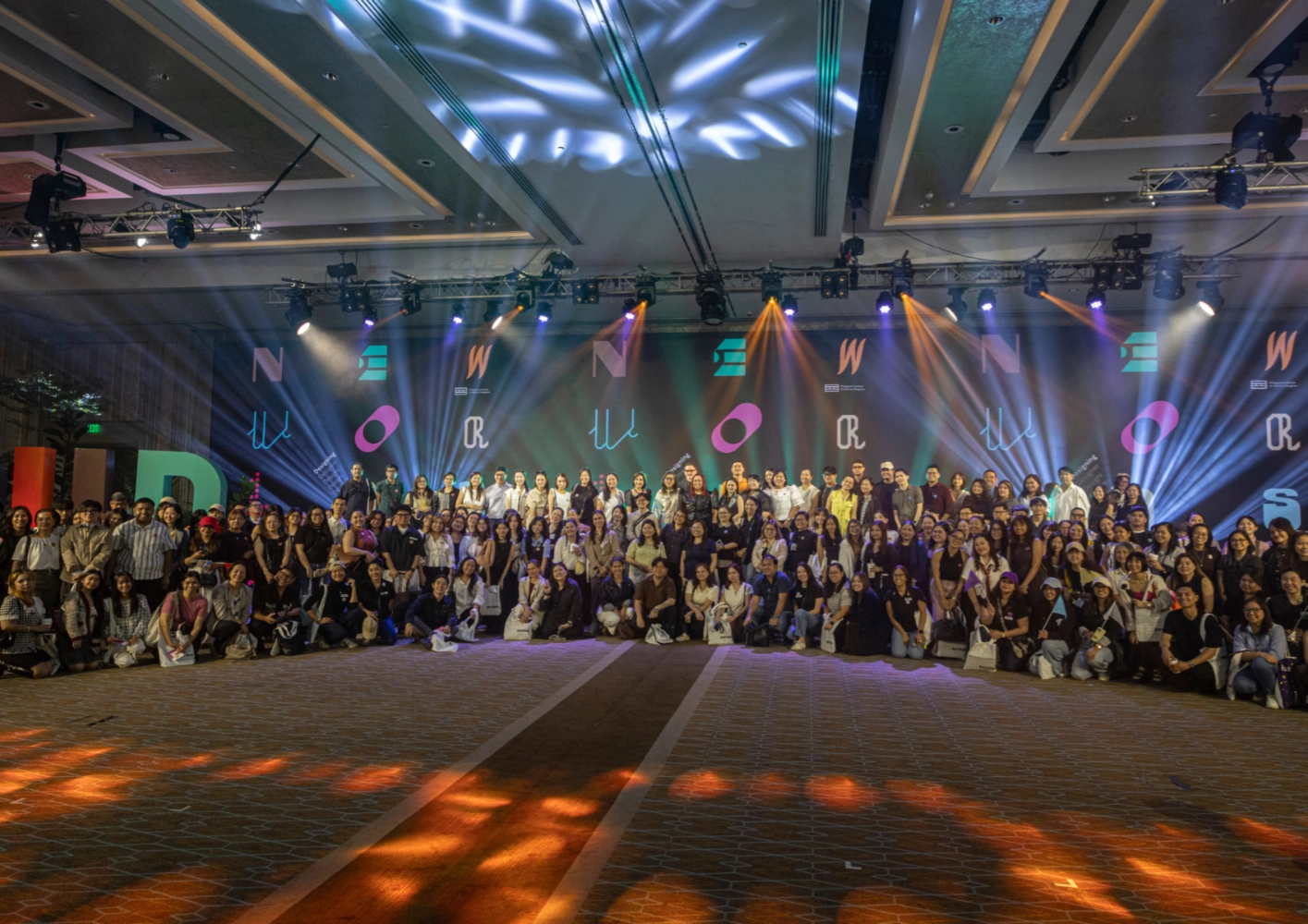
In a way, designers are the modern-day soothsayers and prophets. They design for the future, predicting how a room, a house, a building or a whole city will be used by people. They foresee how users will interact with a space, conjure exact shades of colors to elicit specific behavior and arrange furniture to build […]
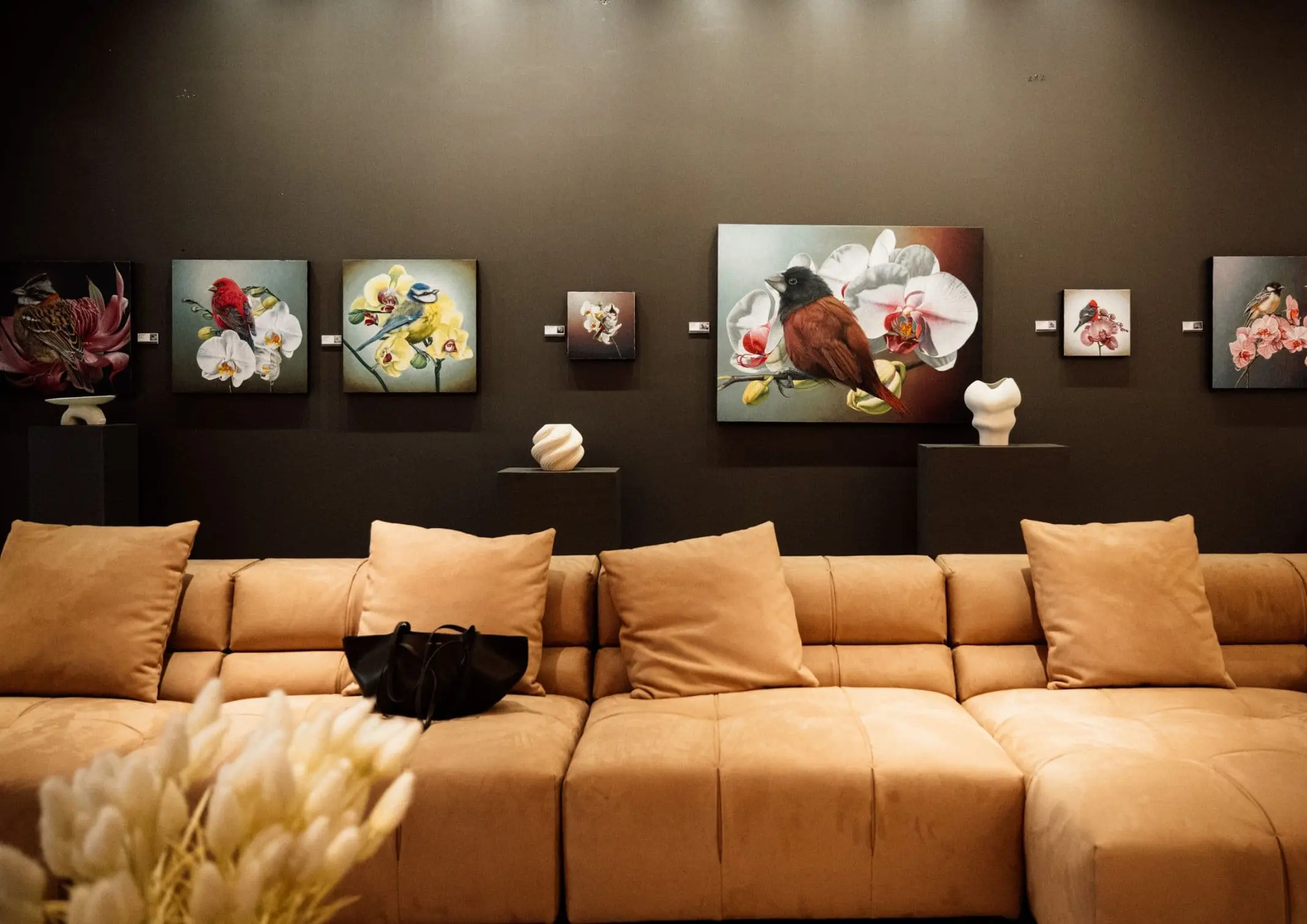
Art and furniture are often selected separately, yet their relationship can shape how a room looks and feels. The collaboration between Hooga and Galerie Joaquin explores how these elements can work together, bringing contemporary artworks into furnished residential settings at Hooga’s showroom in Uptown Mall, Bonifacio Global City. For Hooga, which curates furniture, lighting, and […]
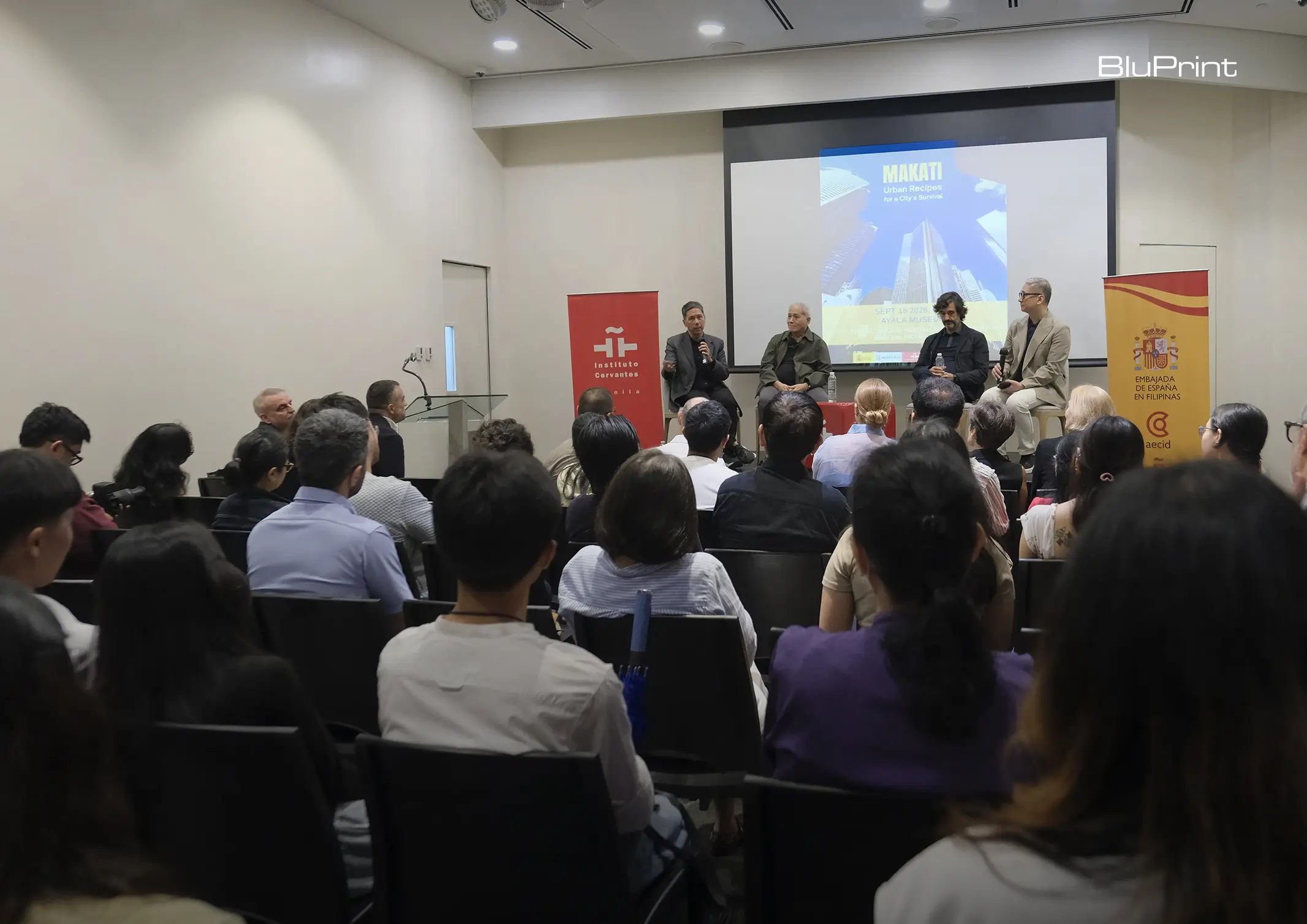
How can better-planned cities create the conditions for more creative, livable, and resilient urban environments? “Makati Urban Recipes for a City’s Survival,” a colloquium held at the Ayala Museum on September 15, brought together architects and practitioners from the fields of urbanism and the creative economy to discuss how design, planning, and collaboration can address […]
Read the issues.

Collect the volumes.

Recommended Video
Tap to Unmute
Unmute
0:00
0:00