Bigkis is the act of binding. In Tagalog, the word can refer to something used to bind or encircle, as well as a bundle formed by tying several separate elements together. Figuratively, it can also mean a bond, union, or unity. The meanings move from the physical act of joining things together to the connection […]
How ALT ART Continues to Shape Philippine Contemporary Art



ALT ART, organized by the ALT Collective—Artinformal, Blanc, The Drawing Room, Galleria Duemila, Finale Art File, MO_Space, Underground, Vinyl on Vinyl, and West Gallery—presents a focused platform for Philippine contemporary art. As the fair continues to evolve, it expands its scale and curatorial scope, reinforcing its growing presence within the Philippine art scene.
Creative Practices at ALT ART: Performance, Installation, and Textile Art
ALT ART 2026 highlights how contemporary artists develop distinct creative languages across installation, performance art, and textile-based practices. Jakarta-based artist Iwan Effendi, artistic director of the Papermoon Puppet Theatre, presented a charcoal mural and puppet installation that draws from his practice as a puppeteer. His work examines the relationship between object and body within performance art, where the body exists between the living and the dead.
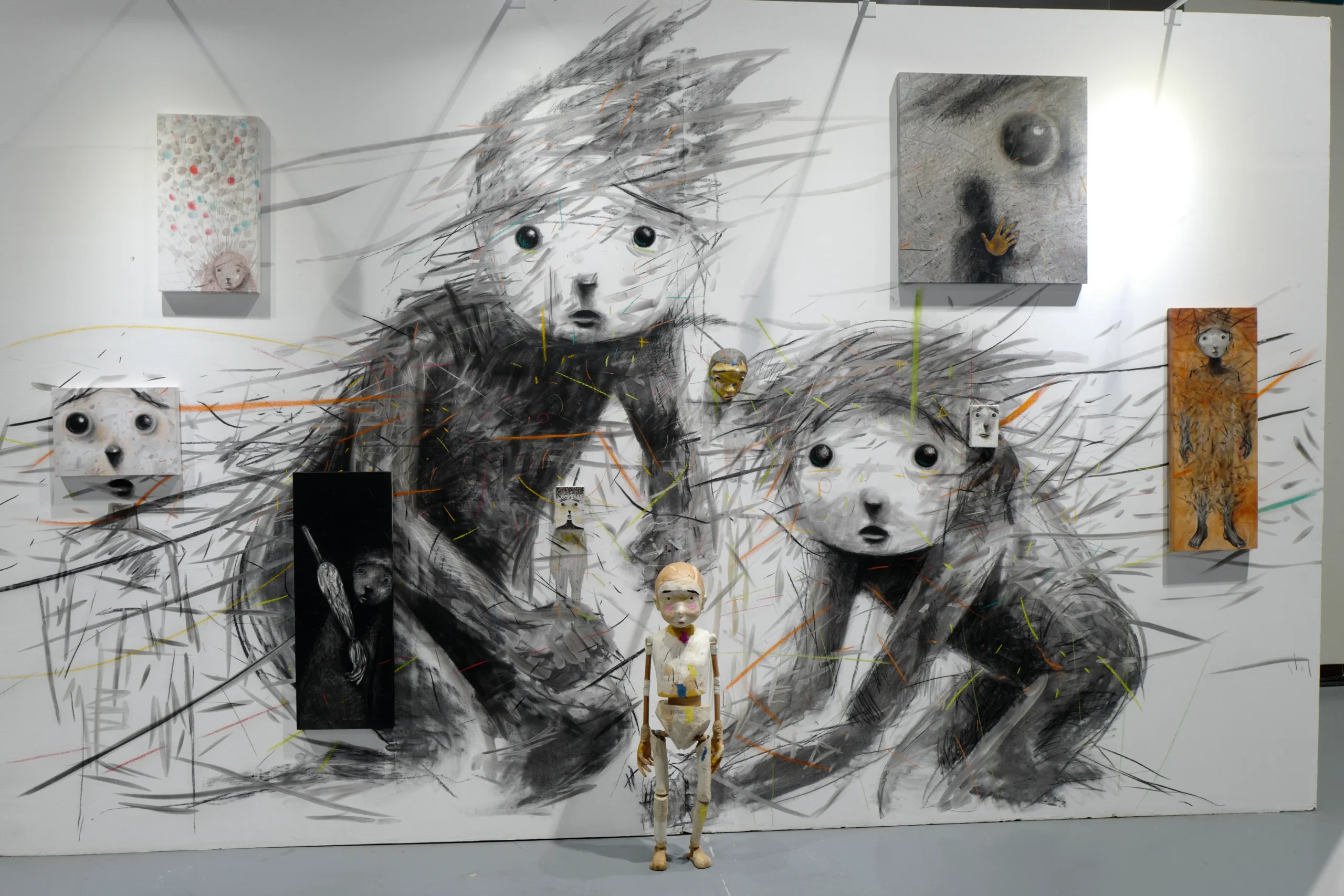
Effendi describes: “We [puppeteers] have to be invisible on stage because the puppet is struggling to be alive and we are struggling to be dead on stage […] Mostly, I create the facial expression. I call it the dead face. It’s the zero expression, so it is easier for the puppeteer to make it alive, to make it sad, suspicious, and angry with movement.”
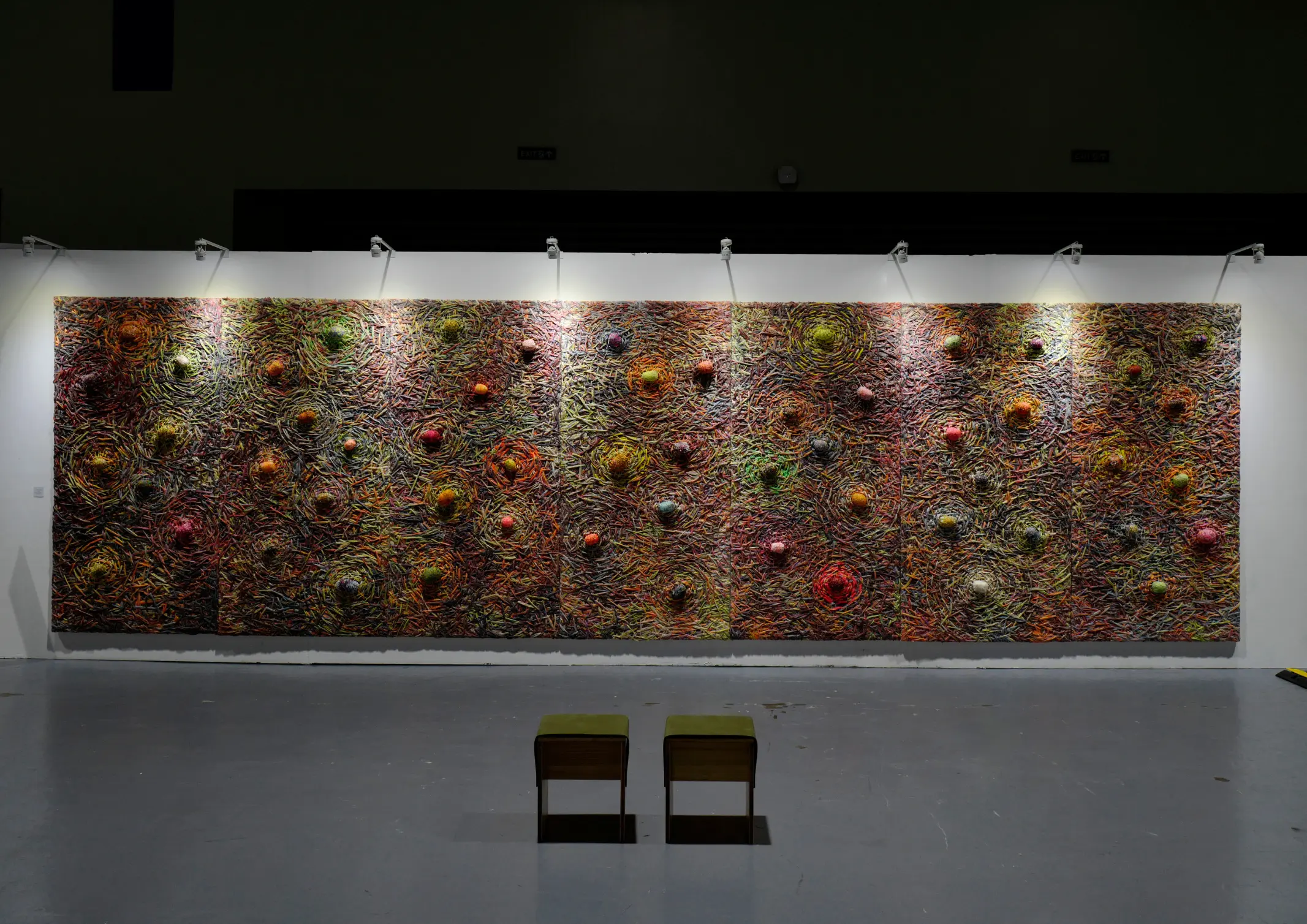
Manila-based artist Raffy Napay works with repurposed fabrics, developing a textile-based practice after discovering he is allergic to paint. Through textiles and threads—an influence rooted in his seamstress mother—he found a way to sustain his artistic practice without compromising his health. His large-scale work foregrounds color, texture, and material precision, demonstrating that textile art demands the same rigor as painting.
Cultural Expressions: Contemporary Art and Philippine Identity
In Filipino artist Miguel Lorenzo Uy’s project space titled Superstructures, he interrogates his identity as an artist while critiquing the structures of the art industry itself. The installation builds on his ongoing exploration of construction materials commonly found in corporate, commercial, and retail architectureArchitectureThe art and science of designing and constructing buildings, structures, and spaces that are functional, safe, and aesthetically pleasing. It encompasses the planning, design, materials, and techniques used to createGo to Architecture Glossary, translating them into a contemporary art context.
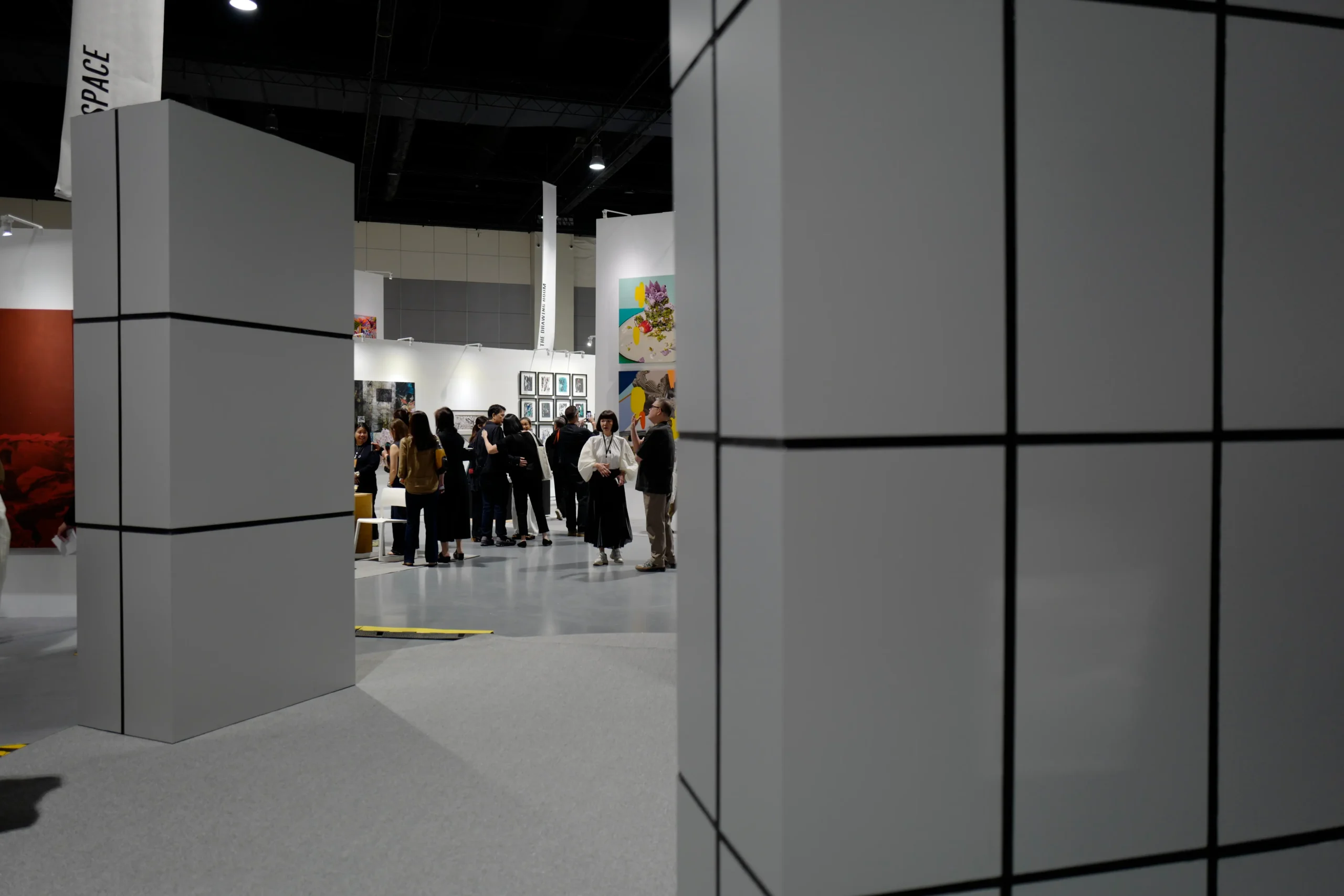
Presented as an immersive structure, the work incorporates an audio exciter attached to its surface, creating a multi-sensory installation. The title draws from the Marxist concept of the “superstructure,” which refers to the legal, political, cultural, and ideological systems built upon an economic base. In this framework, Uy questions the mechanisms that sustain institutional power within both society and the art world.
“As artists, we have the things we’re fighting for, but we still work around a system that’s kind of capitalist,” Uy reflects.
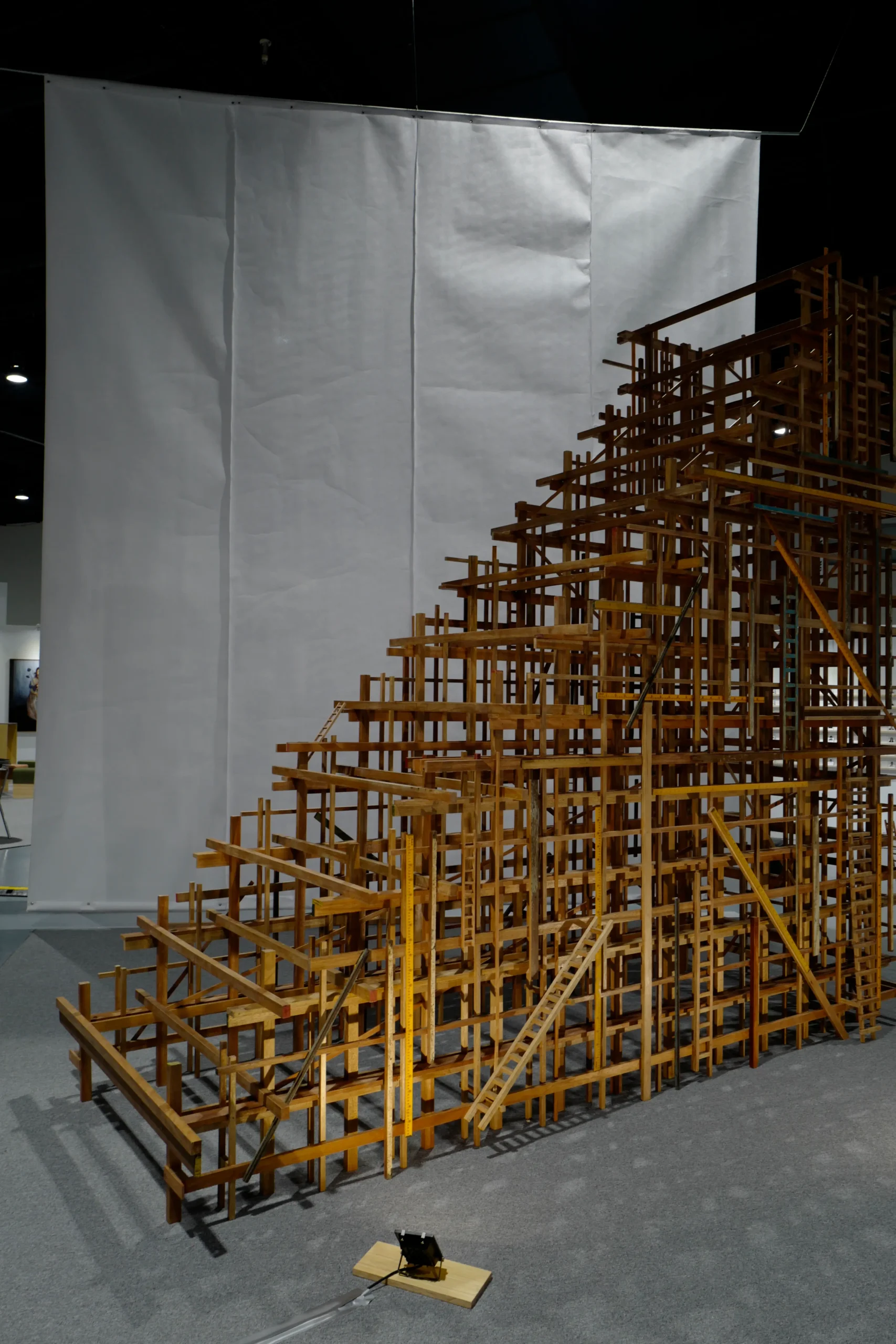
Christina Quisumbing presents her scaffolding sculpture titled Still We Hope, an installation that examines hope as both a personal belief and a political condition. On an individual level, the work reflects the human tendency to believe that circumstances can improve. On a systemic level, Quisimbing situates that hope within the realities of the Philippine government and its citizens.
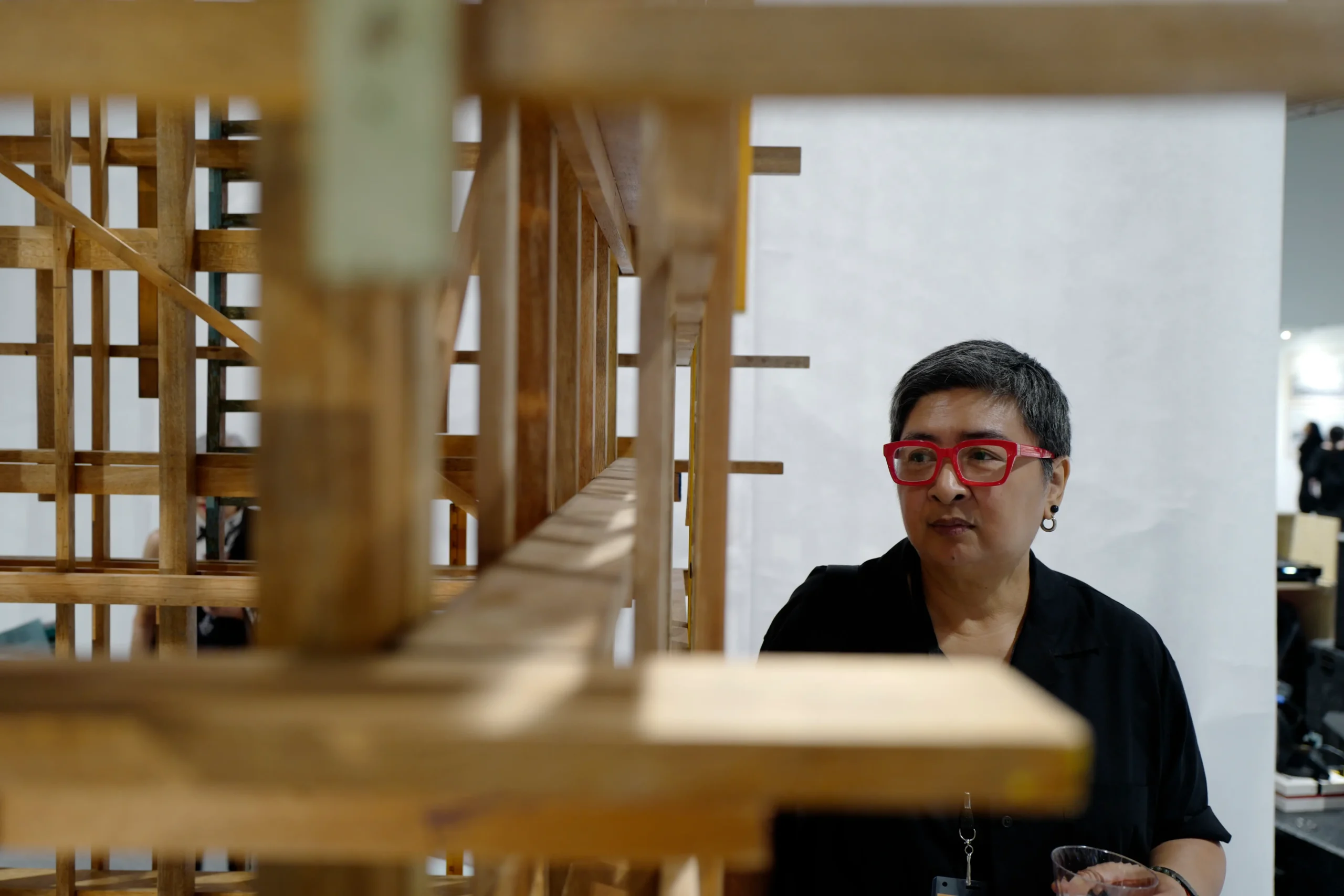
“It’s also a commentary on our present situation—not even the present, our ongoing and decade-after-decade situation with the government. We still hope that things will change for the better. It’s like a ghost project,” Quisumbing says wryly.
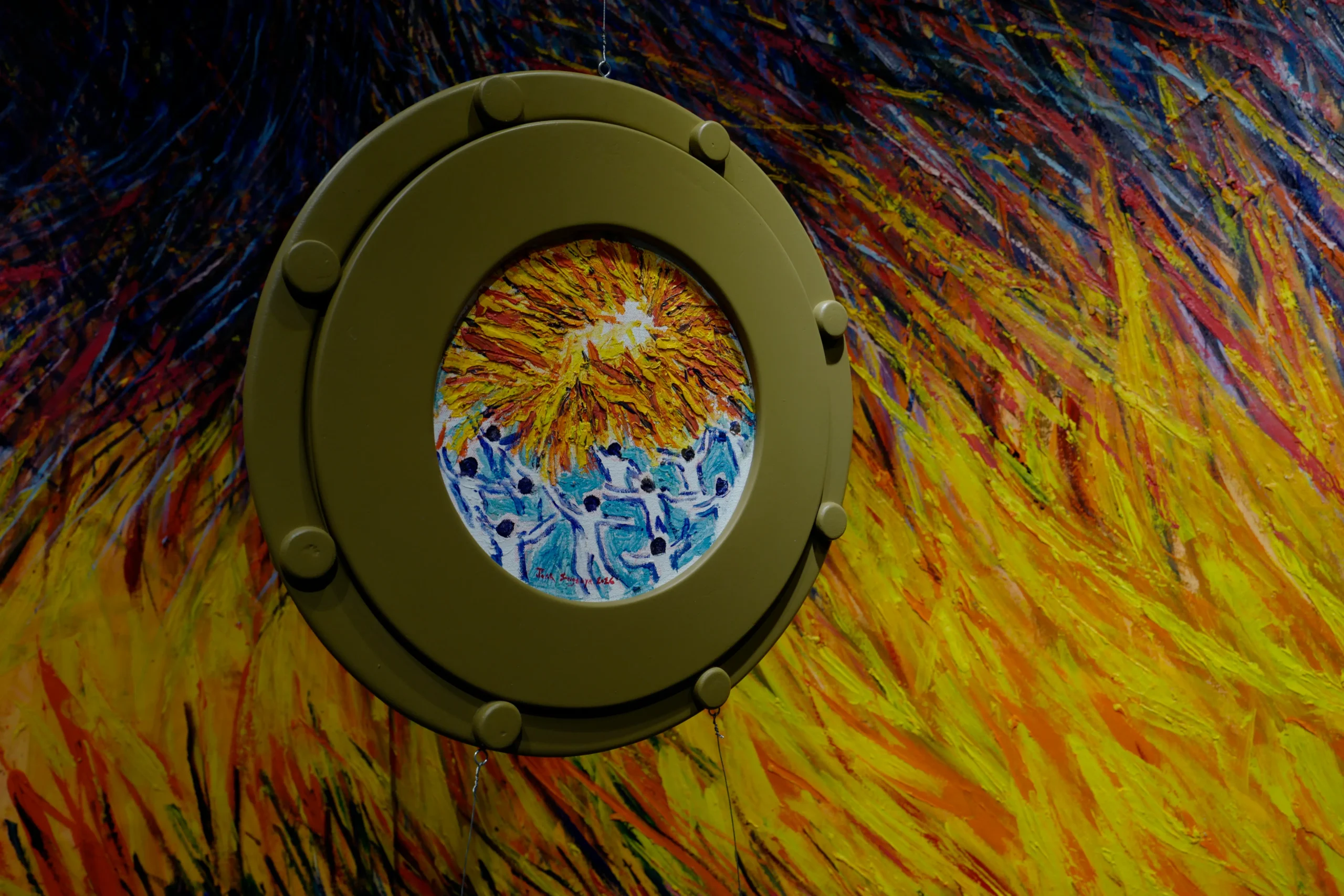
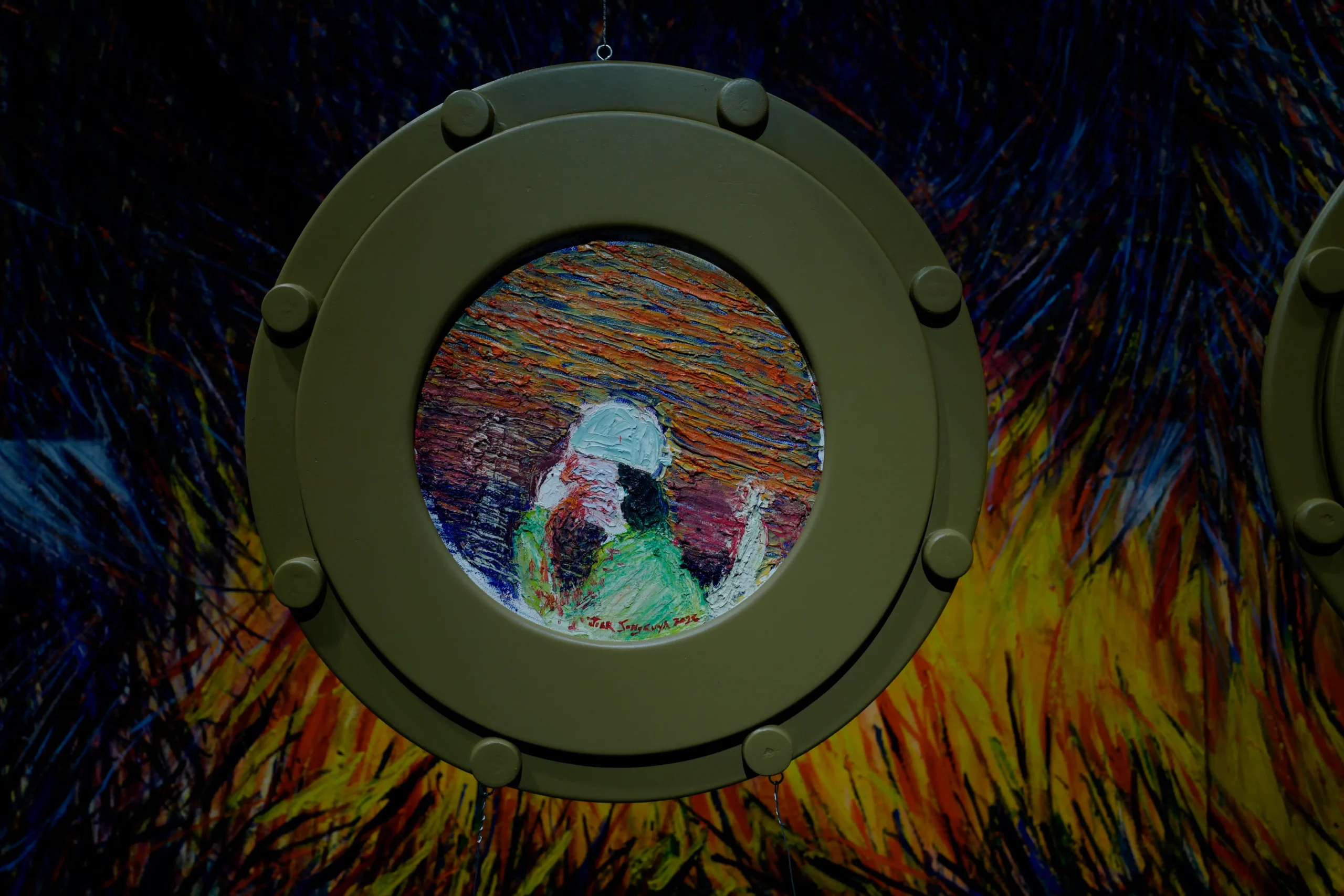
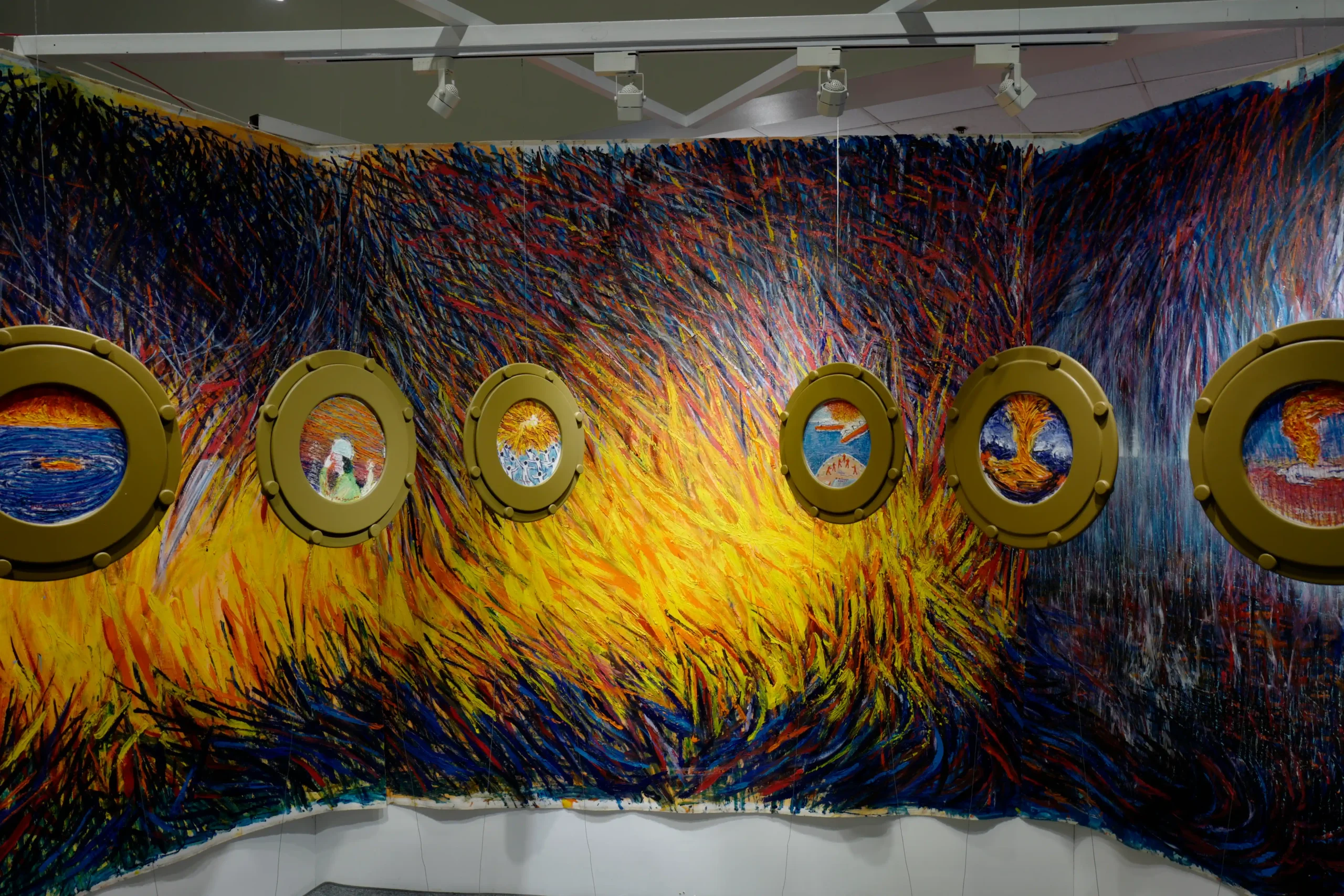
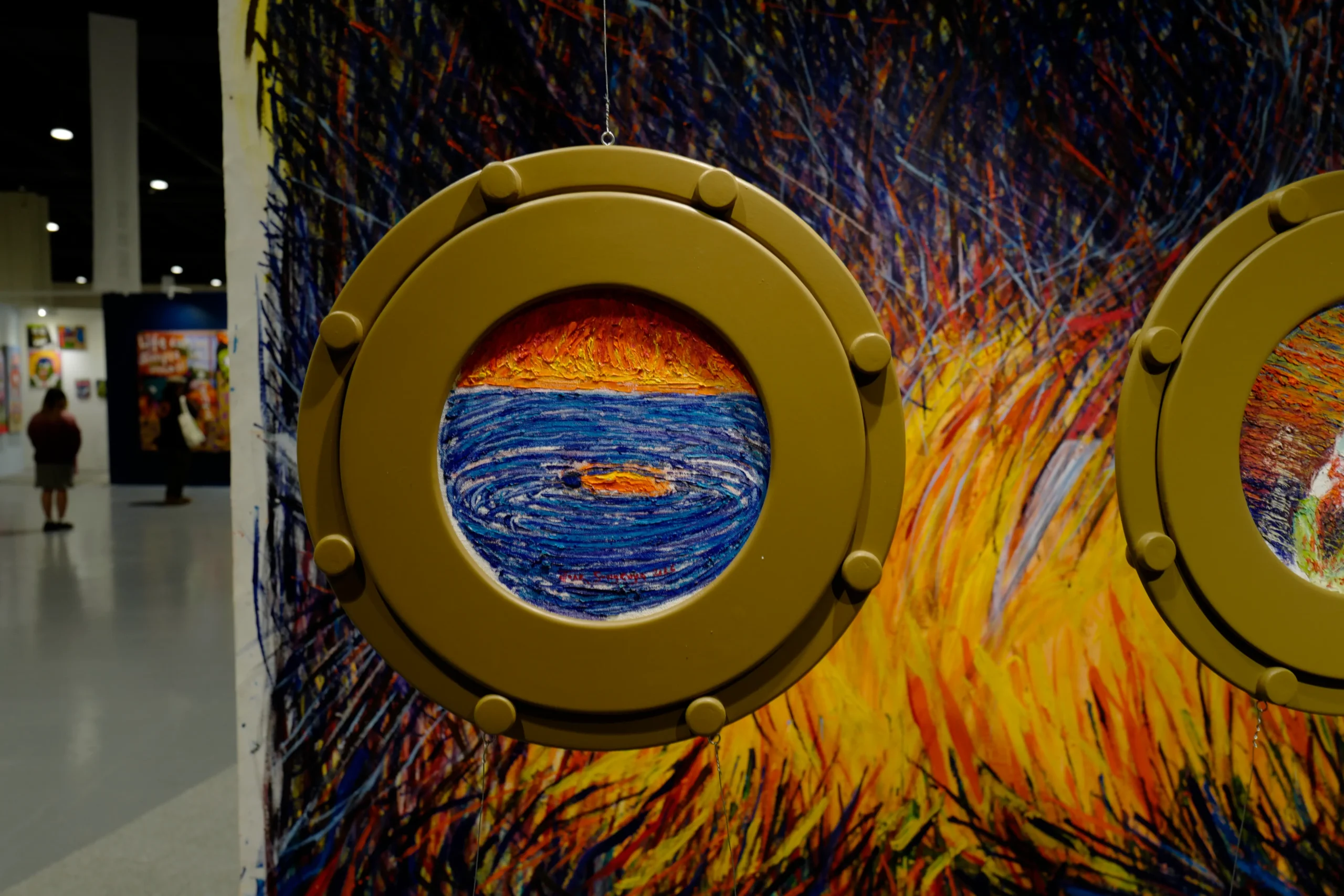
At Galleria Duemila’s project space, artist Joar Sungcuya depicts the lives of Filipino seafarers. Through porthole-framed compositions rendered in vivid color and expression, Sungcuya constructs scenes that reflect everyday Filipino experiences at sea.
ALT ART and Contemporary Art in the Philippines
ALT ART highlights the breadth of Philippine contemporary art, bringing together established figures and emerging artists within a single platform. Rooted in the ALT Collective’s pro-artist ethos, the fair supports artistic experimentation, critical dialogue, and sustained engagement within the Philippine contemporary art scene.
Photographed by Ed Simon.
Read More: ALT ART 2026: A Major Expansion for Contemporary Philippine Art
Frequently Asked Questions
The ALT Collective is a group of nine prominent Philippine galleries—including Artinformal, Blanc, The Drawing Room, Galleria Duemila, Finale Art File, MO_Space, Underground, Vinyl on Vinyl, and West Gallery. Together, they organize ALT ART, a focused platform designed to support artistic experimentation and critical dialogue, prioritizing a “pro-artist” ethos over traditional commercial fair structures.
Effendi, the artistic director of Papermoon Puppet Theatre, utilizes a concept he calls the “dead face”—a zero-expression facial design for his puppets. This technical choice allows the puppeteer to project various emotions (sadness, anger, suspicion) through movement alone. His installation for ALT ART 2026, which includes a charcoal mural and puppets, explores the physical tension where the puppeteer “struggles to be dead” so the inanimate object can “struggle to be alive.”
Napay developed his signature textile art as a technical necessity after discovering a severe allergy to paint. Drawing from his background as the son of a seamstress, he utilizes repurposed fabrics, threads, and material precision to create large-scale works. His practice demonstrates that the rigor of fiber art—focusing on color and texture—is equivalent to traditional painting, offering a sustainable alternative for his health.
Uy’s installation, titled Superstructures, utilizes common construction materials from corporate and retail architecture to critique the art industry’s capitalist systems. Drawing from the Marxist theory of “superstructure”—the ideological and political systems built upon an economic base—Uy integrates an audio exciter into the physical structure to create a multi-sensory experience. The work questions how institutional power and economic systems dictate the context of contemporary art.
In her sculpture Still We Hope, Quisumbing employs the visual language of scaffolding to represent hope as a “ghost project”—something constantly under construction but never fully realized. Technically, the installation functions as a political commentary on the cyclical nature of the Philippine government, where citizens remain in a state of perpetual belief that systemic improvement is coming, despite decades of stagnant reality.
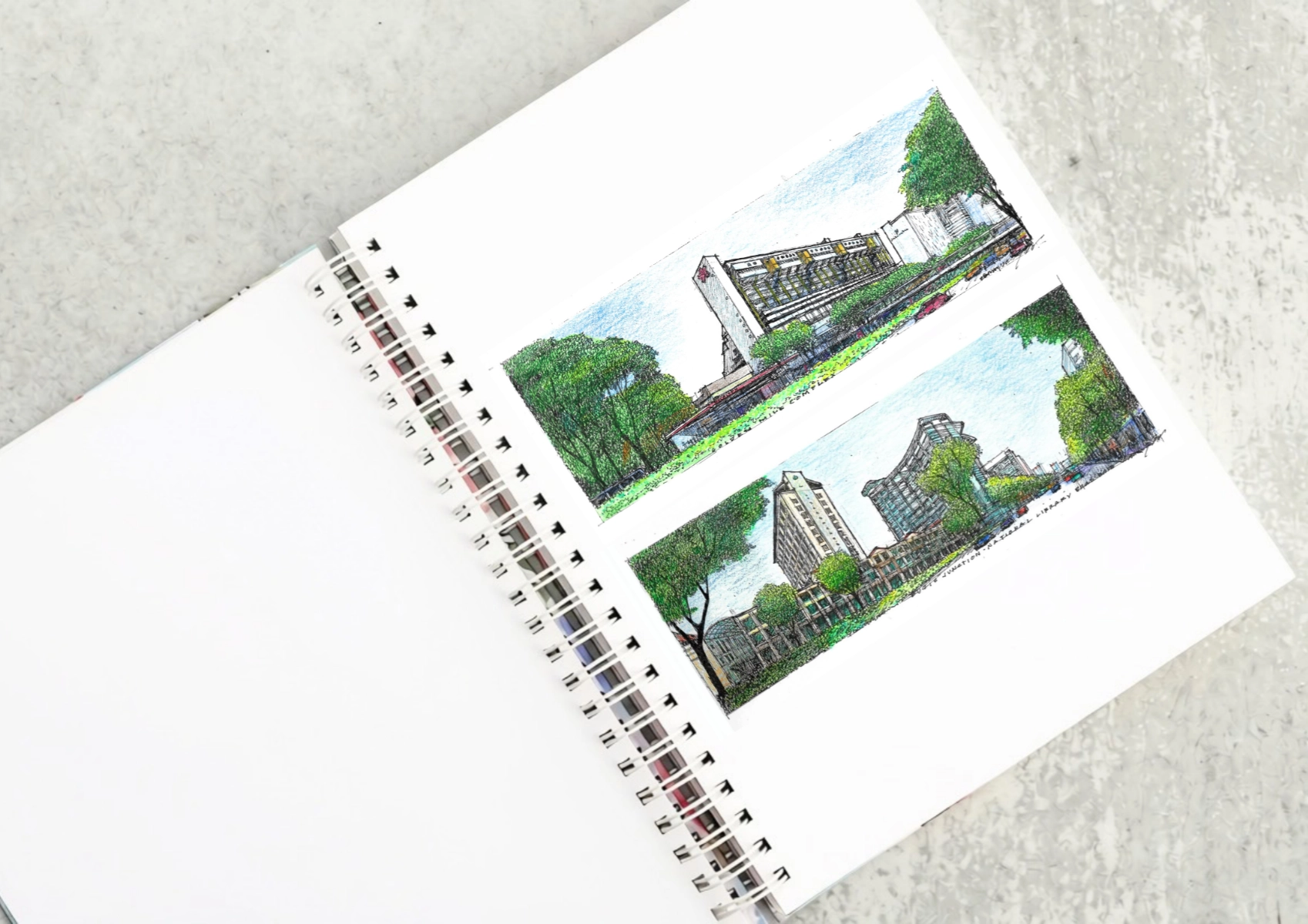
Two sketches of Singapore connect BluPrint Editor in Chief Paulo G. Alcazaren’s personal and professional history with Shared Ground: ArchitectureArchitectureThe art and science of designing and constructing buildings, structures, and spaces that are functional, safe, and aesthetically pleasing. It encompasses the planning, design, materials, and techniques used to createGo to Architecture Glossary of Care, Culture, […]
Some have become household names – Coleman, Oster, and KitchenAid – products that have found their way into Filipino kitchens, homes and family routines. In home furnishings, brands such as B&B Italia, Ethan Allen, Sub-Zero, Miele, SieMatic, Louis Poulsen, Hunter Douglas, Tempur, and Technogym, have helped shape the way Filipinos live. From everyday essentials to […]
In a way, designers are the modern-day soothsayers and prophets. They design for the future, predicting how a room, a house, a building or a whole city will be used by people. They foresee how users will interact with a space, conjure exact shades of colors to elicit specific behavior and arrange furniture to build […]
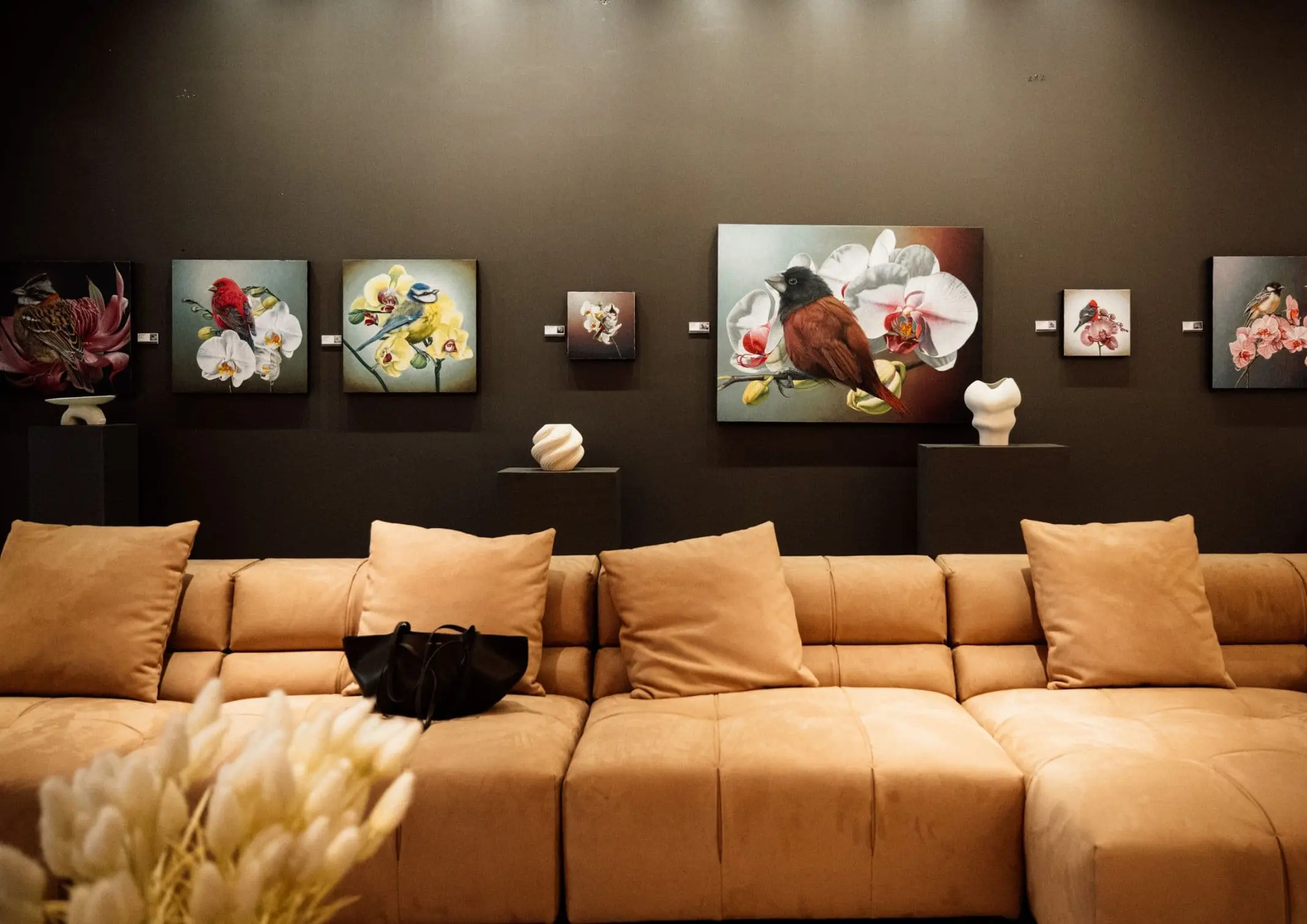
Art and furniture are often selected separately, yet their relationship can shape how a room looks and feels. The collaboration between Hooga and Galerie Joaquin explores how these elements can work together, bringing contemporary artworks into furnished residential settings at Hooga’s showroom in Uptown Mall, Bonifacio Global City. For Hooga, which curates furniture, lighting, and […]
Read the issues.

Collect the volumes.

Recommended Video
Tap to Unmute
Unmute
0:00
0:00