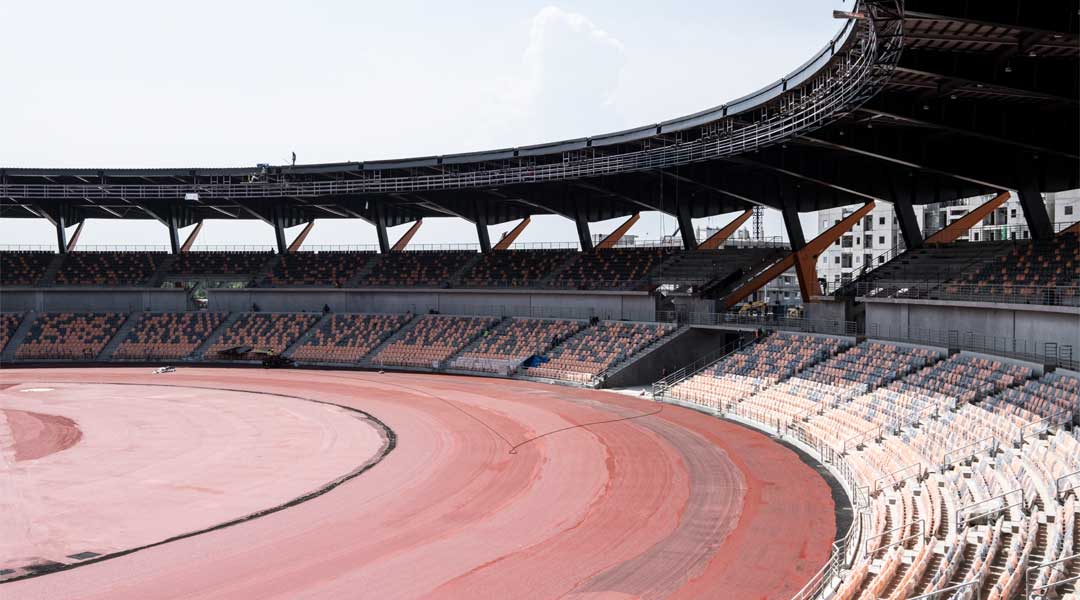
LOOK: New Clark City’s Athletic Stadium 5 months before its turn over



“It takes guts to do this,” says Royal Pineda, principal architect of Budji+Royal Architecture+Design, the firm designing New Clark City’s sports complex in Capas, Tarlac. This is the firm’s first time to design a sports facility, but seeing the different stadiums in Jakarta, Singapore, Sydney, and Tokyo gave Pineda and his team more confidence. “Because it’s all common sense. The IAAF (International Association of Athletics Federations) has written down all the technical requirements. It’s math. It’s science.”
The design team had three months to work simultaneously on schematic design and design development. It took three months for them to get the technical delegate’s approval and a month to work on the pre-construction documents. Meanwhile, the contractor had to start digging and building before the completion of the CD package, given only 12 months to erect the stadium.
READ MORE: 33 days before turnover: Aquatic Center 90% complete
During our team’s visit to the New Clark City construction site last May, the stadium and the rest of the complex had 94 days to go before the design and construction team’s internal deadline of 31 August 2019. This internal deadline, which all 8,000 workers, engineers, and architects are taking very seriously, is two months ahead of the official turnover on October 30th and three months before the 30th Southeast Asian Games begin on 30 November.
Here are some of the images we captured on our visit to New Clark City last May 29th.
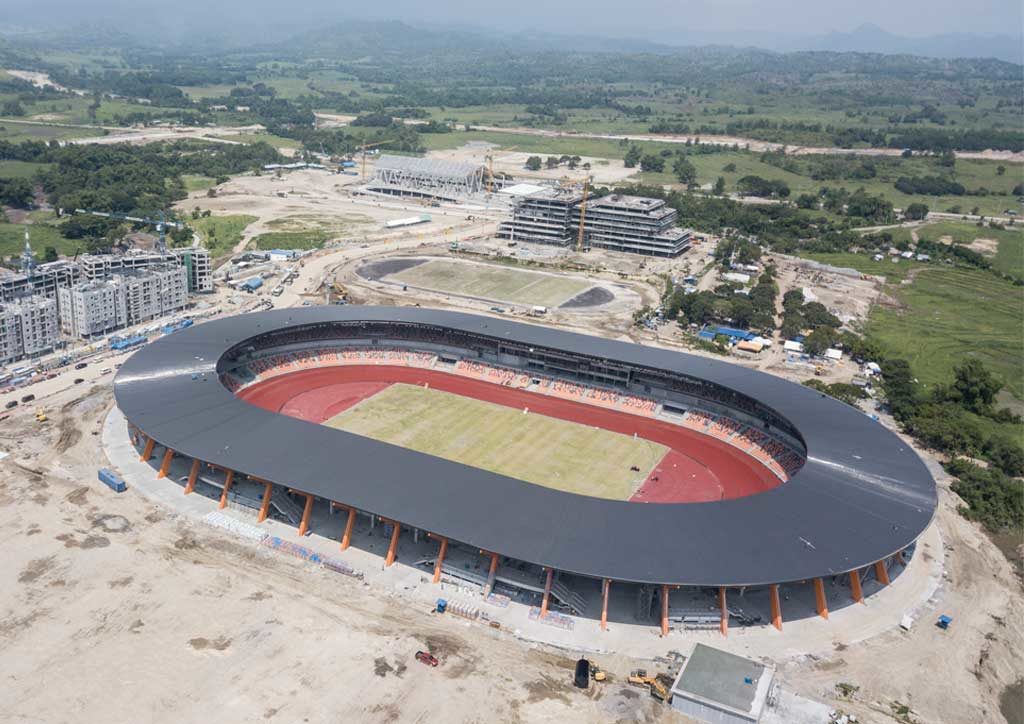
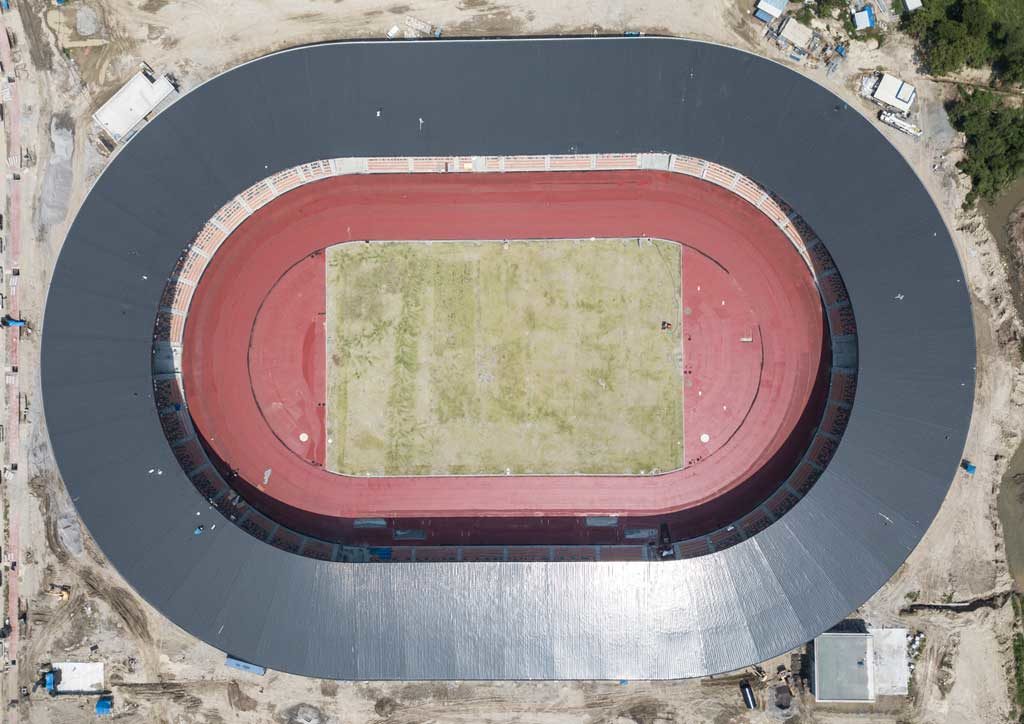
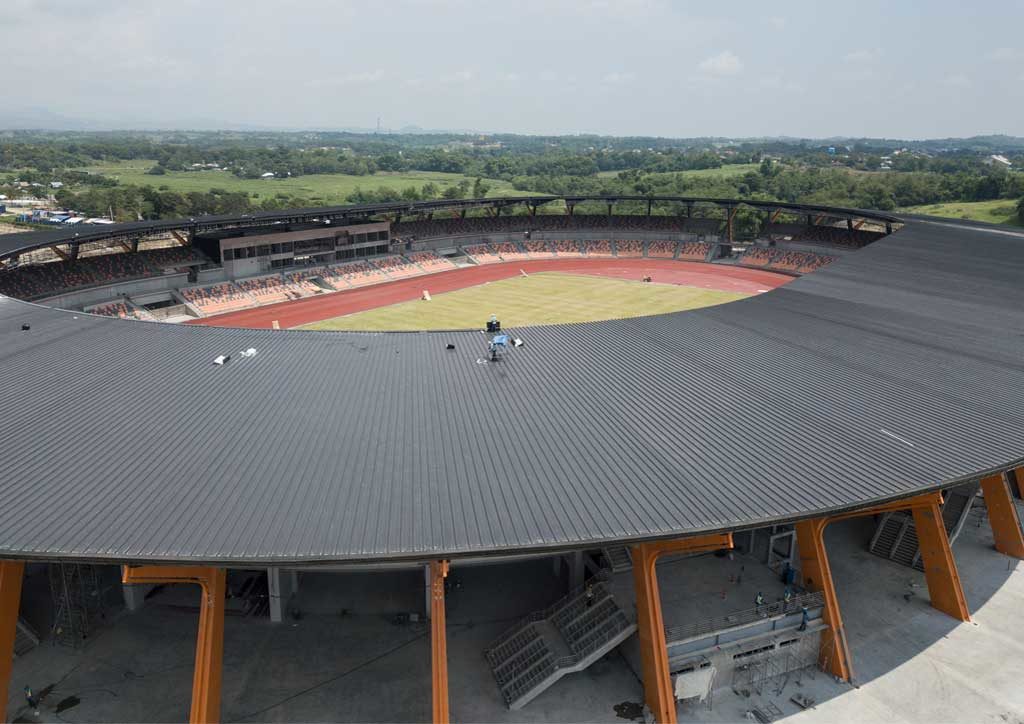
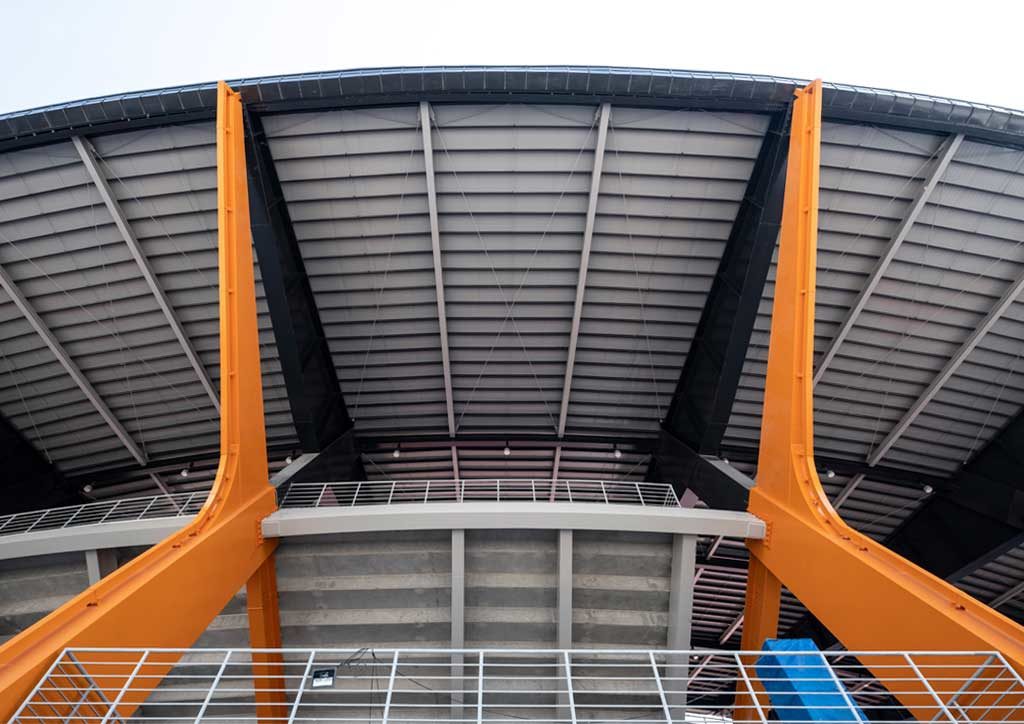
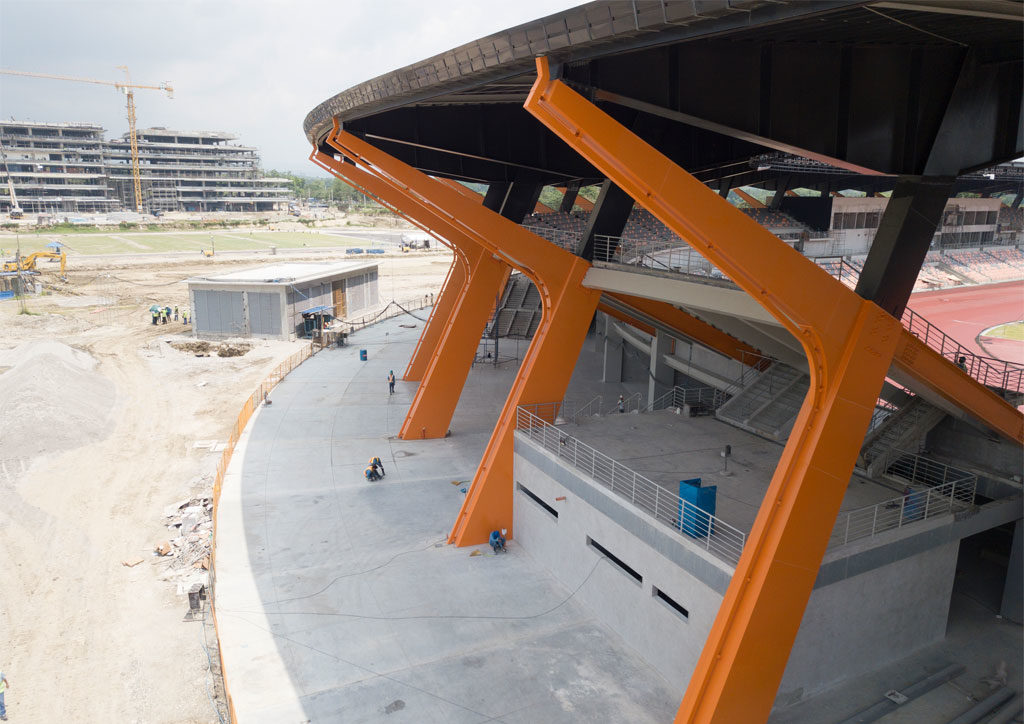
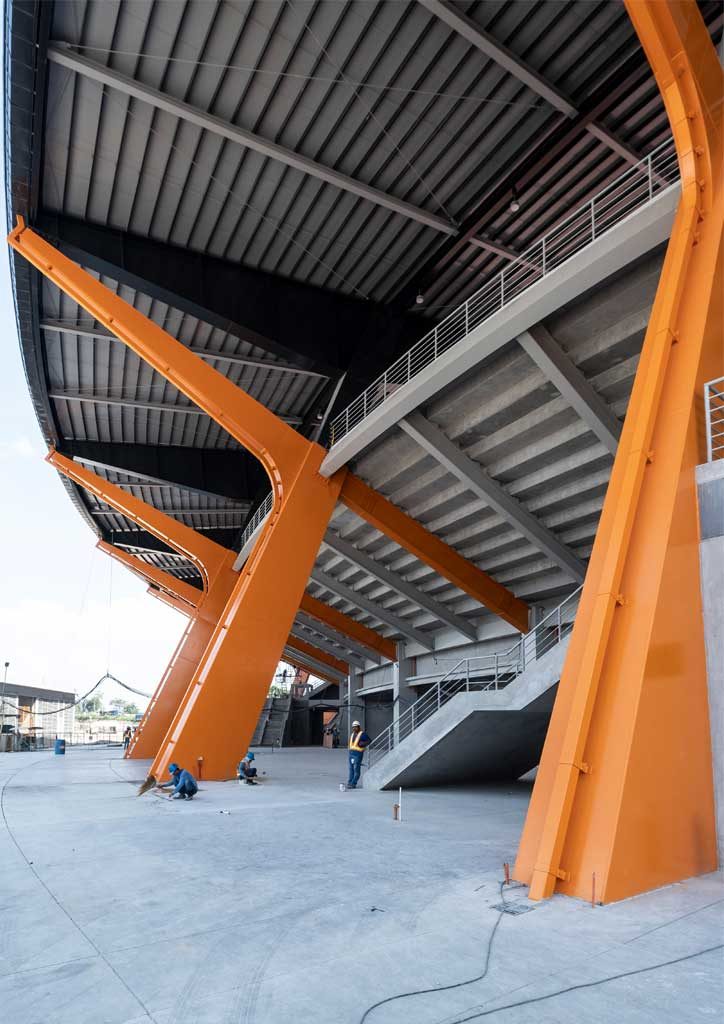
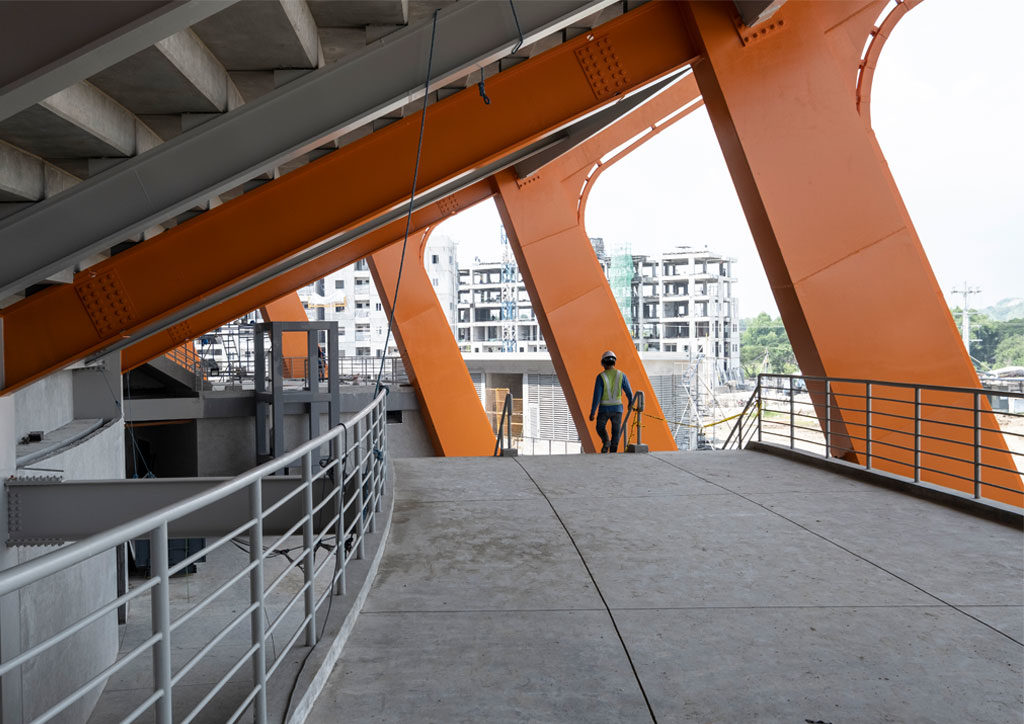
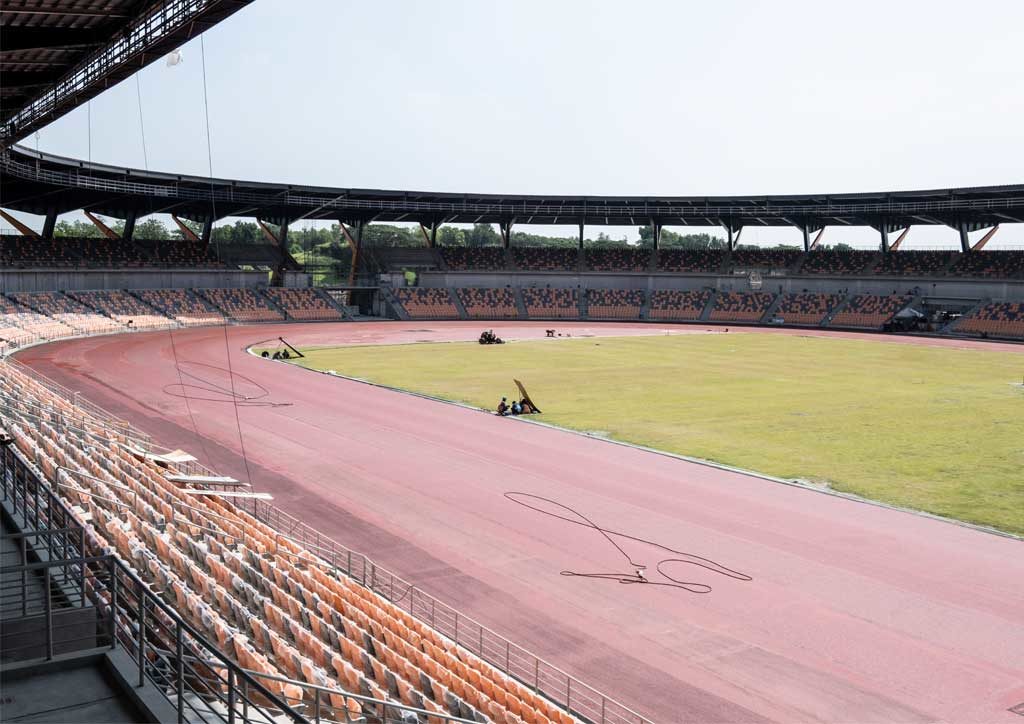
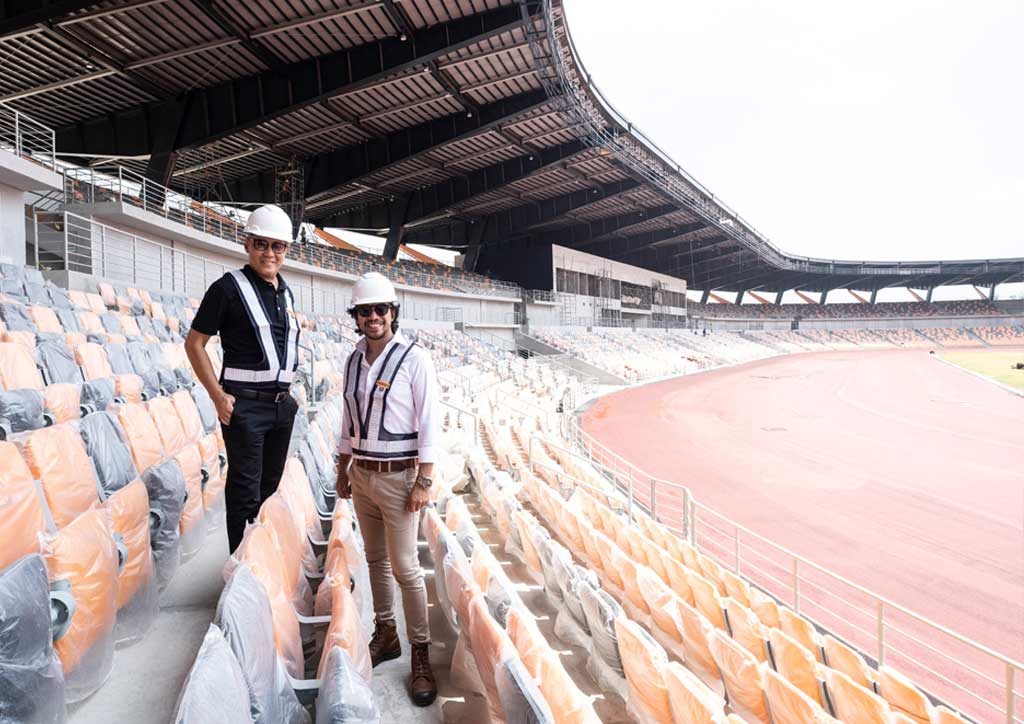
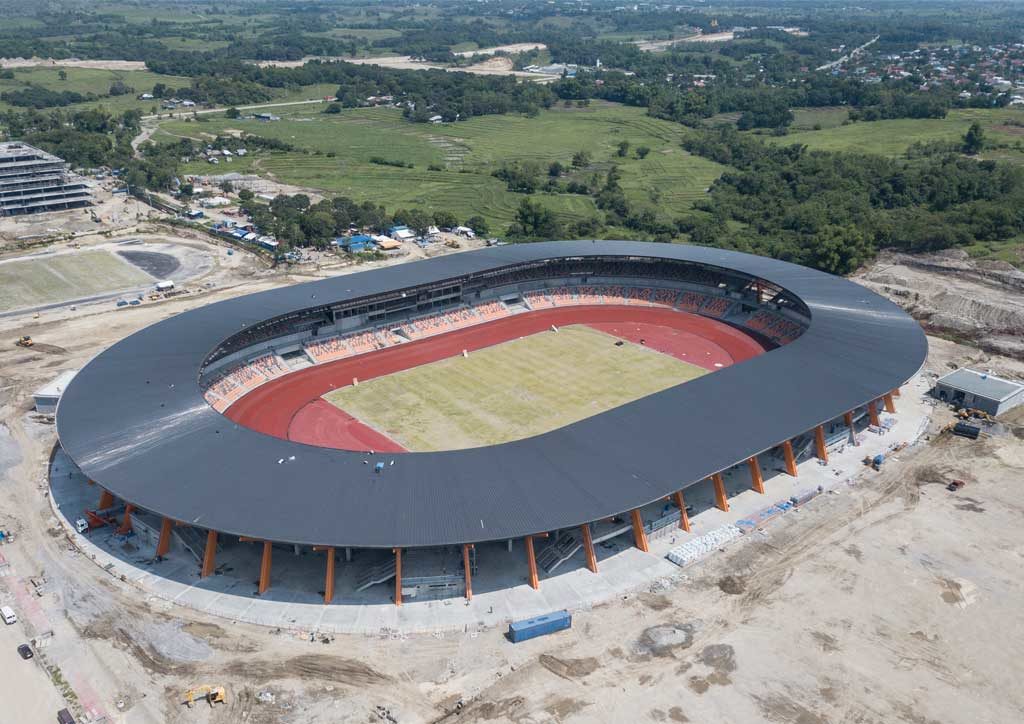
Read the full-length article on the Athletic Stadium and see exclusive photos in BluPrint’s Volume 2 2019, available in newsstands nationwide, on Flip100, Magzter, Lazada, and Amazon.
Read More: DTI unveils the P1 billion Philippine pavilion at the World Expo 2020 in Dubai
Photographed by Ed Simon
Frequently Asked Questions
The New Clark City Athletic Stadium was designed by Budji+Royal Architecture+Design, led by principal architect Royal Pineda and principal designer Budji Layug. It was the firm’s first sports facility project. The stadium was built for the 30th Southeast Asian Games held in the Philippines in November 2019, with construction completed within a compressed 12-month timeline in Capas, Tarlac.
The Athletic Stadium’s design draws inspiration from two Filipino cultural references: the caldera of Mount Pinatubo, represented by the charcoal-gray roof, and the frames of traditional Pampanga lanterns, which informed the stadium’s column and brace structure. The design prioritizes openness and cross ventilation by lifting the roof higher than conventional enclosed stadiums, creating a lighter, more breathable structure.
The New Clark City Athletic Stadium sits on a 73,580-square-meter site with a 25,000-square-meter footprint. It has a seating capacity of 20,000 across 21 rows, 14 main entry and exit staircases, and seven gates. The roof spans 34 linear meters, reaches 19.35 meters at its apex, and is constructed from insulated sandwich roofing panels supported by lantern-inspired structural braces.
The contractor had only 12 months to erect the stadium, beginning construction before the complete design package was finished. Budji+Royal worked simultaneously on schematic design and design development over three months, followed by three months for technical delegate approval from the IAAF and one month for pre-construction documents. All 8,000 workers, engineers, and architects targeted an internal deadline of August 31, 2019 — two months ahead of the official October 30 turnover.
Budji+Royal deliberately lifted the stadium roof higher than conventional enclosed sports venues to allow thorough cross ventilation throughout the seating bowl and competition area. The exposed undersides of the bleachers and metal stringers contribute to the open, honest aesthetic while supporting airflow. Principal architect Royal Pineda described this as making things “lighter” — a conscious departure from the heavy, enclosed stadiums the team studied during design development in Jakarta, Singapore, Sydney, and Tokyo.