For more than nine decades, Fisher & Paykel has approached design with a simple but exacting belief: that the best living environments are those shaped by people, place, and purpose. Rooted in New Zealand and deeply attuned to island and coastal living, the brand’s philosophy centres on quiet performance, material honesty, and appliances that integrate […]
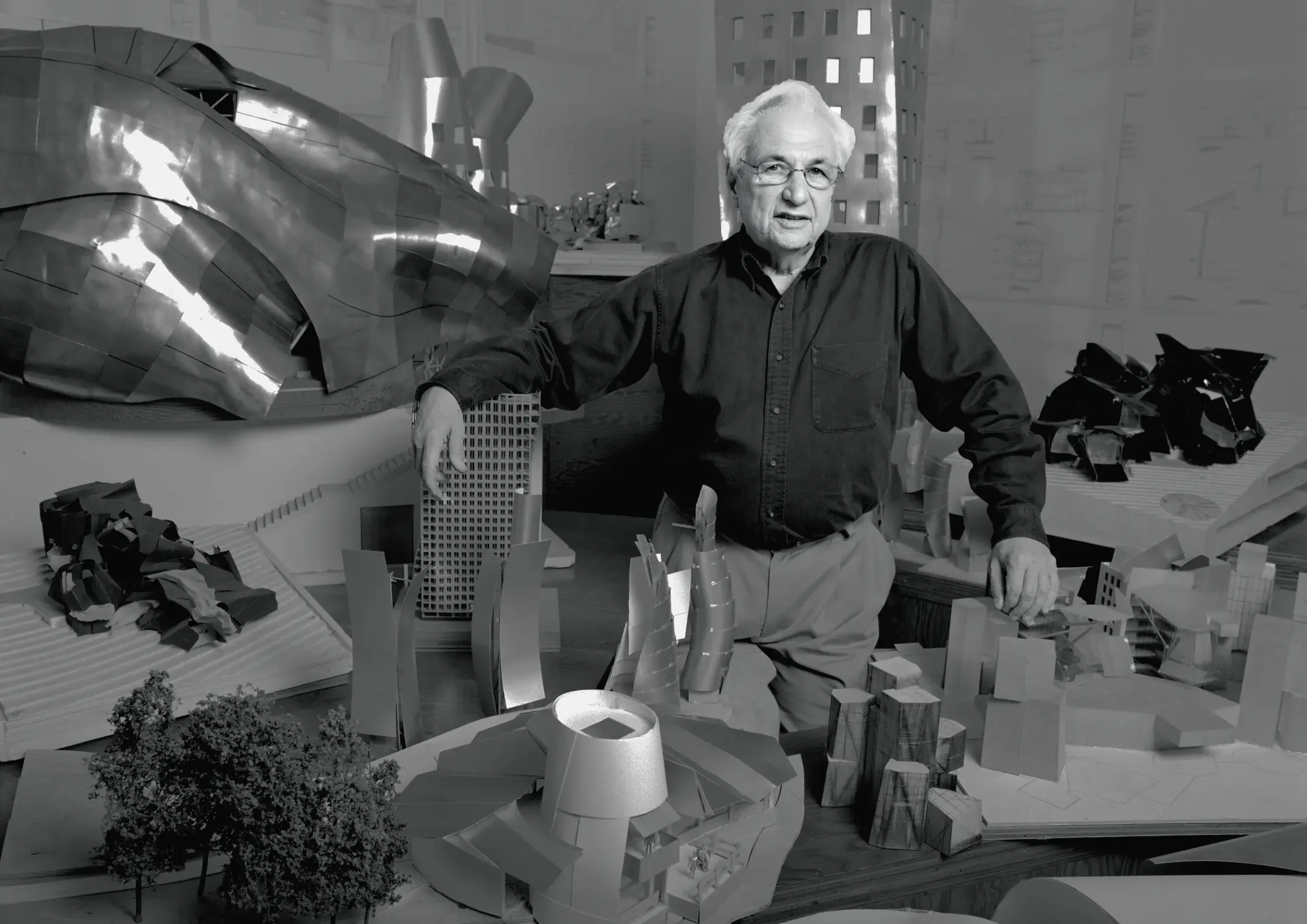
Frank Gehry: When Architecture Meets Sculpture



Born in 1929, Frank Gehry is widely considered one of the most influential architects of his generation. Gehry is recognized for his experimentation with form and material, which subsequently defined his architectural vocabulary and enabled him to successfully challenge people’s established expectations of architecture. In the span of his eight-decade career, he has left a lasting impact on modern cities with his distinctive sculptural architectural style. In this article, BluPrint enumerates a selection of his most renowned works.
Gehry Home, Santa Monica
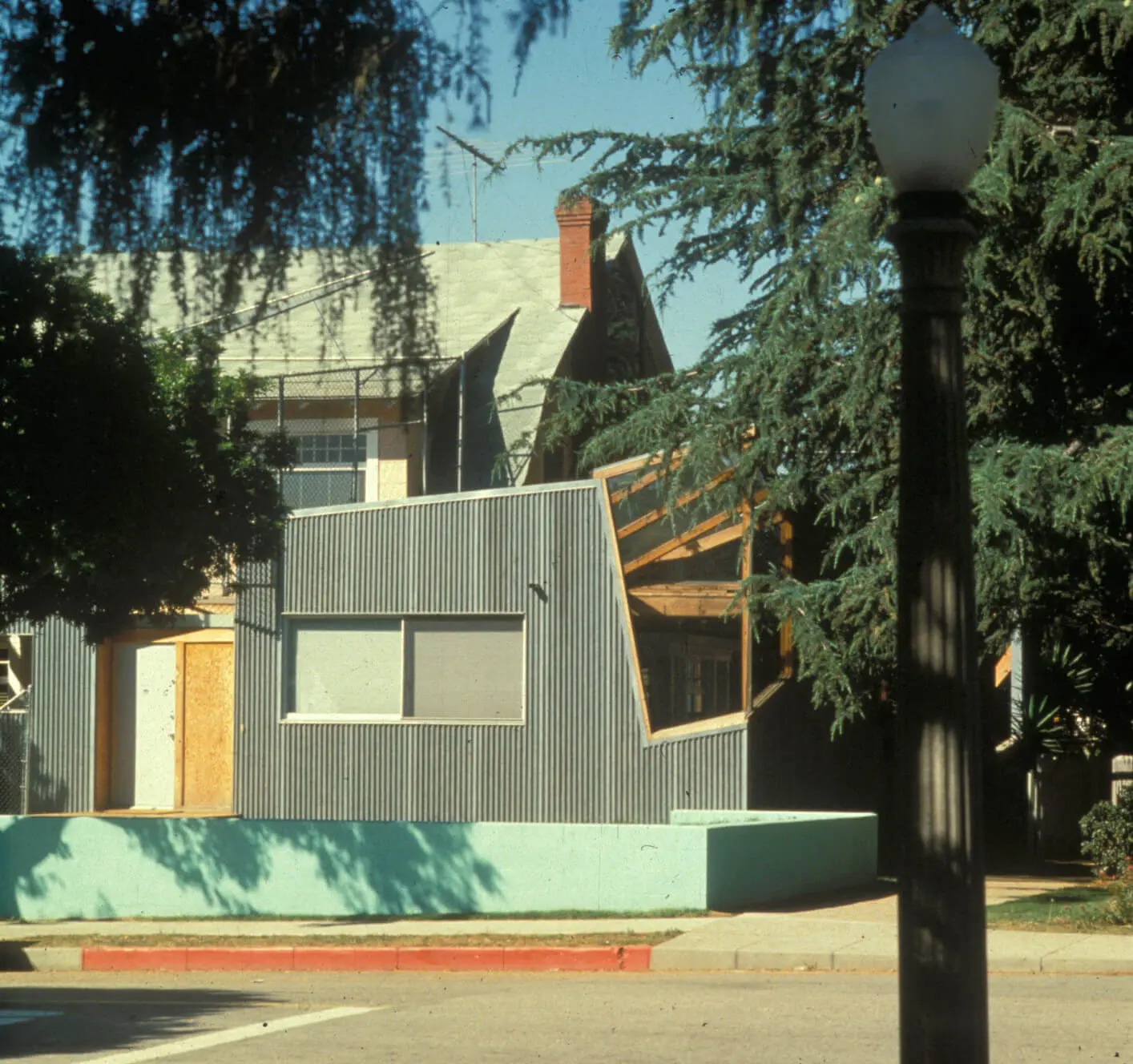
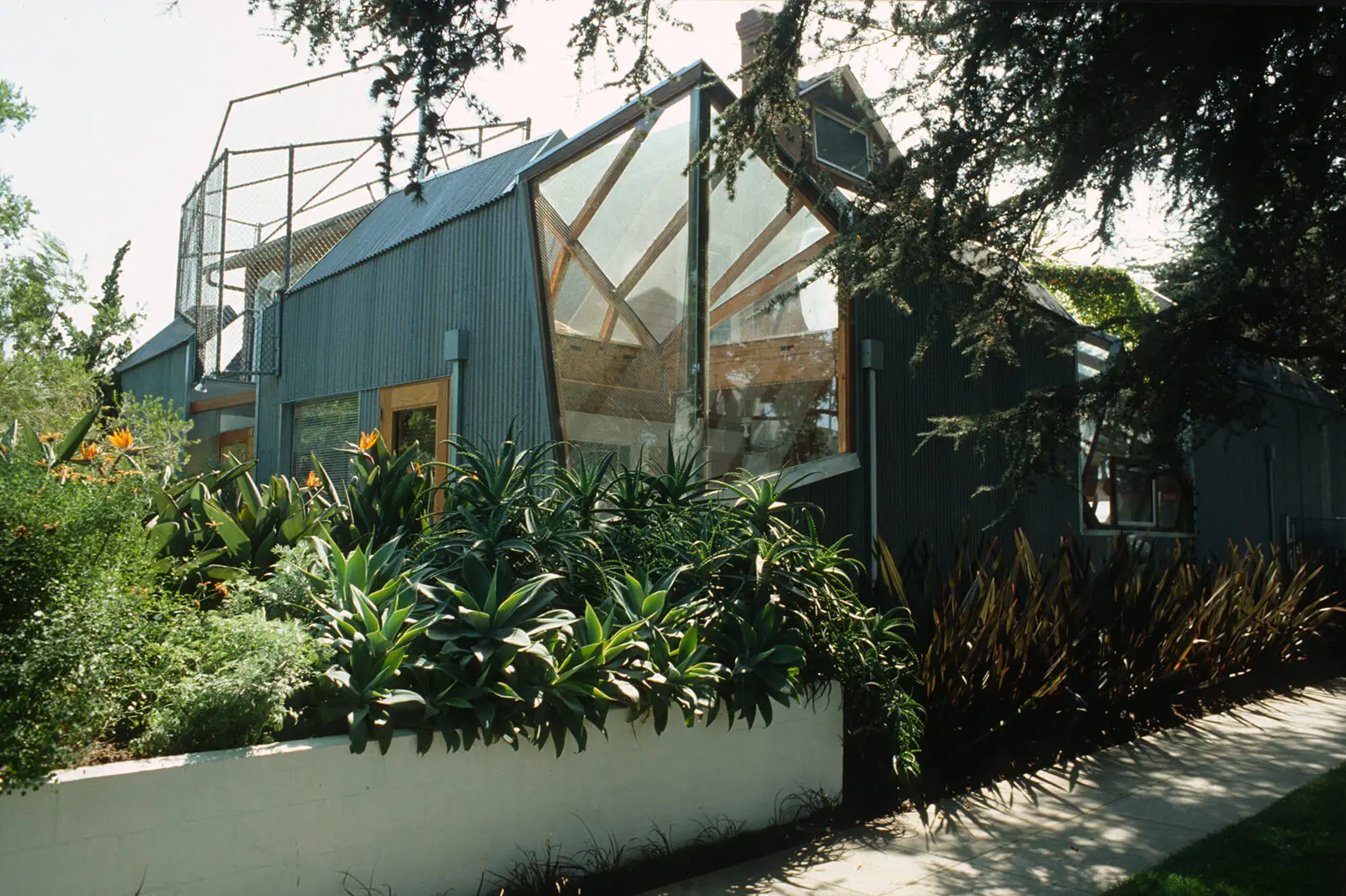
Situated within the intersection of Washington Avenue and 22nd Street, Gehry’s Santa Monica home is a quintessential example of his unique form of architectural expression. Gehry stripped a 1920 Dutch colonial bungalow down to its frame, exposing its original wooden structure. Often considered a deconstructivist architecture, the home utilized unconventional materials.
Gehry altered the residence’s exterior, crafting a contemporary look that contrasted with the existing neighborhood. In his renovation of the interior, he complemented and blended the old and new structural elements. The residence is defined by its use of corrugated steel, smooth glass, and sharply angled wooden frames, including large tilted windows. The architectural exploration demonstrated in his home influenced his subsequent projects throughout the 1980s, simultaneously inspiring numerous other designers.
Advertisement
Guggenheim Museum, Bilbao
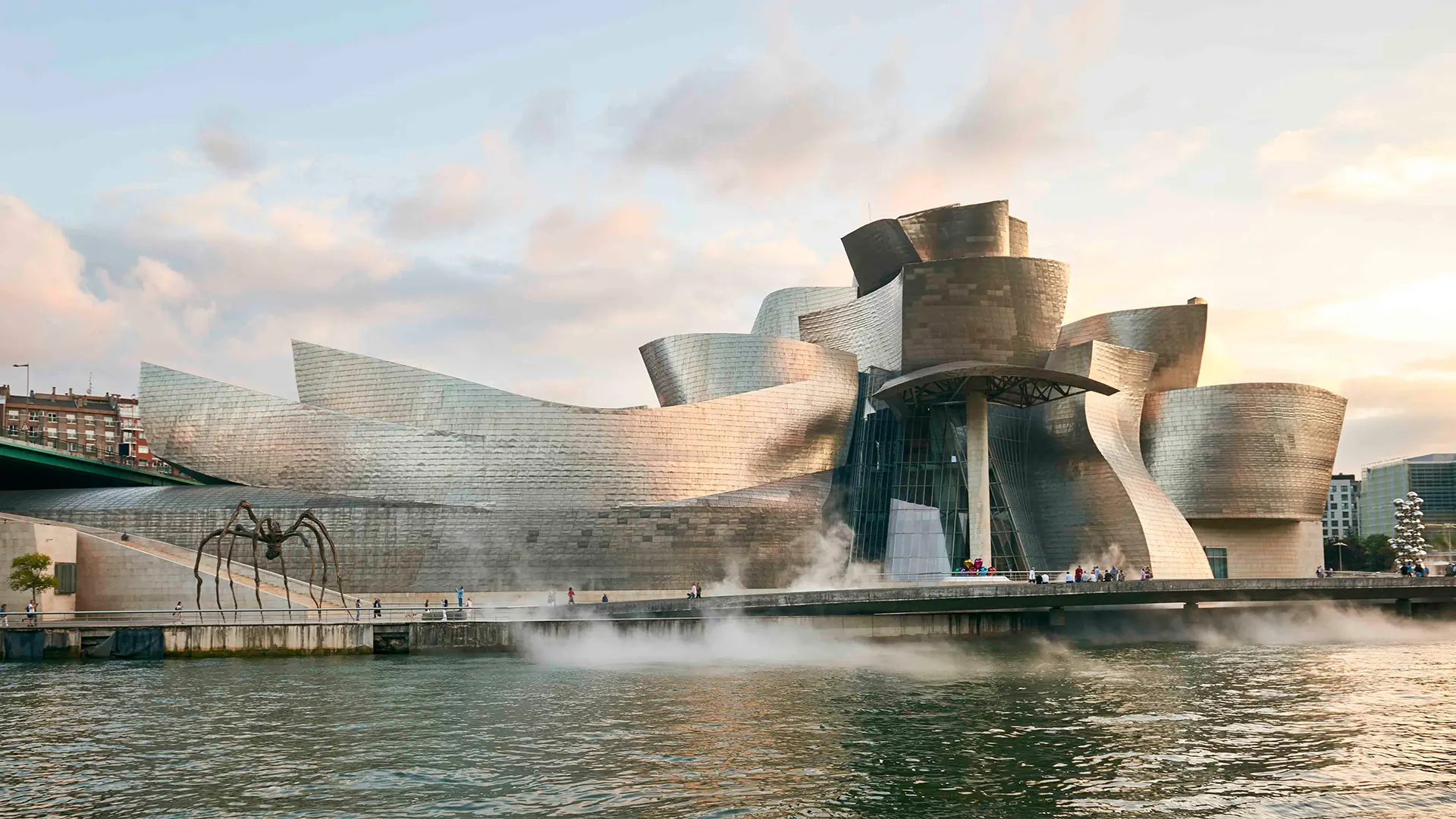
Completed in 1997, the Guggenheim Museum is internationally celebrated as one of Gehry’s most significant architectural achievements. Located on the River Nervión, its sculpture-like form seamlessly integrates with the surrounding landscape. Renowned for its flowing and non-Euclidean geometry, it stands tall as a landmark of contemporary design.
Gehry drew inspiration from fish, finding the animal’s expression of movement highly architectural. This inspiration is visible in the free-form, curvaceous design, where the 33,000 thin titanium panels shimmer like a body of water and change color with the light and weather. The building also incorporates limestone and glass, crafting a visually stunning, complex geometry. Housing modern and contemporary art within its dramatic atrium and galleries, the structure itself is considered a work of art, uniting art and architecture.
More than just an art museum, the Guggenheim Museum Bilbao spearheaded the redevelopment of Bilbao’s former industrial waterfront into a thriving cultural hub. This act of urban renewal brought significant economic and cultural revival to the local community by creating a space where art is a shared activity.
Advertisement
Walt Disney Concert Hall, California
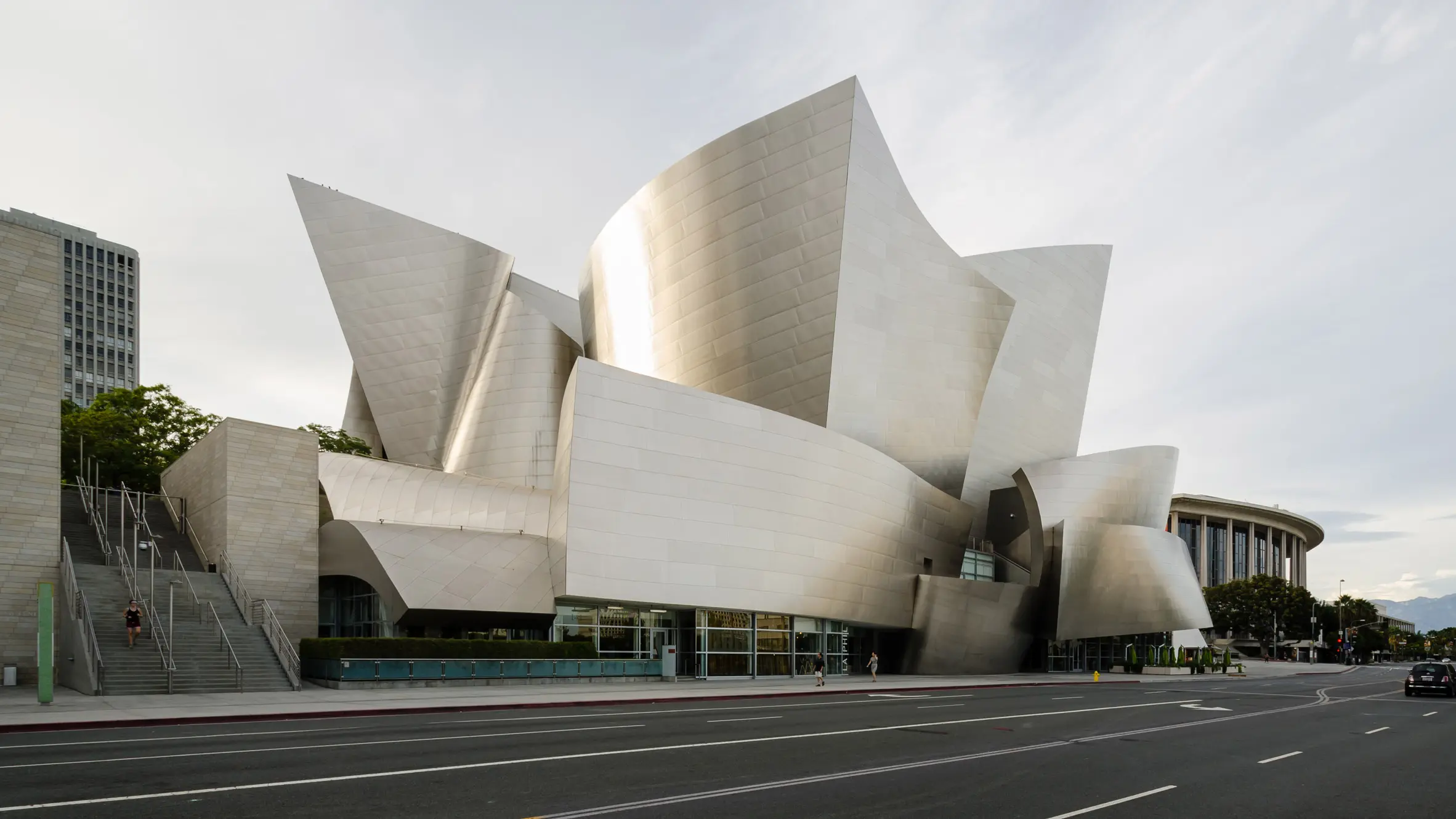
Located in Los Angeles, the Walt Disney Concert Hall opened in 2003. Its exterior is defined by a cascade of dynamic, shimmering stainless steel curves that resemble sails or musical motion. This use of materiality and departure from traditional, symmetrical designs transformed the building into an urban sculpture that reflects and reacts to its environment.
Beyond its striking exterior, the hall is celebrated for its exceptional acoustics, achieved through an intimate “vineyard”- style seating arrangement. This places the audience around the central stage, fostering a deep connection with the performers. Meanwhile, the interior features curved wood paneling and a unique, visually integrated organ with dramatically curved pipes—all designed by Yasuhisa Toyota. As such, the structure delivers exceptional clarity and an immersive auditory experience. This seamless blend of architectural technology, sculptural form, and acoustic precision makes the Walt Disney Concert Hall a truly unique and significant cultural landmark.
Louis Vuitton Foundation in Paris
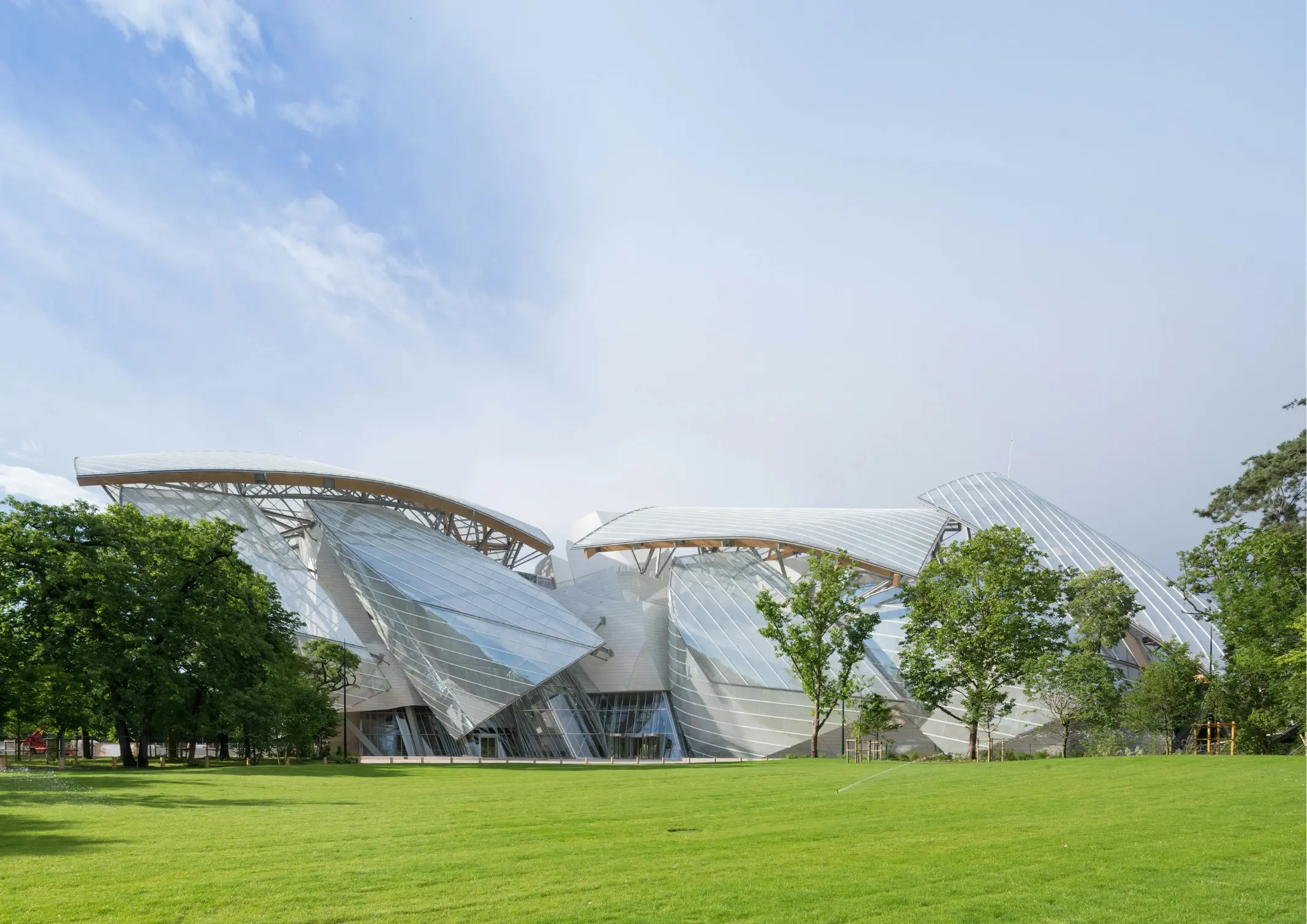
The Louis Vuitton Foundation in Paris is an architectural landmark defined by billowing glass “sails” over concrete “icebergs.” Situated in the Bois de Boulogne, the structure nods to the travel heritage of the luxury brand while recalling the 19th-century glass grandeur of Parisian architecture, like the Grand Palais.
Advertisement
The building’s core consists of 3,600 custom-formed, opaque white concrete panels—the “icebergs”—which house the museum’s traditional galleries. Twelve enormous, curved glass “sails” rest on this base, supported by intricate steel and wood frameworks. These reflective sails change with the light, linking the building to the surrounding park.
The Foundation transcends its function as a museum. It also serves as a bold statement on the marriage of luxury, high art, and architectural ambition. Overall, it offers a dynamic cultural destination that stands as a modern masterpiece through its reimagining of architectural forms.
Groundbreaking Legacy
Frank Gehry’s works, sculptural and unconventional, shaped contemporary architecture. In his passing earlier this month, he has left behind an enduring contribution to the discipline of architecture.
Advertisement
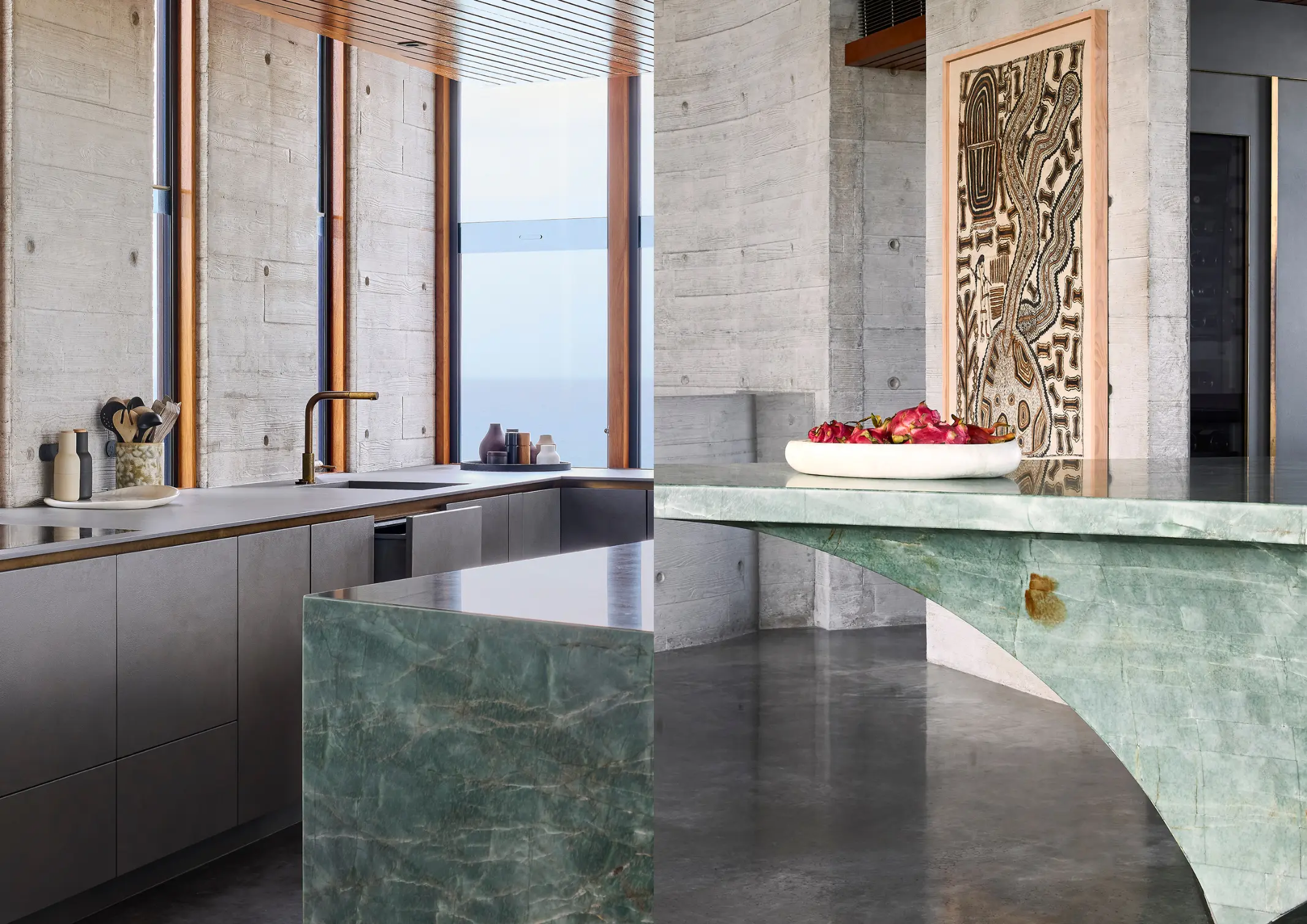
At Helm, dining unfolds as choreography. An open kitchen anchors the room, allowing guests to witness the precision behind its Michelin-starred fine dining menu. Designed by Kevin Nieves of Headroom, the 24-seat restaurant reflects that same discipline in its interior design. Tucked within Ayala Triangle Gardens in Makati, Helm brings together culinary recognition and architectural […]
Advertisement
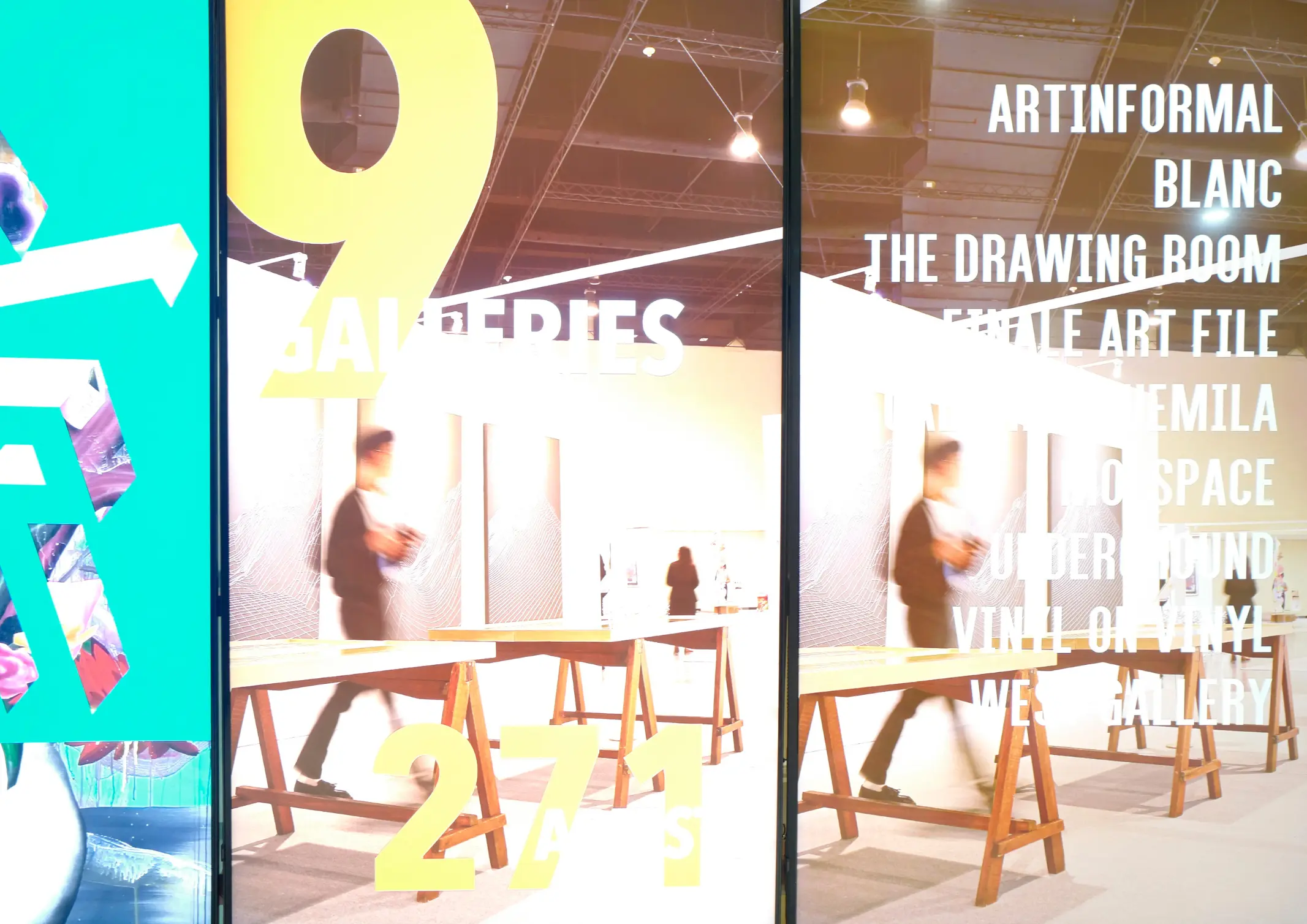
Exhibition designer Baby Imperial of All At Once shaped the spatial strategy of ALT ART 2026, its largest edition to date. The fair occupied Halls 1 and 2 of SMX Convention Center Manila, expanding in both footprint and ambition. Organized by the ALT Collective—Artinformal, Blanc, The Drawing Room, Galleria Duemila, Finale Art File, MO_Space, Underground, […]
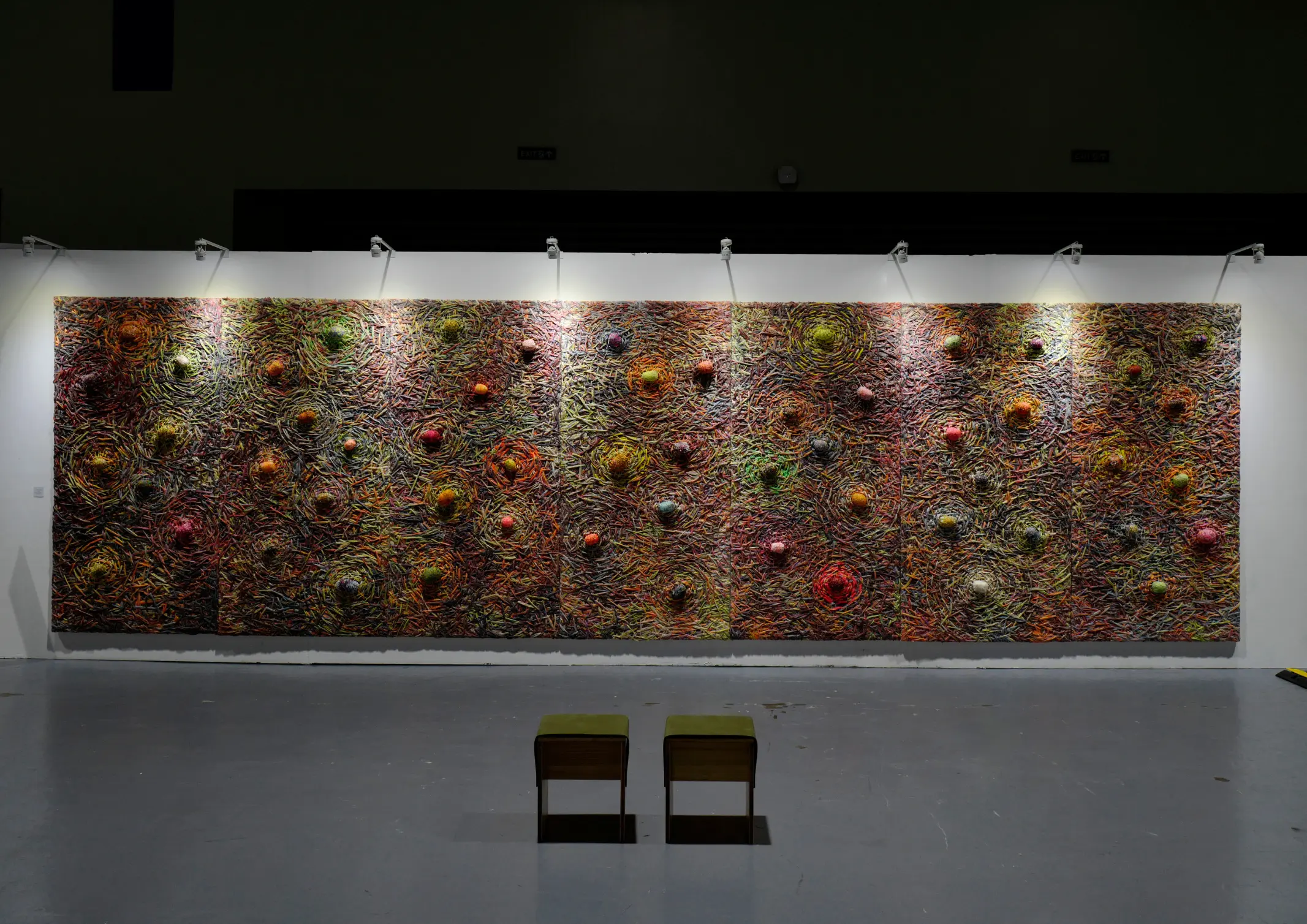
ALT ART, organized by the ALT Collective—Artinformal, Blanc, The Drawing Room, Galleria Duemila, Finale Art File, MO_Space, Underground, Vinyl on Vinyl, and West Gallery—presents a focused platform for Philippine contemporary art. As the fair continues to evolve, it expands its scale and curatorial scope, reinforcing its growing presence within the Philippine art scene. Creative Practices […]
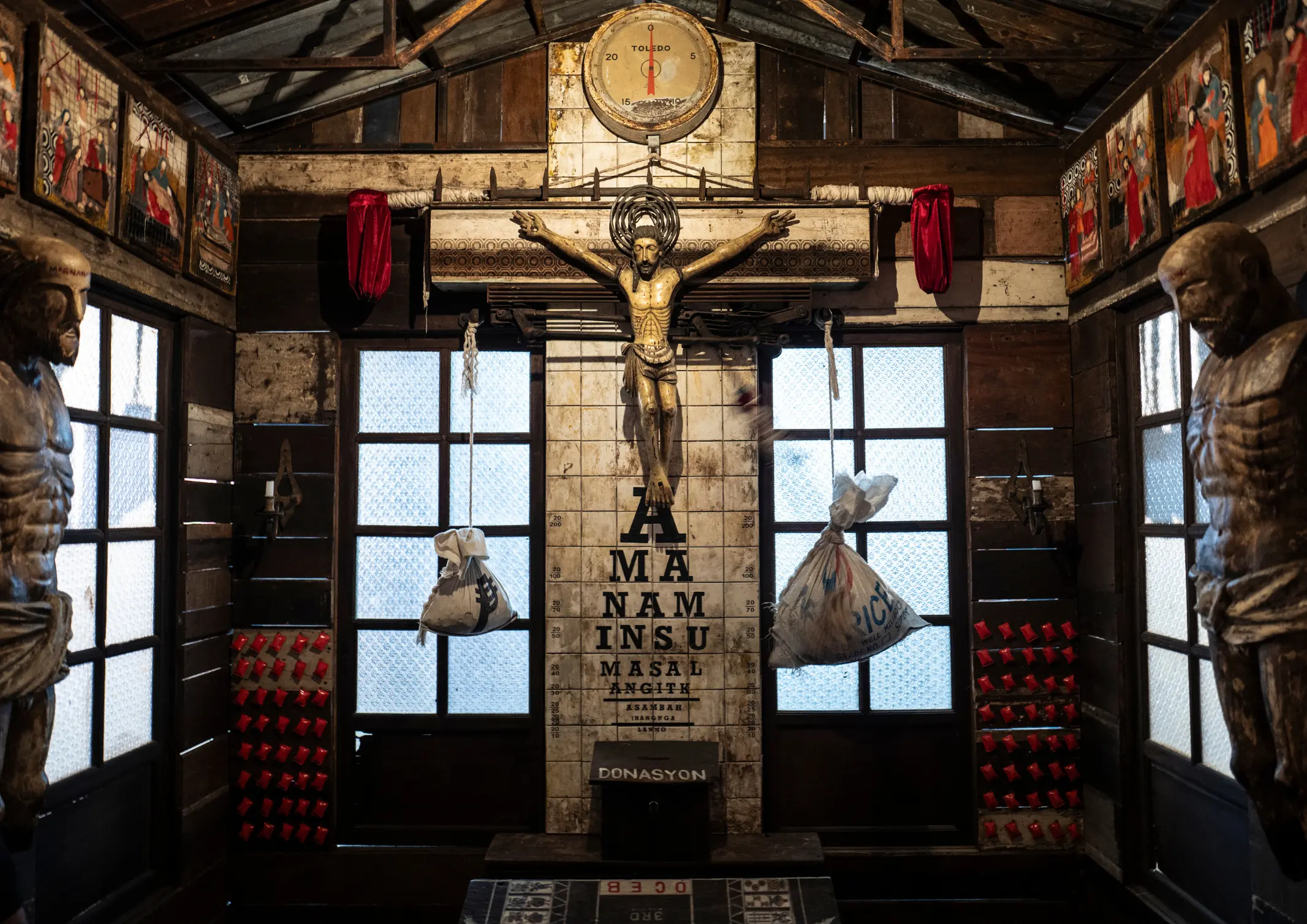
Inside Art Fair Philippines 2026: Religious Imagery, Material Experimentation, and Social Commentary
Art Fair Philippines 2026 gathered art enthusiasts and collectors in Makati for one of the country’s leading showcases of contemporary Philippine art. Designed by Nazareno/Lichauco, the fair moved to Circuit Corporate Center One in Ayala Circuit, marking a new chapter in its spatial identity. Across its booths and projects, the fair positioned contemporary Philippine art […]
Advertisement
Download this month's BLUPRINT magazine digital copy from:



Subscribe via [email protected]