How Kaway’an EcoPark is Redefining Bamboo Architecture



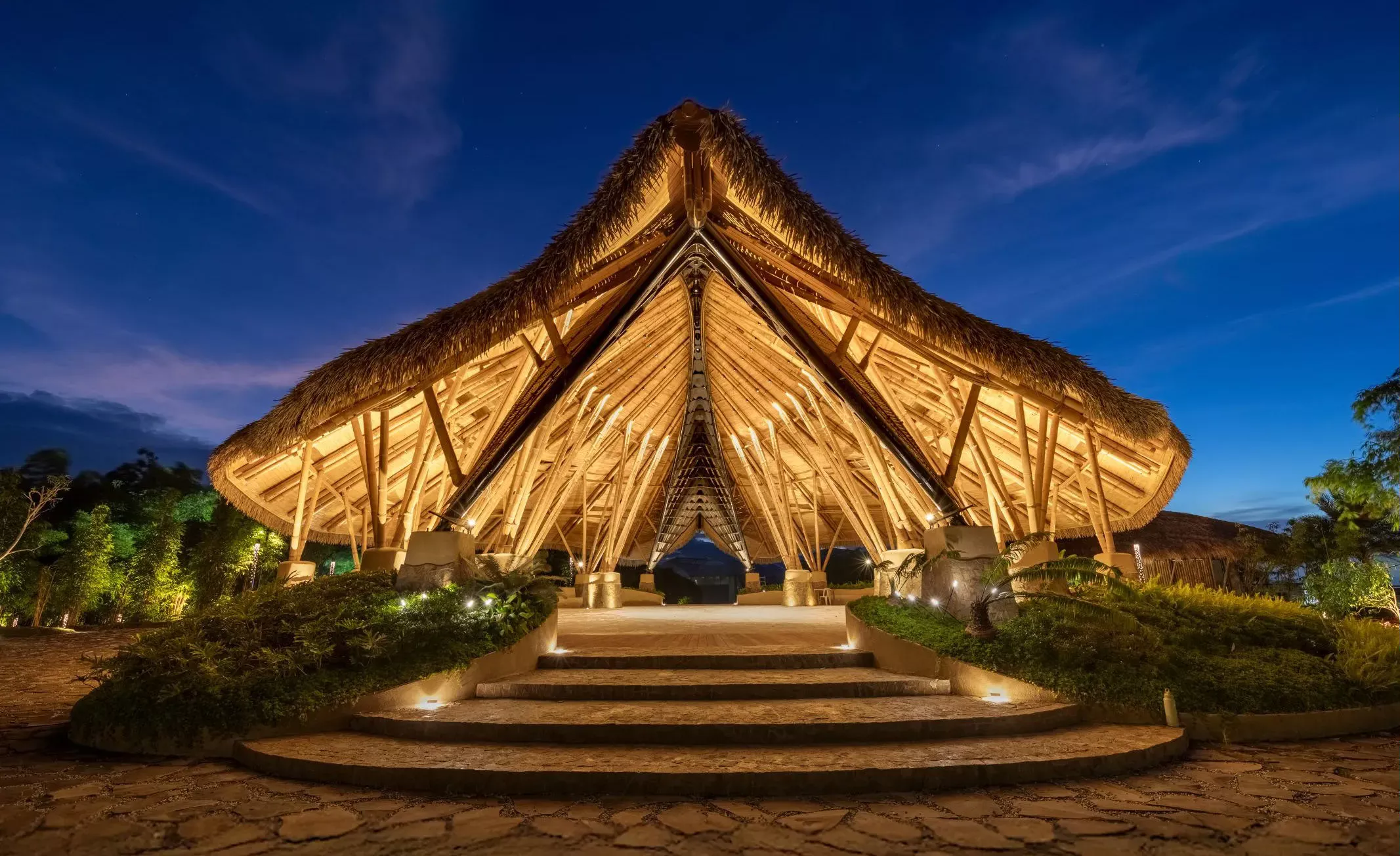
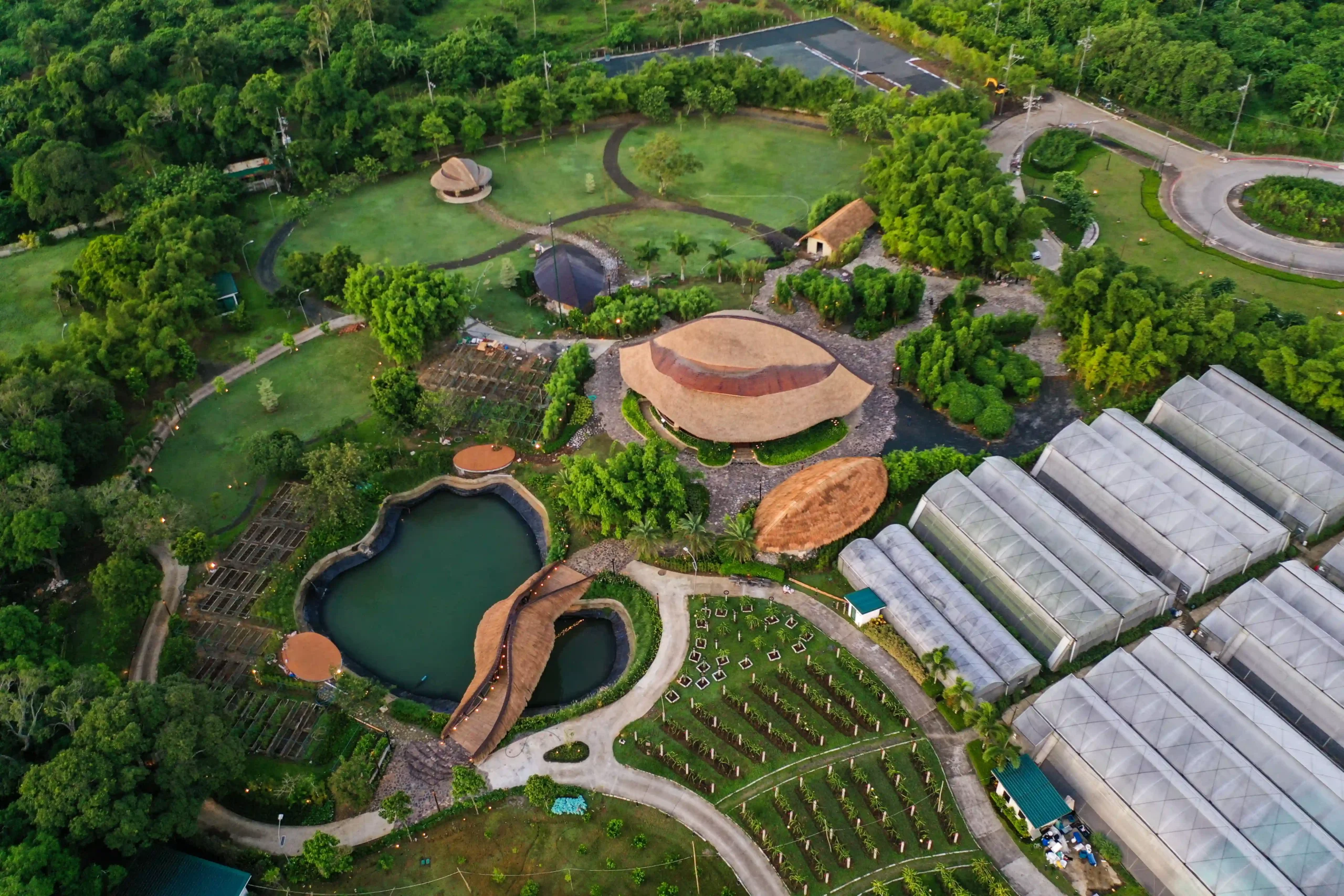
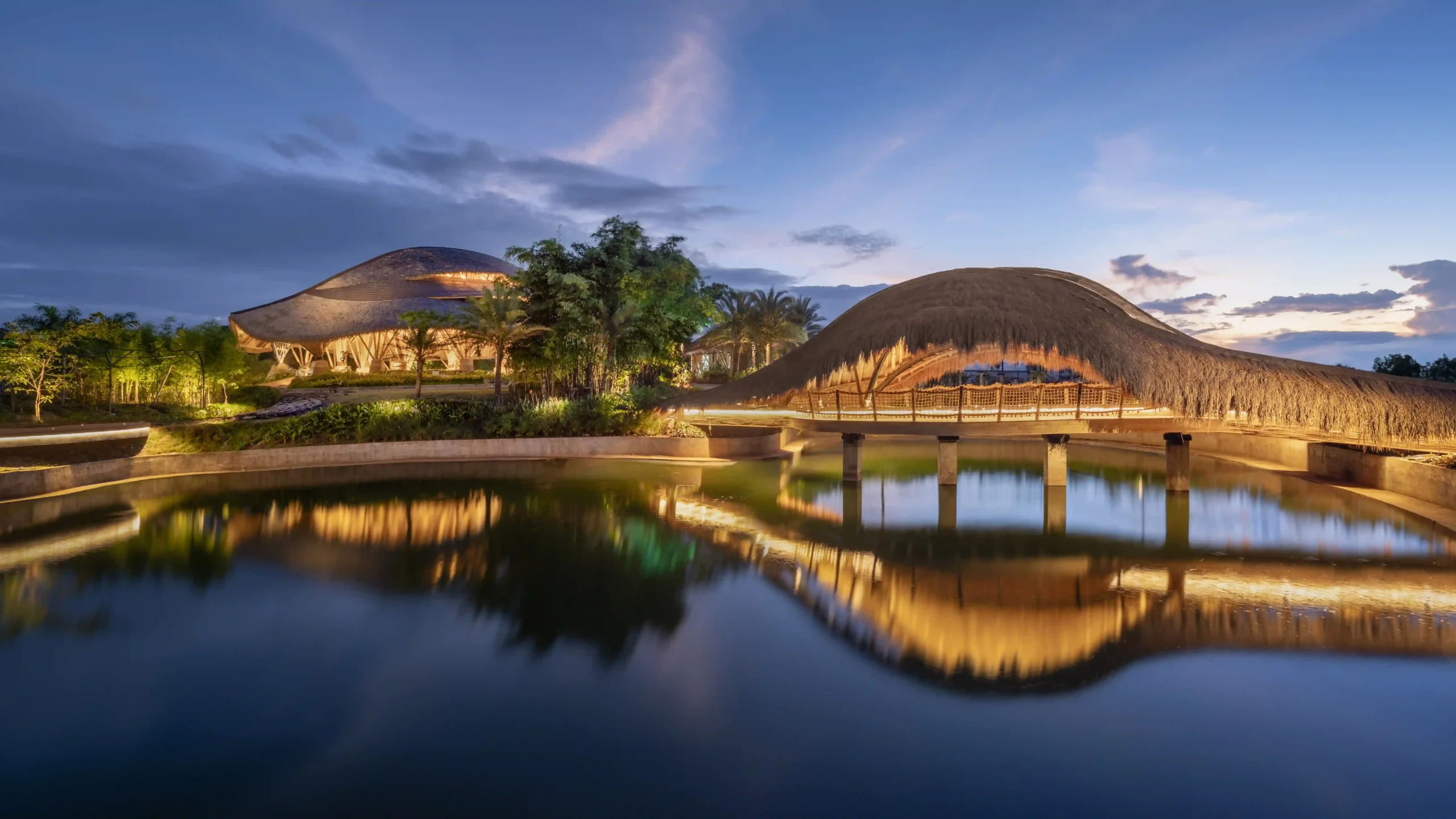
Set within the city limits of the burgeoning General Trias, Cavite, Luzon’s largest bamboo structure graces the landscape. The Kaway’an EcoPark Bamboo Pavilion speaks of local aspiration, international design expertise, and a profound connection to its Philippine setting.
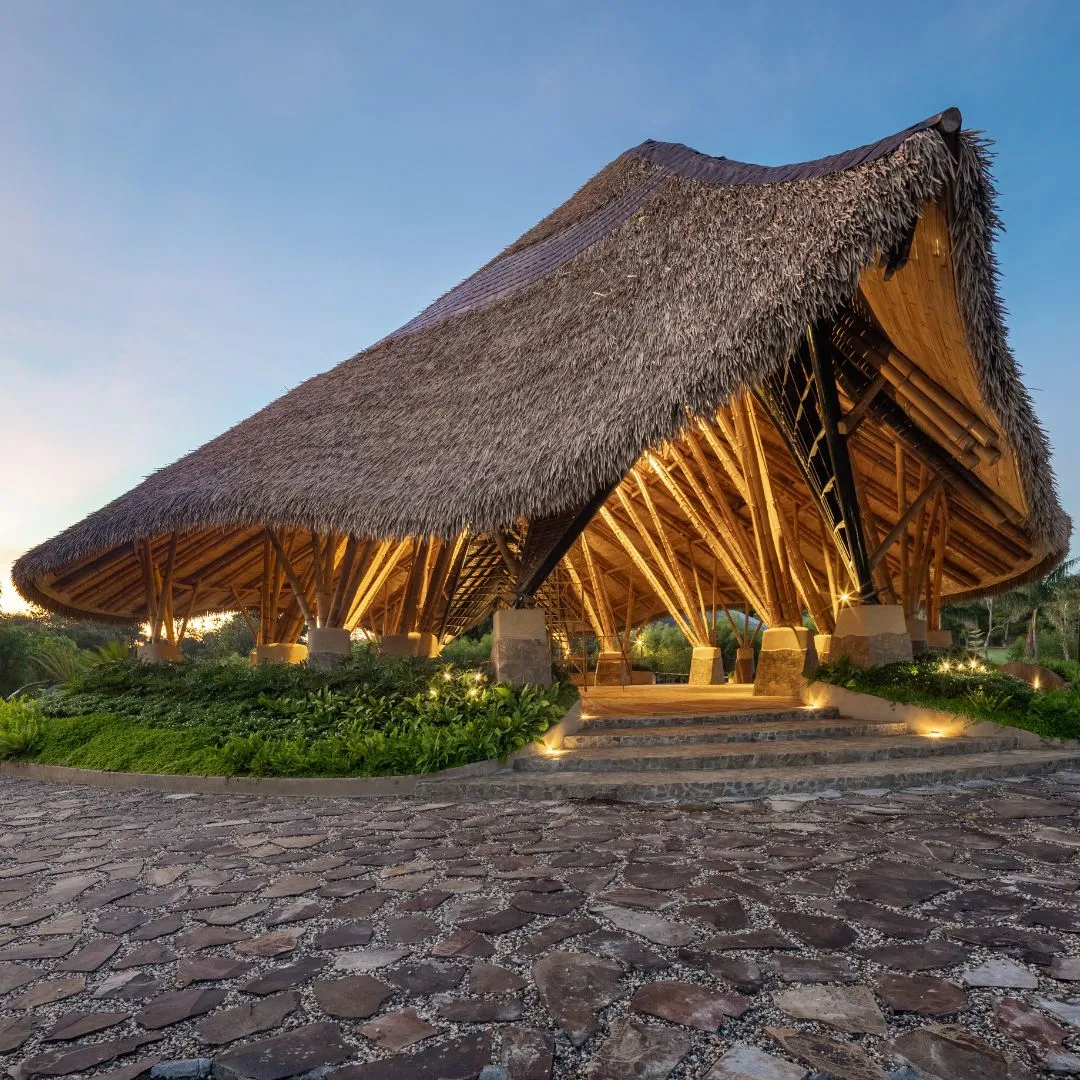
Visually, the Pavilion is a captivating sight. Its immense, organically curved roof, layered with thick thatch accented with copper, seems to float above the landscape, supported by a forest of robust bamboo poles that fan upwards. The structure embraces openness, its expansive canopy offering shelter while inviting the surrounding greenery and natural light deep within, creating a space that feels both monumental and intimately connected to the earth.
Its story begins with the vision of Rosie Tsai , CEO of Citihomes Builder and Development Inc. Building upon then Mayor Antonio Ferrer’s suggestion to create an eco park, Tsai envisioned it as a beautiful, vibrant space that was entirely self-sustaining and delivered true community benefit. “I thought of bringing the community together with a venue that will foster not just interaction with people, but also with nature,” she explains.
Collaboration and Craftsmanship
Designing such a landmark in the Philippines presented unique environmental considerations. This challenge was keenly felt by Christian Salandanan of Sangay Architects, the pioneering Filipino architect who collaborated closely on the project with Orin Hardy founder of PT Bamboo Pure Bali, and Elora Hardy of Ibuku, the globally acclaimed designer behind the Pavilion’s concept. For Salandanan, Hardy, and their teams, it sparked a deeper inquiry into the essence of contemporary Filipino bamboo architectureArchitectureThe art and science of designing and constructing buildings, structures, and spaces that are functional, safe, and aesthetically pleasing. It encompasses the planning, design, materials, and techniques used to createGo to Architecture Glossary.
The Philippines presents a distinct challenge: structures must withstand wind speeds of up to 300 kph due to powerful typhoons. The ambitious scale and the climatic demands led the design team to an innovative yet pragmatic approach: a marriage of steel and bamboo. This was a conscious evolution for Ibuku, moving beyond purist bamboo applications to embrace what the site and vision required. “We decided not to hide it, not to conceal it, but to reveal it and celebrate it as part of the honesty of the building,” Hardy states.
Salandanan echoed this philosophy, emphasizing that for a permanent bamboo structure of this magnitude, combining materials was essential. By using steel as steel, and bamboo as bamboo, it allowed each to truthfully express its inherent strengths.
Cultivating a Sustainable Future
Hardy’s design philosophy always begins with people. She considers how they will use a space, how they should feel within it, and how it can connect them back to the natural world. This is evident in the Pavilion’s open, embracing form, deeply attuned to both human experience and its specific environment.
Salandanan also saw the collaboration as an opportunity to push the practice of bamboo architecture beyond preconceived notions and individual styles. He points to specific functional innovations born from this contextual awareness, such as the carefully engineered slits in the Pavilion’s soaring roofline, designed to allow the structure to “breathe” and reduce wind pressure during extreme weather events—an elegant solution to a powerful local force.
For Rosie Tsai, the Pavilion holds a significance that transcends its physical form; it’s about changing hearts and minds of Filipinos. “I love bamboo so much because of the spiritual meaning it lends to the human spirit,” she shares. “In the Philippines, bamboo has a reputation that it’s the poor man’s timber. We want to change that. Despite bamboo’s humble roots, if applied with patience and proper treatment, its intrinsic resilience can be transformed into an incredibly diverse and inspiring material.”
Her commitment extends to tangible action, with Citihomes now investing in bamboo treatment facilities and ensuring that local workers gain invaluable skills alongside the Balinese craftsmen during the Pavilion’s construction. Salandanan also hopes it will serve as a compelling precedent that showcases bamboo’s enormous potential. “We can use bamboo here in the Philippines with the right process, with the right design, and with the right acceptance of the material. We want to set an example that bamboo is not temporary.”
Looking at the broader horizon, Hardy sees an exciting evolution for bamboo in global sustainable architectureArchitectureThe art and science of designing and constructing buildings, structures, and spaces that are functional, safe, and aesthetically pleasing. It encompasses the planning, design, materials, and techniques used to createGo to Architecture Glossary. While optimistic about its potential in diverse settings, she offers a crucial insight: “I hope that what happens as we bring bamboo into more dense settings, into urban settings, is that we don’t just treat it like a replacement for steel or a replacement for wood. We keep in mind the really special properties that bamboo has and let that inform the design process.”
The Kaway’an EcoPark’s Pavilion stands proudly as an architectural and engineering marvel. It is an invitation to experience the beauty and resilience of bamboo, and a bold step towards a more sustainable and inspiring future for Filipino architectureArchitectureThe art and science of designing and constructing buildings, structures, and spaces that are functional, safe, and aesthetically pleasing. It encompasses the planning, design, materials, and techniques used to createGo to Architecture Glossary.
Learn more about Kaway’an EcoPark by visiting their website at www.kawayanecopark.com. Experience the beauty of bamboo like never before. Follow them on Instagram @KawayanEcoPark for daily inspiration, updates on upcoming events, and exclusive content straight from the heart of the park.
Images provided by Kaway’an EcoPark.
Read more: Christian Salandanan: Leveraging Bamboo’s Sustainability and Resilience
Frequently Asked Questions
The Pavilion features an immense, organically curved roof layered with thick thatch and copper accents that mimics the natural landscape of General Trias, Cavite. Supported by a forest of robust bamboo poles that fan upwards, the structure maintains an expansive, open-air canopy to invite natural light and greenery deep within. This design choice fosters a direct connection between the community and nature, fulfilling CEO Rosie Tsai’s vision of a self-sustaining space that encourages interaction with the earth.
To withstand wind speeds of up to 300 kph, the design team from Sangay Architects and Ibuku moved away from purist bamboo applications to create a pragmatic marriage of steel and bamboo. Instead of concealing the steel, the architects chose to celebrate it as part of the building’s structural honesty, allowing each material to express its inherent strengths. Additionally, carefully engineered slits were integrated into the soaring roofline to allow the structure to “breathe,” effectively reducing wind pressure during extreme weather events.
Rosie Tsai and architect Christian Salandanan aim to transform bamboo’s reputation from being the “poor man’s timber” into a diverse and inspiring high-end material through proper treatment and artistic application. By bringing in Balinese craftsmen from PT Bamboo Pure Bali to work alongside local workers, the project facilitates a transfer of specialized skills and emphasizes that bamboo is a permanent, viable resource. This collaboration showcases that with the right design process and cultural acceptance, bamboo can transcend its humble roots to become an architectural marvel.
The Pavilion’s form is deeply attuned to the human experience, using an open layout to influence how people feel and move within the sanctuary. Beyond the aesthetic curves, functional innovations include specialized bamboo treatment processes and the strategic use of steel for massive structural loads that bamboo alone could not support at this scale. These elements serve as a compelling precedent for the potential of bamboo in sustainable global architecture, proving it is not merely a temporary material but a sophisticated alternative for modern construction.
Hardy suggests that as bamboo is integrated into more dense and urban environments, it should not be treated as a simple replacement for wood or steel. She advocates for a design process informed by the unique properties of bamboo, such as its flexibility and rapid growth, rather than forcing it to conform to traditional timber standards. The Kaway’an EcoPark serves as a bold step toward this future, encouraging architects to let the material’s intrinsic resilience and spiritual meaning guide the creation of inspiring, sustainable urban spaces.