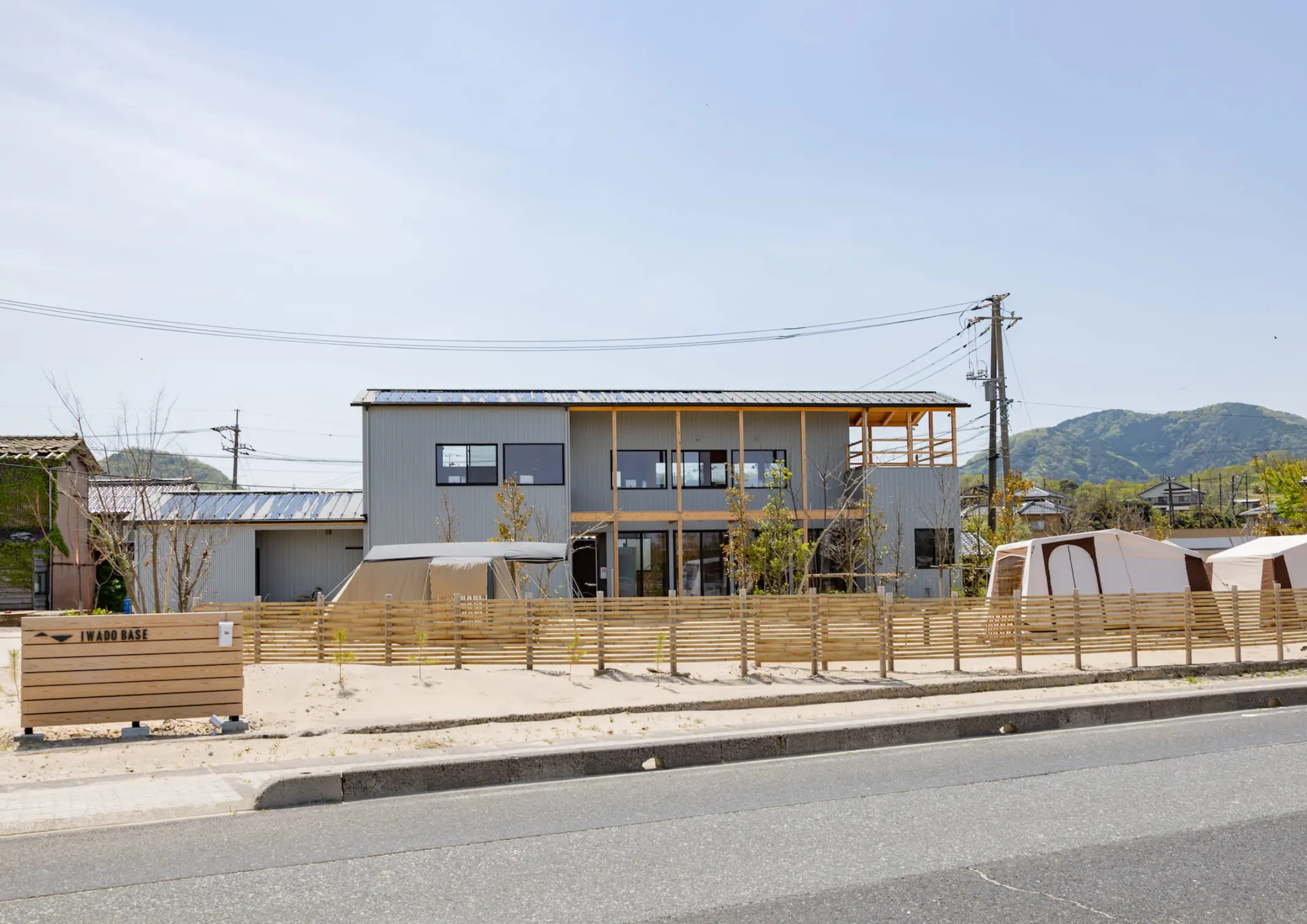
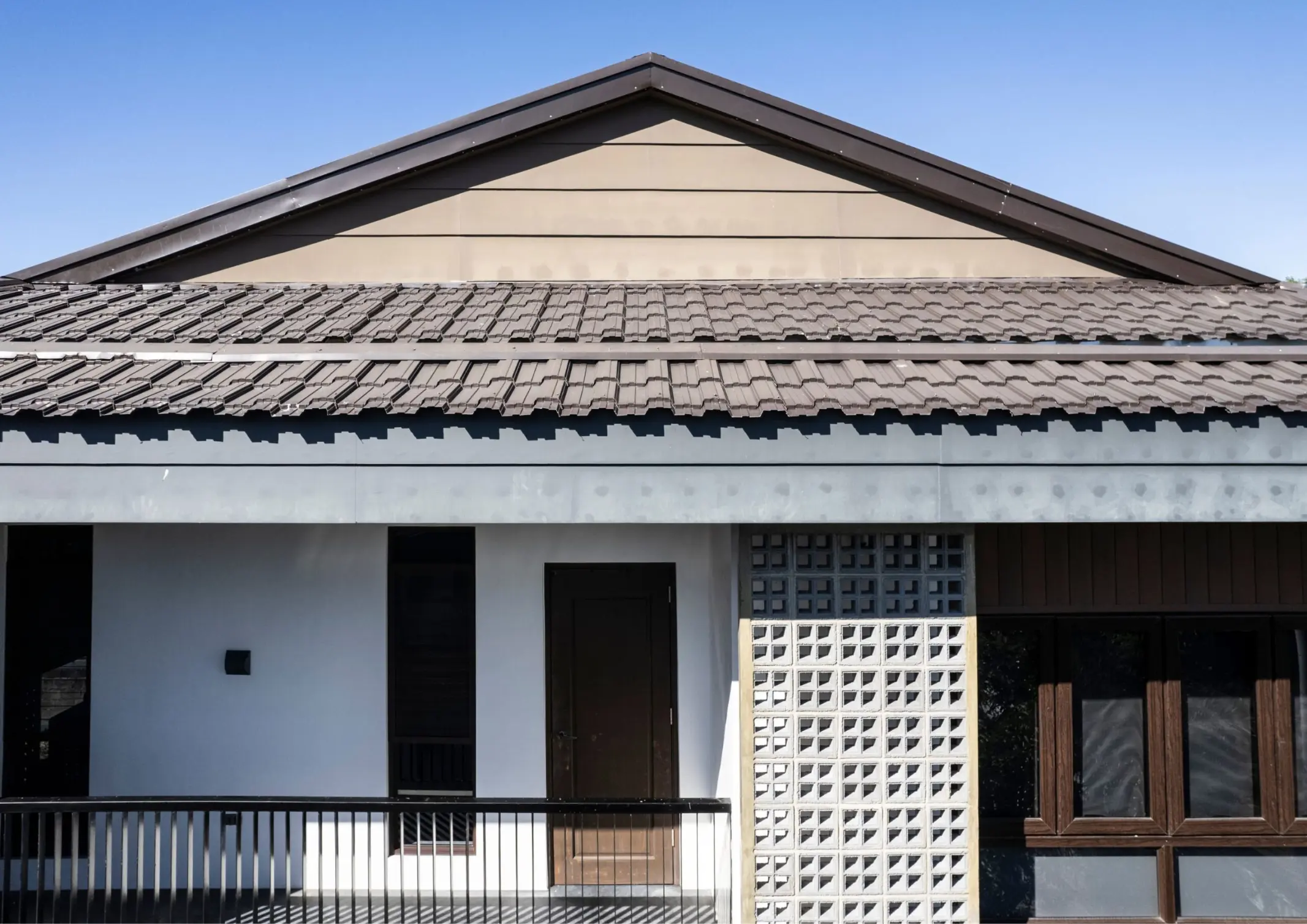
Designed by ISHIKAWASAMBO, in collaboration with Atelier Implexe, IWADO BASE is an outdoor facility that brings nature and people together. Tucked within a UNESCO Global Geopark, the owner envisioned revitalizing the region through an attractive complex that would reimagine the outdoor experience.
Ryo Ishikawa and Mars Sambo, the duo behind the architecture firm responsible for the project, share, “From the beginning, our goal wasn’t to design a destination—it was to protect an atmosphere.” This half-Filipino-led project has been selected in the Architecture category for Japan’s Good Design Awards 2025. Sambo, a Filipino interior designer based in Japan, is among the few Filipinos who have been recognized for this design award.
IWADO BASE is carefully integrated within the local community.
ISHIKAWASAMBO describes the complex as a “space that lets people step into nature without sacrificing comfort and the landscape that makes it special.” As a result, IWADO BASE is designed with restraint to highlight and respect the natural beauty of the Tottori coastline.
Advertisement
Nature in Design
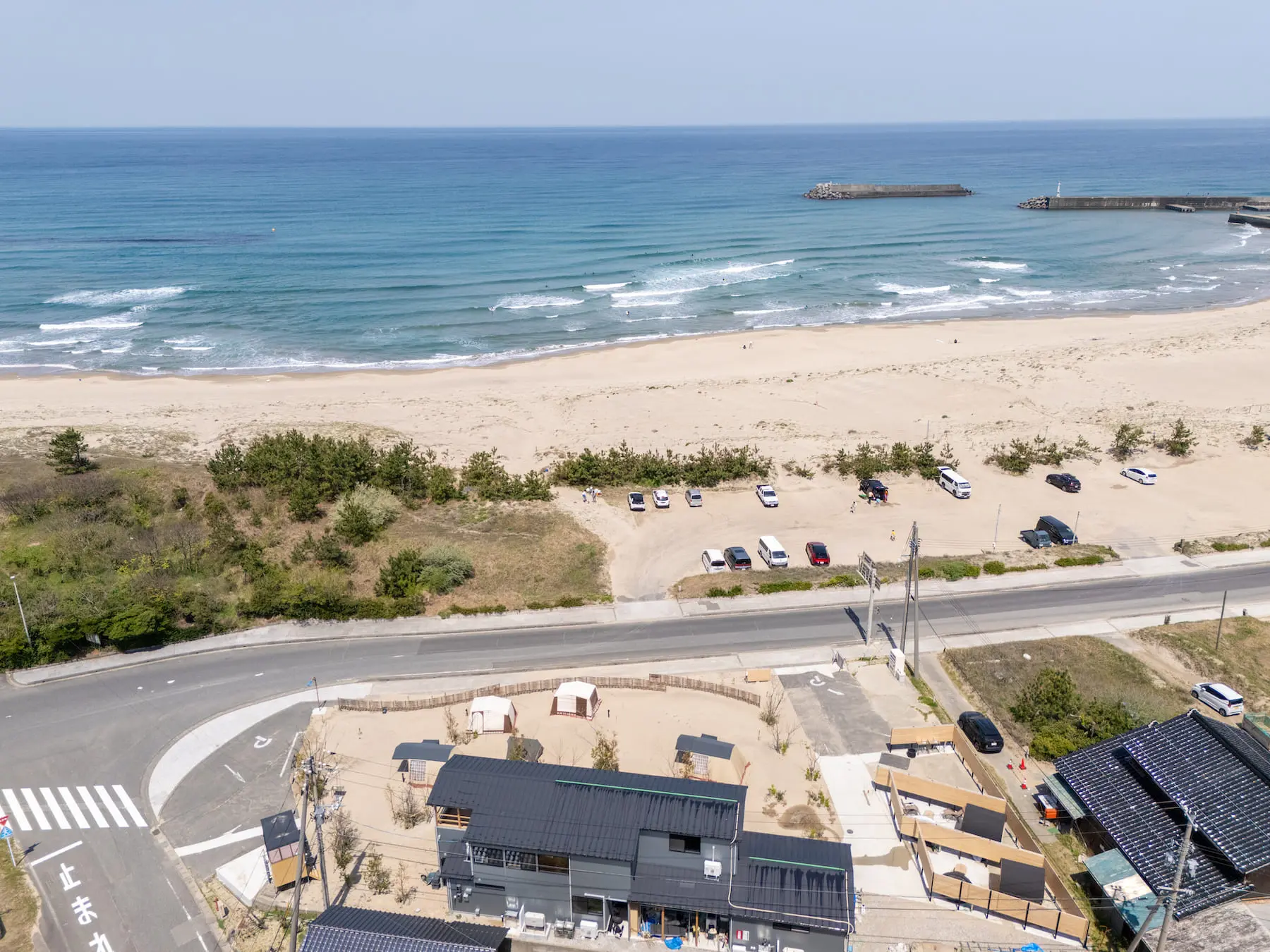
Situated on the Iwado Coast in the San’in Coast National Park, just east of the Tottori Sand Dunes, the facility is inspired by its surrounding nature. The San’in Coast stretches approximately 75 kilometers, extending from Kyotango City in Kyoto Prefecture to the east and Tottori City in Tottori Prefecture to the west.
A birds-eye view of the facility.
Along the coastline, one can witness the natural wonders it holds, such as the cliffs, caves, and reefs. Formed through wave erosion and sand carried by the river, the Tottori Sand Dunes’ unique terrain is an integral characteristic of the national park’s landscape.
Within the facility, the architects, along with the landscape designers, built a microtopography: the small-scale variations in terrain create a mosaic of hummocks and hollows. Meanwhile, the facility utilized the prevailing northwesterly winds (“wind paths”) as a resource to generate a landform reminiscent of the ripples created by the wind. “Good design often begins with a feeling. For us, it began with [the] wind,” writes Sambo.
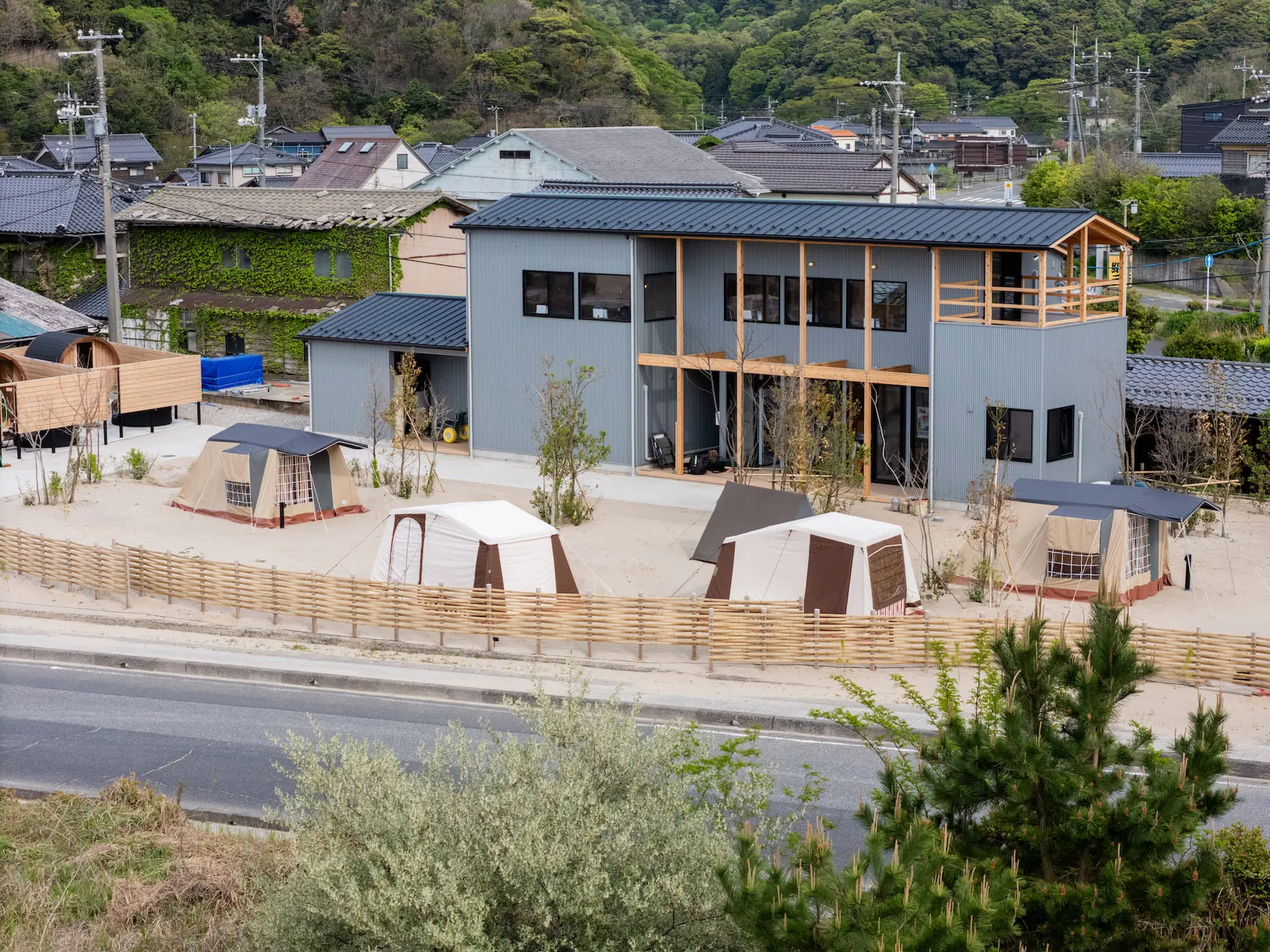
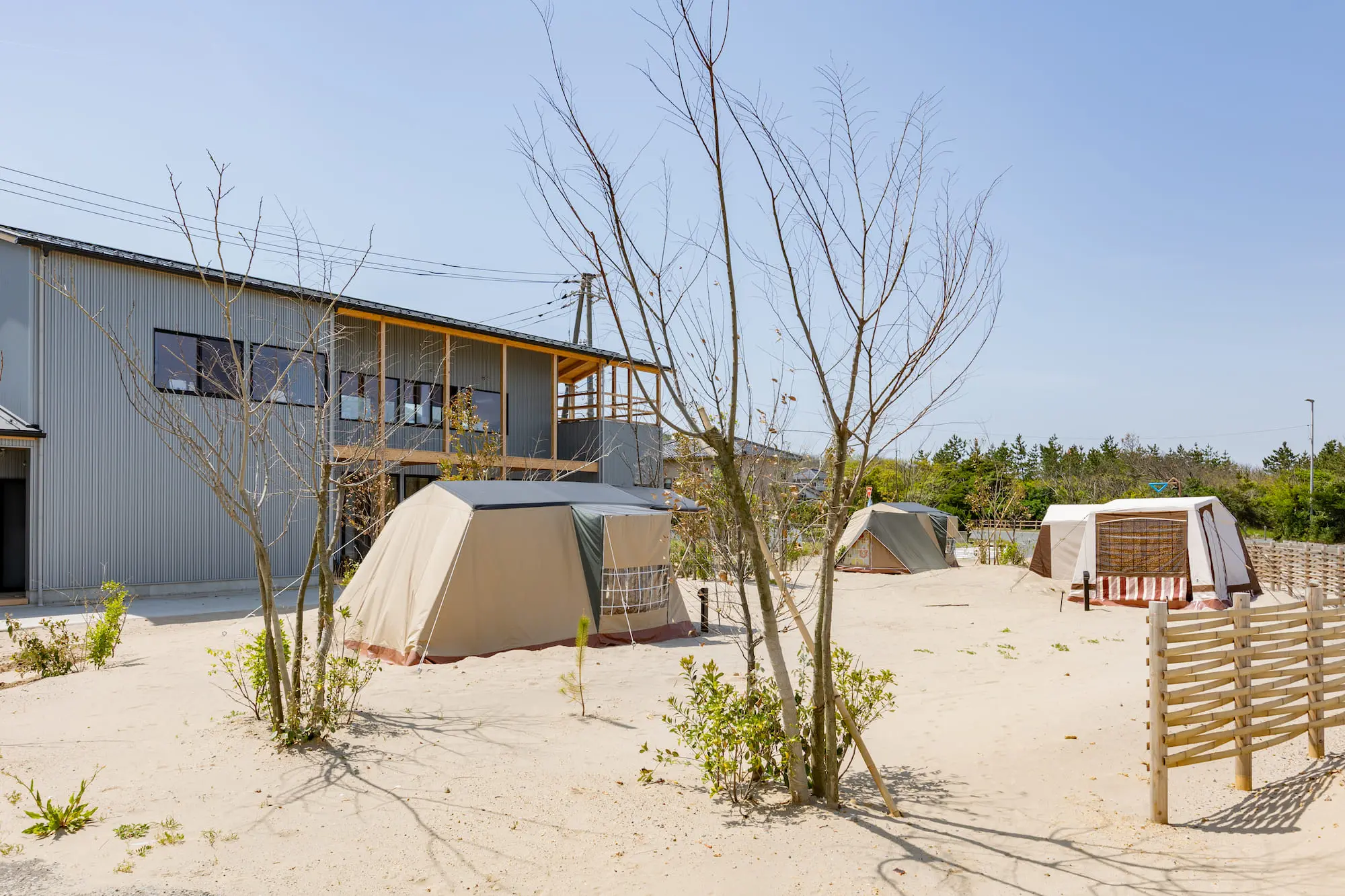
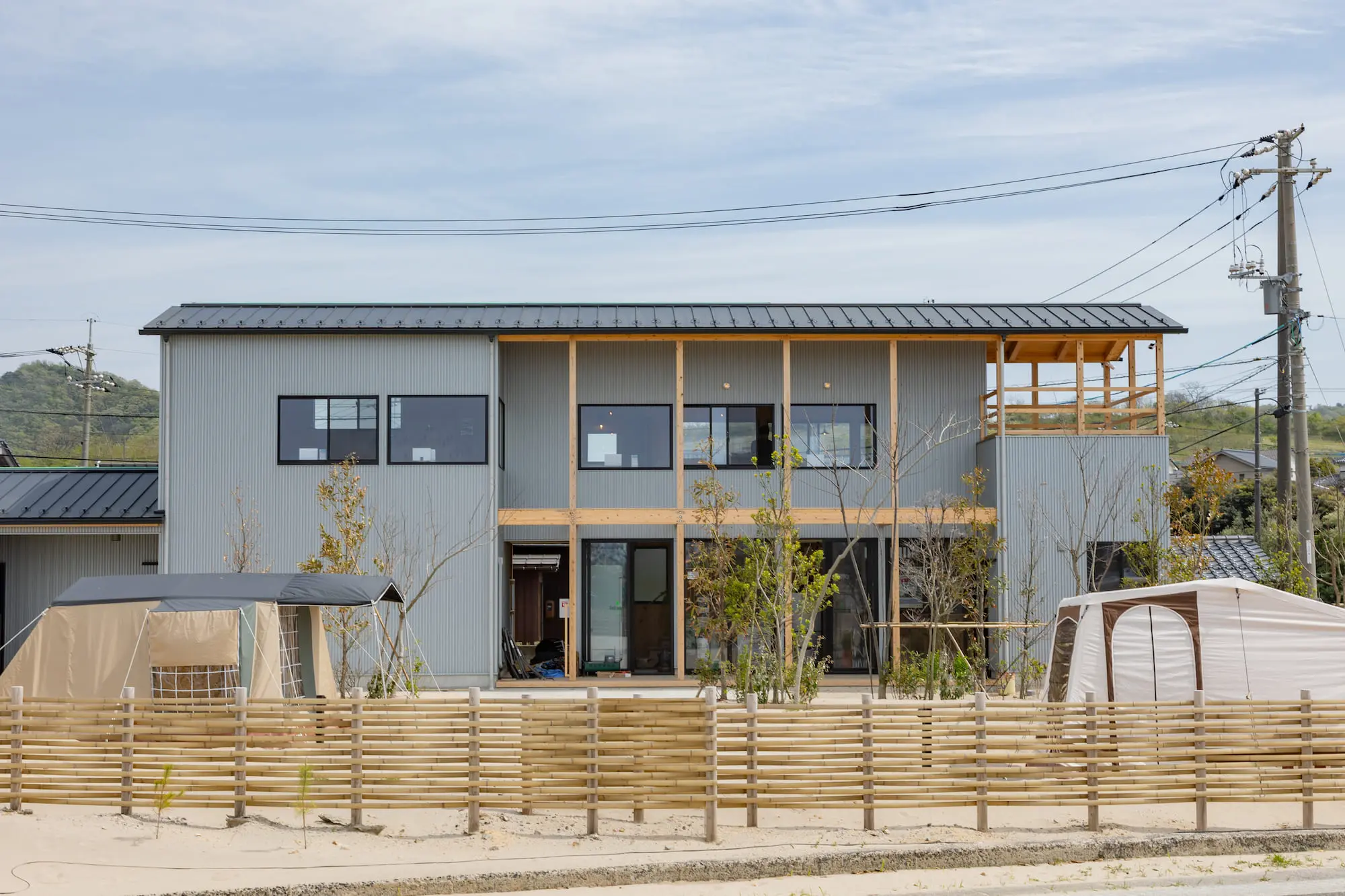
Tents are placed on the open space in front of the site.
Clad in weather-resistant panels, the main structure takes on a shade of blue that mirrors both sky and sea. Not only was nature used as a source of inspiration, but the designers also drew from local architecture, seen in the exterior gable roof that creates continuity with the surrounding residences.
Advertisement
The structure is fully integrated into the unique topography of the natural national monument of coastal dunes. This sensitive landscape, with its wind ripples and sand curtains, directly informs the structural design, transforming the building into a gateway for guests to experience the grander environment.
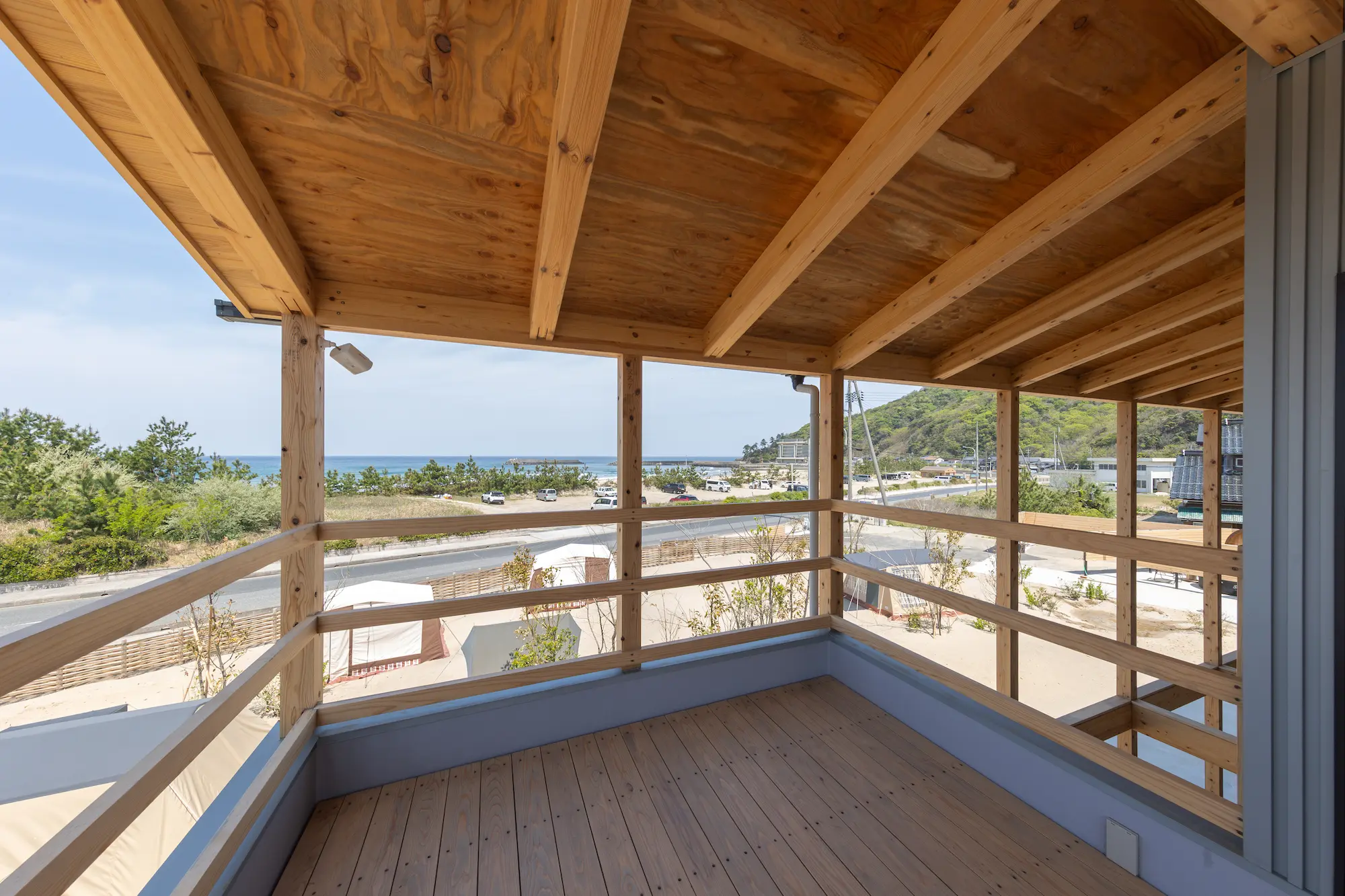
The second-floor balcony overlooks the wide seascape.
Materials are kept natural and bare, such as the wooden vertical posts framing the structure, to let the natural environment speak for itself. Sambo states, “We didn’t want to overdesign… They’re not here to stay in, they’re here to be out there. Our job was to give [guests] just enough: a warm place to pause, to rest, and to reconnect.”
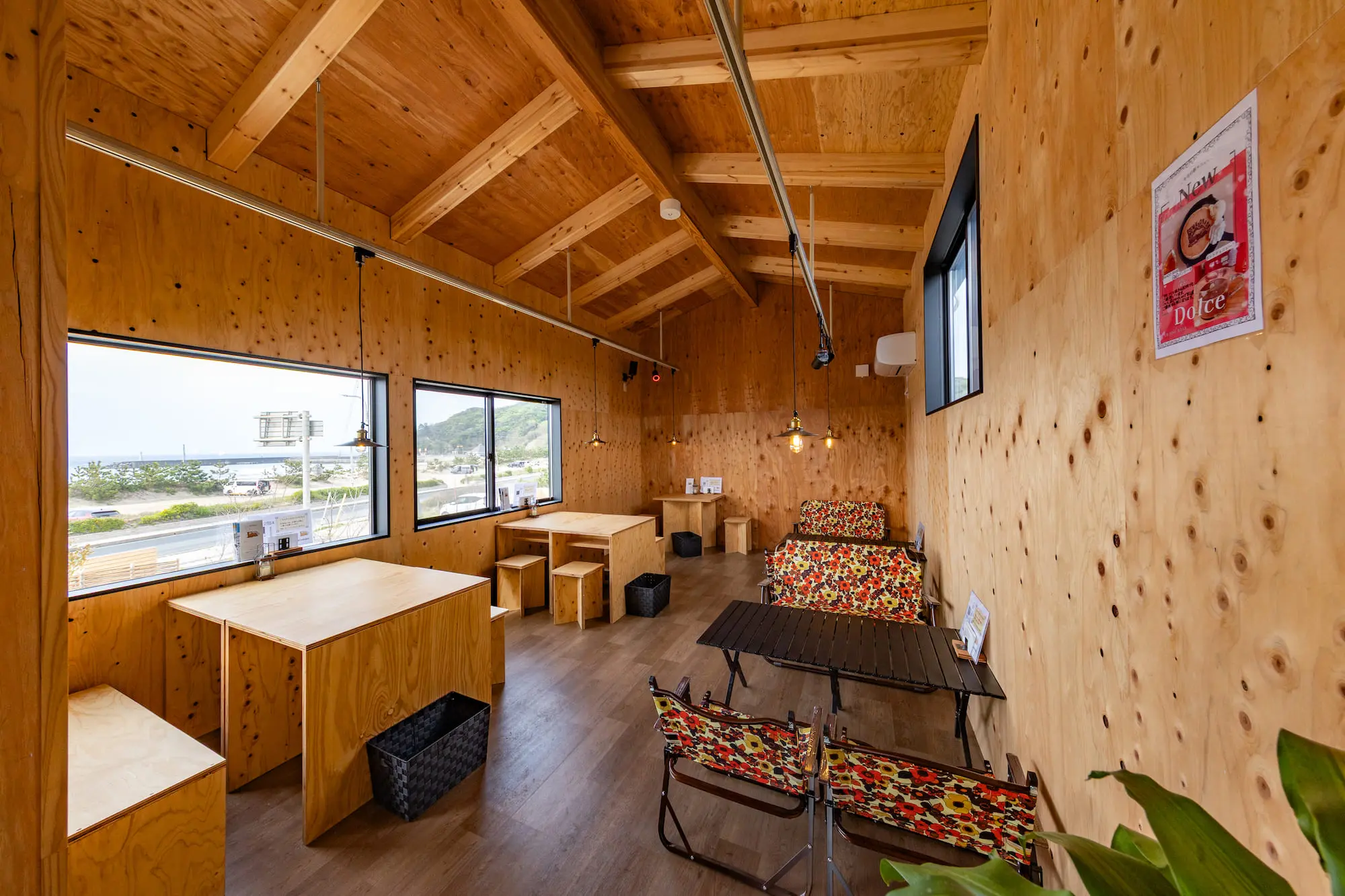
A communal space on the second floor of the facility.
Revitalizing a Local Community
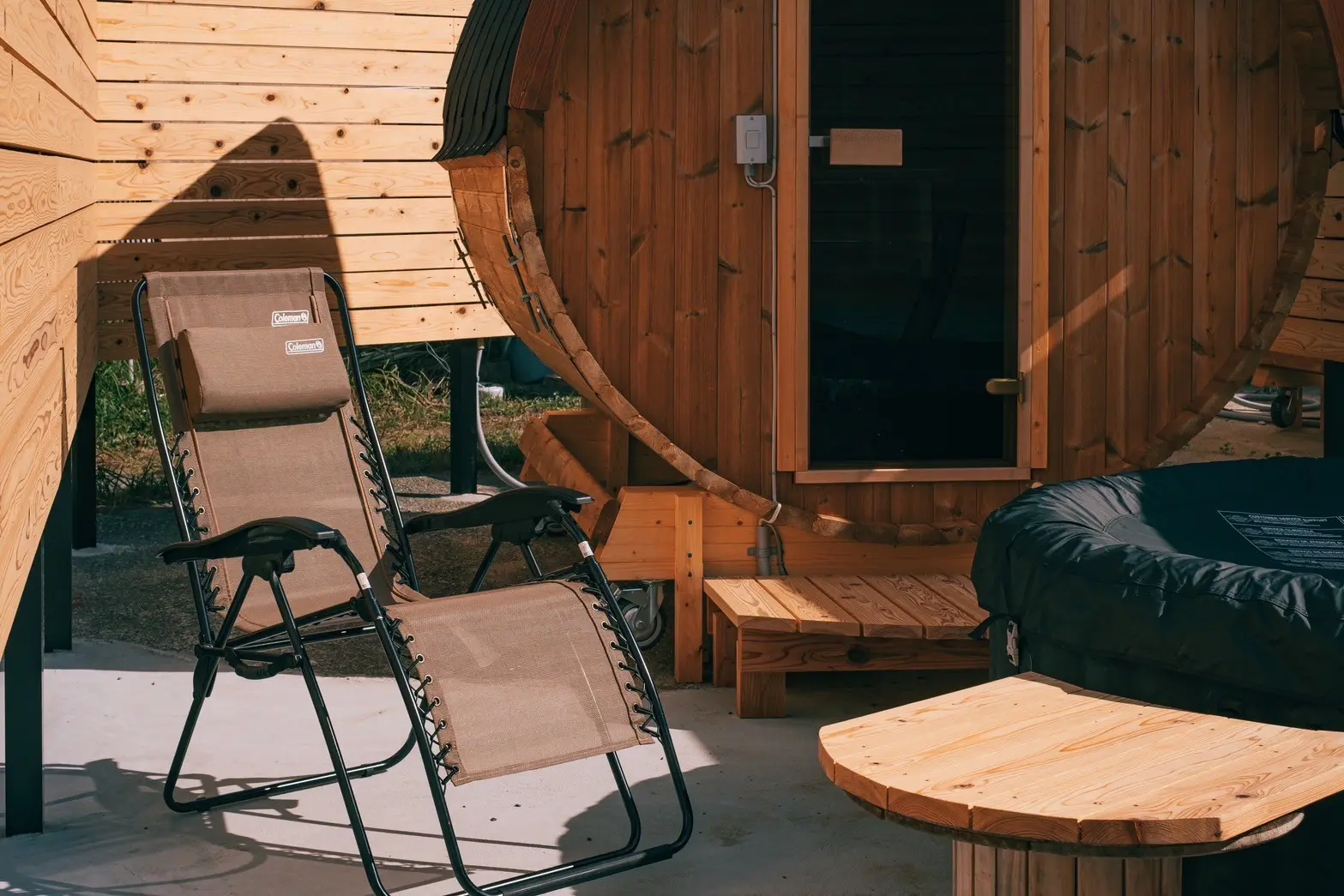
Taking advantage of the environment, IWADO BASE offers a range of outdoor activities. To the east of the structure are the barrel saunas, where wooden dividers are placed to provide privacy for guests. On the campsite, guests can rent out items for a BBQ, such as grills, tableware, chairs, and cooking utensils. Additionally, rental items such as mats and lanterns are provided, so guests can lie down and gaze at the starry sky. Cited as a “glamping retreat,” these amenities place Tottorri at the center of every activity.
The barrel saunas have wooden barriers to provide guests with privacy.
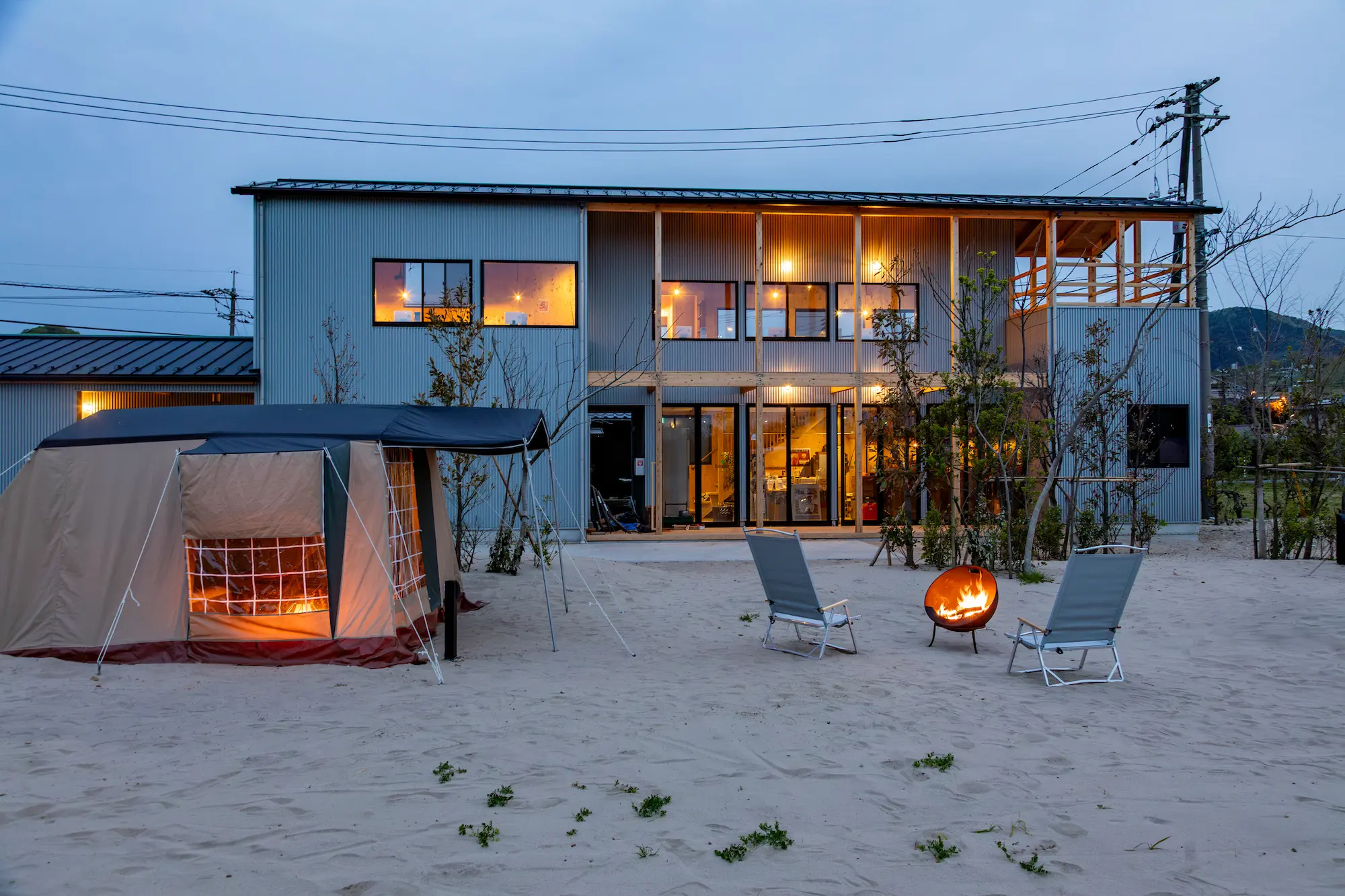
In front of the main structure is the tent area, where clusters of “green islands” were strategically placed to provide wind protection and shade to campers. The Tottori Sand Dunes are a designated special protection area, prohibiting any acts deemed harmful to the environment—including camping on the sand dunes. As such, the facility offers guests the opportunity to experience a scaled-down version of camping, with various tent options available to accommodate a range of needs.
The facility at night allows for a warm camping ground for guests.
The complex also offers a variety of activities that cater to every tempo. Guests can opt for the serene, solo glide of a stand-up paddleboard or the high-energy, communal thrill of a banana boat. For those with a boat license, jet skis are also available to rent via a partnership with Jet Park Inn Tottori.
Advertisement
Balancing its physical activities, the complex also nurtures the community’s creative spirit. Programs like the Wonder Workshop—an English-taught art class for children 6-10—cultivate a vibrant local scene by giving youth a dedicated space for imaginative exploration.
A Call for Restraint
ISHIKAWA SAMBO asserts that IWADO BASE is “architecture without ego. A place where design supports nature, and where the wild beauty of Tottori is always the main event.” The designers successfully created a complex where each space fosters a sense of community while keeping guests connected to the environment.
IWADO BASE is a place of quiet escape for those who seek it.
“IWADO BASE was never meant to be loud,” Sambo explains. “It was meant to be felt… A quiet that became the design.” Guests are witness to a course on restraint in design, where the facility is meant to merely support the natural surroundings as the main experience.
Modern bathrooms are no longer purely functional spaces. Increasingly, they are being designed as environments that support cleanliness, ease, and quiet restoration within the home. As daily life becomes more demanding and health awareness continues to rise, homeowners are beginning to expect more from the spaces where daily rituals begin and end. For architects and […]
From the moment a diner steps through the door, each detail shapes how a meal is experienced. Restaurant design has evolved, with architects and culinary professionals collaborating to create built spaces that are as intentional as the menu itself. The spatial atmosphere acts as an additional ingredient that can define the culinary experience. Taupe and […]
With climate change and global warming, the Philippine climate is in constant evolution. Consequently, it is important for Filipinos to have living spaces that respond to the local environment. In this article, BluPrint lists down Filipino architects who are reimagining the tropical house, aligning the built and natural environment. BAAD Studio Principal architects Benjee Mendoza […]
Ventilation involves the introduction of outdoor air into a room, providing occupants with their needs. Proper ventilation allows for the moderation of internal temperatures, the creation of better airflow, the dilution of carbon dioxide to acceptable levels, and the removal of contaminants. This addresses health risks associated with indoor air pollution, such as respiratory problems […]
WORLDBEX 2026, running from March 12 to 15, 2026, proves itself as the Philippines’ leading construction and design expo as it wrapped its 29th edition. It drew together 1,000 local and international exhibitors under one theme, “Building Opportunities: Sustaining Lives.” Organized by Worldbex Services International (WSI), in support of the ABS-CBN Foundation Inc., the event […]