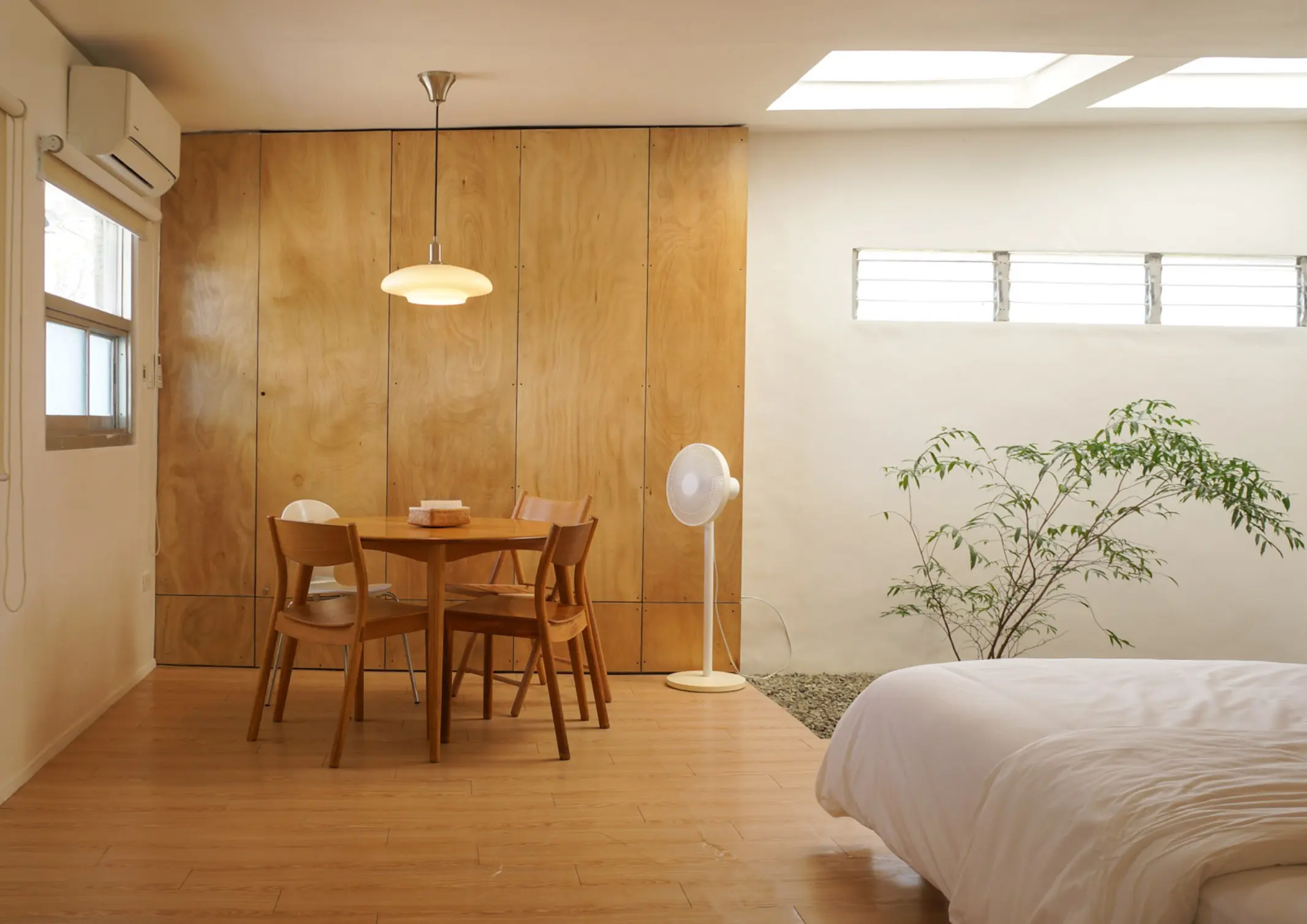
More and more Filipinos are flocking to condominium communities. Often tucked within busy city centers, condo living acts as a small respite from urban chaos. Faced with the challenge of transforming a cramped condominium into a warm living space, BluPrint lists condo interior design ideas that can maximize each square foot of small spaces. Purposeful […]
House in Muko: Reconfiguring Japan’s Past with Modern Needs



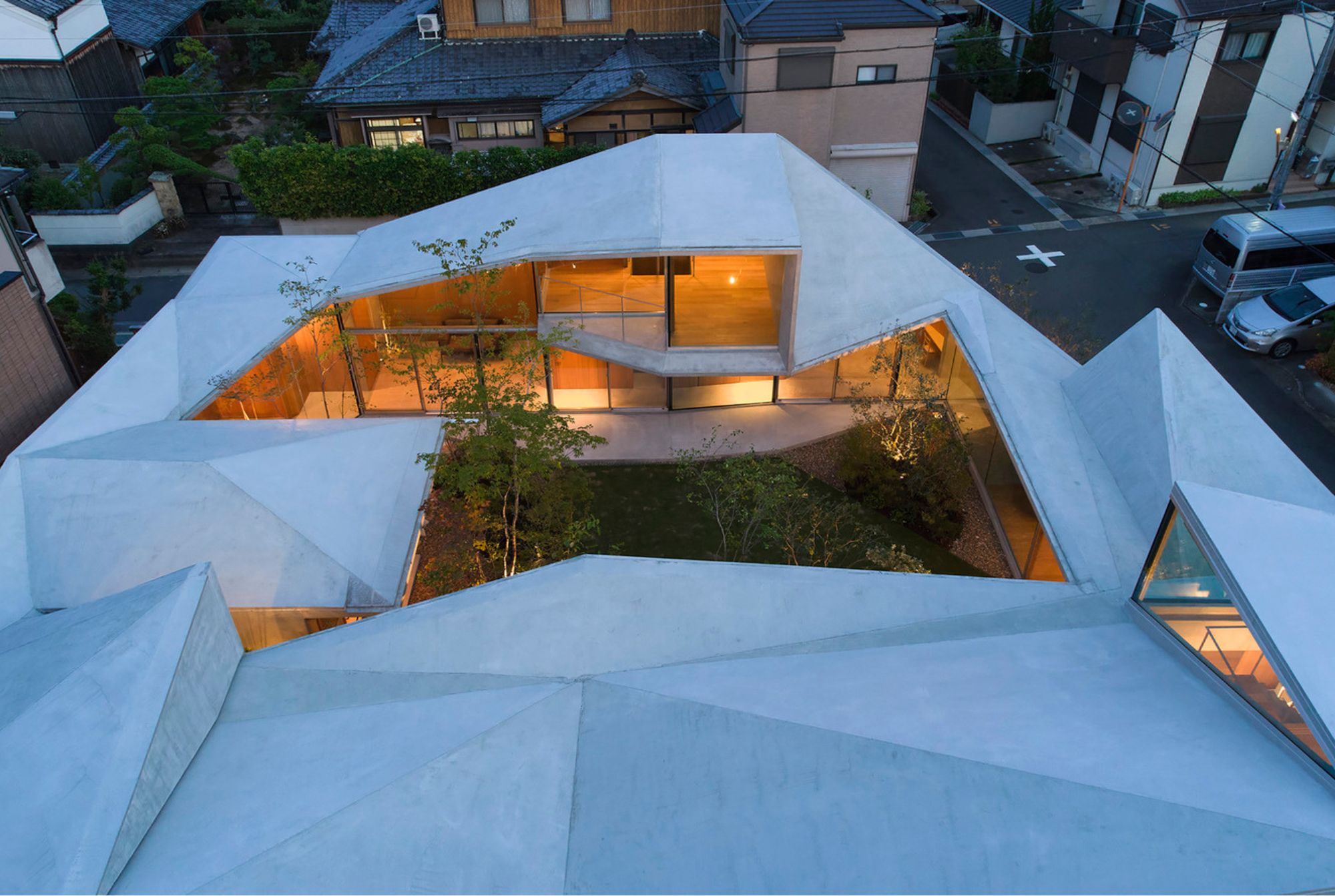
Humanity exists in a constant state of re-litigating the past and the present. It’s gotten to the point that academics can pinpoint how long it’ll take before something becomes idealized in the present (minimum twenty years). And it happens with architecture, too. Styles come and go and come back again, and we reinvent new ways of returning the past to the present. Thus, residential buildings like the House in Muko exist.
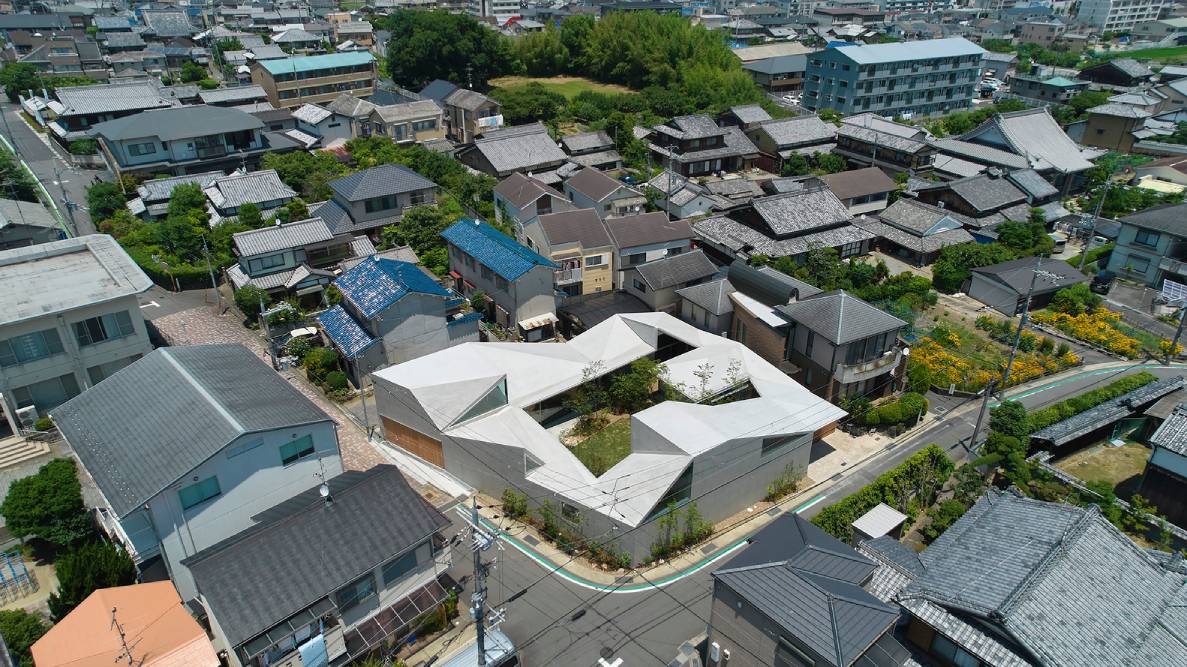
Located in Muko City in Kyoto, Japan, Tomohiro Hata Architect and Associates designed and built the home. The company’s lead architects for the project were Tomohiro Hata, Kazuki Kimura, and Misato Takagi.
The owner of the residential building gave a relatively straightforward request to the architects. They wanted a “farm-style” house akin to the ones that used to exist abundantly in Muko before industrialization lessened its attractiveness. But while they wanted that kind of farm house, they also wanted it to be melded with modern sensibilities.
Advertisement
Finding the Overlap in Design
For Hata and company, the challenge became finding the overlapping points from a design perspective. Farm houses in the past, they surmised, contained lots of open spaces for farm work. They also realized that the houses of the past would be bound to a hierarchical arrangement of rooms and buildings, which were explicitly separated depending on one’s rank.
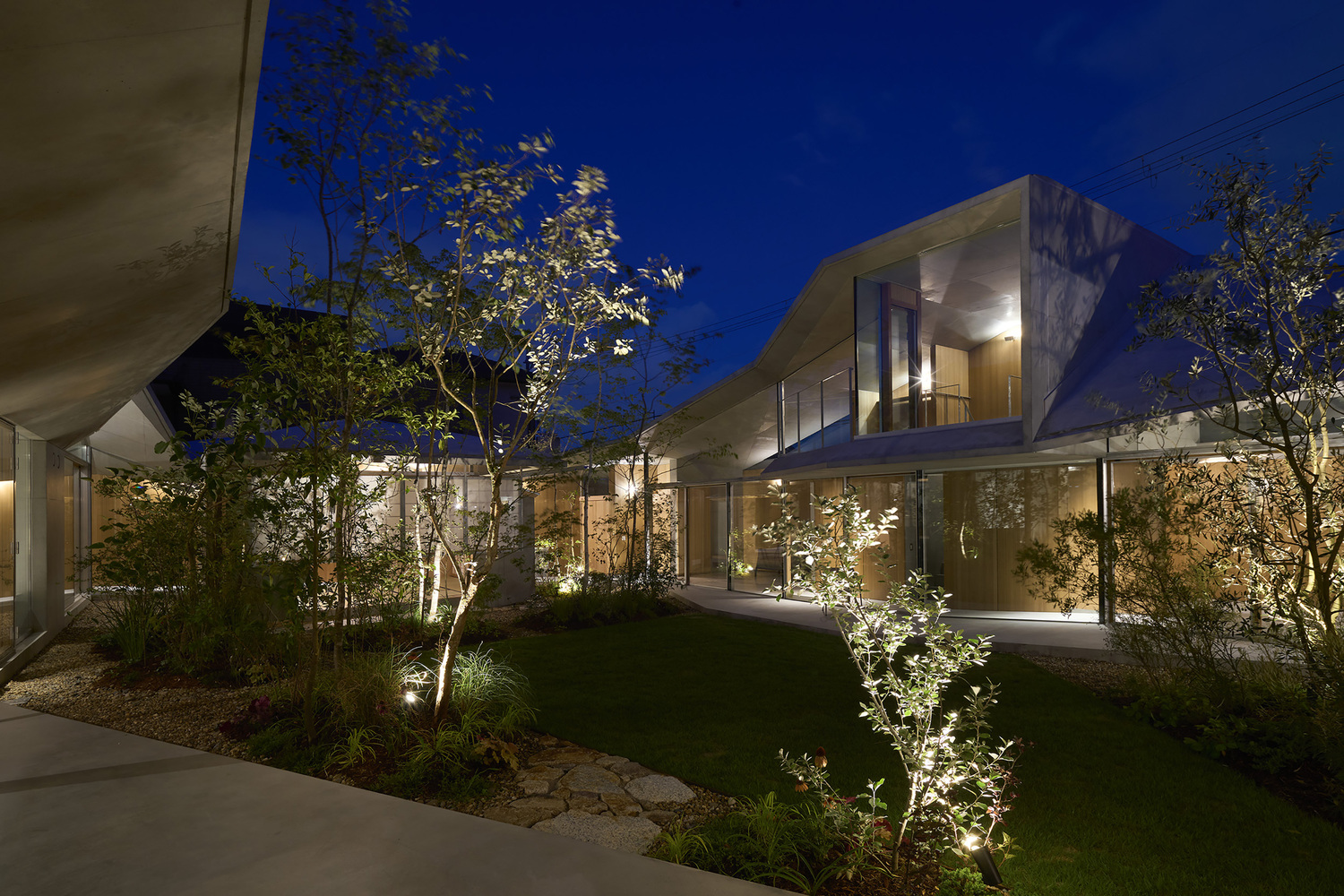
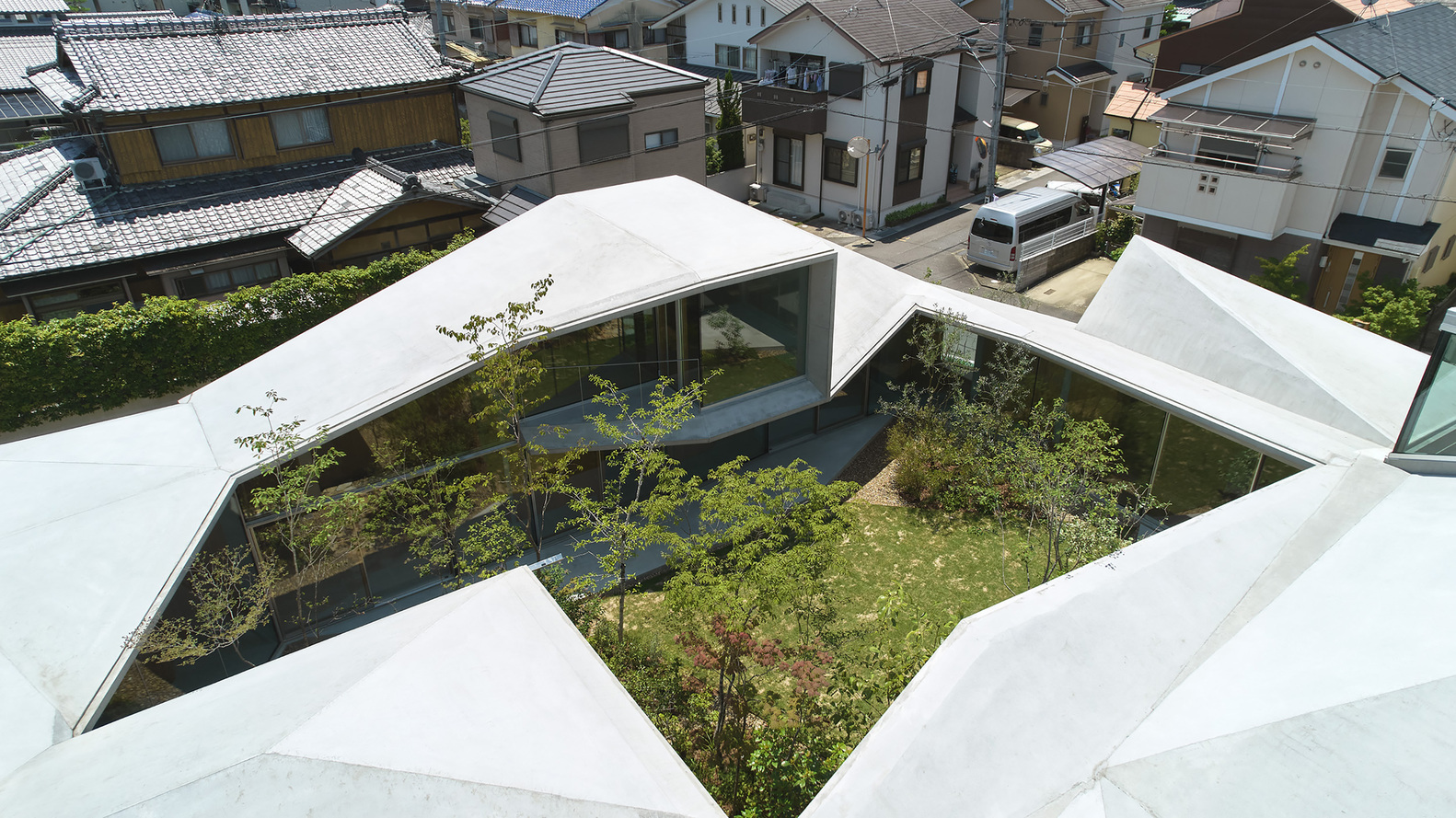
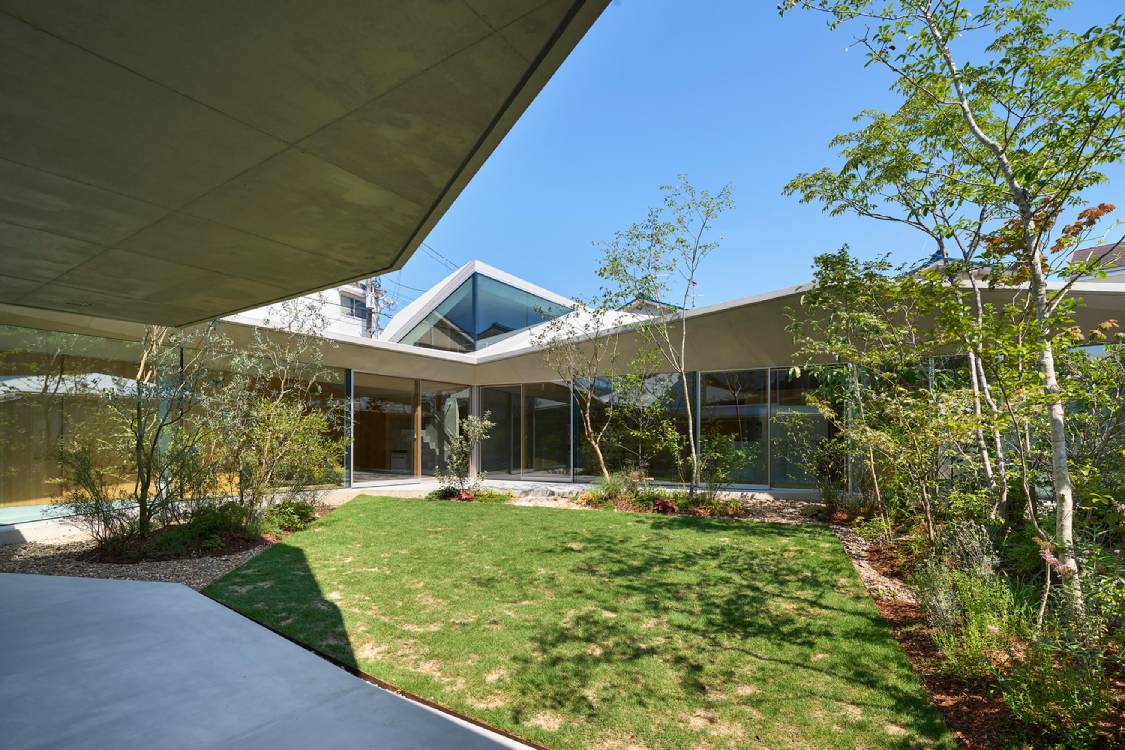
For the first point, the architects worked towards ensuring a spacious environment within the building. The center of the house holds an open courtyard filled with grass and trees, a good frolicking area for the home’s residents. Much of the rooms and buildings also utilize high ceilings and roomy aesthetic features. This includes wooden cavity wall doors and floor-to-ceiling windows across the rooms.
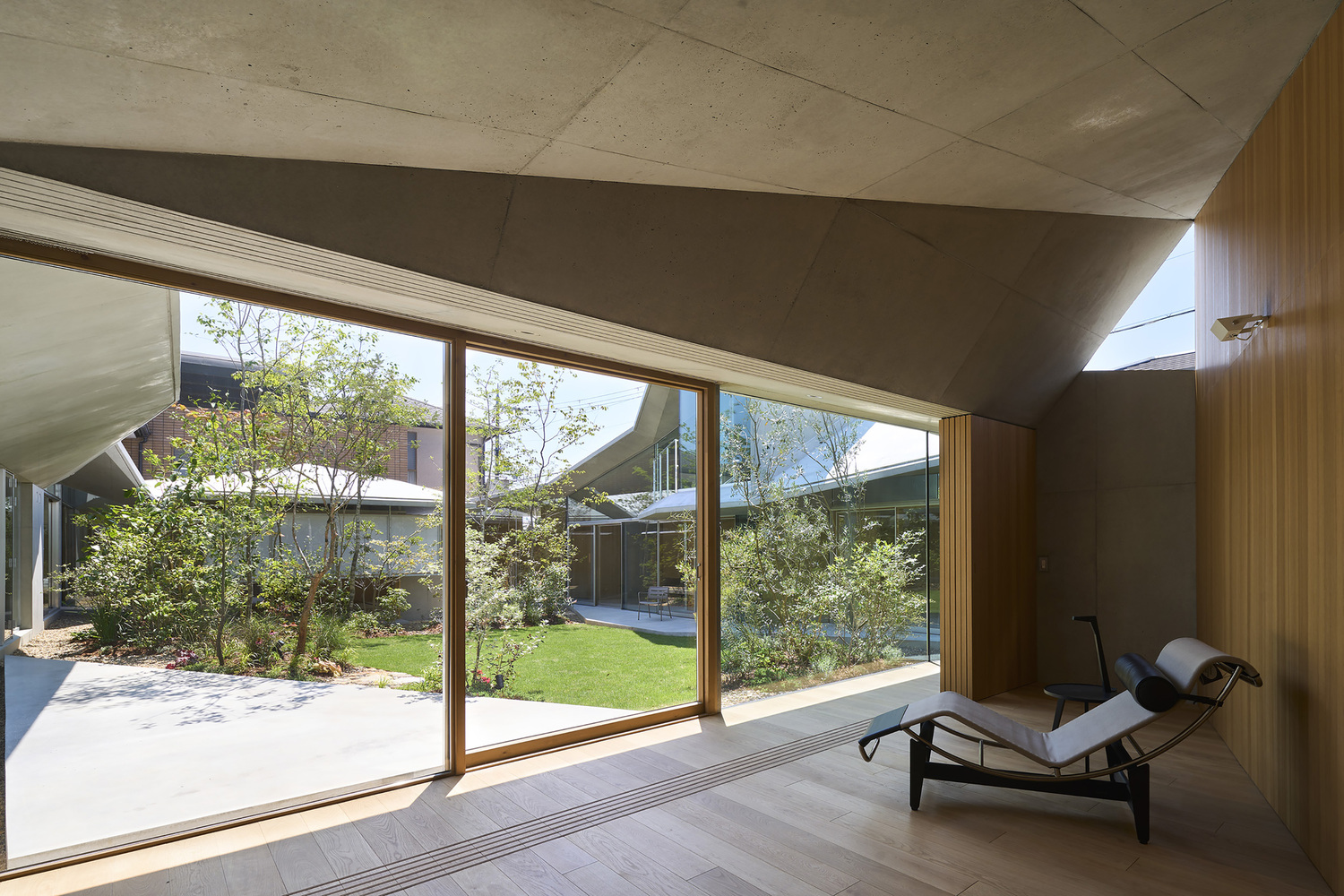
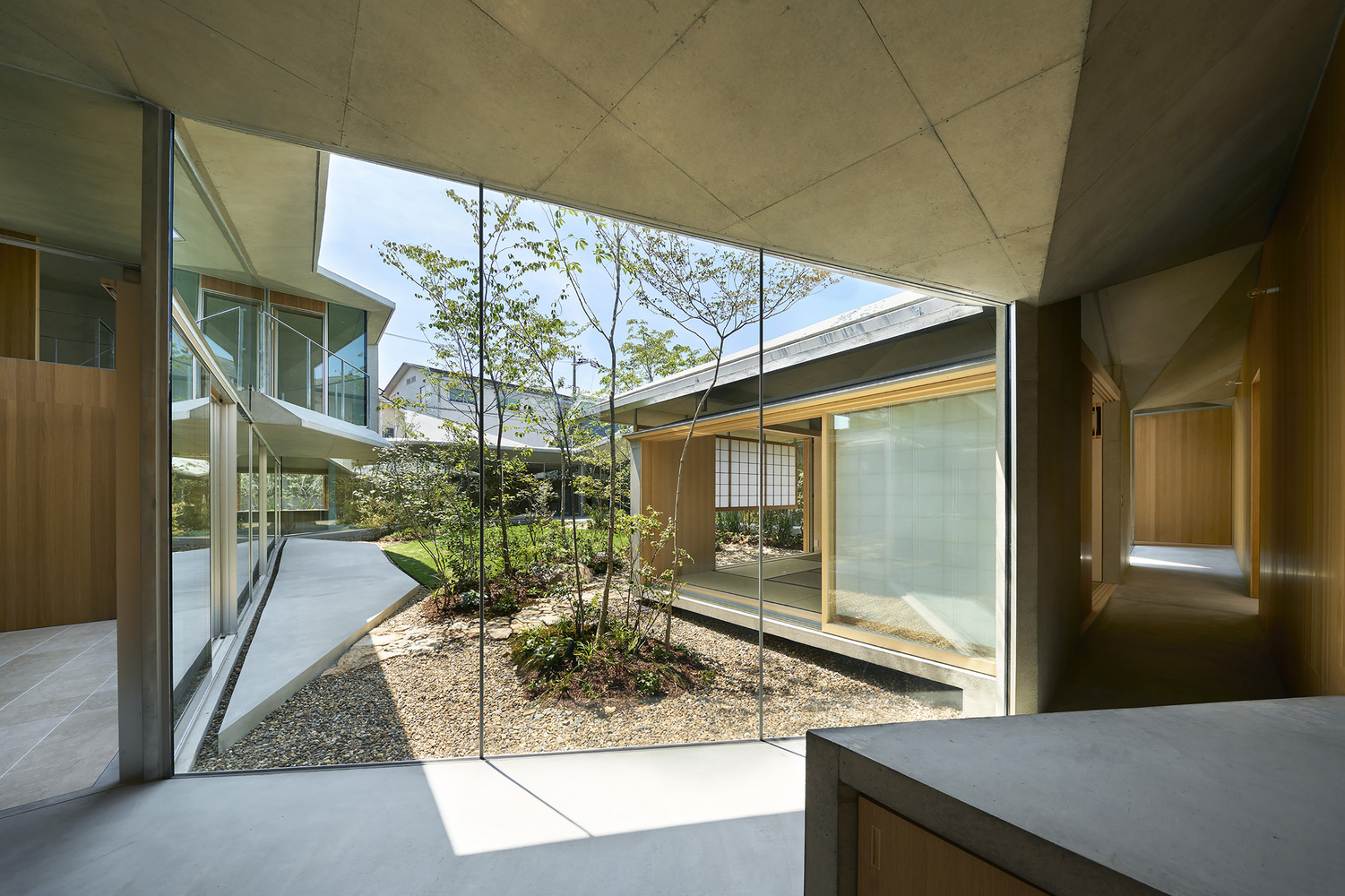
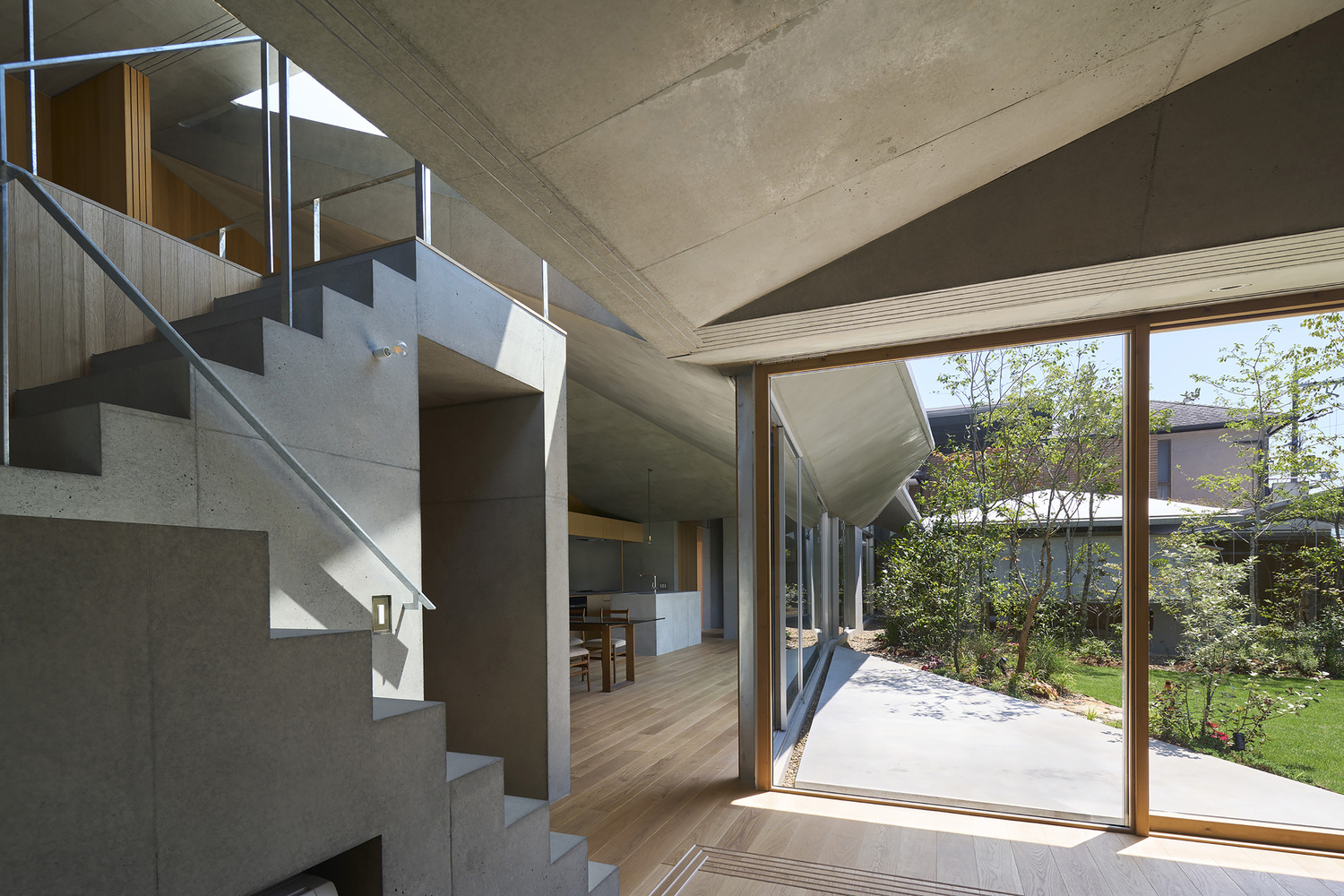
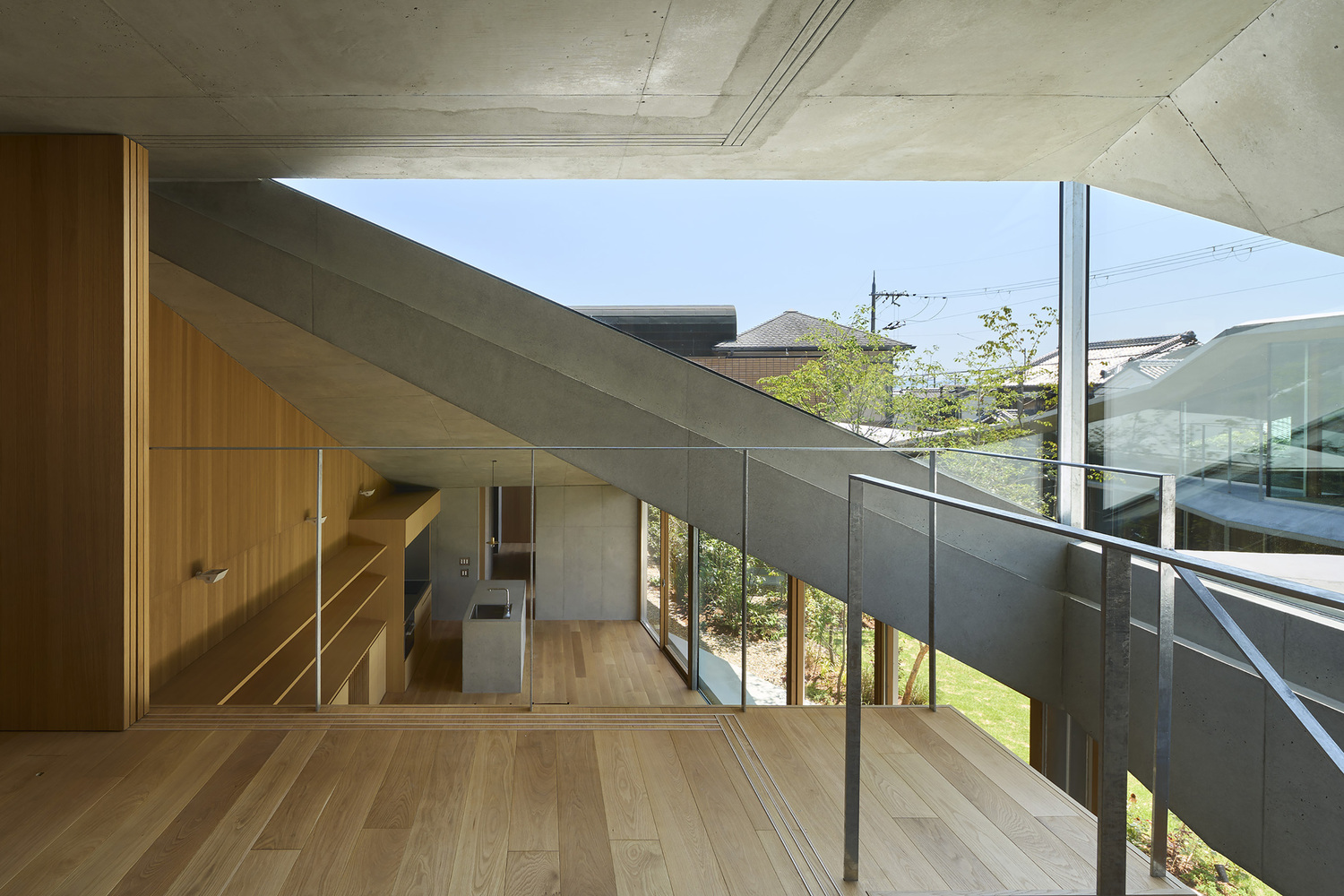
Beyond that, the architects found a way to integrate the hierarchical arrangements without actually separating the rooms in that matter. They kept the idea of clustering rooms, creating what they called “neutral and free living spaces” where different spaces flow into each other.
Advertisement
Seeking Comfort Beyond Hierarchies
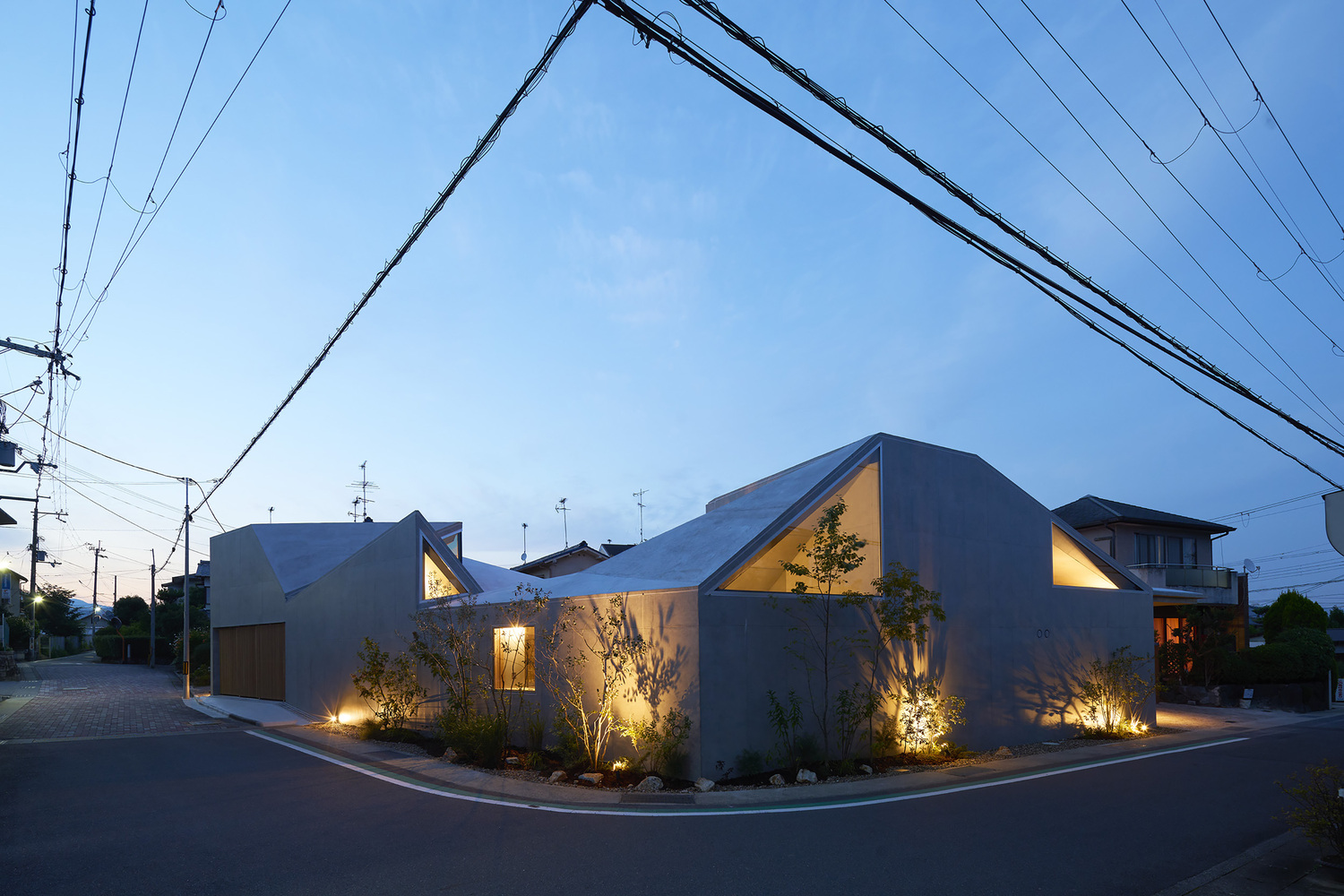
Beyond those building design principles, the House in Muko looks the part of a modernized farmhouse. Its closed-off design mimics different Japanese aristocratic housing in the past, with the angular rooftops and its grey concrete-esque build creating an aura of modernity.
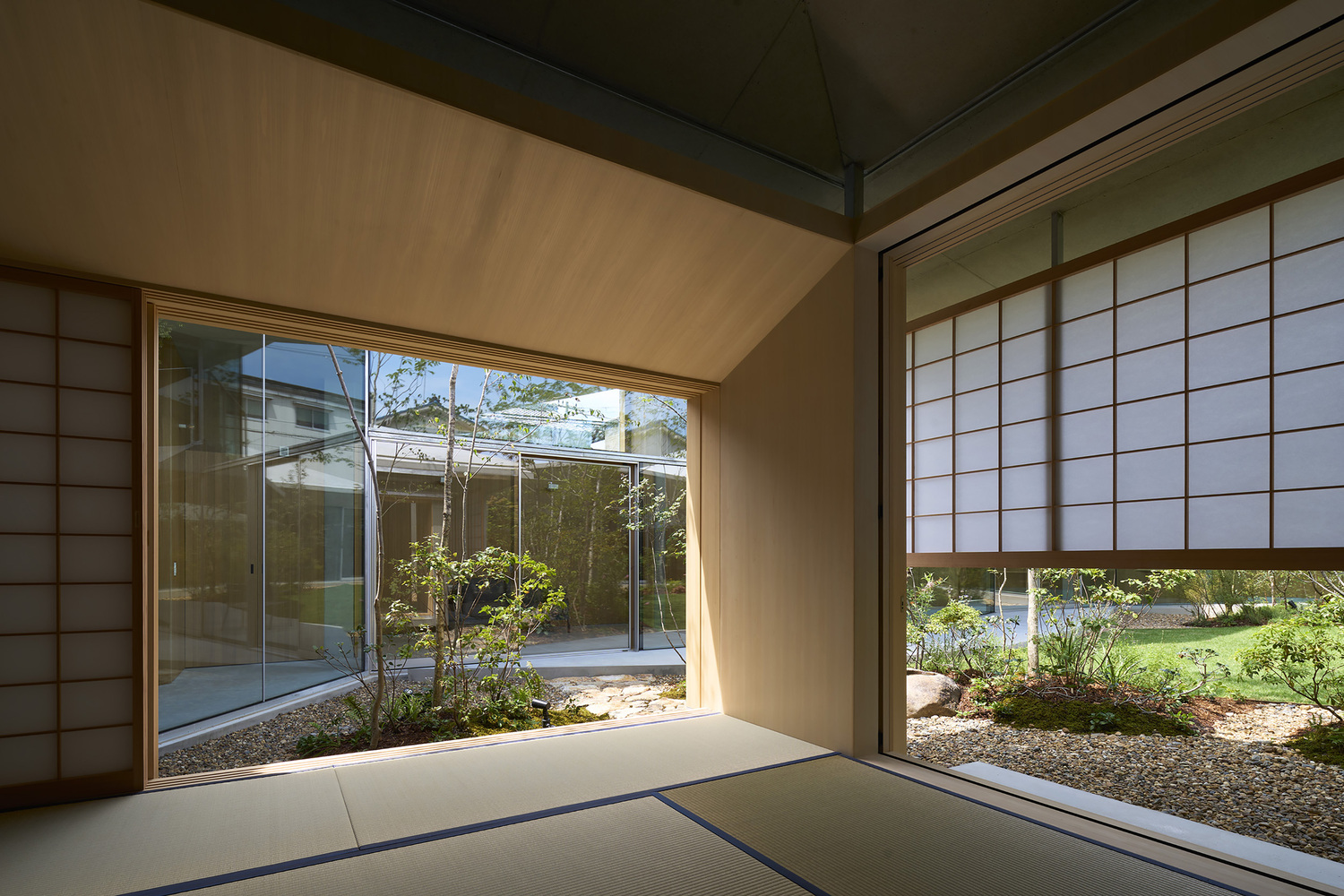
Inside the house itself, the communal rooms are filled with design hallmarks of the past. The rooms use wooden planks in the walls, and some of the windows mimic fusuma paper sliding doors. It adds up towards a farming compound modernized for the needs of a residential home today.
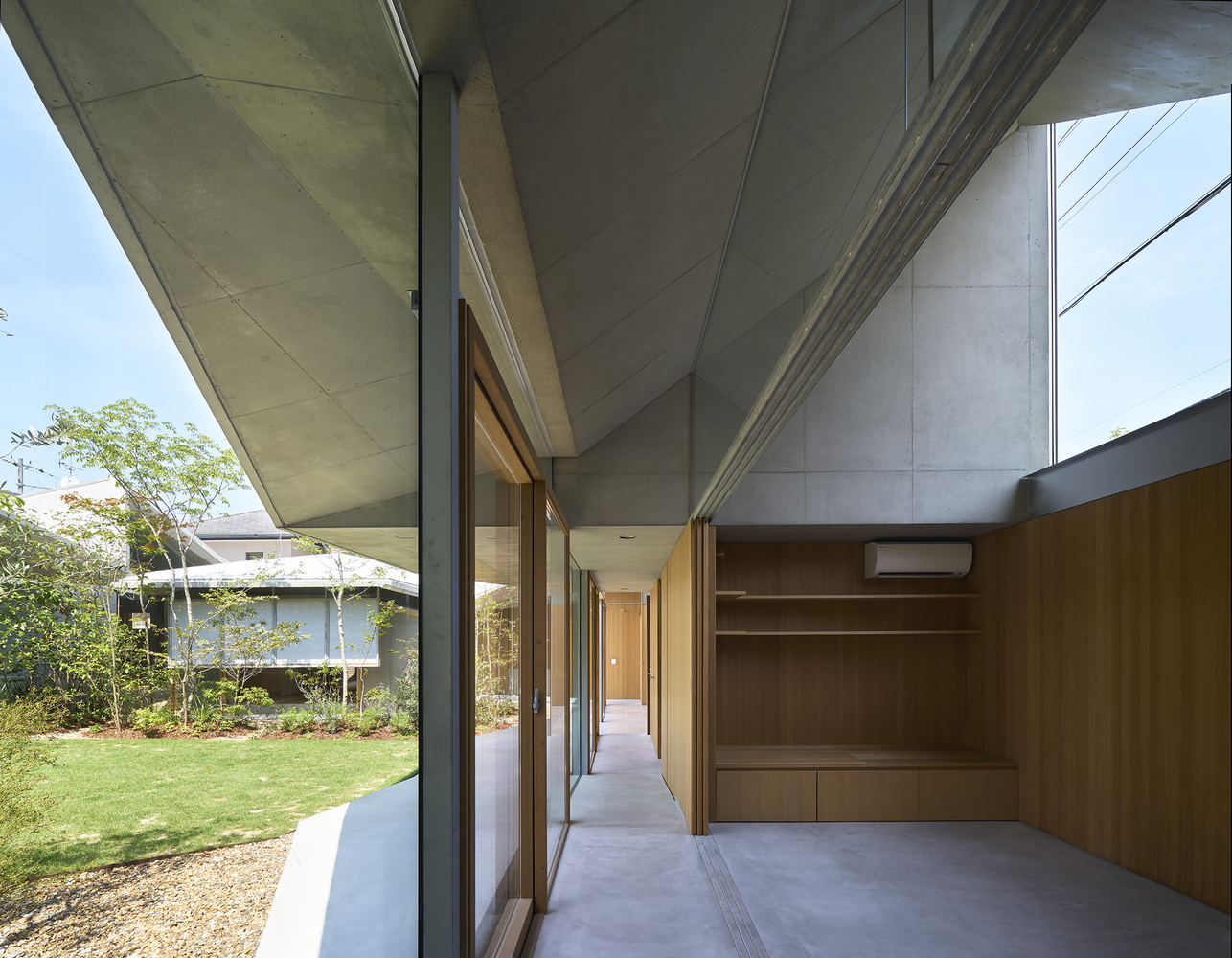
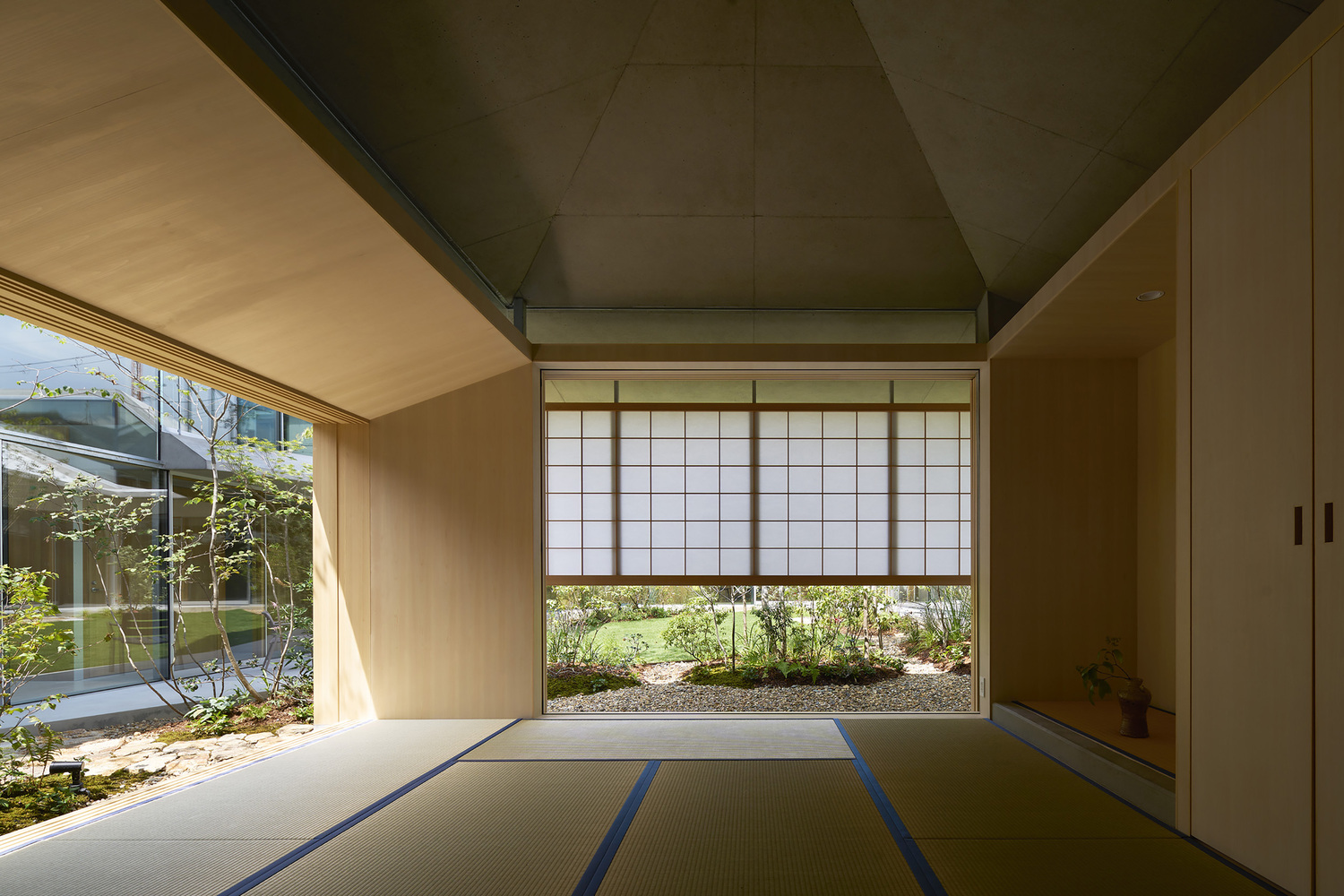
The House in Muko strives to find the past in the present. They discard what doesn’t match today and bring forward what they can work with. It ultimately succeeds by finding the same notes of design—possibly used in a different tone then—and adapting it to modern sensibilities.
Advertisement
Related reading: Encounter the Synergy of Japanese Expertise and Filipino Hospitality Through the Seasons Residences
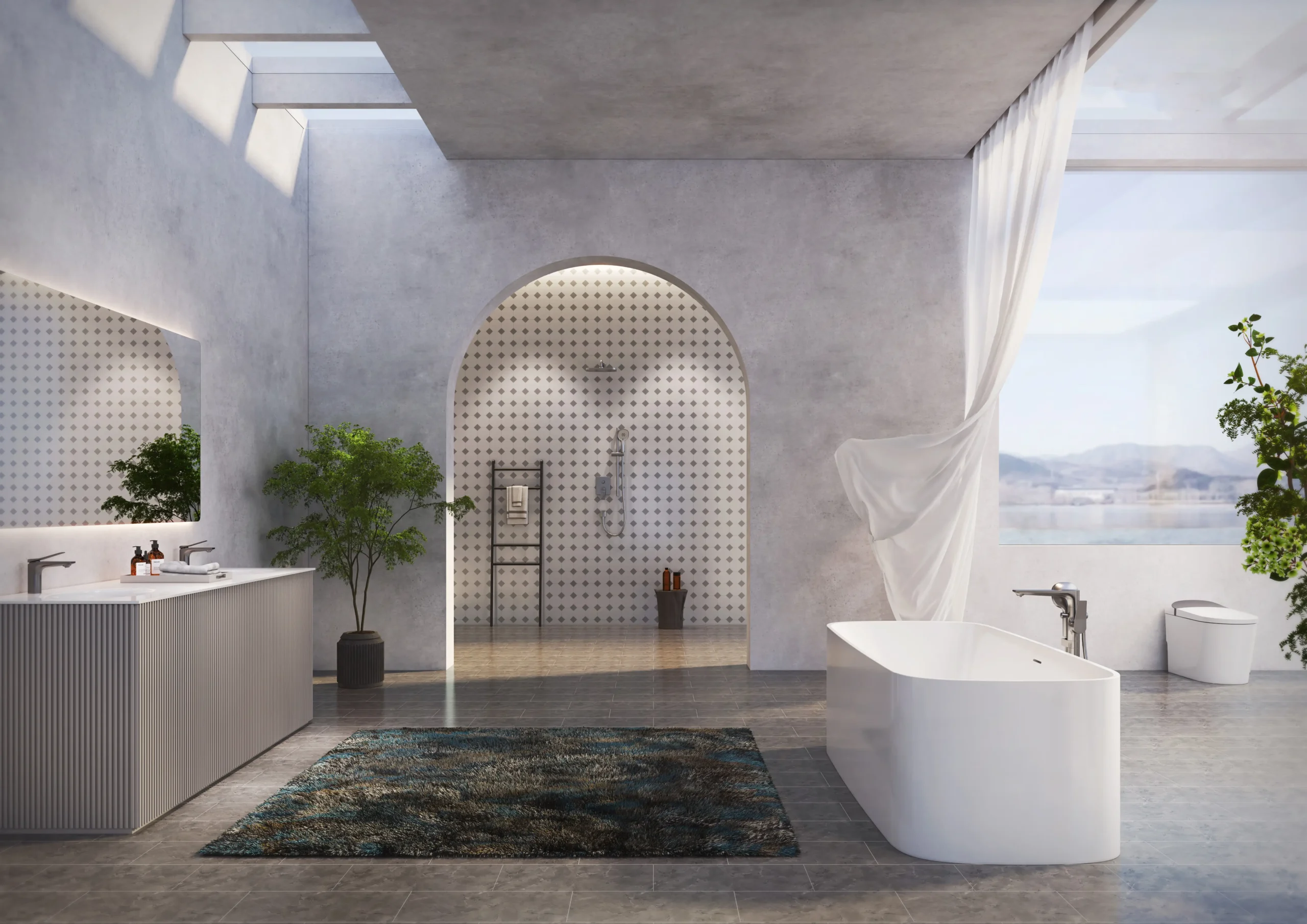
Modern bathrooms are no longer purely functional spaces. Increasingly, they are being designed as environments that support cleanliness, ease, and quiet restoration within the home. As daily life becomes more demanding and health awareness continues to rise, homeowners are beginning to expect more from the spaces where daily rituals begin and end. For architects and […]
Advertisement
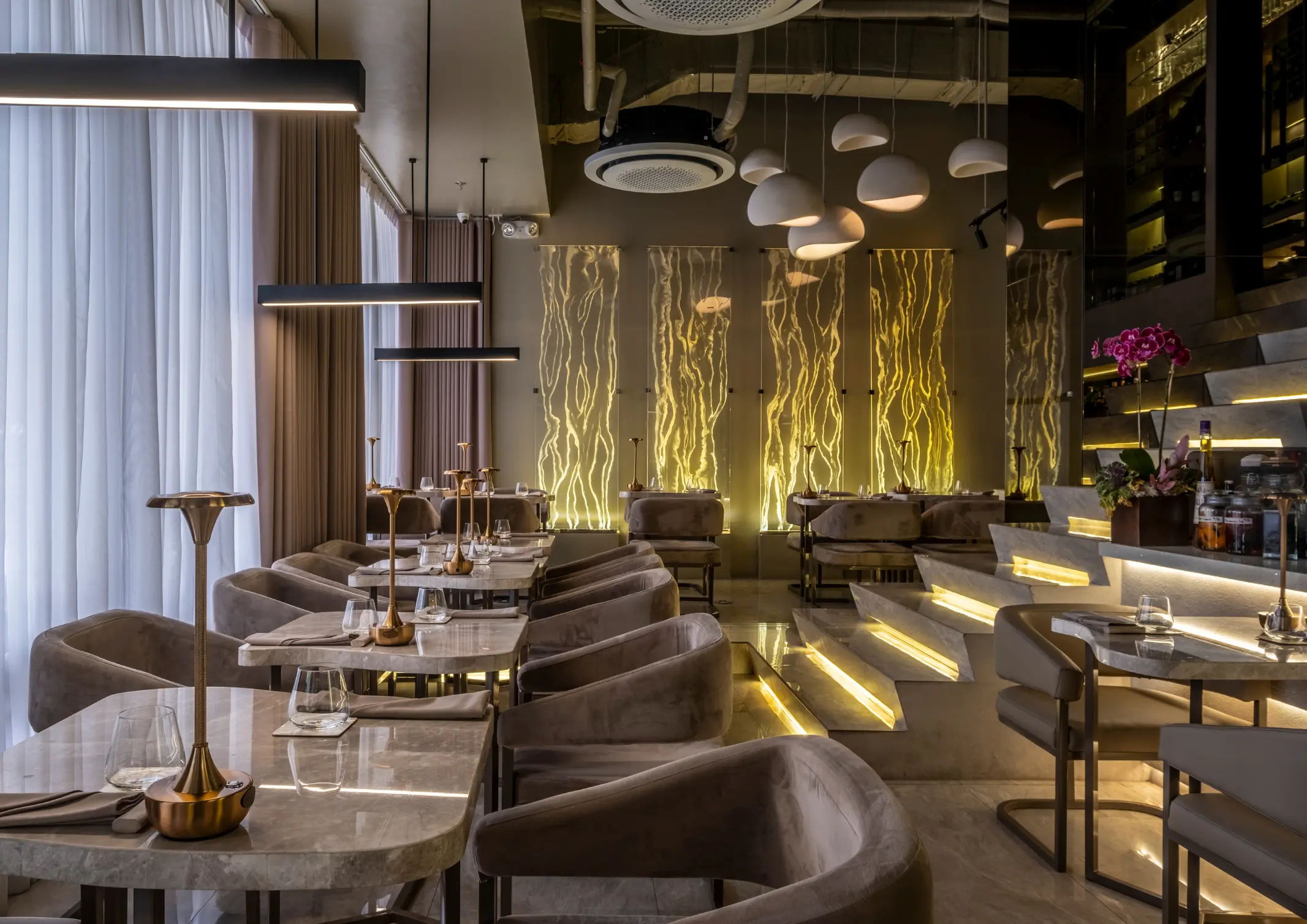
From the moment a diner steps through the door, each detail shapes how a meal is experienced. Restaurant design has evolved, with architects and culinary professionals collaborating to create built spaces that are as intentional as the menu itself. The spatial atmosphere acts as an additional ingredient that can define the culinary experience. Taupe and […]
With climate change and global warming, the Philippine climate is in constant evolution. Consequently, it is important for Filipinos to have living spaces that respond to the local environment. In this article, BluPrint lists down Filipino architects who are reimagining the tropical house, aligning the built and natural environment. BAAD Studio Principal architects Benjee Mendoza […]
Ventilation involves the introduction of outdoor air into a room, providing occupants with their needs. Proper ventilation allows for the moderation of internal temperatures, the creation of better airflow, the dilution of carbon dioxide to acceptable levels, and the removal of contaminants. This addresses health risks associated with indoor air pollution, such as respiratory problems […]
Advertisement

WORLDBEX 2026, running from March 12 to 15, 2026, proves itself as the Philippines’ leading construction and design expo as it wrapped its 29th edition. It drew together 1,000 local and international exhibitors under one theme, “Building Opportunities: Sustaining Lives.” Organized by Worldbex Services International (WSI), in support of the ABS-CBN Foundation Inc., the event […]

Download this month's BLUPRINT magazine digital copy from:



Subscribe via [email protected]