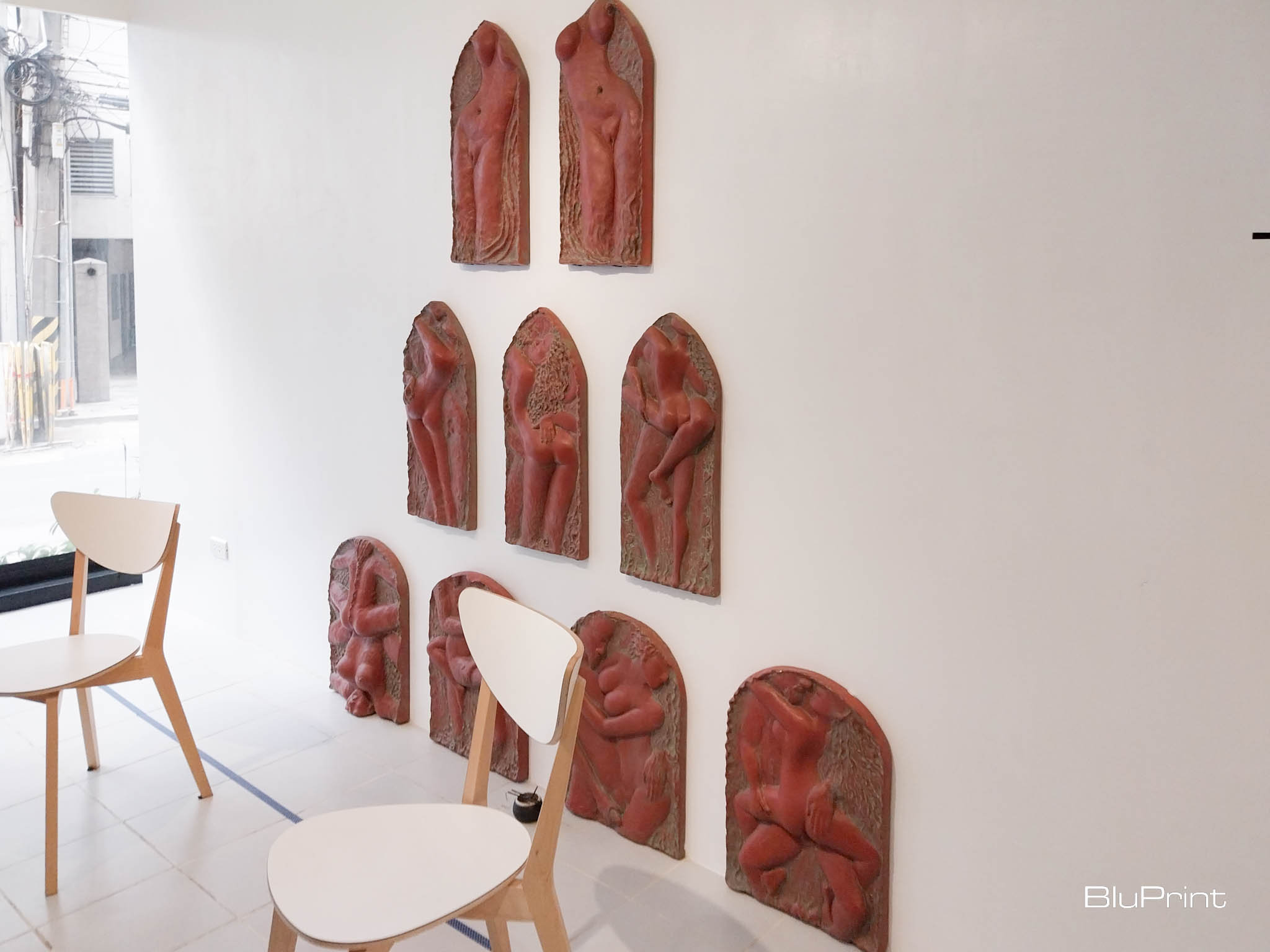
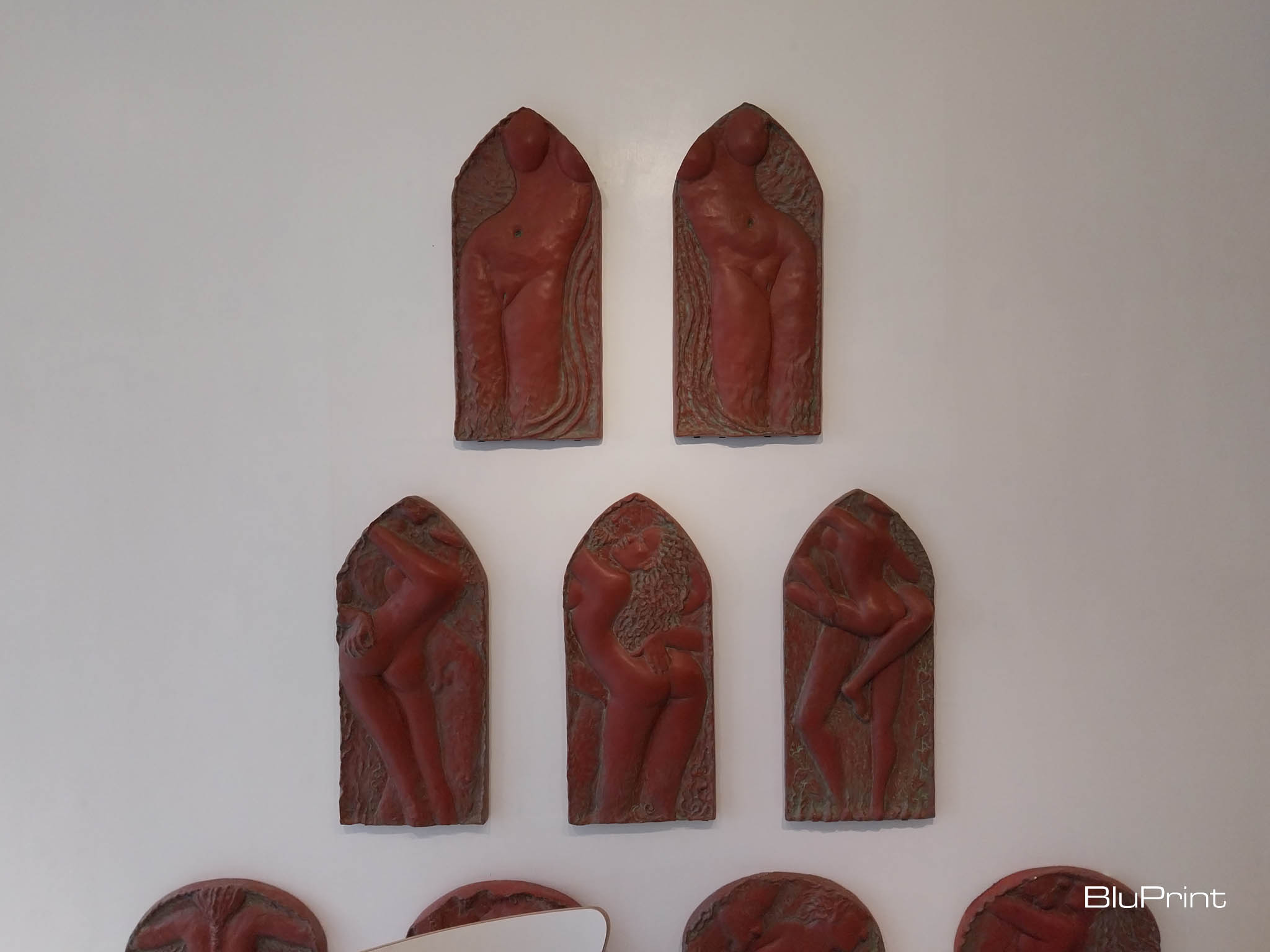
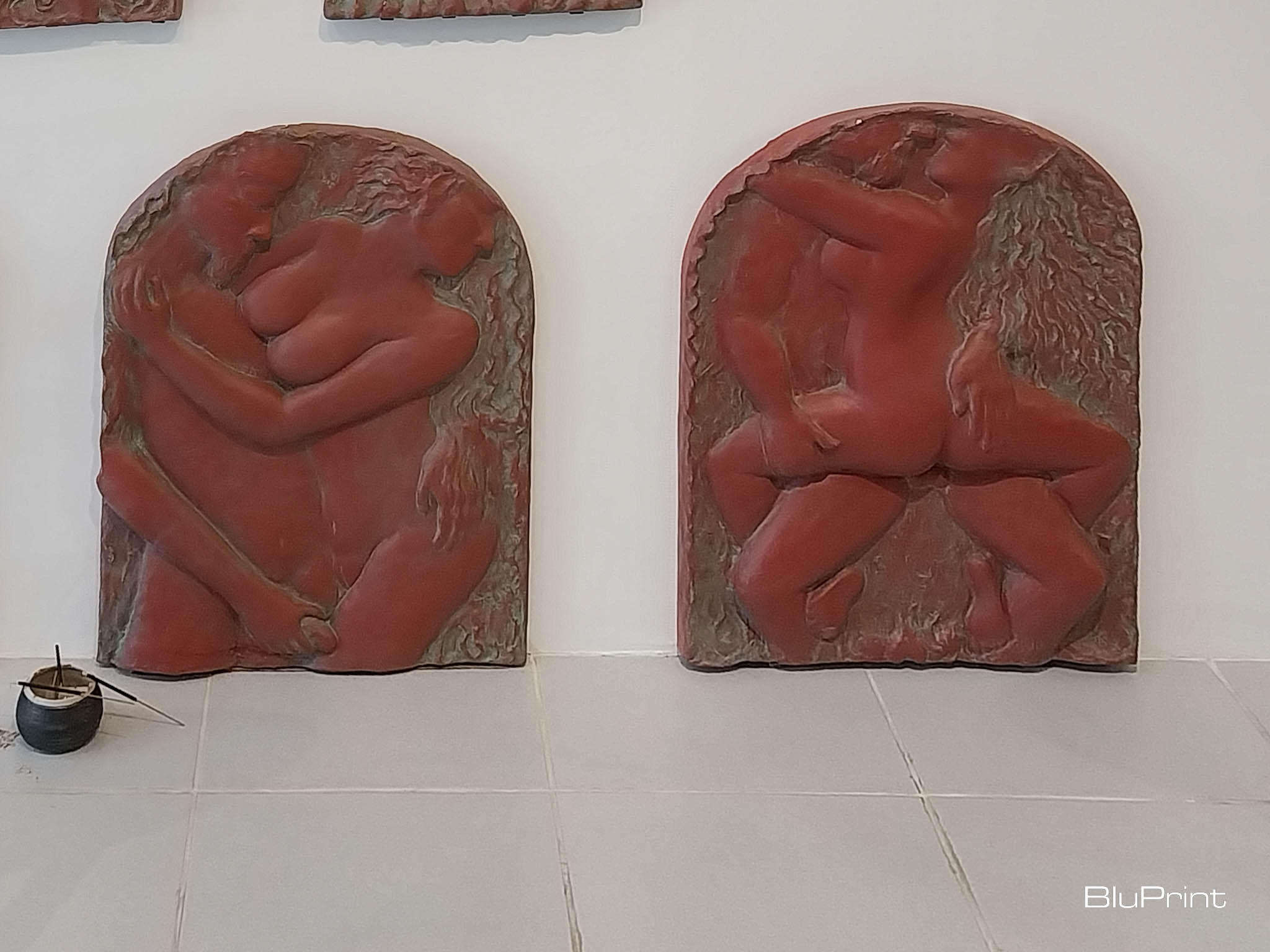
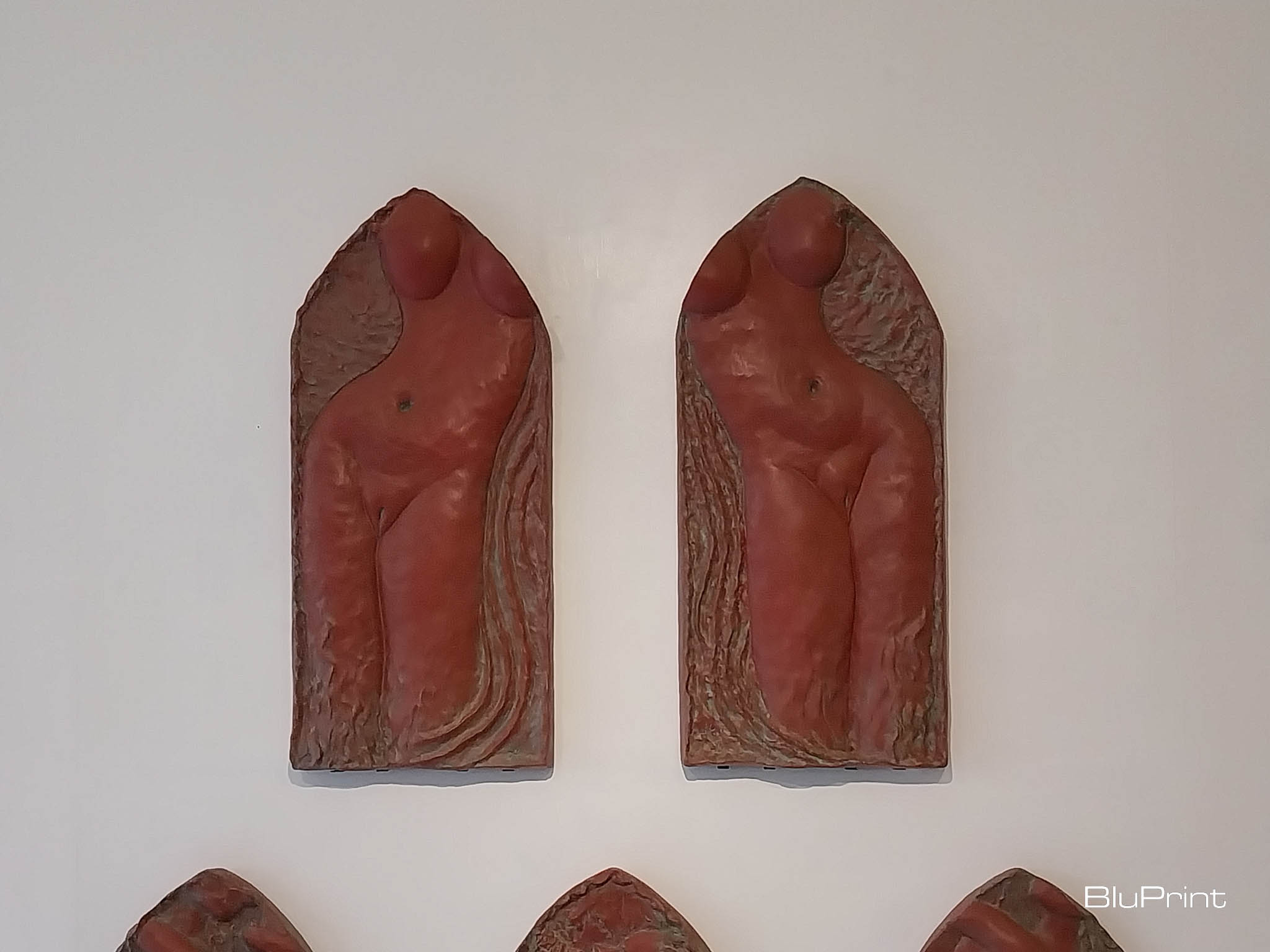
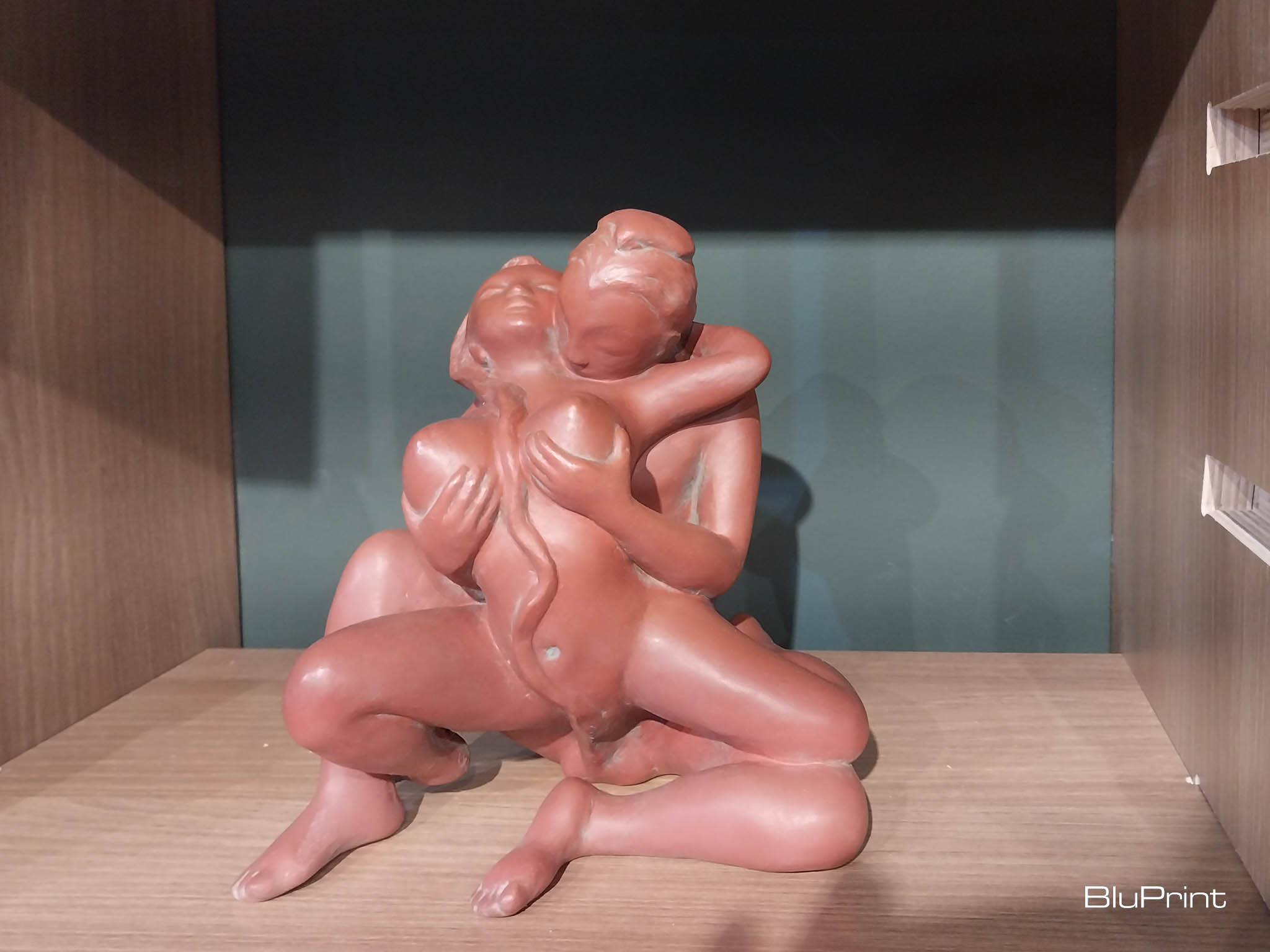
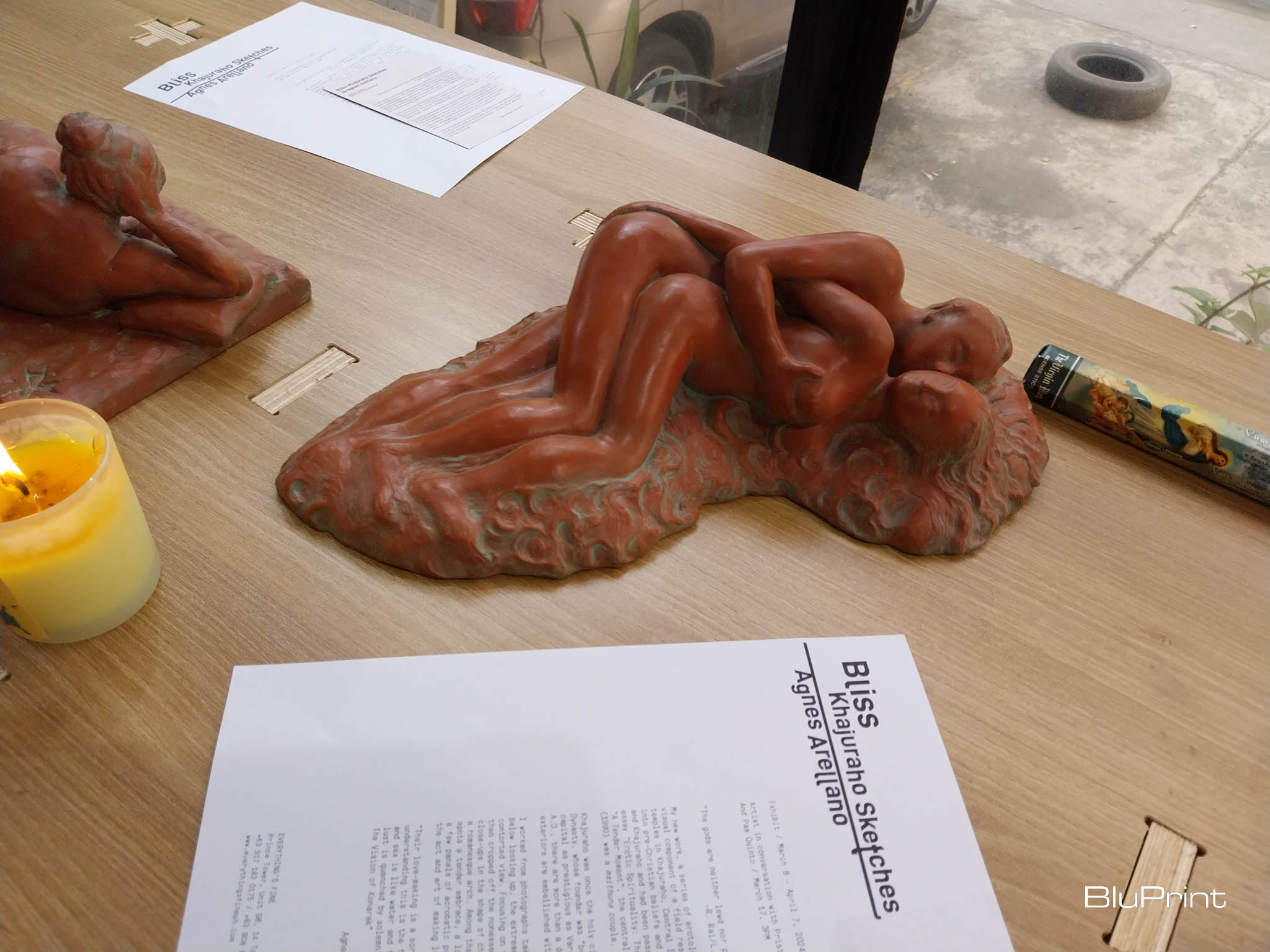
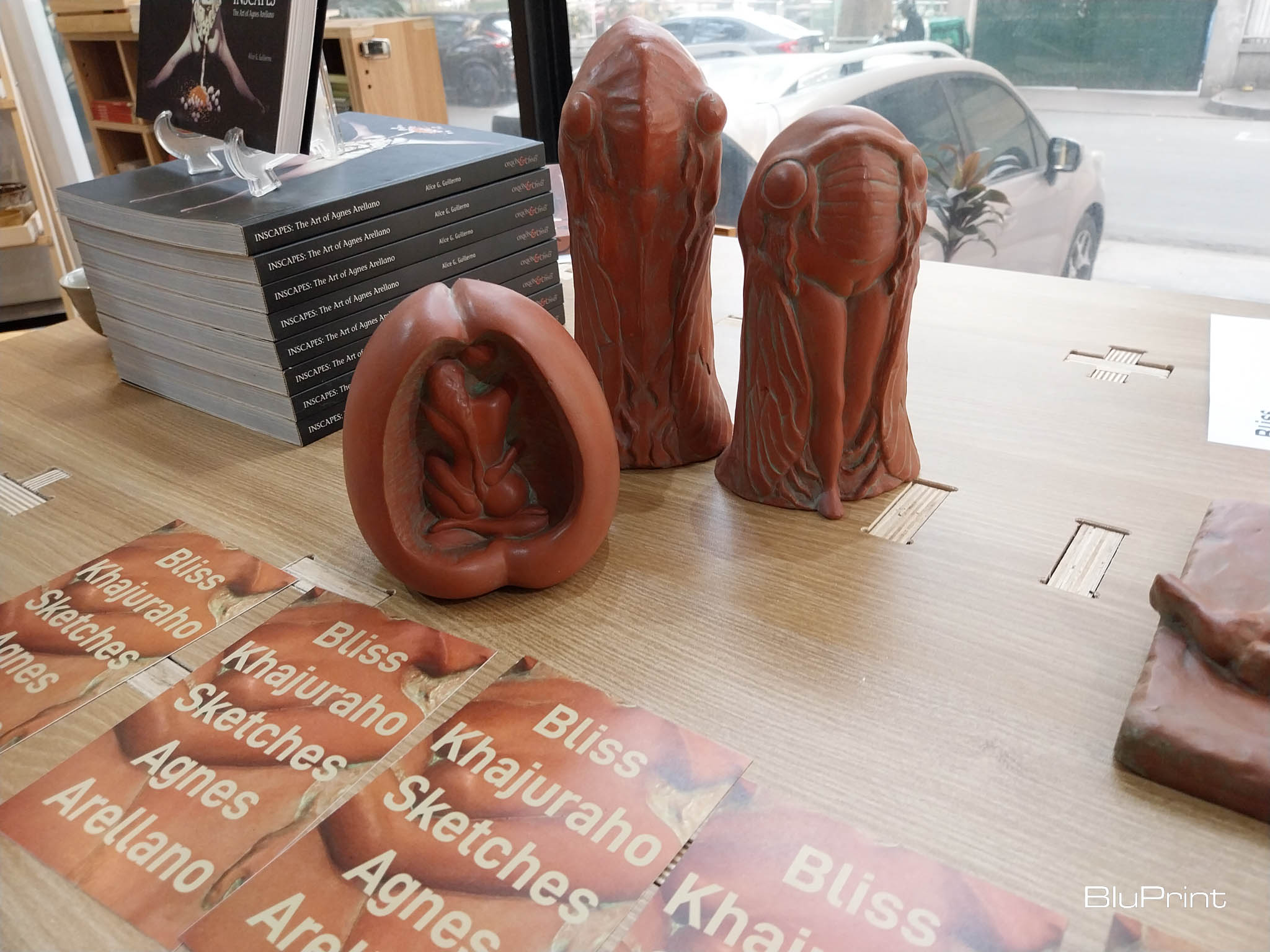
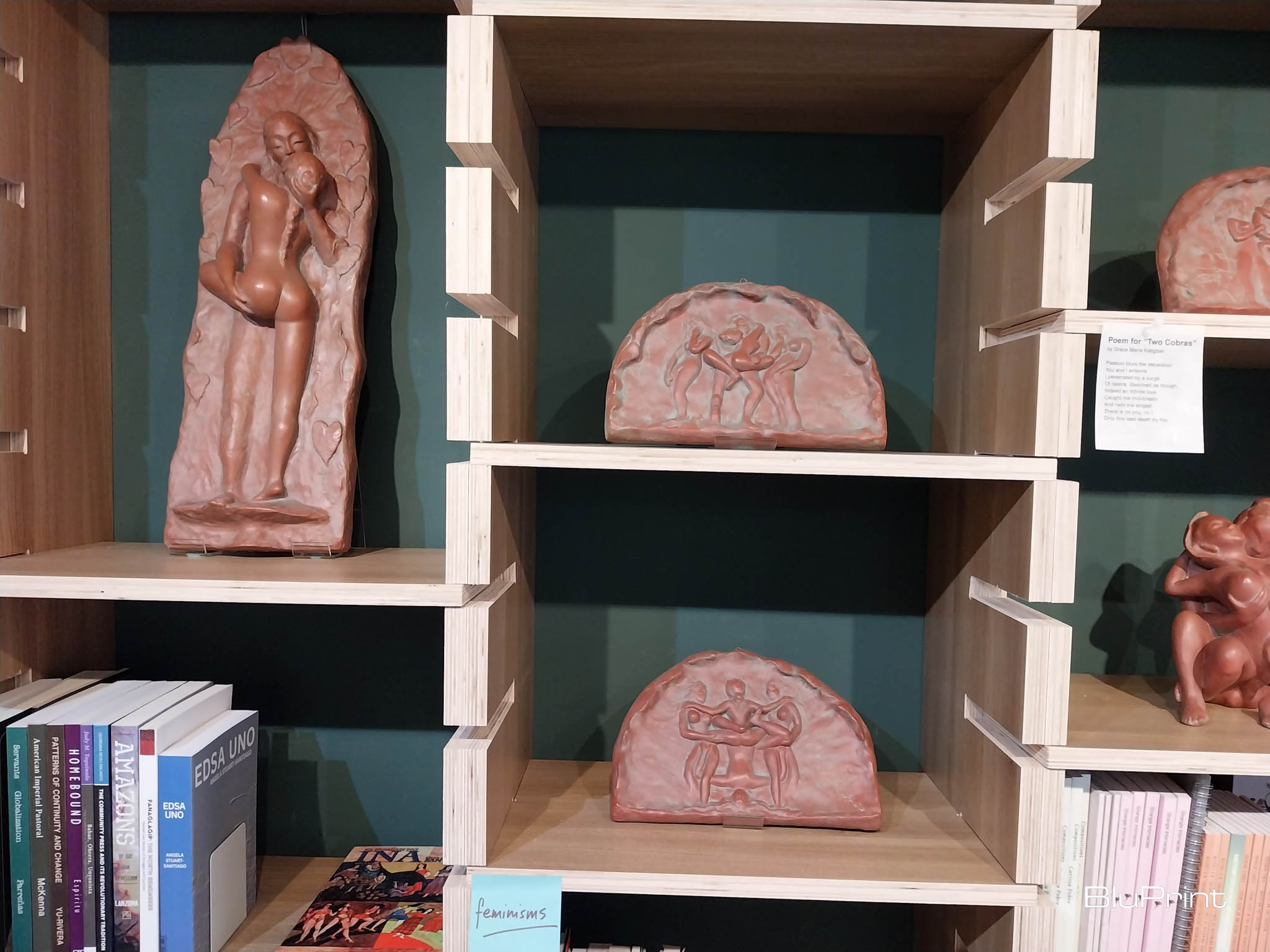
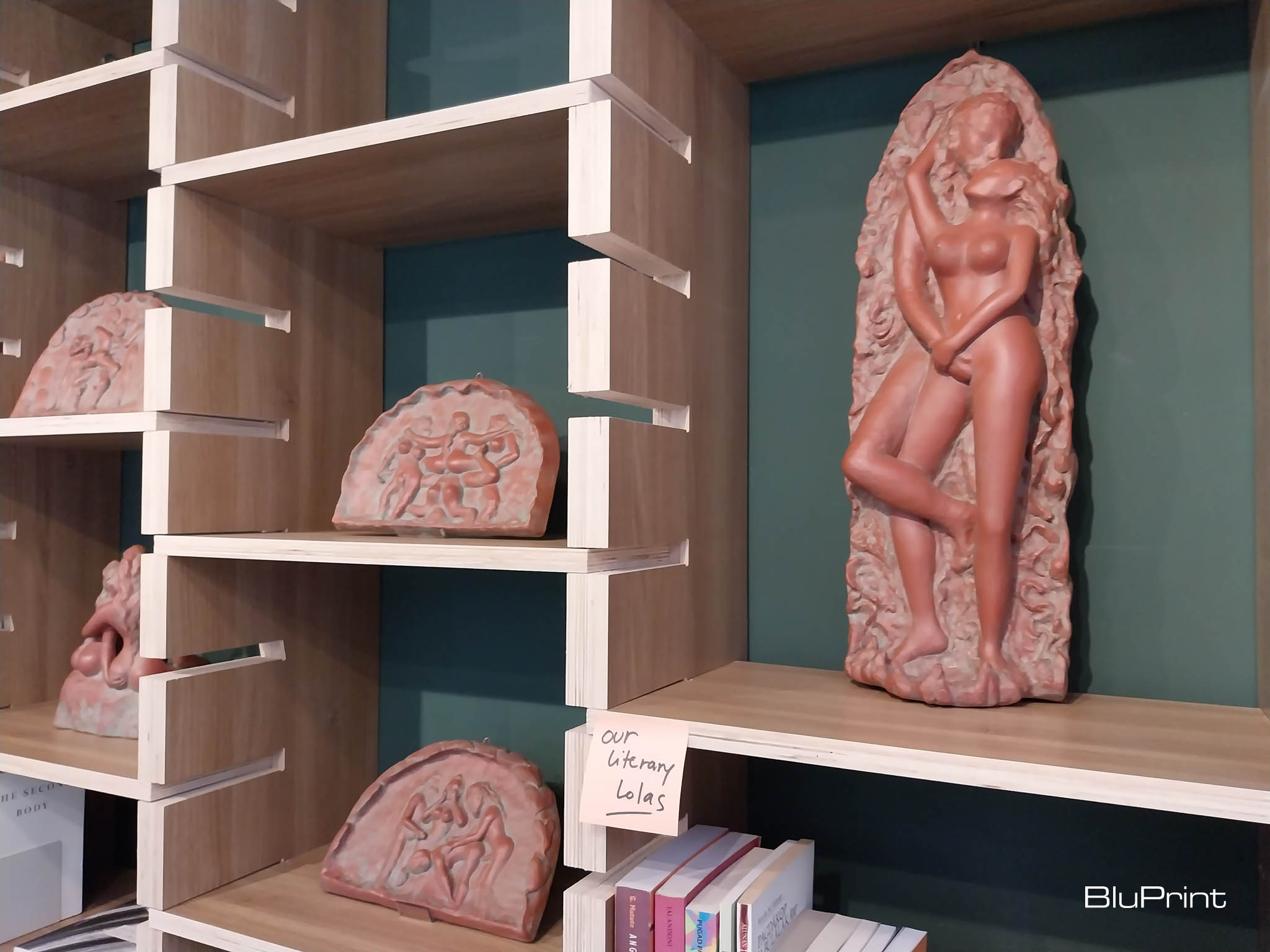
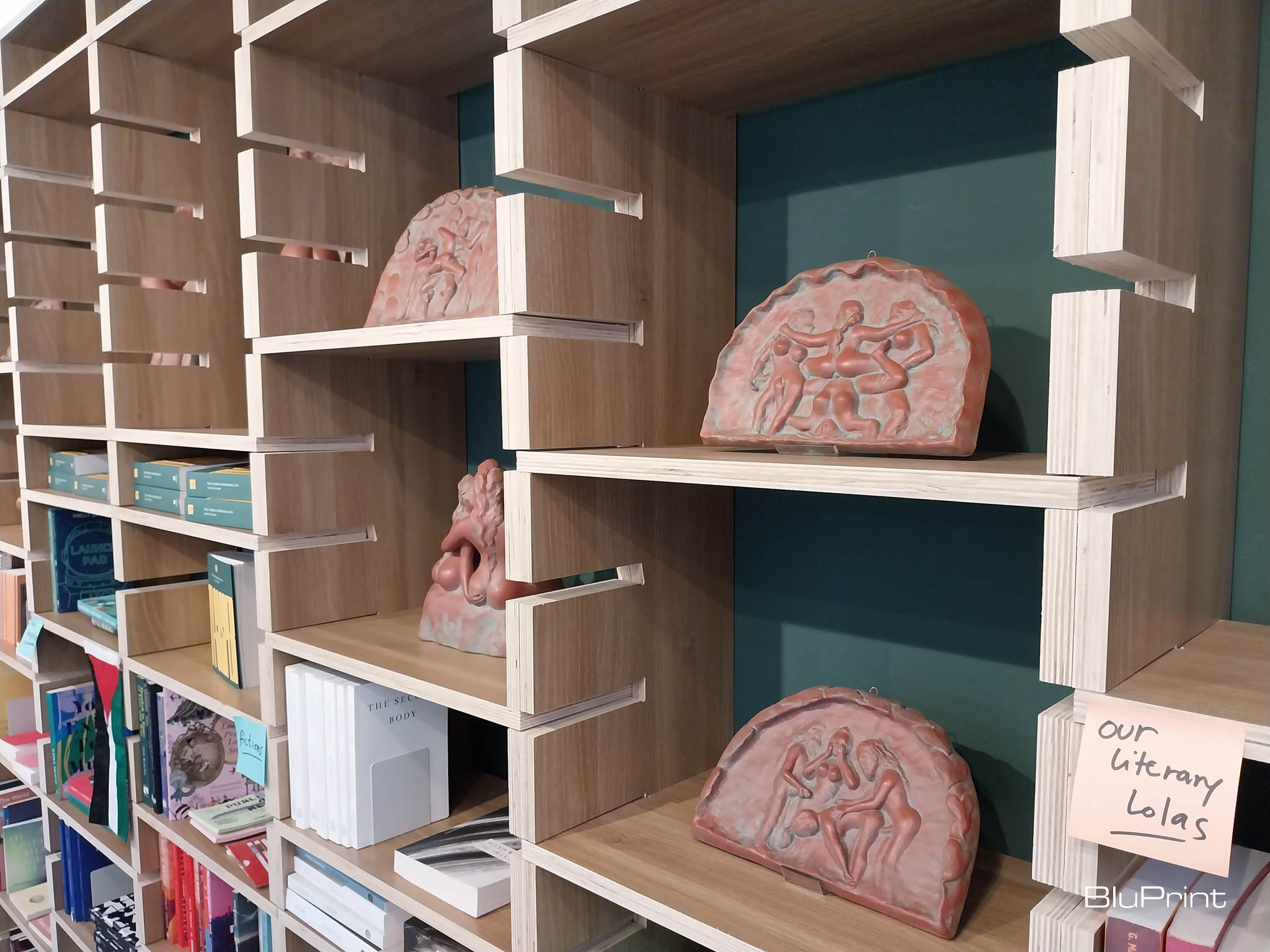
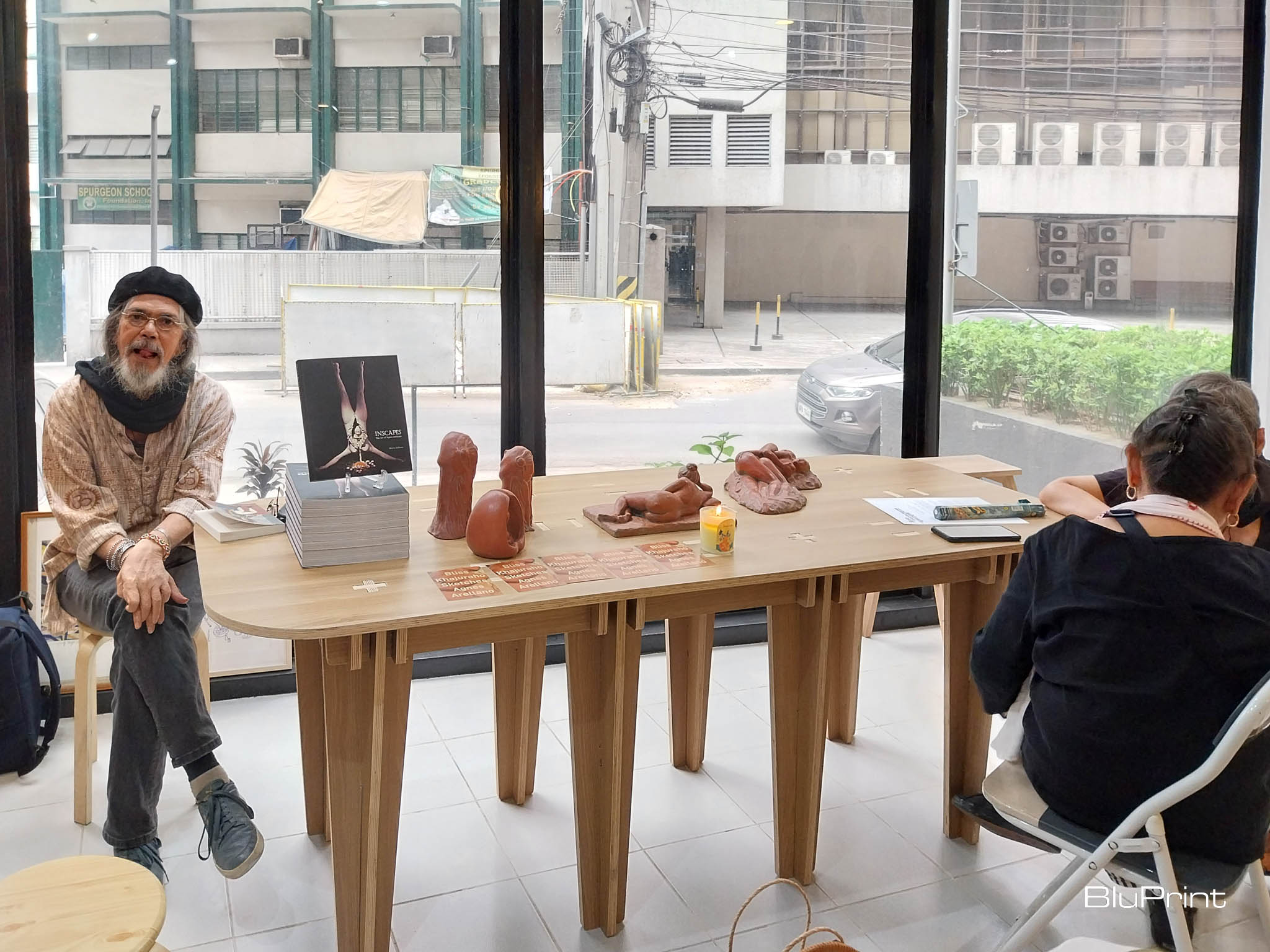
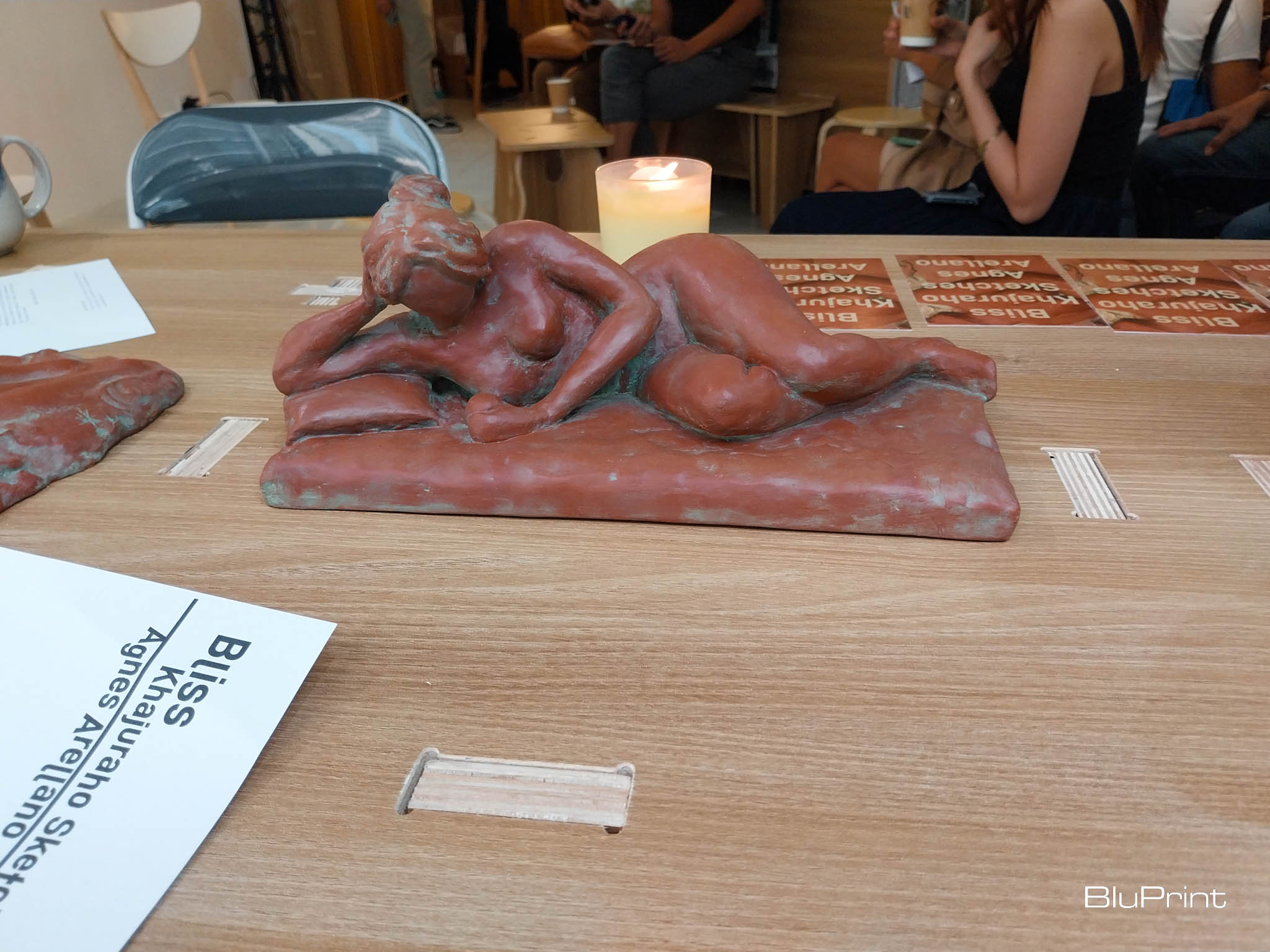
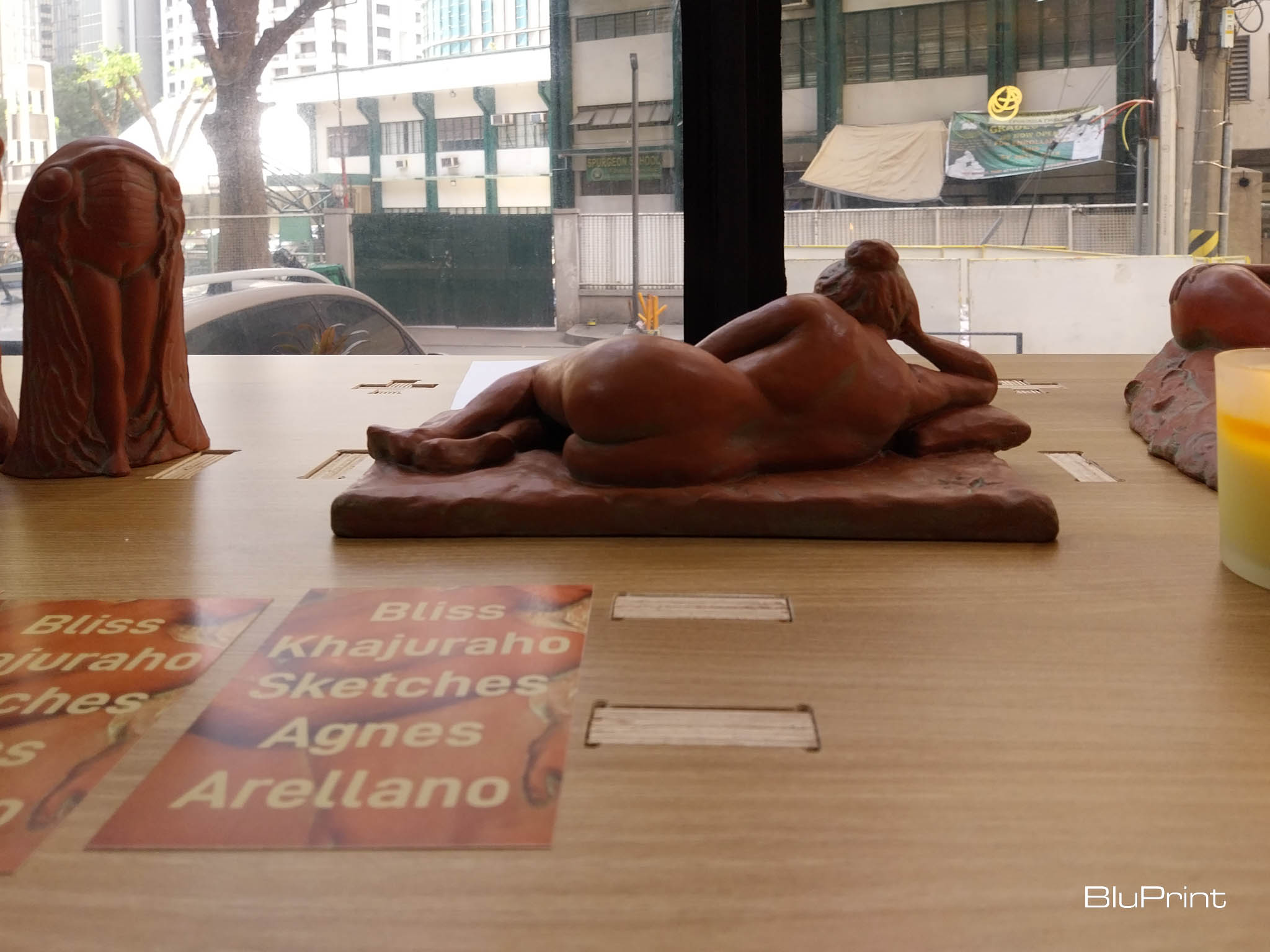
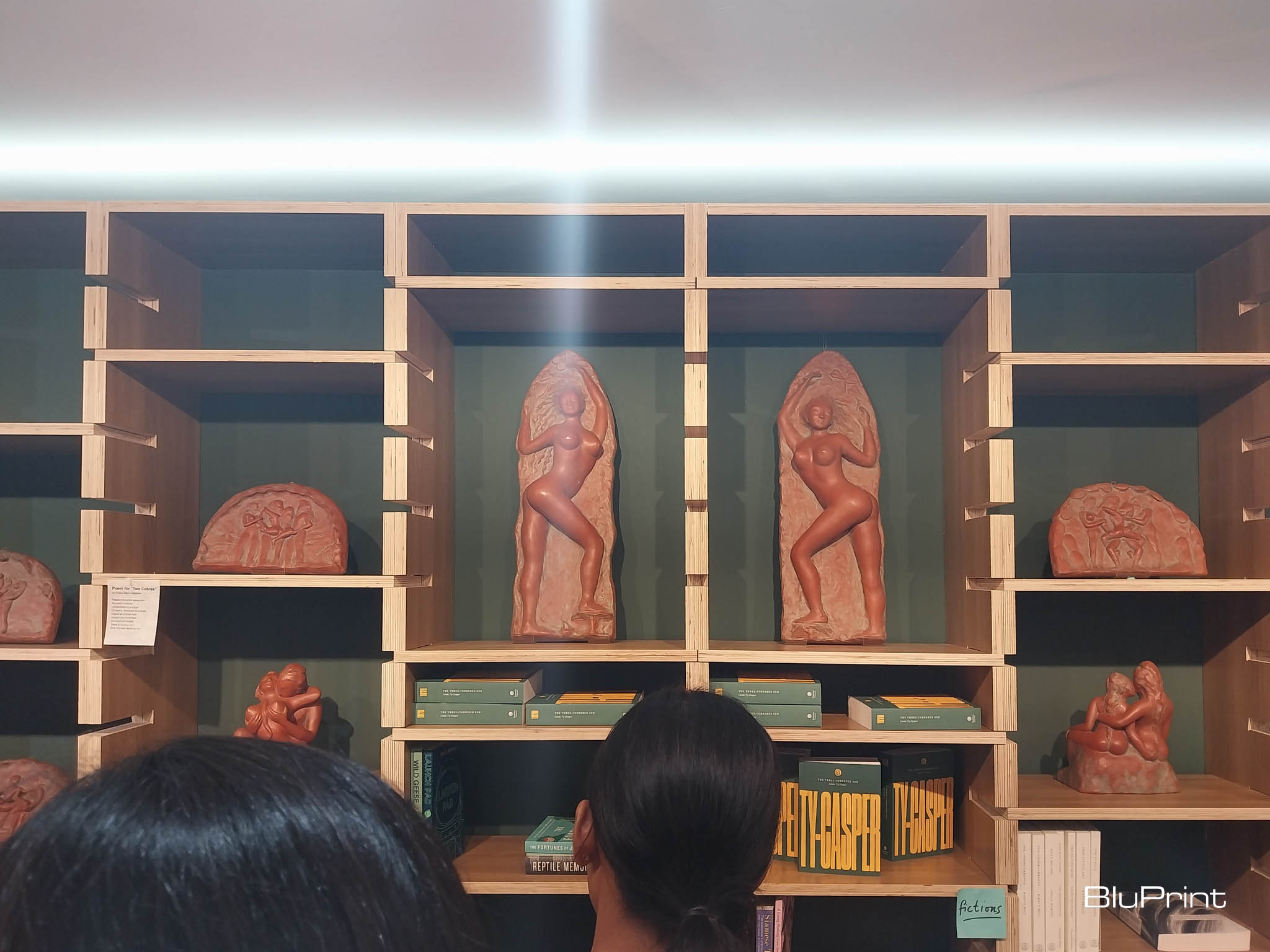
Bliss: Khajuraho Sketches by sculptor and artist Agnes Arellano tackles the depiction of sexuality in other countries. Being exhibited in Everything’s Fine Bookshop in Makati from March 8 to April 7, it’s a series of sculptures that Agnes describes as “enfleshments” of the erotic imagery that can be found in the temples of Khajuraho, India.
The visual component of the art came from photographs of the temples that were taken by her partner Billy during their field research investigations in the area in 2008. She gives them life in her sculptures, which try to mimic the sketches from “way below looking up,” while others were turned into “extreme close-ups in the shape of church windows” with different arches.
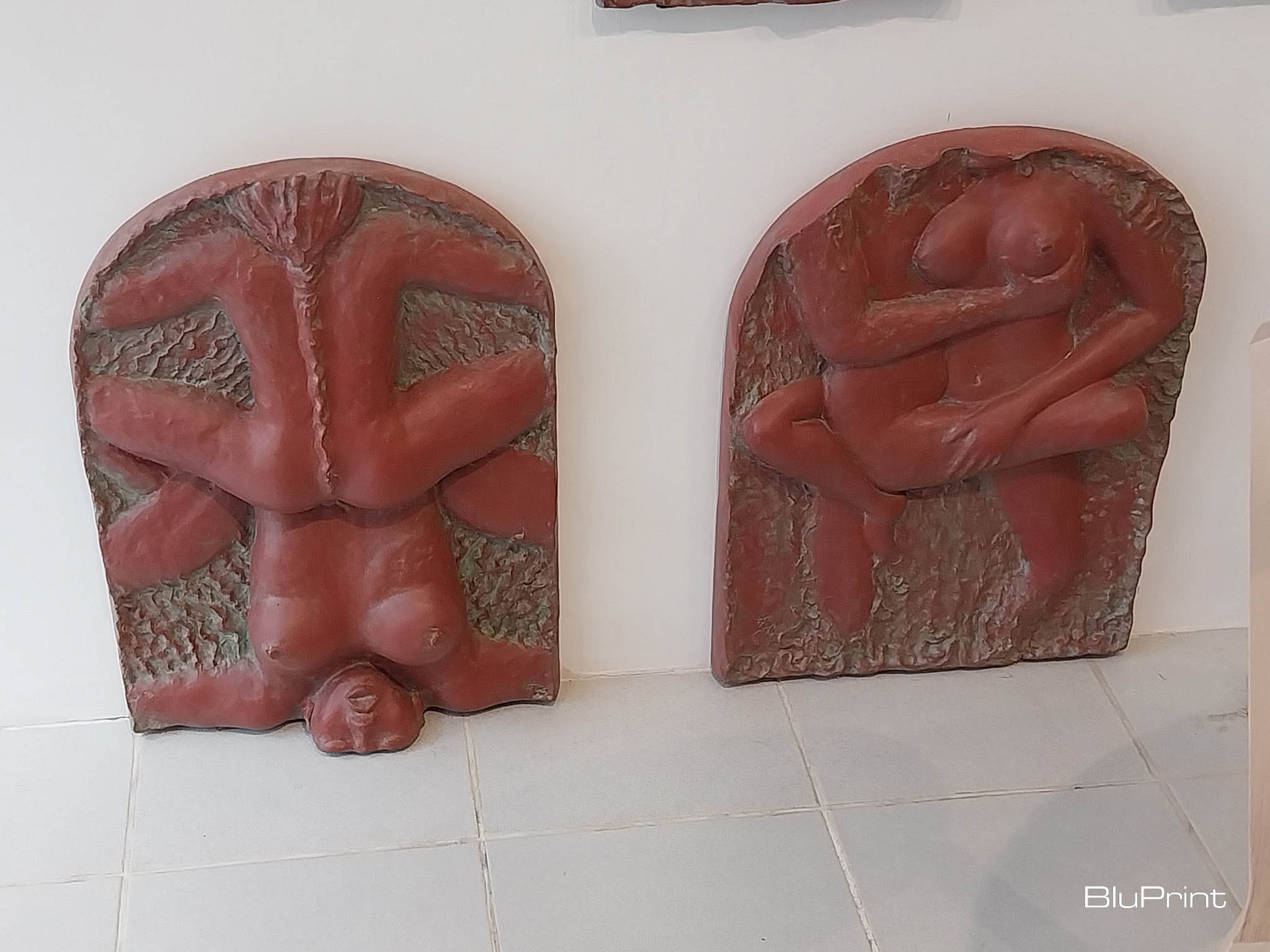
Some of the sculpted sex acts featured in the exhibit. Photo by Elle Yap.
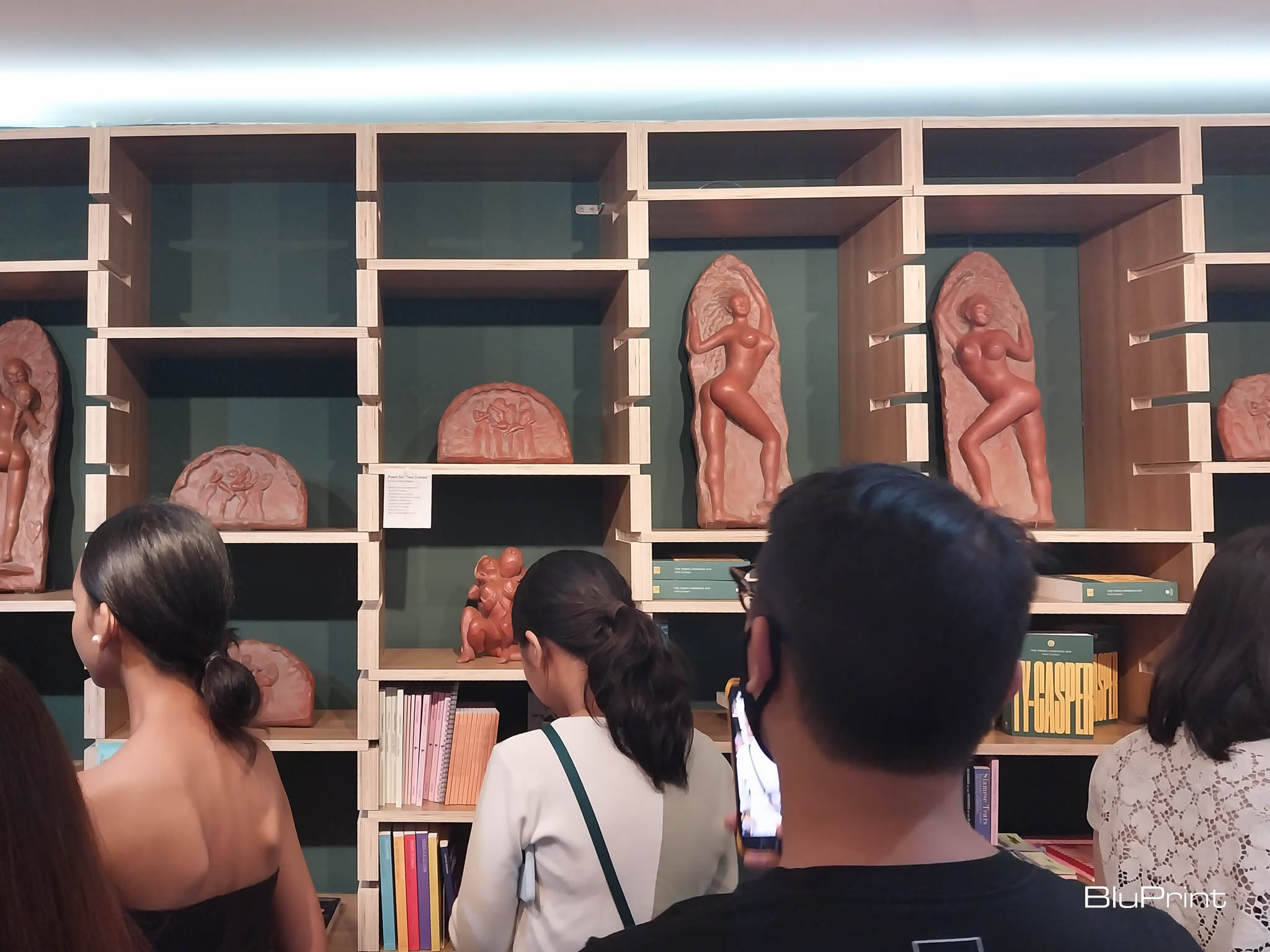
Sculptures hanging on the wall depicting the woman’s body. Photo by Elle Yap.
Sculptures in the bottom of the wall exhibit depicting sex acts. Photo by Elle Yap.
Sculptures in the bottom of the wall exhibit depicting sex acts. Photo by Elle Yap.
Sculptures hanging on the wall depicting the woman’s body. Photo by Elle Yap.
“The temples are really wrapped around with every manner of lovemaking [imaginable], even the animals,” Arellano said. “I think they’re meant to elicit all the lust that’s possible, to imagine, that you can imagine. And when you go in, you change. You have to get rid of that lust, you have to go into divinity. You have to go into what’s god, whatever god is for you. After all, all of that is the act of creation.”
Advertisement
The Draw of Depicting Sex
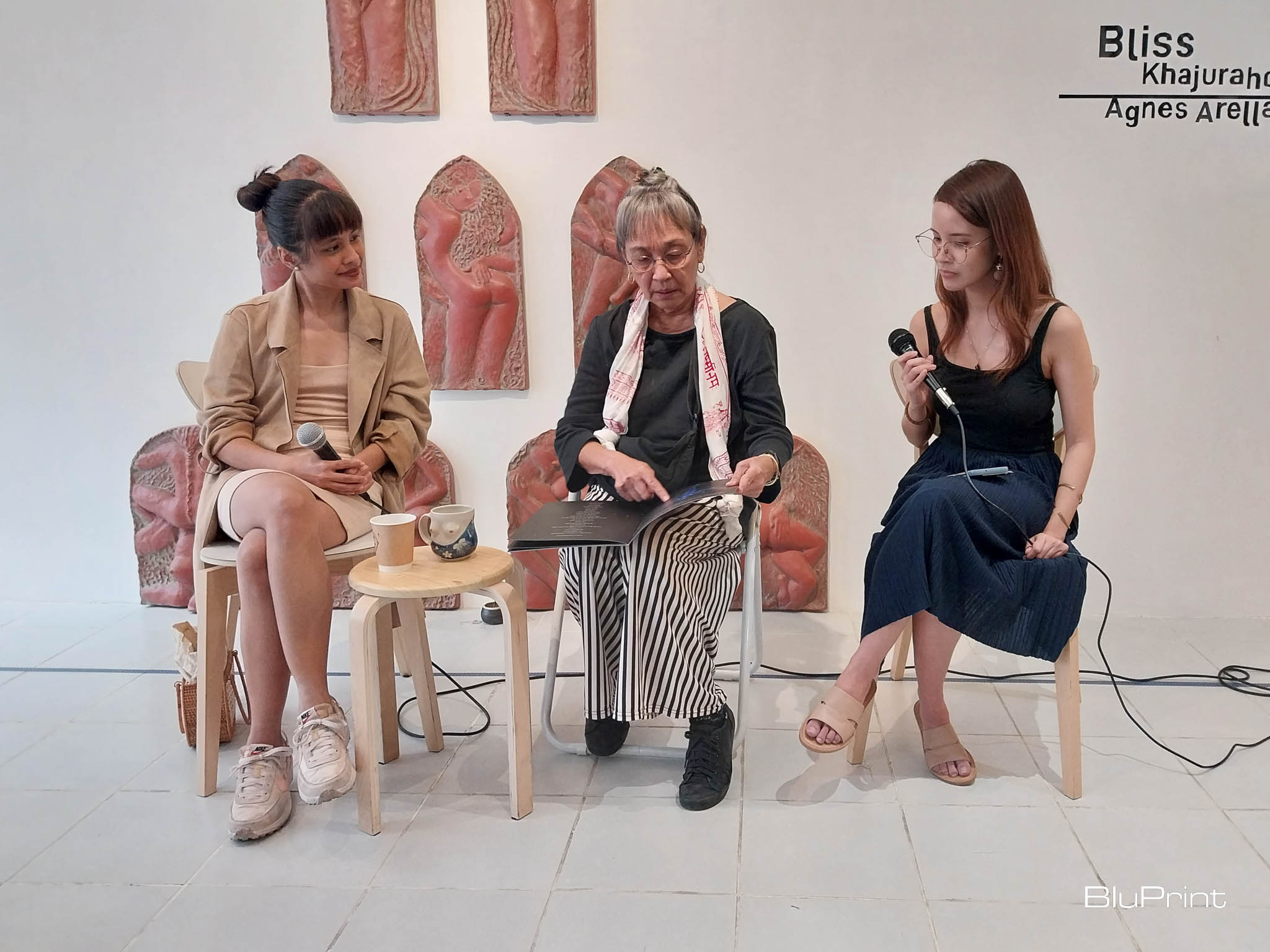
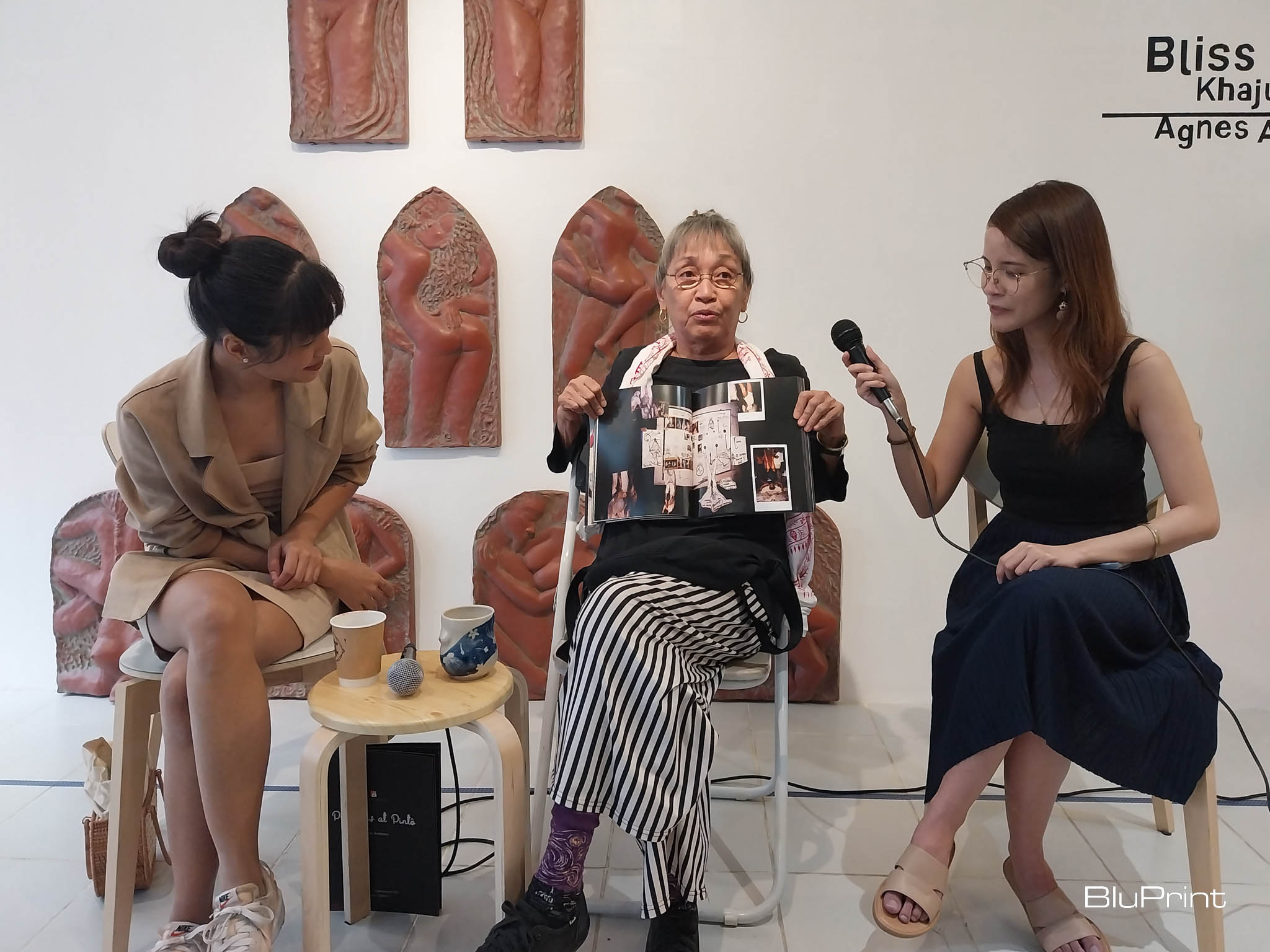
Arellano was present in Everything’s Fine Bookshop on March 17 for an open discussion with fellow artists Pristine de Leon and Pam Quinto. In a freewheeling discussion between the three with occasional interjections from Arellano’s partner Billy, she detailed the influence of the erotic in her art and her life, and how she pushes them into different barriers for her sculptures.
During the talk, Arellano discusses the attraction that she felt towards the depiction of these sketches. Among her reasons was the belief of showcasing the necessity of sexual intercourse (and its proper depiction) towards understanding the differing ideas of religion and custom that other societies have.
“I guess it’s shocking, shocking when you’re just looking at it. But then after a while you realize these are adepts. They’re not just having an orgy, they’re practicing. They’re practicing a discipline and how they achieve cosmic consciousness is through both [coming and leading] the rising together,” she said.
Advertisement
A sculpture of a couple in the middle of a sex act. Photo by Elle F. Yap
One of the table sculptures of a couple hugging. Photo by Elle Yap.
“Instead of common ejaculation, which is the sexual energy going down and outwards, the energy goes up your spine and your—this is ideal, of course—and you meet up here and you attain cosmic consciousness together.”
Arellano believes in this connection strongly, that the spiritual can be accessed with pleasure. Thus, the naming of the exhibition as Bliss: it’s a state of altered consciousness that connects us to higher things, something to be differentiated from the normal ideas of pleasure.
“Desire just takes you where you wanna go, but past that, the bliss is an altered state, eh. You can achieve it through prayer, too,” she said.
Advertisement
Agnes Arellano’s The Process of Art
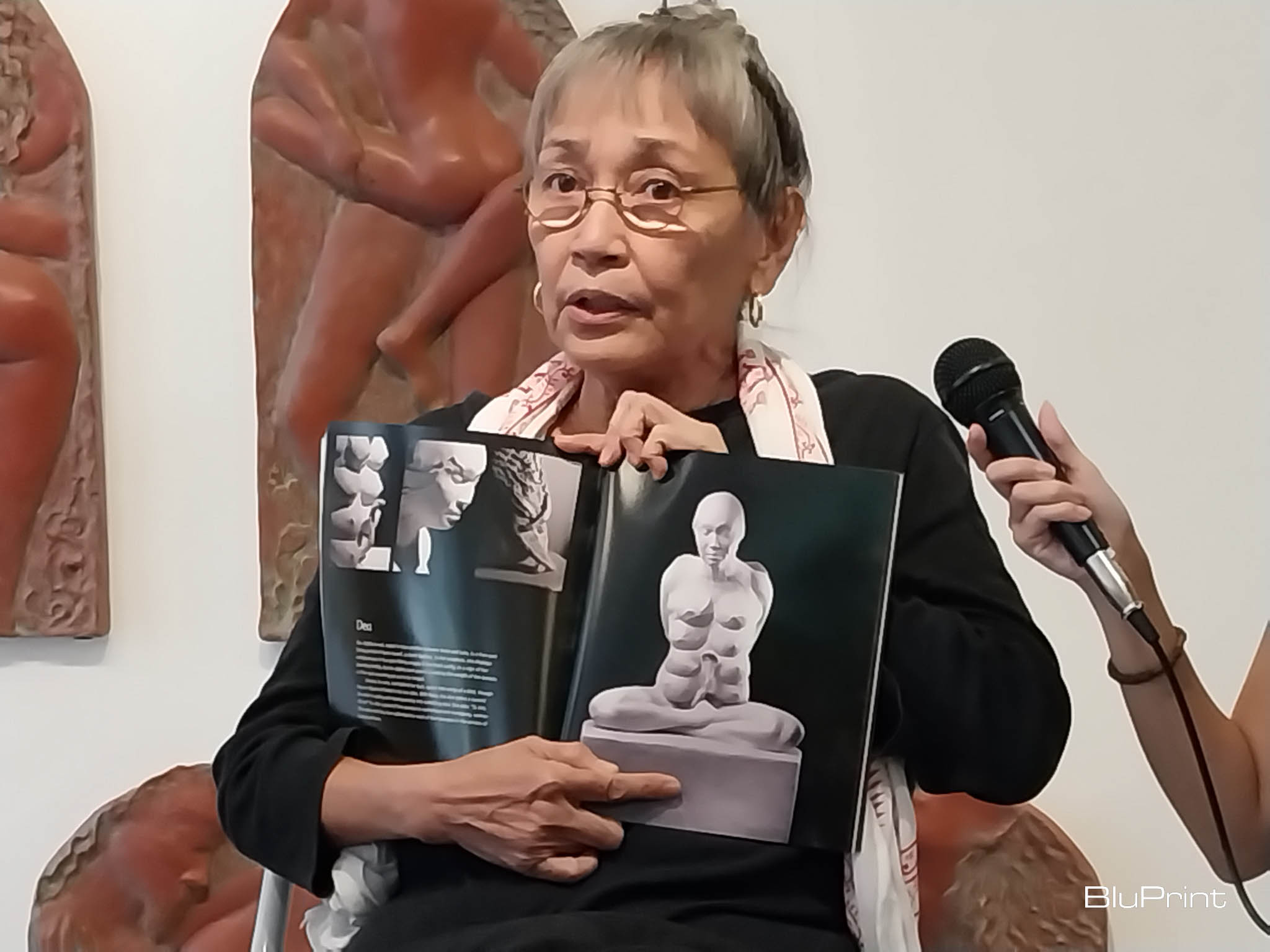
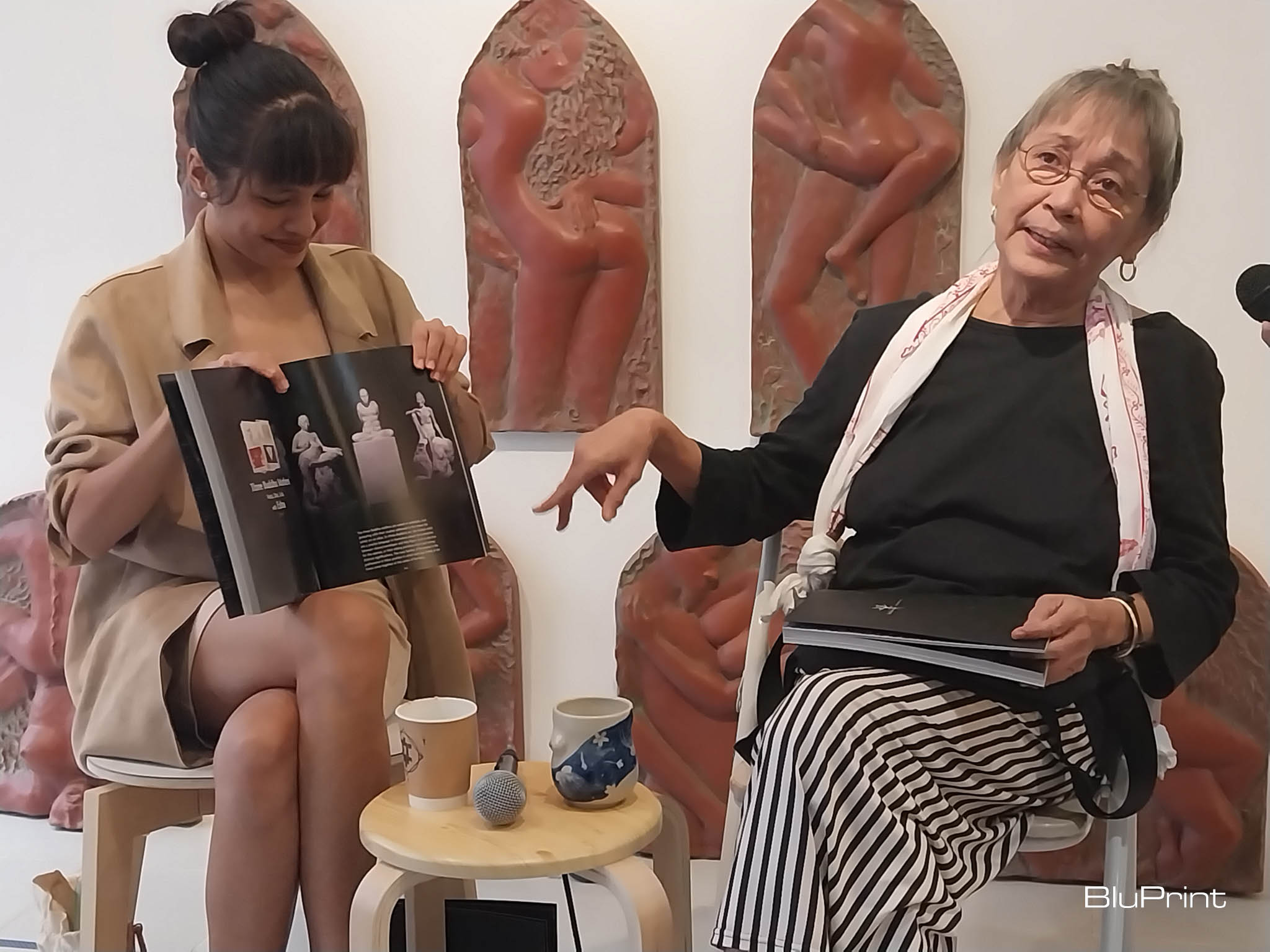
This was not the first nor the last time that Arellano depicted such works from other countries. In fact, during the talk, she showed some of her other works as written in Alice Guerrero-Guillermo’s book Inscapes: The Art of Agnes Arellano. She highlighted works like The Three Buddha Mothers or her most recent sculptures Project Pleiades and how it was influenced by Eastern religion.
Later on, she got into the discourse of her art in general and the eclectic and somewhat taboo ways that she depicted the female body. She recounted having a fight with a misogynist during her exhibition of Temple to the Moon Goddess because he was offended by the frank depiction of bodies in her work, to the point where a friend of hers was forced to fight the man.
But nevertheless, she has kept up with her sculptures, and she said that sculpting has given her the freedom to express herself in a way that allows her to deal with the traumas and happiness of the past that her life has given her.
Advertisement
“When you cast yourself, you take this hollow thing—it’s not hollow anymore, you know there’s a nano-something of you left inside that, a nano-something spirit of you. That’s how I feel about it. So, it became for me a major source of healing.”
Arellano explaining her past works. Photo by Elle Yap.
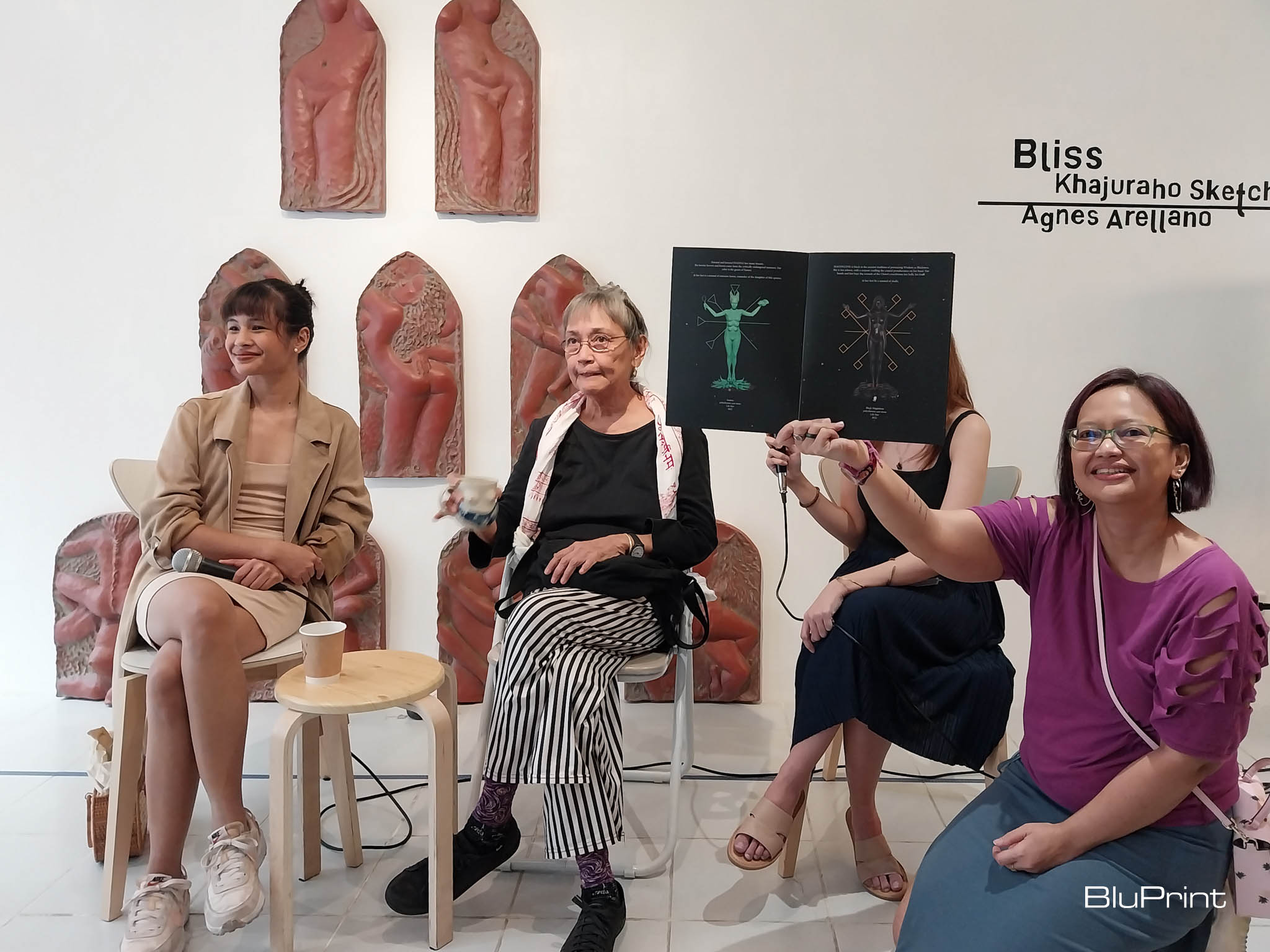
Arellano and moderators Pristine de Leon (right) and Pam Quinto. Photo by Elle Yap.
Arellano explaining her past works. Photo by Elle Yap.
Arellano showcasing her “Project: Pleiades” sculptures. Photo by Elle Yap.
Art and Spirituality
Agnes Arellano sees sculpting and her art as a way of getting in touch with one’s spiritual side through the exploration of sexuality. She sees her art as personal manifestations of her life, much of which is reinforced by her using molds of herself in her sculptures.
Sculptures featured in the Agnes Arellano exhibit. Photo by Elle F. Yap
Some of the works as presented in the bookshelves. Photo by Elle Yap.
Some of the works as presented in the bookshelves for Agnes Arellano’s exhibit. Photo by Elle Yap.
Sculptures as presented in the bookshelves for Agnes Arellano’s exhibit. Photo by Elle Yap.
“When I first exhibited the Temple to the Moon Goddess, I faced a lot of my sexuality there, but I had to go into the spiritual. You don’t just stay with the sexual. Like, this is just a trip, yeah? You go somewhere and you’re inspired by what you see there. You try to recreate it for the people who will never be able to see what you saw. So it’s not a matter of being original or what, it’s wanting to show what you’ve seen.”
Advertisement
Female Sexuality and the Repression of Society
Arellano’s partner Billy posting with some of her works. Photo by Elle Yap.
A close-up of one of the table sculptures. Photo by Elle Yap.
Sculptures as posed in the bookshelves. Photo by Elle F. Yap
One of the table sculptures of a woman posing. Photo by Elle Yap.
Sculptures as posed in the bookshelves. Photo by Elle F. Yap
The talk inched back and forth towards the repressive sexuality that tends to be the current norm of society today. Discussions swerved constantly towards the strength of Catholicism in the country, and the negative influence it had for women in the long run.
“Actually, what we lost because of Christianity was hegemony. We were not allowed to explore sex and to learn about it in proper ritual, in proper stages,” she said. “Learn about it, so that when it gets to that stage talaga, you get a sense of what hormones are, when one feels sexy, when one does not,” she said.
This negative view of sexuality that the church had included her being shamed for losing her virginity at a young age. She said that her friends and teachers had gossiped about her, and it had detrimental effects to her mental health as a youth.
Advertisement
“I had to write to a friend, who by then was already in Europe, just to tell him, you know, ‘What am I going to do? Nobody will want me anymore.’ Sabi niya, ‘that’s just a piece of skin!’ Hymen, it’s just a piece of skin.”
Finding Selfhood in Art
With Arellano’s artwork, she became deeply in-tune with her self-hood, and her work began to delve deeper into sexuality and the freedom that a woman can find in this ownership. She has a realist’s view of how sex works, and her clinical approach to pleasure is informed by decades of experience.
“It becomes like, you’re a soldier. You have to stop being so fragile. You have to take care of yourself. Even if you indulge in sex, it doesn’t mean that you’re gonna die from it. It’s quite pleasurable,” she said.
Advertisement
Agnes Arellano’s Bliss: Khajuraho Sketches will be on display in Everything’s Fine Bookstore in Makati till April 7.
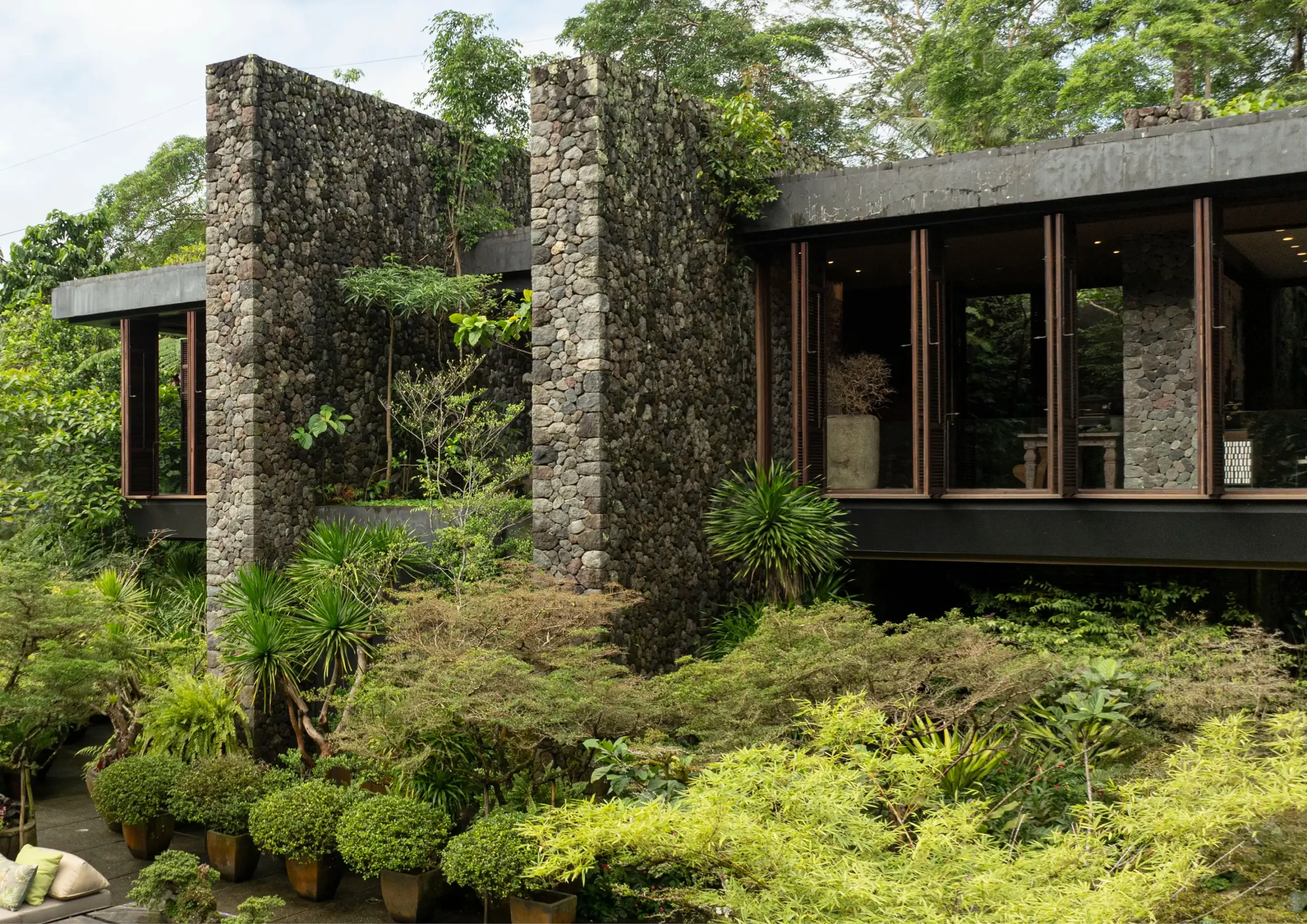
Located near the equator, factors such as heat and humidity are the norm in the Philippines. This tropical climate has shaped the development of architecture in the country. As Leandro V. Locsin stated: “The first consideration of the Filipino builder and certainly the most evident in his architecture, which is after all an outgrowth of […]
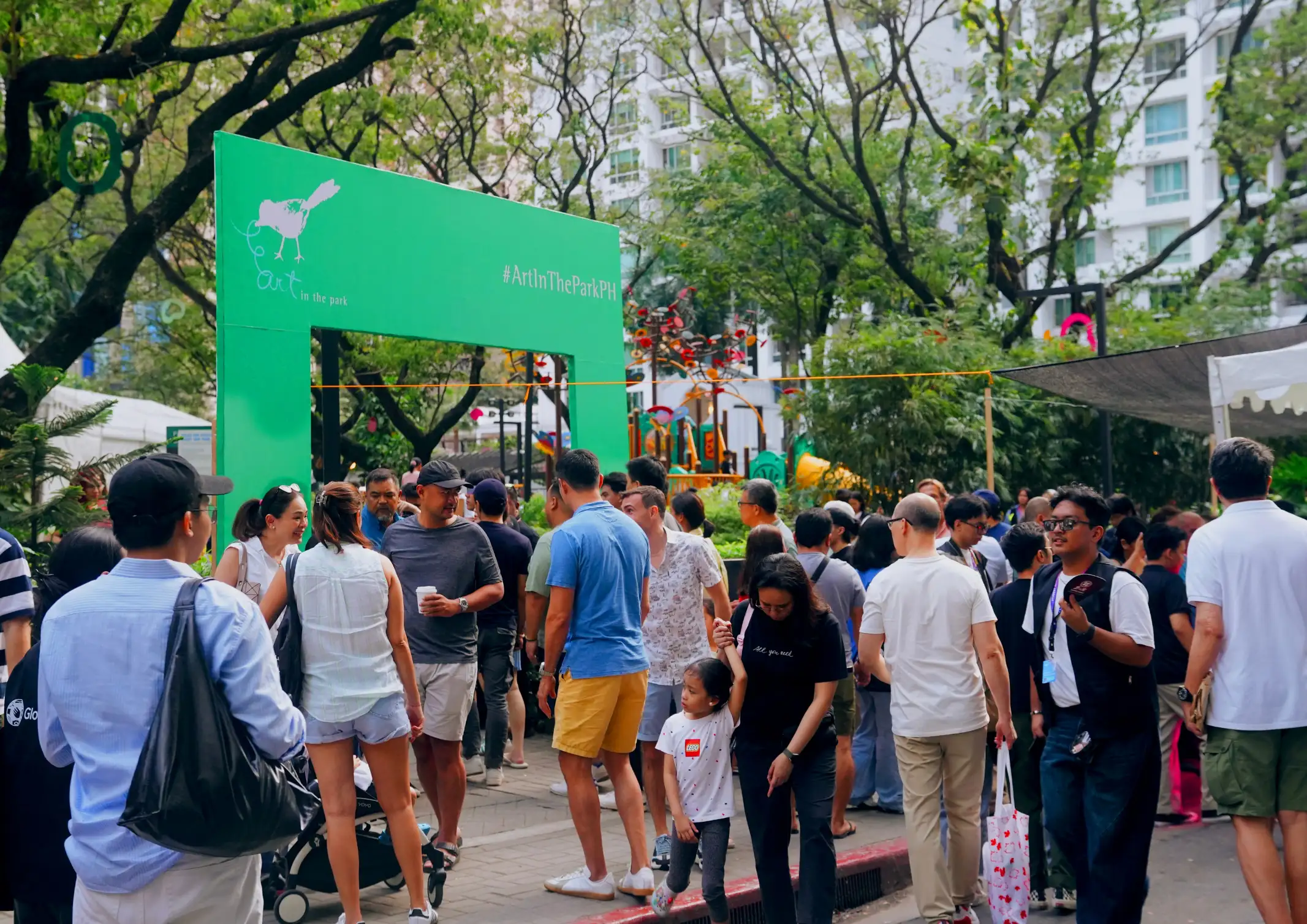
Art in the Park returned this year to Jaime Velasquez Park in Salcedo Village, Makati City, to celebrate its 20th anniversary. This year’s edition featured a curated selection of works from 55 exhibitors representing galleries, art collectives, independent art spaces, and student groups. With all artworks capped at Php 70,000, the fair continued its mission […]
Denise de Castro, Principal Architect of DEQA Design Collaborative, believes that designing with equity in mind means starting at the workplace. Values and practices that your studio or office espouse inevitably filter down to the work that you do. Equitable design ensures that people with different needs and different backgrounds are supported through fair access, […]
Across Metro Manila, residential developments are increasingly designed around proximity. As cities grow denser and mobility becomes more complex, new housing is often positioned near transport nodes, commercial districts, and educational institutions. This approach reflects a broader shift in urban planning. Mixed-use environments allow residents to live closer to daily necessities—reducing commute times while supporting […]
Luxury in design is undergoing a quiet shift. Where once luxury was measured primarily through visual opulence, today it is increasingly defined by responsibility—through the way spaces are built, the materials selected, and the impact those decisions leave behind. At the Philippine World Building and Construction Expo (WORLDBEX) 2026, this evolving definition of luxury takes […]
For more than nine decades, Fisher & Paykel has approached design with a simple but exacting belief: that the best living environments are those shaped by people, place, and purpose. Rooted in New Zealand and deeply attuned to island and coastal living, the brand’s philosophy centres on quiet performance, material honesty, and appliances that integrate […]