Transitions and Continuity, the new exhibit at the Ateneo Art Gallery, begs the question of how we interpret video art. As a medium intrinsically linked to mass-media consumption, can video exist beyond that need for mass appeal, and instead explore ideas uniquely suited for its format?
The Ateneo Art Gallery is unique in this country for its collection of video art. They worked with a former graduate of theirs, Clarissa Chikiamco, to identify and curate their latest exhibition, showing how technology has changed in how we present this art form over time.
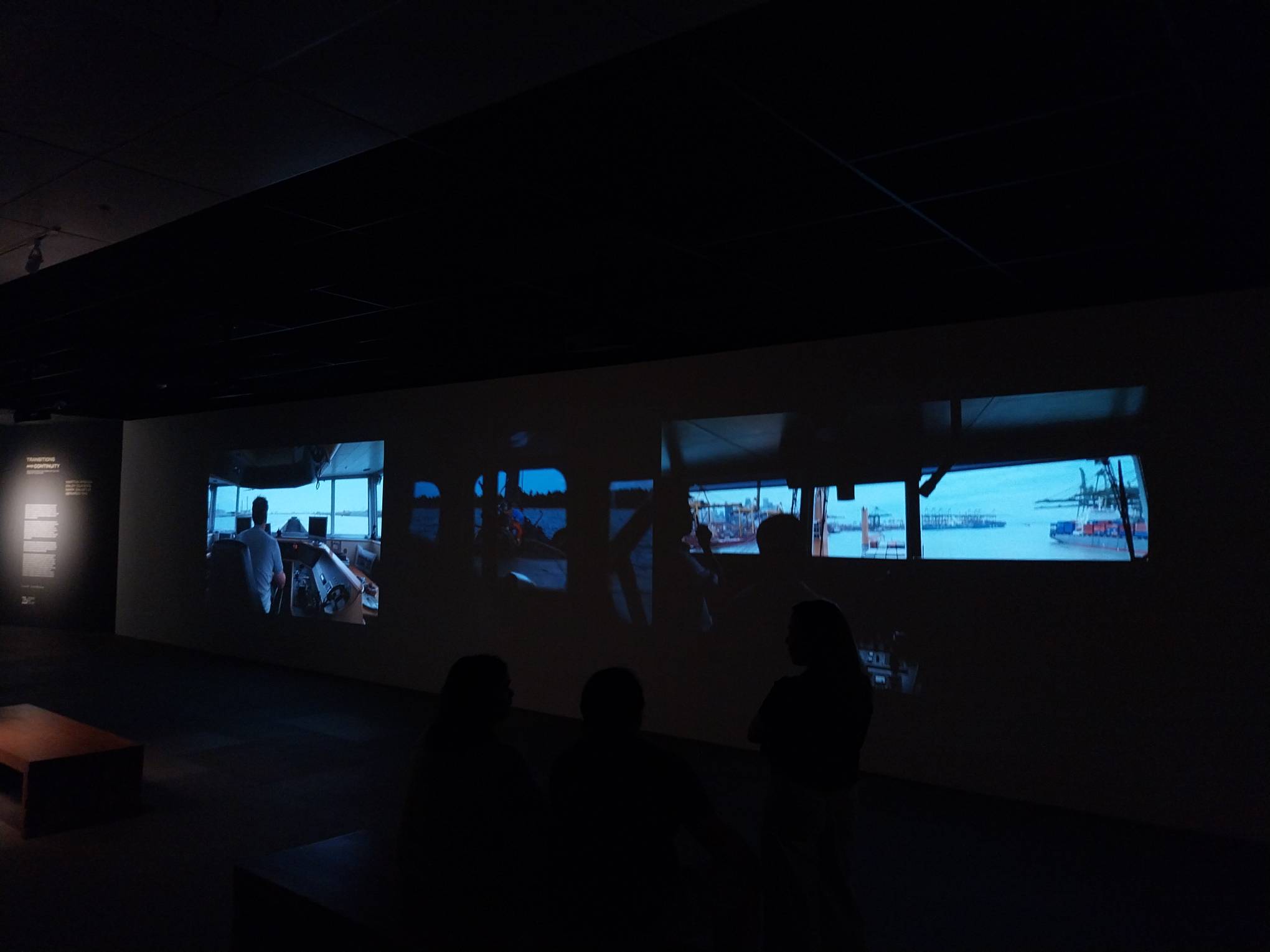
People watching Martha Atienza’s work for “Transitions and Continuity,” a video art exhibit from Ateneo Art Gallery. Photo by Patricia Yap.
“From a museum’s standpoint, these shifts in technology have given rise to issues of authenticity and materiality,” the exhibit write-up said. “The process of mounting this exhibition has been an opportunity to deliberate and collaborate with artists on defining strategies in managing contemporary art and video installations.”
Advertisement
Four artists contributed to the exhibit: Martha Atienza, Kaloy Olavides, Mark Salvatus, and Gerardo Tan. The works here were presented by the artists over a decade ago. Each of them remounted the exhibits for the gallery, and reckoned with how the interpretation of their works have changed over time.
Participative Works
All the works in Transitions and Continuity pursue a unique sense of avant-garde artistry that wouldn’t translate well in a mainstream narrative sense. They really work with the space around them, inviting the viewers to participate in the pieces in their own unique ways.
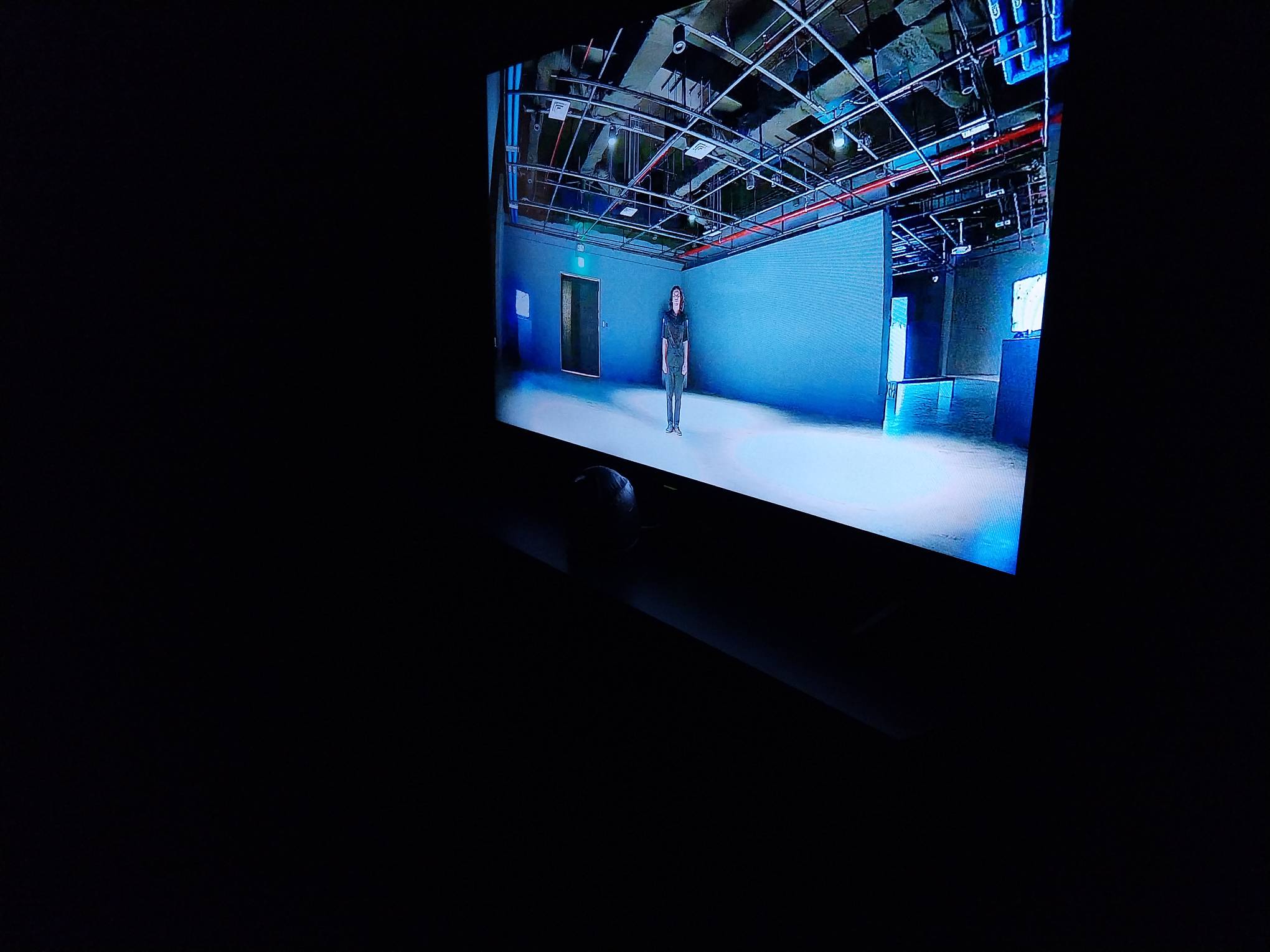
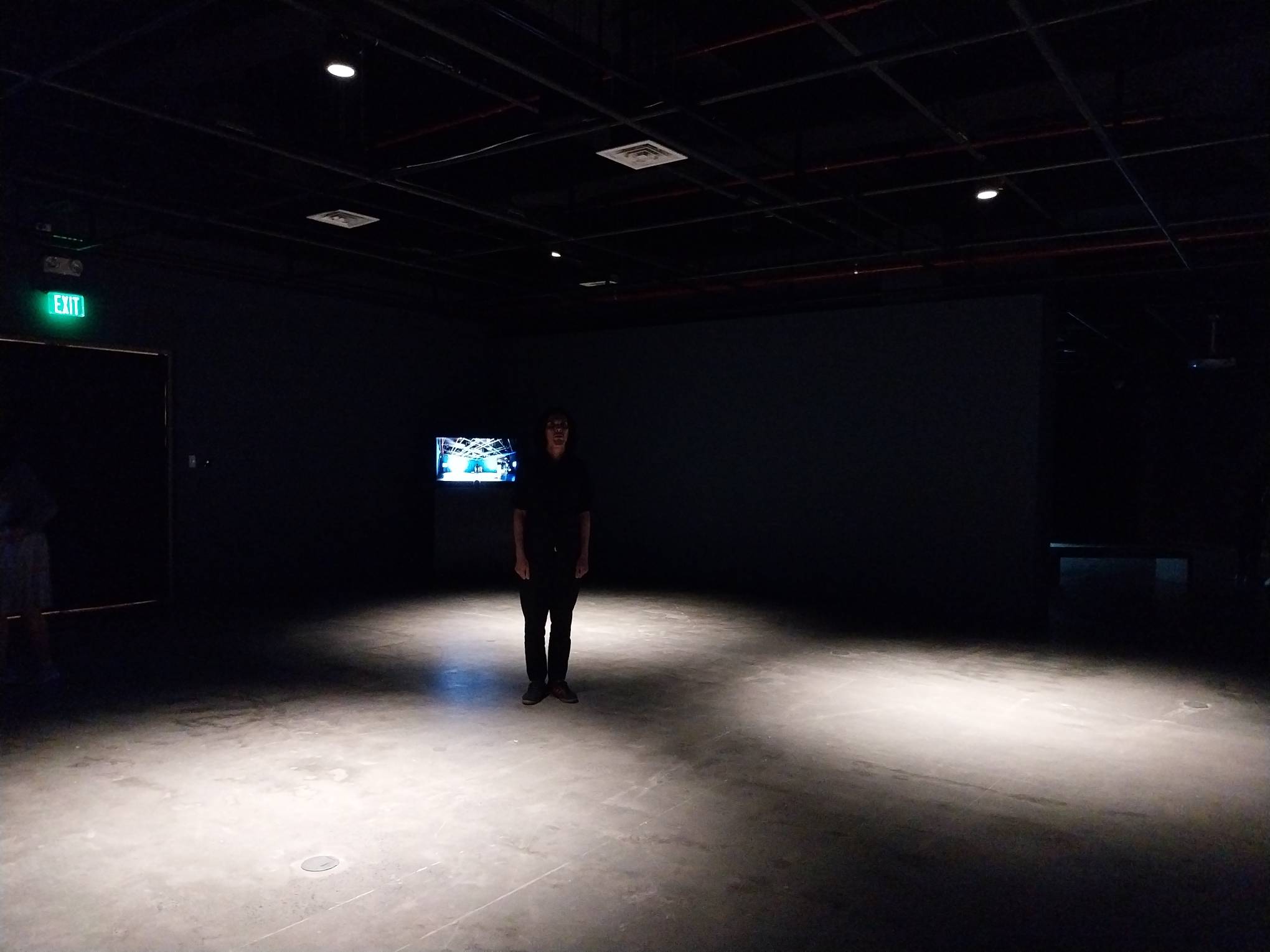
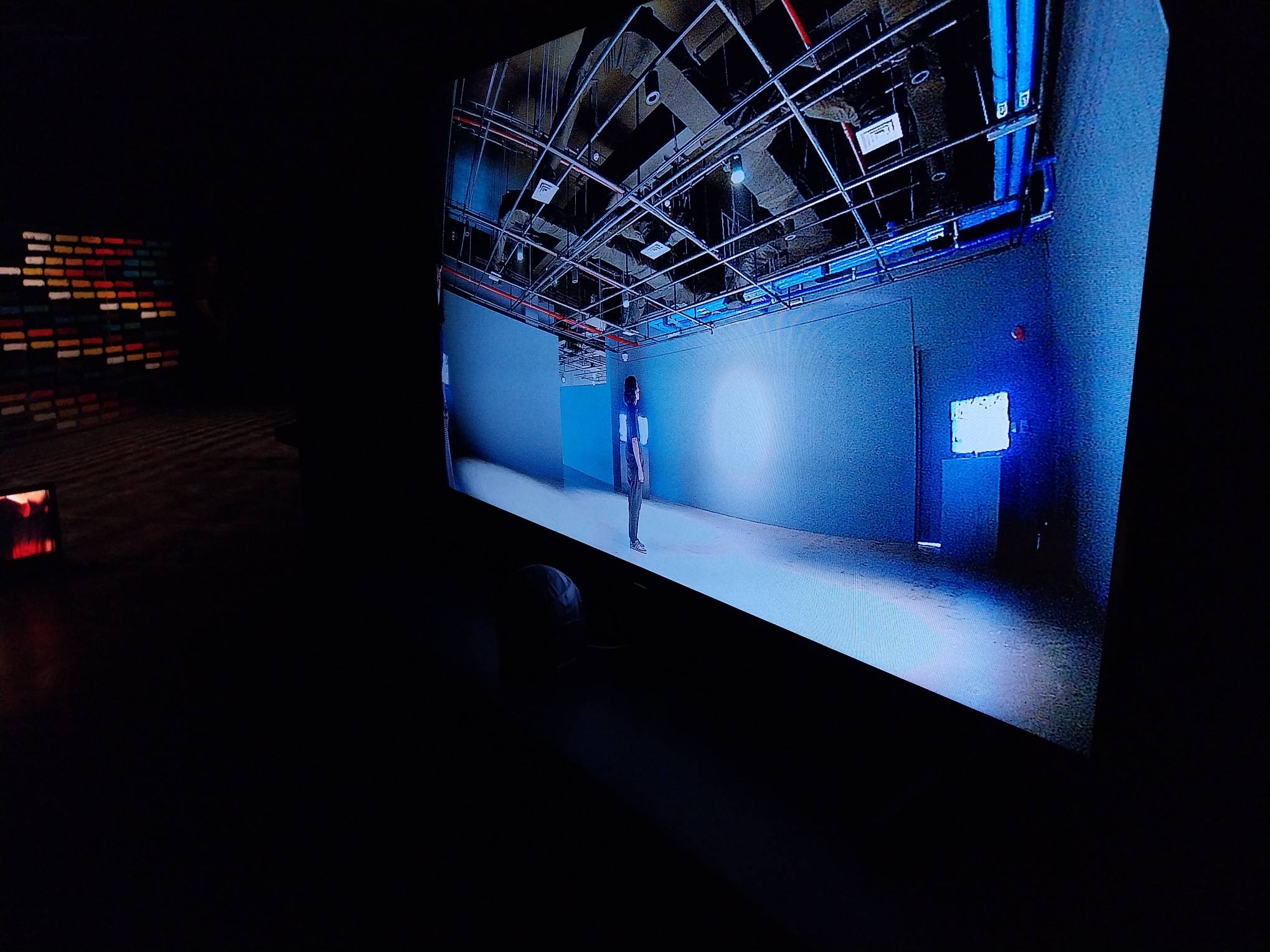
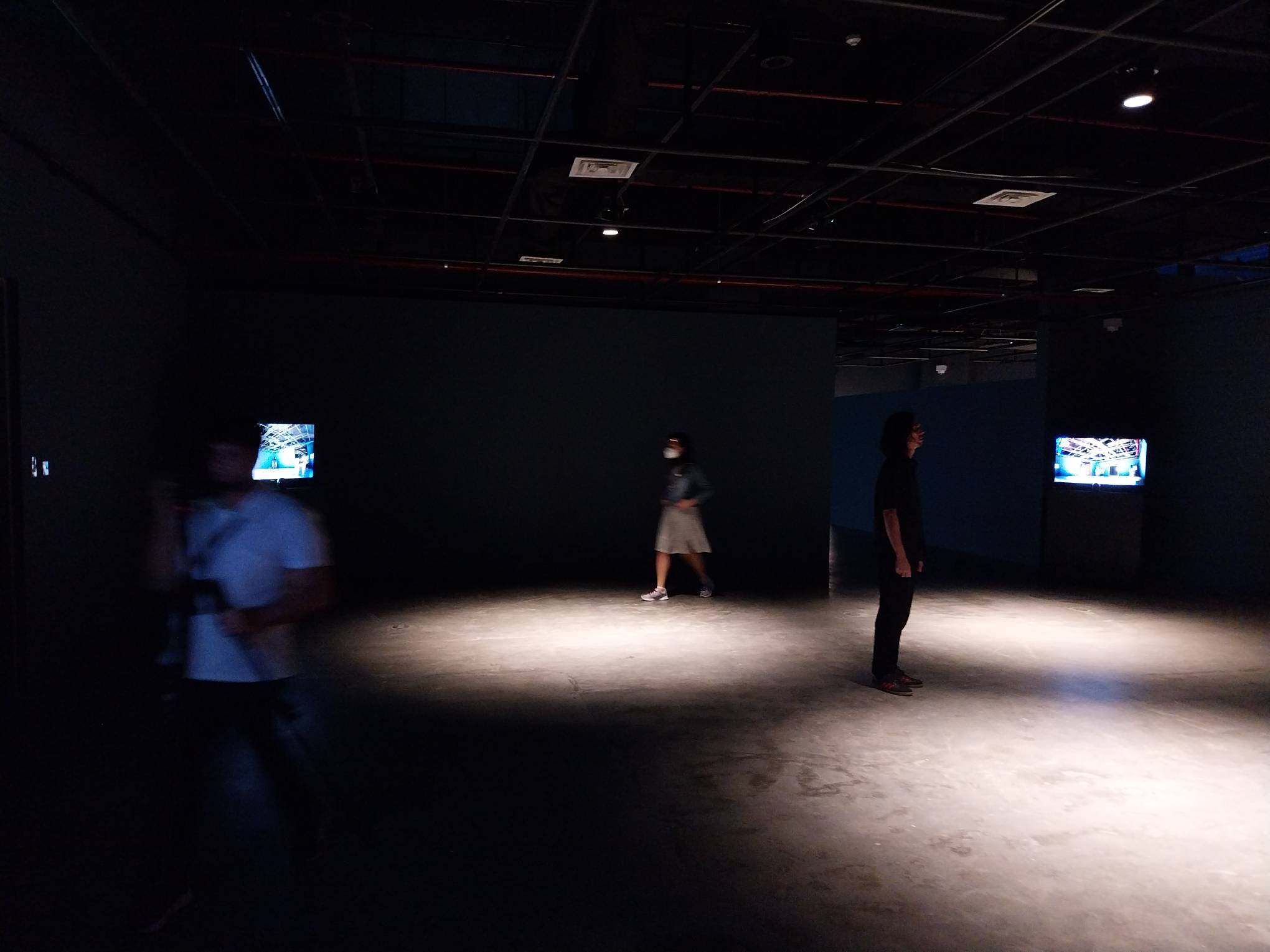
Two works exemplify that participative experimentation at play here in the exhibit. Kaloy Olavides’s “Here and Not Here” recreates his undergraduate thesis where he stands still in the middle of the room while surrounded by TV screens and cameras on all four corners. The screen broadcasts this stillness in the moment, and viewers are forced to enter the frame to see the televisions, all the while Olavides stands there in silence.
Advertisement
Video feed for Kaloy Olavides’ work. Photo by Patricia Yap.
Kaloy Olavides in the center of his video art work for “Transitions and Continuity.” Photo by Patricia Yap.
Video feed for Kaloy Olavides’ work. Photo by Patricia Yap.
Kaloy Olavides’ “Here and Not Here.” Photo by Patricia Yap.
It’s an interesting project that he has performed over the decades. He noted that, as he repeats the project in different contexts, the work gets harder to perform. His body aging, his knees wobbly and weaker than before, it reflects a perspective on how art can change over time with the artist performing them.
Spinning in Circles
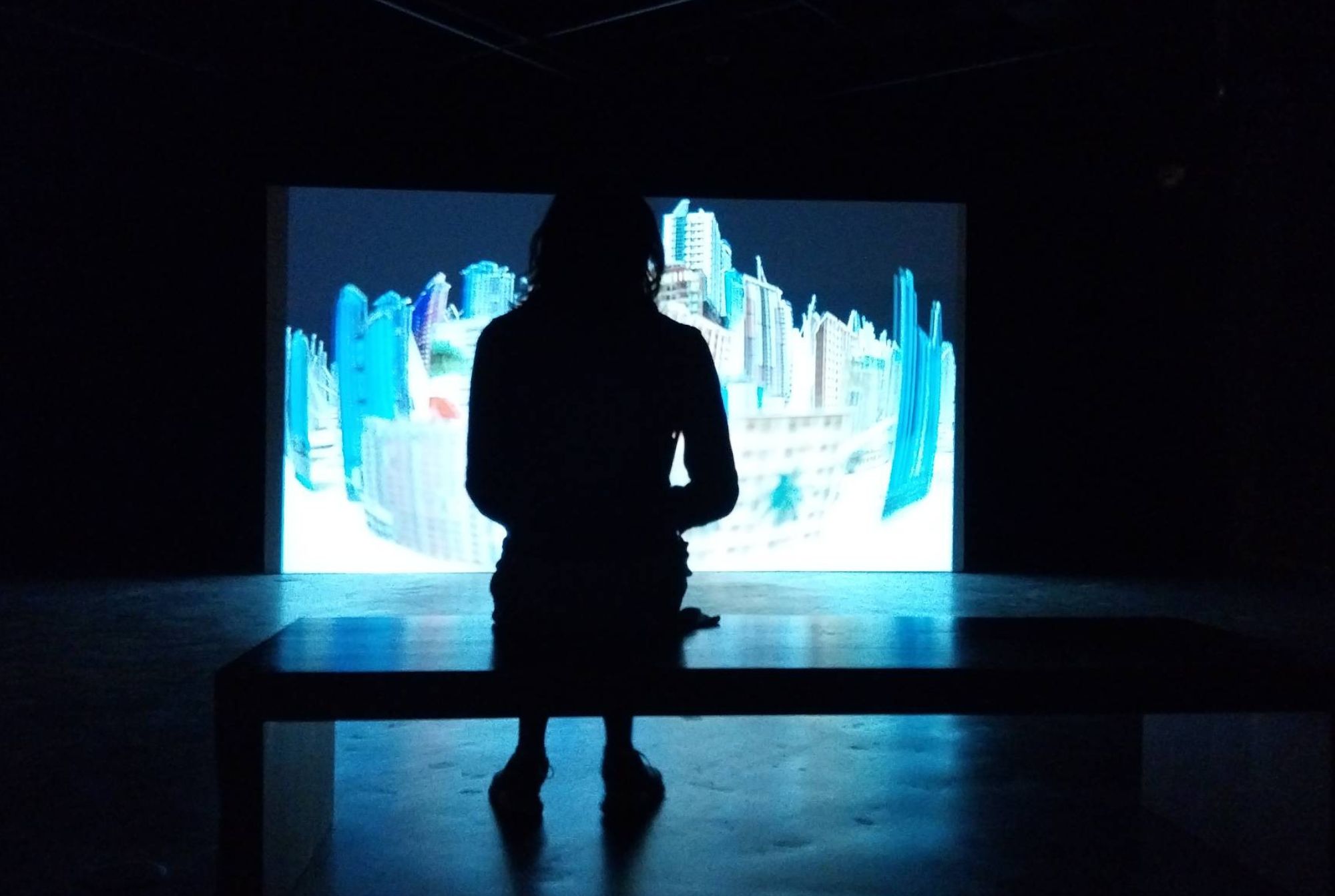
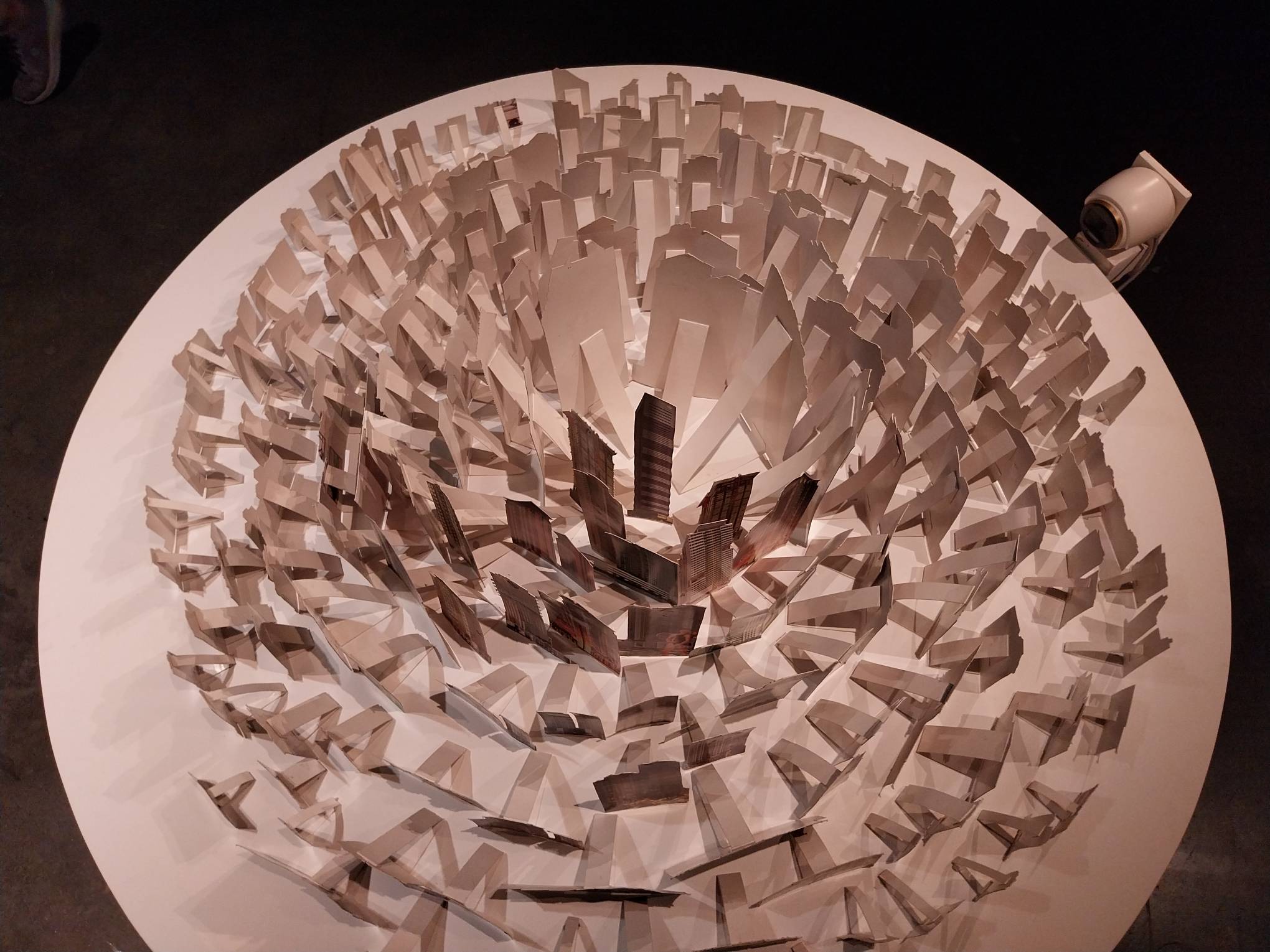
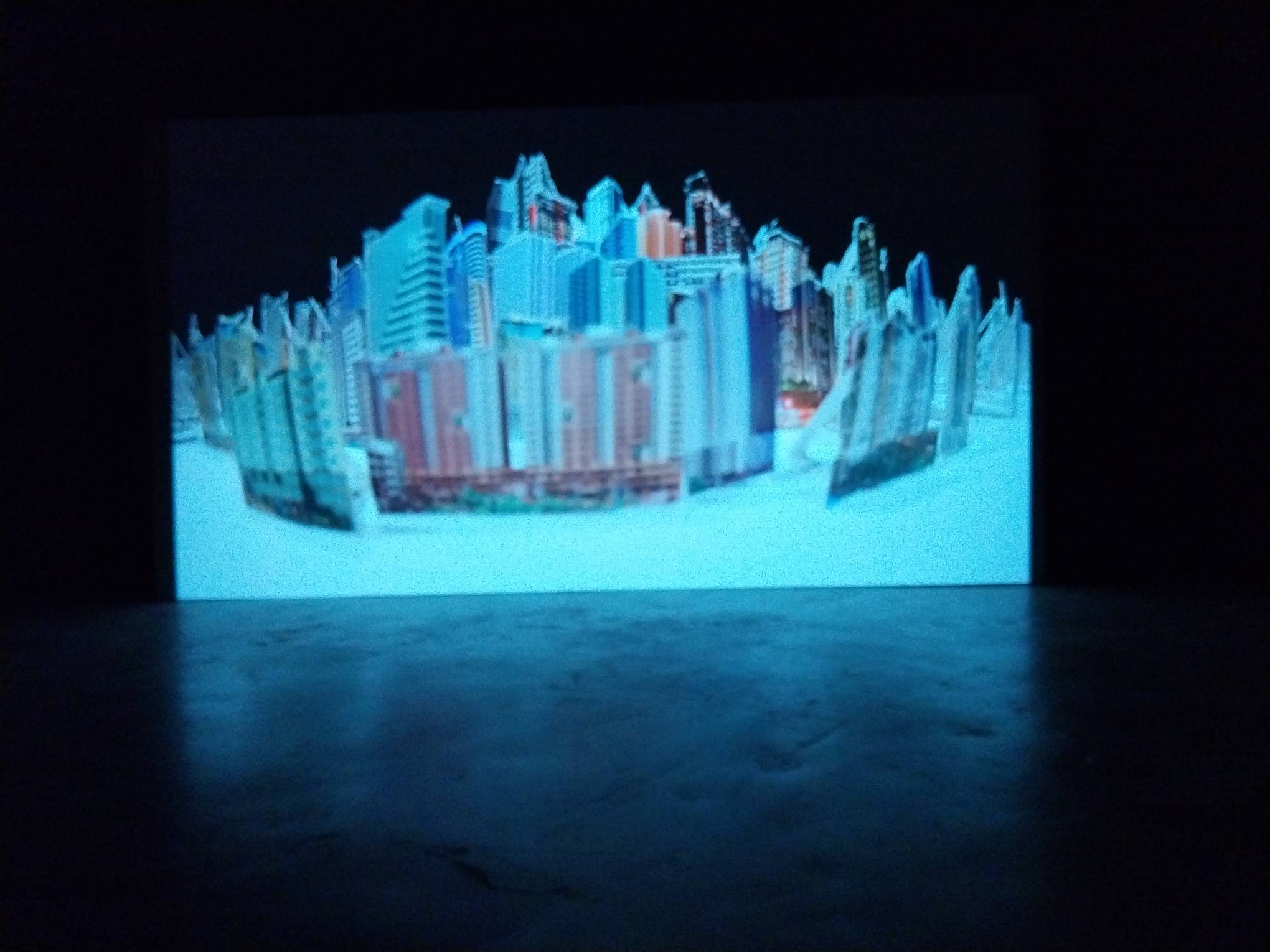
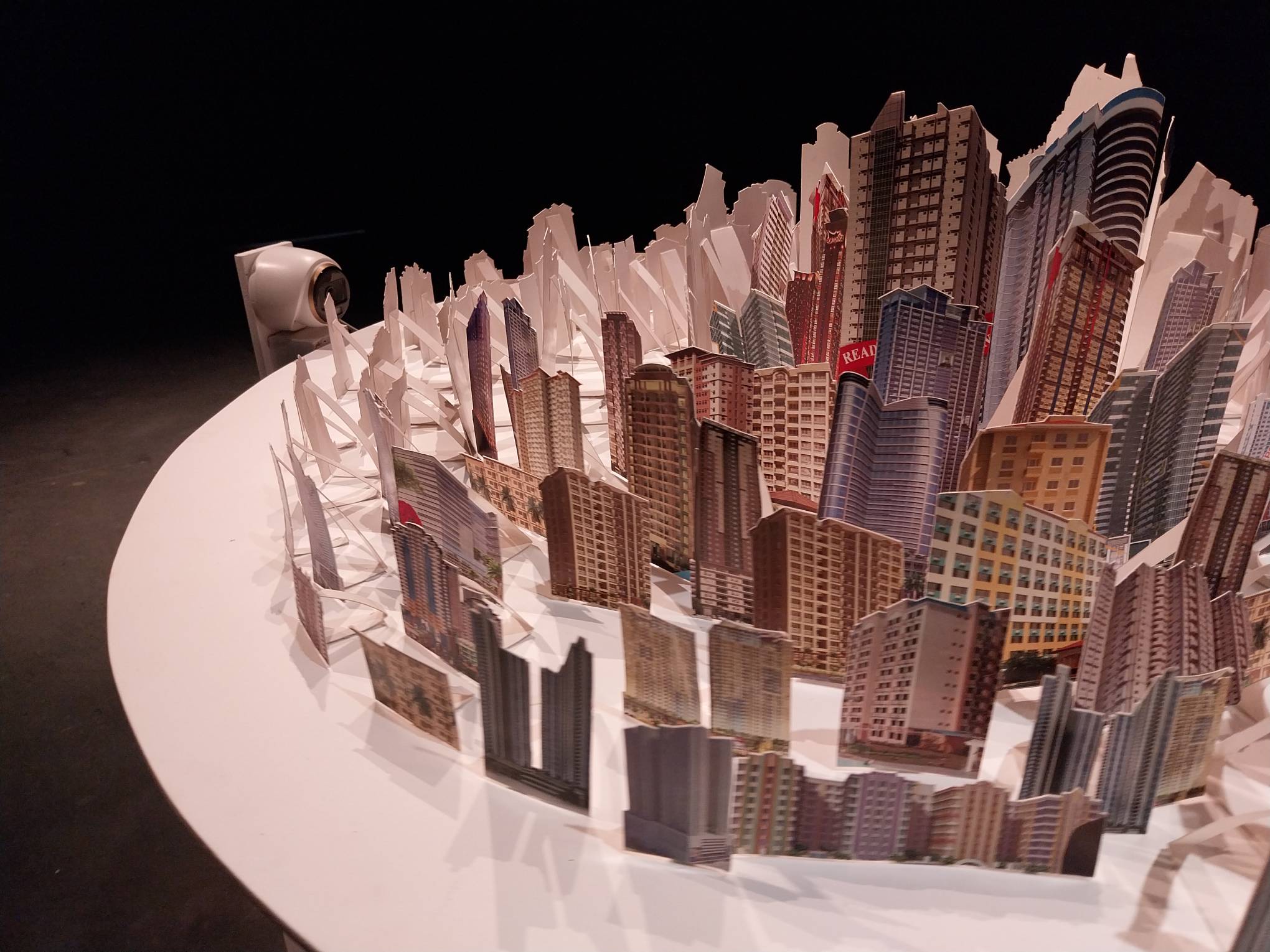
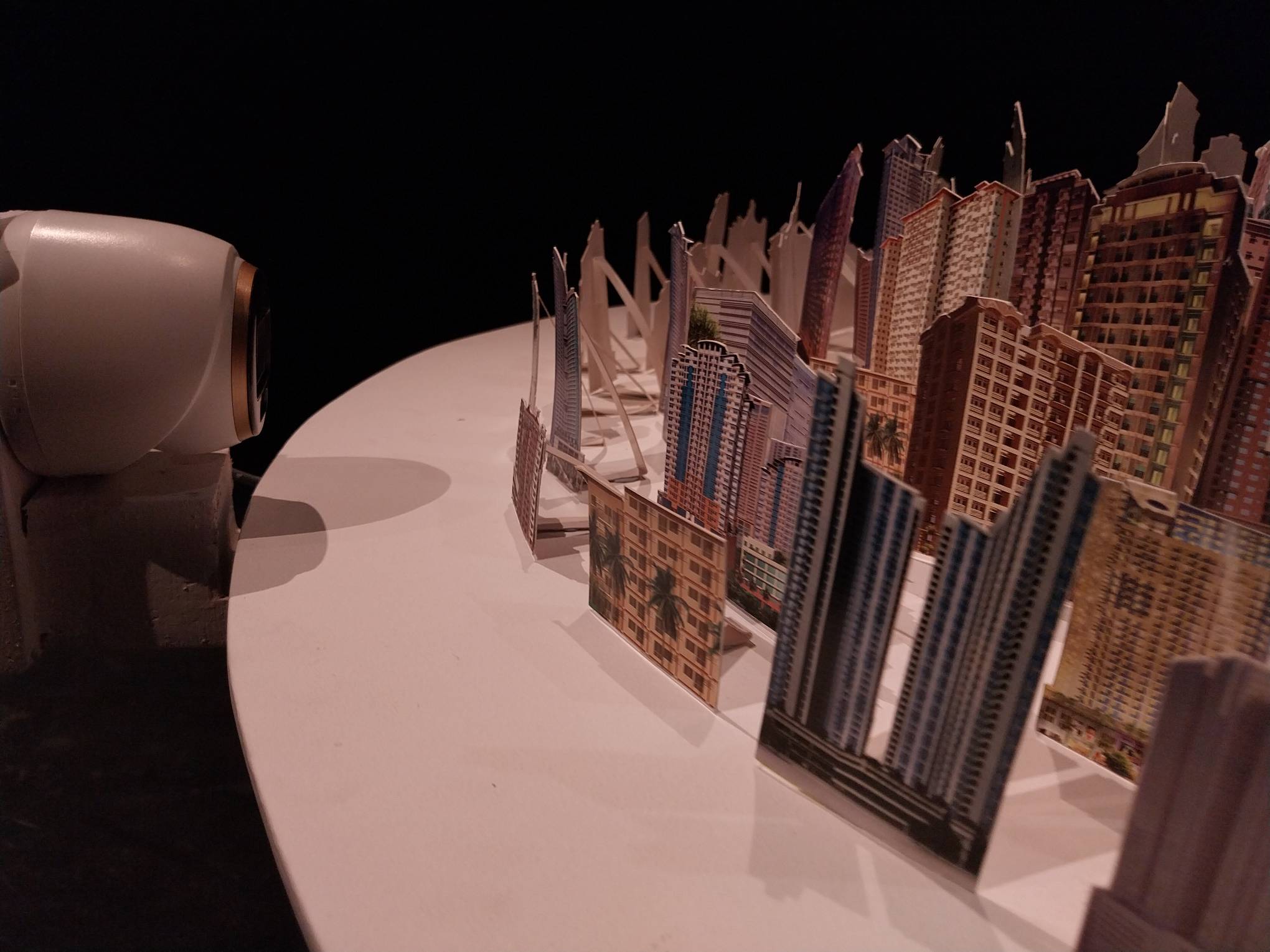
Meanwhile, Mark Salvatus’ “Model City” constructs “a rotating city” with brochures of condominiums the artist collected. The rotating city is then broadcast live on a screen in another room, while marketing taglines blare from the speakers. Visitors can look at the rotating city and find themselves in the video frame of the project looking like giants.
The aforementioned “Model City” for “Transitions and Continuity” in Ateneo Art Gallery. Photo by Patricia Yap.
The screen for Mark Salvatus’ “Model City” for “Transitions and Continuity.” Photo by Patricia Yap.
Camera providing the video art for Mark Salvatus’ “Model City.” Photo by Patricia Yap.
Camera providing the video art for Mark Salvatus’ “Model City.” Photo by Patricia Yap.
The project reflects on the constant expansion and growth of capitalist interests in our cities. The constant rotation of the buildings, the taglines barked out like they have meaning, forces visitors to see the saturation of the city from a new perspective.
Advertisement
It doesn’t have a negative view of capitalism, necessarily. It just invites us to contemplate the life many of us live.
Different Angles of Living
The other two video for Transitions and Continuity works invite less participation from the audience. Rather, they engineer new ways of looking into the medium of video-based art as a whole, challenging us with new angles on presenting and creating art.
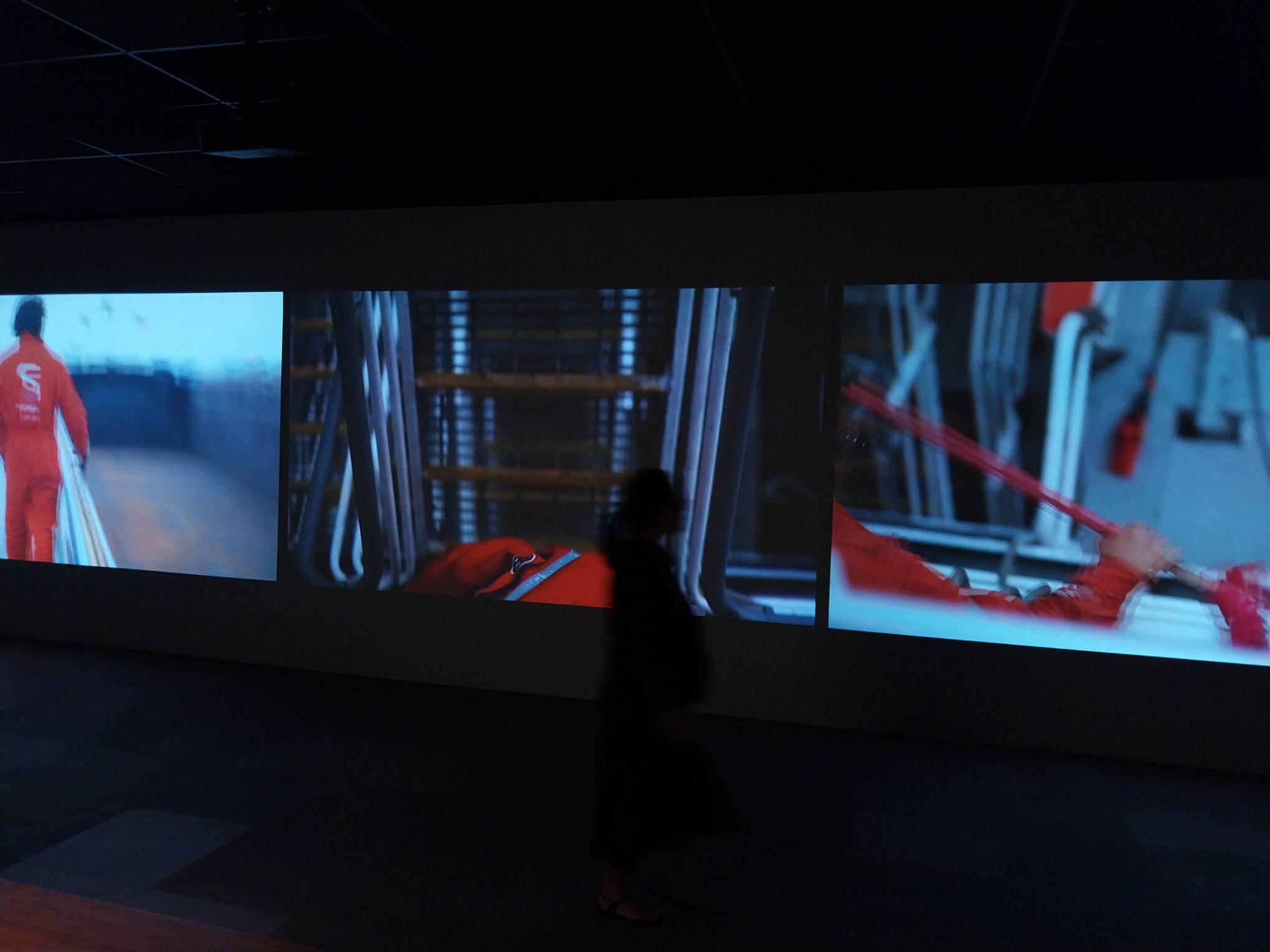
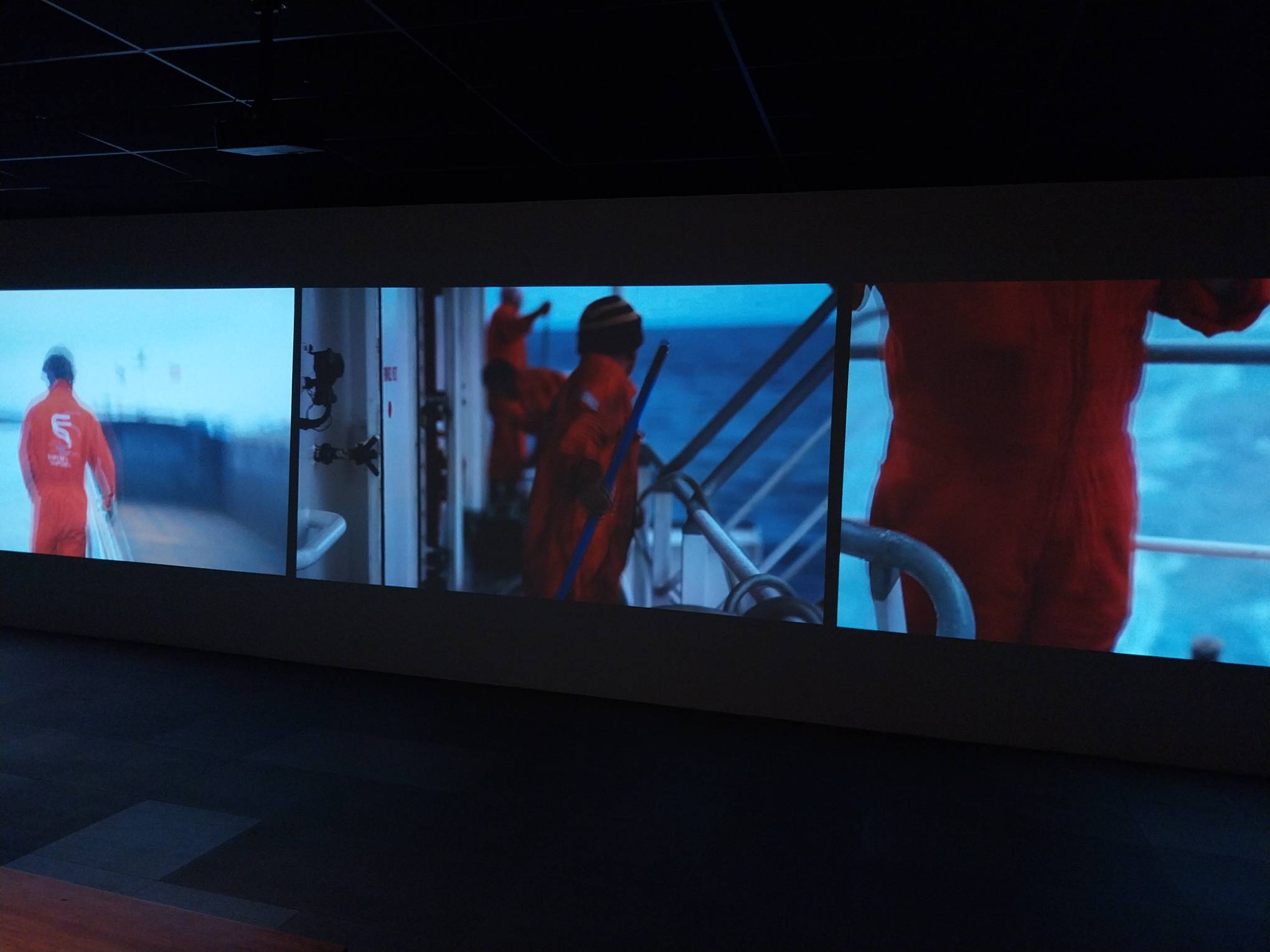
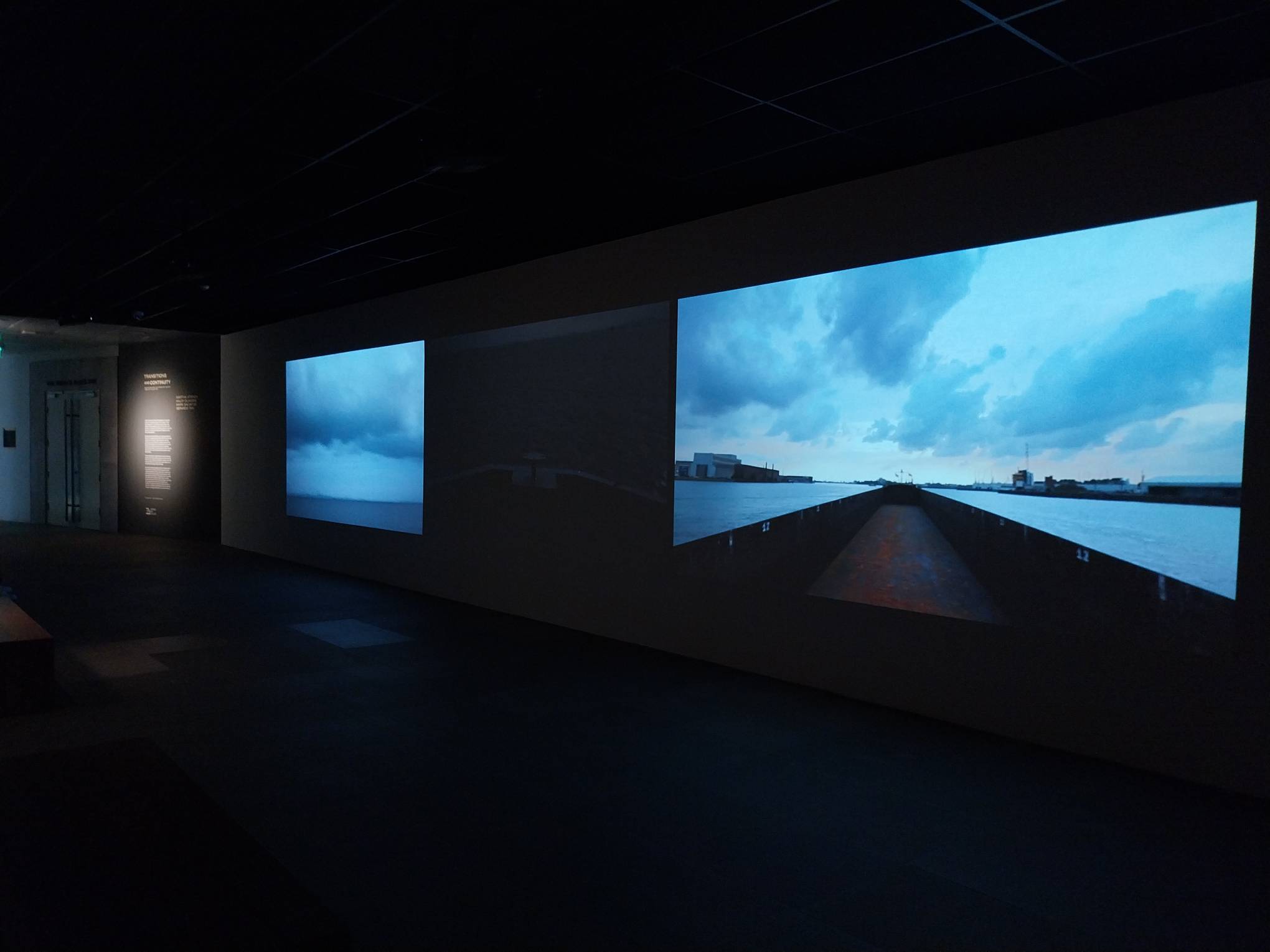
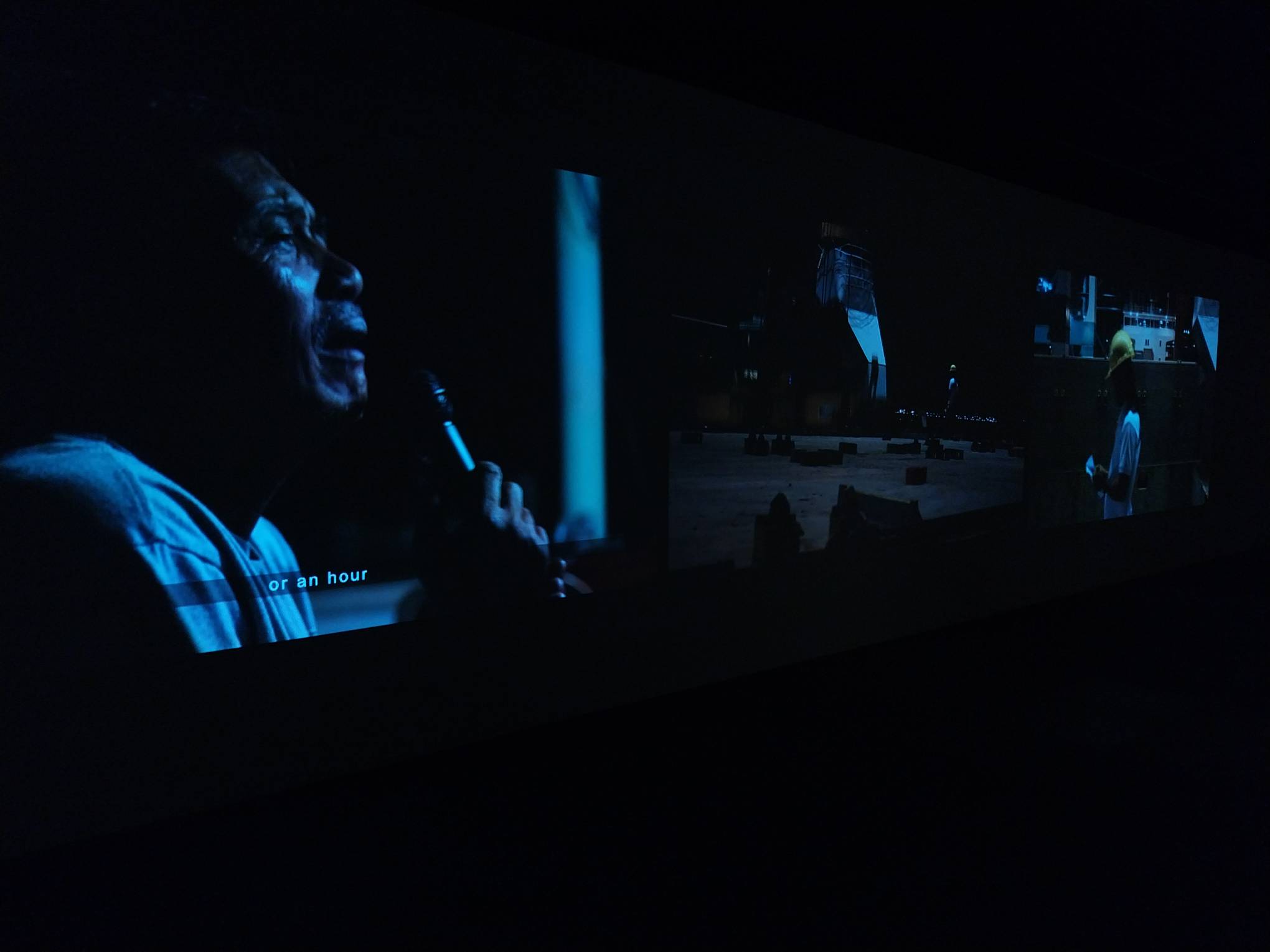
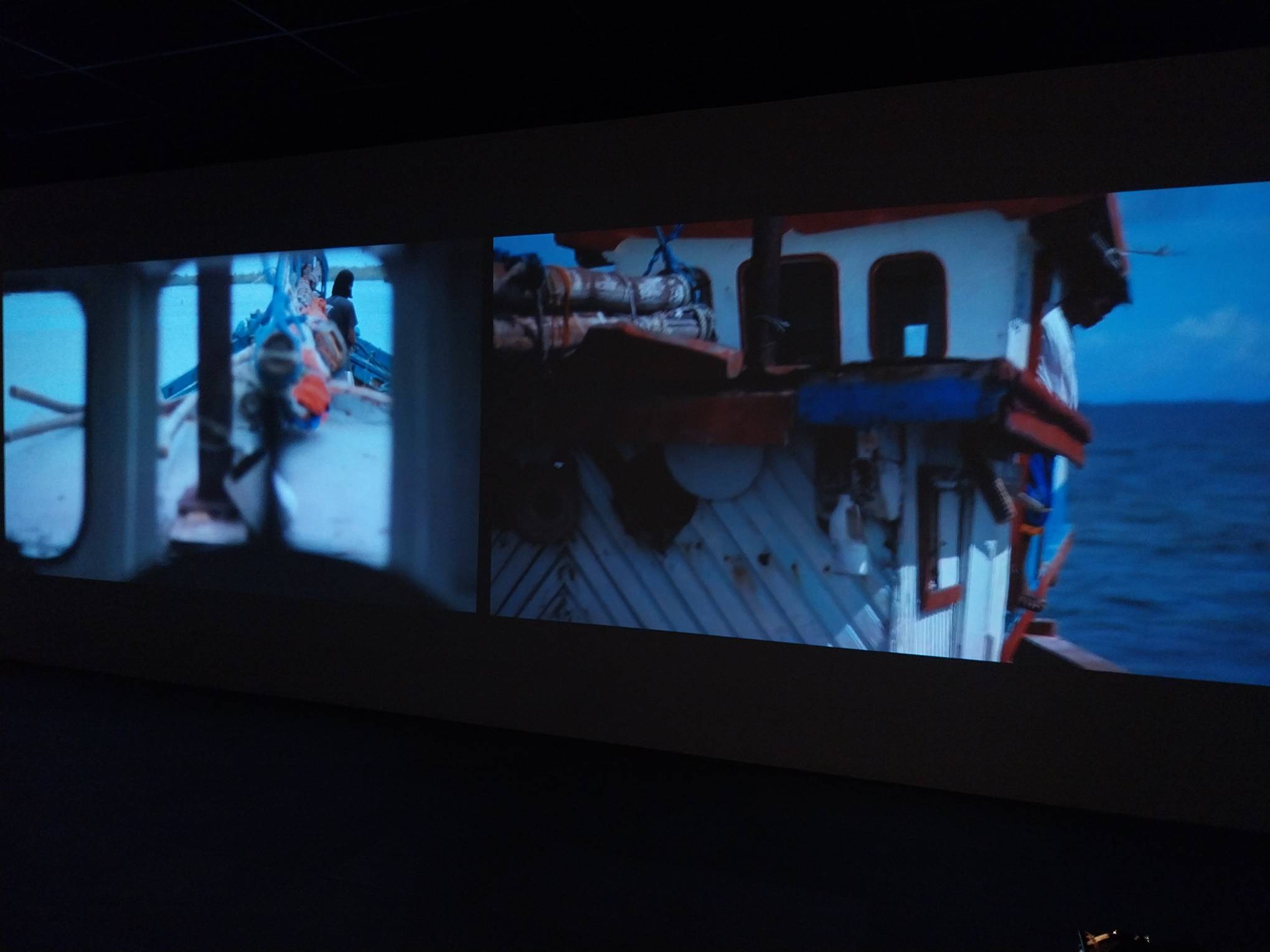
Martha Atienza’s “Gilubong ang Akon Pusod sa Dagat (My Navel is Buried in the Sea)” projects itself on three different screens to tell the same story of fishermen and seafarers and their relationship with the sea. It works akin to a split-screen, the images complementing each other as Atienza shows us the mundanity of being out at sea in different angles and personas.
Advertisement
A clip for Martha Atienza’s video art work for “Transitions and Continuity.” Photo by Patricia Yap.
A clip for Martha Atienza’s video art work for “Transitions and Continuity.” Photo by Patricia Yap.
One of the frames for Martha Atienza’s video art work for “Transitions and Continuity.” Photo by Patricia Yap.
Martha Atienza’s “Gilubong ang Akon Pusod sa Dagat (My Navel is Buried in the Sea).” Photo by Patricia Yap.
Martha Atienza’s “Gilubong ang Akon Pusod sa Dagat (My Navel is Buried in the Sea).” Photo by Patricia Yap.
“It portrays the Philippines’ relationship with water in diverse situations and perspectives simultaneously, capturing rhythms and emotions across land and sea exploring themes of necessity, opportunity, community, and isolation,” the exhibit write-up said.
The work is immersive. Once you get into the beat of things and the way the images are projected, it feels genuinely moving as it travels from one action to the next, watching these seafarers doing their jobs with competency and aplomb.
Offbeat Creations
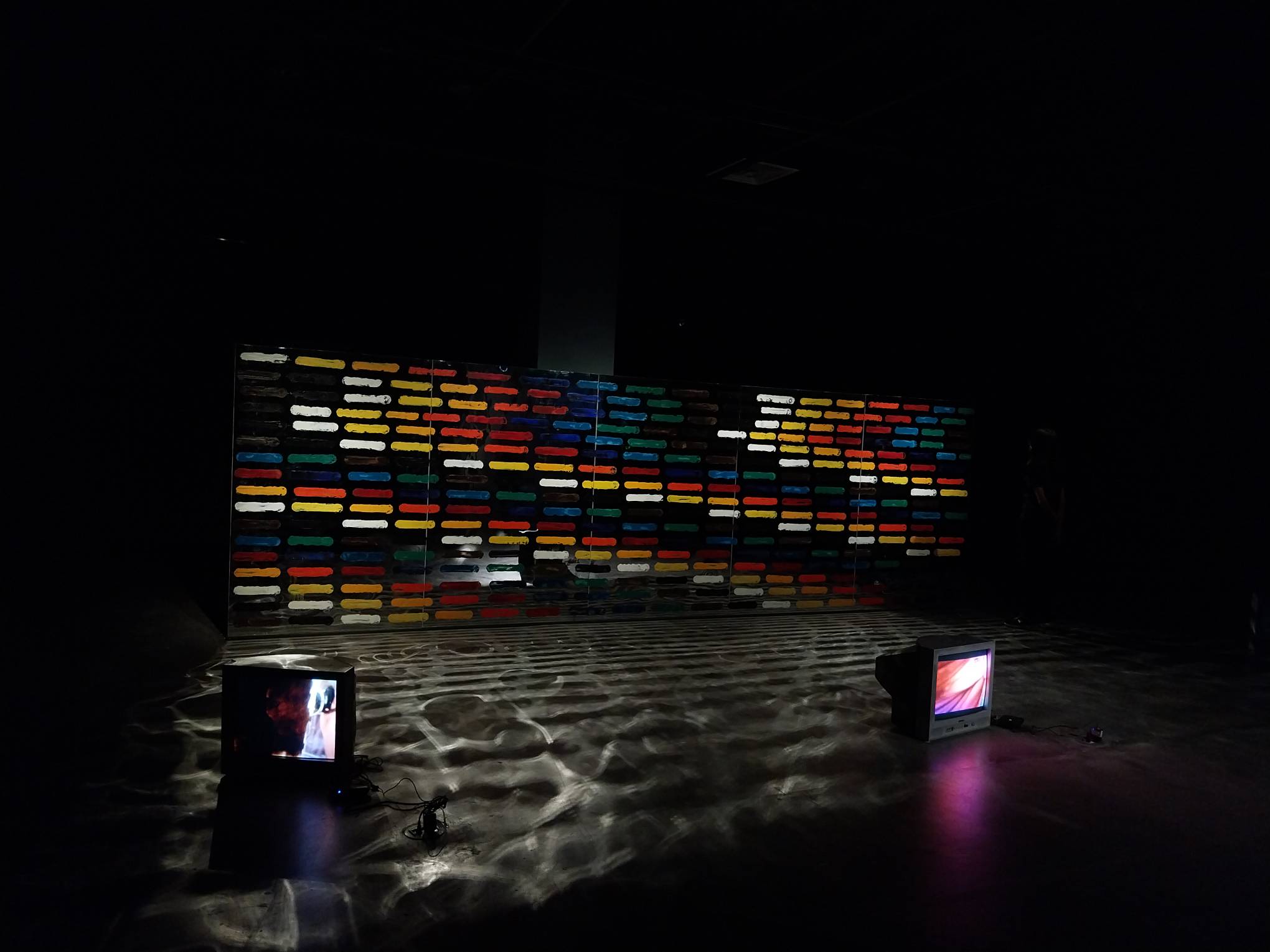
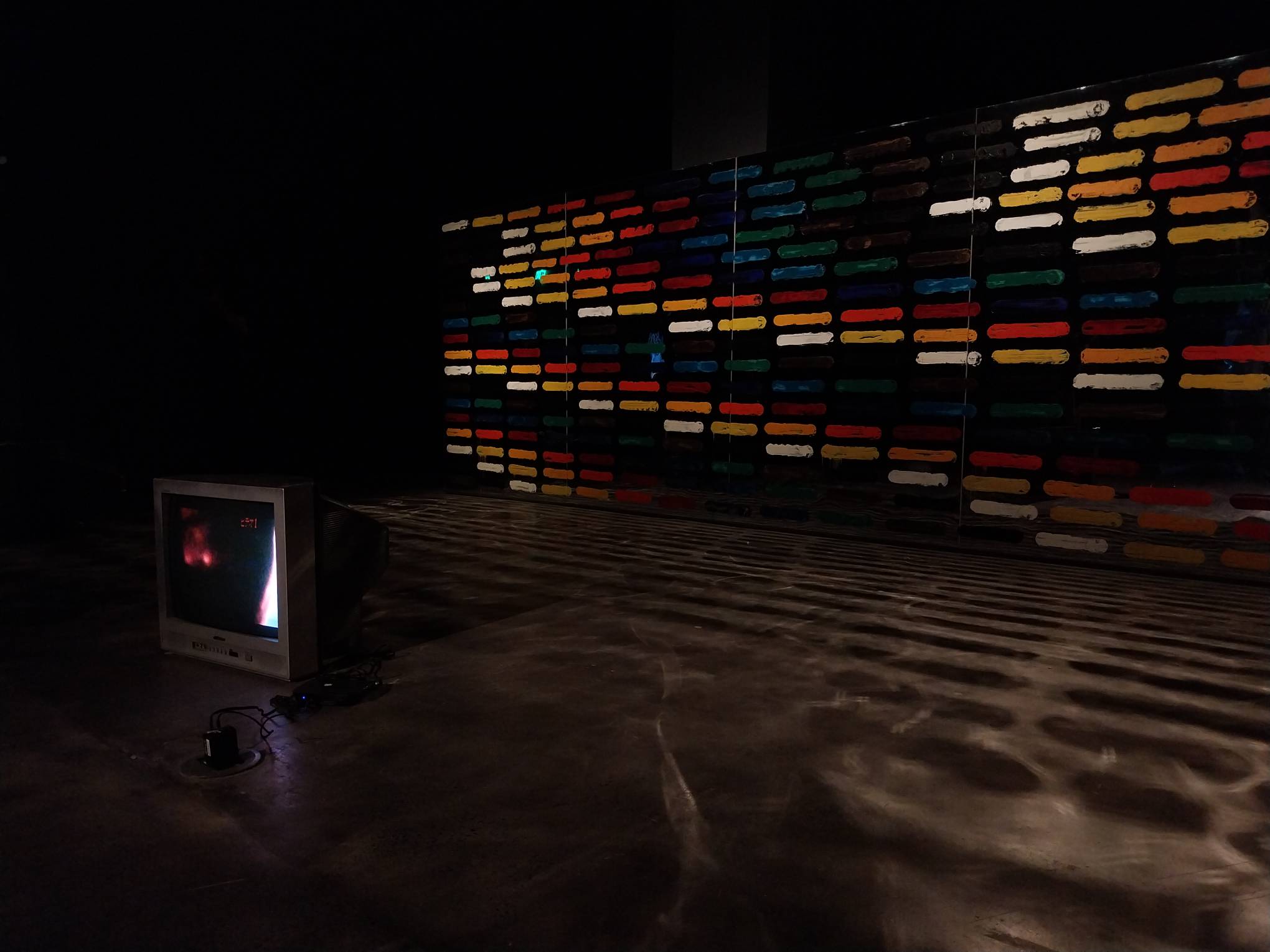
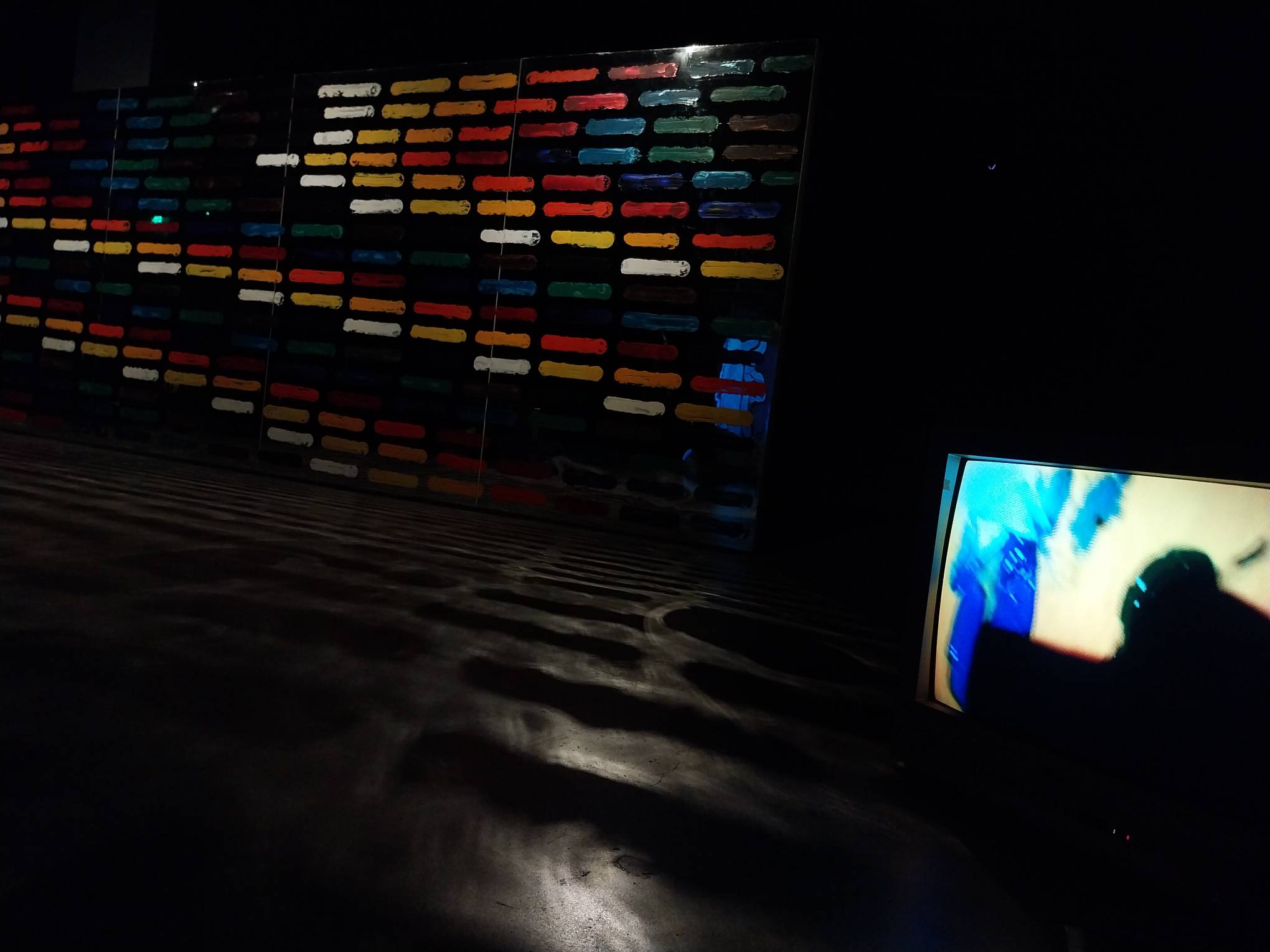
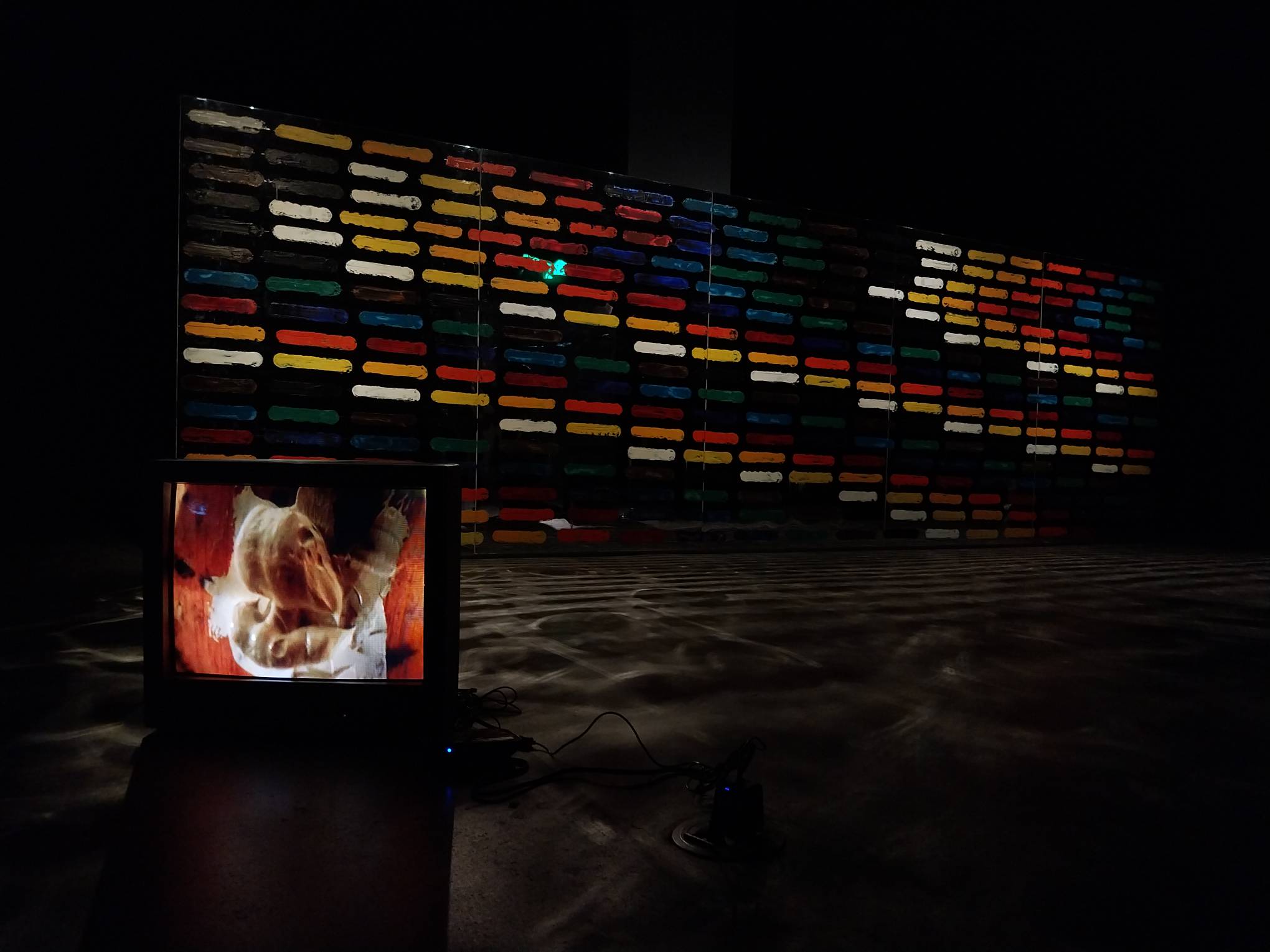
Finally, Gerardo Tan’s “Mirror Painting” shows a mirror filled with lines painted in different colors. The artist scattered three different CRT television screens on the floor. The TVs show the artist using the camera to paint each of the lines in the mirror.
Advertisement
Gerardo Tan’s “Mirror Painting” for the Ateneo Art Gallery exhibit “Transitions and Continuity.” Photo by Patricia Yap.
Gerardo Tan’s “Mirror Painting” for the Ateneo Art Gallery exhibit “Transitions and Continuity.” Photo by Patricia Yap.
A TV showing the camera used as paint. Photo by Patricia Yap.
A TV showing the camera used as paint. Photo by Patricia Yap.
“[The work] explores painting as a mimetic technique,” the exhibit write-up said. “… [It] emphasizes the act of application over form. By creating a feedback loop, Tan pondered the essence of painting through a contemporary lens, emphasizing the process and its representation.”
The Message of Video Art
If “the medium is the message,” then this exhibit pushes the message that one reveals different truths of humanity depending on what medium is used. One sees it in the stillness of Olavides’ work despite the live feed or the singular story Atienza tells with three screens.
A core emotionality about the human condition exists in each work. These ideas appear because of the medium of video, of how it shows these moving images in a way that a painting never could. Motion adds a new dimension to art that betrays the lack of permanence in our daily lives.
Advertisement
Transitions and Continuity, above all else, affirms the importance of video art as a relevant medium. It shows how one bends video’s form and functionality beyond the excursions of professional storytelling, that the medium itself can tell stories that other forms cannot.
Contemporary design refers to the constantly evolving design trends of today. With the power to design our built environments, architects have been experimenting with various architectural approaches. Whether that is through unconventional forms or the integration of smart technologies, BluPrint lists down Filipino architects who are defining contemporary architecture. Deo Alam Architect Deo Alrashid Alam […]
In the Philippines, adaptive reuse gained traction during the 1970s with the rise of conservation and environmental preservation movements. It offered an architectural solution that reuses existing spaces to fit modern needs. Across the country, several projects demonstrate how this approach is being applied—transforming heritage structures into active spaces for culture, hospitality, and community life. […]
From residential spaces to civic structures, lighting dictates the mood of a space. It controls the visual dynamics of an interior, serving as a guiding tool that highlights key design elements, including materials and textures. Related Reading: Lampscaping: How to Light up Your Home like a Pro Regulating the Mood: Natural and Artificial Light in […]
More and more Filipinos are flocking to condominium communities. Often tucked within busy city centers, condo living acts as a small respite from urban chaos. Faced with the challenge of transforming a cramped condominium into a warm living space, BluPrint lists condo interior design ideas that can maximize each square foot of small spaces. Purposeful […]
Modern bathrooms are no longer purely functional spaces. Increasingly, they are being designed as environments that support cleanliness, ease, and quiet restoration within the home. As daily life becomes more demanding and health awareness continues to rise, homeowners are beginning to expect more from the spaces where daily rituals begin and end. For architects and […]
From the moment a diner steps through the door, each detail shapes how a meal is experienced. Restaurant design has evolved, with architects and culinary professionals collaborating to create built spaces that are as intentional as the menu itself. The spatial atmosphere acts as an additional ingredient that can define the culinary experience. Taupe and […]