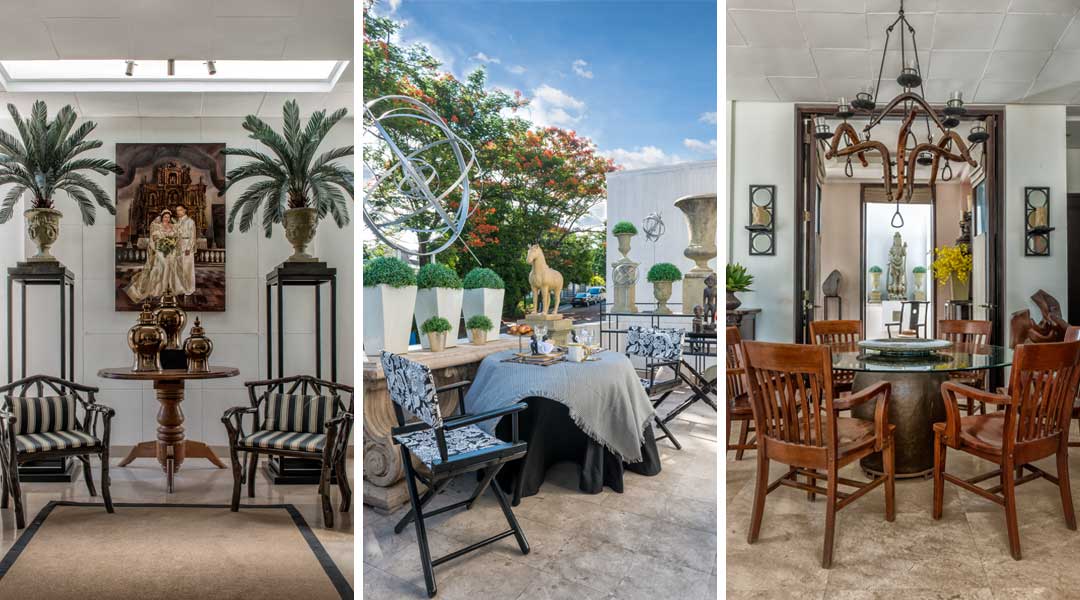



It’s always a visual feast to see how interior designers design their homes. ‘Lush and personal’ are two words Interior Designer Leo Almeria uses to describe his own home. The Filipino home is a warm and tropical retreat from the busy city. The home bathes in natural light and has a lot of neutral hues.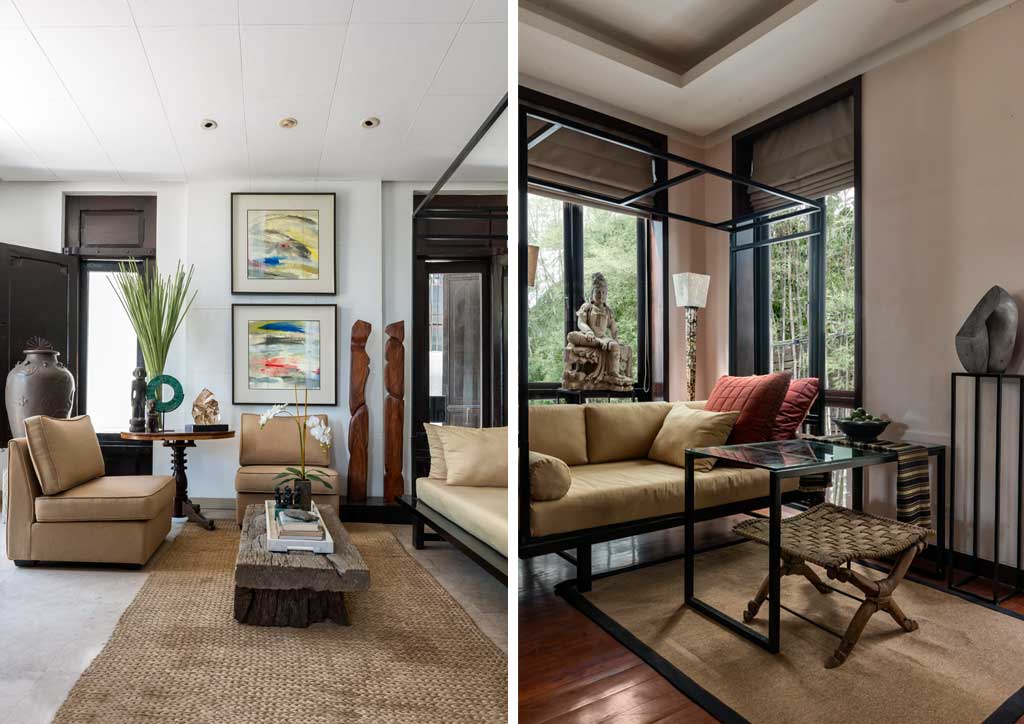
The flooring in the space is a mixture of beige marble and recycled timber planks, the play of textures invite guests to walk barefoot and feel the energy of the place from the ground-up (quite literally). “Initially, I wanted this to be my rest house but it evolved into something more Mexican, and then into a modern house in the farm,” shares the interior designer on his personal residence.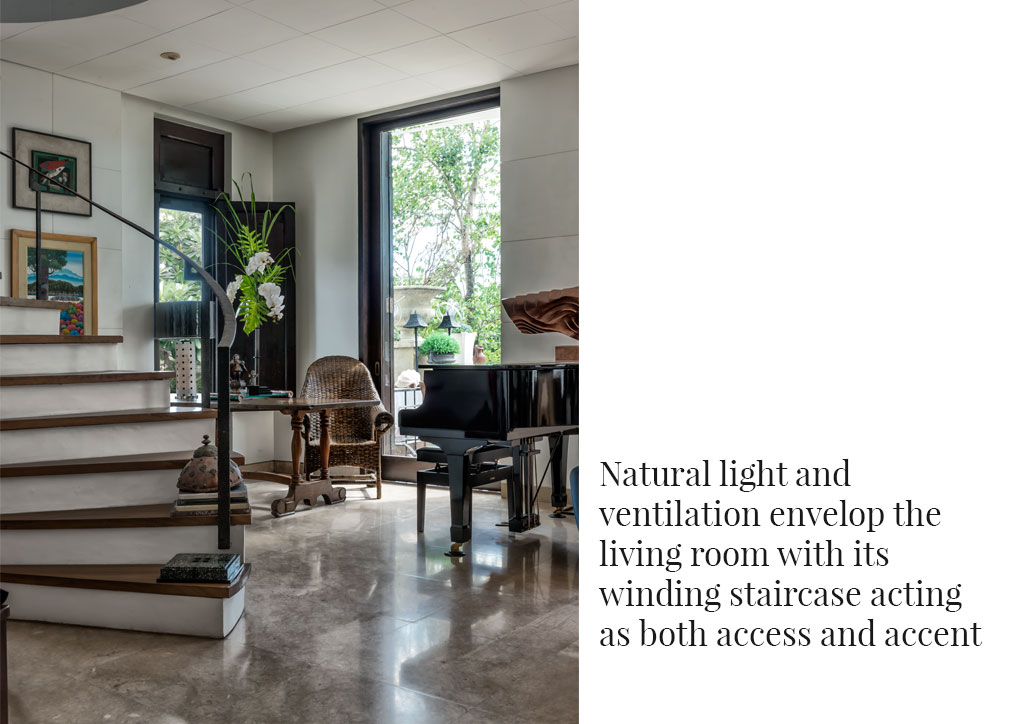
In the dining room, the dining table is made of a pottery table with a glass countertop. A chandelier made from old carabao yokes setting the tone for the space.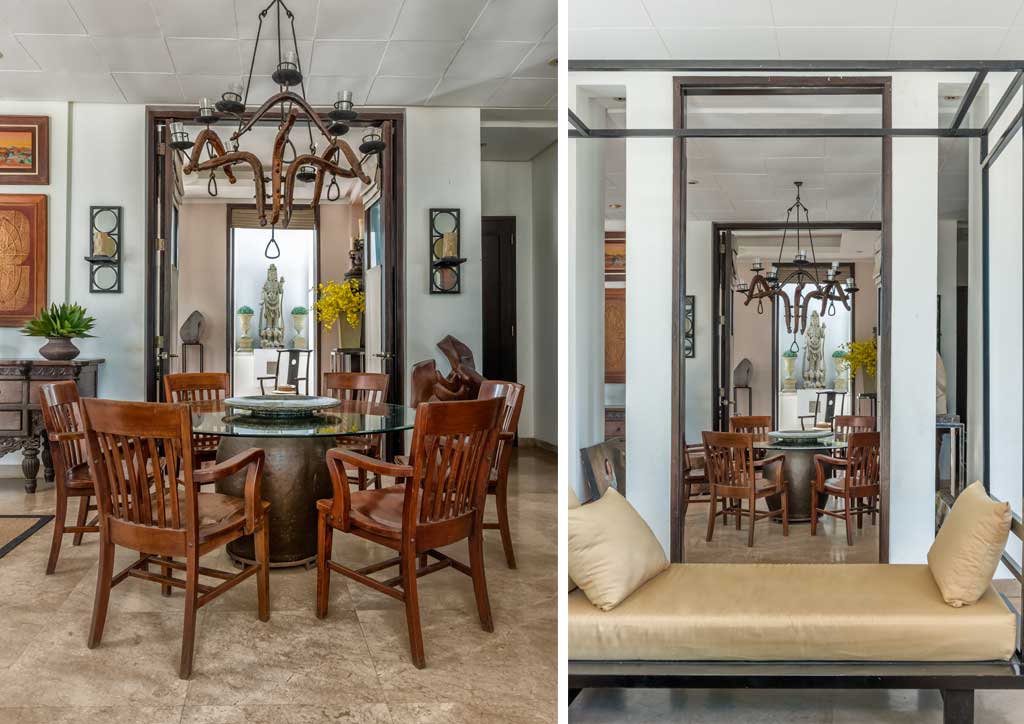
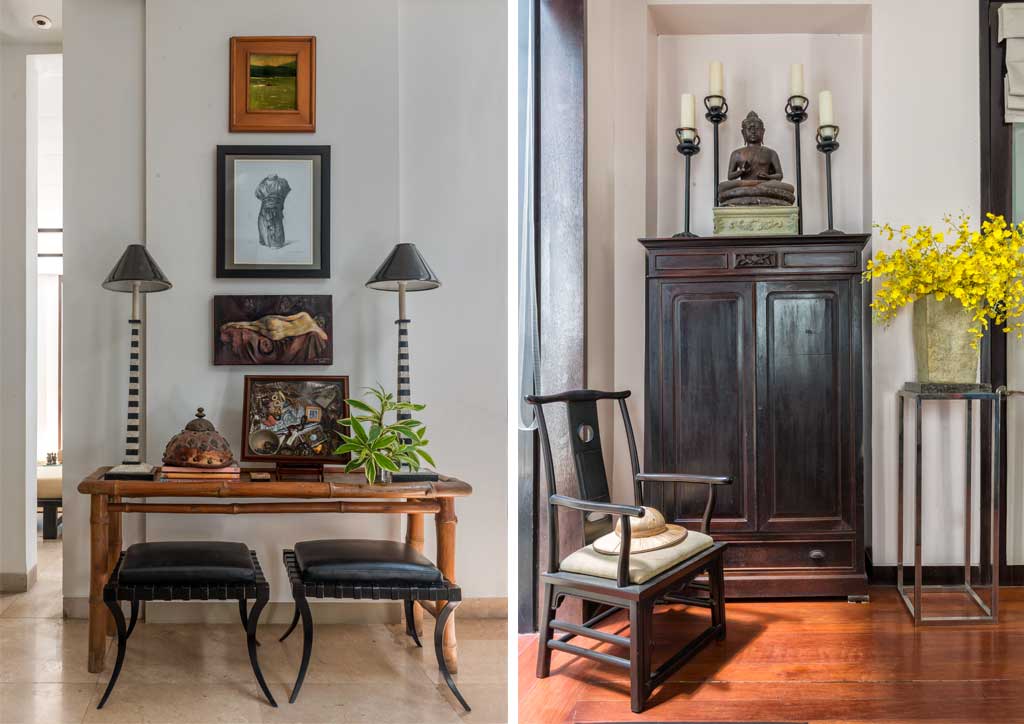
Areas in the home are accessorized with artwork Leo Almeria has collected through the years and even artwork by the interior designer himself. Each area of the home is full of nooks with beautiful vignettes displaying the interior designer’s collectibles, one artwork is even a painted photograph of his parents’ wedding day! The vignettes are very Filipino in theme and are visually symmetrical.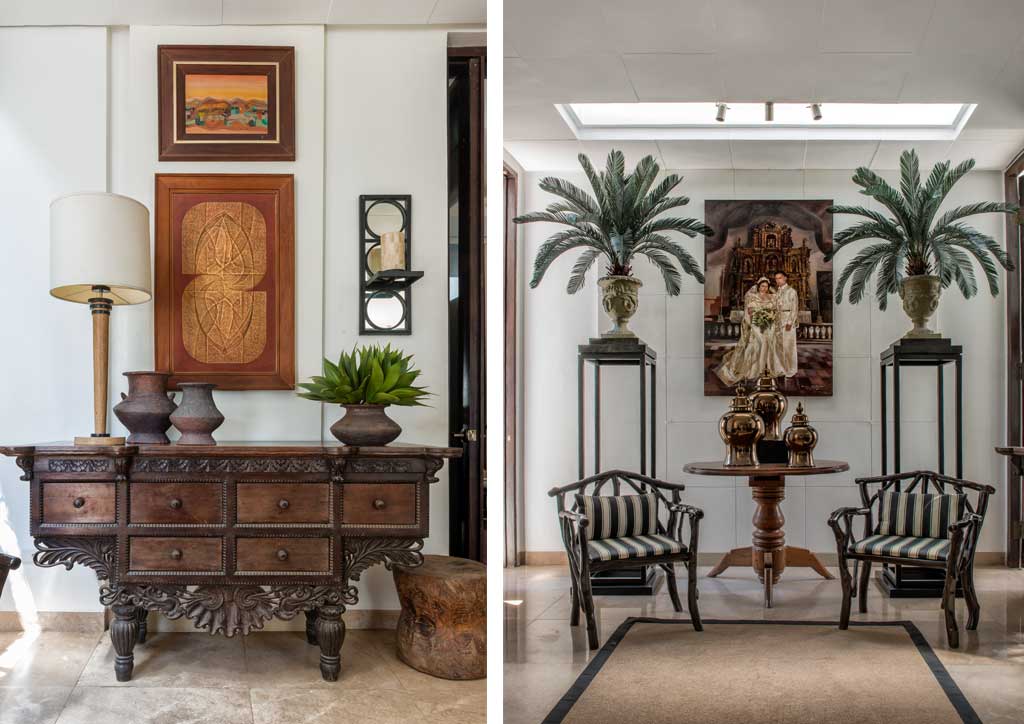
“The house is continuously evolving,”shares Leo Almeria. The home is aiming for ‘spontaneity’ he adds. “I let my nieces and nephews play around, and the adults appreciate the house as something real,” the interior designer points out. The openness of the home is both appealing and functional to users.
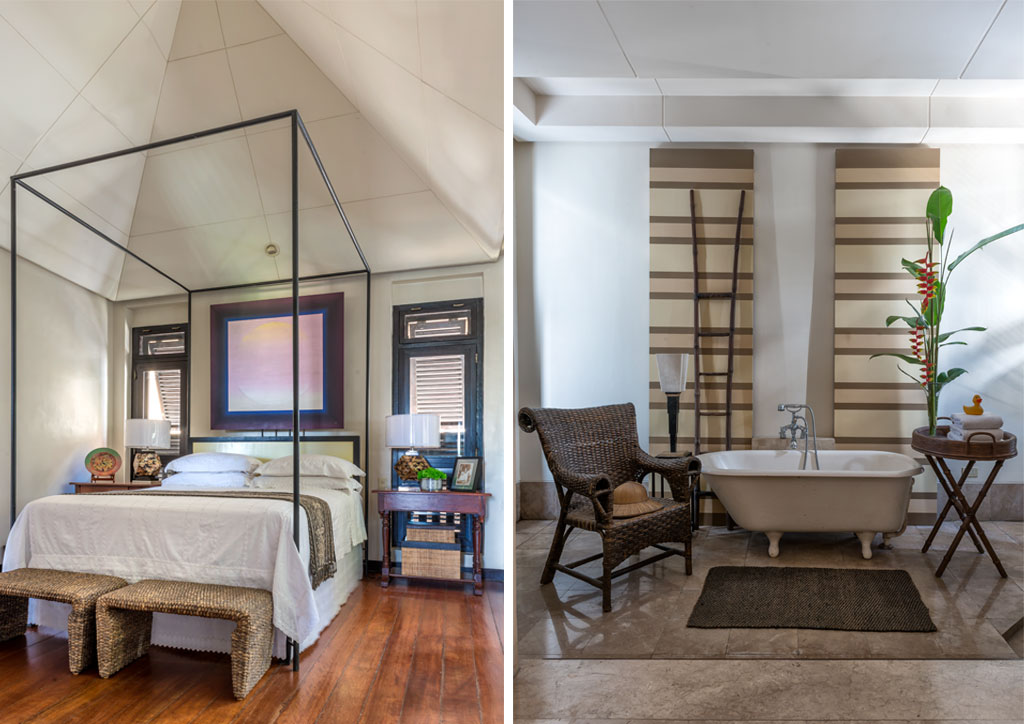
The master bedroom has a calming and inspirational ambiance. Leo placed a series of Filipino-inspired pieces in the space, from the hand woven stools, to the classic Filipino butaka. The master bathroom is designed with the same Filipino theme in mind.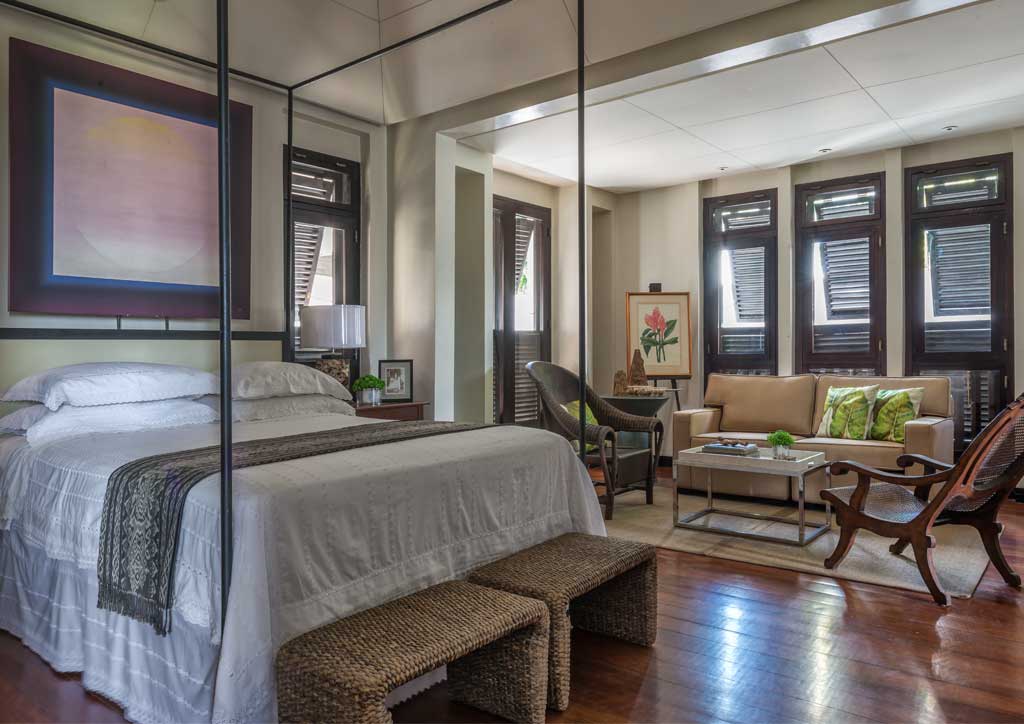
In the balcony, Leo can enjoy breakfast under the clear skies. He shares that he wants his home to be a space where people can interact and just relax. 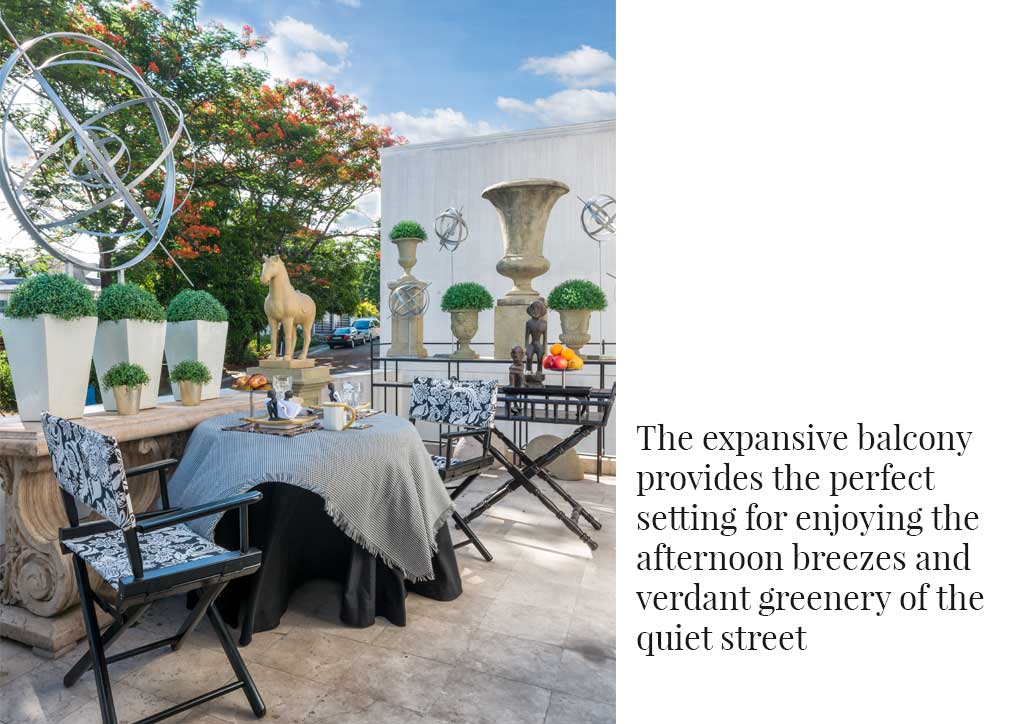
This story first appeared on MyHome July 2017, edits have been made for MyHome.OneMega.com
Tour Inside More Houses in Metro Manila
Rico and Nena Tantoco’s Home is a Modernized Bahay na Bato
This Vacation House in Bohol Rests on a Mountain Slope
Tour Inside this Filmmaker’s Artistic Home in Cebu
Frequently Asked Questions
To move away from sterile surfaces, substitute uniform tiles with a mixture of beige marble and recycled timber planks. This play of textures is designed to invite guests to walk barefoot, allowing them to feel the grounding energy of the home from the floor up. By combining the cool smoothness of stone with the warm, organic grain of salvaged wood, you create a tactile “tropical retreat” flavor that feels both modern and rustic.
The secret is to anchor the space with highly personal artifacts arranged in a visually balanced layout. Leo Almeria uses a “symphony” of collectibles, including his own artwork and a painted photograph of his parents’ wedding, organized into specific nooks. This technique turns random objects into a cohesive visual story, ensuring that every corner of the room functions as a “visual feast” that reflects your heritage and history.
A frequent mistake is using mass-produced lighting that lacks a “narrative.” To fix this, look for repurposed historical items, such as a chandelier crafted from old carabao yokes. Pair these heavy, traditional elements with a glass-topped pottery table to maintain a sense of lightness. This prevents the “Filipino theme” from feeling dark or heavy, instead creating an innovative blend of heritage and contemporary transparency.
“Store” your design focus in a mix of hand-woven stools and classic Filipino butakas (plantation chairs). In the master bedroom, these iconic pieces provide a sense of place and historical comfort without cluttering the space. By positioning these artisanal items near large windows that bathe the room in natural light, you create a “calming sanctuary” that celebrates local craftsmanship as the primary decorative ingredient.
The core ingredients are openness, neutral hues, and functional durability. Rather than treating a house like a static museum, design it to be “continuously evolving” so that children can play freely and adults can appreciate it as a “real” space. Using a neutral base allows you to easily swap accessories and art as your collection grows, ensuring the home remains an adaptable, living canvas that prioritizes human interaction over rigid perfection.