


In a world where our attention is a precious commodity, conscious living emerges as a thoughtful response. It’s a path to greater awareness, intention, and alignment with our deepest values. Unlike fleeting trends, it is an evolving approach that profoundly extends into the spaces we inhabit. To live with such intention means to cultivate a […]
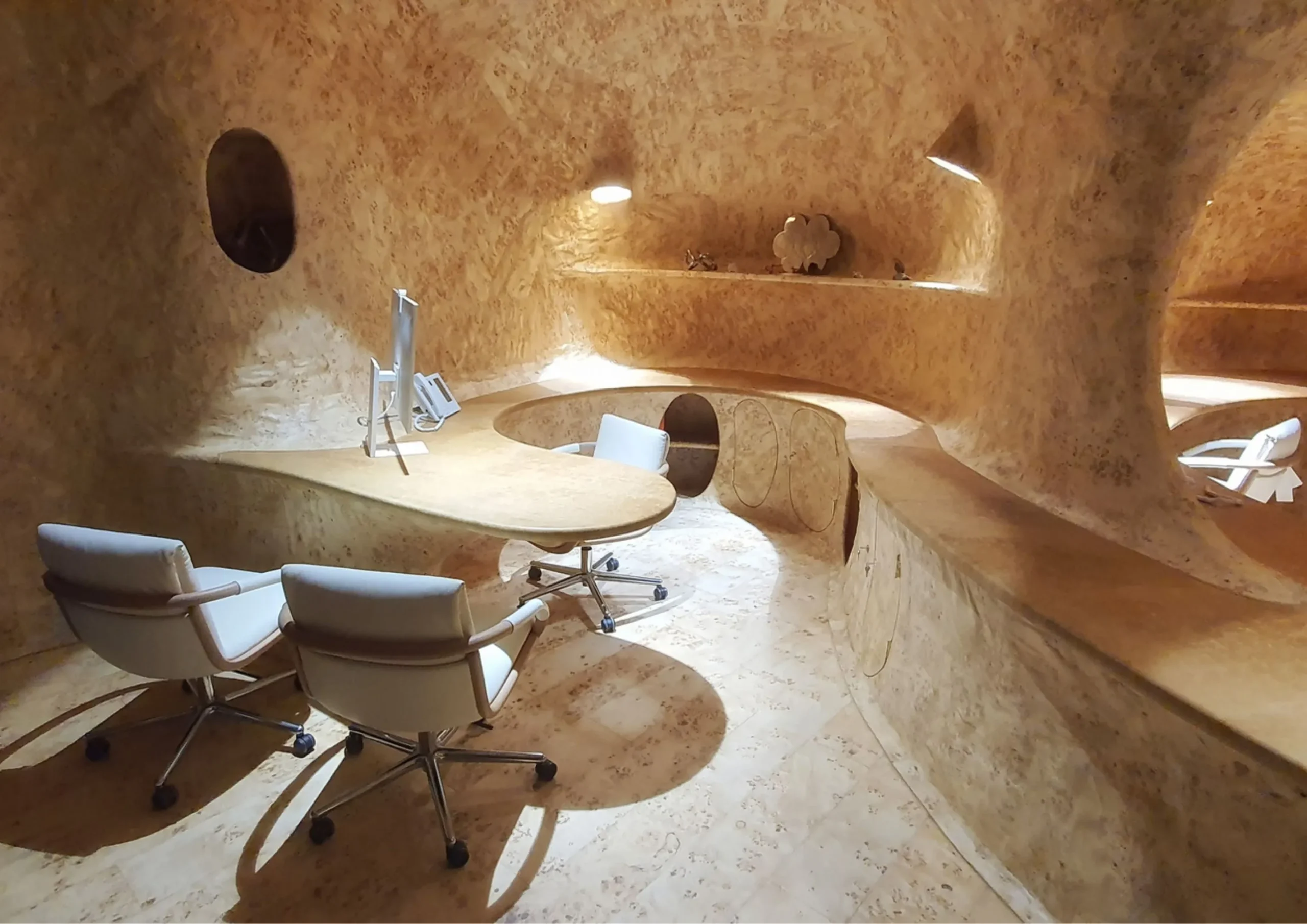
The modern corporate workplace is often synonymous with rigid, rectilinear forms—a sterile grid of glass and steel. However, at the intersection of Zhuhai and Macao, designer Kris Lin and his team at Kris Lin International Design have deliberately rejected this corporate norm. The Stream Office, a new business highland cover, is an architectural and interior manifesto proving that an office can embody the dynamic flow of its own natural context.
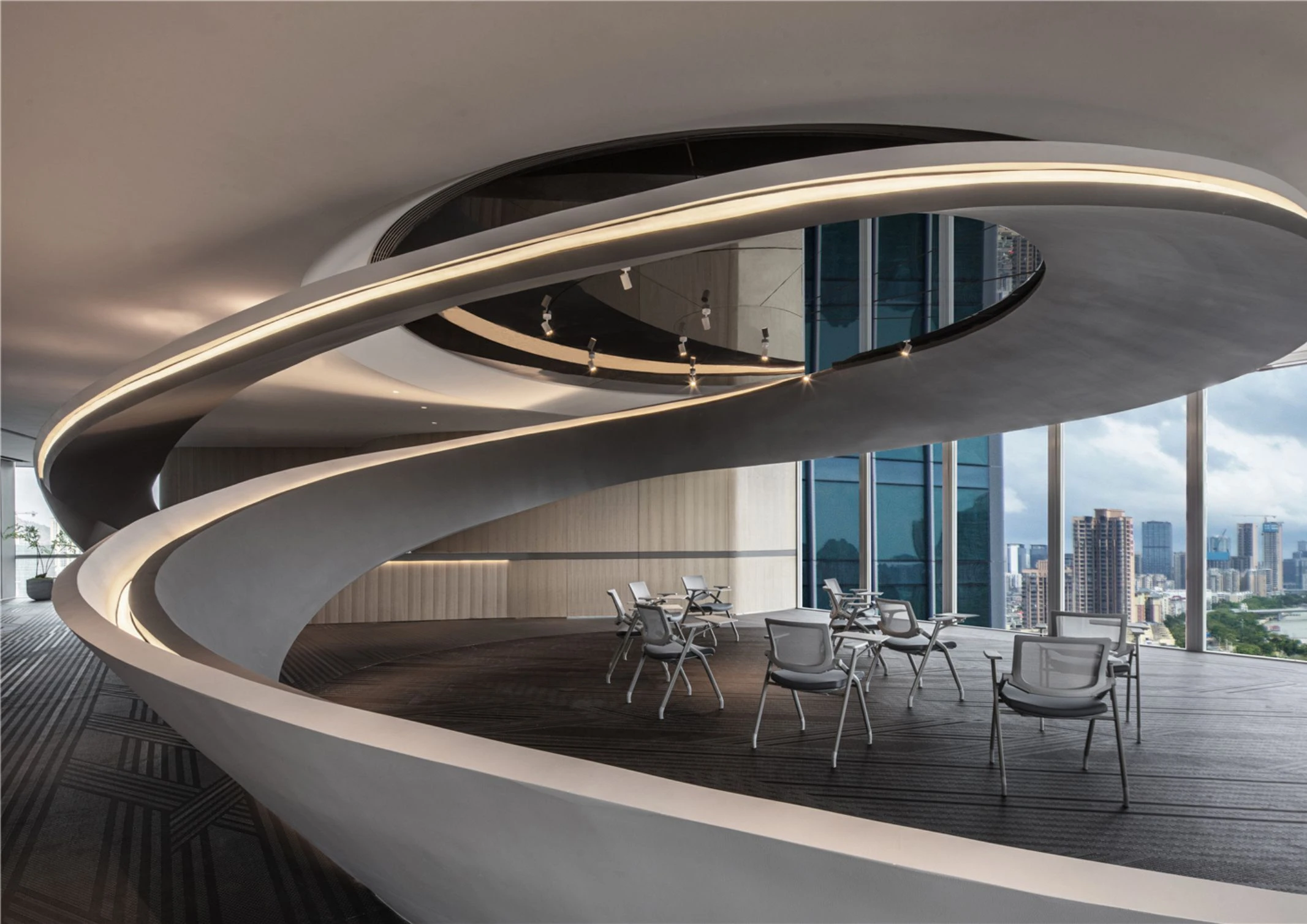
Taking inspiration from the undulating mountains and the rhythmic Qianshan River, this design utilizes dramatic, fluid forms to create a 360-degree, collaborative workspace that is as much a sculpture as it is a functional environment.
Contextual Design in the Greater Bay Area
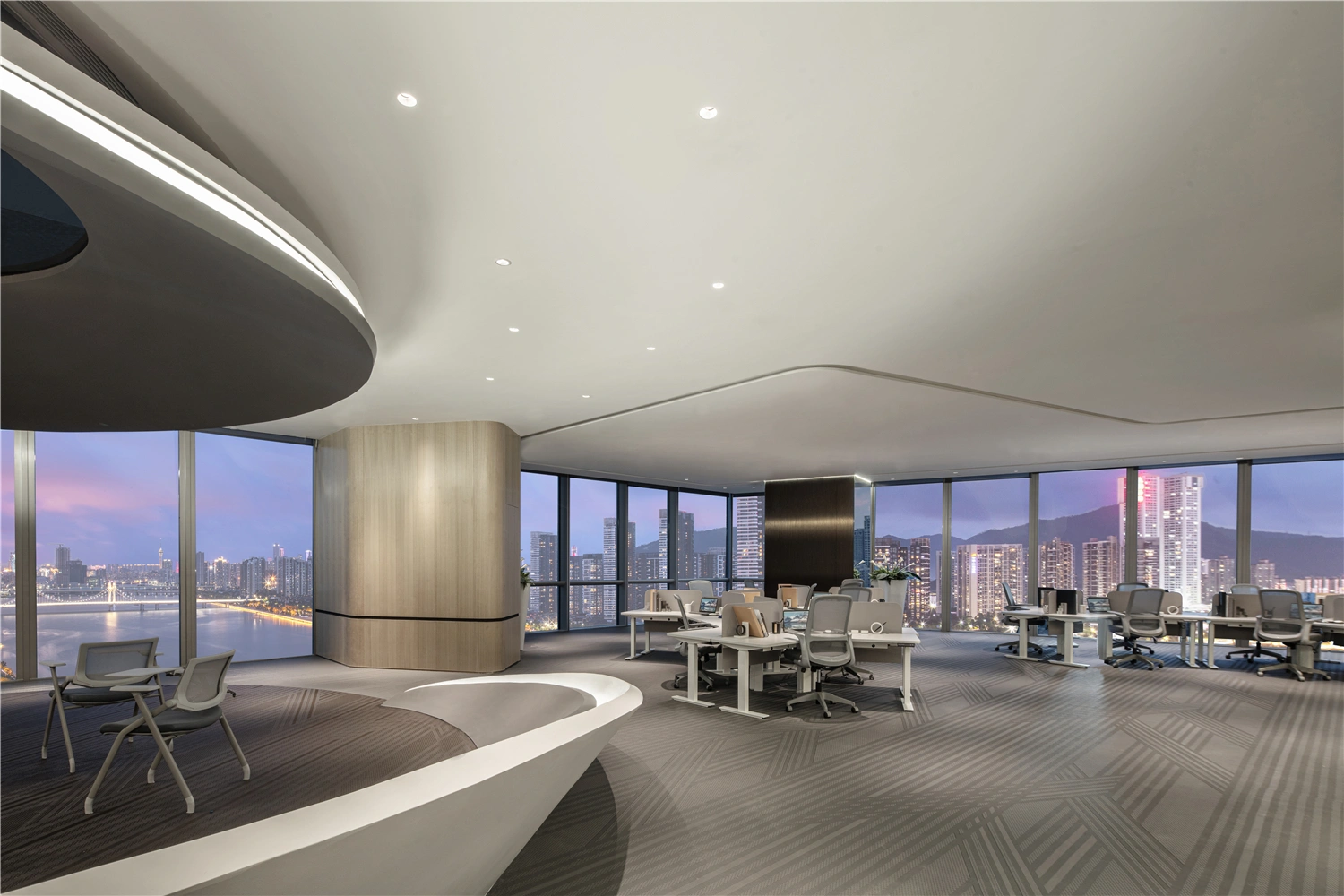
The project is strategically positioned in the belly of the Greater Bay Area, a new business highland that boasts unique geographical location and urban resource advantages. Located near the Hong Kong-Zhuhai-Macao Bridge, the office offers unparalleled 360-degree views of Macao Island and the rolling cityscape.
This panoramic site, with its unique landscape vision and superior lighting conditions, became the foundational inspiration. The vibrant impression of the city, the rolling mountains, and the rhythm of the river were all integrated to form the conceptual soul of the design.
Inspired by Geography, Built by Curves
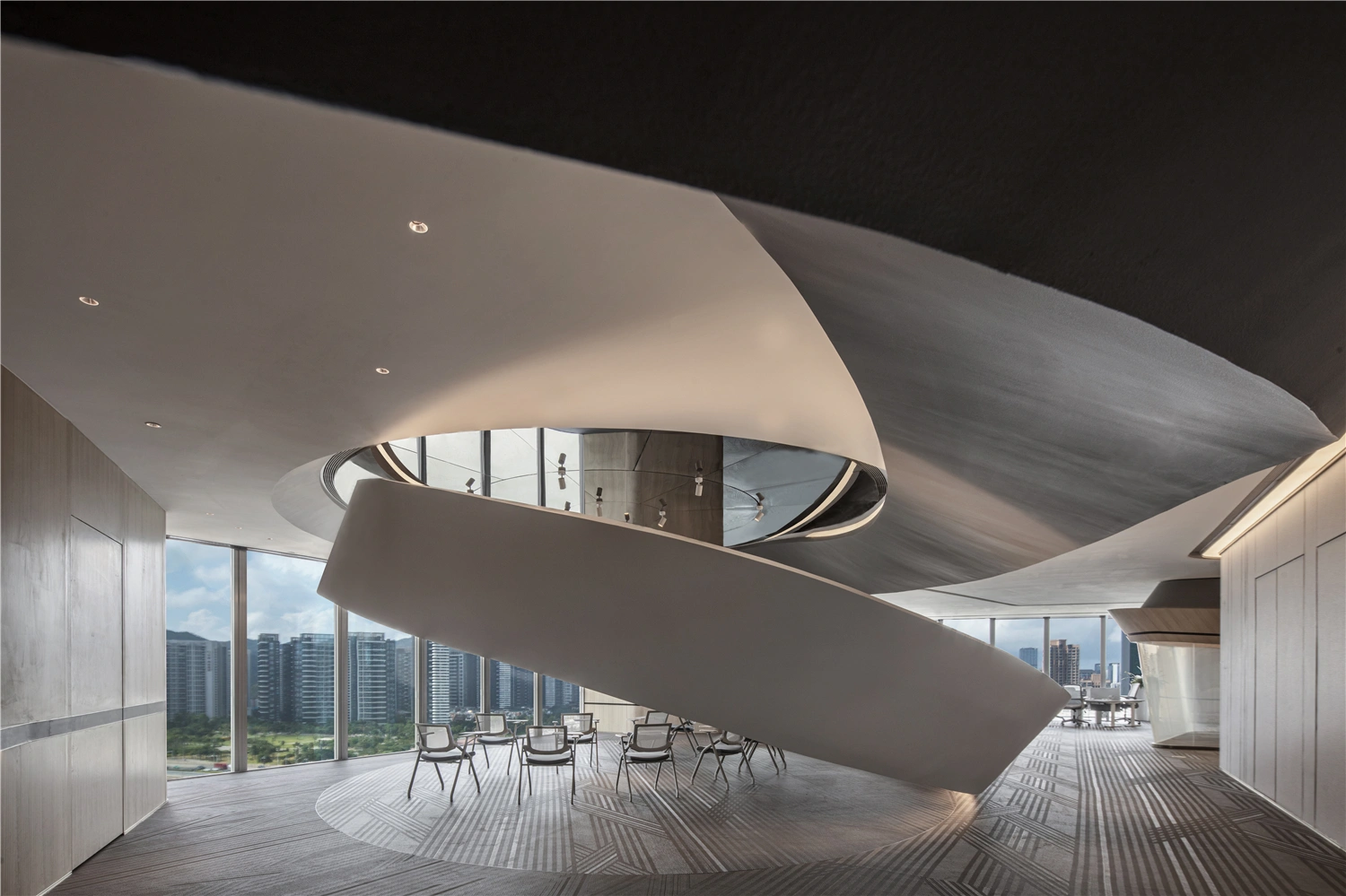
The primary challenge and strategic success of the Stream Office lies in its radical rejection of the traditional corporate grid. Occupying a full-floor plate with a 360-degree visual field, Lin and his team took the opportunity to transcend the typical interior fit-out and create a spatial sculpture. Their design inspiration came from the surrounding landscape, with a biomorphic architectureArchitectureThe art and science of designing and constructing buildings, structures, and spaces that are functional, safe, and aesthetically pleasing. It encompasses the planning, design, materials, and techniques used to createGo to Architecture Glossary strategy that immediately grounds the project in its specific regional context.
Implementation hinged entirely on the fluid, curved partitions. Instead of using conventional walls to enclose functions, Kris Lin International Design deployed curved shapes to carry out flexible segmentation. This avoids interrupting the broad, panoramic view and actively enhances the sense of connectivity and flow.
Compared to the linear block shapes seen in most commercial towers, the curved geometry imbues the space with an emotional power—a palpable feeling of flow, tension, fusion, and freedom—which the designers explicitly sought to leverage for a more collaborative environment.
A Corridor Through Time and Space
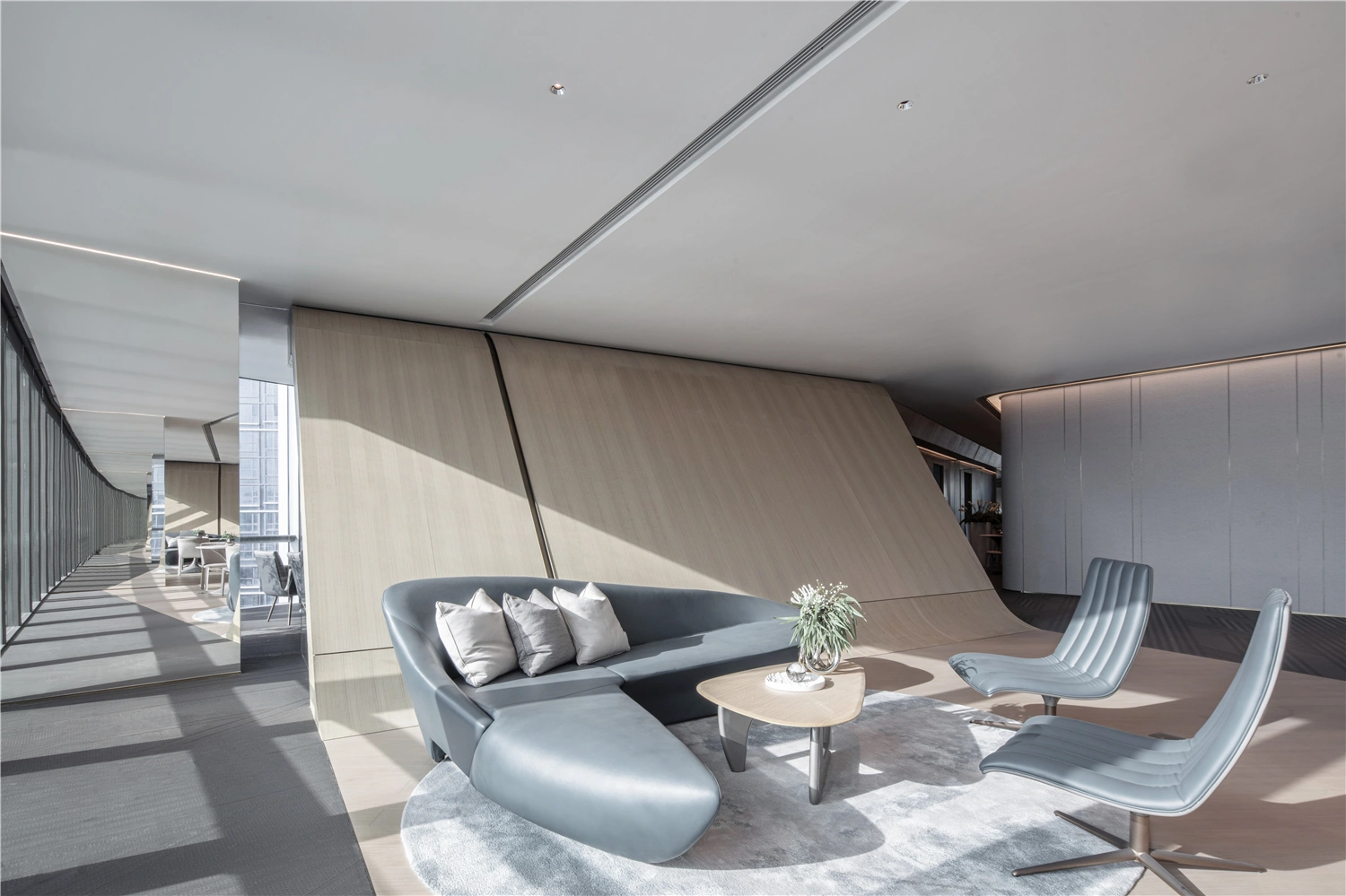
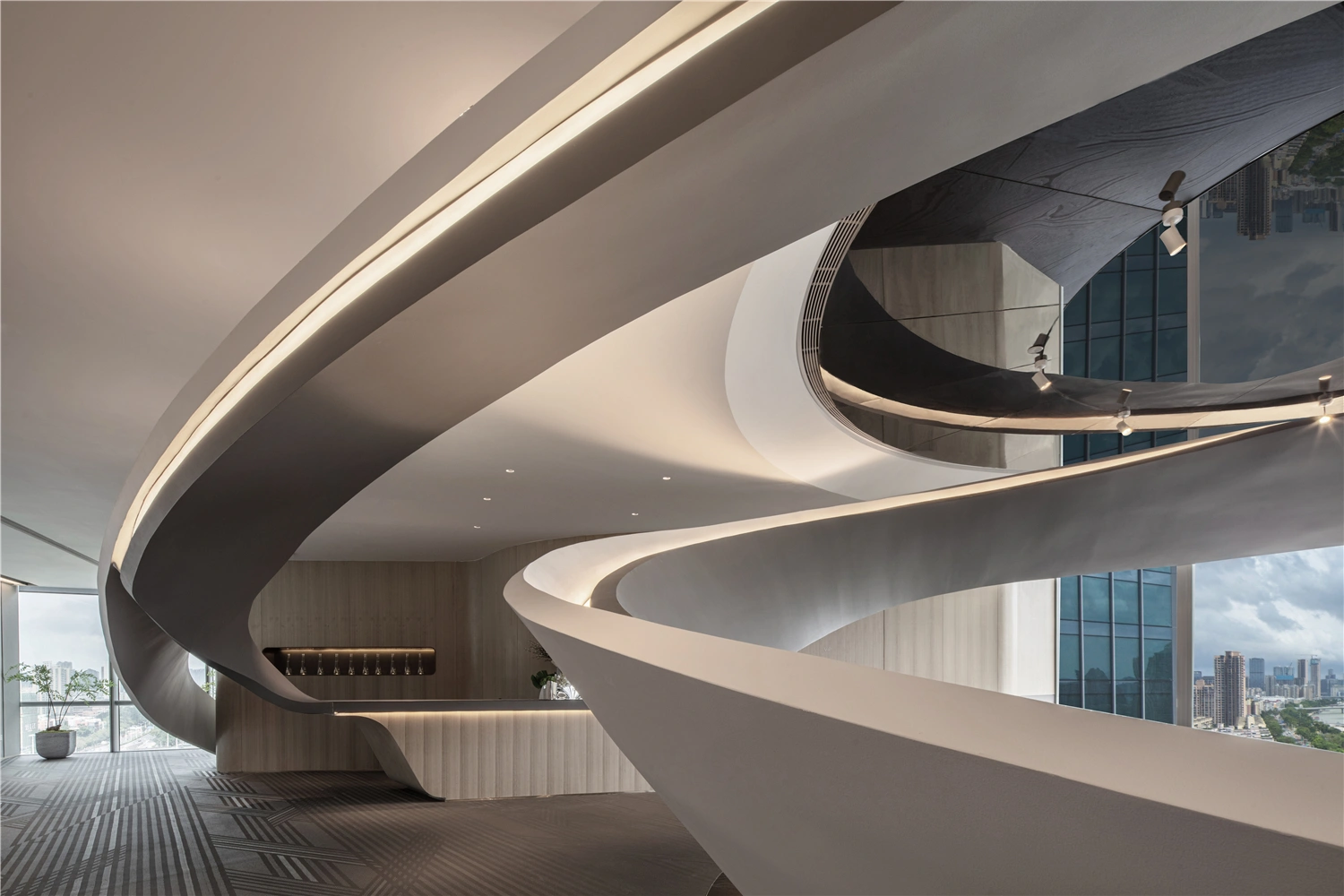
This fluid design language extends into the finer details and transitional spaces, particularly the corridor. Described as a “passage through time and space,” this area utilizes graceful, smooth geometric modeling and strategic lighting to achieve a distinct artistic uniqueness.
These refining lines and the continuous, curved space running through the plan show a rigorous, concise approach. It is an elevated expression of the minimalist style, integrated with the characteristics of modern architecture, prioritizing visual elegance over unnecessary ornamentation.
Within the semi-private zones, such as the tea house space, the design subtly references the water inspiration. A key art piece on the wall takes on the characteristics of water ripples in nature. This detail is not merely decorative; it serves as a visual focus that circulates a tenacious temperament, reflecting the core design concept while maintaining the high-level privacy required for intimate discussions.
The design of the Stream Office, therefore, is insight to the idea that flexible, open-plate offices can still offer pockets of necessary enclosure through clever, sculptural design rather than bulky walls.
The Future of Office is Contextual
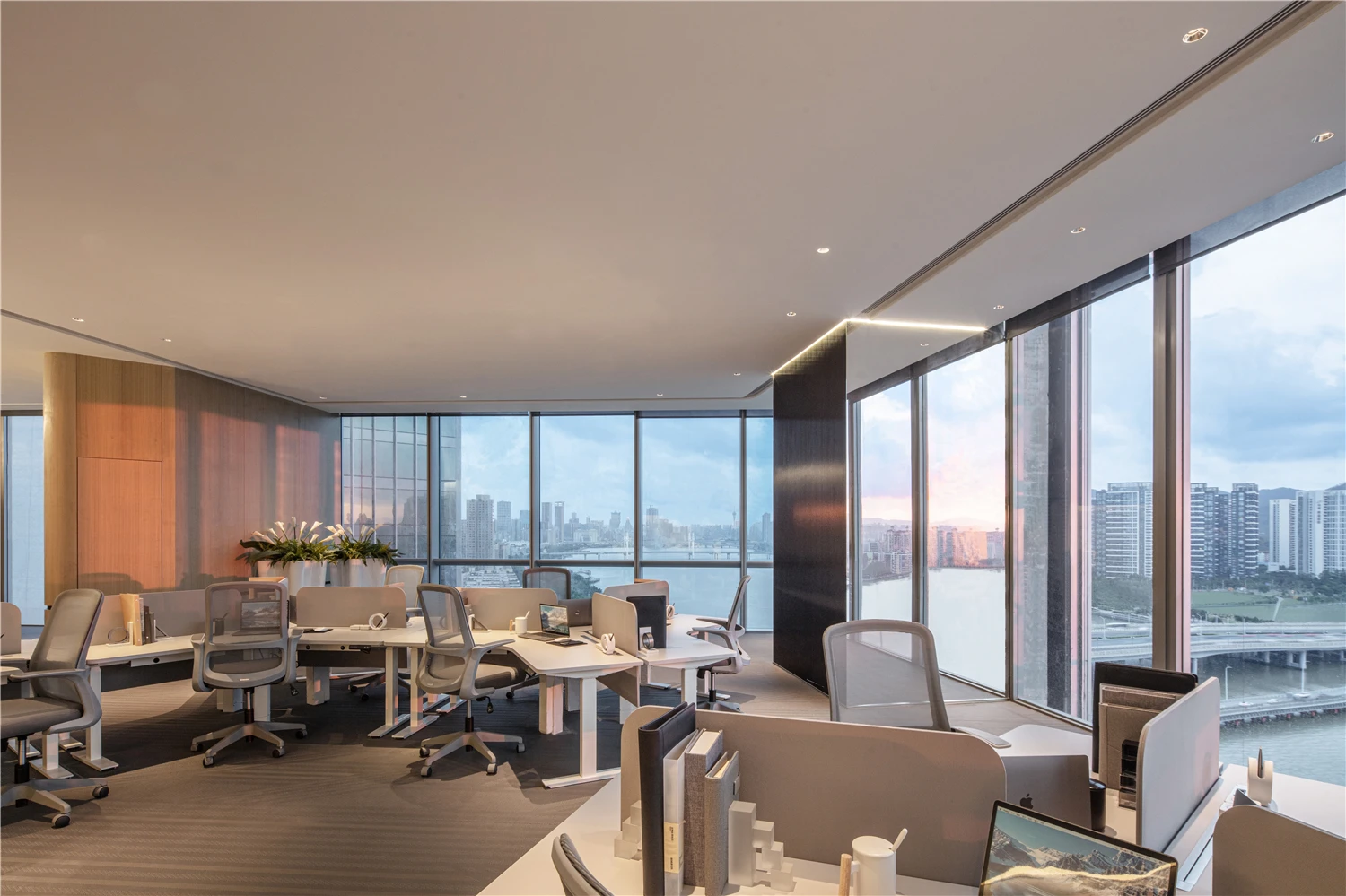
The Stream Office ultimately transcends its role as a mere corporate headquarters; it is an exploration into the future of office design. By creating a flexible, personalized experience centered for and around people, Lin and his team successfully addressed the evolving needs of the modern workforce. The design strategy moves beyond simple aesthetics to offer genuine social impact.
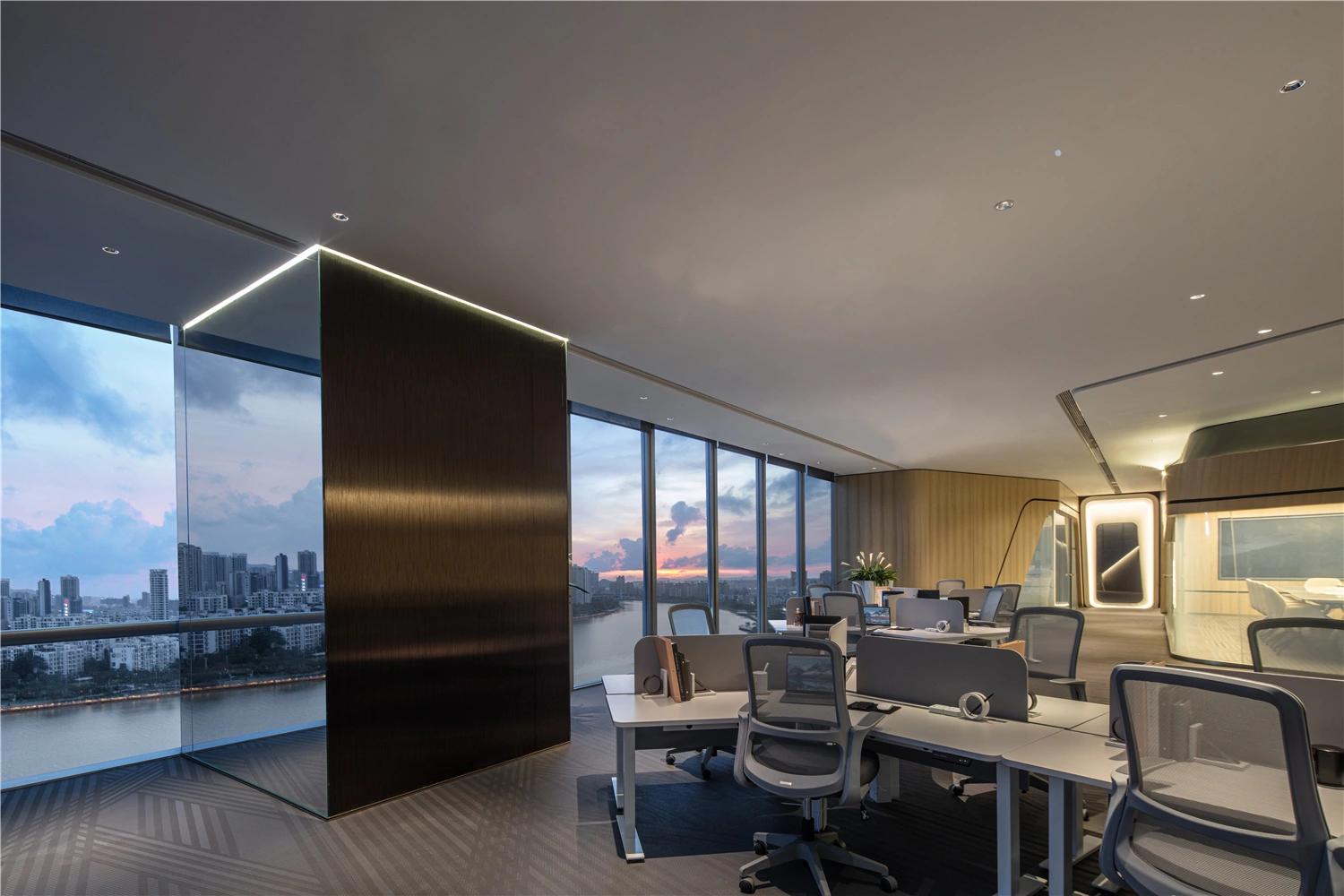
Crucially, the space tells a purposeful story that reflects the local culture and context of the Greater Bay Area—a critical departure from the homogenous, placeless offices of the past. By drawing inspiration from the river and mountains, the design creates a distinct tenant experience while respecting and enhancing its surroundings.
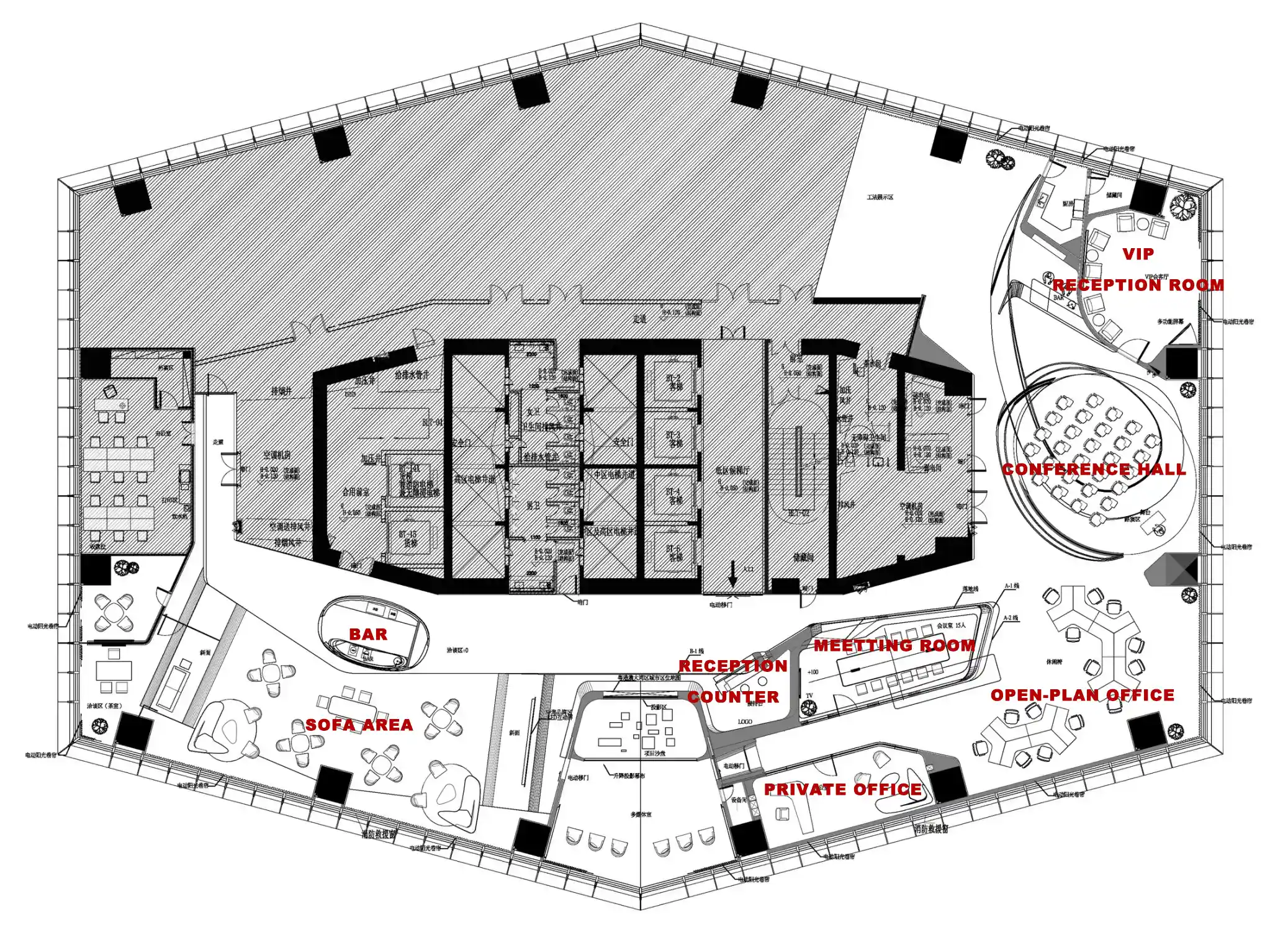
Furthermore, the commitment to large, open floor plates and the fluid system of partitioning directly reinforces a common culture, fostering innovation and creating an environment optimized to attract and retain top talent.
Stream Office was named the Gold Winner for Project of the Year in the Workspace Category of the APSDA Awards. It is a powerful demonstration of how fluid design can reshape corporate identity and productivity by connecting people to their place.
Images courtesy of Kris Lin International Design.
Read more: A Private Residence in Indonesia Defines Timeless Elegance Through Layers of Patterns and Textures
Frequently Asked Questions
Biomorphic architecture is a design strategy that models elements after naturally occurring patterns and living organisms. In the Stream Office, Kris Lin rejected the rigid, rectilinear “corporate grid” in favor of undulating curves inspired by the Qianshan River and surrounding mountains. Technically, this involves using fluid geometry to define the 360-degree full-floor plate, transforming a standard interior fit-out into a “spatial sculpture” that connects the workforce to its geographical context.
Instead of using opaque, linear blocks that would interrupt the panoramic views of Macao Island, the design utilizes curved geometric modeling to define functional zones. This creates “flexible segmentation,” allowing for a clear program hierarchy while maintaining a sense of flow and connectivity. By avoiding traditional wall-and-column partitions, the space achieves a balance of enclosure and openness, providing a 360-degree visual field that enhances the perceived spaciousness.
The Roadshow Hall serves as the iconic symbol and the most eye-catching feature of the office. It utilizes a flow of curved shape aesthetics to reshape spatial relationships, functioning as a “new interface” within the city skyline. Technically, it is the center of the office’s social and collaborative culture, designed to facilitate a free switch between open group activities and individual tasks, which is a critical requirement for modern, innovation-focused workplaces.
This refers to the office’s main corridor, which utilizes smooth geometric modeling and strategic lighting (such as lamp belts and starry light sources) to create a transitional experience. The design prioritizes visual elegance through a rigorous, minimalist style, integrating the characteristics of modern architecture without unnecessary ornamentation. The continuous lines running through the plan create a sense of tension and movement, guiding users through the space as if they were moving through a fluid environment.
The APSDA (Asia-Pacific Space Designers Association) recognized the Stream Office as the Gold Winner in the Workspace Category because it successfully redefined corporate identity through social impact and contextual storytelling. By drawing from local culture and geography, the design moves away from “homogenous, placeless offices.” It creates a high-performance environment optimized for talent retention by fostering a common culture of innovation through its large, open, and fluid floor plates.
The modern work setting is a dynamic entity, constantly adapting to new technologies, work styles, and employee needs. As businesses strive for peak performance and efficiency, the design of their work environment has become a crucial element. This exploration into five modern office interior designInterior DesignThe discipline of planning and shaping interior spaces for function, […]
To celebrate the 10th anniversary of Crate and Barrel in the Philippines, MyHome magazine collaborated with the furniture and home décor brand to transform the atelier of renowned fashion designer Vania Romoff. The project captures the essence of Romoff’s creative space while showcasing Crate and Barrel’s timeless, contemporary pieces. This exciting collaboration reflects the harmonious […]
With the new academic year in full swing and hybrid setup still implemented, a conducive learning space at home is more crucial than ever. From desks and chairs to lamps and storage, home learning environments have evolved to meet the needs of today’s learners. To help boost focus and productivity, here’s a collection of study […]
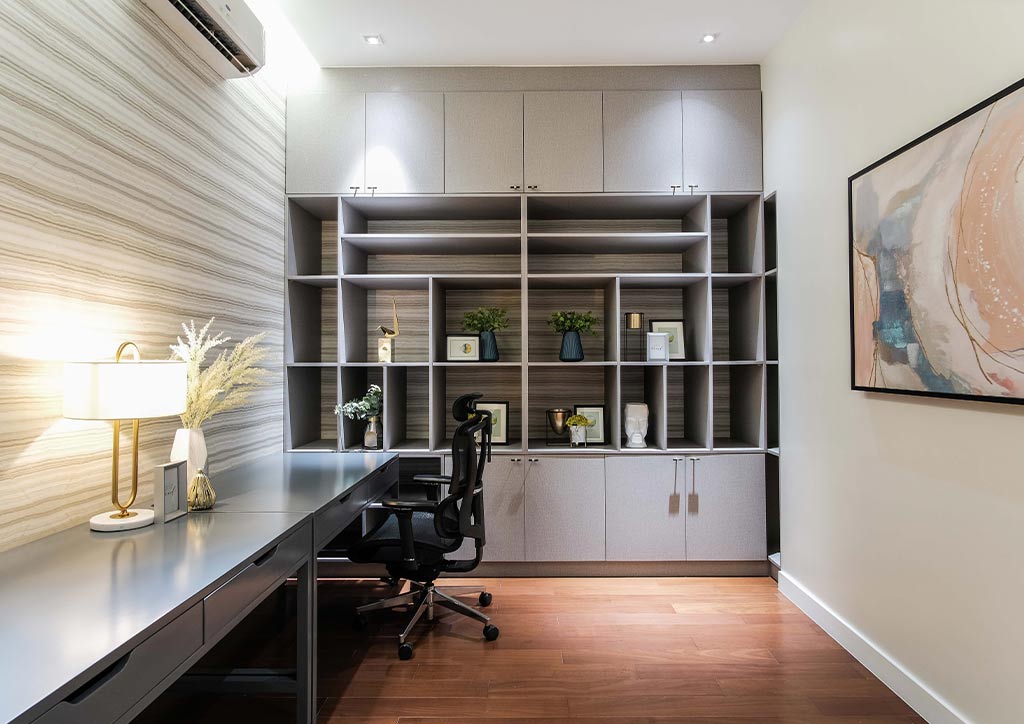
After over three years in quarantine, it might be time to update your pandemic-era home designs to align with current trends. While it feels like ages since the start of the pandemic, your home might still reflect a quarantine mindset. You likely still maintain a dedicated place for remote work and studying. But as we transition […]
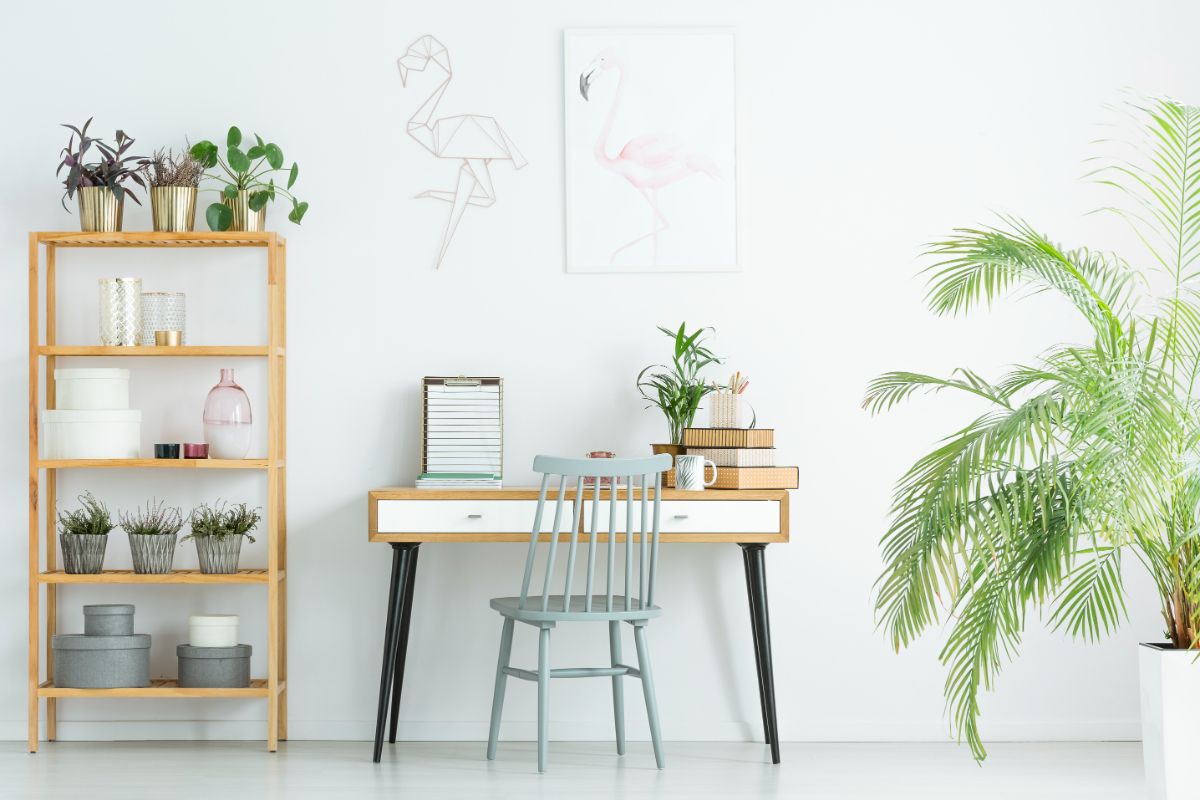
When the pandemic started, the home office became a necessity for creating clear lines between your work life and home life. Working from your bed became normalized and essentially created physical issues different from desk work. The biggest concern is that working at home blurs the lines between work and relaxation. This lack of separation […]
Read the issues.

Collect the volumes.

Recommended Video
Tap to Unmute
Unmute
0:00
0:00