Through materiality, a structure can express its values and personality. CEO and Founder of Nippon Hasha group of companies, Ryan Cruz, acknowledges that each of his brands have a distinct personality in which he wishes to express in the dining experience. Restaurants such as Kazunori, Mendokoro, Yushoken and Marudori each have a level of distinction even though they all serve Japanese fare.
“Kazunori is like the mom. Marudori, Yushoken, and Mendokoro are the kids. Yushoken and Mendokoro are twins. They’re the same thing yet the format is just different. Yushoken is full service while Mendokoro is a bar format,” Cruz explains.
Liza Morales’ Architectural Vision: Gabion Walls and Wooden Slats
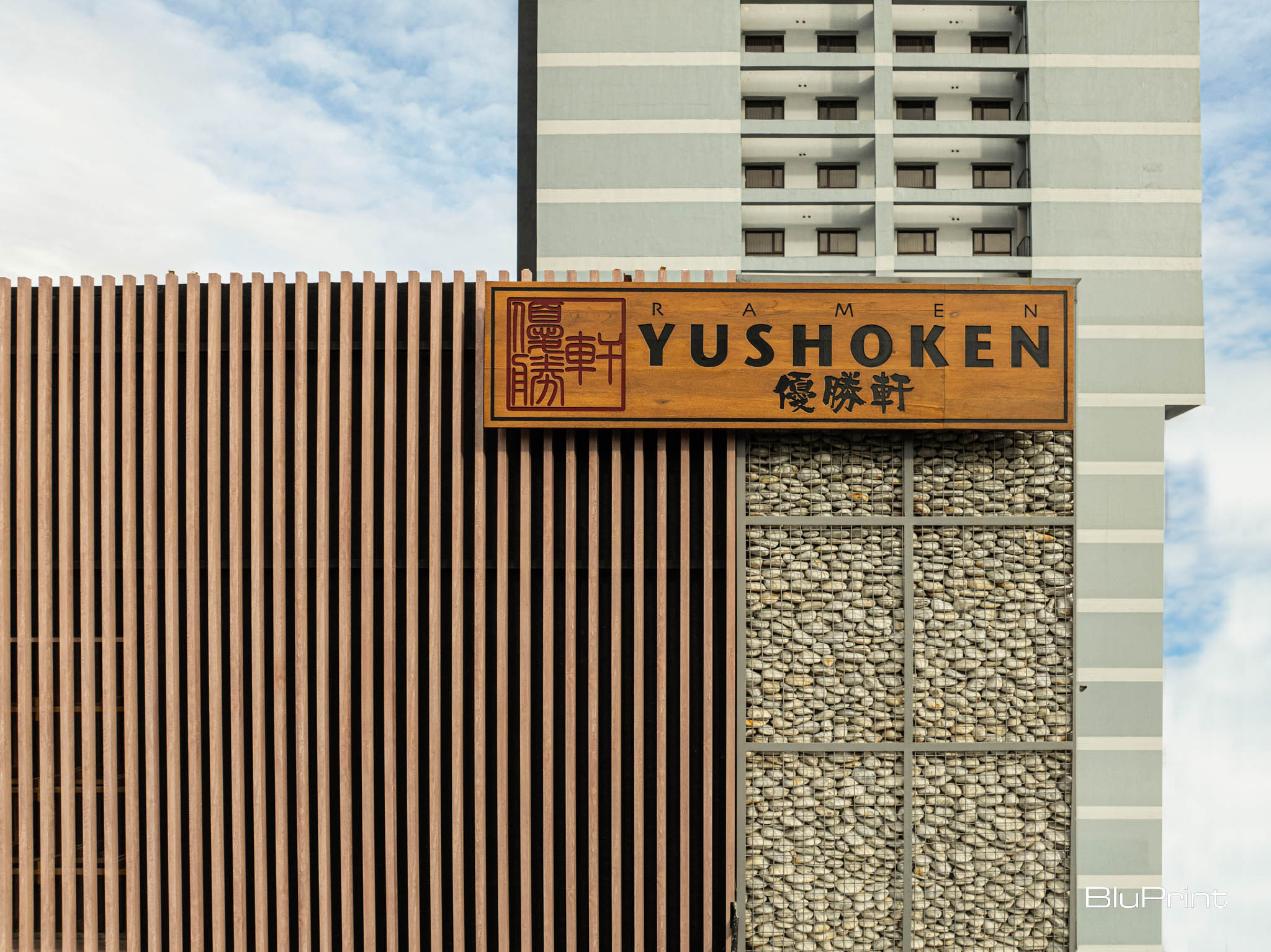
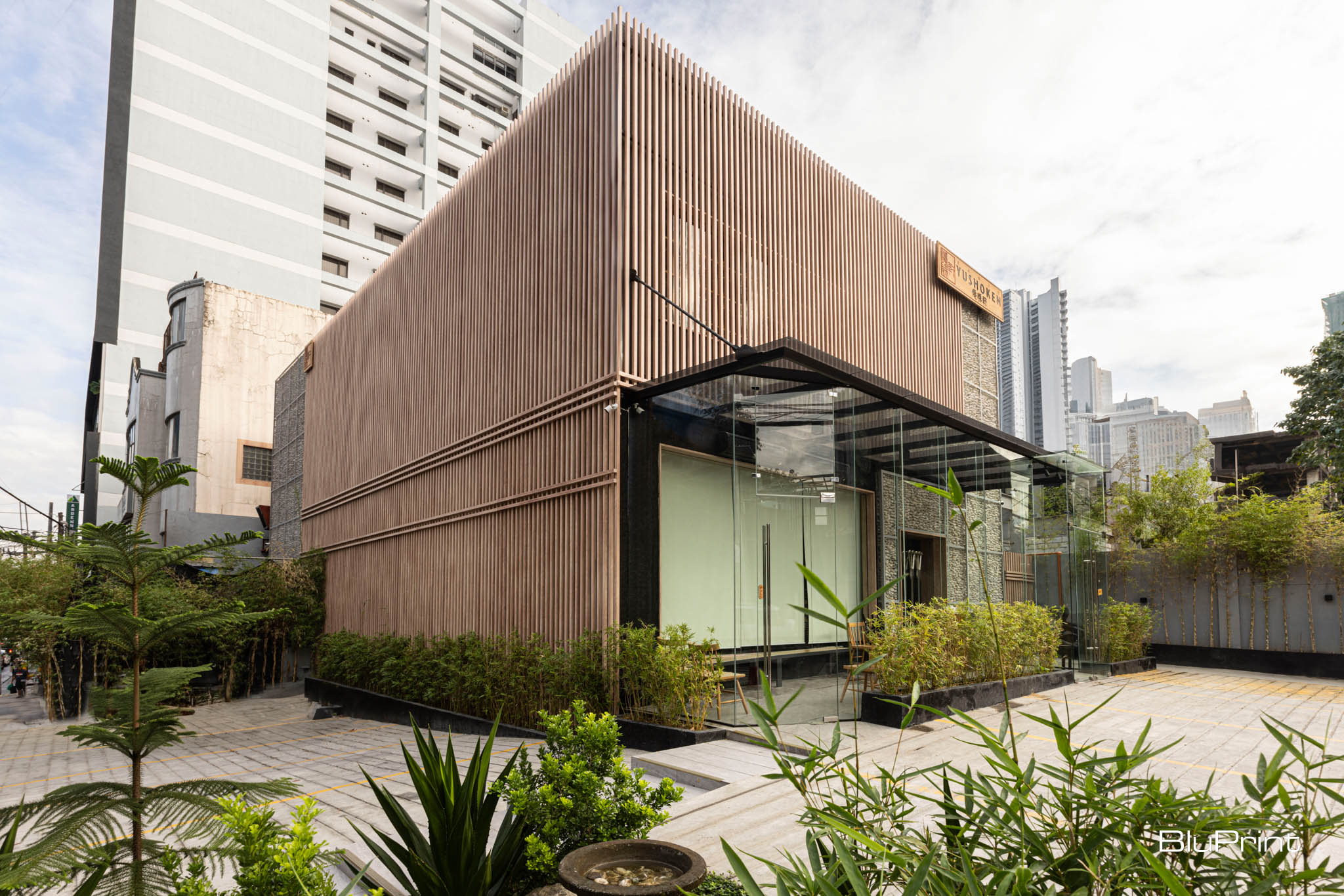
Yushoken’s new branch in Quezon City exudes confidence with its striking gabion walls and wooden slats.
The restaurant stands firmly on the corner of Panay and Eugenio Lopez Jr. with gabion walls of stone and straight slats of wood. Designed by LEED-accredited architect Liza Morales of Ecotecture Design Studio, the structure needed to make a strong first impression.
Advertisement
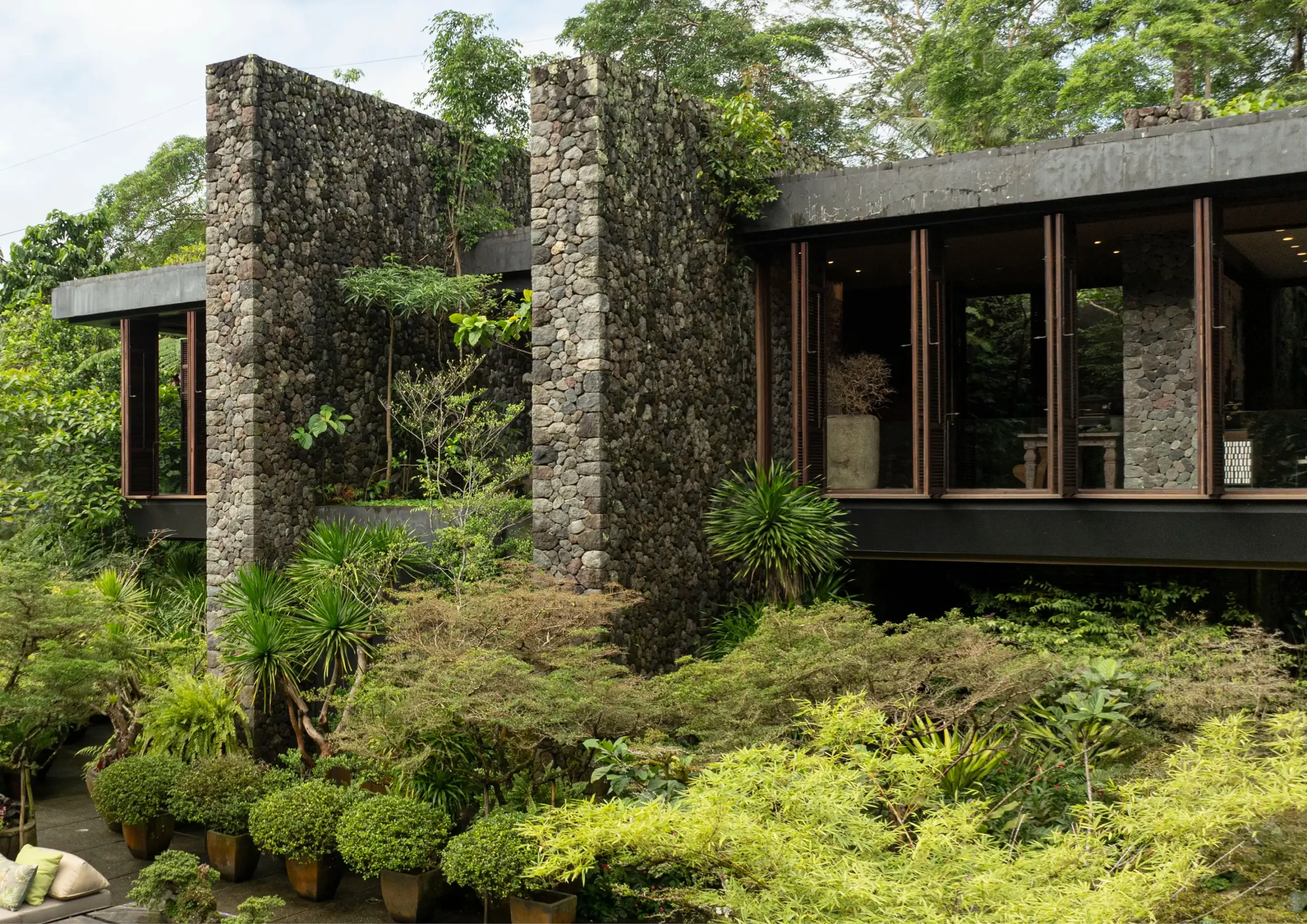
“We saw Yushoken as a confident, brave younger sibling of the Nippon Hasha brands. We wanted to give a strong statement in this neighborhood and say, we are here now,” says Morales. “In the facade there’s a contrast between the stone and wooden slats. The gabion wall was a material that I wanted to experiment with for quite some time. They convey the organic parts of Japan while the wooden slats are a little more of the order which the Japanese are known for.”
Maximizing Impact with Height and Space in Yushoken
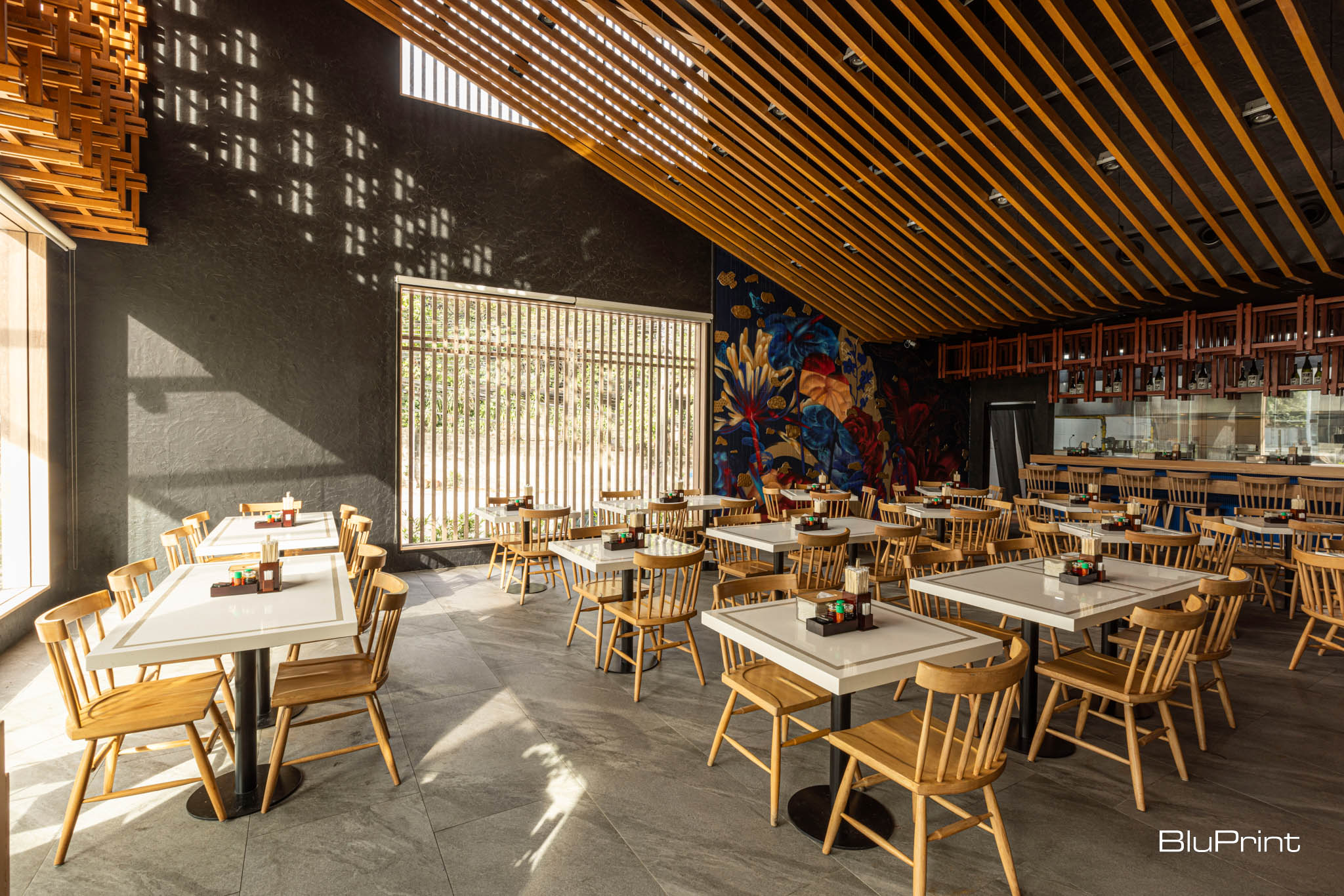
A high ceiling and descending wood slats lead to the kitchen window. Yushoken’s interior design creates an airy and spacious feel, enhanced by the interplay of light and shadows.
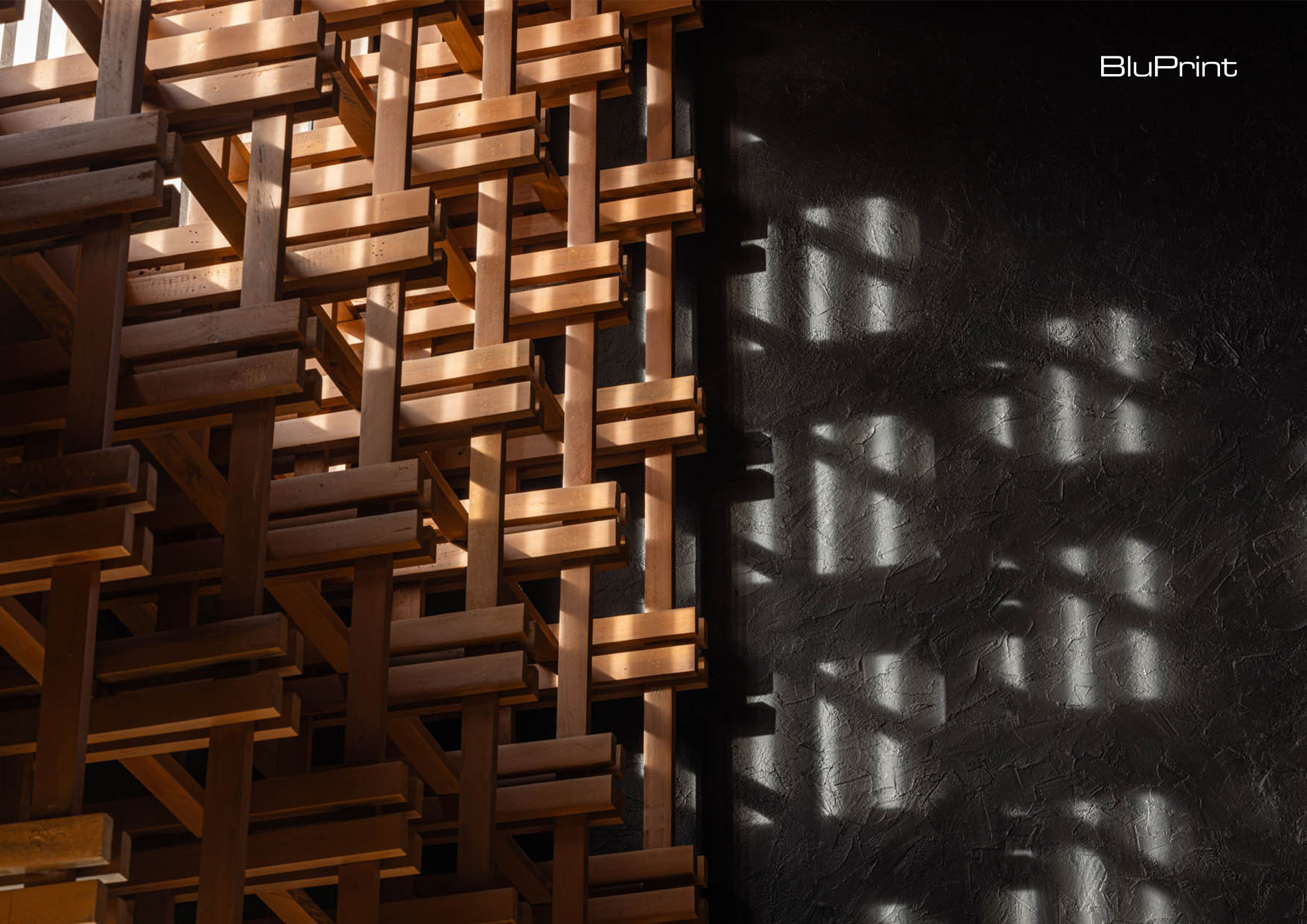
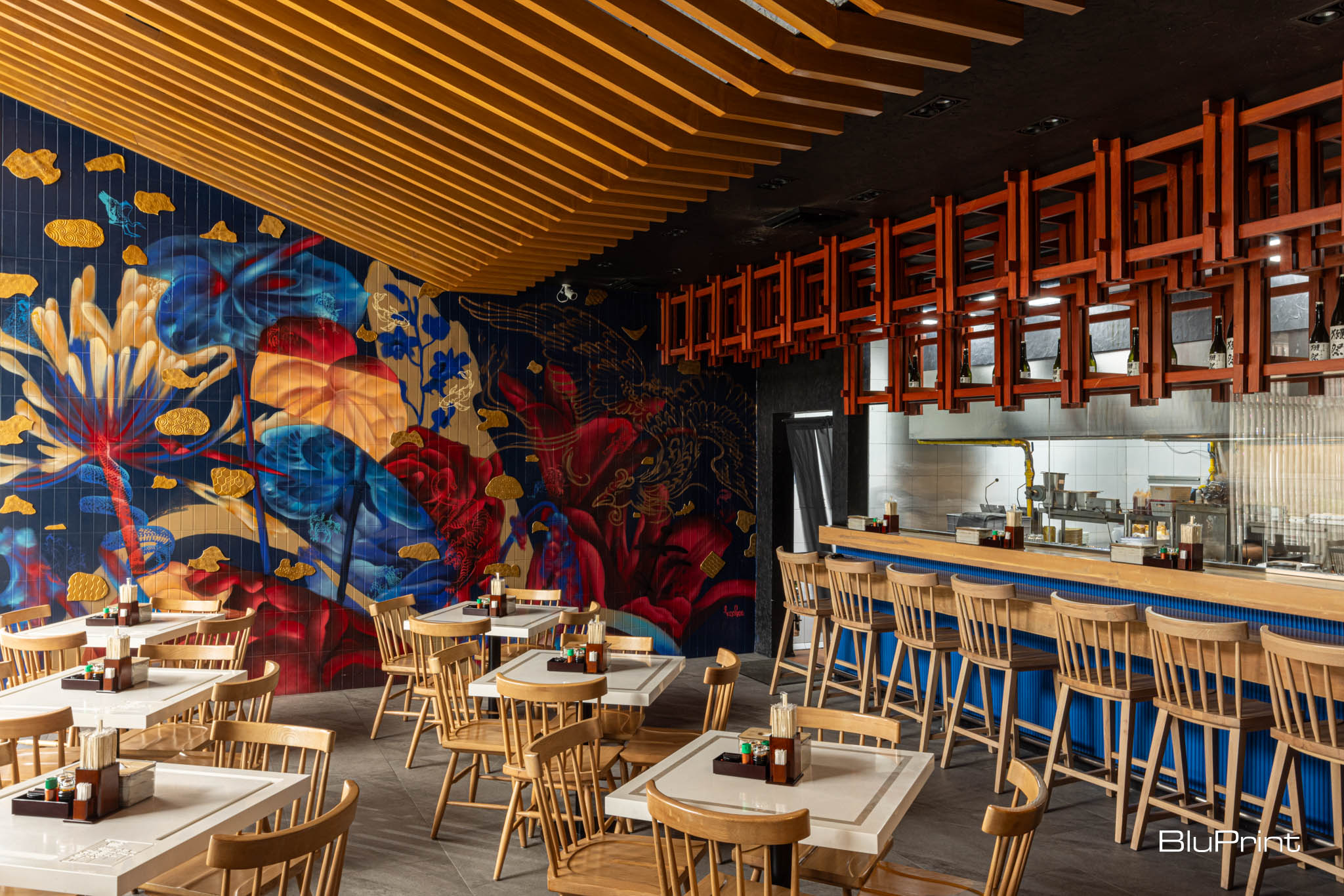
With a 190 square meter footprint, the structure wouldn’t be as arresting to the eye if it only stood with one story. The height also allowed for a high ceiling with a dramatic feature of wood slats descending down and leading the eye to the window into the kitchen. A grid work of timber resembling the Japanese chidori toy create shadows as the sun passes through the window. The black wall is textured and a colorful mural by Koo Koo Ramos with golden accents and Japanese iconography hidden in it adds just enough color to the space to create interest.
On one side of the restaurant, there is booth seating and a wave of wood slats that undulate above. “I like booths because people can think of it as their own space for that time and they can get lost in it. And there’s a bit of privacy,” Cruz explains.
Advertisement
Flexibility in Design to Enhance Hospitality
A colorful mural by Koo Koo Ramos with gold accents and subtle Japanese iconography adds vibrancy and human touch to Yushoken’s space, balancing the hard surfaces with organic elements.
Most of Yushoken Panay’s floor area can be configured for a wide variety of guests, especially for larger groups. Cruz was adamant in having the design of this branch help its staff be more hospitable to the customers it serves. “We needed to be quite flexible, and this space allows that flexibility. That’s the point. It’s allowing design to enable you to be more hospitable to your customers. Design alone doesn’t make you more hospitable. It’s only an enabler. Ultimately it’s people who give hospitality. It’s how you make customers feel.”
The contrast between the organic gabion walls and orderly wooden slats on Yushoken’s facade reflects the balance of natural and structured elements in Japanese design.
This set up also makes the space feel more airy and spacious. “With design, you have to exercise restraint. That’s something we always challenge ourselves with with every project,” says Morales. “There’s such a thing as going overboard. We don’t want it to feel overwhelming. So we used colors and textures sparingly. We just wanted to make sure that it exudes that personality without making it feel too much.”
Located near the equator, factors such as heat and humidity are the norm in the Philippines. This tropical climate has shaped the development of architecture in the country. As Leandro V. Locsin stated: “The first consideration of the Filipino builder and certainly the most evident in his architecture, which is after all an outgrowth of […]
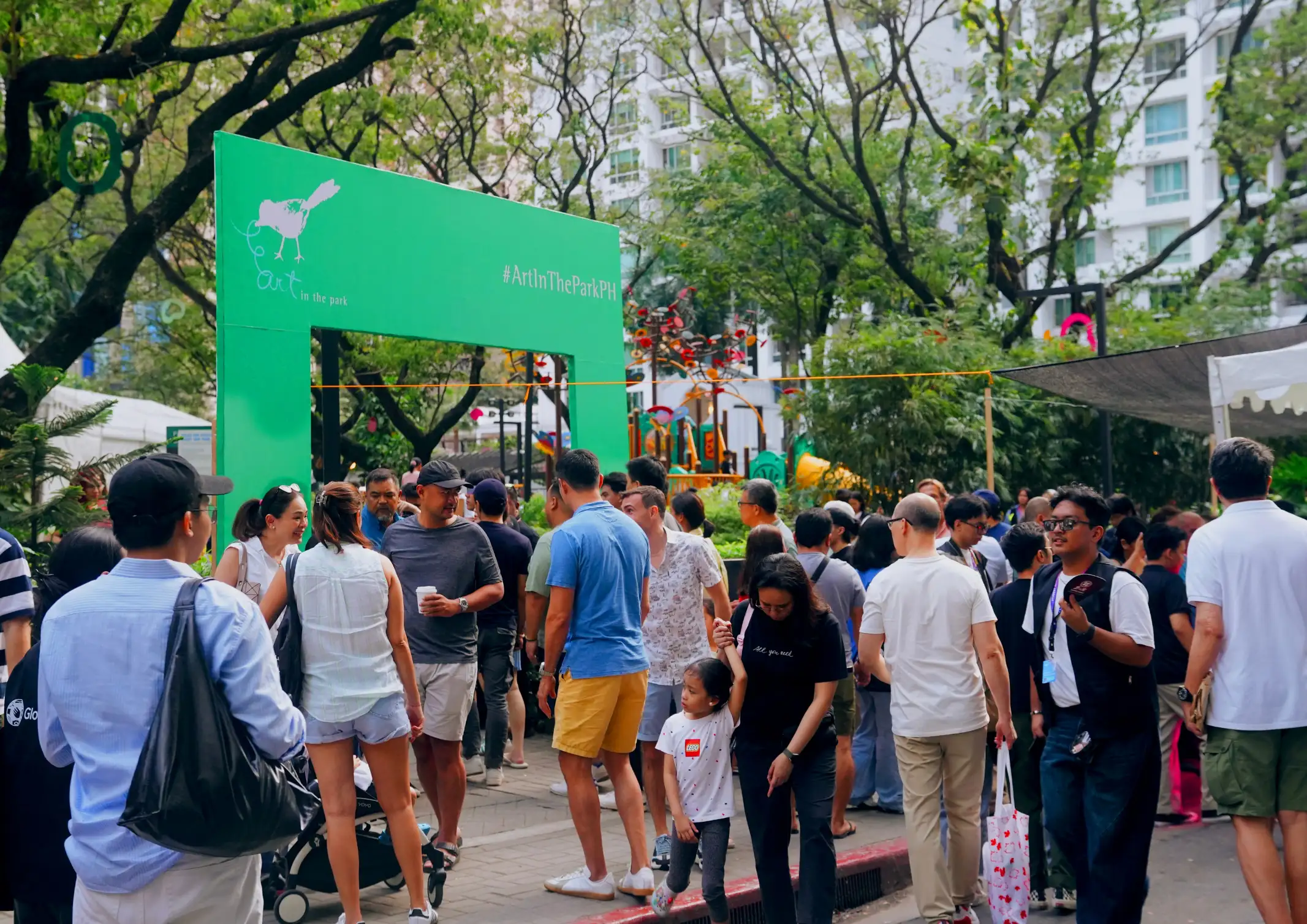
Art in the Park returned this year to Jaime Velasquez Park in Salcedo Village, Makati City, to celebrate its 20th anniversary. This year’s edition featured a curated selection of works from 55 exhibitors representing galleries, art collectives, independent art spaces, and student groups. With all artworks capped at Php 70,000, the fair continued its mission […]
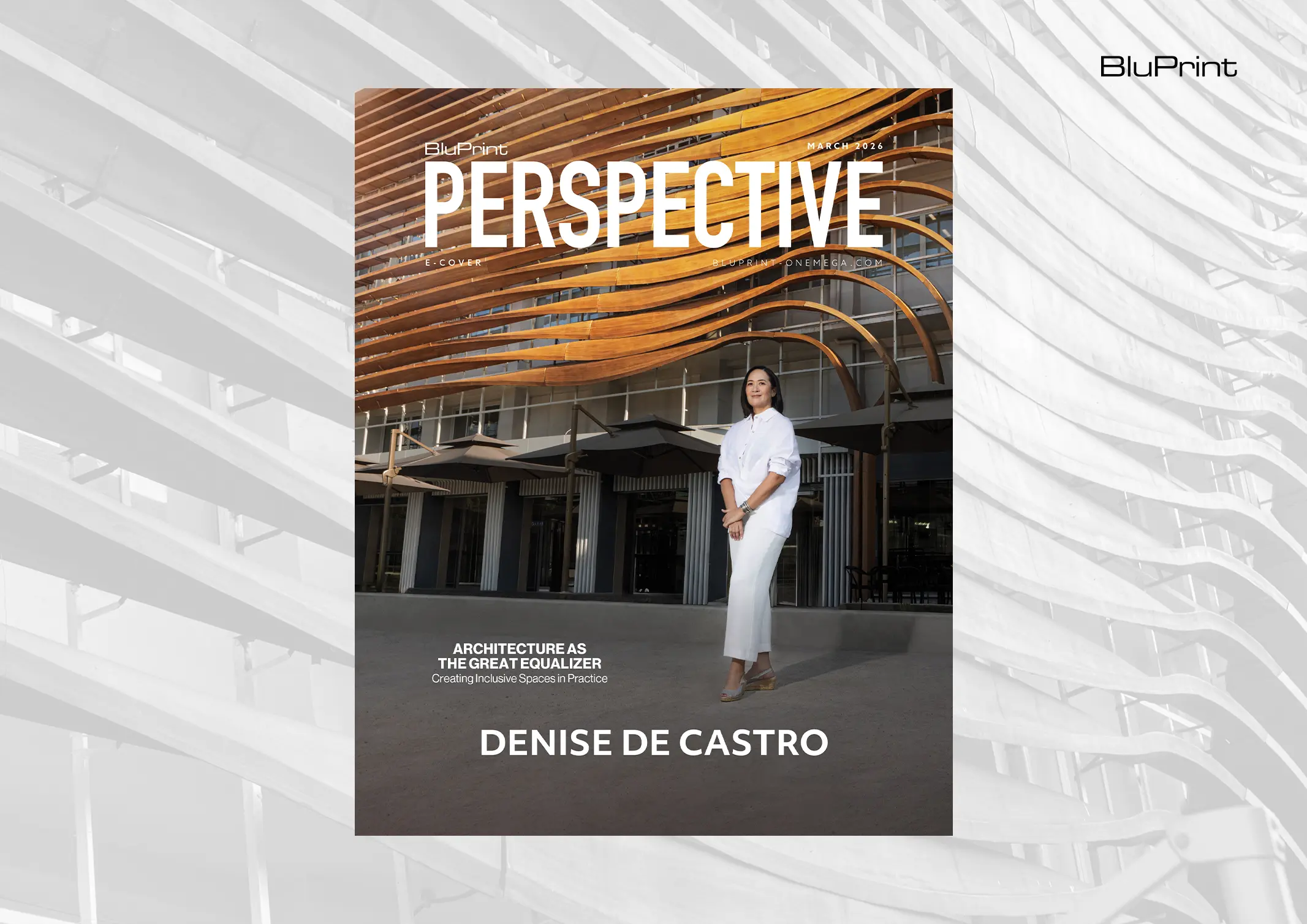
Denise de Castro, Principal Architect of DEQA Design Collaborative, believes that designing with equity in mind means starting at the workplace. Values and practices that your studio or office espouse inevitably filter down to the work that you do. Equitable design ensures that people with different needs and different backgrounds are supported through fair access, […]
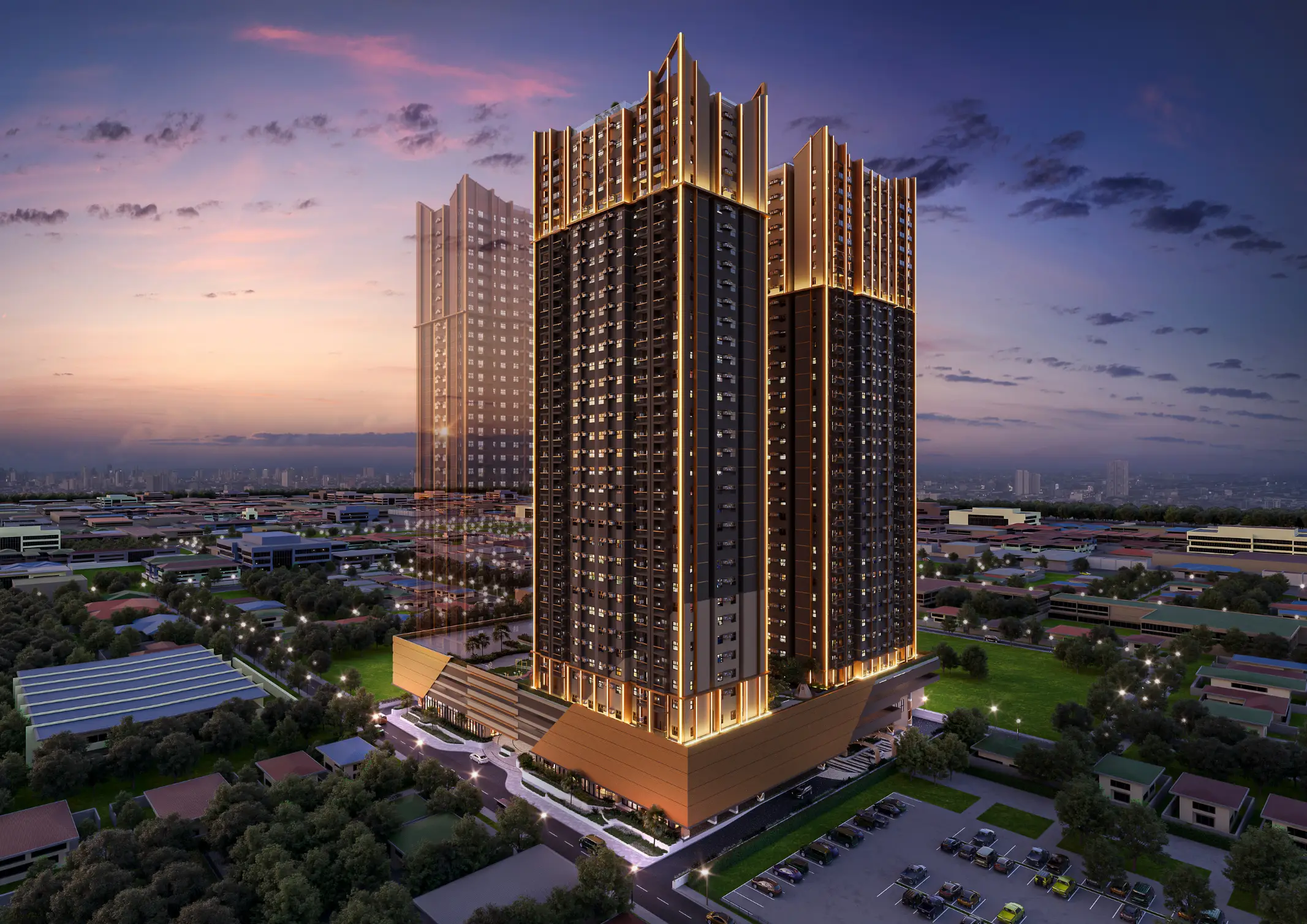
Across Metro Manila, residential developments are increasingly designed around proximity. As cities grow denser and mobility becomes more complex, new housing is often positioned near transport nodes, commercial districts, and educational institutions. This approach reflects a broader shift in urban planning. Mixed-use environments allow residents to live closer to daily necessities—reducing commute times while supporting […]
Luxury in design is undergoing a quiet shift. Where once luxury was measured primarily through visual opulence, today it is increasingly defined by responsibility—through the way spaces are built, the materials selected, and the impact those decisions leave behind. At the Philippine World Building and Construction Expo (WORLDBEX) 2026, this evolving definition of luxury takes […]
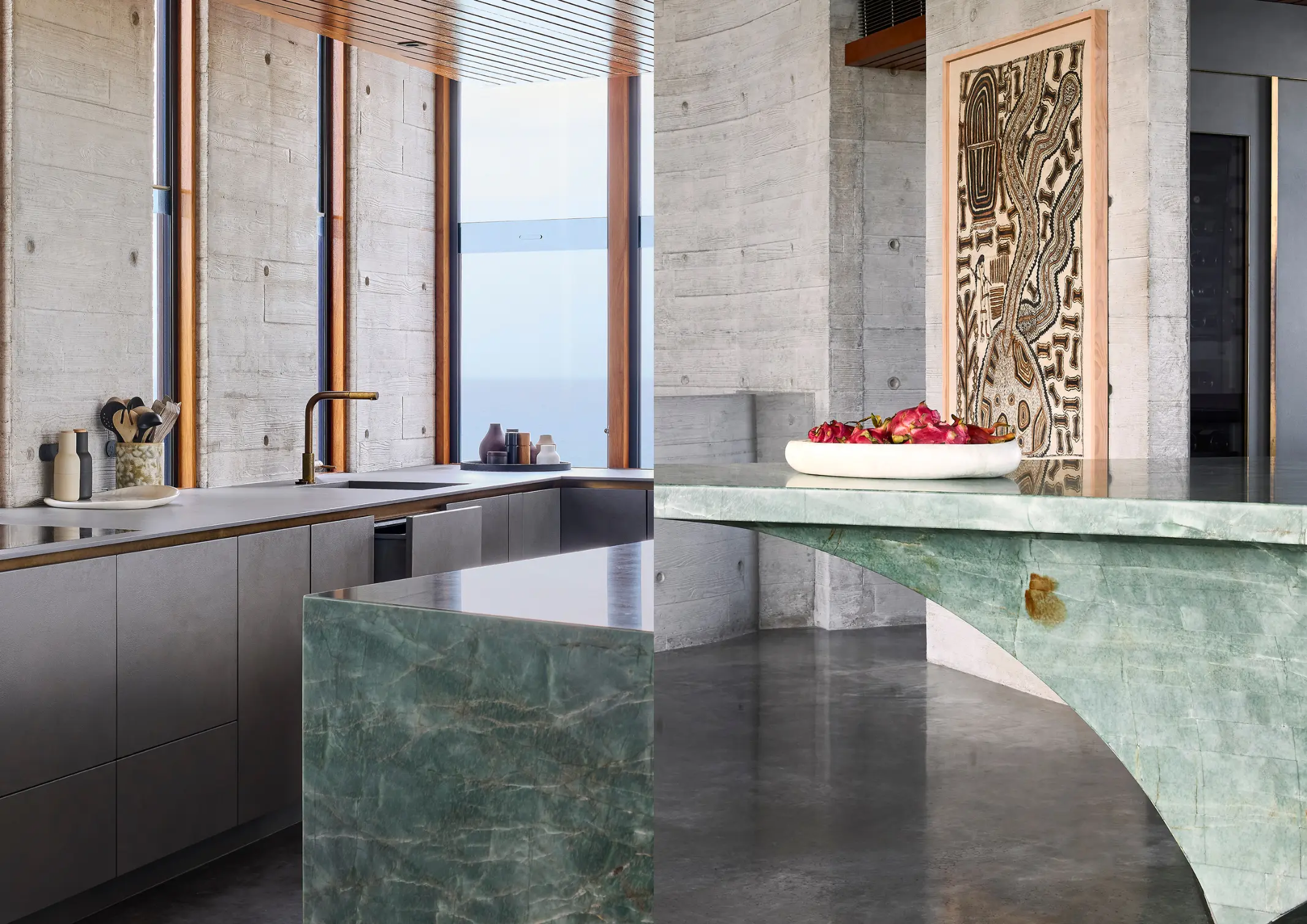
For more than nine decades, Fisher & Paykel has approached design with a simple but exacting belief: that the best living environments are those shaped by people, place, and purpose. Rooted in New Zealand and deeply attuned to island and coastal living, the brand’s philosophy centres on quiet performance, material honesty, and appliances that integrate […]