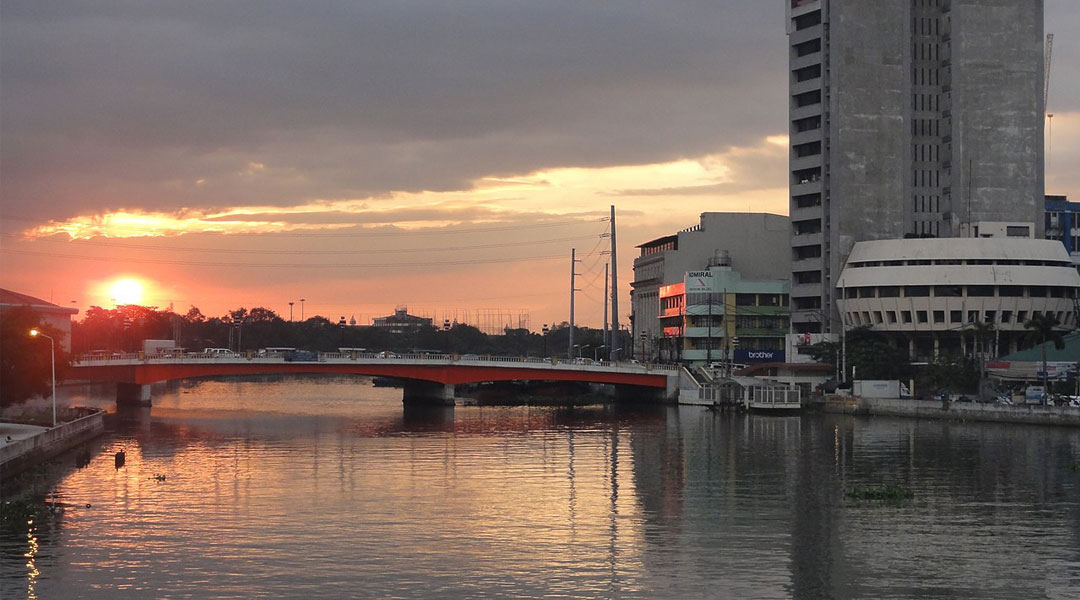
New Pasig River Ferry System with new stations begins operations end of 2018



The new Pasig River Ferry System, which will begin operations in December 2018, aims to have 29 stations and 24 boats servicing 76,000 commuters per day or 19,836,000 per year—not yet including passenger volumes for weekend schedules, tours, or express routes. The new stations will be established along the river in the cities of Manila, Mandaluyong, Makati, Taguig, Pasig, and Marikina.
The ferry system is envisioned to be an accessible, comfortable, and reliable water transport service that will offer the public mobility and connectivity through a pleasant commuting experience on the historic Pasig River. Aside from public transport, the ferry service will also be used for disaster response and tourism purposes.
READ MORE: Manila Zoo, Pasig River, and 23 more PH places re-envisioned
At present, the Pasig River Ferry Service which is run by the MMDA has 12 stations: three stations are in Pasig City—Pinagbuhatan in Eusebio Avenue, San Joaquin on San Bernardo Street, and Maybunga on Dr. Sixto Avenue; two in Makati City—Guadalupe on J.P. Rizal Extension, and Valenzuela on A. Bonifacio Street; one in Mandaluyong—Hulo Station on Coronado Street; six in Manila—Lambingan on Bautista Street in Sta. Ana, Sta. Ana on Pedro Gil Street, Polytechnic University of the Philippines (PUP) Mabini Campus in Sta. Mesa, Lawton, Escolta on Muelle dela Industria, and Plaza Mexico in Intramuros.
All of these ferry stations are operational except for PUP Sta. Mesa Ferry Station, scheduled for repair, and Sta. Ana Ferry Station, currently undergoing repair.
Aside from the ferry service, the Technical Working Group also proposes improved connectivity to the ferry stations through additional pathways such as bridges, linear parks and esplanades leading to the ferry stations. The addition of the bridges, parks and esplanades will also serve as a network of open spaces that will provide Metro Manila’s dense urban population with a “breathing space” as well as an evacuation area during times of calamity.
The revival of the Pasig River Ferry Service is expected to affect the Pasig River system and its surrounding communities, spurring economic activity, renewing interest and citizens’ sense of responsibility towards the river, and transforming this historic place into a multi-functional open space network and a life-support system for urban communities.
In line with this, over 30 government agency heads and representatives joined the Pasig River Ferry Inspection led by Secretary Benjamin E. Diokno of the Department of Budget and Management (DBM) last Wednesday, April 4. The inspection, which begins at the Guadalupe Ferry Station in Makati and ends at the Plaza Mexico Ferry Station in Manila, aims to orient the Pasig River Ferry Convergence Program Technical Working Group about the components of the Pasig River Ferry System, as well as other ongoing programs and projects for the Pasig River.
The Technical Working Group for the Pasig River Convergence Program
Department of Transportation (DOTr) with participation from attached agencies including Philippine Coast Guard (PCG) and Maritime Industry Authority (MARINA), Department of Public Works and Highways (DPWH), Department of Environment and Natural Resources (DENR), Department of the Interior and Local Government (DILG), Department of Tourism (DOT), National Economic and Development Authority (NEDA), Pasig River Rehabilitation Commission (PRRC), Metropolitan Manila Development Authority (MMDA), Laguna Lake Development Authority (LLDA), and Department of Budget and Management (DBM) as lead agency.
READ MORE: Riverside Palace Renewed: The Juan Luna Building
Frequently Asked Questions
The expanded Pasig River Ferry System offers a direct water route between the cities of Manila, Mandaluyong, Makati, Taguig, Pasig, and Marikina, bypassing the heavily congested road networks of Metro Manila. By targeting a capacity of 76,000 daily commuters across 29 stations, the ferry serves as a vital substitute for buses and trains, significantly reducing travel time between key business districts. This strategic shift not only eases the burden on major thoroughfares like EDSA but also provides a more pleasant and reliable commuting experience along the historic river
A frequent error in transit development is creating “isolated” stations that lack proper connections to the surrounding neighborhood or other modes of transport. The Technical Working Group addresses this by proposing a network of bridges, linear parks, and esplanades that lead directly to ferry stations, ensuring seamless pedestrian connectivity. This holistic approach ensures the ferry is integrated into a multi-functional open space network, transforming stations into community hubs rather than just transit points.
Beyond their aesthetic and recreational value, linear parks and esplanades serve as critical “breathing spaces” and life-support systems for Metro Manila’s dense population. In times of calamity, these integrated open spaces function as designated evacuation areas, providing safe routes and staging grounds for emergency responses. This dual-purpose design ensures that urban infrastructure is not only efficient for daily commuting but also resilient enough to handle disaster response scenarios.
The Pasig River Convergence Program is led by a multi-agency Technical Working Group including the DBM, DOTr, DPWH, and DENR, alongside specialized bodies like the Pasig River Rehabilitation Commission (PRRC) and the MMDA. These agencies collaborate to manage everything from dredging and water quality to the construction of ferry stations and the regulation of maritime safety through the Philippine Coast Guard and MARINA. This inter-agency coordination ensures that the river’s transformation is sustainable, addressing both transportation needs and environmental recovery.
The expansion increases the current 12-station network to a total of 29, specifically targeting high-traffic areas like Escolta in Manila and Pinagbuhatan in Pasig to widen the system’s reach. By adding stations in cities like Taguig and Marikina, the ferry connects previously underserved riverside communities to the central business districts of Makati and Manila. This increased accessibility encourages a sense of responsibility among citizens towards the river, as it becomes a visible and essential part of their daily professional and personal lives.

