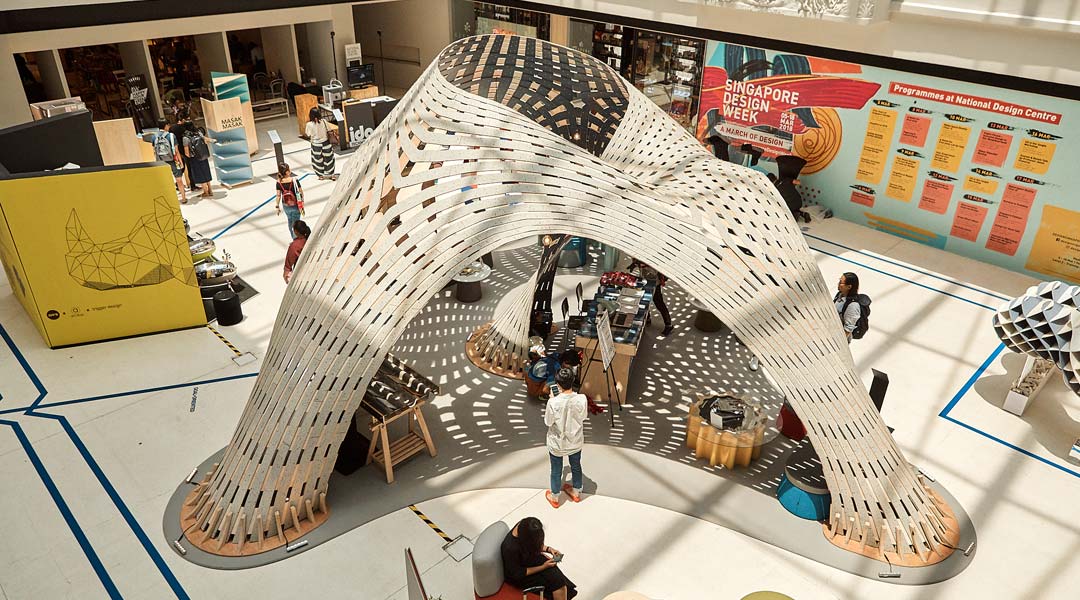
Playing is vital to the design process at Singaplural 2018



“There are no failed experiments; only unexpected outcomes,” curator Pan Yi Cheng repeated as we toured Singaplural 2018 at Singapore’s National Design Center last 9 March. Pan and his team at PRODUCE selected the process of ‘play’ as this year’s big idea. This is the seventh run of this exhibit and an anchor event of Sinagpore Design Week.
Eleven collaborations between brands and designers, expressed through interactive displays, celebrate the exploration stage that comes before the design process. Instead of keeping them in the archives, Singaplural 2018 spotlights the experiments and accidents in researching materials and processes.
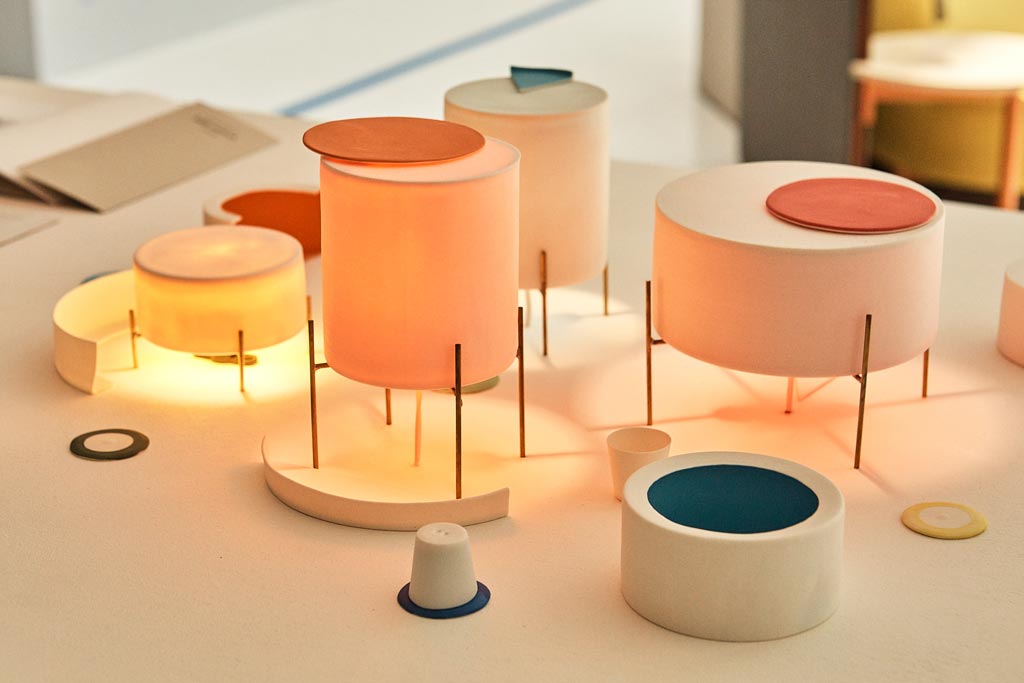
The theme of “A State in Play” looks to shift the concept of play from something that is frivolous to a process quintessential for design. Innovation happens most in this liberated atmosphere for trial-and-error. Singaplural 2018 recalls what Albert Einstein once said about play—it is the highest form of research. How many of us understood more physics and anatomy in the playground than in the classroom?
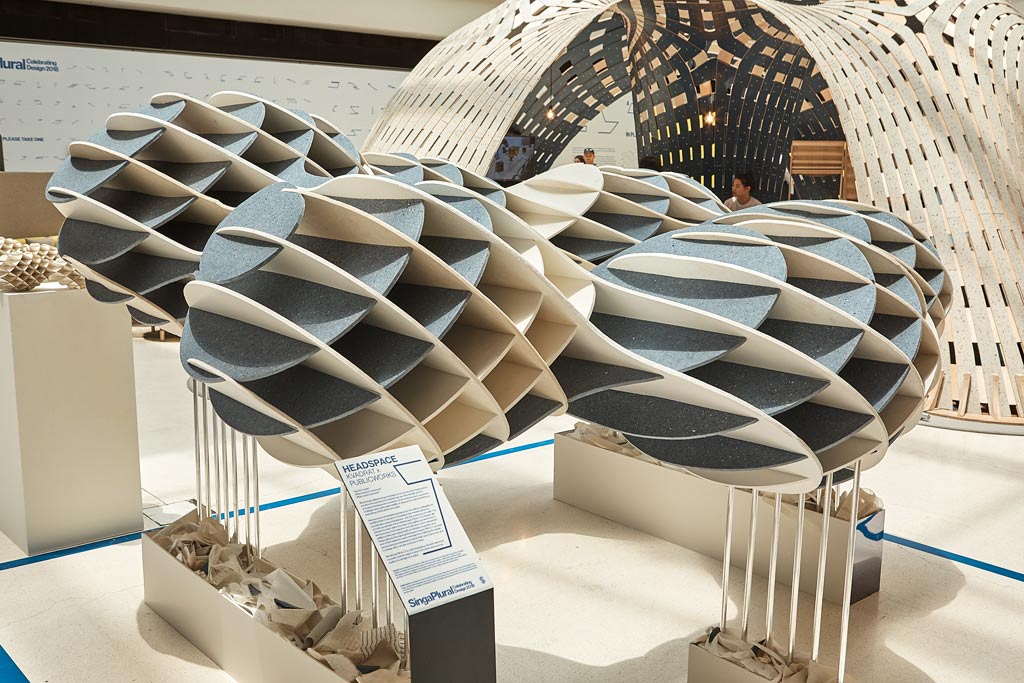
PRODUCE framed the experiments three ways: goal-oriented, leading to a product; open-ended, leading to a series of iterations; and participatory, inviting visitors to co-create. This was interpreted by the following teams: Antalis x META Studio, Benel x 11H, Cellini x Djalin x etc lab, Ewins x Gabriel Tan Studio, Formica x PRODUCE, IDF Singapore x arttd’inox x Trigger Design, Infuud Asia x Spatial Anatomy, JVCKenwood x AK+, Kvadrat x Publicworks, Pinch Design, and STUDIO DAM.
READ MORE: This treehouse retrofit by Jim Caumeron turns a cookie-cutter house on its head
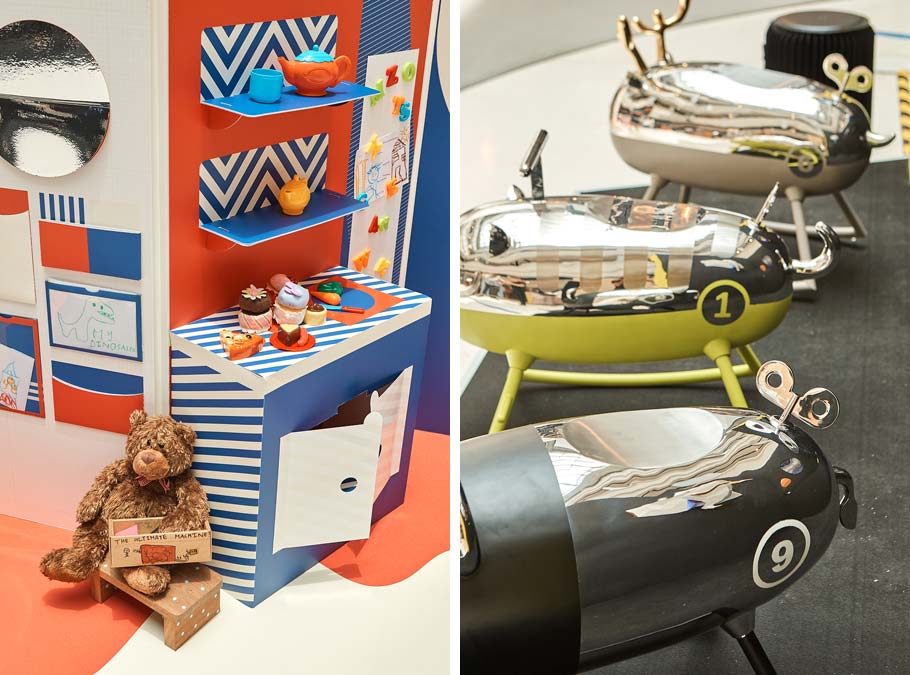
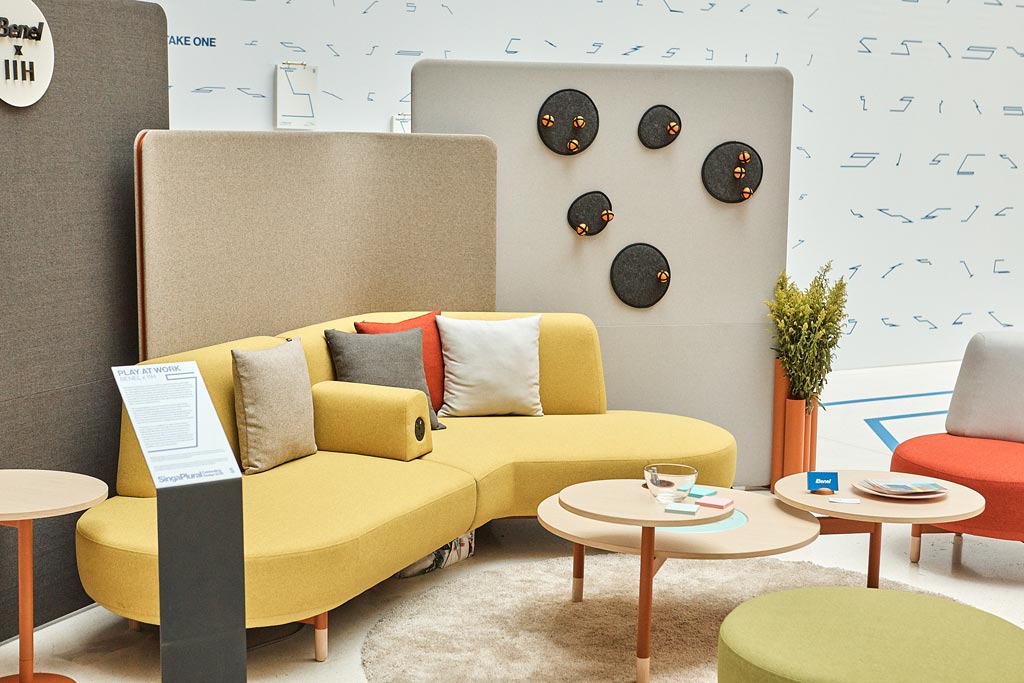
Singaplural was established by the Singapore Furniture Industries Council in 2012 to bridge designers with manufacturers. And out of these collaborations come long-lasting relationships. As we spoke to the different exhibitors after the tour, almost all our interviewees admitted that it was the beginning of a marriage between the brand and the partner designer. Upcoming projects were already on the horizon.
Another benefit would be the knowledge-transfer and skills development. For example, in this edition of the exhibit, Trigger Design worked with IDF Singapore and stainless steel specialist arttd’inox to produce rockers inspired by endangered species. This prompted the company, whose usual products are modular kitchens, to utilize hand-made techniques supervised by designer Wai Lim to produce the toys.
“When people see Singaplural, they see a showcase. But I think the real power is in the IP creation that is driving the showcase. It’s an opportunity for designers to meet manufacturers in order to develop something new and help them take products to the next level—find new uses for the products. And that has been the DNA of Singaplural over all these years,” said DesignSingapore Council executive director Agnes Kwek. 
BluPrint’s Singapore Design Week 2018 trip was made possible with the support of Singapore Tourism Board. They have a calendar packed with art and design events, which you can check out here.
Frequently Asked Questions
The theme reframes play from a frivolous activity into a vital research tool for design innovation. By embracing a liberated atmosphere of trial and error, designers can discover unexpected outcomes that traditional, rigid processes might miss. As Albert Einstein noted, play is the highest form of research, allowing for breakthroughs in material use and structural form.
The event serves as a matchmaking platform that bridges the gap between creative designers and industrial manufacturers. These collaborations often lead to long-term “marriages” and intellectual property creation, helping brands evolve their identities. By working together on experimental displays, both parties develop new products and innovative manufacturing techniques they can utilize in future commercial projects.
Curator Pan Yi Cheng and the PRODUCE team framed the experiments into three distinct categories: goal-oriented, open-ended, and participatory. Goal-oriented play leads directly to a final product, while open-ended play results in a series of evolving iterations. Participatory play is unique because it invites visitors to engage with the displays, making them active co-creators in the design process.
Yes, a primary benefit of the exhibit is knowledge transfer and skills development for specialized manufacturers. For instance, stainless steel kitchen specialist arttd’inox collaborated with Trigger Design to produce hand-made rockers inspired by endangered species. This allowed a company typically focused on modular kitchens to apply their technical expertise to artistic, hand-crafted toys, expanding their production capabilities.
Sustainability is a key component of several featured installations, such as “Headspace” by Kvadrat and Public Works. This specific acoustic installation was crafted using materials that are both completely recycled and fully recyclable. Such displays demonstrate that the “play” process also involves researching how to reduce environmental impact while maintaining high-quality design and functional performance.

