Bigkis is the act of binding. In Tagalog, the word can refer to something used to bind or encircle, as well as a bundle formed by tying several separate elements together. Figuratively, it can also mean a bond, union, or unity. The meanings move from the physical act of joining things together to the connection […]
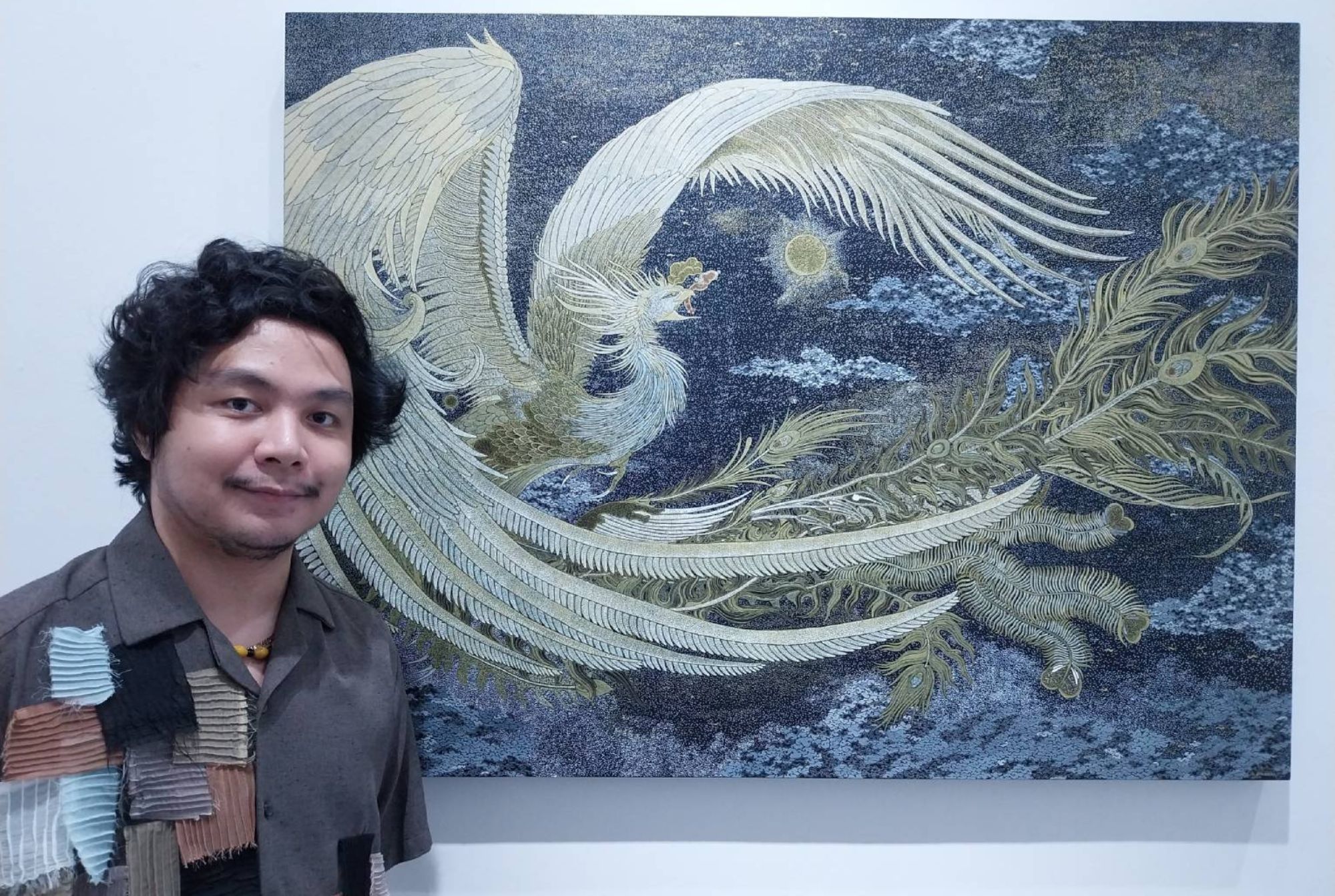
‘Zephyr’: Joshua Barrera Lays Out A Tribute to Asian Culture



For Joshua Barrera, the works for Zephyr, his newest exhibit for Altro Mondo Creative Space, uses a common element in all of them: wind. That elemental part of the Earth which permeates through most everything also spreads itself in his works.
“All of the subjects that I chose here, from the faces of these beauties, homages to masters, as well as these portraits, the butterflies, the birds, the waves, the mountains: wind passes through them and it causes all of them to flutter, fly,” he said.
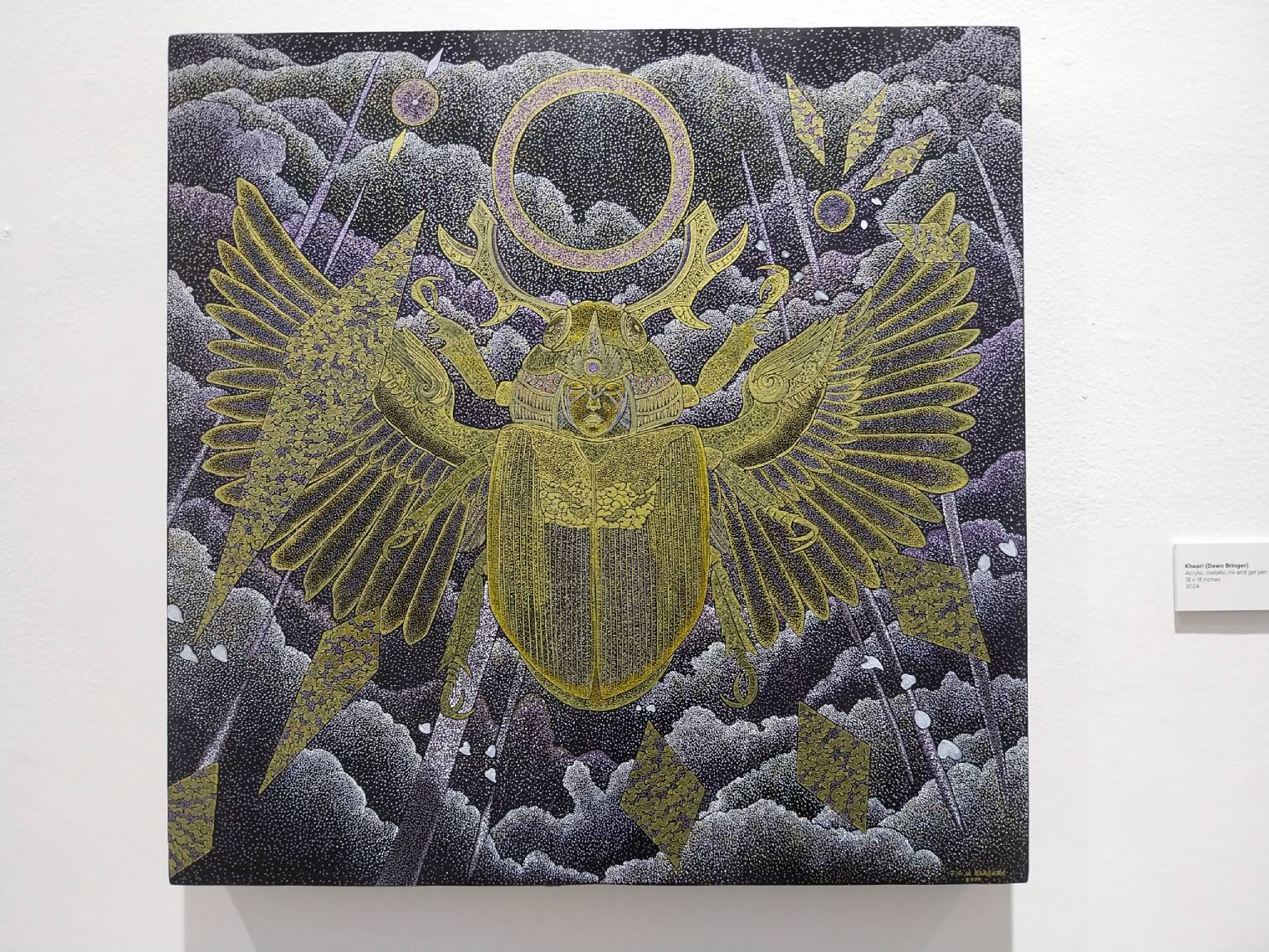
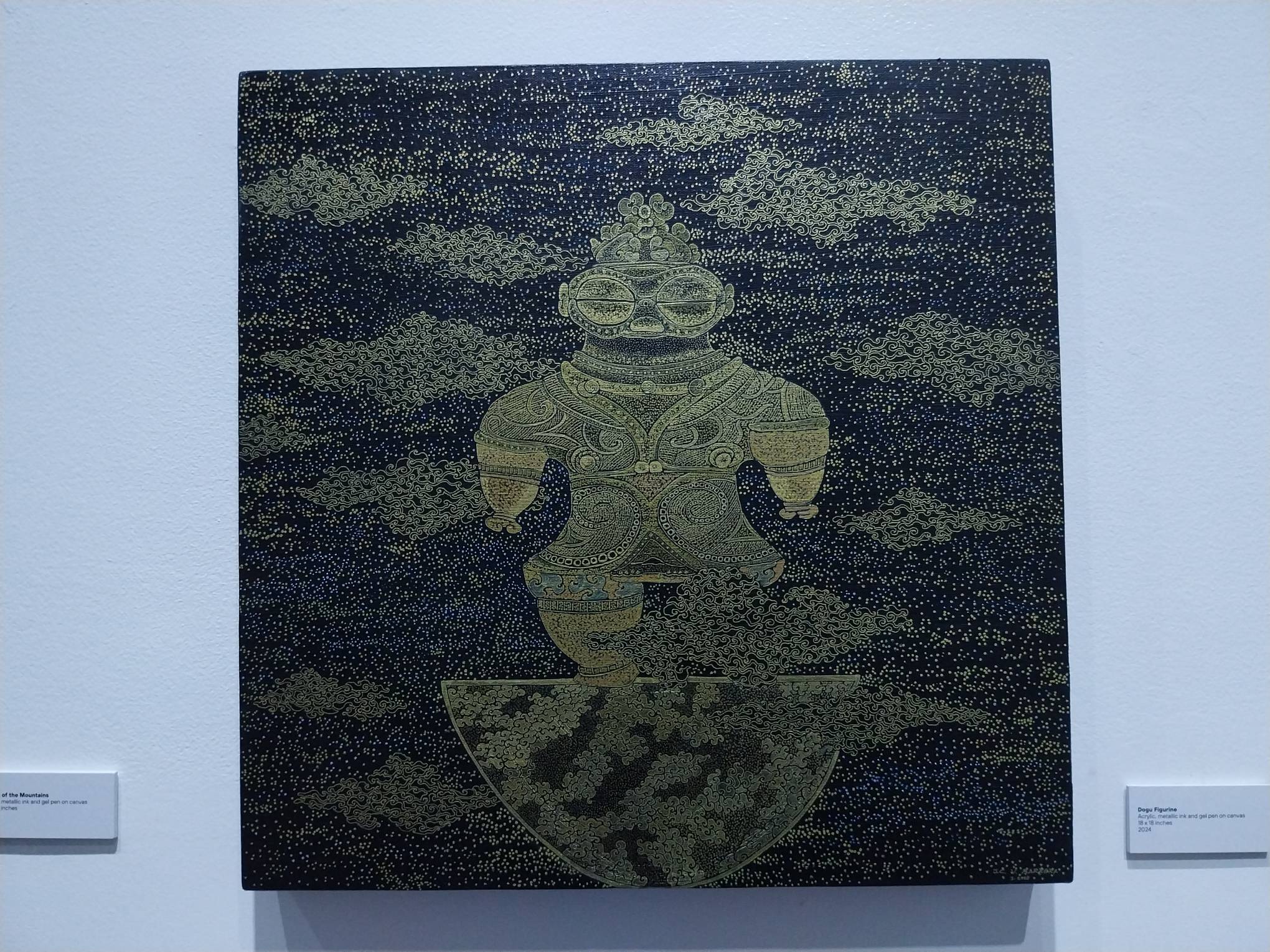
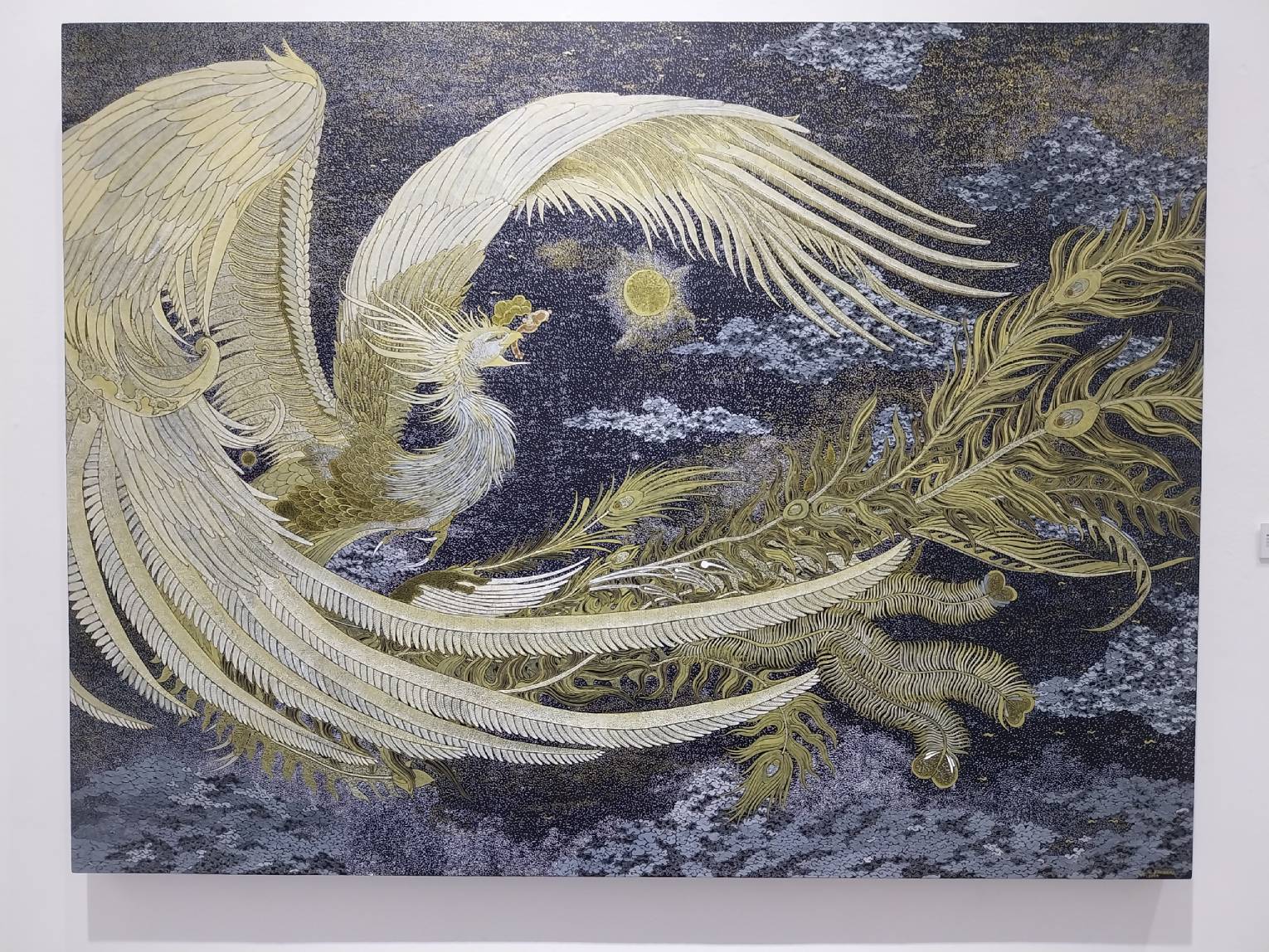
Zephyr, as an exhibit, exists in a plane of airiness that allows for a cultural osmosis. Barrera borrows heavily from other Asian cultures, linking them to the Philippines’ own to make a point about the interconnectedness of our region. From folk beliefs to the majesty of animals in nature, he creates a nostalgic tapestry that depicts a multicultural heritage.
Localized Variations
Joshua Barrera utilizes pointillism for Zephyr, which uses tiny dots to form a larger image. For him, however, its roots come from his school days where classmates would make portraits from just dots. He also said that his works were influenced by ethnic art, which he was exposed to later on.
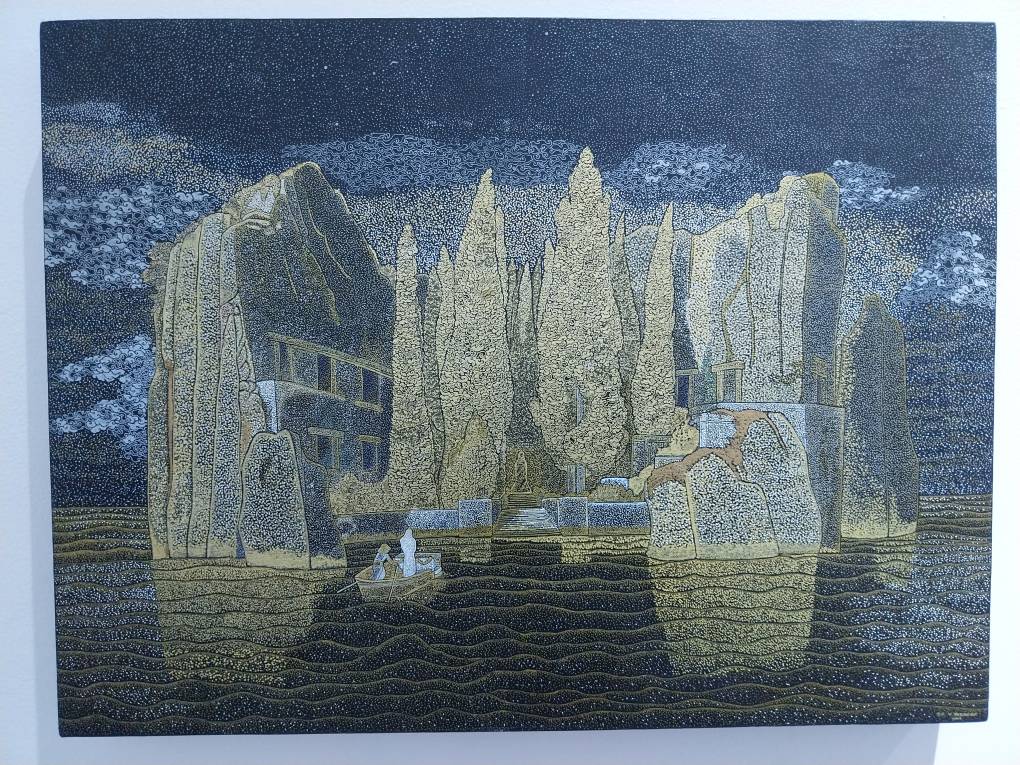
“I was given this book called [Philippine Ethnic Patterns: A Design Sourcebook] by Jesus Peralta,” he said. “And from there, I also saw the ethnic patterns and motifs used by our tribes. Some of which are influenced by the Chinese and of course all of the ethnic groups around Southeast Asia. So I combined them all to do this.”
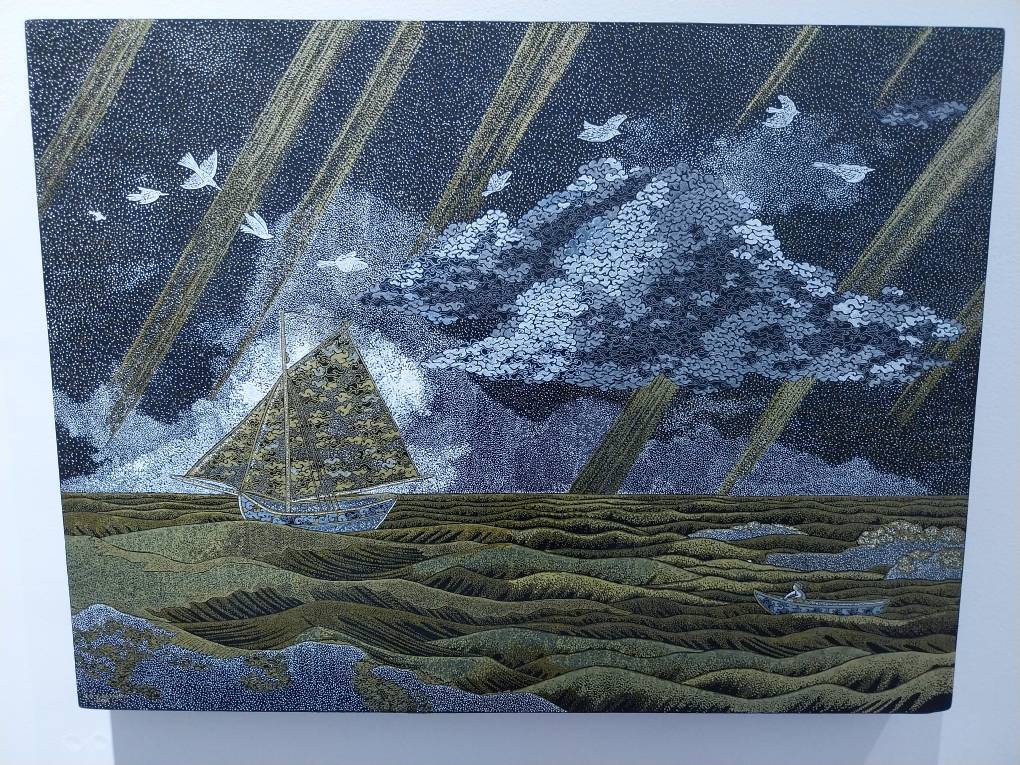
While color does appear in his works, they are generally bathed in a golden nostalgic glow. It contrasts well with the black background, creating a starry-sky atmosphere that makes them seem even more idealized.
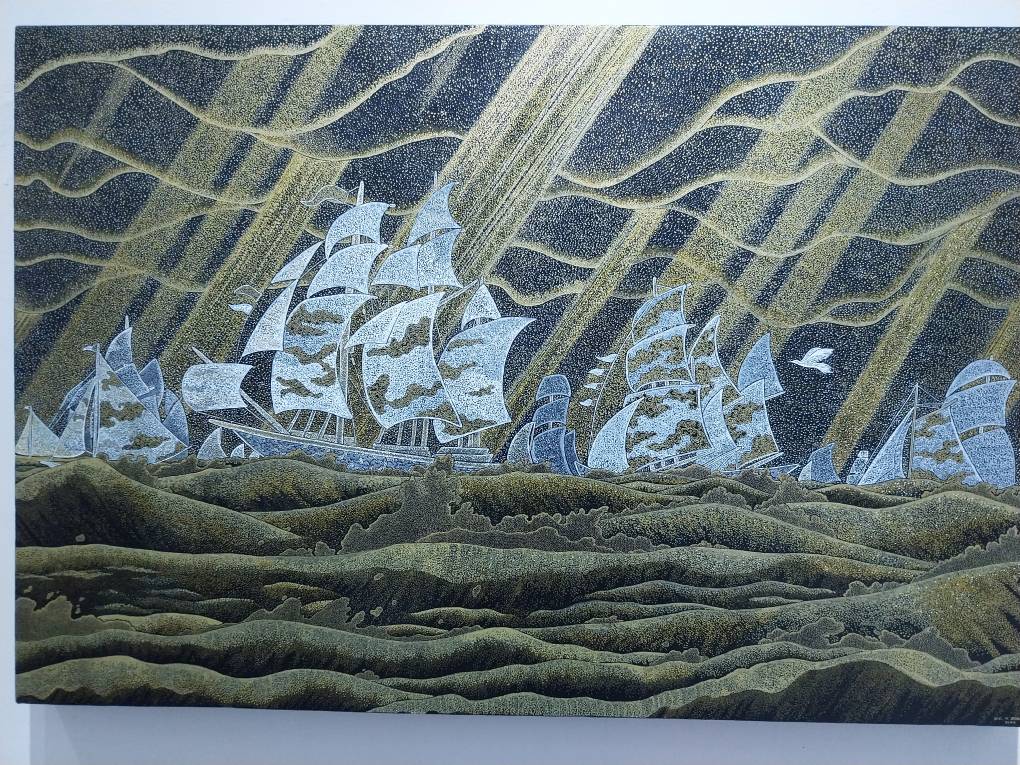
There’s no irony to be found here: Barrera is sincere in his nostalgic depictions of these symbols and cultural signifiers. He wants to memorialize them, even as he understands that even the best efforts to be remembered can be all for naught.
“When I think of memories and legacies, I think of them as golden because they’re very precious. But then here, through my art style with the dots, it’s like I’m diminishing them at the same time. These are like precious memories and values [that I hope we get] to cherish and hopefully carry on [to the next generation]. And if not, it dissipates, it’s lost, like powder,” he said.
Depicting Vanishing Cultures
The breadth of the cultural signifiers depicted in Zephyr can be overwhelming. The artist presents galleons and boats, indigenous groups, mountains, and butterflies, in an epic scope regardless of their actual size. Some of the cultures portrayed are dying or small, at risk of vanishing in humanity’s trudge towards industrialization.
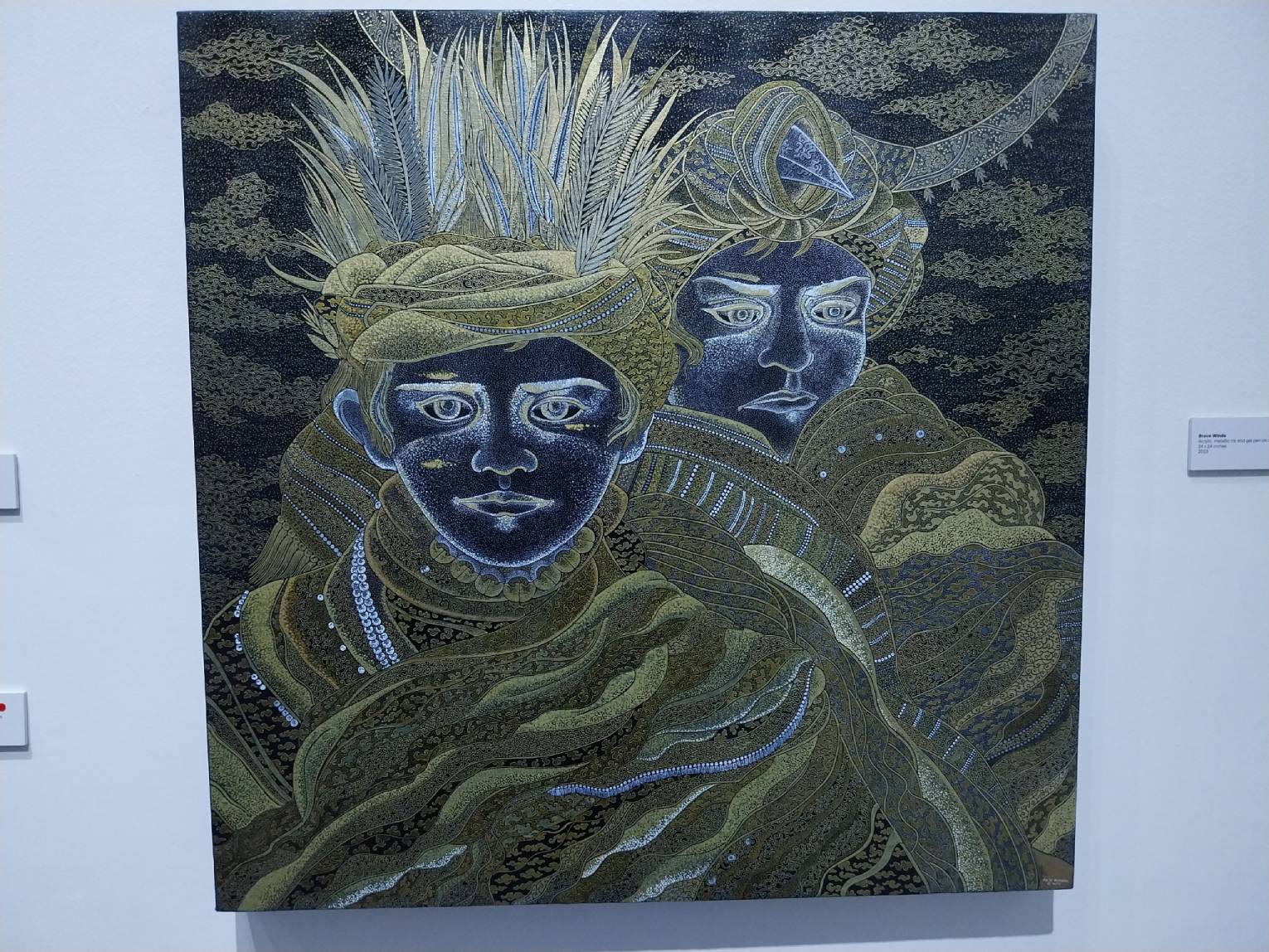
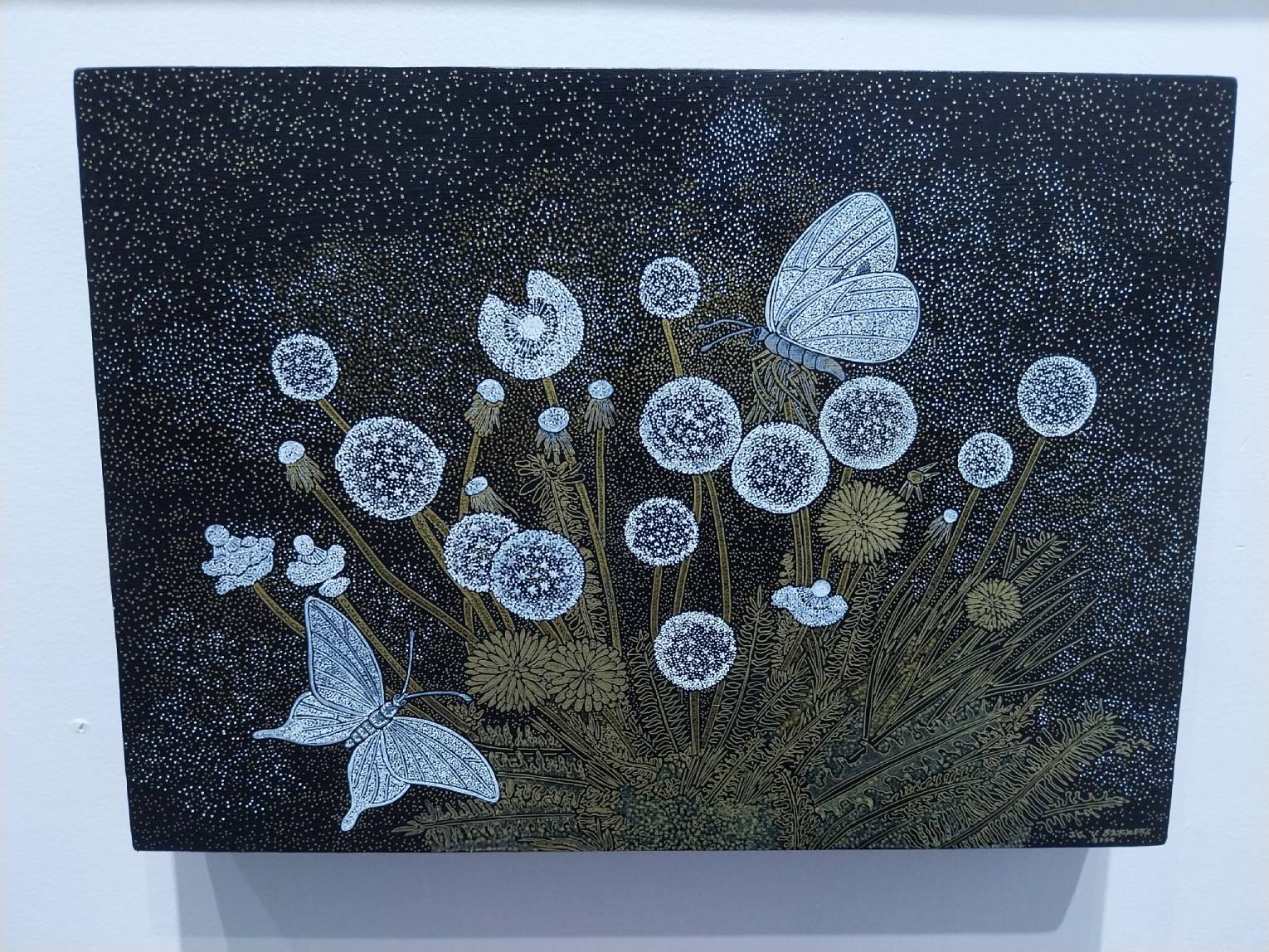
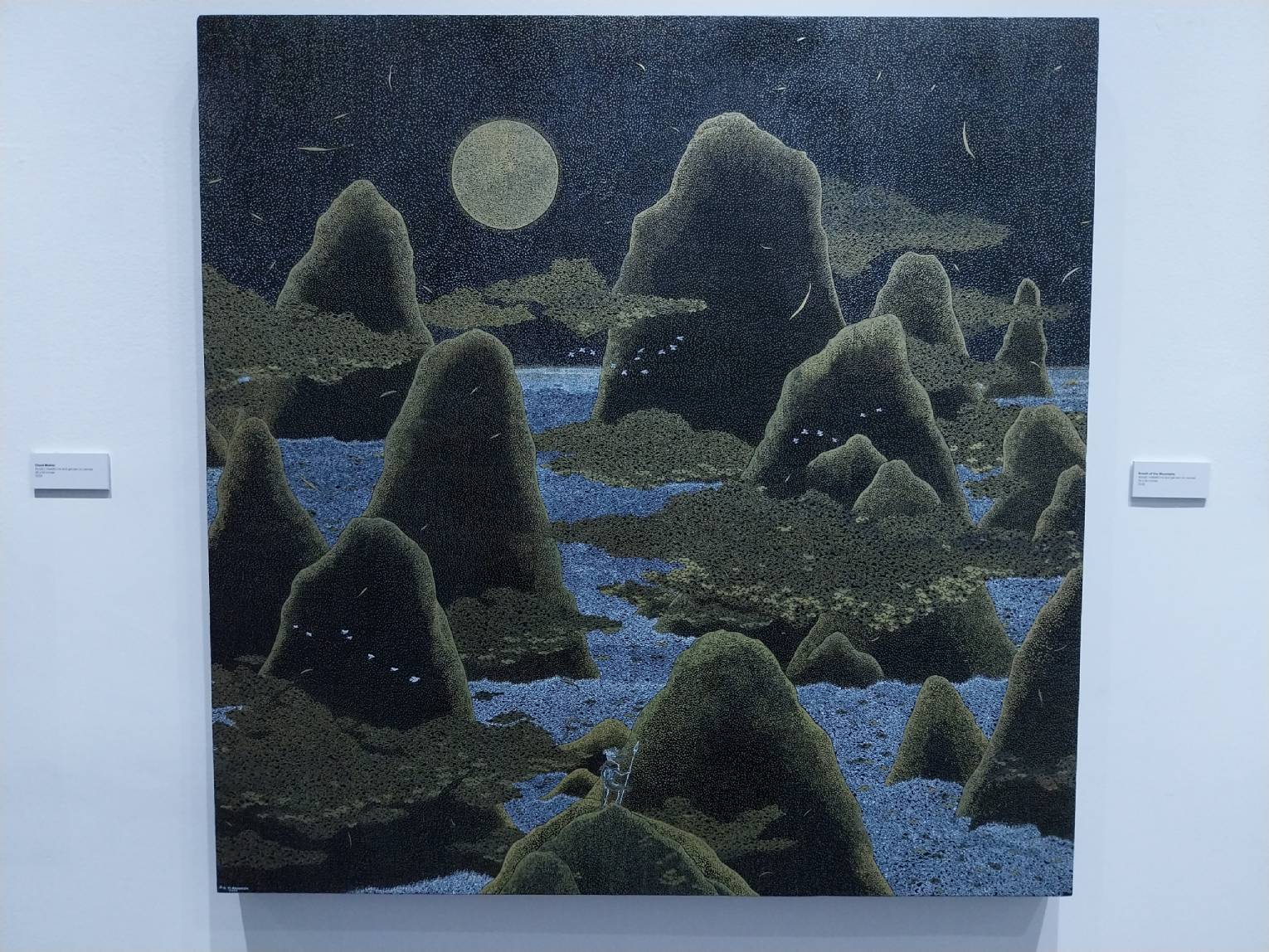
“What I did here was I depicted folk cultures that are dying,” he said. “For example, the Cordillera culture in the Philippines. This piece, in particular, is inspired by their weaving traditions, their folktales, and the Banaue rice terraces itself, all which are in danger of being destroyed or forgotten. That’s why my characters look like this. I kinda want them to be ghostly, as if they’re trying to still be there. They’re trying to still exist, what they’re feeling.”
This feeling of impending loss echoes as a lament throughout the exhibit. His butterflies, for example, are possibly the most interesting work in the exhibit, both for the detail he gives them and for his reasoning behind adding them to the exhibit.
He said that he added the paintings of Queen Alexandra’s birdwing and the peacock butterfly as a way of telling the stories related to the cultures they belong to (Papua New Guinea and Singapore, respectively). The majestic portrayal is intentional: these winged insects can only be found in those countries, and they’re endangered parts of those cultures that could disappear at any time.
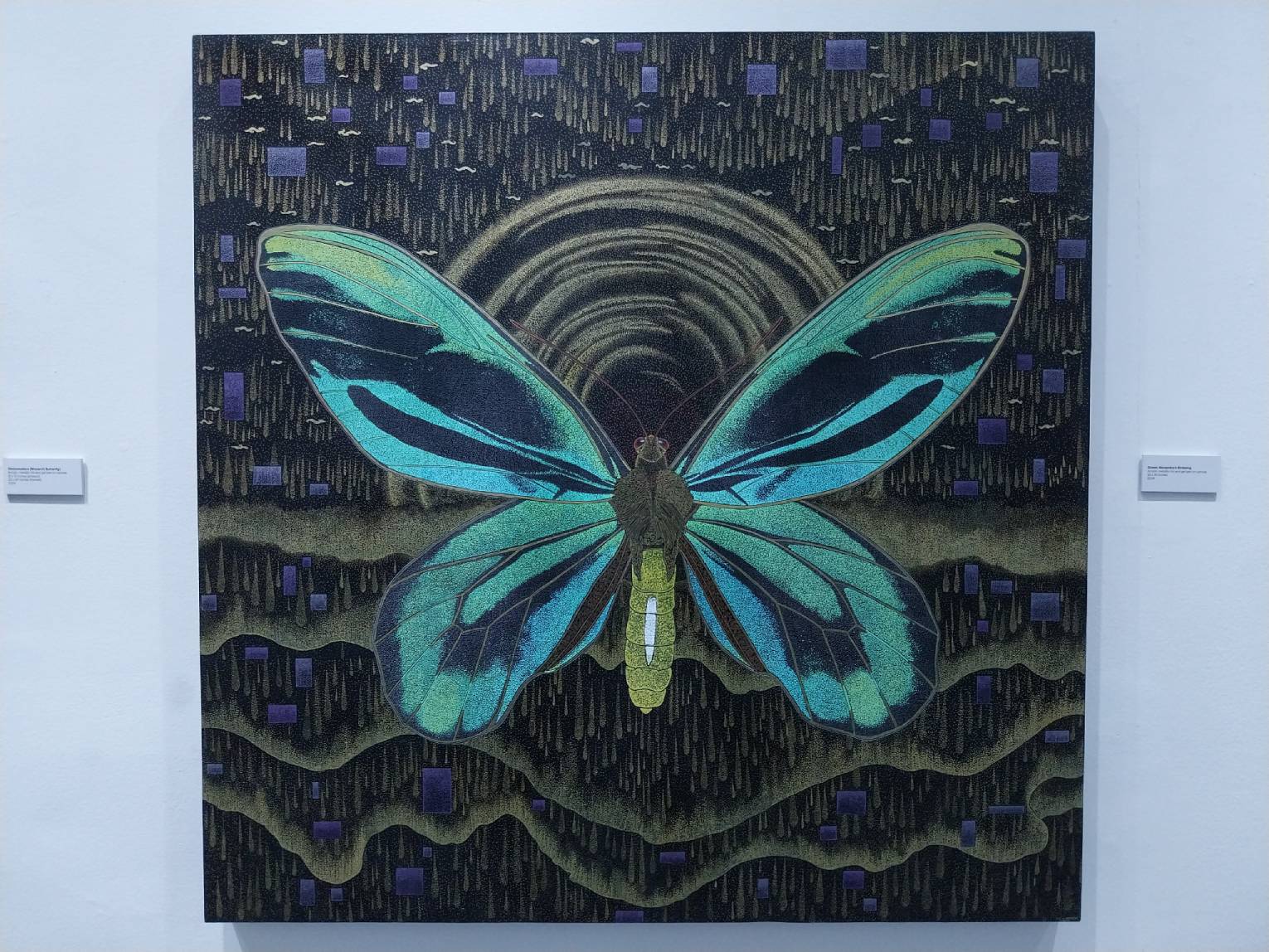
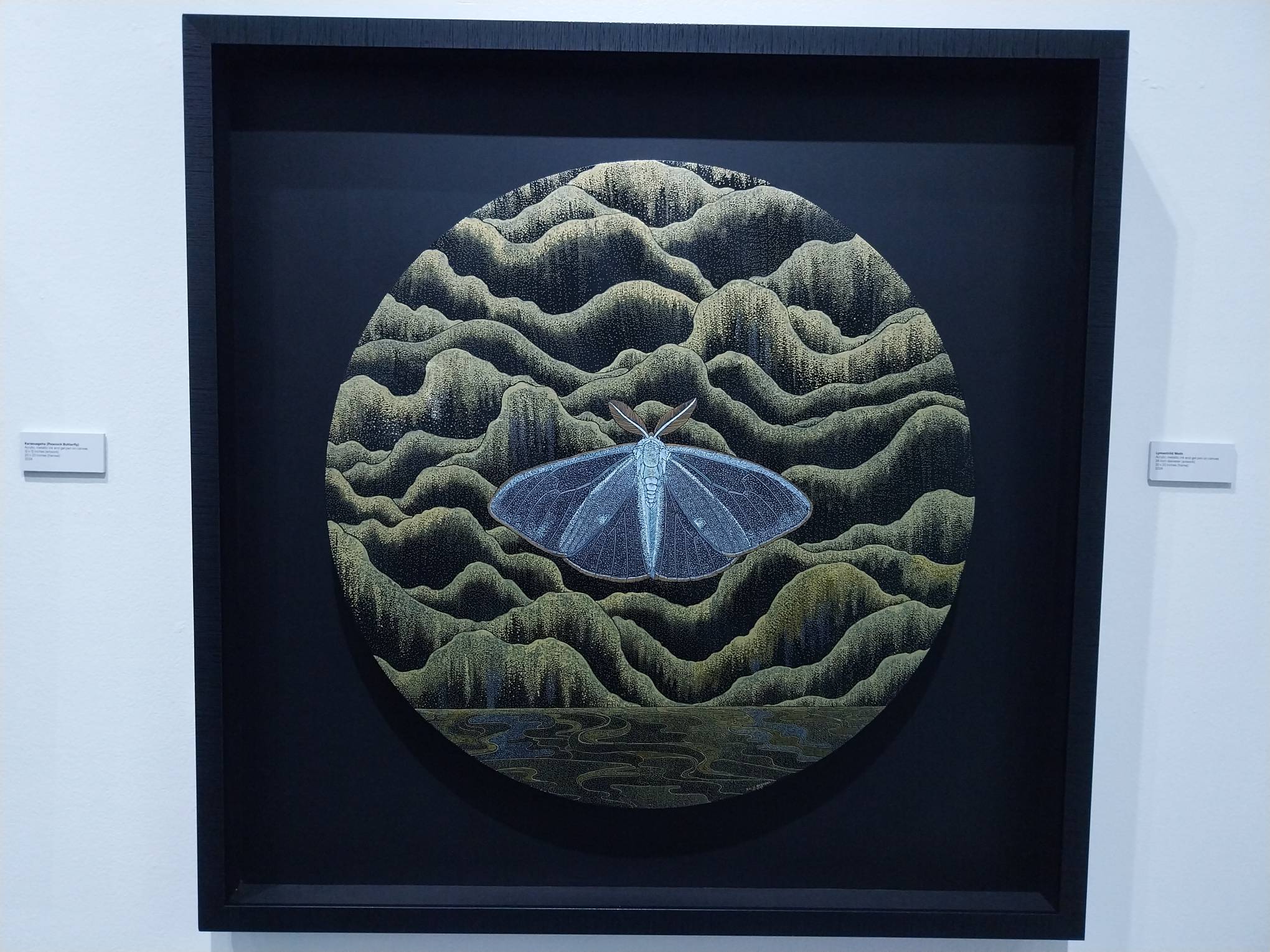
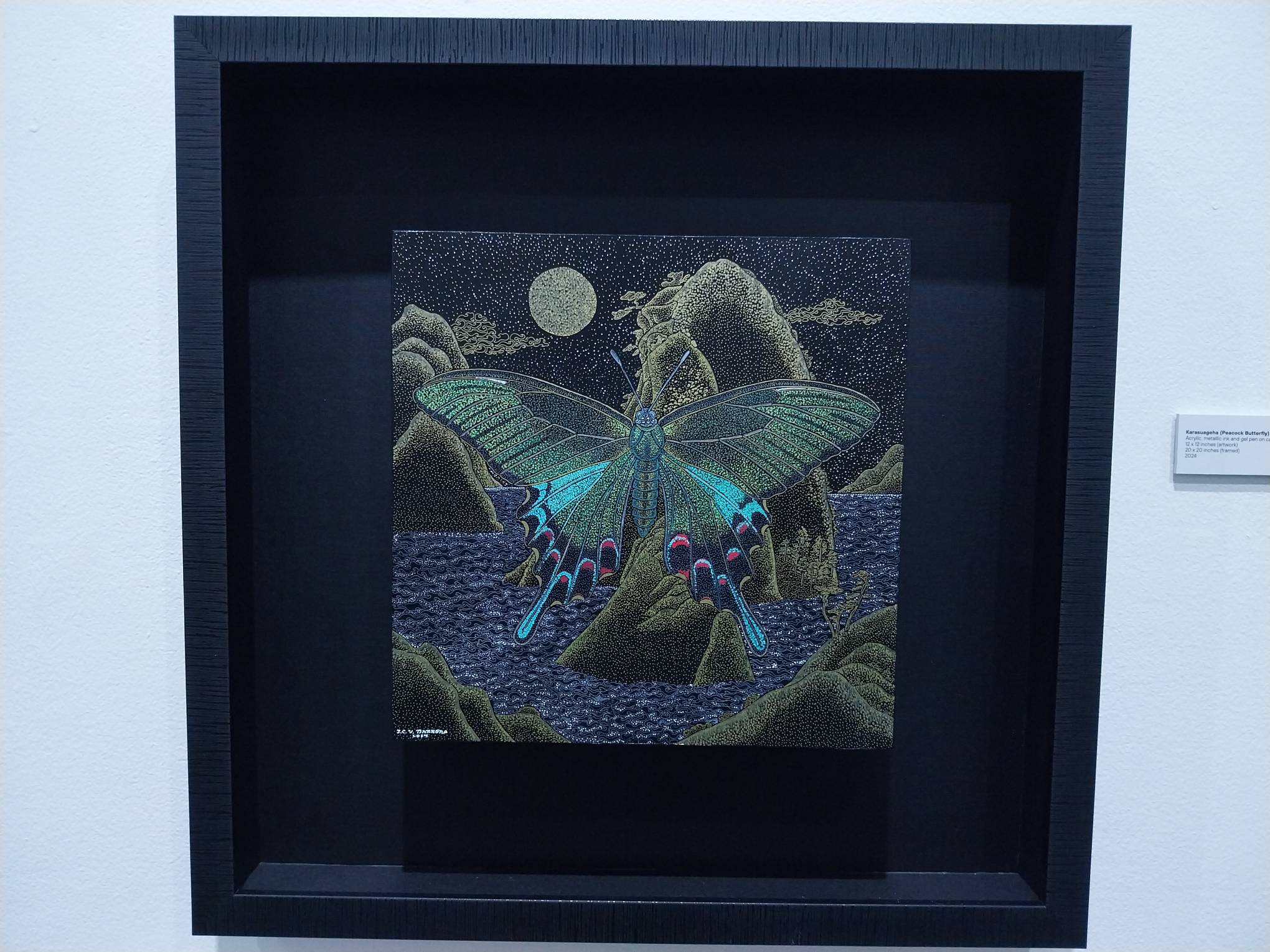
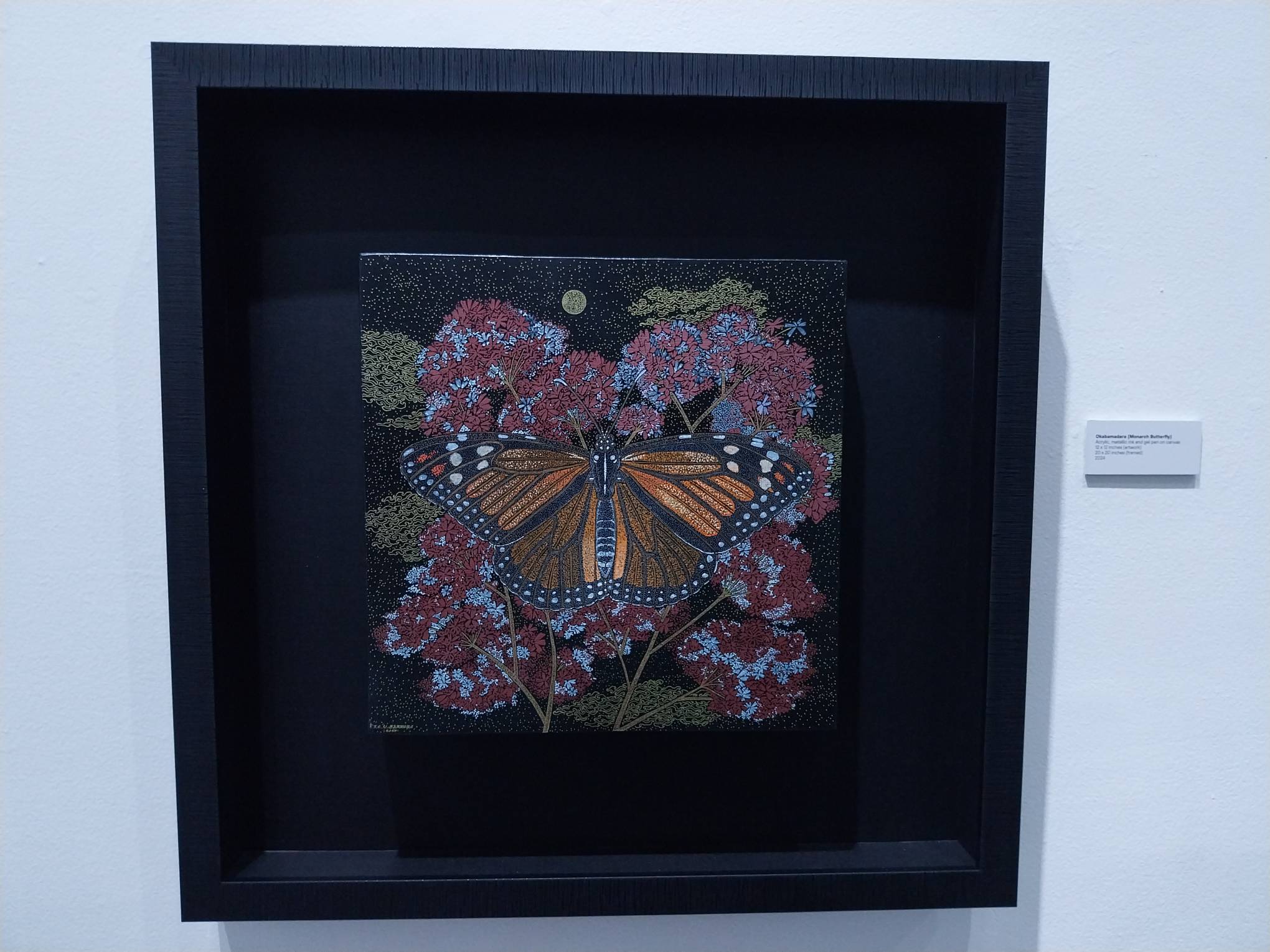
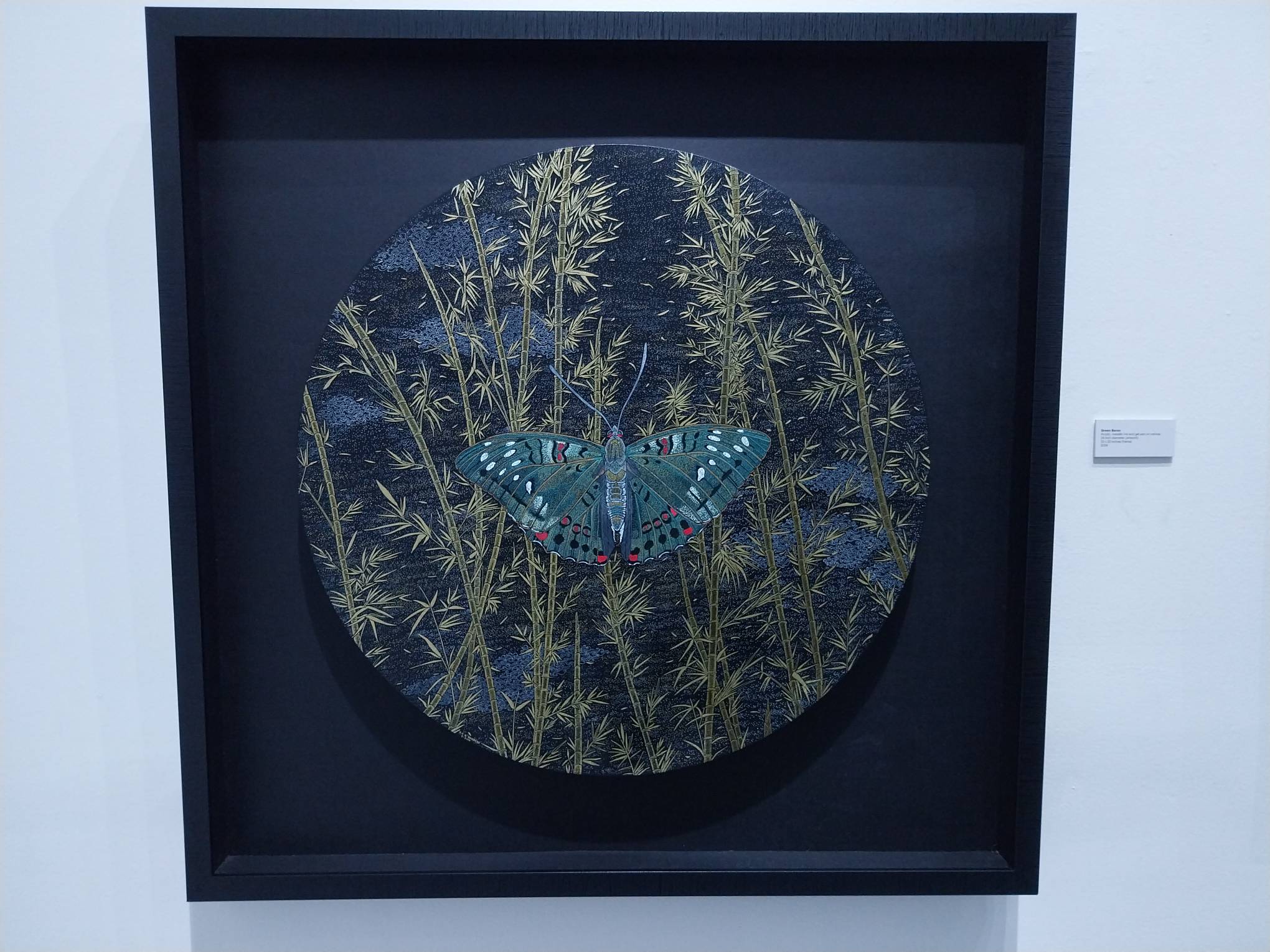
“[These cultural images] could also be totally lost,” he said. “And it’s just like the wind. It could be strong at one point, it could be calm. And you can’t even see the element. How we depict wind is like a flying breeze or a tree that’s been blown down. So it’s an element that you cannot see, but you can feel. And it vanishes.”
The Collectivism of Culture
Beyond that, Joshua Barrera works hard to find the connective tissues that link different Asian cultures to the Philippines’ own. He intermingles them within the exhibit easily, finding ways to deepen his discussion of heritage through his work.
“Part of what I consider heritage is the identities. And clearly the Philippines has been mixed, not only by Spain, the U.S., but by the Western world in general,” he said.
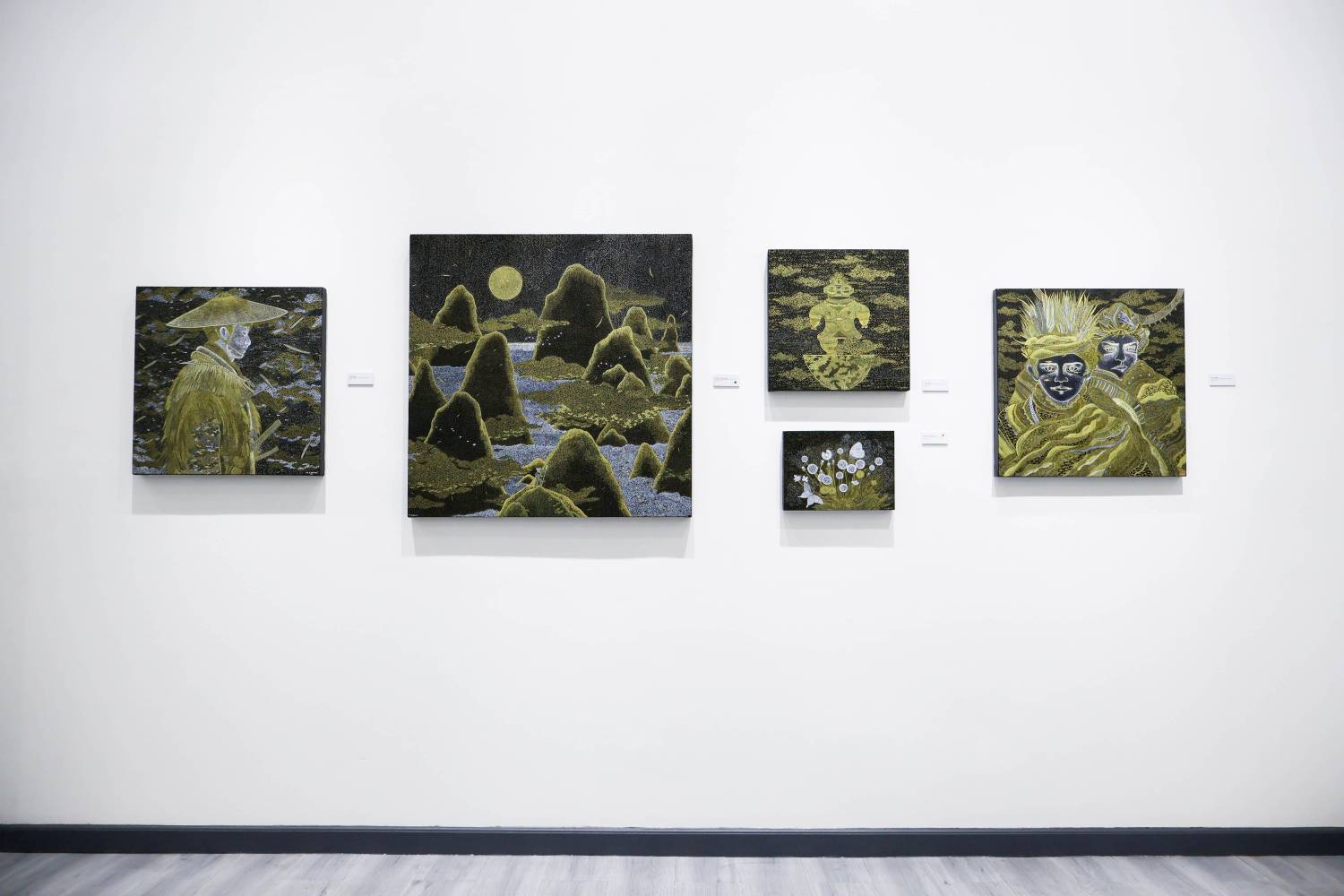
“That’s also something I’d like to show here, that there’s an exchange. Actually, in terms of colonialism, it’s almost as if they’re all being blurred. Like this piece, it could be Japanese, but then the Philippines also has its own version of that cap called the salakot. We also have our own version of a traditional raincoat. [This exchange of cultures is] very common within the Asian region already.”
Heritage and Legacy
Zephyr exists as an exploration of the similarities of folklore and heritage between cultures in a region. The permeability of humanity and its signifiers within tribes and countries leads to similarities that go beyond a singular identity. It brings them to life, putting them back in the conversation not just as something to preserve, but something that needs to thrive.
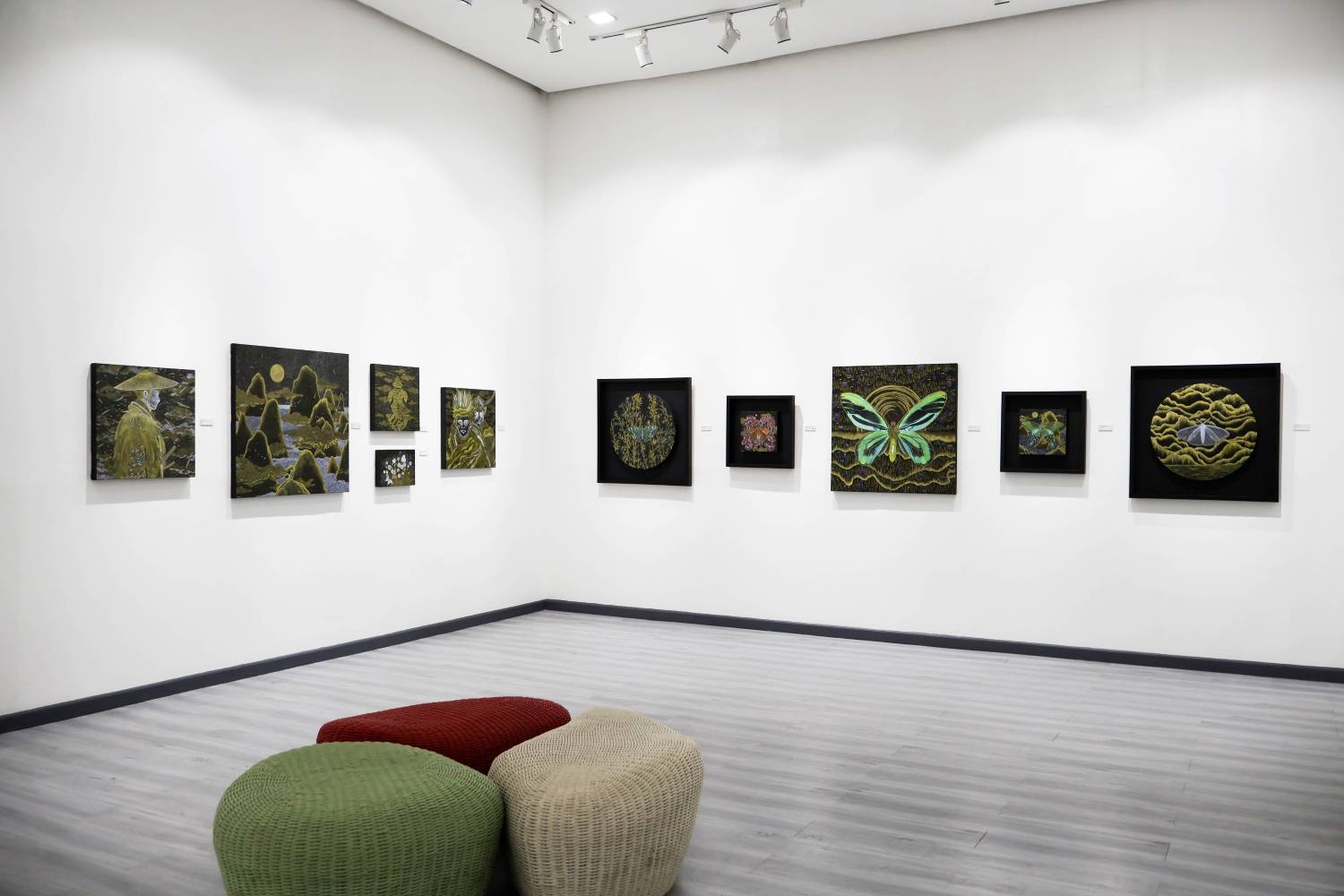
“I’m combining those identities just to show that passing of legacies, like the element of wind,” he said. “It’s a meeting point of these winds, actually, where they meet and gather, and almost like a bit of a windstorm that you come up with all sorts of fragments of ideas and cultures coming out.”
Zephyr is showing in Altro Mondo Creative Space until November 29.
Photos by Elle Yap unless otherwise stated.
Related reading: ‘Softcore War’ Reimagines Propaganda in the Context of Modernity
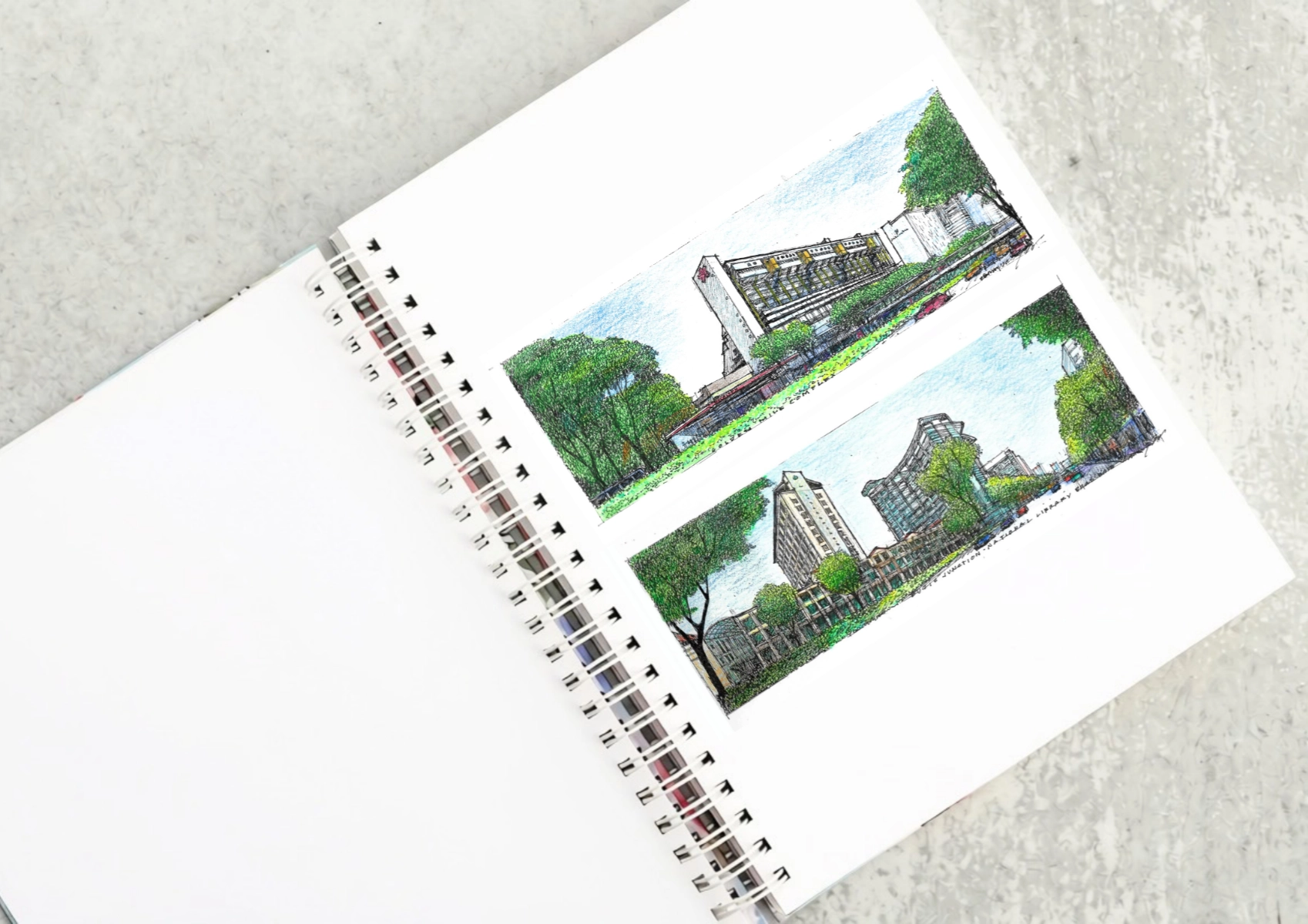
Two sketches of Singapore connect BluPrint Editor in Chief Paulo G. Alcazaren’s personal and professional history with Shared Ground: ArchitectureArchitectureThe art and science of designing and constructing buildings, structures, and spaces that are functional, safe, and aesthetically pleasing. It encompasses the planning, design, materials, and techniques used to createGo to Architecture Glossary of Care, Culture, […]
Some have become household names – Coleman, Oster, and KitchenAid – products that have found their way into Filipino kitchens, homes and family routines. In home furnishings, brands such as B&B Italia, Ethan Allen, Sub-Zero, Miele, SieMatic, Louis Poulsen, Hunter Douglas, Tempur, and Technogym, have helped shape the way Filipinos live. From everyday essentials to […]
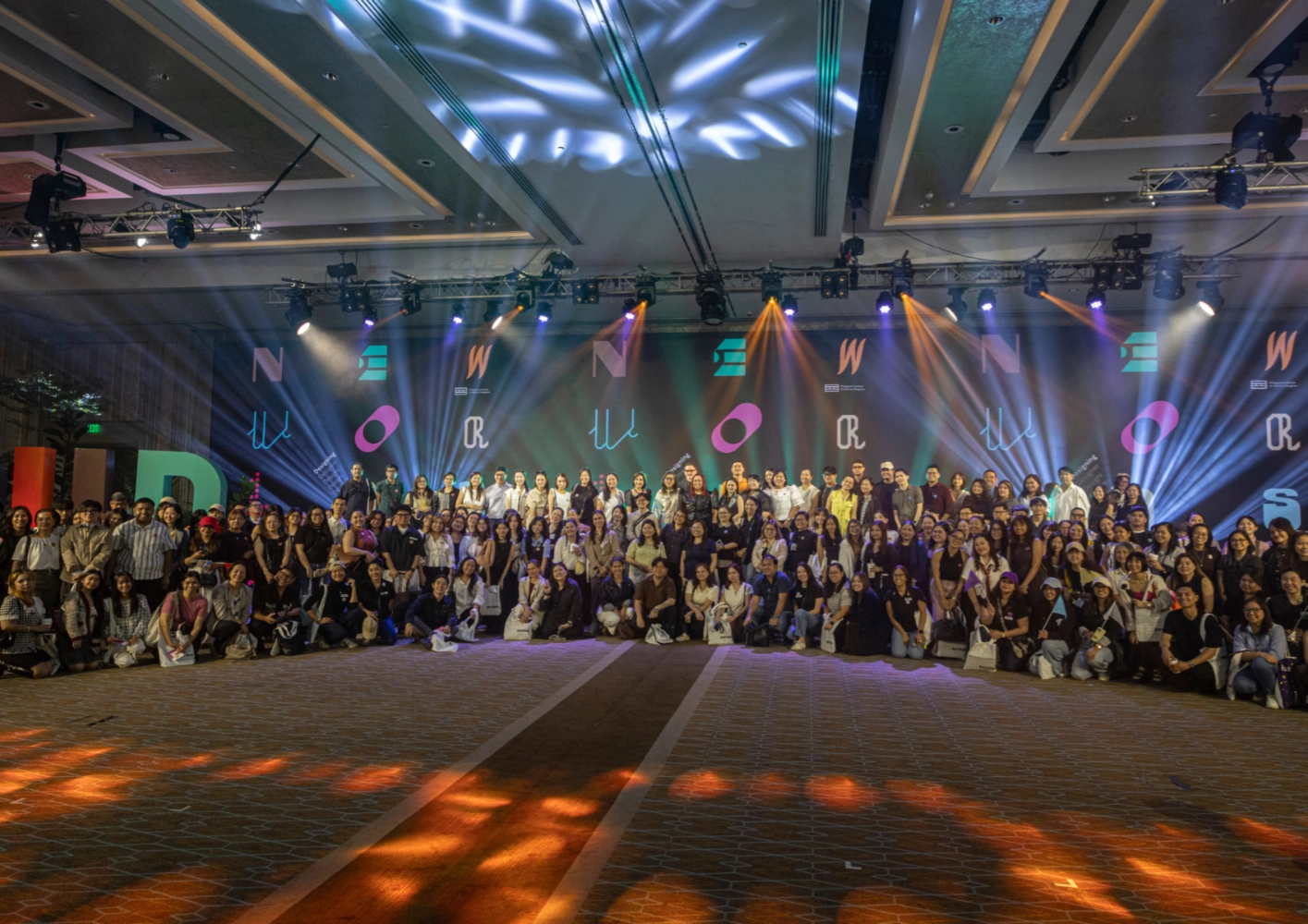
In a way, designers are the modern-day soothsayers and prophets. They design for the future, predicting how a room, a house, a building or a whole city will be used by people. They foresee how users will interact with a space, conjure exact shades of colors to elicit specific behavior and arrange furniture to build […]
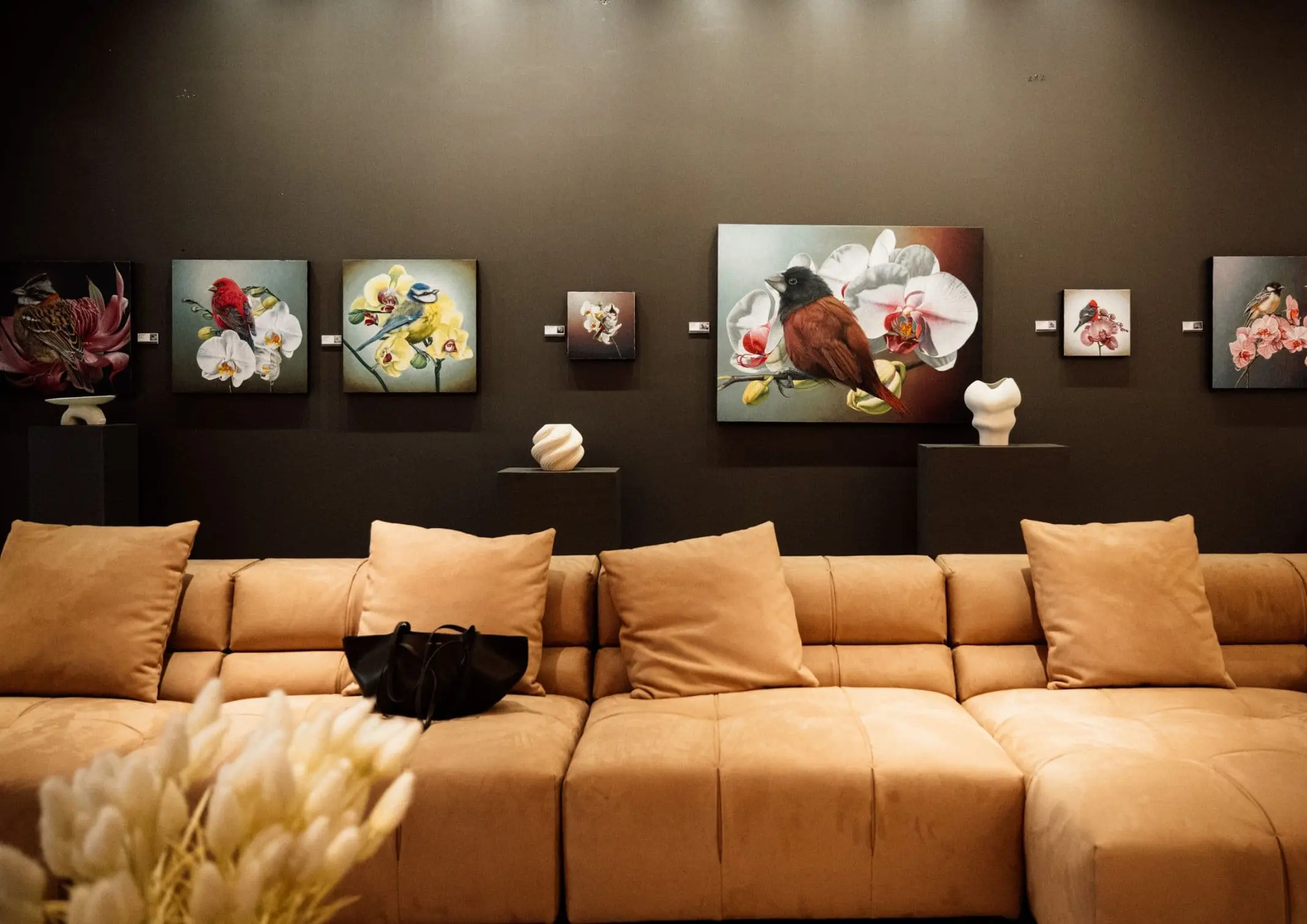
Art and furniture are often selected separately, yet their relationship can shape how a room looks and feels. The collaboration between Hooga and Galerie Joaquin explores how these elements can work together, bringing contemporary artworks into furnished residential settings at Hooga’s showroom in Uptown Mall, Bonifacio Global City. For Hooga, which curates furniture, lighting, and […]
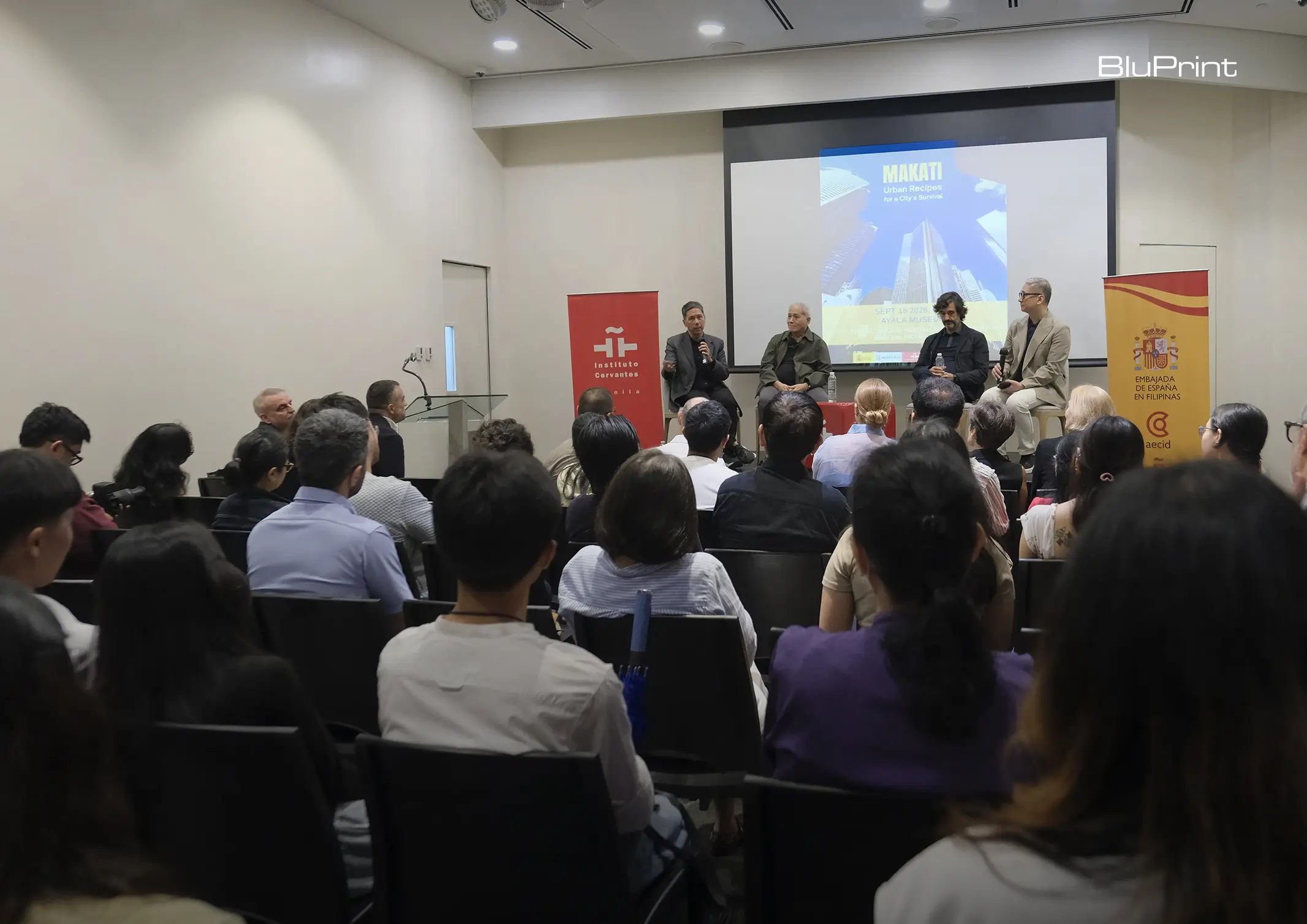
How can better-planned cities create the conditions for more creative, livable, and resilient urban environments? “Makati Urban Recipes for a City’s Survival,” a colloquium held at the Ayala Museum on September 15, brought together architects and practitioners from the fields of urbanism and the creative economy to discuss how design, planning, and collaboration can address […]
Read the issues.

Collect the volumes.

Recommended Video
Tap to Unmute
Unmute
0:00
0:00