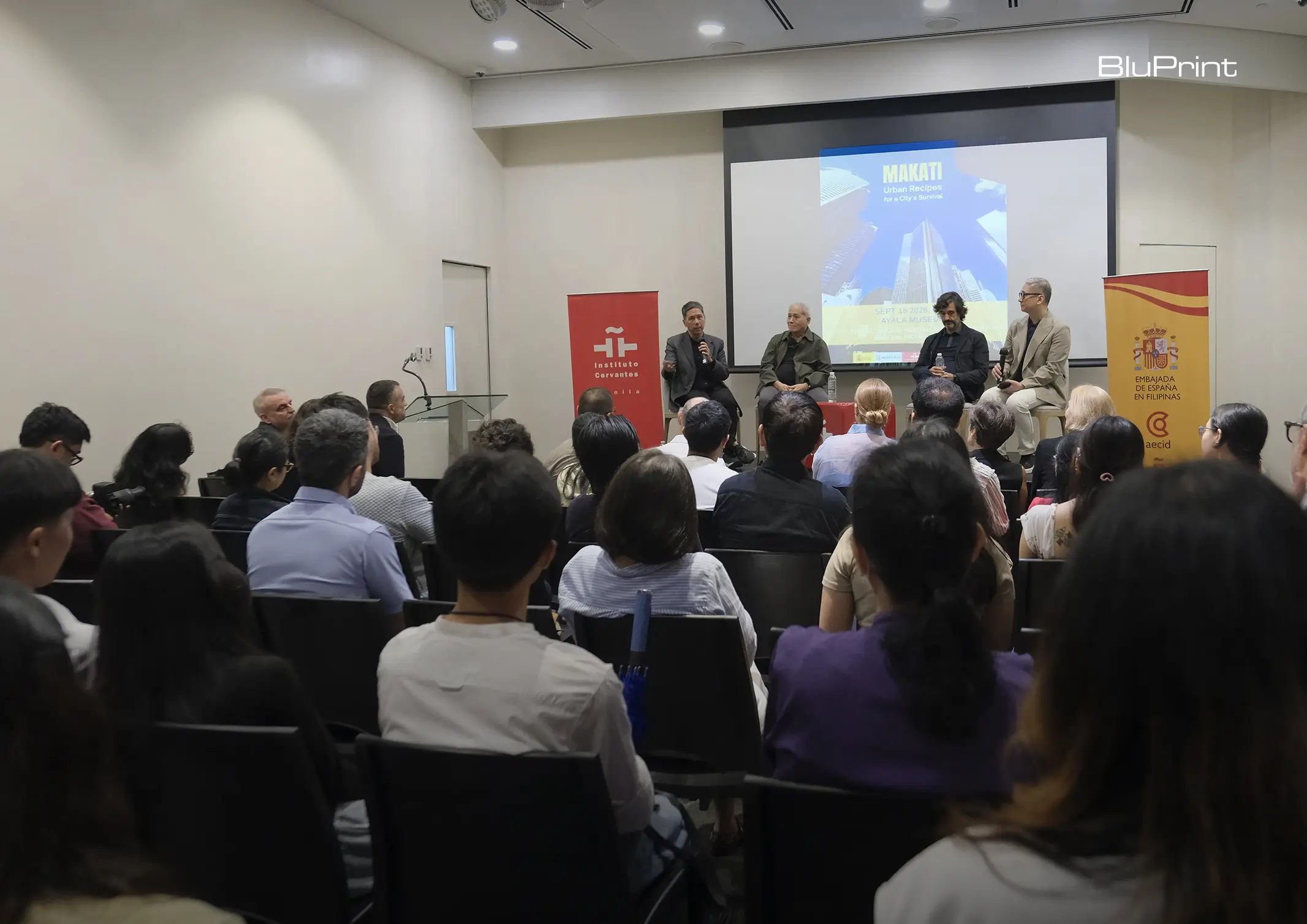
How can better-planned cities create the conditions for more creative, livable, and resilient urban environments? “Makati Urban Recipes for a City’s Survival,” a colloquium held at the Ayala Museum on September 15, brought together architects and practitioners from the fields of urbanism and the creative economy to discuss how design, planning, and collaboration can address […]
Galerie Stephanie Showcases an All-Filipina Lineup at Art Fair Tokyo



Art Fair Tokyo, currently the biggest annual art expo in Japan, was held from March 7 to 9 at the Tokyo International Forum. Over the three-day event, Galerie Stephanie showcased works from its roster of artists, standing as the sole Philippine-based gallery at the fair.
The Tokyo exhibition featured the works of Kim Borja, Jem Magbanua, Thea Quiachon, and Naburok. This all women line up was an intentional move by the gallery to celebrate Women’s Month. It also highlighted the different flavors of local talent.
“We felt that the works of [these artists] are somewhat relatable to the general art perceptions in Japan, all while being able to retain their distinctive Filipino flair,” Grace Micah Oreiro, operations manager for Galerie Stephanie said.
“Giving them a platform allows for these powerful stories to be heard and understood worldwide,” she added.
Celebrating Filipino Women’s Talent
Stylistically, the approaches of these artists have an idiosyncratic flair to them that are eyecatching in their color and framing. Some of the artists, Oreiro said, were chosen because of “certain commonalities in styles [with Japanese artists] such as whimsical and pop surrealist [methods].”
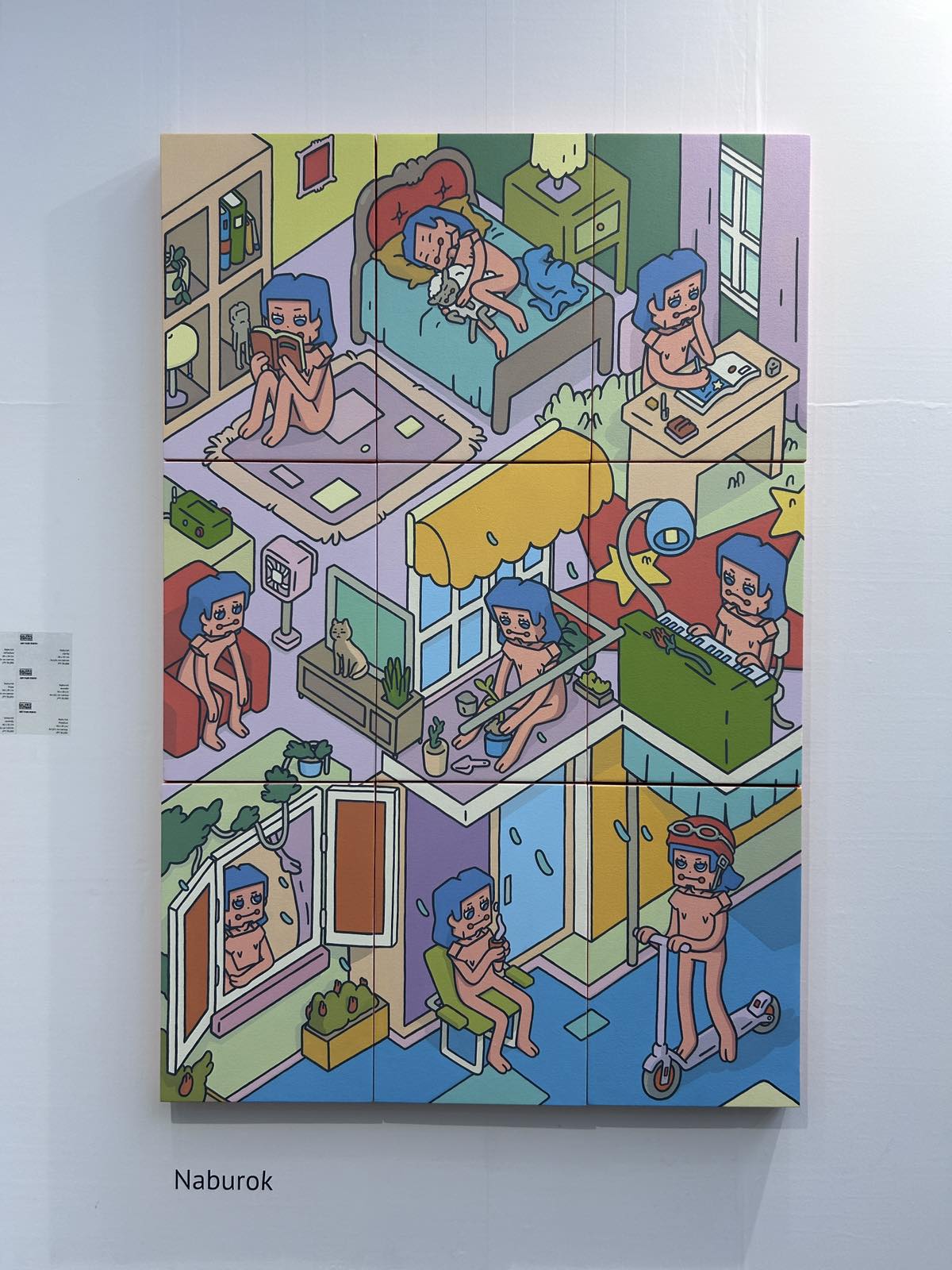
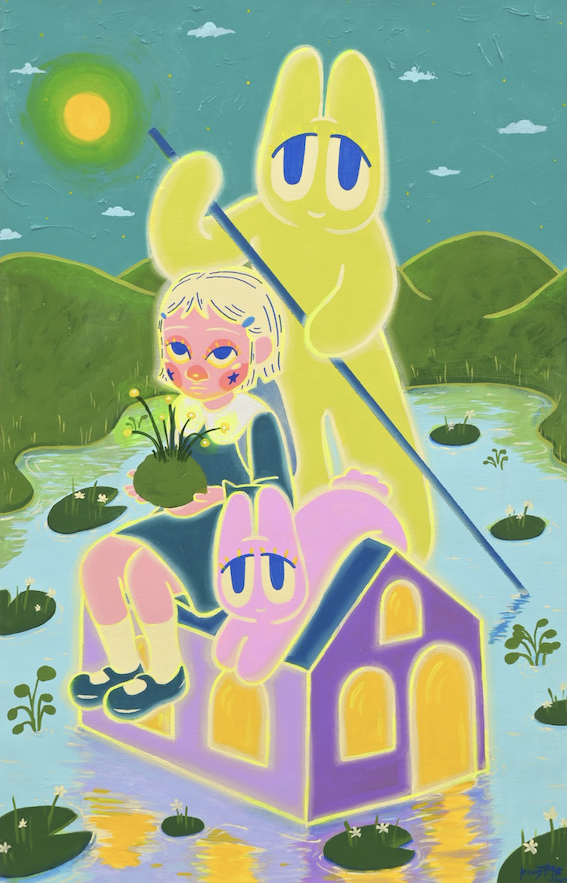
Kim Borja, for example, utilizes her signature pastel-colored method in the exhibit’s paintings. The works showcased a heightened reality where humans appear to coexist with some adorable cat-bunny hybrids. Complimenting that style is Naburok, whose paintings have a comic book-esque quality to them. She depicts different slice-of-life images of people at leisure, whether it’s playing the piano, gardening, or sleeping in bed.
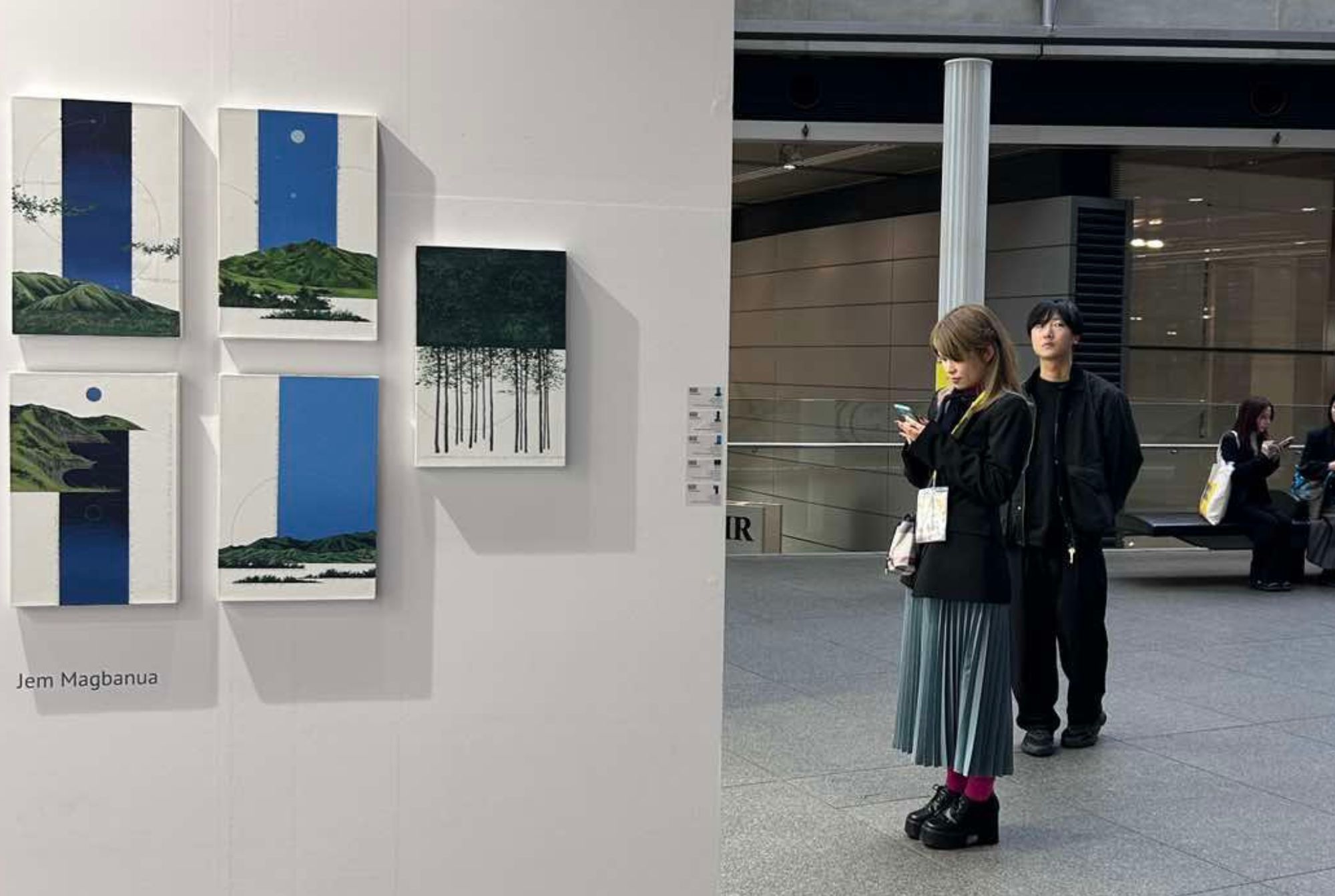
On the other side of the equation are the works of Jem Magbanua and Thea Quiachon. Magbanua uses her space to showcase minimalist mountainscapes against a blue and white backdrop. Quiachon, meanwhile, presents a series of tactile paintings of a contemplative person in the midst of a rocky landscape.
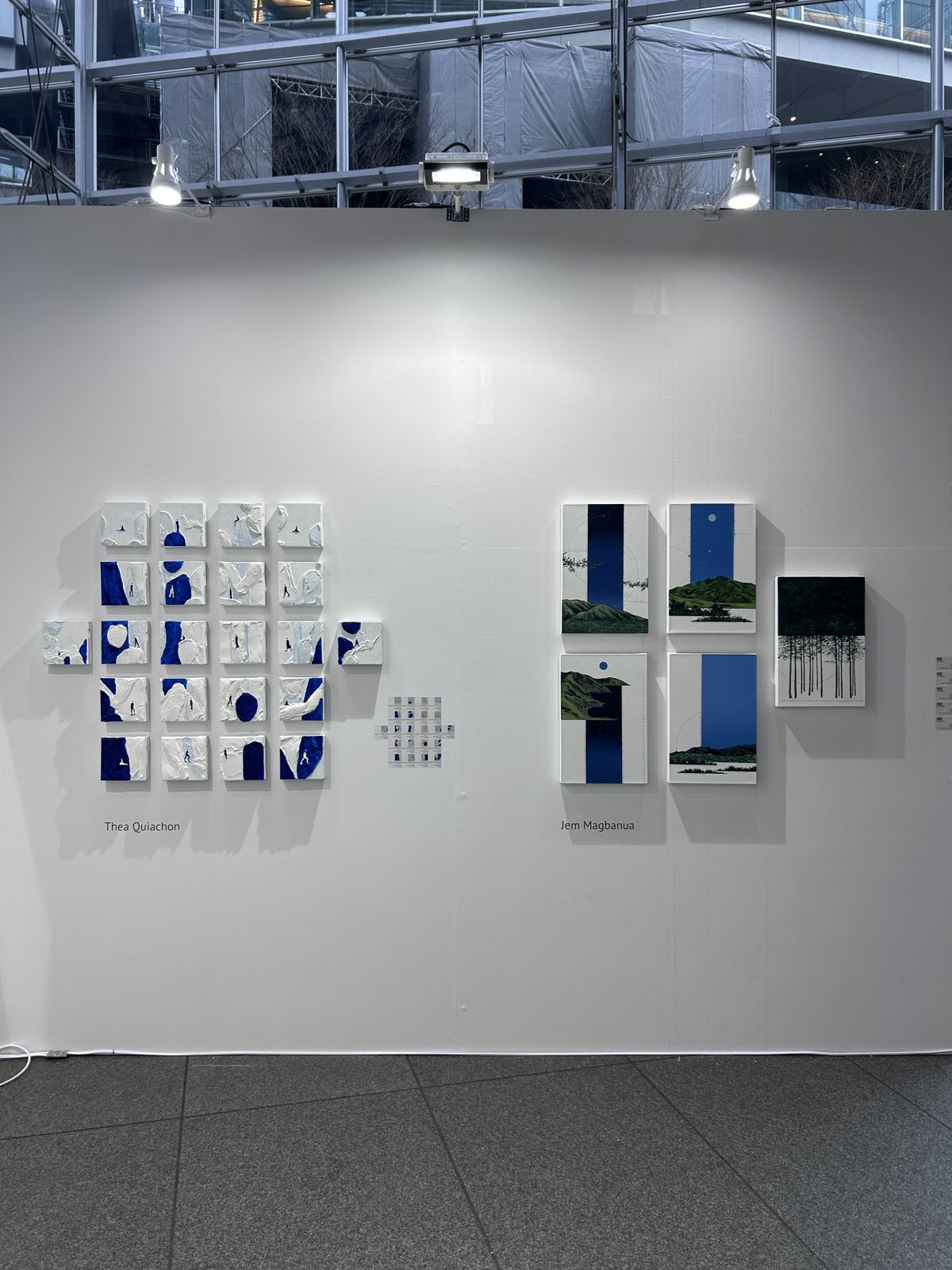
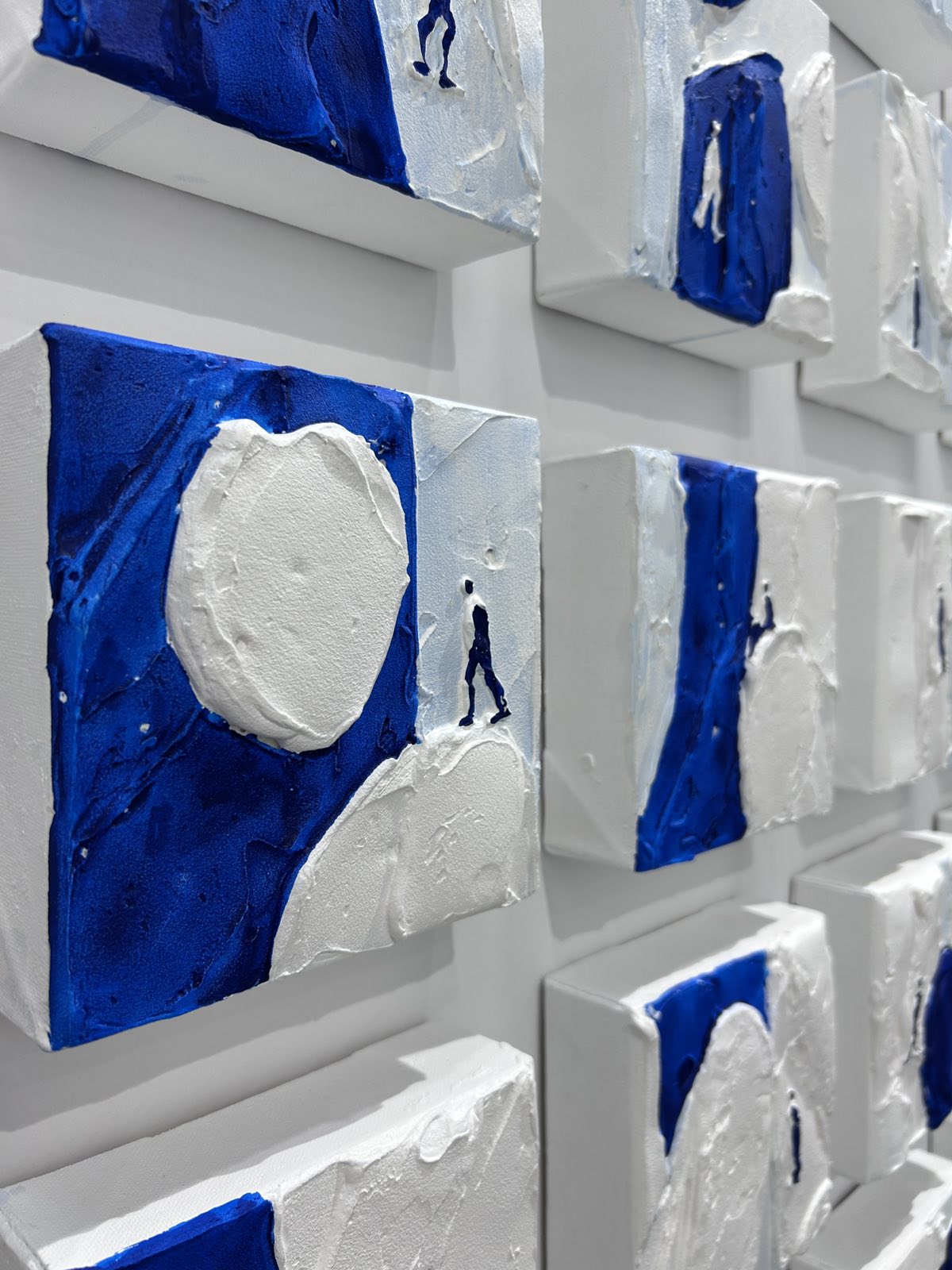
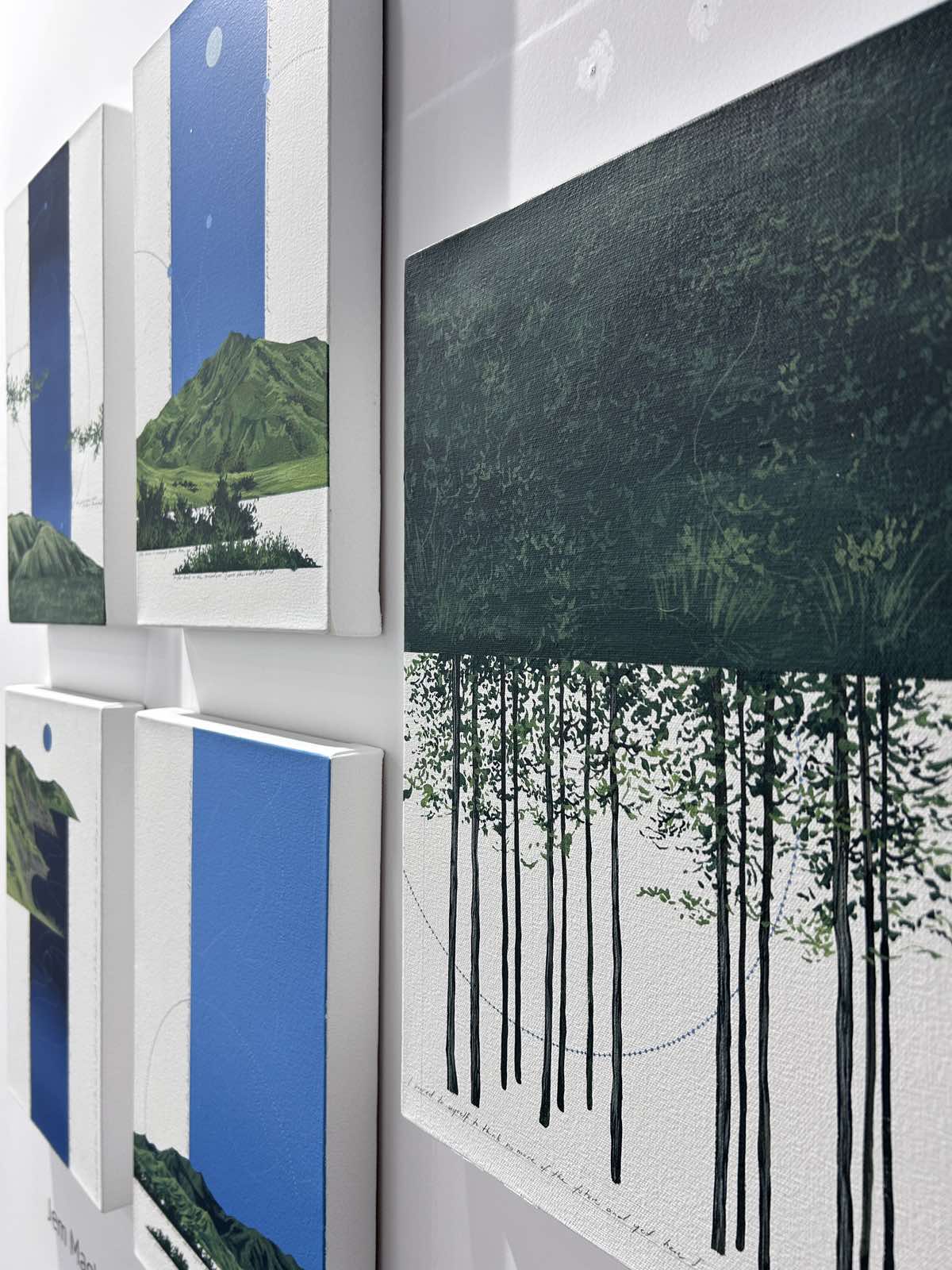
These four artists were chosen, Oreiro said, because of the important message they convey about Filipino art and the necessity of giving a voice to women on the international stage.
“Many Filipina artists have had to navigate both gender biases and the lasting effects of colonialism,” she said. “Recognizing their work on an international level helps challenge these structures and affirms their place in global art discourse.”
Local Art in an International Stage
Galerie Stephanie has been exhibiting at Art Fair Tokyo for seven straight years. Oreiro said that this allows Philippine art to be exposed to new collectors and enthusiasts internationally. To the gallery, it functions as a “cultural dialogue” between the two countries.
“Galerie Stephanie has been participating regularly in Art Fair Tokyo and has found many friends and collectors through it,” she said. “It has also been an opportunity for us to meet exciting Japanese artists that we feel will be accepted by the Philippine art scene.”
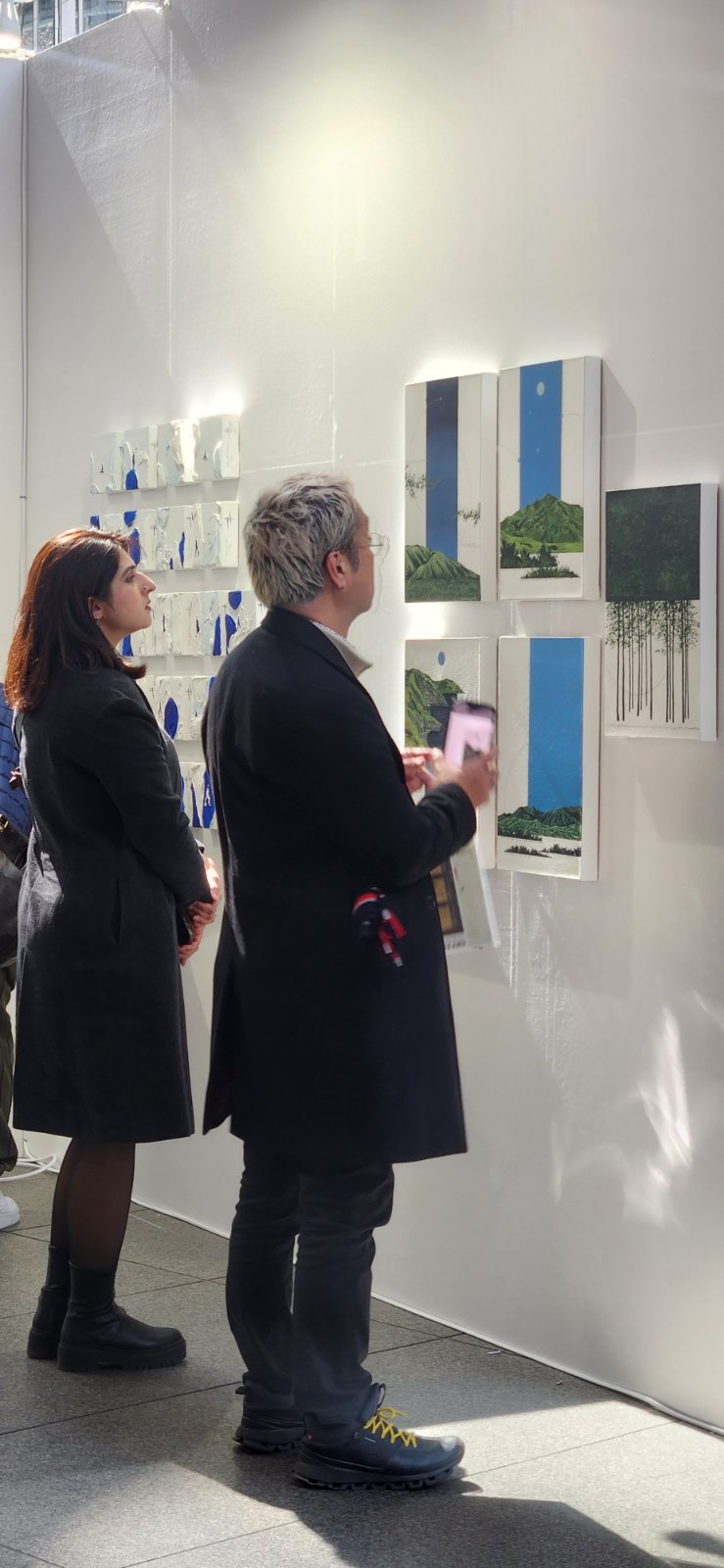
The goal is to elevate Filipino art globally and gain wider recognition for local artists. More than that, the cultural exchange hopefully creates new avenues for inspiration between Filipino and international artists to pursue in their own art practice.
“A lot of Filipino contemporary artists are becoming more and more known on a global scale,” she said. “This in turn, opens up a lot of opportunities for galleries to explore collaborations with other art institutions and fairs abroad. We are hoping for more Filipino artists to be more recognized not just in the contemporary setting but also in being able to showcase the rich indigenous cultures and traditions in the Philippines.”
Photos provided by Galerie Stephanie.
Related reading: New Galerie Stephanie x Cartellino Opens in Shangri-La Mall
Frequently Asked Questions
Galerie Stephanie showcased an all-women lineup featuring Kim Borja, Jem Magbanua, Naburok, and Thea Quiachon. This intentional selection for Women’s Month highlighted a range of contemporary styles, from Borja’s pastel-colored “cat-bunny” hybrids and Naburok’s comic-inspired slice-of-life scenes to Magbanua’s minimalist mountainscapes and Quiachon’s tactile, contemplative figures.
The decision was a strategic move to celebrate Women’s Month and provide a global platform for Filipina voices in a historically male-dominated industry. By presenting these four artists, the gallery aimed to challenge gender biases and the lasting effects of colonialism while proving that local female talent can resonate with international audiences.
Both artists utilize whimsical and pop-surrealist methods that share common aesthetic sensibilities with contemporary Japanese art. Kim Borja’s signature pastel palette and wide-eyed characters evoke a sense of “kawaii” melancholy, while Naburok’s harmonious geometric patterns and comic-esque illustrations offer a delightful imperfection that appeals to the diverse preferences of Japanese collectors.
In contrast to the pop-surrealist styles of their peers, Magbanua and Quiachon focus on more minimalist and figurative explorations of space and connection. Magbanua’s drawings investigate the intricate relationship between humans and geography, while Quiachon’s tactile paintings offer indistinct yet deeply personal narratives about human links. Together, they provide a balanced representation of the “different flavors” and intellectual depth of modern Filipino artistry.
As the only Filipino exhibitor for seven consecutive years, the gallery seeks to foster a “cultural dialogue” that elevates Filipino art on the global stage. This consistent presence allows local artists to gain international recognition and helps the gallery discover Japanese artists that might resonate with the Philippine market. Ultimately, these exchanges create new avenues for collaboration and inspiration between the two countries’ vibrant art scenes.
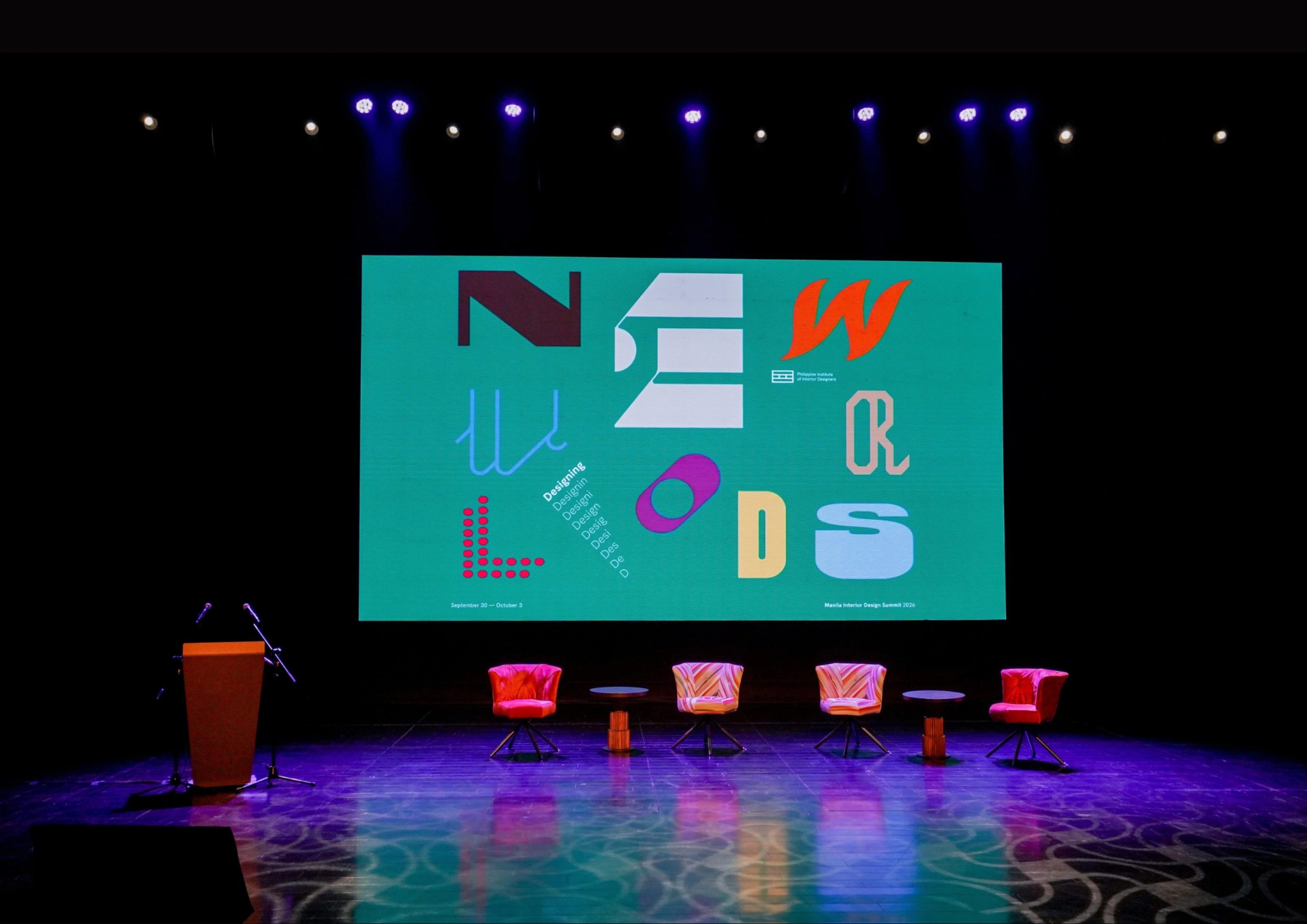
The fourth Manila Interior DesignInterior DesignThe discipline of planning and shaping interior spaces for function, comfort, safety, and beauty. It covers layout, lighting, materials, finishes, furniture, and color, and in the Philippines is a licensedGo to Interior Design Glossary Summit (MIDS) brought together more than 300 delegates for four days of conversations, exhibitions, and design […]
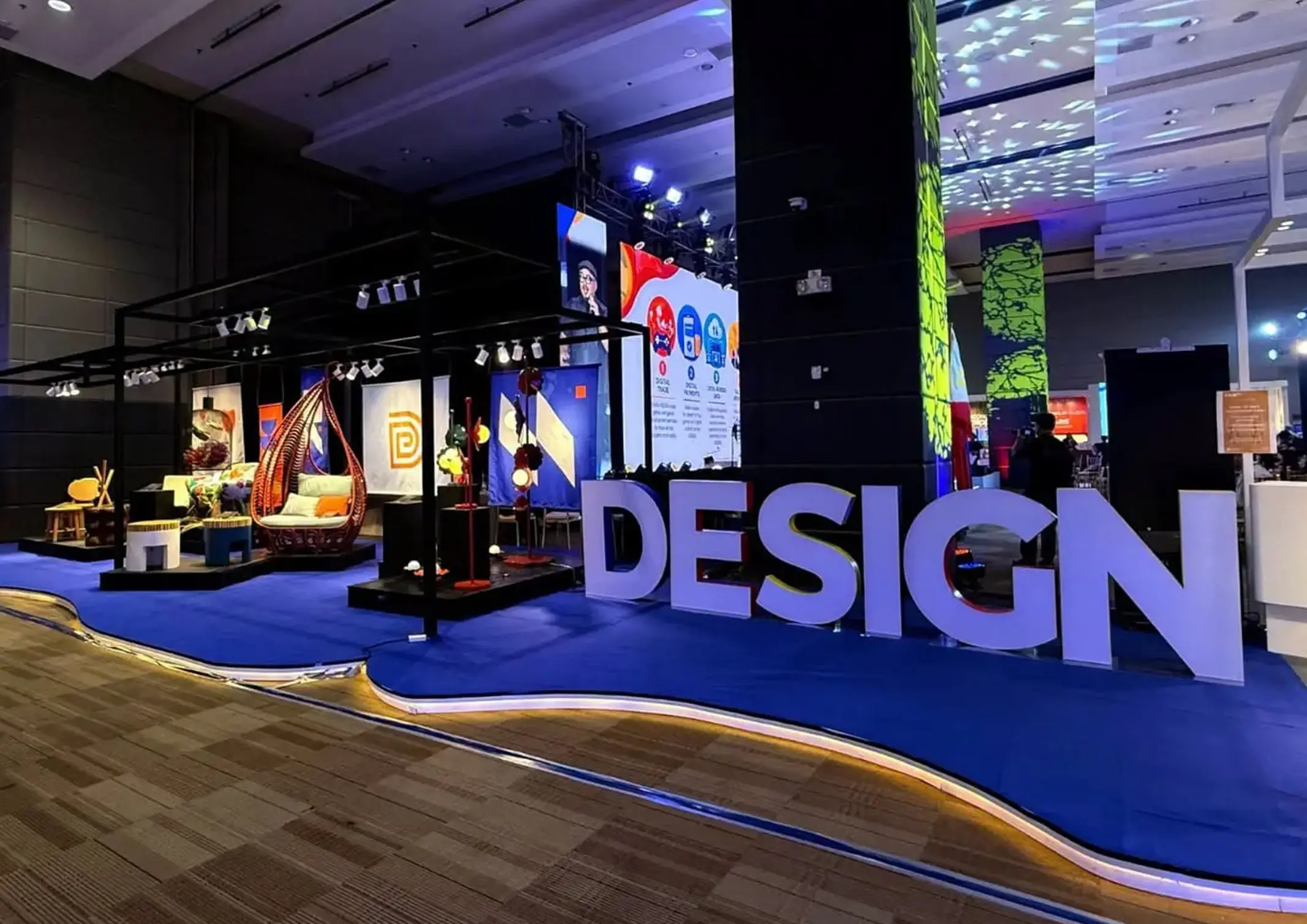
Held at the SMX Convention Center Aura in Taguig City, the first ASEAN Creative Industries Expo by Malikhaing Pinoy (ASEAN MPEx) features nine creative domains, including design, visual arts, digital interactive media, and performing arts. Organized by the Department of Trade and Industry (DTI), the event includes exhibitions, cultural performances, industry talks, and pitching sessions […]
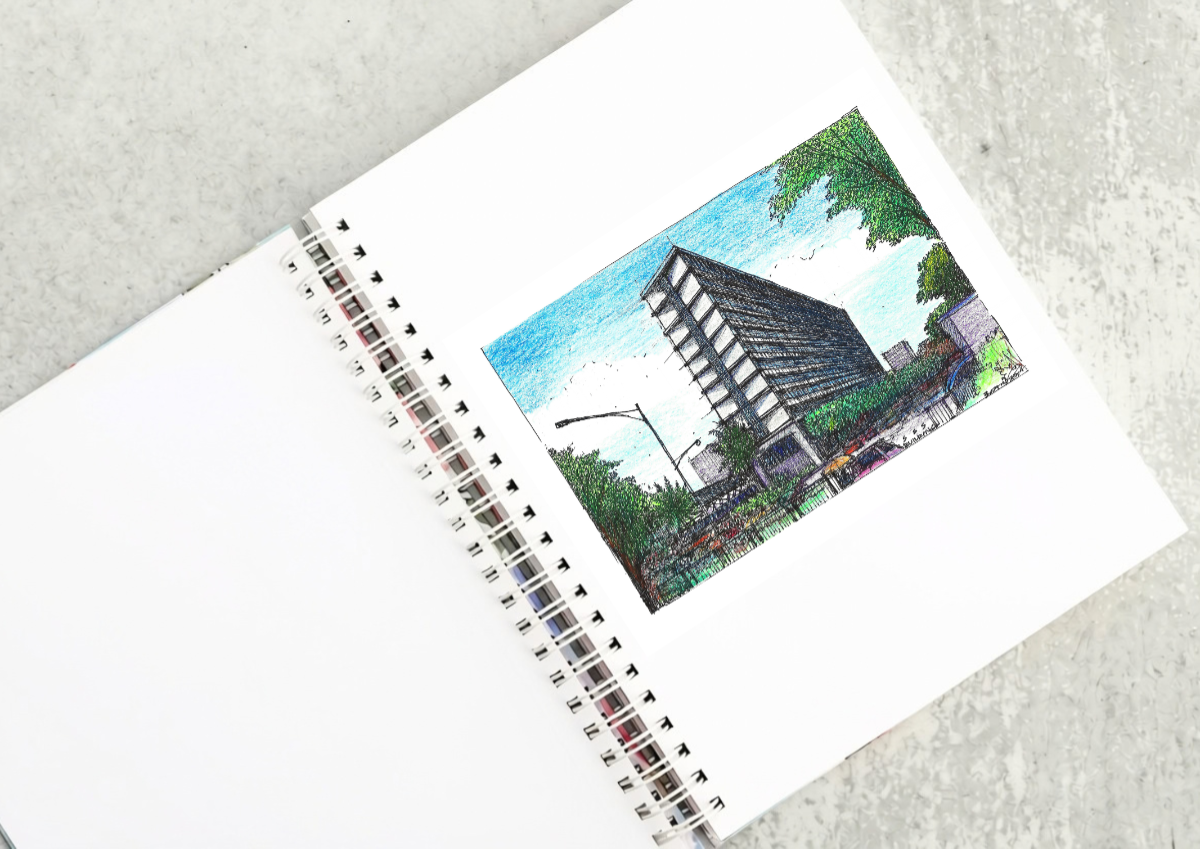
The SSS Building as an Expression of Civic Modernism My favorite modernist landmark in Quezon City is the SSS building on East Avenue. Designed by National Artist for ArchitectureArchitectureThe art and science of designing and constructing buildings, structures, and spaces that are functional, safe, and aesthetically pleasing. It encompasses the planning, design, materials, and techniques […]

Archie G. Carrasco, Chairman and CEO of AGC Power Holdings Corp. (AGC PHC), has been named to The BoF 500 Class of 2026 under the Media category, joining The Business of Fashion’s global community of individuals shaping the fashion industry. Carrasco is among 100 new members from 33 countries and 48 nationalities selected for the […]
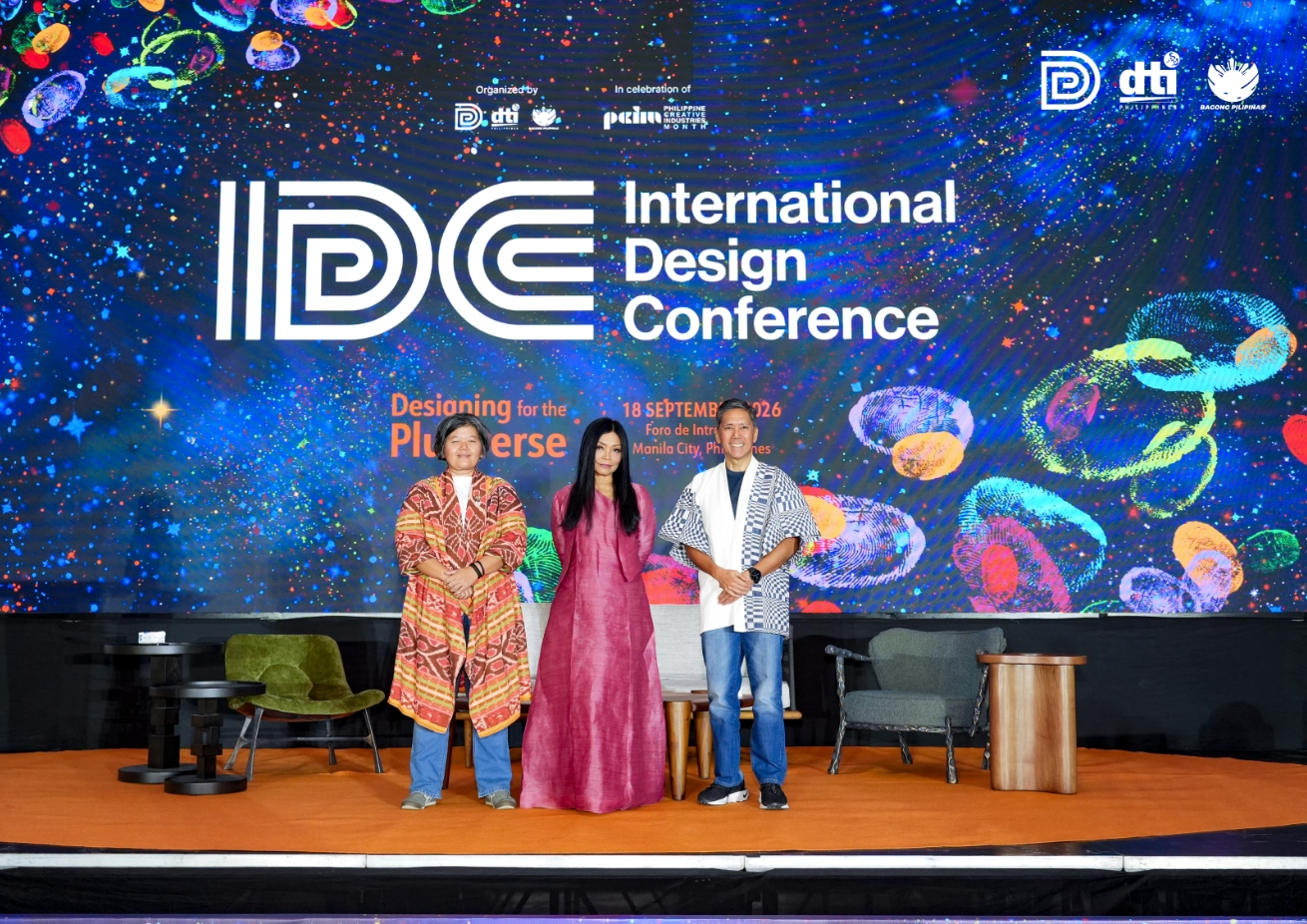
Culture in design does not always announce itself through a recognizable motif, material, or symbol. It can also be embedded in the relationships designers build, the knowledge they listen to, the materials they choose, and the decisions they make in response to communities and their environments. This distinction emerged throughout the 2026 International Design Conference […]
Read the issues.

Collect the volumes.

Recommended Video
Tap to Unmute
Unmute
0:00
0:00