Culture in design does not always announce itself through a recognizable motif, material, or symbol. It can also be embedded in the relationships designers build, the knowledge they listen to, the materials they choose, and the decisions they make in response to communities and their environments. This distinction emerged throughout the 2026 International Design Conference […]
Home, Grown: Descending House by Micaela Benedicto



At first glance, it would seem the two-story, 300-sqm Descending House designed by Micaela Benedicto has not aged a day from my first visit six years ago for a BluPrint feature.
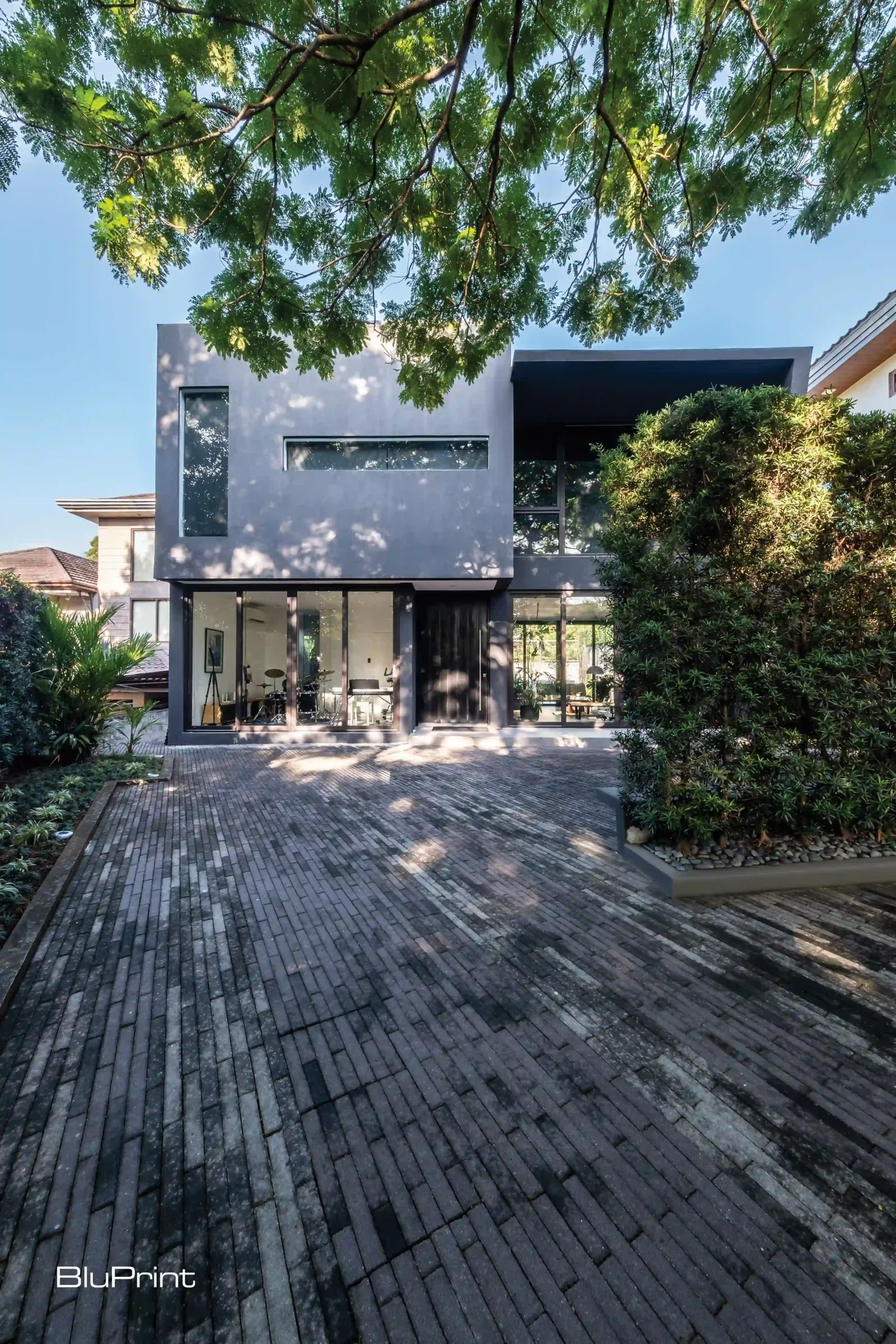
I remember seeing the hulking black volumes of the house from the gate, draped in the gossamer light of a golden afternoon, a stately yellow flame tree upfront casting leaf and shadow on a brick-tiled open driveway. This juxtaposition of the sharp-cornered manmade volume against its lush surrounds made for a memorable first impression, and in my latest viewing, the scene is left intact except for the 6-meter-tall podocarpus maki hedge fronting the home having grown considerably taller.
While the house’s muscular shell may not communicate this at first glance, it is a porous space, where textbook passive coolingPassive CoolingStrategies that lower indoor temperatures without mechanical air-conditioning, relying on building design instead. Techniques include cross-ventilation, stack effect, deep eaves, shading devices, thermal mass, courtyards, and vegetation. Essential in theGo to Passive Cooling Glossary principles are at play.
‘Picturesque’ Living Area
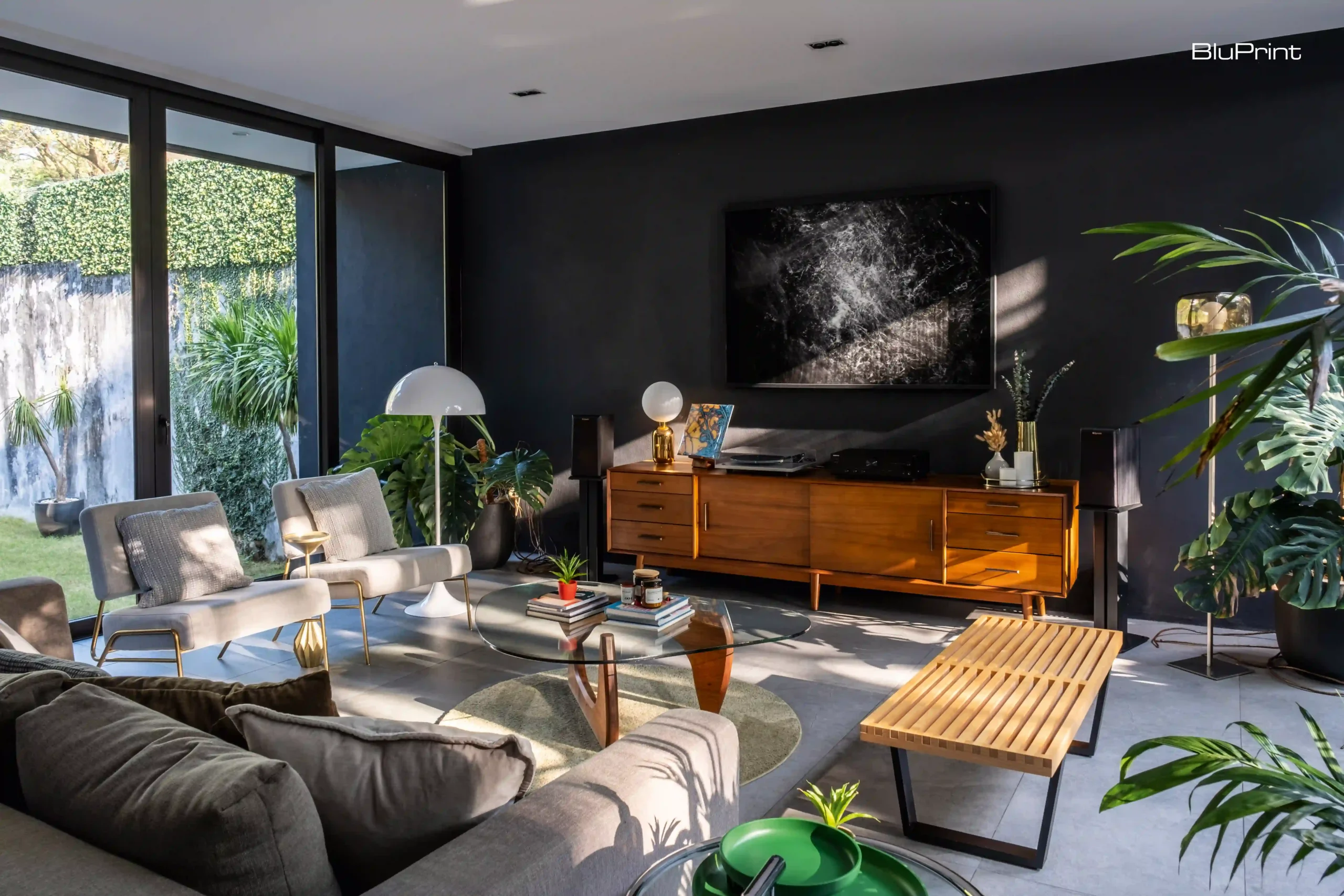
The living room, where I interviewed the designers and clients, is a delightful space, modestly sized with a few curated furniture pieces and framed photography. There is notably no television set; why have one when you have two different shows on view on either side of the space thanks to the floor-to-ceiling sliding windows, the picturesque view of the driveway, its sculptural bench and privacy hedge the angular foil to all of nature’s organic theater.
The spare material palette of metal, concrete, and glass, a trademark of Benedicto’s, helps imbue the space with a brutalist-flavored, gallery-like feel desired by its clients, architects who’ve chosen different career paths with a penchant for travel, who, with their teen son, now lives in a house carefully and lovingly designed for them by one of their closest friends
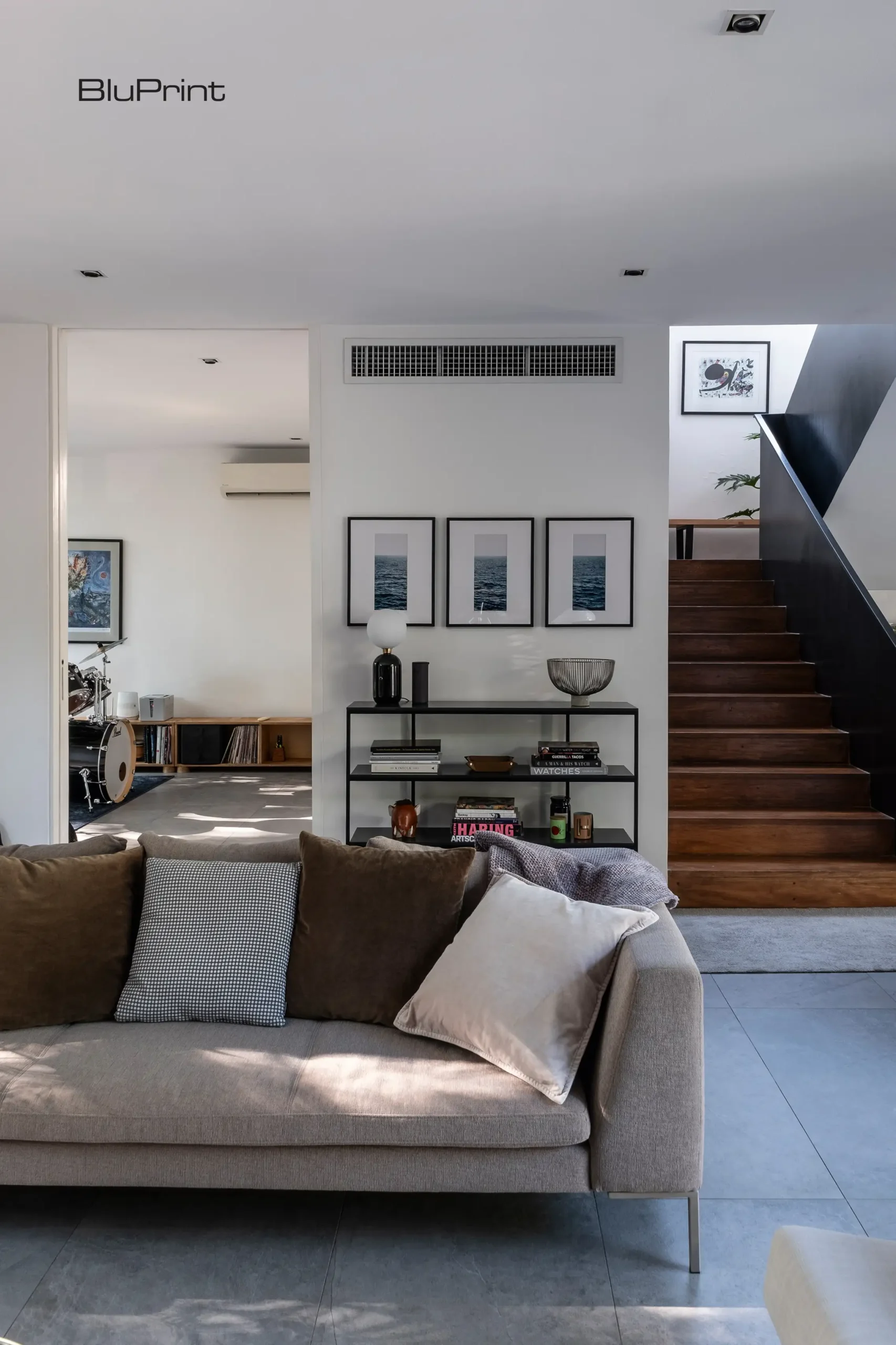
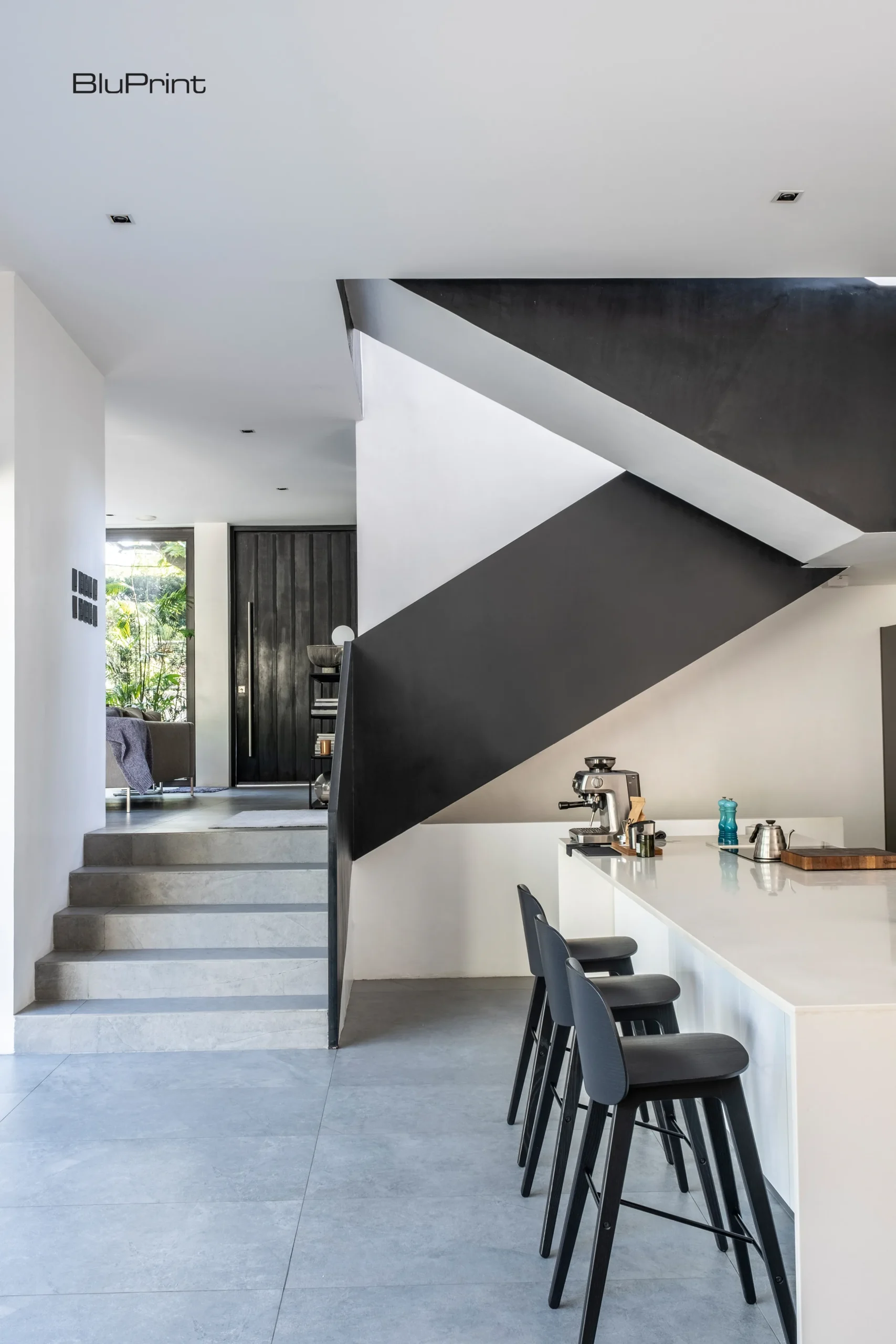
The house exhibits purity and clarity of form; walls and divisions align with the exterior shell; room cuts above and below echo each other. It was something I found refreshing and lent the place a certain timelessness. This quality is no more expressed than in the kitchen and dining space, pristine, monochromatic, and devoid of frills.
This was Mrs. T’s base before, during, and after the pandemic, and she told our little group how she enjoyed cooking and baking there because of how spacious the counter is, almost as if she were in a cooking show.
Descending House and Flexibility of Space
Perhaps my biggest takeaway from the house during that first visit, and one that proved prescient coming out before the pandemic, is Descending House’s flexibility as a space. Its versatility is best illustrated on the second floor, where rooms and spaces shifted in use throughout the seven years the family has stayed within its confines.
“We knew from the beginning that this was not a starter home. This is where we will stay for the long haul,” Mrs. T shared.
“I think more than designing a structure that shelters, it’s vital to create a space that not only works and looks great but inspires. ArchitectureArchitectureThe art and science of designing and constructing buildings, structures, and spaces that are functional, safe, and aesthetically pleasing. It encompasses the planning, design, materials, and techniques used to createGo to Architecture Glossary should inspire you to grow and be your best self, and sometimes you’ll realize that you actually don’t need acres of space to find that space to grow!” Micaela Benedicto said.
This rings true as the Descending House was by no means gargantuan in scale; the clarity and simplicity of its plan and spare material palette did wonders in imbuing its rooms and areas with a spaciousness that is light and uplifting that far exceeds its physical size.
What I’ve learned from Descending House from the six years that elapsed is that while that change is inevitable, what stays constant is the need for room to grow, not strictly in the physical sense, but to be in a room, or space that provides the condition for growth.
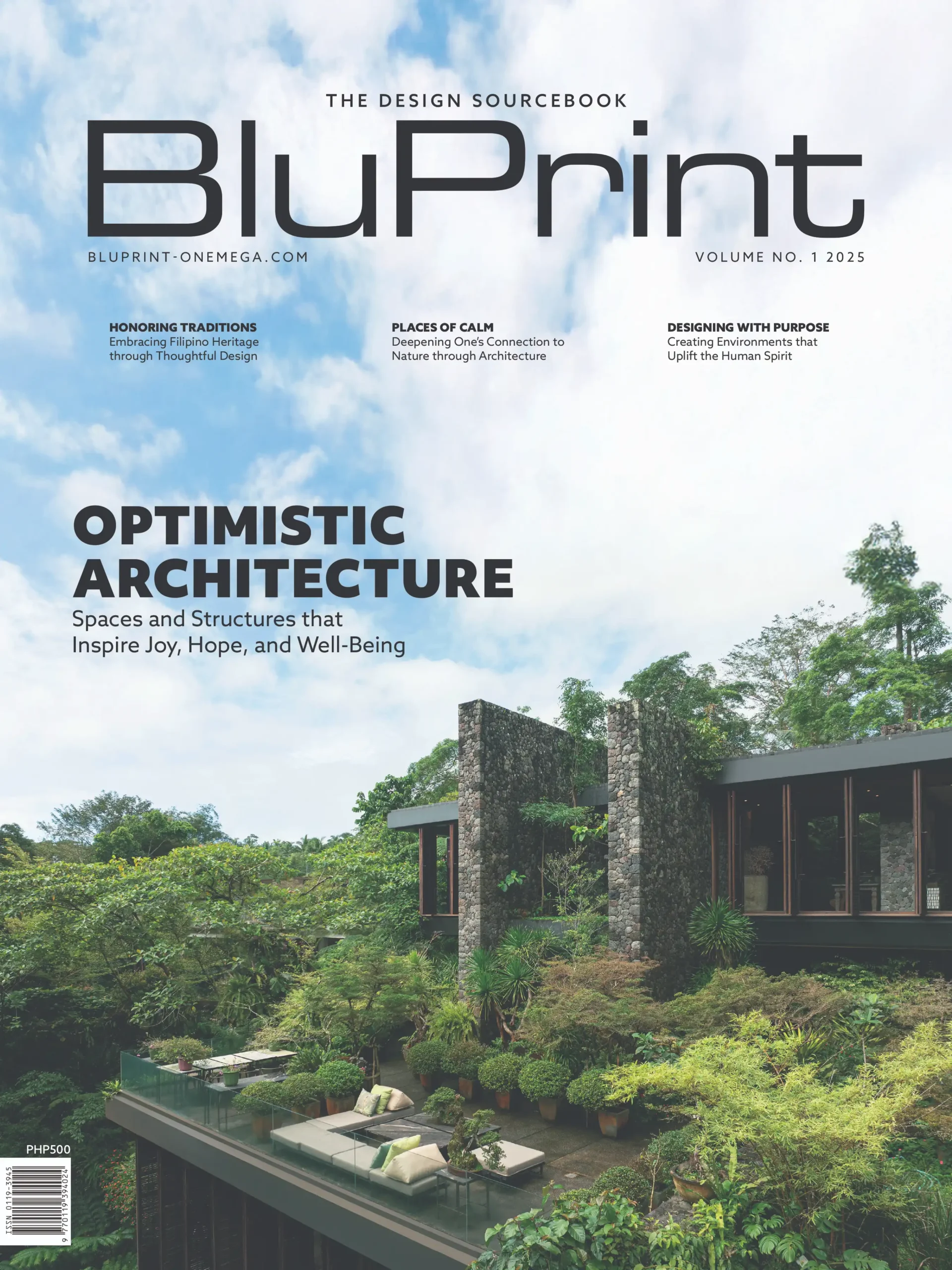
Read the full story by grabbing your copy of BluPrint Volume 1 2025, available at sarisari.shopping, Shopee, and Lazada.
Photos by Ed Simon.
Frequently Asked Questions
The 300-sqm residence is designed as a porous space that utilizes textbook passive cooling principles to maintain a comfortable indoor temperature. By strategically placing floor-to-ceiling sliding windows on opposite sides of the living area, the home facilitates consistent cross-ventilation and natural airflow, allowing the structure to breathe while reducing the need for mechanical cooling systems in the tropical climate.
Architect Micaela Benedicto utilized a spare and restrained material palette consisting of metal, concrete, and glass to create a brutalist-flavored, gallery-like atmosphere. This monochromatic selection ensures a purity of form where interior divisions align perfectly with the exterior shell, resulting in a clean and sophisticated environment that allows the owners’ curated furniture and photography to stand out as focal points.
Designed as a “forever home” rather than a starter house, the structure features a versatile second-floor layout where rooms have shifted in use over seven years to meet the family’s changing needs. The clarity and simplicity of the architectural plan allow the inhabitants to adapt their environment without needing physical expansions, proving that thoughtful spatial design can accommodate long-term growth within a fixed 300-sqm footprint.
The kitchen follows the natural slope of the land, creating a dynamic descending level that adds vertical interest to the open-concept space. To maintain an uncluttered feel, a mirrored wall is used to conceal storage, while an expansive, frill-free counter provides a professional “cooking show” environment that maximizes utility and visual flow without requiring acres of physical floor space.
The house features a striking juxtaposition between its muscular, black angular volumes and the surrounding organic greenery, such as a 6-meter-tall podocarpus maki hedge and a stately yellow flame tree. These natural elements act as a soft foil to the rigid metal and concrete lines, providing privacy and a “picturesque” view that changes with the light, effectively turning the driveway and garden into a living theatrical backdrop.
Related reading: Here’s how 5 architects designed their first mark in architecture

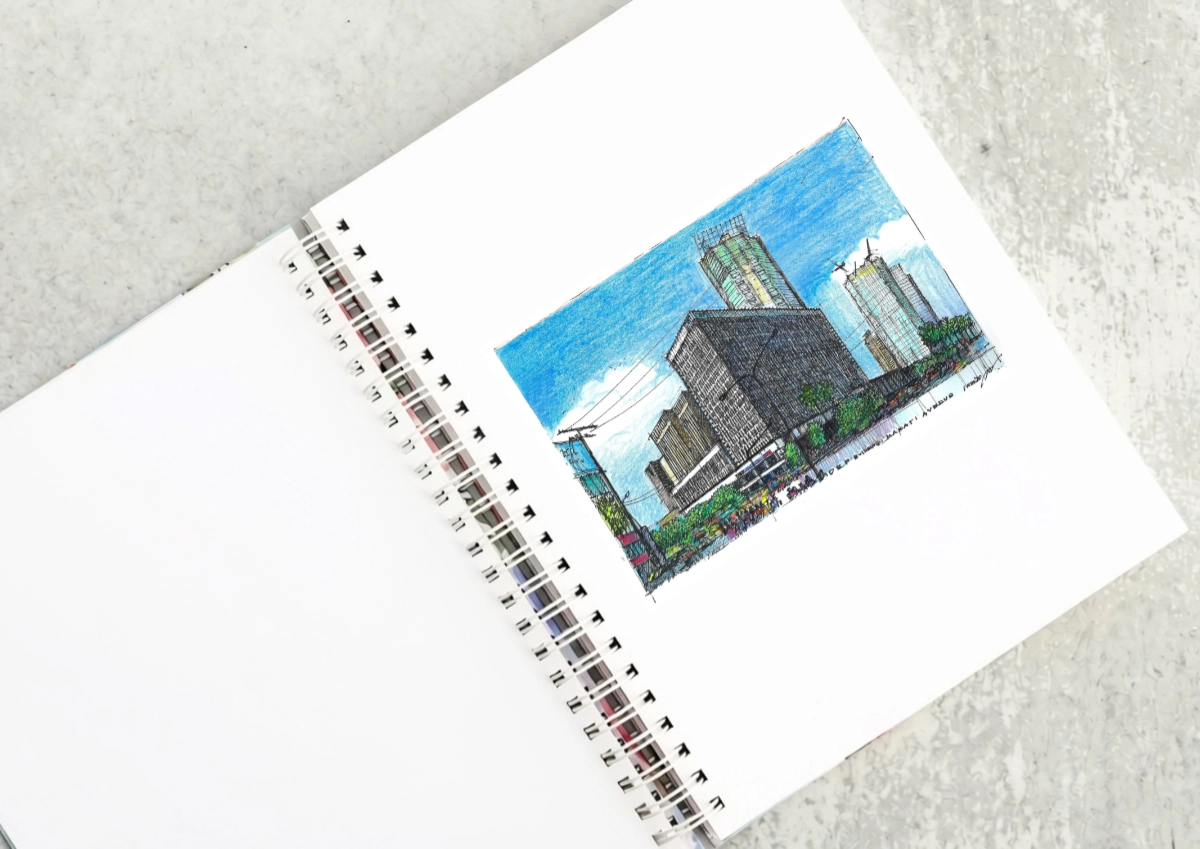
The DBP Building as a Landmark of the International Style At the corner of Sen. Gil Puyat Avenue and Makati Avenue stands a landmark of the Makati Central Business District. It is one of the last still standing that were built in the first wave of construction in district fifty years ago. The Development Bank […]

“Buildings only become architectureArchitectureThe art and science of designing and constructing buildings, structures, and spaces that are functional, safe, and aesthetically pleasing. It encompasses the planning, design, materials, and techniques used to createGo to Architecture Glossary when they are shared,” said William Ti Jr., founder of the Anthology Festival and WTA Architecture and Design Studio, […]
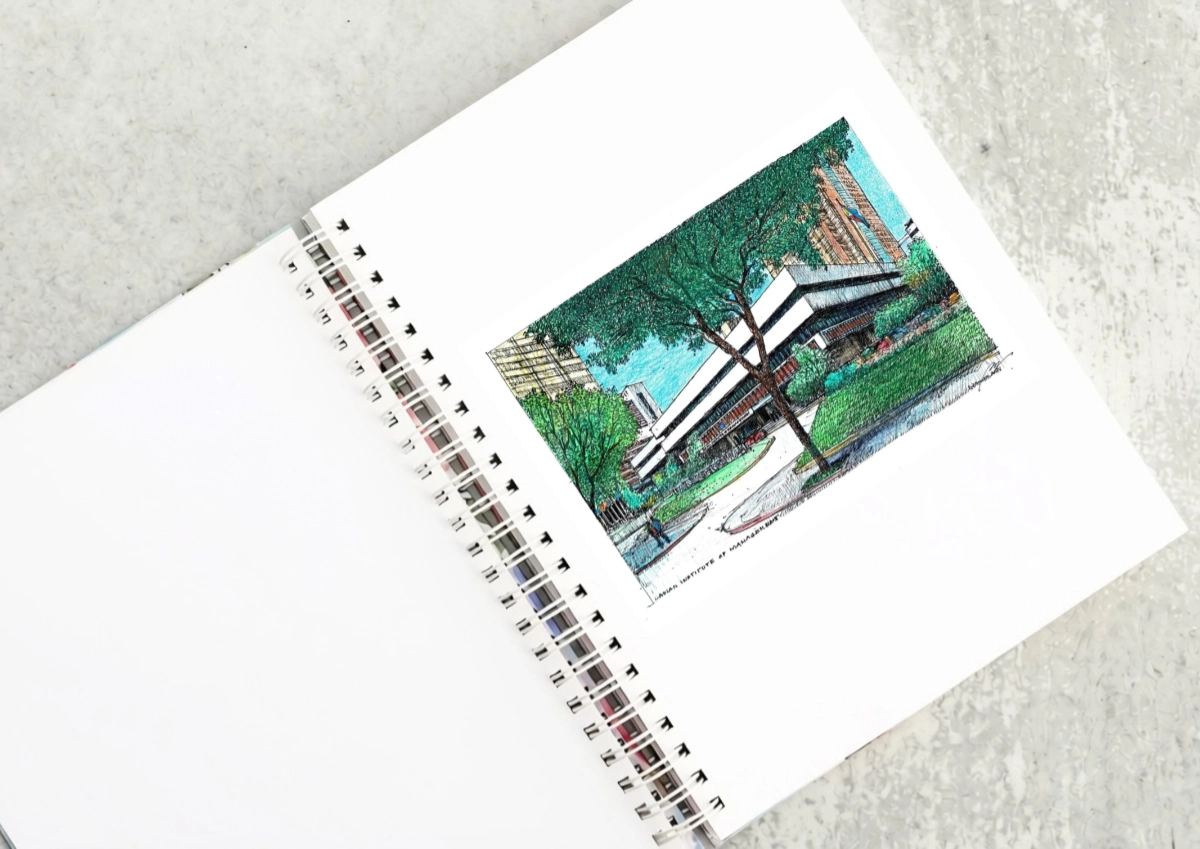
A Filipino Interpretation of Modernist Architecture Unlike the rest of Makati today, the northern end of Paseo de Roxas in Makati is anchored by a low complex rather than a tall skyscraper. This is the elegant Asian Institute of Management, designed by architect Gabriel Formoso and completed in 1971. In my opinion, the building is […]

“Thailand has claimed urban creativity and livability. Singapore has institutional design leadership. Indonesia is emerging as a design hub. Vietnam is moving into design innovation. And the Philippines? Its position is not weak. It is simply unclaimed.” For IDr. Cecil Ravelas, National President of the Philippine Institute of Interior Designers (PIID), the challenge is not […]
Read the issues.

Collect the volumes.

Recommended Video
Tap to Unmute
Unmute
0:00
0:00