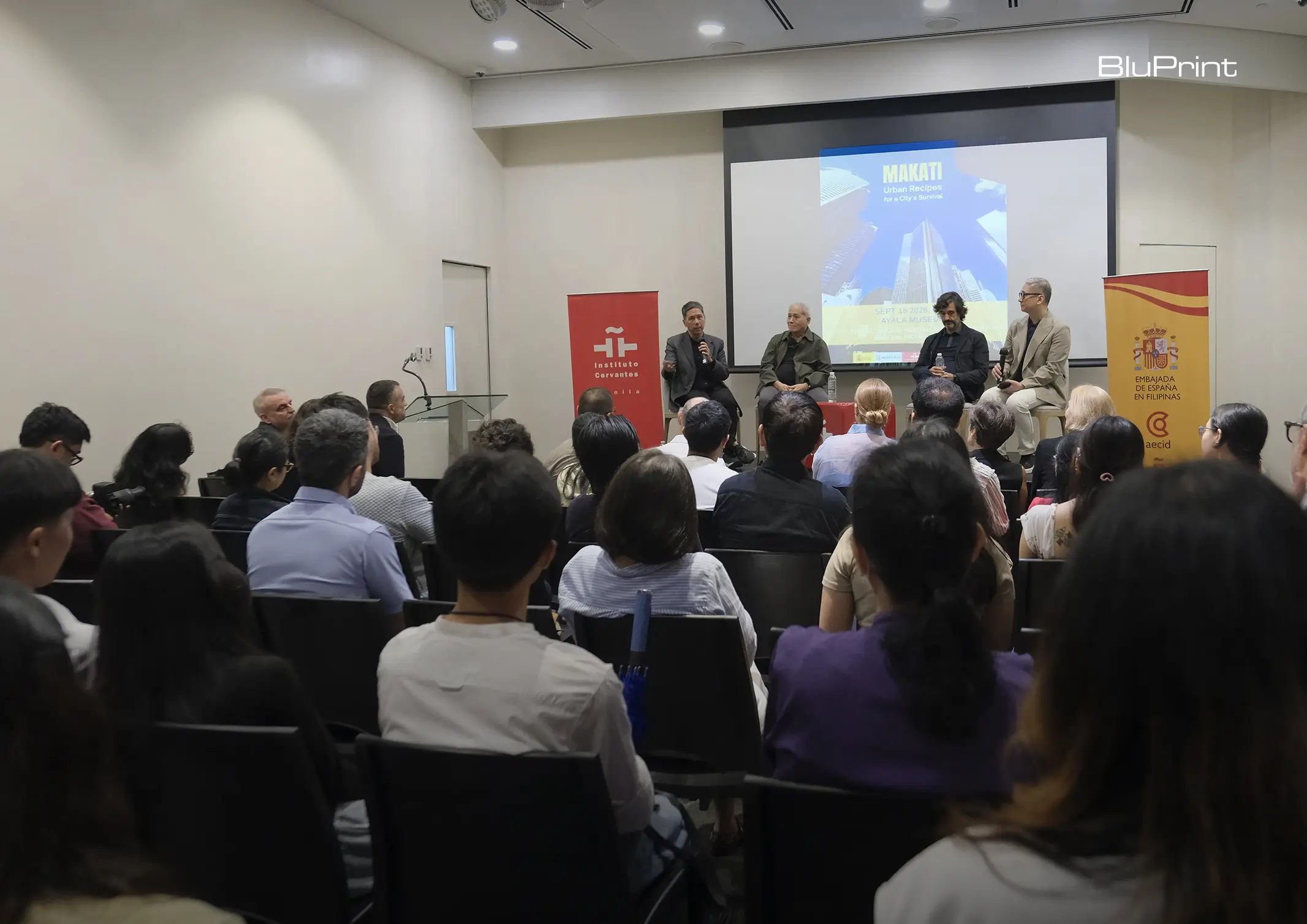
How can better-planned cities create the conditions for more creative, livable, and resilient urban environments? “Makati Urban Recipes for a City’s Survival,” a colloquium held at the Ayala Museum on September 15, brought together architects and practitioners from the fields of urbanism and the creative economy to discuss how design, planning, and collaboration can address […]
Lee Paje Demythisizes the Artistic Process in ‘eatsleepdreamwork’



eatsleepdreamwork is the dissection of artist Lee Paje of how we perceive the act of artistry. The exhibit, which ran at MO_Space in BGC High Street, faces the general ordinariness of actually creating art, moving against grand myths of what artistry means.
The artistic process tends to be mythologized in one sense or another when creators talk of their work. Many people, when thinking of art, see it as a sudden burst of inspiration, something that overcomes the body, mind, and soul of the person to turn them into conduits of visions. Thus, many of our popular artist narratives include drugs, mental illness, or improvisation.
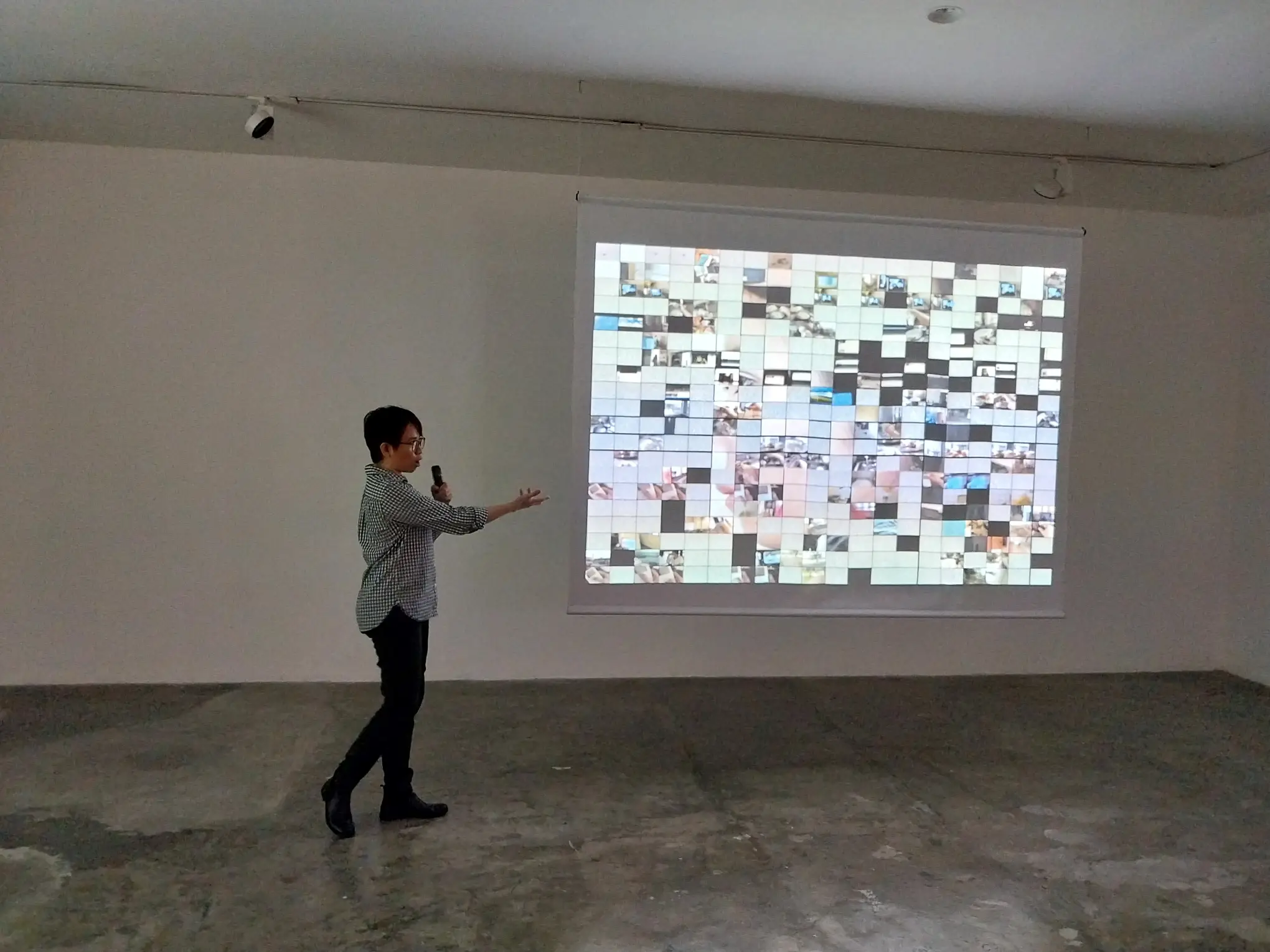
What Lee Paje emphasized in eatsleepdreamwork, however, is that making art is work. That beyond inspiration, it takes actual skill and grind to craft these visions to life. And so, her exhibition centered around that grind, the need to put in the work for these grand ideas we may have.
Much of the exhibit centered around the question that the artist herself asked about the art that she created: “How do we shape the things we create, and in turn, how do those things shape us? Creating, or making, in a sense that is not only tied to tangible material things, but also to how we make our lives.”
The Time of Making Art
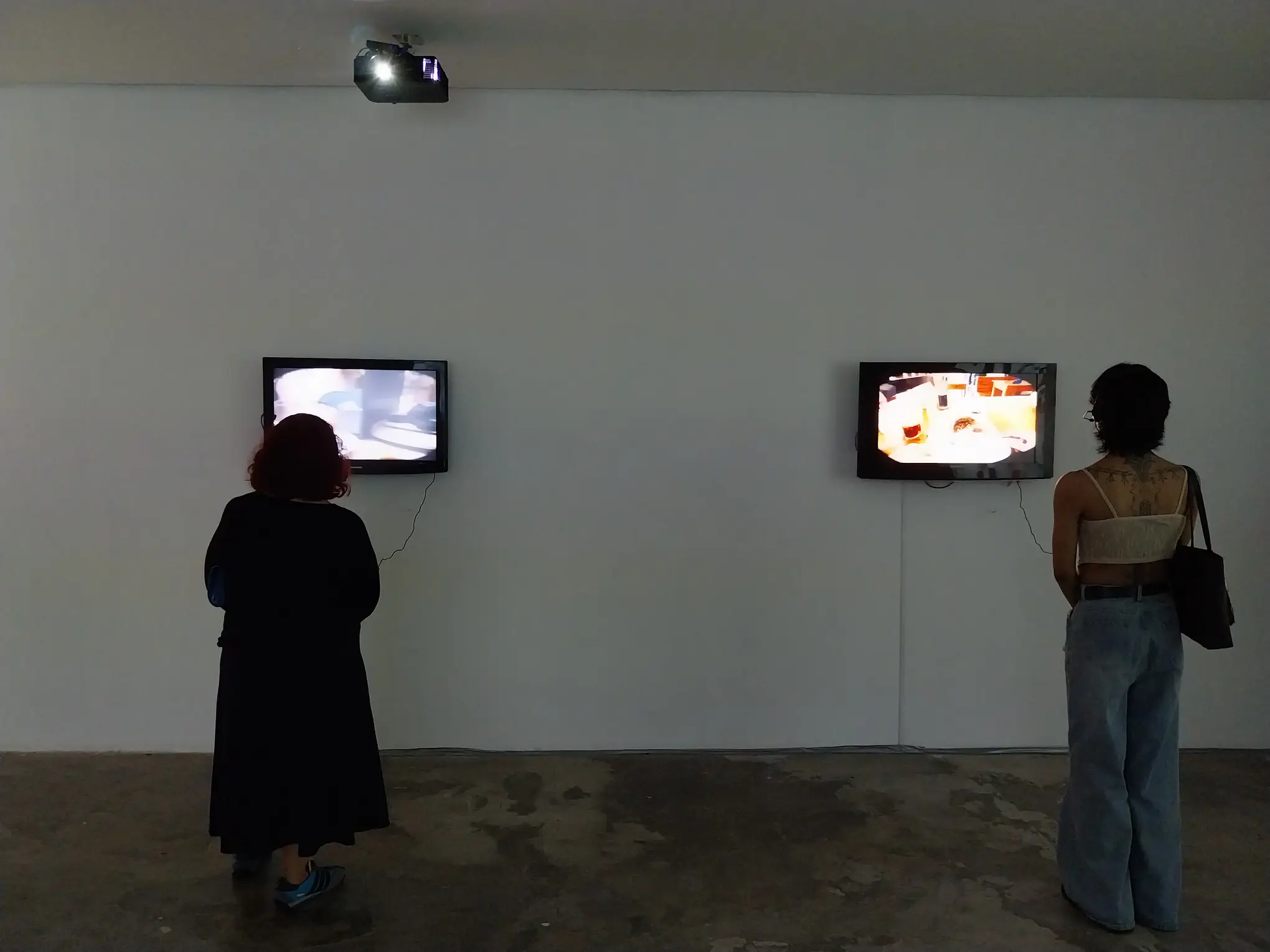
One of the main centerpieces of the exhibition is “Sit In My Retina,” an immersive day-in-a-life video diary shown from Paje’s perspective. There, it shows the artist as they go about their day: eating breakfast, taking a bath, commuting to their studio, making art, preparing for bed, and even reading articles on their phone. It is fragmented, showing us only snippets of their day, even as the audience slowly understands their daily routine from the artist’s point-of-view.
Another work, “401 Is,” provides a fragmented self-portrait of the artist in the form of tiny video mosaics coming together into one. It mixes different videos to craft a dynamic and honest self-reflection of who that artist is—and more importantly, how our self-perceptions tend to shift within ourselves.
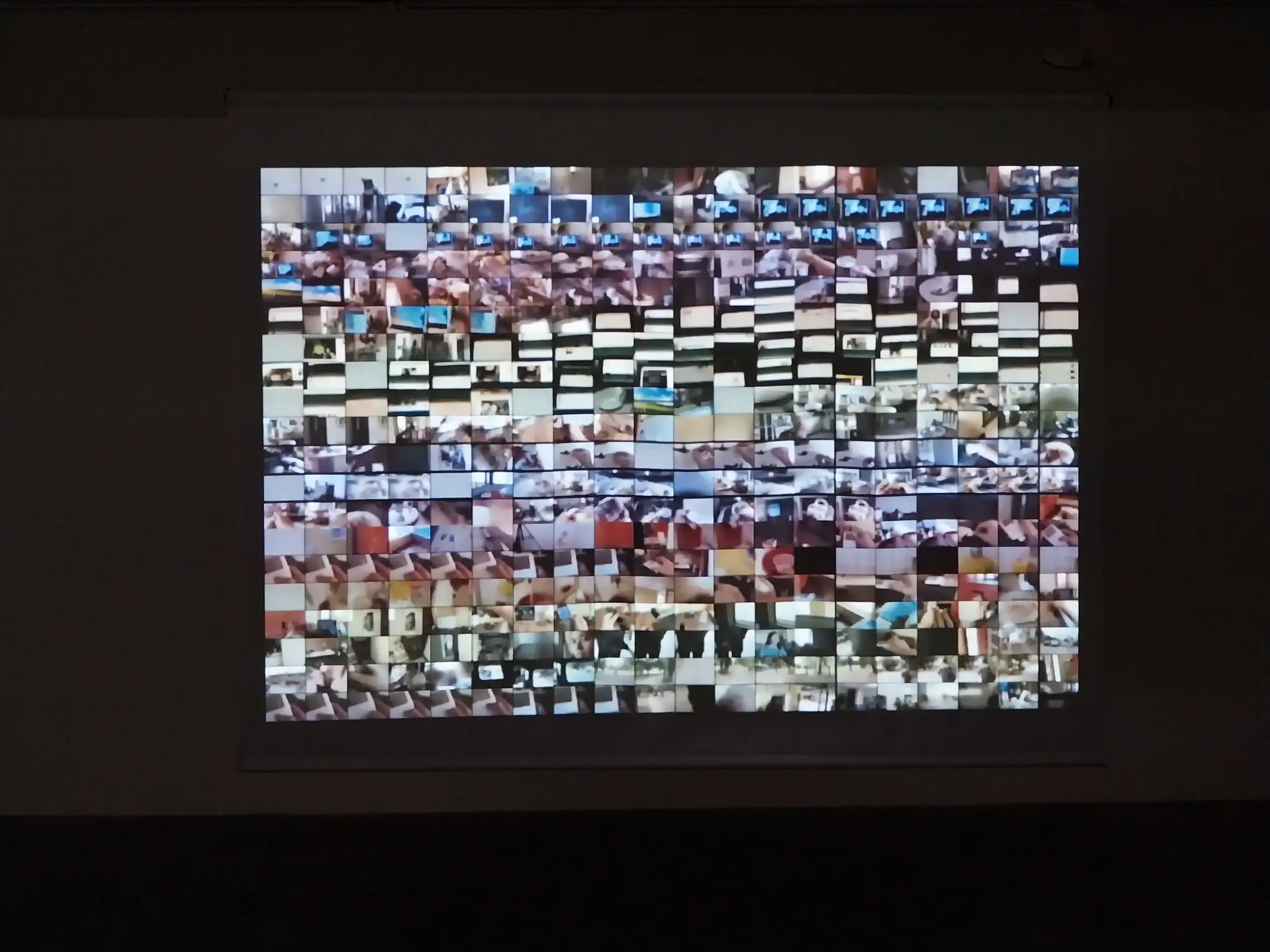
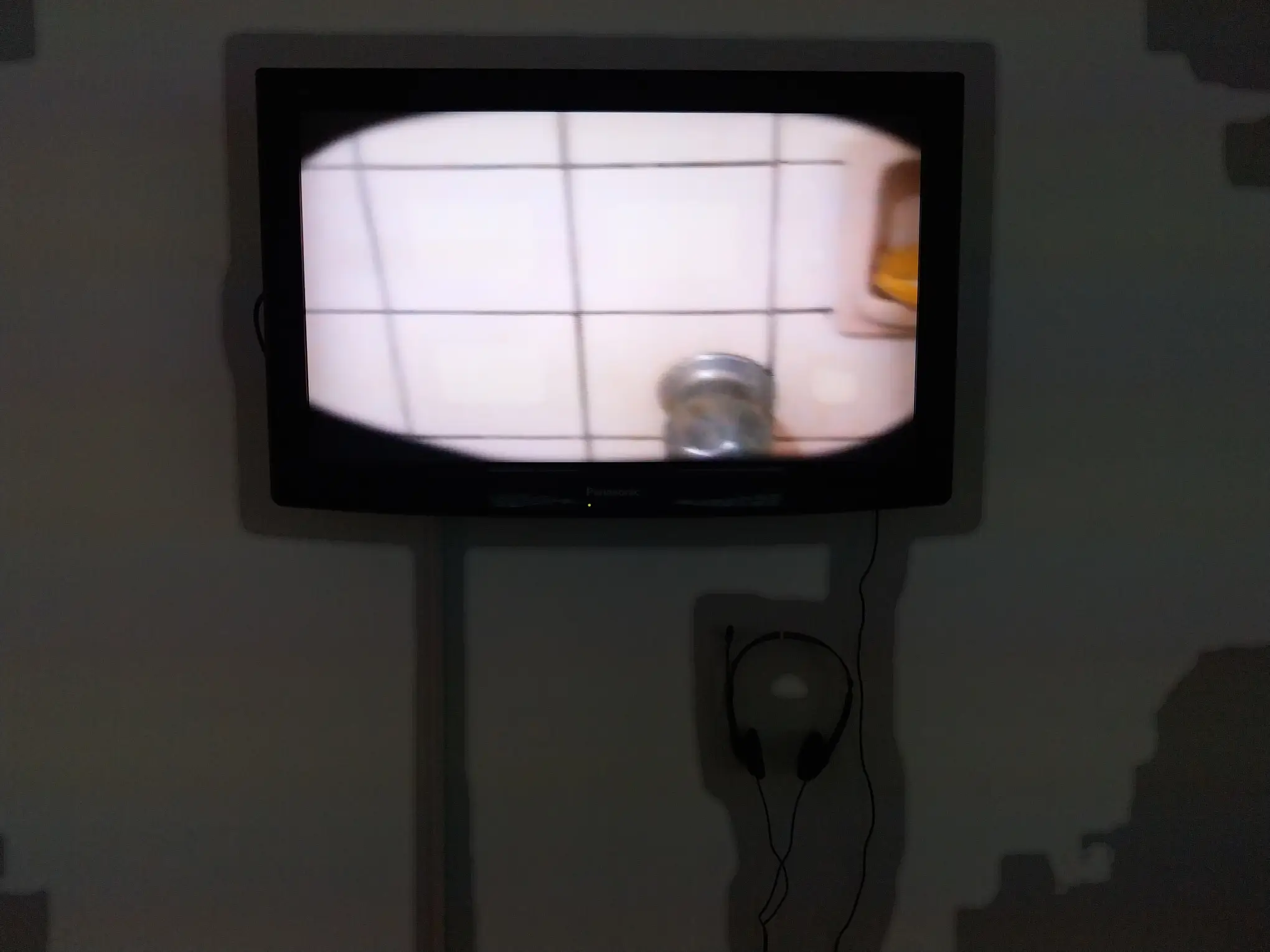
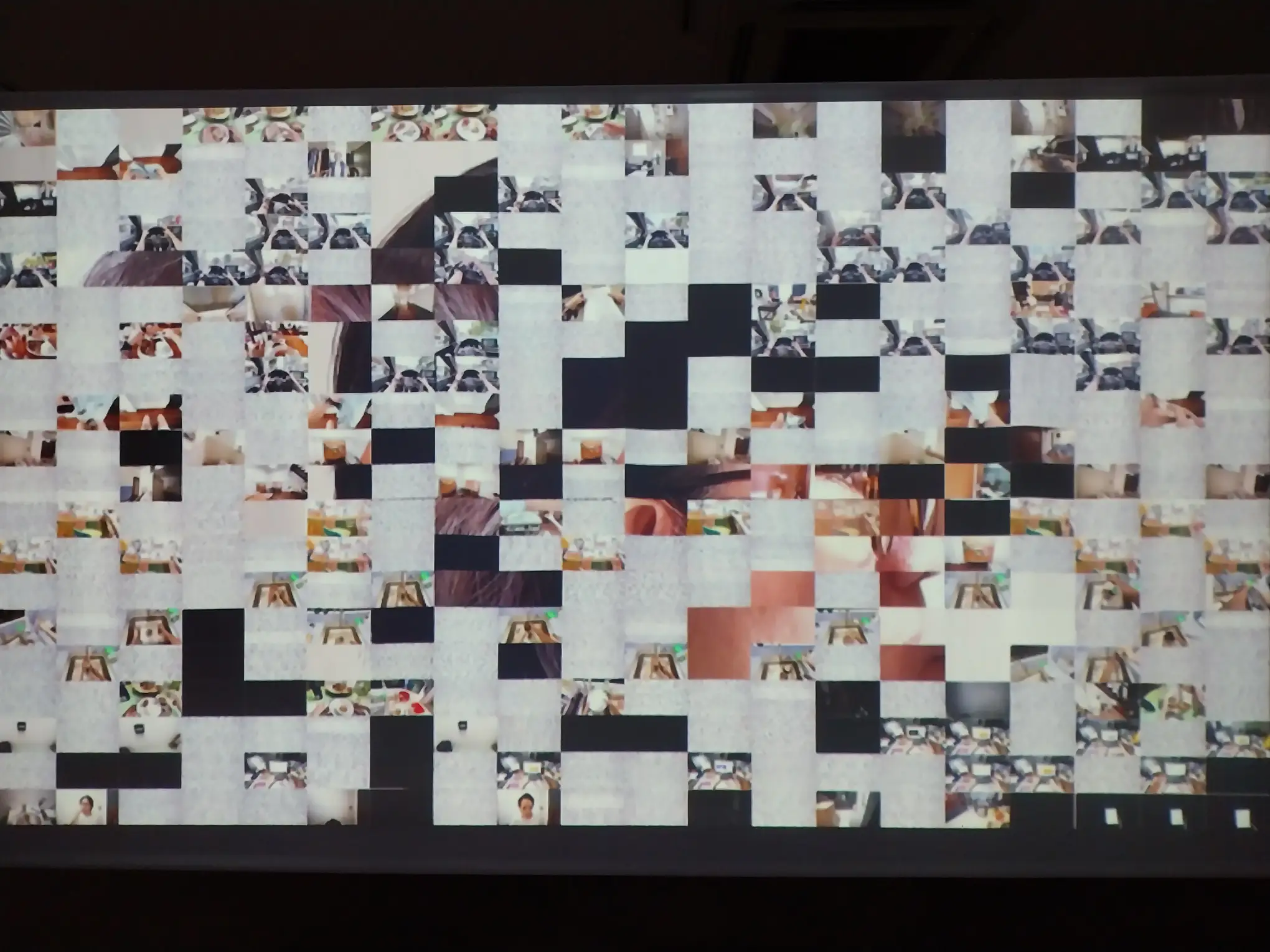
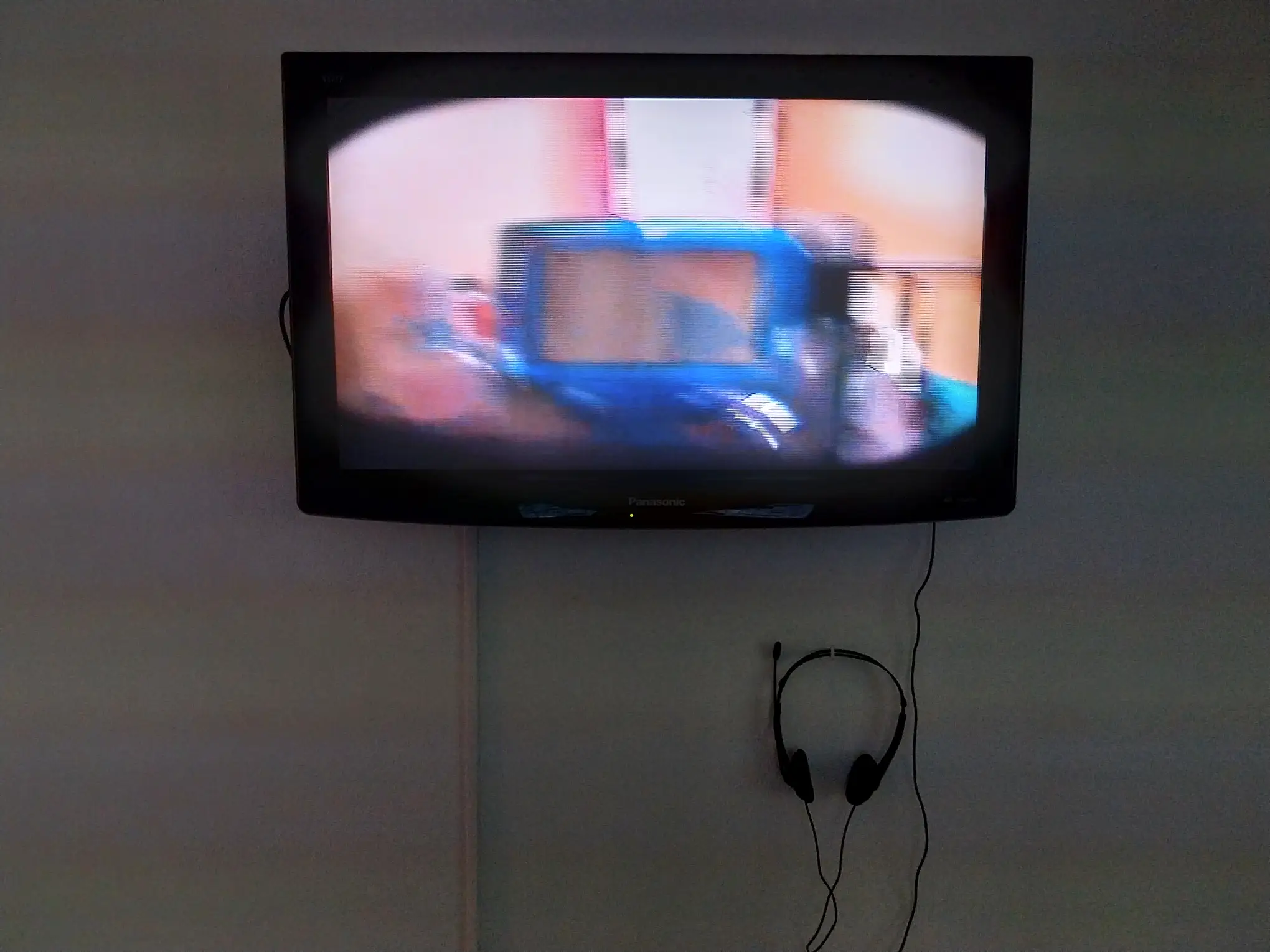
Both works were first made by Lee Paje as a part of her thesis in 2009, with “Sit In My Retina” receiving new footage made in 2025 as “a comparative testament to the evolving self and its relation to time,” according to the exhibit write-up. Both of them explore time as it relates to how we form our self-perception; the efforts that it takes not just to create, but to exist.
“I noticed that a year is no longer divided into days, weeks, and months,” she said. “It has become more about the projects, the work that needs to be finished, and the deadlines to meet. Everything revolves around making. The passing of time is marked by moments of making, which are then intertwined with the banality of everyday routines. I noticed how the cyclical nature of time and routines coincides with making.”
Being Present in One’s Life
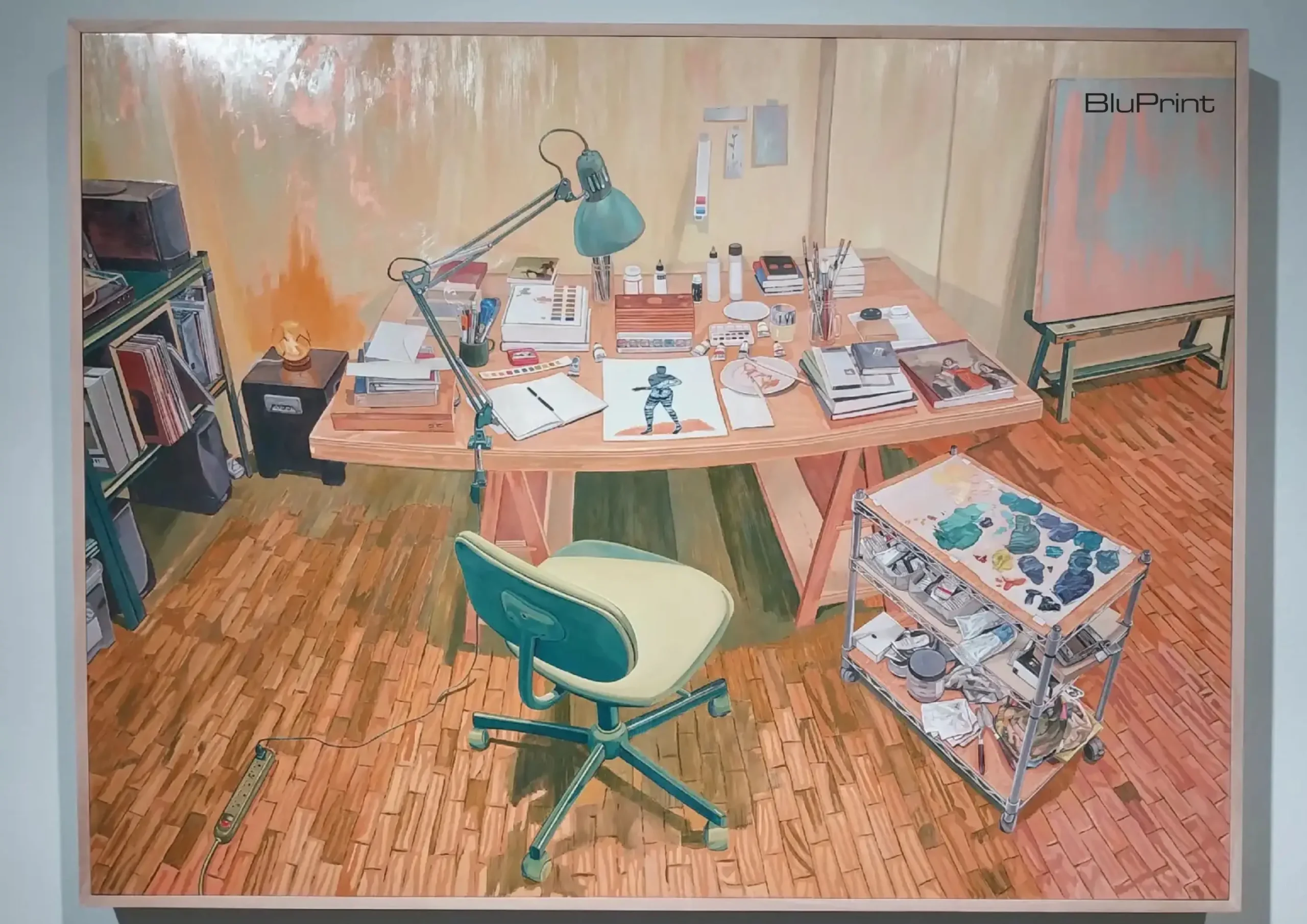
The other works augment the central thesis of the exhibit; two paintings, for example, showcase Paje’s perspective of her workspace and at the sink washing paintbrushes. It works with the intimacy of the other works and merges into ideas of self-reflection: what does the way we create art mean for the artist itself?
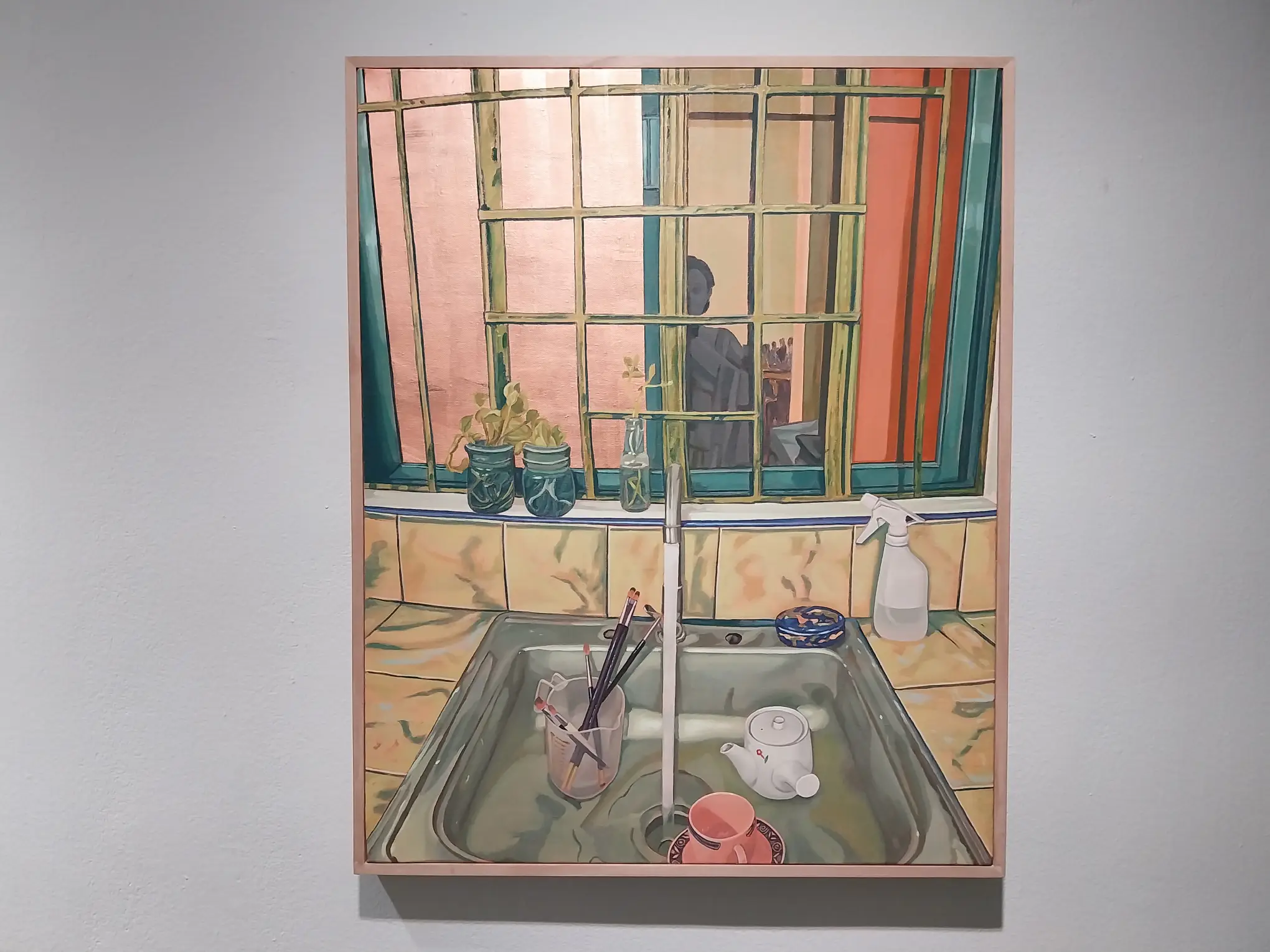
“By bringing attention to this routine aspect of creativity, Paje reframes the ordinary as a vital and meaningful space of reflection,” the exhibit write-up said. “It constitutes the fundamental site of creative labor.”
Paje herself said that the focus on routine also reminds her fellow artists that their experiences outside their craft form an important part of what they make as a whole. The focus on spaces, on time spent, on it being work, reminds us that there is more to life than art; the demands of living are there to keep us grounded and human.
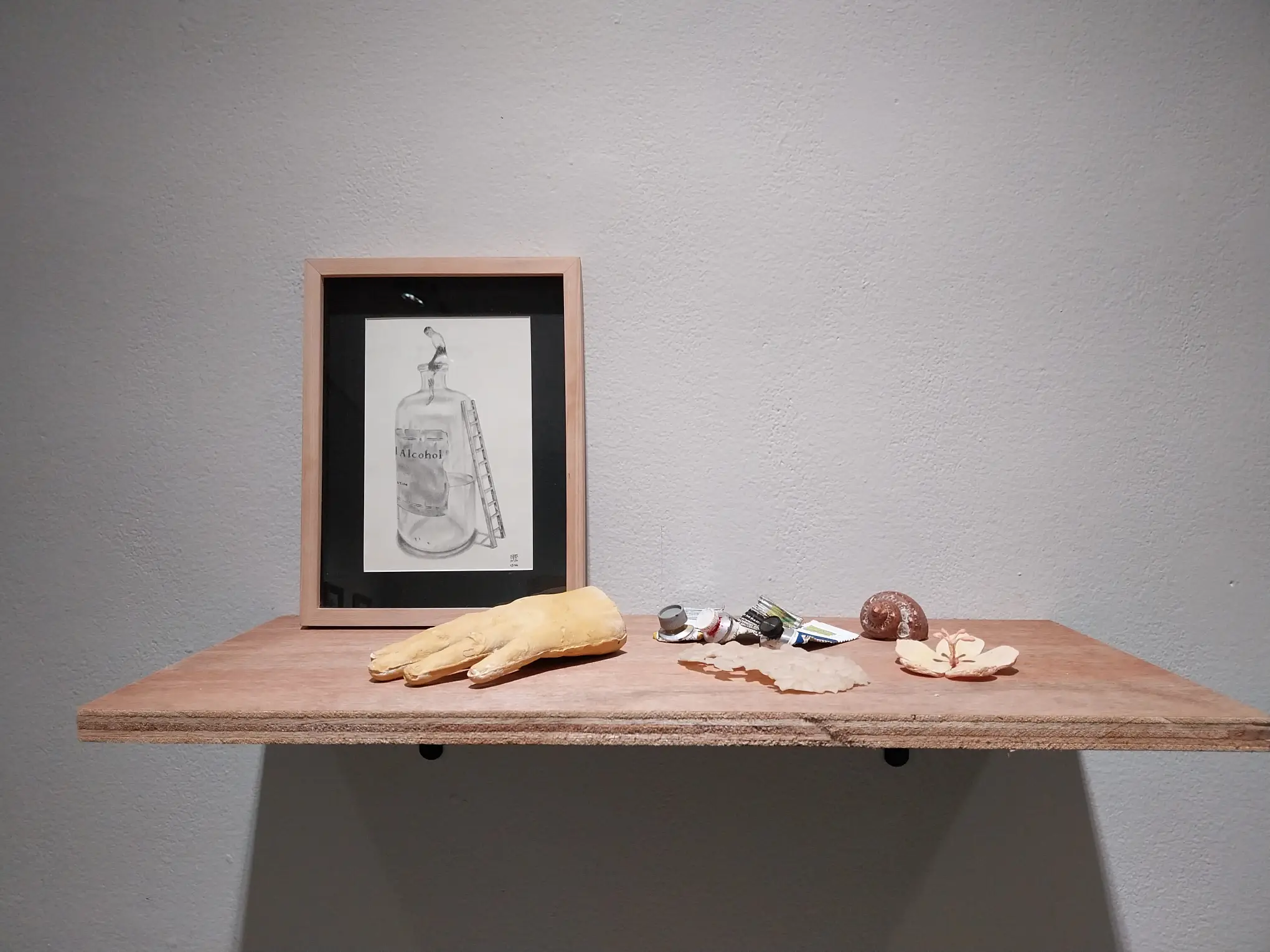
“Without an everyday routine, I imagine I might get lost in my work, forgetting other important things—like being present with myself, my family, and other significant people in my life. I might neglect the demands of everyday life outside my creative world, which are necessary to function and live as a decent, responsible human being,” Paje elaborated.
Physicality of Creation
eatsleepdreamwork seems to exist in that state of deconstruction and re-creation of the self.
When one says “self-deconstruction and recreation,” it means that the artist builds down their process to its barest parts, and then rebuilds it again, casting the artworks in a new light. These aspects of Lee Paje’s work portray the final products of creativity, existing in different states of abstraction, pondering on whether it changes the way we view these artworks from these new perspectives.
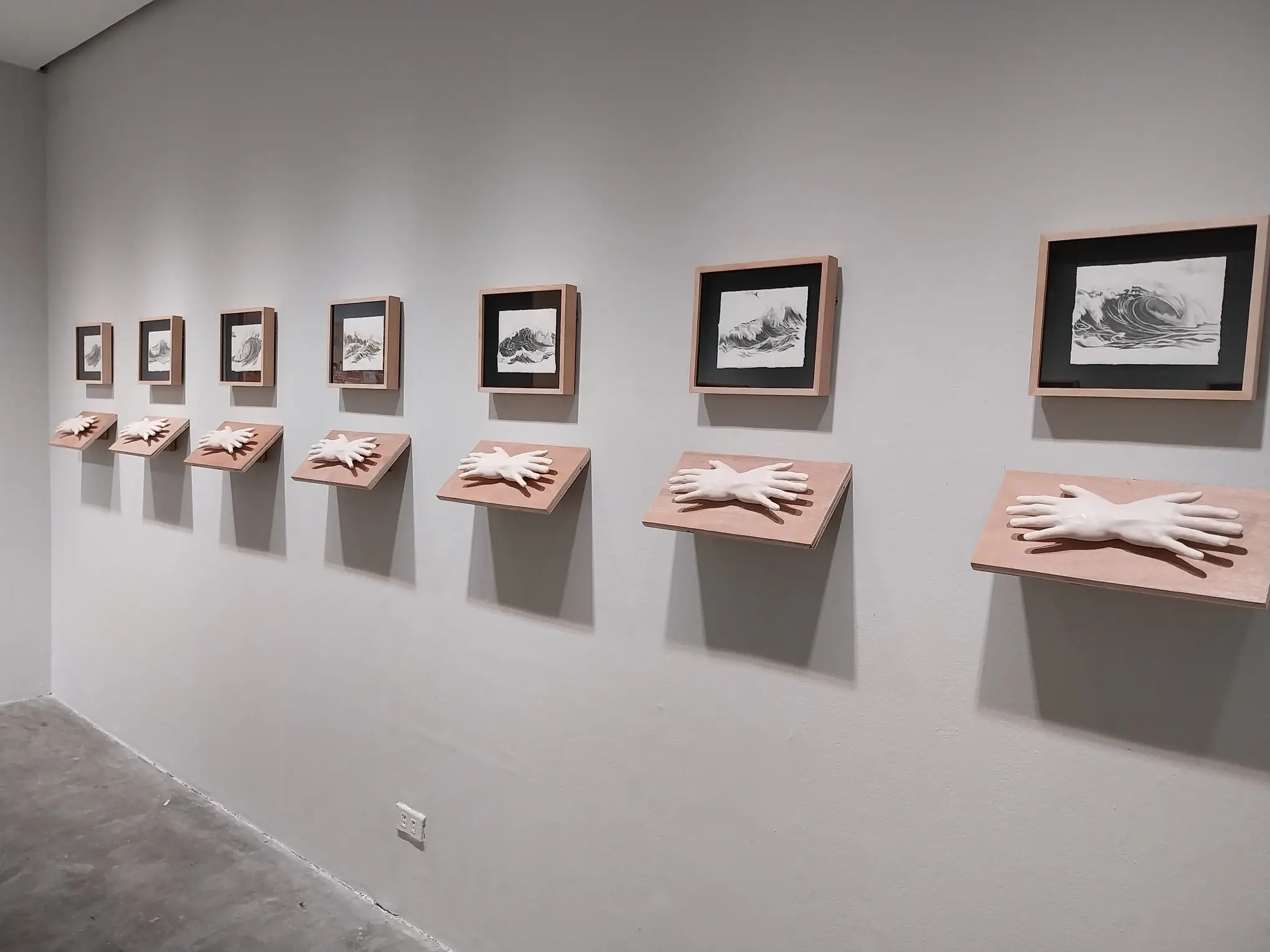
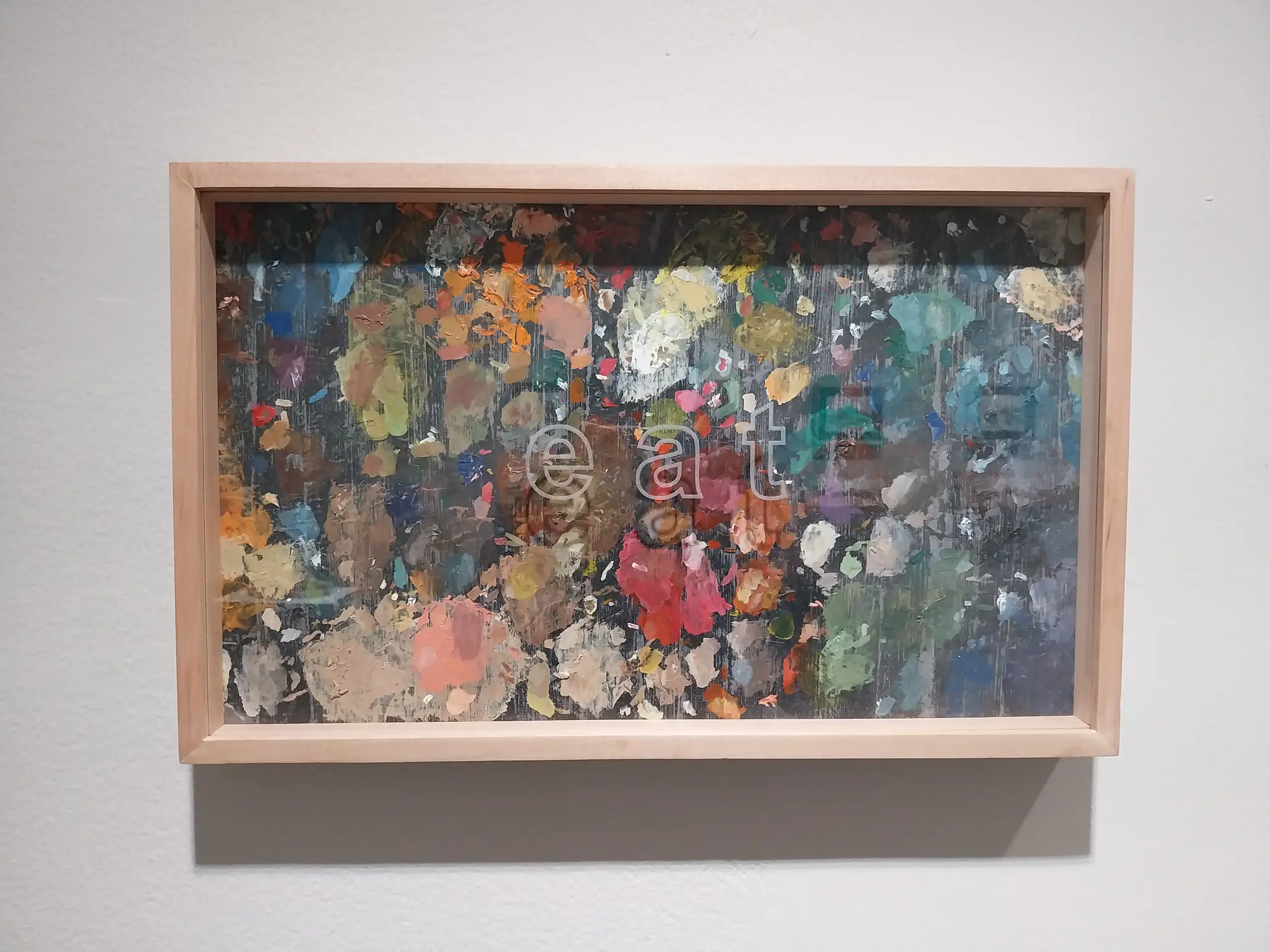
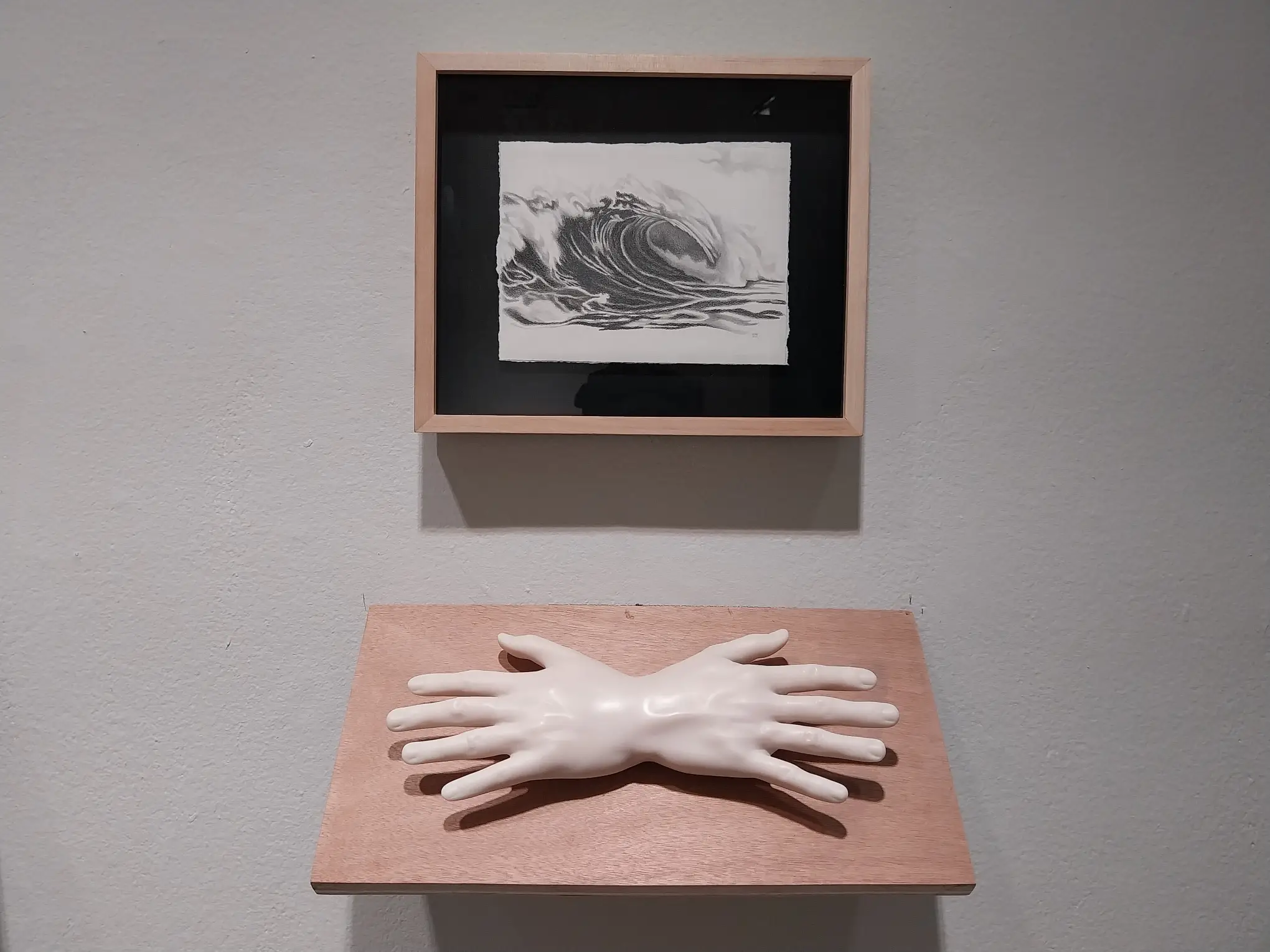
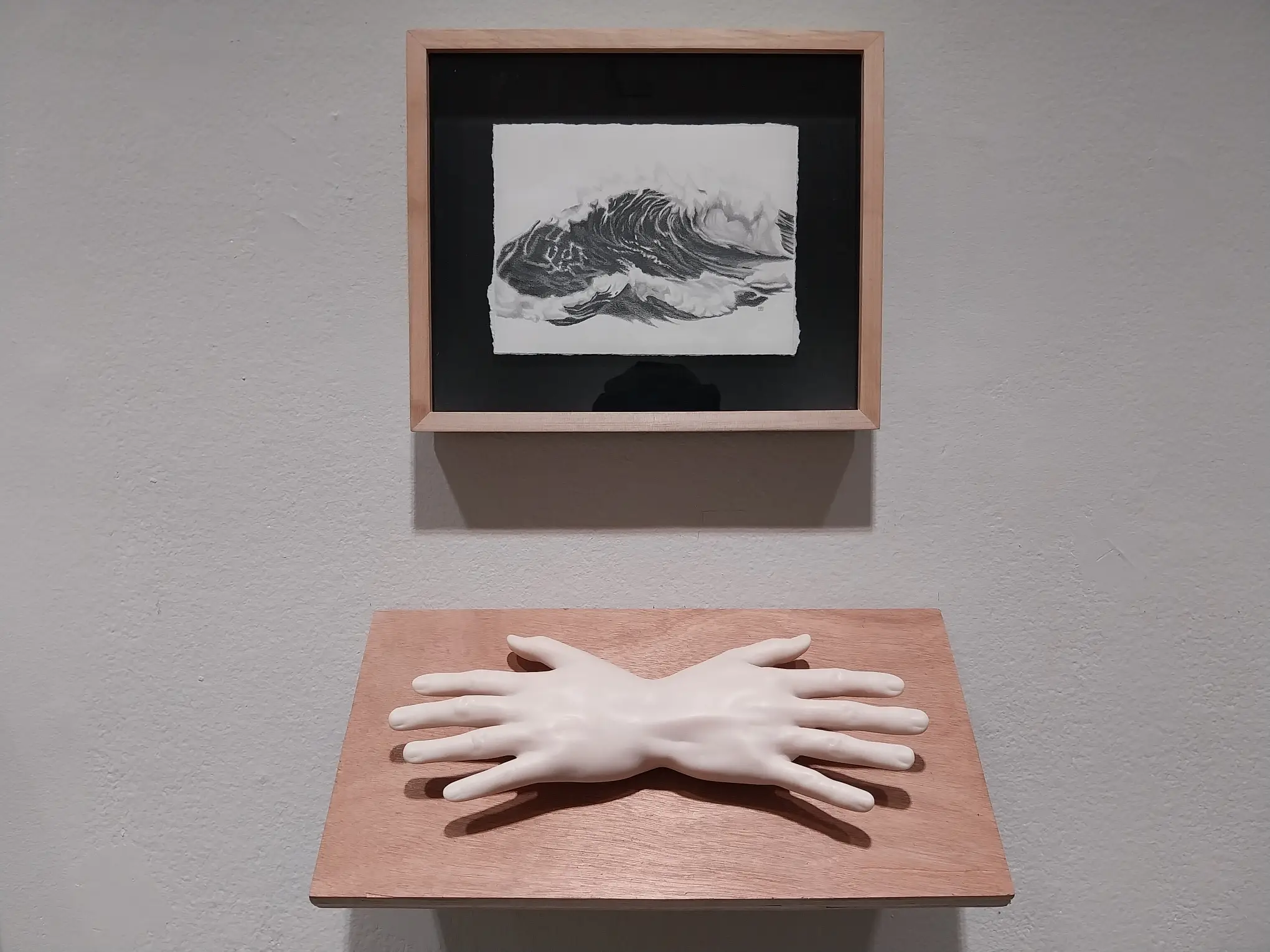
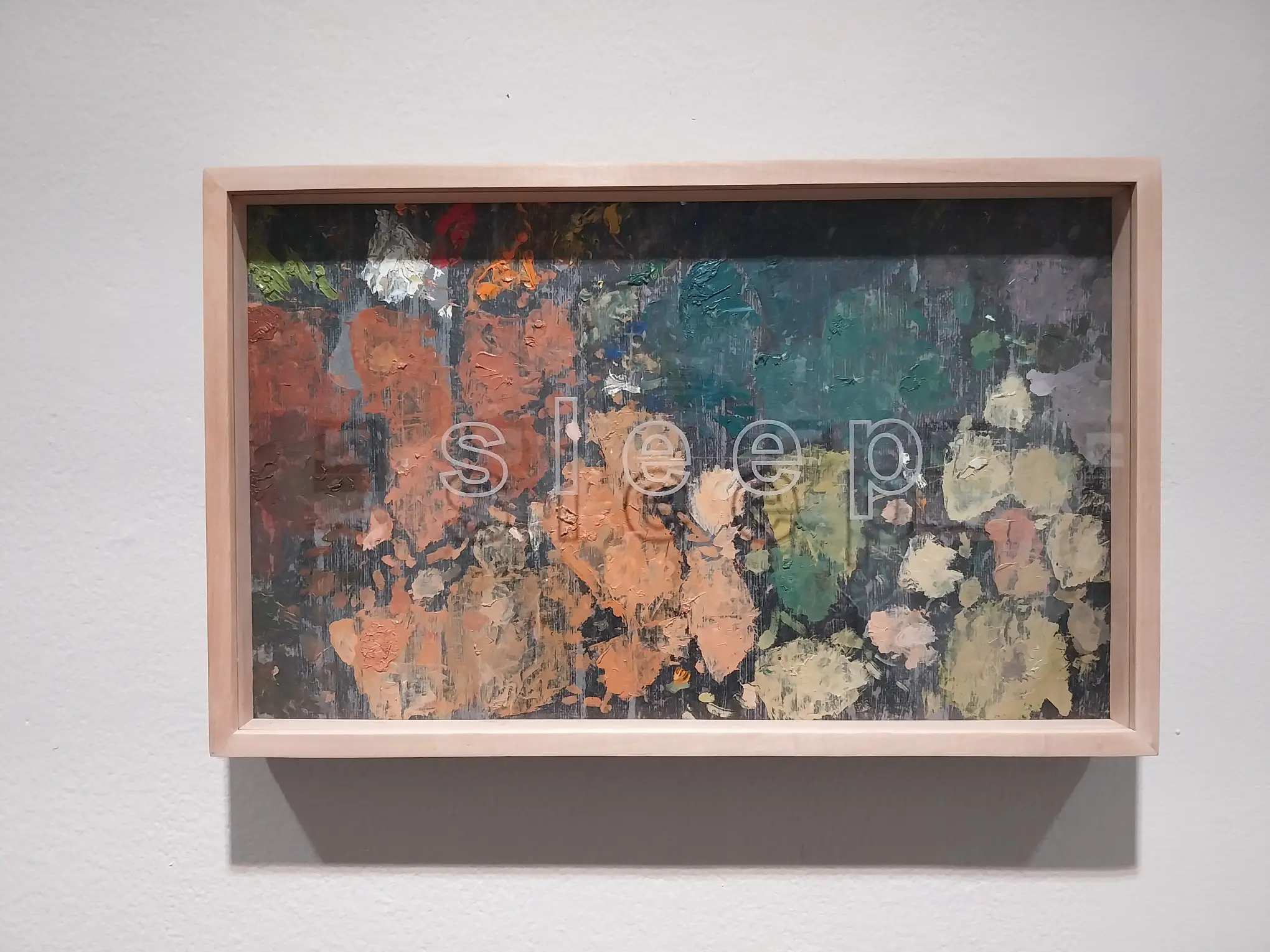
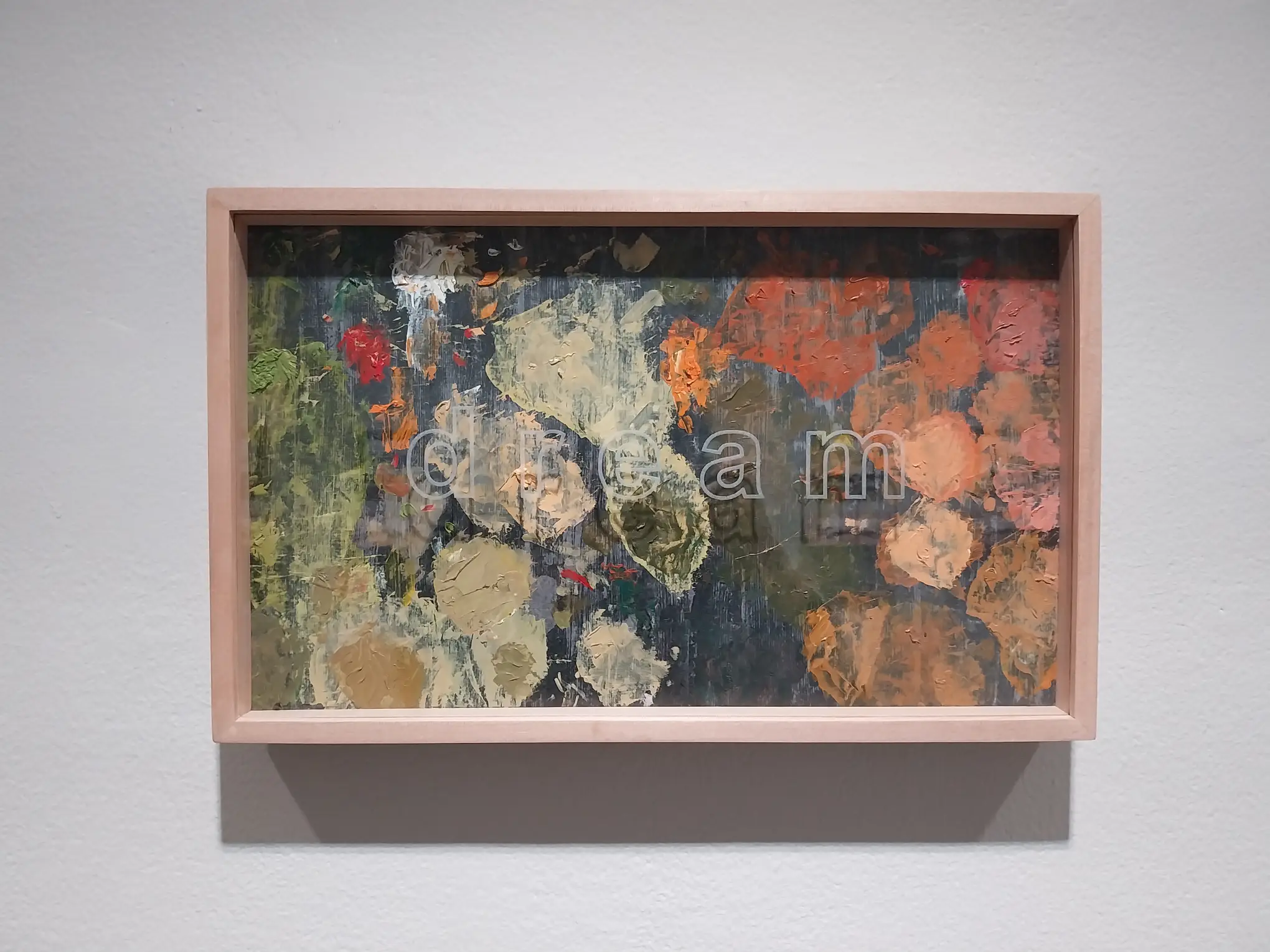
A series of works, for example, pairs up giant sculptures of hands interconnected with sketches of ocean waves. Four works have the individual words of the title—eat, sleep, dream, and work—superimposed over abstract paintings. Other sculptures by Paje represent physical manifestations of her art practice: the materials used for art, or some of her recurring themes.
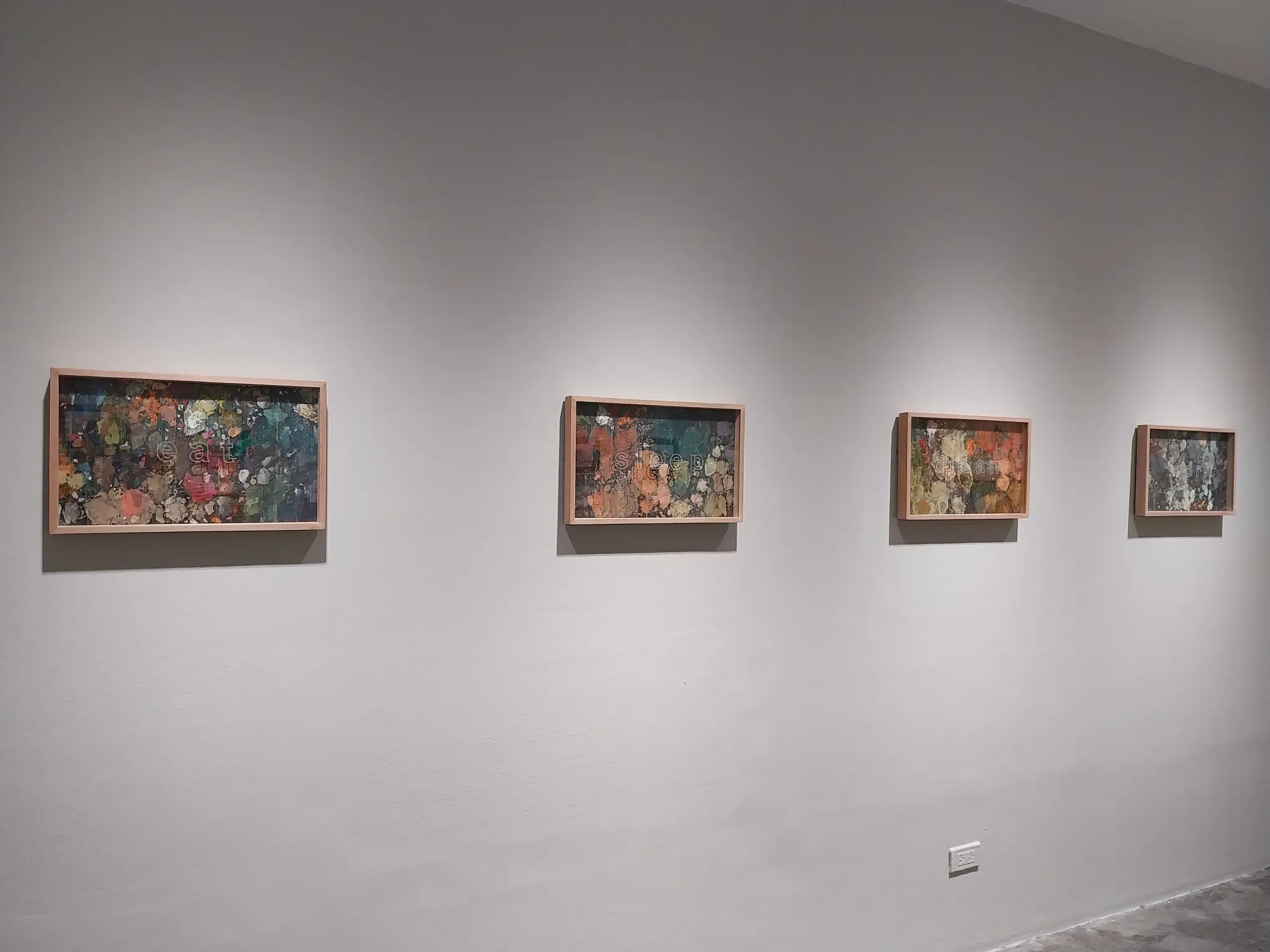
These work in contrast to “Sit In My Retina,” for example, because of how it acknowledges the difficulty of converting our mind’s visions of creative aesthetics into something concrete and real, a fully fleshed-out artwork for the world to see.
How does one create a visual representation of the creative process that takes into account the translation of the idea from a mental headspace into reality? Does it change the way we look at abstract paintings, or sculptures, or any sort of artwork, when we are privy to the efforts it takes to create them?
“I think acknowledging artistry as work gives more value to the process than to the aesthetics of what is being produced, offering the perspective that the final output has undergone considerable time, skill, and physical, emotional, and mental labor,” she said.
Art is Still Work
The unique aspect of eatsleepdreamwork is giving audiences a look at the daily drudgery of creativity and translating them into relatable artworks that its audience would understand. Lee Paje makes an explicit case here that the beauty of art is how it interacts with our daily life: how it affects the ideas that we have and the materials we create.
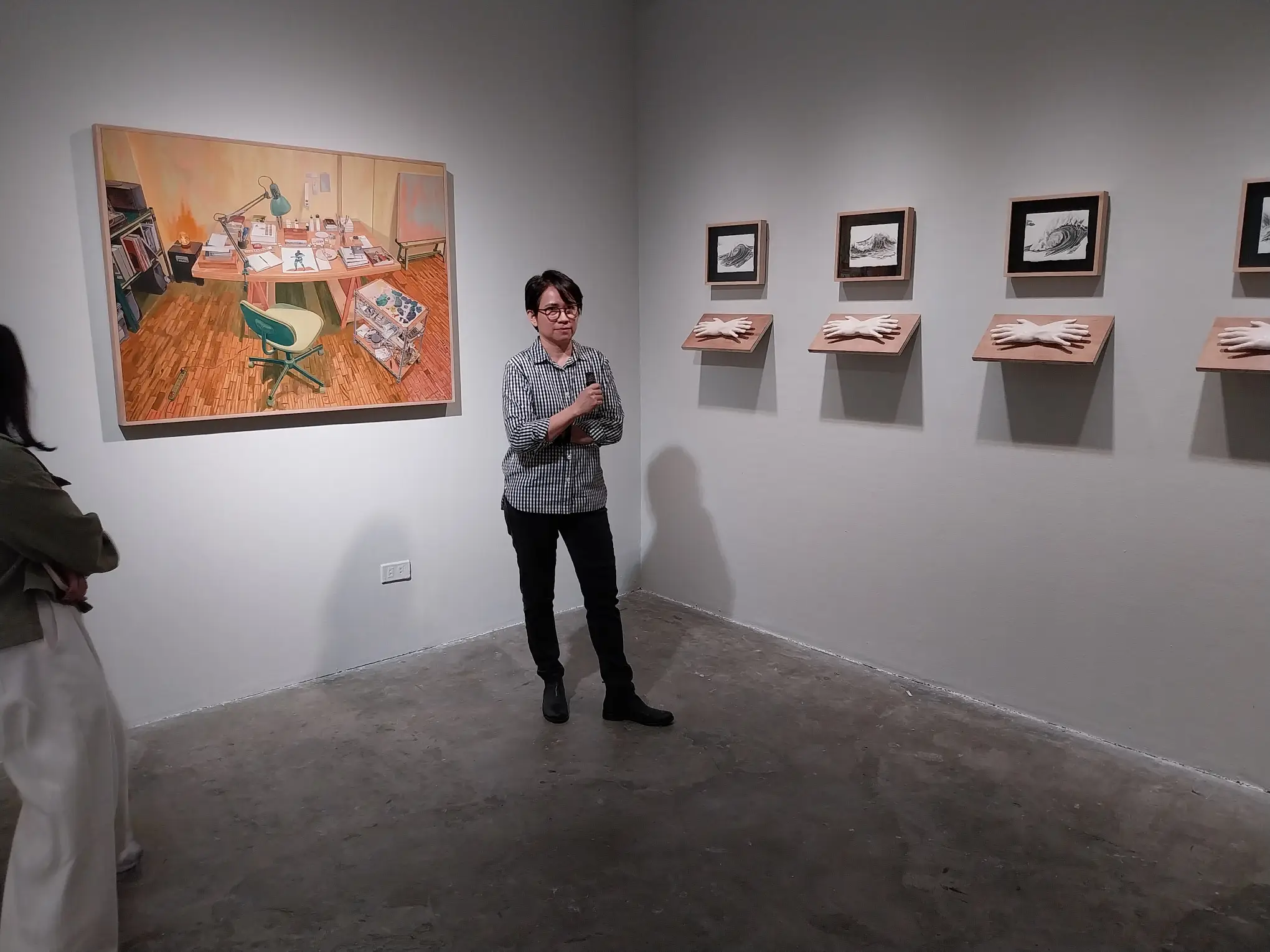
“As a whole, creative work is not the romanticized notion of a solitary artist effortlessly producing inspired works of art,” Paje said of the idea behind the exhibit. “It requires patience, commitment, and the willingness to continuously invest time, effort, and skill, along with an openness to learning and collaborating with others.”
Photos by Elle Yap.
Related reading: Gender and Creative Practice: Being a Female Artist in Today’s World
Frequently Asked Questions
Paje deconstructs the romanticized idea that art is born from sudden bursts of inspiration or “mental conduits.” Instead, her exhibition eatsleepdreamwork emphasizes that artistry is physical, emotional, and mental labor requiring discipline. By showcasing the “daily grind,” she highlights that actual skill and routine are what transform abstract visions into tangible, concrete reality.
“Sit In My Retina” is an immersive day-in-the-life video showing the artist’s perspective as she eats, bathes, commutes, and works. By blending new 2025 footage with segments from 2009, Paje creates a comparative testament to how the self evolves over time. It reframes ordinary, banal activities as vital components of the creative process rather than distractions from it.
Paje argues that a strict routine prevents artists from getting “lost” in their work and neglecting their humanity. These daily rituals keep creators grounded, ensuring they remain present for family and personal responsibilities outside of their craft. This balance acknowledges that the demands of living are necessary to function as a “responsible human being” while fueling sustainable creativity.
By depicting the “intimacy of the workspace,” such as cleaning materials or organizing a desk, Paje identifies these moments as the fundamental sites of creative labor. These paintings serve as a form of self-reflection, asking how the act of making shapes the creator. They emphasize that the “drudgery” of maintenance is just as significant as the final aesthetic product.
Recognizing artistry as work shifts the viewer’s focus from the final aesthetics to the substantial time, skill, and labor invested in the process. It demystifies the finished product, making abstract or complex works more relatable by revealing the physical manifestations of the artist’s practice. This perspective adds value to the output by honoring the persistence required to create it.
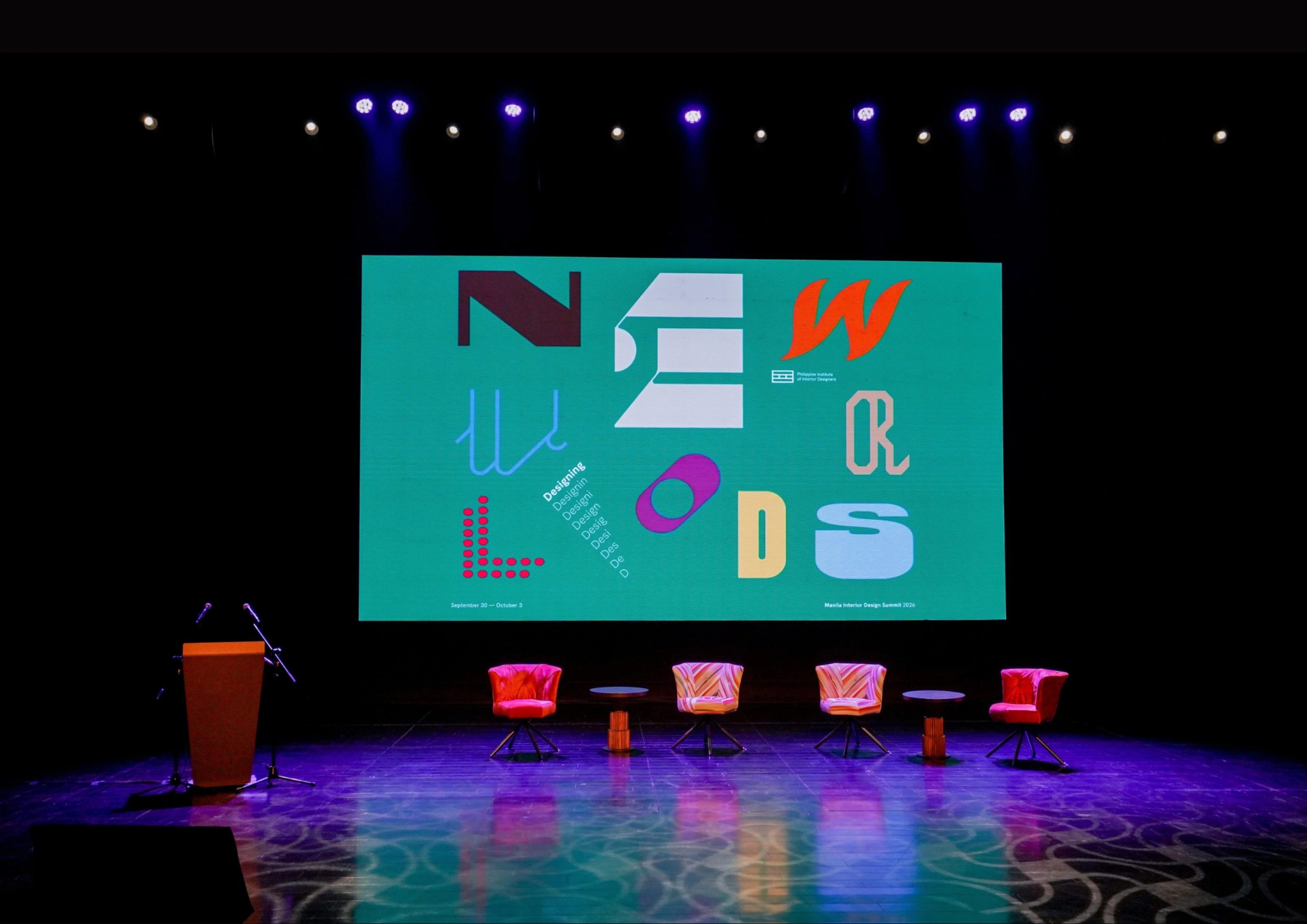
The fourth Manila Interior DesignInterior DesignThe discipline of planning and shaping interior spaces for function, comfort, safety, and beauty. It covers layout, lighting, materials, finishes, furniture, and color, and in the Philippines is a licensedGo to Interior Design Glossary Summit (MIDS) brought together more than 300 delegates for four days of conversations, exhibitions, and design […]
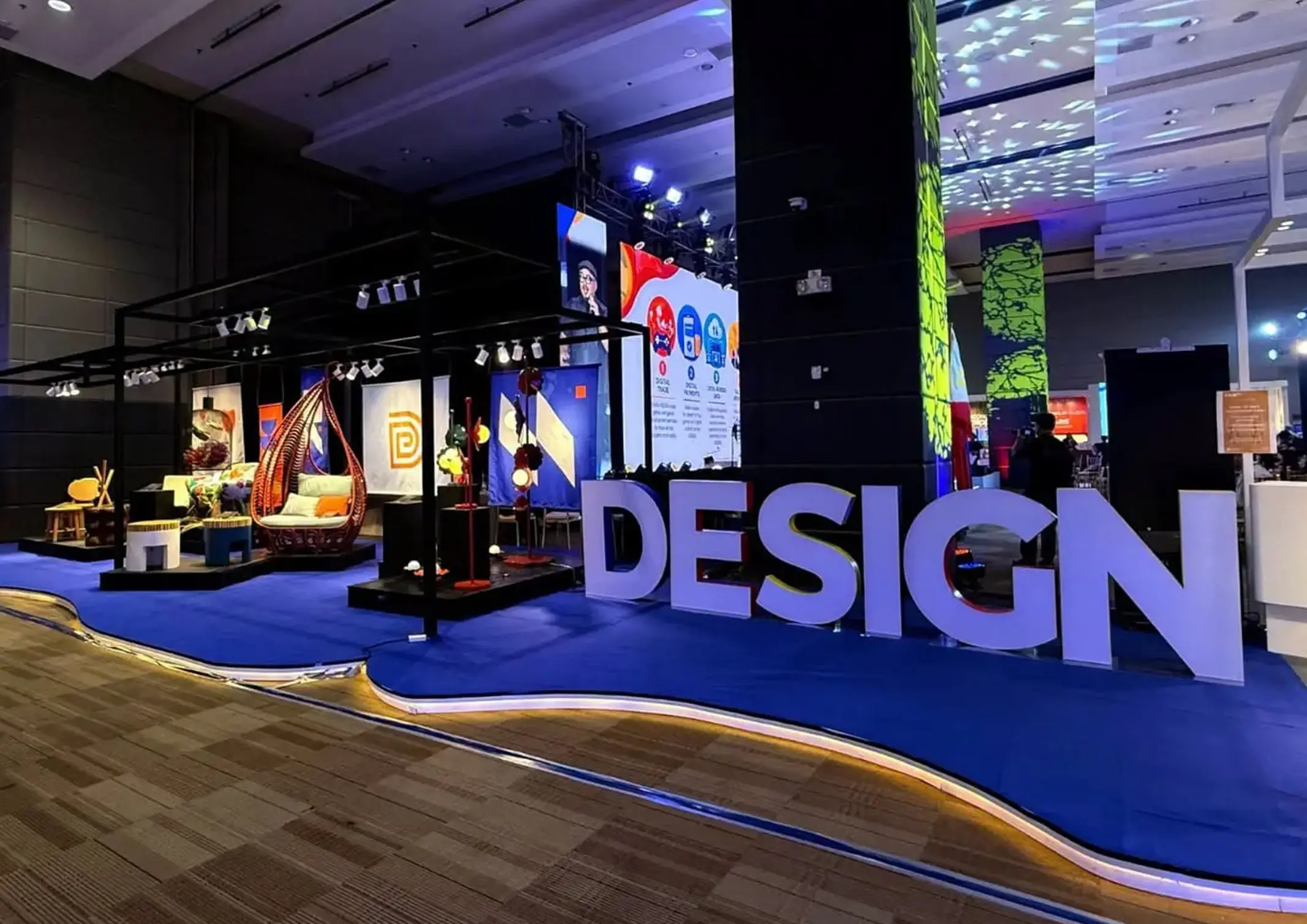
Held at the SMX Convention Center Aura in Taguig City, the first ASEAN Creative Industries Expo by Malikhaing Pinoy (ASEAN MPEx) features nine creative domains, including design, visual arts, digital interactive media, and performing arts. Organized by the Department of Trade and Industry (DTI), the event includes exhibitions, cultural performances, industry talks, and pitching sessions […]
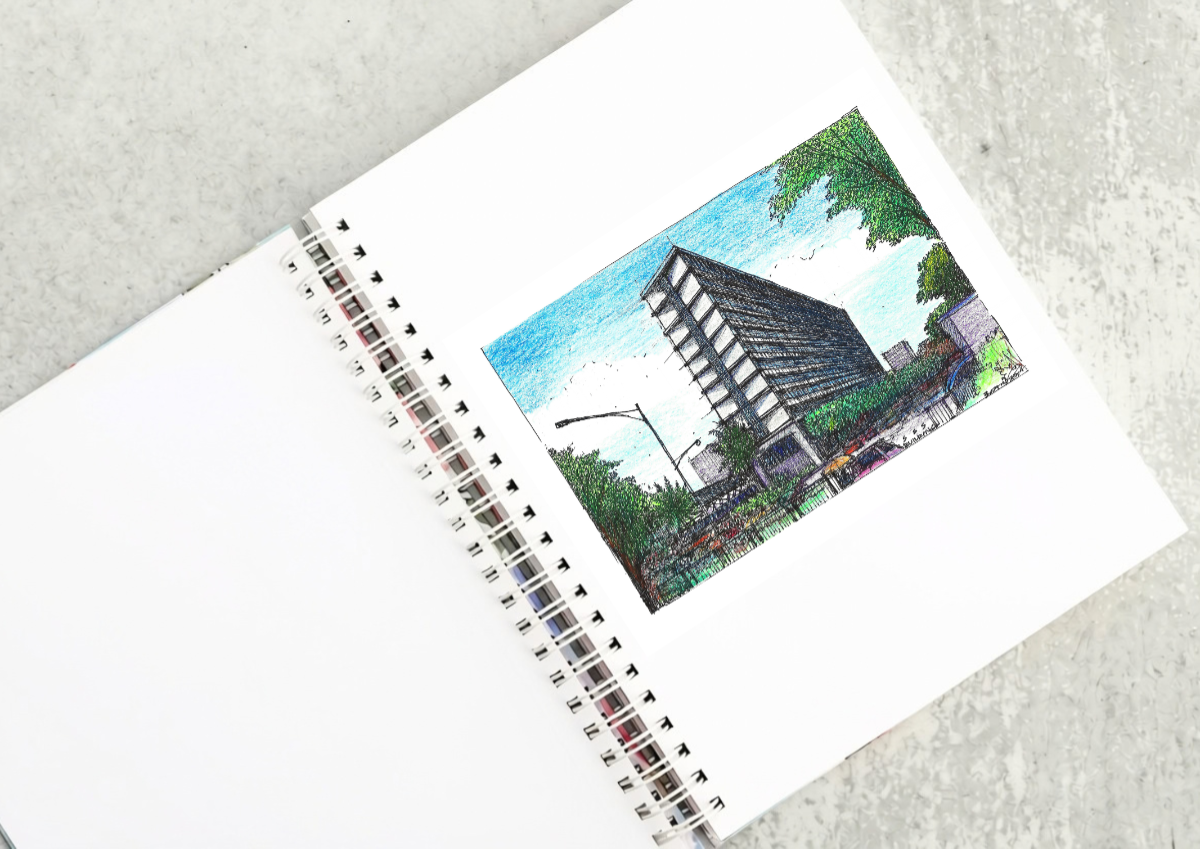
The SSS Building as an Expression of Civic Modernism My favorite modernist landmark in Quezon City is the SSS building on East Avenue. Designed by National Artist for ArchitectureArchitectureThe art and science of designing and constructing buildings, structures, and spaces that are functional, safe, and aesthetically pleasing. It encompasses the planning, design, materials, and techniques […]

Archie G. Carrasco, Chairman and CEO of AGC Power Holdings Corp. (AGC PHC), has been named to The BoF 500 Class of 2026 under the Media category, joining The Business of Fashion’s global community of individuals shaping the fashion industry. Carrasco is among 100 new members from 33 countries and 48 nationalities selected for the […]
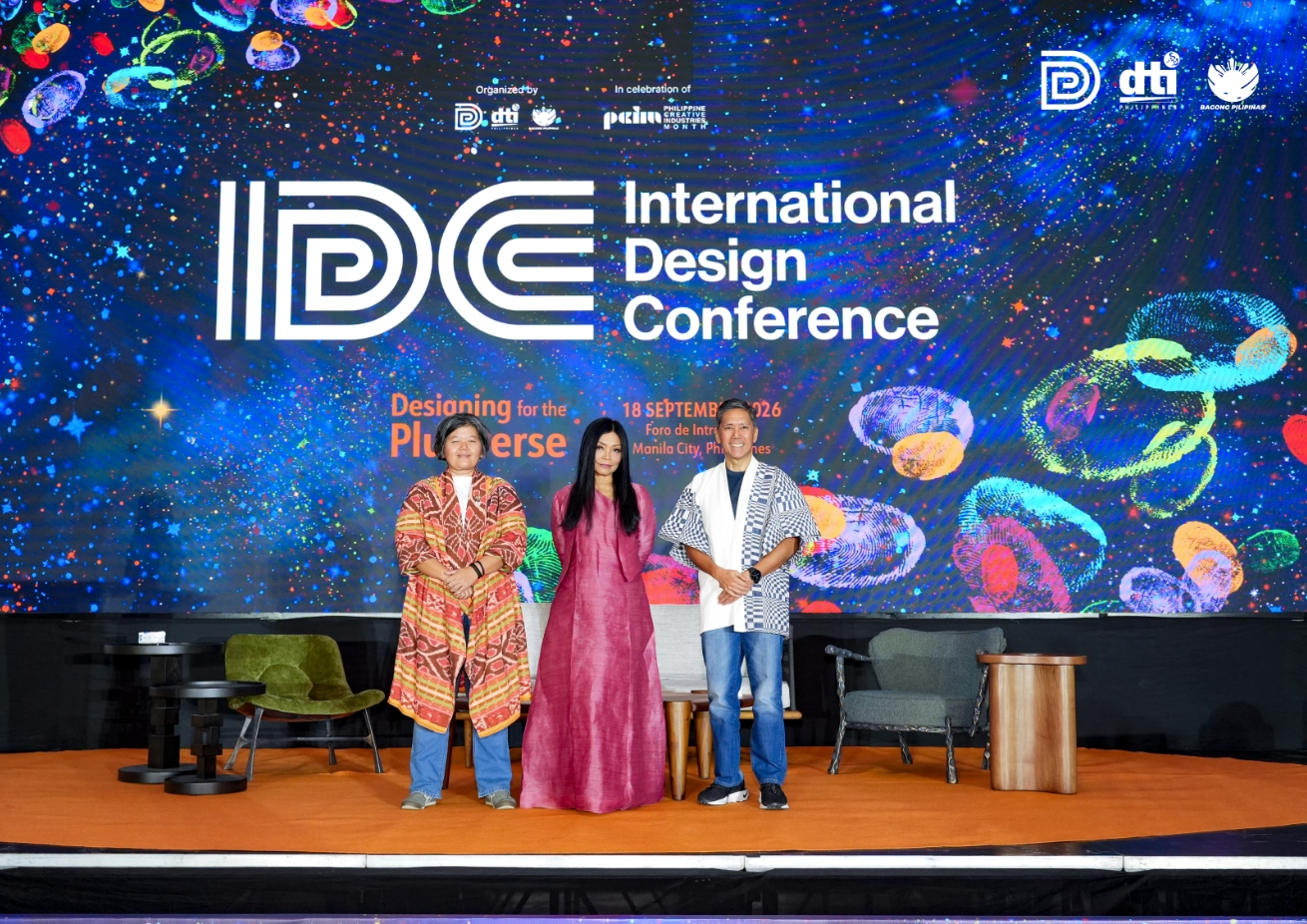
Culture in design does not always announce itself through a recognizable motif, material, or symbol. It can also be embedded in the relationships designers build, the knowledge they listen to, the materials they choose, and the decisions they make in response to communities and their environments. This distinction emerged throughout the 2026 International Design Conference […]
Read the issues.

Collect the volumes.

Recommended Video
Tap to Unmute
Unmute
0:00
0:00