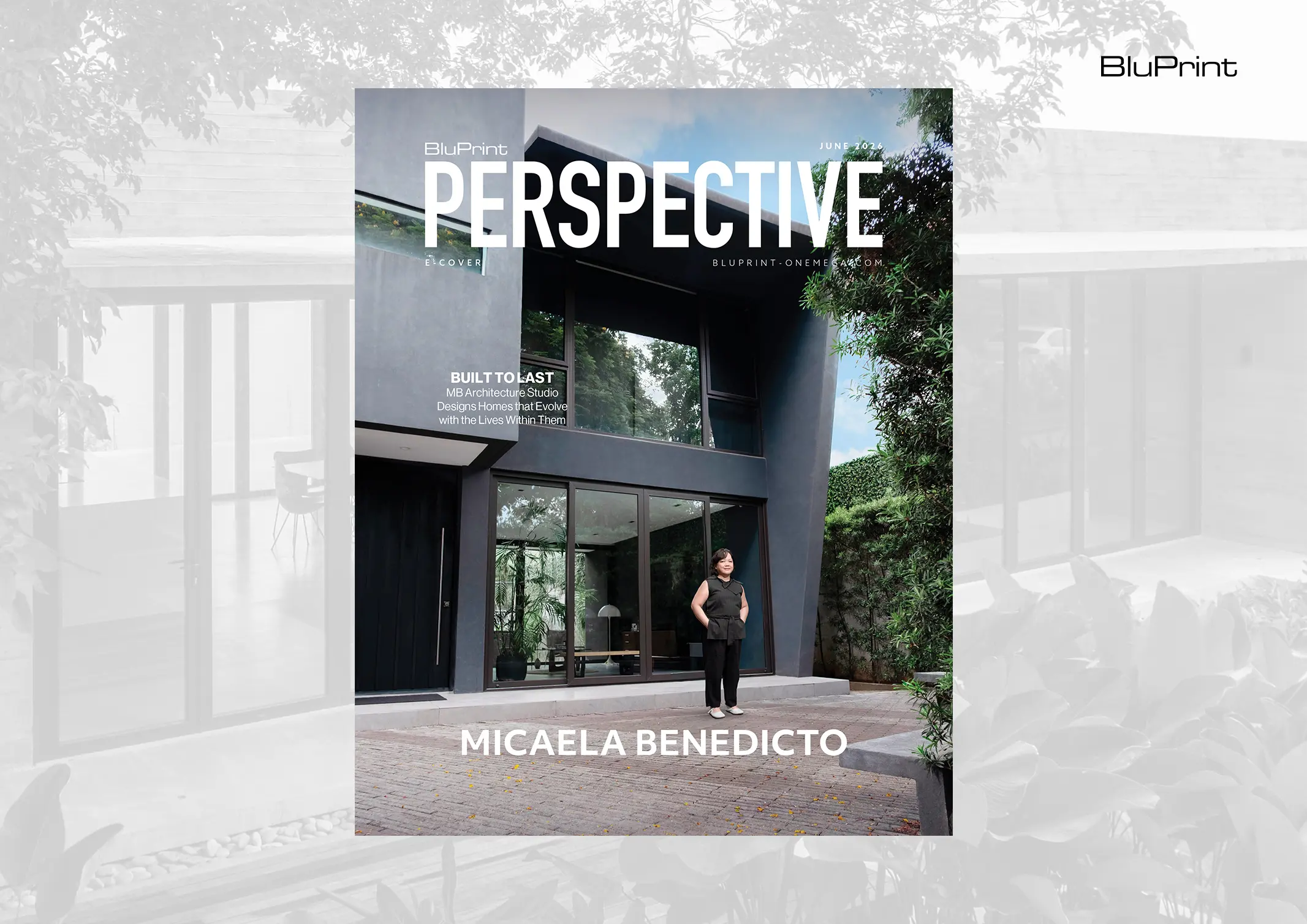
Since setting up her design firm, MB Architecture Studio, in 2007, Ar. Micaela Benedicto has built a diverse portfolio of architectural projects. Her works, whether residential or commercial, showcase a distinct spatial quality, “I like to create things that can go from something static to something that is alive and reactive,” Benedicto states. “In creating […]
DA Residence: Into the Woods



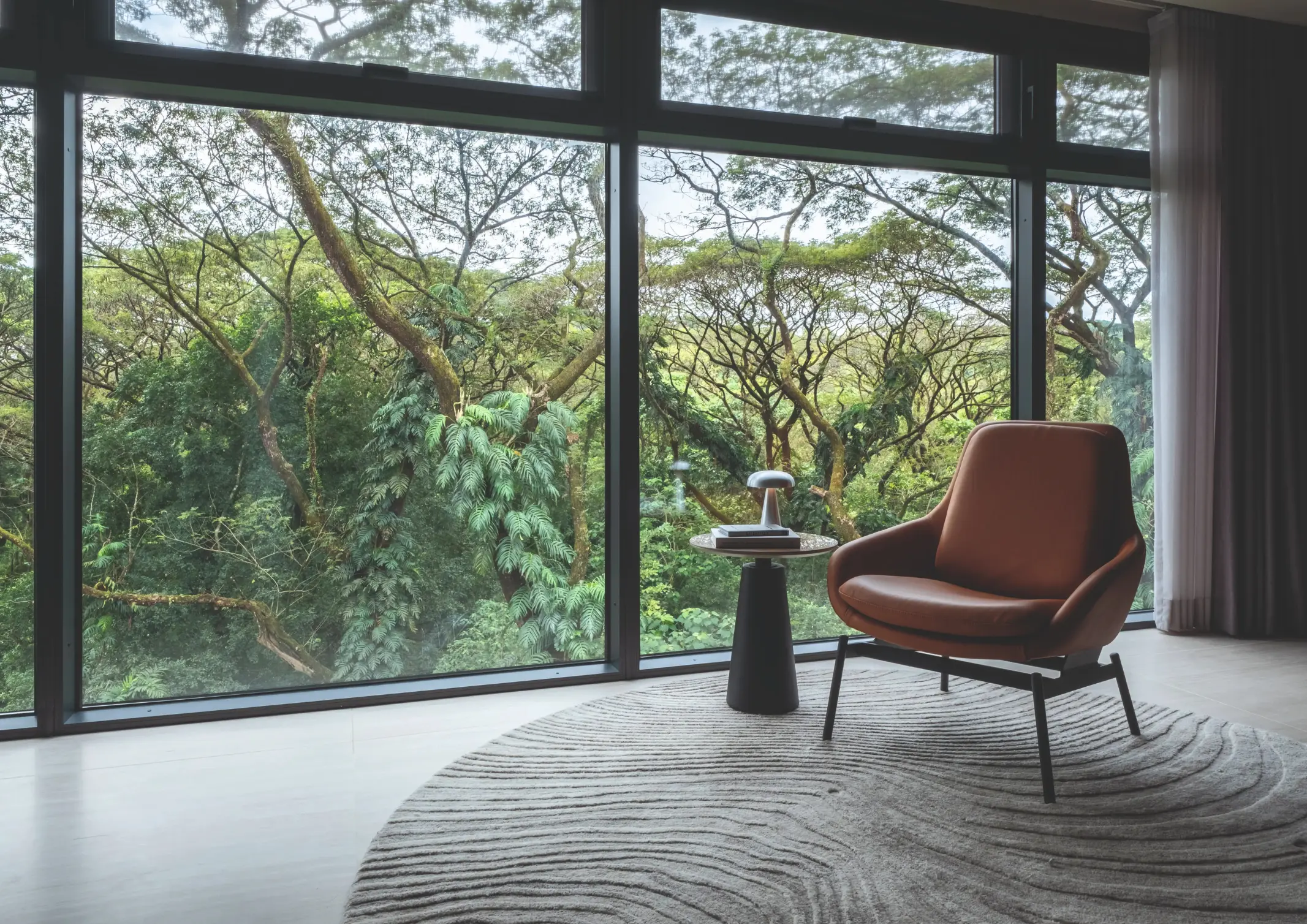
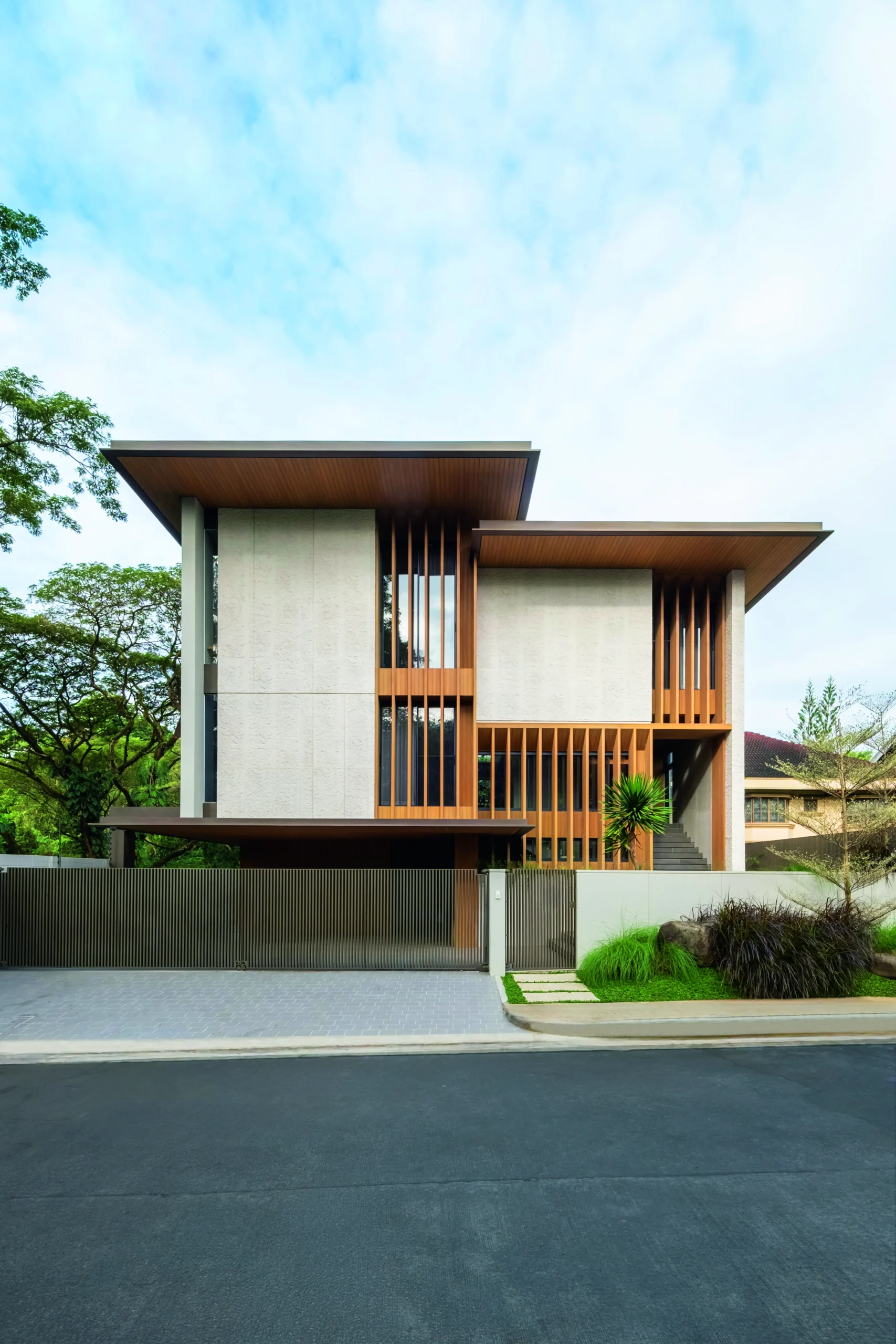
In dense urban environments, homes often seek to stand out—asserting boldness to carve space amid the city’s noise. But on rare occasions, architecture does the opposite: it listens and yields to its surroundings. Such was the case with DA Residence by PXP Design Workshop, located in a gated enclave in Quezon City beside a protected 32-hectare forest reserve.
Led by Principal Architects Patrick Espiritu and Spencer Sy, with Neil Sandico and Rina Yeban-Villareyes as Lead Architects and Ren Kins de Lara as Project Designer, the design team approached the home with a deep respect for its natural context. They immediately saw the project as an opportunity to create a house that would complement its unique surrounding environment.
Forest Landscapes
The site’s strongest asset—a lush forest that borders the lot—was also its initial challenge. Located at the perimeter of the subdivision, the wall blocked the view of the forest reserve from the pedestrian level. This prompted the design team to invert the conventional vertical arrangement, positioning the living area, dining area, and kitchen on the upper ground level. Unconventionally, they also placed the swimming pool on this upper level to take advantage of the unobstructed view. This decision also allowed service areas to be conveniently tucked away on the lower ground floor.
Once inside, spaces open up in controlled sequences. A low-ceilinged foyer gives way to a soaring double-height living room, creating a classic compress-and-release experience. In the open-plan main floor, Espiritu noted how the different ceiling heights determined the hierarchy of spaces in order to create different experiences within each one.
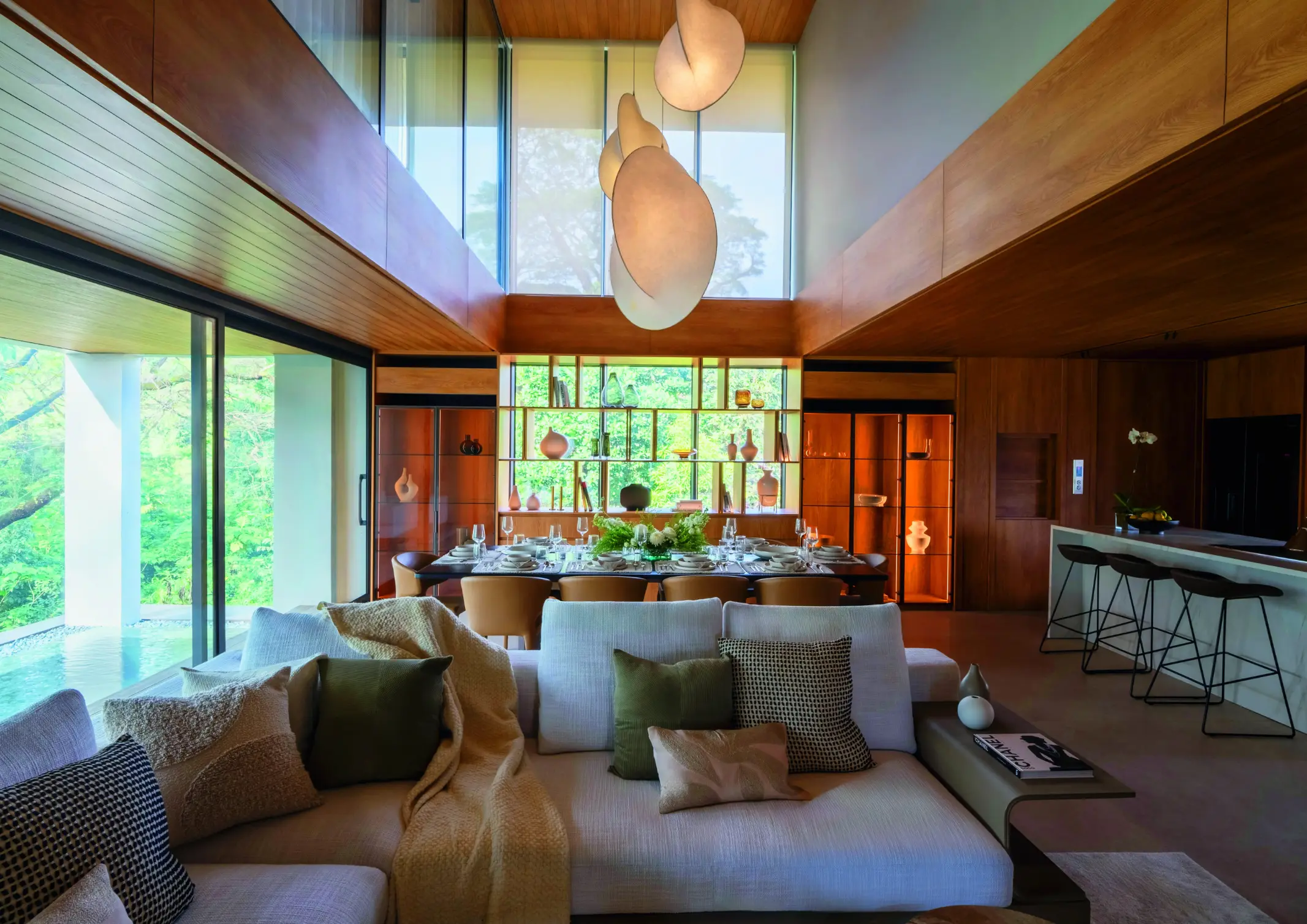
The interiors extend the warm, muted language of the facade. “The significant aspect was to follow a cohesive palette for both the exterior and interior materiality,” says Espiritu. “For instance, since the exterior materials (i.e, WPC, stone, metals) are more on the warm tones, naturally the interior materials would also gravitate towards more neutral pieces of furniture and fabrics”.
Even spaces often overlooked—like the service kitchen and staff quarters—were handled with the same rigor. “Normally, when we design the service areas in our projects, the team’s philosophy is to treat these areas with the same value instead of an afterthought as the general areas since these are still considered as habitable spaces,” Espiritu notes. To connect private areas to the main view, they used a “borrowed view” strategy, where glass partitions allow rooms like the master bedroom to look through other spaces toward the forest.
Tropical Sites
Asked about what the home represents in the context of tropical architecture, Espiritu reflects: “At large, this project is a further testimony that tropical architecture solutions do work and are essential in designing spaces in a tropical site”. He concludes that “Time-tested elements – such as proper spatial orientations, use of sun-shading devices [like] louvers, maximizing natural cross ventilation, and integrating sustainable materials–create not only a visually-pleasing structure, but also pay respect to its natural site and surroundings—through architecture and design”.
At its core, the project succeeds because it knows how to hold back. The architecture recedes just enough, letting nature take the lead—while still providing thoughtful interventions that enrich daily life. It is, in every sense, a home shaped not just by design, but by deference.
Get an exclusive tour of the DA Residence by ordering your copy of BluPrint Volume 2, 2025 at Sari Sari Shopping, Shopee, and Lazada. E-magazines are also available for download here or through Readly, Press Reader, and Magzter.
Dive into the captivating world of architecture, interiors, and arts & culture by getting exclusive digital access to BluPrint’s past and upcoming issues. Click here to find out more.
Photographed by Ed Simon
Frequently Asked Questions
The architects inverted the conventional vertical layout by elevating the main living, dining, and kitchen areas to the upper ground level. By placing the social spaces and the swimming pool on this higher plane, they bypassed the height of the boundary wall to secure unobstructed views of the adjacent 32-hectare forest reserve.
The residence employs a “compress-and-release” experience, where guests first enter through a low-ceilinged foyer before the space expands into a soaring, double-height living room. This transition in volume uses ceiling height to establish a clear spatial hierarchy and evoke a dramatic emotional response as the interior opens up toward the forest.
To ensure that even secluded rooms benefit from the natural surroundings, the designers used glass partitions that allow visual continuity across multiple zones. This “borrowed view” technique enables the master bedroom to look through intermediate spaces, effectively pulling the forest scenery into the private areas without compromising the home’s open-plan feel.
PXP Design Workshop treats service kitchens and staff quarters with the same rigor and value as the primary social areas, rather than as an architectural afterthought. They believe that all habitable spaces deserve cohesive design quality, ensuring that the entire structure maintains a high standard of materiality and functionality throughout.
The home integrates essential tropical design elements such as strategic spatial orientation, natural cross-ventilation, and the use of sun-shading louvers to manage heat. By combining these functional features with sustainable materials and a cohesive, warm palette, the architecture respects the local climate while fostering a deep connection to the forest landscape.
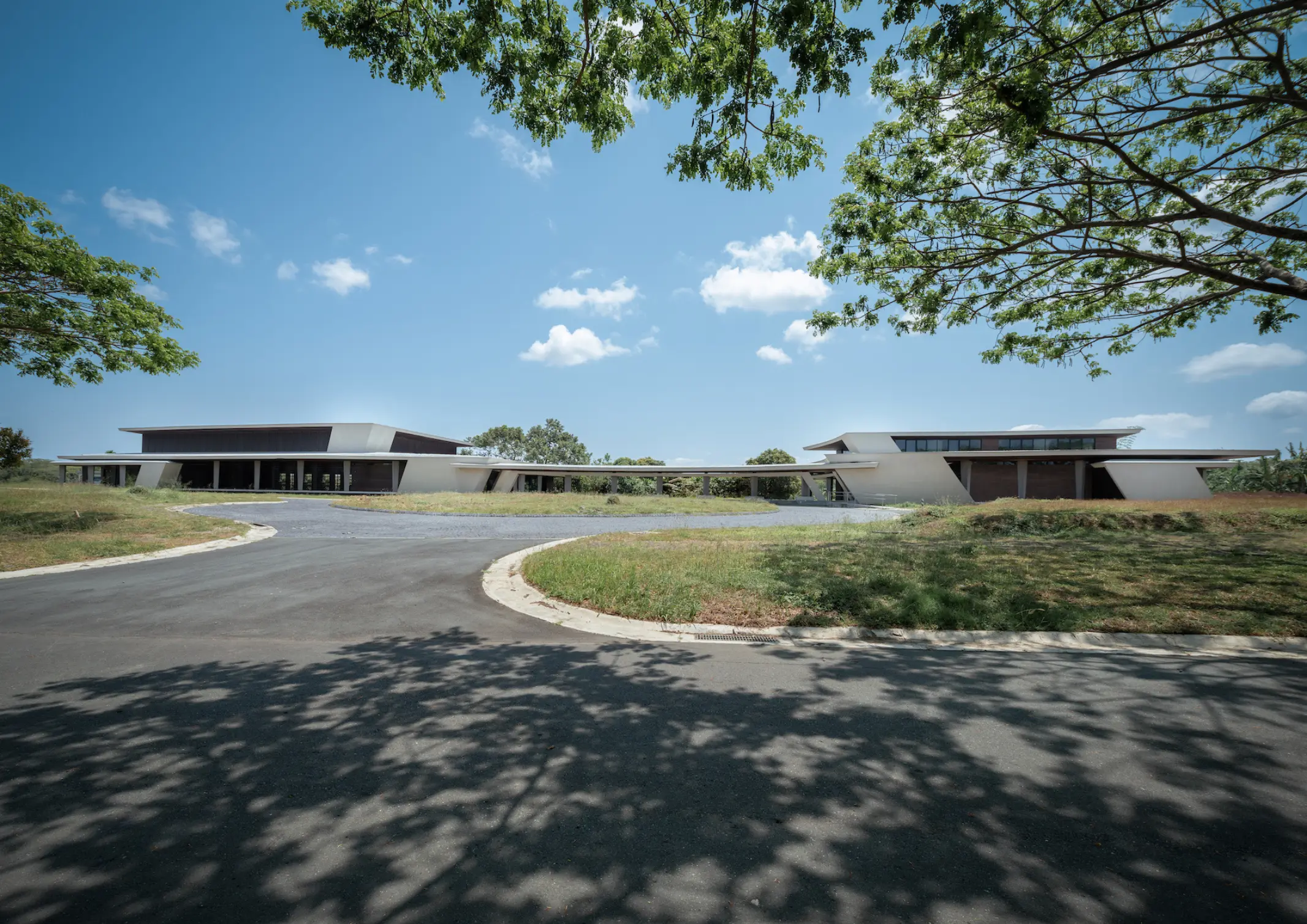
Luscara and Soliento: Barchan + Architecture on Designing a Clubhouse that Responds to its Landscape
Situated in Laguna, south of Metro Manila, is a multi-thousand-hectare development created by Ayala Land Premier within the growth corridor of the CALABARZON Region. Barchan + Architecture was tasked with crafting a clubhouse for the subdivisions of Luscara and Soliento. Principal Architect of Barchan + Architecture, Jason Buensalido, explains the firm’s process in creating the […]
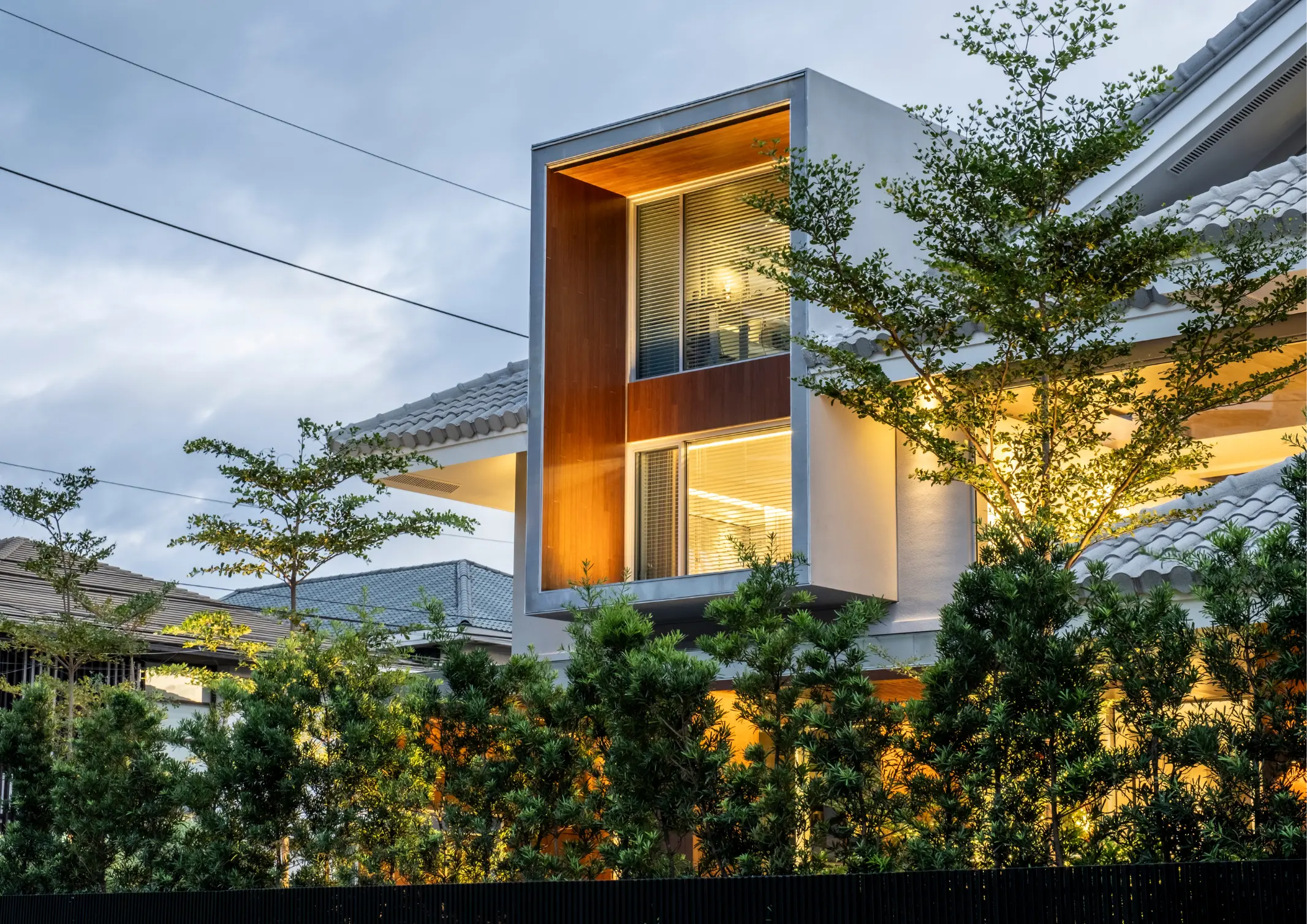
Over the past decades, adaptive reuse has been utilized as a sustainable alternative for the built environment. It involves repurposing existing buildings for a new use, allowing the past to remain while serving a modern purpose. Here, structures facing potential demolition or no longer serviceable are seen as sources of raw materials for new projects. […]
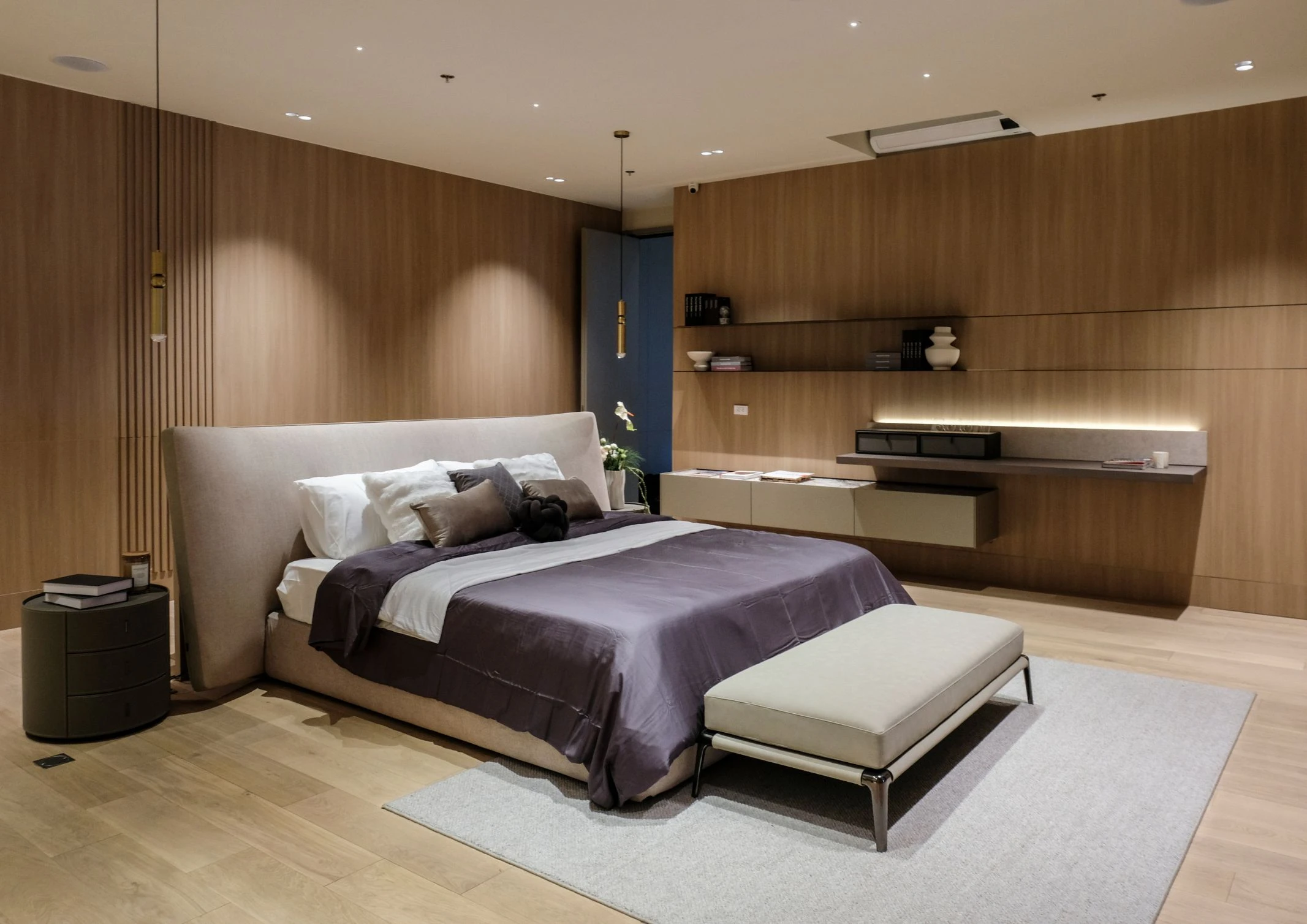
The local design landscape has a significant new player following the grand launch of the Boloni Philippines showroom in Makati City. The celebrated event marked the official entry of a leading global brand, renowned for its “total interior solution” approach, into the Philippine market through an exclusive partnership with RDS Global Allianz. Hosted by Mica […]
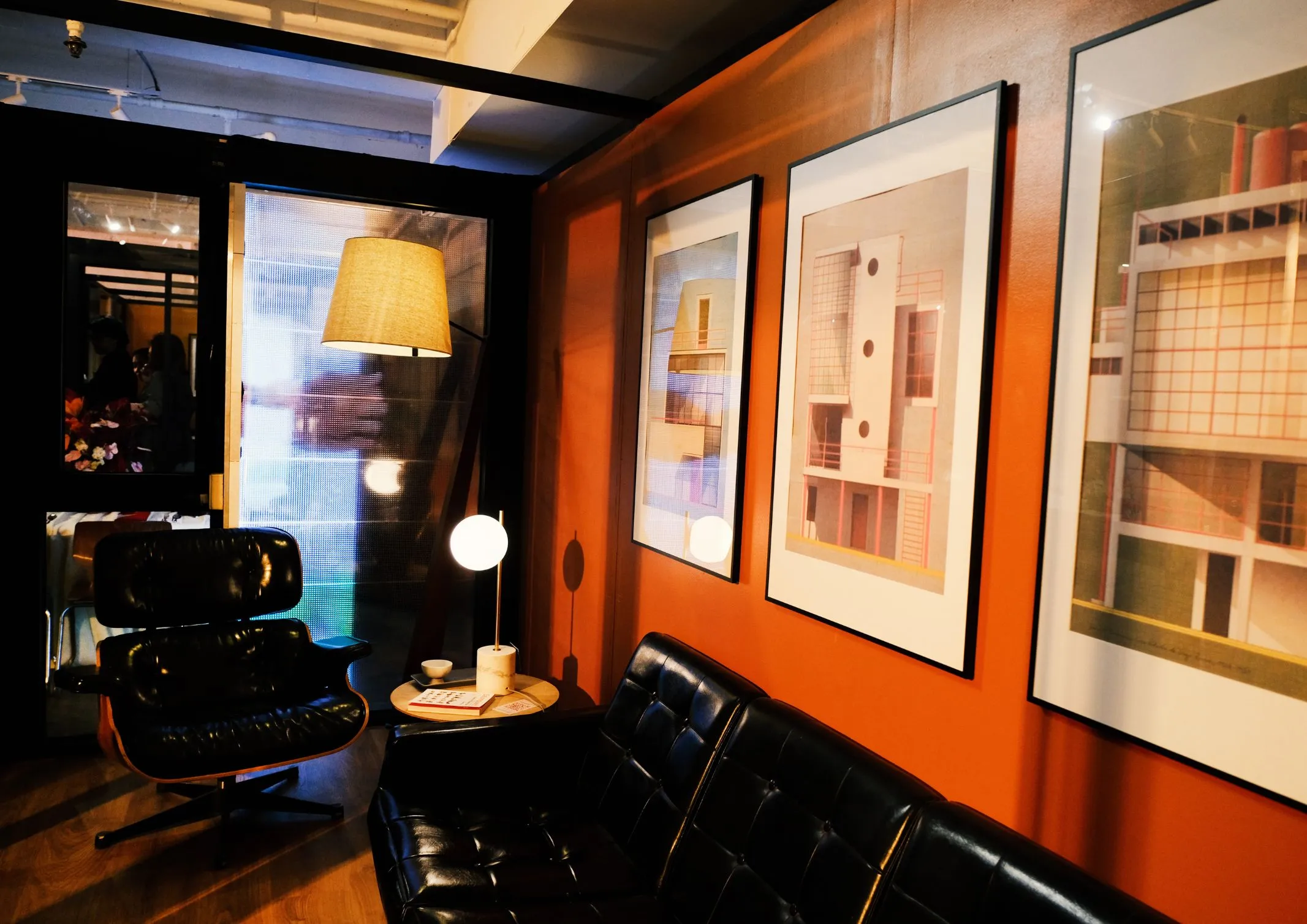
Last November 26, the local design community gathered at Open Space in Makati for an immersive spatial experience. The event, Harmonious Spaces, served as the definitive reintroduction of AP Aluminum and Glass in a powerful reframing of their products. Instead of presenting aluminum and glass as mere architectural components, the evening showcased them as essential, […]
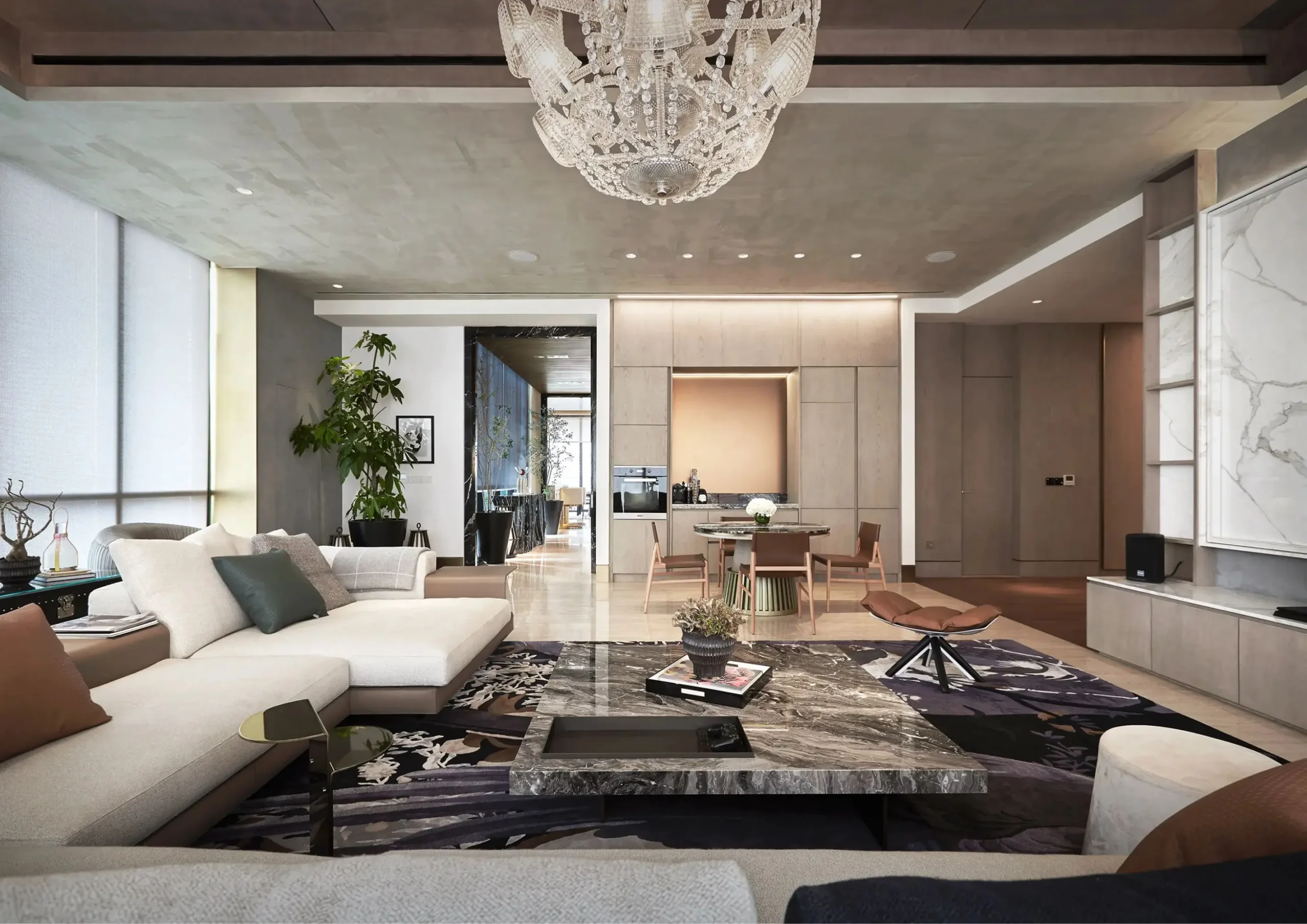
The apartment unit, often constrained by space and convention, has evolved from a functional living box into a canvas for highly personalized architecture and interior design. The year’s most compelling luxury apartment designs demonstrate a shift away from transient trends, instead prioritizing intentional curation, deep comfort, and a seamless visual flow. From the art-infused gallery […]
Download this month's BLUPRINT magazine digital copy from:



Subscribe via [email protected]
Recommended Video
Tap to Unmute
Unmute
0:00
0:00