Bigkis is the act of binding. In Tagalog, the word can refer to something used to bind or encircle, as well as a bundle formed by tying several separate elements together. Figuratively, it can also mean a bond, union, or unity. The meanings move from the physical act of joining things together to the connection […]
Celine Lee Commentates on Class Inequality in ‘ReNOWn’ Program



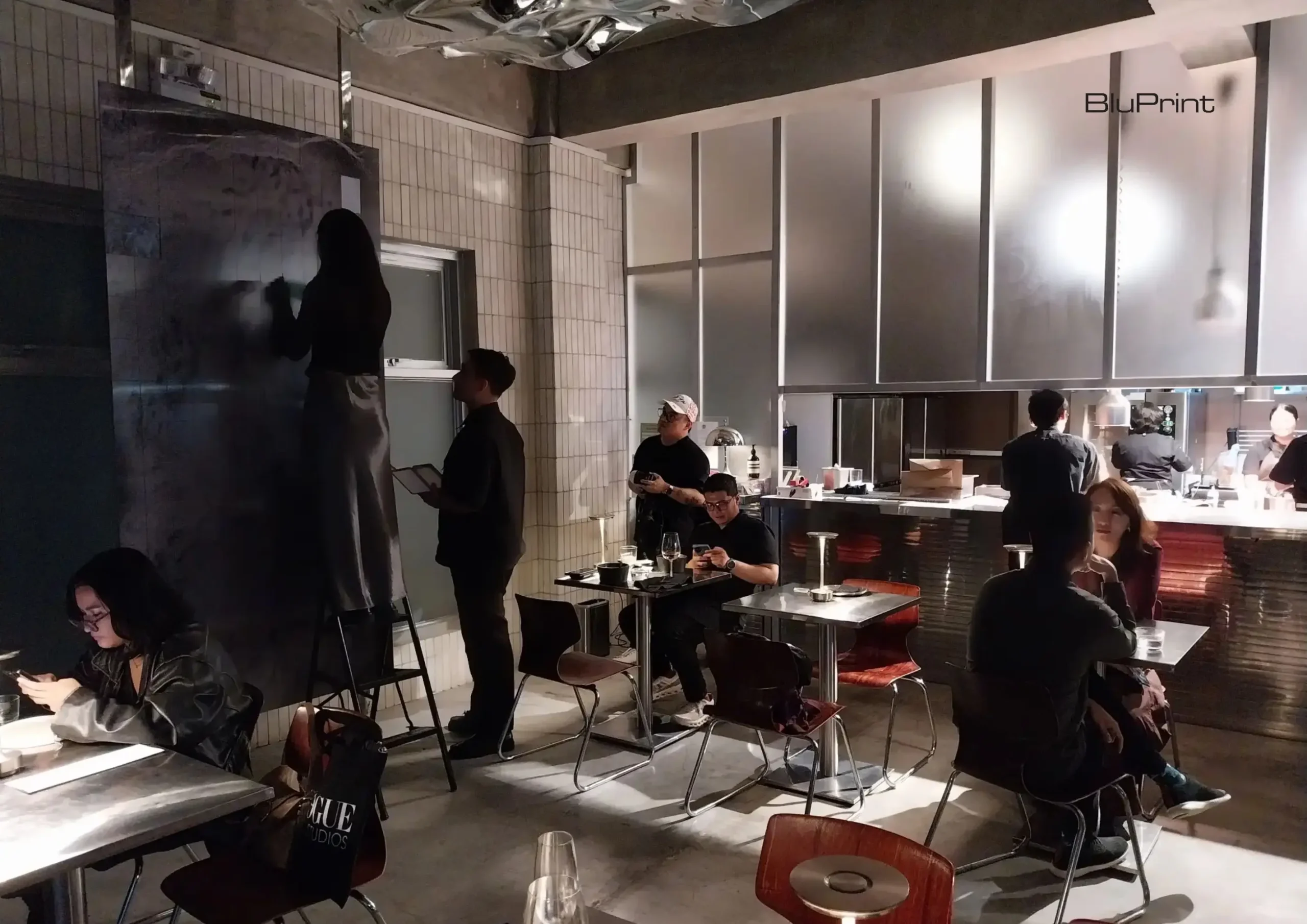
Now Now Canteen enters into its second artist for its reNOWn cultural incubation program with visual artist Celine Lee. The program, seeking to meld fine dining and high art, has created unexpected results in its pursuit for common ground between the two formats.
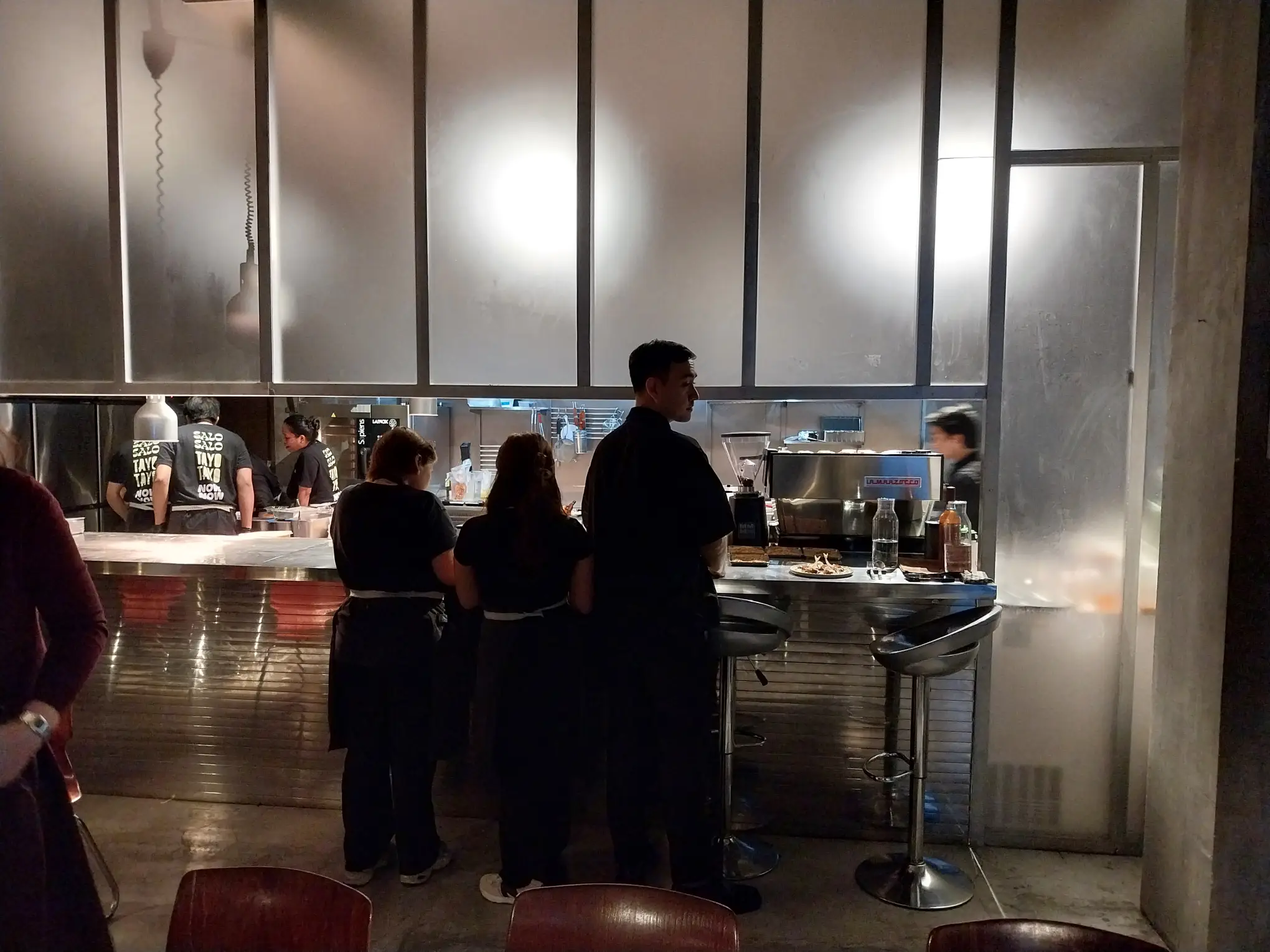
“For all their differences, art and food share a powerful common ground,” Mateusz Łuczaj, who is a part of the gastronomy team of Now Now Canteen, said. “Both invite us to engage with physical form in a way that stirs emotion, provokes thought, and sparks dialogue. With reNOWn, we don’t just imitate art—we seek to expand it. In a sense, we’re adding new colors to the contemporary artist’s palette, enriching the experience and deepening its resonance.”
Celine Lee for ‘reNOWn’
The choice of Celine Lee for the reNOWn program is an inspired one. As an artist, she’s well-known for her exploration of the “metaphysical aspects of contemporary human experience.” She constantly utilizes different materials to explore the idea of creating an image itself, landing unto distinct works that dig into how we create meaning to the images we choose to valorize or decry.
She shared that her attraction to reNOWn came out of an admiration of the ambitions of the team behind the program at Now Now Canteen, which was to “democratize” the kind of food they served. She said that this tickled her own ambitions on how she wanted her artwork to be perceived.
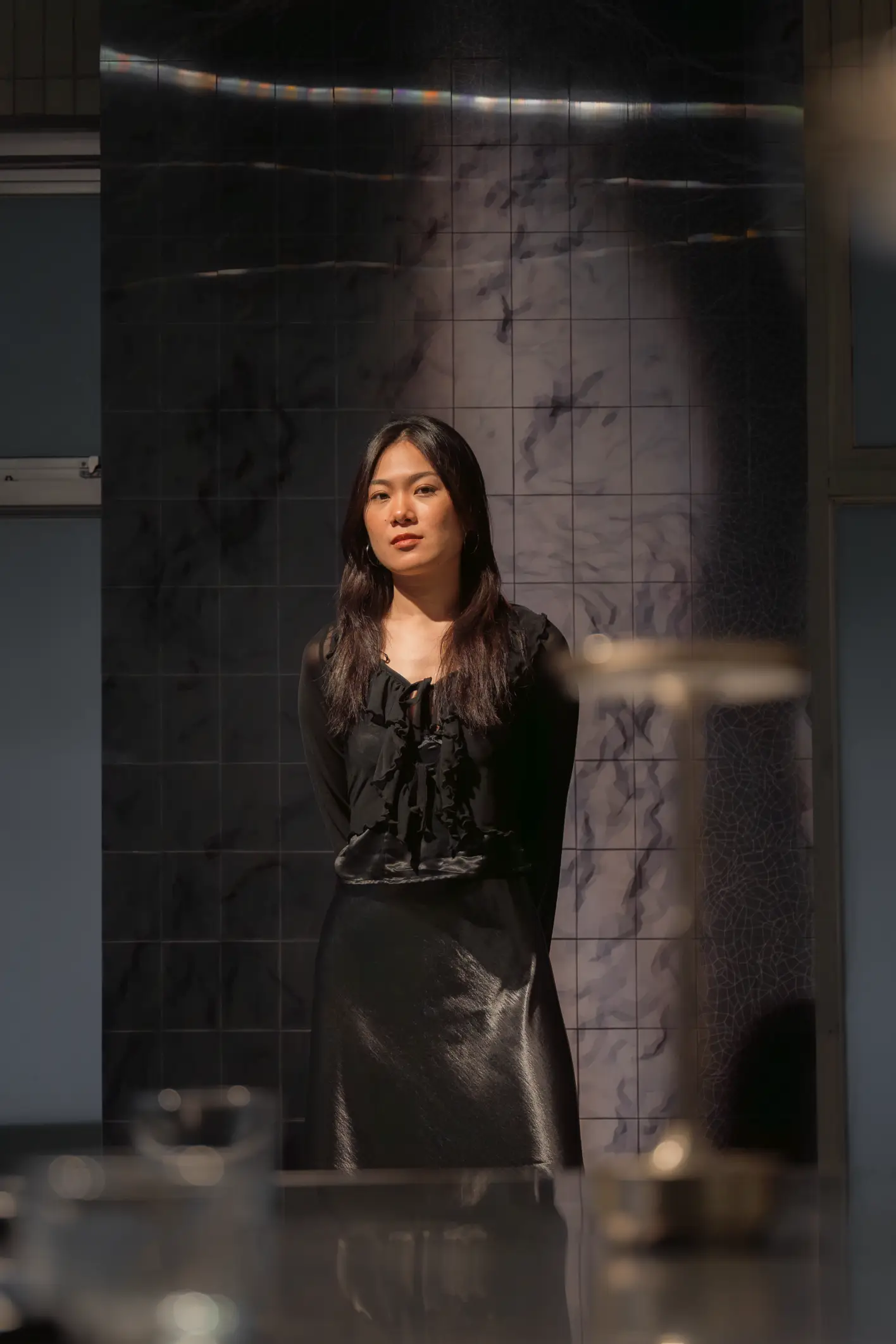
“I feel like not everyone goes to galleries or museums to view art, but most people go out to dine, so the idea of combining the two together to make (my) art more accessible to a wider audience is what I liked most about reNOWn,” she said.
The Inaccessibility of Food and Art
For the menu of this reNOWn program, Celine Lee chose to center her residency around the idea of food insecurity. The exhibition-slash-degustation plays around the imagery of rice, using it to critique the class stratification of our world today. Lee also shared that she saw this as a commentary of her own profession as an artist and how inaccessible it can be for most Filipinos.
“Apart from rice being an integral part of my diet as a Filipino, I would like to think of my own artistic practice as being self-aware about the fact that I, myself, am a medium, and so I wanted to self-critique (my) art being affordable only to a certain social class,” she said. “Rice became the central subject/metaphor because I think it has the ability to bypass social classes because of its widespread consumption globally.”
Crafting the Four Dimensional Food of the Program
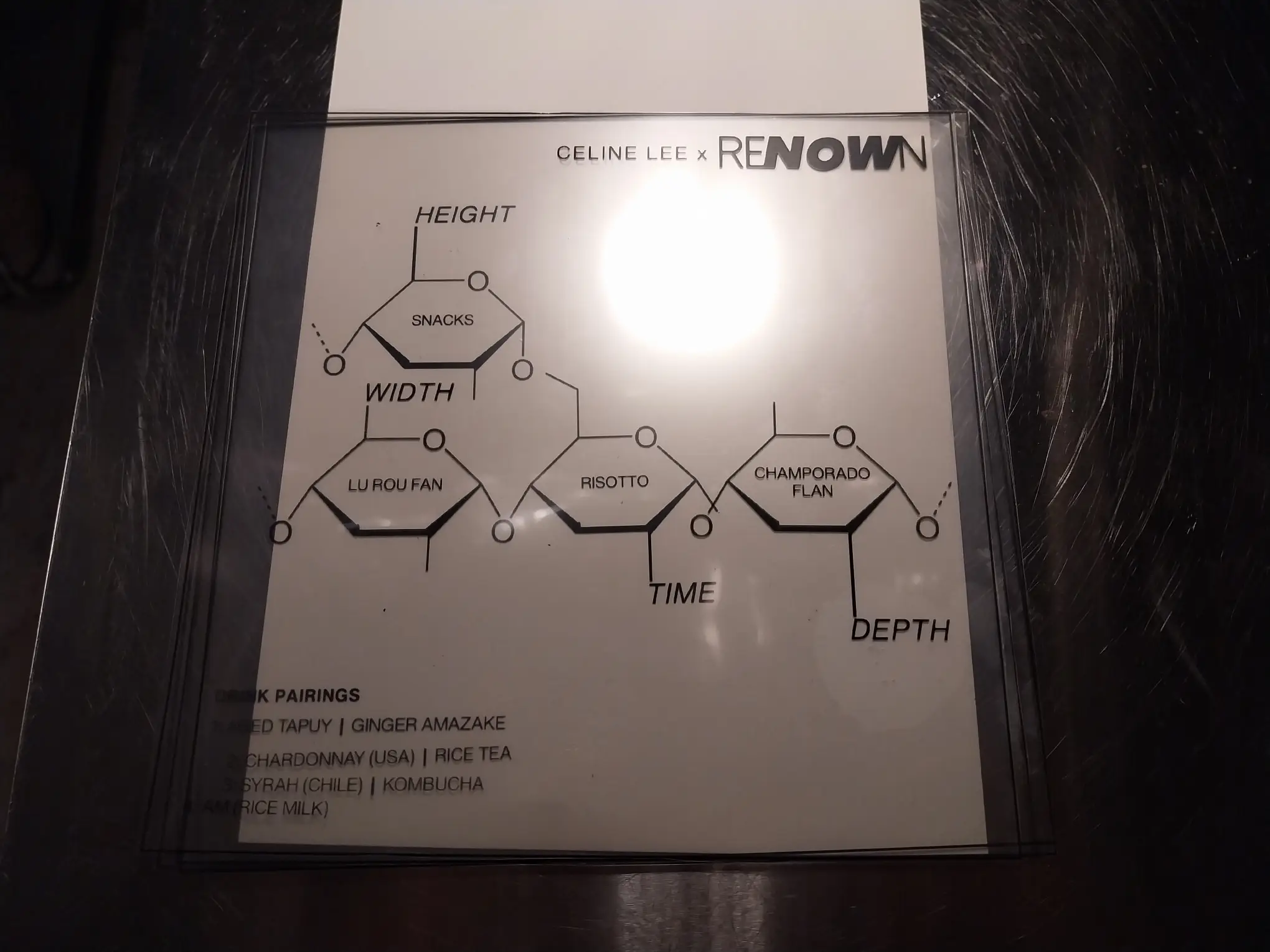
The food in reNOWn reflects that, with the four-course meal utilizing rice while exploring ways to expand the way we present food. Lee said that her menu also seeks to portray four different dimensions through the dishes.
“Our goal is to translate their visual language into the language of food,” Łuczaj said. “But this isn’t a straightforward translation—the gap between the two forms is wide. Still, when the pieces click, the results are deeply rewarding.”
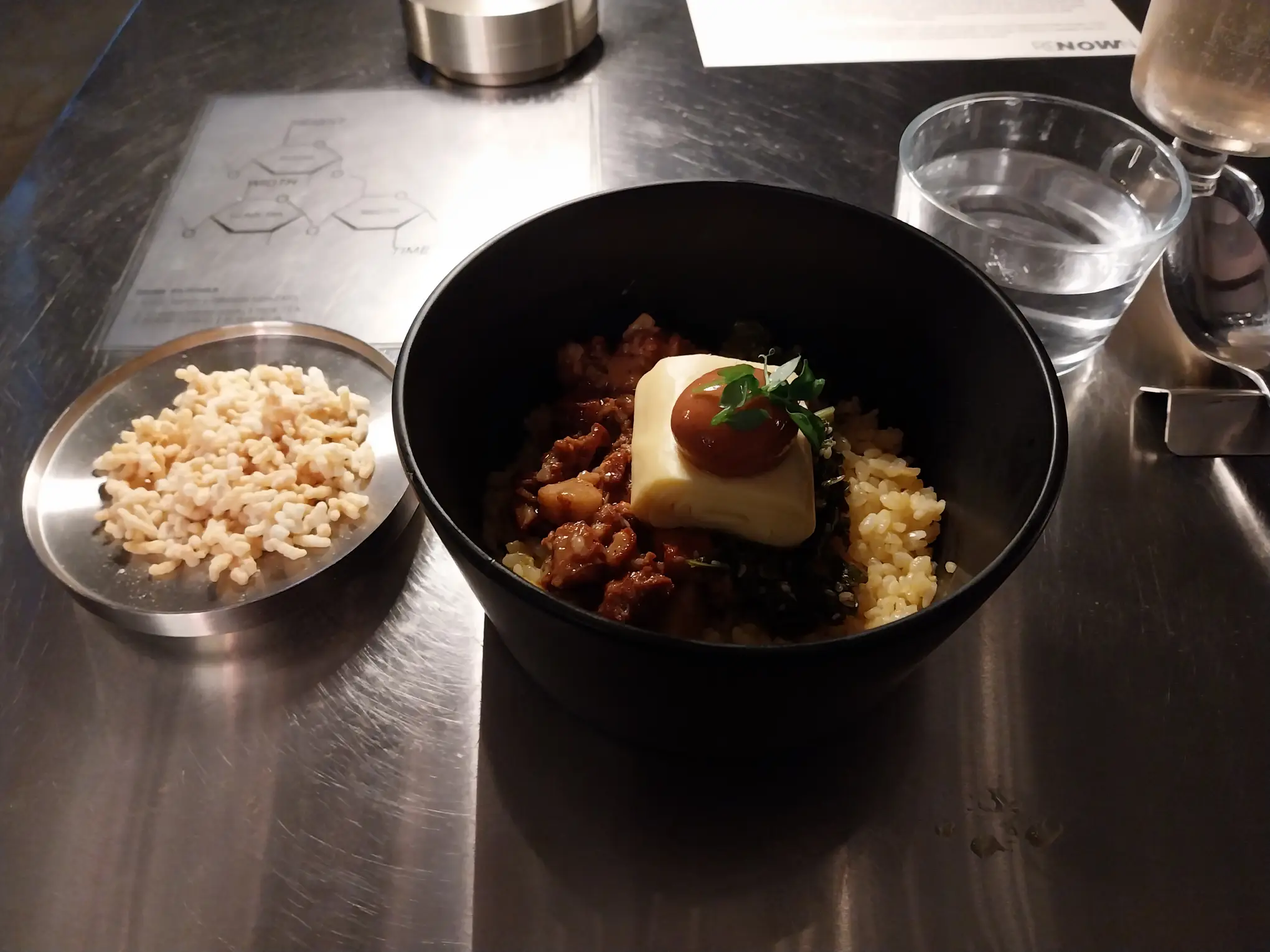
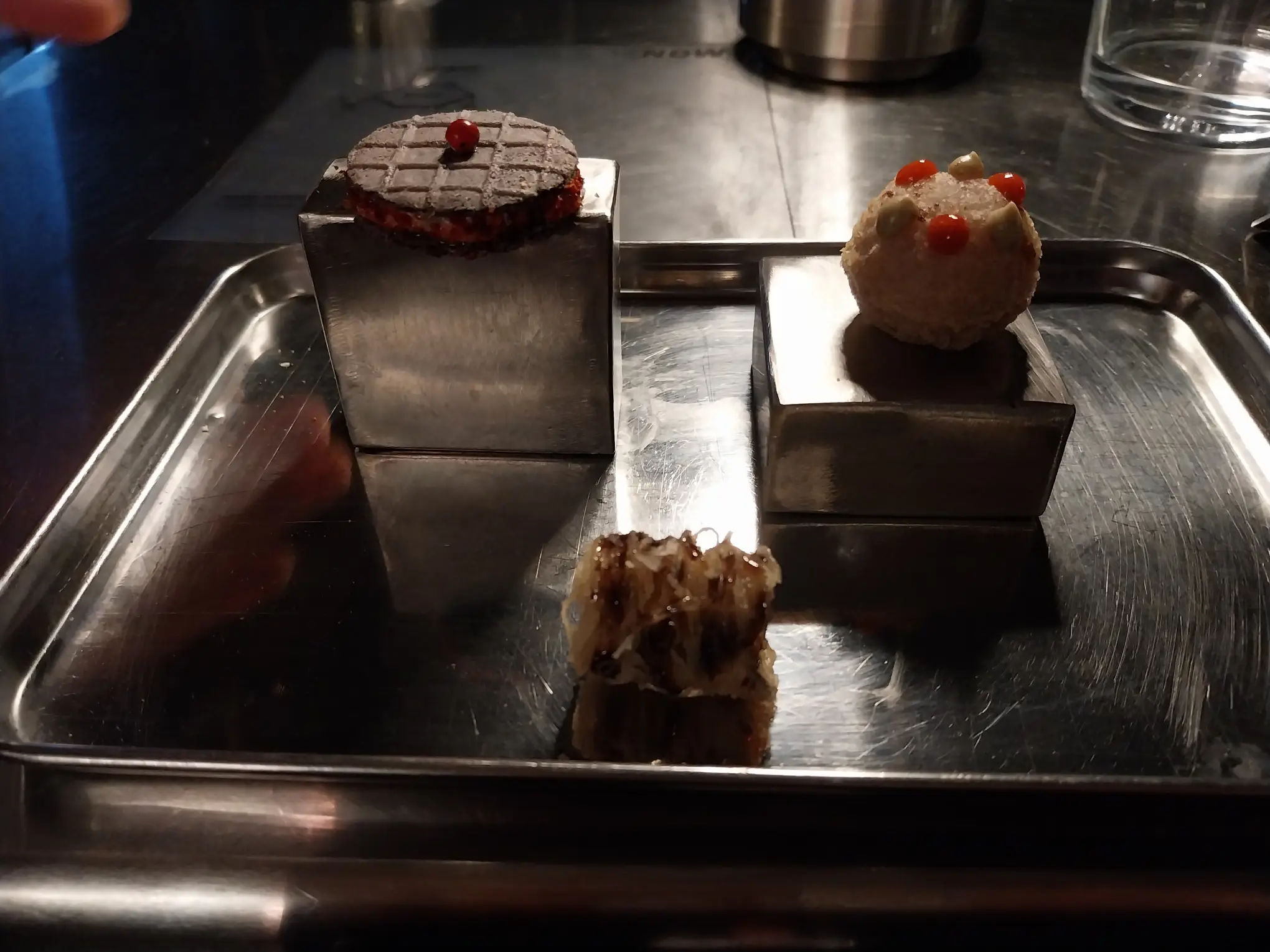
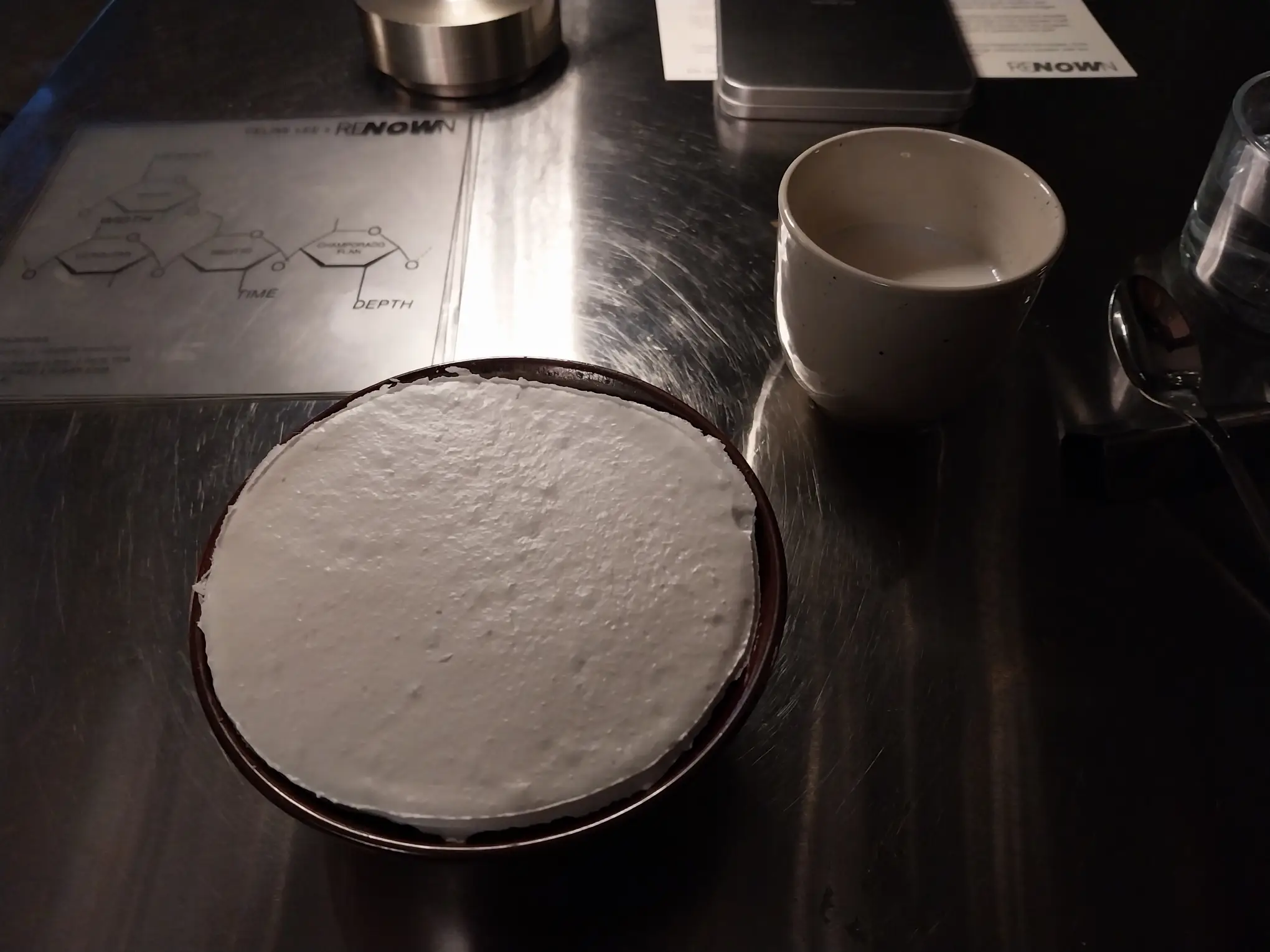
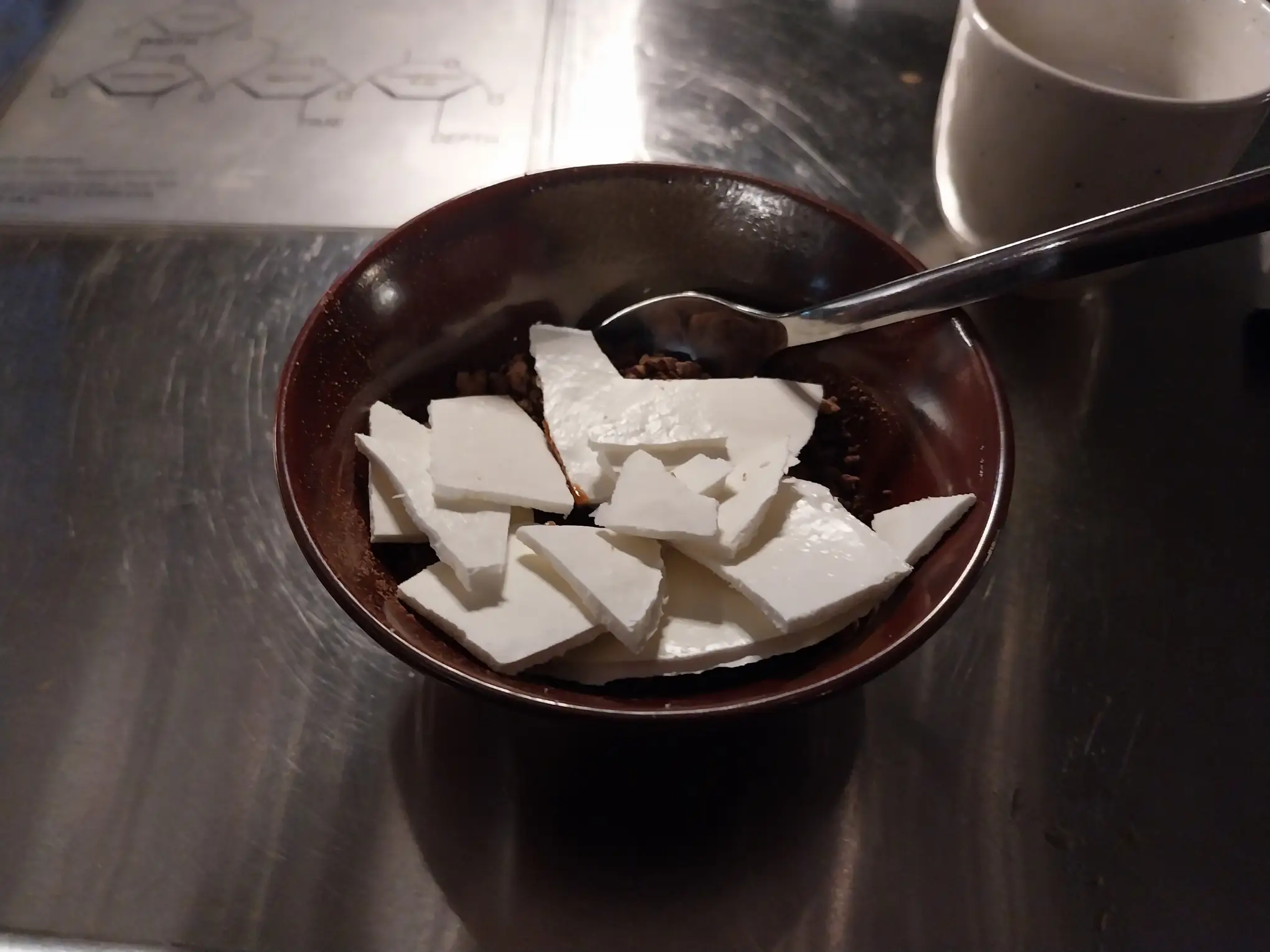
The four-course meal consisted of snacks, risotto, lu rou fan, and champorado flan, and their presentation explored height, time, width, and depth, respectively. One can see how the concepts cohere, like in how you have to crack a solid milk disk on top of the champorado flan before you can eat it, or how the snacks are presented in increasing towers of metal.
The Artistic Aspects of Food
But the most effective and creative dish in the bunch is the seafloor risotto, presented as a large plate of rice with floating bits of food that look like leftovers after a meal. It balances the high-concept nature of reNOWn while also explicitly tackling the political commentary within the work.
Lee said the course was inspired by one of her favorite meals, chirashi don. Mateusz Łuczaj then wanted to play around with the concept of time further, which is how they came up with both the food and the presentation of the dish.
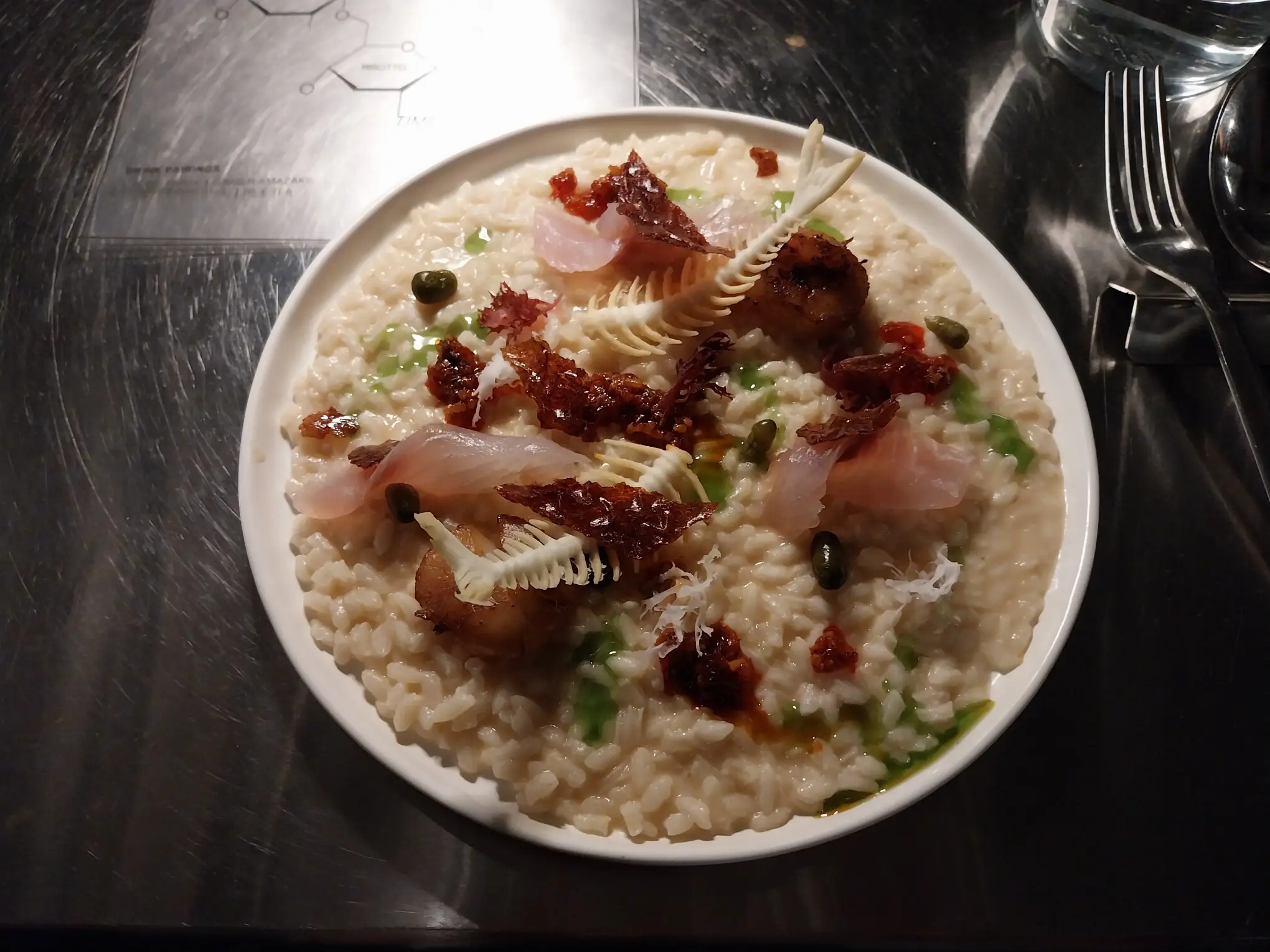
“Since the idea of my degustation is 4D (4 dishes/4 dimensions), he thought of creating a dish that quite literally presents time by showing the different cooking times in one dish,” Lee said. “Moreover, it being called ‘seafloor’ risotto is already a giveaway as to why it’s the time dish. Additionally, I think he also took inspiration from my idea that I wanted rice to be treated as “the canvas” of a dish.”
“Creativity, at its core, is a collision of ideas—an ongoing process of smashing concepts together and examining what’s left in the aftermath,” Łuczaj said. “Sometimes, the fragments align into something that resonates. Other times, they don’t—and you’re left to either rearrange the pieces into something meaningful or start over entirely.”
‘A Mass’ and Layers of Imagery
Celine Lee contributed artwork for reNOWn: “A Mass,” a two-part artwork of an imagined landscape of rice kernels that Lee constructed and then photographed. The giant photograph makes up the second layer, while the first layer is a “mosaic of lenticular prints” that shows a wireframe and shaded versions of portions of the photograph.
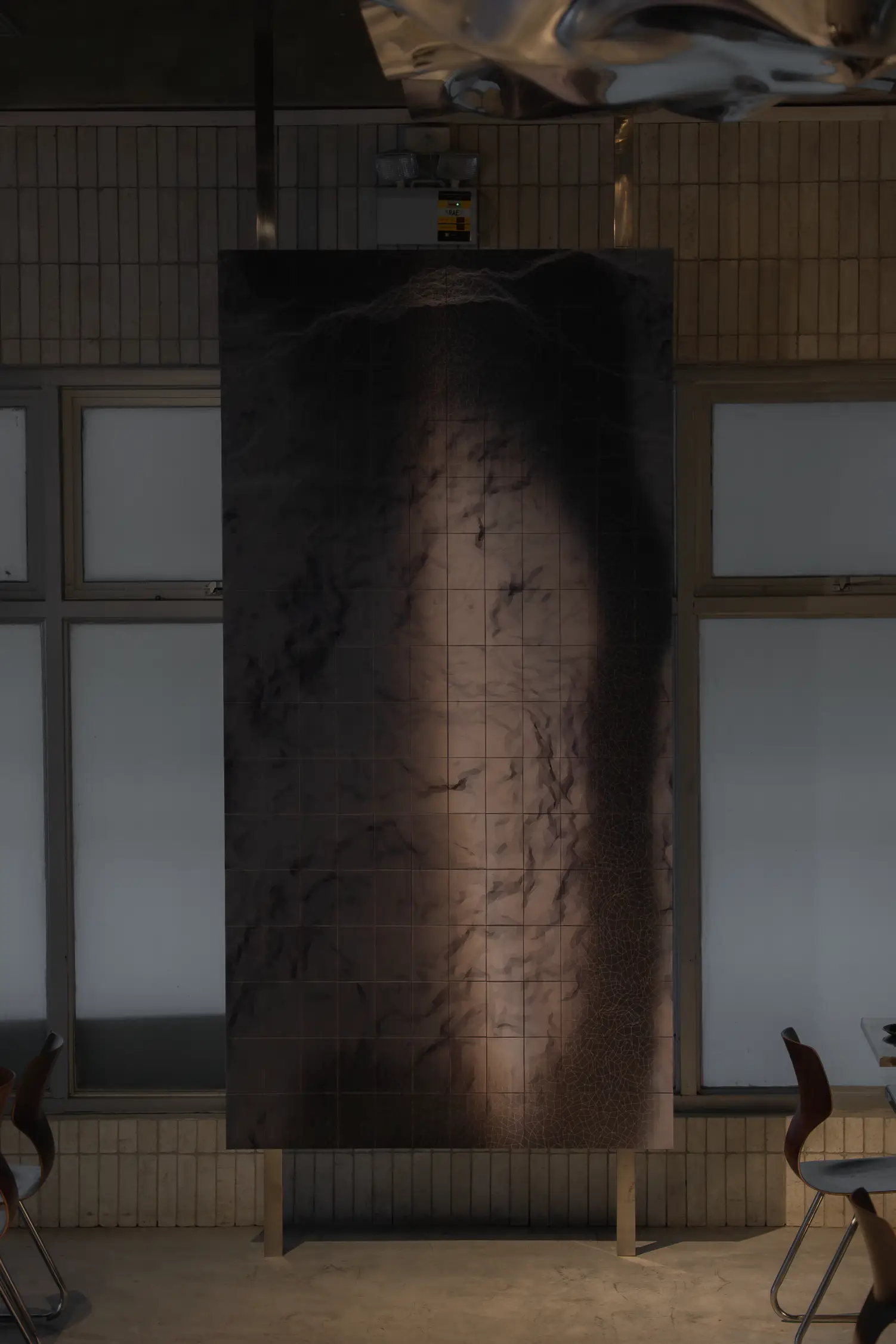
It continues Lee’s own practice of exploring materials and images to investigate the deeper meaning and layers that exist within each artform, this time by obfuscating the rice landscape below and only allowing it to be fully seen by removing each portion of the layer piece by piece.
“I chose to do a dual layer work because image-making and illusions have always been a continuous aspect in my body of work,” she explained. “Another key idea of the work is that ‘small parts make up a large whole.’ Hence, every grain of rice, every line, every fragment, contributes to a bigger picture.”
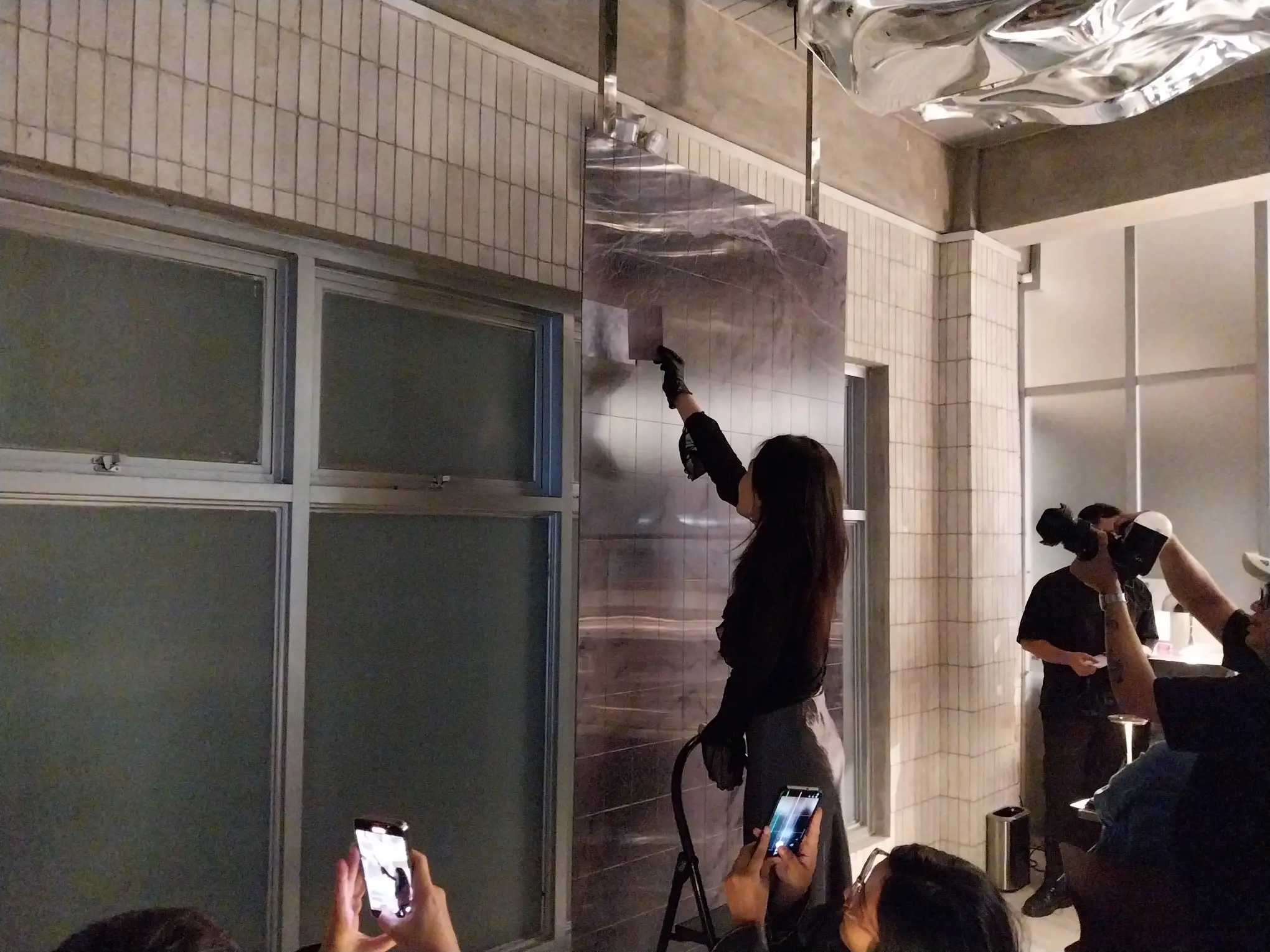
The lenticular prints were taken off the work and given to every guest of Lee’s reNOWn degustation. It has the effect of slowly uncovering the photograph underneath, as if it were showing a clear image of the reality of our class and food structures underneath the hazy images above.
‘reNOWn’ Changes the Chefs and the Artists
For the reNOWn program, Celine Lee found herself learning how to collaborate with a team again. She also felt like she was able to relearn how to re-articulate her artistic vision to a group of people who would help her bring the ideas to life.
“Since I’ve been a full-time artist, I’ve rarely worked with a ‘team’, so it’s refreshing to be able to work with a group again,” she said. “I also think that reNOWn is a good way to train an artist’s articulation of their own practice/work because you’re working not just to communicate it to another creative professional such as a chef, but most importantly to a wider audience/diners of reNOWn.”
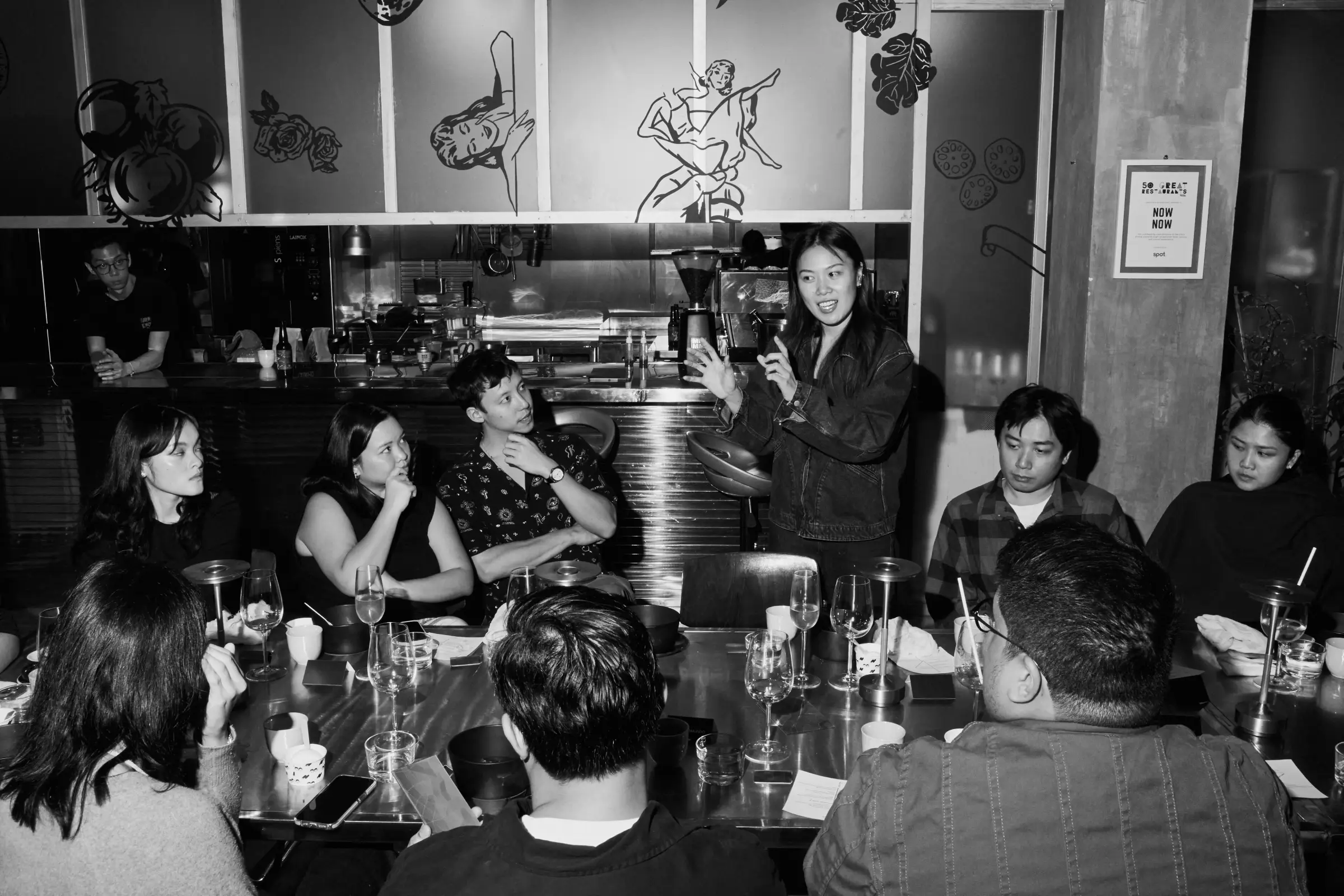
Meanwhile, Łuczaj shared that the program had really allowed him, and the rest of the gastronomy team of Now Now Canteen, to really look at food in a new and interesting way, expanding the way they see the creation of food while integrating the artist’s perspective into their work.
“Adopting an artistic perspective in your creative process is a bit like entering a friend’s house through the back door,” he said. “The surroundings are familiar, yet everything feels slightly askew—inviting you to notice things you’d normally overlook. It’s in this subtle shift of viewpoint that new possibilities emerge, leading you to places you never knew existed.”
Photos by Elle Yap, unless otherwise stated.
Related reading: ‘reNOWn x Isabel Reyes Santos’ Melds the Culinary with Contemporary Art
Frequently Asked Questions
The reNOWn program is a “cultural incubation” initiative that seeks common ground between fine dining and high art. Rather than simply imitating art through food aesthetics, the program aims to expand the artist’s palette by translating visual language into the language of food. It functions as a collaborative laboratory where chefs and artists “smash concepts together” to create a multi-sensory experience that provokes dialogue and stirs emotion beyond traditional gallery walls.
Lee utilizes rice as a central metaphor because of its “global widespread consumption,” which allows it to bypass social classes. In this exhibition-slash-degustation, she uses rice to critique the inaccessibility of both high art and food security. By framing rice as a “canvas,” she self-critiques the fact that her own artistic practice is often affordable only to a certain social class, using the most common of grains to expose the deep divisions in wealth and accessibility in the Philippines.
The four-course meal was engineered to portray four distinct physical and metaphysical dimensions:
Height (Snacks): Presented in increasing towers of metal.
Width (Risotto): The “seafloor” risotto utilized the horizontal expanse of a large plate.
Depth (Lu Rou Fan): Exploring the layers of flavor and physical structure.
Time (Champorado Flan): Represented by a solid milk disk that must be “cracked” to enter the dish, and the “seafloor” risotto, which showcased different cooking times of various ingredients in a single presentation.
“A Mass” is a dual-layer installation. The base layer is a large-scale photograph of an imagined landscape made of rice kernels. The top layer consists of a mosaic of lenticular prints showing wireframe and shaded fragments. During the degustation, each guest is given a lenticular print to take home. This act of “removal” slowly uncovers the photograph underneath, serving as a physical performance of revealing the “reality” of food structures hidden beneath hazy social illusions.
The seafloor risotto is the menu’s most political and high-concept dish. Visually, it is designed to look like “leftovers after a meal,” balancing high-concept execution with a commentary on waste and food insecurity. Technically, it functions as the “Time” dish, incorporating ingredients with varying cooking durations. It treats rice as a literal “canvas,” using the grains to hold “floating bits” of food that challenge the diner to notice things they would normally overlook in a standard dining setting.
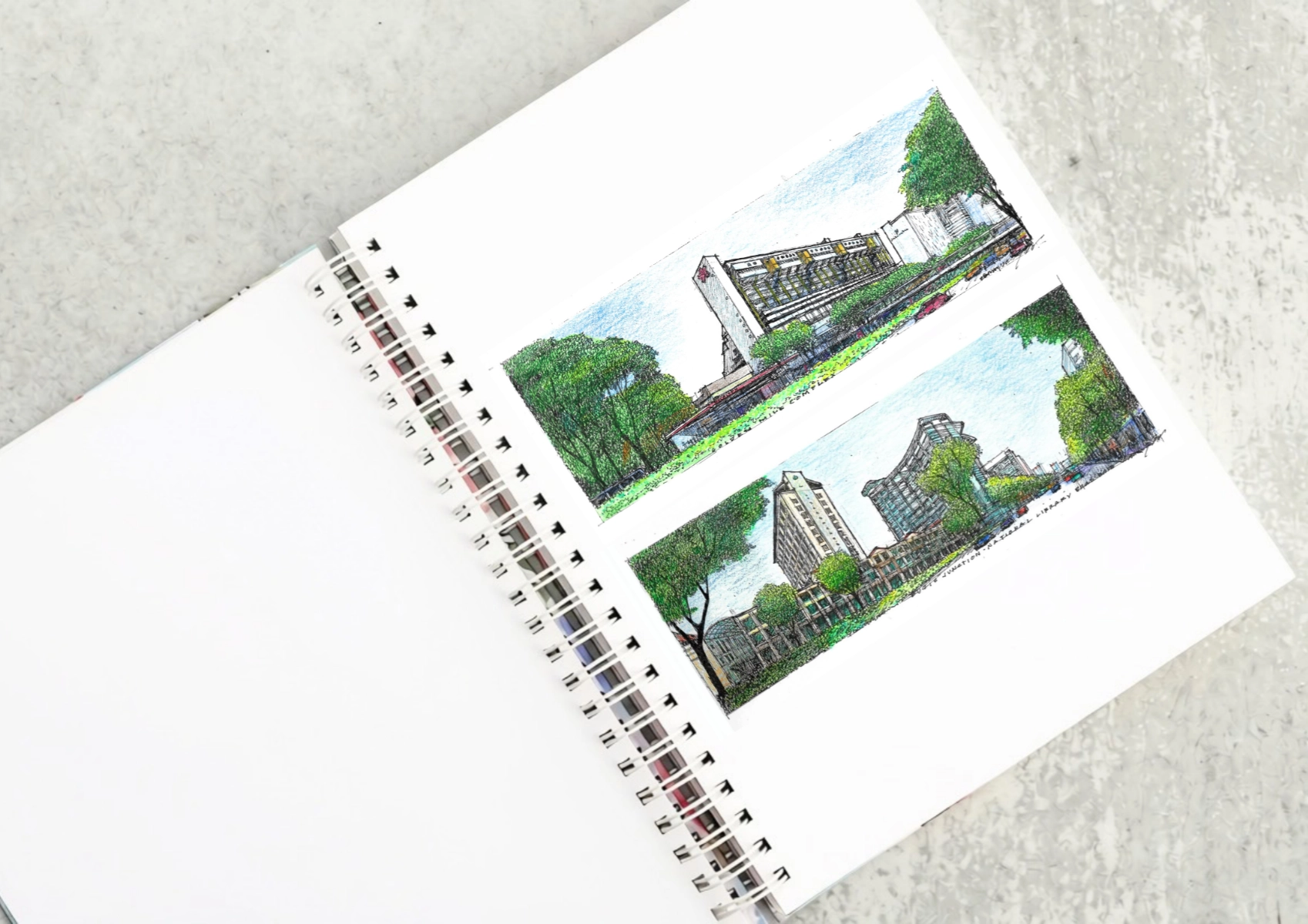
Two sketches of Singapore connect BluPrint Editor in Chief Paulo G. Alcazaren’s personal and professional history with Shared Ground: ArchitectureArchitectureThe art and science of designing and constructing buildings, structures, and spaces that are functional, safe, and aesthetically pleasing. It encompasses the planning, design, materials, and techniques used to createGo to Architecture Glossary of Care, Culture, […]
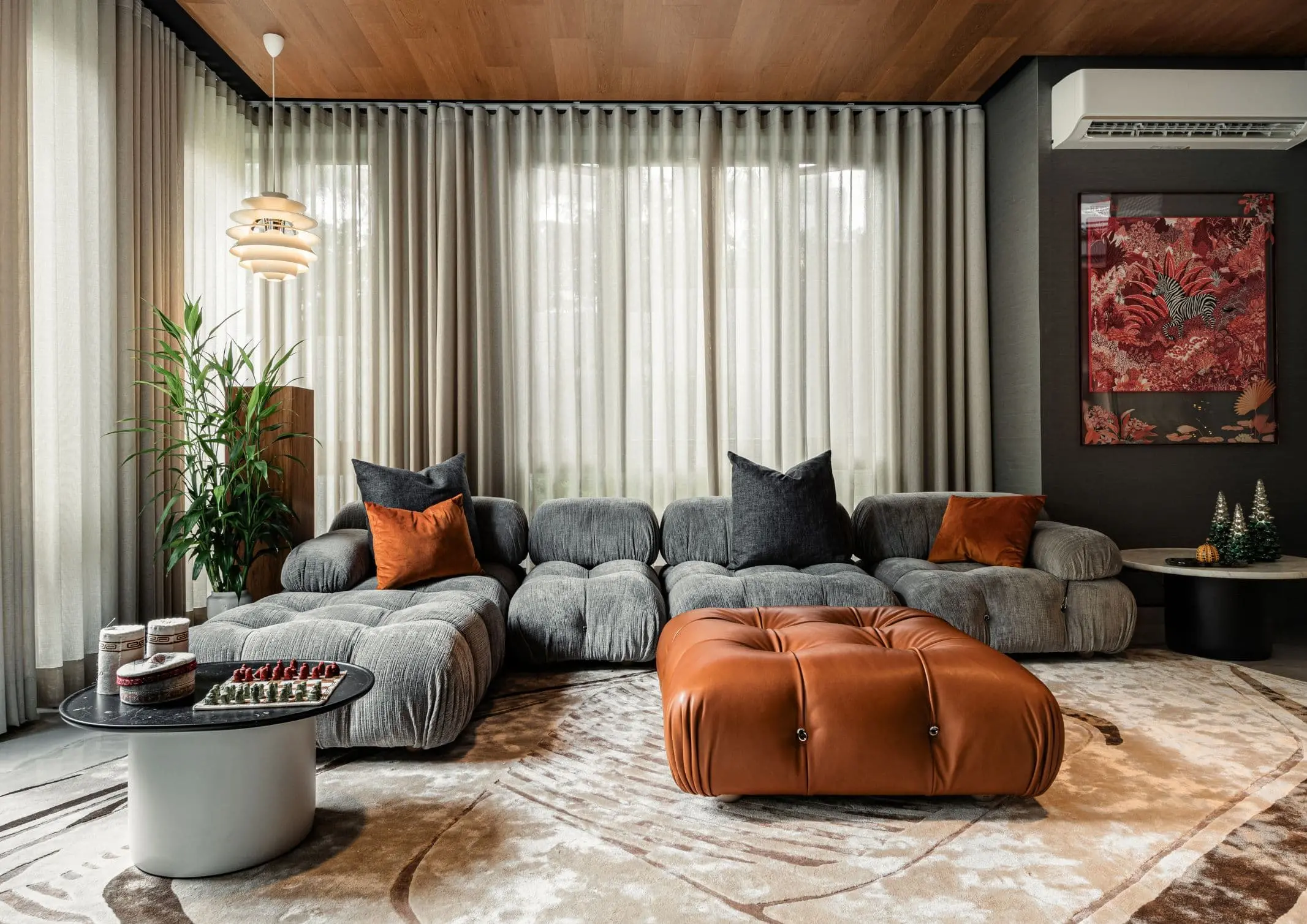
Some have become household names – Coleman, Oster, and KitchenAid – products that have found their way into Filipino kitchens, homes and family routines. In home furnishings, brands such as B&B Italia, Ethan Allen, Sub-Zero, Miele, SieMatic, Louis Poulsen, Hunter Douglas, Tempur, and Technogym, have helped shape the way Filipinos live. From everyday essentials to […]
In a way, designers are the modern-day soothsayers and prophets. They design for the future, predicting how a room, a house, a building or a whole city will be used by people. They foresee how users will interact with a space, conjure exact shades of colors to elicit specific behavior and arrange furniture to build […]
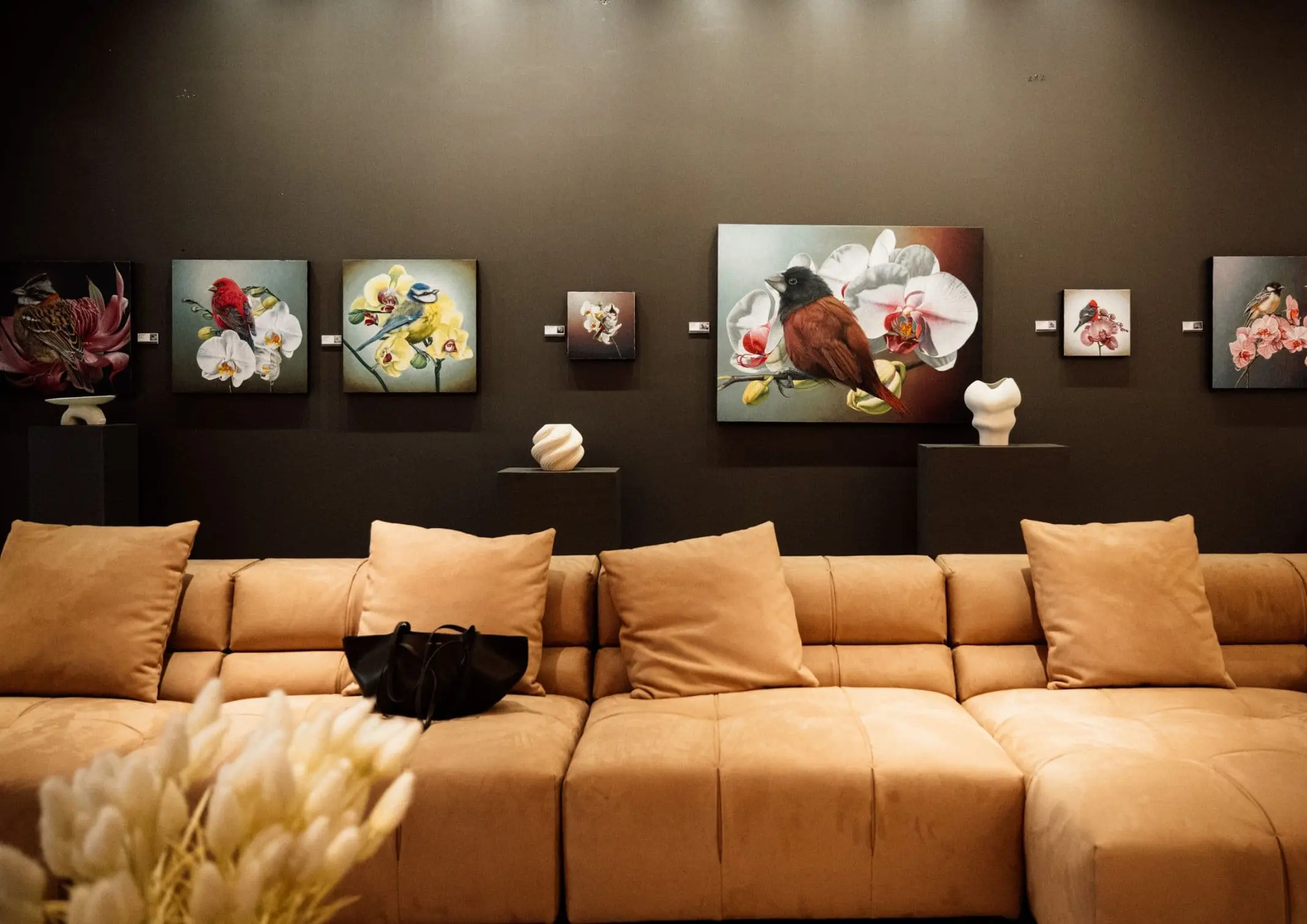
Art and furniture are often selected separately, yet their relationship can shape how a room looks and feels. The collaboration between Hooga and Galerie Joaquin explores how these elements can work together, bringing contemporary artworks into furnished residential settings at Hooga’s showroom in Uptown Mall, Bonifacio Global City. For Hooga, which curates furniture, lighting, and […]
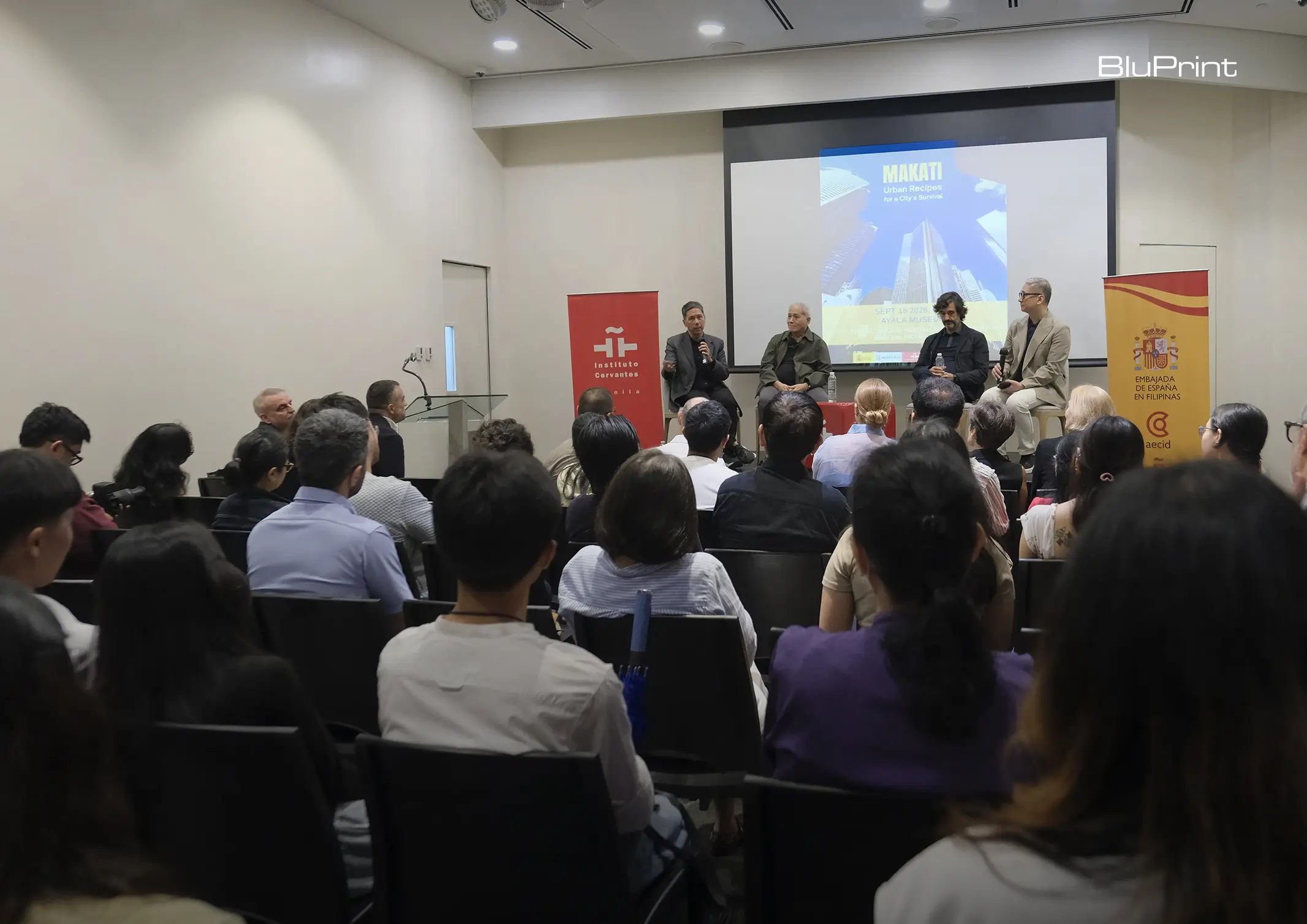
How can better-planned cities create the conditions for more creative, livable, and resilient urban environments? “Makati Urban Recipes for a City’s Survival,” a colloquium held at the Ayala Museum on September 15, brought together architects and practitioners from the fields of urbanism and the creative economy to discuss how design, planning, and collaboration can address […]
Read the issues.

Collect the volumes.

Recommended Video
Tap to Unmute
Unmute
0:00
0:00