Every structure needs a plan to have it built, but what about when it comes to having it unbuilt? Architects should consider how their work will eventually need to be brought down for new developments to rise. Deconstruction, the practice of systematic dismantling structures, can allows materials to be salvaged and reused. It promotes a more circular economy, which involves regeneration and reusing products, to benefits society even past a structure’s lifespan.
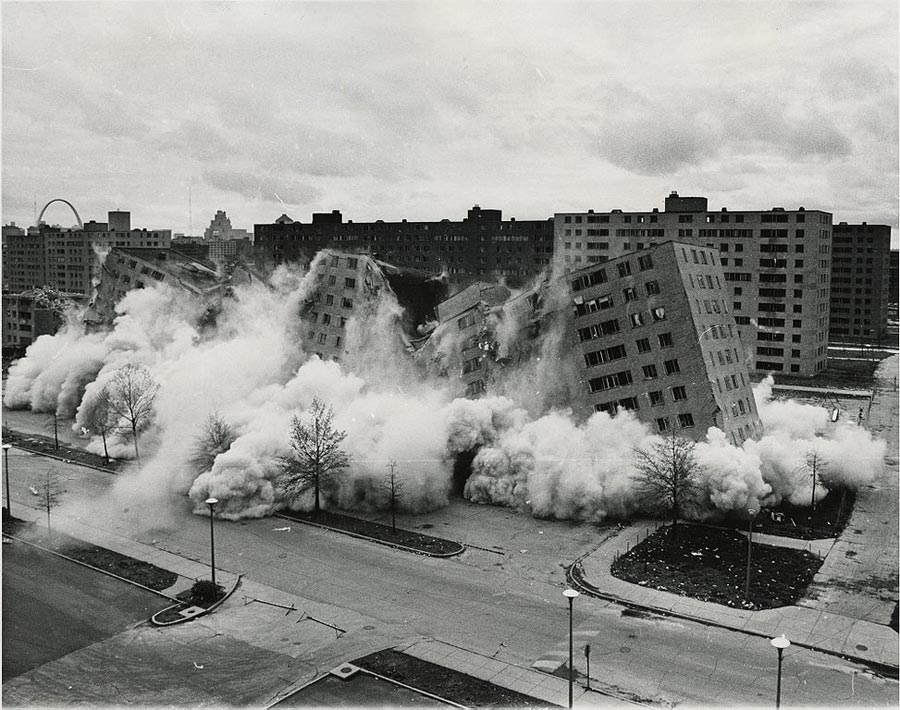
The April 1972 demolition of Pruitt–Igoe apartments in St. Louis, Missouri. Photo via Wikimedia Commons
Deconstruction is a process of systematic disassembly that aims to address these issues by minimizing the need to consume new materials while also cutting down on debris. The main issue with traditional demolition is that it indiscriminately destroys the building and typically throws away the used materials in landfills.
Advertisement
Conversely, deconstruction is carefully carried out to preserve components such as lumber, bricks, metal, and other architectural elements. This is done in a fashion that can make repurposing viable for newer construction projects or can be sold for reuse. Currently, this practice is widespread in heritage conservation efforts to preserve the original materiality and aspects of a building.
Deconstruction offers numerous environmental, economic, and social benefits. Firstly, it inherently reduces waste, whether it’s from materials used for newer projects or the older pieces to be discarded. Doing so reduces the stress placed on natural resources such as wood, metals, or minerals, which mitigates environmental impact. A study by the National Trust for Historic Preservation found that deconstructing a 2,000-square-foot home saves 248,000 pounds of CO2 emissions compared to traditional construction.
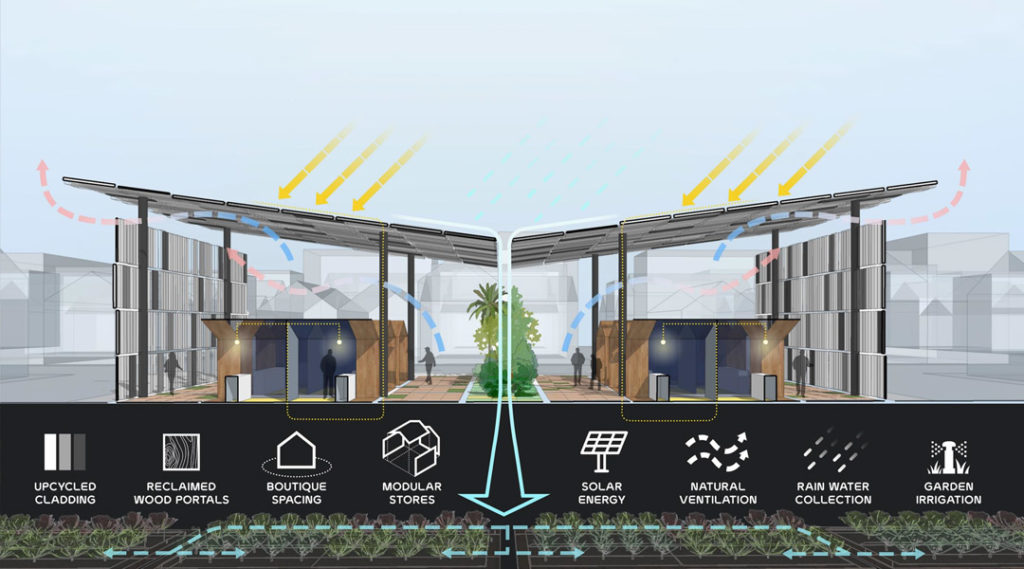
Photo via pixabayThe facade of Neo Markets is made of recycled PVC and reclaimed wood portals. The studio shared that each boutique is enclosed by modular paneling to accommodate various sizes and layouts of businesses.
Economically, introducing this practice will require more workers, both skilled and unskilled, to execute the careful disassembly of building parts. This potentially provides more jobs within the industry. Salvaged materials can then be sold to recuperate costs and to reduce the expenses for new construction. Otherwise, materials can also serve a civic purpose via donations to non-profit organizations or institutional projects.
Advertisement
Socially, sourcing materials from deconstructing buildings can potentially make it cheaper and make construction more affordable.This helps the general public make the urban landscape more equitable. As mentioned, local character is also preserved as unique or historical architectural elements are retained.
Designing for Deconstruction (DfD)
As planners of a building, architects play a crucial role in the de-constructability of a structure. This involves intentionally making disassembly and material recovery easier once the building’s time has come. This can be achieved by designing with modular and prefabricated parts, using more mechanical fasteners (bolts and screws), standardized dimensioning, material choice, and documentation. Doing this makes the planning and execution of deconstruction much more feasible in the future.
Architects can infuse these measures in their practice with a bit of extra effort. Firstly, the use of already popular Building Information Modeling (BIM) technologies allows project data to easily be documented and shared. Designers can specify or take note of material origin, quality, and potential future use as a building component.
Advertisement
Within the design process, designers can engage other stakeholders and professionals to identify opportunities for deconstruction and material reuse. Specialists and professionals can be tapped to ascertain how a building would be deconstructed in the future. Life Cycle Assessments (LCA),which is used to evaluate the impact of a building on the environment throughout its life cycle, can further support this.
Building deconstruction presents an opportunity to give buildings new life as it supports a circular economy within the construction industry. Using Design for Deconstruction (DfD) practices, architects can be purveyors of efficient preservation and recycling of materials. Doing so can hopefully put a dent on the massive stress that construction projects put on the environment.
Ronald Ventura is one of the most recognizable figures in Southeast Asian contemporary art. Since his first solo exhibitions in the 2000s, Ventura has become known for his signature multi-layered paintings. Featuring hyperrealism, cartoons, graffiti, and other recurring motifs, hisworks—from paintings to sculptures—are pluralistic in both form and material. Throughout his career, his art has […]
As the built environment evolves, the role of the architect demands reconsideration. For Jose Siao Ling, Co-Founder and Principal Architect of Jose Siao Ling & Associates (JSLA Architects), the role extends far beyond being a licensed professional who designs and oversees construction. By championing ethical practice, ISO-certified systems, and mentorship-driven leadership, he built a firm […]
Public spaces in Metro Manila are often defined by movement rather than pause. People in transit hurry through; the underpass is a shortcut, not a place to stop. Underground, the installation by photography group FotomotoPH, reimagined the Paseo Underpass as a visual experience. FotomotoPH is a Philippine-based photography collective dedicated to promoting, exhibiting, and fostering […]
Born and raised in San Pablo City, Laguna, Ito Kish made a name for himself through residential and commercial design, as well as curatorial work. This new season, built on the idea of Filipino Culture Meets Global Curiosity, unfolds both as a composed showroom environment and a new collection shaped by stillness and balance. A […]
Situated in Laguna, south of Metro Manila, is a multi-thousand-hectare development created by Ayala Land Premier within the growth corridor of the CALABARZON Region. Barchan + Architecture was tasked with crafting a clubhouse for the subdivisions of Luscara and Soliento. Principal Architect of Barchan + Architecture, Jason Buensalido, explains the firm’s process in creating the […]
Breaking through in their respective careers is a daunting task for any young professional. For Architect Pierre Briones, architecture has always been an intentional pursuit. Having spent much of his childhood around construction sites, Briones’s environment shaped his interest in architecture, including his fascination with how structures and buildings are built. “Choosing architecture was never […]
Download this month's BLUPRINT magazine digital copy from: