
Here are alternative ways to earn CPD points. Selfies required.



Despite the public outcries and petitions, the Continuing Professional Development (CPD) Law or RA 10912 is here to stay. The 2016 law, sponsored by Senator Antonio F. Trillanes IV, requires 45 CPD points from architectureArchitectureThe art and science of designing and constructing buildings, structures, and spaces that are functional, safe, and aesthetically pleasing. It encompasses the planning, design, materials, and techniques used to createGo to Architecture Glossary and engineering professionals for the renewal of their licenses every three years.
Different groups have challenged the law on the grounds of accessibility, affordability, and appropriateness. Nevertheless, professional organizations such as the UAP have committed to provide architects multiple ways to earn CPD points. After all, there are over 40,000 registered architects and the most recent national convention, the largest annual gathering of architects, could only accommodate 3,000 delegates.
Yes, there are ways to earn CPD points beyond the attendance of official seminars, or completing a post-graduate degree. (Although, those are all reliable ways to get things done.) On 6 July 2017, the Professional Regulation Commission approved operations guidelines for the implementation of RA 10912.
These guidelines identify activities under a Self-Directed Program matrix for points. These include “learning activities which did not undergo CPD accreditation but may be applied for and awarded CPD units by the CPD Council of ArchitectureArchitectureThe art and science of designing and constructing buildings, structures, and spaces that are functional, safe, and aesthetically pleasing. It encompasses the planning, design, materials, and techniques used to createGo to Architecture Glossary.”
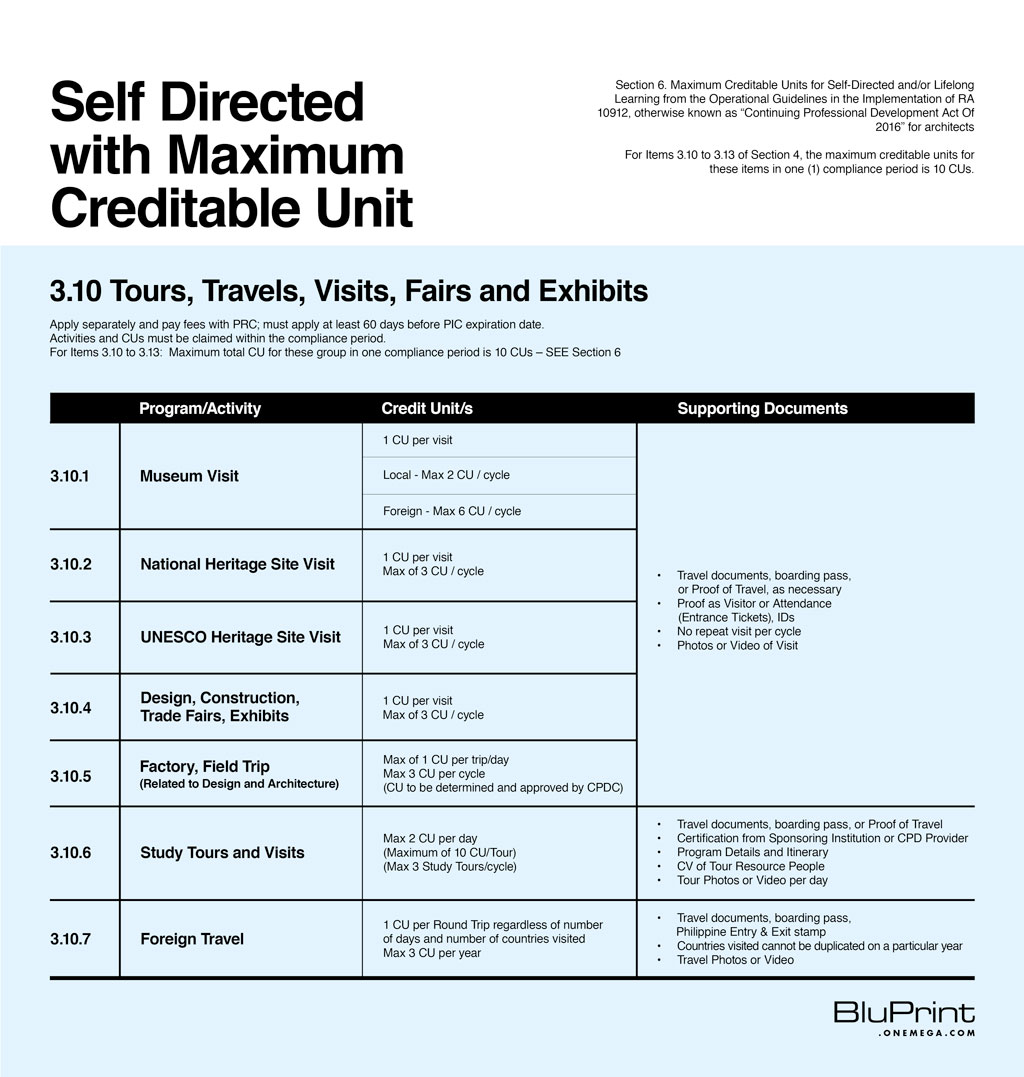
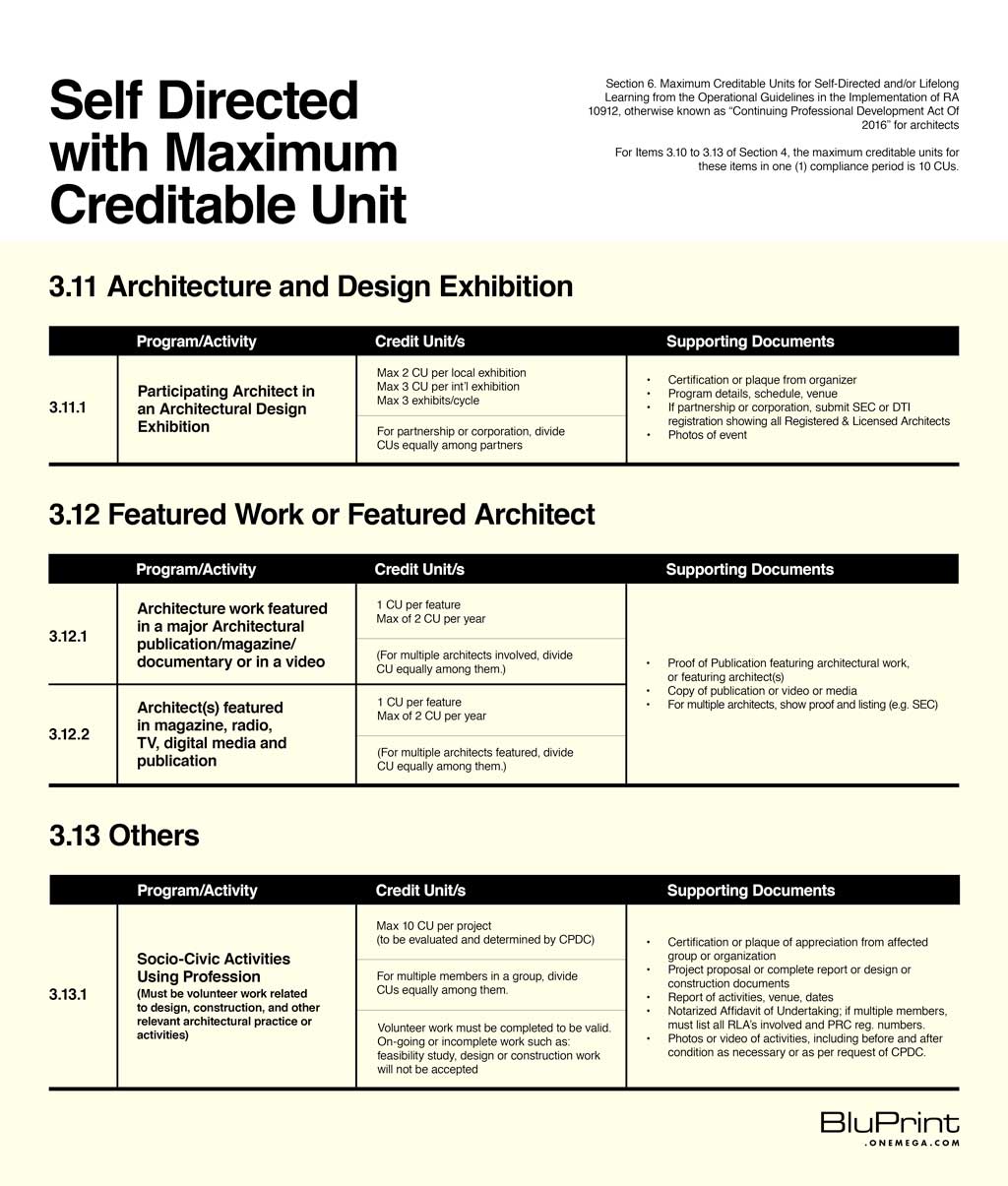
Under this provision, visiting design exhibits, museums, heritage sites, and even socio-civic work can merit points. So make sure to keep all your certificates, receipts, boarding passes, entrance tickets, and IDs in order to put them to good use.
BluPrint has prepared handy charts of the different CPD-worthy activities. Plan your next out-of-town trip to be not only fun, but hardworking too. We’re pretty sure the spouse, kids, or travel buddy won’t mind having a museum stop in the itinerary. Don’t forget to take a selfie for good measure and make it Facebook official!
As they say: pics or it didn’t happen. 
Frequently Asked Questions
Under the Self-Directed Program matrix of RA 10912, professionals can substitute costly or inaccessible seminars with independent learning activities. This includes visiting design exhibits, museums, and heritage sites, or engaging in socio-civic work that contributes to professional growth. To ensure these activities are credited, the CPD Council of Architecture requires that they be applied for individually, as they have not undergone pre-accreditation like official conventions or post-graduate courses.
A frequent error is failing to maintain a rigorous paper trail for non-traditional learning experiences, which leads to rejected credit applications. To avoid this, you must keep all certificates, receipts, boarding passes, entrance tickets, and government-issued IDs as physical proof of your visit or participation. Additionally, documenting the experience with a selfie at the heritage site or exhibit is recommended to verify your presence and make the activity “Facebook official” for your professional portfolio.
With the largest national conventions only accommodating around 3,000 delegates, the majority of the 40,000 registered architects would struggle to meet the 45-point requirement through official gatherings alone. The Self-Directed Program provides a necessary alternative for those who find official seminars unaffordable or geographically inaccessible. This flexibility ensures that the renewal of professional licenses every three years remains achievable for the entire workforce, regardless of their ability to attend centralized events.
For socio-civic work to be awarded CPD units, it must be documented through a combination of official participation certificates and personal evidence of involvement. Because these activities fall under the self-directed category, the professional must demonstrate how the work aligns with the learning outcomes specified by the CPD Council. Maintaining an organized folder of project reports, local government unit acknowledgments, and photographic evidence is vital for a successful credit application during the license renewal period.
The law identifies learning activities as any engagement that enhances professional competence, even if it does not occur within a formal academic or seminar setting. This evolutionary view of education recognizes that immersion in heritage architecture or contemporary design exhibits provides practical insights that are just as valuable as theoretical lectures. By validating these diverse experiences, the Professional Regulation Commission encourages a culture of continuous, lifelong learning that extends far beyond the confines of traditional professional development.