The Daya Bay Nuclear Power Science and Technology Museum serves an instructional role in society by highlighting the scientific progress of nuclear energy around the world. Located in Shen Zhen Shi, China, it commemorates the opening of the power plants in the area during the 1980s.
This museum was primarily designed by E+UV Architecture and Huayi Design, with numerous other companies backing the project. The architects and designers also had consultations from the China Nuclear Industry Huaxing Construction Co., Ltd.
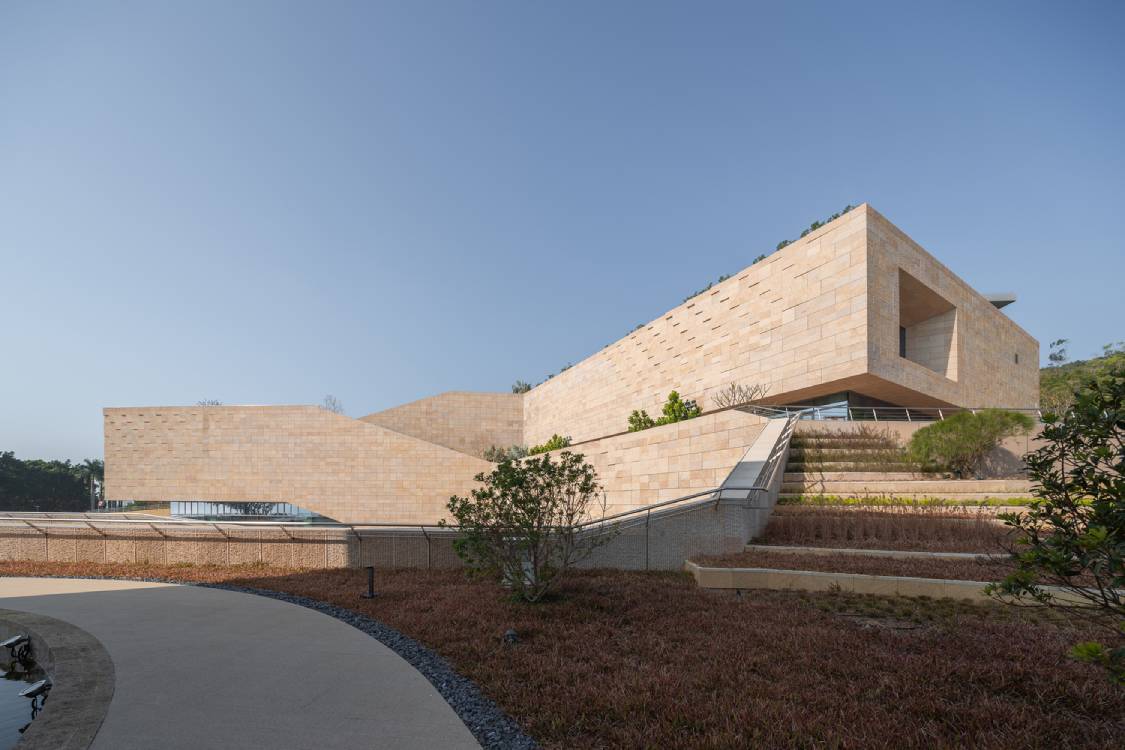
Exterior of the Daya Bay Nuclear Museum. Photos by Chao Zhang, Zhengyong Liu, Fu Li, and Ye Fan.
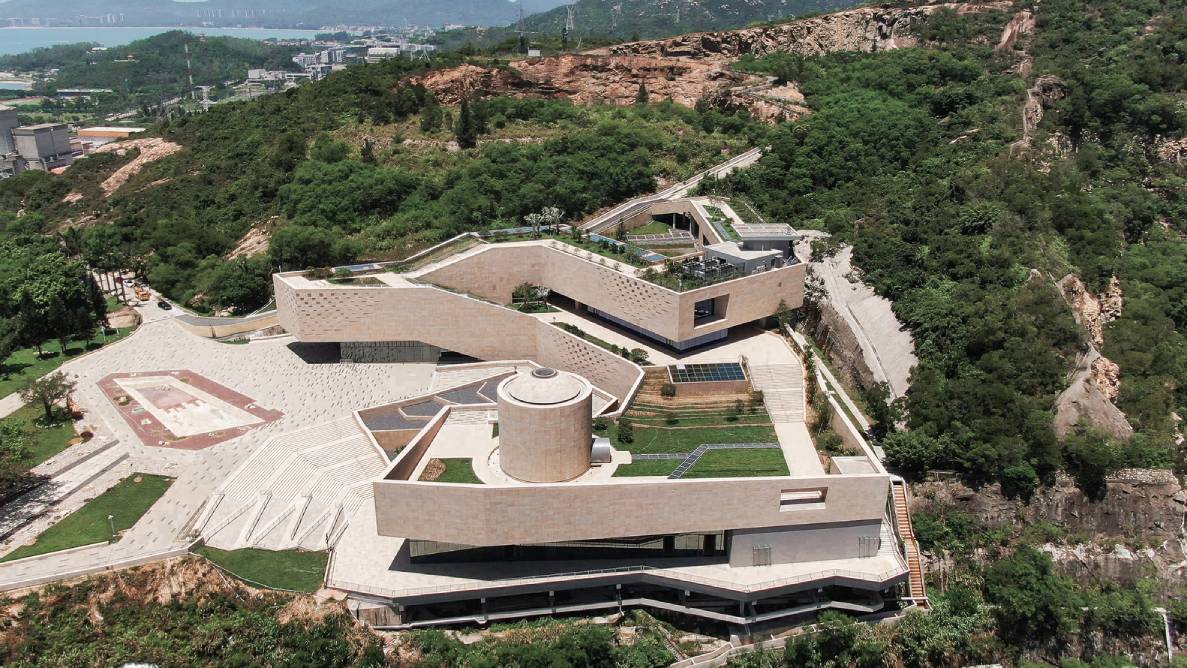
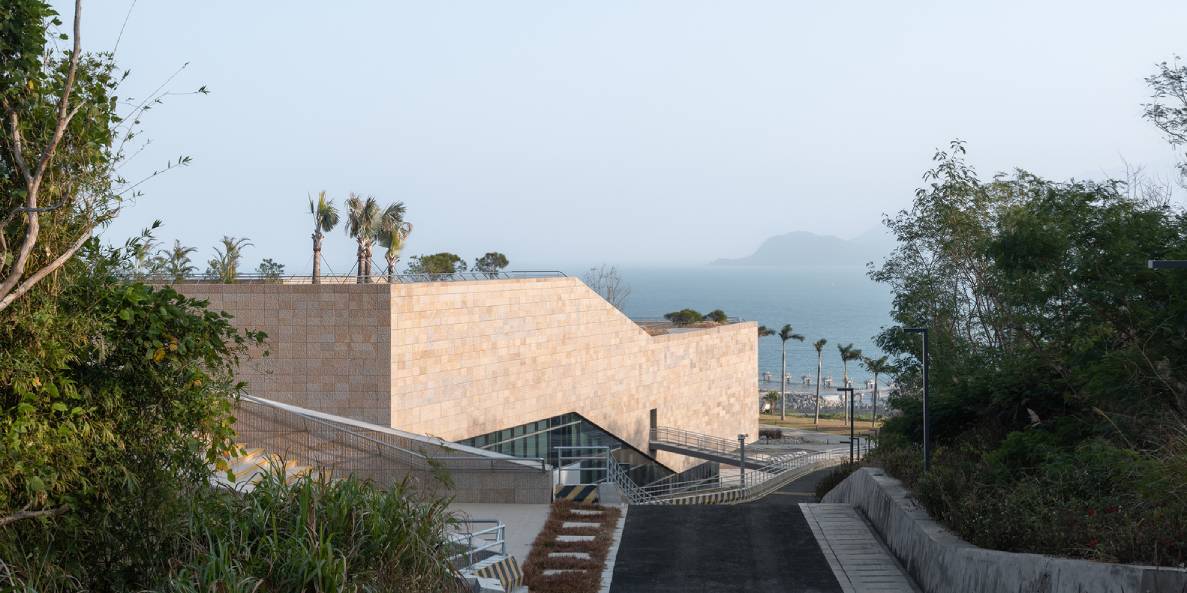
The project is built on a mountainside in one of the former pits used for quarrying resources for the nuclear power plant. It overlooks the sea and the power plants in the area.
Advertisement
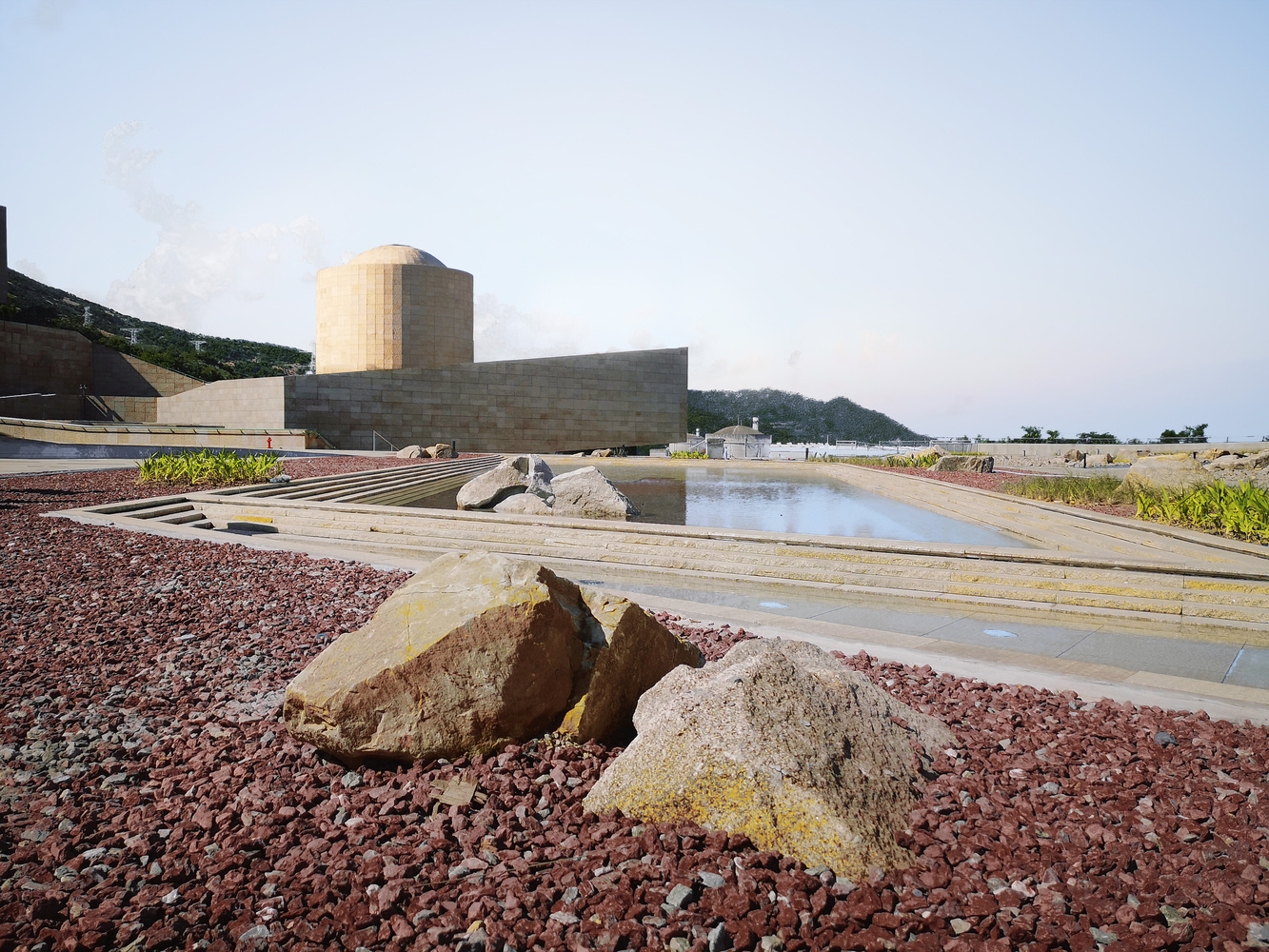
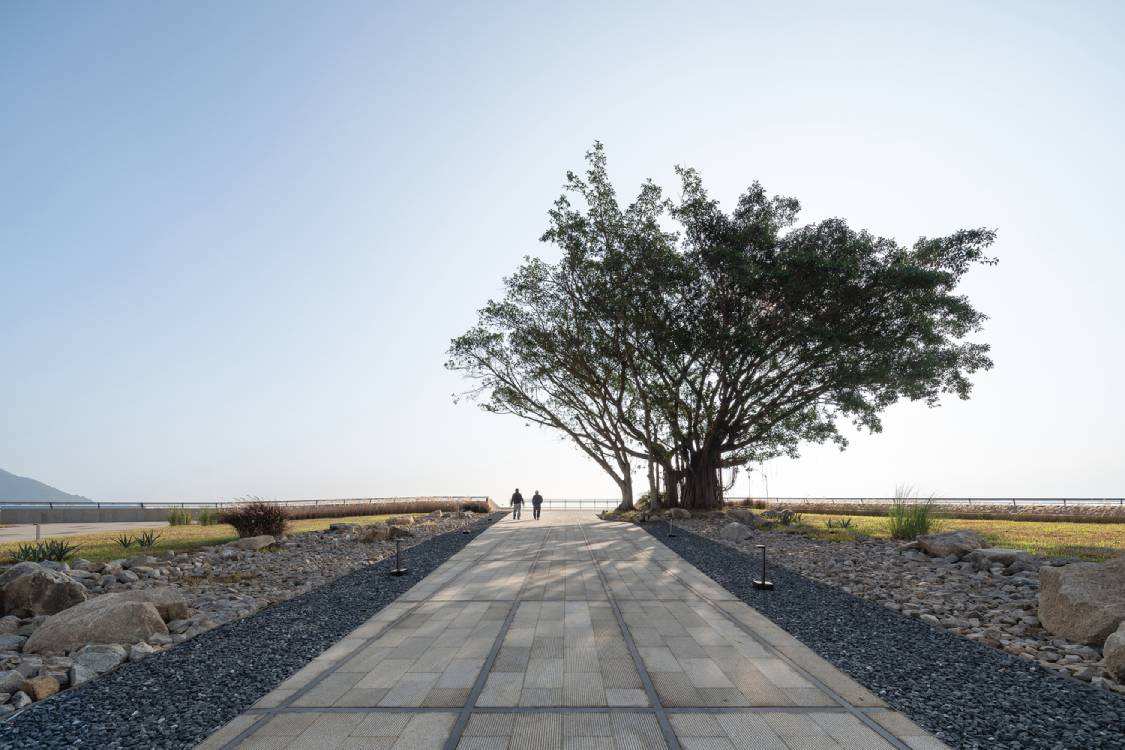
There’s a certain harmony with the nature around it as well, with how gardens and trees are integrated into the blueprint of the project. Among the best ways they showcase this is through the banyan tree commemorating 40 years of history, replanted at the center of the museum plaza. Beyond that, the gardens surround the structure, including numerous trees inside and outside the building, as well as stone gardens that seek to echo its past as a quarry.
Narratives of Industrial Might
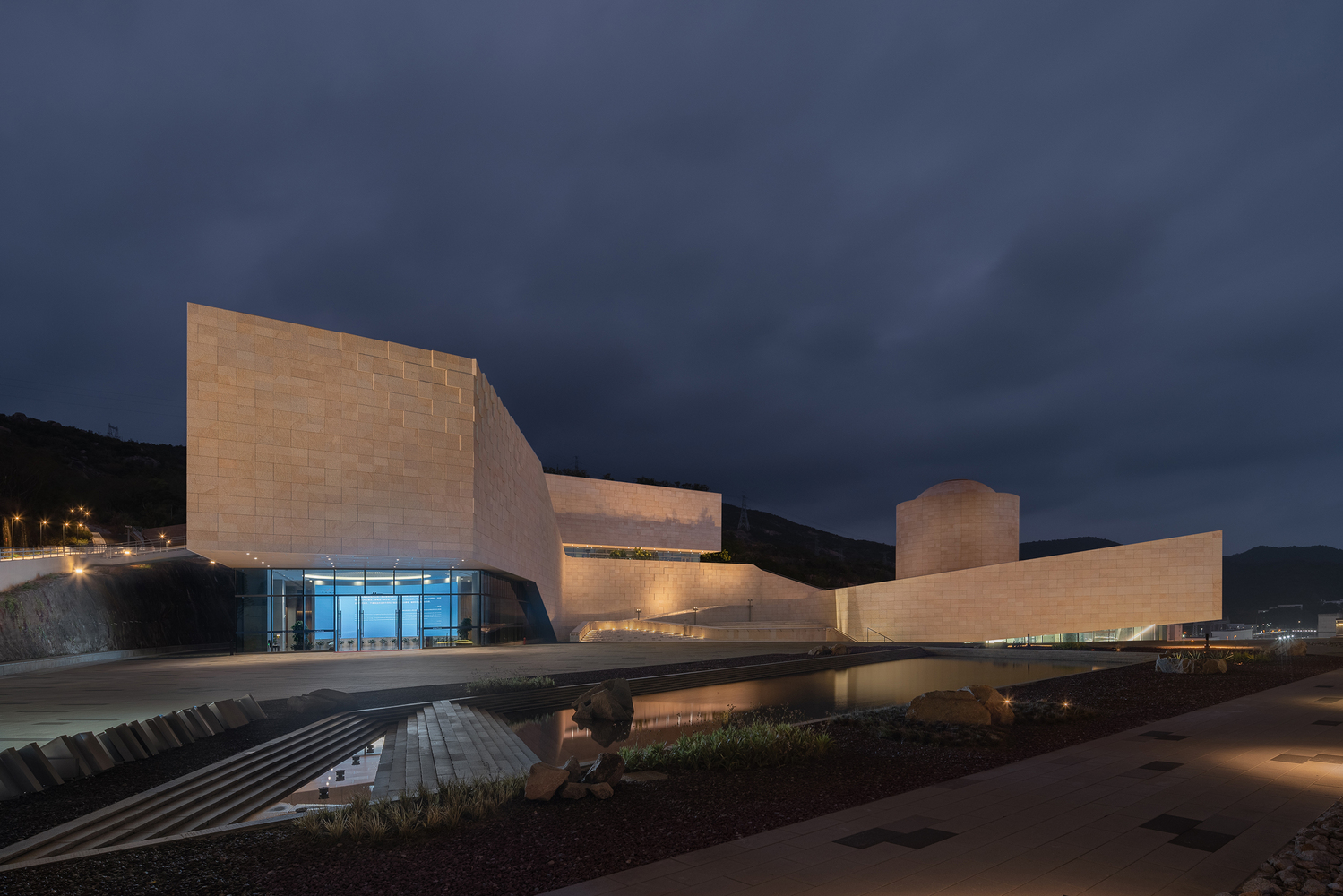
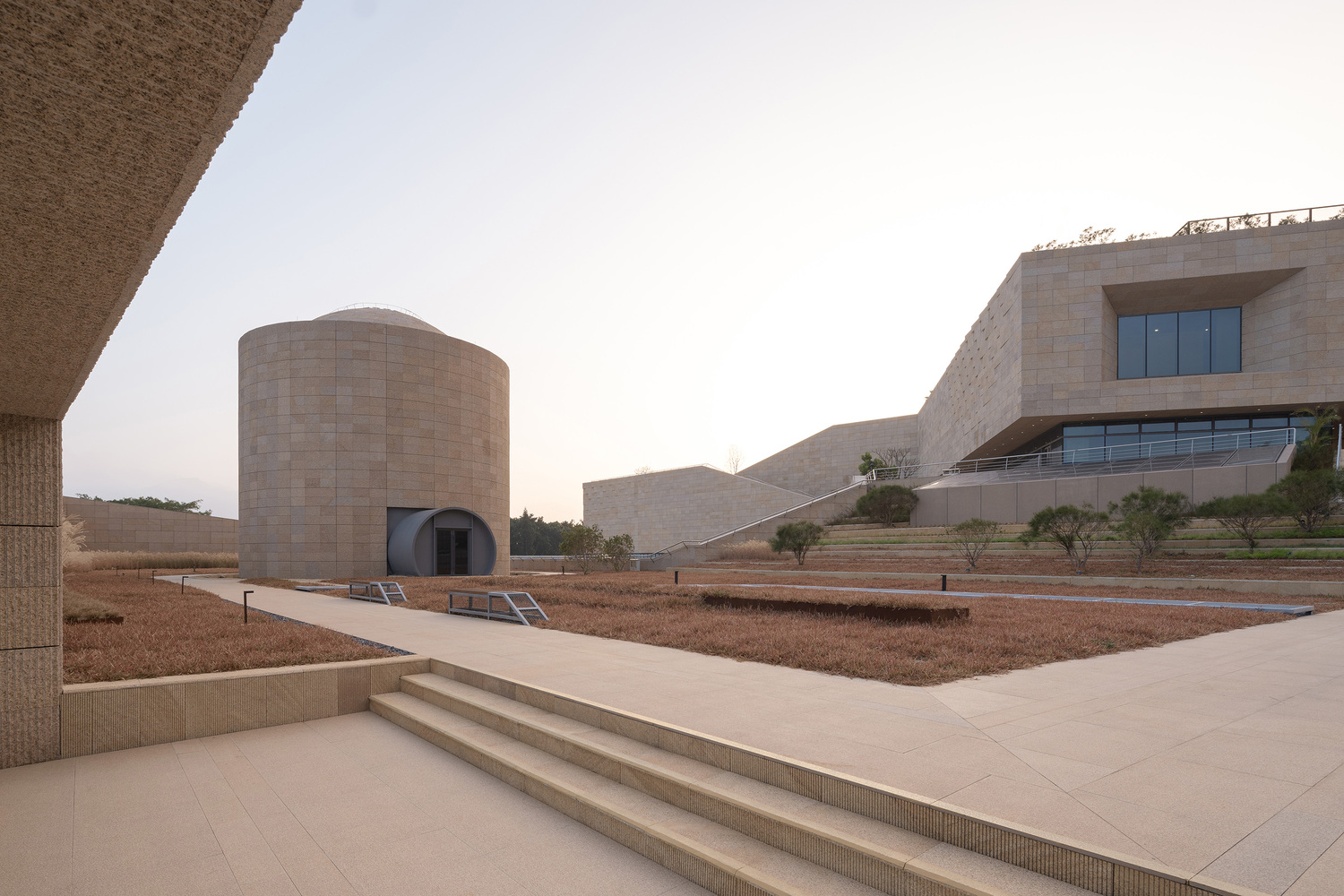
The facility itself is a giant geometric marvel, showcasing a rocky exterior that mirrors its location at a former quarry. The architects described the facility as a spiritual fortress, and one can see how its giant walls and rising building structure make it look like a citadel from the past.
The building itself has a criss-cross shape that rises from the ground and imbeds itself along the mountainside. Inspired by the dragon, the architects created a structure that can hold some of the enormous relics of industry inside the museum.
Advertisement
Entrance of museum. Photos by Chao Zhang, Zhengyong Liu, Fu Li, and Ye Fan.
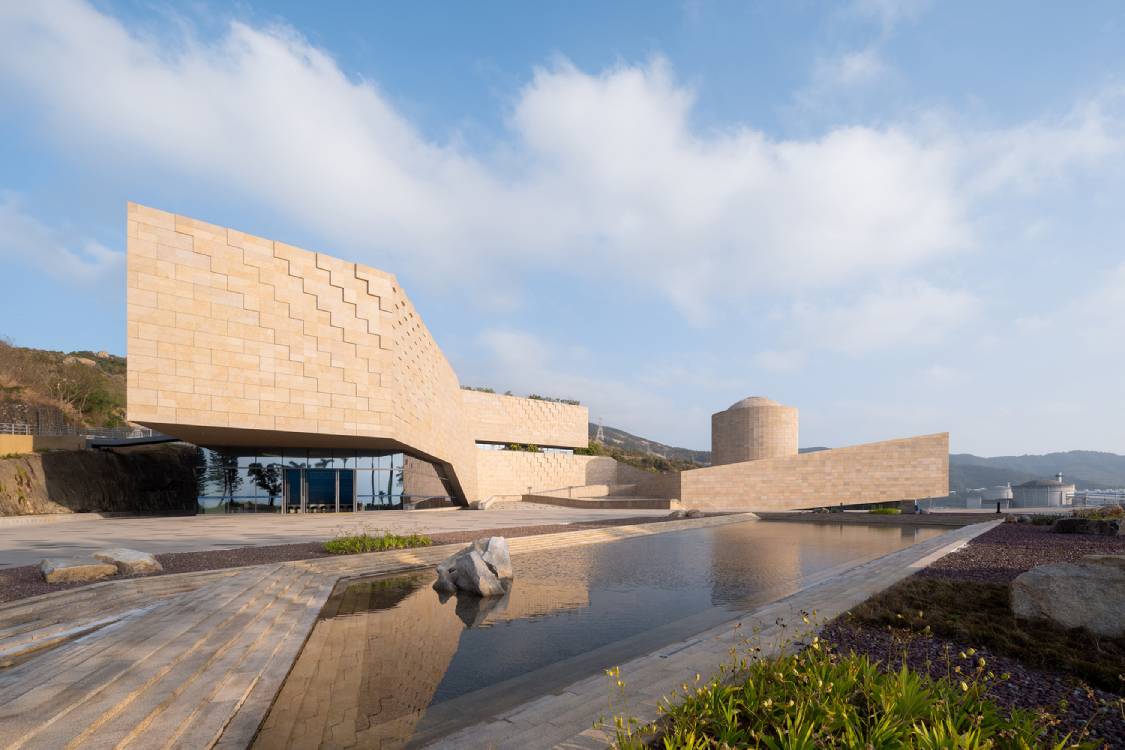
Museum exterior. Photos by Chao Zhang, Zhengyong Liu, Fu Li, and Ye Fan.
Rock garden and pond. Photos by Chao Zhang, Zhengyong Liu, Fu Li, and Ye Fan.
The Daya Bay Nuclear Museum Interior
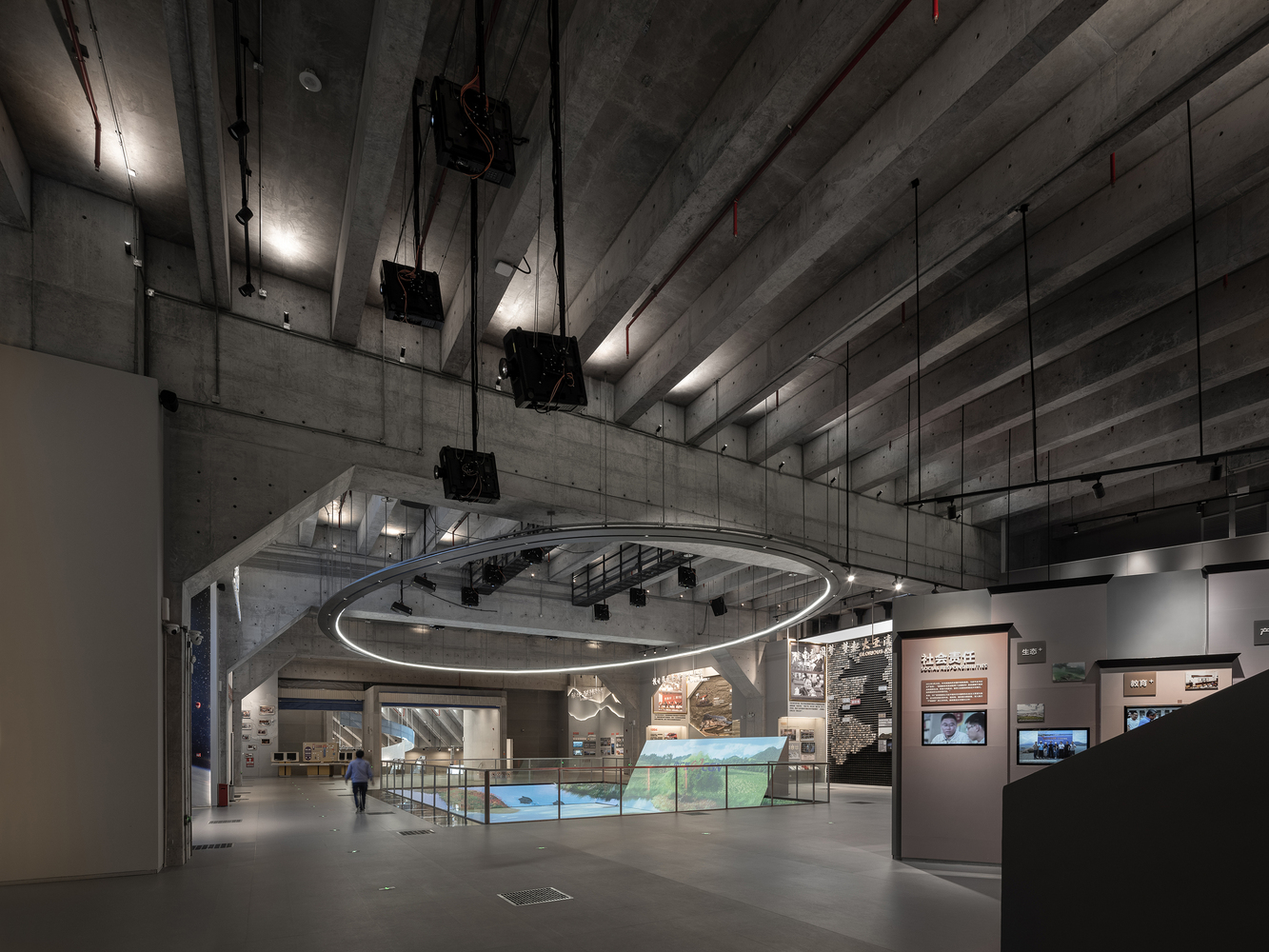
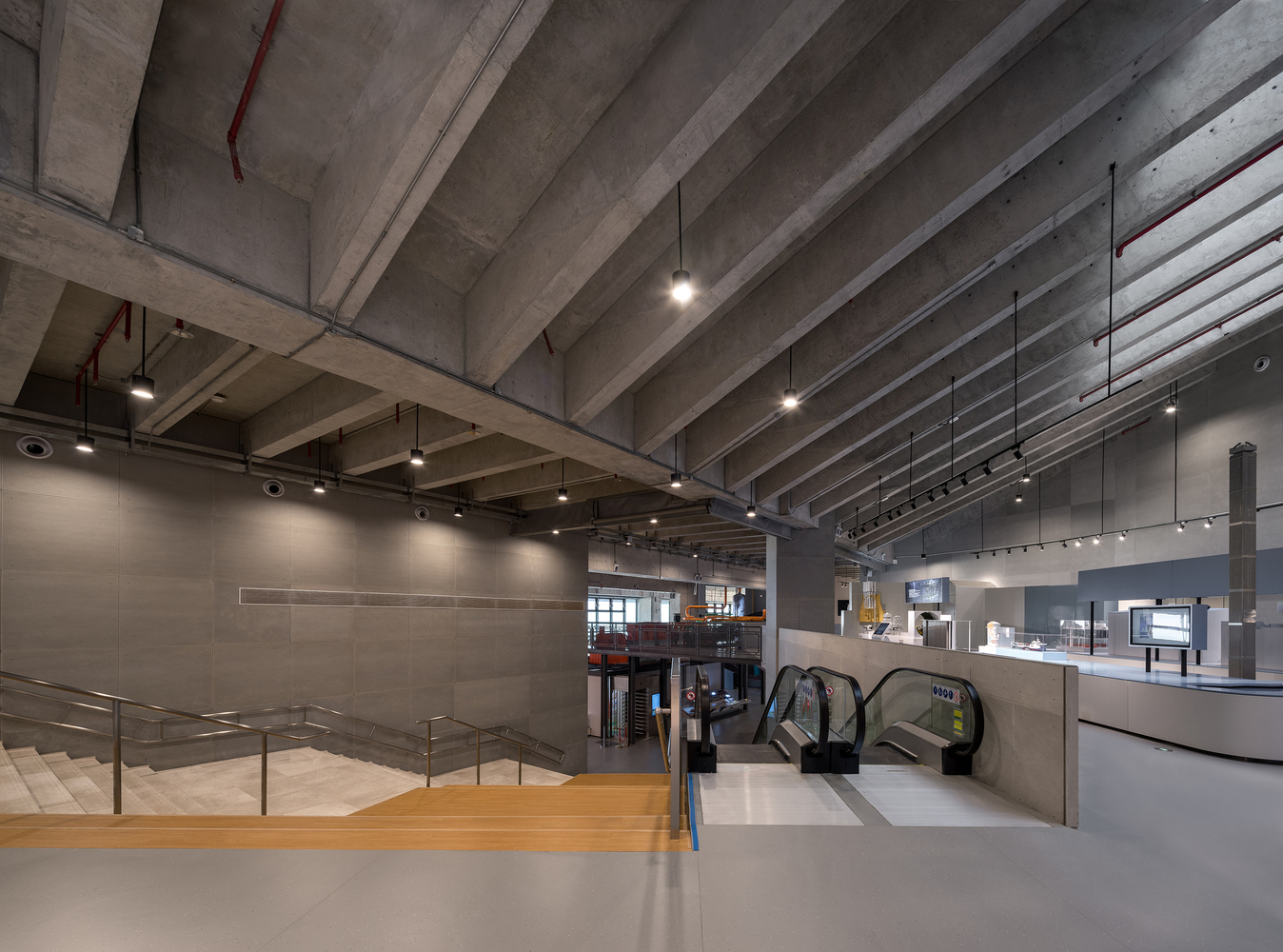
Much of the museum, especially its exhibition spaces, uses the stone structure to exemplify the ideas of industrial might. The ceilings are almost all stone, thickly layered together. The bare bones of the building are built akin to a factory, all strength and shielding incorporated together.
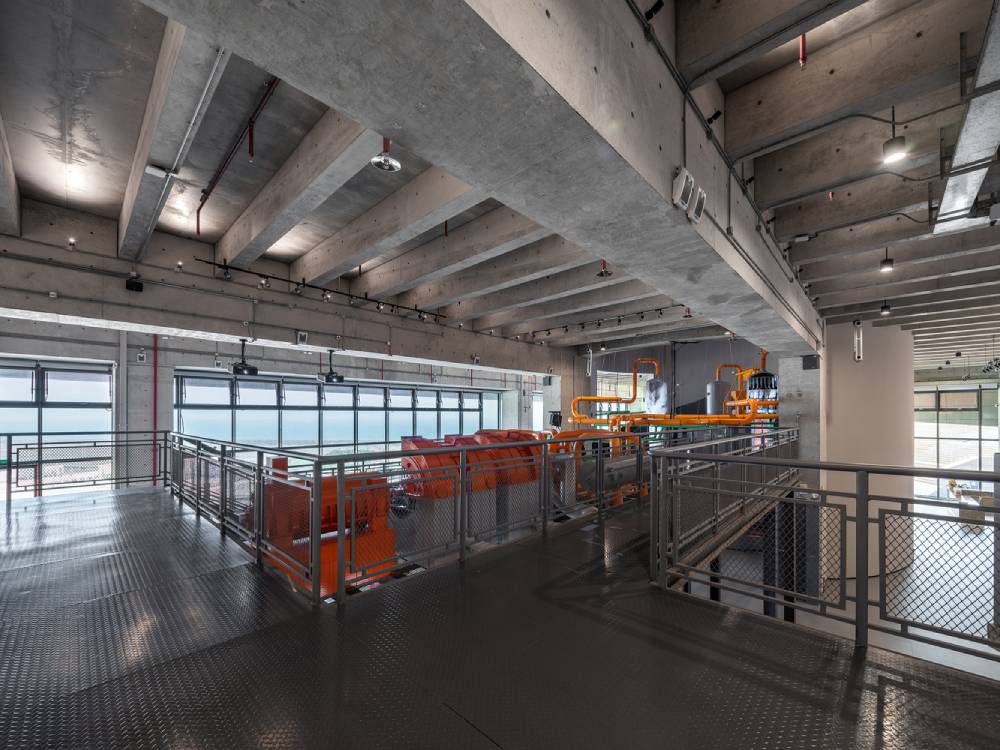
The rest of the museum, which contains two exhibition halls, a sea viewing platform, and the actual turbines used in nuclear energy, mimic the factory-like granite of the buildings itself. At times, going through the building gives you a sense of awe regarding the industrial power present.
Daya Bay Nuclear island. Photos by Chao Zhang, Zhengyong Liu, Fu Li, and Ye Fan.
Turbine model. Photos by Chao Zhang, Zhengyong Liu, Fu Li, and Ye Fan.
Museum interior. Photos by Chao Zhang, Zhengyong Liu, Fu Li, and Ye Fan.
Daya Bay Nuclear museum entrance. Photos by Chao Zhang, Zhengyong Liu, Fu Li, and Ye Fan.
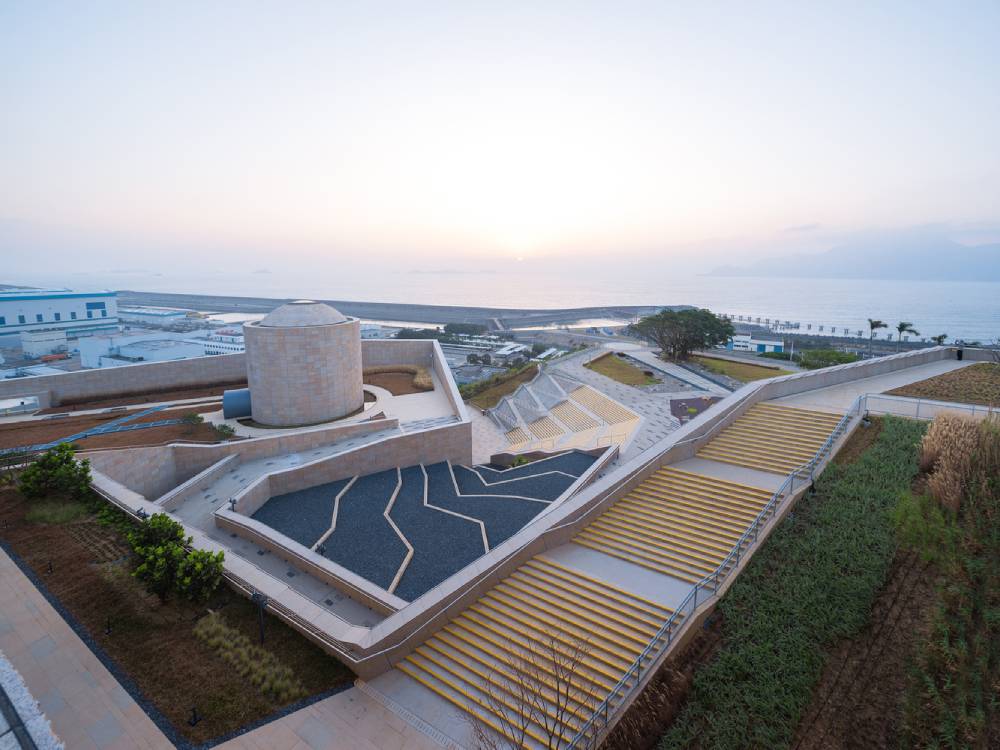
A nuclear island is also prominently displayed in the building. This cylindrical building contains the essential ingredients to create the steam energy for nuclear power. Its presence here showcases its importance to the project as a whole, and how, when it comes to nuclear power, safety is a priority.
Advertisement
Echoing Responsibility in Nuclear Power
The Daya Bay Nuclear Museum showcases a comprehensive way of nuclear industrialization done right. From its fortress-like architecture to its educational exhibits about nuclear energy, it gives the public an easy, bite-sized understanding of what safe nuclear industrialization can look like.
The building from the top view. Photos by Chao Zhang, Zhengyong Liu, Fu Li, and Ye Fan.
Tree at the museum. Photos by Chao Zhang, Zhengyong Liu, Fu Li, and Ye Fan.
Staircases to the Daya Bay Nuclear museum. Photos by Chao Zhang, Zhengyong Liu, Fu Li, and Ye Fan.
Staircases to the Daya Bay Nuclear museum. Photos by Chao Zhang, Zhengyong Liu, Fu Li, and Ye Fan.
Especially as the world continues to question what a post-oil world would look like, the Daya Bay Nuclear Museum gives us a potential roadway to safely creating energy in the future.
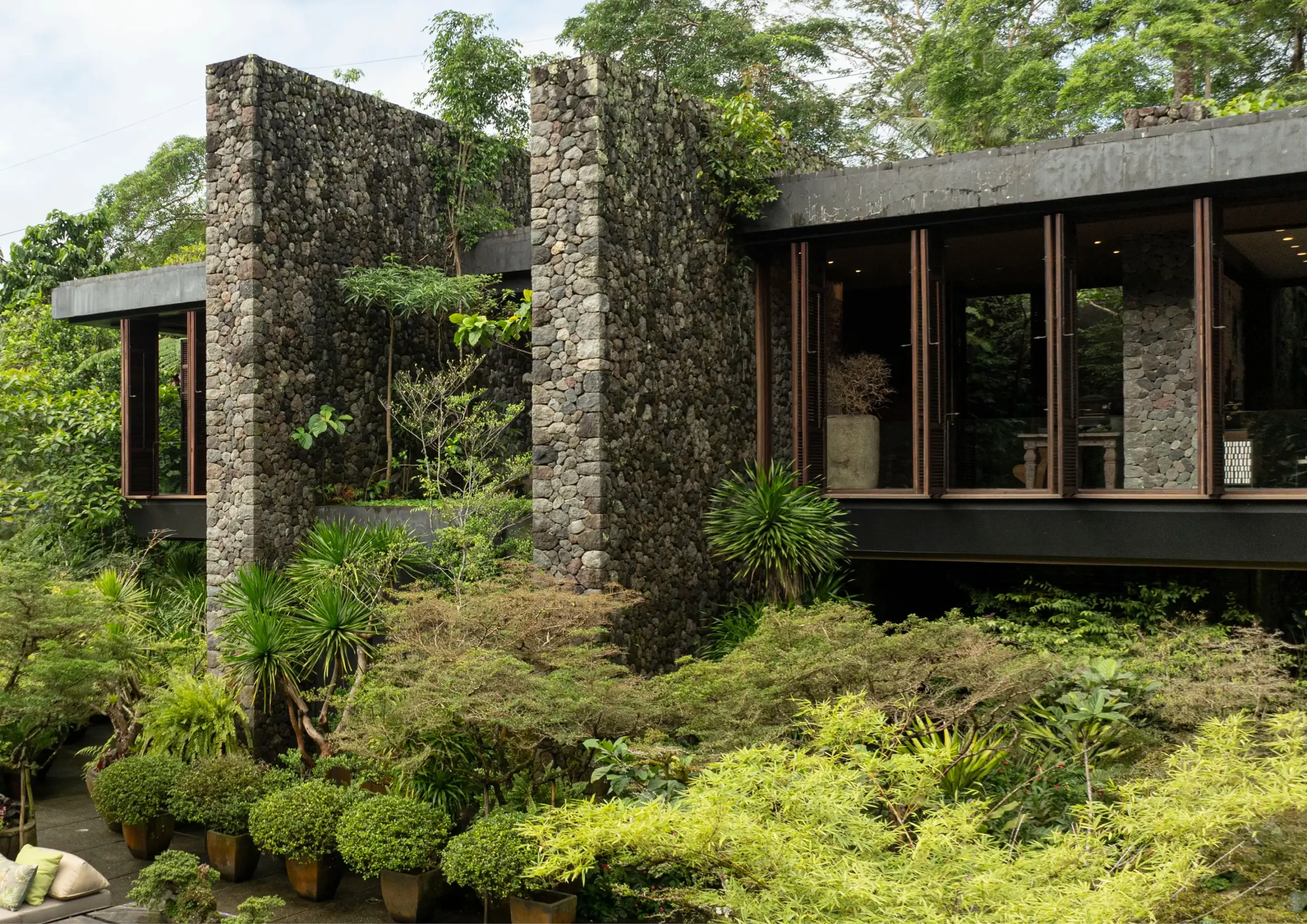
Located near the equator, factors such as heat and humidity are the norm in the Philippines. This tropical climate has shaped the development of architecture in the country. As Leandro V. Locsin stated: “The first consideration of the Filipino builder and certainly the most evident in his architecture, which is after all an outgrowth of […]
Art in the Park returned this year to Jaime Velasquez Park in Salcedo Village, Makati City, to celebrate its 20th anniversary. This year’s edition featured a curated selection of works from 55 exhibitors representing galleries, art collectives, independent art spaces, and student groups. With all artworks capped at Php 70,000, the fair continued its mission […]
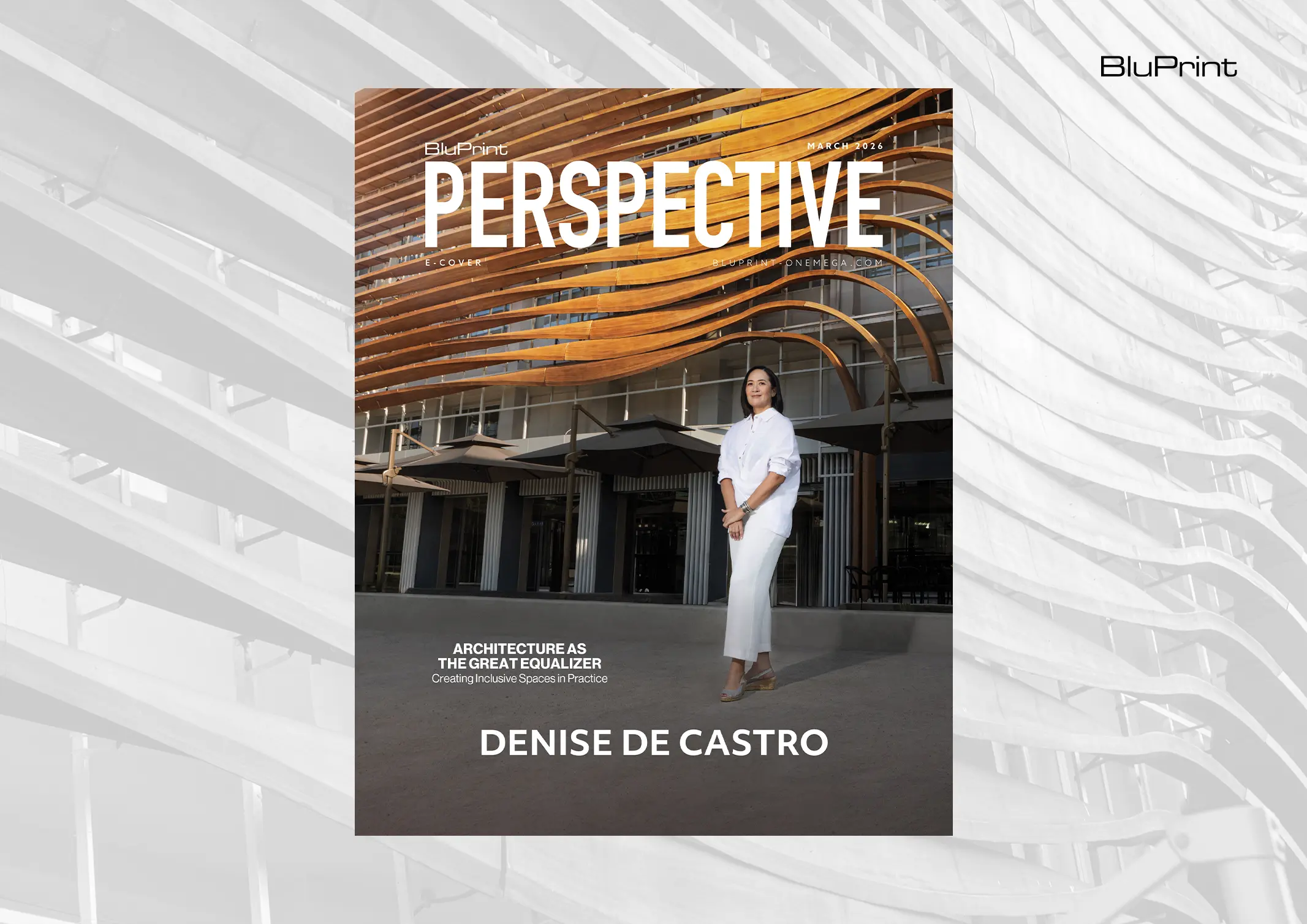
Denise de Castro, Principal Architect of DEQA Design Collaborative, believes that designing with equity in mind means starting at the workplace. Values and practices that your studio or office espouse inevitably filter down to the work that you do. Equitable design ensures that people with different needs and different backgrounds are supported through fair access, […]
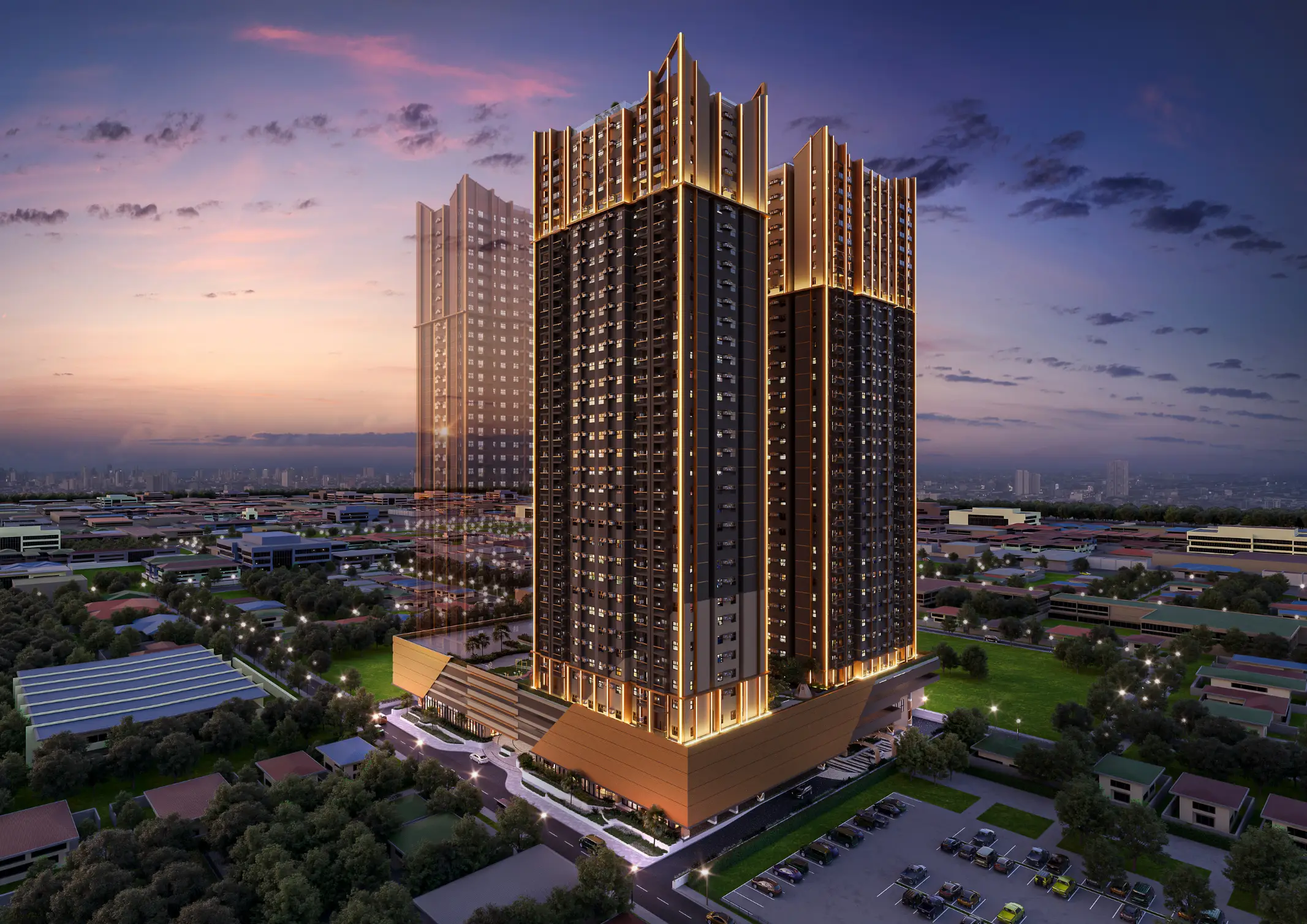
Across Metro Manila, residential developments are increasingly designed around proximity. As cities grow denser and mobility becomes more complex, new housing is often positioned near transport nodes, commercial districts, and educational institutions. This approach reflects a broader shift in urban planning. Mixed-use environments allow residents to live closer to daily necessities—reducing commute times while supporting […]
Luxury in design is undergoing a quiet shift. Where once luxury was measured primarily through visual opulence, today it is increasingly defined by responsibility—through the way spaces are built, the materials selected, and the impact those decisions leave behind. At the Philippine World Building and Construction Expo (WORLDBEX) 2026, this evolving definition of luxury takes […]
For more than nine decades, Fisher & Paykel has approached design with a simple but exacting belief: that the best living environments are those shaped by people, place, and purpose. Rooted in New Zealand and deeply attuned to island and coastal living, the brand’s philosophy centres on quiet performance, material honesty, and appliances that integrate […]