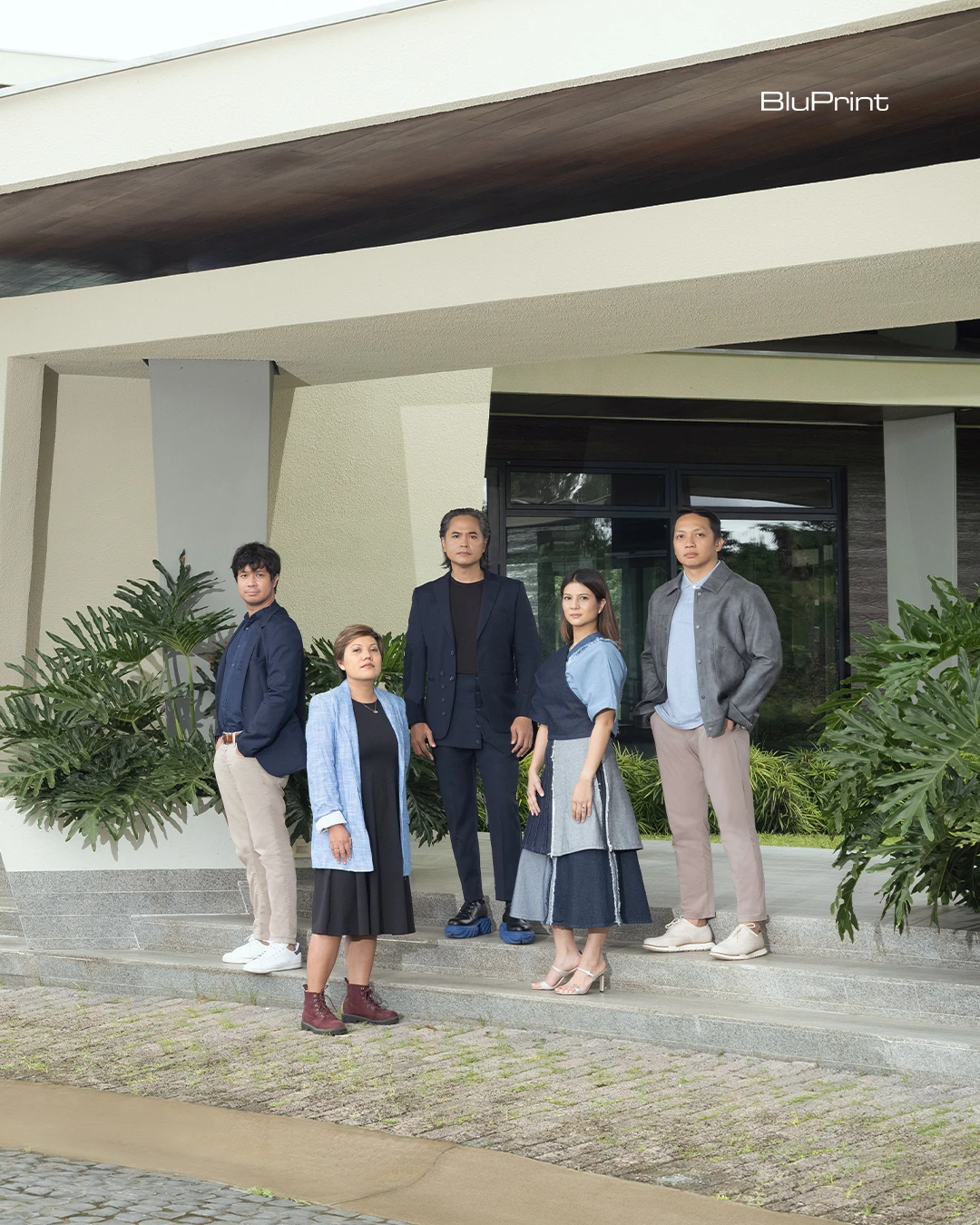
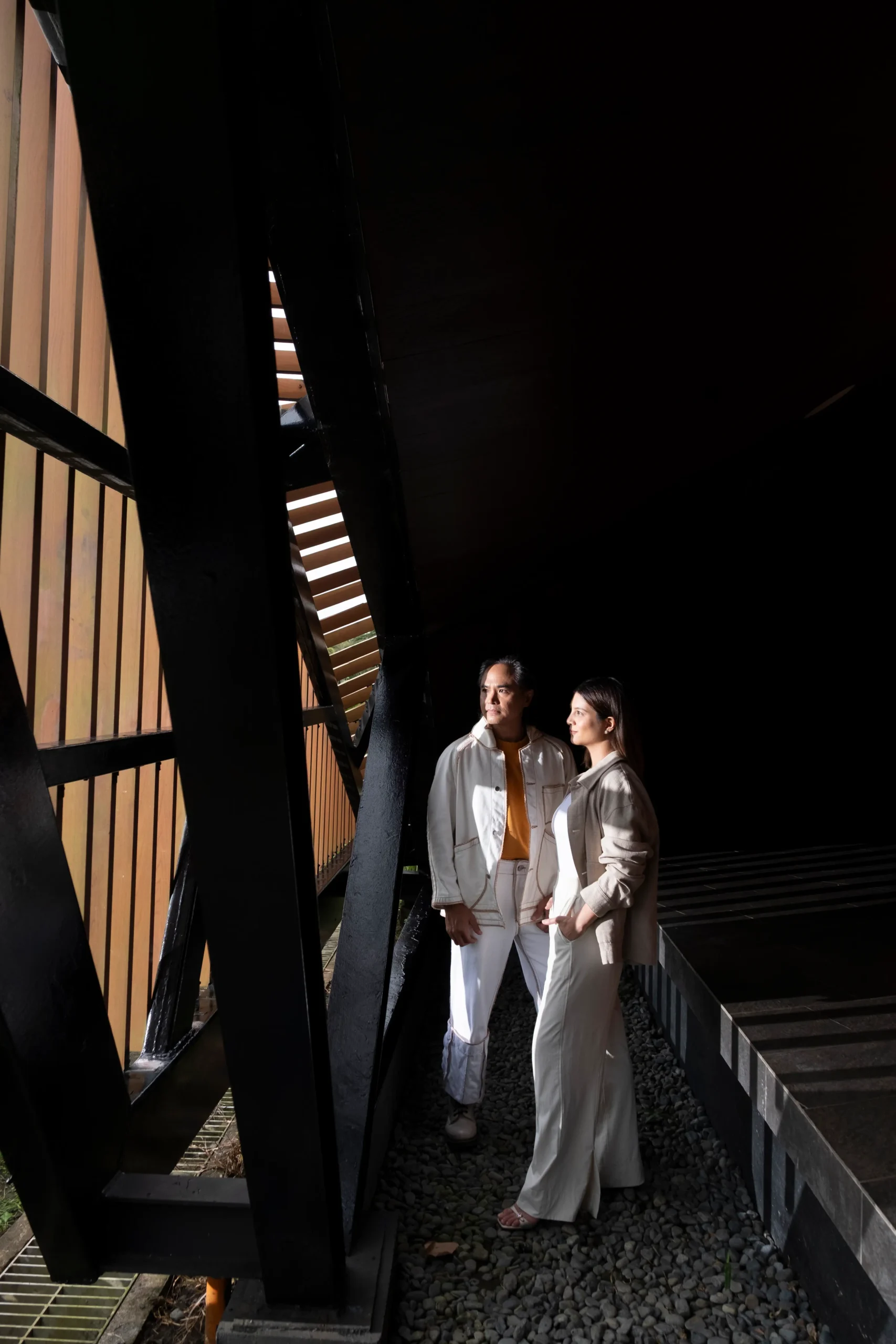
Situated in Laguna, south of Metro Manila, is a multi-thousand-hectare development created by Ayala Land Premier within the growth corridor of the CALABARZON Region. Barchan + Architecture was tasked with crafting a clubhouse for the subdivisions of Luscara and Soliento. Principal Architect of Barchan + Architecture, Jason Buensalido, explains the firm’s process in creating the Luscara Clubhouse and the Soliento Clubhouse.
Photograph by Ed Simon
Luscara: Working Within Constraints
Luscara occupies a unique site: a long, narrow strip that includes a six-meter-wide, no-build zone running its entire length. Adding to this challenge is a ravine that leads to a creek, which requires a large easement. These constraints limited the buildable area to a long, narrow blank strip.
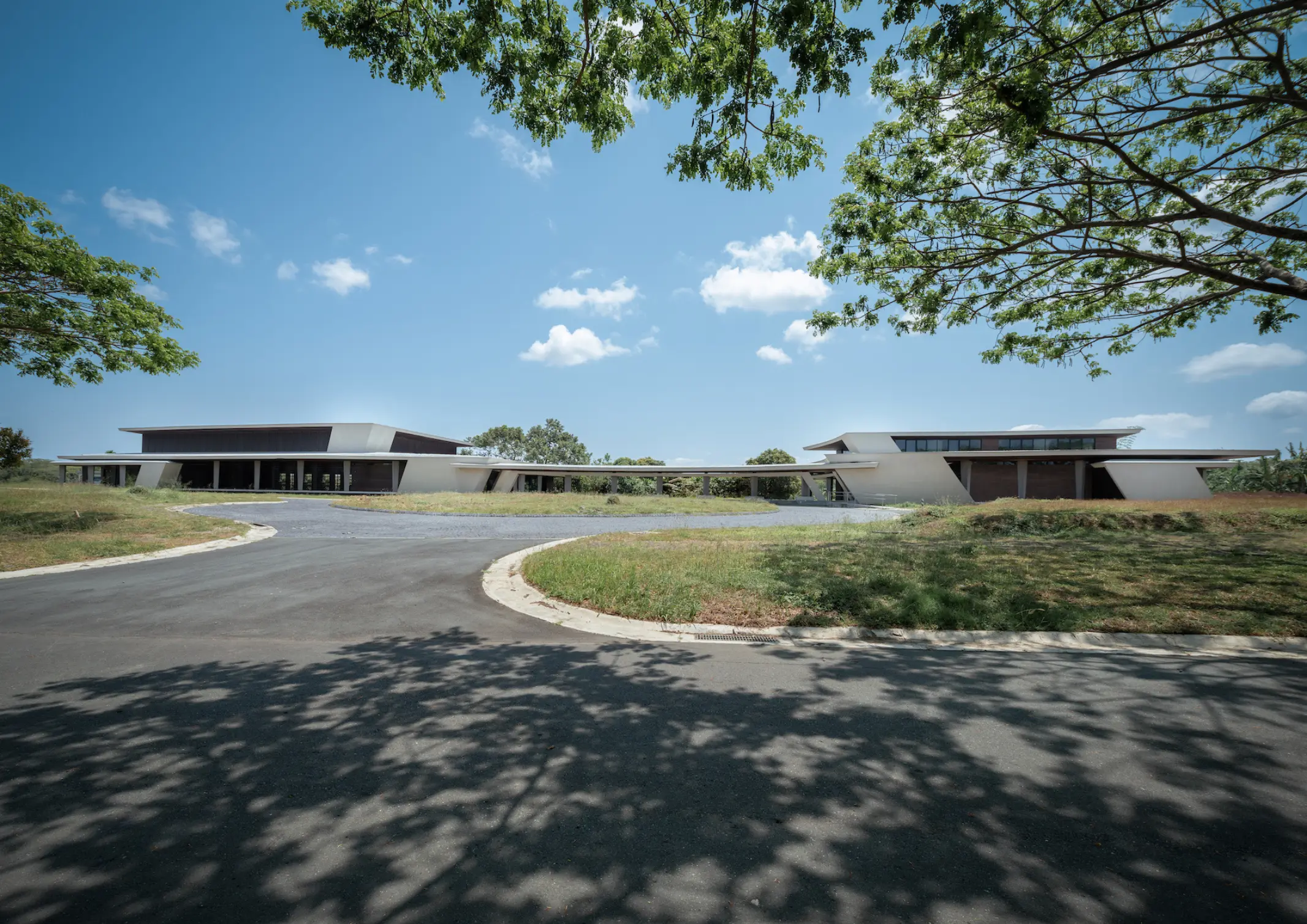
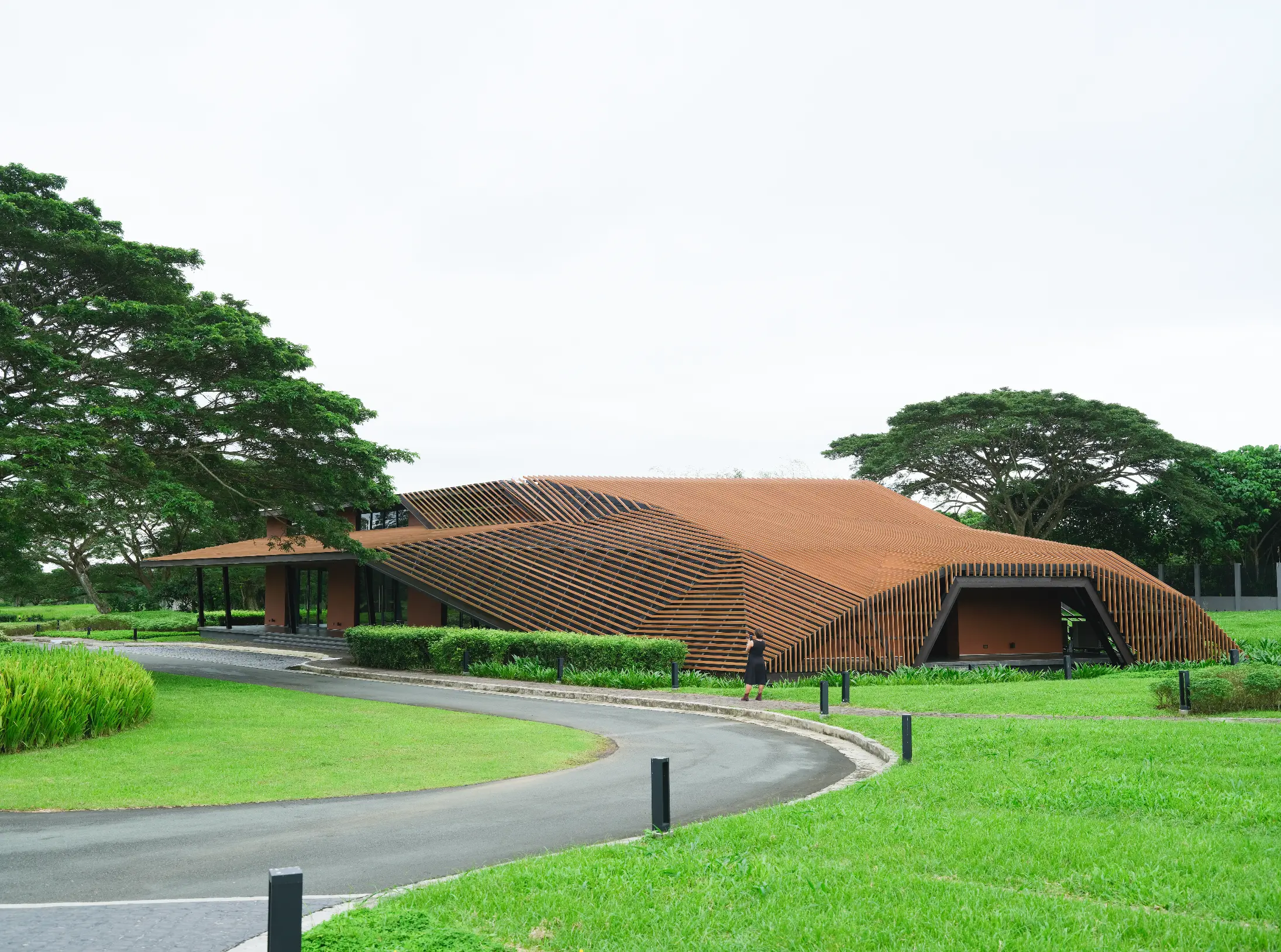
To address these challenges, the firm established an elongated form that emphasized the site’s terrain. The result is a clubhouse that grows from its topography, with its gentle curves, porous design, and green landscaping. Beyond the site’s constraints, the firm also sought its potentials.
Advertisement
Courtyards, which are approximately the size of a basketball court, define the zoning of both subdivisions. Surrounding it are lots meant for a cluster of around 8 to 10 houses. These courtyards create enclaves within the subdivision, ensuring residents’ safety.
The Luscara clubhouse is defined by its gentle curves and porous design. Photograph by Ed Simon.
The creation of these courtyards further positions these subdivisions as premium, low-density residential developments. Running perpendicular to Luscara’s clubhouse, Buensalido saw the courtyards as potentials. In response, he ensured that there is an axis running across the courtyards that crosses through the clubhouse. In doing so, he removed anything that might obstruct the site’s mountain views.
By leveraging the absence of architecture, the firm saw it as an organizing principle and a way to create physical access and continuity of open space. In addition, the physical separation of the 3,500-square-meter area created distinct social and active zones.
Advertisement
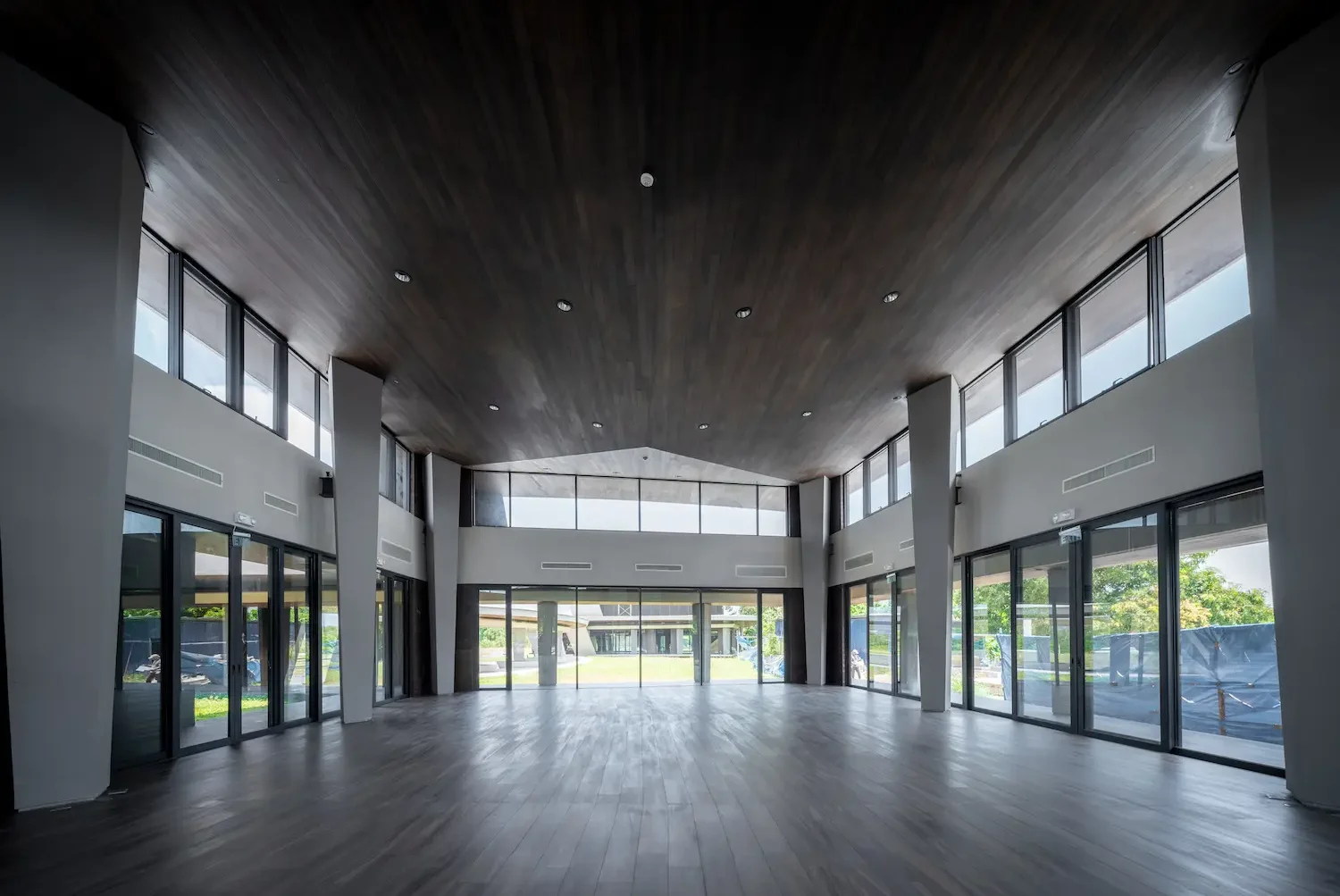
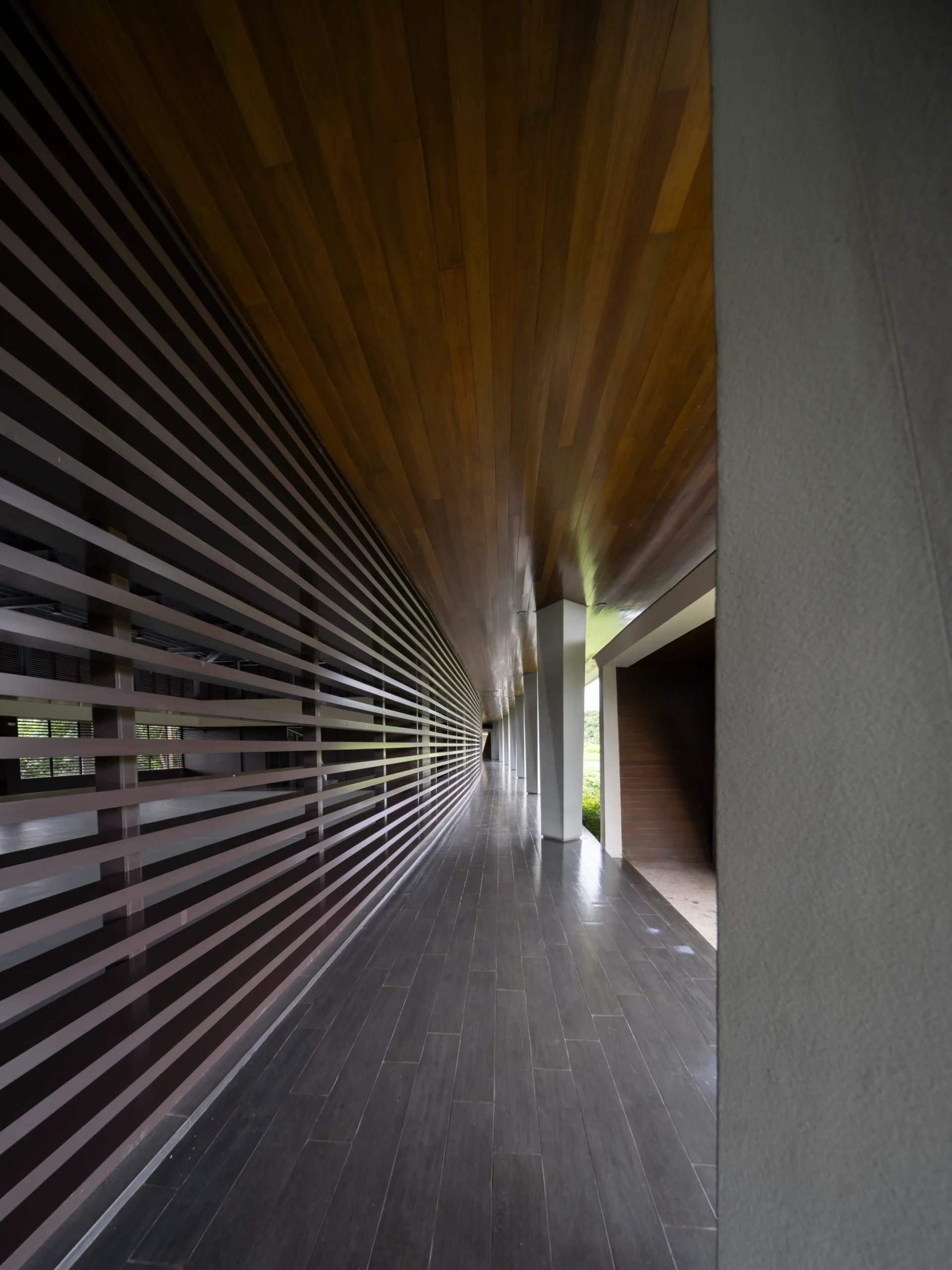
Dark wooden slats were used within the social zone to contrast with the natural light brought by the windows. Photograph from Barchan + Architecture
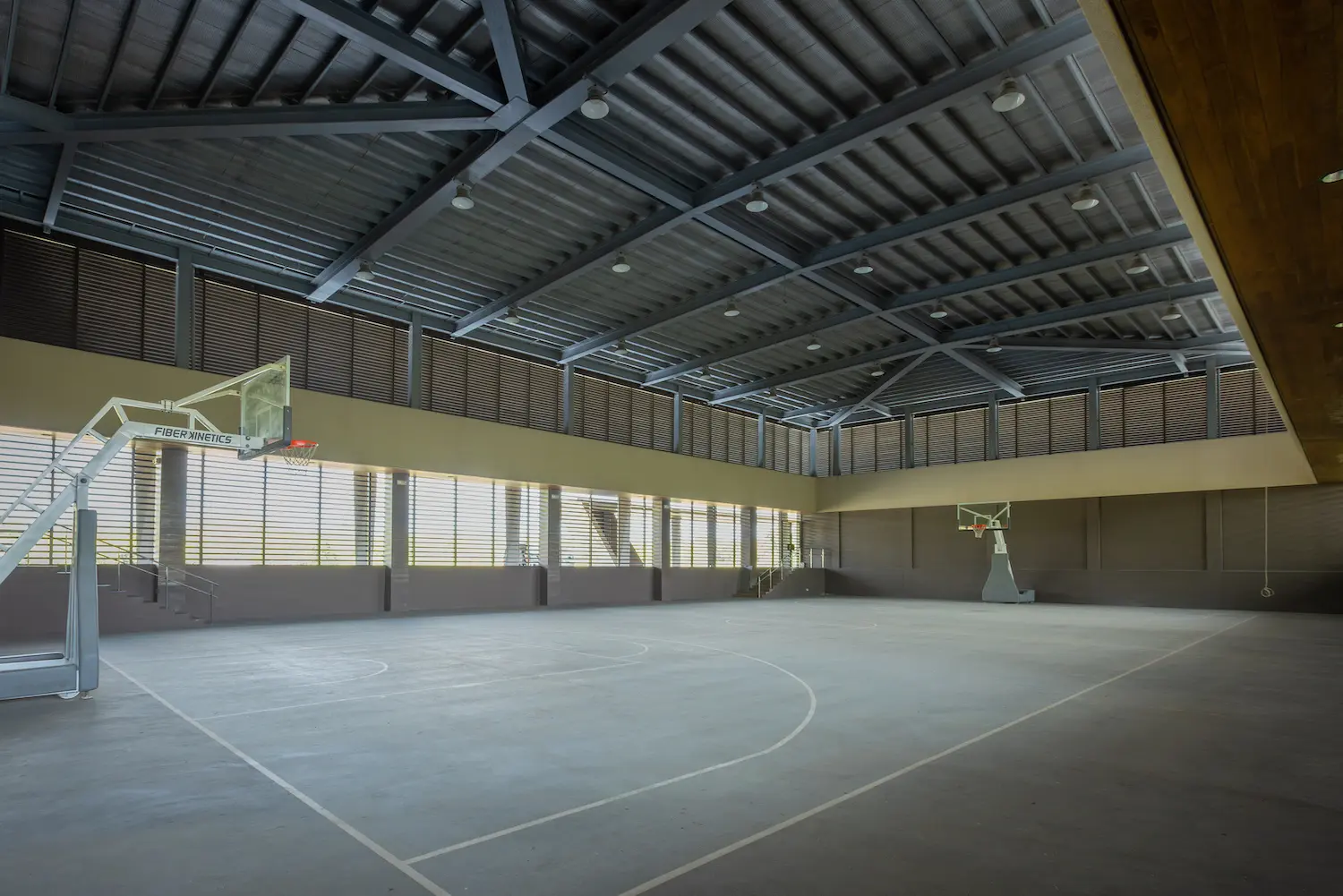
The basketball court located at the active zone. Photograph from Barchan + Architecture
The former comprises a multipurpose hall, toilet facilities, lockers, a pool, and an outdoor area for residents to enjoy. The latter includes a basketball court, a gym, a children’s play area, the homeowner’s association’s admin office, and the utility rooms.
Luscara, meaning light, inspired the juxtaposition of its materiality: light and dark. The light appears in its use of white stucco. On the other hand, dark materials such as wood eaves, powder-coated slats, and wood-grade aluminum create a contrasting look.
The dark wood eaves, powder-coated slats, and wood-grade aluminum create contrast in the space. Photograph by Ed Simon
Buensalido states, “Our basic belief is that architecture is simply a response to context. The context can be basic. For example, architectural components that we respond to are climate, topography, [and] orientation. Of course, there’s the complex component of context, which [is] most often non-physical, [such as] the positioning of the developer, sellability, [and the] goals of the developer. So, we wanted to respect that context.”
Advertisement
Soliento: Sibling Architecture
Luscara and Soliento were designed similarly, with Buensalido describing the clubhouses as “siblings.” Developed after Luscara, Soliento sits on a triangular site. Buensalido defined the clubhouses as contemporary expressions distinctly rooted in nature. The design draws from modernism’s recurring presence across decades, from the 1930s to the present.
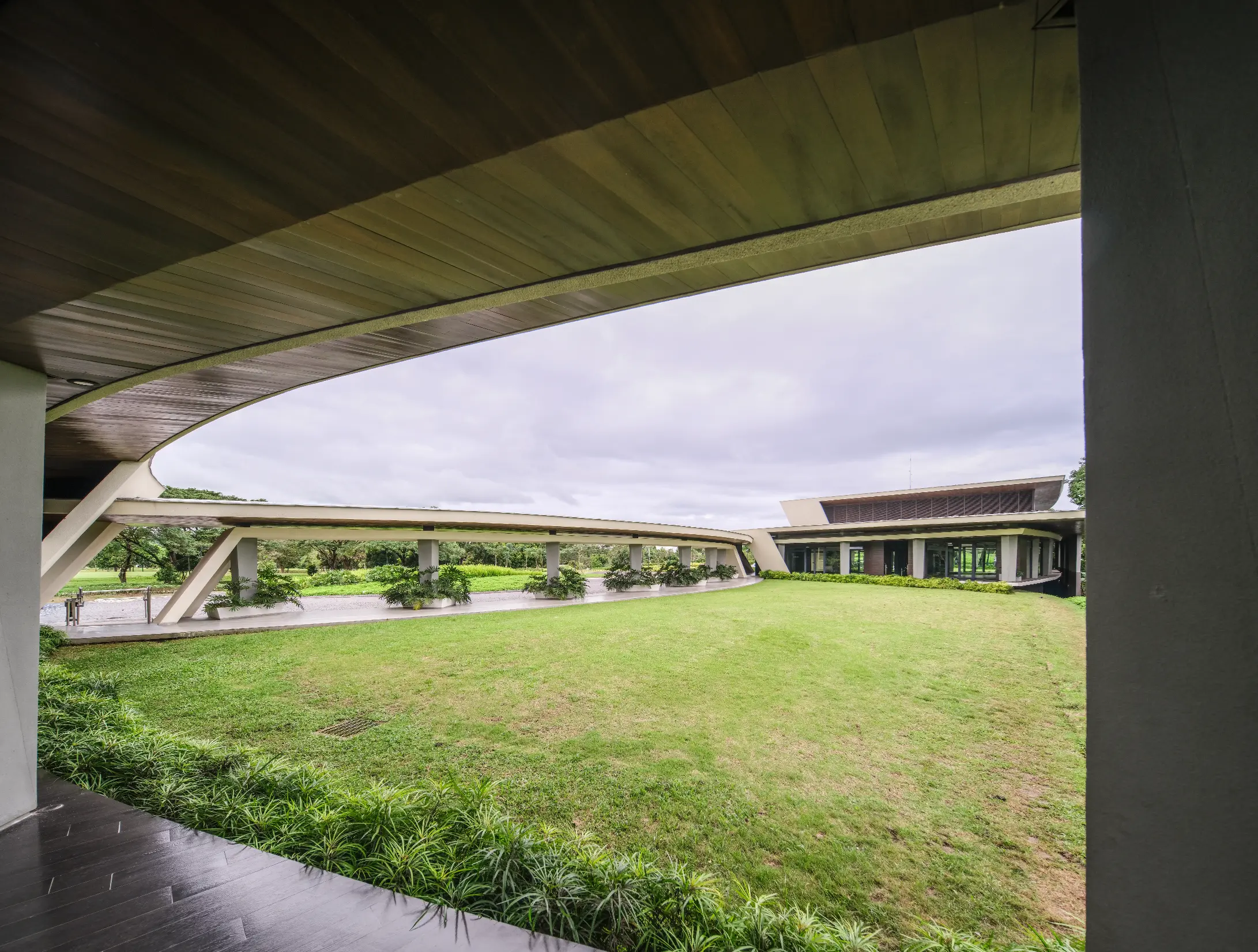
Soliento Clubhouse: Horizontal lines were utilized to bring the structure closer to the ground. Photograph by Ed Simon
“We wanted something that’s very timeless. We imagine architecture that illuminates elegant qualities of simplicity and minimalism—the reduction of architecture from over-ornamentation to its bare essentials or its bare essence,” Buensalido shares.
The name Soliento is a portmanteau of the Spanish words for “sun” (sol) and “wind” (viento). In turn, natural formations, such as trees, streams, and mountain landscapes, inspired its architectural design. Utilizing lines to interpret these elements, the design combines the site’s topography with modernist horizontality. “Lines in architecture have always been a strategy,” Buensalido explains.
Advertisement
Horizontal lines, for instance, were used to bring the otherwise massive structure closer to the earth because of the horizon’s length. In turn, this made the structure more human in scale. Furthermore, there are diagonal lines present, from the ground to the sky, in the form of mountainscapes or rolling terrain. This diagonality is used to negotiate the two horizontal lines, forming a canopy or roof.
Photograph by Ed Simon
From the top view, a curved language is added to the architecture. This creates a sense of curiosity for people walking through the spaces. This interplay of lines results in a softer, more transitional design. For Soliento, this is evidenced by its screens, lattices, and porous slats. These features deflect excessive heat and strong winds while welcoming filtered light and gentle breezes.
Broader Impact
Both projects redefine premium residential development by prioritizing human connection over exclusivity. Barchan + Architecture created amenities that facilitate relationships among individuals, families, neighbors, and the entire village.
Advertisement
“The hope of architecture [is] to recede and to be taken over by community and landscape. [It can also influence] the home designs, so that they will also recede. [This] will create a collection of houses that celebrate architecture, that celebrate people, community, rather than houses that seek attention,” Buensalido remarks.
Ultimately, Luscara and Soliento demonstrate how architectural constraints, when embraced creatively, generate more interesting solutions. Both projects prove that architecture succeeds when it thoughtfully responds to its context.
Contemporary design refers to the constantly evolving design trends of today. With the power to design our built environments, architects have been experimenting with various architectural approaches. Whether that is through unconventional forms or the integration of smart technologies, BluPrint lists down Filipino architects who are defining contemporary architecture. Deo Alam Architect Deo Alrashid Alam […]
In the Philippines, adaptive reuse gained traction during the 1970s with the rise of conservation and environmental preservation movements. It offered an architectural solution that reuses existing spaces to fit modern needs. Across the country, several projects demonstrate how this approach is being applied—transforming heritage structures into active spaces for culture, hospitality, and community life. […]
From residential spaces to civic structures, lighting dictates the mood of a space. It controls the visual dynamics of an interior, serving as a guiding tool that highlights key design elements, including materials and textures. Related Reading: Lampscaping: How to Light up Your Home like a Pro Regulating the Mood: Natural and Artificial Light in […]
More and more Filipinos are flocking to condominium communities. Often tucked within busy city centers, condo living acts as a small respite from urban chaos. Faced with the challenge of transforming a cramped condominium into a warm living space, BluPrint lists condo interior design ideas that can maximize each square foot of small spaces. Purposeful […]
Modern bathrooms are no longer purely functional spaces. Increasingly, they are being designed as environments that support cleanliness, ease, and quiet restoration within the home. As daily life becomes more demanding and health awareness continues to rise, homeowners are beginning to expect more from the spaces where daily rituals begin and end. For architects and […]