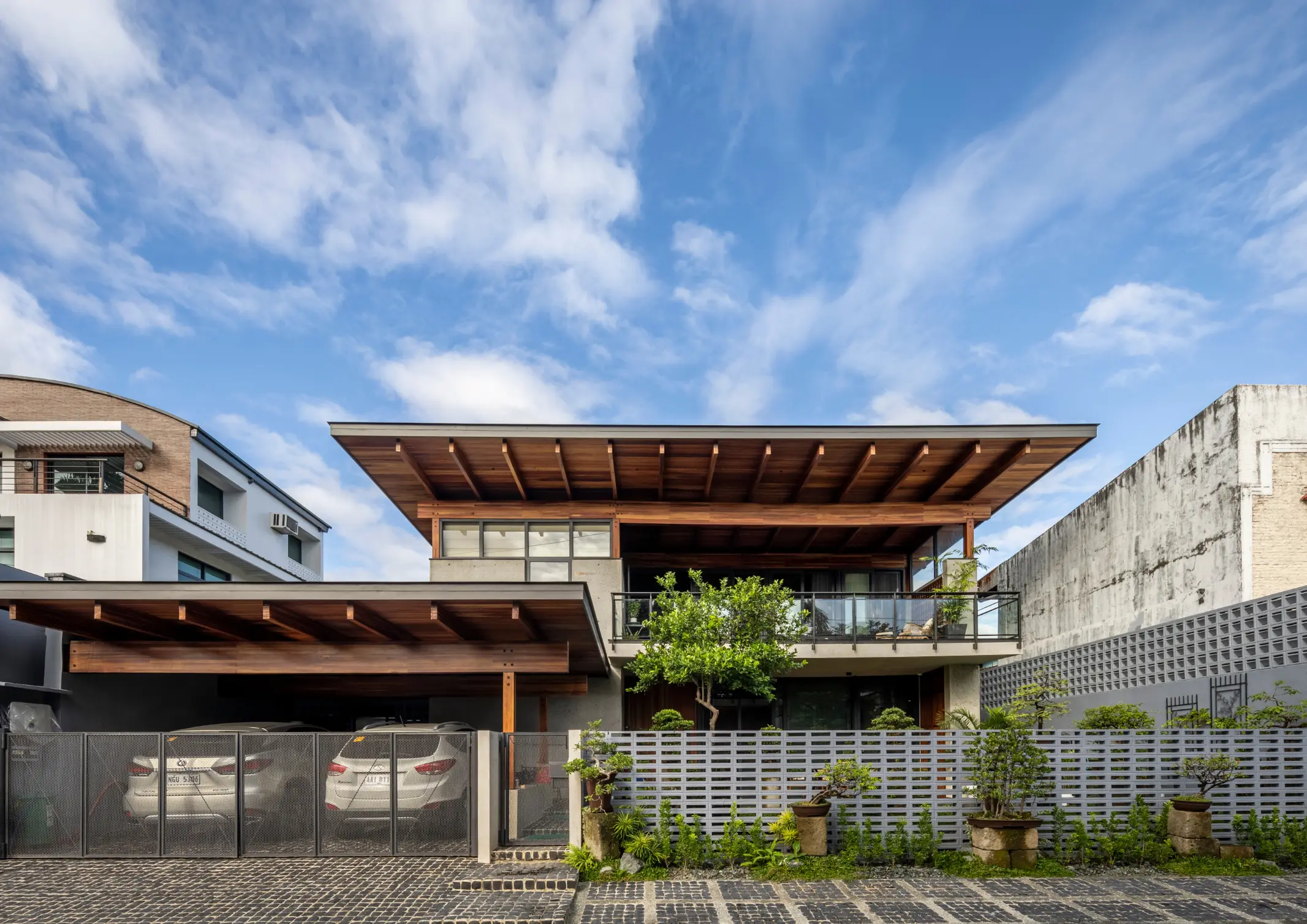
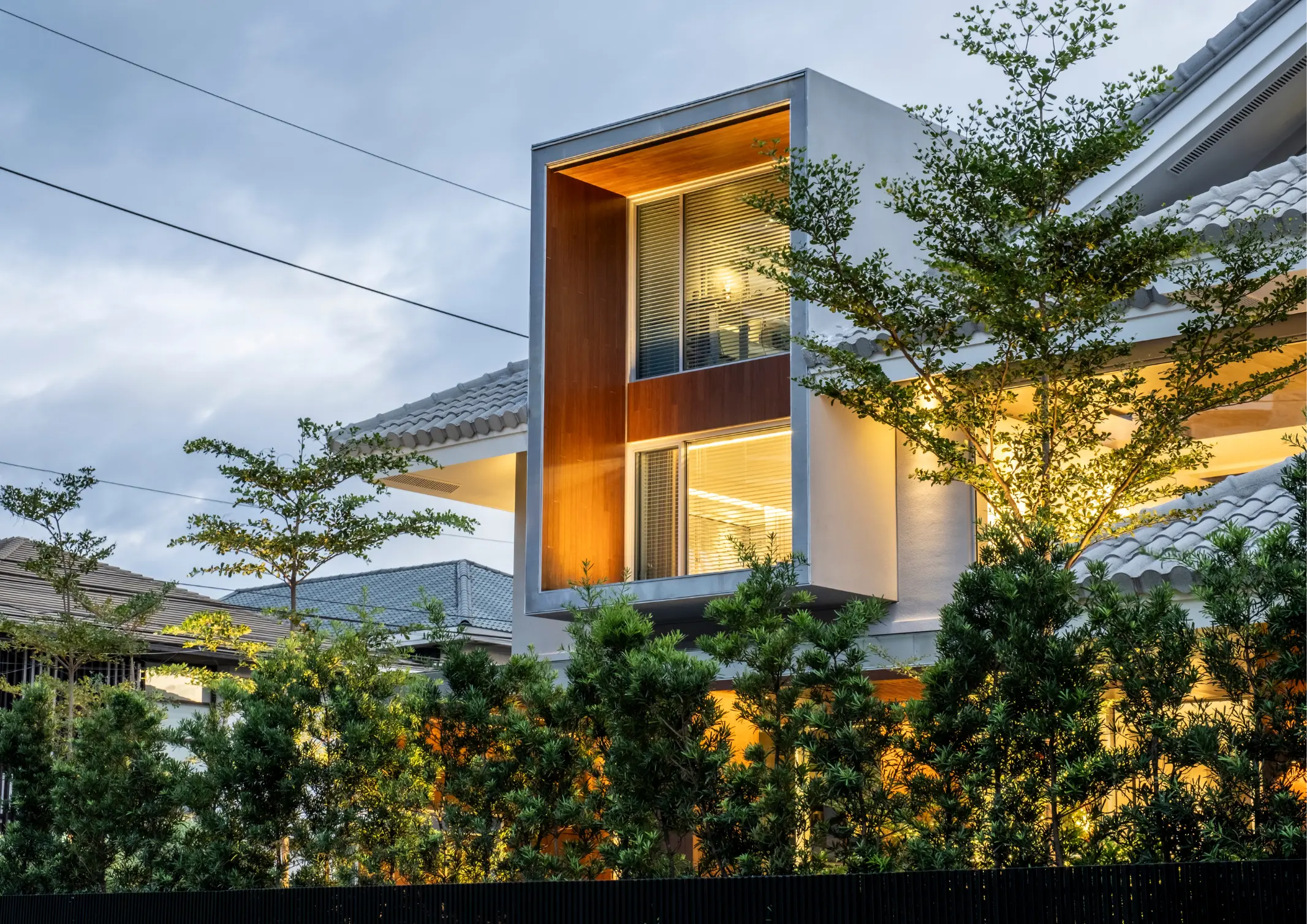
The typical daily Philippine urban bustle recedes when entering the Merville neighborhood, winding through until you reach more genteel streets. This is where architect Sudar Khadka grew up, formerly in an older house on a 540-square meter lot, which his parents bought in the late 1980s. He has now designed and built a completely new house – 10 Milan – in its place for his parents and family.
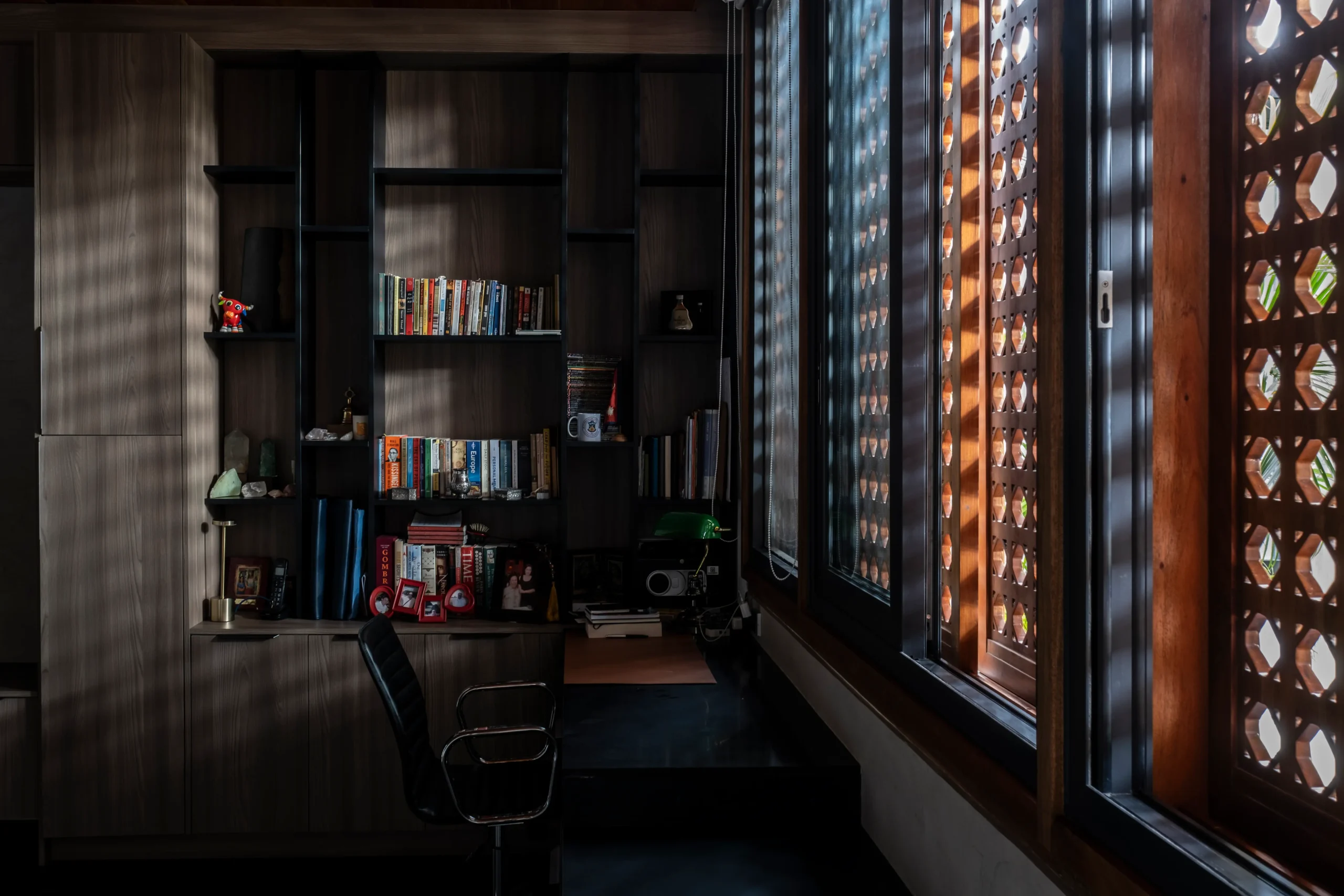
Natural light filters through the windows.
A low-walled perforated fence already invites you into their front garden, with full-height windows on both ground and second floor facades open to the morning sun. These days the architect’s father, Shaun, likes to spend a lot of time on the front porch where he often has breakfast and watches videos on his tablet. Lilian’s (the architect’s mother) creative energy, as an artist and a practitioner of Sōgetsu, can be seen in the adornment of their outdoor space with bonsais perched on plinths.
Designing for Daily Life
It’s a far cry from the more rigid and dated configuration of their old home, which the family felt could not fulfil their wishes nor requirements today and for the future. Despite Lilian making adaptations over the years, and with Sudar himself having exhausted countless studies to remedy the house, they decided to start from scratch. “There wasn’t really a view to the outside in our old house, but now I feel the openness. That’s what I like most with the space [now]. I don’t have to go out and look at the sky; now I can look at the sky from everywhere in the house,” opines Shaun. In August 2024, after around three years from the house’s conception, the family finally moved in.
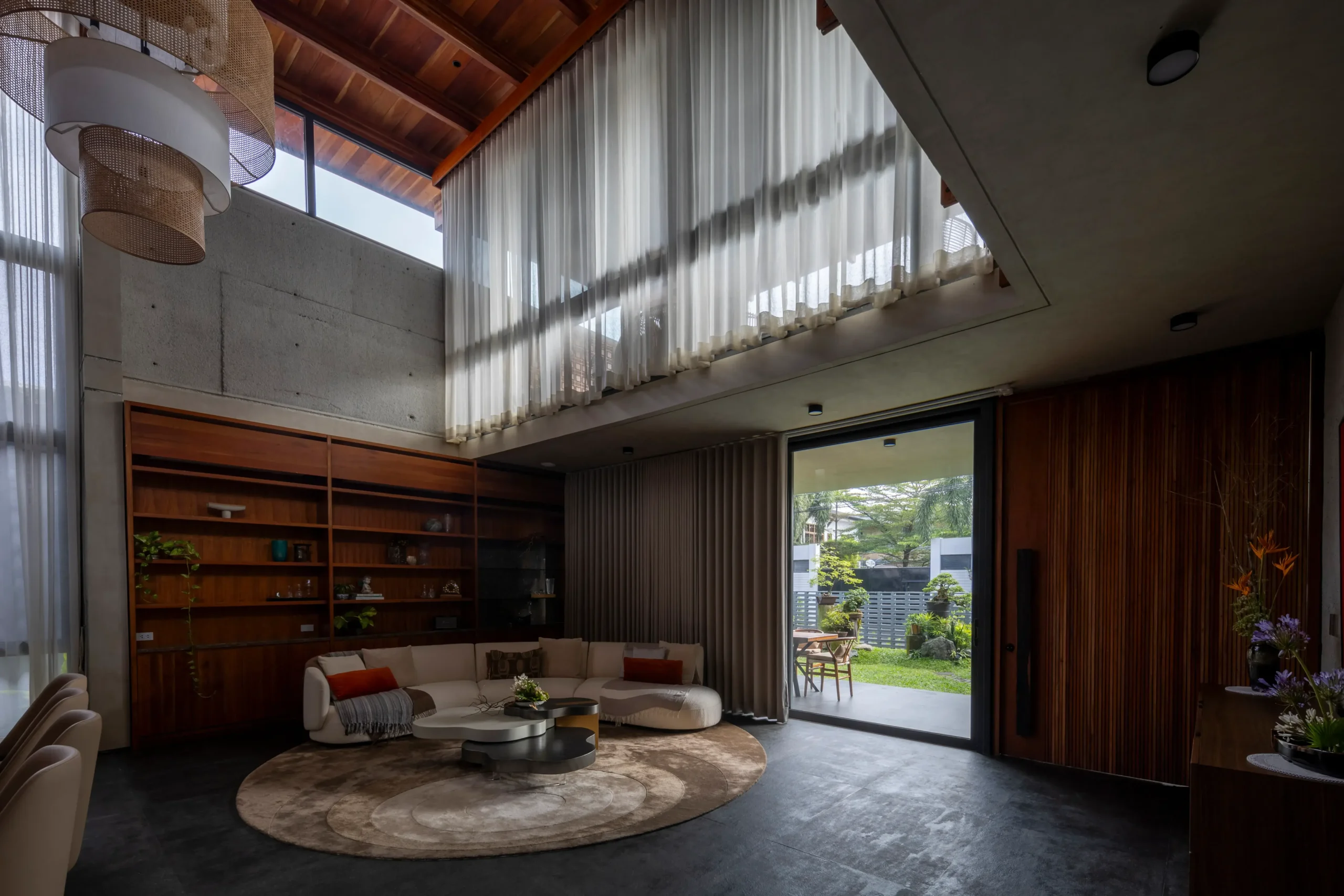
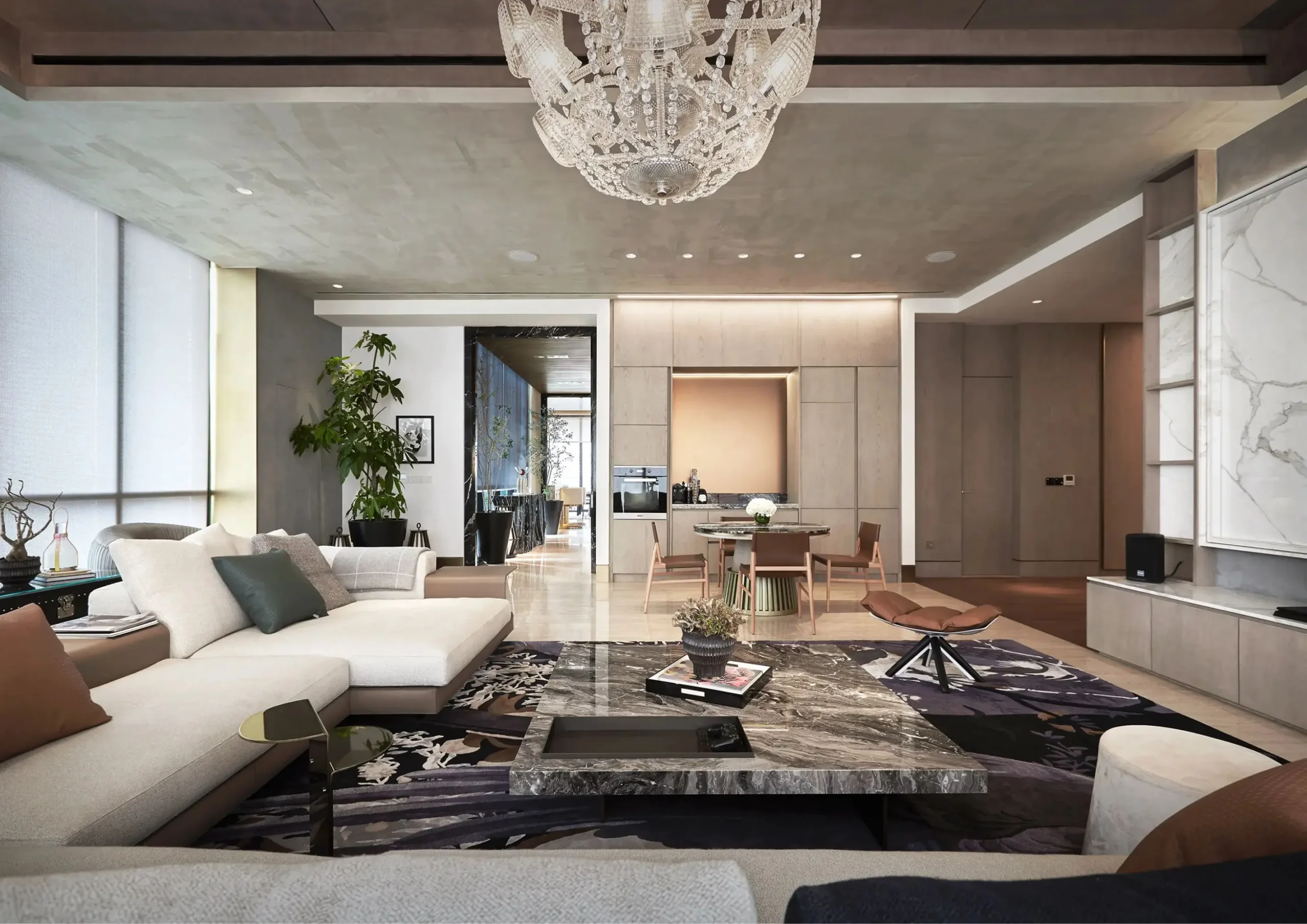
The warm wood creates an inviting atmosphere in the living room.
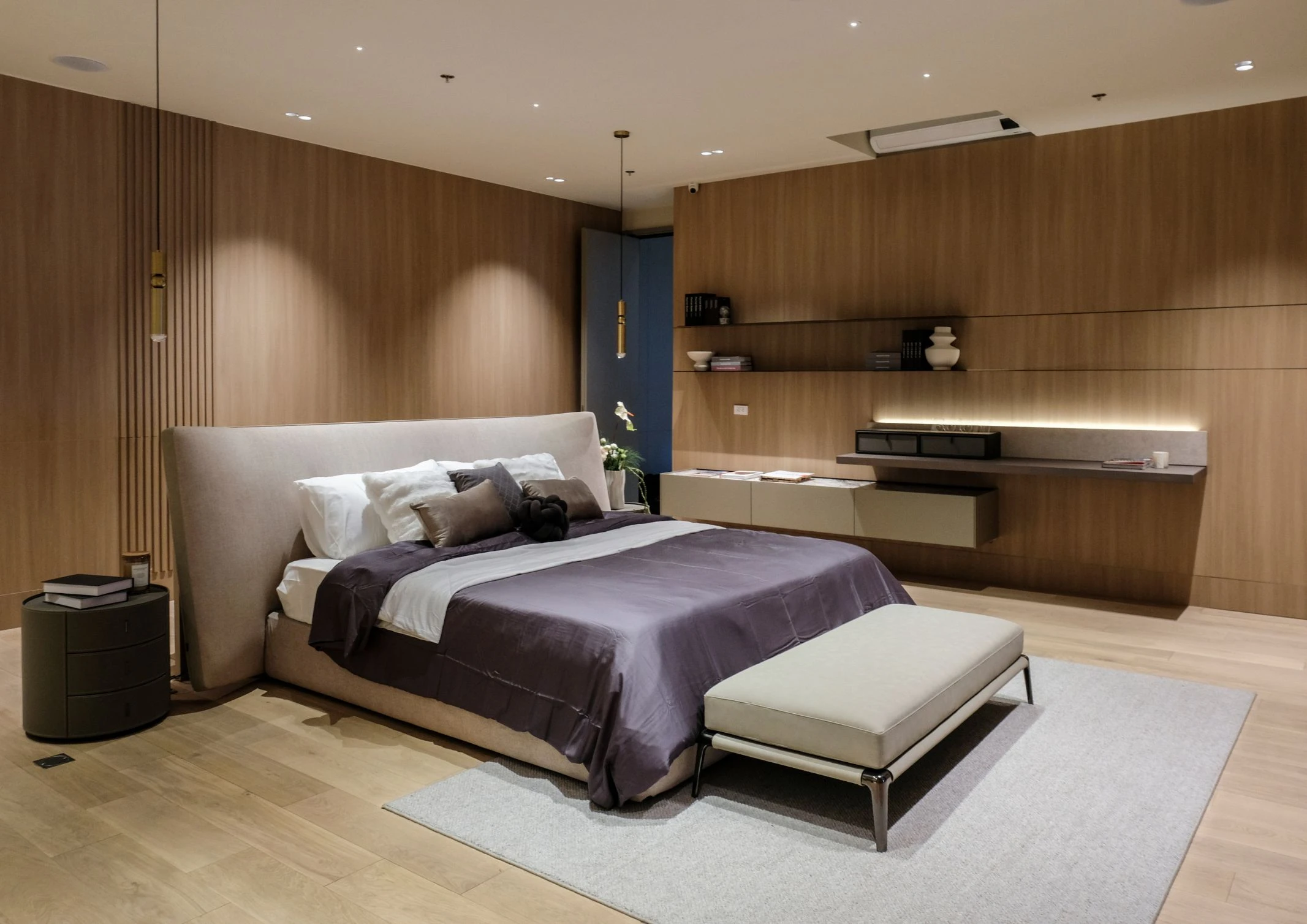
Through the largest space in the 400-square meter house, the double-height living and dining area, the first thing you notice is an array of timber screens with a solihiya pattern. Behind this is the master bedroom; the screens can be drawn back to simultaneously admit more light through and offer views into the garden right across the central space of the house. Upon closer inspection one will notice that the solihiya pattern has been intricately carved out of solid wood. “In Nepal, we call this the Ankhi Jhyal (a Newar window) or ‘eye window.’ You see it in the temples, you see it in old, ancient palaces…which are usually looking into a courtyard,” Shaun explains. Inside the bedroom it feels cavernous, with Shaun and Lilian able to see out and appreciate the morning daylight coming through without being seen themselves.
Advertisement
Redefining the Vernacular
Sudar points out that this screen has the Filipino touch with the use of solihiya motif, and this epitomizes both the architect’s fascination with the vernacular and harnessing its wisdom into the architecture of today. It’s been a journey which began with the influence of his Nepalese roots; through to working at the renowned Leandro V. Locsin and Partners office; and participating at numerous international biennales as a vehicle to explore traditional building methods made modern.
Sudar elaborates, “There is a dichotomy between vernacular and modern architecture and construction. This whole discourse is incomplete, because of the question ‘Where does the vernacular end?’ Is it 1920? Or 1980? Or even 1800? I think it’s a flawed question to frame the concept of vernacular in terms of time… There are many definitions [of the vernacular], but the one I find most relevant is that the vernacular is what is immediate, what is accessible, and what is common. That’s the definition I apply to my work as well.”
This article has been abridged for digital publication. Read the full story behind 10 Milan by ordering your copy of BluPrint’s “Design Conversations” at Sari Sari Shopping, Shopee, and Lazada. E-magazines are also available for download here or through Readly, Press Reader, and Magzter.
Dive into the captivating world of architecture, interiors, and arts & culture by getting exclusive digital access to BluPrint’s past and upcoming issues. Click here to find out more.
Situated in Laguna, south of Metro Manila, is a multi-thousand-hectare development created by Ayala Land Premier within the growth corridor of the CALABARZON Region. Barchan + Architecture was tasked with crafting a clubhouse for the subdivisions of Luscara and Soliento. Principal Architect of Barchan + Architecture, Jason Buensalido, explains the firm’s process in creating the […]
Over the past decades, adaptive reuse has been utilized as a sustainable alternative for the built environment. It involves repurposing existing buildings for a new use, allowing the past to remain while serving a modern purpose. Here, structures facing potential demolition or no longer serviceable are seen as sources of raw materials for new projects. […]
The local design landscape has a significant new player following the grand launch of the Boloni Philippines showroom in Makati City. The celebrated event marked the official entry of a leading global brand, renowned for its “total interior solution” approach, into the Philippine market through an exclusive partnership with RDS Global Allianz. Hosted by Mica […]
Last November 26, the local design community gathered at Open Space in Makati for an immersive spatial experience. The event, Harmonious Spaces, served as the definitive reintroduction of AP Aluminum and Glass in a powerful reframing of their products. Instead of presenting aluminum and glass as mere architectural components, the evening showcased them as essential, […]
The apartment unit, often constrained by space and convention, has evolved from a functional living box into a canvas for highly personalized architecture and interior design. The year’s most compelling luxury apartment designs demonstrate a shift away from transient trends, instead prioritizing intentional curation, deep comfort, and a seamless visual flow. From the art-infused gallery […]
In the coastal town of Dauin, known for its laid-back beach culture, one private residence stands out—not by competing with its surroundings, but by becoming a resort unto itself. Designed to make everyday life feel like a retreat, Villa Tropicana transforms the typical concept of a vacation home into a personal oasis. Gaston Lorenzo Pastrano, […]