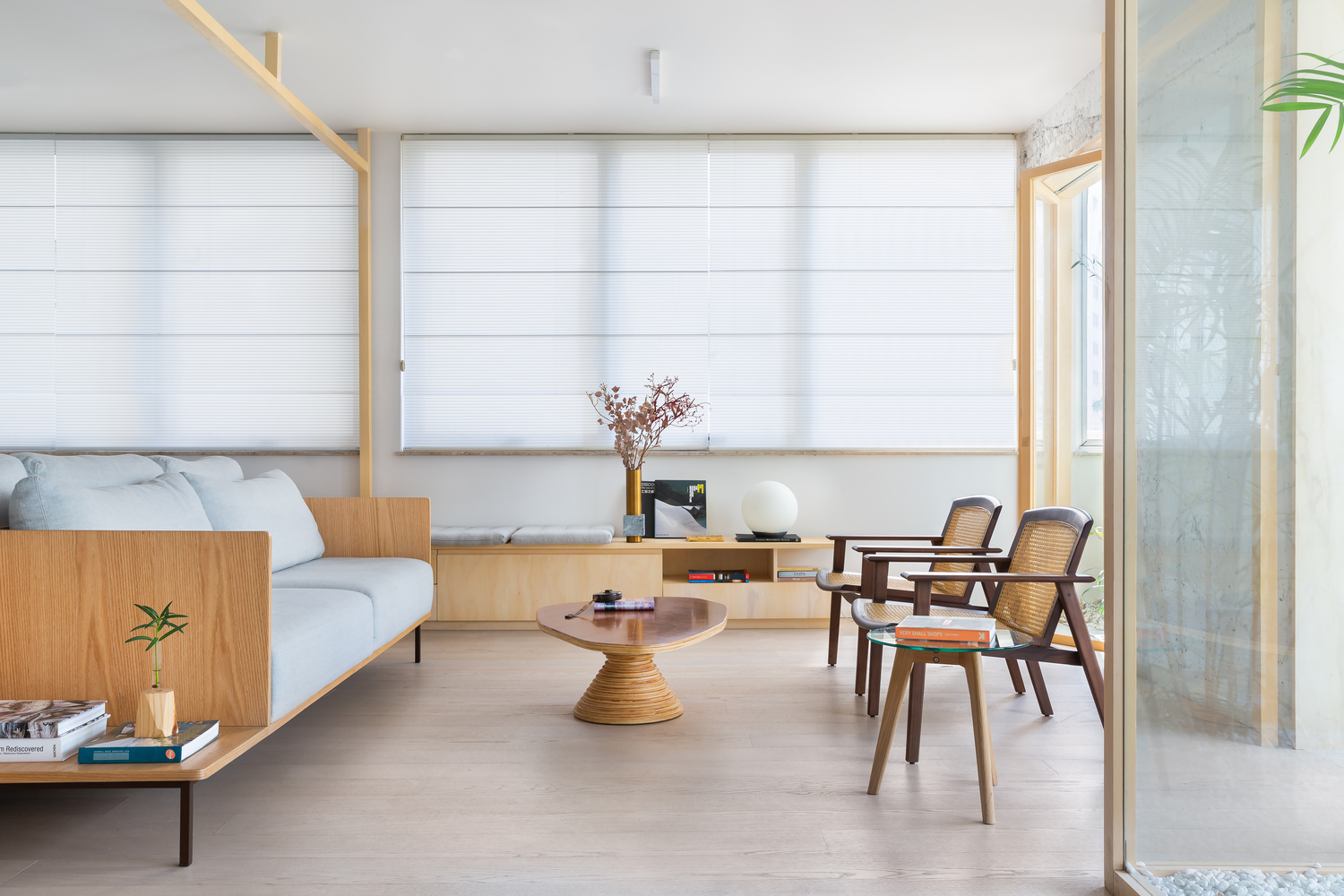
The Tatuí apartments fuses Japanese-inspired minimalism with contemporary living. Designed by Passos Arquitetura, this interior space hosts a variety of captivating elements within its walls. Its meticulous attention to detail, blends of nature and light ambience forms a serene oasis amidst the bustling city.
Taking Inspiration from Japanese Concepts.
The Tatuí apartments primarily subscribe to two concepts of Japanese design. These are “Tsuboniwa” and “Shakkei”. The designers adapted these motifs into the context of a South American home. In doing so, they were able to capture a strong sense of nature despite the apartment settings of the project.
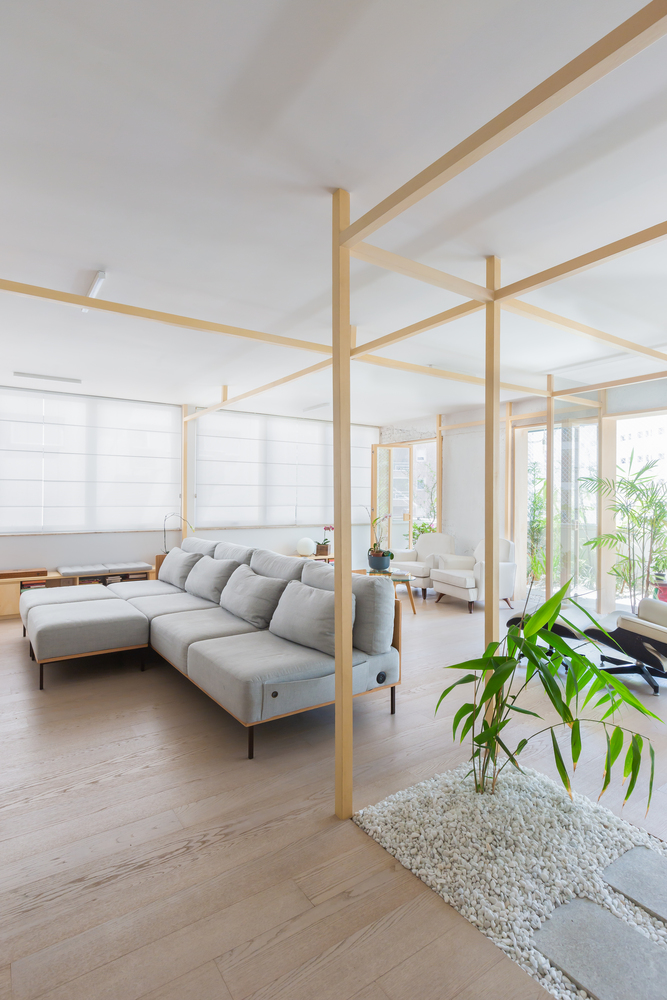
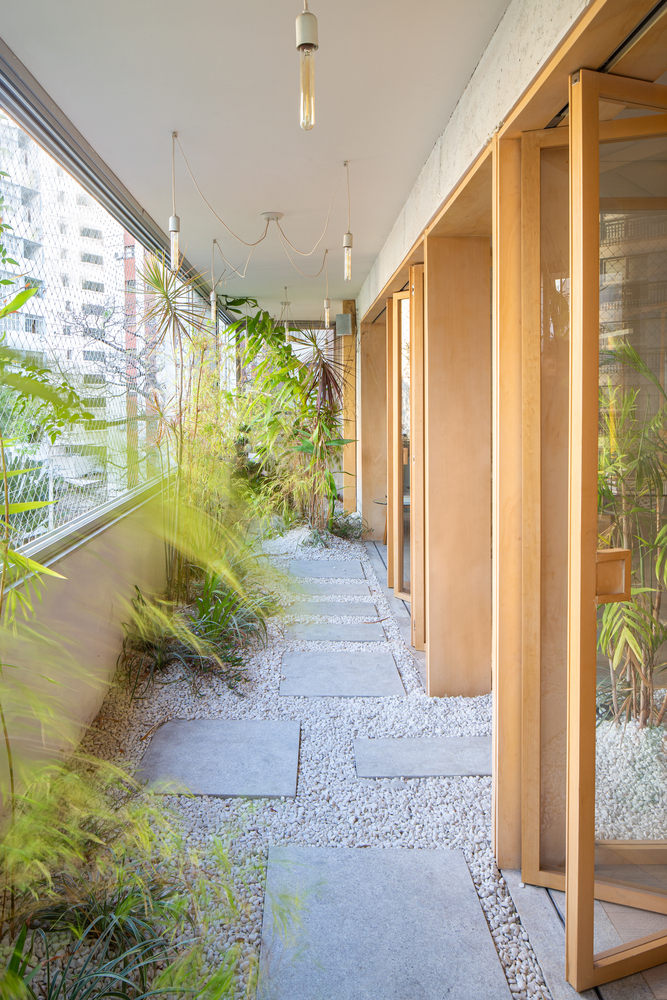
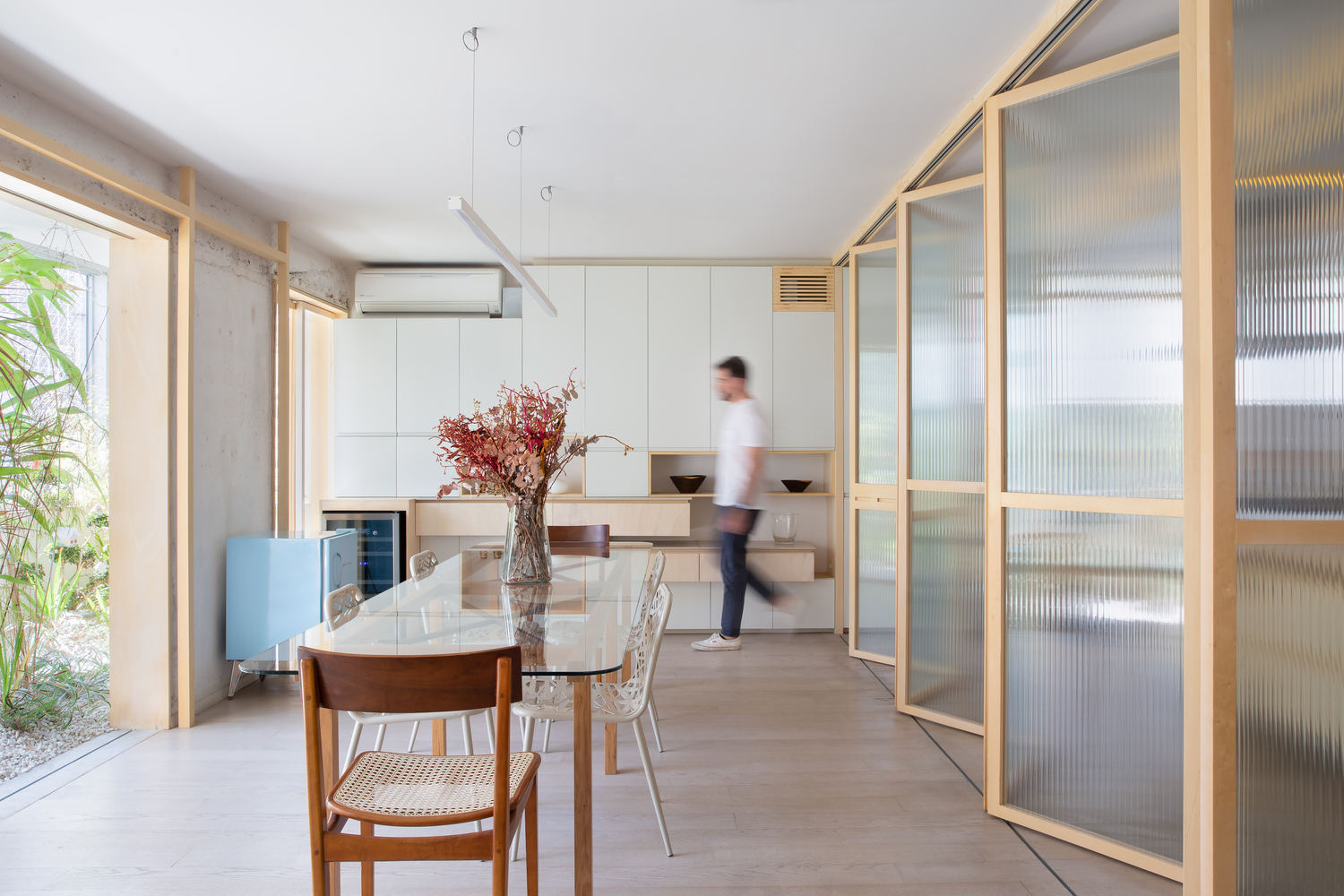
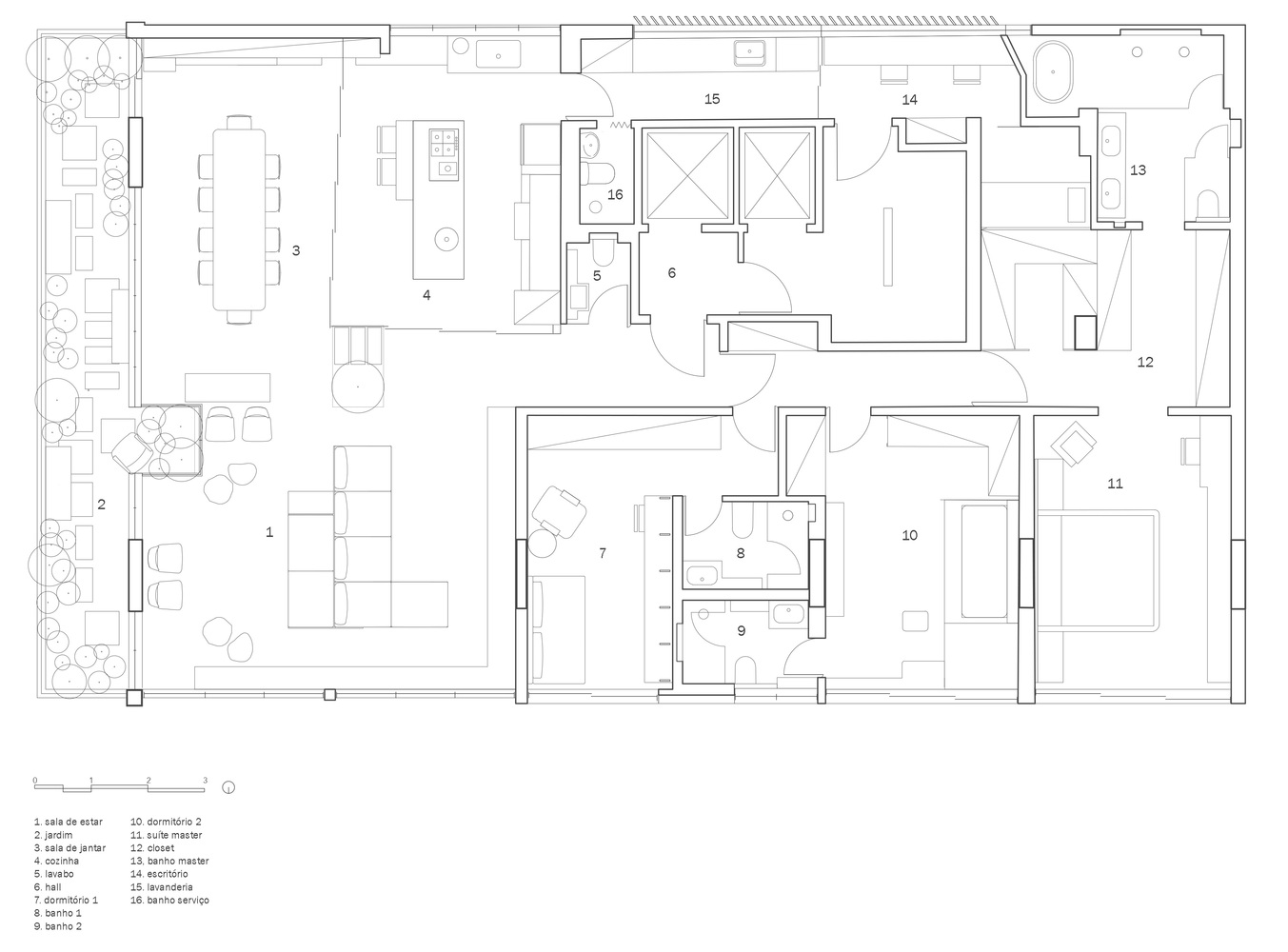
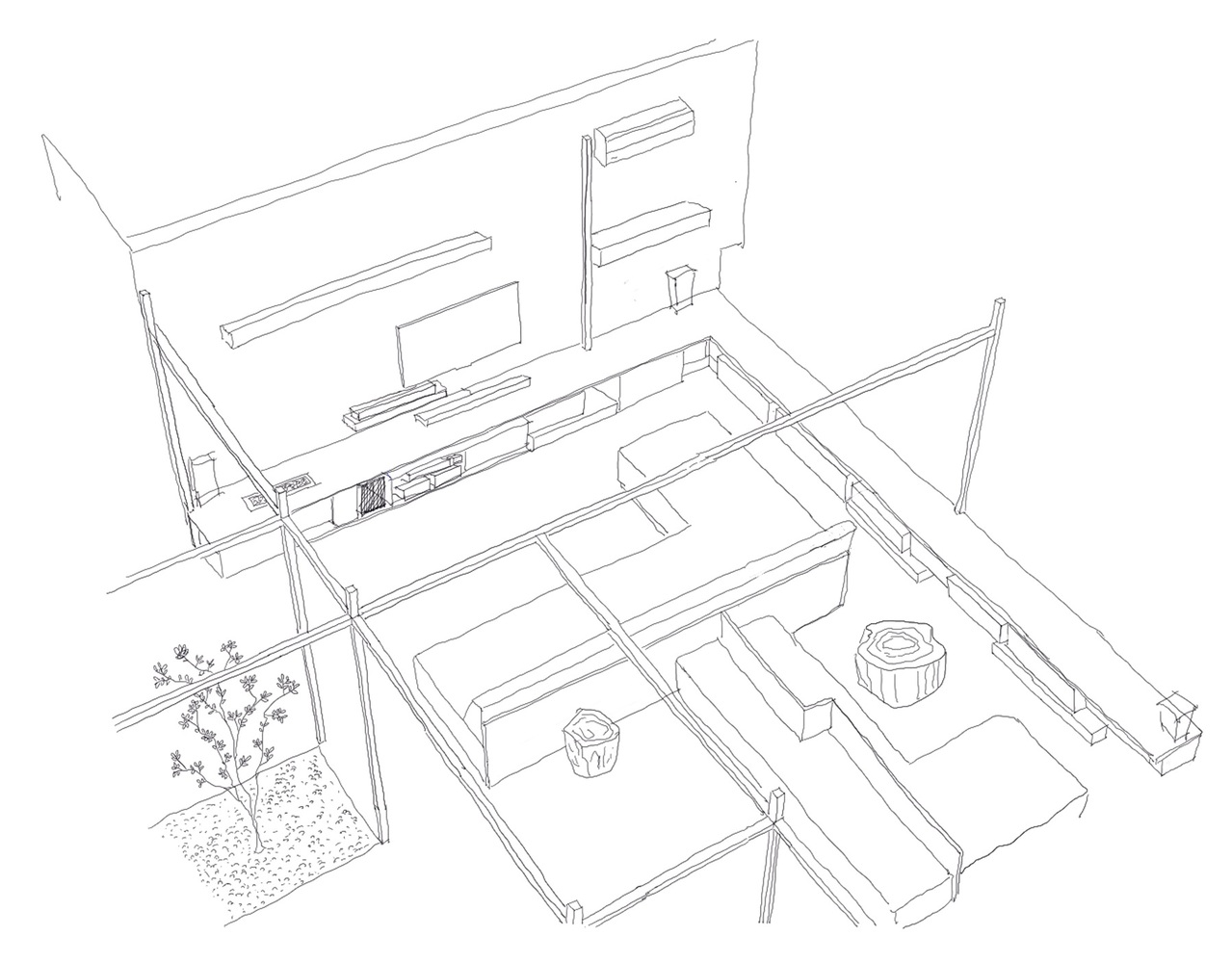
“Tsuboniwa” is a small garden typology and is often used as a courtyard inside homes. Traditionally, these spaces measure around 1×1 ken or the size of two tatami(sleeping mats). It’s likened to a room without a roof, an intimate exposure of the dynamic character of nature. The apartment houses its garden within the social area as it attaches between the living room, dining room, and kitchen.
Advertisement
“Shakkei”, or borrowed scenery, is a landscaping technique that aims to integrate the forms of distant landscapes into a garden’s design. It creates visual continuity as it creates the illusion of connection between far-off places. Framing views within one’s own garden achieves this effect. In this case, the tree outside the balcony is used as a reference point.
Crafting Asian Zen Interiors
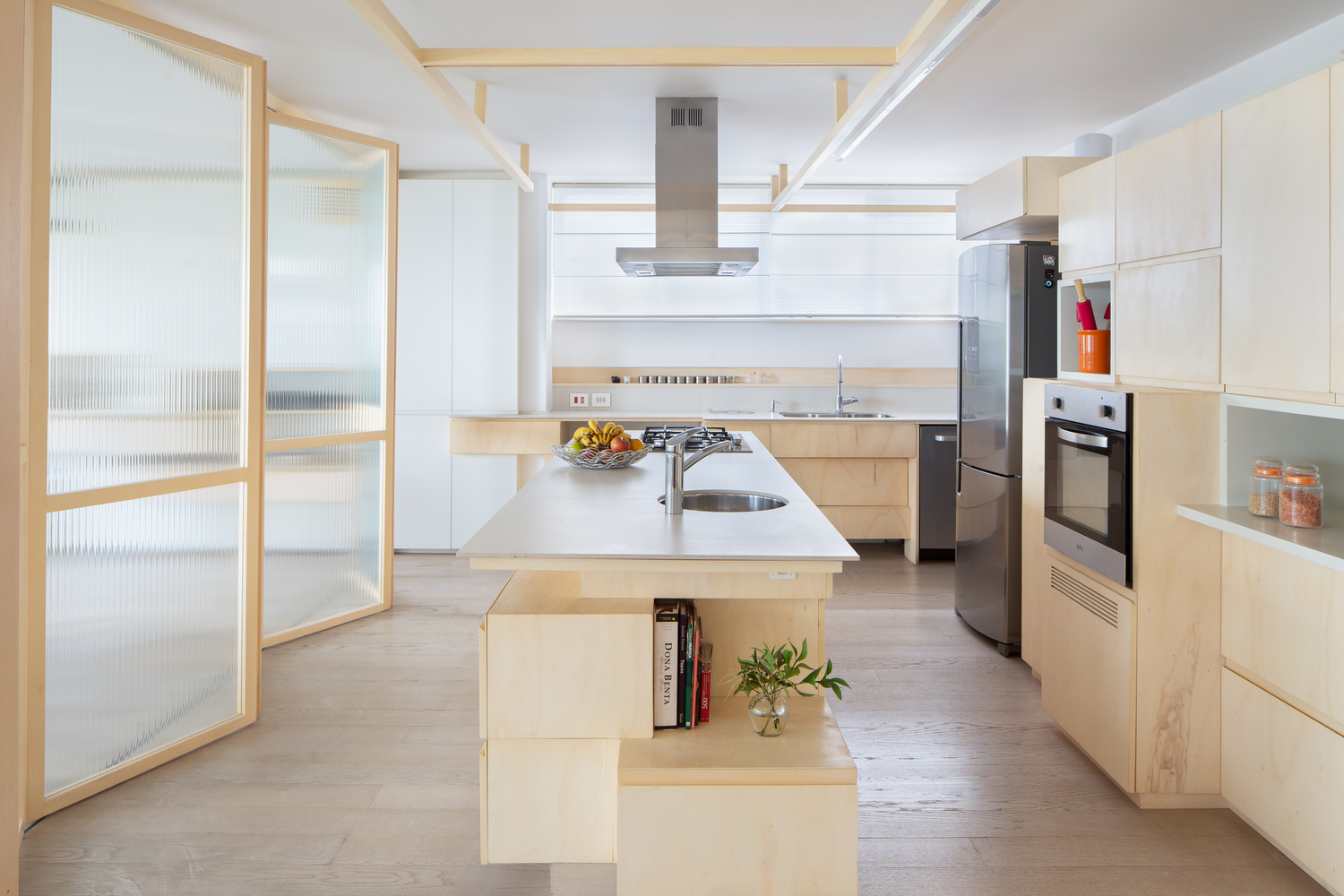
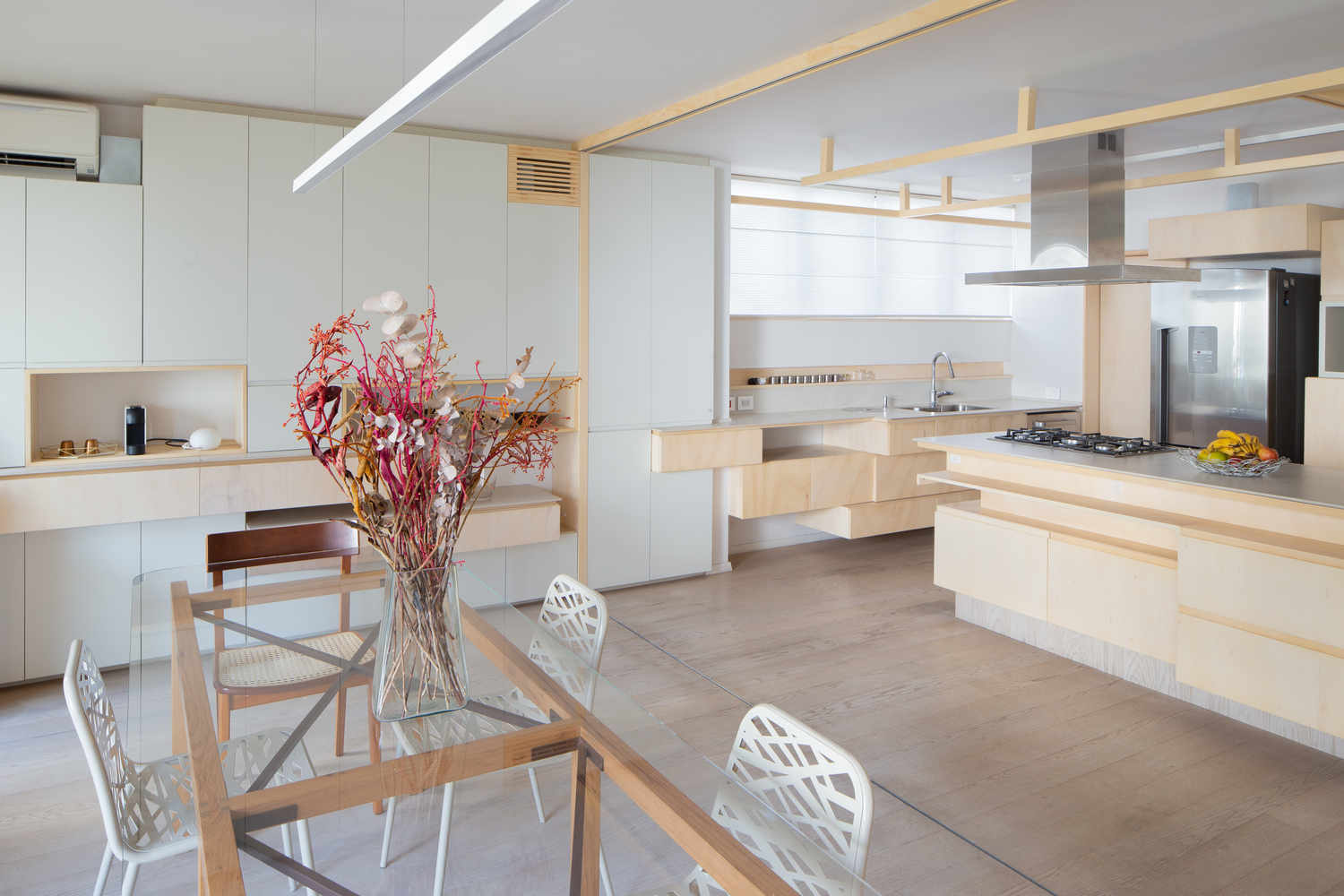
In line with these Japanese landscaping concepts, the designers also opted to utilize Asian Zen concepts into the interiors. Firstly, the open floor plan allows for an easy flow of movement and connection between these spaces. Built-in cabinetry and storage solutions blend in as they maintain a clutter-free environment. Furthermore, every item has its designated place which allows the beauty of the minimalist stylings to shine through.
Achieving this is a collection of custom furniture that harmonizes with the overall aesthetic. A bespoke sofa acts as a centerpiece of the living space. The dining table was built using traditional Japanese joinery techniques. These elements not only provide functionality but also play a role in expressing the apartment’s pattern, strengthening the cohesivity of the design.
Advertisement
Within the shared spaces, biophilic design is heavily integrated alongside a large amount of natural light. Clean lines and neutral colors add to a sense of order and calm. Some decorative elements, such as the patterned rug, softens the bareness of the minimalist aesthetic. Meanwhile, the kitchen features a large island for additional counter space and seating.
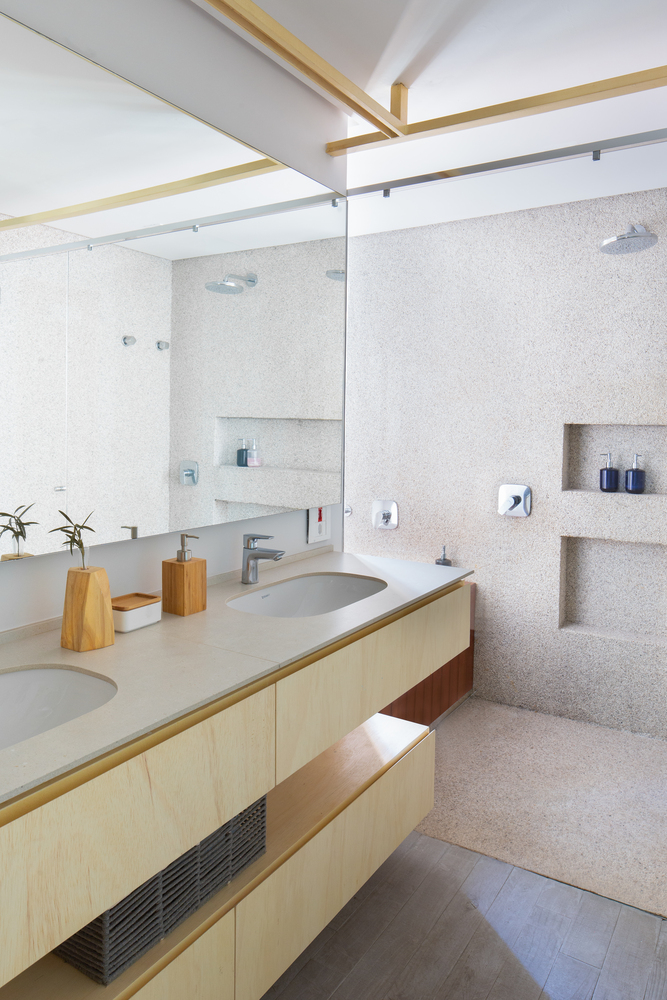
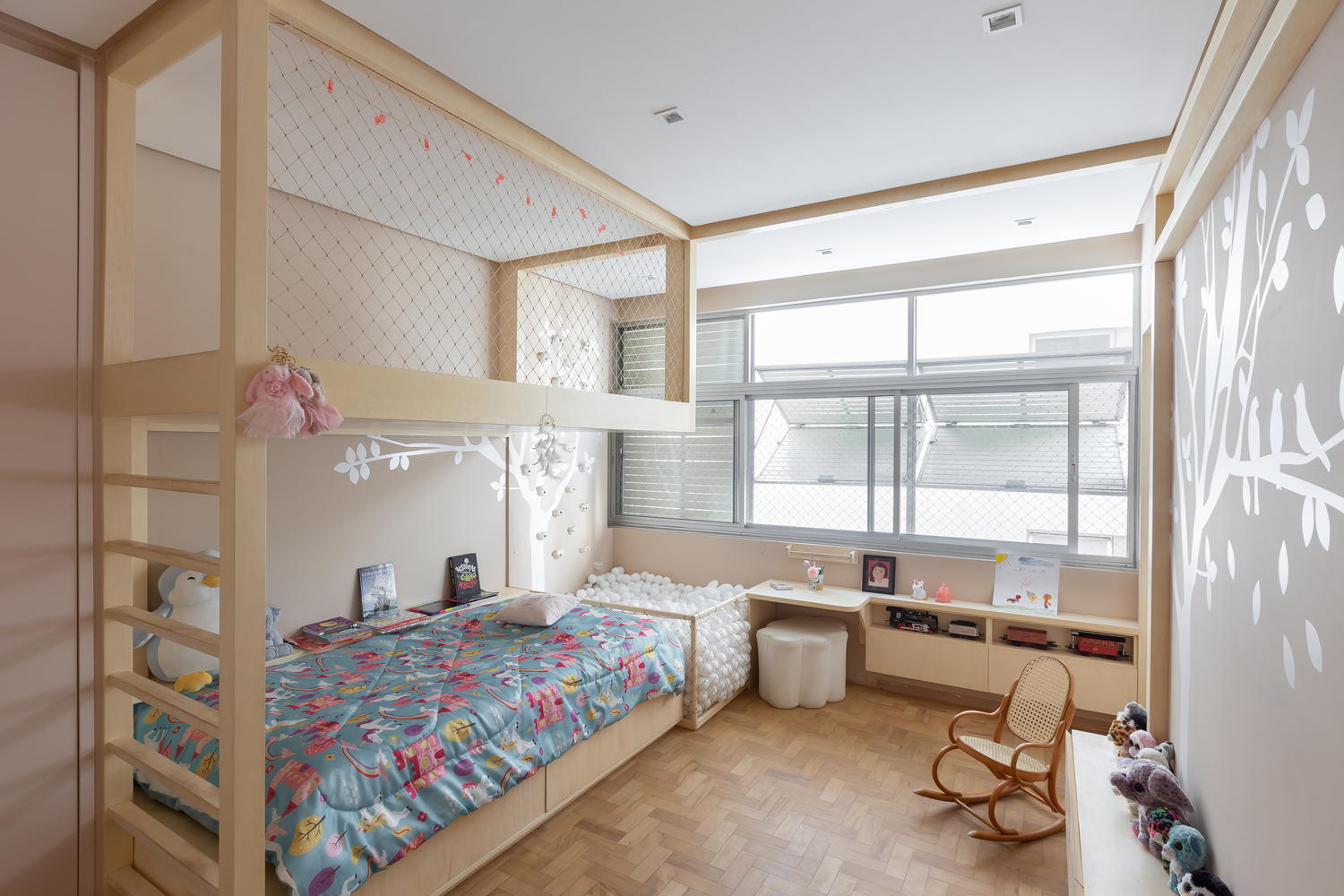
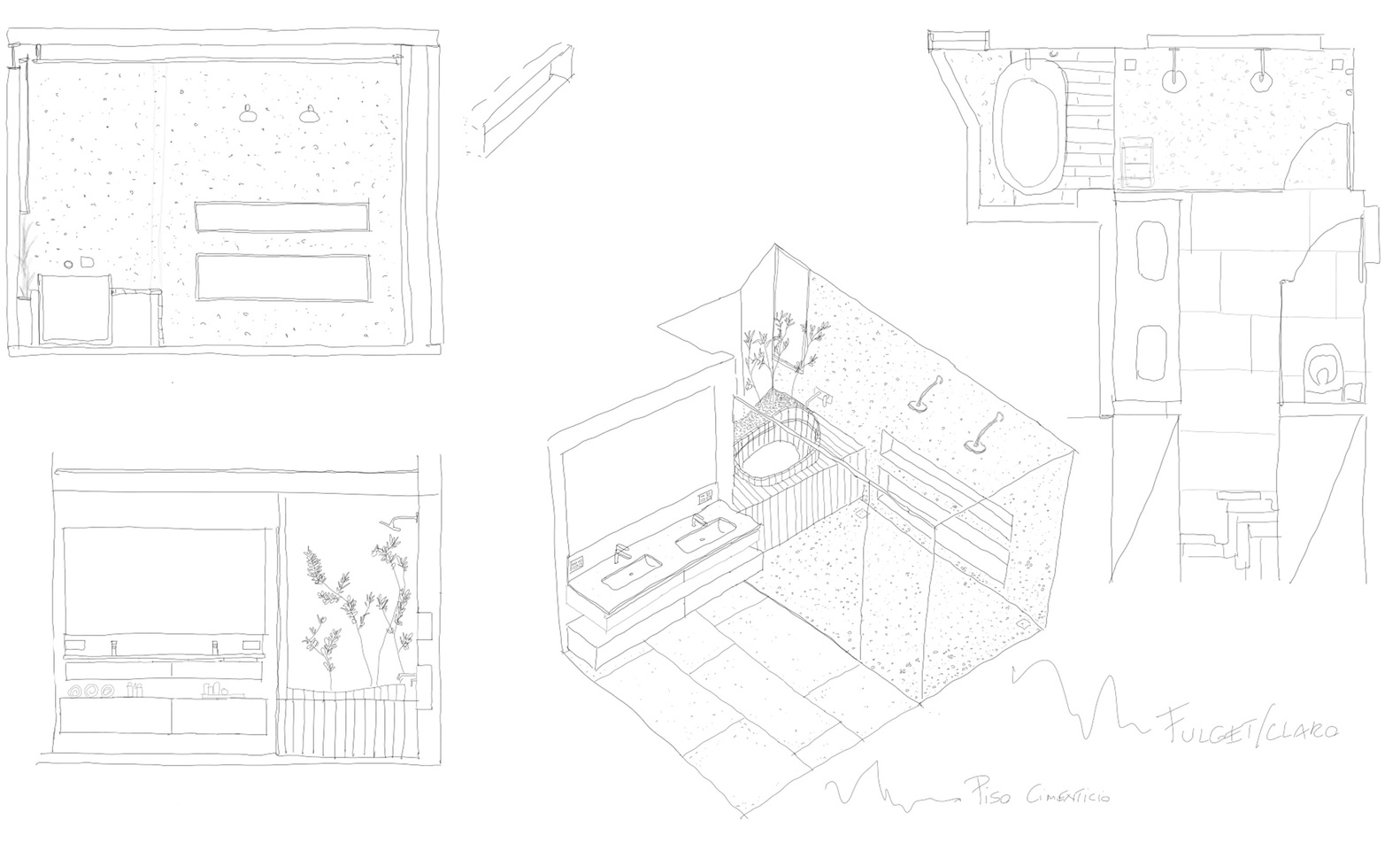
Bedrooms continue the theme of space efficiency and cleanliness with floating beds and shelves. Playful ornamentations, shaped like a tree, adds a more welcoming touch alongside the makeshift ball pit. The bathrooms have a modern spa-like design with its bare material finish.
Setting Up Better Living
Bringing all of these themes together is a color scheme that echoes the power of simplicity. Light and neutral tones evoke a sense of tranquility. The smoothness of white surfaces is contrasted by the natural textures of wood and stone. The tsuboniwa shines as its vibrant hues alongside the shakkei’s borrowed views stand out. The interplay of light and shadow, facilitated by the wide windows, invigorates the interiors with its dynamic movement.
Advertisement
The Tatuí Apartment takes inspiration from other cultures and harmonizes it with its own context. Incorporating Japanese design concepts, the architects manage to achieve a simple and yet elegant design by its excellent content. The result is a light-filled natural sanctuary amidst this residential complex in São Paulo, Brazil.
From the moment a diner steps through the door, each detail shapes how a meal is experienced. Restaurant design has evolved, with architects and culinary professionals collaborating to create built spaces that are as intentional as the menu itself. The spatial atmosphere acts as an additional ingredient that can define the culinary experience. Taupe and […]
With climate change and global warming, the Philippine climate is in constant evolution. Consequently, it is important for Filipinos to have living spaces that respond to the local environment. In this article, BluPrint lists down Filipino architects who are reimagining the tropical house, aligning the built and natural environment. BAAD Studio Principal architects Benjee Mendoza […]
Ventilation involves the introduction of outdoor air into a room, providing occupants with their needs. Proper ventilation allows for the moderation of internal temperatures, the creation of better airflow, the dilution of carbon dioxide to acceptable levels, and the removal of contaminants. This addresses health risks associated with indoor air pollution, such as respiratory problems […]
WORLDBEX 2026, running from March 12 to 15, 2026, proves itself as the Philippines’ leading construction and design expo as it wrapped its 29th edition. It drew together 1,000 local and international exhibitors under one theme, “Building Opportunities: Sustaining Lives.” Organized by Worldbex Services International (WSI), in support of the ABS-CBN Foundation Inc., the event […]
Located near the equator, factors such as heat and humidity are the norm in the Philippines. This tropical climate has shaped the development of architecture in the country. As Leandro V. Locsin stated: “The first consideration of the Filipino builder and certainly the most evident in his architecture, which is after all an outgrowth of […]
Art in the Park returned this year to Jaime Velasquez Park in Salcedo Village, Makati City, to celebrate its 20th anniversary. This year’s edition featured a curated selection of works from 55 exhibitors representing galleries, art collectives, independent art spaces, and student groups. With all artworks capped at Php 70,000, the fair continued its mission […]