Bigkis is the act of binding. In Tagalog, the word can refer to something used to bind or encircle, as well as a bundle formed by tying several separate elements together. Figuratively, it can also mean a bond, union, or unity. The meanings move from the physical act of joining things together to the connection […]
‘Crisis in Meaning’: Wataru Sakuma Deconstructs the Symbols of Order



Crisis in Meaning, the new exhibit by Wataru Sakuma at Modeka Art, merges the past and the present with its deconstruction of symbols of power. The symbols here represent religious texts from the five major religions in our world. Sakuma filters them through today’s technology to recreate the confusion of meaning and ideals found in postmodern society.
Today’s world finds itself in deep turmoil as a broadening base of new knowledge and ideas challenge long-held beliefs. Sakuma’s work offers a timely response, bridging the gap between tradition and technology to create new meanings that befit our times.
“[In] the period of globalization, traditional notion of nationalism appears insufficient when global cooperation, collaboration and innovation are on the contrary the most practical way to also lead humans out of the insurmountable task of surviving the global systemic crisis,” the exhibit write-up said. “Without a new narrative that integrates the highly fragmented state of world order, via identity politics, a crisis in meaning remains to be the present world order.”
Finding New Meaning
Crisis in Meaning was guided by Donna Haraway’s 1985 essay, “A Cyborg Manifesto”. The ideas of fusion between “machine” and “human” in the posthumanist writing is represented in the work.
Wataru Sakuma, in this exhibit, attempts to merge human and mechanical elements together to form a cohesive whole. These works use a mix of generative AI, laser-cutting technology, and Sakuma’s own hand-crafted paper to create a specific look that questions the divinity we give objects today.
Sakuma fed different sacred passages from the Bible, the Quran, and holy texts from three other religions to Chat-GPT. He said he gave it a prompt of “peace and harmony.” According to the exhibit write-up, each text was reworked to fit towards an idea that represents each religious order.
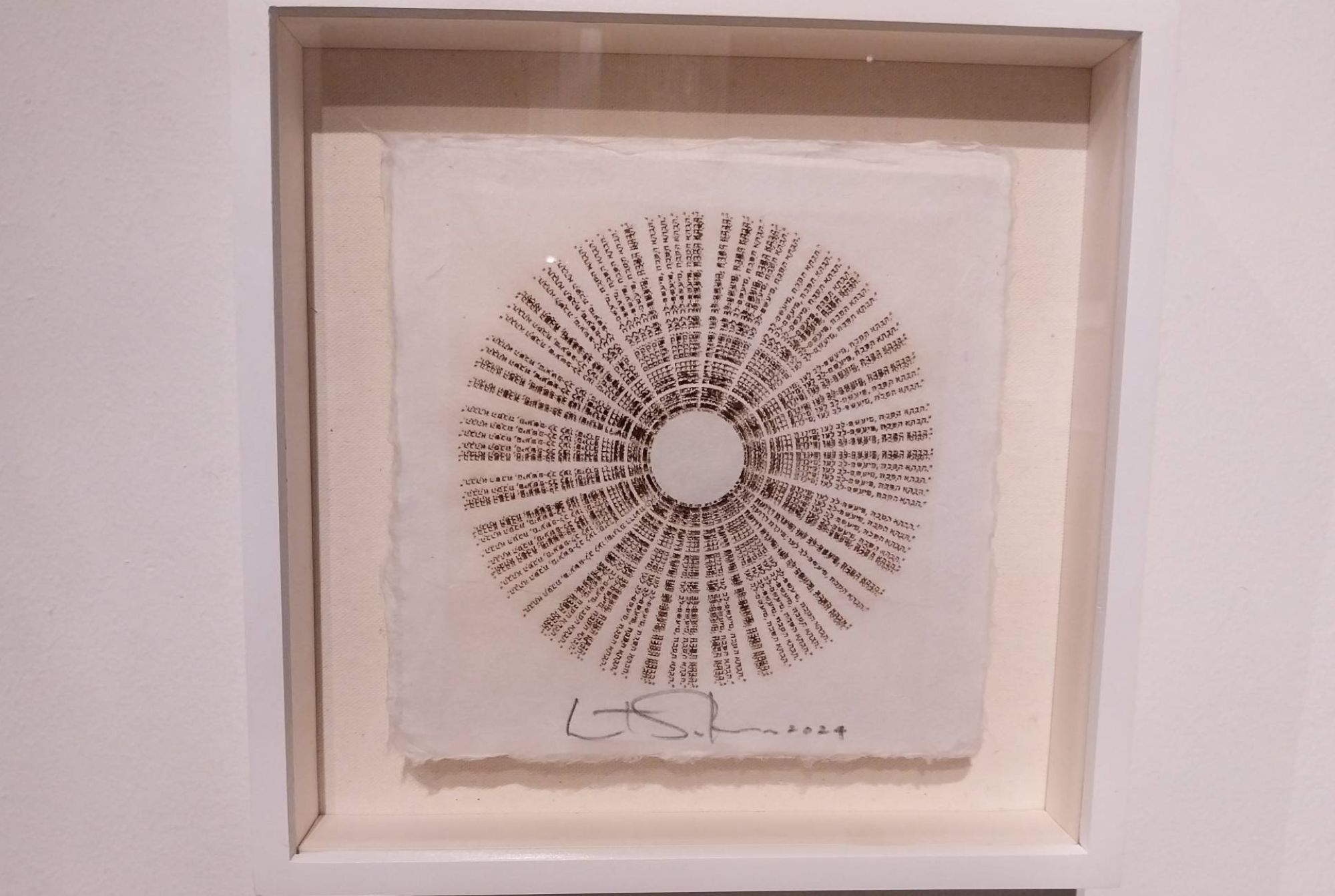
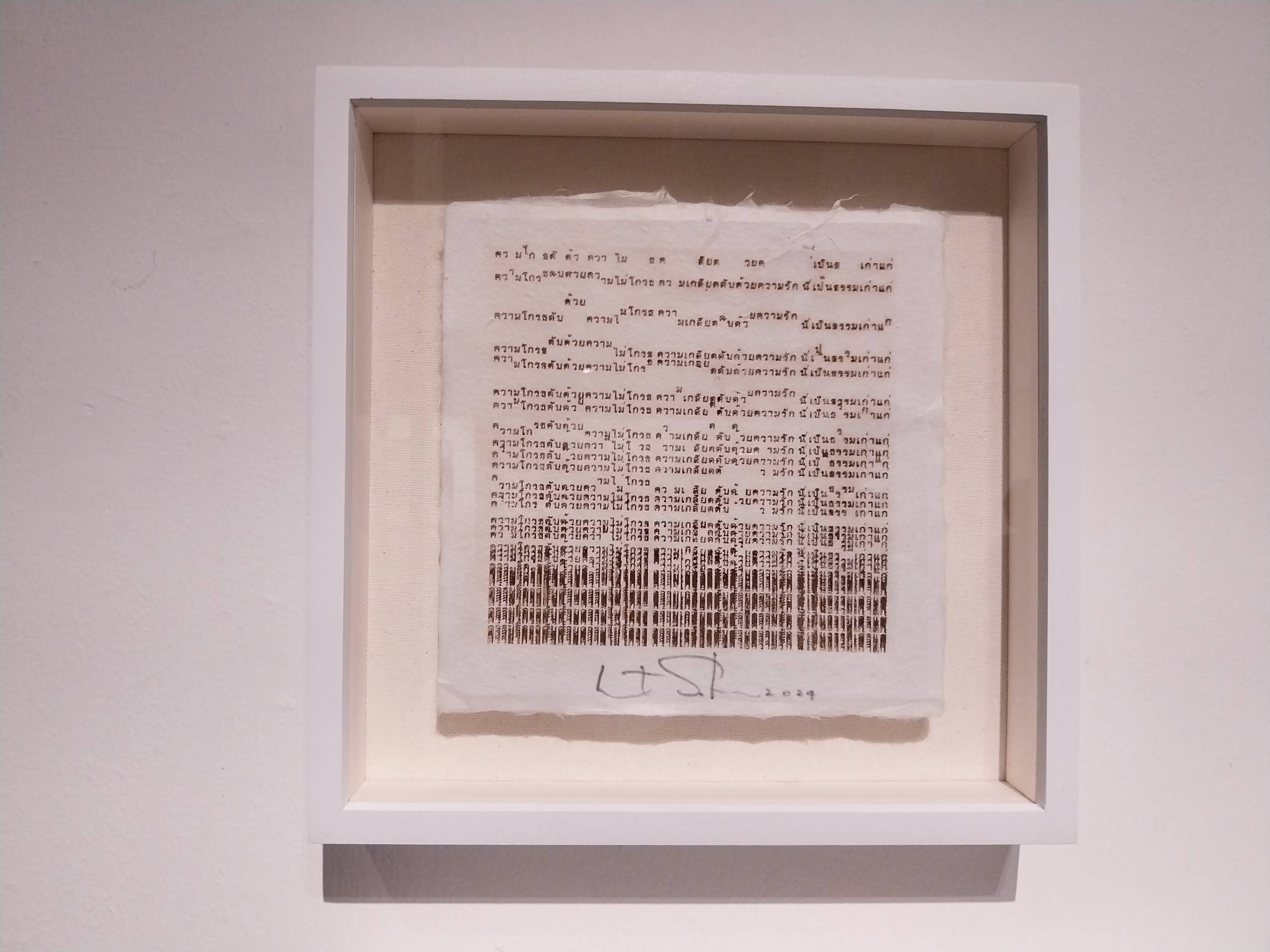
Using the output from the AI, he used a computer design model to bring the ideas into life. The design was then laser engraved on paper that he personally crafted.
“I kind of wanted to make it something very spiritual, sacred, and I thought like the color white, a floating effect on a very thin paper is something that maybe [is the] best materials to use. And I also make the paper, so I can kind of control what kind of materials I use, what kind of thickness that I can use,” he said.
Guiding the Machine
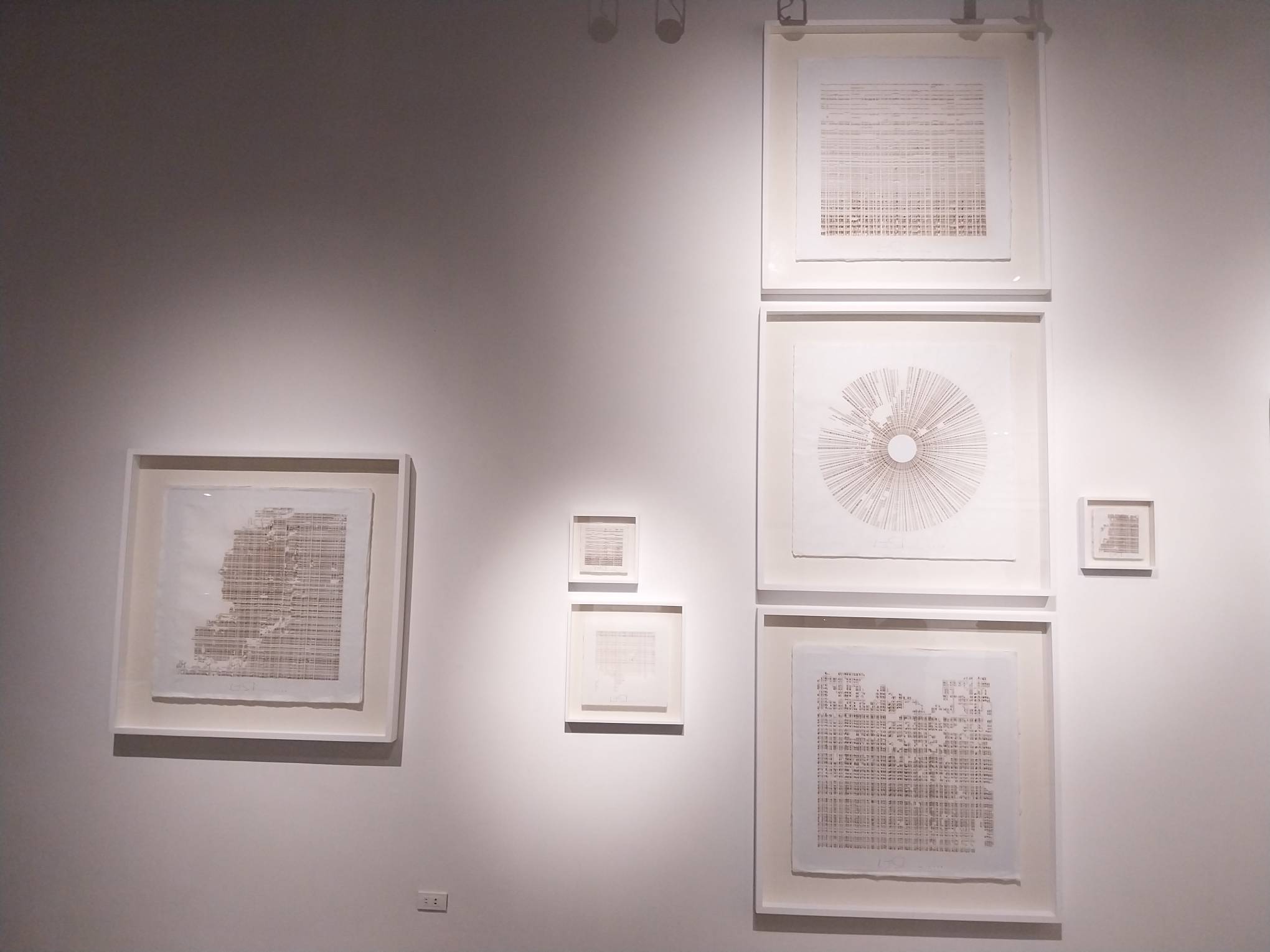
While he still guided the final design and ideas, he utilized different programs to create the look of the project. He also kept the mistakes and holes that came from laser engraving the design on paper. “Basically [how it was printed was] based on the program,” he said about the process.
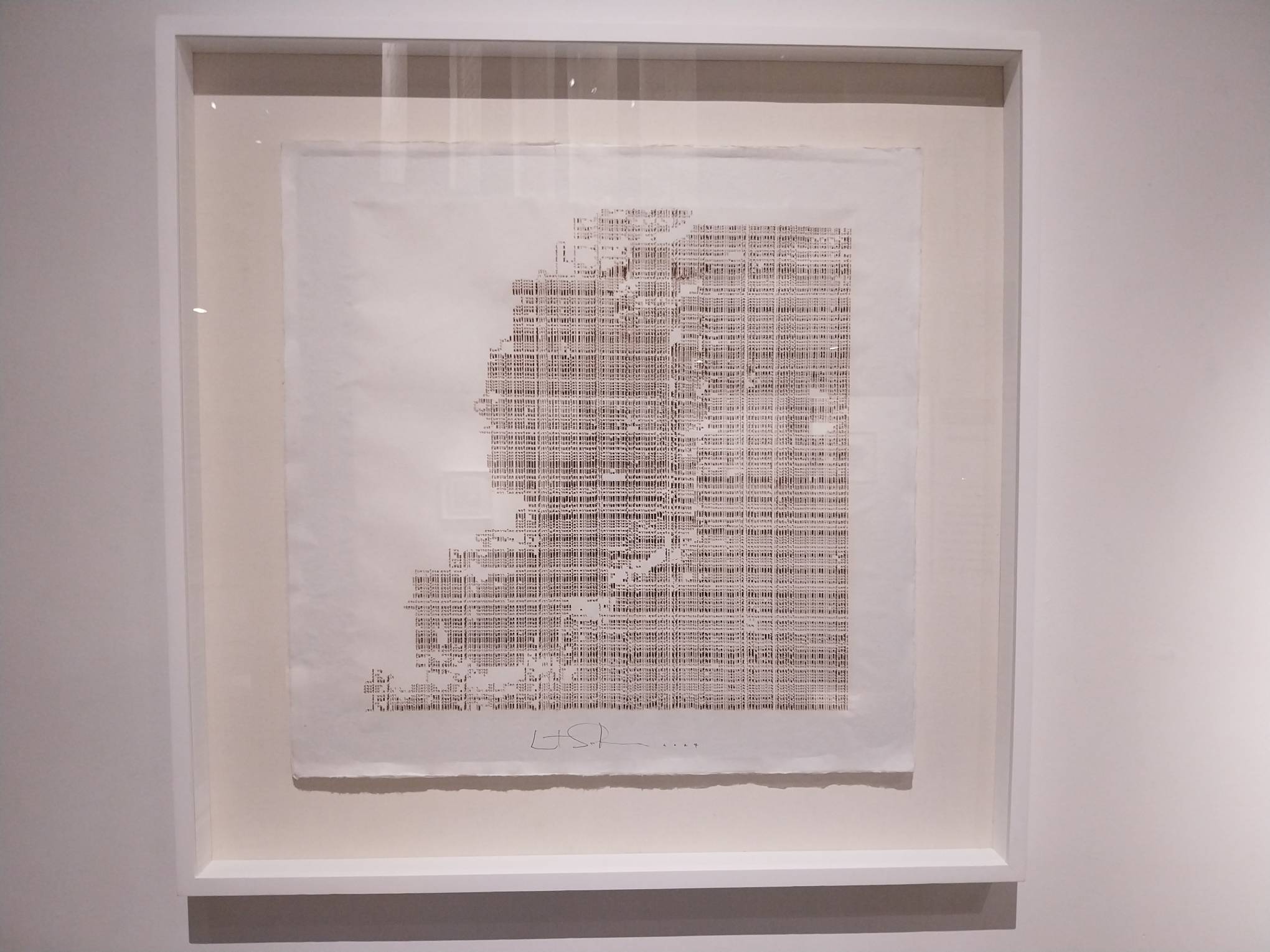
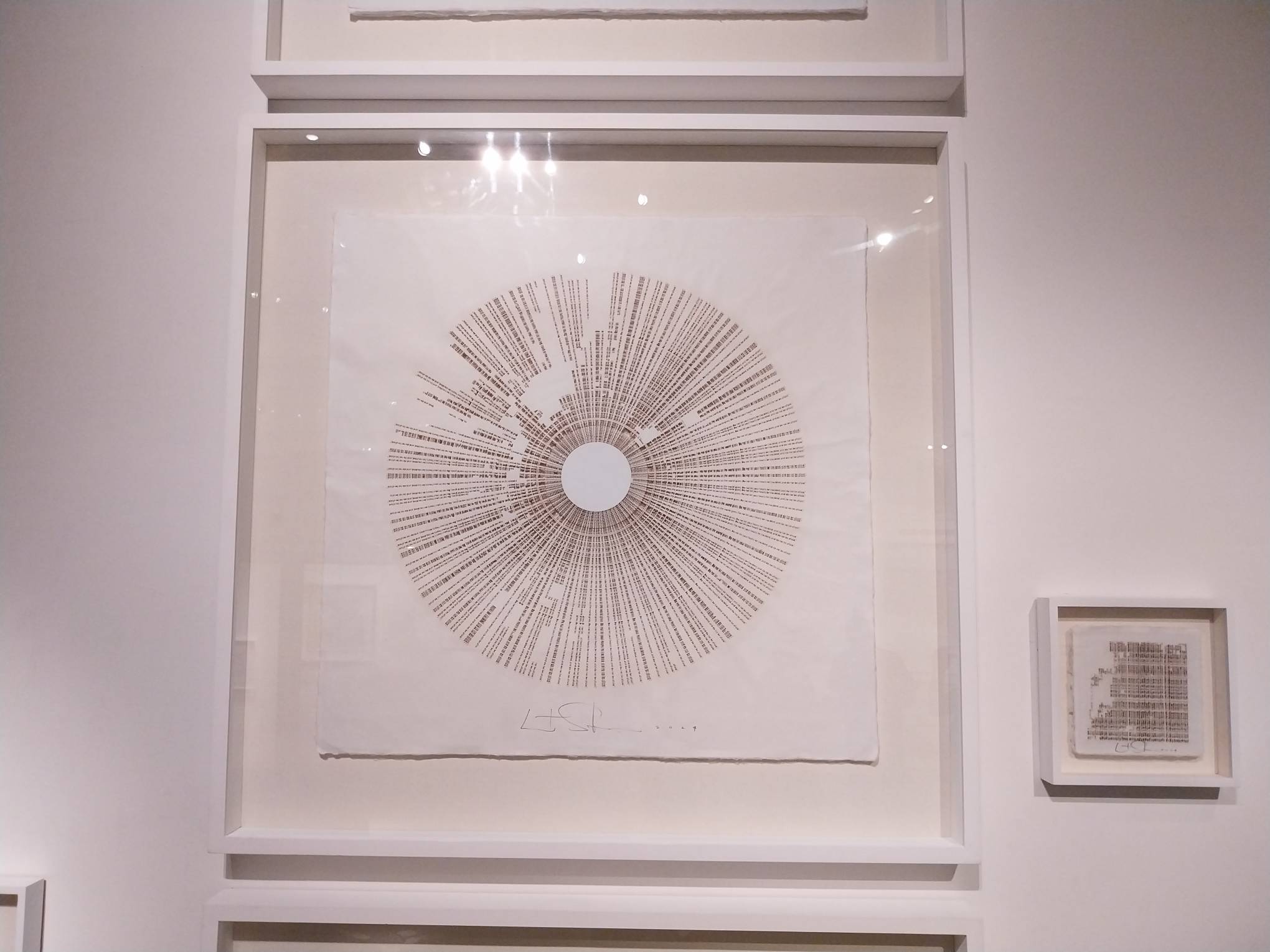
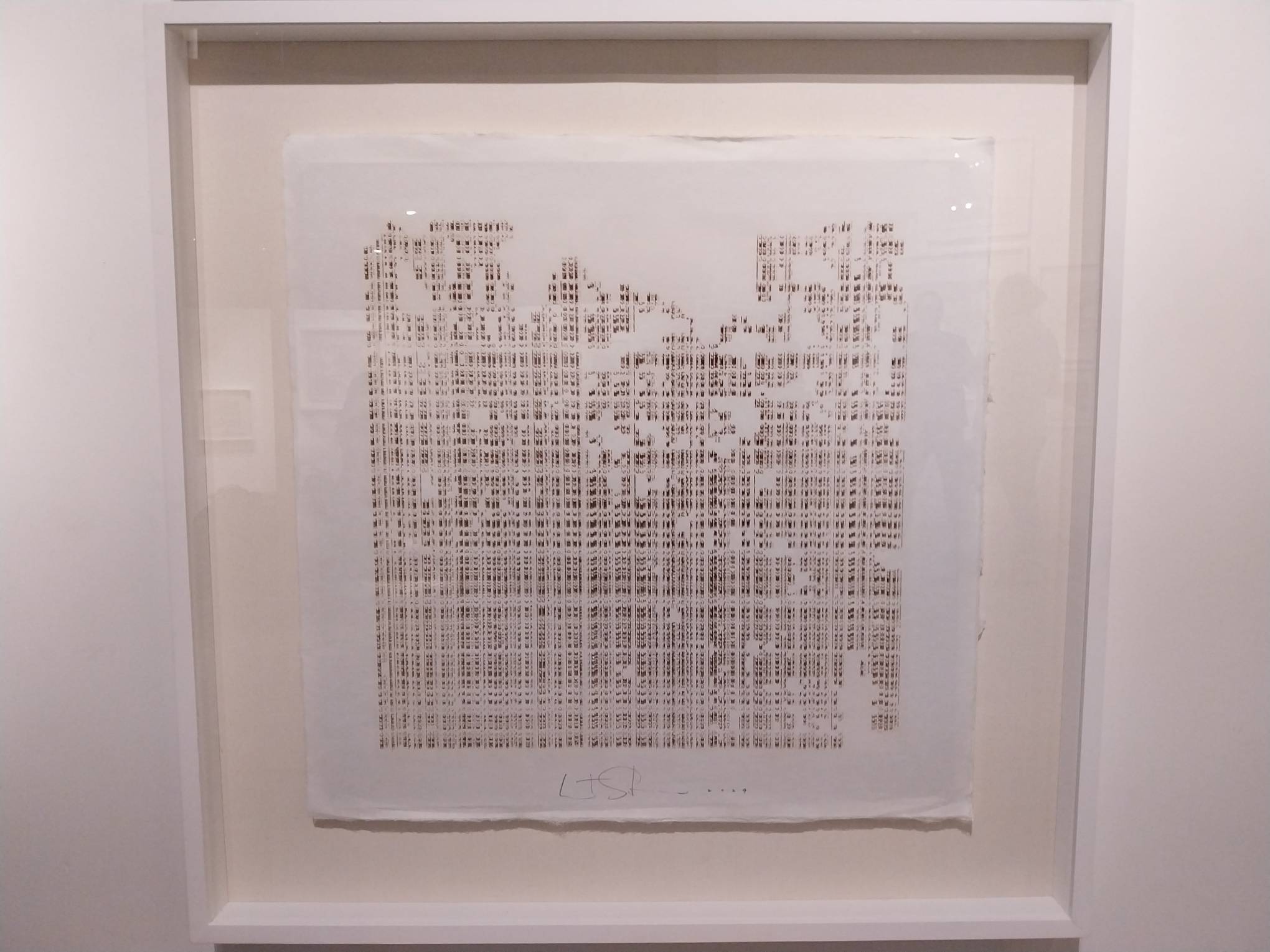
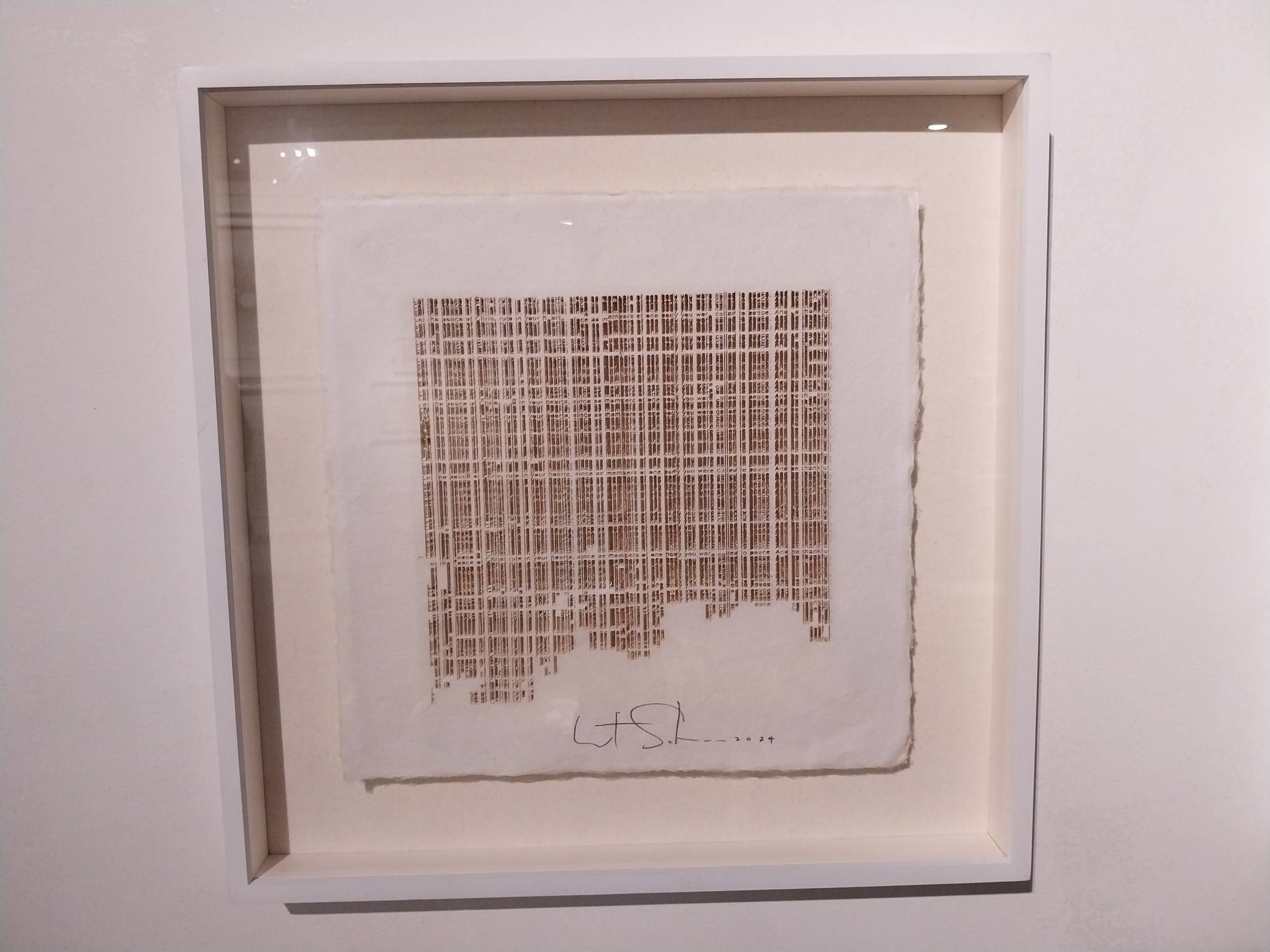
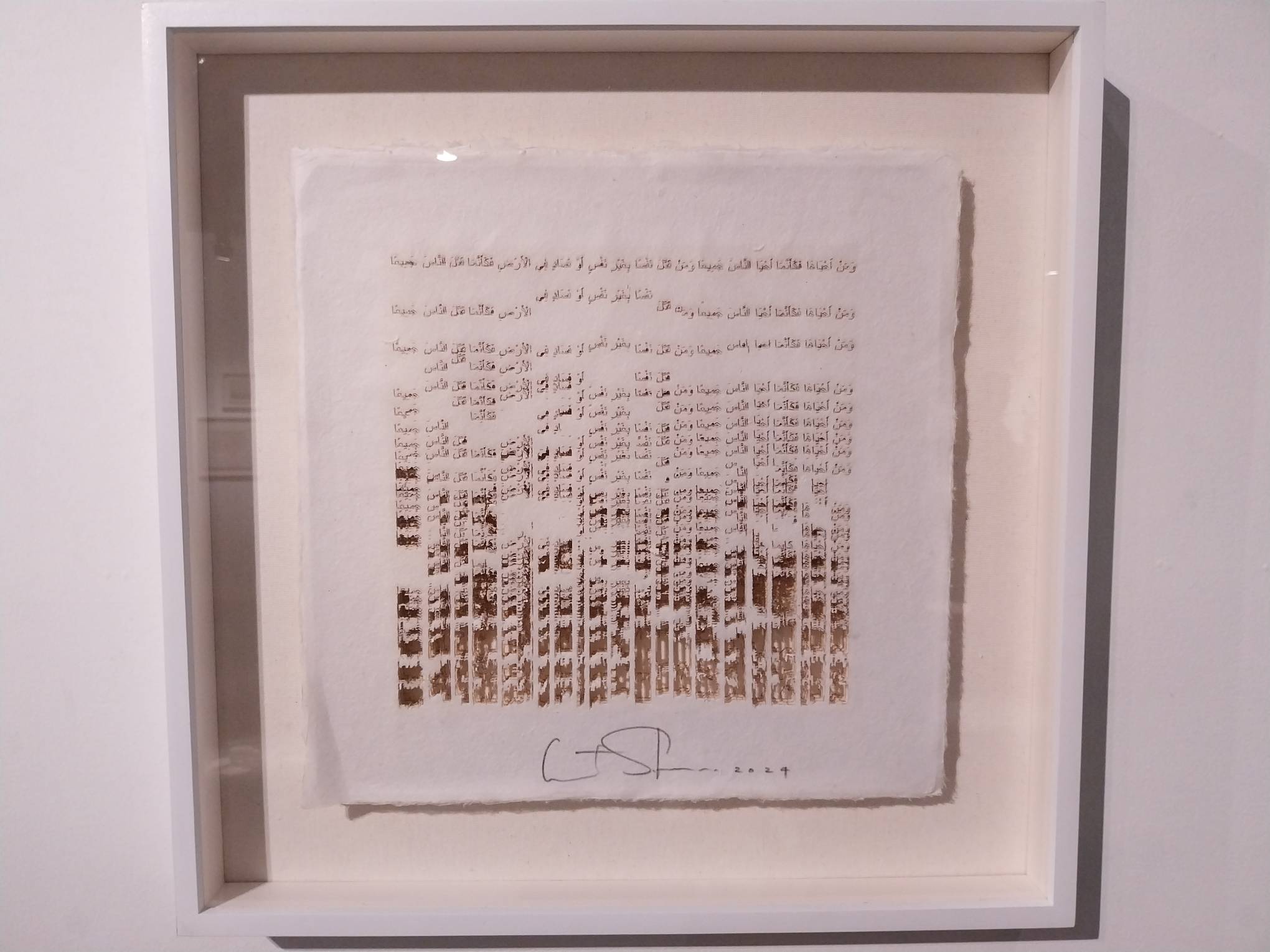
“All the gaps, all these holes are not part of my intention. It’s done by the computer, like in a way that—I don’t know how it works, but the laser machine, it would decide on the different path that it will take, which is not really actually very efficient, in a way. But so it kind of goes in random, and then it will eventually go back and fill up those spaces.”
Fusion of Technologies
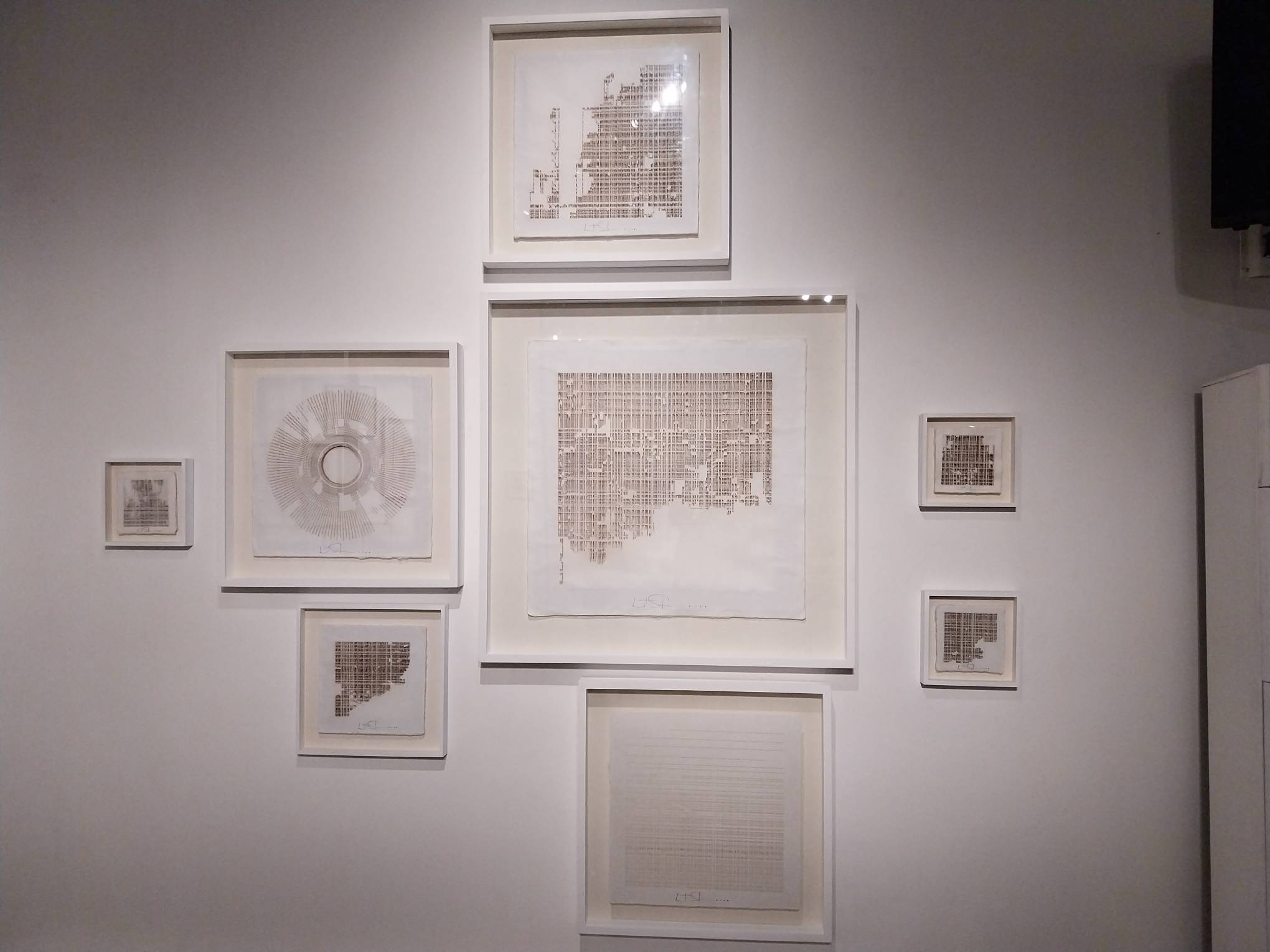
Crisis in Meaning gives thirty-six new pieces made by Wataru Sakuma for the exhibit. The works find repeating patterns based on the text itself. Texts from Hinduism, for example, go about in a circular direction. Similar ideas pop up for words from the Quran or the Bible, following patterns that fit within their religious doctrine.
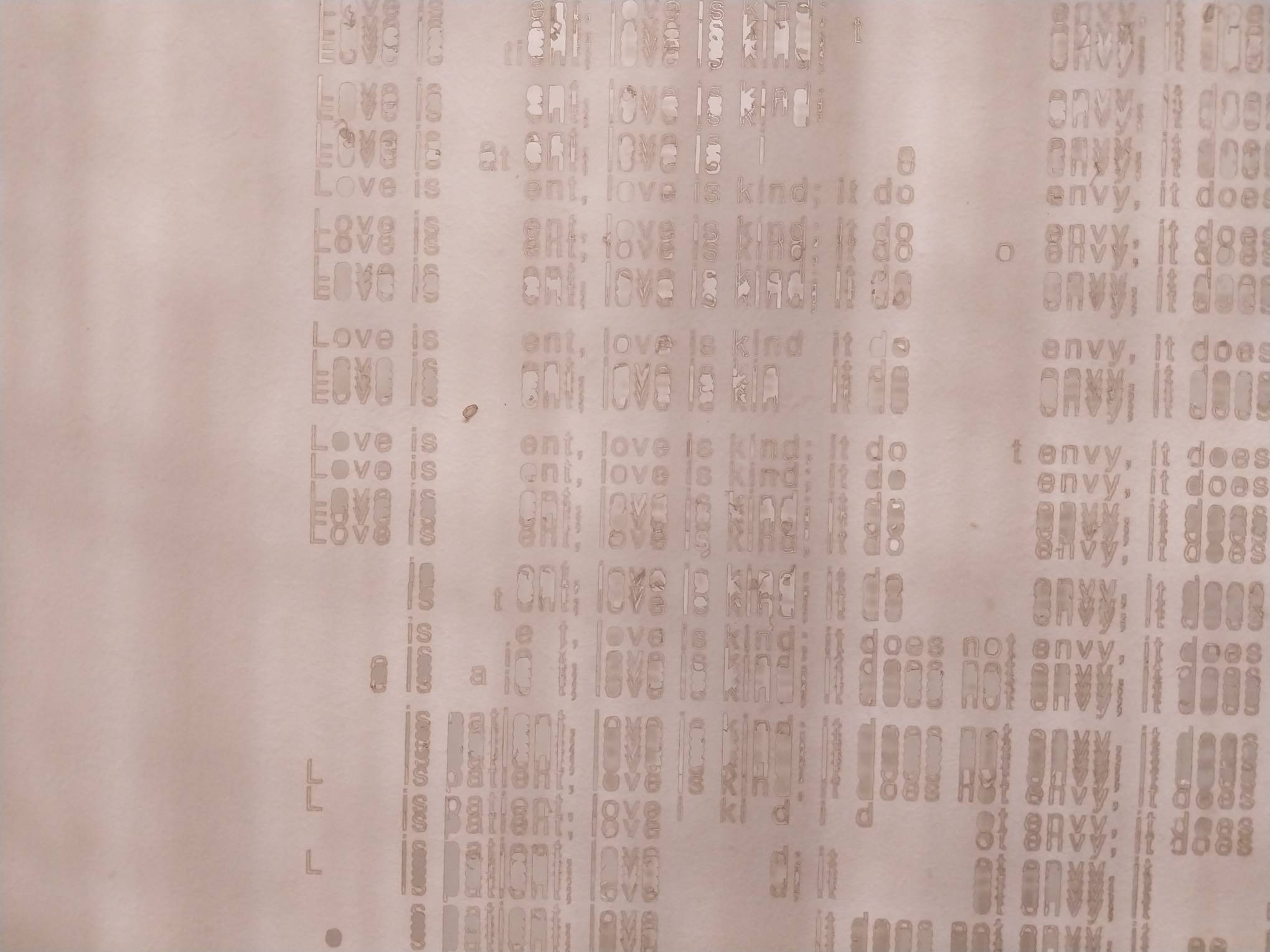
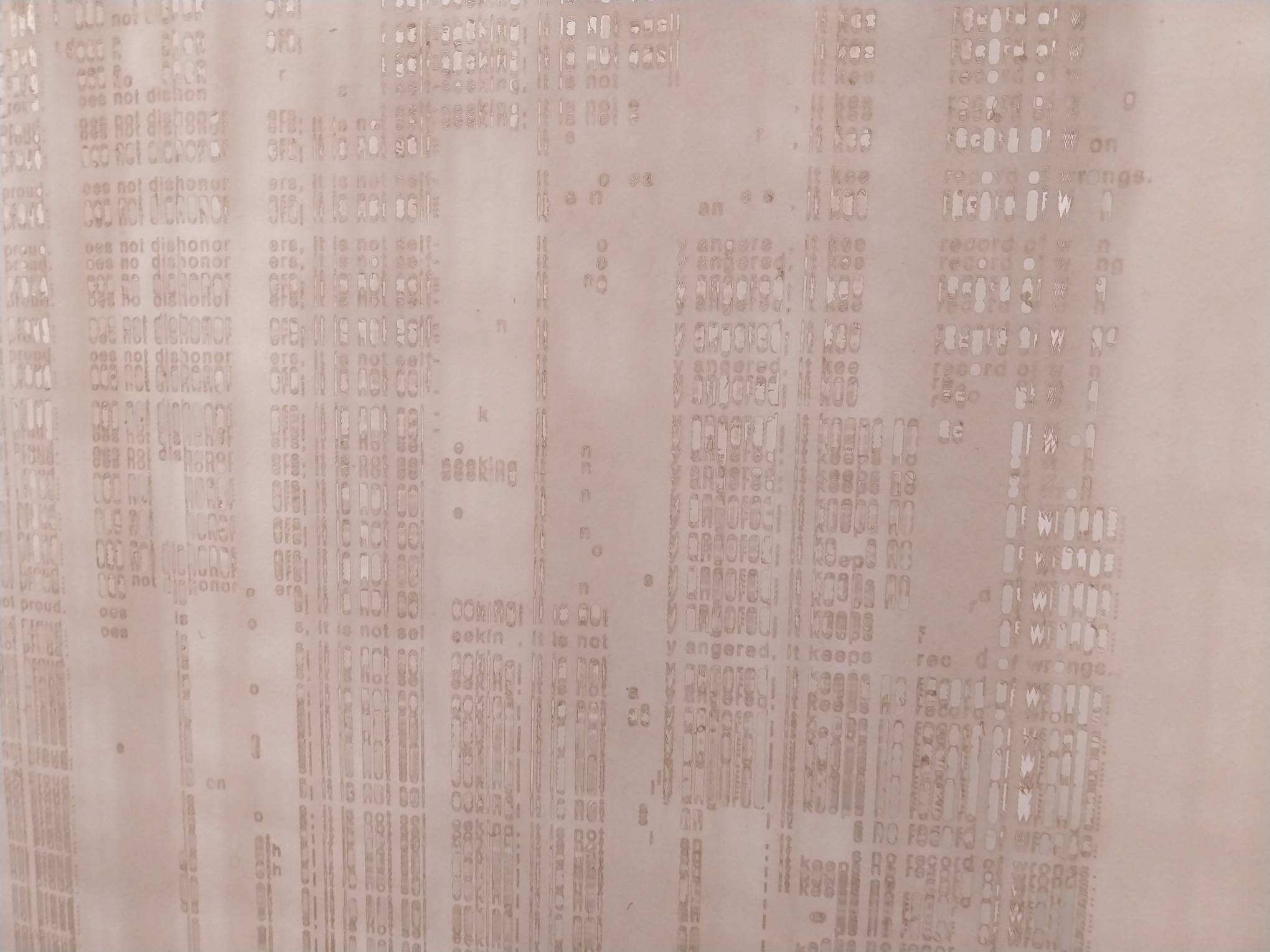
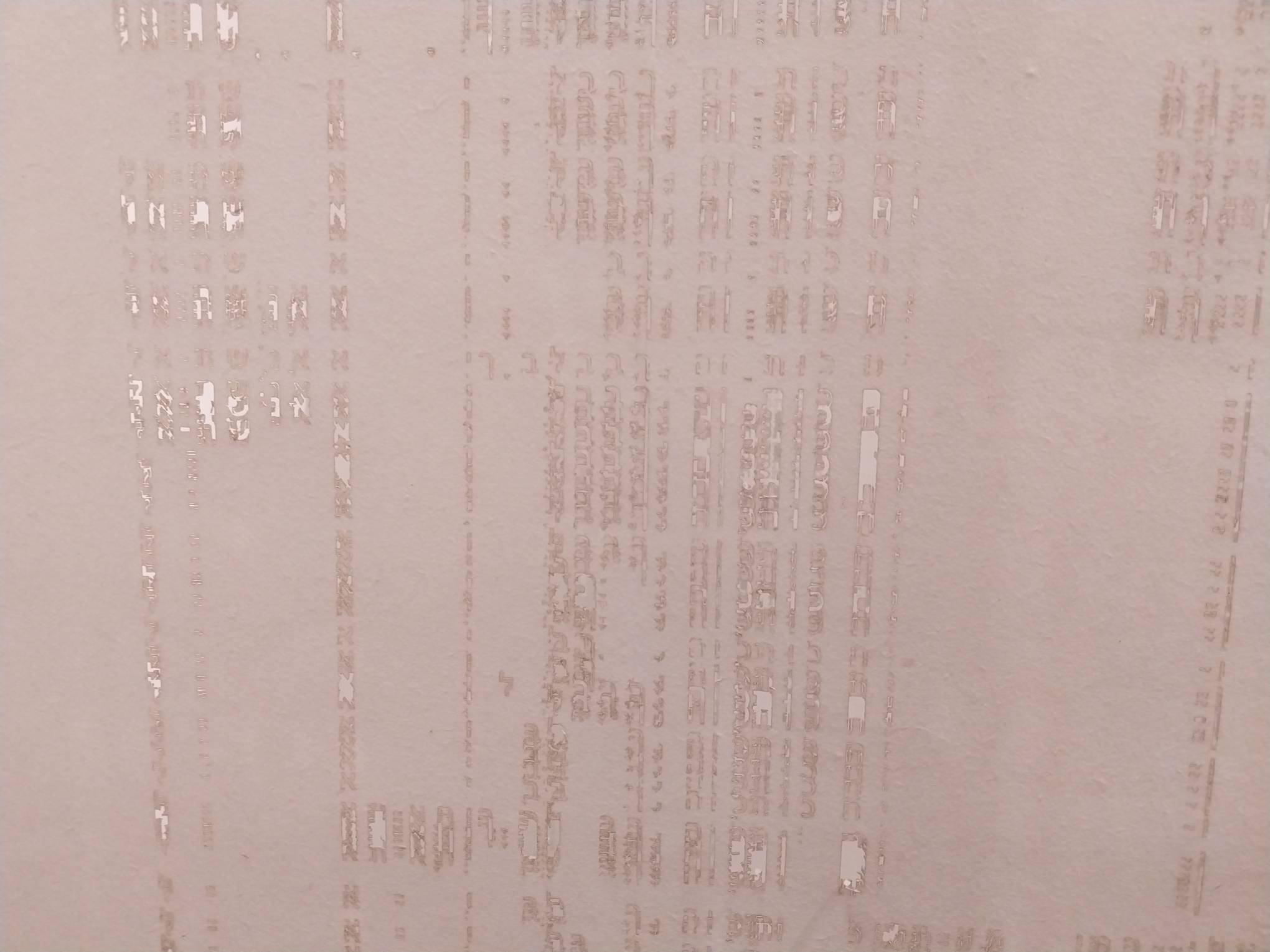
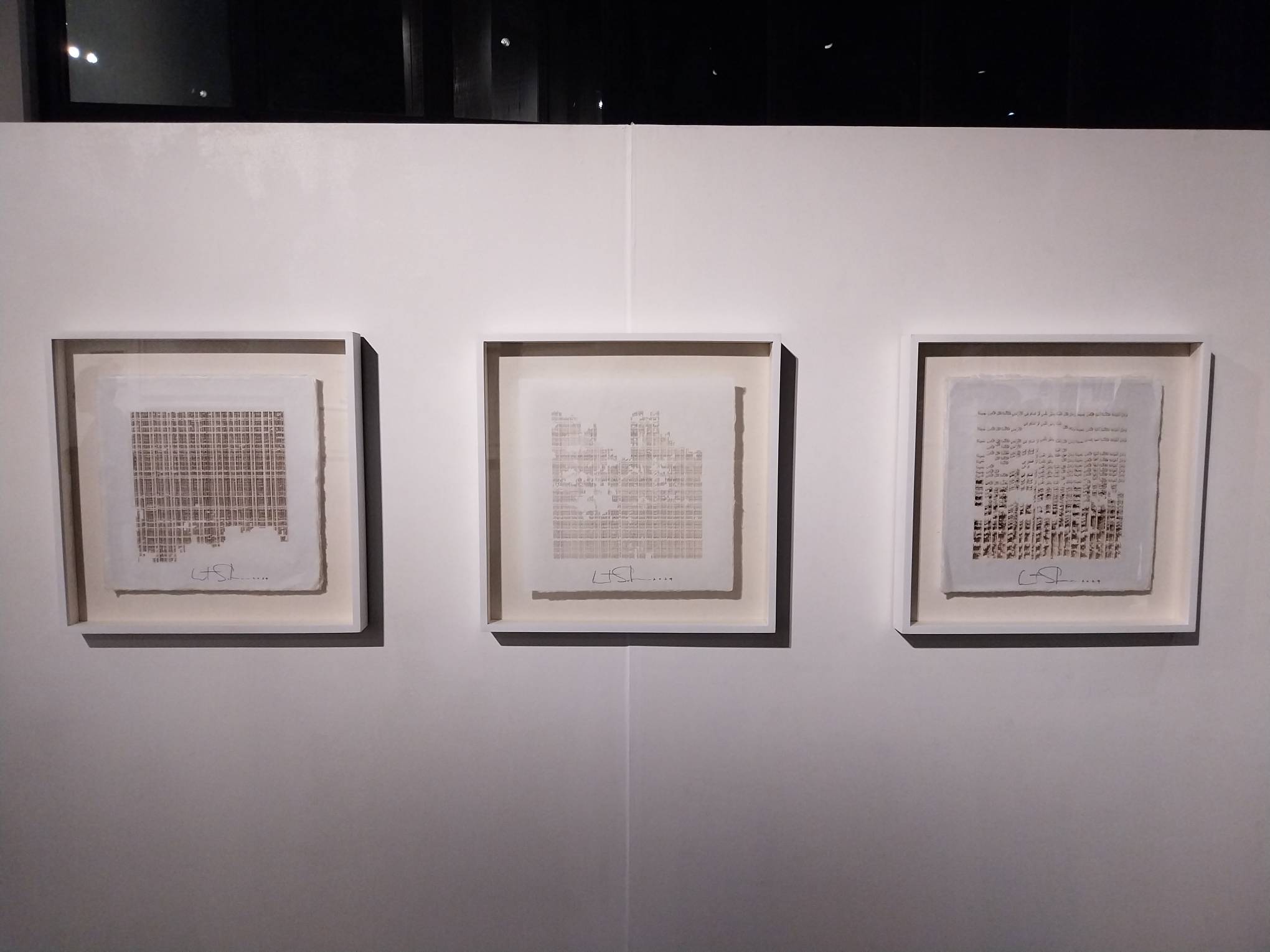
The end products contain texts that overlap with each other significantly, cutting through one another as to make the words seemingly illegible. Spaces pop up even within the works. This leaves a stark whiteness in the paper that evokes holiness and emptiness in the same figure. It seems to exist beyond the original text’s meaning, tasking its audience with deciphering the indecipherable.
Deciphering the Past for the Present
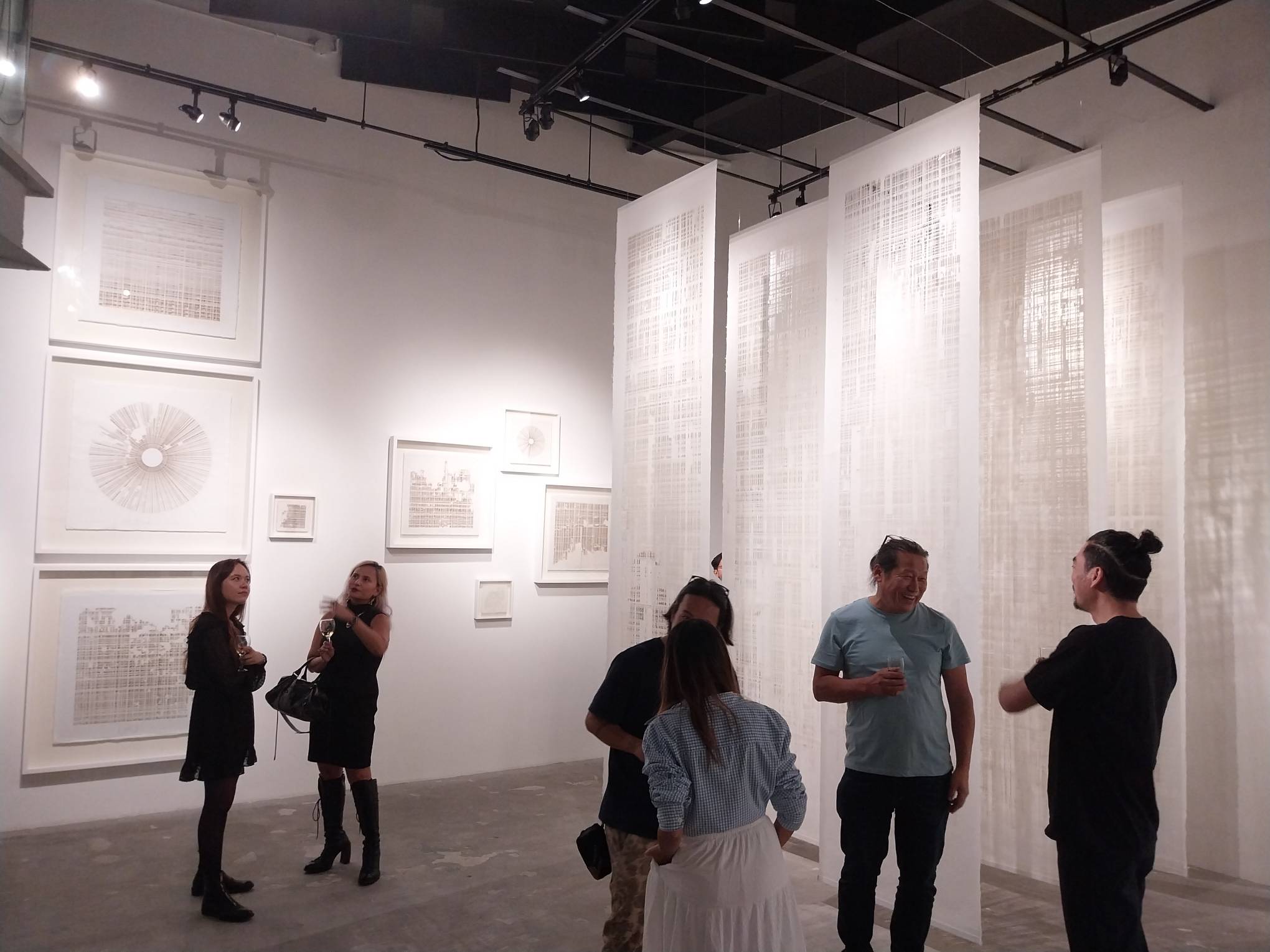
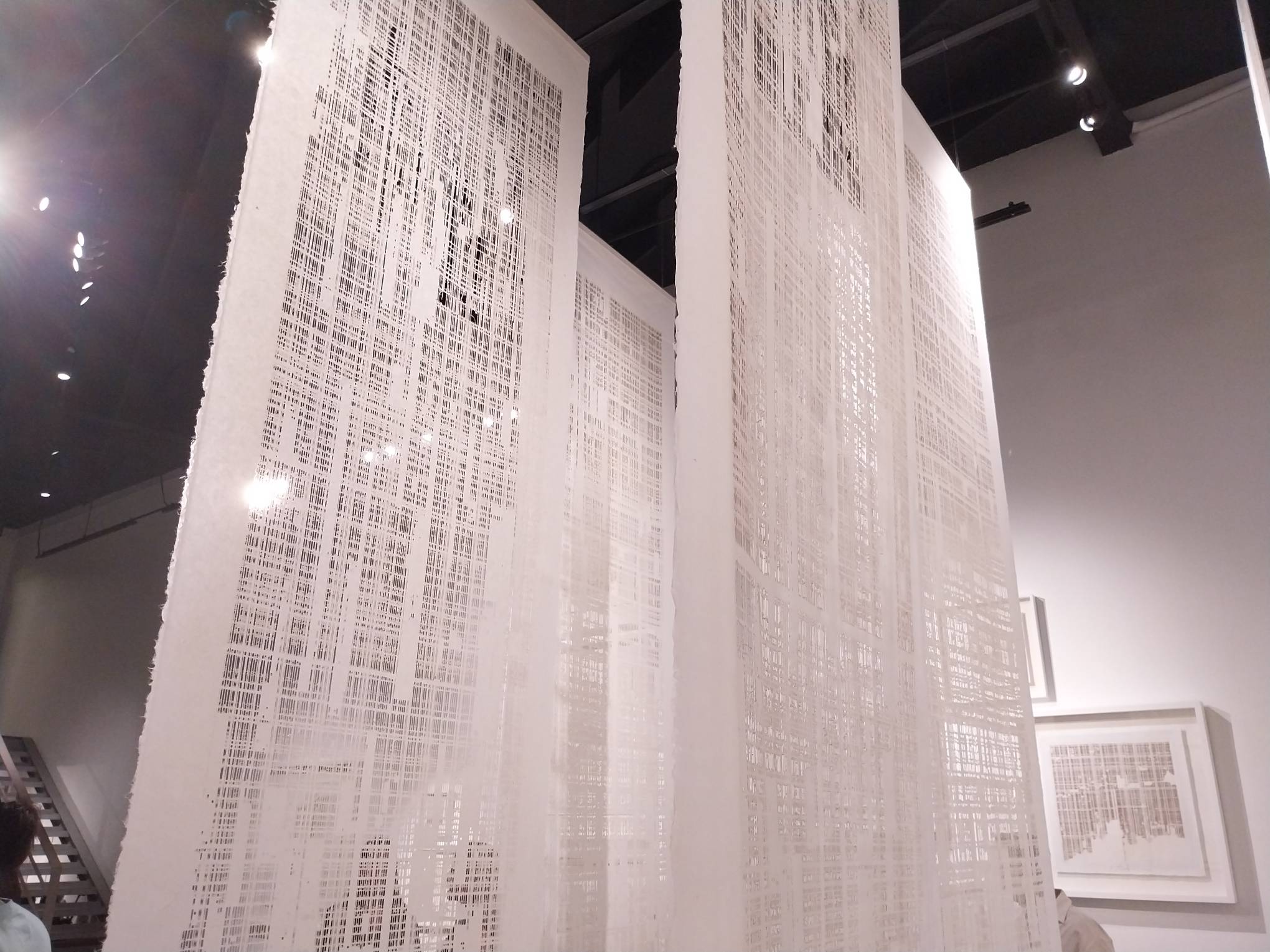
Each piece looks like they came from scrolls in the past, an aged look permeating them. The sizes of the work vary, going between portrait-sized works they would post on church walls as guides for followers to giant ceiling-to-floor monstrosities that belie the epic scope of the project.
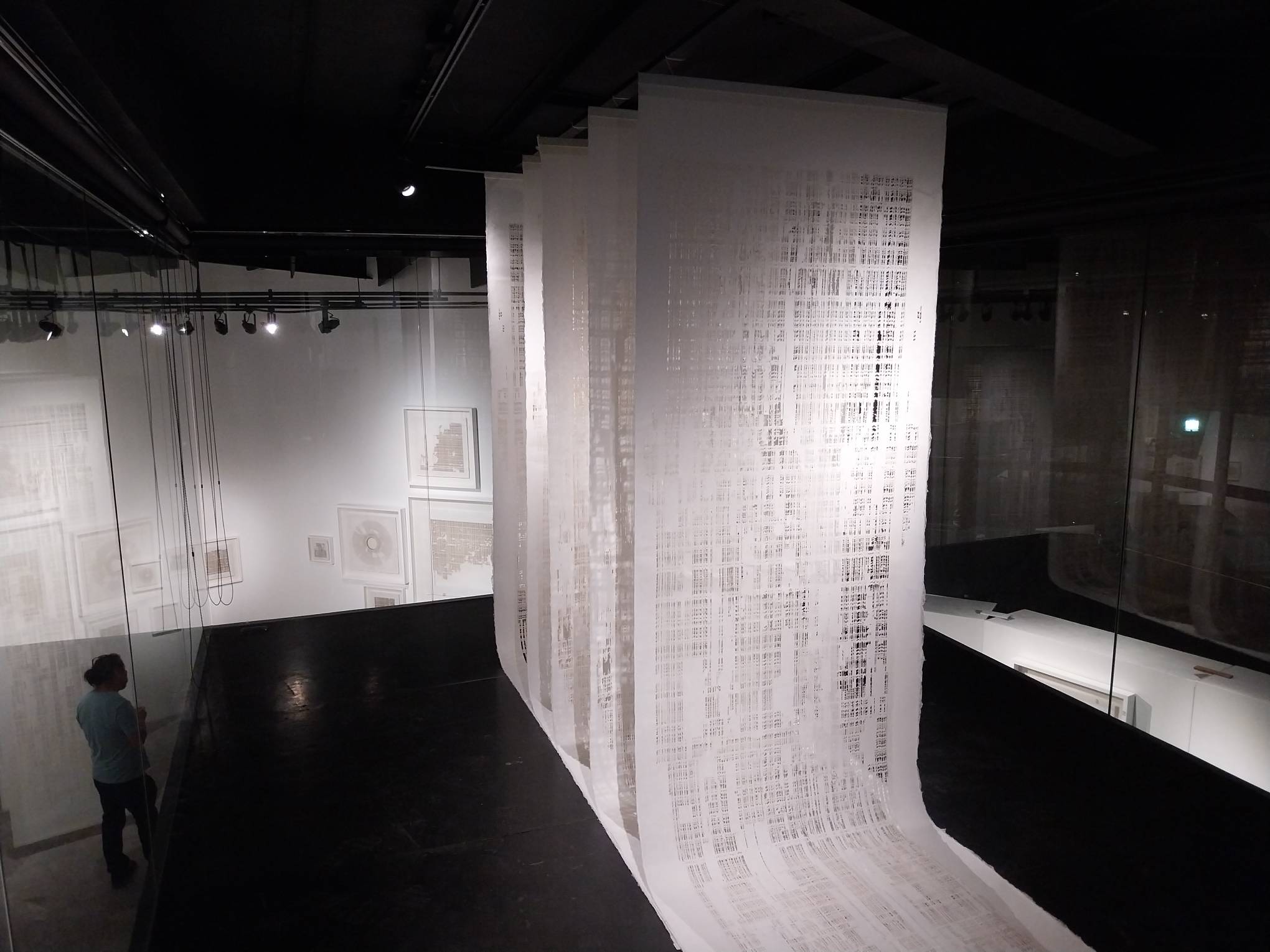
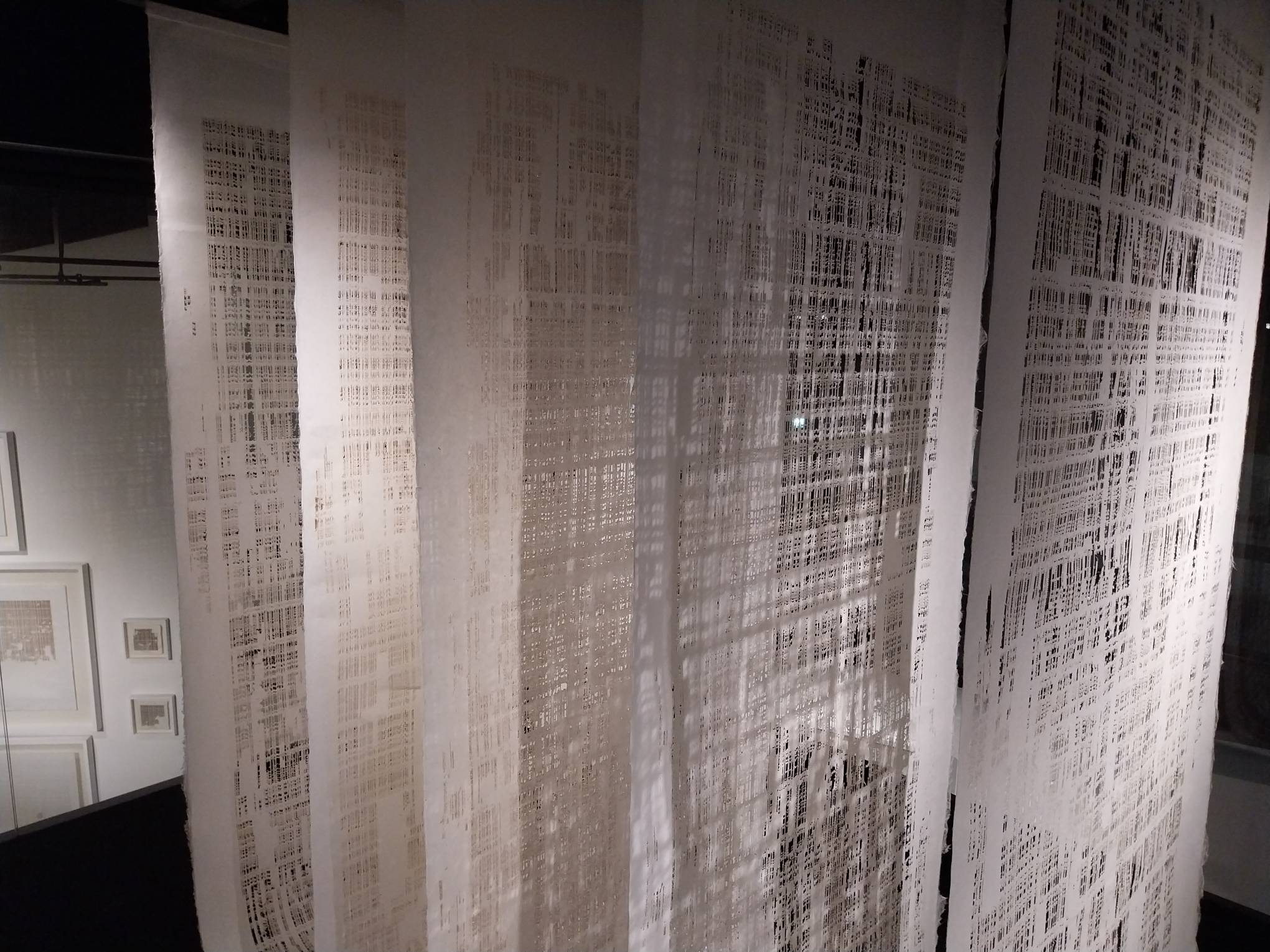
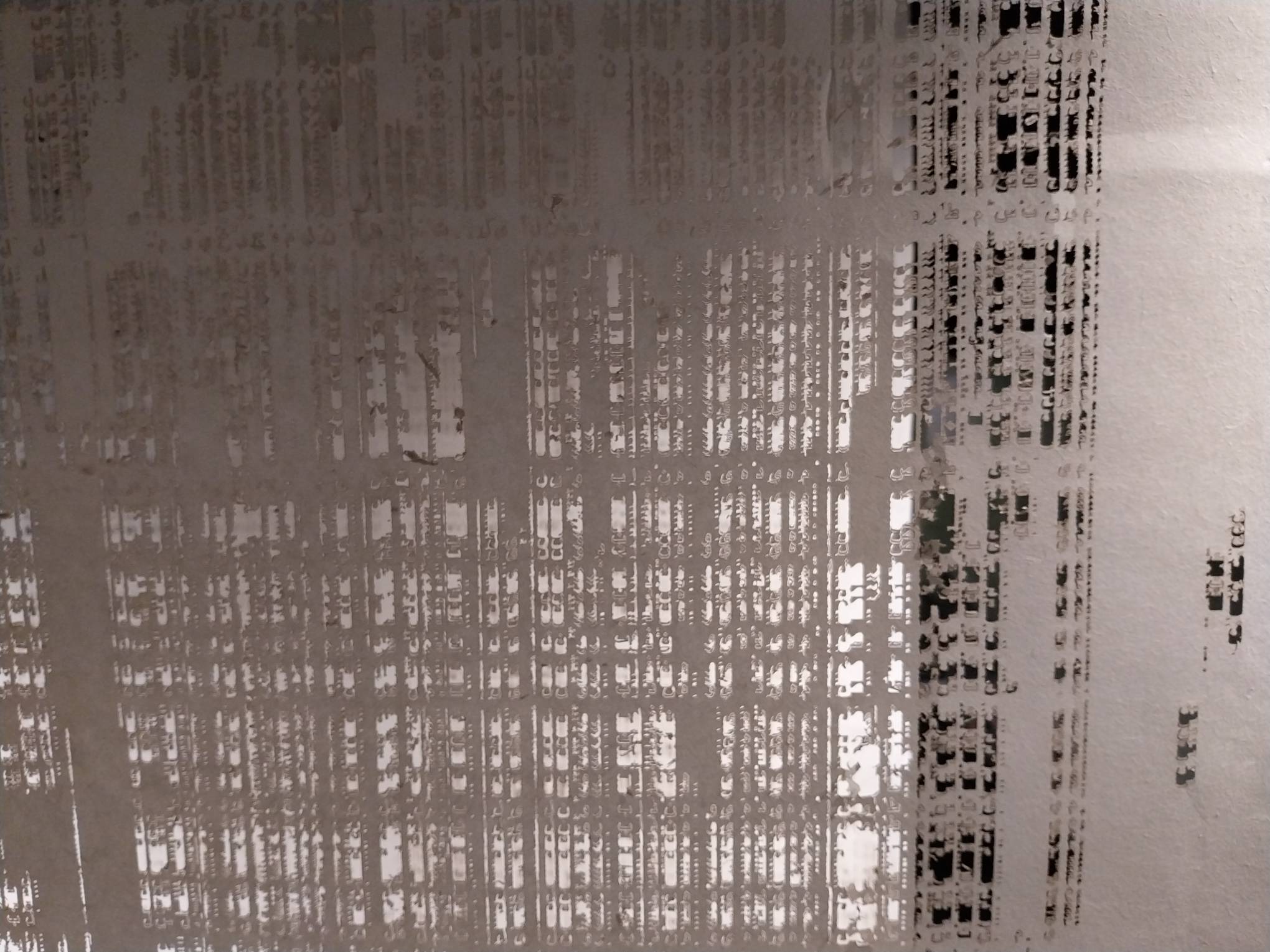
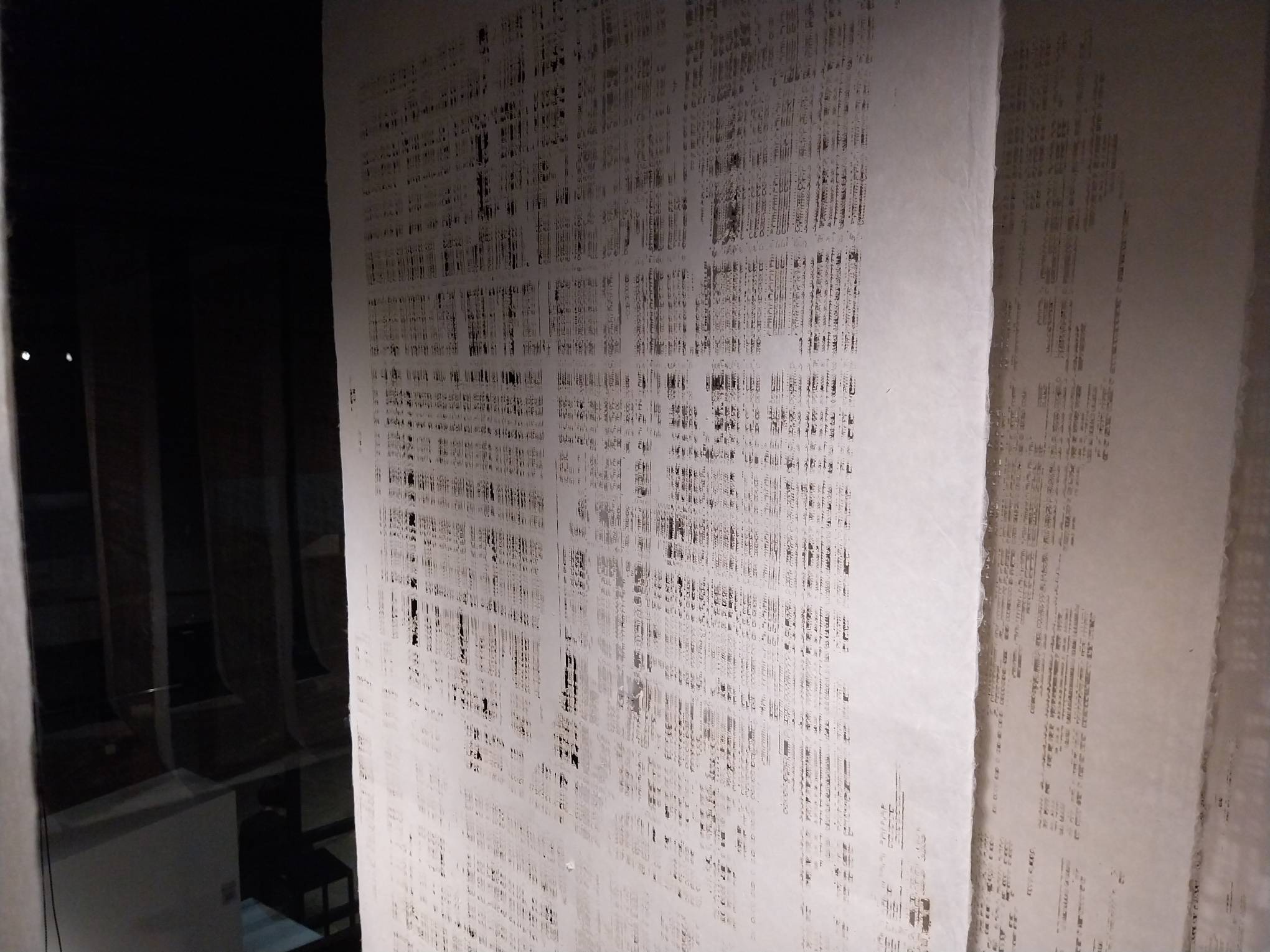
“Through the gaze of the artist himself, the objects took on different representations and meanings. First, they look like windows, cages, a structural façadeFaçadeThe exterior face of a building, particularly the principal front facing a street or public space. More than decoration, a façade shapes a building's identity and performance, managing light, heat,Go to Façade Glossary. Up close, as you decipher the forms within the negative spaces, they take a more symbolical meaning like vessels of text or language, mandalas, hieroglyphics, remains of some devotional action like a hymn, a chant,” the exhibit write-up said.
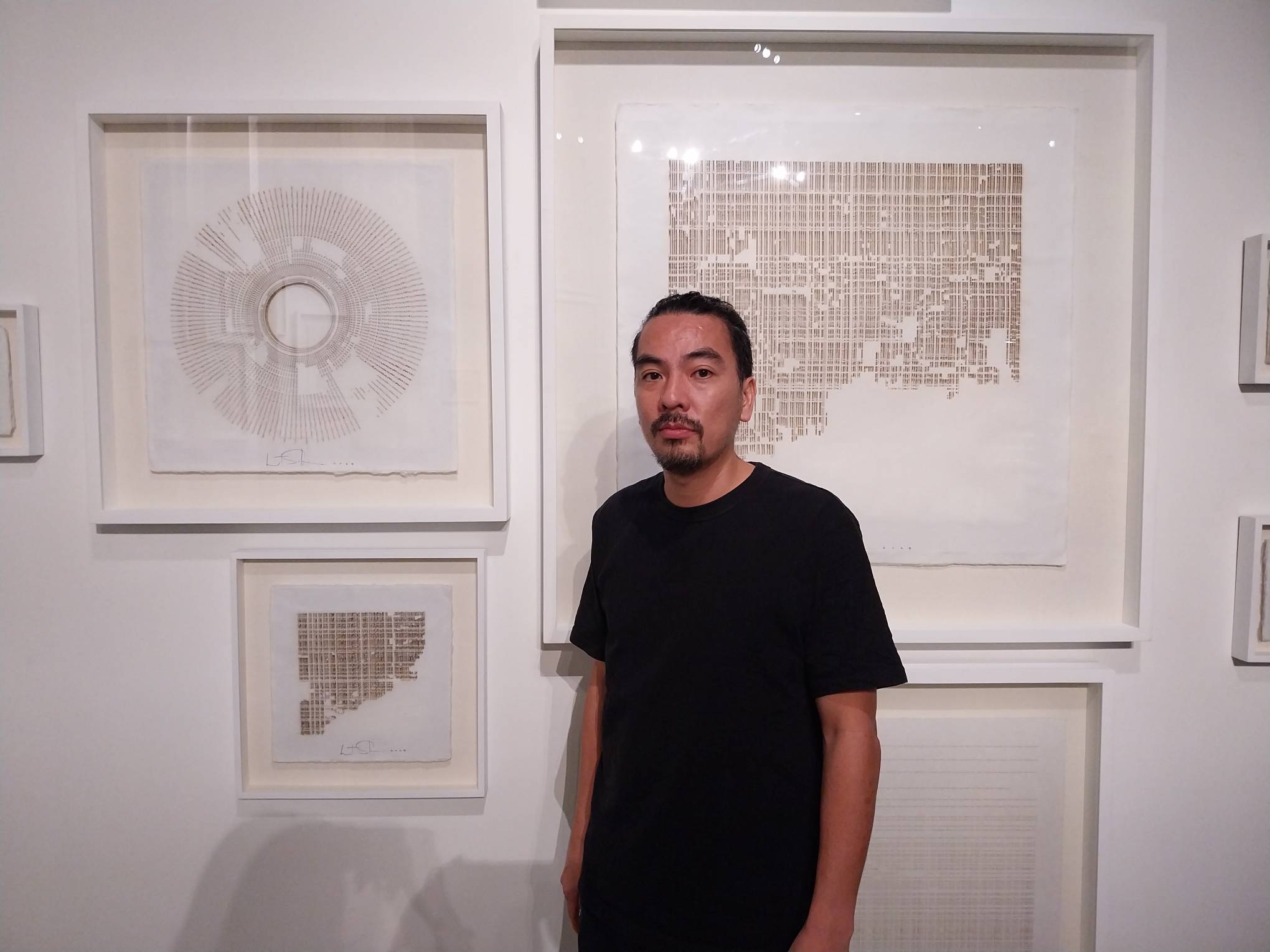
In the end, Crisis in Meaning finds Wataru Sakuma deconstructing symbols into meaninglessness. It fuses our traditions with new technologies that upend our definitions of the world. What remains, however, is not new meaning but missing meaning: holes in our preconceptions, divorced from any real-life experience, just words repeated into utter nothingness.
Photos by Elle Yap.
Related reading: Mangha-Likha: Defying ART Conventions: Awe and Wonder in Unconventional Artmaking
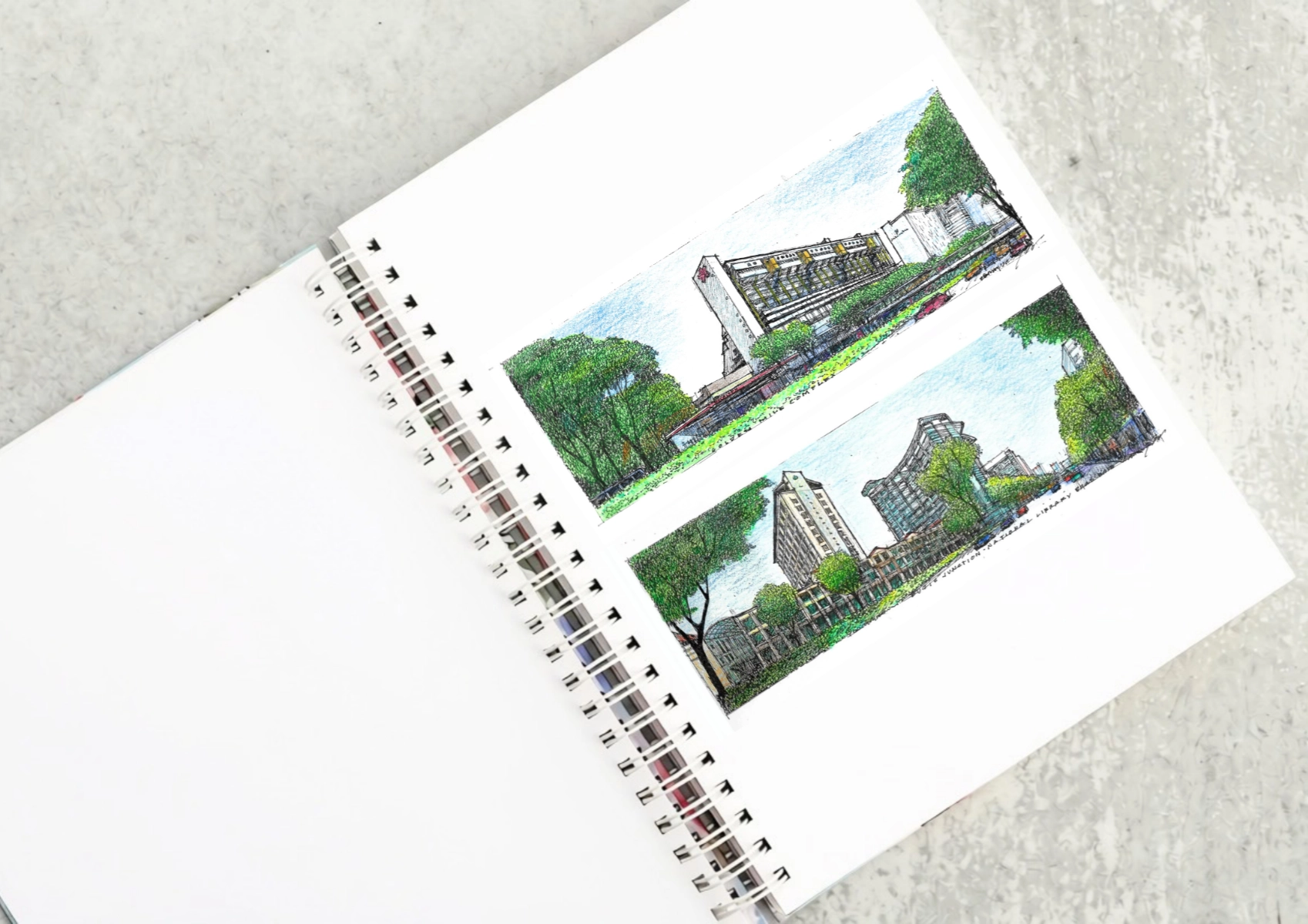
Two sketches of Singapore connect BluPrint Editor in Chief Paulo G. Alcazaren’s personal and professional history with Shared Ground: ArchitectureArchitectureThe art and science of designing and constructing buildings, structures, and spaces that are functional, safe, and aesthetically pleasing. It encompasses the planning, design, materials, and techniques used to createGo to Architecture Glossary of Care, Culture, […]
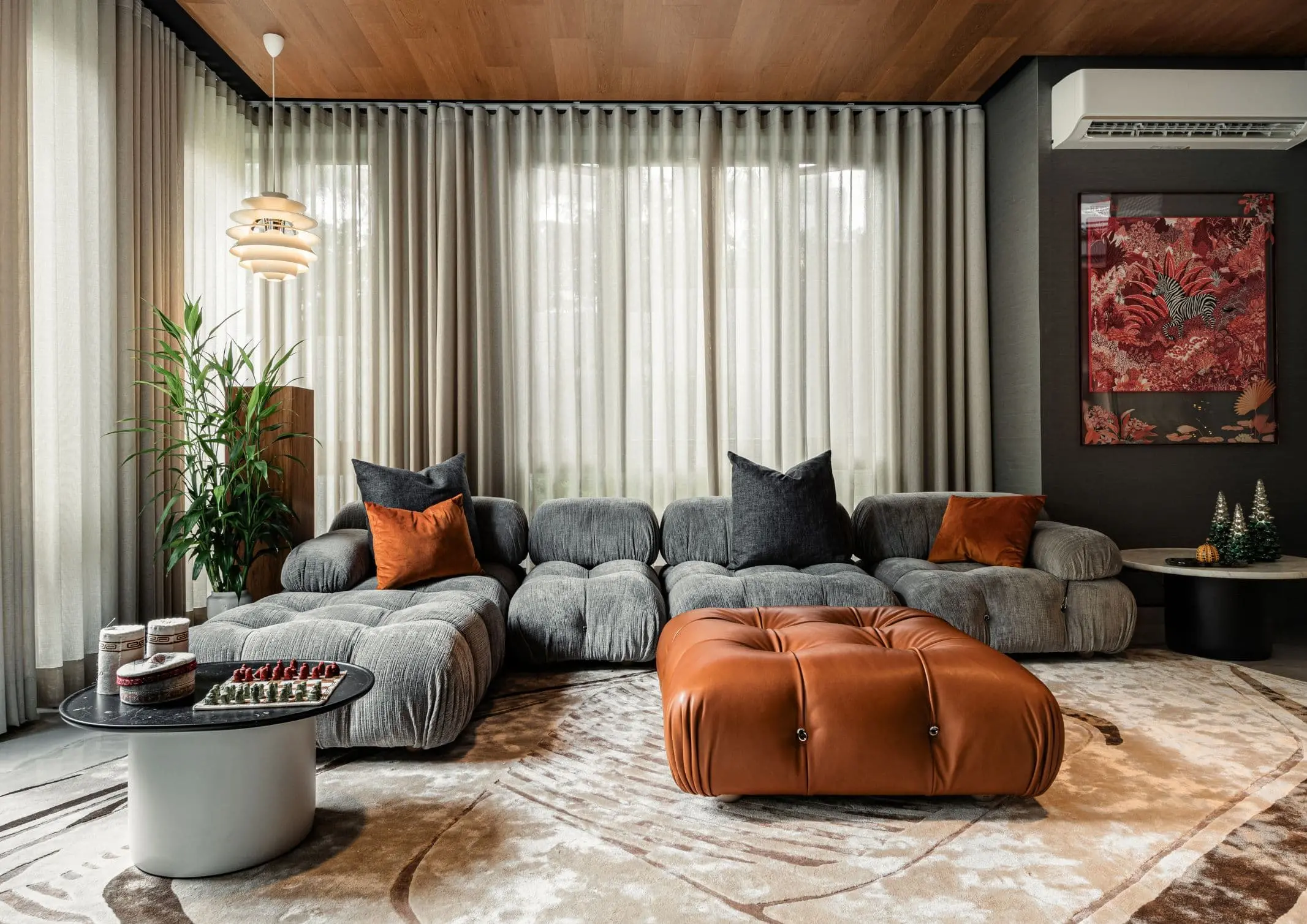
Some have become household names – Coleman, Oster, and KitchenAid – products that have found their way into Filipino kitchens, homes and family routines. In home furnishings, brands such as B&B Italia, Ethan Allen, Sub-Zero, Miele, SieMatic, Louis Poulsen, Hunter Douglas, Tempur, and Technogym, have helped shape the way Filipinos live. From everyday essentials to […]
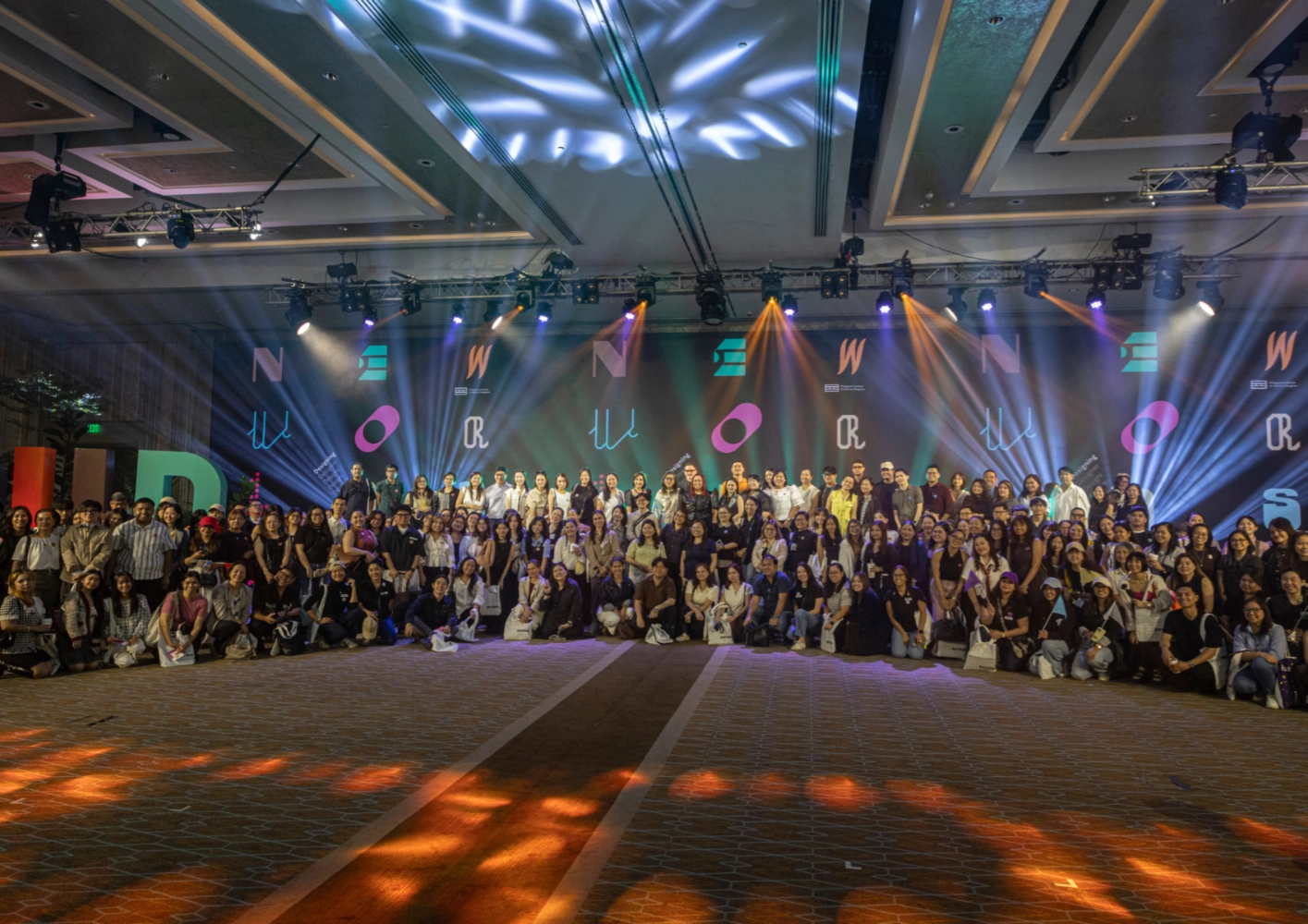
In a way, designers are the modern-day soothsayers and prophets. They design for the future, predicting how a room, a house, a building or a whole city will be used by people. They foresee how users will interact with a space, conjure exact shades of colors to elicit specific behavior and arrange furniture to build […]
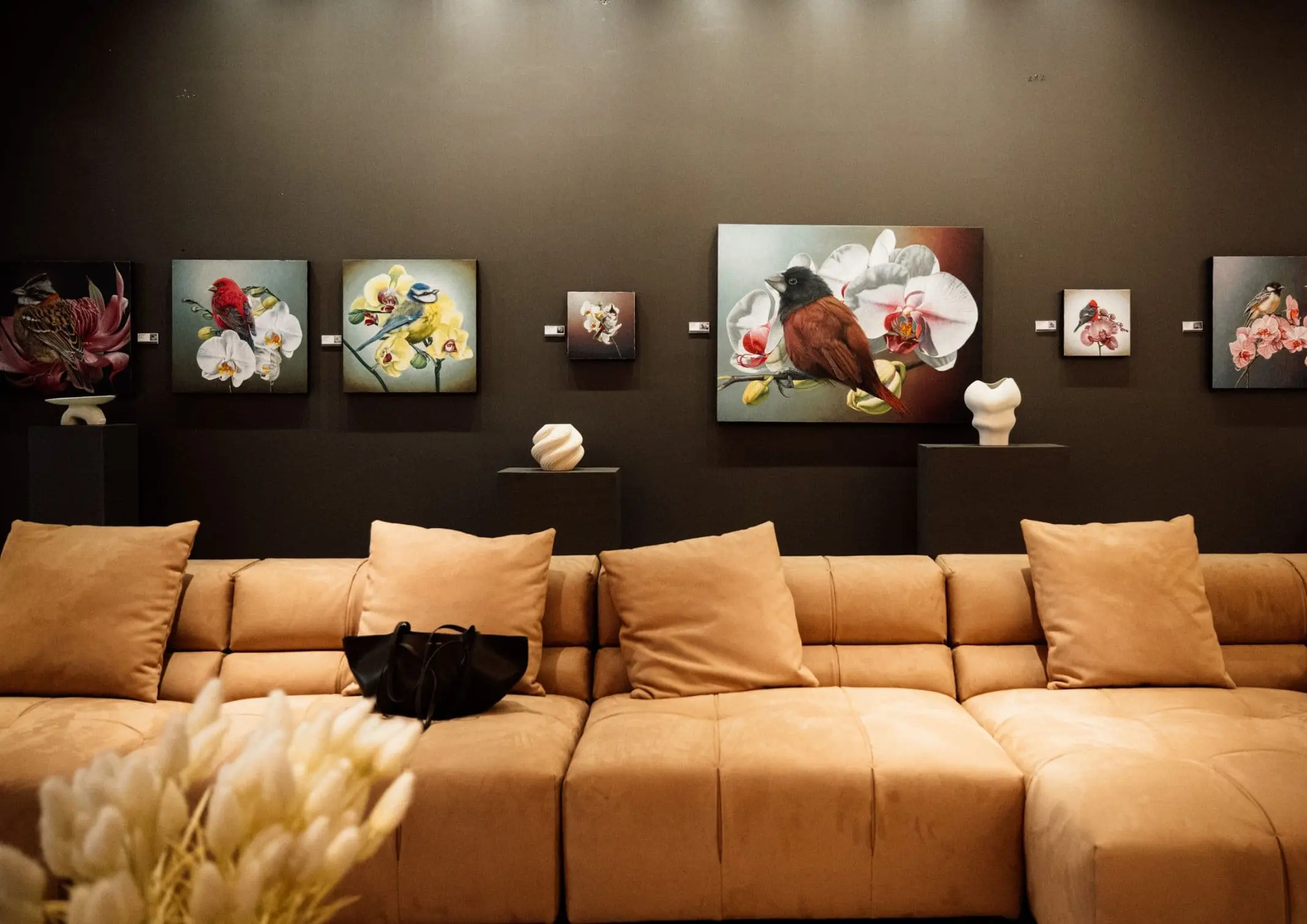
Art and furniture are often selected separately, yet their relationship can shape how a room looks and feels. The collaboration between Hooga and Galerie Joaquin explores how these elements can work together, bringing contemporary artworks into furnished residential settings at Hooga’s showroom in Uptown Mall, Bonifacio Global City. For Hooga, which curates furniture, lighting, and […]
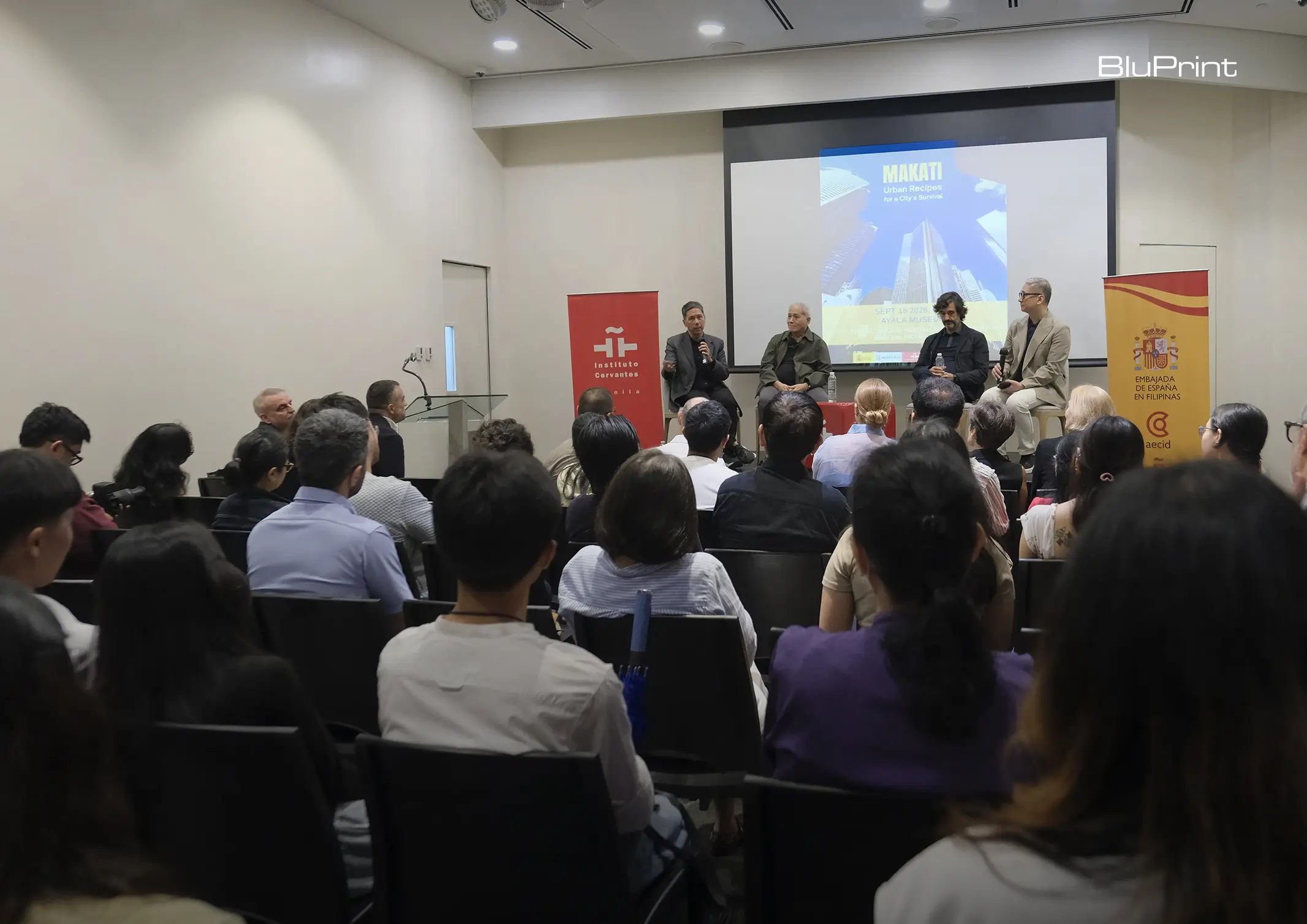
How can better-planned cities create the conditions for more creative, livable, and resilient urban environments? “Makati Urban Recipes for a City’s Survival,” a colloquium held at the Ayala Museum on September 15, brought together architects and practitioners from the fields of urbanism and the creative economy to discuss how design, planning, and collaboration can address […]
Read the issues.

Collect the volumes.

Recommended Video
Tap to Unmute
Unmute
0:00
0:00