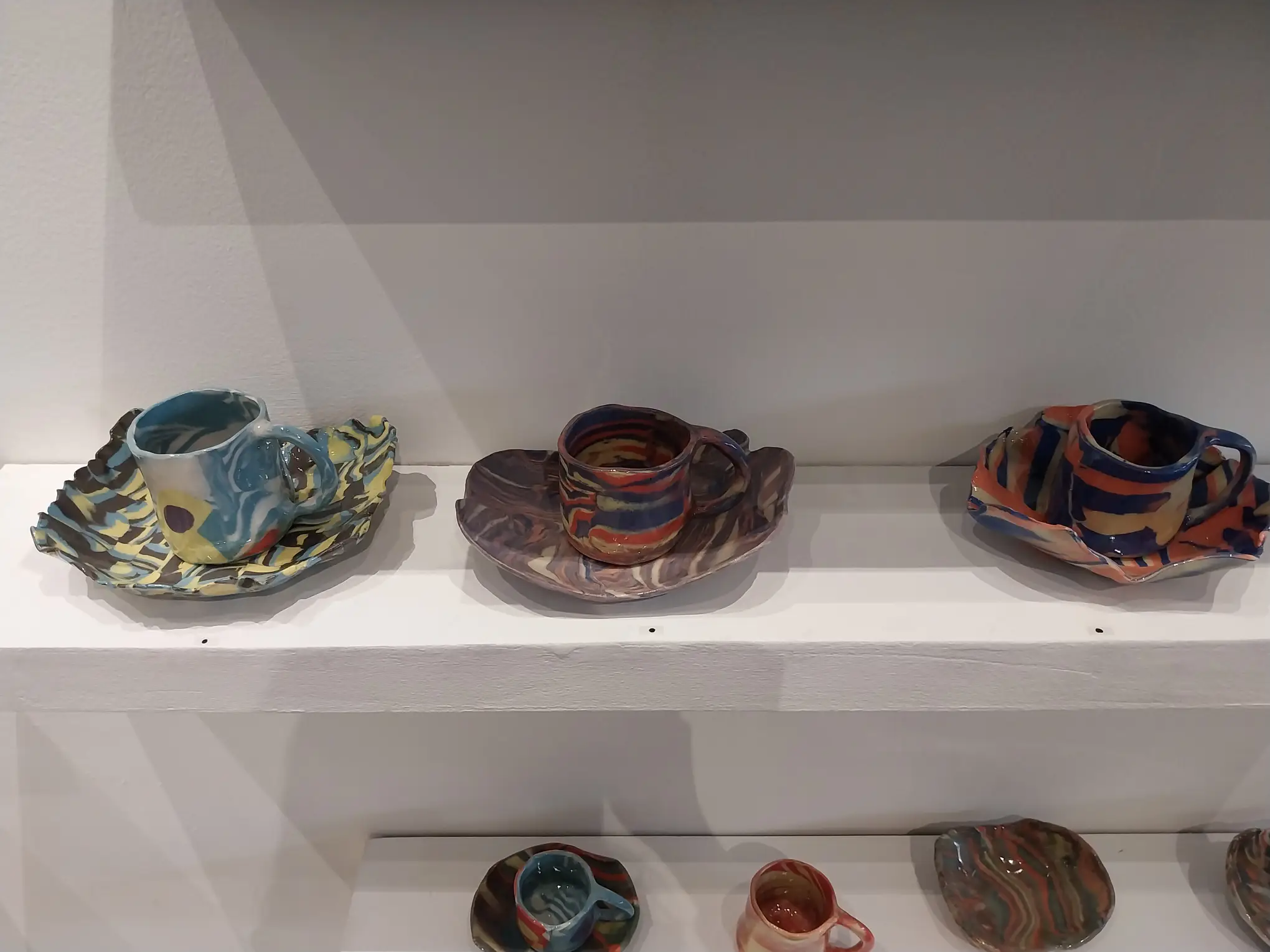
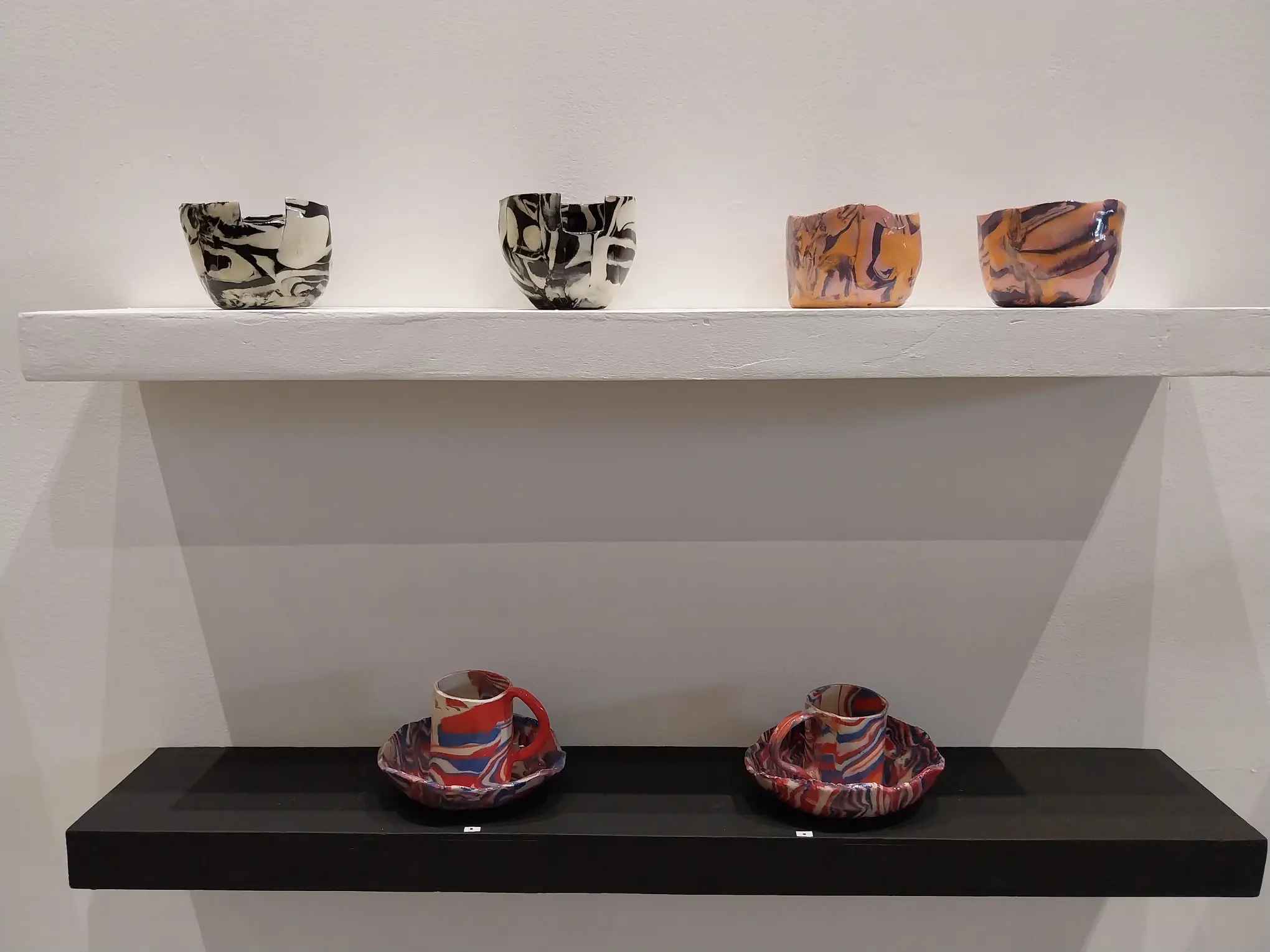
Nerikomi, the recent exhibit by Winnie Go at Aphro in Karrivin Plaza, gives us a look at the artist’s newest evolution of their pottery practice. Seeking to evolve her artistic style, she draws from the Japanese ceramics technique of nerikomi, blending different colored clays to form intricate and original designs.
“ I’ve always been a big admirer of Japanese ceramics,” she said. “And actually, I chanced upon this when I saw a little cup when I was in New York. And I was quite interested in understanding how that cup was made because it was very different from what I’ve ever done in the past.”
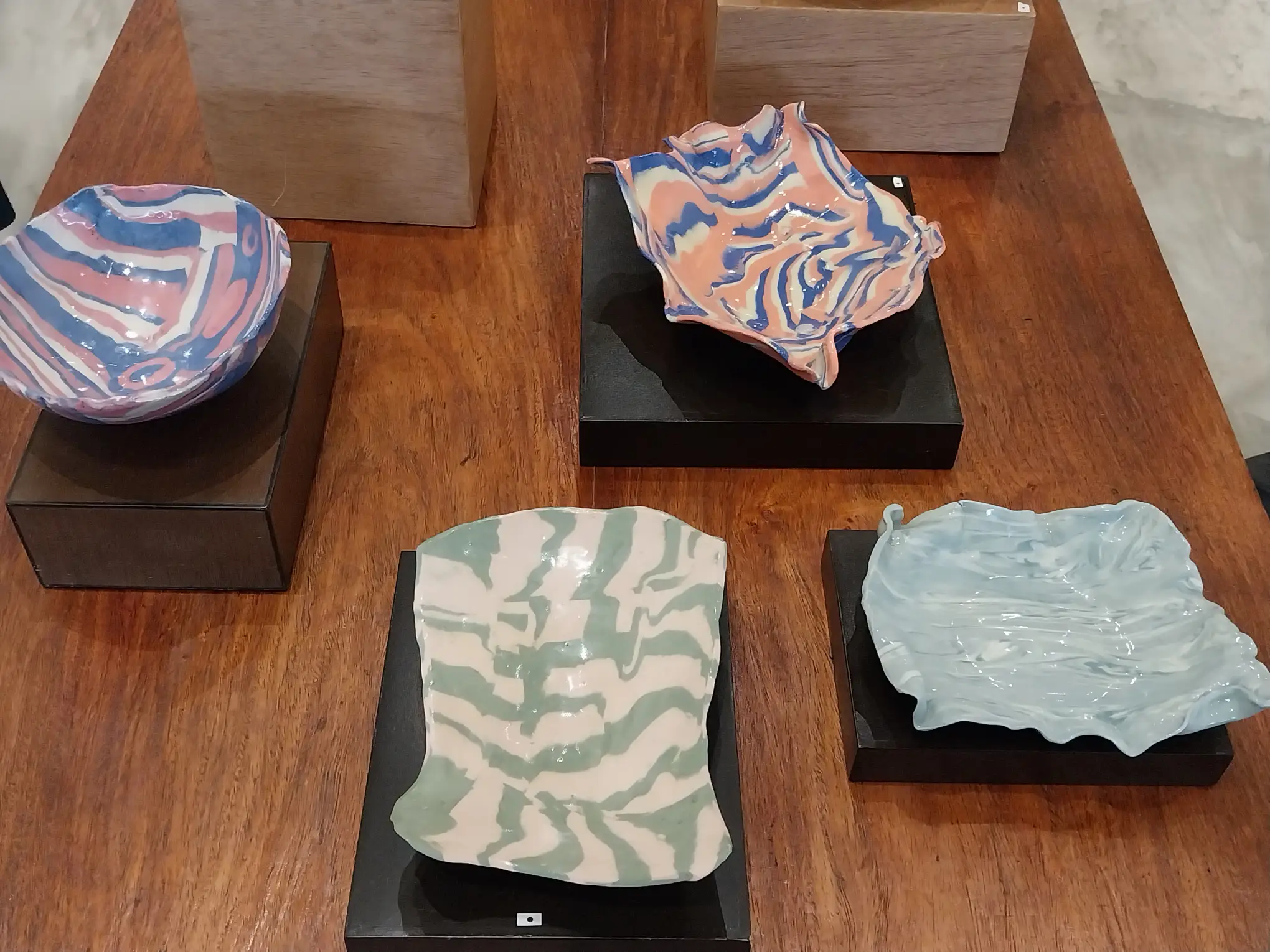
Some of the ceramic works by Winnie Go for “Nerikomi.”
Nerikomi involves meticulously layering, slicing, and reassembling pigmented clay to form complex, graphic patterns that run throughout the body of the piece. Unlike surface decoration, the visual expression is embedded within the material itself, making each form a seamless interplay of color, structure, and texture.
Advertisement
Go saw this as another in the many methods that we deploy clay in the art we create.
“You know, ceramics and pottery is so vast,” she said. “People do raku. They do wood firing, we do gas firing, and we paint on it, we glaze on it. And this is just another way of doing things.”
Mixing Styles and Practices
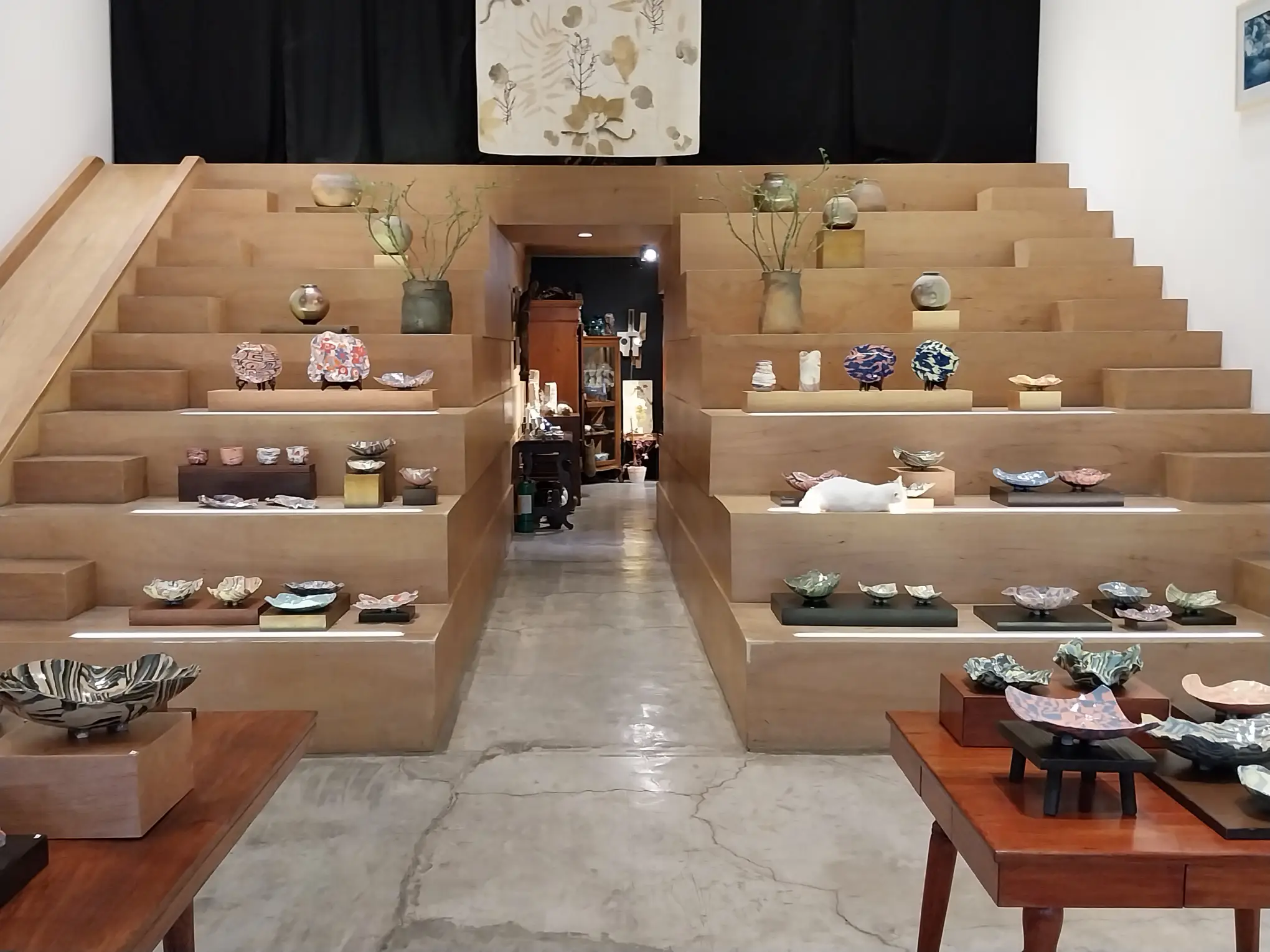
The exhibit contains a multitude of artisanal pottery in different styles, from cups and mugs to plates and bowls. All of them are functional items with a uniquely-colorful twist born out of the nerikomi technique.
Advertisement
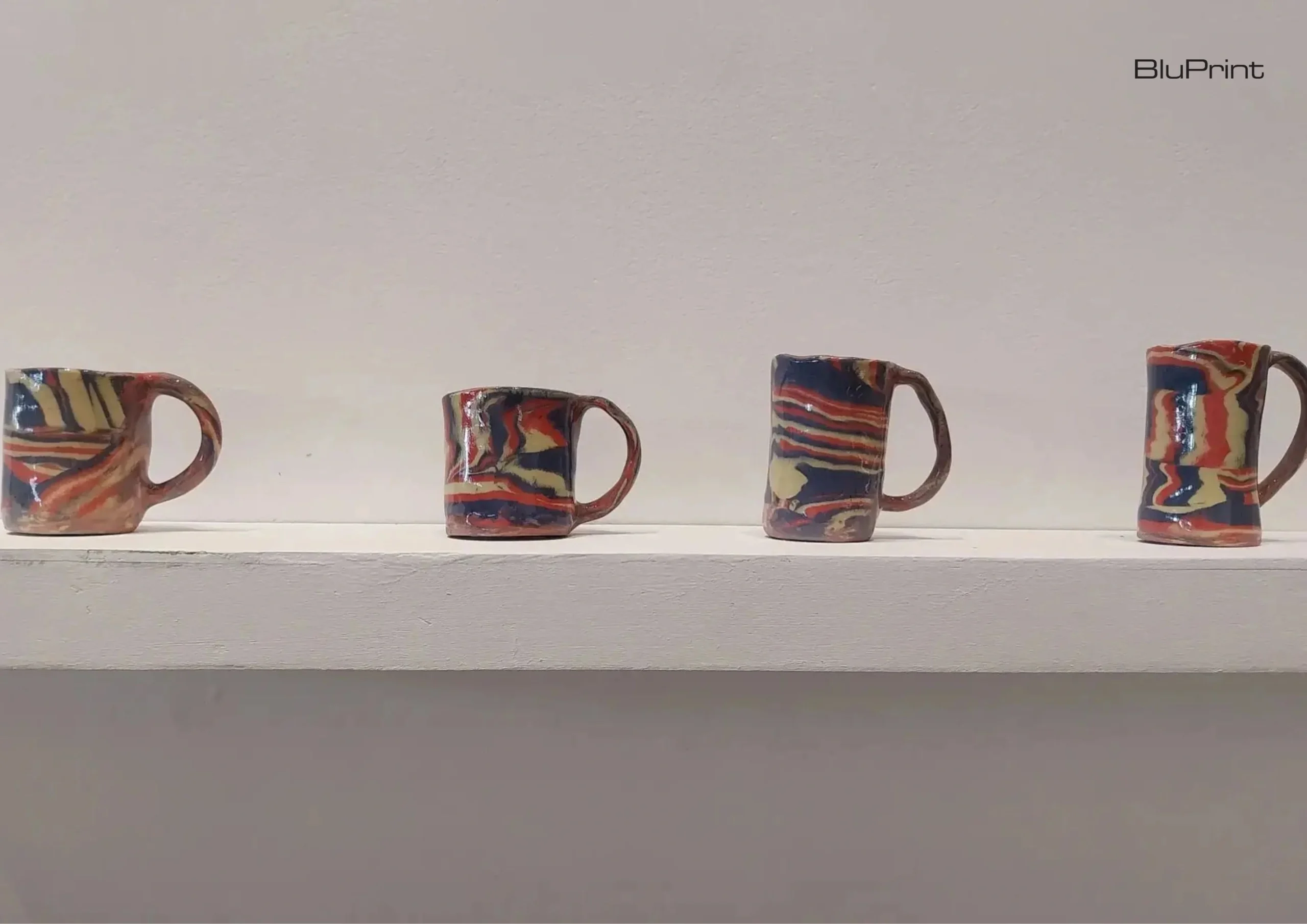
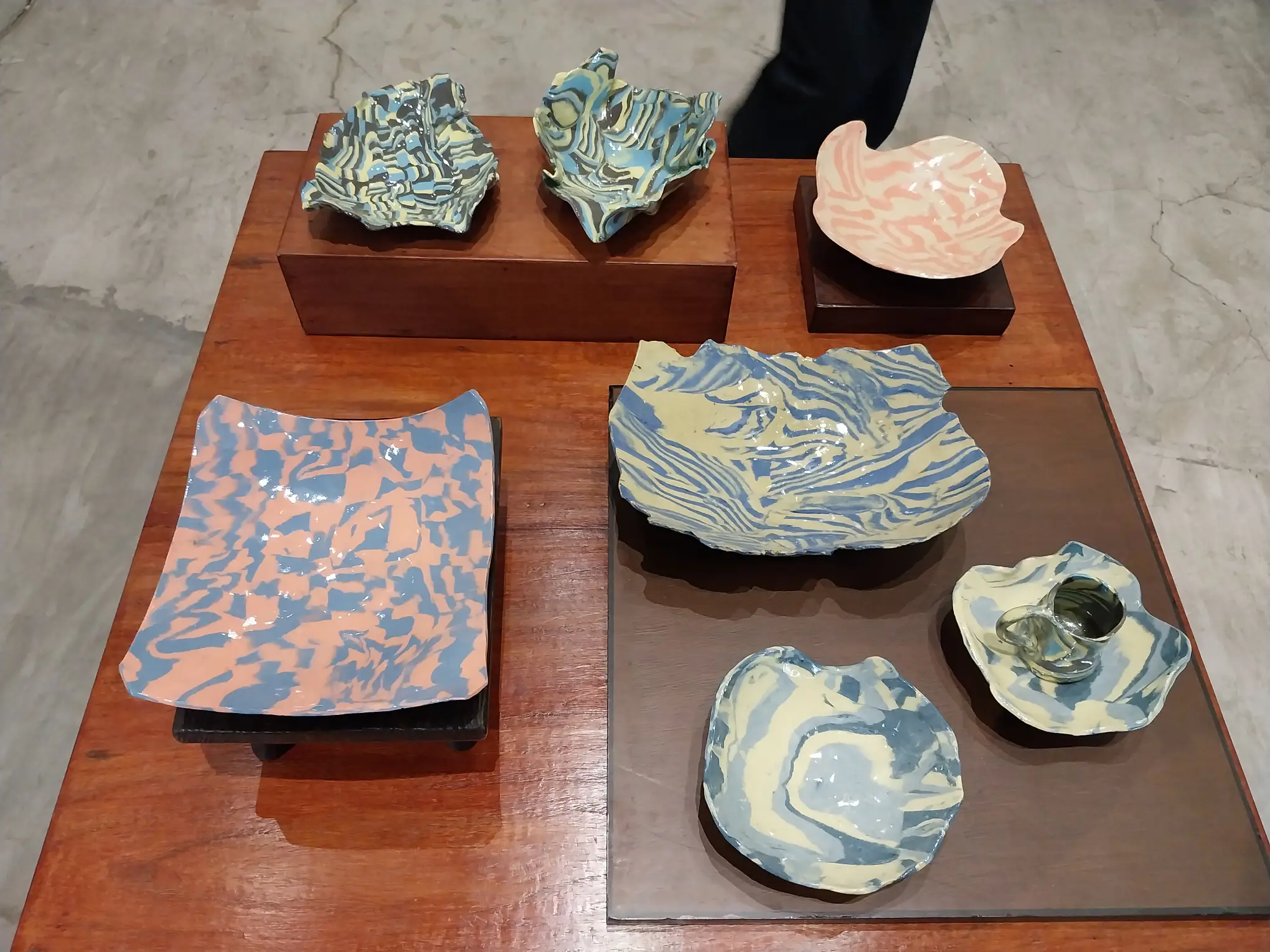
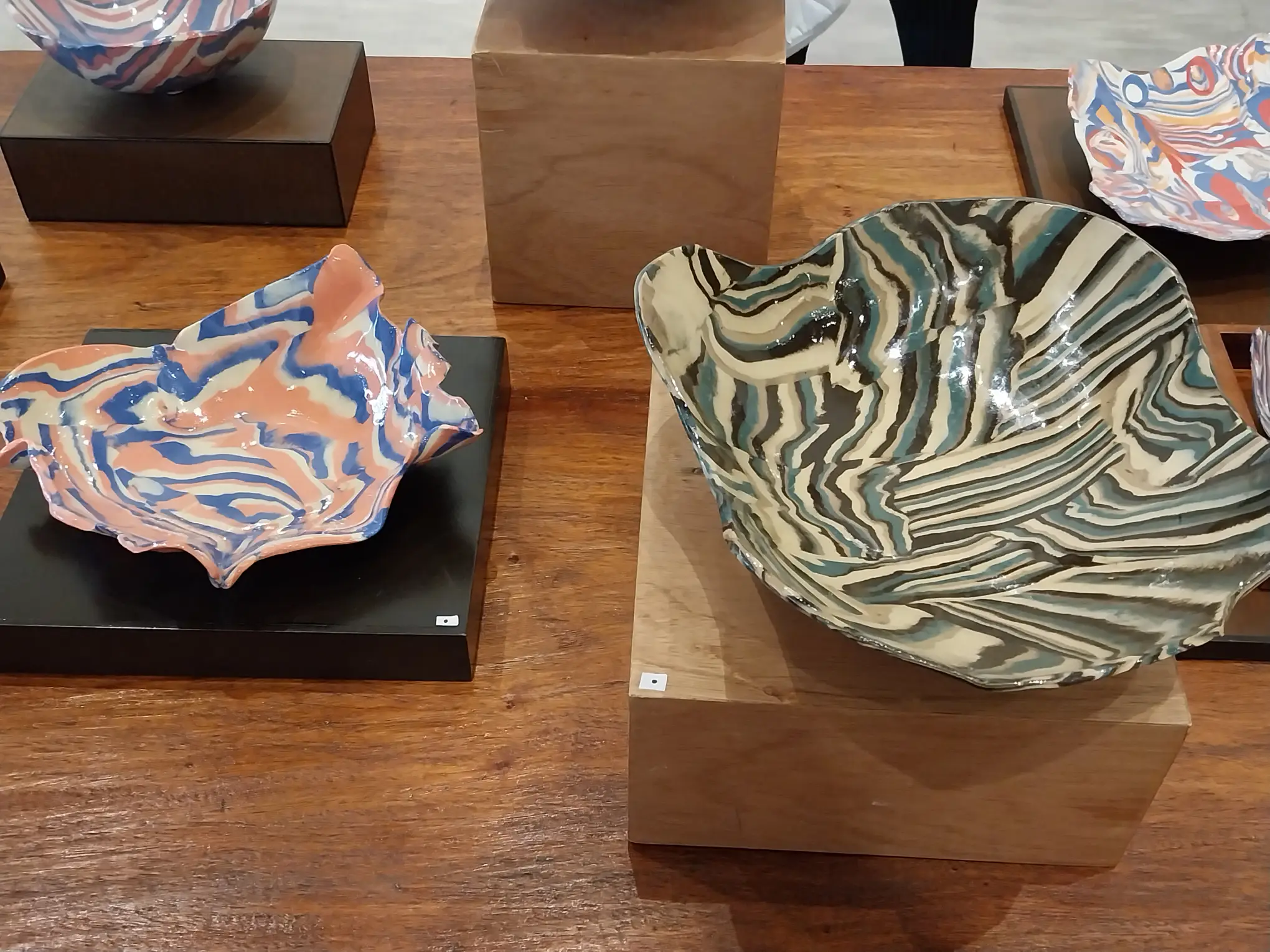
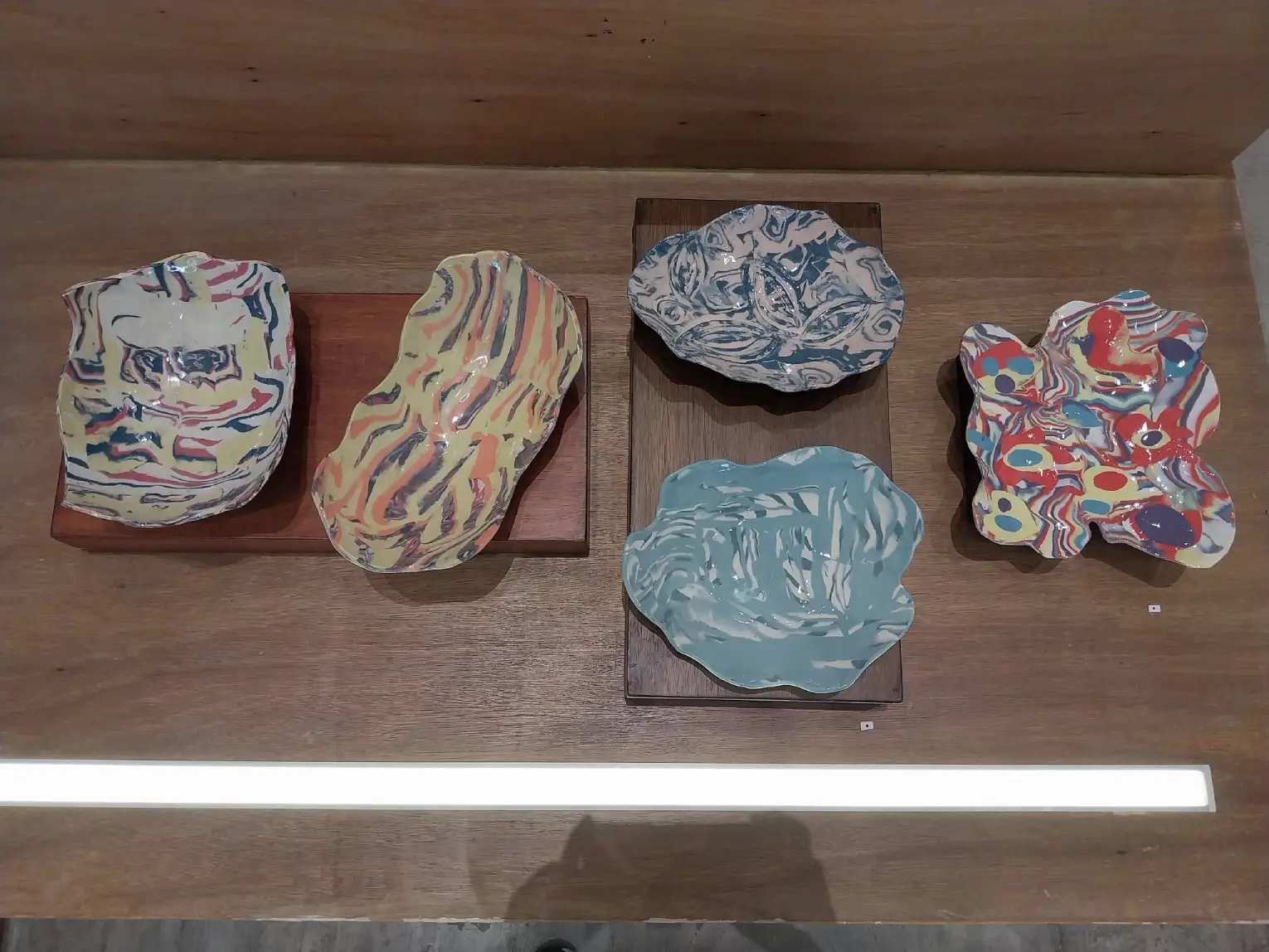
Many of them seem to capture the feeling of a pool of pigments in the midst of being mixed, with Winnie Go combining contrasting colors that create an evocative look to each piece. The colors in each work vary, but they have a strong, psychedelic spin to it, an outcome of the actual process and the variability of a work’s final product.
Multiple works by Winnie Go for “Nerikomi.”
Two works by Winnie Go for “Nerikomi.”
Four works by Winnie Go for “Nerikomi.”
Works by Winnie Go for “Nerikomi.”
“[Because] the moulded clay requires a final step in the kiln, the process also yields many surprises, details that reveal themselves only after the second firing,” Lourdes Samson wrote in the exhibit writeup. “For the artist, mixing colours into the clay ‘by eye’ rather than the measured proportions prescribed by traditional Nerikomi practitioners opens the process to play and spontaneity.”
Some of the interest that Winnie Go had for the practice comes from the way the process allows for a sense of variability in what is created. Calling the process “playful,” she said that it has allowed her to apply a variety of influences in the artwork she makes.
Advertisement
Influences Seeping Through
She cites different mediums, from abstract art to traditional ikat weavings and marbling paper, as artistic influences that appear in the works she made for the exhibit. The end products look wavey and irregular, like vast pools of pigments bubbling on top of each other, but the artistic intent of the process shines through in the different combinations that she plays with for the exhibit.
“As I was making it, I just tried to remember all the things I loved and the things that I collect, and I said, ‘Hmm, maybe I could do something that emulated that love for that,’” Go said. “And so I would experiment. [One would] get a basic foundation and a little bit of a skeletal knowledge from the Japanese. But later on, you move towards what you love and you change it up. You do what you think is more unique for yourself, and you don’t stick to the rules that much.”
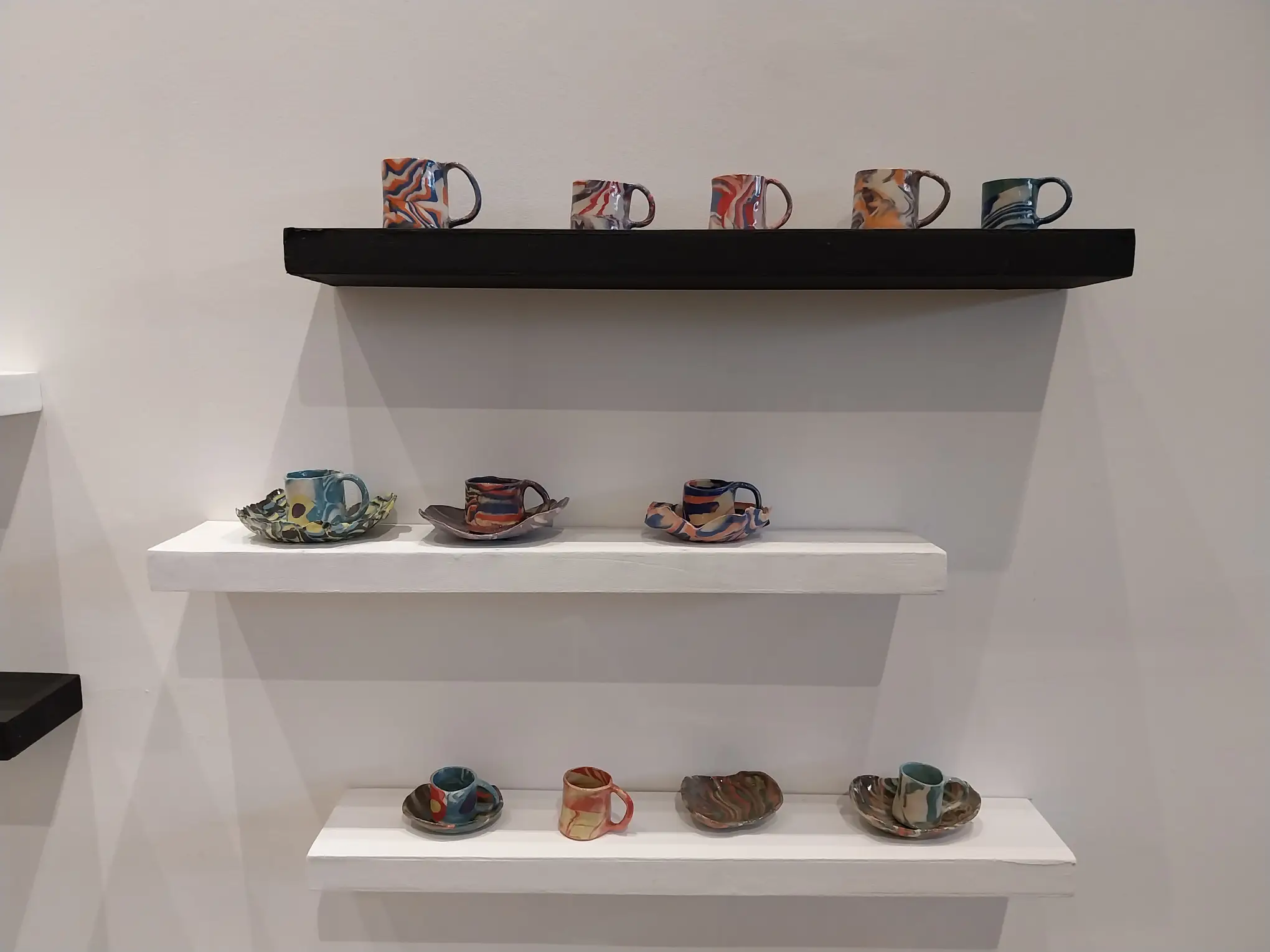
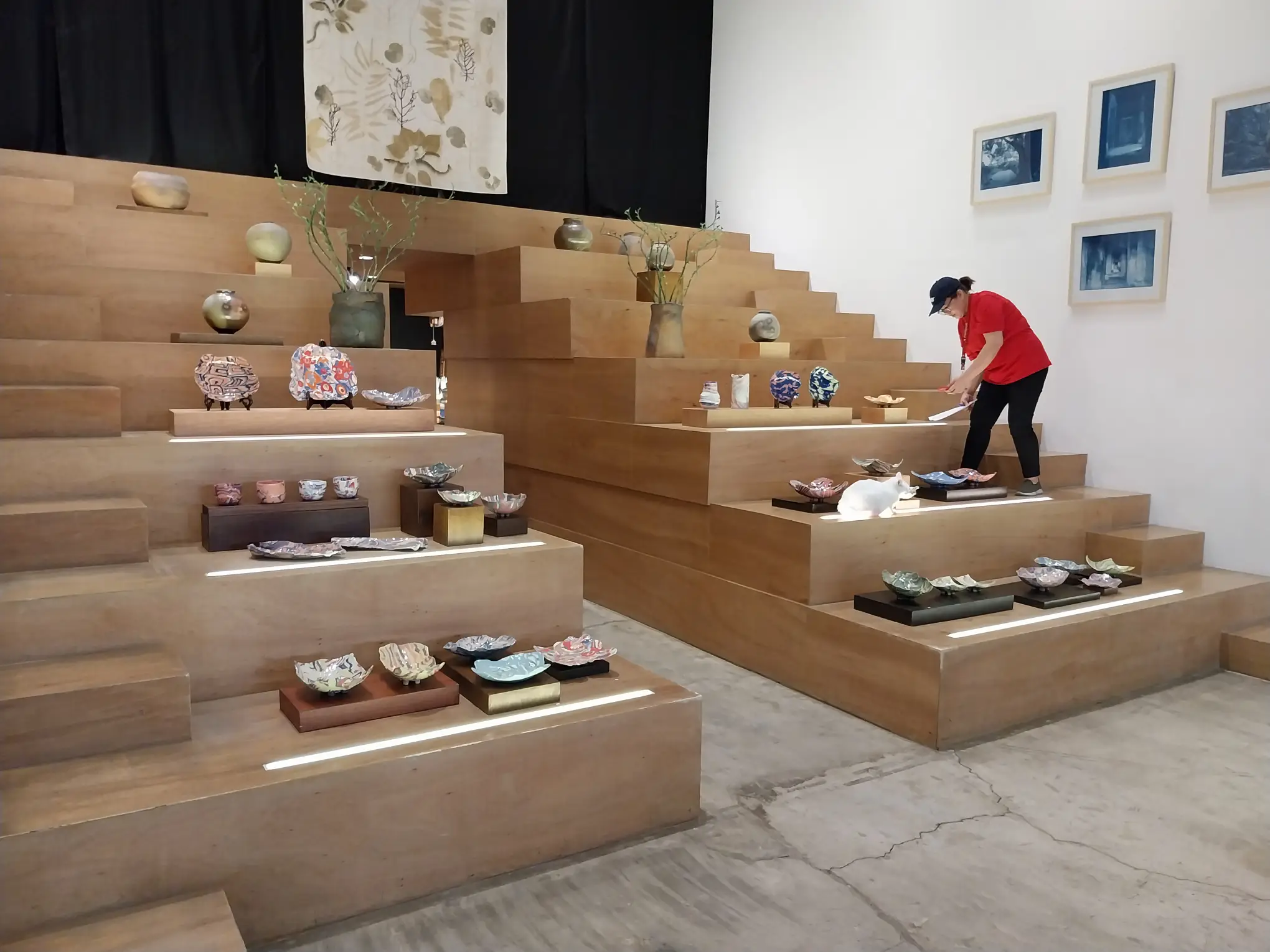
Three shelves of works by Winnie Go.
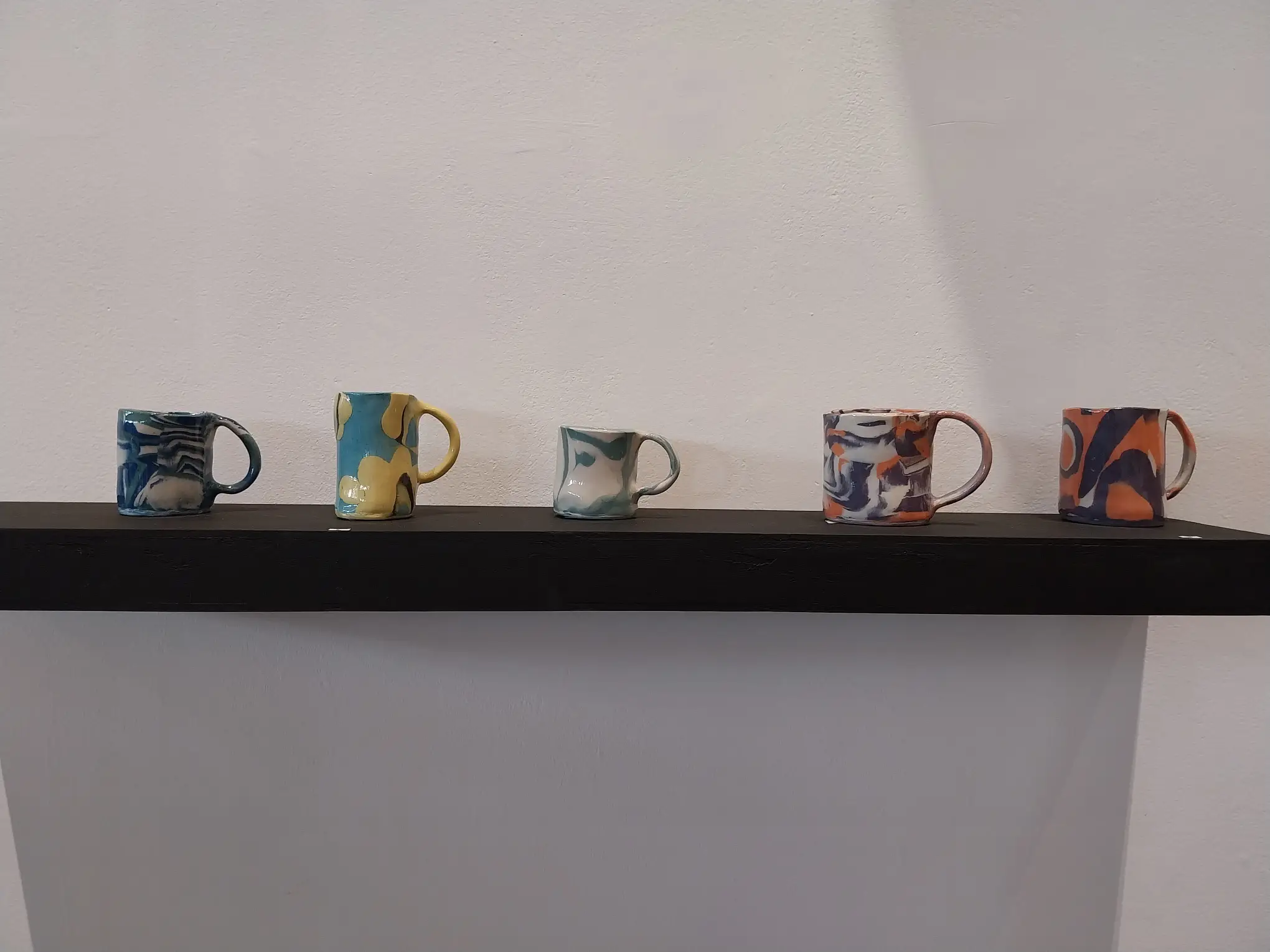
Five cups made by Winnie Go for “Nerikomi.”
Some works by Winnie Go for “Nerikomi” at Aphro.
The works presented at Nerikomi are vivid and provocative, not at all the expectation for objects used daily like cups and plates. But that also showcases the true central theme of the project: artistic design doesn’t just coexist with functionality in mediums like pottery, it also elevates it towards something more provocative and beautiful.
Advertisement
“The vivid colours and layered patterns in Go’s espresso cups and mugs, breakfast sets, paired bowls, and serving plates allow audiences to appreciate not just their decorative appeal but also their capacity to elevate everyday moments when used,” Samson said.
Nerikomi as Exploration
Nerikomi exemplifies the artistry of Winnie Go, and how mixing and matching different methods from different cultures opens up new ideas and methods at the end of the day. What can we produce as artists when we broaden the limits we set ourselves? For Go, it created some unique artistic works that reflects her personal style while still integrating a foreign practice into her own.
A visitor looking at some of the works at “Nerikomi” by Winnie Go.
“At the end, I felt I had to put a spin on it and not make it so traditional, and that’s why I made it more contemporary in nature,” Go said. “I put flowers, I put hearts, I did it in different ways that maybe the Japanese wouldn’t do it like that. But I felt that that’s my way of doing it and why not, right?”
Contemporary design refers to the constantly evolving design trends of today. With the power to design our built environments, architects have been experimenting with various architectural approaches. Whether that is through unconventional forms or the integration of smart technologies, BluPrint lists down Filipino architects who are defining contemporary architecture. Deo Alam Architect Deo Alrashid Alam […]
In the Philippines, adaptive reuse gained traction during the 1970s with the rise of conservation and environmental preservation movements. It offered an architectural solution that reuses existing spaces to fit modern needs. Across the country, several projects demonstrate how this approach is being applied—transforming heritage structures into active spaces for culture, hospitality, and community life. […]
From residential spaces to civic structures, lighting dictates the mood of a space. It controls the visual dynamics of an interior, serving as a guiding tool that highlights key design elements, including materials and textures. Related Reading: Lampscaping: How to Light up Your Home like a Pro Regulating the Mood: Natural and Artificial Light in […]
More and more Filipinos are flocking to condominium communities. Often tucked within busy city centers, condo living acts as a small respite from urban chaos. Faced with the challenge of transforming a cramped condominium into a warm living space, BluPrint lists condo interior design ideas that can maximize each square foot of small spaces. Purposeful […]
Modern bathrooms are no longer purely functional spaces. Increasingly, they are being designed as environments that support cleanliness, ease, and quiet restoration within the home. As daily life becomes more demanding and health awareness continues to rise, homeowners are beginning to expect more from the spaces where daily rituals begin and end. For architects and […]
From the moment a diner steps through the door, each detail shapes how a meal is experienced. Restaurant design has evolved, with architects and culinary professionals collaborating to create built spaces that are as intentional as the menu itself. The spatial atmosphere acts as an additional ingredient that can define the culinary experience. Taupe and […]