When one thinks of the Tree of Life, several images may come to mind because of its deep roots in different cultures and religions. The first and last books of the Bible mention it together with the Tree of Knowledge in the Garden of Eden, while the Bodhi Tree in Buddhism was where Siddhartha Gautama reached enlightenment.
As the Philippines and Japan commemorate 70 years of diplomatic relations, the coconut tree – in all its profound symbolism – was chosen to be the theme and highlight of the exhibit that kicks off the year’s festivities.
Salcedo Auctions partners with the Department of Trade and Industry, the Philippine Trade and Investment Center in Tokyo, and the Embassy of the Philippines in Japan to present The Philippine Coconut: Tree of Life, Seed of Innovation. “I really wanted to focus on something that the Philippines is a leader of. Not a lot of people know that we are one of the largest exporters of coconut products internationally,” says Salcedo Auctions chairman and chief specialist Richie Lerma.
Advertisement
The exhibit, held at Tokyo Midtown Design Hub in Roppongi, begins with a hallway lined with Hacienda Crafts’ Ikat Lamp, designed by Tes Pasola. The lamps made of bamboo and buri are painstakingly designed with beads that mimic textile patterns reminiscent of ikat weaves.
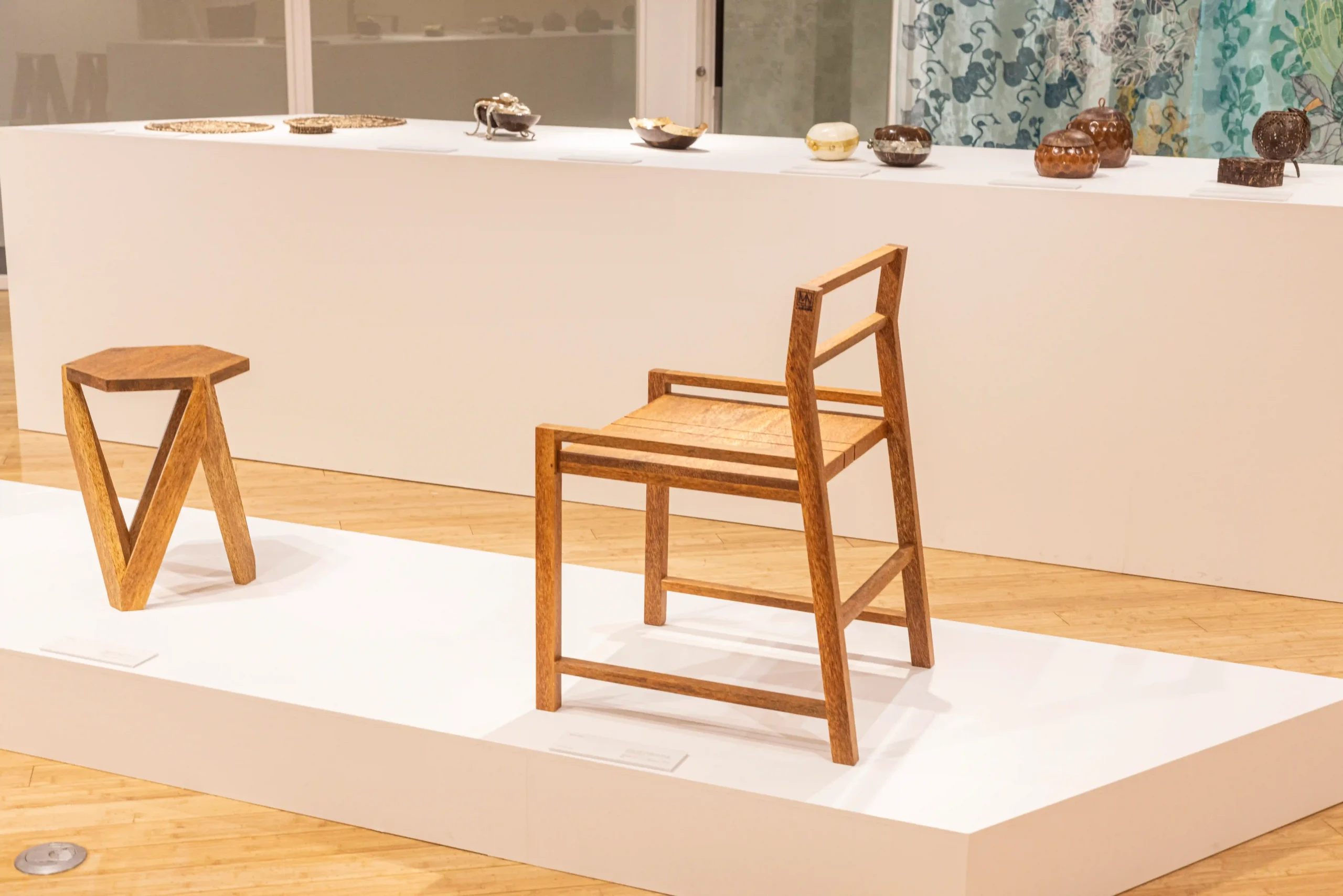
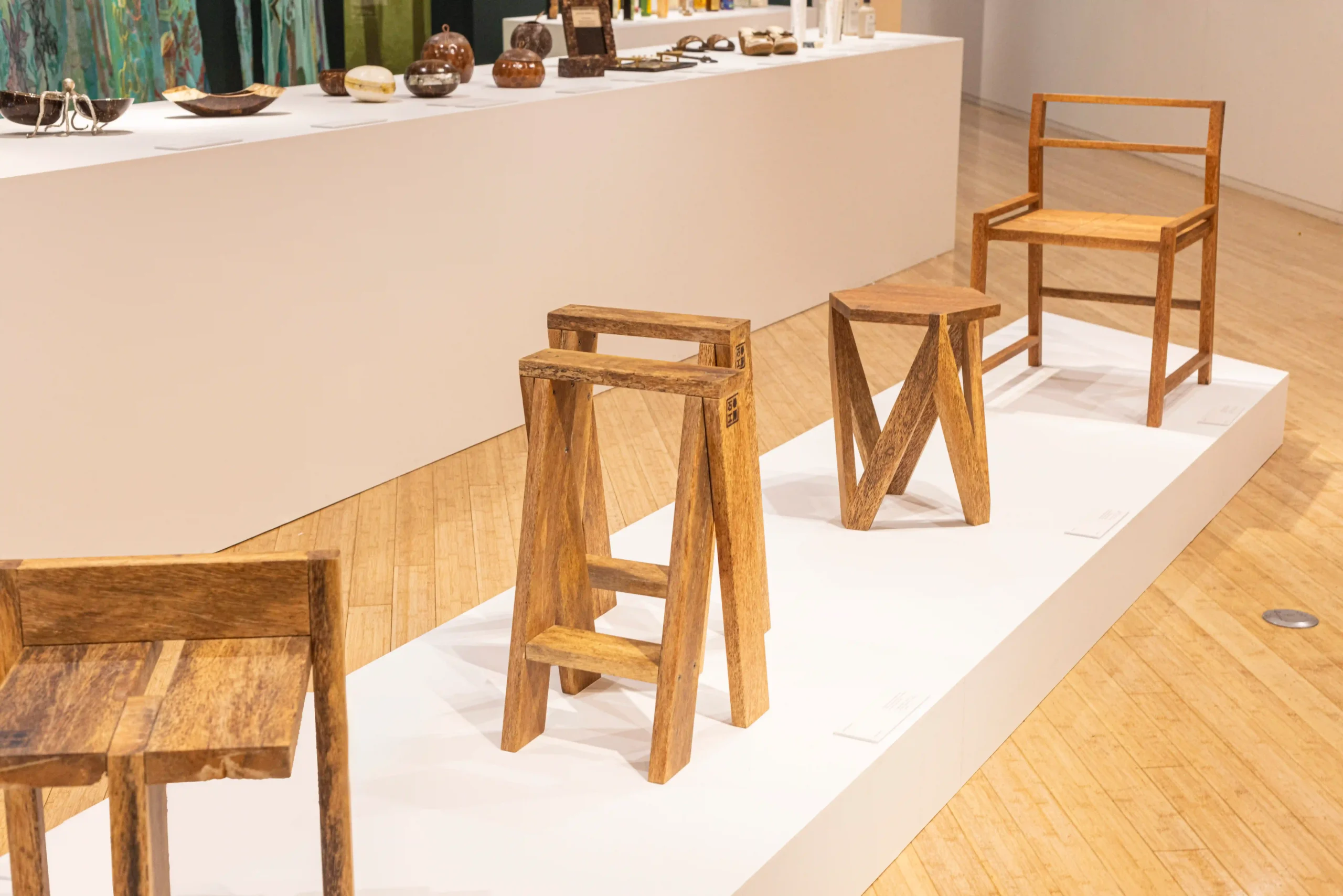
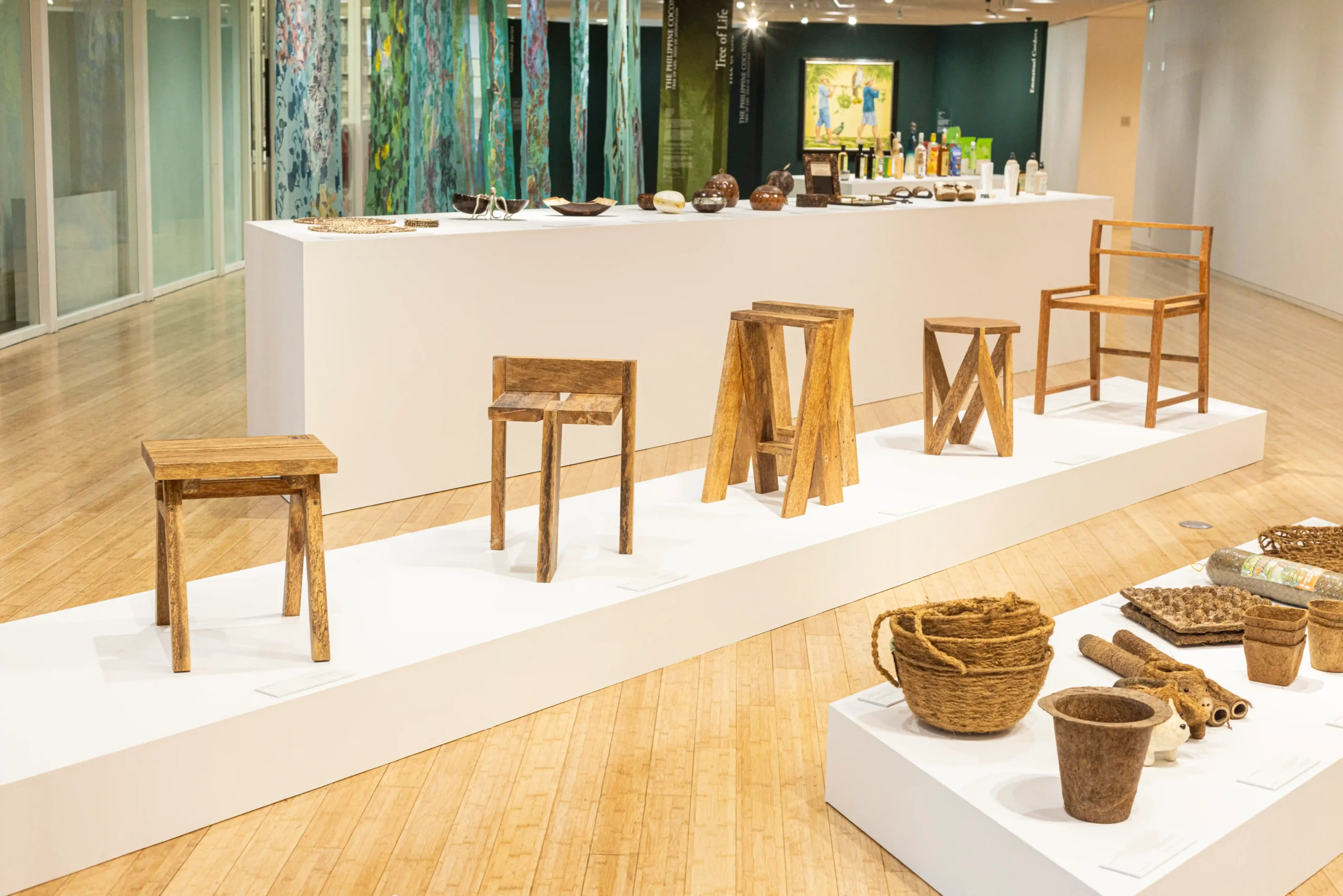
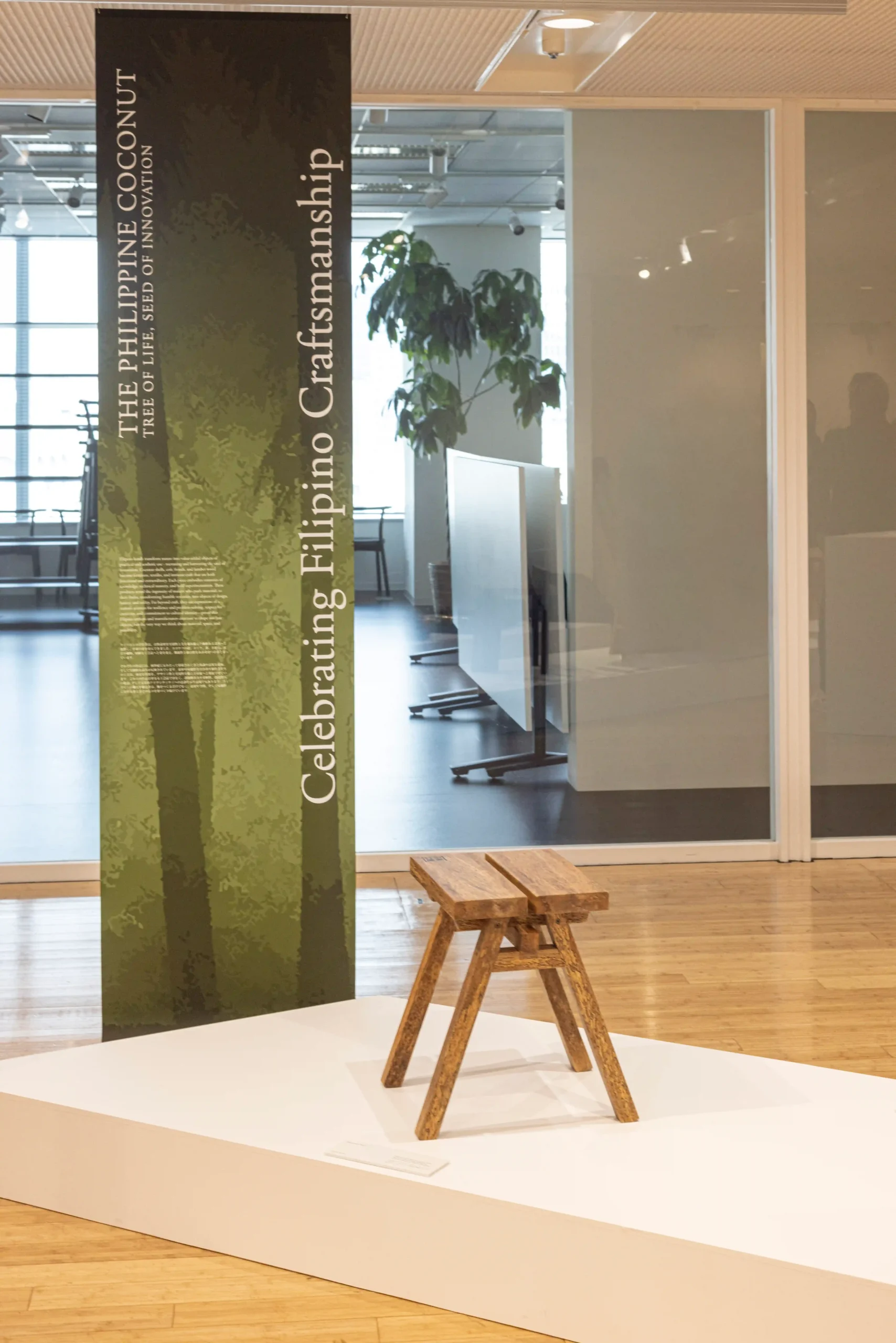
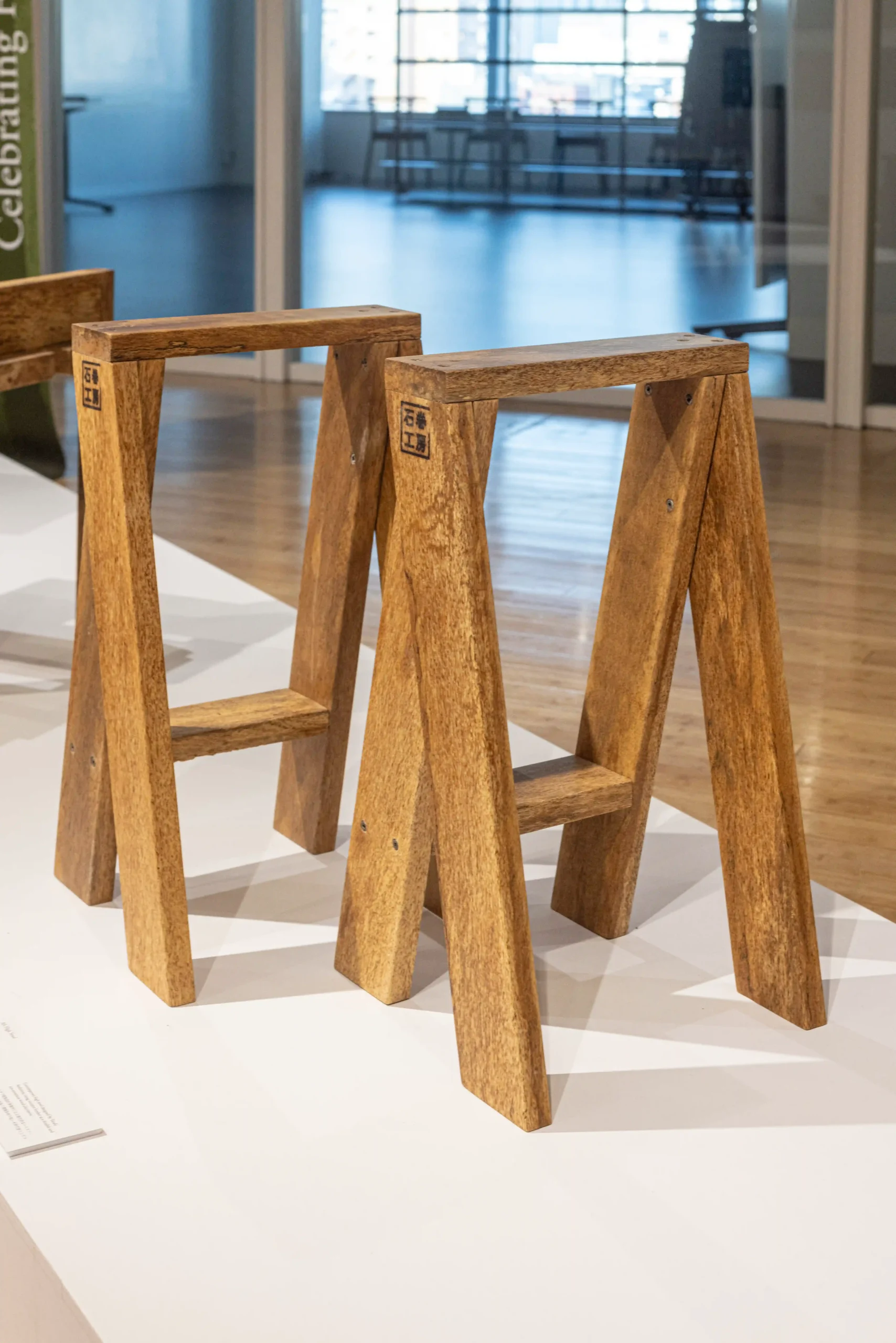
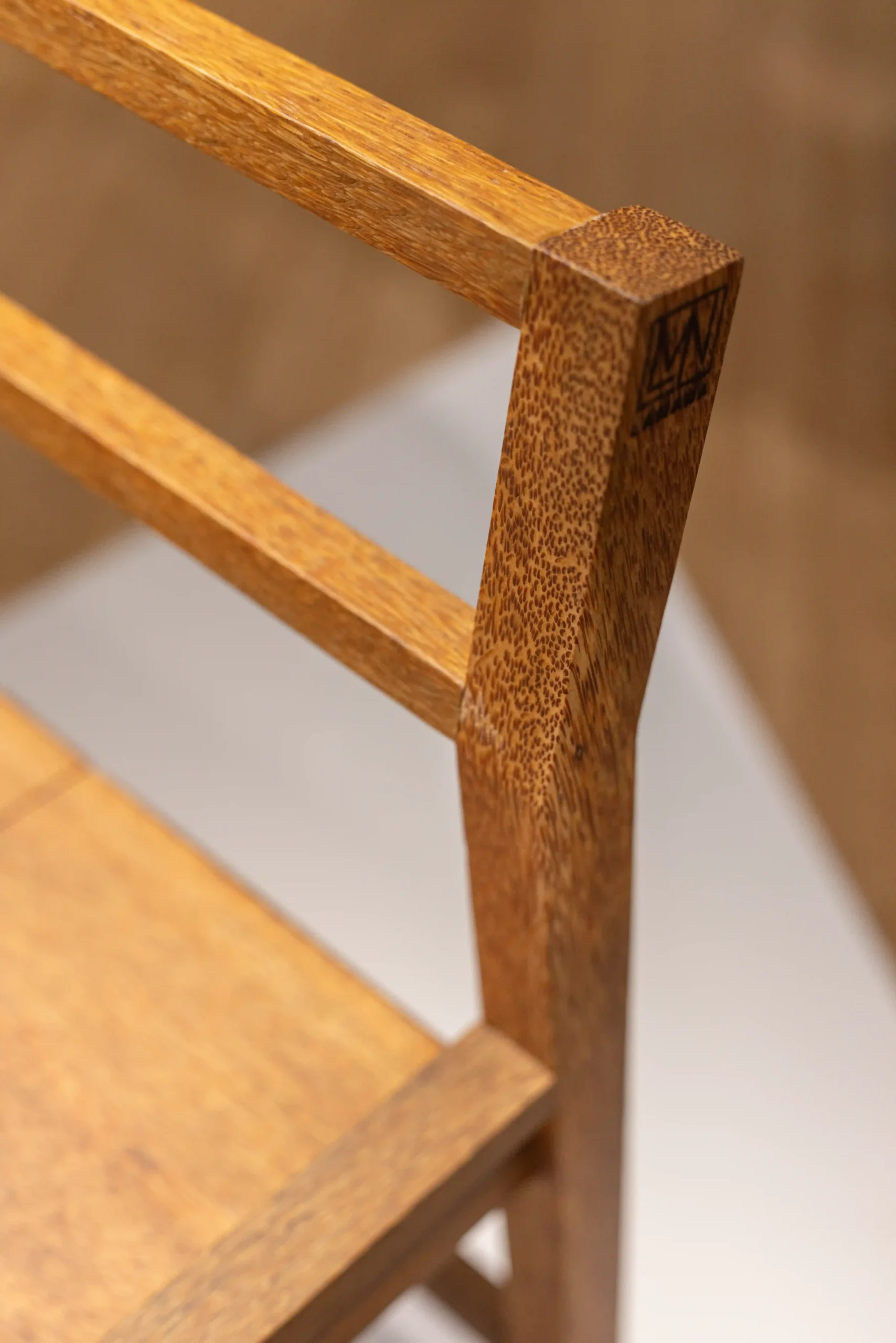
Lightboxes showcase specific parts of the coconut tree, introducing the varied uses of the coconut. The trunk produces lumber, used in architecture, furniture, and crafts. Salcedo Auctions handpicked Filipino furniture brand Lamana to use the coconut trunk as material for their designer line. Lamana’s partnership with Japanese brand Ishinomaki Laboratory allows them to manufacture these designs, exemplifying good relations between Japan and the Philippines in the design industry. A mix of Ishinomaki Laboratory products—including the Ishinomaki Stool by Keiji Ashizawa, the Tripodal Stool by Studio Adjective, and the AA Stool by Torafu Architects—is presented alongside two pieces by Filipino designers: the Hex Stool by Migo Mariano and the Score Chair by Brian Ver.
Coir – the robust fibers in the coconut husks – holds moisture while naturally resisting decay, making it a perfect material for nets. Coir geotextiles from the Philippines are widely used in civil engineering in Hokkaido and elsewhere in Japan for erosion control and soil reinforcement.
Advertisement
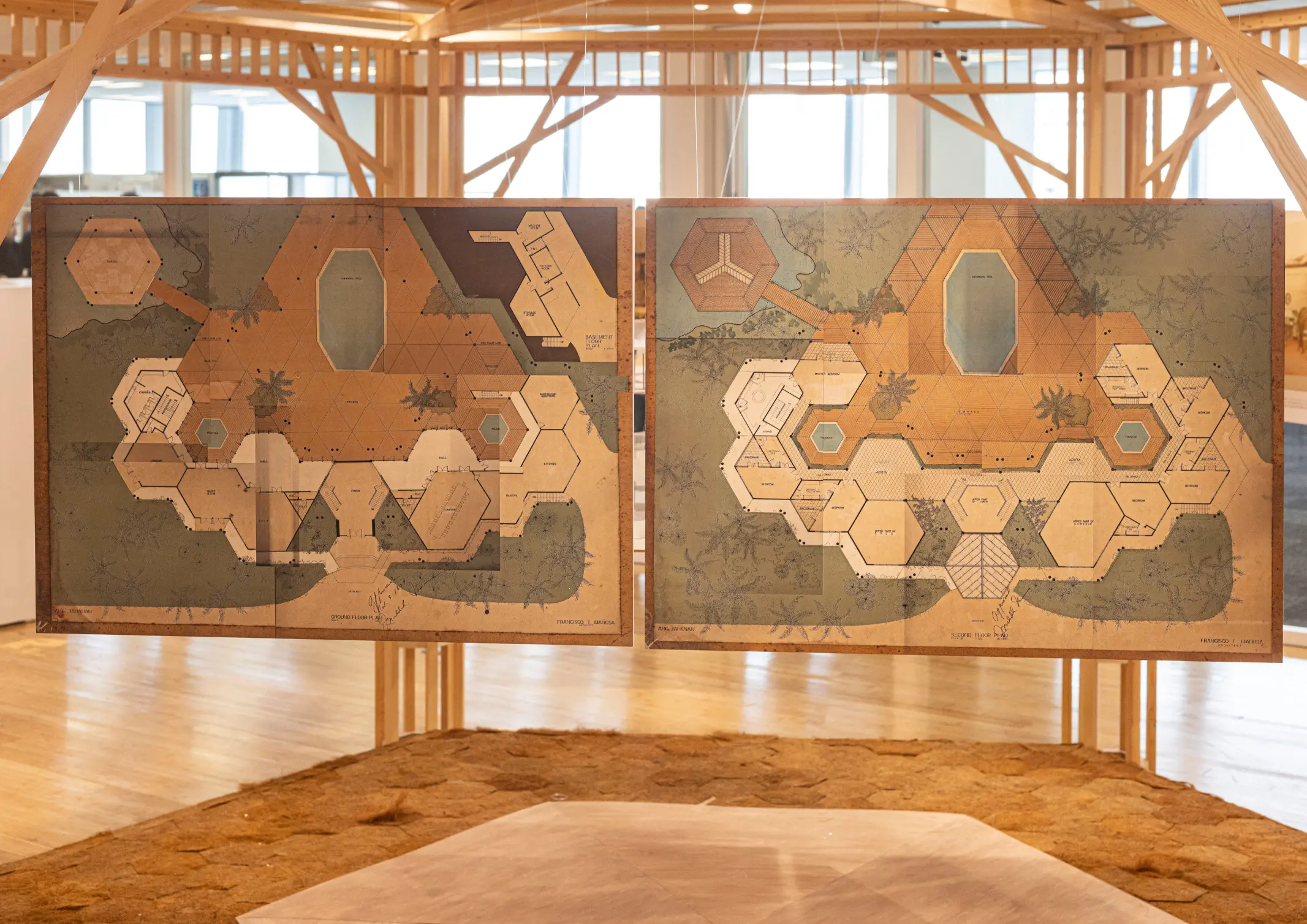
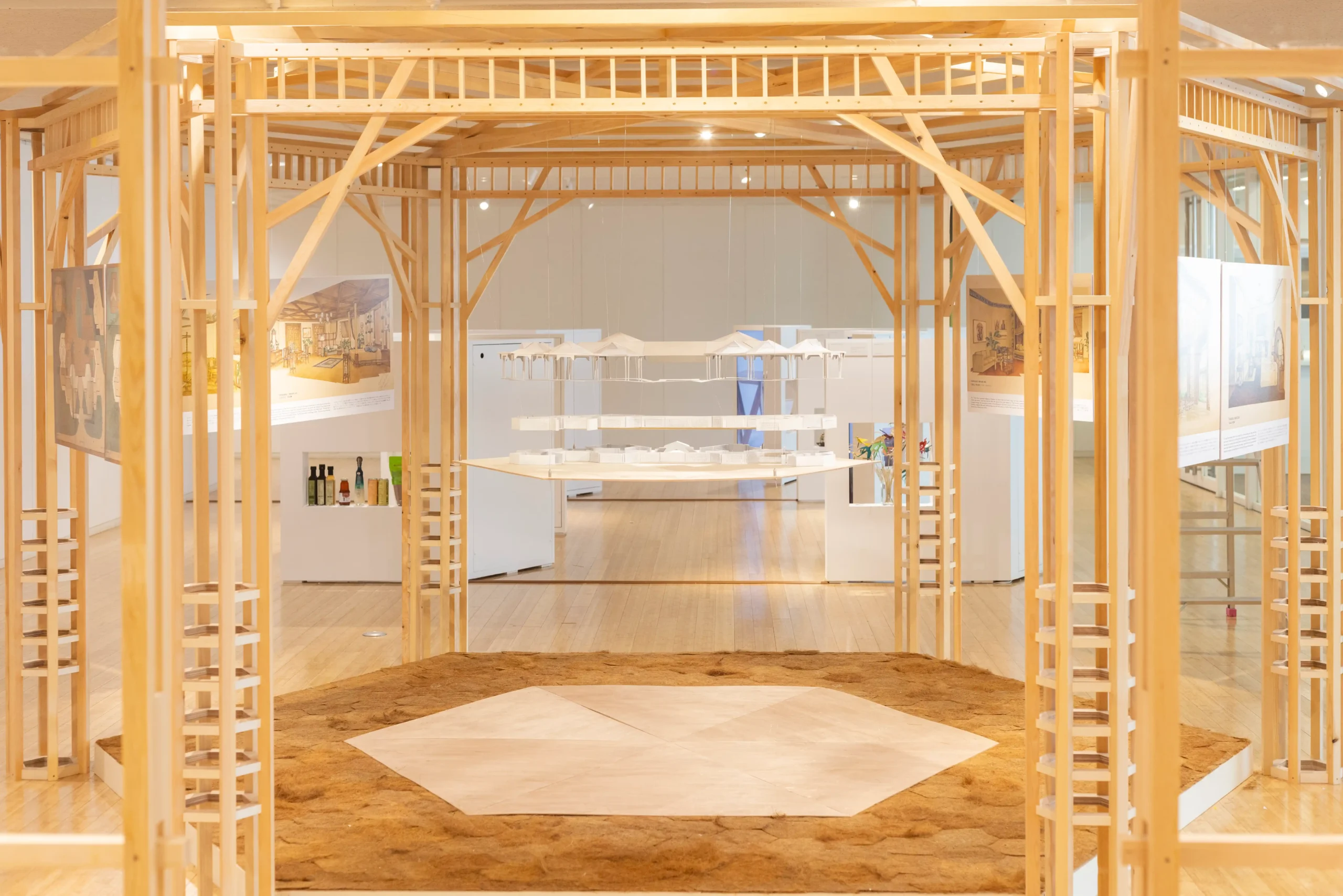
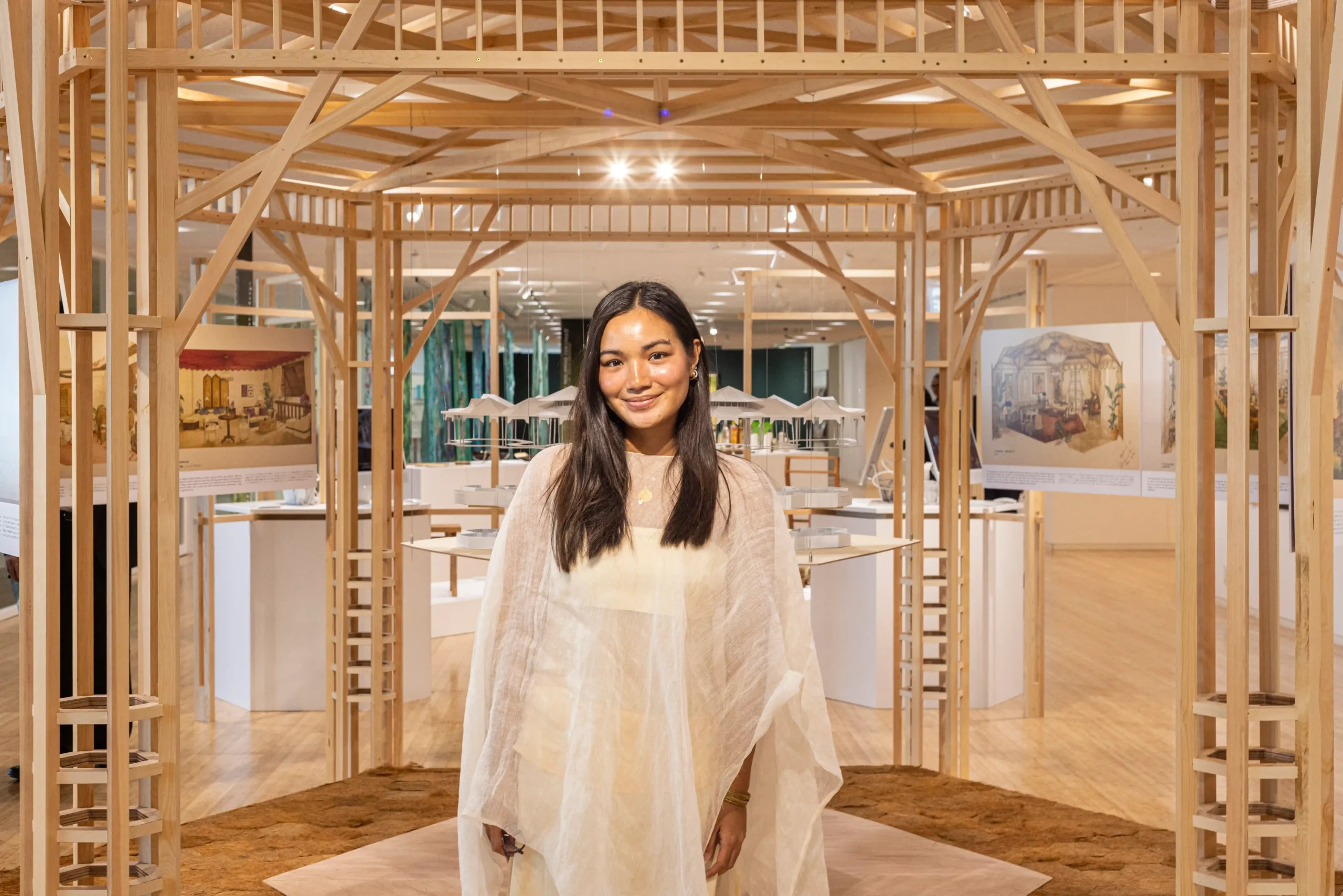
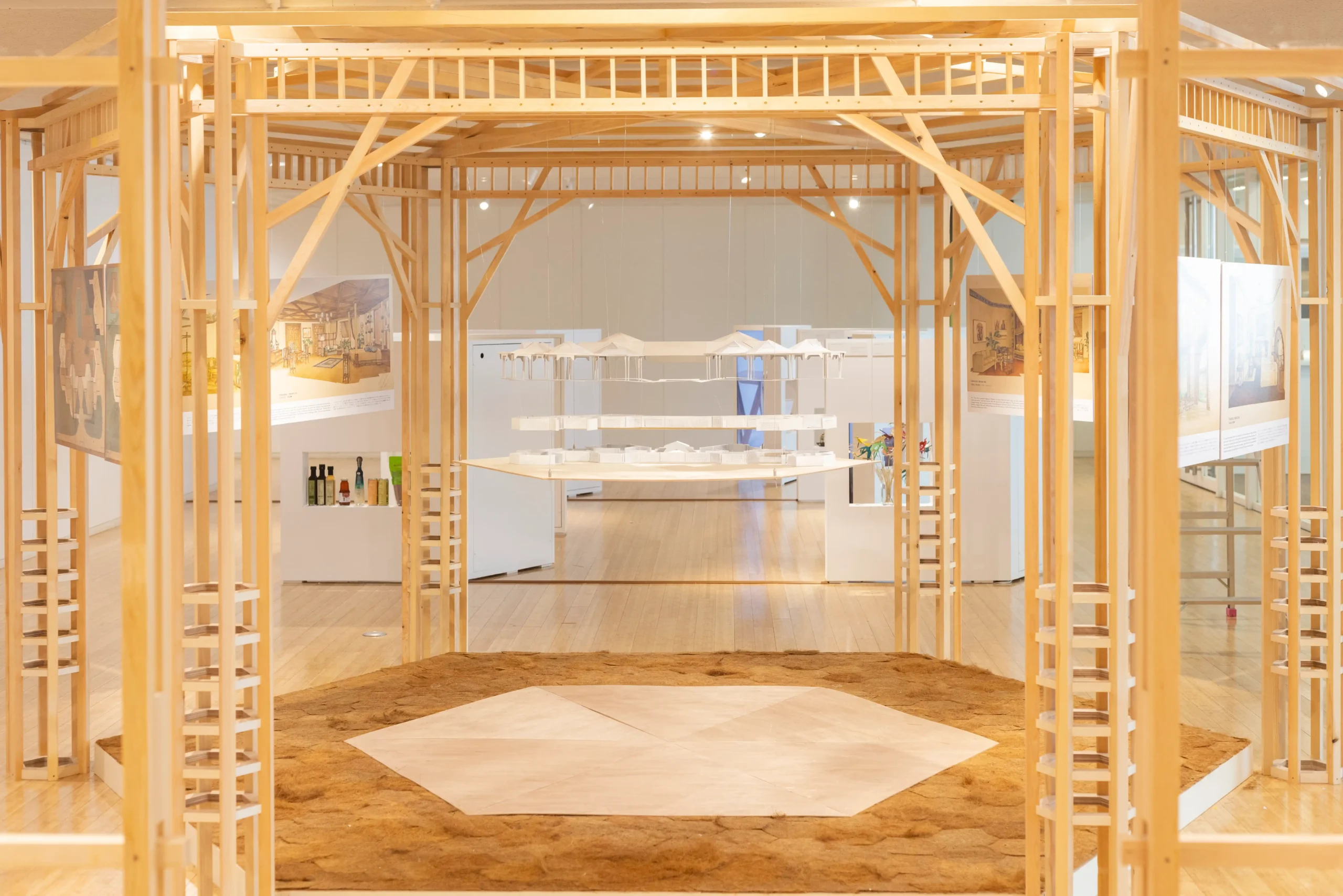
At the center of the exhibit is a hexagonal structure that holds a floating model of the Coconut Palace by Philippine National Artist for Architecture Francisco “Bobby” Mañosa. Surrounding the structure are never-before-seen watercolor renders, offering a pristine vision and passion for the potential of the coconut tree. Granddaughter of Mañosa and executive director of Tukod Foundation, Natasha Mañosa Tanjutco, gives insight into the Coconut Palace’s deeply layered use of coconut. “In the architectural plan of the Coconut Palace, you will see the utilization of the hexagon. This originates from understanding how to actually cut coco lumber. You’ll notice how there are different variations of hardness and softness of the wood. Thus, by cutting it in a hexagon you were using the hardest and sturdiest part of the coco lumber. So he used this as the inspiration for the entire architectural landscape of the building.”
Beyond the architecture, the hexagon shape was also applied in the interior design. The windows, the parking floor, and the ceiling all used the hexagon. “Other than the hexagon, the use of herringbone design or diagonal lines inspired by the coconut leaf was utilized in various ways, from the entrance door and beams.
Tanjutco also notes, “No less than 70% of the whole structure is derived from the coconut tree,” emphasizing the central role of the coconut in the building’s creation.
Advertisement
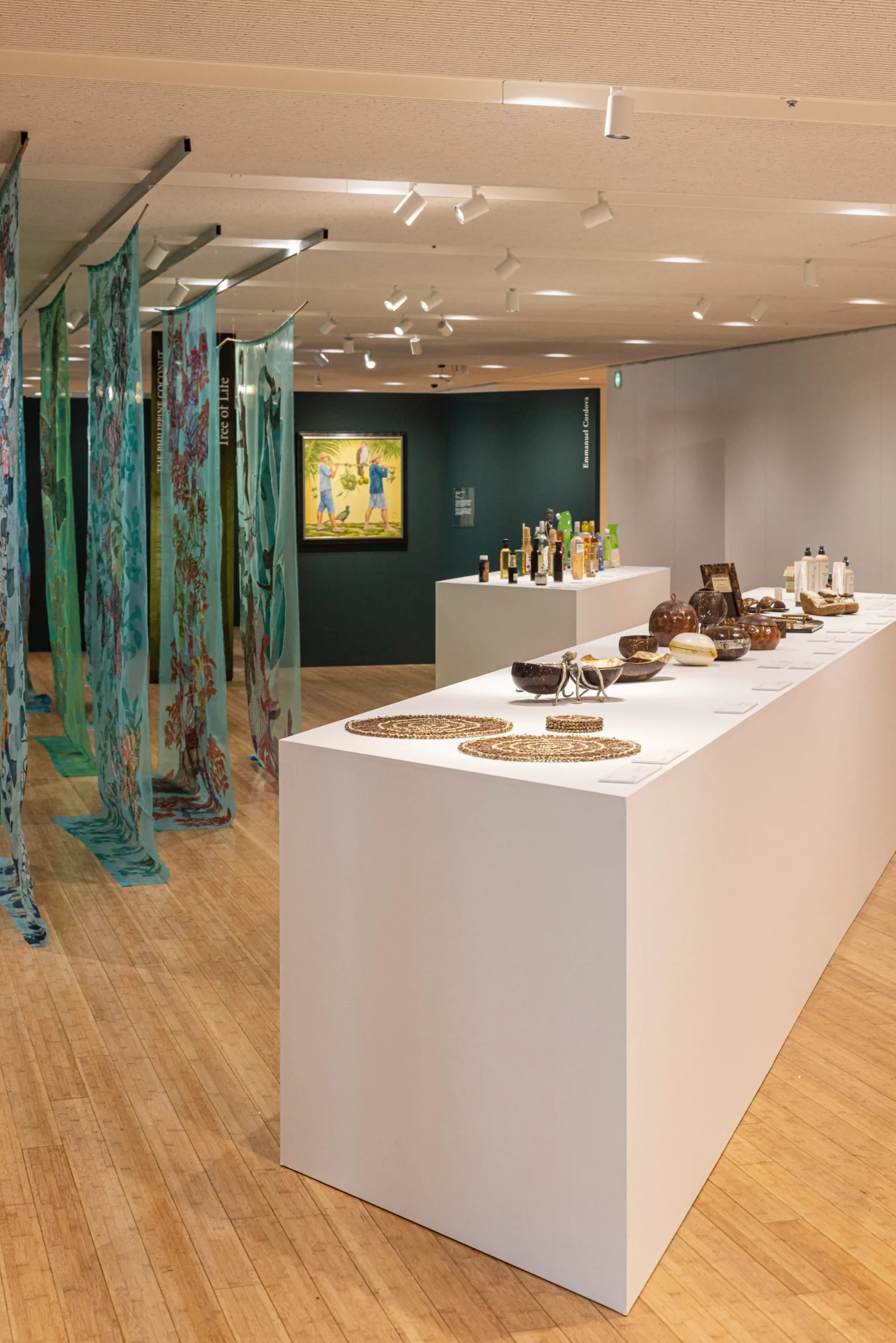
The exhibit continues with decorative products made from coconut shells, such as Arden Classic’s Curious Sea Creature, which combines coconut and silver-plated brass to form a vessel shaped like a peacock. Coconut meat and water produce coconut oil, coconut sugar, and a wide array of beauty products.
Geraldine Javier’s silk organza installation, entitled The Two Fridas, hangs at this point in the exhibition. “Her installation depicts two women seated together, tethered by a cord around their shoulders connected at the heart,” describes Lerma. “They are encircled by lush foliage and watchful primates, situating intimacy within the natural world. The work resonates with themes of interdependence, shared survival, and emotional ecology. Nature is not a backdrop but a witness. Like the coconut tree, the figures suggest endurance through connection.”
Artists such as botanical painter Emmanuel Cordova, Demetrio Dela Cruz, Maria Pureza Escaño, Mark Andy Garcia, and Joel Geolamen each offer a contemplative perspective on the coconut tree’s role in Filipino life. Geolamen paints tribal textiles across the landscape rather than the trees. Dela Cruz delves into the mythological figures Malakas and Maganda, who were sustained by the coconut tree. Escaño frames idyllic scenes with dappled sunlight and the ever-present coconut. Lerma, discussing Garcia’s painting Into Great Silence, notes, “Garcia presents nature as subject rather than setting. These are spaces of contemplation, visual articulations of the spiritual. What we see is not just landscape, but belief made visible.”
Advertisement
The exhibit continues until January 30. “The coconut becomes a metaphor for interconnectedness. Ecological, cultural, and social growth and decay, ritual and labor, memory and transformation are shown not as opposites, but as cycles. In doing so, the exhibition invites us to reflect on how societies endure, adapt, and imagine continuity within a world in constant flux,” concludes Lerma.
In the Philippines, adaptive reuse gained traction during the 1970s with the rise of conservation and environmental preservation movements. It offered an architectural solution that reuses existing spaces to fit modern needs. Across the country, several projects demonstrate how this approach is being applied—transforming heritage structures into active spaces for culture, hospitality, and community life. […]
From residential spaces to civic structures, lighting dictates the mood of a space. It controls the visual dynamics of an interior, serving as a guiding tool that highlights key design elements, including materials and textures. Related Reading: Lampscaping: How to Light up Your Home like a Pro Regulating the Mood: Natural and Artificial Light in […]
More and more Filipinos are flocking to condominium communities. Often tucked within busy city centers, condo living acts as a small respite from urban chaos. Faced with the challenge of transforming a cramped condominium into a warm living space, BluPrint lists condo interior design ideas that can maximize each square foot of small spaces. Purposeful […]
Modern bathrooms are no longer purely functional spaces. Increasingly, they are being designed as environments that support cleanliness, ease, and quiet restoration within the home. As daily life becomes more demanding and health awareness continues to rise, homeowners are beginning to expect more from the spaces where daily rituals begin and end. For architects and […]
From the moment a diner steps through the door, each detail shapes how a meal is experienced. Restaurant design has evolved, with architects and culinary professionals collaborating to create built spaces that are as intentional as the menu itself. The spatial atmosphere acts as an additional ingredient that can define the culinary experience. Taupe and […]