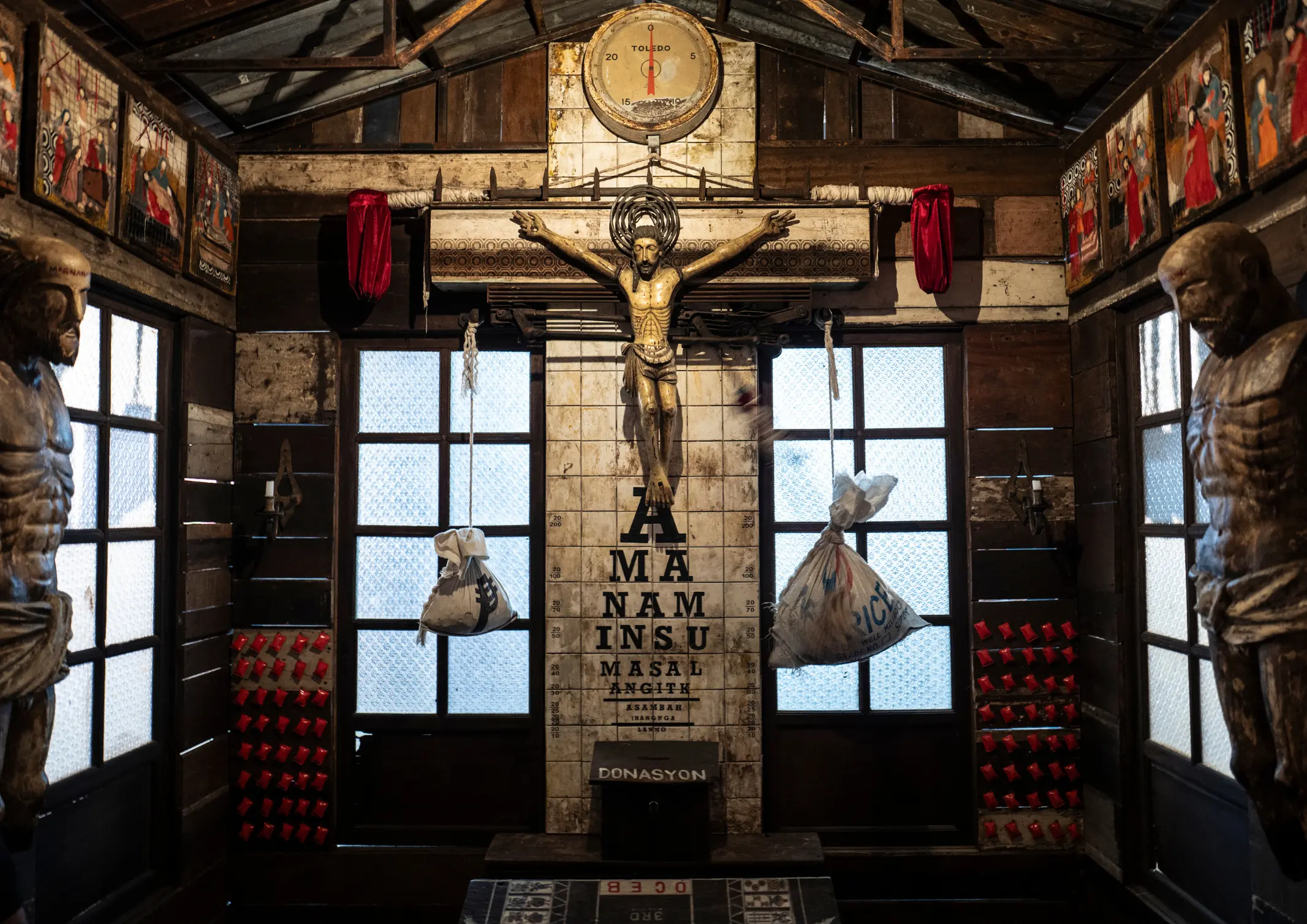
Now Now Canteen enters into its second artist for its reNOWn cultural incubation program with visual artist Celine Lee. The program, seeking to meld fine dining and high art, has created unexpected results in its pursuit for common ground between the two formats.
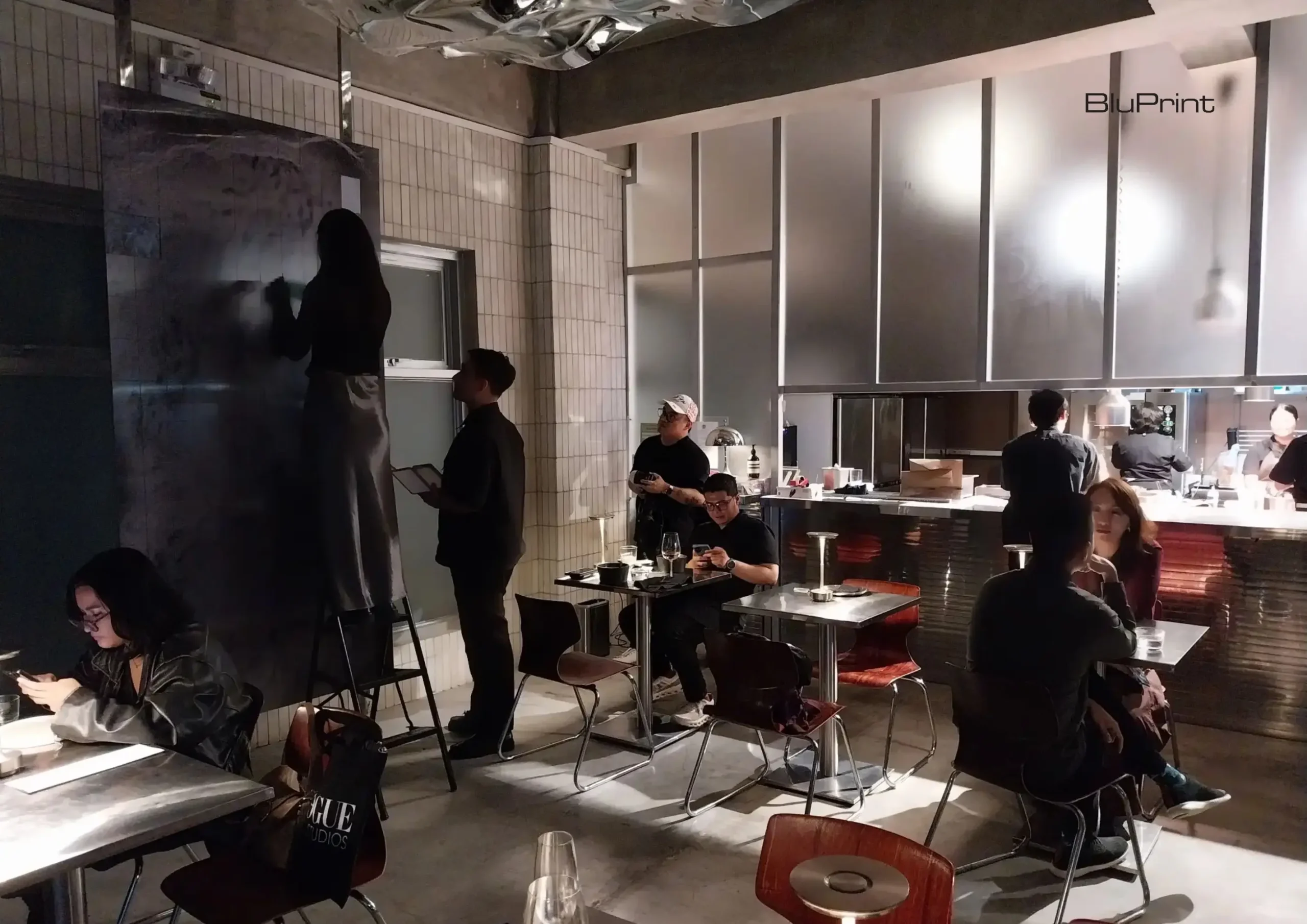
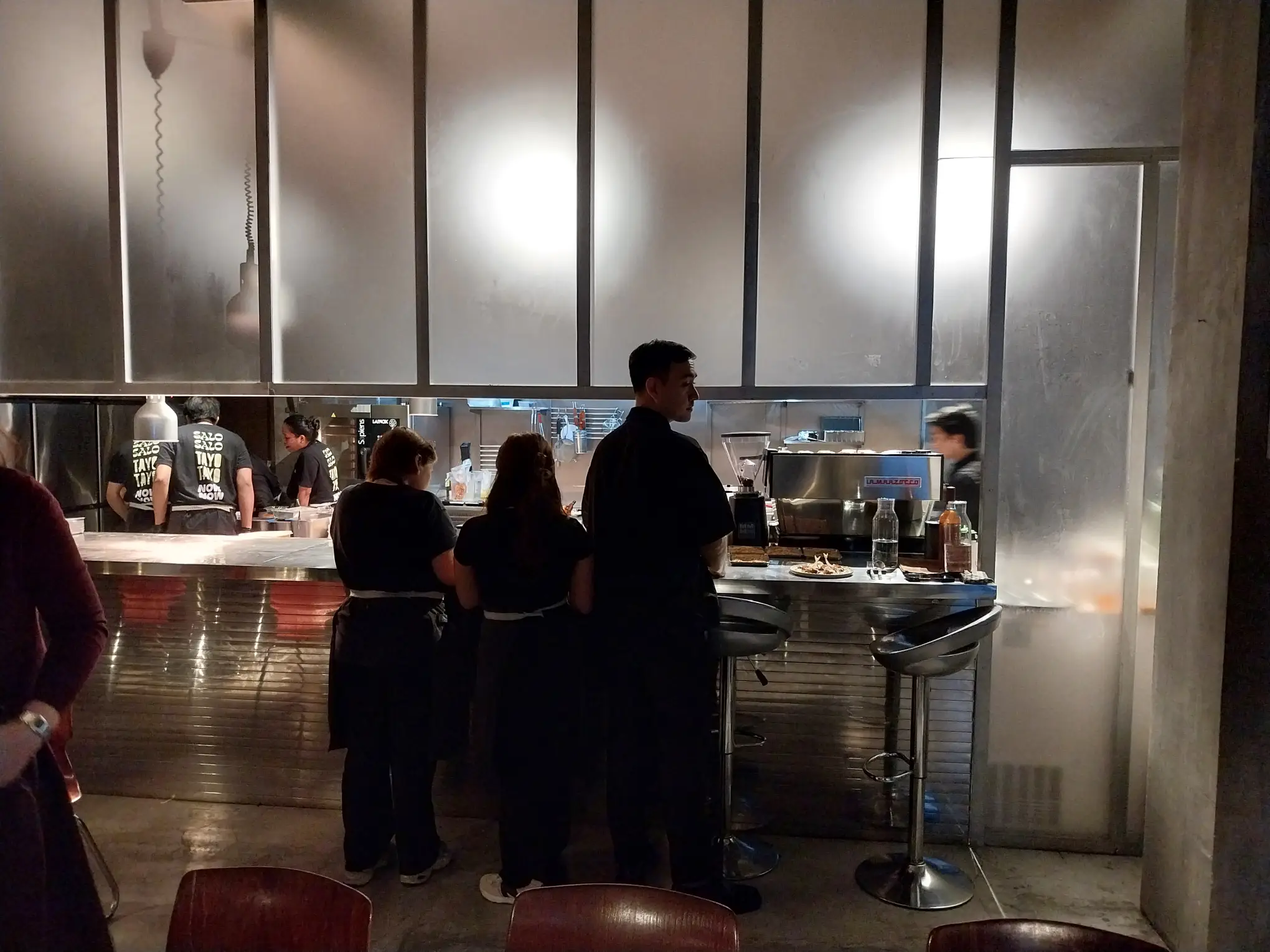
The staff of Now Now Canteen at work during the opening night of ‘reNOWn.’
“For all their differences, art and food share a powerful common ground,” Mateusz Łuczaj, who is a part of the gastronomy team of Now Now Canteen, said. “Both invite us to engage with physical form in a way that stirs emotion, provokes thought, and sparks dialogue. With reNOWn, we don’t just imitate art—we seek to expand it. In a sense, we’re adding new colors to the contemporary artist’s palette, enriching the experience and deepening its resonance.”
Celine Lee for ‘reNOWn’
The choice of Celine Lee for the reNOWn program is an inspired one. As an artist, she’s well-known for her exploration of the “metaphysical aspects of contemporary human experience.” She constantly utilizes different materials to explore the idea of creating an image itself, landing unto distinct works that dig into how we create meaning to the images we choose to valorize or decry.
Advertisement
She shared that her attraction to reNOWn came out of an admiration of the ambitions of the team behind the program at Now Now Canteen, which was to “democratize” the kind of food they served. She said that this tickled her own ambitions on how she wanted her artwork to be perceived.
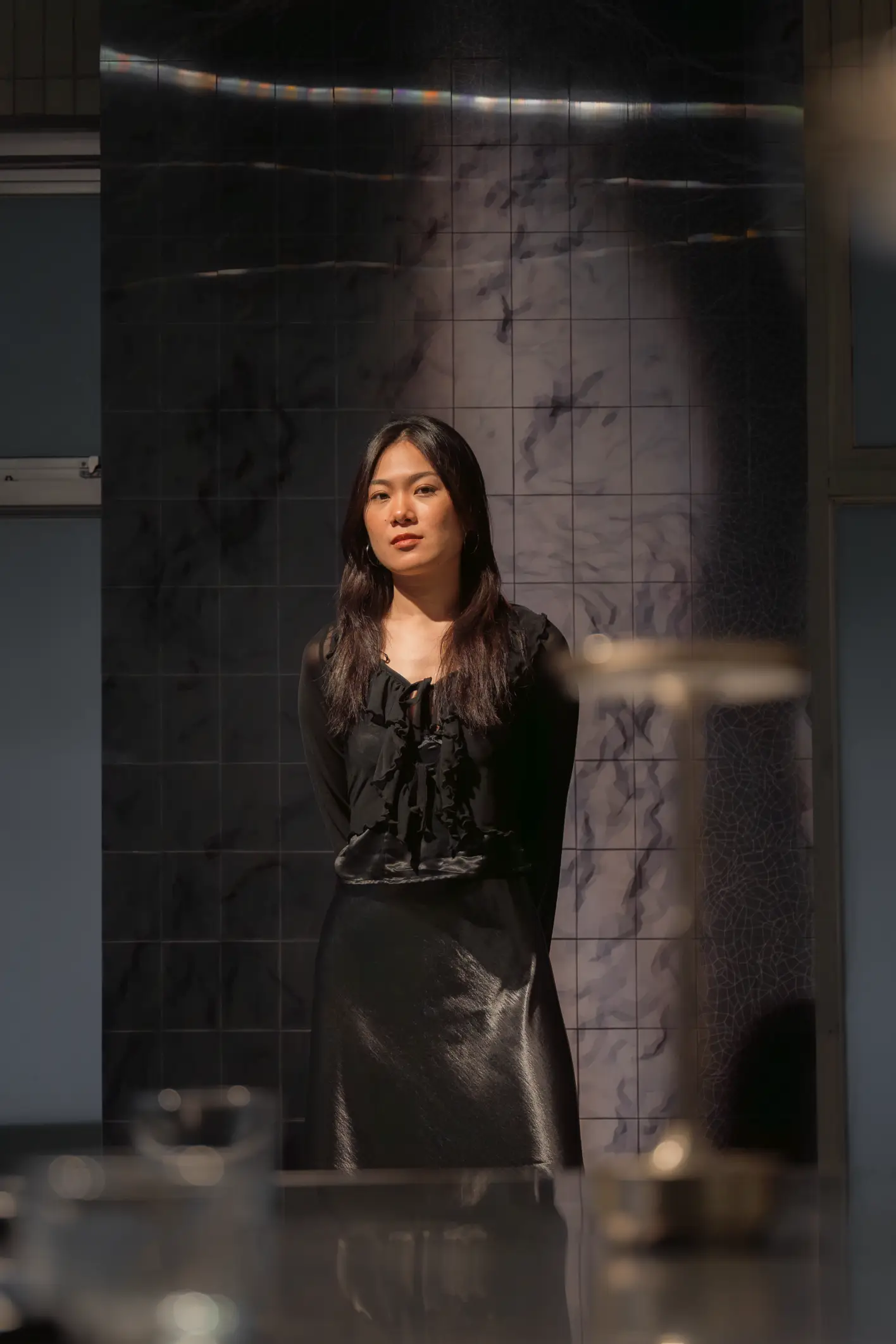
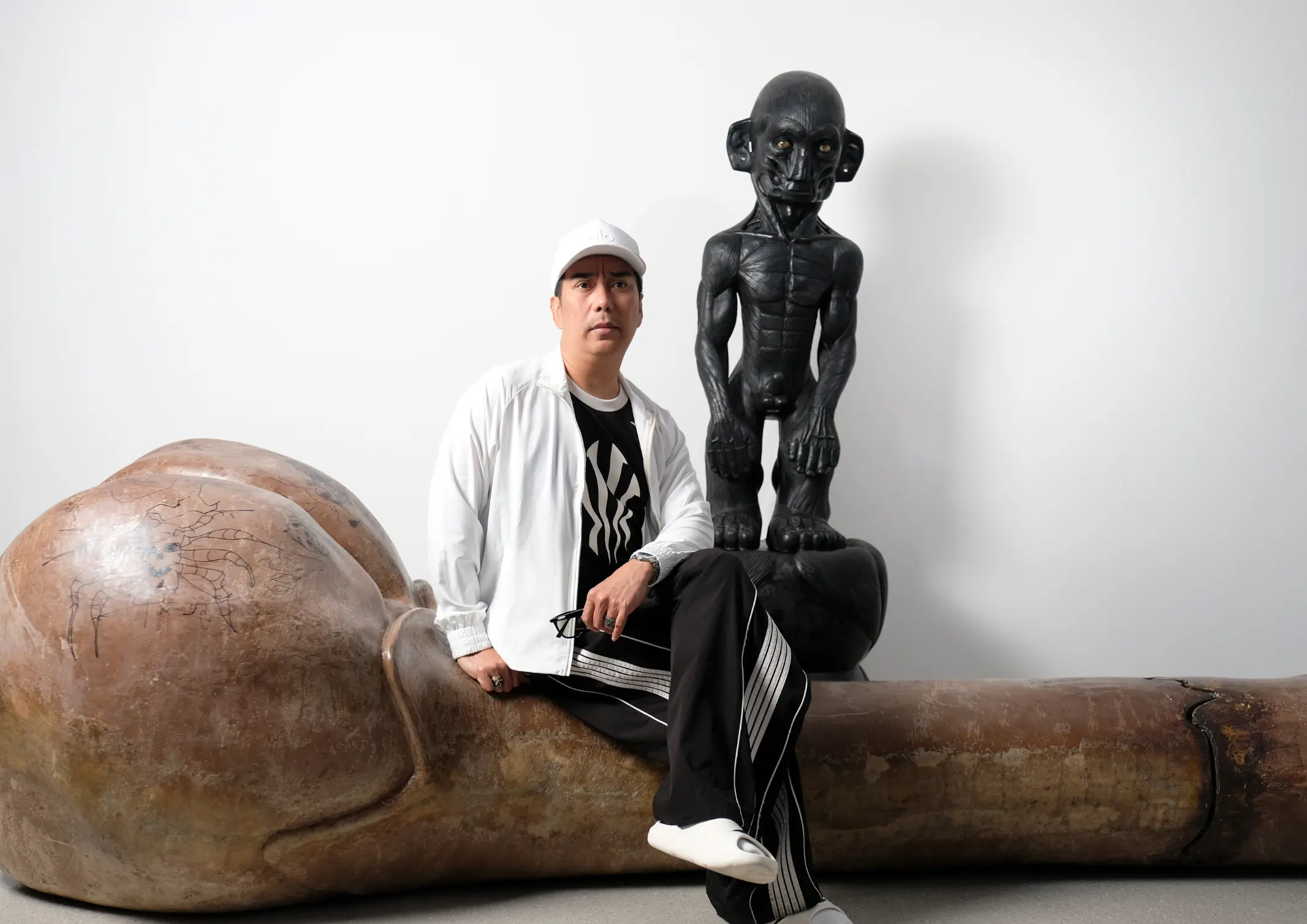
A portrait of Celine Lee in front of “A Mass.” Photo by Joshua Misalucha, provided by Patrick de Veyra.
“I feel like not everyone goes to galleries or museums to view art, but most people go out to dine, so the idea of combining the two together to make (my) art more accessible to a wider audience is what I liked most about reNOWn,” she said.
The Inaccessibility of Food and Art
For the menu of this reNOWn program, Celine Lee chose to center her residency around the idea of food insecurity. The exhibition-slash-degustation plays around the imagery of rice, using it to critique the class stratification of our world today. Lee also shared that she saw this as a commentary of her own profession as an artist and how inaccessible it can be for most Filipinos.
Advertisement
“Apart from rice being an integral part of my diet as a Filipino, I would like to think of my own artistic practice as being self-aware about the fact that I, myself, am a medium, and so I wanted to self-critique (my) art being affordable only to a certain social class,” she said. “Rice became the central subject/metaphor because I think it has the ability to bypass social classes because of its widespread consumption globally.”
Crafting the Four Dimensional Food of the Program
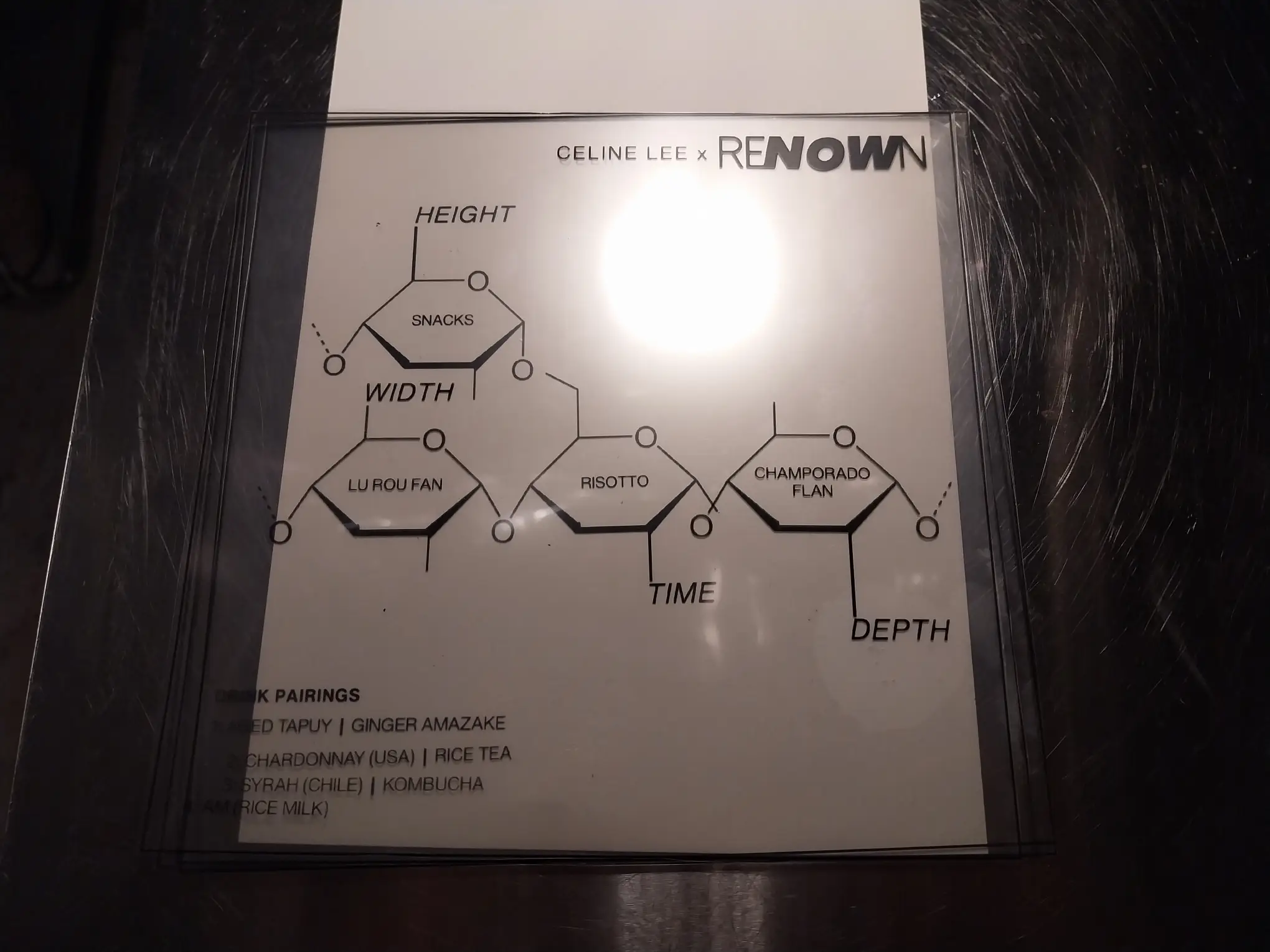
The food in reNOWn reflects that, with the four-course meal utilizing rice while exploring ways to expand the way we present food. Lee said that her menu also seeks to portray four different dimensions through the dishes.
The complete four-course meal guide of “Celine Lee x reNOWn.”
“Our goal is to translate their visual language into the language of food,” Łuczaj said. “But this isn’t a straightforward translation—the gap between the two forms is wide. Still, when the pieces click, the results are deeply rewarding.”
Advertisement
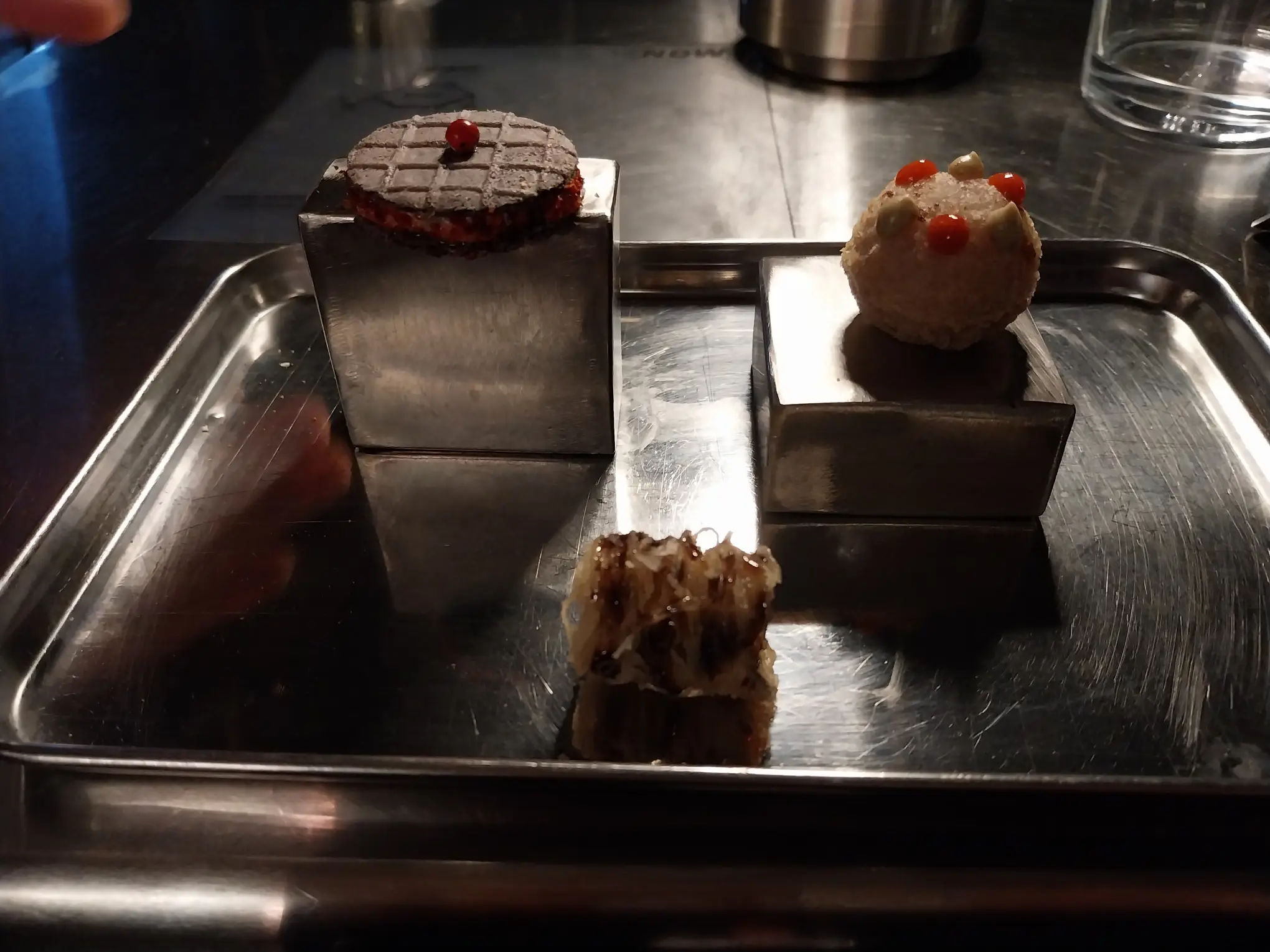
Snacks made for ‘reNOWn’ at Now Now Canteen.
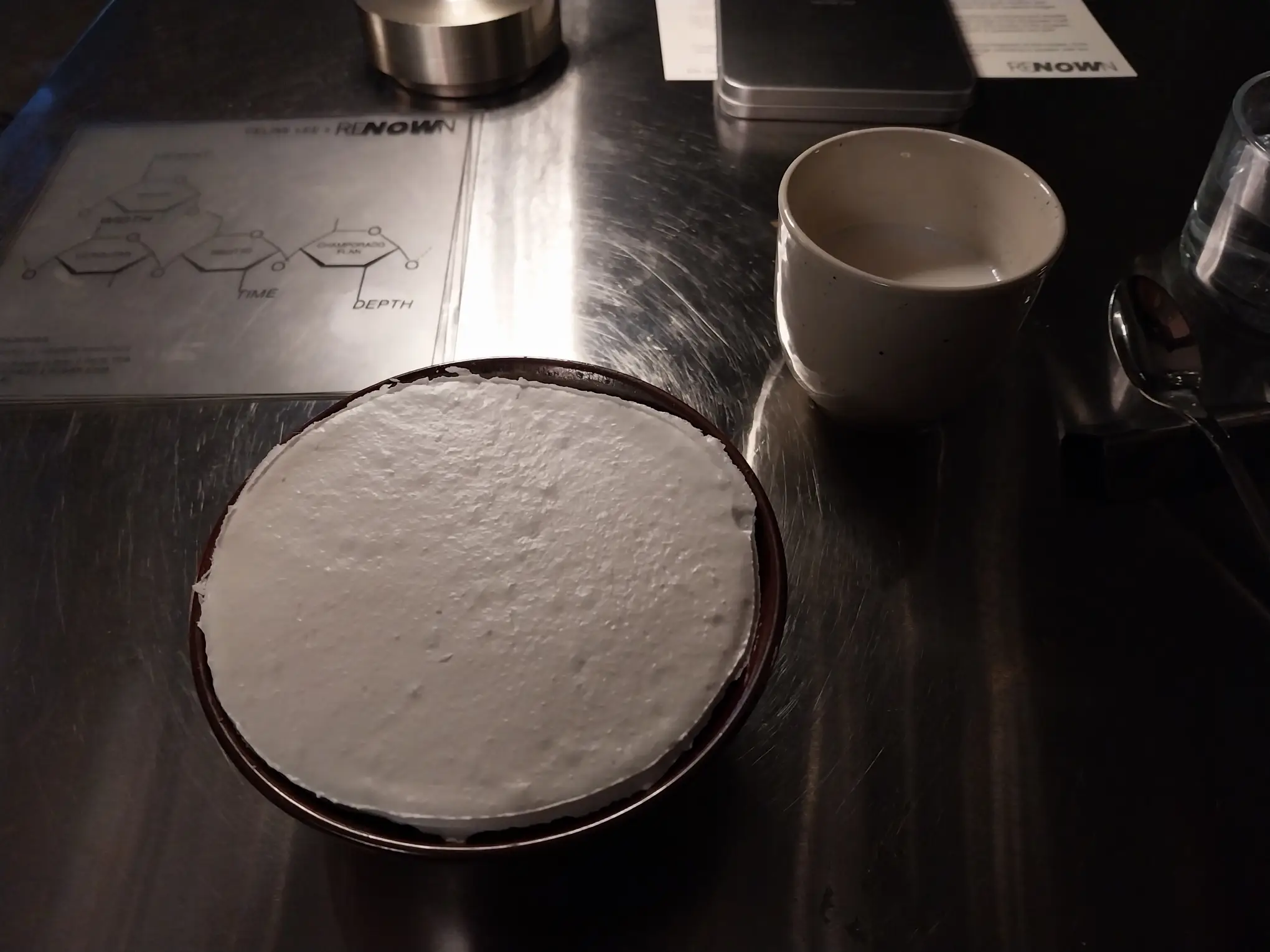
The champorado flan disk in its unbroken form.
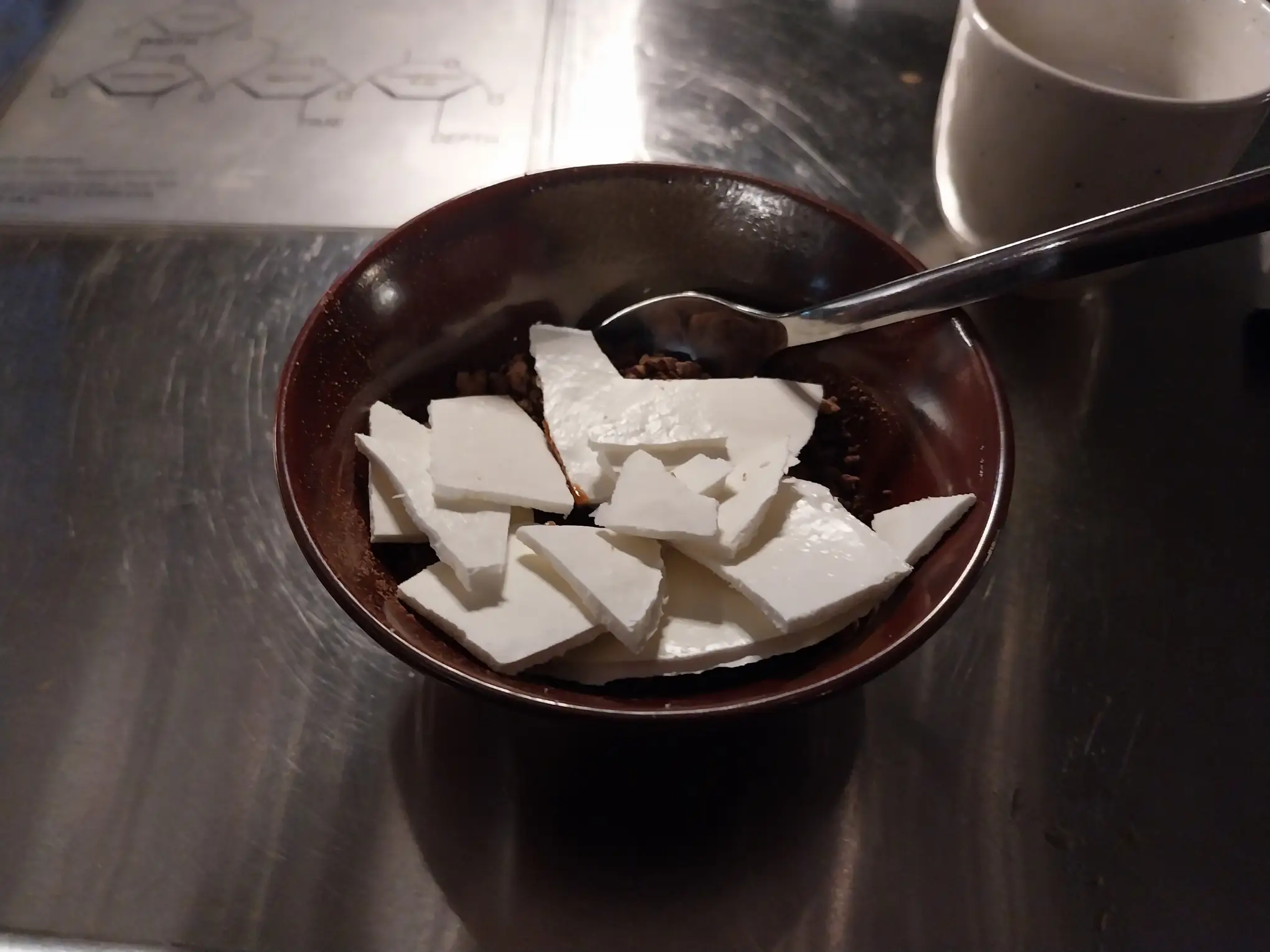
The champorado flan disk broken and ready to eat.
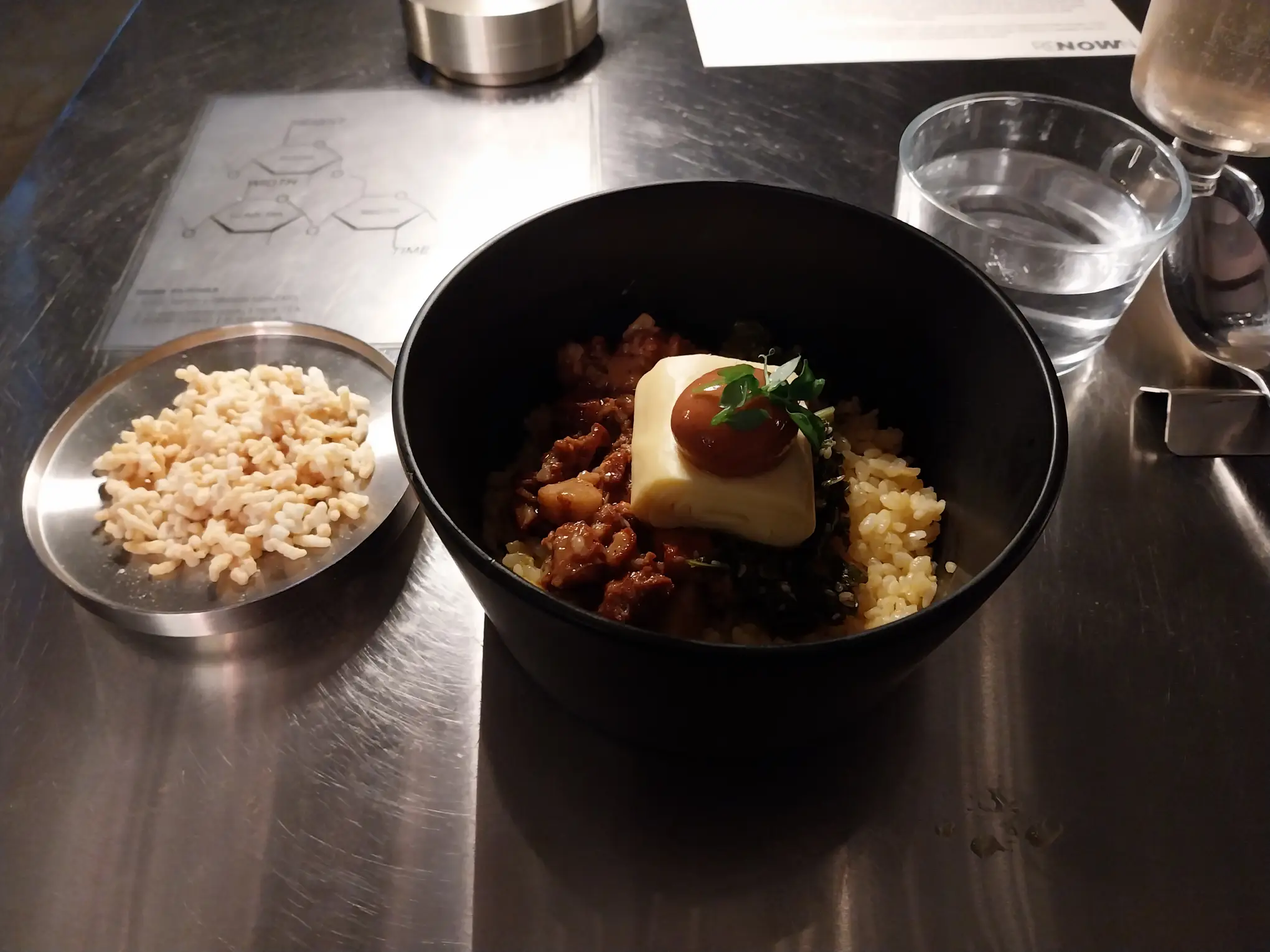
The four-course meal consisted of snacks, risotto, lu rou fan, and champorado flan, and their presentation explored height, time, width, and depth, respectively. One can see how the concepts cohere, like in how you have to crack a solid milk disk on top of the champorado flan before you can eat it, or how the snacks are presented in increasing towers of metal.
The Artistic Aspects of Food
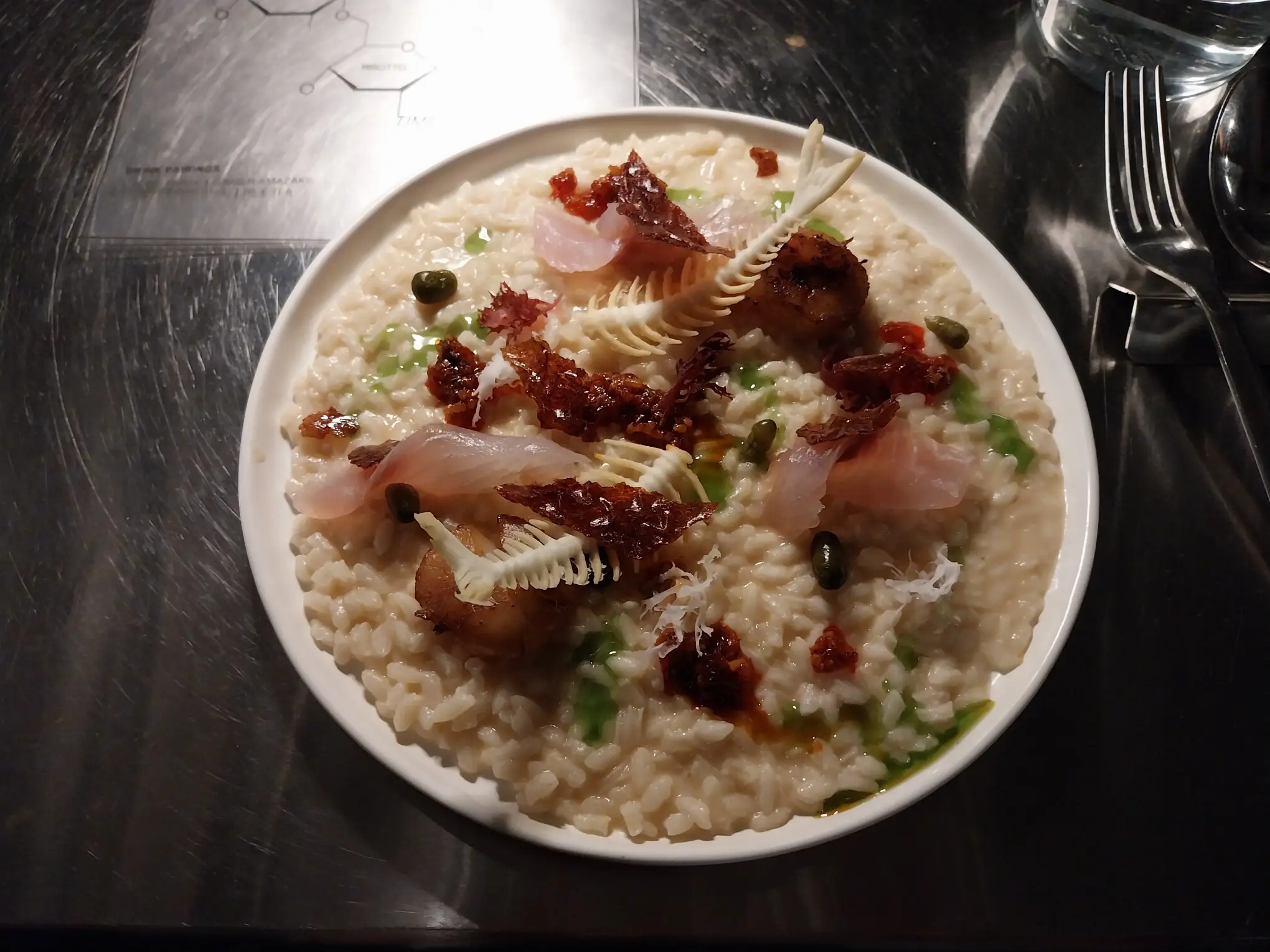
But the most effective and creative dish in the bunch is the seafloor risotto, presented as a large plate of rice with floating bits of food that look like leftovers after a meal. It balances the high-concept nature of reNOWn while also explicitly tackling the political commentary within the work.
Lee said the course was inspired by one of her favorite meals, chirashi don. Mateusz Łuczaj then wanted to play around with the concept of time further, which is how they came up with both the food and the presentation of the dish.
The ‘seafloor’ risotto for “Celine Lee x ReNOWn.”
“Since the idea of my degustation is 4D (4 dishes/4 dimensions), he thought of creating a dish that quite literally presents time by showing the different cooking times in one dish,” Lee said. “Moreover, it being called ‘seafloor’ risotto is already a giveaway as to why it’s the time dish. Additionally, I think he also took inspiration from my idea that I wanted rice to be treated as “the canvas” of a dish.”
Advertisement
“Creativity, at its core, is a collision of ideas—an ongoing process of smashing concepts together and examining what’s left in the aftermath,” Łuczaj said. “Sometimes, the fragments align into something that resonates. Other times, they don’t—and you’re left to either rearrange the pieces into something meaningful or start over entirely.”
‘A Mass’ and Layers of Imagery
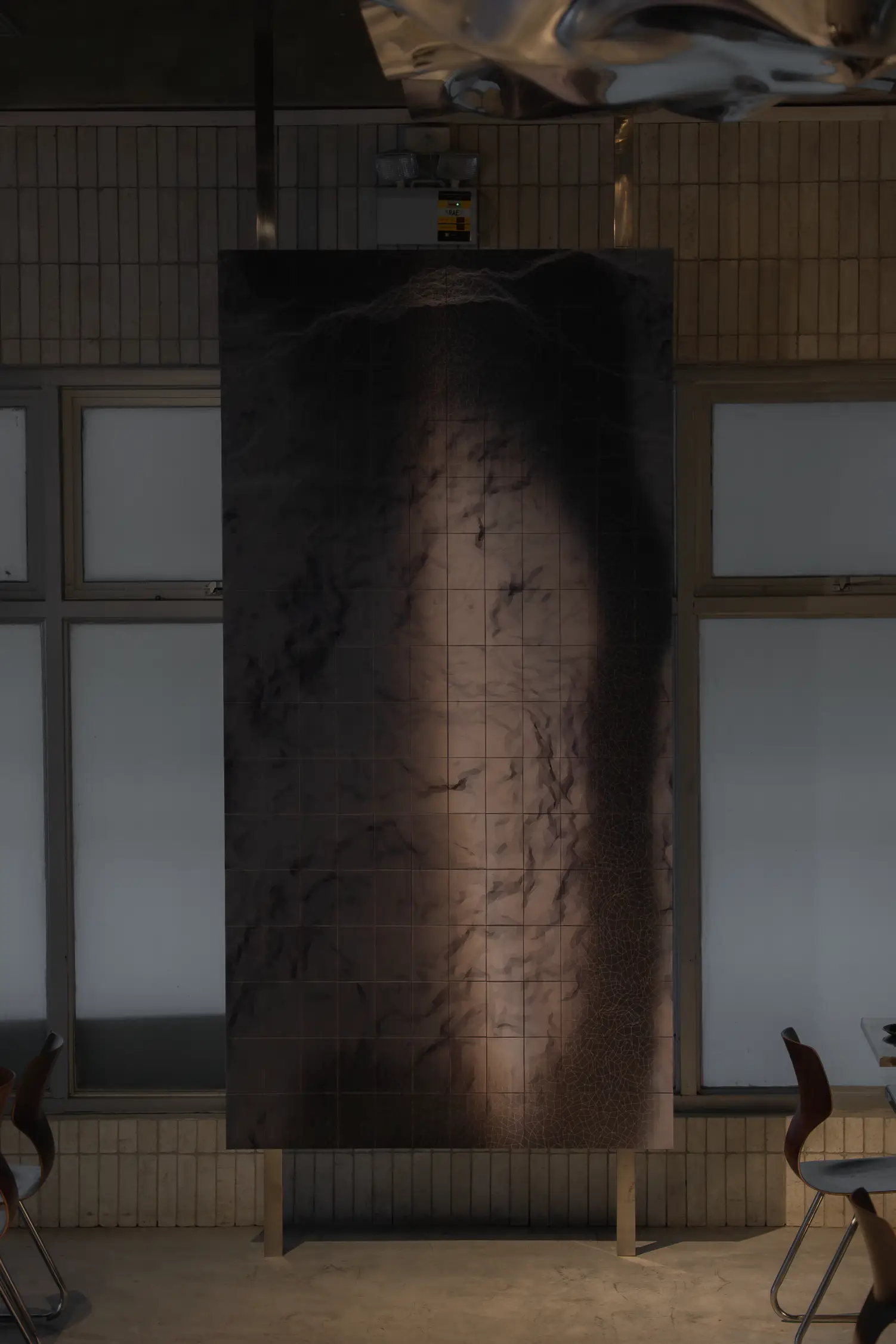
Celine Lee contributed artwork for reNOWn: “A Mass,” a two-part artwork of an imagined landscape of rice kernels that Lee constructed and then photographed. The giant photograph makes up the second layer, while the first layer is a “mosaic of lenticular prints” that shows a wireframe and shaded versions of portions of the photograph.
“A Mass” by Celine Lee in its untouched form. Photo by Joshua Misalucha, provided by Patrick de Veyra.
It continues Lee’s own practice of exploring materials and images to investigate the deeper meaning and layers that exist within each artform, this time by obfuscating the rice landscape below and only allowing it to be fully seen by removing each portion of the layer piece by piece.
Advertisement
“I chose to do a dual layer work because image-making and illusions have always been a continuous aspect in my body of work,” she explained. “Another key idea of the work is that ‘small parts make up a large whole.’ Hence, every grain of rice, every line, every fragment, contributes to a bigger picture.”
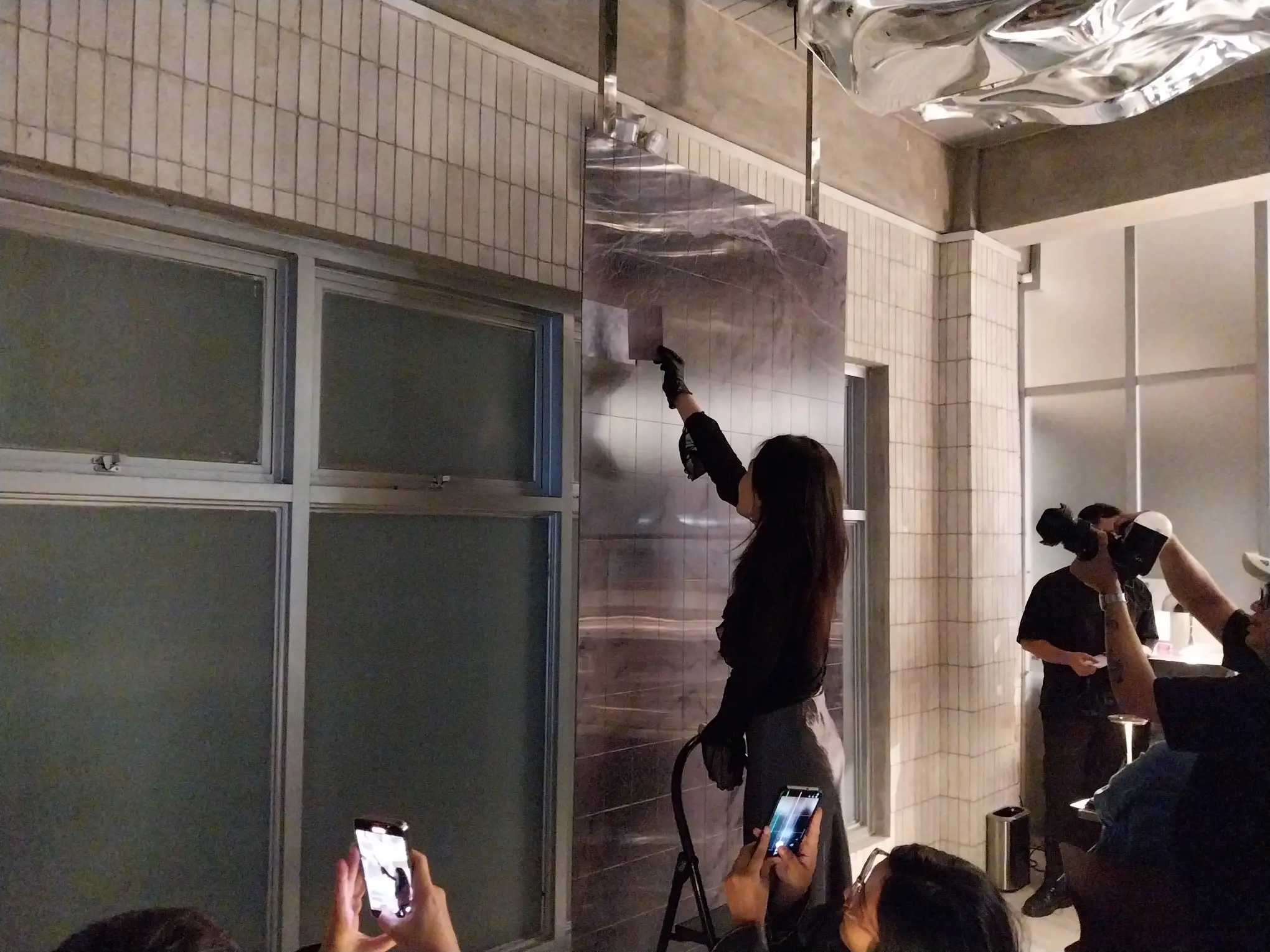
Celine Lee taking out one of the lenticular prints from “A Mass.”
The lenticular prints were taken off the work and given to every guest of Lee’s reNOWn degustation. It has the effect of slowly uncovering the photograph underneath, as if it were showing a clear image of the reality of our class and food structures underneath the hazy images above.
‘reNOWn’ Changes the Chefs and the Artists
For the reNOWn program, Celine Lee found herself learning how to collaborate with a team again. She also felt like she was able to relearn how to re-articulate her artistic vision to a group of people who would help her bring the ideas to life.
Advertisement
“Since I’ve been a full-time artist, I’ve rarely worked with a ‘team’, so it’s refreshing to be able to work with a group again,” she said. “I also think that reNOWn is a good way to train an artist’s articulation of their own practice/work because you’re working not just to communicate it to another creative professional such as a chef, but most importantly to a wider audience/diners of reNOWn.”
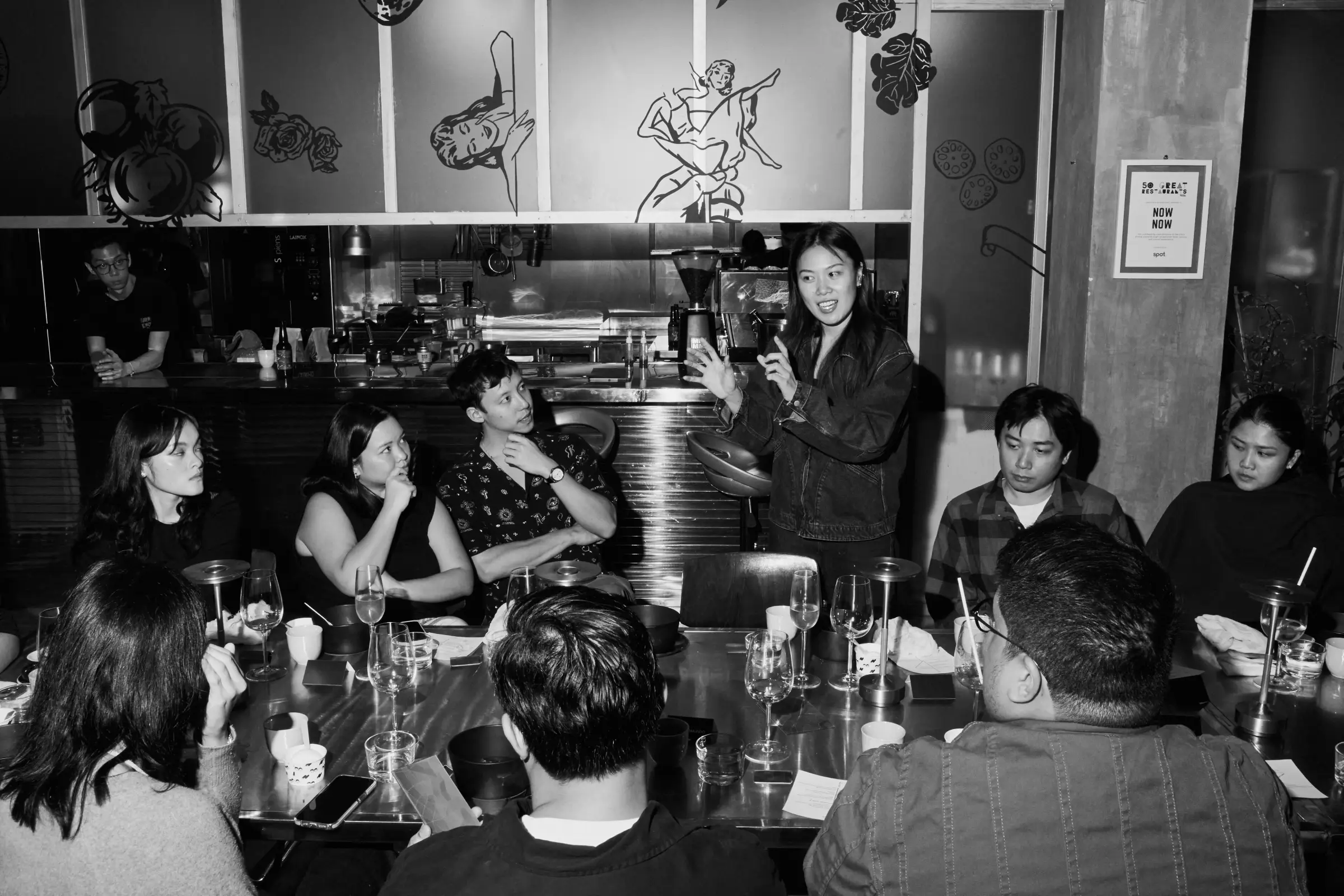
Celine Lee discussing the ‘reNOWn’ project during a meal. Photo by JL Javier, provided by Patrick de Veyra.
Meanwhile, Łuczaj shared that the program had really allowed him, and the rest of the gastronomy team of Now Now Canteen, to really look at food in a new and interesting way, expanding the way they see the creation of food while integrating the artist’s perspective into their work.
“Adopting an artistic perspective in your creative process is a bit like entering a friend’s house through the back door,” he said. “The surroundings are familiar, yet everything feels slightly askew—inviting you to notice things you’d normally overlook. It’s in this subtle shift of viewpoint that new possibilities emerge, leading you to places you never knew existed.”
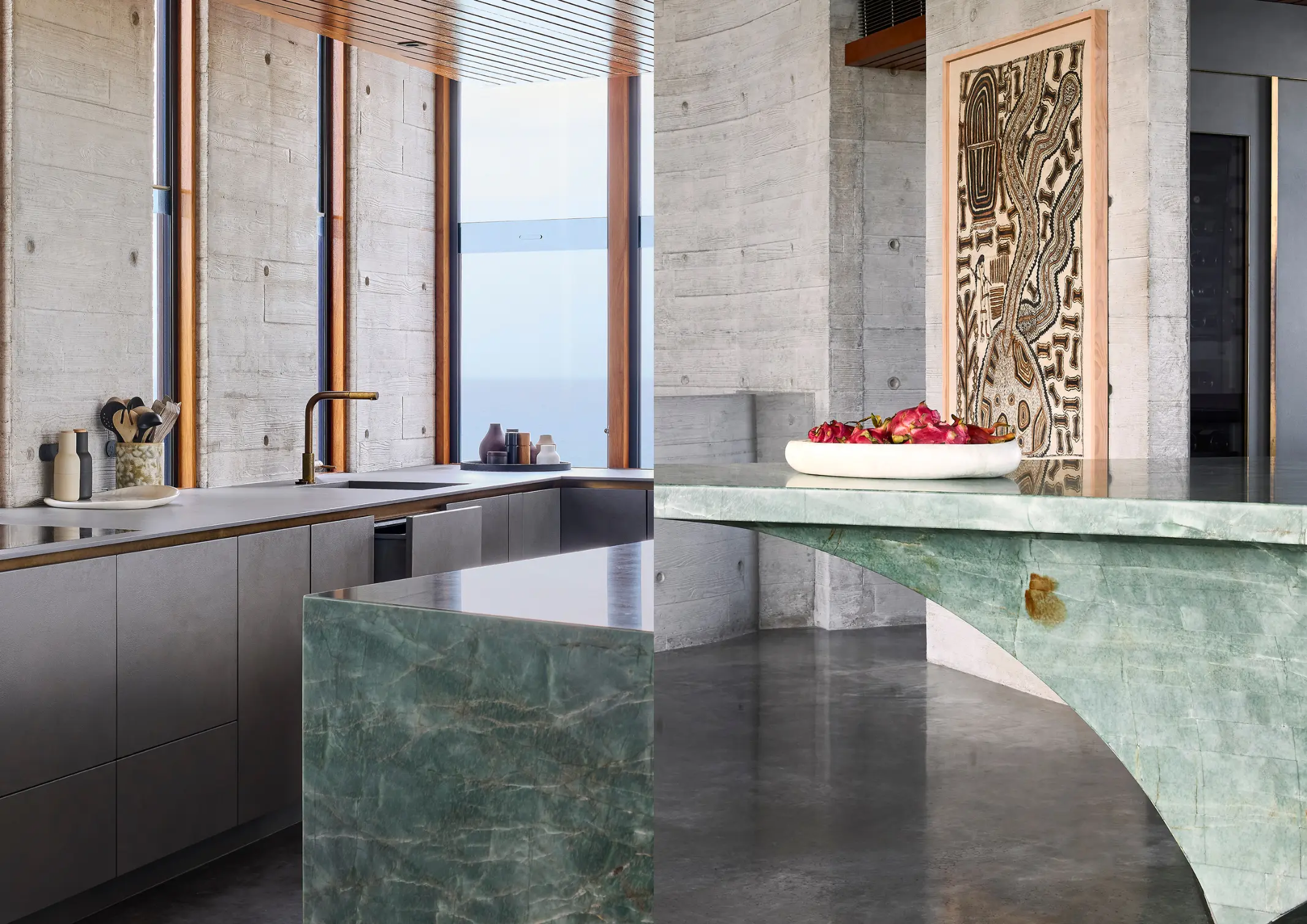
At Helm, dining unfolds as choreography. An open kitchen anchors the room, allowing guests to witness the precision behind its Michelin-starred fine dining menu. Designed by Kevin Nieves of Headroom, the 24-seat restaurant reflects that same discipline in its interior design. Tucked within Ayala Triangle Gardens in Makati, Helm brings together culinary recognition and architectural […]
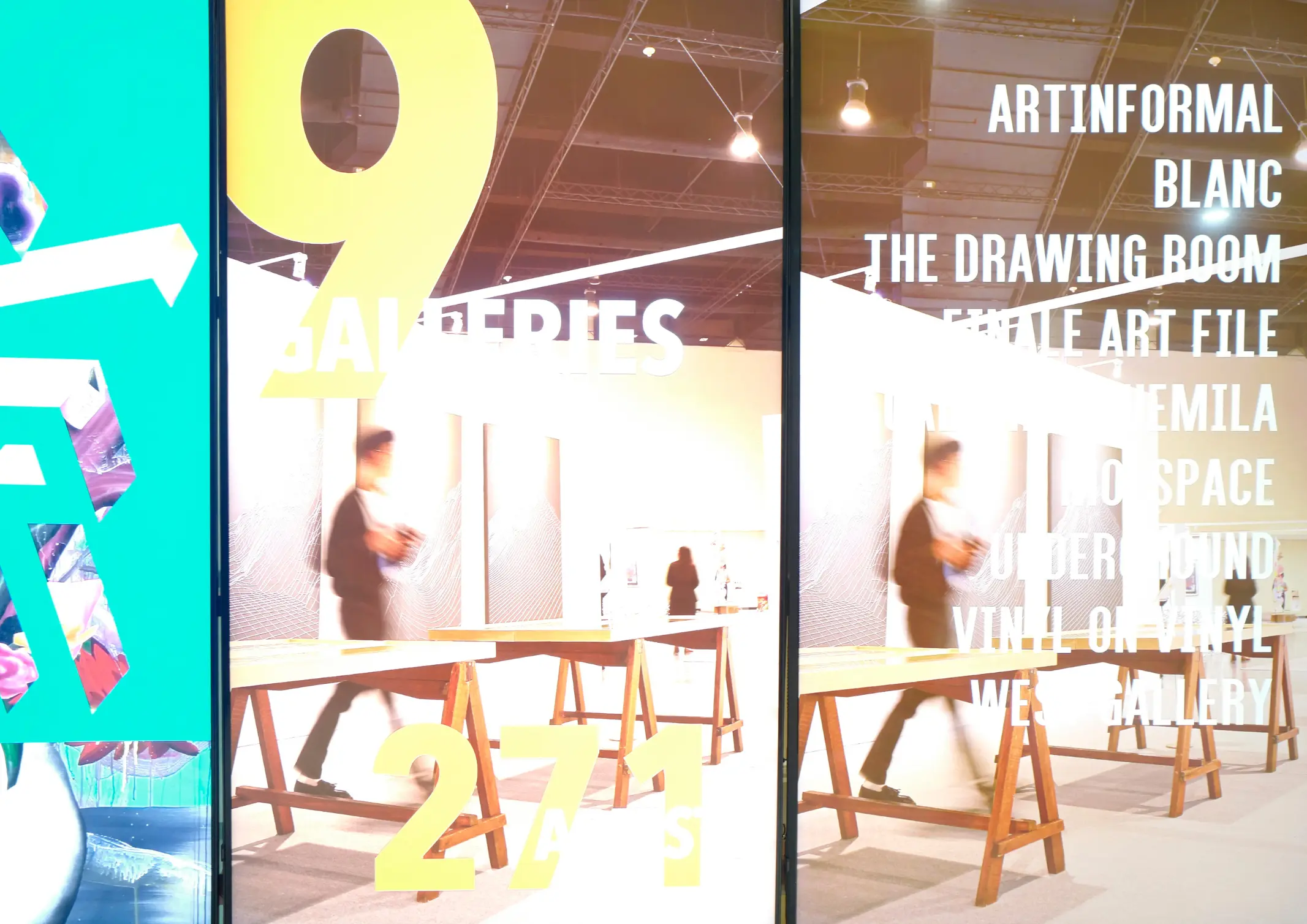
Exhibition designer Baby Imperial of All At Once shaped the spatial strategy of ALT ART 2026, its largest edition to date. The fair occupied Halls 1 and 2 of SMX Convention Center Manila, expanding in both footprint and ambition. Organized by the ALT Collective—Artinformal, Blanc, The Drawing Room, Galleria Duemila, Finale Art File, MO_Space, Underground, […]
ALT ART, organized by the ALT Collective—Artinformal, Blanc, The Drawing Room, Galleria Duemila, Finale Art File, MO_Space, Underground, Vinyl on Vinyl, and West Gallery—presents a focused platform for Philippine contemporary art. As the fair continues to evolve, it expands its scale and curatorial scope, reinforcing its growing presence within the Philippine art scene. Creative Practices […]
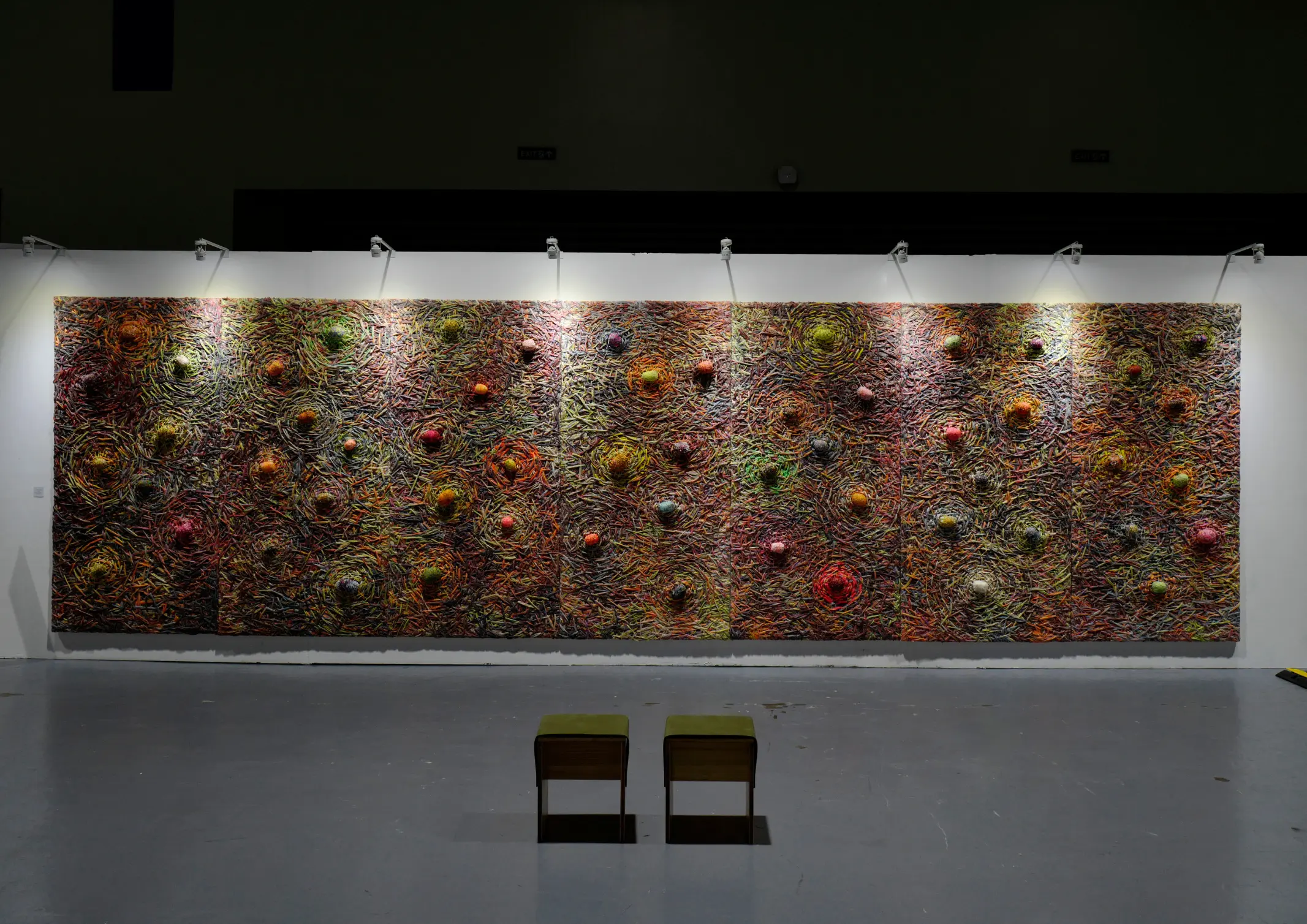
Art Fair Philippines 2026 gathered art enthusiasts and collectors in Makati for one of the country’s leading showcases of contemporary Philippine art. Designed by Nazareno/Lichauco, the fair moved to Circuit Corporate Center One in Ayala Circuit, marking a new chapter in its spatial identity. Across its booths and projects, the fair positioned contemporary Philippine art […]
Ronald Ventura is one of the most recognizable figures in Southeast Asian contemporary art. Since his first solo exhibitions in the 2000s, Ventura has become known for his signature multi-layered paintings. Featuring hyperrealism, cartoons, graffiti, and other recurring motifs, hisworks—from paintings to sculptures—are pluralistic in both form and material. Throughout his career, his art has […]
Download this month's BLUPRINT magazine digital copy from: