Dano Tingcungco’s Extasis Forever, currently exhibiting at Gravity Art Space until April 27, is a personal work from the artist that radiates the fragility of happiness within queer circles. ‘Extasis’ is Spanish for ecstasy, and the work exists in that sense of feeling of happiness.
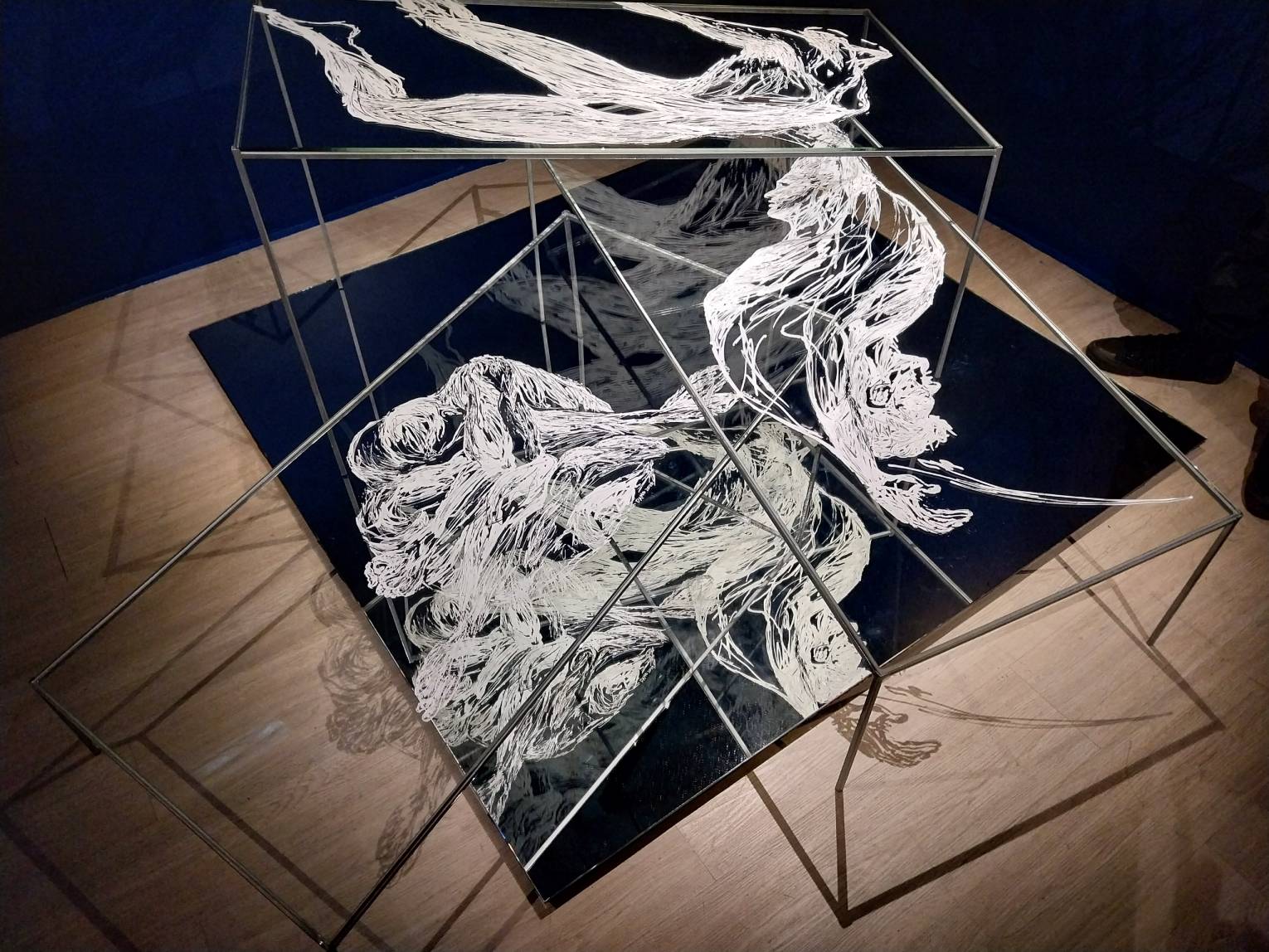
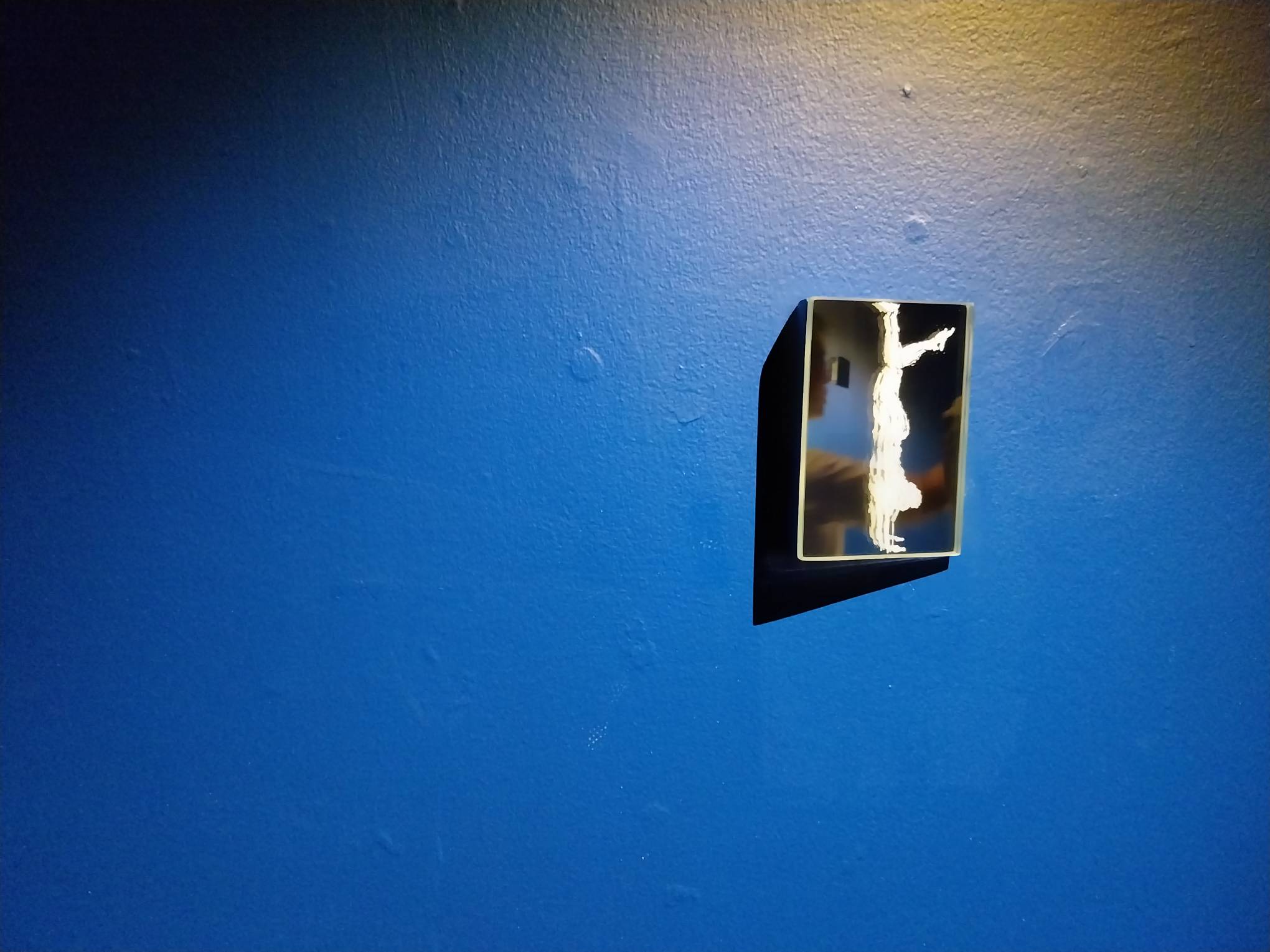
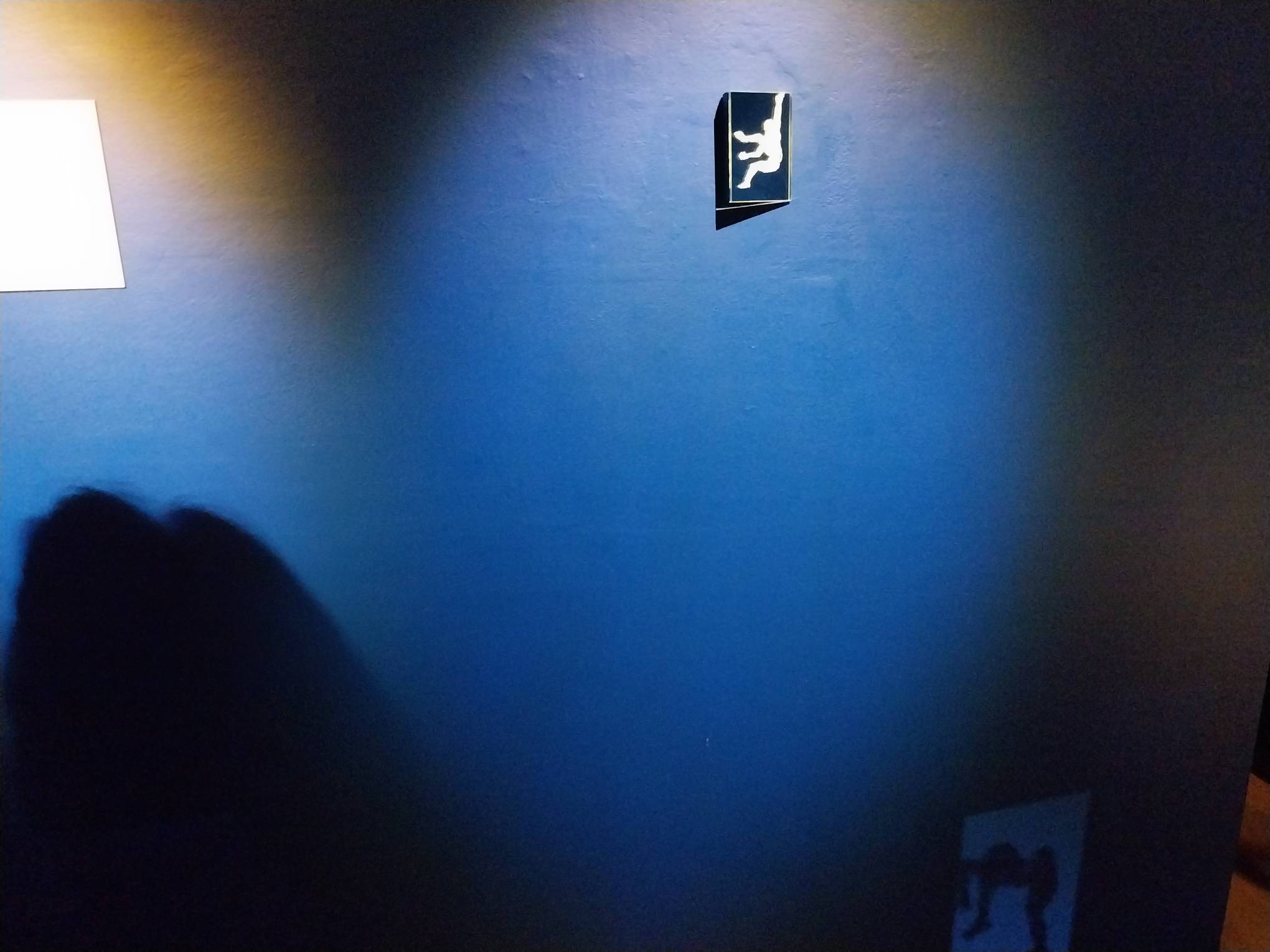
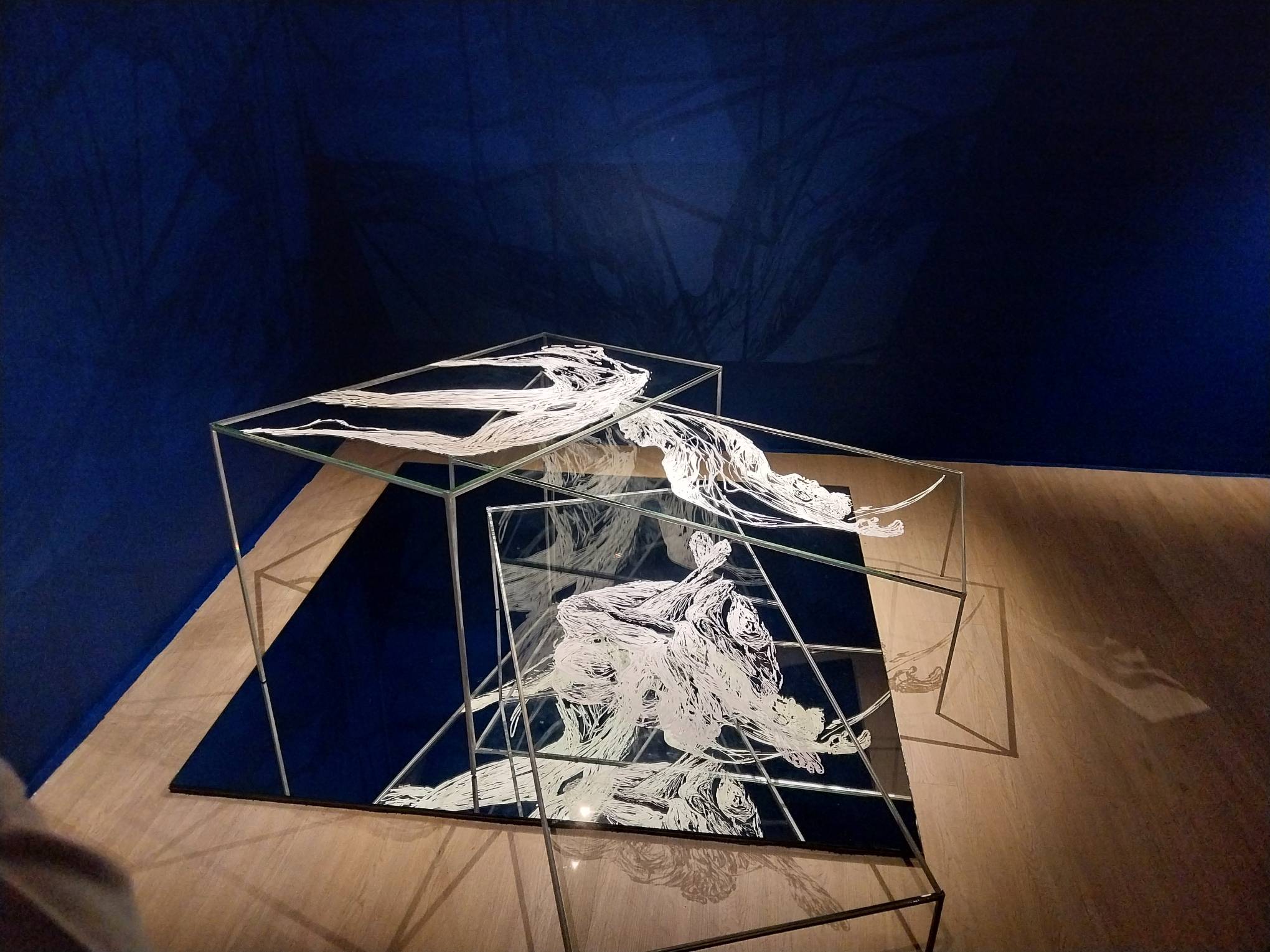
The piece consists of mirrors and glass, with the images of dancers carefully painted into it. Around three small mirrors are connected to the walls with their own spotlight.
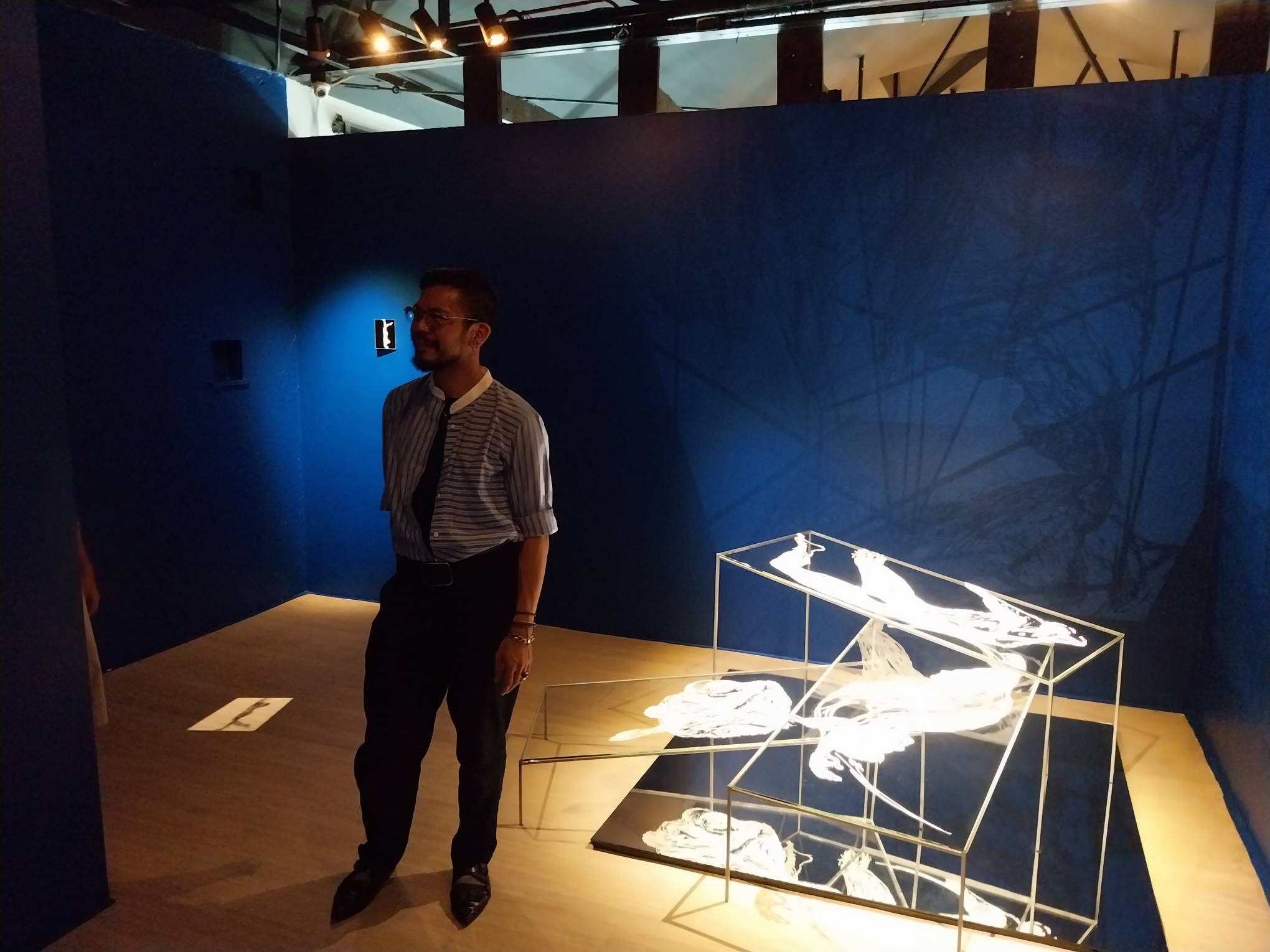
The artist with his work. Photo by Elle Yap.
Tingcungco shares that he had spent over a year on the project. He spent nine months parsing out theory and meaning behind the piece, and three months on its production. This includes the choreography of the dancer-models, which Tingcungco said he created an amalgamation of for the piece.
Advertisement
Pulsing Loudness of the Club
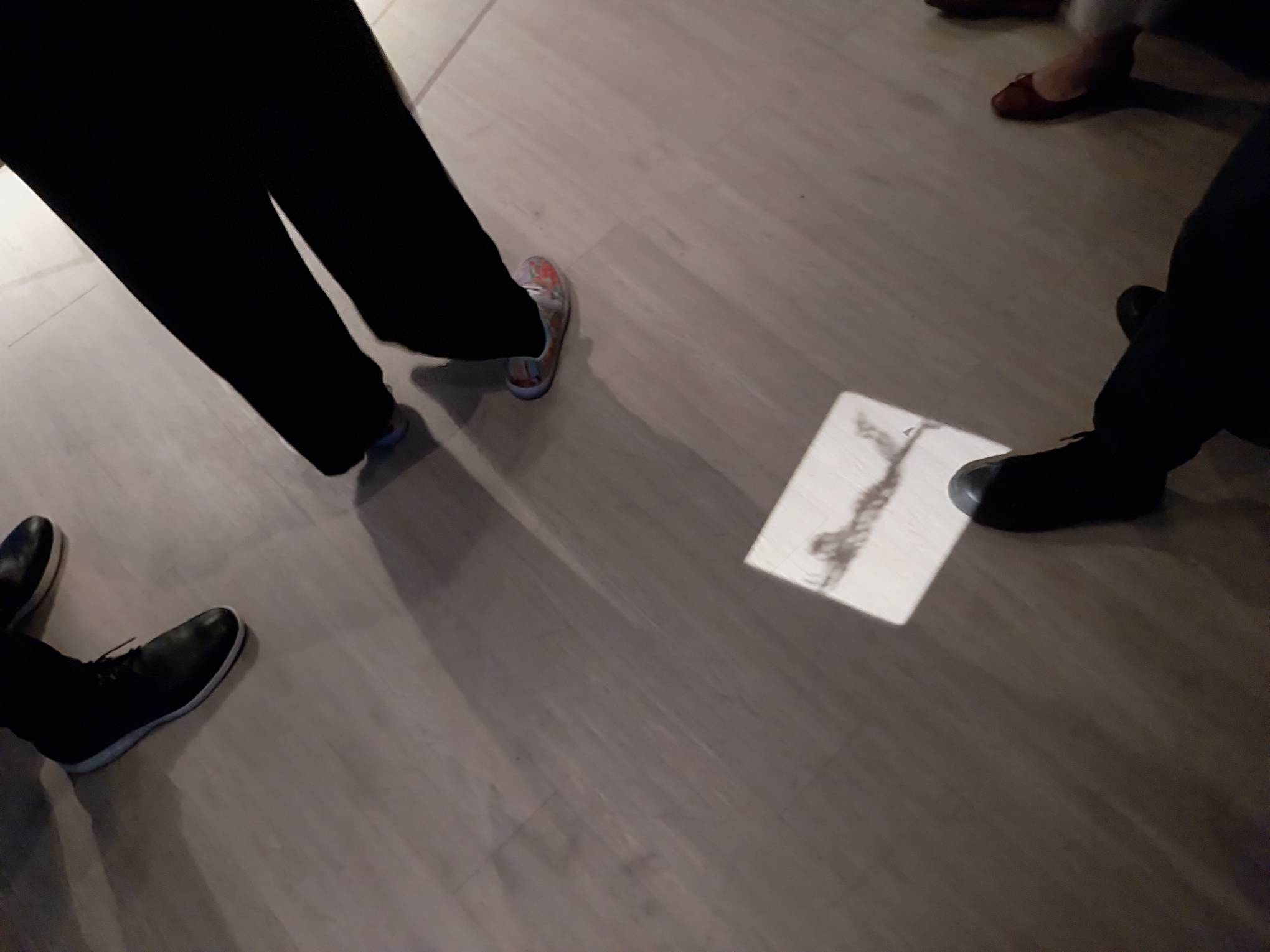
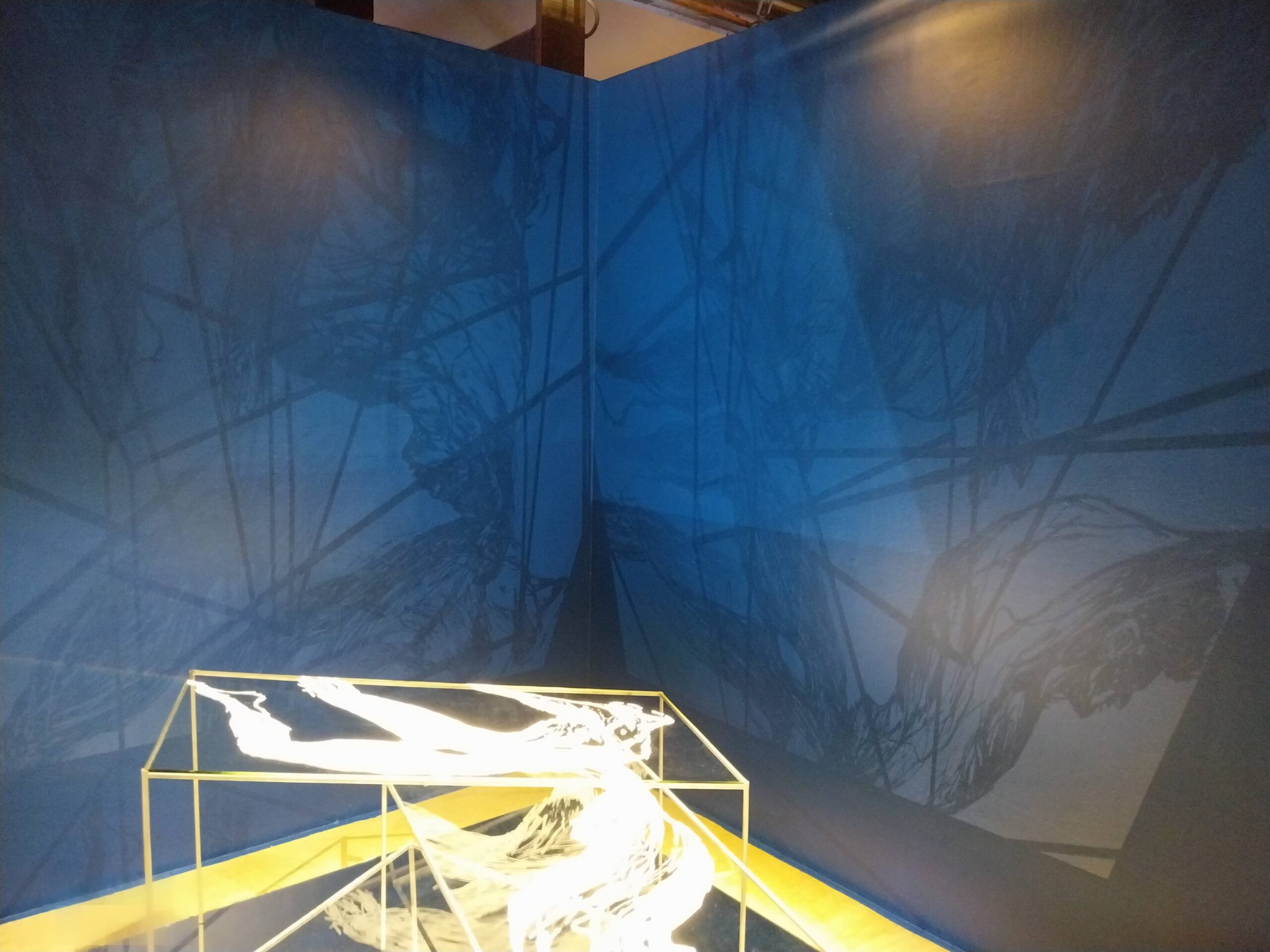
The exhibit showcases a club-like feeling without being in the club at all. The walls are painted royal blue. Spotlights disturb the general darkness of the exhibit by pointing on the mirrors and glass at multiple angles. More than the use of darkness and light to evoke the feelings of a club is the six-hour DJ set recorded on an iPod Touch that plays while you look at the exhibit.
In the write-up given alongside the exhibit, Carlomar Daoana said that the use of royal blue was intentional. “[The color of the exhibit] evokes the depths of the sea and the swirling currents of emotion. The choice of color invites viewers to immerse themselves in the fluctuating tides of feelings.”
A reflection of one of the mirrors. Photo by Elle Yap.
A mirror with a painting of someone mid-dance. Photo by Elle Yap.
A mirror with a painting of someone mid-dance. Photo by Elle Yap.
Reflections of Queerness
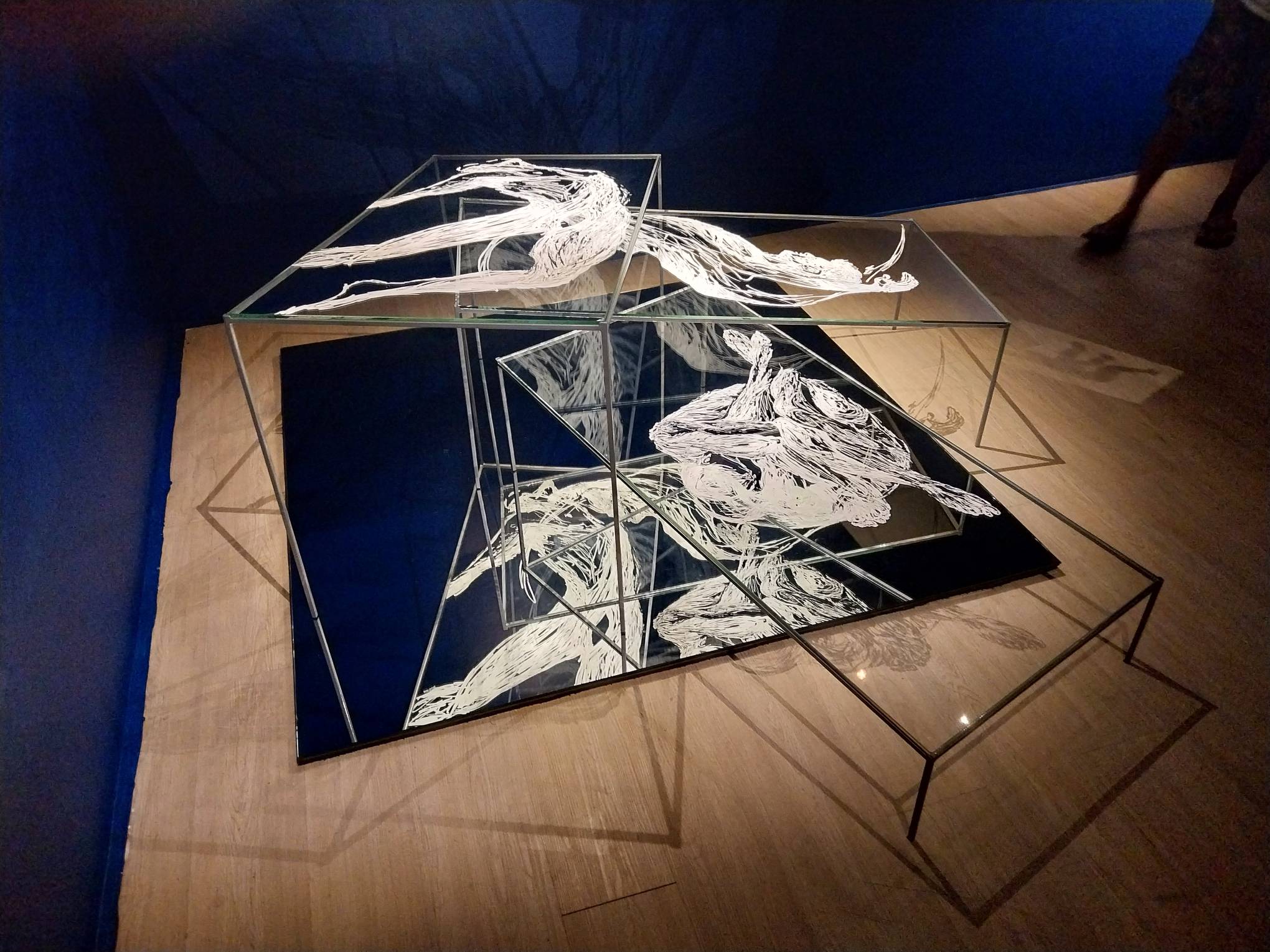
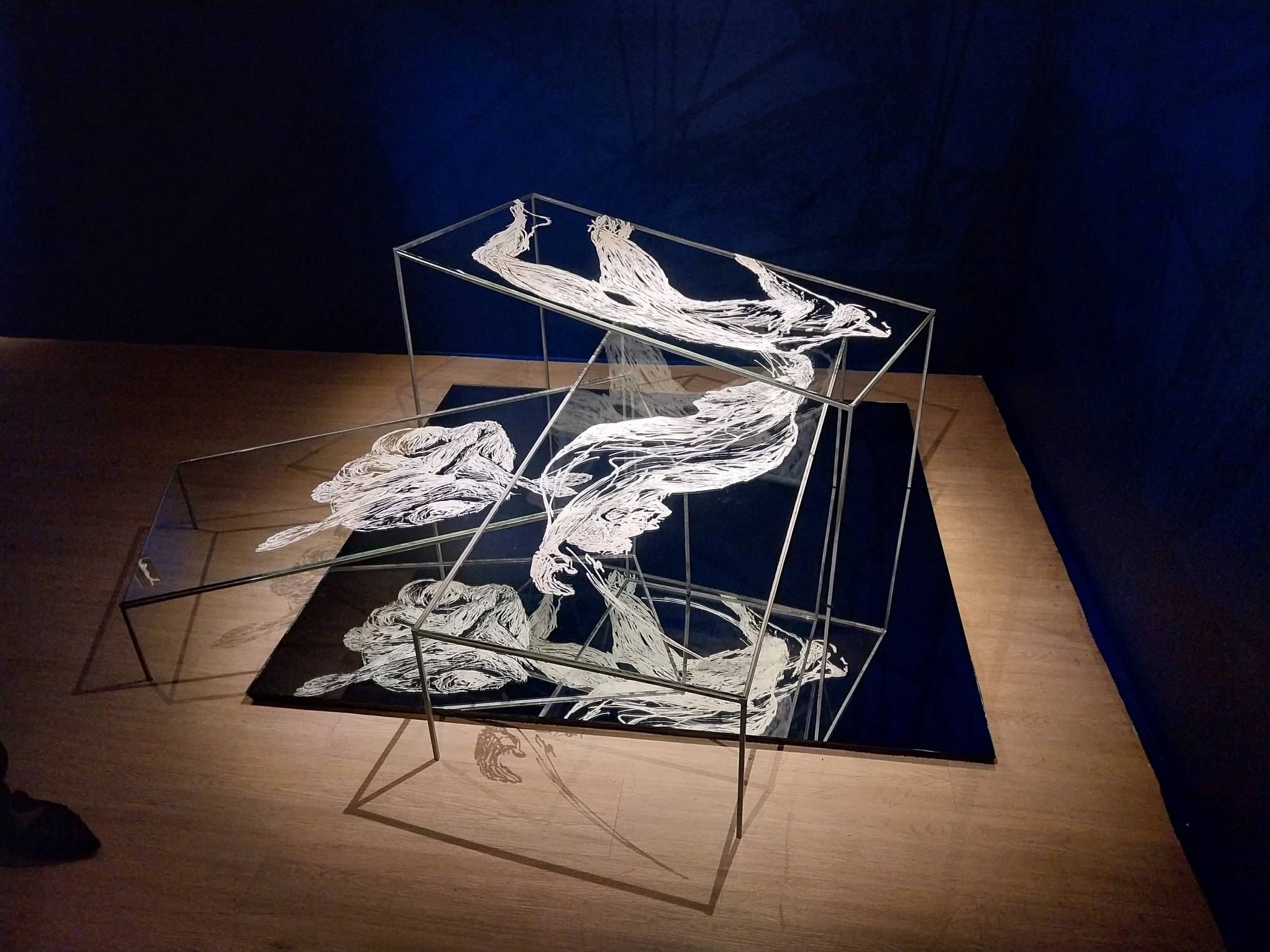
The spotlights point mostly to the central work of the exhibit, which is three glass panes precariously stacked on top of each other, with a mirror on the floor below the panes. The glass panes have dancers painted on top of it., When the spotlight hits the paint, they glow, basking in the euphoria that one can temporarily feel in the club.
Advertisement
The placement of the glass panes plays with the perspective of the audience. They see the figures’ stilled movements and how they work together and apart from each other. Tingcungco said that the placement of the glass is deliberate, not just to play with the painted-on drawings of the figures, but also to play with the shadows that it creates with the spotlights.
When paired together, the figures seem like they’re mixing together and falling apart. It becomes commentary on how queer love feels ever-so-effervescent even in its peak ecstasy.
Ecstasy in the Past and Future
Tingcungco calls the exhibit his way of showing the permanent fragility of queer love in many spaces. He chose glass deliberately to show that fragility, the temporariness of the ecstasy felt in the club. Moreover, he said that his own experiences navigating queer love with other men inspired the piece. His experience over the negotiation that happens in that environment inspired the way the pieces connect together in the light and outside of it.
Advertisement
In their write-up, meanwhile, Daoana describes the work as representing the “transparency and delicacy” of discovering one’s sexuality and navigating the world with that in mind.
‘Extasis Forever’ and the interconnected glass panes. Photo by Elle Yap.
‘Extasis Forever’s’ centerpiece from another angle. Photo by Elle Yap.
The centerpiece of ‘Extasis Forever’ from another angle. Photo by Elle Yap.
The centerpiece as it looks from the side. Photo by Elle Yap.
Negotiating queerness in a world that seemingly prohibits it will always feel complicated. But Extasis Forever captures that complication well, and relays the importance of the moment for a queer person. Even if one isn’t accepted out in the world or in one’s family, that navigation of queer spaces and the freedom one can find there can be enough to fuel one’s courage to keep going.
Contemporary design refers to the constantly evolving design trends of today. With the power to design our built environments, architects have been experimenting with various architectural approaches. Whether that is through unconventional forms or the integration of smart technologies, BluPrint lists down Filipino architects who are defining contemporary architecture. Deo Alam Architect Deo Alrashid Alam […]
In the Philippines, adaptive reuse gained traction during the 1970s with the rise of conservation and environmental preservation movements. It offered an architectural solution that reuses existing spaces to fit modern needs. Across the country, several projects demonstrate how this approach is being applied—transforming heritage structures into active spaces for culture, hospitality, and community life. […]
From residential spaces to civic structures, lighting dictates the mood of a space. It controls the visual dynamics of an interior, serving as a guiding tool that highlights key design elements, including materials and textures. Related Reading: Lampscaping: How to Light up Your Home like a Pro Regulating the Mood: Natural and Artificial Light in […]
More and more Filipinos are flocking to condominium communities. Often tucked within busy city centers, condo living acts as a small respite from urban chaos. Faced with the challenge of transforming a cramped condominium into a warm living space, BluPrint lists condo interior design ideas that can maximize each square foot of small spaces. Purposeful […]
Modern bathrooms are no longer purely functional spaces. Increasingly, they are being designed as environments that support cleanliness, ease, and quiet restoration within the home. As daily life becomes more demanding and health awareness continues to rise, homeowners are beginning to expect more from the spaces where daily rituals begin and end. For architects and […]