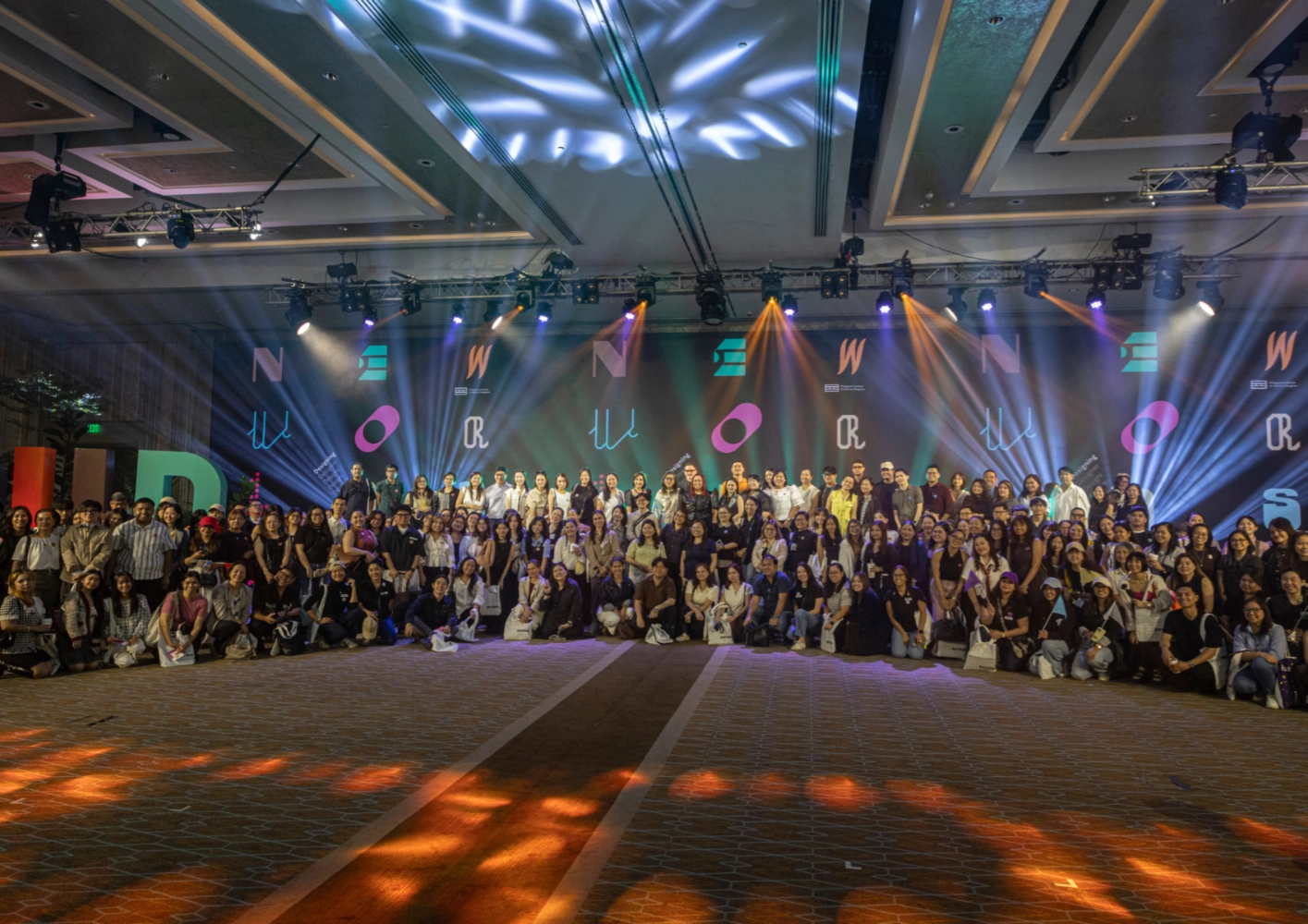
The seventh edition of the Anthology ASEAN ArchitectureArchitectureThe art and science of designing and constructing buildings, structures, and spaces that are functional, safe, and aesthetically pleasing. It encompasses the planning, design, materials, and techniques used to createGo to Architecture Glossary Festival brought together over 4,000 delegates from across the Philippines and Southeast Asia for three […]
‘Palapit Palapit Papangit’ Lets You See the Beauty in Ugliness



PPP: Palapit Palapit Papangit is the newly-opened exhibit by Modeka Art. Showing at the gallery from April 17 to May 11, it was curated by Norman Crisologo with the intent of portraying the relationship between “art and ugliness.”
“He invokes a little-known street adage uttered in Filipino slang that shows the complexities involved in perception,” Cocoy Lumbao wrote about the exhibit. “[…] in finding out that there is ugliness in beauty, and how conversely, it might also state the opposite: where anytime an object or art work presents itself as ugly, beauty emanates after paying close attention.”
No Such Thing as Low Art
The works portray a sense of cultural alienation that exists between our country’s relationship with ugliness and beauty. Our history has always revered the beauty of art: our first National Artist is Fernando Amorsolo, and many of our canonical revered painters and sculptors are ones who exemplify the beauty of our world.
And yet other art forms are vilified. Street art, comic art, or outsider art in general don’t garner the same attention in many collector spaces. A lot of these arts represent the daily sentiments of people in the country, and yet they are labeled as “low art” and unimportant. We don’t exhibit graffiti in our galleries, and prolific comic book artists like Arnold Arre, Lyndon Gregorio, or Pol Medina, Jr. don’t get many opportunities to headline art exhibits.
PPP: Palapit Palapit Papangit
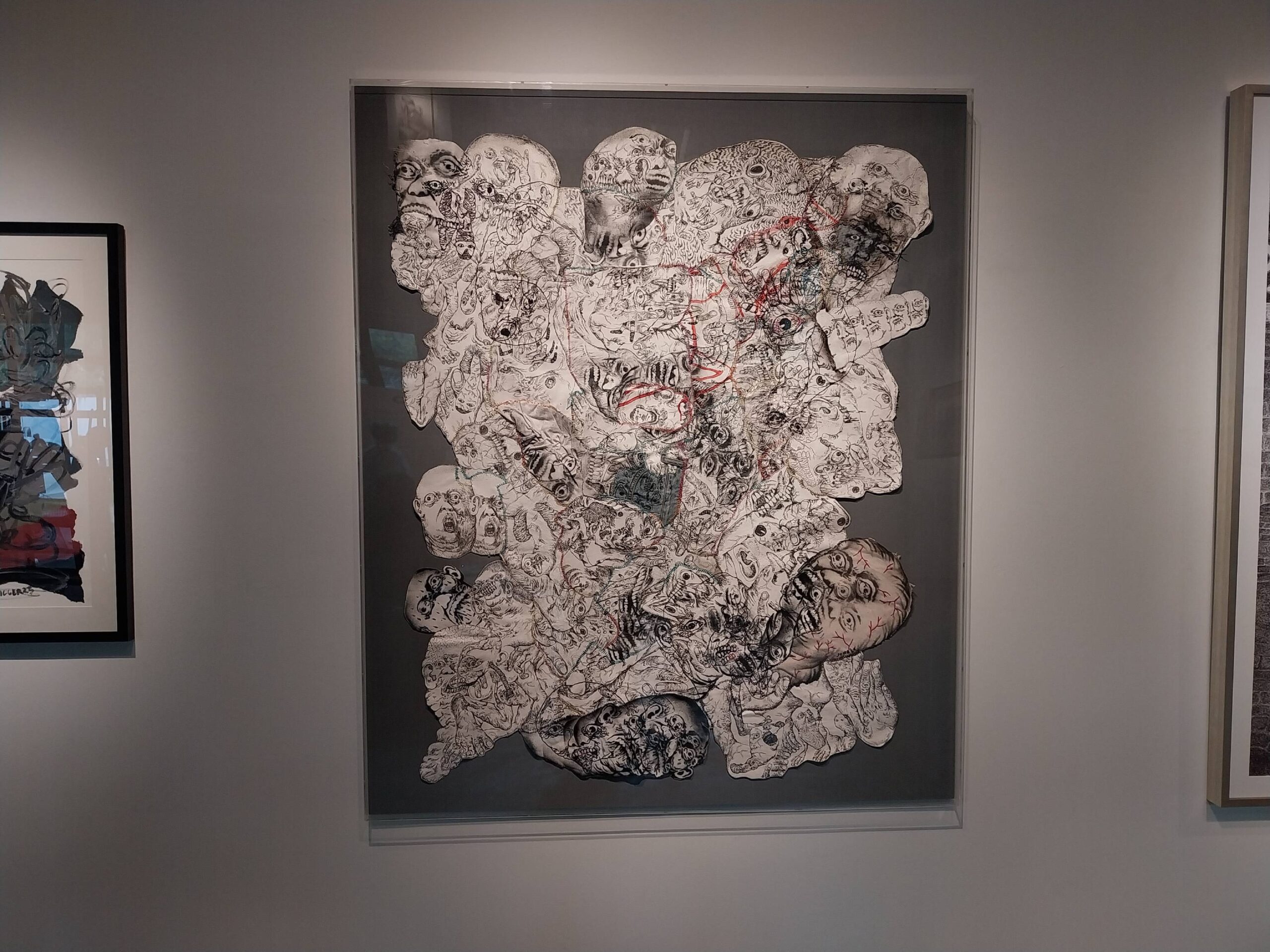
But PPP: Palapit Palapit Papangit pushes against the idea of high art vs. low art and how Filipinos should be portrayed. The exhibits portray Filipinos in all their chaos and impoverishment, whitewashing nothing of the poverty and desperation that exists in our day to day lives.
Here, there’s no beautiful Filipino landscape exemplifying the cultural myth of the hardworking Filipino. Instead, it rails against the country’s poverty and the way we hide it from others using the iconography of ugliness. It pulls at the strand of alienation that exists in the core experience of many a Filipino’s life. The alienation from work, stability, sanity, and how we try to hold on to them as chaos abounds are prevalent every day.
The Traditional and Non-Traditional
PPP: Palapit Palapit Papangit contains lots of non-traditional ideas and methods to portray the idea of beauty and ugliness in culture.
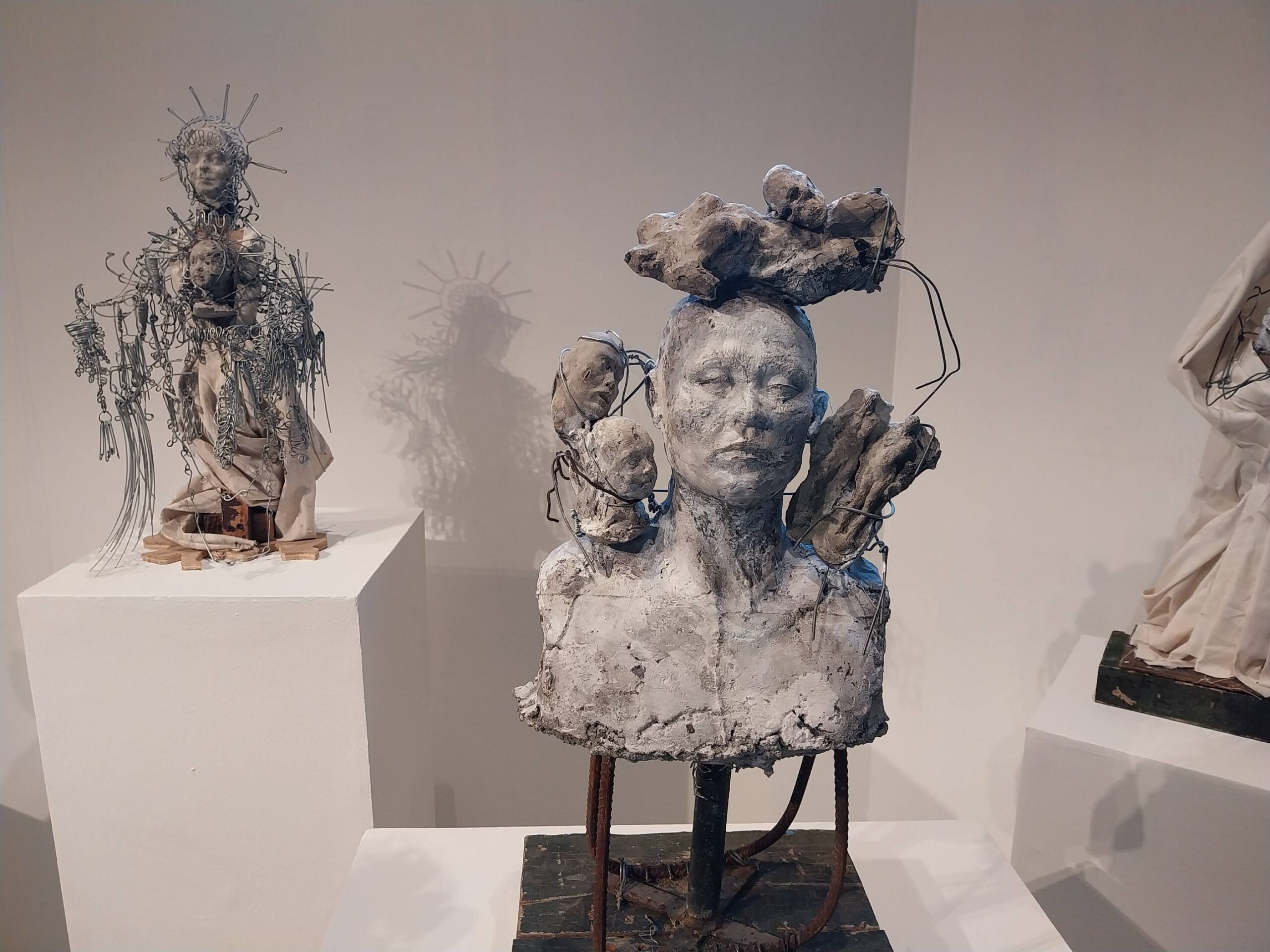
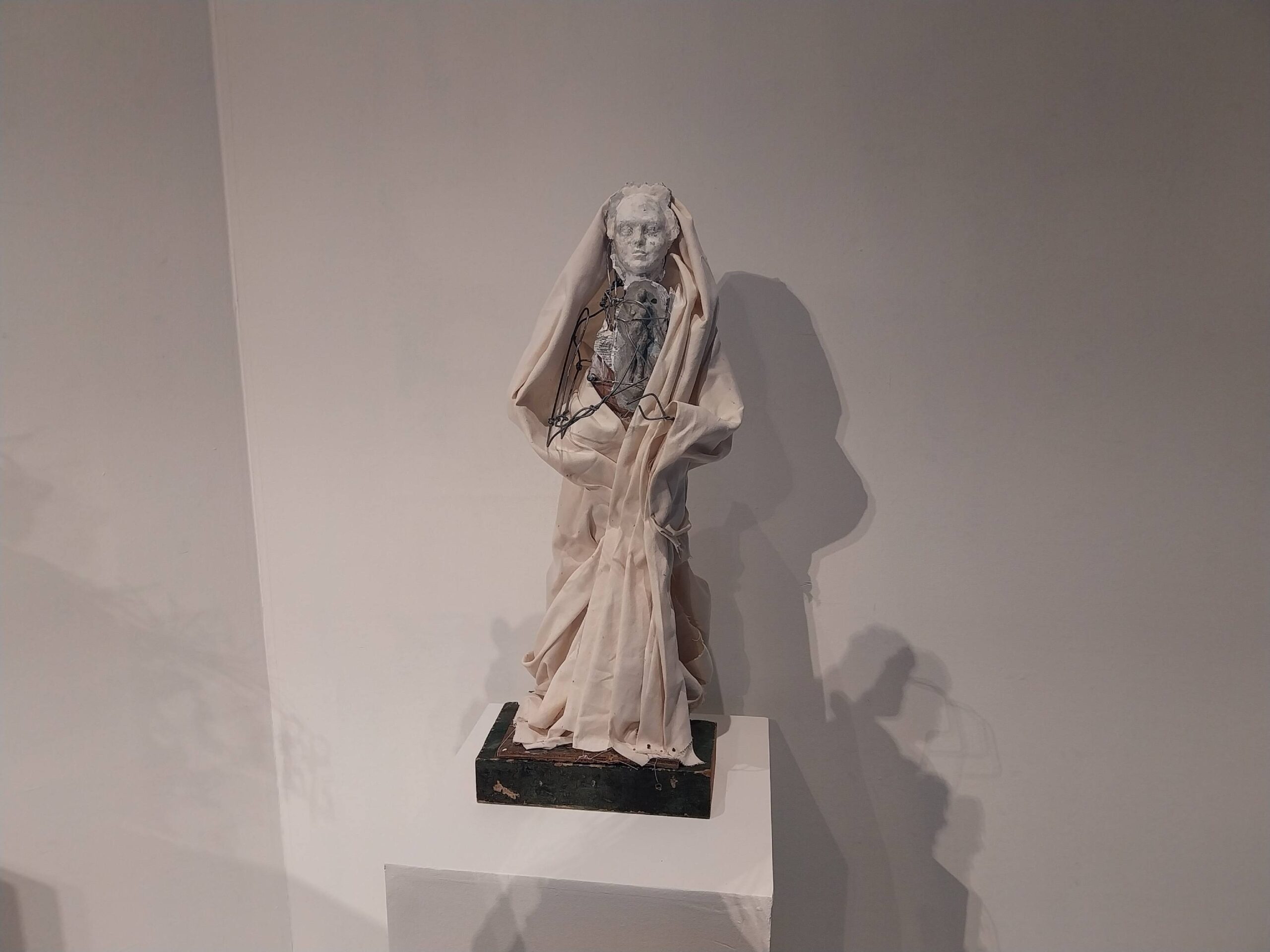
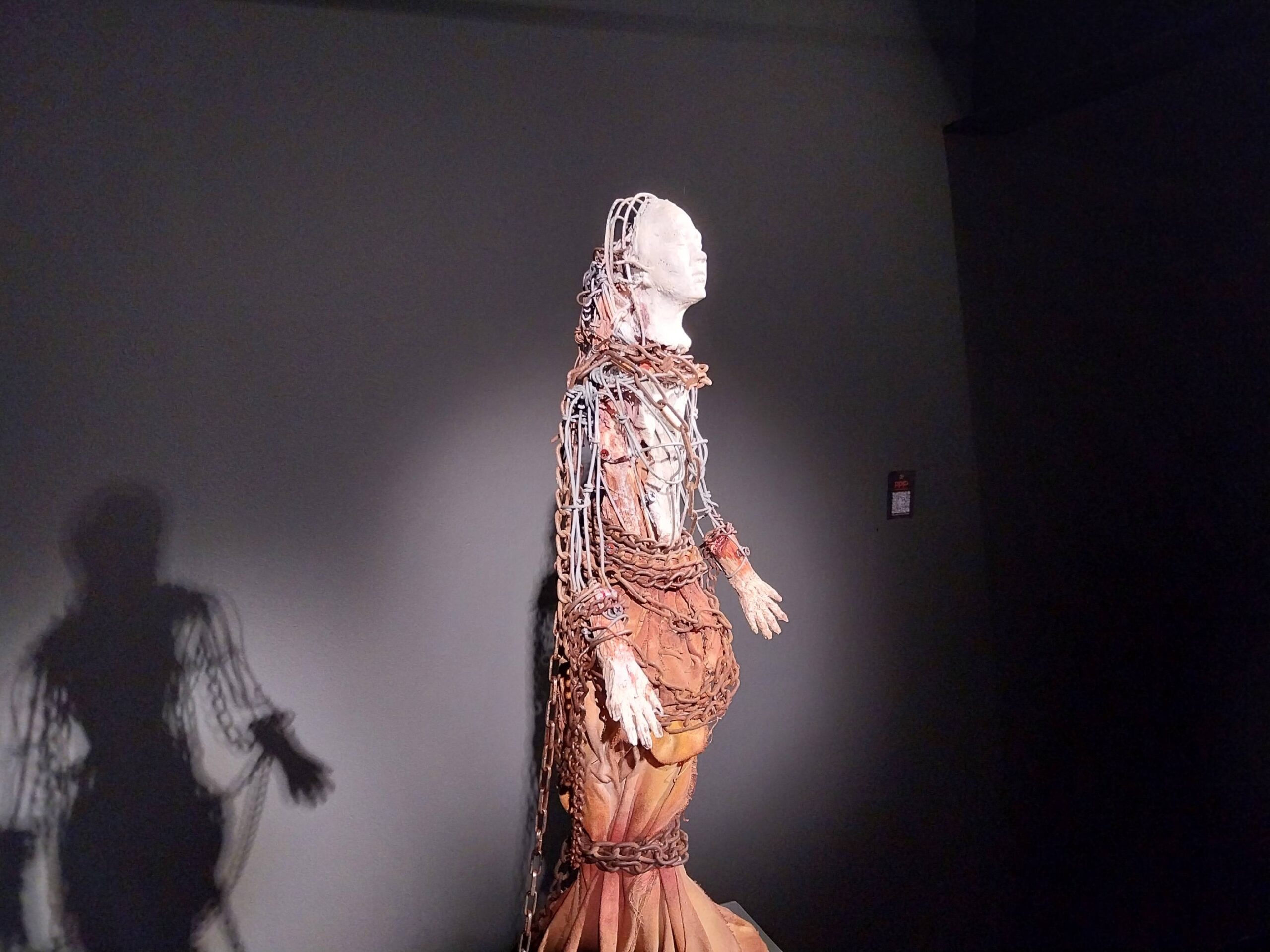
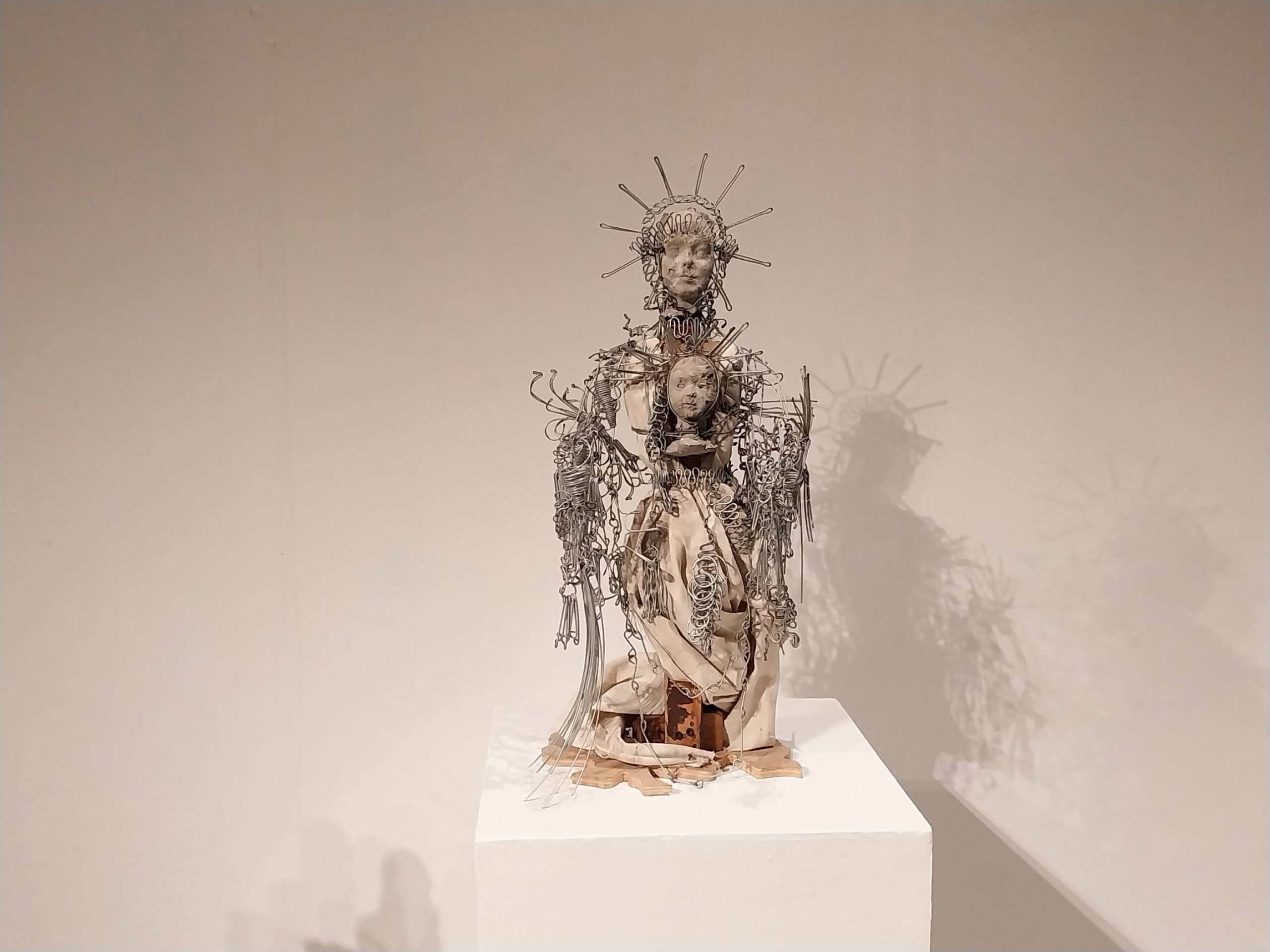
Ian Fabro debuts a series of sculptures that utilize cement, iron, wood, and canvas that portray a decaying mimicry of the religious sculptures we see in many people’s houses. The sculptures contort themselves into human-like shapes, even as they appear in the midst of decay. It’s stark how they use cement and iron in a way that harkens back to construction work, the never-ending creation of tall buildings that many of its workers will never live in.
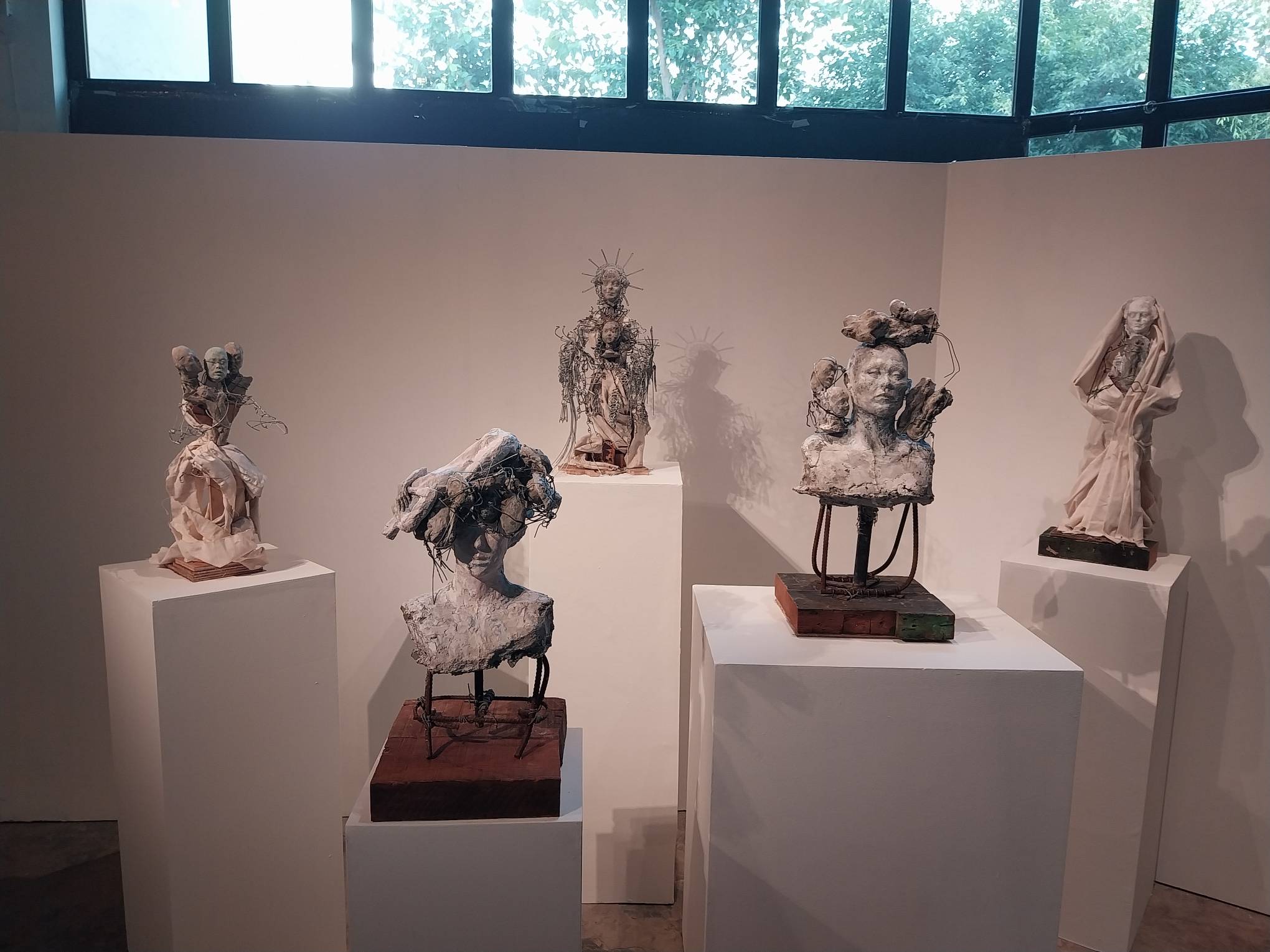
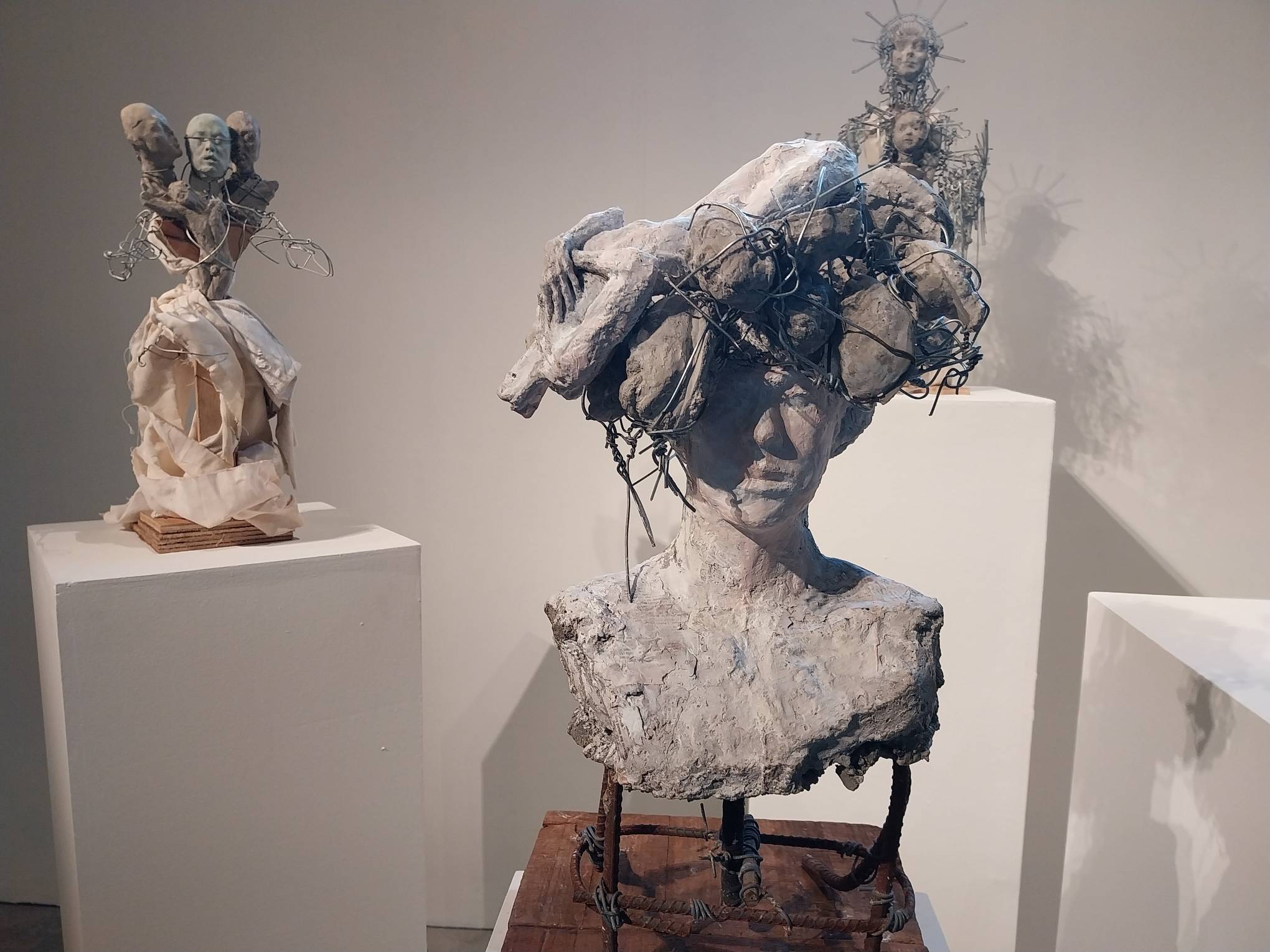
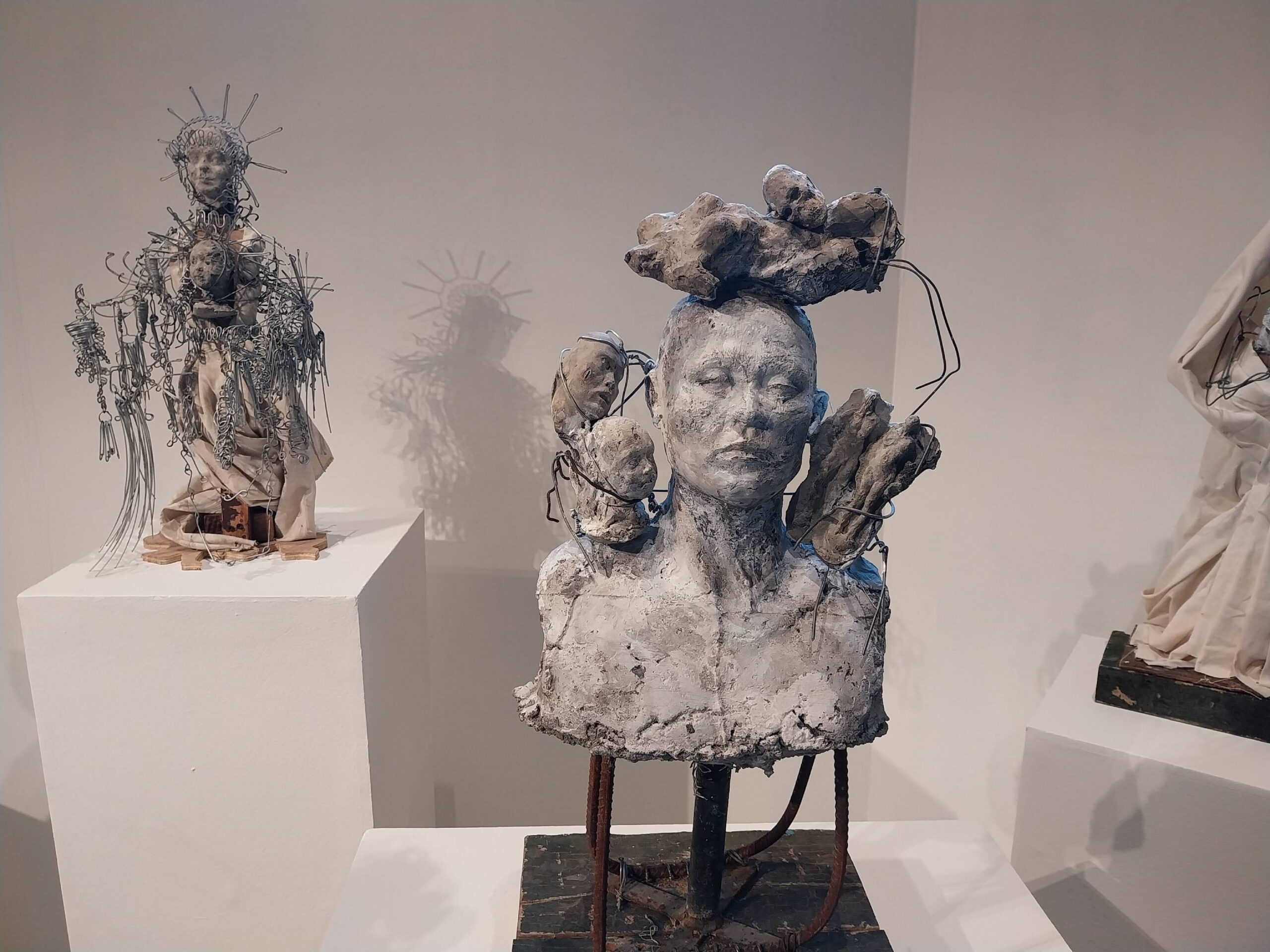
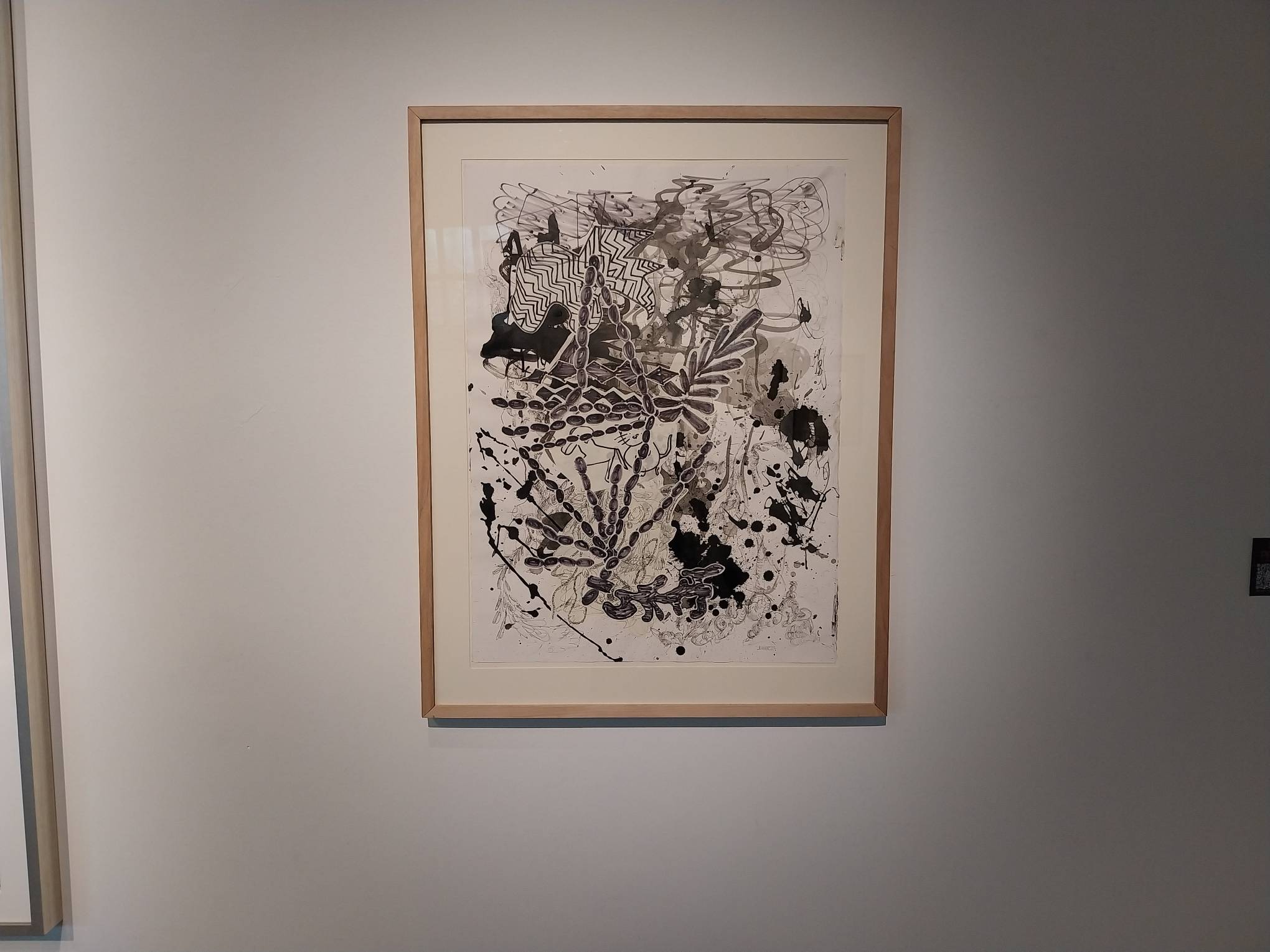
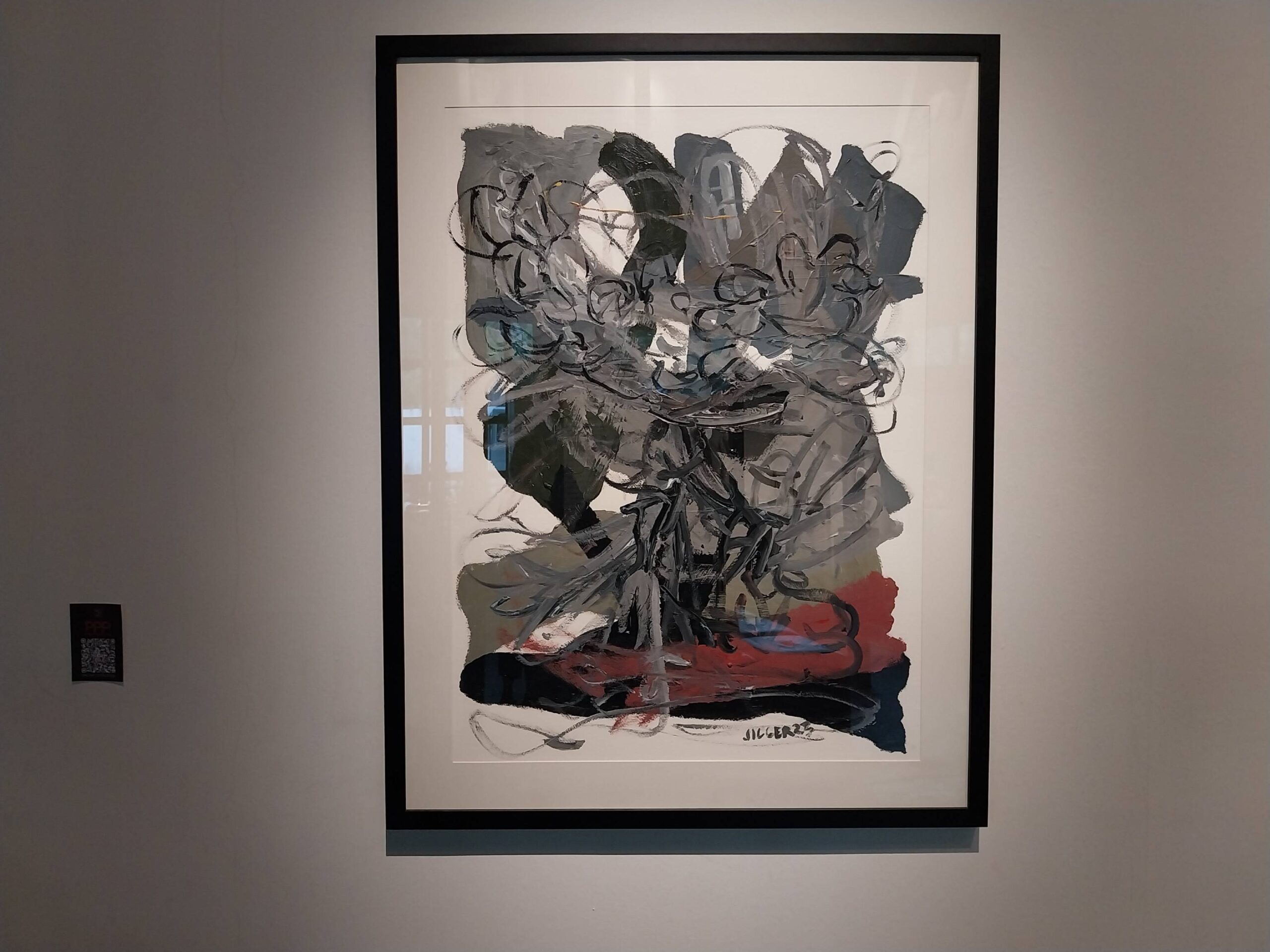
Meanwhile, artists like Jayvee Necesario and Paolo Icasas create these portraits that seem to splatter themselves onto the paper.
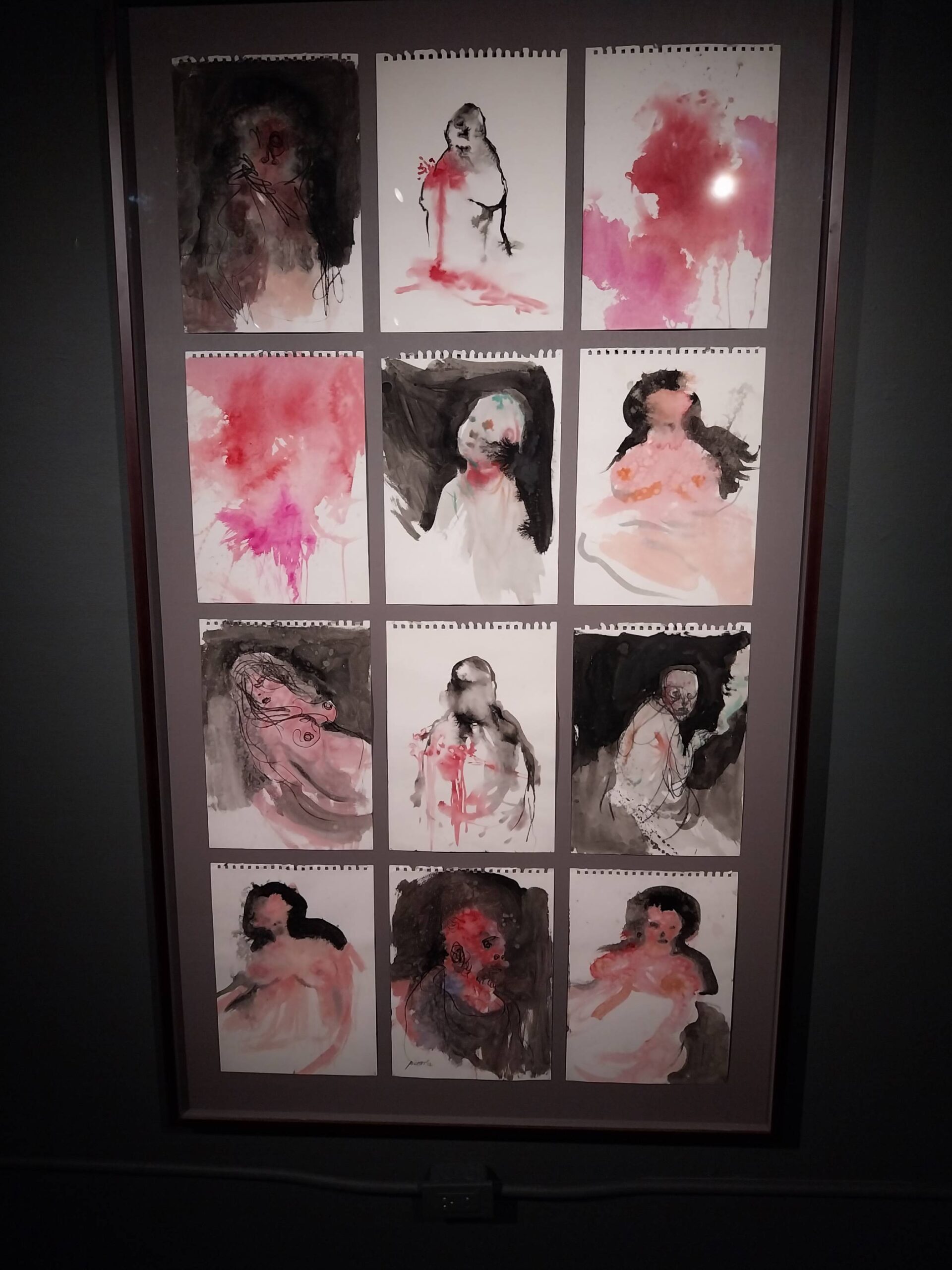
Icasas’s work employs ink and watercolors to make these abstract and terrifying paintings that portray the darkness of the soul, and the abstractness these feelings can come from. Some of his works, “Refugees 1 to 4,” are shocking splatters of pleading and madness rendered in ink that’s expertly used to create the look of being washed away by life.
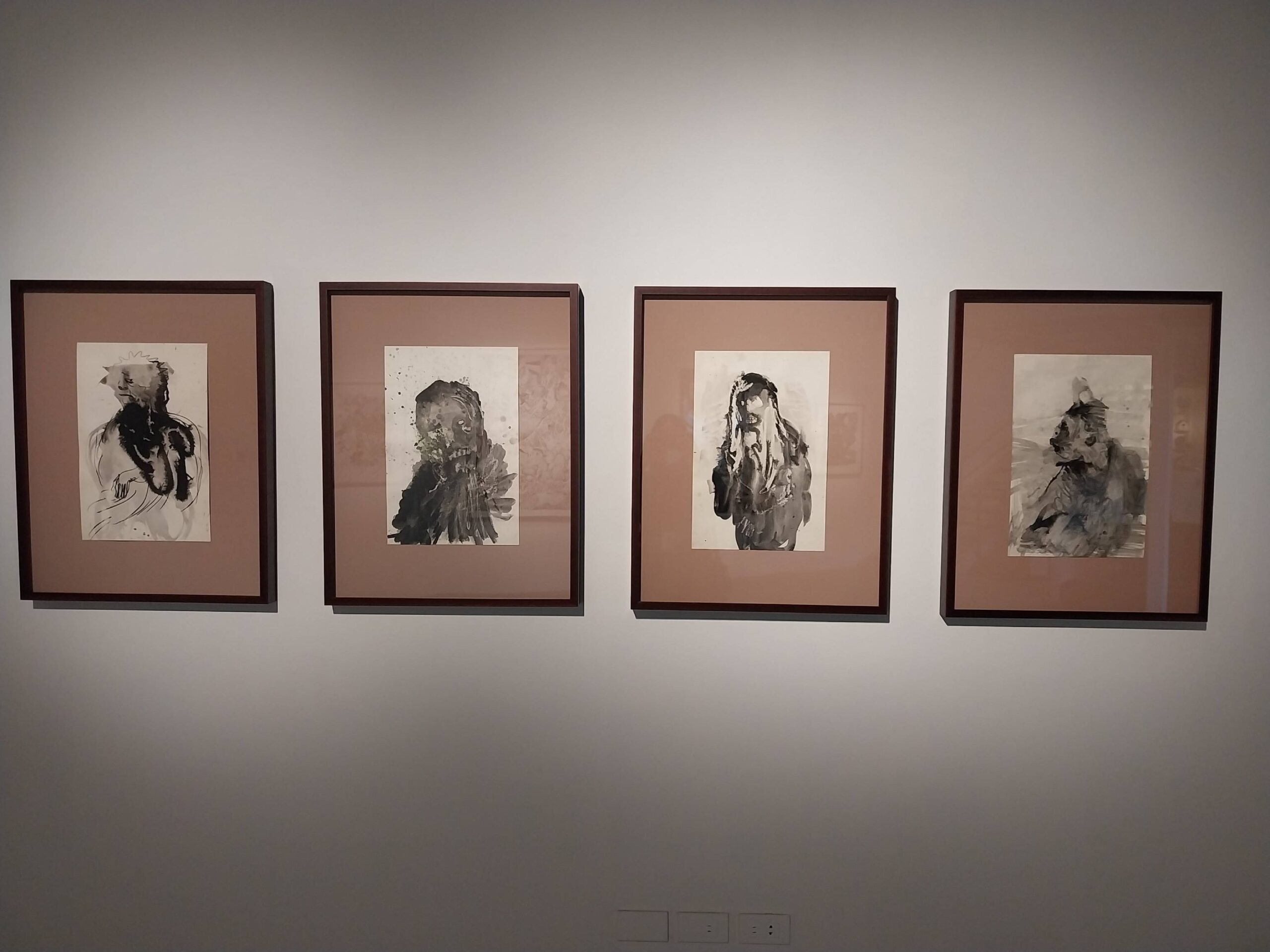
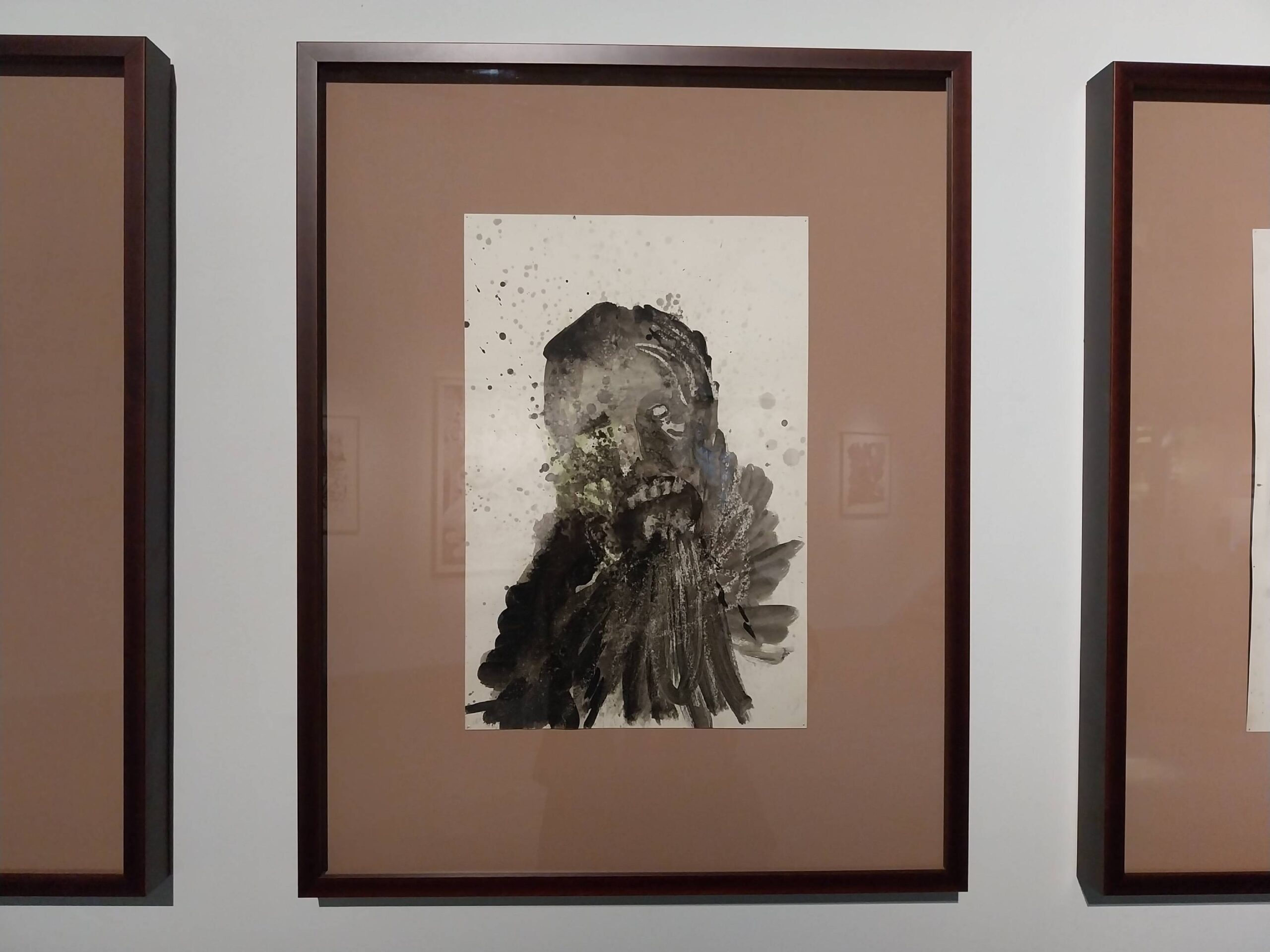
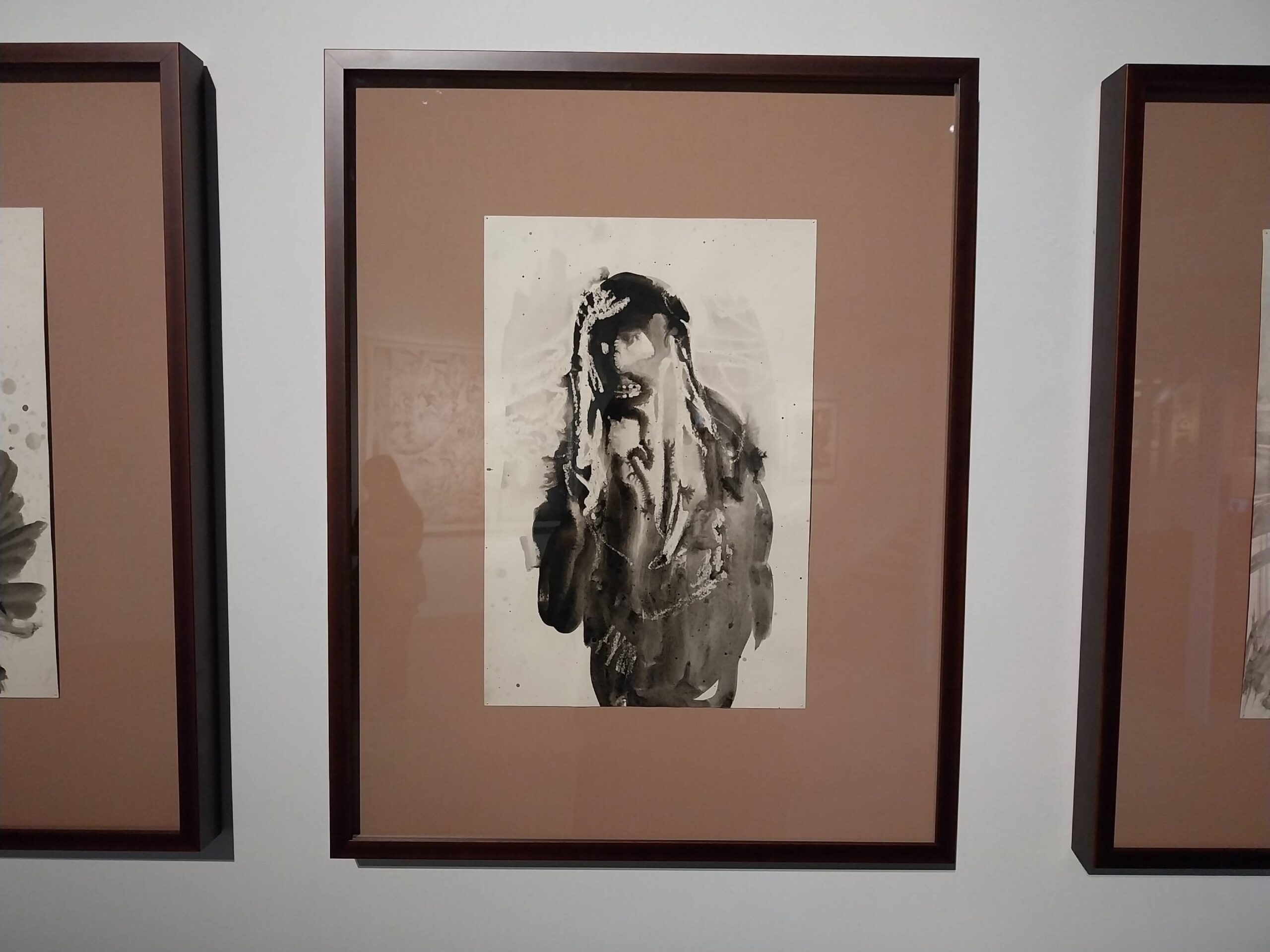
Religious Iconography
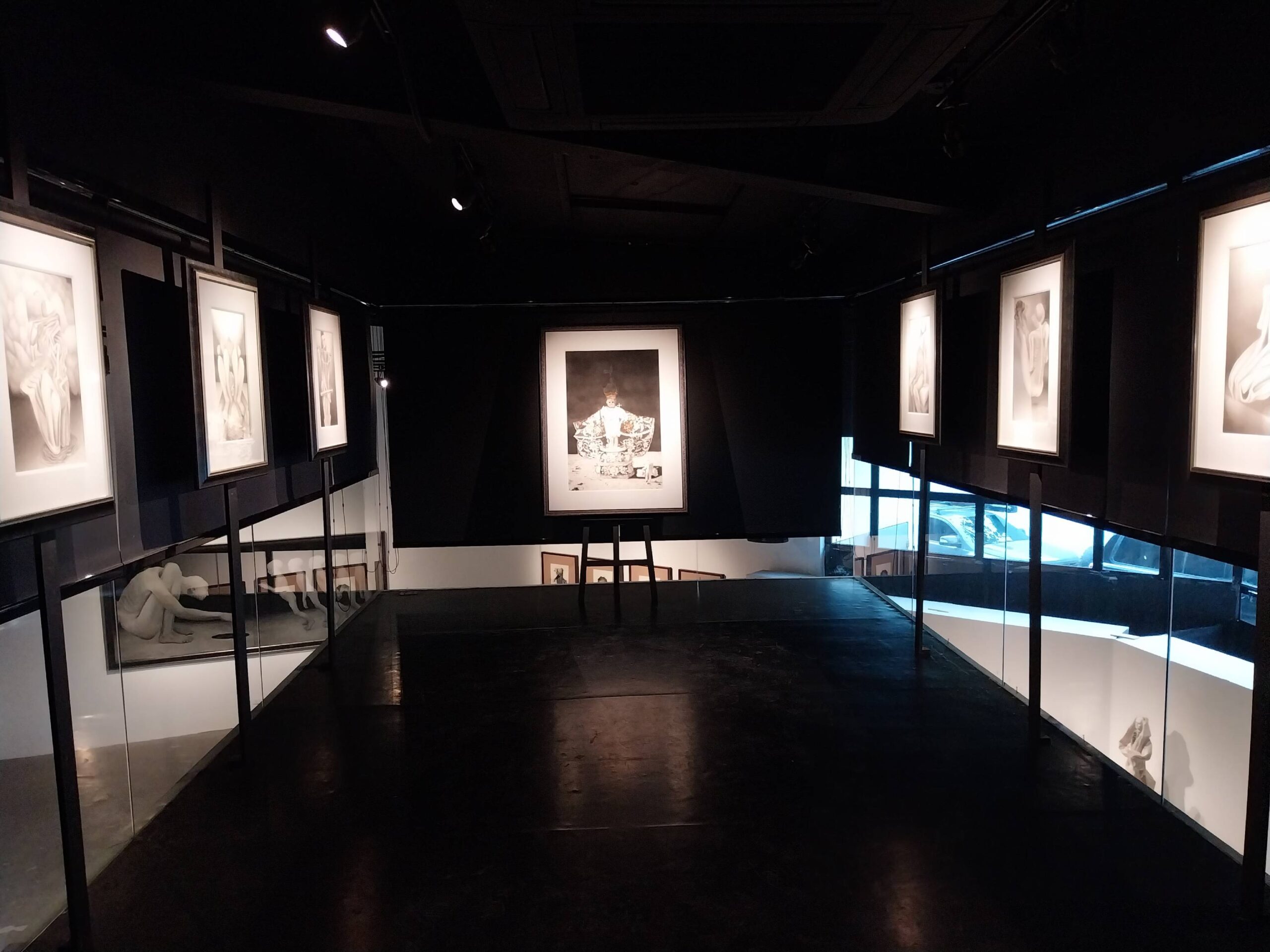
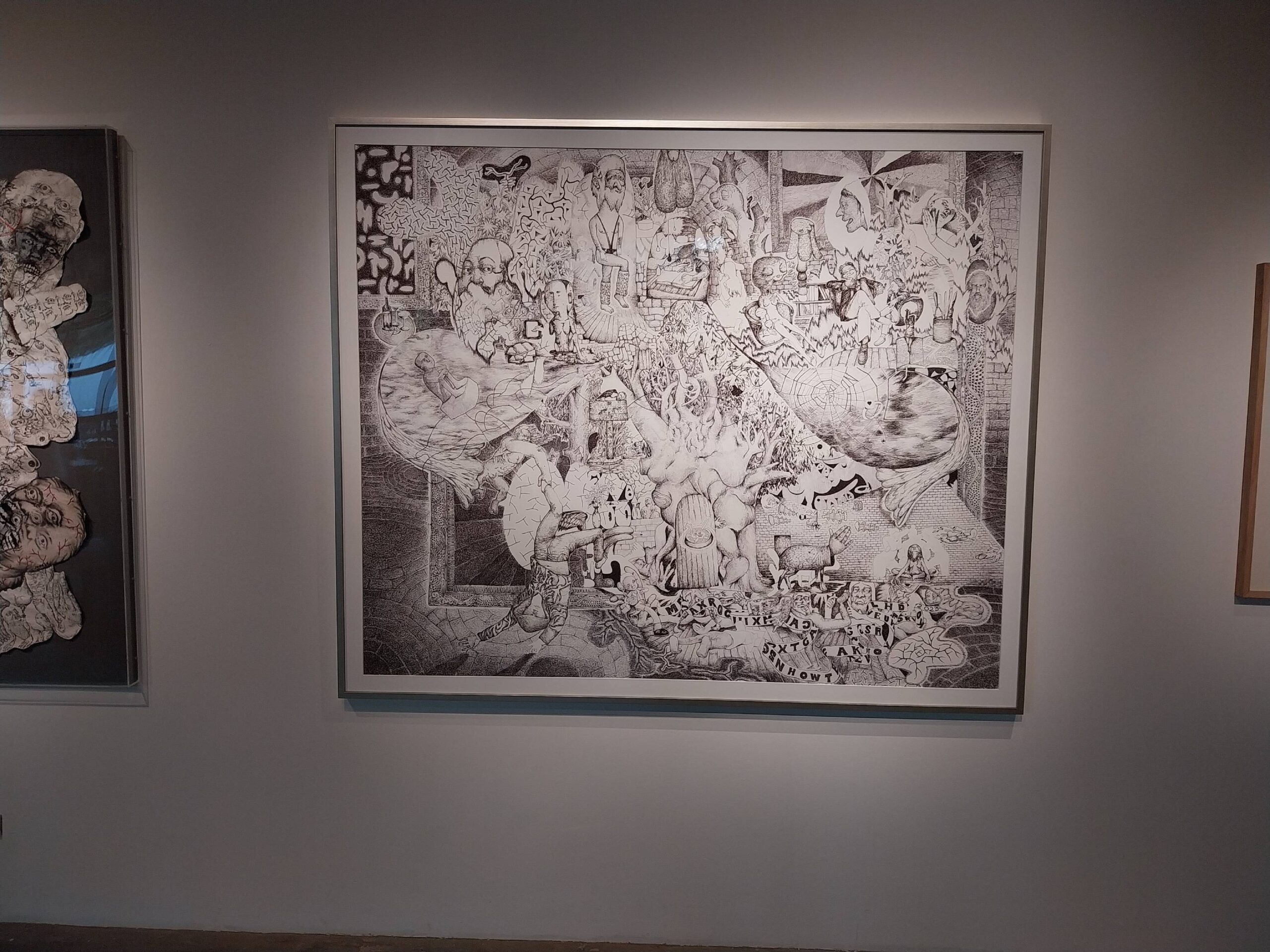
Necesario’s work, meanwhile, are these sketches of humans that appear to be uncoiling themselves. The humans are in the midst of different kinds of tortures, and their pain can be seen from how the artist renders their eyes and face—abstractly understanding nothing but agony.
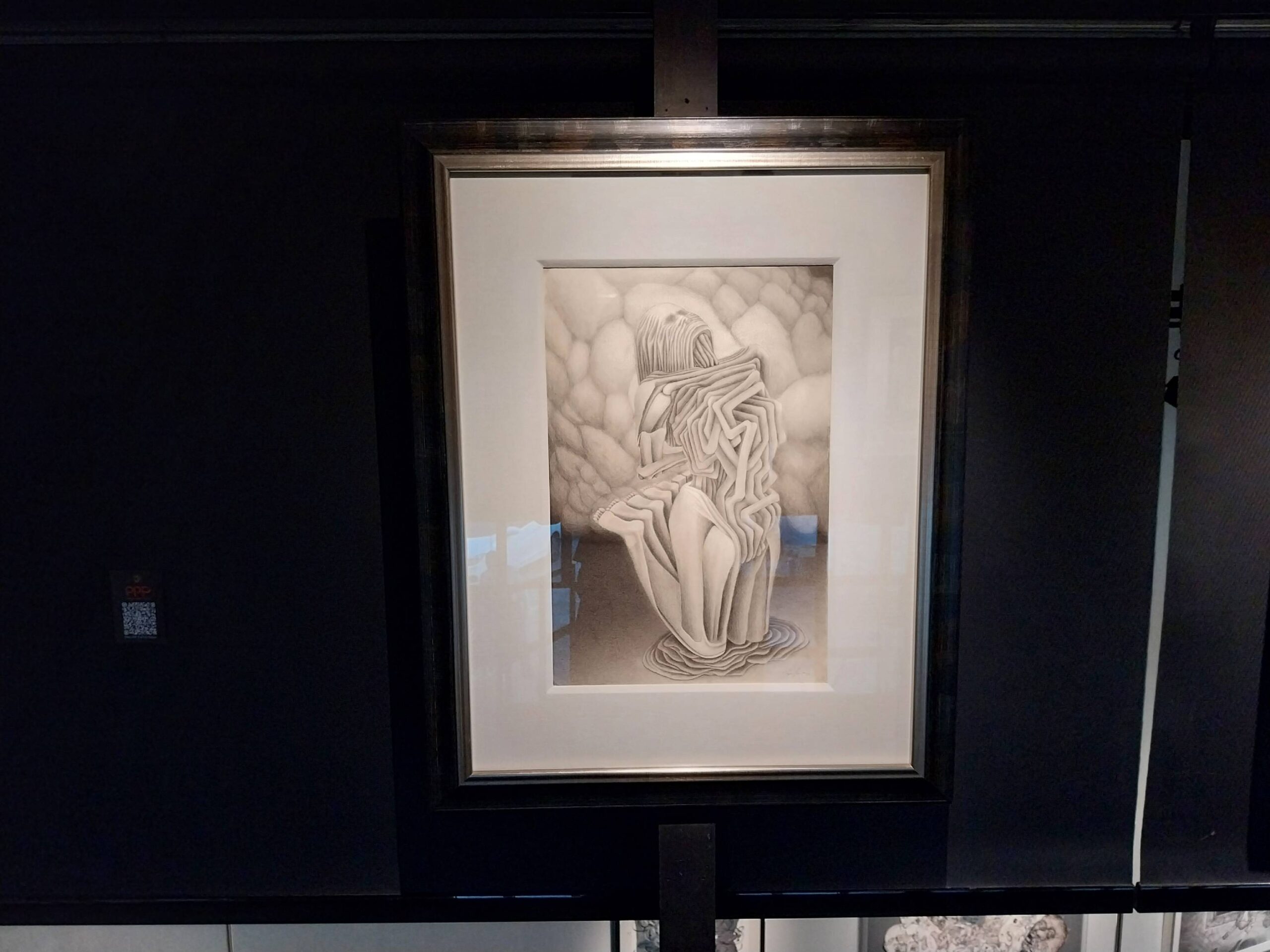
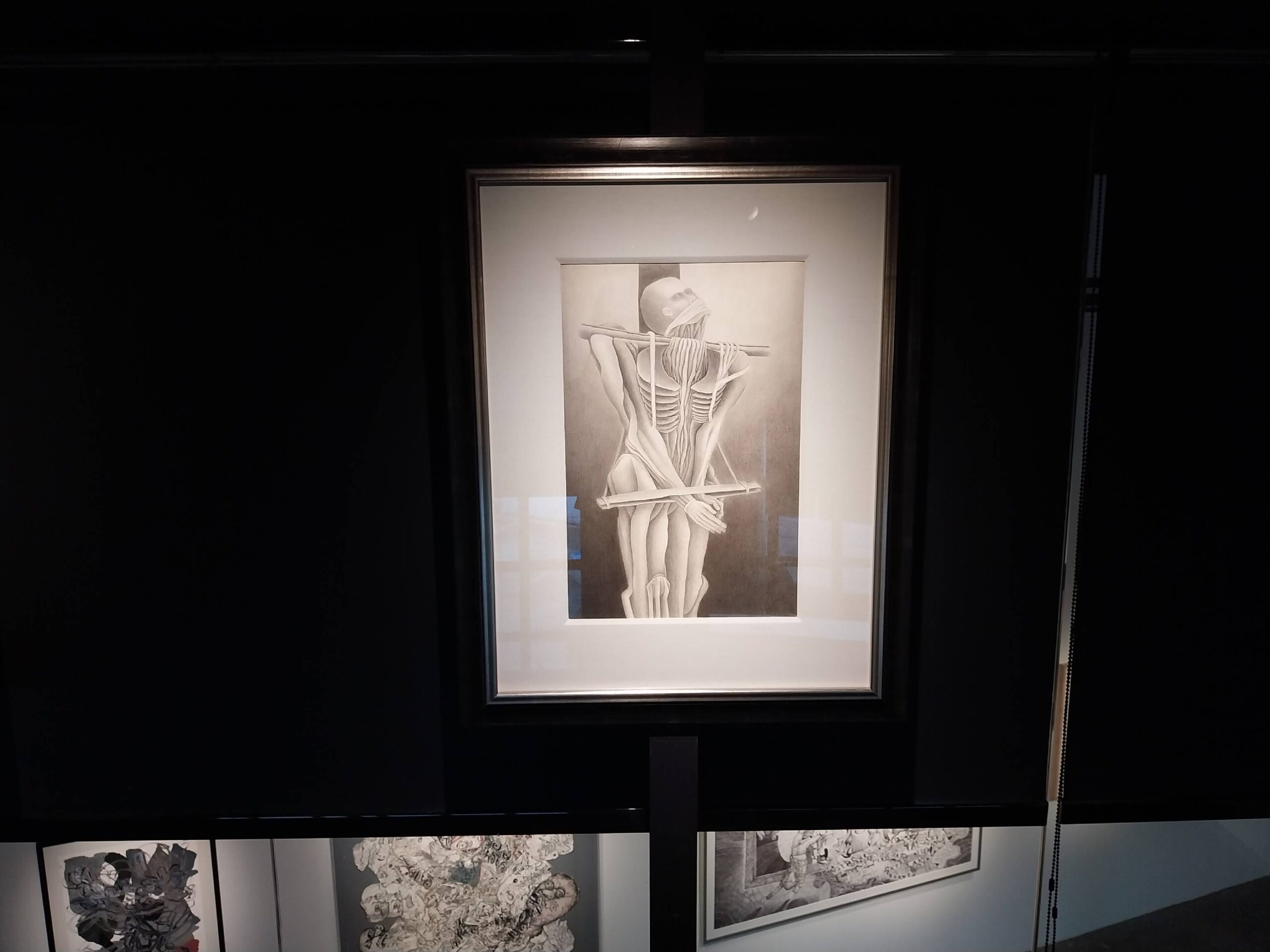
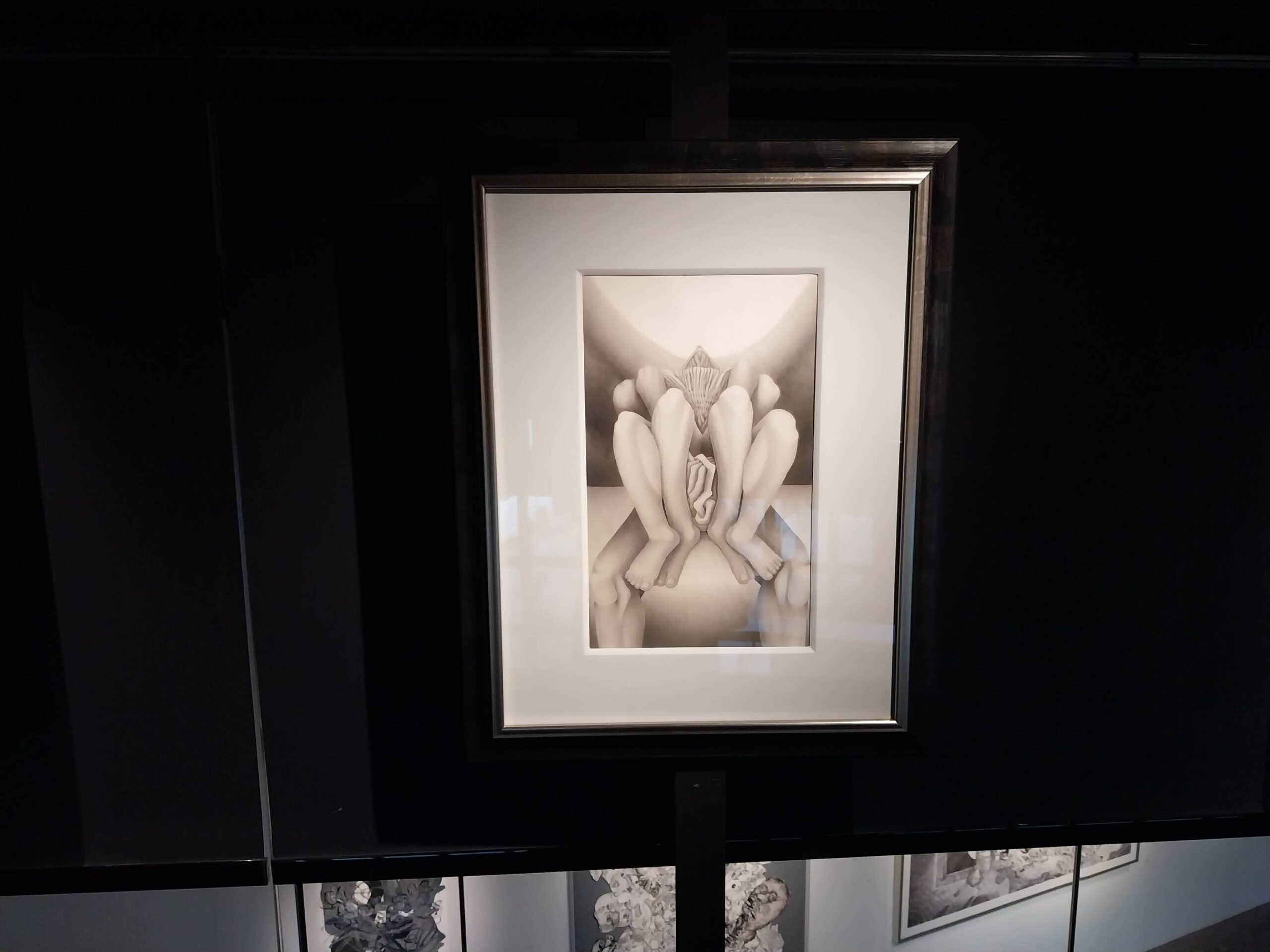
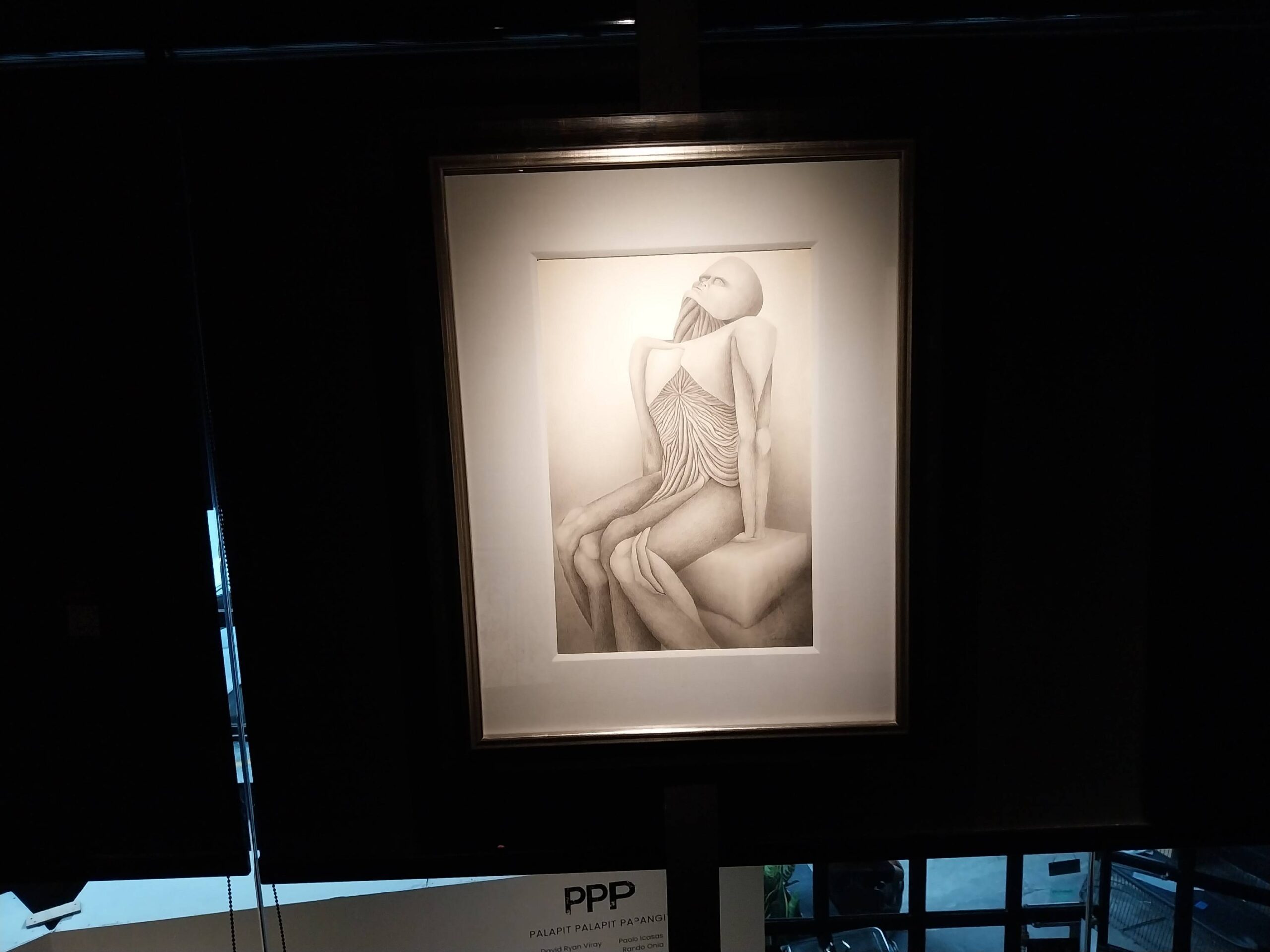
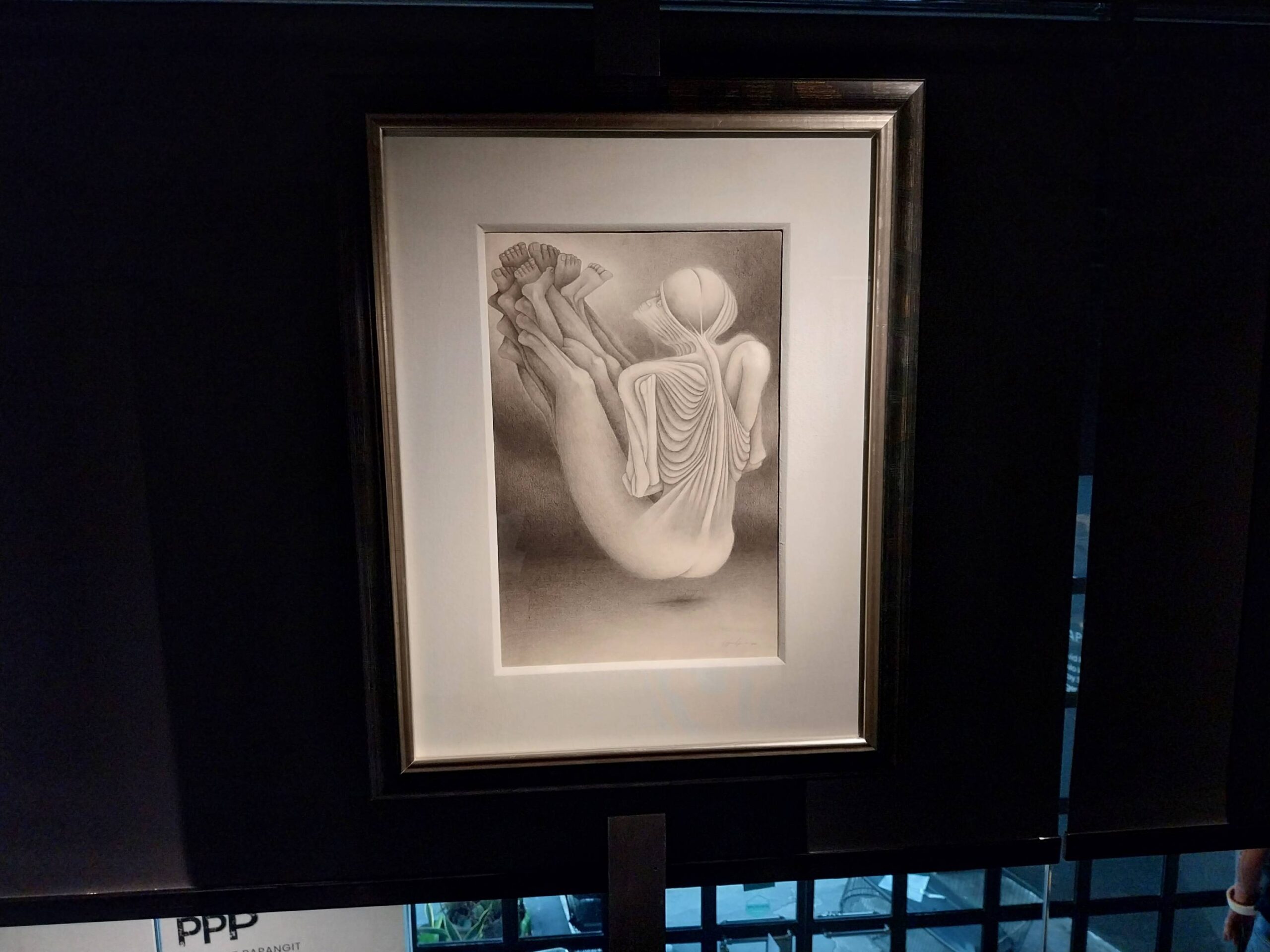
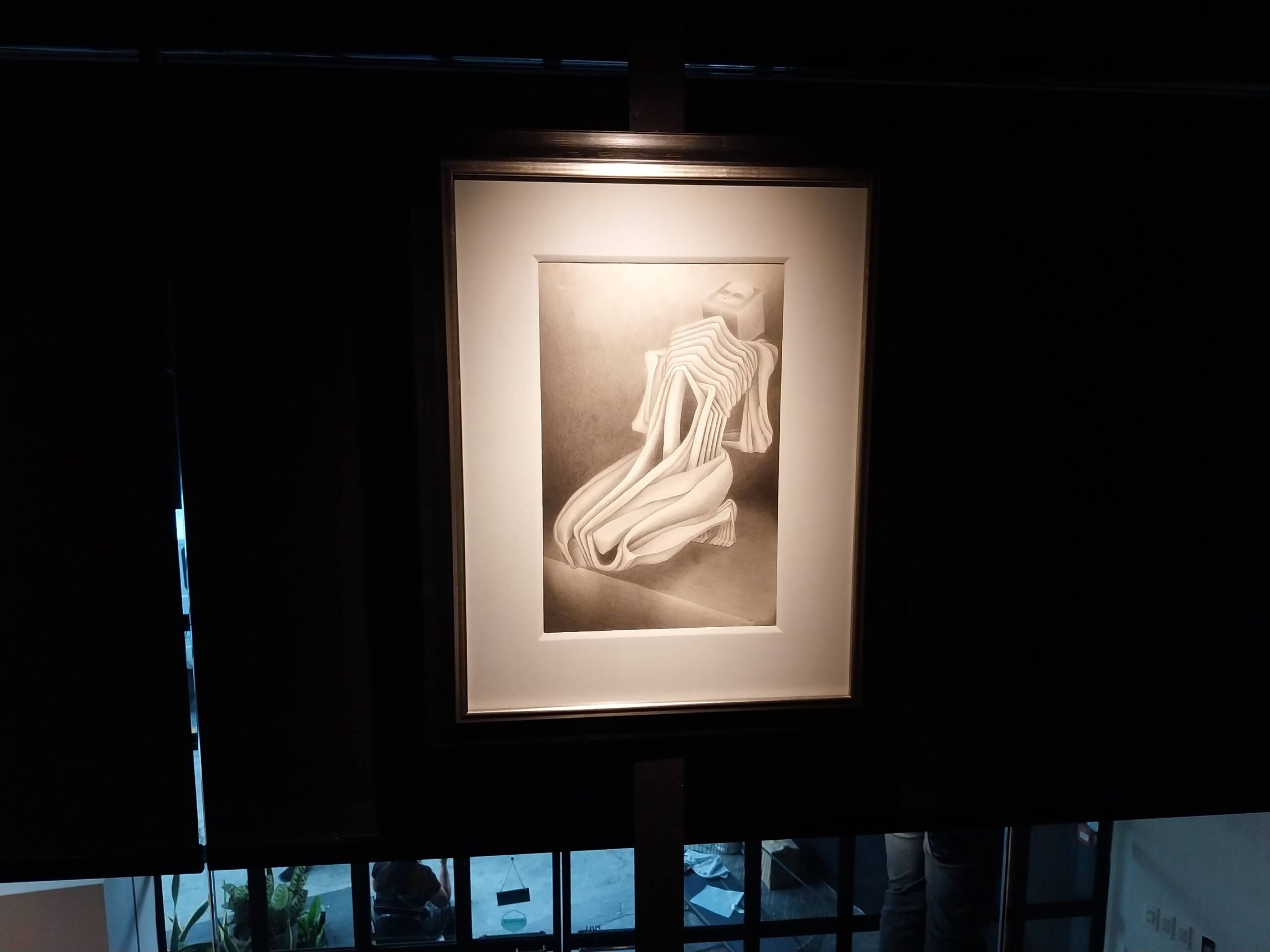
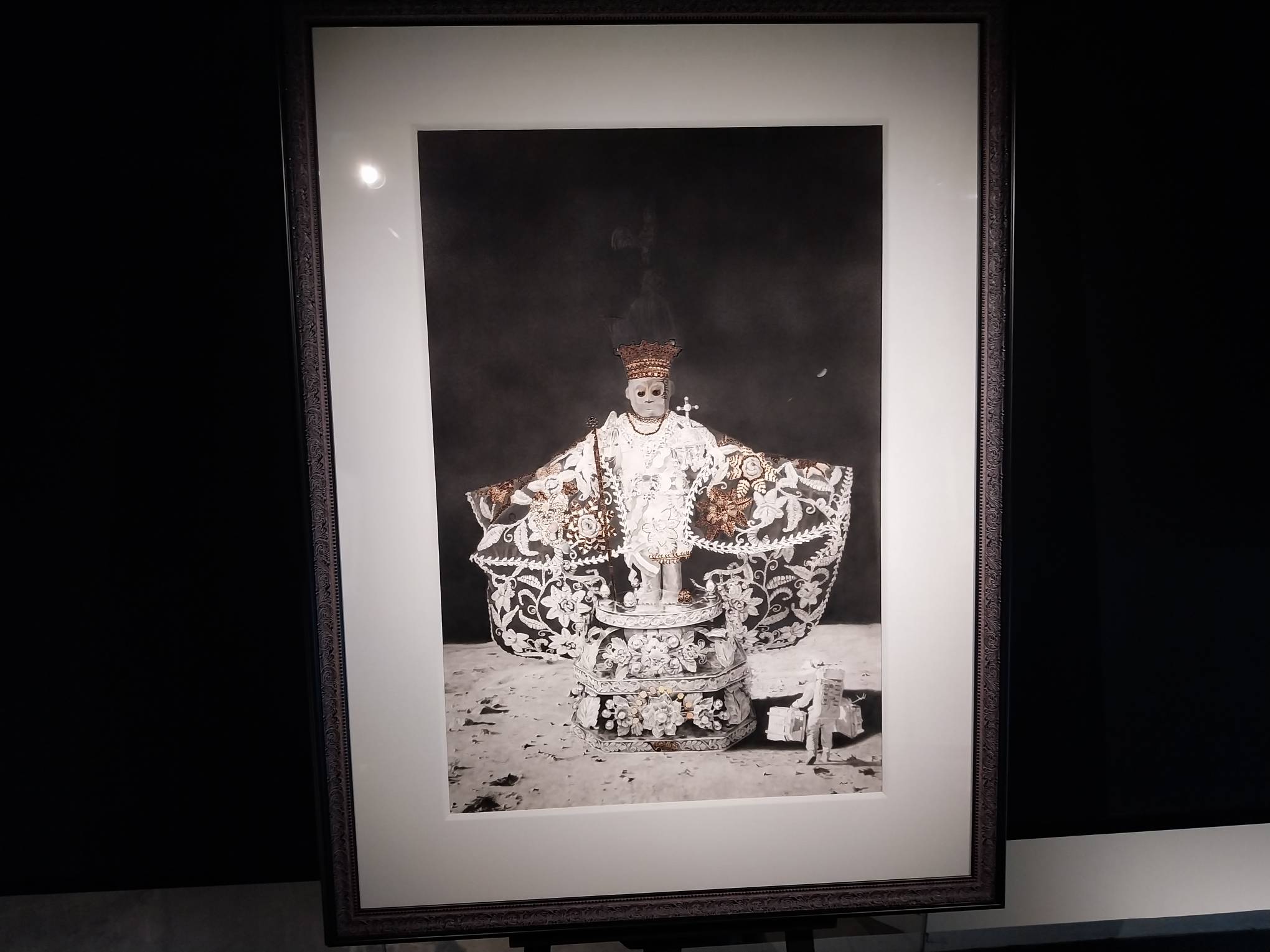
With how these works are placed in a dark room with Rando Onia’s Santo Nino-inspired painting “Trip” in the center, it feels like a tribute to the suffering that the gods have given us.
Finding the Self in the Chaos
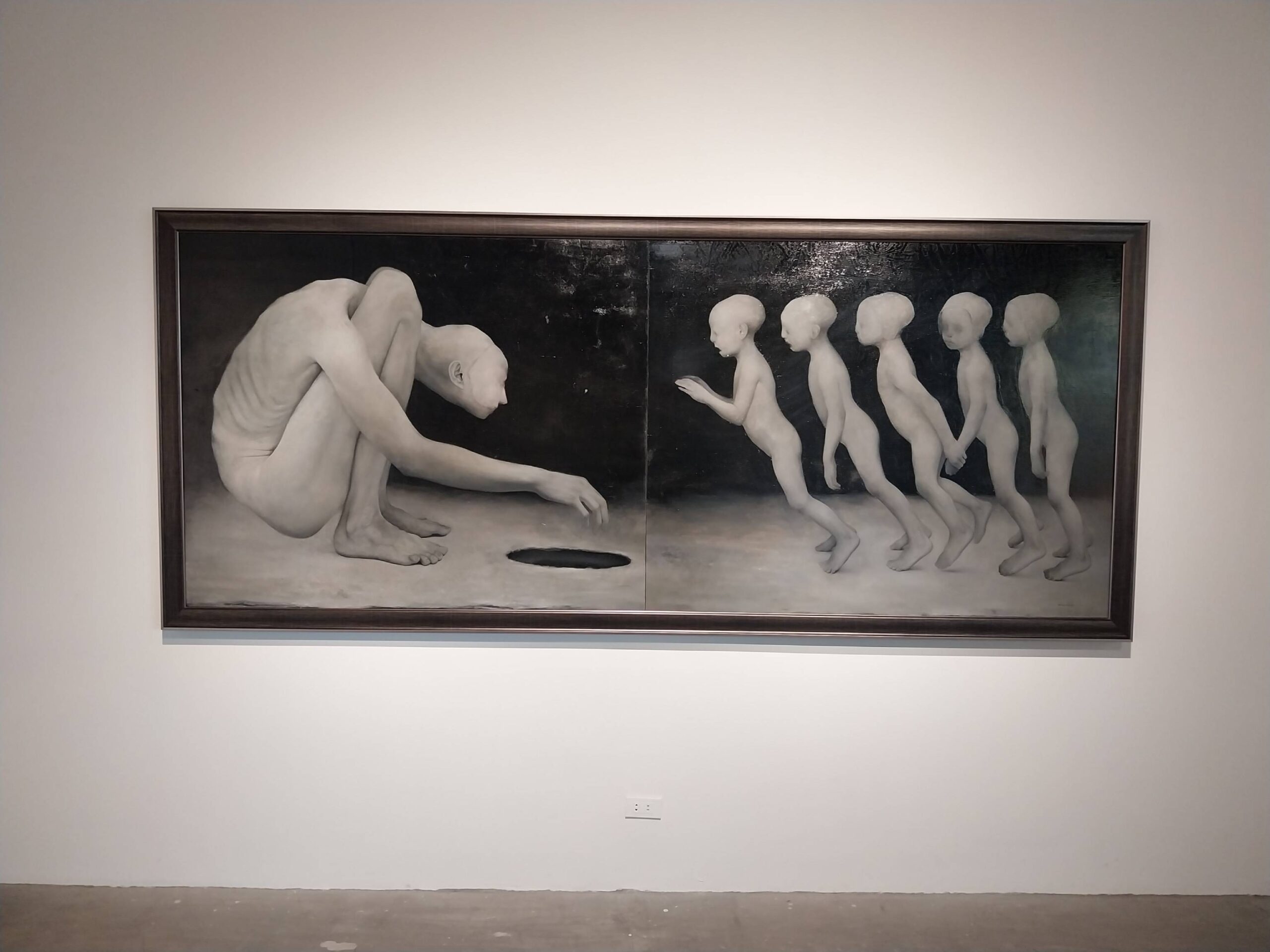
Dennis Occeña’s oil painting “Birth of the Impios,” sits at the center of the first floor of the exhibit, and for good reason. Its desaturated black-and-white colors feel striking even from across the room. More importantly, its portrayal of impios is genuinely absorbing, the design reminiscent of something out of folklore, like the Pale Man from Pan’s Labyrinth.
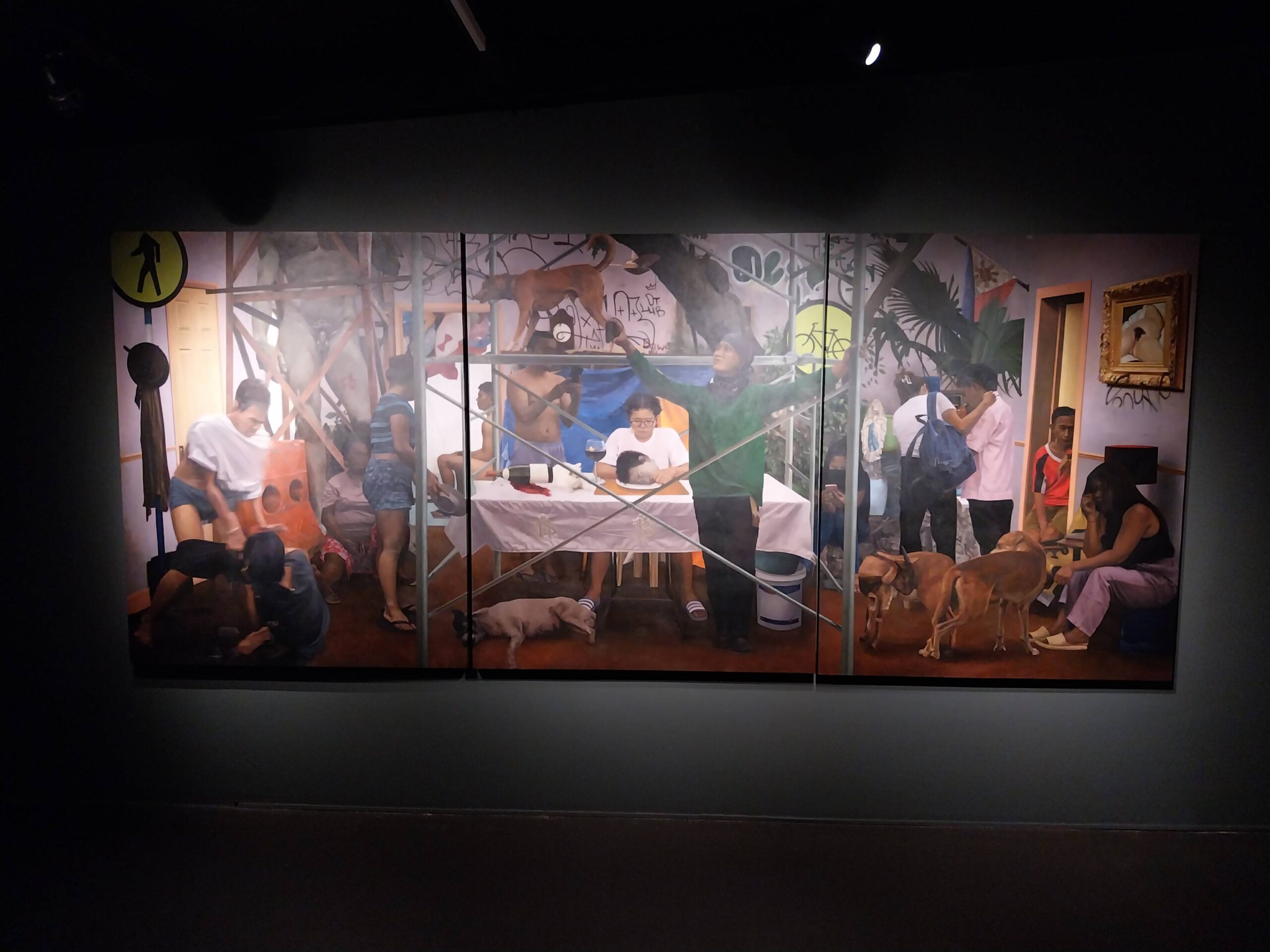
Rap Carlito, meanwhile, has the center of the room on the second floor with his sprawling mural “Are We What We Eat?” The painting satirizes Leonardo da Vinci’s The Last Supper to portray the chaos of everyday life in the Philippines. There’s some stark commentary snuck into different parts of the painting, from the person hanging out next to a traffic barrier to the picture of a woman’s vagina on the wall.
Putting the Marginalized at the Center
The commentary on ugliness moves forward with intent. When you enters the exhibit, you encounter Kaloy Sanchez’s “Yumi”. It’s a portrait of a naked trans woman resting on an ornate sofa with a pensive look on their face.
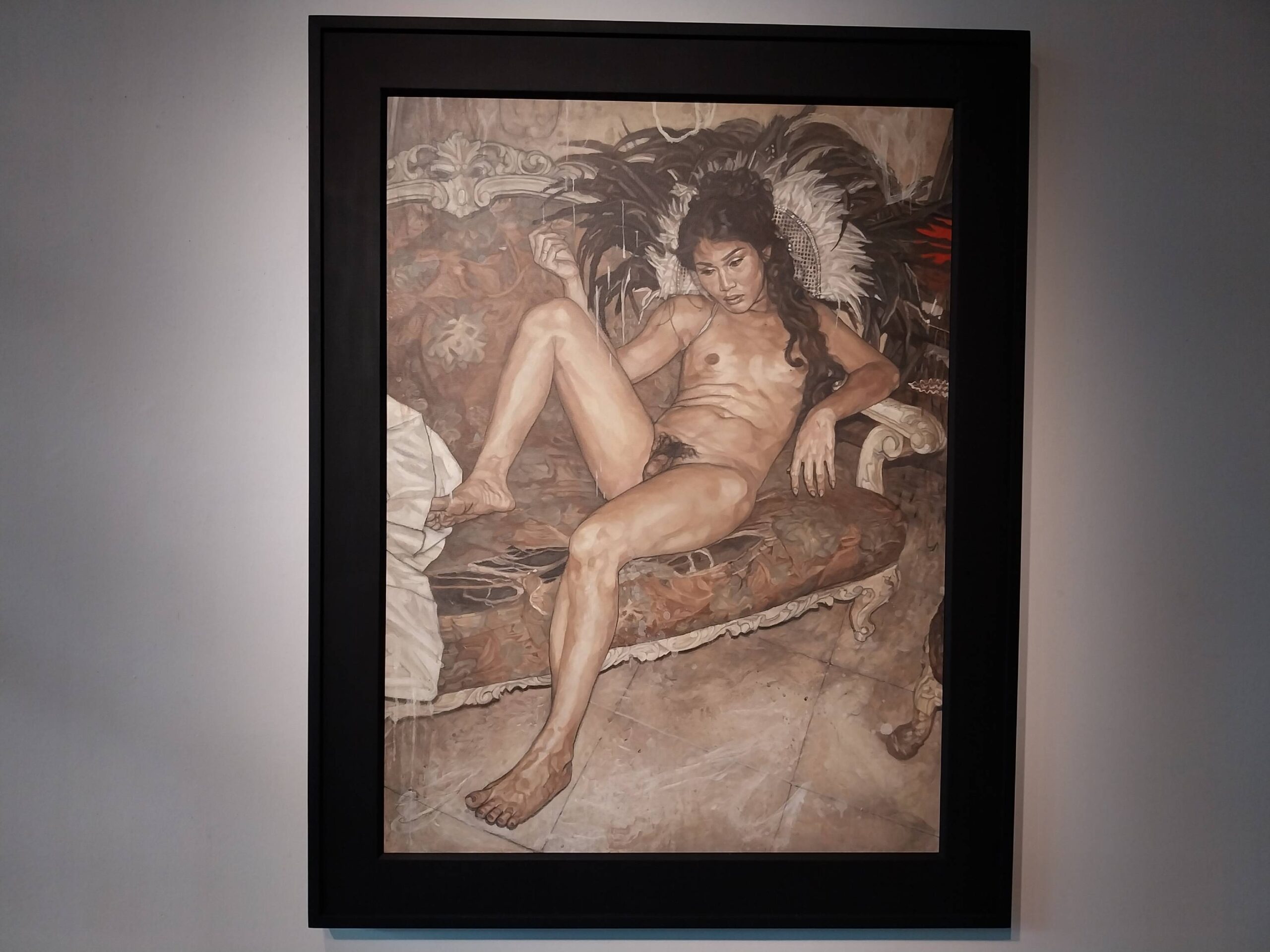
It’d be a typical portrait, except that the painting is splattered with white drippings that resemble bodily fluids. That seems to be there as commentary on the treatment of queer people in the country, their continued marginalization on the sidelines. It hints at how many trans people are reduced to sex objects, vilified and sexualized for just existing. If anything else, it’s certainly an interesting first painting to encounter.
PPP: Palapit Palapit Papangit finds the beauty in ugliness. It makes the case for how beauty exists in everything about humanity because humans themselves define what beauty is. There is no standardization of what beauty is or what it means. It just is. And you can find beauty in anything in life, whether it’s sculptures of incomplete constructions or alien depictions of human beings.
Related reading: ‘More|Less’: Portraying the Hecticness of the Information Age
Bigkis is the act of binding. In Tagalog, the word can refer to something used to bind or encircle, as well as a bundle formed by tying several separate elements together. Figuratively, it can also mean a bond, union, or unity. The meanings move from the physical act of joining things together to the connection […]
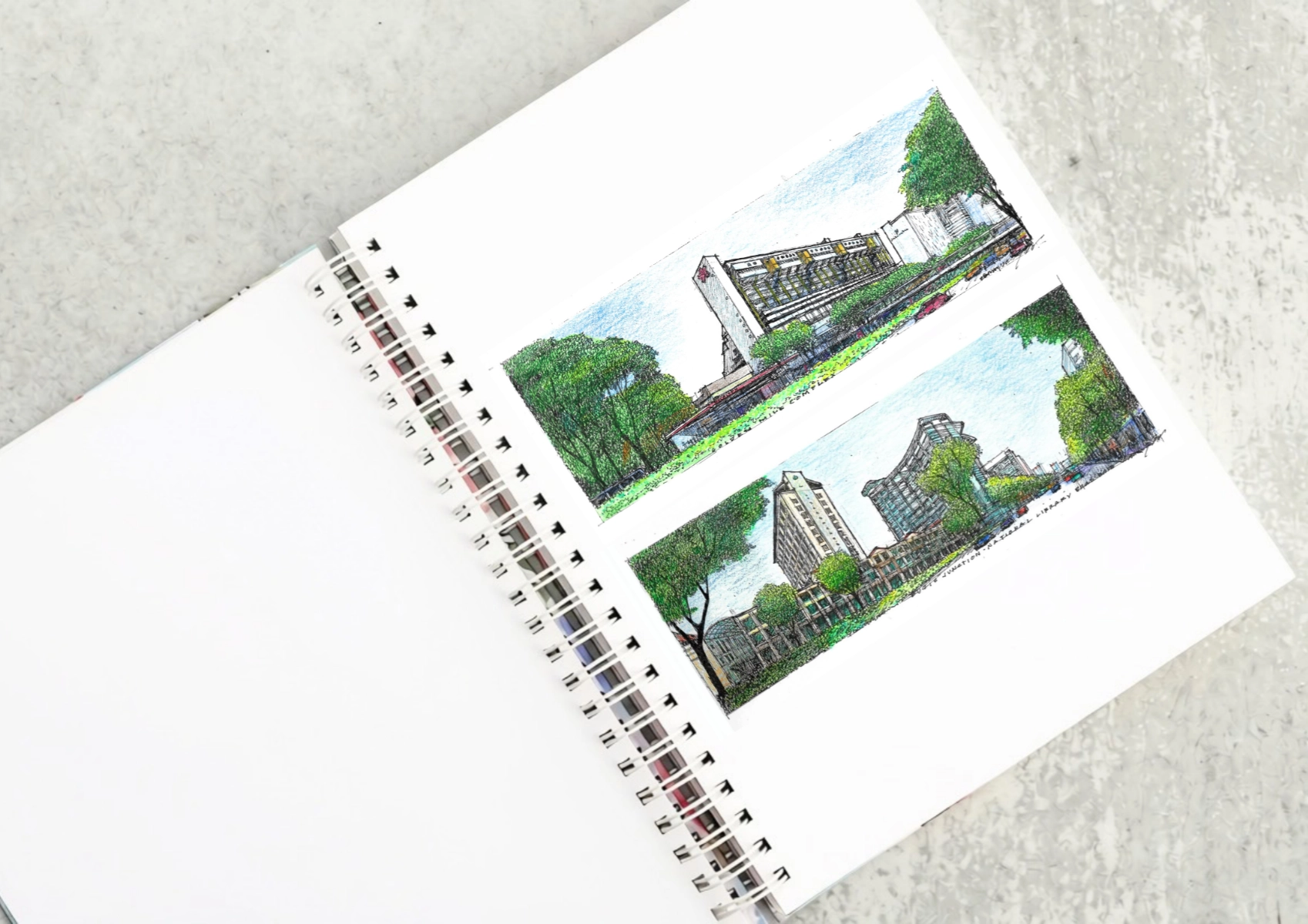
Two sketches of Singapore connect BluPrint Editor in Chief Paulo G. Alcazaren’s personal and professional history with Shared Ground: ArchitectureArchitectureThe art and science of designing and constructing buildings, structures, and spaces that are functional, safe, and aesthetically pleasing. It encompasses the planning, design, materials, and techniques used to createGo to Architecture Glossary of Care, Culture, […]
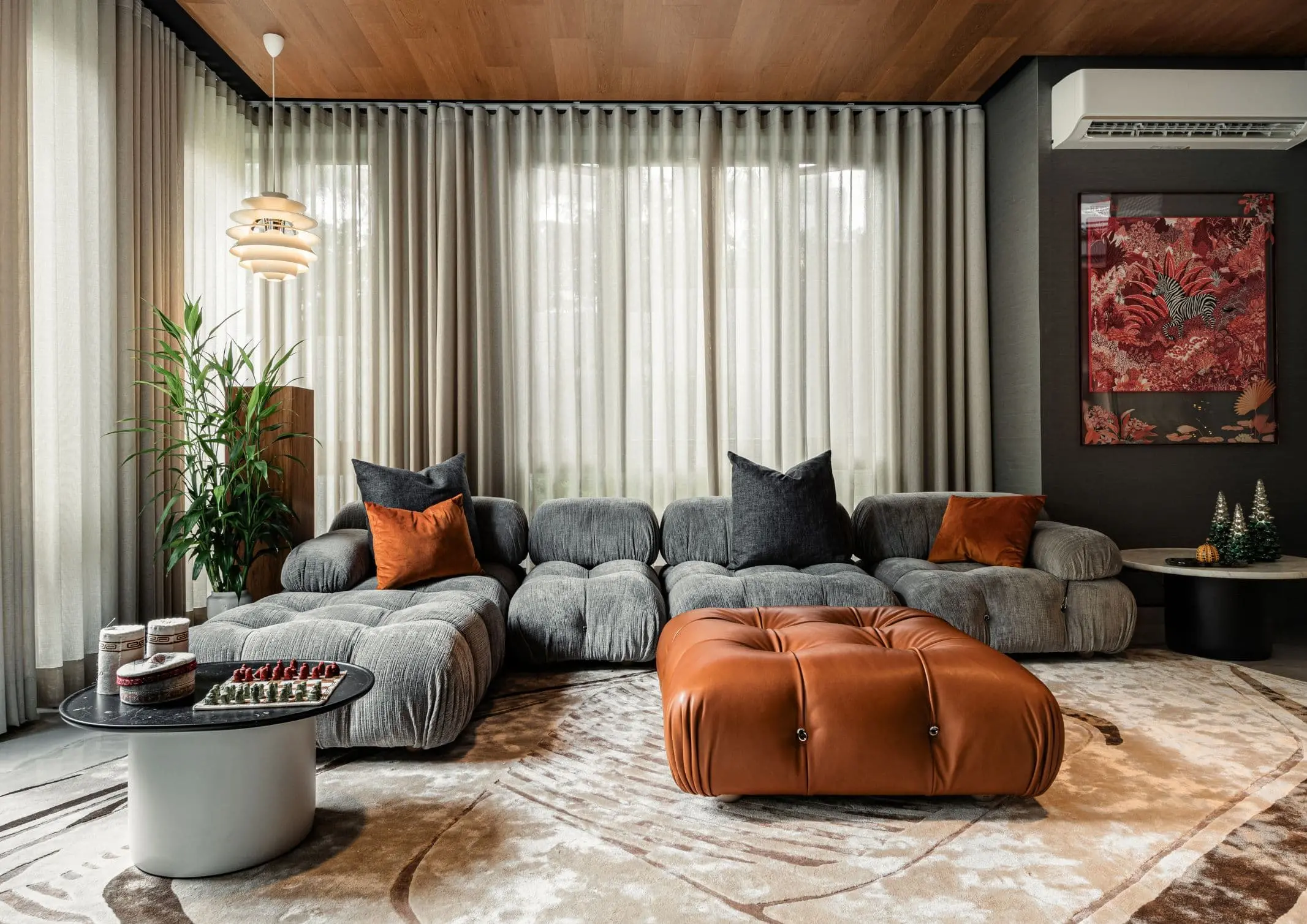
Some have become household names – Coleman, Oster, and KitchenAid – products that have found their way into Filipino kitchens, homes and family routines. In home furnishings, brands such as B&B Italia, Ethan Allen, Sub-Zero, Miele, SieMatic, Louis Poulsen, Hunter Douglas, Tempur, and Technogym, have helped shape the way Filipinos live. From everyday essentials to […]
In a way, designers are the modern-day soothsayers and prophets. They design for the future, predicting how a room, a house, a building or a whole city will be used by people. They foresee how users will interact with a space, conjure exact shades of colors to elicit specific behavior and arrange furniture to build […]
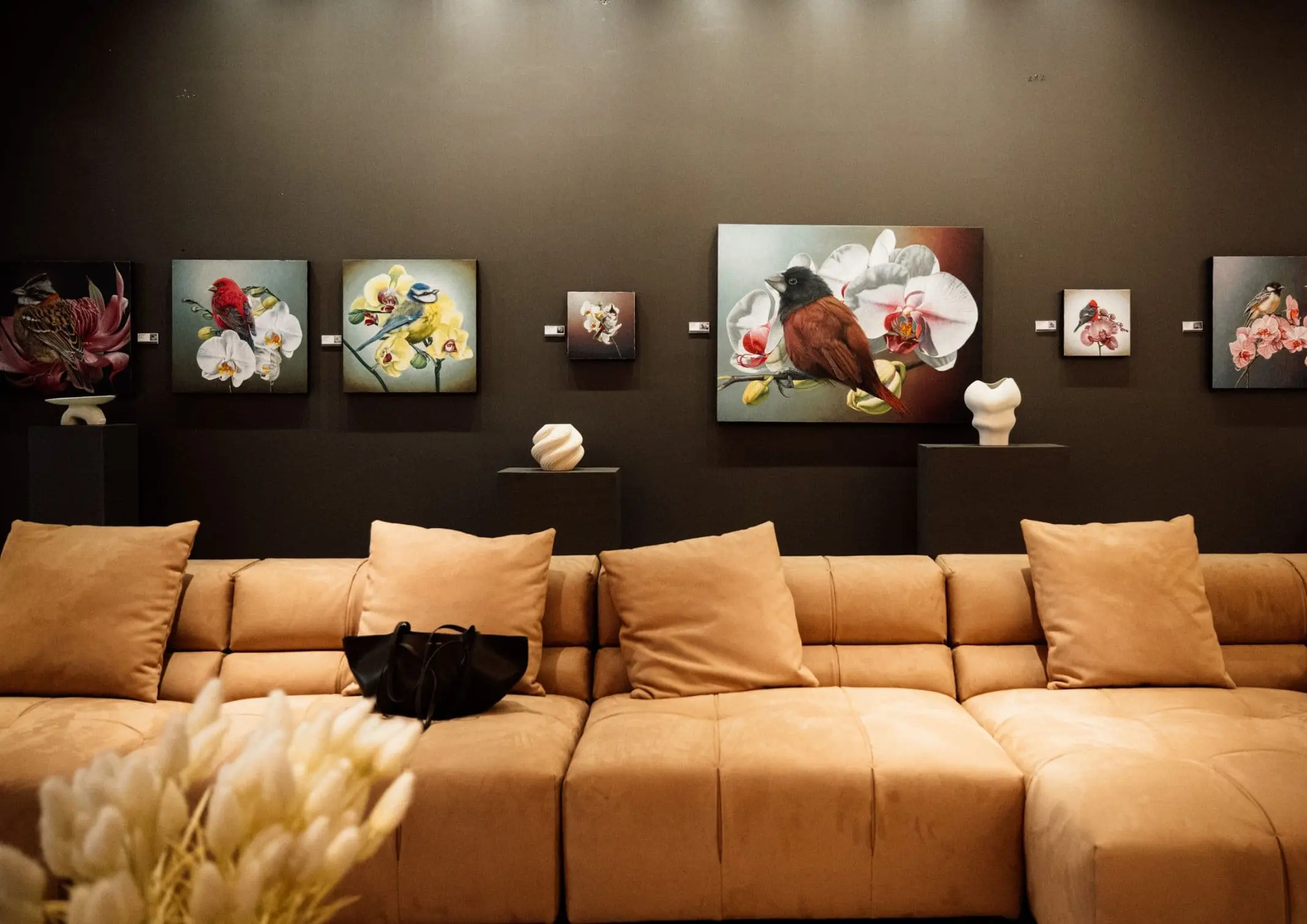
Art and furniture are often selected separately, yet their relationship can shape how a room looks and feels. The collaboration between Hooga and Galerie Joaquin explores how these elements can work together, bringing contemporary artworks into furnished residential settings at Hooga’s showroom in Uptown Mall, Bonifacio Global City. For Hooga, which curates furniture, lighting, and […]
Read the issues.

Collect the volumes.

Recommended Video
Tap to Unmute
Unmute
0:00
0:00