At Helm, dining unfolds as choreography. An open kitchen anchors the room, allowing guests to witness the precision behind its Michelin-starred fine dining menu.
Designed by Kevin Nieves of Headroom, the 24-seat restaurant reflects that same discipline in its interior design. Tucked within Ayala Triangle Gardens in Makati, Helm brings together culinary recognition and architectural intent in equal measure.
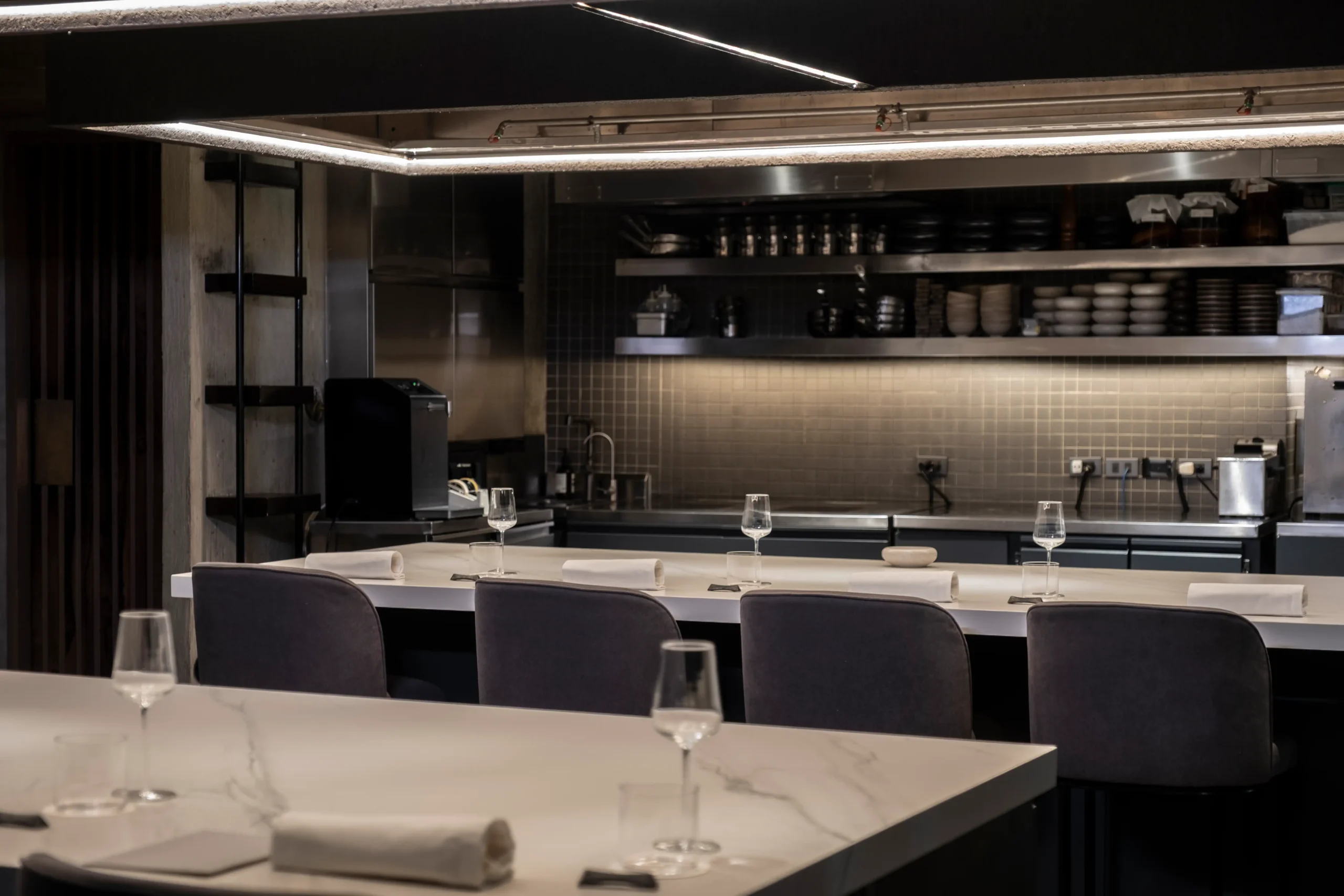
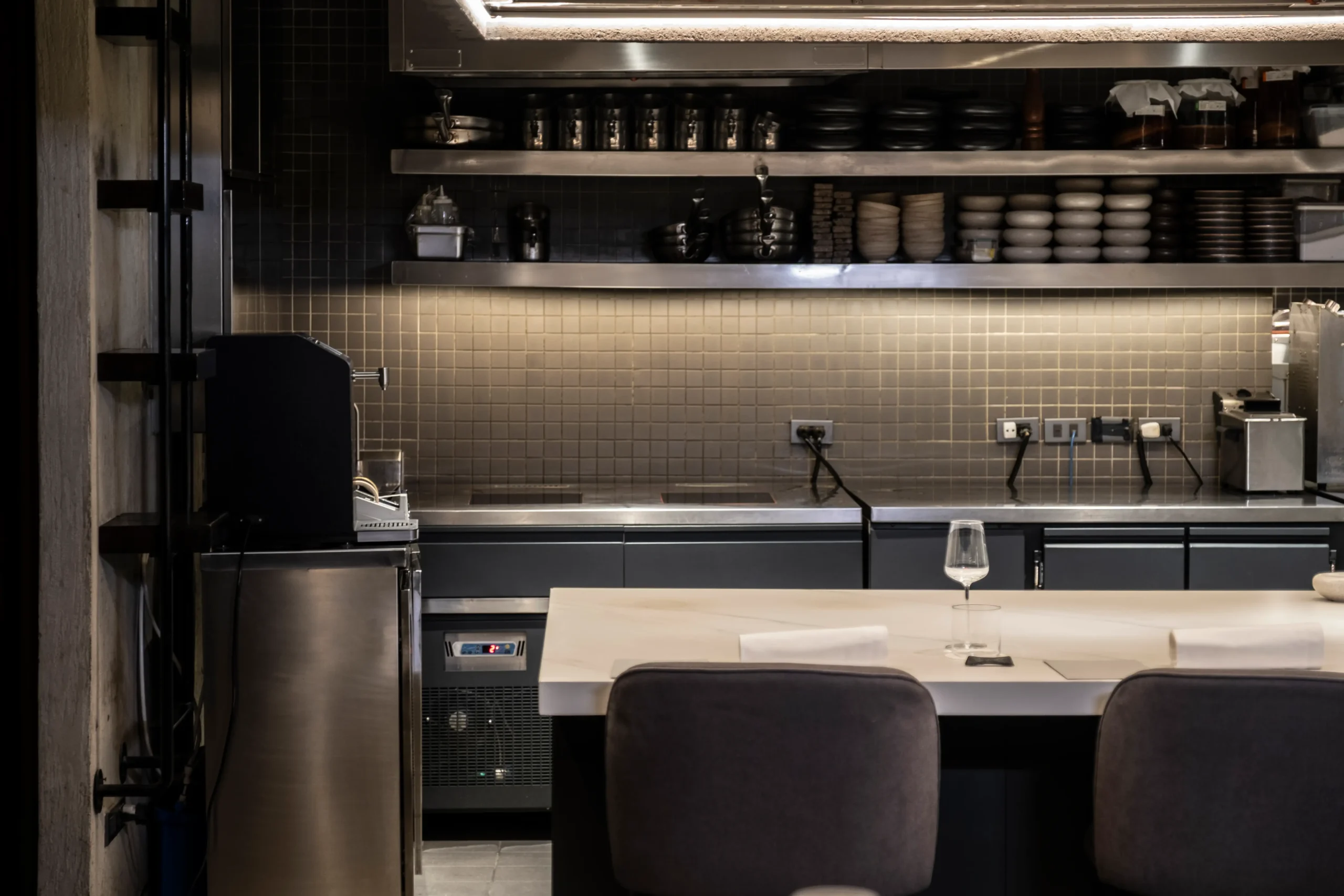
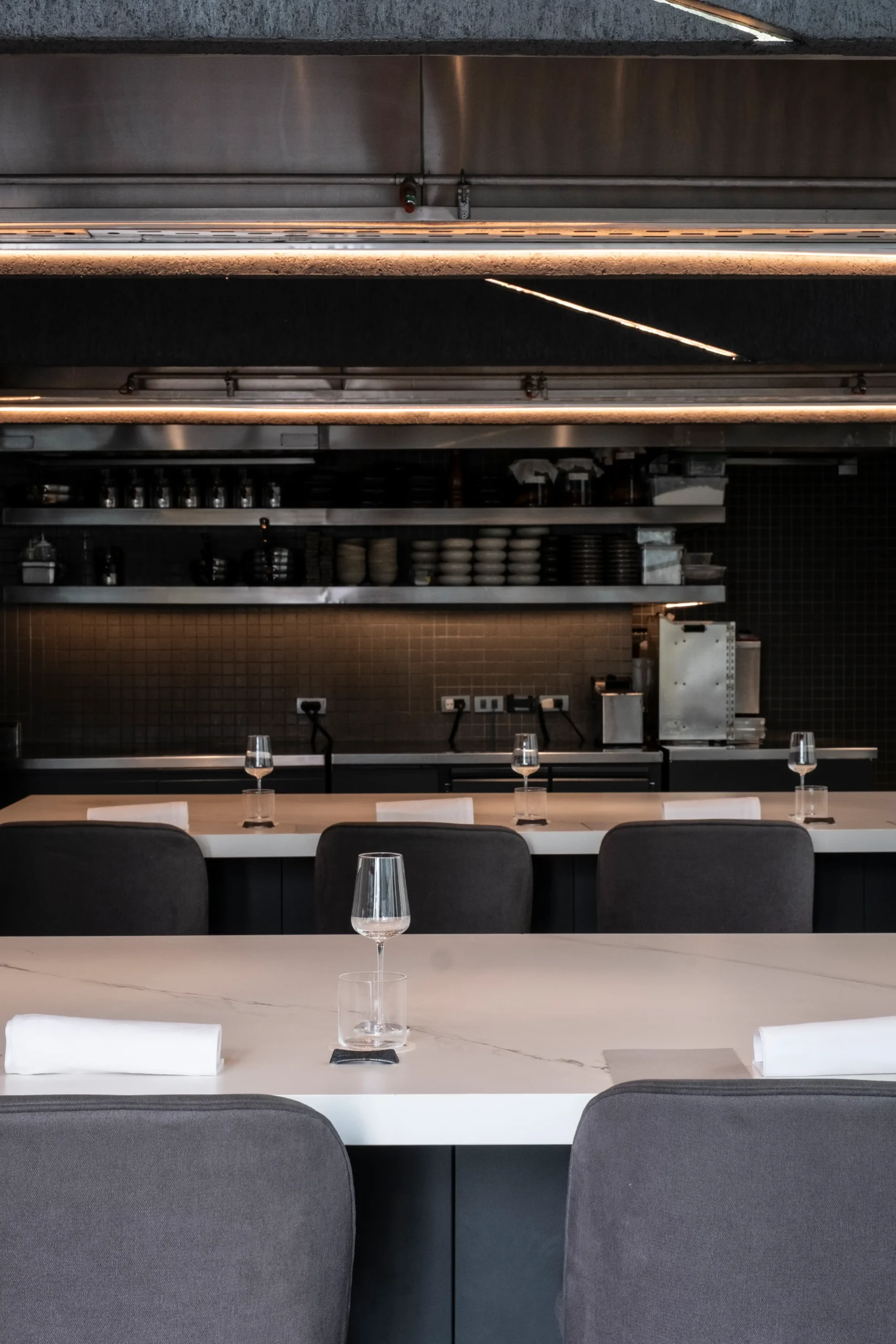
The open kitchen gives diners access to the culinary process behind Helm.
Honesty in Cooking: The Kitchen as Theatre
Chef Boutwood wanted an open and intimate layout that would make diners feel as though they were inside the kitchen themselves. “It’s part of his method of serving dishes and cooking that guests are witness to the process. We call it a theatre,” Nieves says.
Advertisement
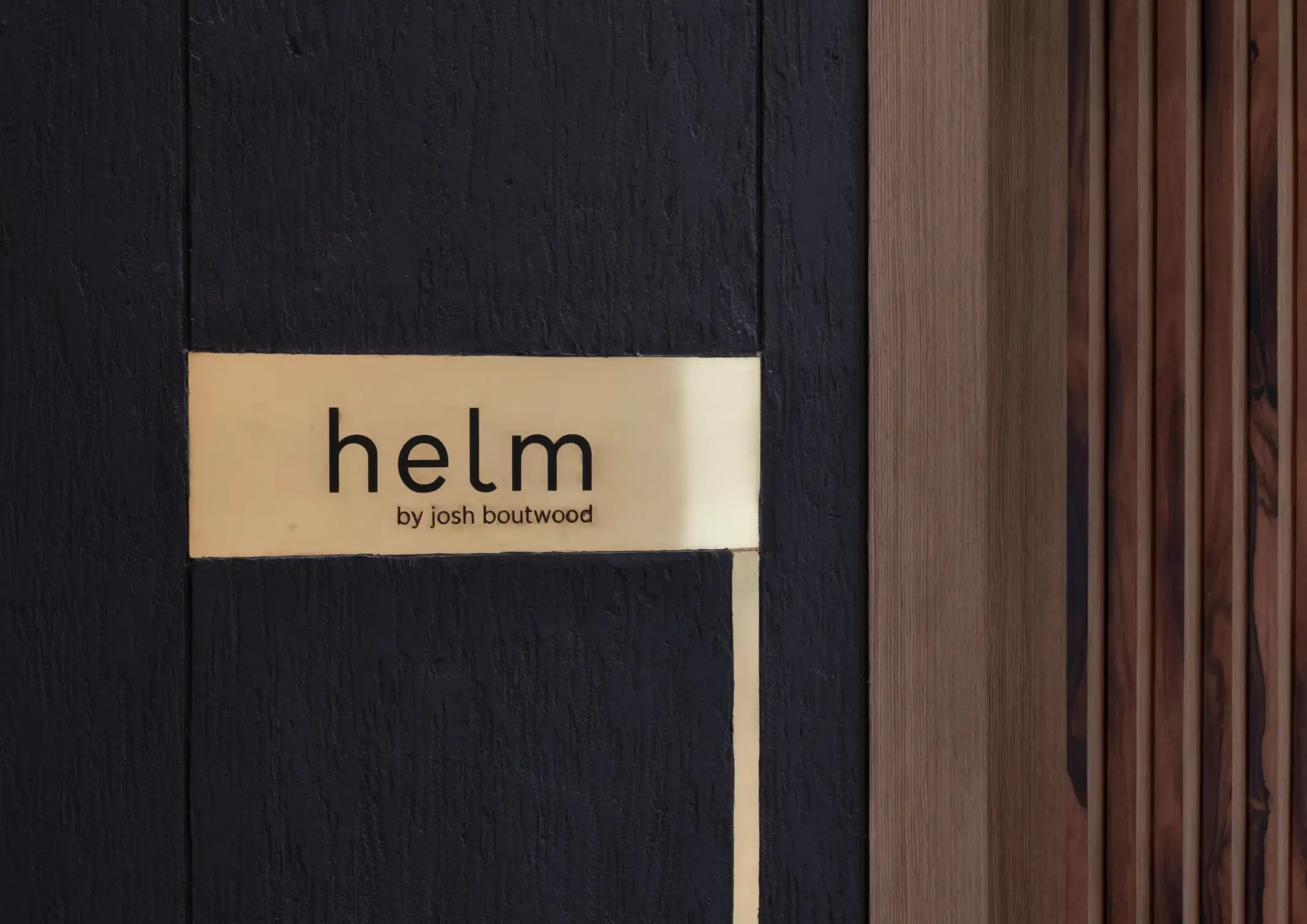
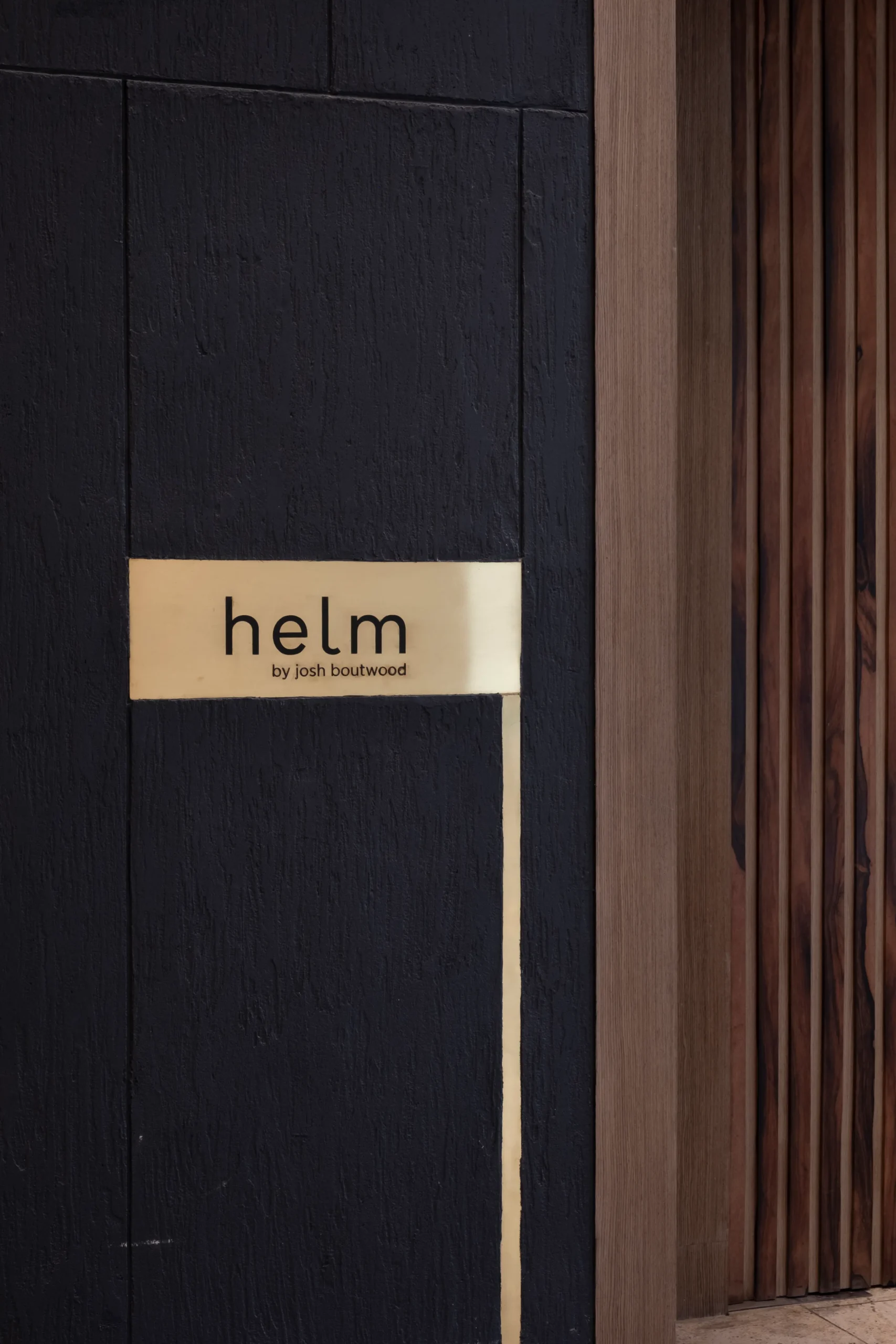
Helm by Josh Boutwood
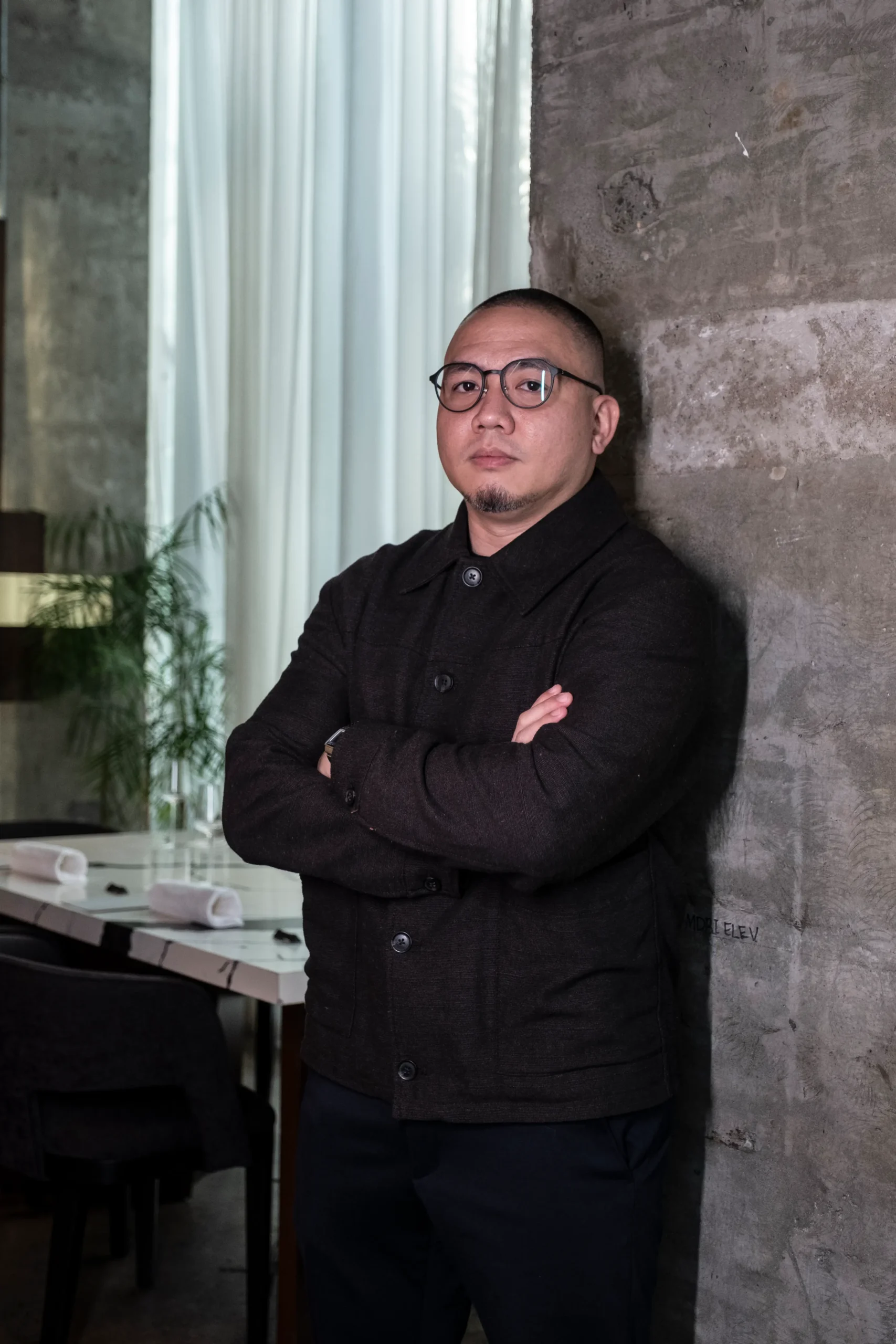
Designer Kevin Nieves
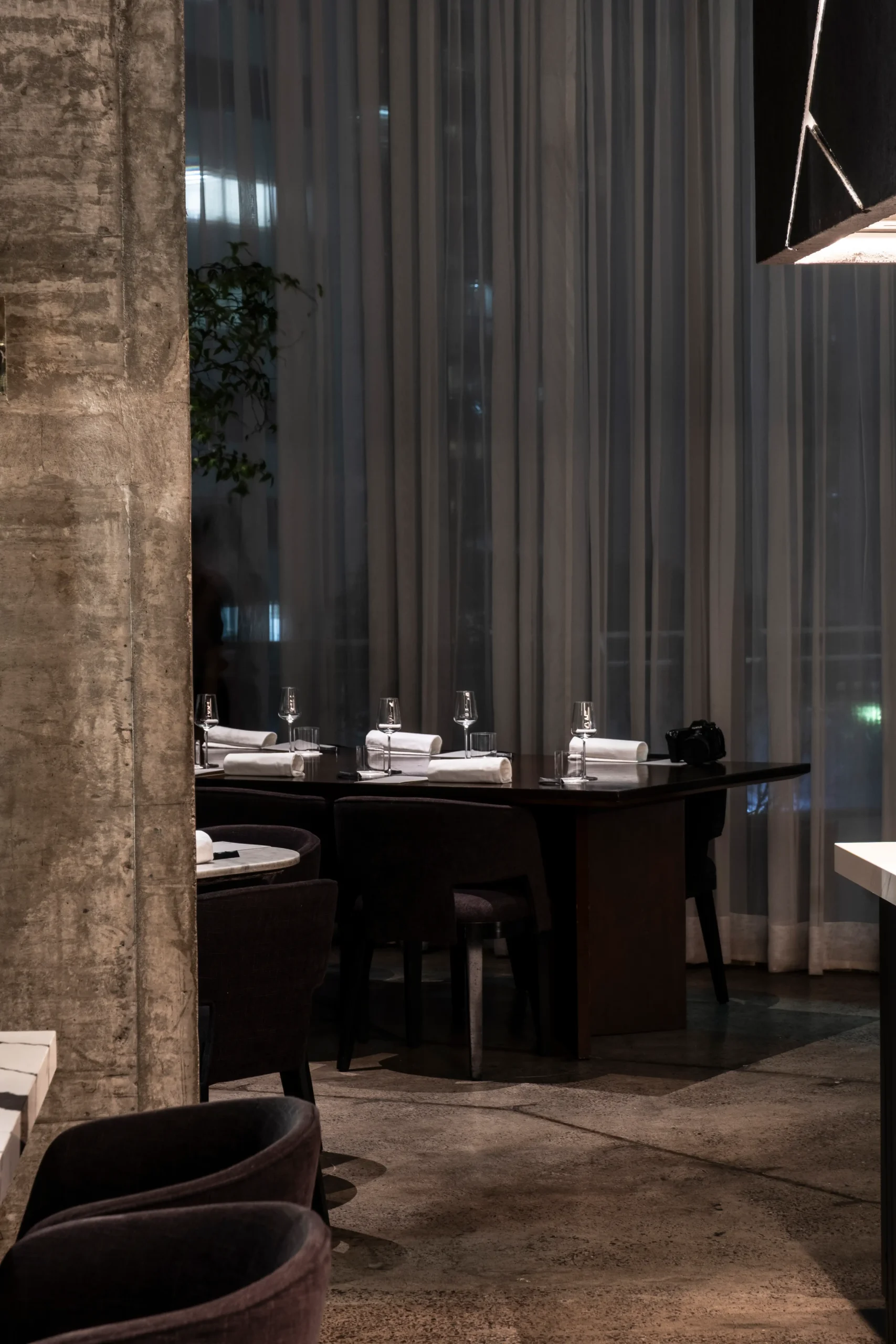
The layout frames dining as performance. The openness reinforces a sense of honesty in the ingredients. Nieves extends this concept into the restaurant’s spatial design. Upon entering, guests are immediately drawn to the raw structural columns. Highlighted by Nieves and the chef himself, the columns serve as a defining element of the space.
The raw materials used throughout the restaurant bring texture to the its spatial design.
To create a dynamic textural language, the raw column is paired with a sculpture made from reclaimed wood covered with a brass finish. Nieves sought to create a balance between roughness and refinement. “We want them to feel this sort of exclusive peek or sneak inside the chef’s kitchen. So, the space is really designed to be open and embracing at the same time,” Nieves states.
Stainles steel in the open kithcen.
Imperfect Materiality: Beauty in the Unconventional
Upon entering, guests are greeted by a concrete wall featuring a central pocket door crafted from reclaimed kamagong wood. The wood’s veining echoes the patterns of the Calacatta marble used for the tables and counter. The use of reclaimed material underscores the restaurant’s embrace of imperfection as part of its design language.
Advertisement
Stone meets steel and cement in a minimalist and luxurious display.
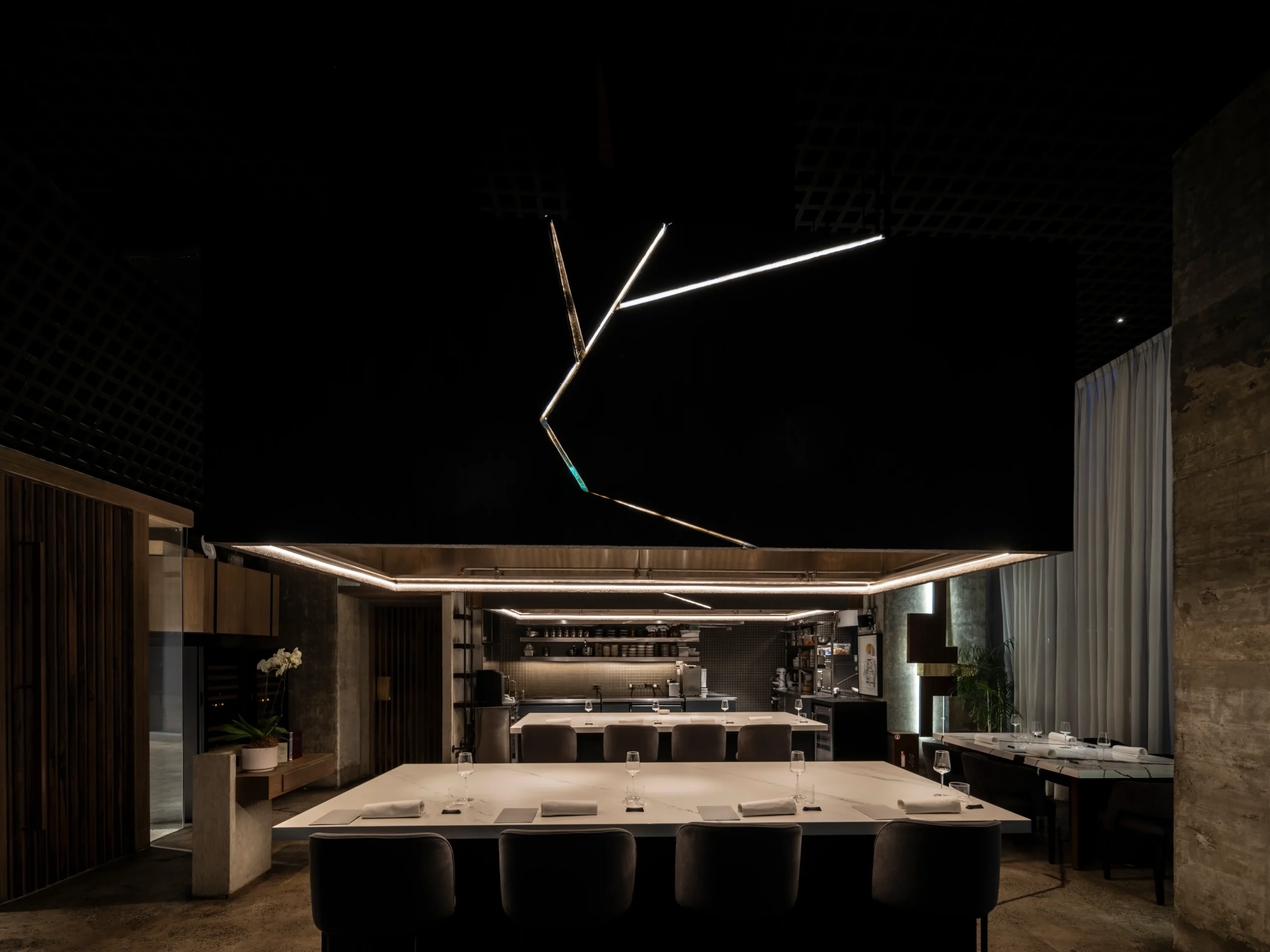
The entrance features two black powder-coated stainless steel central islands: one for hot cooking with invisible cookers and the other for cold preparation with freezers. The black finish allows the white sintered stone countertops to appear to float during dinner service, drawing focus to the food. Adjustable pin lights above the hood give the chef control over the illumination of each dish. The floating stainless hood, clad in rough cement render, contrasts with the smooth countertop and incorporates slashes of light that emphasize the natural stone’s imperfections.
Helm embraces imperfection in its design.
Acoustics and Seating: Designed for Connection
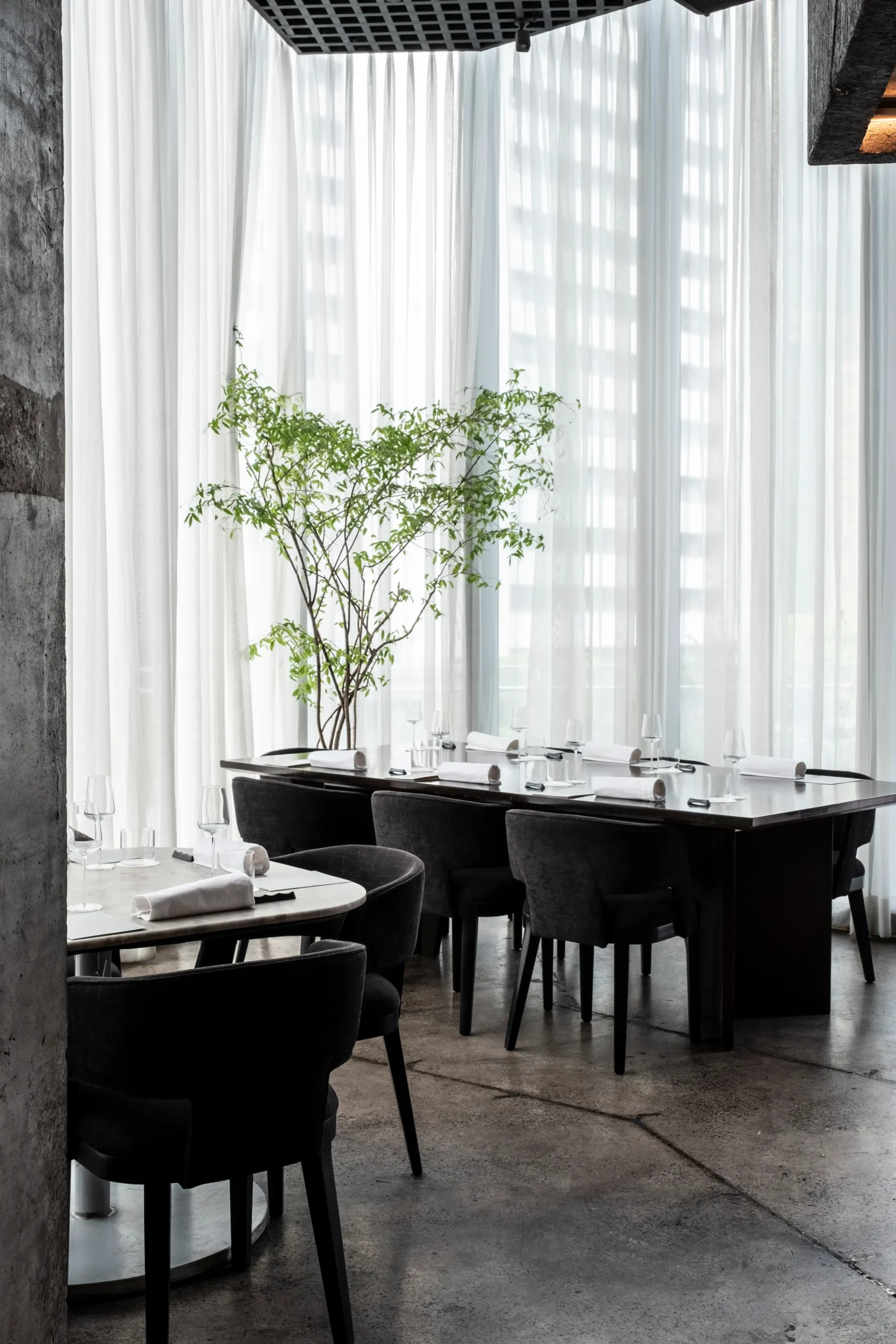
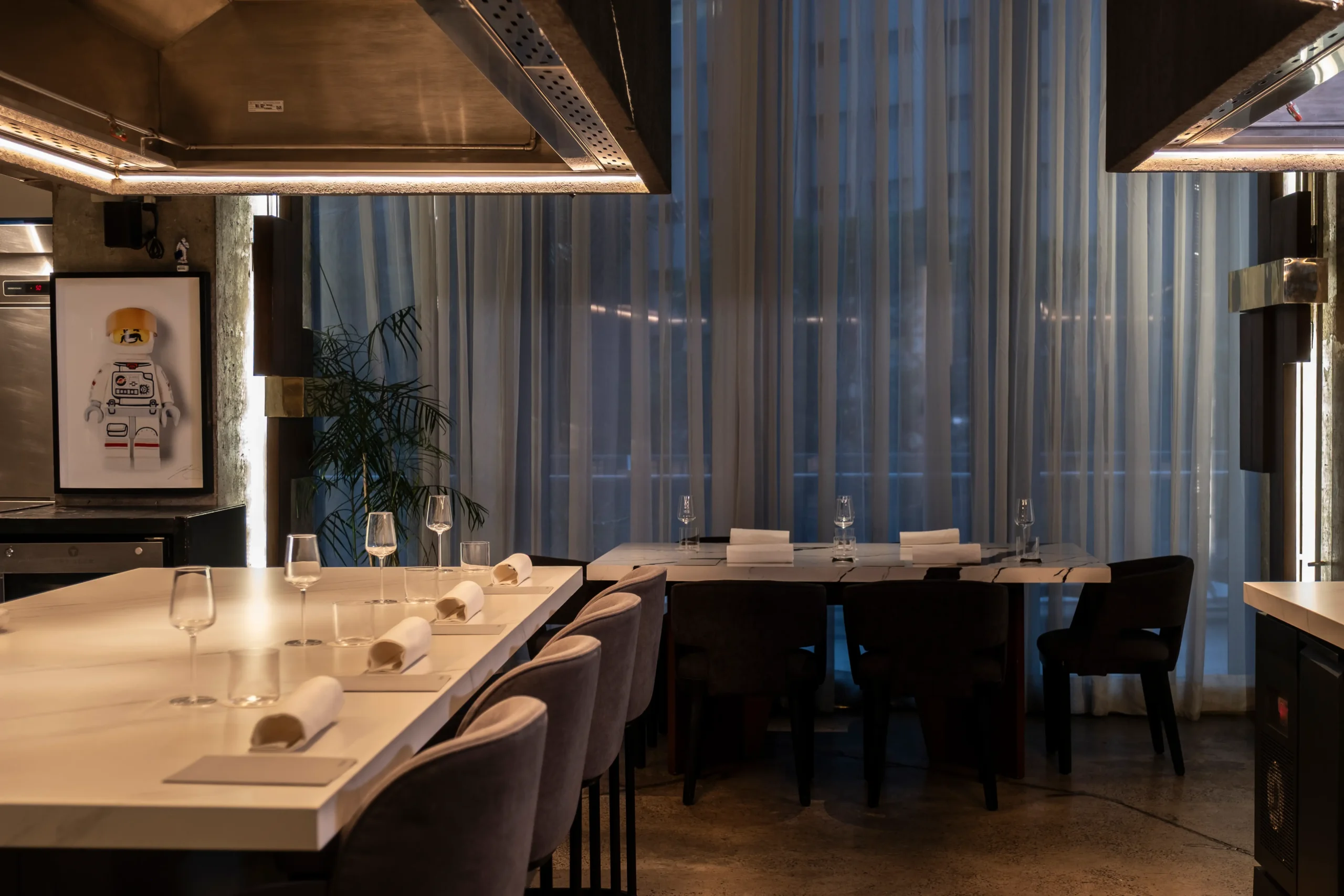
Conversation and connection are integral to the dining experience, making acoustics a paramount design consideration. A waffle ceiling and wood surfaces were used for sound absorption, with curtains added along the glass areas to reduce echo and soften sound reflections. The space was also planned to accommodate different dining sizes, with a focus on couples or groups of four, typical for a tasting menu. The two central counters, where food preparation is visible, are reserved first. Larger tables for six and four-seaters are arranged throughout the room.
To create an immersive dining experience, lighting was used to set the mood.
The aim was to make diners feel as though they were truly part of the kitchen environment — not merely seated before it, but immersed in its workings. As Nieves describes, “[the] challenge here is how do we make it look like you’re really inside the kitchen?” He continues, “It’s like seeing behind the curtains of how these chefs, these cooks do their thing. We want them to feel this sort of exclusive peek or sneak inside the chef’s kitchen.”
Advertisement
Various seating arrangements.
Various seating arrangements.
No detail was spared in calibrating the dining experience. Adjustable and dimmable lighting was installed to highlight each course. “Each food served has a different lighting scheme,” Nieves explains.
Since receiving two Michelin stars from the Michelin Guide, Helm has seen an influx of reservations. Its future presents new considerations for growth. Nieves shares: “I think the natural question is, how can we maybe expand Helm without really diluting the experience? So we’re not thinking of it yet, but it’s there up in the air.”
For now, Helm remains defined not by its scale, but by the discipline of its design, where architecture and cuisine operate in alignment.
Located near the equator, factors such as heat and humidity are the norm in the Philippines. This tropical climate has shaped the development of architecture in the country. As Leandro V. Locsin stated: “The first consideration of the Filipino builder and certainly the most evident in his architecture, which is after all an outgrowth of […]
Art in the Park returned this year to Jaime Velasquez Park in Salcedo Village, Makati City, to celebrate its 20th anniversary. This year’s edition featured a curated selection of works from 55 exhibitors representing galleries, art collectives, independent art spaces, and student groups. With all artworks capped at Php 70,000, the fair continued its mission […]
Denise de Castro, Principal Architect of DEQA Design Collaborative, believes that designing with equity in mind means starting at the workplace. Values and practices that your studio or office espouse inevitably filter down to the work that you do. Equitable design ensures that people with different needs and different backgrounds are supported through fair access, […]
Across Metro Manila, residential developments are increasingly designed around proximity. As cities grow denser and mobility becomes more complex, new housing is often positioned near transport nodes, commercial districts, and educational institutions. This approach reflects a broader shift in urban planning. Mixed-use environments allow residents to live closer to daily necessities—reducing commute times while supporting […]
Luxury in design is undergoing a quiet shift. Where once luxury was measured primarily through visual opulence, today it is increasingly defined by responsibility—through the way spaces are built, the materials selected, and the impact those decisions leave behind. At the Philippine World Building and Construction Expo (WORLDBEX) 2026, this evolving definition of luxury takes […]